Featuresexpand_more
Spotlightexpand_more
Featured Forumsexpand_more
Brand Forumsexpand_more
Independent Brandsexpand_more
Lifestyleexpand_more
Resourcesexpand_more
WatchTech: Assimetric vibration as advance?
Why do we really need simmetrical vibration at balance wheel? Because classic swiss lever is designed for this. But what about new escapement with separated locking-impulse (etc.) stages (like Daniels)? If we do not except simmetrical, but only periodical changes in a watch movement, it can be OK.
12Y
1
WatchTech: Think on energy!
Hi! I read all of your idea. I understand them all, but energetically not possible. Please read and learn theory of horology -or it would be better- some basic phisics (kinematics and dinamics). Try to explain it here: What you write about batteries is silly. You write alternating current - direct c
12Y
0
A. Lange & Söhne: Small theory.
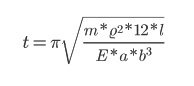
Hi Stephen, Imagine a simple system, where the balance is only one point, rotated around an axis by the spring. 1. Momentum (of balance) contains mass and velocity values. Position of mass can be variable by the construction, velocity will change continuously during oscillation. 2. Work (of spring)
15Y
0
A. Lange & Söhne: Inertia vs. hairspring length
I see the 6 mass on the balance. It has influence on the inertia of the balance itself, since the inertia radius varies by rotating those excentrical masses. My original question was the adjusting method of the active length of the hairspring which also has influence on the period of oscillation.
15Y
1
A. Lange & Söhne: Yes - but
Thanks. Krtek is great, has a nice taste! My problem is still the following. When you look closer on the adjusting system of the 1815 Chronograph (or Richard Lange Referenzuhr) I see NO ANY key. Neither pins, nor screws - nothing. I can see a Philips curve (looks like nr. 100 - where the end of the
15Y
1
A. Lange & Söhne: Purpose of swan-neck in Lange 1815 chronograph
Dear Sirs! I was checking the balance system in the 1815 chronograph. What is the purpose of the swan-neck adjustment system in that watch? I see no hairspring key, which is usually connected to that part.
15Y
2
Horological Meandering: Silver frosting
is also used at restauration. For example Steffen Pahlow pocketwatch-maker describes the similar methode. Your pictures are amazing!
15Y
0
Horological Meandering: Lang & Heyne
Such style of finishing is done by Lang & Heyne Manufacture. I really love this style, thanks for the pics.
15Y
1
Glashütte Original: Spezimatic
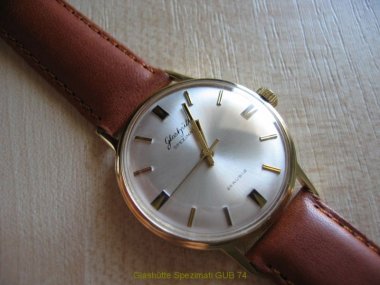
Additional info to your GUB75 calibers. Spezimatic (short form of Spezialautomatic) is the round shaped automatic caliber from GUB. It had two version: GUB75 with date indication (that's is in your watch) and GUB74 is without date (that's in my restorated GUB74):
16Y
1