Featuresexpand_more
Spotlightexpand_more
Featured Forumsexpand_more
Brand Forumsexpand_more
Independent Brandsexpand_more
Lifestyleexpand_more
Resourcesexpand_more
The Vacheron Constantin Aronde & its background

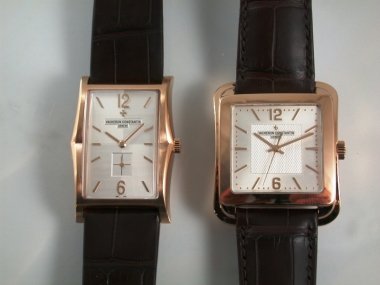
Vacheron Constantin Les Historiques Aronde 1954 ref. 81018 was first introduced in 2010 in a white gold version limited to 20 pieces for the Japanese market. In 2011 , a non limited rose gold variant was launched. This reference was inspired by four previ
5M
32
Ping.Timeout
4207

Vacheron Constantin's Christian Selmoni on Watch Hands

Back in November Purist participant Tiggermelad had a question about the length of the hour hand in two models from the Traditionnelle family. He noticed that with some Traditinonelle models, like the manual winding reference 82172, the hour hand is short
11Y
7
Tiggermelad
3685
The bezel is certainly so,
but we know that VC has, in its collection, several watches which is "original" as the Toledo 1951, the Aronde 1954, maybe the Quai de l'Ile too... So, yes I prefer the Patrimony line, the fantastic 1955 Ultra-Fine, but even the Malte chrono QP with its s
11Y
14
sandgroper
3284
You said it, Bill!

VC nailed it! I feel this is particularly so with the Aronde, but that is merely a matter of personal taste. The cases and dials on both of these are simply gorgeous. These two photos, unlike yours, came out particularly bad: But, oh, how I love the Arond
11Y
8
respo
4233
Especially the Aronde 1954 ...

I like a lot and I am always happy to see one - even behind glass: To me it has lots of character, but I am not with you when we talk about the movement here. "They nailed it" doesn´t come to my mind. Sorry! Oliver
11Y
8
respo
4233
Two based on the designs from the 1950's

This photo of two Historqieus pieces side by side came out quite well. VC nailed it with the case, dial, and movement in each of these beauties (Aronde 1954 and Toledo 1951) BIll This message has been edited by WHL on 2014-11-30 19:14:54
11Y
8
respo
4233
Sometimes, I think you post just to torture me, Bill.

;-) Your former Chronometre Royal makes me salivate. I got it bad and that ain't good. That black dial automatic is a pure beauty. It is always such a disarming pleasure to see black dials on vintage V&Cs. Now, as for the Historiques models...I know y
9Y
13
patrickh
9485
Aronde 1954, that is just an awesome piece ...
which I agree deserves more attention. I like it especially for its dial and case. But all other watches shown aren´t that bad as well ... :-) Thanks for sharing! Oliver
9Y
13
patrickh
9485
A Toast to the 1950’s!!
Collecting vintage Vacheron Constantin watches has been one of the high points of my collecting history. I had focused on round watches from the 1940s through the 1960s, but it is the middle part of that era that I think I would call Vacheron Constantin
9Y
13
patrickh
9485