
amerix
1537

Back to the basics, and forget the design
In a way I am doing the same, moving back but not away from avante-garde, not that sector with high-tech means and materials, but rather back to watches with NOS (new old stock) movements. What started me off again after a hiatus of many years on mechanical watches was the story of Maurice Lacroix's Masterpiece collection, when at the worst time of the quartz crises "they" meaning a few dedicated individuals there, were able to secure, rescue and preserve some original works and especially the machines required to make them that were destined to be destroyed or sold for scrap. The Venus chronometer is but one example.
Of course I am speaking about vintage movements, those that were never before put into a new watch, and not the generic category of vintage watches themselves.
One of the true masters of this art is Svend Andersen, who can transform, say, an AS movement into something modern and unusual. His, by the way, are among my most accurate and reliable timekeepers in my collection!
So go with the Independents? Well at least with some of them who, like Svend, attach more importance to the right choice of oils and greases - and adjustment, always meticulous adjustment - than to the finest level of optical finishing that can be humanly obtained - and still at the moment, the finest attainable from Philippe Dufour.
Just the selection and application of the right oils and greases and - getting them to the right places with the right dose is a formidable task, although there are computerized machines these days that are programed to do the same, for new watches, the result being: another pair of hands with decades of experience is made obsolete, the watchmaker himself becomes obselete - a sad but true fact.
How many watchmakers are there "around the corner" even if they are increadibly skilled and have access to the oils and greases required for a particular vintage model? For a complicated movement, they may need a couple of dozen different oils, some of them expensive and with a shelf life of sometimes half a year, when the vials are opened and exposed to oxygen and what else there is in the air?
For me - at least - the preservation, maintenence and restoration of a vintage watch becomes a huge responsibility. You have to find a proper watchmaker and get to know him well - and talk with each other!
Will it be worth it? Of course - and of course not! But that depends on what you have and what he the watchmaker can and is willing do with it. And what you are willing to pay for it!
Speaking from my heart, and not as a collector of vintage models and dial faces but for the mechanical works - the beating heart of the watch within, the one that keeps the time - year after year - with maintenance and skill!
amerix
This message has been edited by amerix on 2010-04-13 09:32:30

Collections and collecting
From vintage to modern contemporary, then back to vintage.
Iteration
Andrew, you are so right, life is unpredictable.
Ditto .............
Back to the basics, and forget the design
Diversity... brand... and diversity (less so) again
Hmm... how about less-expensive-to-more-expensive?
Bracket creep

Based on my young collection of 1...

You are not alone
From Mainstream to Inependent

Increasingly Independent

I second that Daos
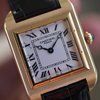
My collection is mainly Cartier
:-)

not sure what is collecting Andrew

I am still in the "diversity" stage
Waxing, waning, and refining...
I have no strategy at all...
Vintage automatics, with plenty of exceptions.

good question Andrew, but you are full of good questions

As of late it's been these factors

Directions?

Only ten watches, hermano???
Well, 10 watches would be an ideal
LOL, Quan!...

I doubt it....


Mine has 2 themes. Patek and Rolex. Both vintage
Life is full of unexpected changes
same story Quan, yet different
I love this story ...
well said Andrew

For me...

buying watches regardless vintage or modern that i like, but...
My strategy is....

thematic and functionality

Watch Choices

Coming to a crossroads
"Themeless" is my theme

Once I get to 100 I'll have every watch I ever wanted

Same