
Bill
32073

A Deep-Sea Relic: The 1971 Omega Seamaster Ploprof 600 with an Inverted Case Stamp
When it comes to legendary dive watches, few models command the respect and fascination of the Omega Seamaster Ploprof 600. Designed for extreme underwater conditions and worn by professional divers pushing the limits of human exploration, the Ploprof was more than just a watch—it was a critical piece of survival equipment. Among the rarest of these timepieces is a unique 1971 example featuring an inverted case stamp, a bi-directional bezel, and a case constructed from Uranus steel. With a production run spanning only a few months, this particular configuration stands apart as an elusive and historically significant relic of Omega’s pursuit of technical mastery.
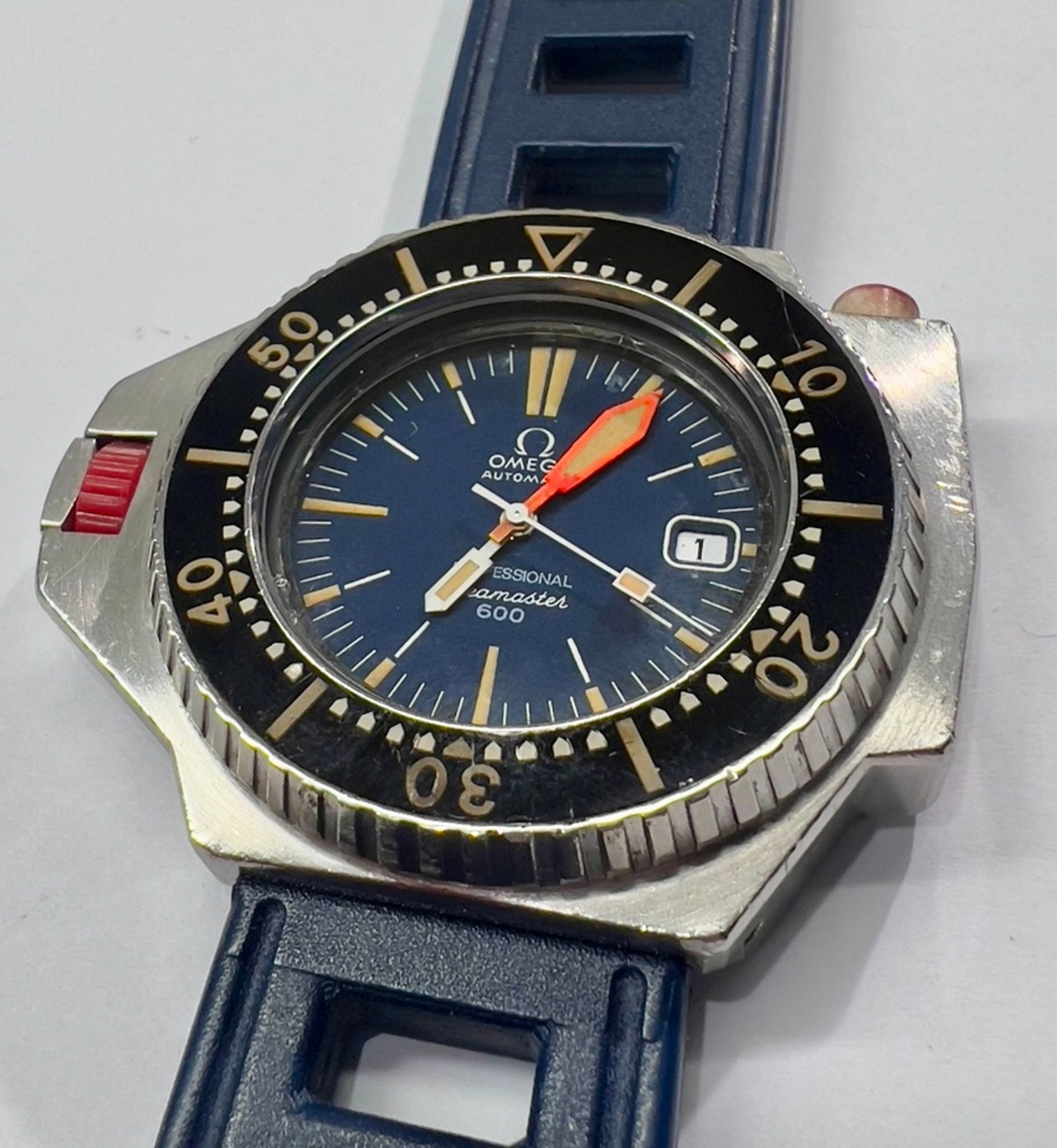
Omega Seamaster 600 Ploprof
The Most Over-Engineered Dive Watch of Its Time
The Seamaster Ploprof 600 was Omega’s answer to the growing demands of deep-sea professionals, a response to the challenge of creating a watch that could function at extreme depths while withstanding the unforgiving marine environment. Unlike conventional dive watches of the era, which used a screw-down case back and a separate bezel assembly, Omega developed a monobloc case, milled from a solid block of stainless steel, to eliminate potential entry points for water.
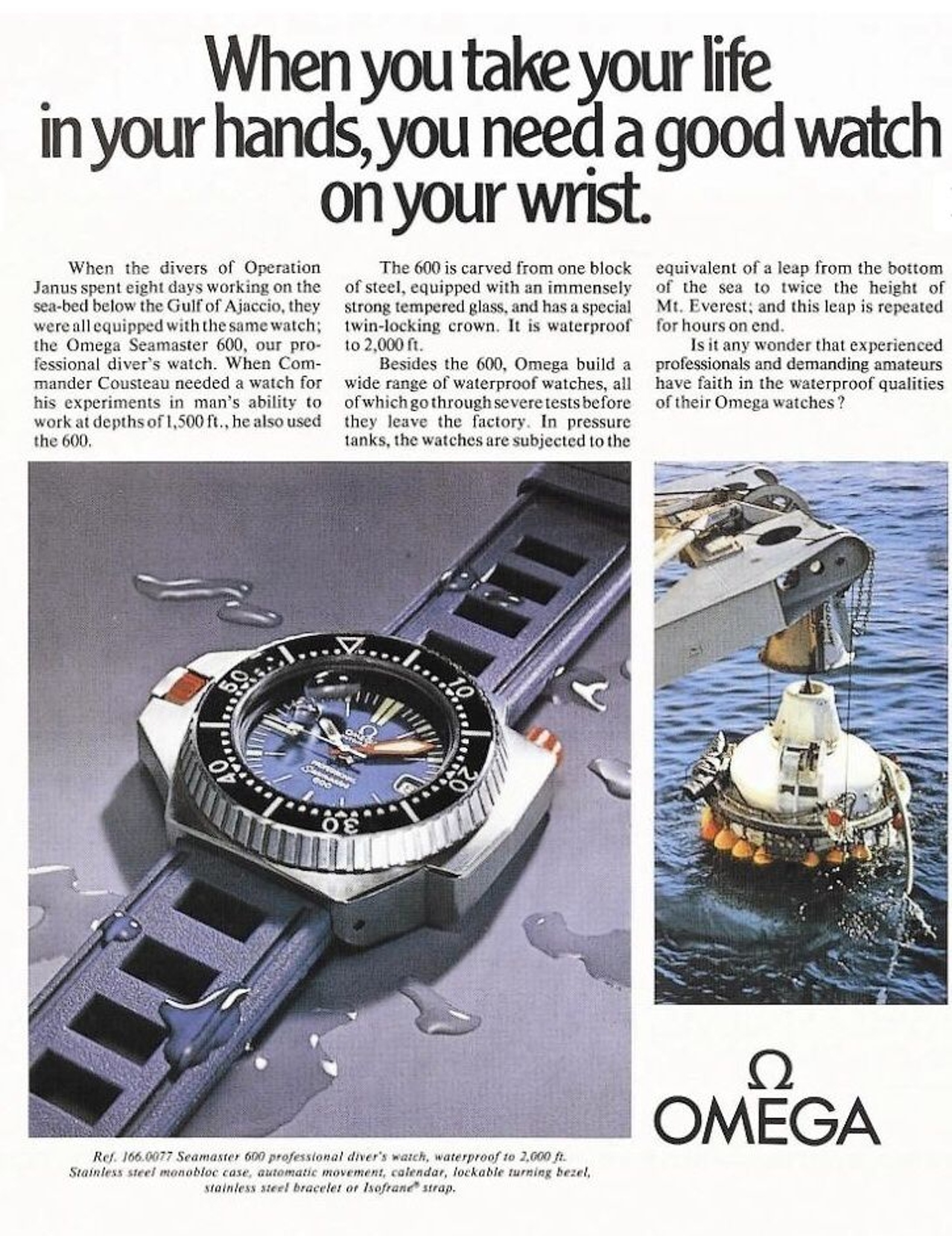
Ploprof and C o m e x
This choice of material, however, was no ordinary stainless steel. Rather than opting for a standard alloy, Omega turned to C O M E X, the pioneers of commercial deep-sea exploration, and selected Uranus steel—the same metal used in the construction of high-pressure submersibles. Decades later, R o l e x would follow suit, adopting this ultra-resistant steel for its own professional-grade dive watches. But in the early 1970s, Omega led the way, ensuring the Ploprof’s ability to endure extreme conditions unmatched by its contemporaries.
One of the watch’s most defining features was its bezel-locking system, controlled by a red push-button. Unlike other dive watches of the era, which used a unidirectional rotating bezel to measure elapsed time, Omega engineered the Ploprof’s bezel to rotate in both directions, a first-of-its-kind innovation in dive watch history. The locking mechanism ensured that even in the most turbulent underwater environments, the bezel would stay precisely where the diver set it, preventing any accidental miscalculations of remaining air supply.
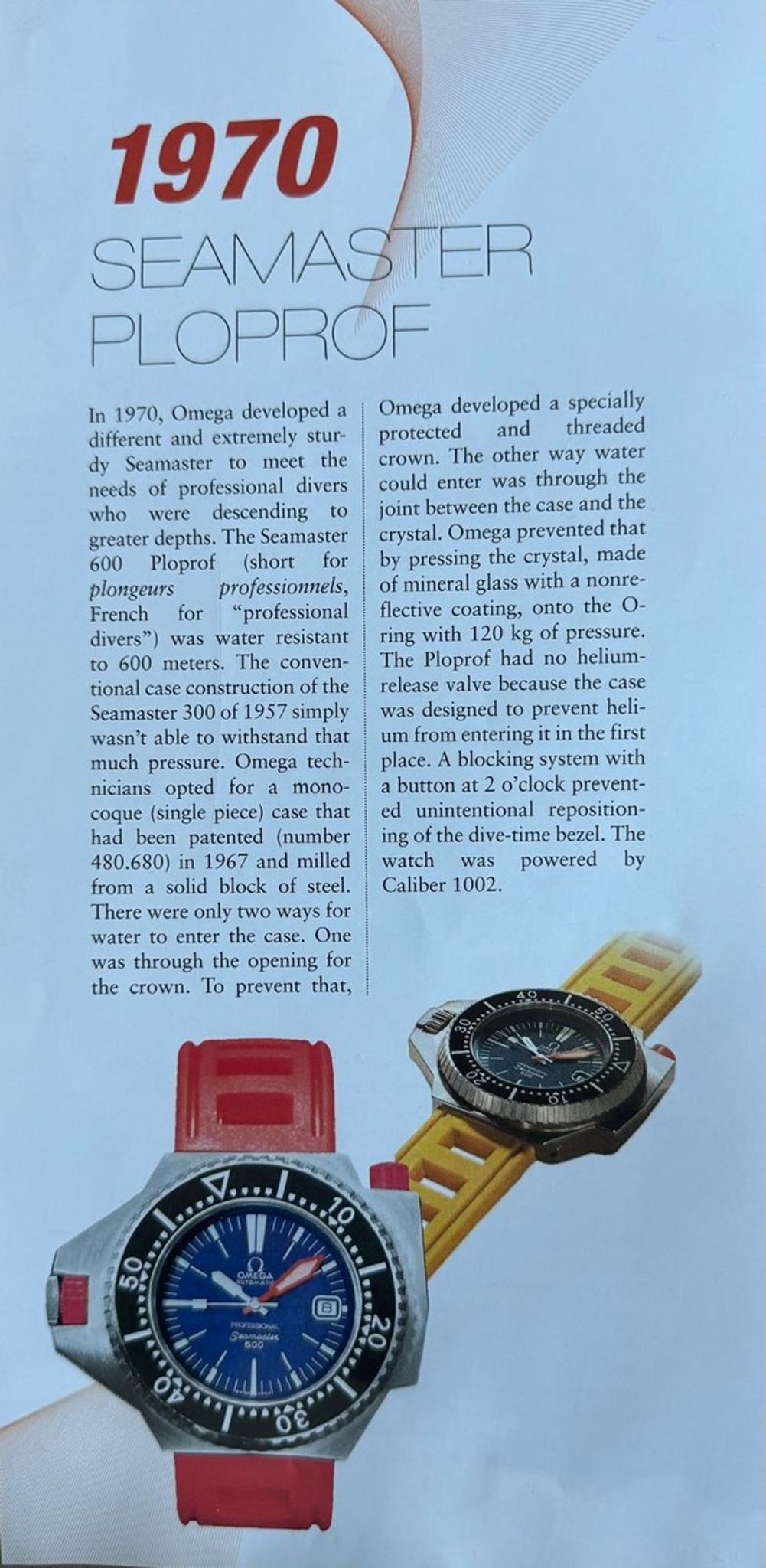
Ploprof original advertising material 1970
Certified More Waterproof Than a Submarine
Before it was granted approval for professional use, the Ploprof had to undergo some of the most rigorous testing ever performed on a wristwatch. During its certification process, the watch surpassed all expectations, leading to an astonishing claim: its test results showed it was more waterproof than a submarine. The official reports stated that if left submerged at a simulated depth of 1,800 feet, the Ploprof would take over 1,200 years to fill with helium—an assertion that underscored Omega’s commitment to absolute durability.
The Seamaster Ploprof was first advertised in February 1971, yet production did not fully commence until late that year, and the earliest batch was completed by early 1972. This narrow production window is of particular importance, as it accounts for a rare design anomaly found only in the earliest Ploprofs—an inverted Omega case stamp on the case back. While later models would have the correct orientation, these early examples, like the one in question, exhibit this factory anomaly, making them highly sought after by collectors.
A Unique Dial Evolution and the Blue Overprint
Another remarkable feature of this specific Ploprof is its blue overprint dial, a rarely discussed yet highly significant detail. When the watch was first designed, its dial featured a clean, single-
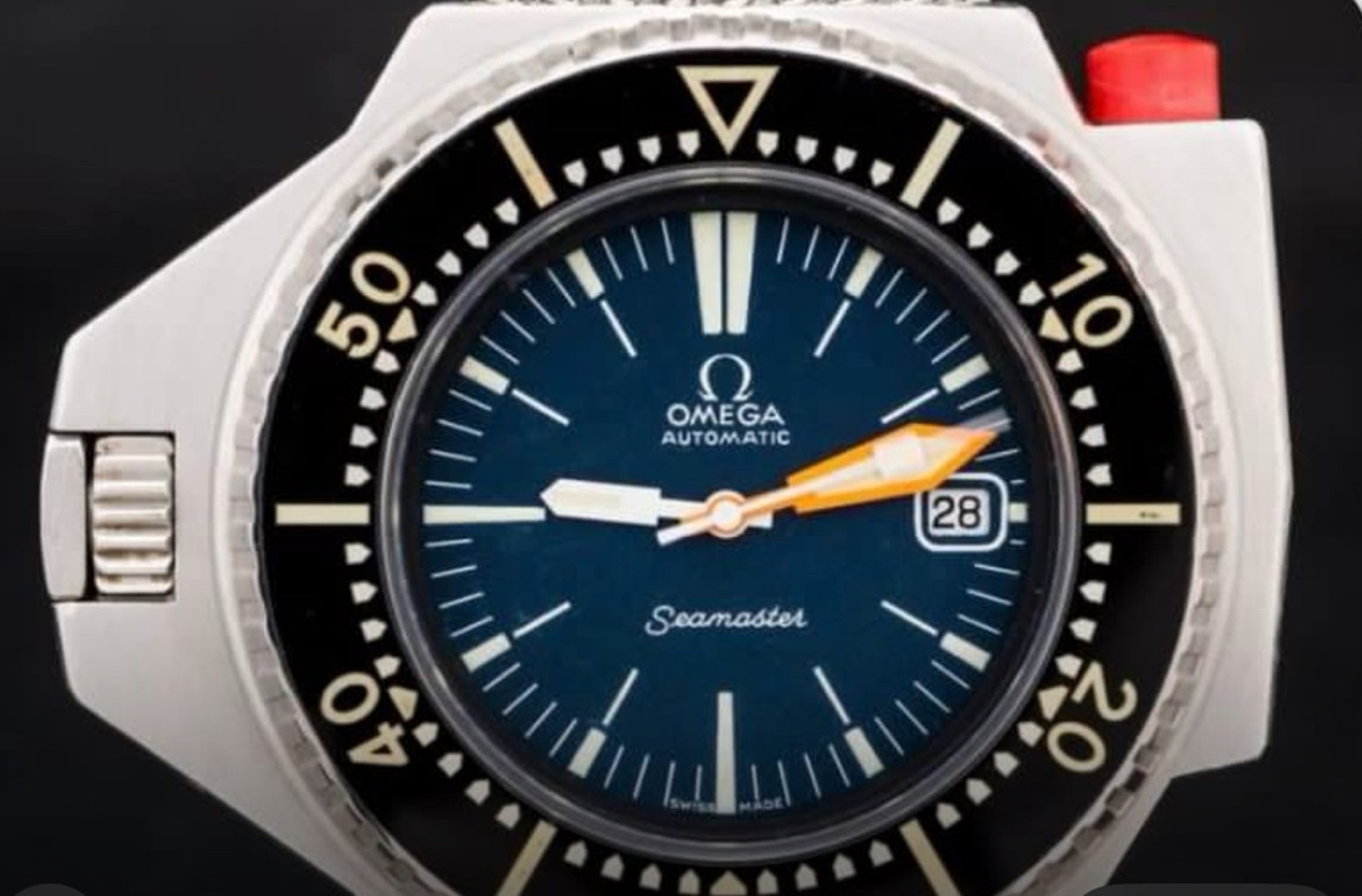
Ploprof Single print first Prototype
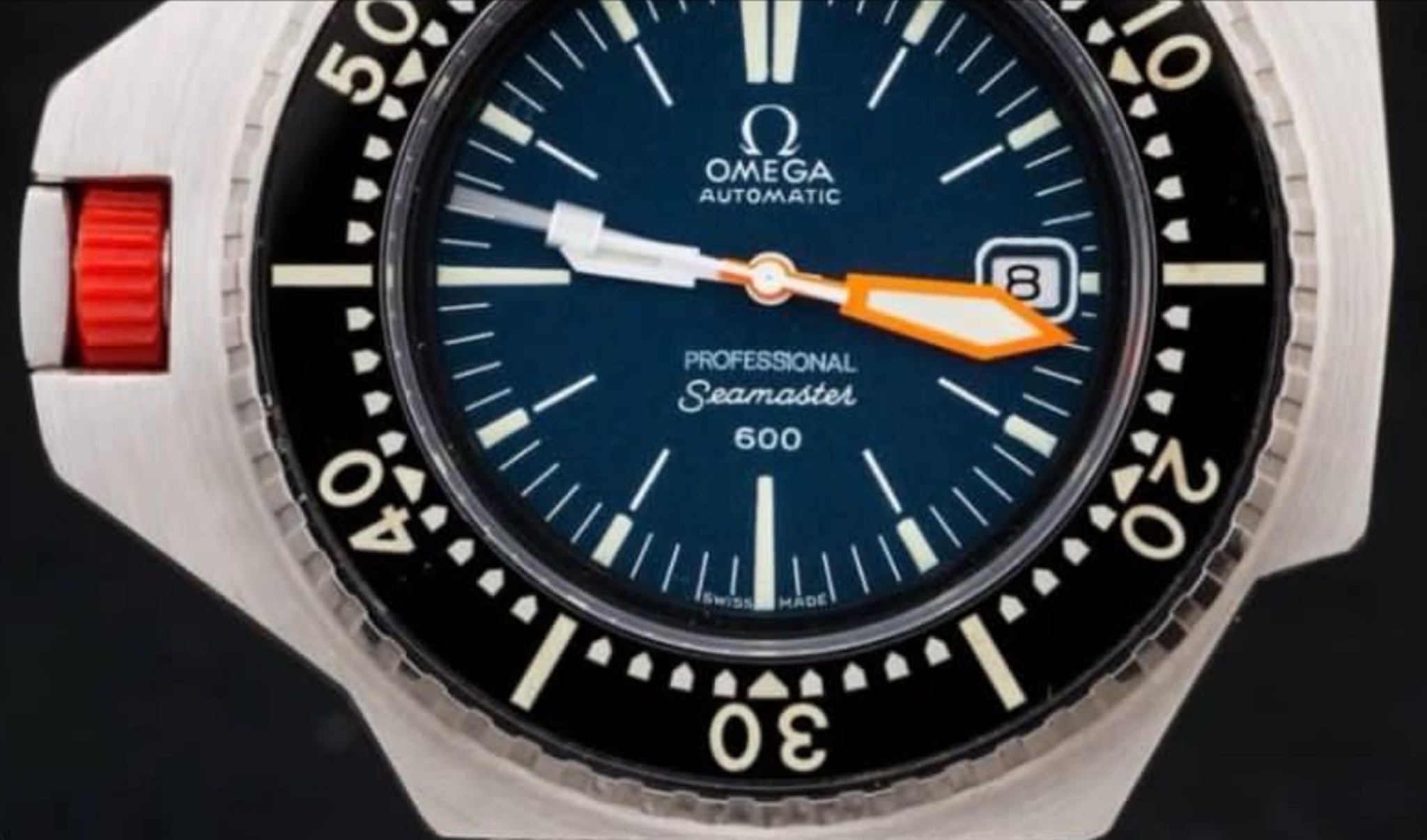
Ploprof blue overprint added for first commercial release
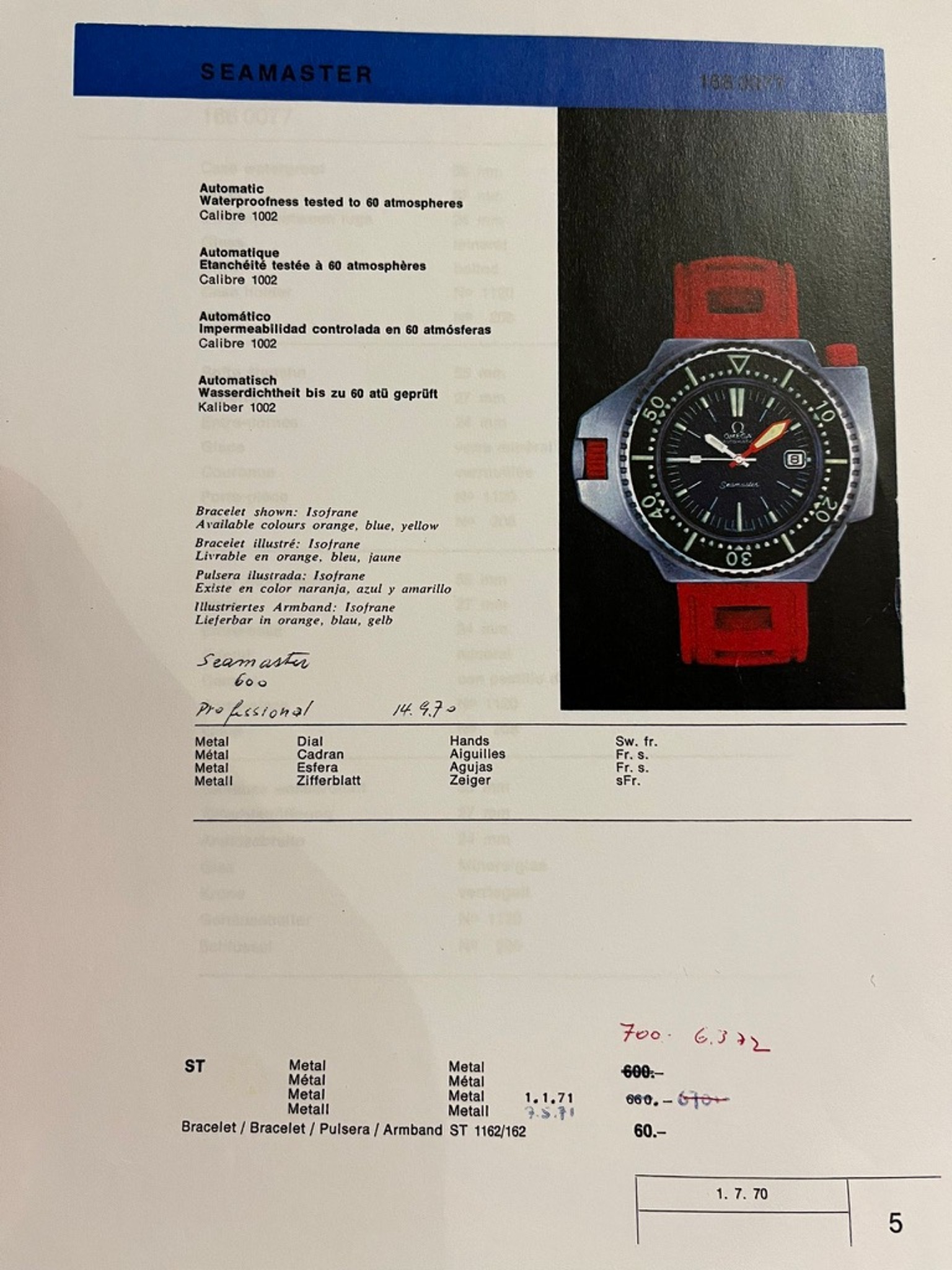
Proplof catalog
line layout. However, as Omega prepared the model for public retail, the brand sought to emphasize its status as a true professional instrument, especially given that it was priced at twice the cost of a Speed Master at the time. To reflect its newly established depth rating of 600 meters, Omega opted to overprint the original dial with a light blue professional marking—a subtle yet crucial change that further distinguishes these early models from later iterations.
An Iconic Timepiece That Still Leads the Deep
Despite its brief production run, the Ploprof remains one of the most varied Omega dive watches ever produced, with eight distinct case designs, three different bezels, six dial variations, multiple handsets, and two movement versions over the course of its history. Yet, of all these iterations, the early 1971-72 models stand out as some of the rarest and most desirable, particularly those with the inverted case stamp and blue overprint dial.
For collectors and historians, owning a piece like this is not just about acquiring a rare timepiece—it is about preserving a tangible relic of Omega’s relentless pursuit of innovation in the face of extreme environments. With the increasing rarity of these watches, combined with the surging
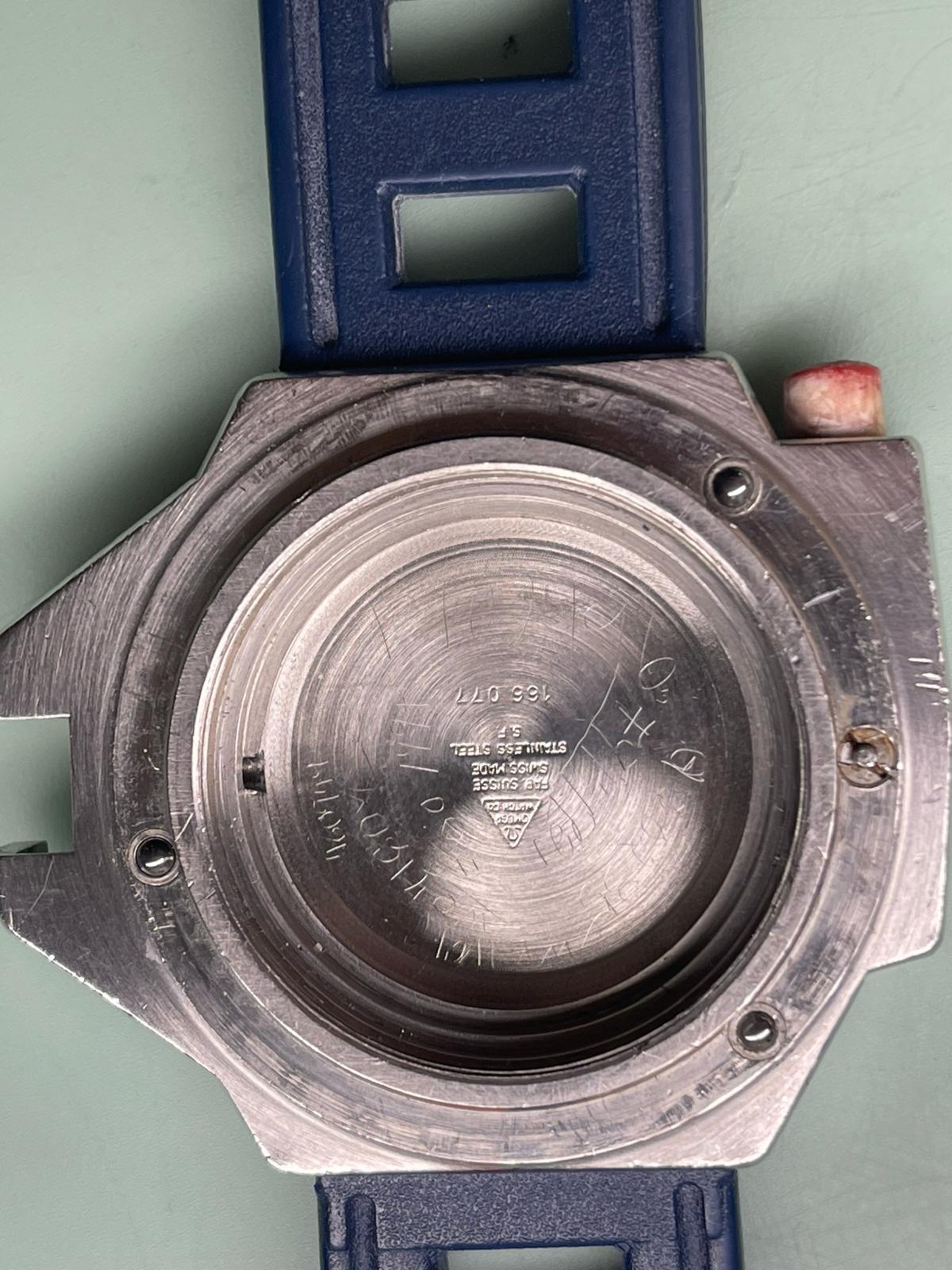
Ploprof inverted case stamp rare first release
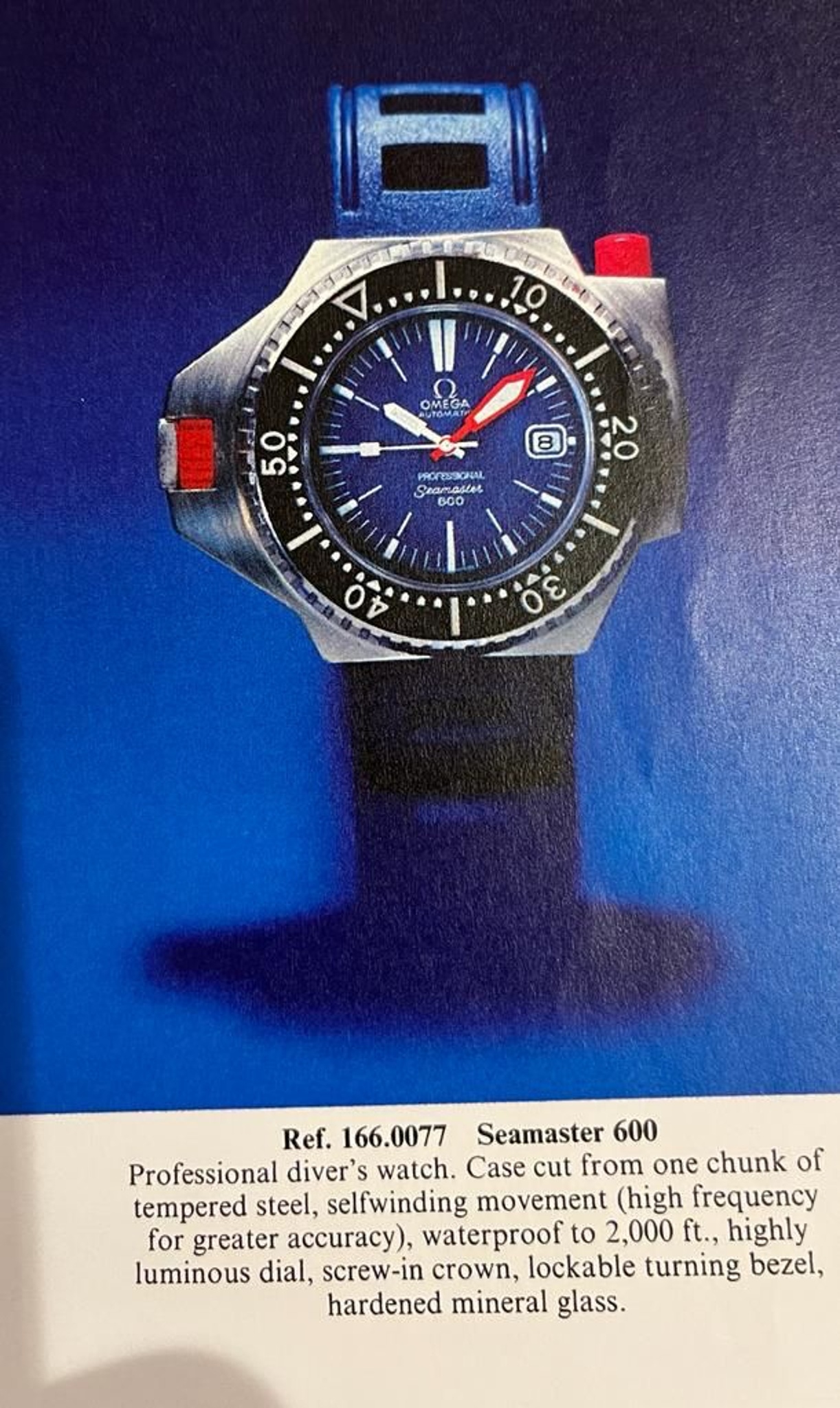
Ploprof Print ad red crown lock
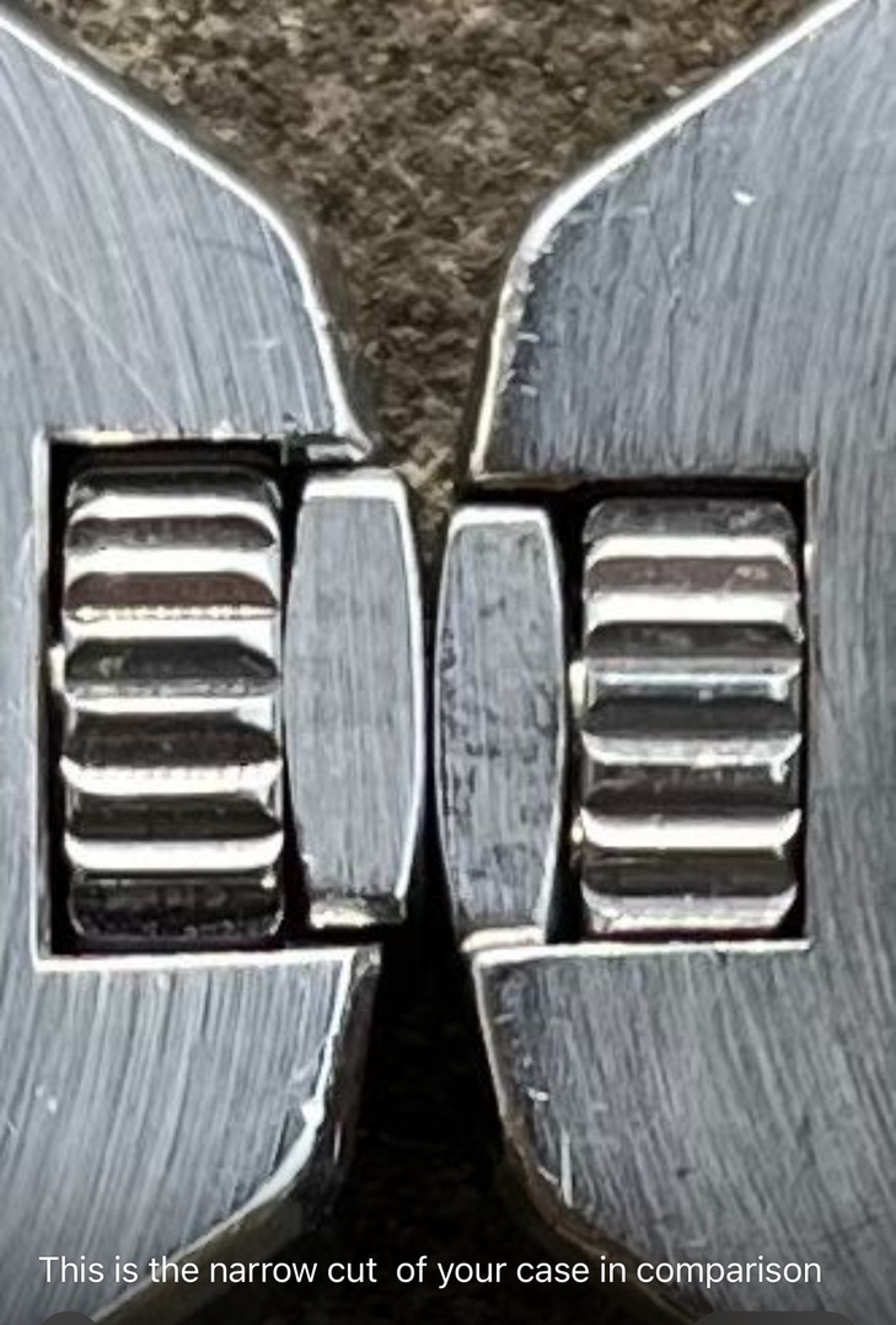
Ploprof narrow case cut
interest in historically significant tool watches, examples like this one will only continue to grow in desirability and value.
While modern technology has surpassed the mechanical limitations of vintage dive watches, the Seamaster Ploprof remains a symbol of an era when watchmaking was driven by necessity, not fashion. It is a watch that represents the golden age of deep-sea exploration, a time when men pushed the limits of human endurance beneath the waves. And for those fortunate enough to own one of these extraordinary examples, it serves as a reminder of a time when Omega didn’t just make watches—they engineered the future of underwater survival.
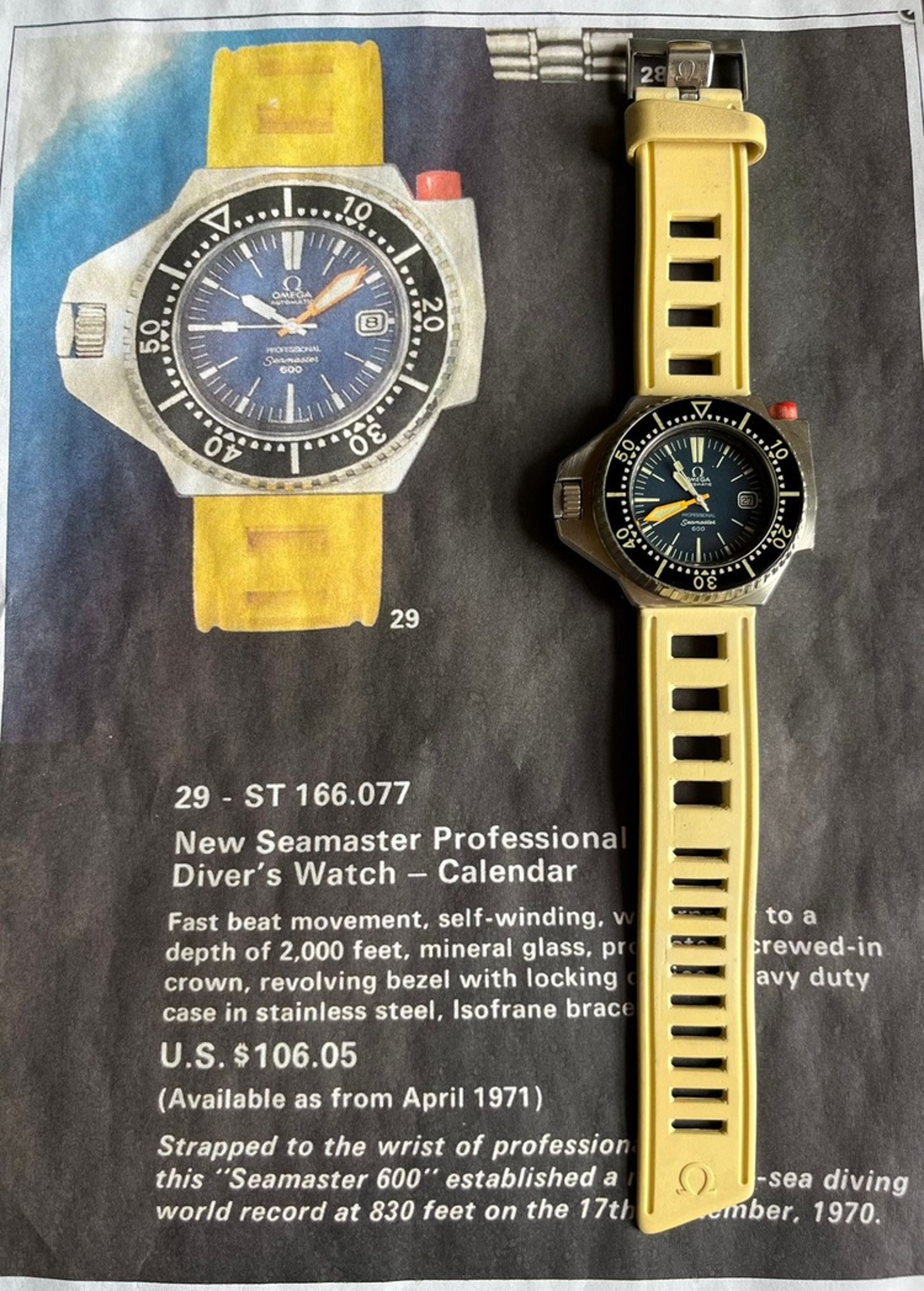


A Deep-Sea Relic: The 1971 Omega Seamaster Ploprof 600 with an Inverted Case Stamp

I wasn't aware of the inverted caseback engraving on early models . . .
Probably less than a dozen inverted case back watches. These were part of the prototype run for Comex.
That's the most reasonable explanation . . .

Great write up Bill …
Absolutely.
I discussed this watch recently with….

Outstanding right up! I always wanted to acquire one of these, but never seem to pull the plug.
There is always something new we can learn. There is more.
They are few that are all correct. Ask me if you need help there is one expert I rely on knows way more than me.

It was expensive at the time but was really used by professional divers.

I’m not a dive watch aficionado,
The ploprof stands alone a true tool watch. No plexi or risk while in operation.

Such an interesting write up and true tool-watch!
I do have in the collection a diver Ploprof watch from 1972.
So close, same month! Pretty crazy indeed.


I learned a lot from this about Omega's very Big Boy.
