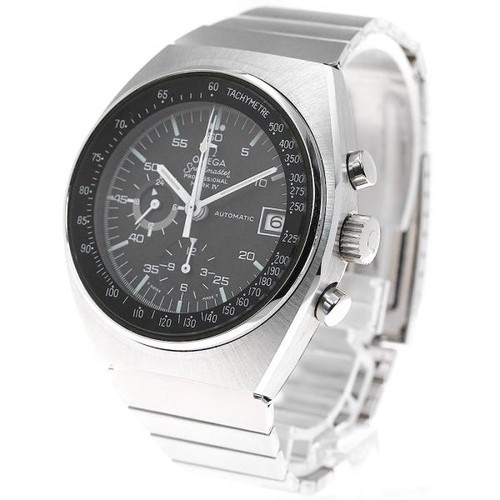
Vintage
DrStrong's comprehensive review of the Omega Seamaster 1000m, 'The Beast is Back,' traces the lineage of Omega's professional dive watches from the iconic Ploprof to its deeper-diving successor. This article synthesizes historical context, technical details, and community appreciation for a legendary timepiece. His insights into the watch's development and rarity provide a valuable resource for understanding Omega's contributions to extreme diving horology.


The history of the Omega Seamaster 1000m starts with the birth of the Seamaster 600 – aka Ploprof - in 1970, after four years of intensive research and testing. This watch was aimed at the new challenges faced by professional divers.
The Ploprof was used extensively during test dives in the late 1960s and early 1970’s by Comex divers as well as members of the Cousteau team.
The watch also underwent a series of hypostatic tests that revealed that it functioned up to a simulated depth of 1370 meters at which point the 4mm thick crystal touched the second hand, stopping the watch.
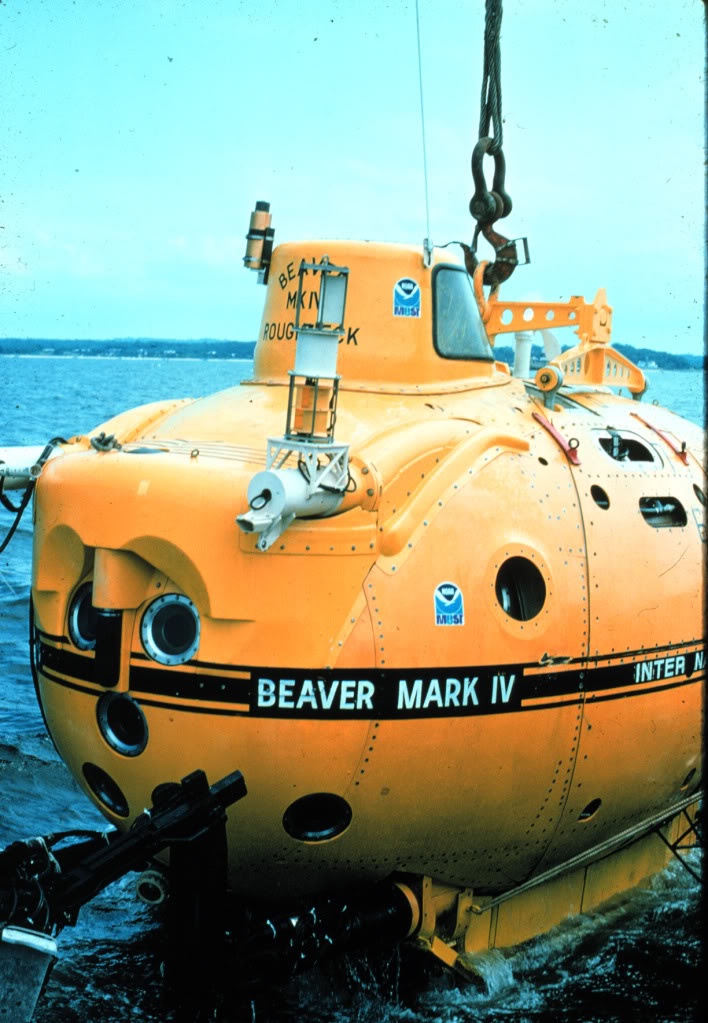
The ever-increasing depths at which divers were working led to the creation of the “big brother” of the 600, the Seamaster 1000m. It was created in 1971 and tested alongside the 600 by the same divers. The highlight of the 1000's early exploration career was undoubtedly its dive on IUC's (International Underwater Contractors) submarine “Beaver Mark IV” where the watch was attached to the submarine's robotic arm to test the effects on the crystal at a depth of 1000 meters.
A few prototypes were delivered to Comex: they have the side engraved with “Prototype” + a number. It differed from those produced commercially in its case back design: The prototype has a flat back, while the commercially-produced watches have a slightly curved back. Here are two pictures of Seamaster 1000 used during the Janus II experiment (credit: Comex):
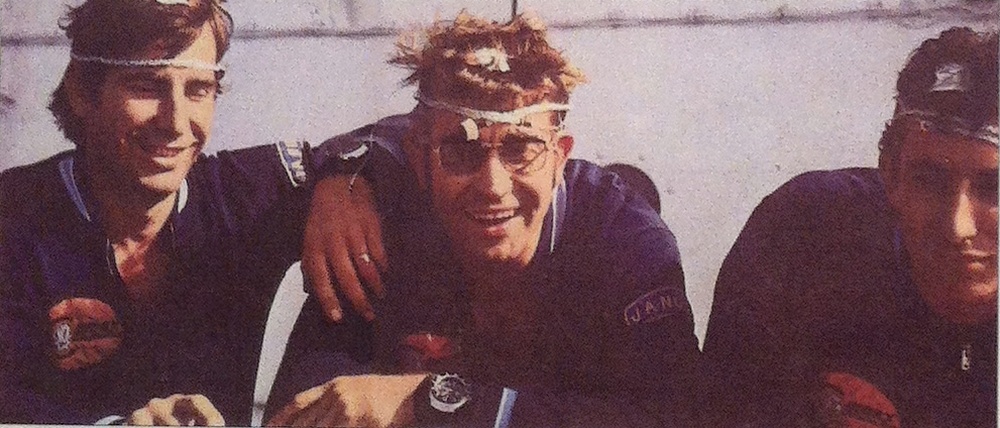
Here is the pre-prototype that was given to legendary diver and Cousteau comrade Jacques Monjoin. He was a pioneer of deep water diving and led the COMEX Janus tests from 1968-1972.
The members of the Cousteau team have also used the Seamaster1000m. Here are a couple of shots of the watch on the wrist of JY Cousteau himself:
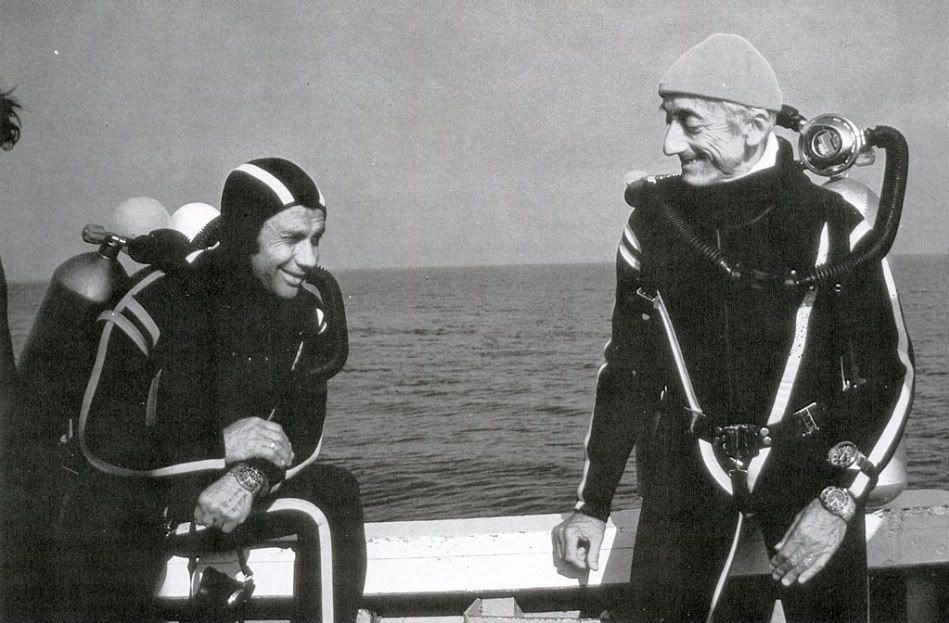
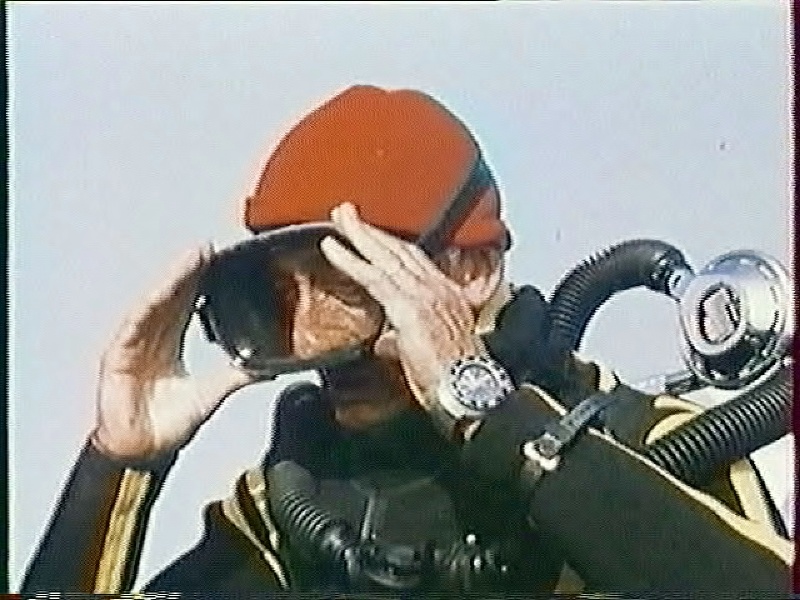
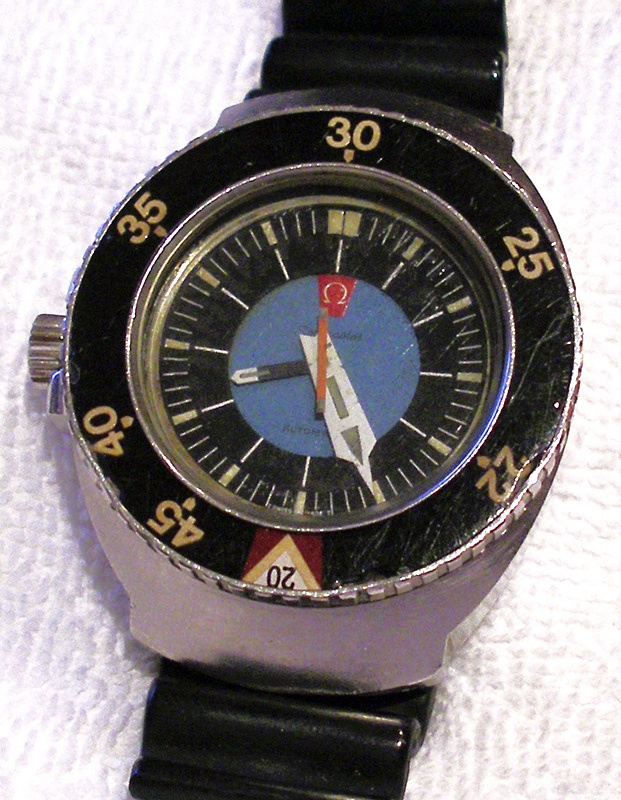
The Seamaster 1000 has basically the same structure as the Ploprof: a massive steel monocoque case and a very thick mineral crystal secured to the case by a ring. The case is even thicker that for the Ploprof and so is the crystal (4.5mm). Though the winding crown is at 9 o’clock, these watches were made to be worn on the left arm. The crown was placed at 9 to minimize the risk of damaging or inadvertently manipulating the crown while submerged. The dial, hands, movement and bezel insert are the same as the Ploprof; but of course the dial says 1000m/3330ft instead of 600m/1220 ft.
After some years of hunting, I have finally found myself an example of the beast…
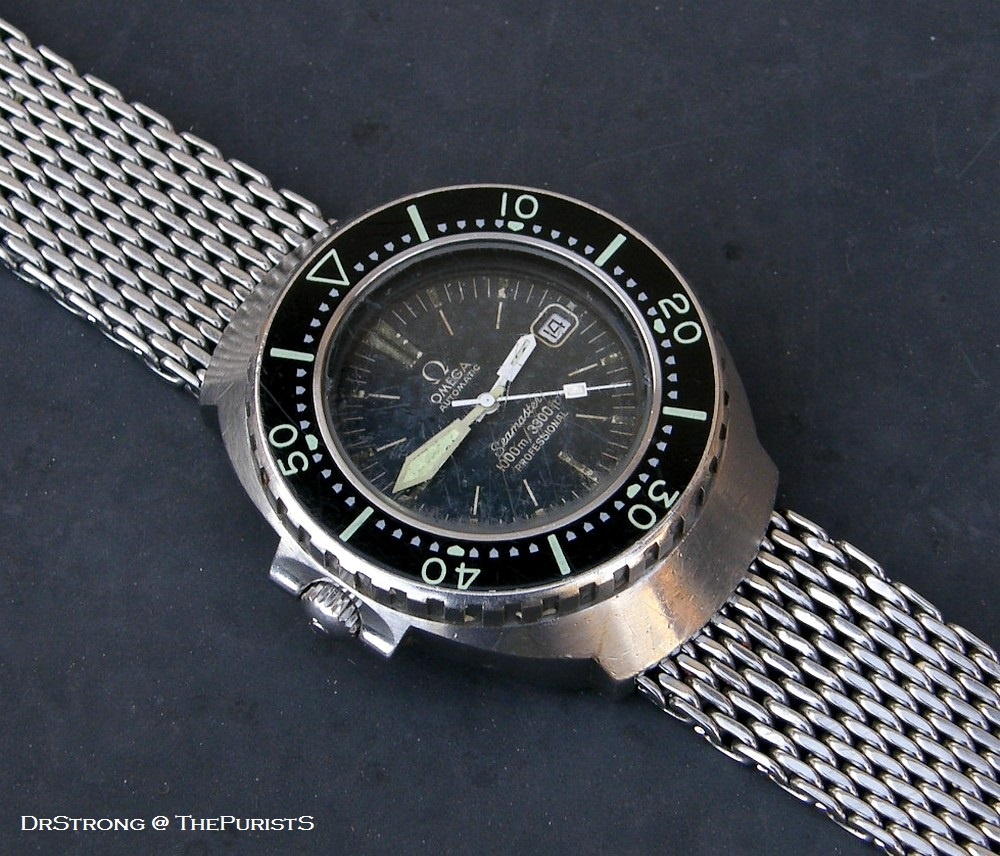
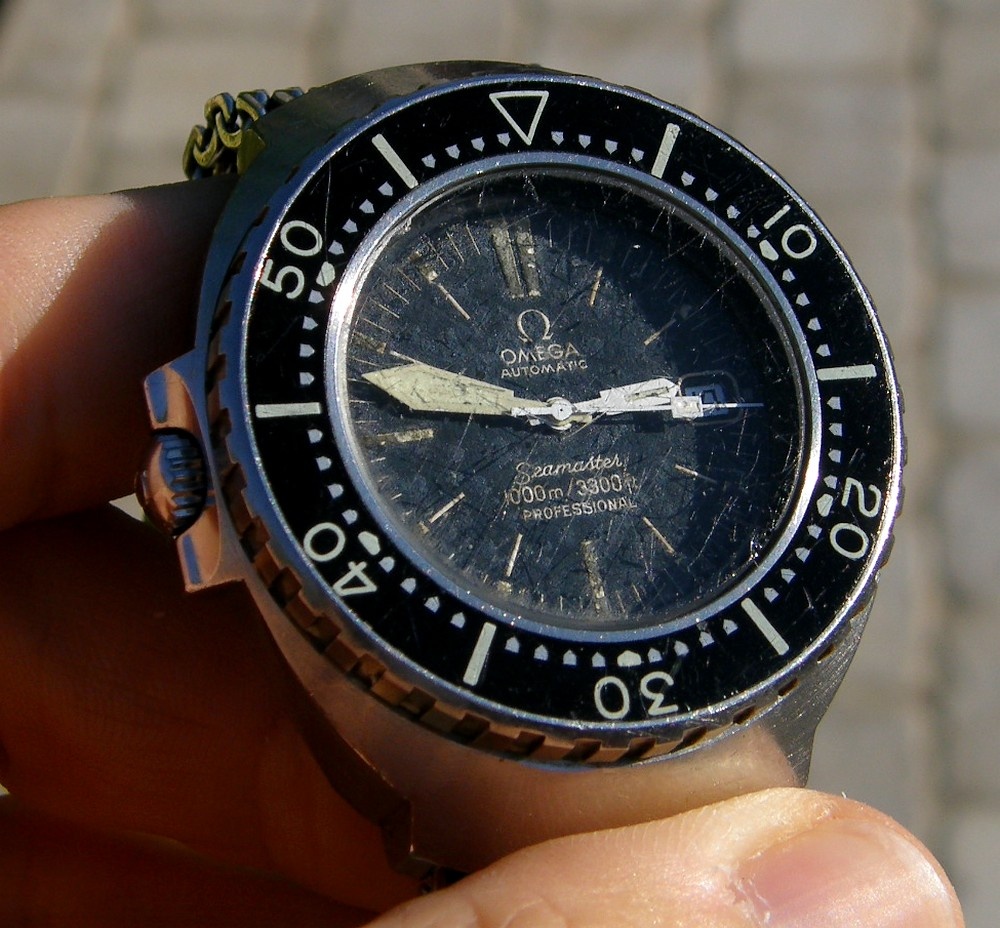
I got the watch from the grandson of the first owner, a man who used to work in a shipyard near Toulon, in the South of France.
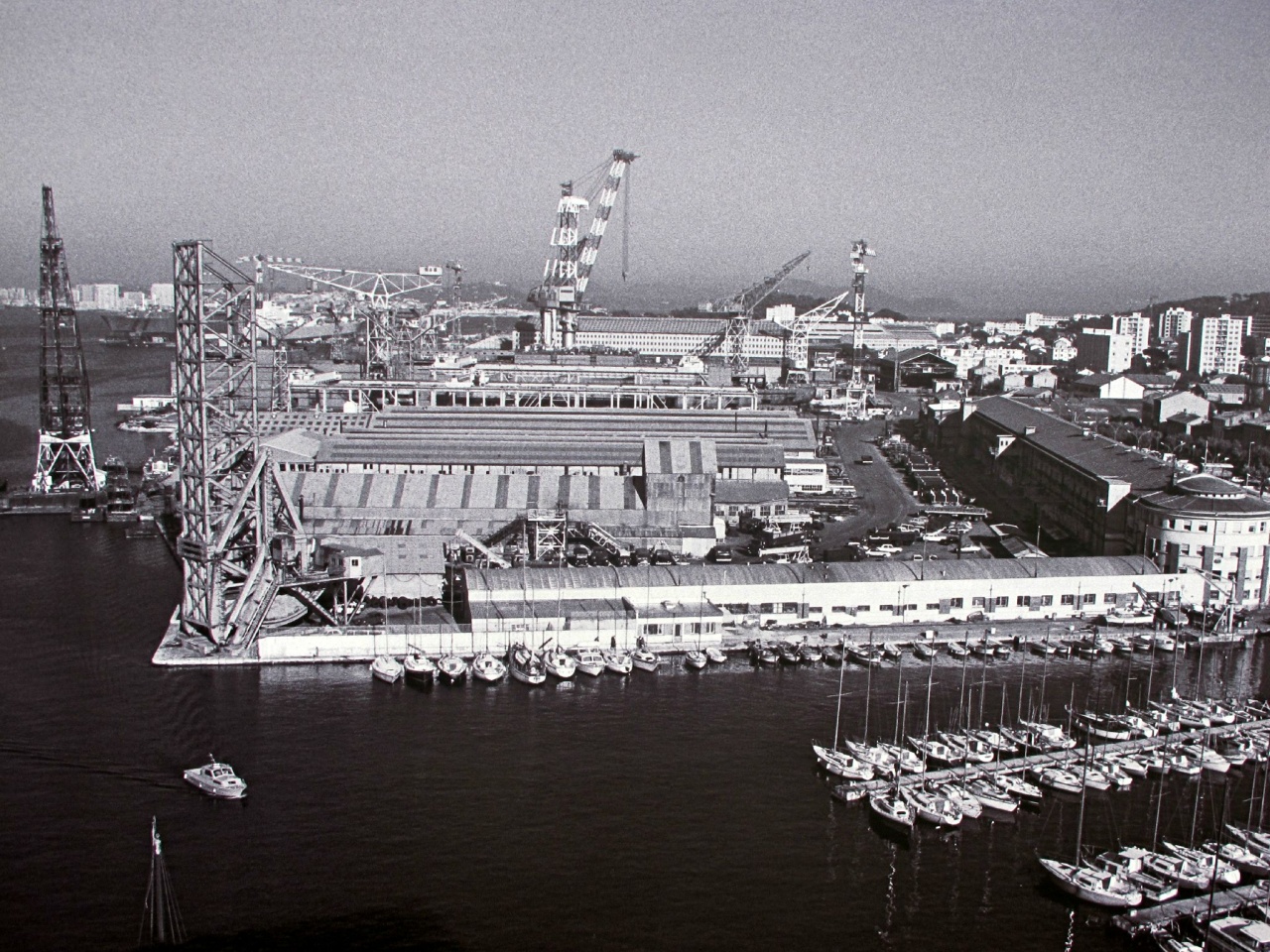

He also had a boat and was an amateur diver. According to his grandson, he bought the watch in the late 1970’s and used it as a daily beater: you can see a lot of scratches on the crystal, dirt on the dial and dings on the case… but still the original circular case finishing appears under the scratches.
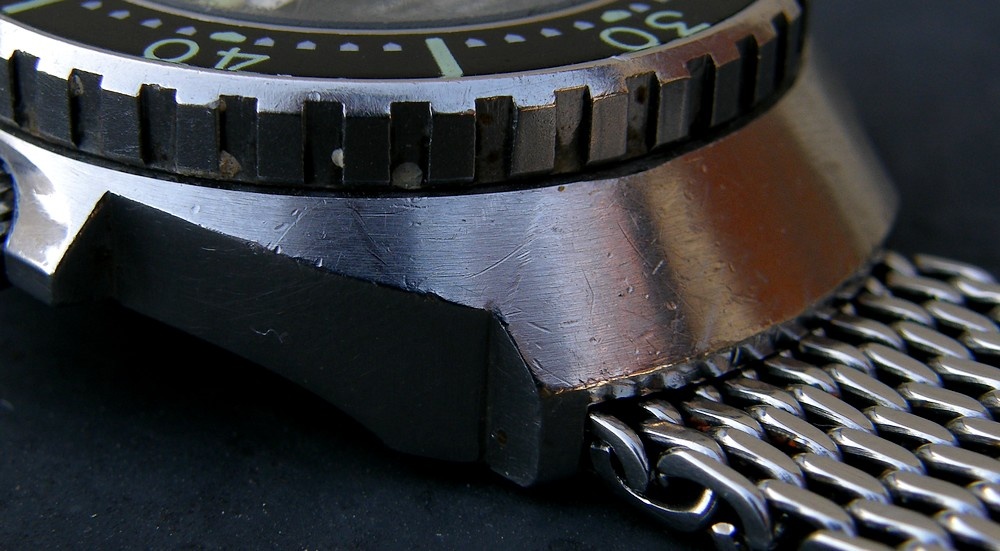
I wanted to be able to enjoy the watch and give it a decent look, but without restoring it too much. So I brought it to my watchmaker, who had a hard time removing the gasket that had melted and was glued to the case:
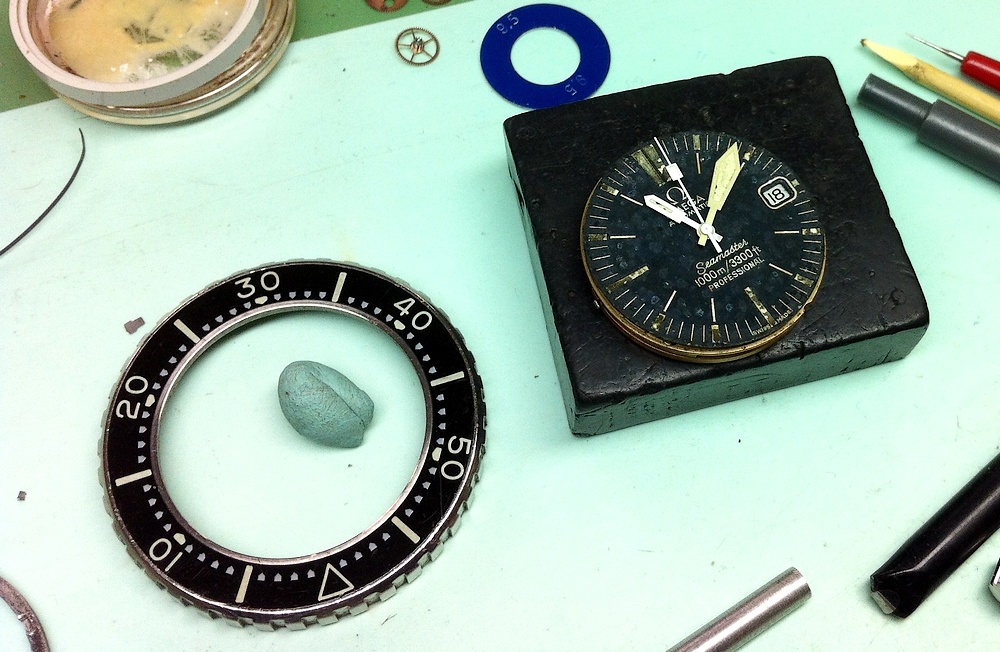
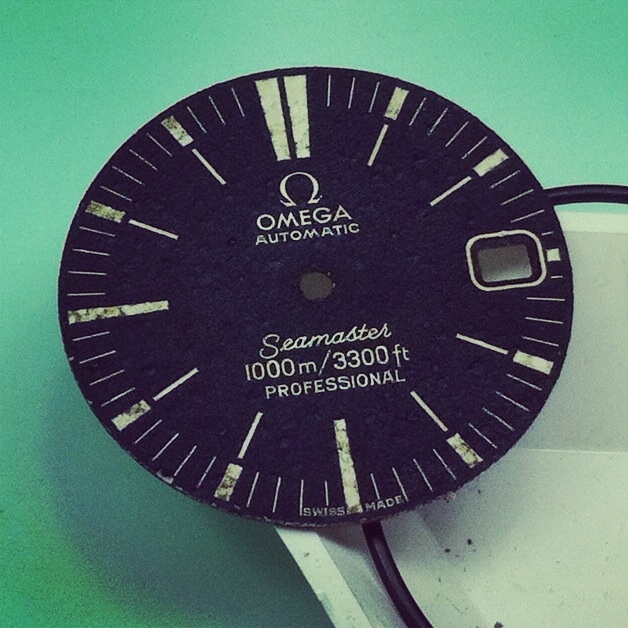
The dial had some stains from moisture and the tritium had turned to dark brown…
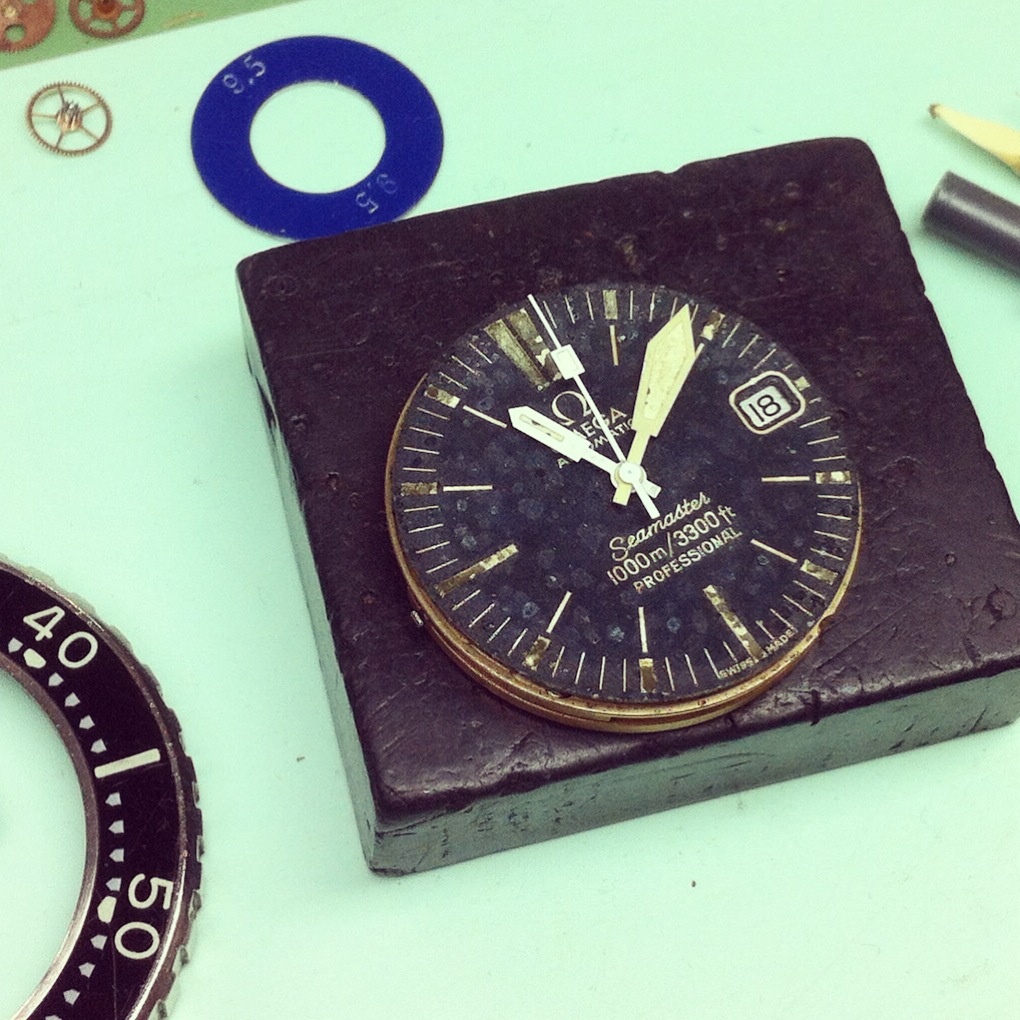
My watchmaker has managed to remove the dirt from the dial and the original navy color came out quite well, as did the tritium of the indexes after a little cleaning:
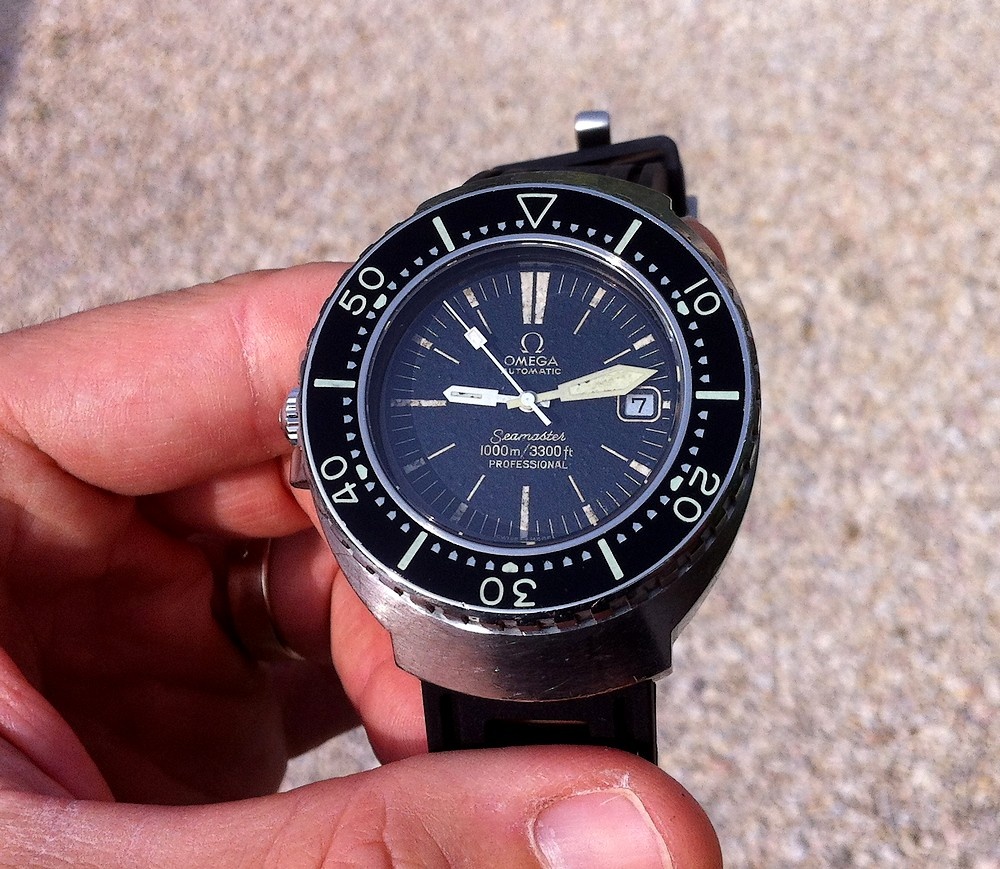
With a new mineral crystal, the watch looks better now….but is still all original, as I did not want to replace any part. Well, at least I can enjoy the beauty of the dial !
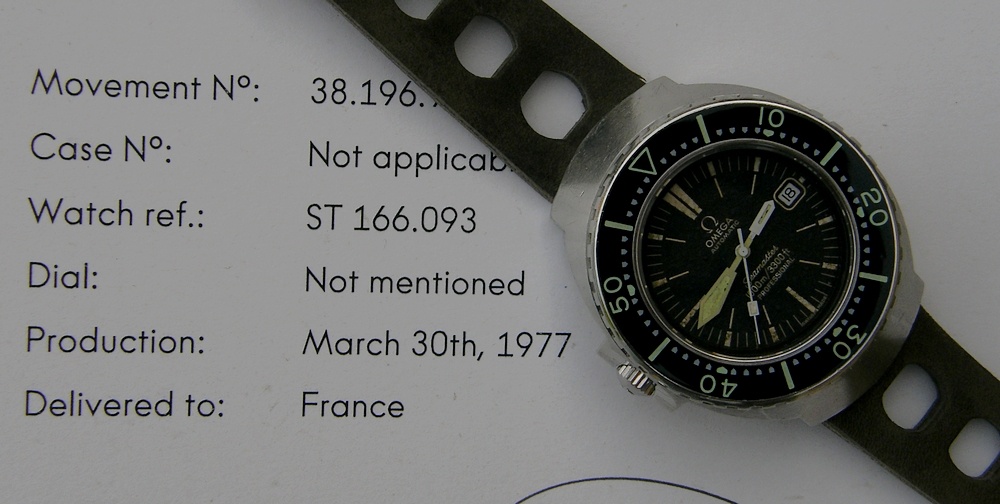
Here’s the Extract from the Records I have obtained from the Omega Museum, based on the movement serial number. It confirms delivery to France in 1977.
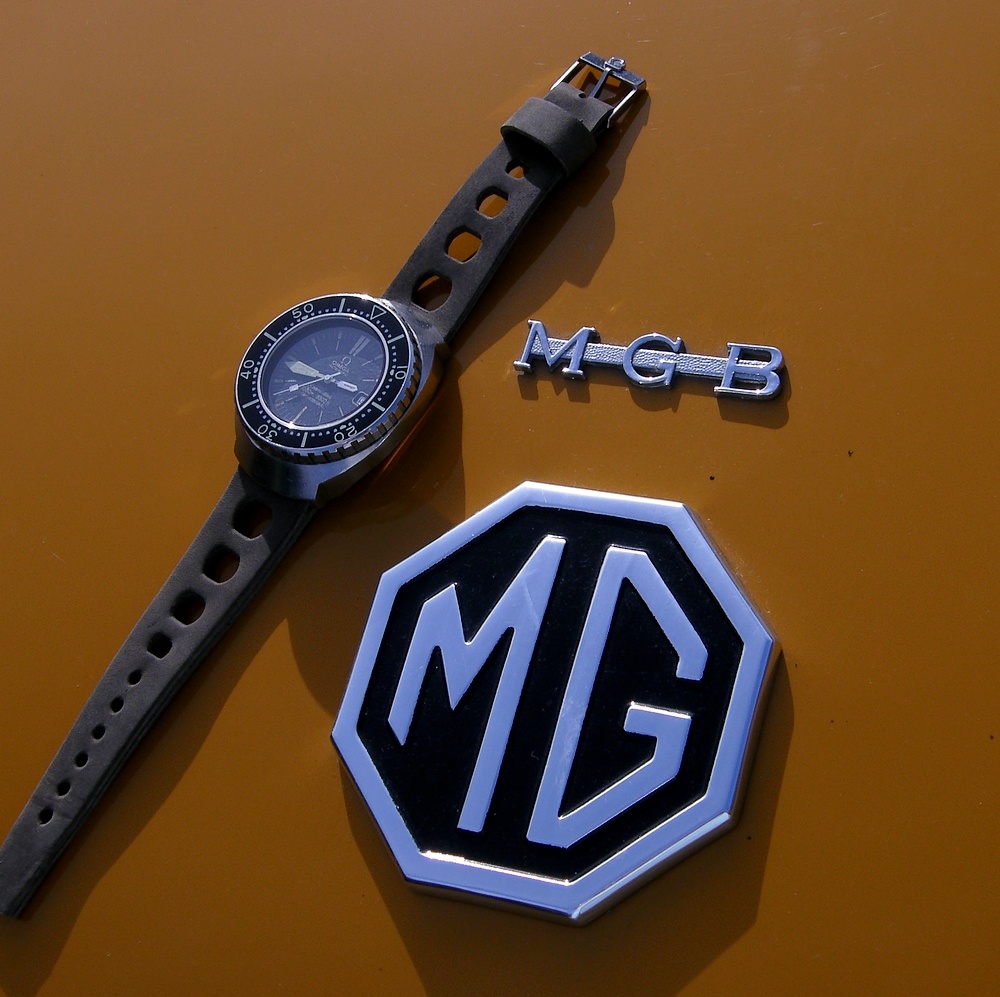
After a hard life of heavy duty and some years sleeping in a drawer, the watch is now back to life. A sort of semi retirement in the South of France !
The Omega Seamaster Ploprof 600, reference Seamaster600, is a specialized instrument within the Seamaster collection, designed for demanding underwater use. It is distinguished by its robust monobloc case construction and unique crown protection system, setting it apart from other Seamaster models as a purpose-built professional diver's watch. The design prioritizes functionality and durability for extreme conditions.
This specific reference features a substantial case, often constructed from materials chosen for their resilience in marine environments. The movement housed within is an automatic caliber, known for its reliability and precision, providing a practical power reserve suitable for its intended use. The crystal is designed for clarity and resistance to pressure, contributing to the watch's overall water resistance.
For collectors, the Seamaster Ploprof 600 holds interest due to its distinctive aesthetic and engineering. Variants, such as the unique 1971 example with an inverted case stamp and a bi-directional bezel, are particularly sought after. The use of specific materials, such as Uranus steel in some examples, further enhances its appeal to those interested in the technical evolution of professional dive watches.
...it's like an honor to hear it ticking again on your wrist !
Very hard to find. Congratulations!!! Cheers, Nilo
Indeed, an original Seamaster 1000m is a very, very rare watch. Most of the examples on the market were built recently with NOS / service parts. Cheers Jeff
That is a real beast. I am glad your watchmaker has talent and was able to restore the watch without removing the originality. Enjoy it. Bill
4,193 Omega listings are live on the eBay market and 362 collector listings on the WatchProSite marketplace.
This thread is active on the Omega forum with 22 replies. Share your knowledge with fellow collectors.
Join the Discussion →