Review
DrStrong's review of the Omega Speedmaster Mark II ref. 145.014 offers a deep dive into a lesser-known but historically significant Speedmaster variant. This article highlights its unique 1970s tonneau case design and integrated tachymeter, distinguishing it from the iconic Moonwatch. DrStrong explores how the Mark II incorporated innovations from the Alaska Project into a more wearable, consumer-oriented package.
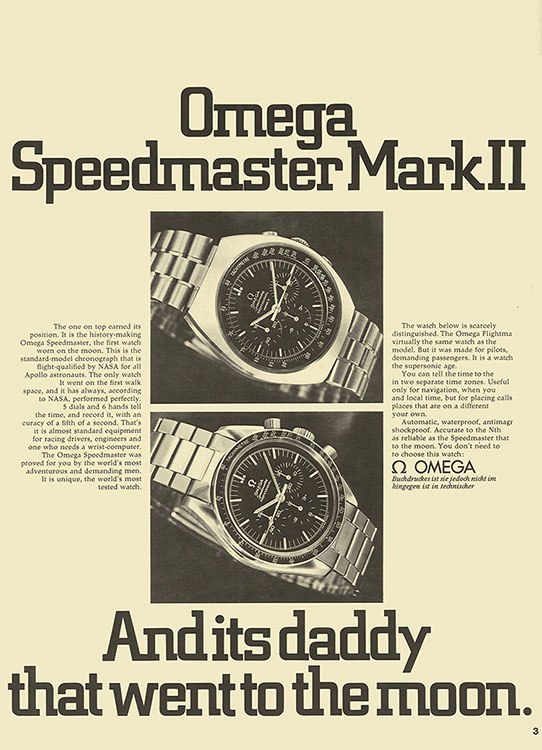
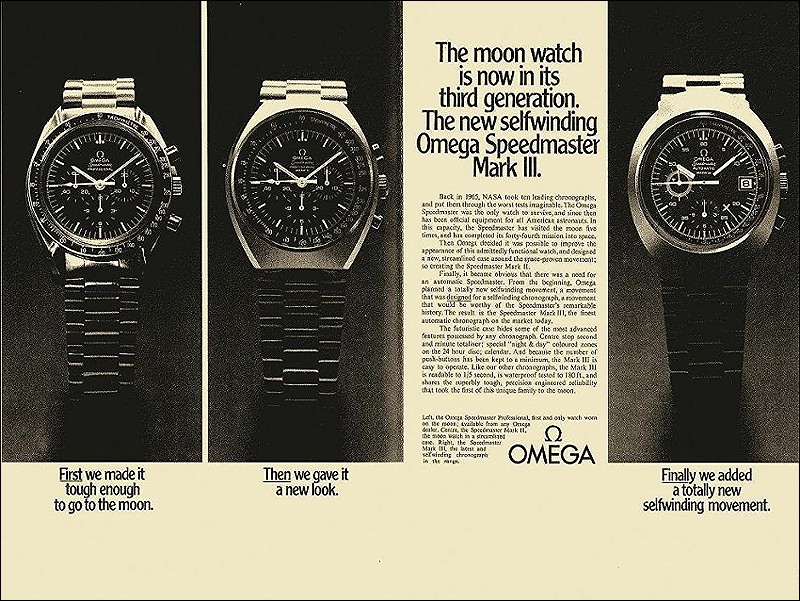




The year 1969 was a turning point for humanity: for the first time, the man managed to break free of gravity to explore space. Astronauts - who did pioneering work in setting foot on the moon - wore Omega Speedmaster chronographs.
The same year, Omega presented the Speedmaster Mark II ref. 145.014, with a new case design enclosing the famous caliber 861, which had already proven to be very reliable in the famous "Moonwatch".
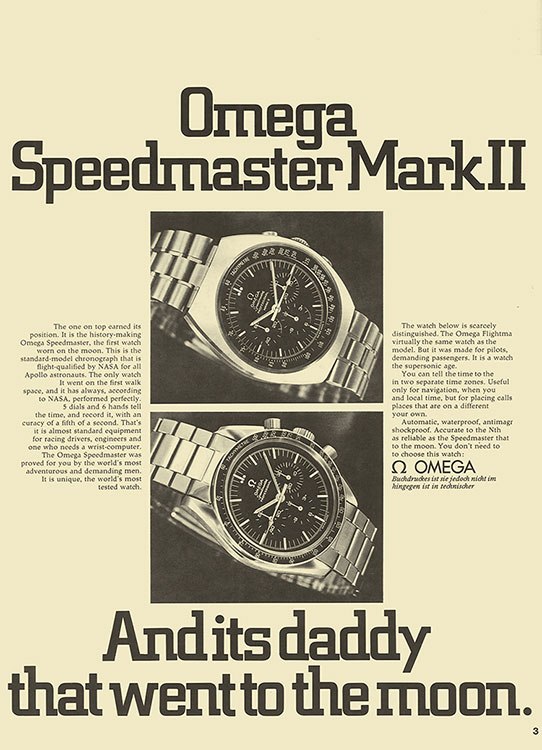
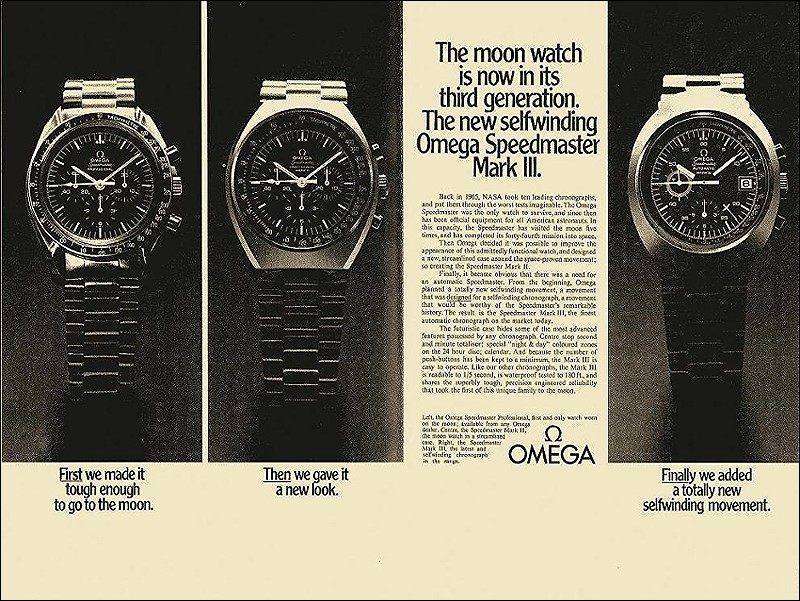
The watch was also launched in order to absorb the Alaska Project R&D costs. This model was followed by the Mark III - which used Omega’s first automatic chronograph movement - the Mark IV and the Mark V; the latter was only available in Germany and is also known as the Speedmaster ‘Teutonic’.
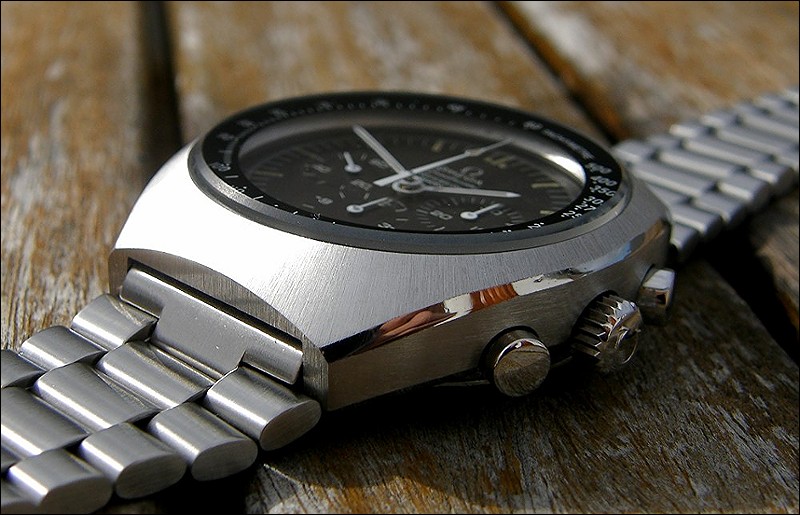
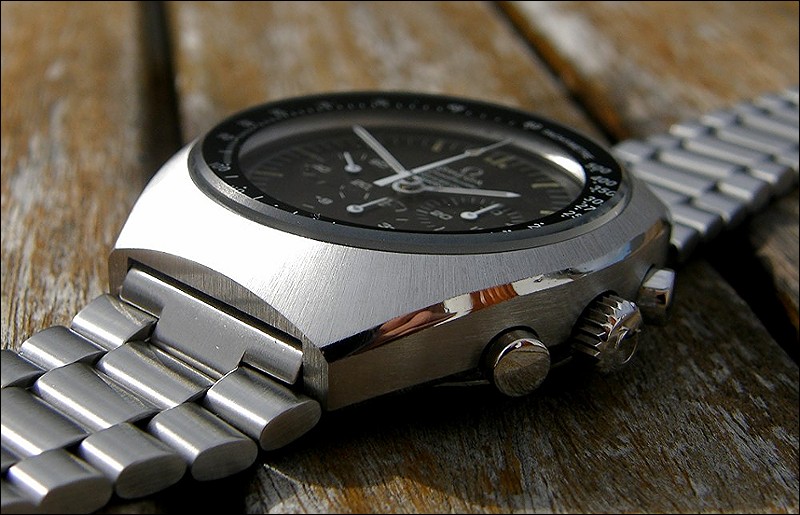
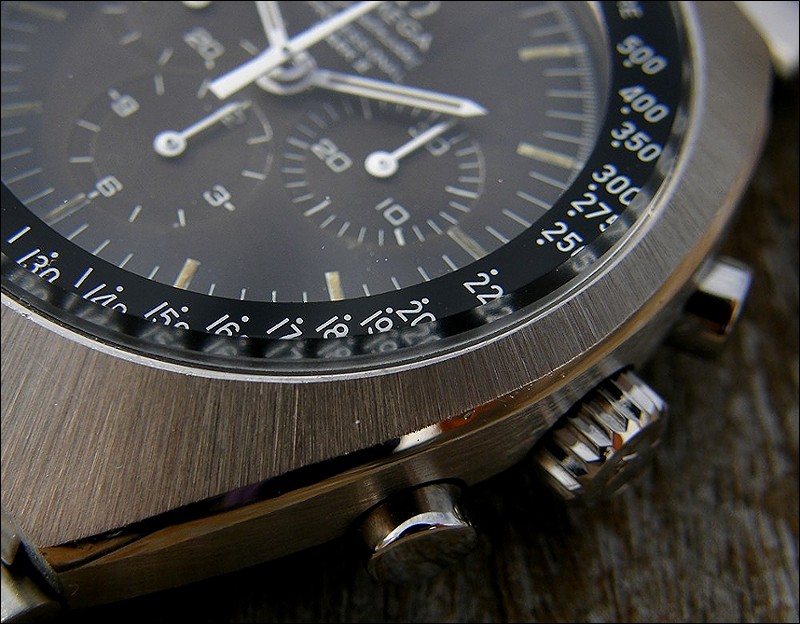
The Mark II employed some of the specifications and innovations introduced in the Alaska Project - however with a more consumer-oriented approach – meaning that wearability was considered after all. The shape of the 45mm x 41mm case is seen nowadays as a typical 1970s style, but the Mark II was one of the first watches to use that shape (other examples belonged to the automatic generation of Heuer Autavia ). It has this ‘egg’ style or ‘tonneau’ shape with integrated lugs and no apparent angles or facets. I am not a big fan of this case shape in general, but I think that this particular design is here a winner in term of balance and case finishing:
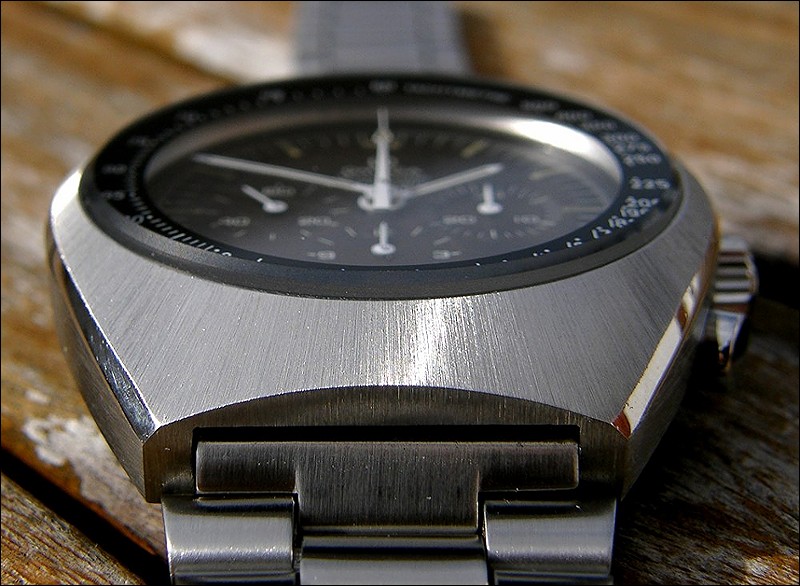
Compared to the moonwatch, the tachymeter bezel is now integrated, but for the sake of legibility it is not part of the dial but printed directly on the inner face of the crystal – crystal that is now a mineral flat glass instead of a domed hesalite Plexiglas. I really like that part of the watch, the inner bezel giving an incredible “depth” to the dial:
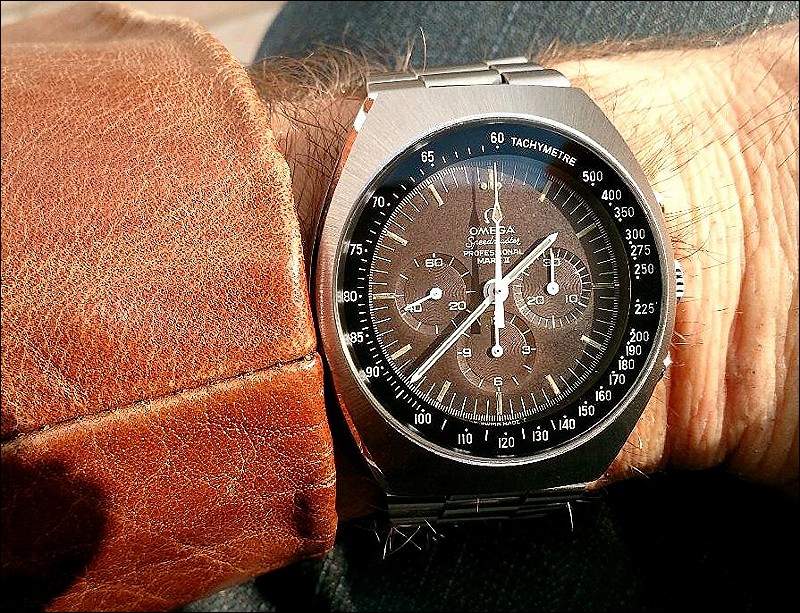
The face is very similar to a Moonwatch, with the same dial and hands. The only difference comes from the inscription ‘Mark II’ under the ‘professional’ at 12.
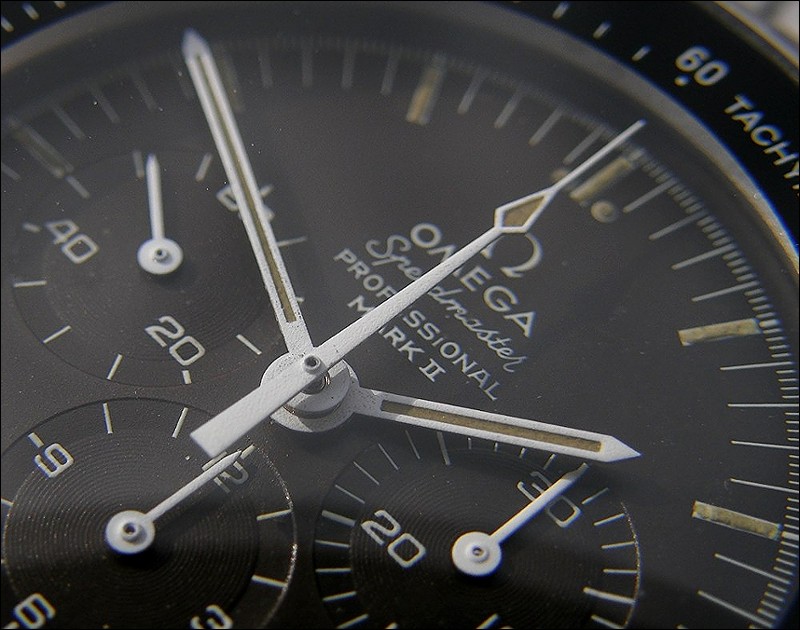
The Omega Speedmaster Mark II still relied on the basic but dependable Calibre 861, the cam-operated variation of the historical Calibre 321. This more budget-friendly take on the cal. 321 was fully tested in the demanding environments of space (post-1969) and has proven to be a dependable workhorse.
The Mark II was also available in a funky ‘racing’ edition, with a dark grey dial, orange accents on the minute rail-track and orange hands for the chronograph indications. It is also noticeable that some examples of the Mark II have become “tropical”, with a dial turning to brown. My watch is a good illustration of that phenomenon.
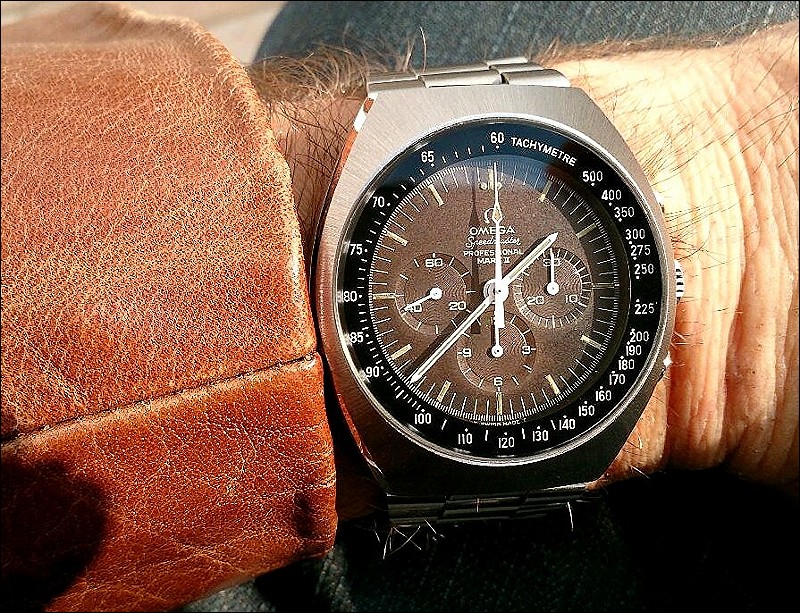
My particular example was delivered in 1970 to the NAAFI (Navy, Army and Air Force Institutes), an organisation created by the British government in 1921 in order to sell goods to British Armed Forces servicemen.
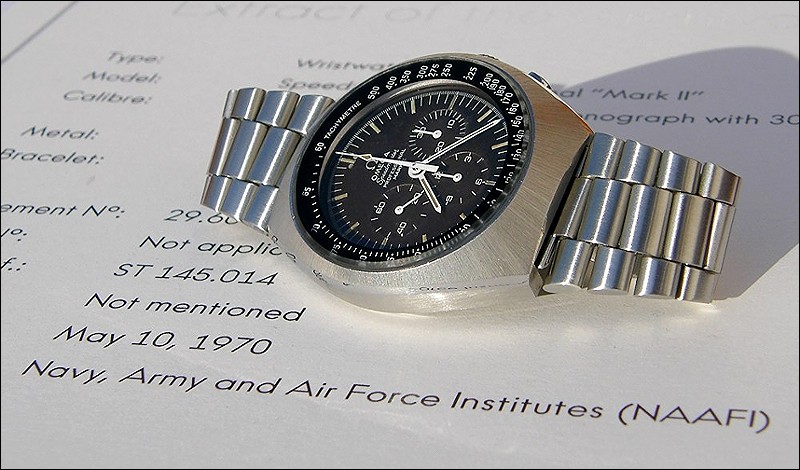
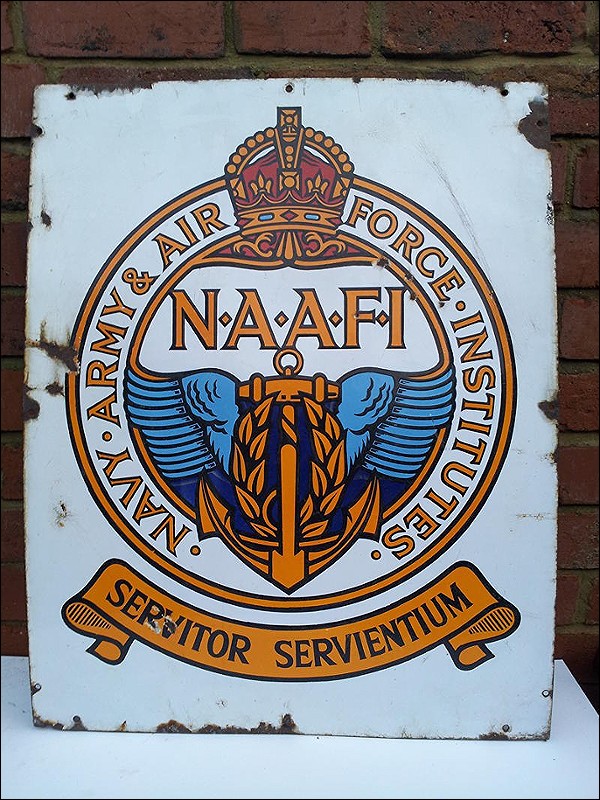
Of course, this provenance gives the watch an additional “soul” and makes it a definitive keeper in my collection. Now my target is a very clean example of Mark II with the “racing” dial…the hunt is on !
the speedy mark ii is a visual feast every time I see a picture of it!
A model i am not familiar with. The case condition is amazing considering its military heritage. I guess the was for high officials rather than tool watch for expeditions. What was the price at the time. Bill
they do amazing jobs on cases
Thank you for this post! Best Blomman
This thread is active on the Omega forum with 27 replies. Share your knowledge with fellow collectors.
Join the Discussion →


