
patrick_y
[PuristSPro Moderator]
33671

Think about what this competition implies...
Imagine if you were Chanel; and you had such a competition. Would the Chanel Maison want to admit that Lagerfeld's designs are better than the current designer Matthieu Blazy's?
Every brand has its duds. The Patek Philippe brand has had many design duds. The Patek 5091 wasn't a good looking watch. And many dial iterations of the Patek 5080 weren't great looking neither.
A true competition of elegance would pit different bands against each other in specific categories. For instance, 1970s sporty dress watches with integrated bracelets would have submissions from multiple brands and a winner is chosen.
Lastly, competition of elegance doesn't work when there are commodity products. In the car world, upscale older cars (at the high end level, not the mass-produced Ford Model T level) used to be unique objects. A chassis was made (by Rolls Royce), and then a coach builder (like Mulliner Park Ward) would build the body and interior. Each car was essentially unique. Let's say you have two unique cars that are both highly judged by the judges in a competition; they're both 1937 Rolls Royce Phantom IIs, you're still going to have one that is in better condition than the other and one with a slightly different design than the other. In the watch world, dozens if not hundreds of identical models exist. Let's say you and I both own Series A Royal Oak models. Both of ours are in perfect and unworn condition, with box and papers. And let's say both of us want to enter our watches to be judged. Well, if one of us wins, doesn't that mean there would have to be a tie?
Now, perhaps I've given this more thought than the organizers hoped. Marketers want us to think simply and superficially. And also, perhaps I've tied in much more of the car version of Concours d'Elegance than what they hoped too. But, as a watch person with watch industry experience, I can tell you this is a very imperfect marketing exercise. The entrants are heavily chosen (because you can't have two identical watches submitted from two different entrants). If two identical watches existed (and remember these were not unique objects), only one would be entered in the competition - by the owner who has a closer relationship with Phillips or Vacheron Constantin. Meaning there is heavy politics at play here. And you're comparing within one brand. You should be comparing multiple brands across one sub-category (like 1970s sports watch would be a good category).
Thus, as a concept, the "Concours d'Elegance" in a watch world just simply wouldn't work. You simply can't compare a single brand with itself. Especially with entrants chosen by Vacheron Constantin and Phillips. This is nothing more than a publicity stunt, and not one that was thoroughly thought out. Thierry Stern at Patek Philippe would never allow such a competition in his own brand. Stern would think he hired the wrong person if anyone in his company or any Management Consulting firm came to him with such an idea. Would Chanel admit that Lagerfeld's designs are better than their current designer's designs?
And for the record; I ADORE the Vacheron Constantin brand. I VERY MUCH LIKE Christian Selmoni (and his suits). But, this whole concept is hedging that the average consumer doesn't know the details nor the implications of the concept of a "competition of elegance."
Available on the marketplace
812 Vacheron Constantin listings are live on the eBay market and 207 collector listings on the WatchProSite marketplace.
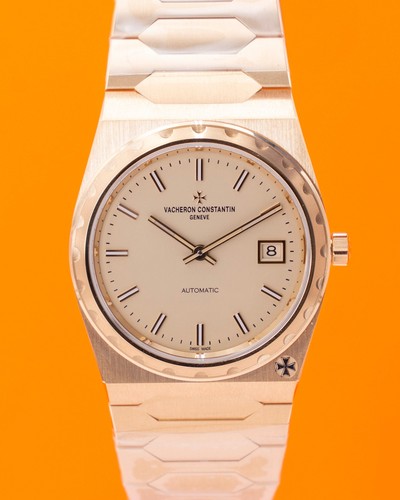

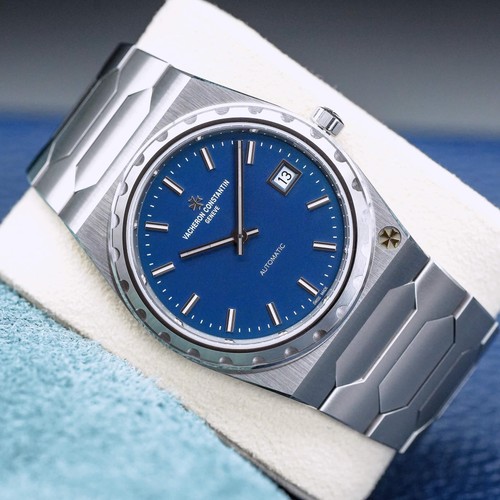
Which brand has impressed you the most recently
For me its Vacheron. Their 270th anniversary line, their exceptional timepieces like the solaria ultra grande complication la première and their upcoming Concours d'Élégance Horlogère. Seems like they listen and engage more than the other brands, This pro...

The Concours d'Elegance is simply a marketing exercise.
We had a similar plan on WatchProSite - and that's our WristScan. We chose not to call it that as it a "Concours d'Elegance" (French for Competition of Elegance) as we wanted it to be more collaborative and not "competitive" per se. Back to Vacheron Const...
True, I believe it is a marketing exercise, but it still encourages participation from connoisseurs. I haven't seen any of such from Patek despite being an owner.
I look very much forward to the 275th anniversary as well!
If you asked my lonely opinion...
Patek wouldn't have a "competition of elegance" as such a competition could be seen as inelegant. Encourages participation? What participation? It's not like you restored the watch yourself... It's just you own it. A competition of elegance in the watch w...

Think about what this competition implies...
Imagine if you were Chanel; and you had such a competition. Would the Chanel Maison want to admit that Lagerfeld's designs are better than the current designer Matthieu Blazy's? In the car world, it makes more sense. As it's still a competition of eleganc...
You’ve clearly given this more thought than I have or will :-). I just think it’s a nice way to showcase and fuel interest in vintage VC.
There are lots of great designs that get completely overlooked because of the collector and auction buyer hive mind.
I agree. It is always good to get activity and publicity.
But the idea here is auction-related. Auction houses need "winners" to generate interest so these pieces will increase in value. Brands need value increases since a real driver of watch sales is value retention related. And a rising tide lifts all boats, ...
I agree that calling it a “competition of elegance” is the wrong framing — for watches in general, and especially for a single brand.
Competition implies winners and losers, which feels inelegant and philosophically messy. A showcase or celebration of historical pieces fits far better. Where I disagree is on participation. Participation in watches isn’t about restoring a movement yourse...

The 270th anniversary releases didn’t do it for me,
and I think VC suffers from being part of Richemont, with a lack of true personal vision at its head. By comparison, I find what Karl-Friedrich Scheufele is doing for both Chopard and Ferdinand Berthoud much more interesting. I don’t like all the decision...


Parmigiani for consistently adding to their offering in a controlled way
Establishing the PF format and working within that on dial updates etc., really enjoying what they are doing, VC of course, every year they come with exceptional novelties whereas I feel PP have a more glacial approach... I like Moser also, for similar re...
Congratulations on your first. I hope it’s “one of many” and yet these are “one of not many”
I agree with their excellent customer experience. Here’s mine saying hi. ...