
What do you think about Brand Boutiques?
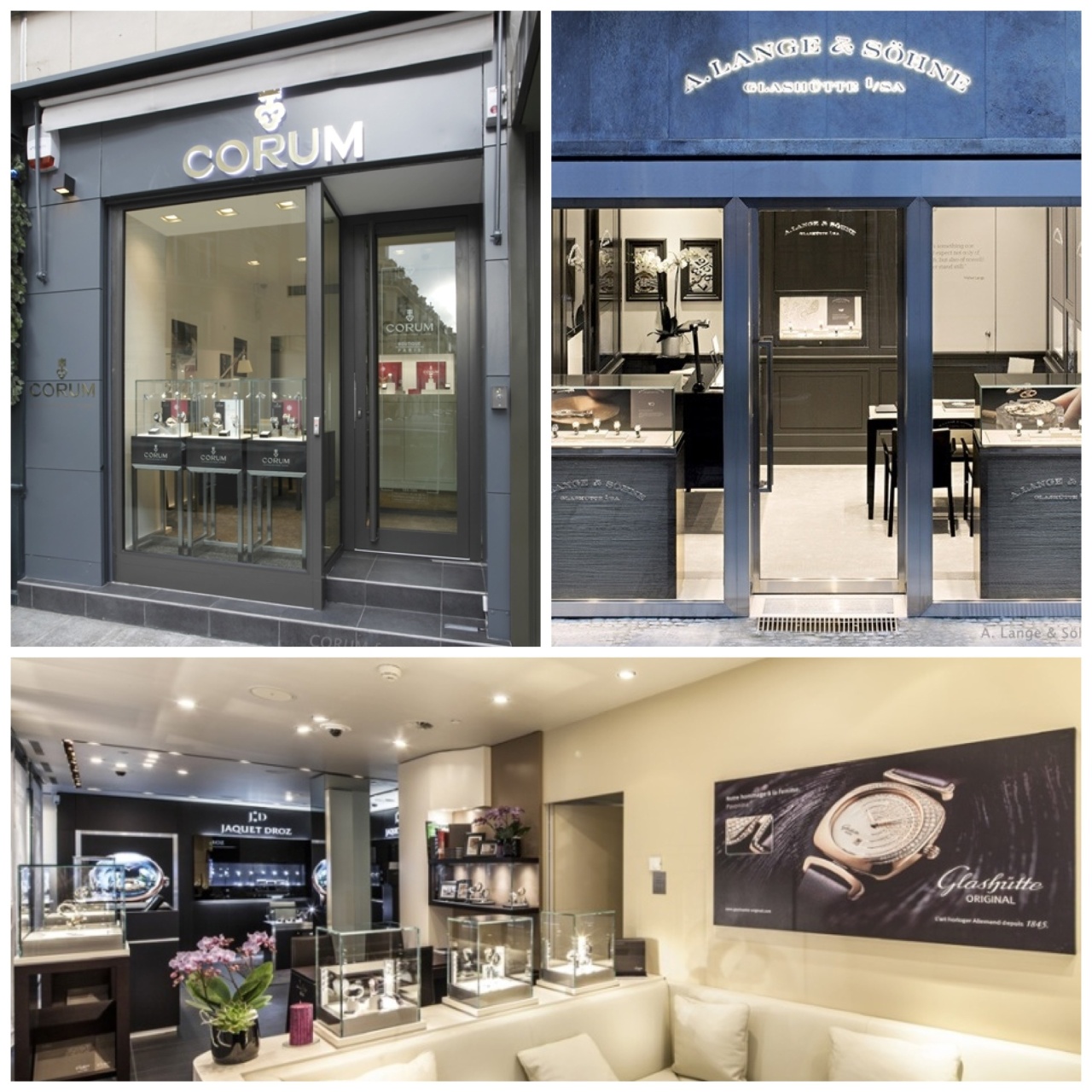

Boutiques in Asia
Why not just tell them?
99% of the stores of any kind I visit, someone asks me if they can help me. I just tell them "No, I'm just browsing right now, but thank you for asking. I'll come to you if necessary". Or something like that, depends on where I'm at at the moment.
I don't want to offend you, but I feel it's rather rude to 'ignore' someone until they "get the clue".
When someone keeps bothering me, I just tell them they need to leave me alone in a respectful way.
Handling both types of salespeople these ways seems to work out fine, in the end, they've got to respect my wishes as I'm (possibly) their client.
Sorry for not explaining myself properly...
Now I see
And I know the feeling. It doesn't happen very often, but I understand what you mean now, you feel their eyes following you, taking mental notes of where you stop and watch for an extended amount of time etc.
Although I must say, that only happens to me very rarely, or I just might not be noticing it 
There's also one particular thing that I truthfully hate, which is related to the sharks and tuna joke. That's when there are multiple staff members and no customers around, and they start 'helping' each other out; "Wow that's a great deal he's offering you right there!"...
I think I see your point

simple … I don't want them
It seems that the Boutique Editions
don't think it will work
Panerai was one of the first to try it and I know a lot of their clients didn't like this decission (PAM 448 and 449 for example)
I was one of the customers that stopped buying , and I know there were a lot of us.
I think they won't make this mistake again. I know the make watches like the 41X series which is in fact a simple 111 with a 'boutique' case back. But that doesn't bother me. But if they decide to keep watches like the 532 / 507 / 508 only for boutiques, I wouldn't be interested anymore.
btw, I just bought one of those 3 .... AT MY AD ))
"customer is king" .... I decide where I buy, these brands should be happy I ( or better we) want to buy their watches. The last years the watch industry was booming and the brands became way too arrogant. They thought they could decide where a client should buy a watch and it seemed as if we should be glad we could get a specific watch. Today I think things are changing. A few days ago Swatch Group reported worse than expected sales figures. Export to China is not what it used to be for the moment ... maybe it's time to get back to reality. Some brands are way too expensive today.
I think they will be glad if we buy their product ... in a boutique OR an AD

+1 on most, what you said: customer is king.. and not the Sales Force .. Or revenues ;)

My opinions
My fear is

Only the nice relationship matters but

They Have a Place
With respect to the brand boutiques, I believe they play a few important roles for their respective brands and customers.
1.) The boutique should, in theory, offer the standard of customer service, courtesy, and product support that the manufacturer considers the gold standard for its points of sale. In markets like NYC, London, Geneve where there are many ADs and grey marketeers, a factory-owned boutique offers manufacturers and opportunity to set the standard and force the resellers to raise their games. Of course, this assumes that the factory spares no measure to make its boutique the local standard for customer service, but I have found that the NYC brand boutiques generally uphold this model compared to mass-retailers like Wempe, Tourneau, and others. The level of product knowledge at a single-marque boutique will exceed the multi-brand vendors almost every time.
2.) The boutiques generally offer a better opportunity for customers to view a large selection of a given brand's products. Non-boutiques rarely keep inventories of extreme complications, esoteric models, limited run models, and unpopular models. Boutiques are a great way for potential buyers to see these watches in person without having to put down a deposit or commit to a purchase beforehand. Even if one were to examine a watch in the boutique and then buy it through another channel, the manufacturer still benefits from the sale. That's not a business model that works for ADs. If I visit Tourneau to see a watch and place an order with Wempe, Tourneau gets no benefit. From a customer's perspective, the boutique gives me a chance to see pieces I would not be able to examine anywhere else.
3. Boutiques generally offer better access to discontinued models. Due to their relationships with their respective factories, boutiques tend to be the best way to source new-old-stock watches that have been out of production for a year or more. If you want a watch that is not listed in any AD's inventory and hasn't been in production for some time, I've found that your best option may be to contact a factory store.
4.) Brand boutiques, when run in ideal fashion, are a great way for manufacturers to build positive relationships with customers, engage with owners, and maintain brand loyalty. This is a two-way street that benefits both parties. The manufacturer encourages customers to identify with the brand, build worthwhile working relationships with boutique personnel, and creates the potential for repeat sales. The customer enjoys a higher standard of service, value-added events like exclusive viewings, dinners, and cocktails, and access to occasional boutique special editions.
If a boutique is run poorly and becomes little more than a single-brand overpriced AD, then the system breaks down, but a great boutique experience can be of mutual advantage to customers and manufacturers alike.
-Tim

It's all about the employees.

I had a similar experience at
Funny!

Sorry for the long post...
Thank you for response.

service is seldom (if ever?) a revenue stream
_john

I am with you here, John...

+1, John. This should be more often explained and elaborated, to get the " price under the
Service of our watches "
Best,
Nicolas
Profits vs. Revenues
yes, profits
I can't really say more, but just do some cocktail napkin math for a watchmaker paid $80k a year plus benefits and taking between three and eight hours to overhaul the movement (depending how complex it is). Add in $50 to $100 in parts. Factor in unpaid work on warranty jobs, goodwill gestures and comebacks (even if you're using the "fantasy target" number of 5% some brands throw around).
I'm not saying impossible to make money on service (independent service center do it obviously), I'm just saying the brands don't.
_john
Some thoughts...
a little more
But the real problem with those calculations is that you didn't touch ALL the other staff, technical and otherwise. I only included watchmaking because it's the most time intensive and highly trained (read: expensive) part of the operation, but the diagnosticians, polishers, case assembly and quality control technicians all command a decent salary as do the clerks coordinating work flow, delivering spare parts, performing data entry and the phone and/or counter staff talking to customers. You don't have to trust that I know what I'm talking about, but I know what I'm talking about.
Hope we can discuss it over a drink should you find yourself in NYC some time.
_john
This message has been edited by ei8htohms on 2014-01-12 17:06:04

... which is the reason why many manufacturers invest to extend service intervals ...
Marcus
Very well taken point.. Paradigm change forced.. Or simply tides of time ?
Thank you, and have a good next week !
Best, hs
Excellent reply - very valid points!
Very well said.. And perceived.. Thanks for explaining the store-in-store model ..
Very educational remarks, thank you !
Best, hs,