
patrick_y
[PuristSPro Moderator]
33677

Everything stays up on our site...
Everything that is posted stays up on our site. What you see in the front page are the newest posts in chronological order; thus, the newest posts are on the top. What you see in the sub forums like Horological Meandering and the branded forums are all based on the most recent post. So for instance, if I make a post in a 10 year old thread, that one pops up to the top again.
As our terms and conditions state, our moderators don't take any favors from the brand and anything we receive is declared. The moderator team has guidelines to disclose their biases within the moderator team. For instance, if today, I became a minority partner at a jewelry store that happened to be a Rolex dealer, I would have to declare that. The reason why you don't often see the mention of brand influence is that it's rare that it's ever occurring. Especially in the past few years during the pandemic, where there weren't a lot of brand events going on. Considering you joined in 2019, just before the pandemic, you definitely had less opportunity to see these disclosures.
Brands definitely don't directly influence what is said on WPS. Brands can, at their discretion, invite WPS to send a moderator to attend their marketing event as a journalist. And that moderator would likely post about what he learned at that event if he felt it would be of value to the group. If that brand were to provide travel accommodations (mainly we consider airplane flights a travel accommodation, we don't generally account for ground transportation as travel accommodations) that moderator is generally required to mention that. Now, considering our moderators are all very well traveled and experienced people who have seen the good things in life, they're not easily impressed. And if a brand were to keep on pouring me $1000 bottles of wine and 50 year old Macallan whisky, I'd be grateful, but it wouldn't make me say a watch is better than it is. Unfortunately for us moderators and fortunately for our readers, brands DO NOT pour Haute Brion wine (my favorite) nor exceptionally rare Macallan (another favorite) and that's primary because journalists are primarily journalists and not all of them have such refined tastes, so brands don't see that as a good ROI. So brands typically invest in other things for journalists, lots of content, lots of beautifully printed press releases in every language, lots of fancy photographs since each journalism outlet doesn't want to use another photo that was used by a different outlet. Brands typically have a nice thank you dinner for some journalists - the dinners are nice, but not usually extremely fancy - and brands aren't trying to do anything to sway journalists. Brands used to give journalists little gifts. For instance Montblanc used to supply their press kits in a USB thumb drive that came wrapped in a fancy Montblanc leather business card case. We journalists on WPS aren't required to declare those unless the gift is over $200. I got a candle from Vacheron Constantin. And I've gotten a fancy notebook from Parmigiani Fleurier. And lots of little gifts over the years. AP gave mittens one year at SIHH. One year AP gave noise canceling headphones - that's the nicest gift I've ever received. Very nice! But not every moderator got one, so the moderator who didn't get them wrote about AP's SIHH presence that year. Would I have written something more positive about AP? Definitely not. Are the brands trying to buy undue influence, not with WPS. Are brands more likely to get mentioned by a moderator on WPS if they approach us? Absolutely! Any brand that shoves a really impressive product in my face and I'll be interested. And I may mention it on the site. And with Hodinkee, the Brands and PR agencies don't have to buy influence - the writers are given assignments by the editors so the writers have to write about that brand whether the writer likes the brand or not.
I hope this answers your question. All your questions have been very fair and very polite, so I'm very very happy to answer your questions!
The main thing I would be careful of with any news you get, is qualify the writer's expertise. A lot of writers in the watch journalism space knew nothing about watches. When I first started attending these press conferences, some of these journalists (some came from writing Finance stories or came from jewelry or fashion and knew nothing about mechanical watches) were asking the weirdest questions that suggested they didn't know what a hair-spring was and how it differed from a main-spring. Some journalists drank the Kool-Aid and started perpetuating old romantic myths that simply weren't true.
If you watch this video, a tremendous percentage of facts stated are incorrect, and this from editor at a major watch news website!
1. Rolex recognition is not created in the way she mentions it. It's simply created by the fact that Rolex design has a DNA and that DNA is very recognizable.
2. Rolexes don't take a year to make. Not in any sense. Unless you want to calculate the time from the iron ore is warehoused, to smelted, to transported to Rolex's factory, that could be an indeterminate amount of time. Then I could say any alligator strap watch takes 2 years to make since we still need to count the alligator in the egg.
3. Rolex's most popular SKU was never a ladies model.
I was also criticized in my early years as a moderator by our management team for starting an article with "for the past 250 years, Vacheron Constantin has been in business" and the rationale for that senior manager's criticism was that I need to know my audience, this audience is already an expert on watches and they don't want to be told the "advertising message" about how long Vacheron had been in business and they just want to hear technical facts that made Vacheron Constantin's latest watch and why those facts were special. I felt it was a good point, and I tried to keep that in mind. Don't perpetuate the marketing message. Stick to the facts that you think are truly special.
Available on the marketplace
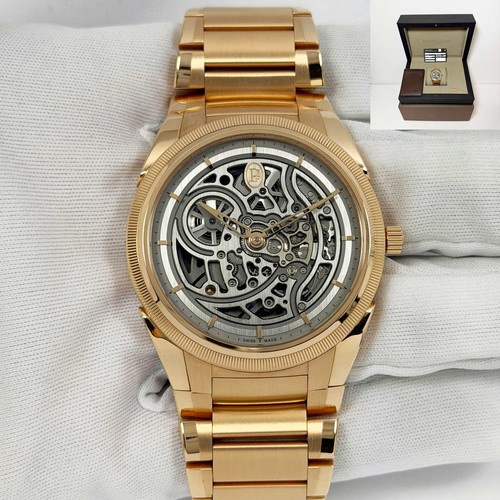
228 Parmigiani listings are live on the eBay market and 71 collector listings on the WatchProSite marketplace.



Why aren't more people talking about this?
Whole industry was caught off guard with this piece...
Agreed.
Reliability should be at the forefront of priorities in R&D
Christopher ward

I agree. I don't feel it it an "unknown brand" at all. They have been around for awhile now and actually quite popular.
It's fairly unknown.
Ageed.
We do disclose it...
I really appreciate the time you took to post this - It's something I have never seen discussed here.
Everything stays up on our site...

Thank you for this insightful message.
Thank you for your kind words!

Hear, hear!
Thank you. I really appreciate the honest reply. My question, however, is center more around members posts.
Generally, we don't censor posts unless they violate our Terms.
Thank you. So there is a record of sorts of who "complains" or is deemed as a "complainer" and in a case as you describe they may be treated differently...
Not exactly... There is no record.
You're welcome!
Let me illustrate this with an anecdote ....
Wow! Amazing!
Absolutely Marcus!

CW is popular among younger collectors, those starting out, and collectors on a budget. It's also made public guarantees that it'll never charge customers more than 3x the cost of production, in an industry where this can exceed 10x or more

Thank you

I completely agree….
Yes, it sold like hot cakes
Perhaps it is just the people here not talking about it...
It was too much fomo for my taste.


We are, just not in this discussion board until now. 👍
My apologies, no one really knew...


My thoughts
The design is surely not to everyone's taste


An amazing timepiece and it is of course a shame that many independent brands remain firmly under the radar of the many.

I looked at it and the watch sold out very quickly


I can only concur with all here, really cool proposal for this price point…
