
cazalea
[Seiko Moderator]
20966

A White Van Man Finds the Wilderness by Looking Down, Part 5
My last report in the White Van Man series touched on discovering wild desert sheep and metal monsters in the Anza-Borrego desert. As we finish up this trip report, I will reveal some of today's horticultural (green stuff / plants) action.
REPORT: I confess that I descended into true WVM behavior by honking loudly at a Toyota Prius doing 45 mpg downhill on the freeway. He won't try that "economy coasting" trick in front of a White Van again!
Since we are limited by the energy left in my creaking bones, let me transition to the plants I found in the Anza-Borrego desert today.
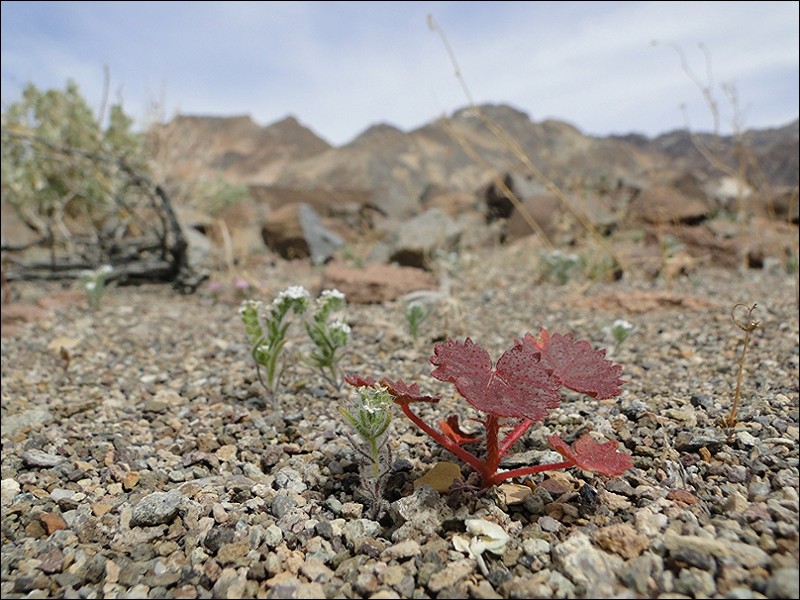
To preface this episode I have to explain that a few years ago we went to Death Valley and I discovered a world of tiny flowering plants. To see them you have to get down on hands and knees, putting your camera lens into the sand.
Since we are limited by the energy left in my creaking bones, let me transition to the plants I found in the Anza-Borrego desert today.

We went out into the aptly-named Badlands, at the far right corner of the map above.

Such as the get-rich-quick plan of the palm tree nursery man, which tends to end up in tears and impenatrably-dense thickets of fronds.
Or the grapefruit orchards which are protected by immense windbreaks of other trees, which themselves become impassible.

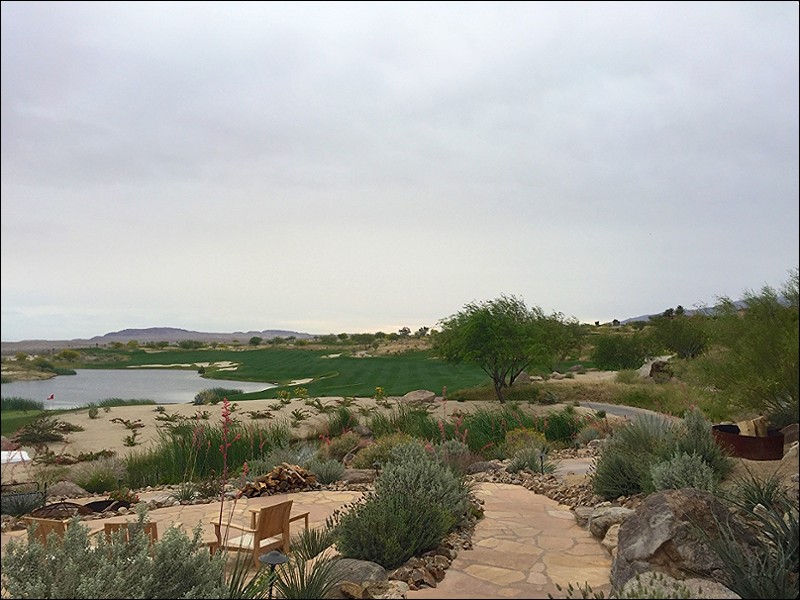
Or finally, the constantly-recapitalized plantings of green grass, aquatic plants and decorative trees at the ever-recruiting (and constantly bankrupt) exclusive golf resorts.
In a few places you can find native people who manage to keep all these varieties growing in moderate harmony.
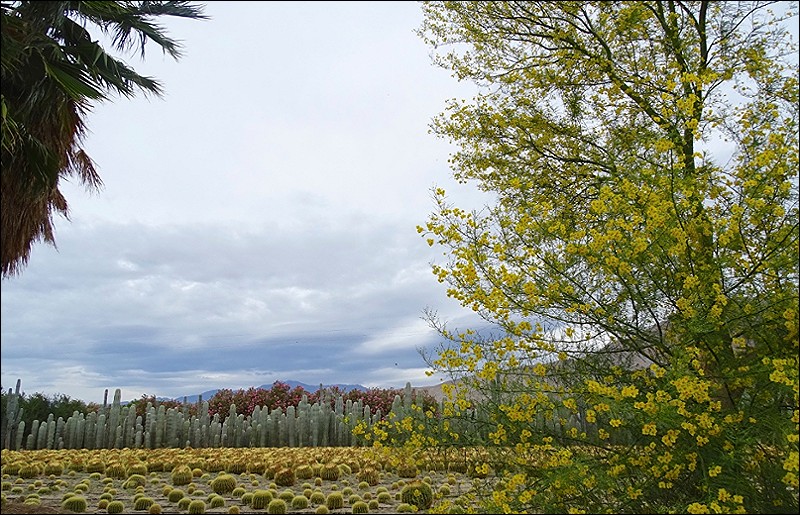
The plants that Mrs C and I sought are high on the hillsides, overlooking all the schemes that come and go beneath them ... were prefer the cactus, the ocotillo, etc.
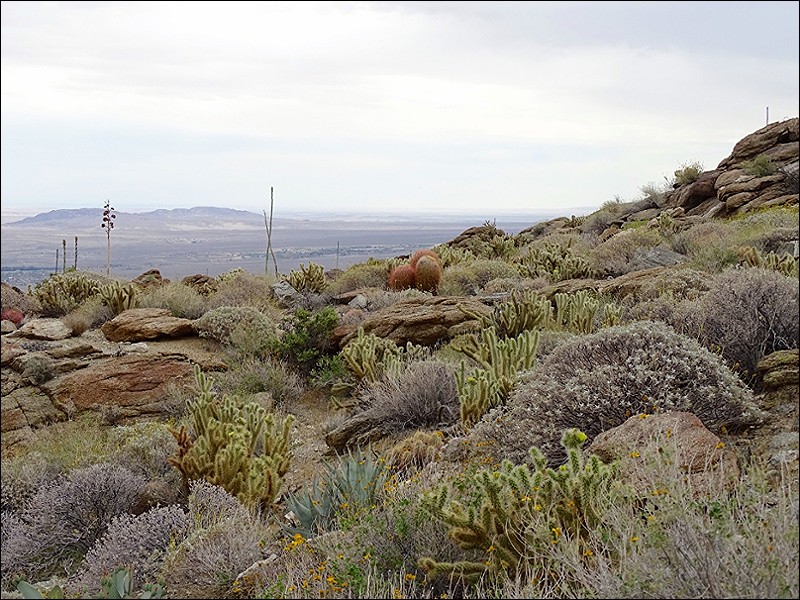
These flame-tipped ocotillo are about 15 feet high.

As we reached the upper northwestern corner of the desert, near Ranchita, we were at 4000 feet elevation. The plants get more water here but in addition to blazing heat, also must survive snowy winters.
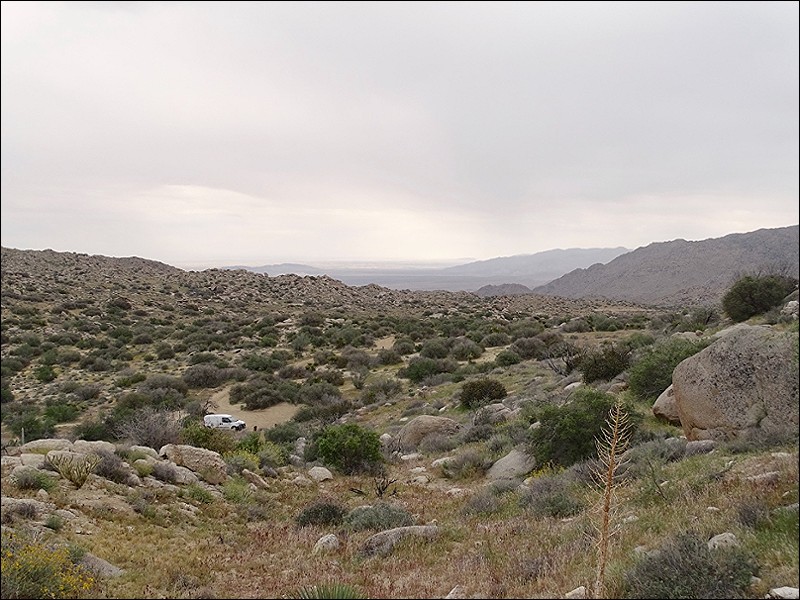


As we wandered across the park boundary back into the "outside world" we found miniaturization of a different sort.

Look closely below - is that a tiny chubby White Van Man on the porch, with his truck by his side?

It looks like the women and kids live in a different house

While the nerds live over here in an old transaxle.

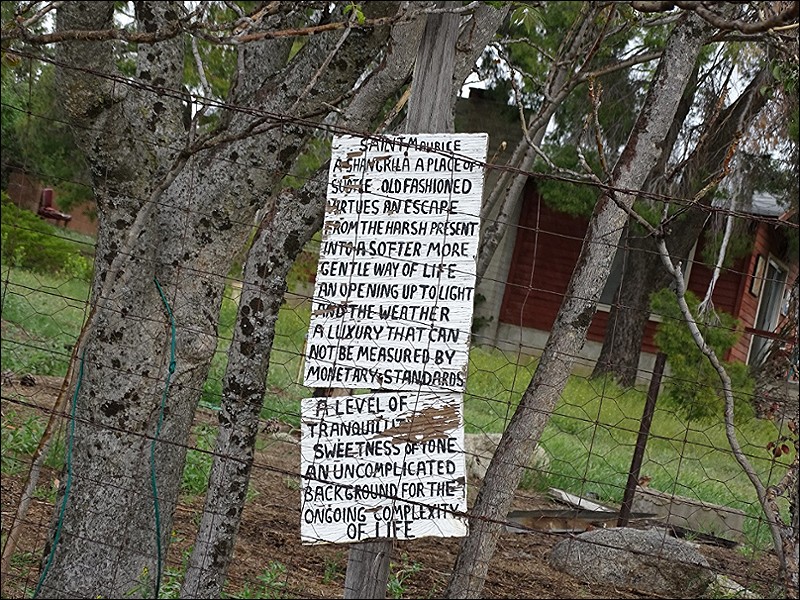
This is the tiny village of Saint Maurice "a Shangri-La"
Heading westward, we turned off the main road and entered one of our favorite places, that we call the "Land That Time Forgot."

The road winds through the mist-shrouded hilltops.

Regarding the White Van, I can only say that traveling 10 mph downhill for 4 hours greatly improves its fuel economy figures.
In case you think that the government will come in someday and pave the road, here's a sign of how slowly the budgets get spent in Mesa Grande.
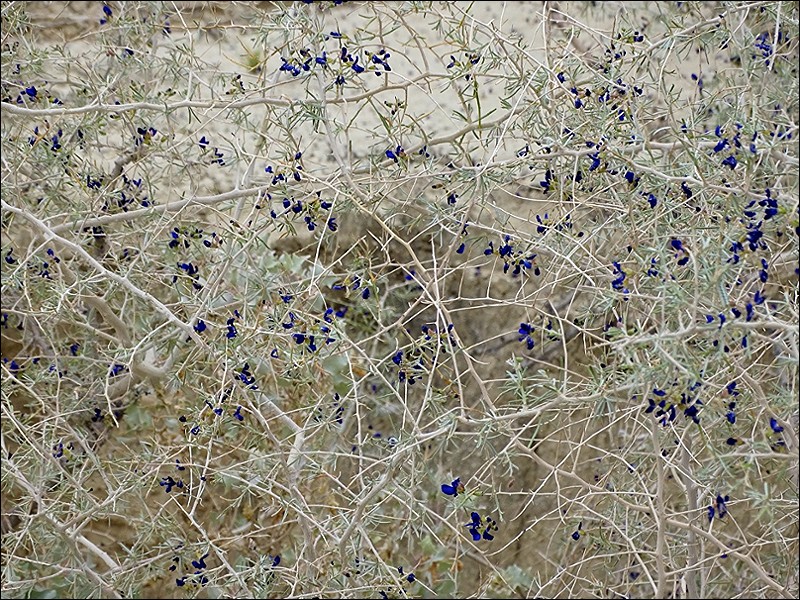
Native plants in the lower reaches of the desert (near Sea Level) are attuned to the heat and dryness but that doesn't make them uninteresting. This is a first-time discovery for me - a flowering thorn bush with beautiful cobalt blue flowers the size of tiny blueberries. I'll try to find its name and insert that in here.
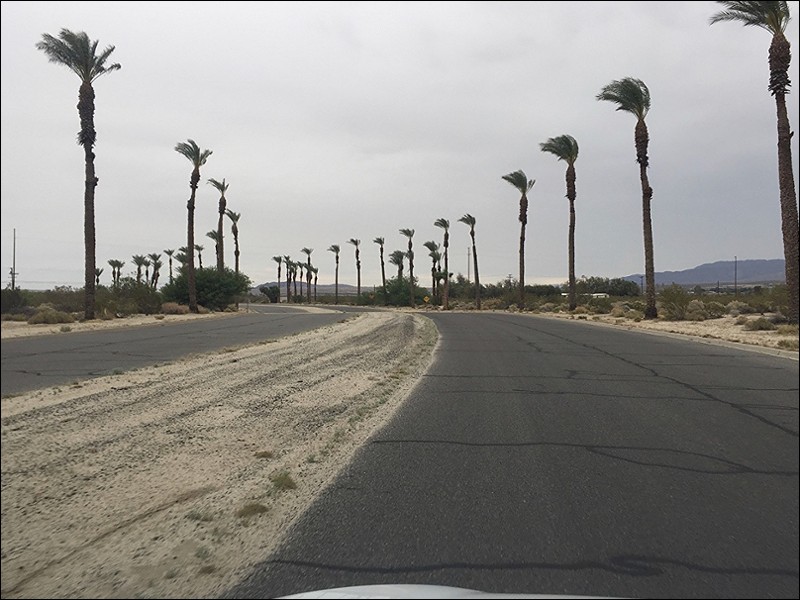
Imported flora in desert towns tends to be for landscaping or commercial purposes, such as these palm trees decorating a never-built subdivision (deserts are generators of dreams and schemes).
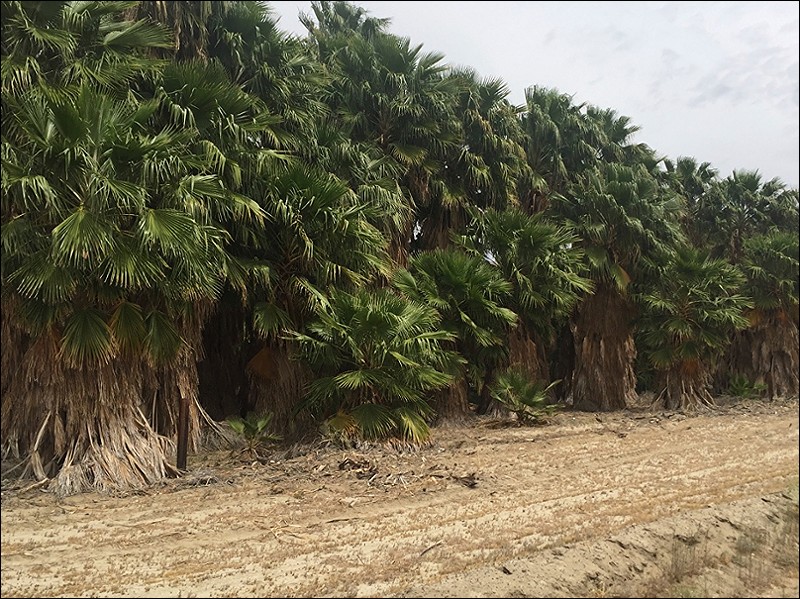
Such as the get-rich-quick plan of the palm tree nursery man, which tends to end up in tears and impenatrably-dense thickets of fronds.
Or the grapefruit orchards which are protected by immense windbreaks of other trees, which themselves become impassible.
Or finally, the constantly-recapitalized plantings of green grass, aquatic plants and decorative trees at the ever-recruiting (and constantly bankrupt) exclusive golf resorts.
In a few places you can find native people who manage to keep all these varieties growing in moderate harmony.
The plants that Mrs C and I sought are high on the hillsides, overlooking all the schemes that come and go beneath them ... were prefer the cactus, the ocotillo, etc.
These flame-tipped ocotillo are about 15 feet high.
As we reached the upper northwestern corner of the desert, near Ranchita, we were at 4000 feet elevation. The plants get more water here but in addition to blazing heat, also must survive snowy winters.
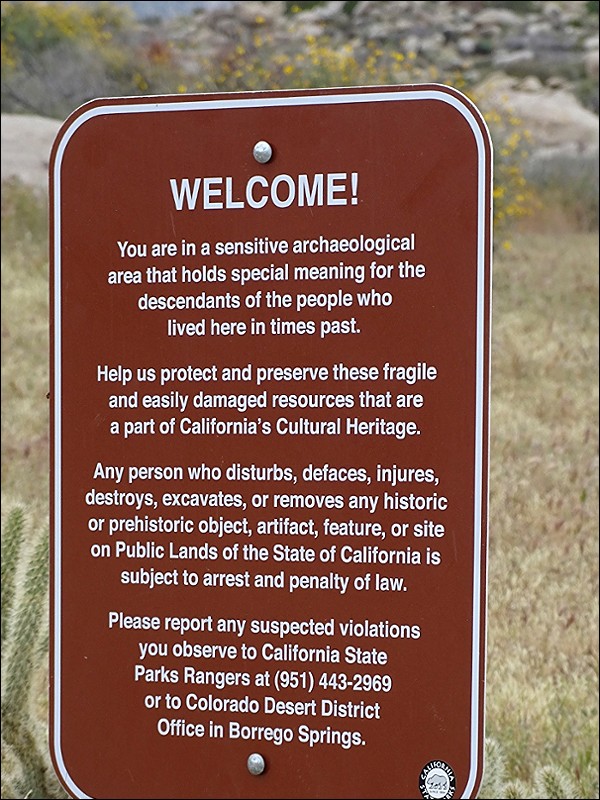
NOTE - The signage is more friendly here than in Mission Trails Regional Park... at least the first half of it makes you want to come in and check it out.
Besides the fleshy pads and thorny protection of the cactus, or the expanding trunks of the ocotillo,
another survival trick is miniaturization!
As we wandered across the park boundary back into the "outside world" we found miniaturization of a different sort.
Look closely below - is that a tiny chubby White Van Man on the porch, with his truck by his side?
It looks like the women and kids live in a different house
While the nerds live over here in an old transaxle.
This is the tiny village of Saint Maurice "a Shangri-La"
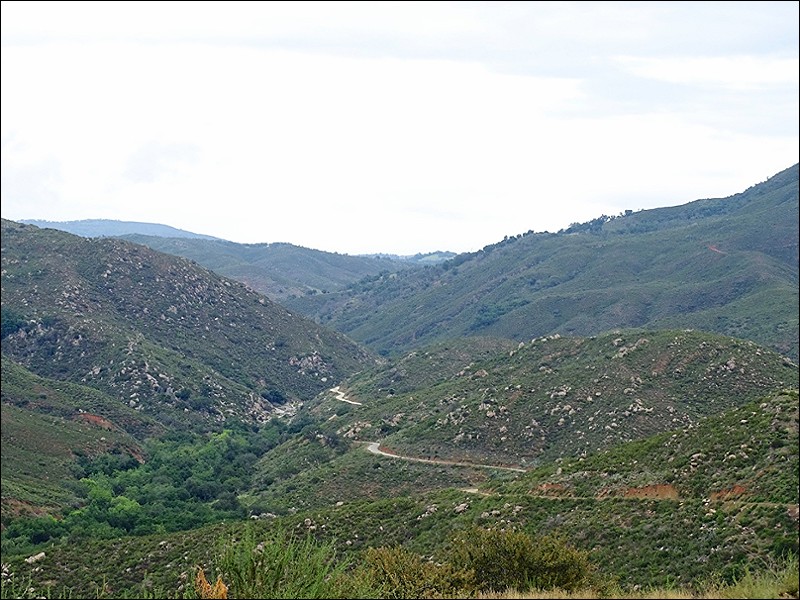
Heading westward, we turned off the main road and entered one of our favorite places, that we call the "Land That Time Forgot."
A real Shangri-La that is otherwise known as Mesa Grande. On the map, it's northwest of Santa Ysabel.
This remote corner is the home (due to the Bureau of Indian Affairs) of the 800-strong band of Mesa Grande indians. For a variety of reasons civilization has touched them very lightly. We could have been in India, or Burma, or Peru, as we wound our way down the valley on a rather terrifying dirt road. As "whites" we are not allowed to enter the housing areas of a reservation, so you can only see a tiny glimpse of the community (at lower right).
The road winds through the mist-shrouded hilltops.
Regarding the White Van, I can only say that traveling 10 mph downhill for 4 hours greatly improves its fuel economy figures.
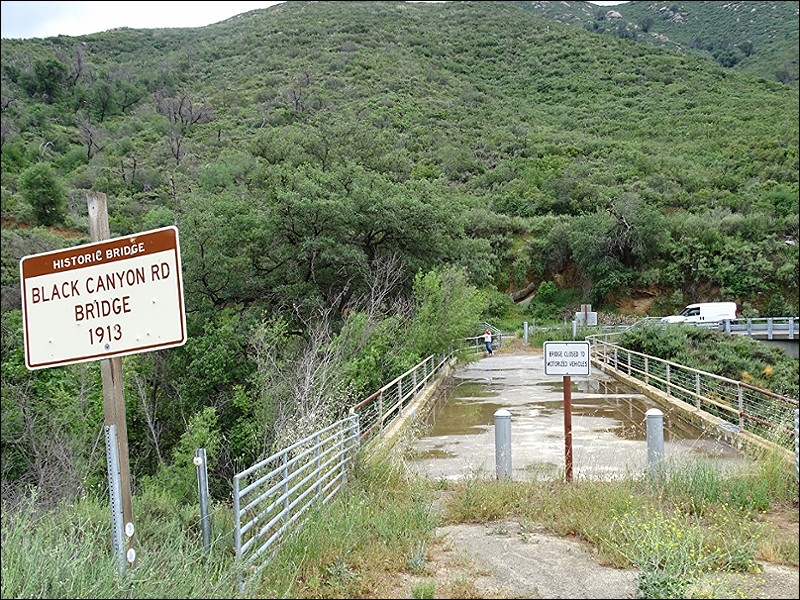
In case you think that the government will come in someday and pave the road, here's a sign of how slowly the budgets get spent in Mesa Grande.
The concrete bridge on this dirt road was just recently replaced. They paved only 100 feet of the road on either end of the bridge ...

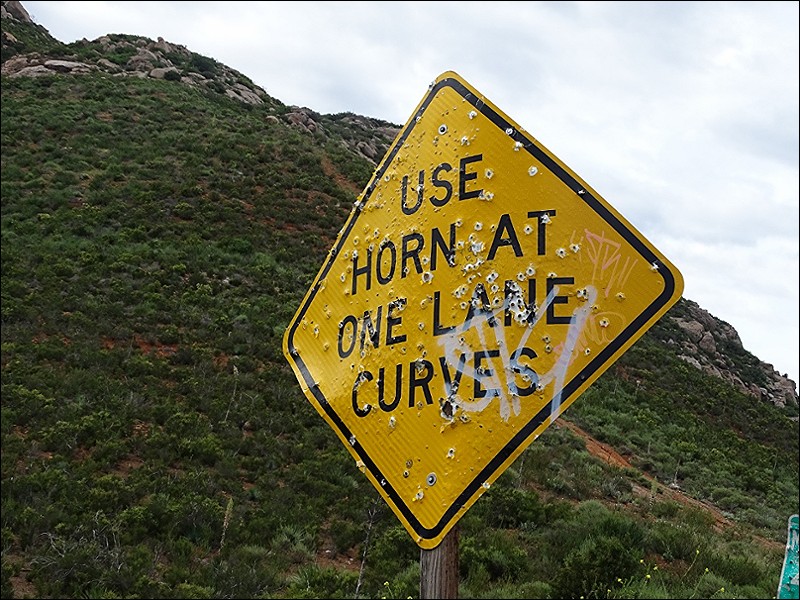
As we left the reservation valley, we saw occasional signs of America's love affair with firearms, and of its difficult relationship with its native people groups.

My eagle-eyed navigator spotted this hawk on a rock, watching us leave and head back to the 21st century, fast food, traffic, and a chance to live up to the stereotype of White Van Man.

Please check back for future episodes.
As we left the reservation valley, we saw occasional signs of America's love affair with firearms, and of its difficult relationship with its native people groups.
My eagle-eyed navigator spotted this hawk on a rock, watching us leave and head back to the 21st century, fast food, traffic, and a chance to live up to the stereotype of White Van Man.
Please check back for future episodes.
Mr & Mrs Cazalea
PS - map from Apple Maps
This message has been edited by cazalea on 2016-04-08 09:18:10
A White Van Man Finds Signs in the Wilderness, Part 1
A UNPLANNED EXCURSION Last year we got a Fiat 500 electric, as I've written about before. One of the benefits of the lease is a $500 credit each year to hire a larger, longer-distance-capable car. As our first year is rapidly coming to an end, we decided ...

A White Van Man Finds Signs of Wilderness, Part 2
In the first episode, I told how we came to have a small white van, and how it could help me fulfill the fantasy of being a "White Van Man" - a reckless, selfish, aggressive driver. It seemed like a good idea, as I already have the coffee cup: We headed o...

How brilliant is that!
The choice of vehicle, the decoration, the story theme, appropriate food (although not looking greasy enough for a WVM), the travel writing... Keep them coming, please!

How can Americans have any fun with so many signs that say NOT?
Caz, That is a whole shxx-load of signs that say NOT! I like the idea of a middle-eastern carpet in the van. Benignly, visions of Scooby-Doo and friends. More risqué would be my imaginations of...well..."love mobiles" That's a staycation I can empathise w...

A White Van Man Finds Rams in the Wilderness, Part 3
We left today on the next leg of our vacation close to home. As hard-working white van men always do, we raced out before dawn, in the rain. We brought along a small icon, the Archangel Michael, as our guardian for the dangerous journey to the wilds of th...
White van man a vegetarian?
Surely not! I hope you get to keep the van, the stories are an absolute success
Not a vegetarian van man; that would be an oxymoron
just a brief reduction in red meat intake, which conflicts with my assumed persona of WVM.
A White Van Man Finds Blooming Monsters in the Wilderness, Part 4
The great thing about a driving vacation is that you never know what you will find - USA, England, most of Europe, Russia, Japan, etc. I've driven through these countries and always been surprised. But not so often as in this episode of the White Van Man....
Road trips are always full of surprises :)
Need to show this to my wife - you are right, watches are such non-items after this
A White Van Man Finds the Wilderness by Looking Down, Part 5
My last report in the White Van Man series touched on discovering wild desert sheep and metal monsters in the Anza-Borrego desert. As we finish up this trip report, I will reveal some of today's horticultural (green stuff / plants) action. REPORT: I confe...
Epic landscapes and wonderful flora
Not your typical WVM hunting grounds but one ought to spread the concept beyond the M25 Wonderful post - hope the series continues!
The latest episode is inside the M25; even under the arches ...
No more wilderness for a day or two. Mike

Can see why you decided to move on
Think I'd have felt like I'd have got out wrong side of bed too. Can't believe the number of prohibitions - almost might have stayed at home! Cheers JML
A White Van Man Avoids the Wilderness by Staying Home, Part 6
Unfortunately I have been grounded today by the Missus, due to a throat infection I\'ve picked up. Maybe it was all the shouting (shooting) at Prius drivers? Or the desert dust storms? (Thanks Dr. MTF for diagnosing my illness as a particularly virulent s...
I was wondering...
What kind of engine it gets for the US market (not sure if it is in the table but cannot scroll in it on my phone)? They do have tons of advantages, as you pointed out, even if prestige is not one of them Thanks for continuing and I hope you get better so...
2.4l Chrysler engine with Fiat MultiAir injection system
And a 9-speed automatic transmission is standard in all variants in the US. It seems perfectly adequate with a moderate load, even over 4500 ft passes. Mike
An engine not used here...
In Europe it is almost exclusively diesels. Sometimes I wish for more petrol propulsion here
A White Van Man Has Some Ups and Downs, Part 7
In case the title of this post worries you, I am referring to using the White Van to change elevation, and not to any other activities (quiet, you lot who are sniggering in the back). Despite my sore throat, we continued our stay-cation. First we checked ...
I think it's slowly time...
For the White Van Man to get one of those grey link buttons to related posts at the bottom

Only $150 a week
I\'m only signed up for 10 days, so using half my credit or so. I haven\'t bought it but I\'m sure I could find one from the rental pool if/when I need another vehicle. Mike
Unbelievable, the rental rates in the US...
Sooo cheap Looking forward to the remaining installments!
There are SO many things to do here, when people think only of Disneyland
But for French people, we have special treats - things you can't get at home. Like warm sunny days in the middle of winter, to taste wine Finer artwork than you would see in the Louvre. Souvenirs made with fine hand craftsmanship High-end cuisine and Amer...
A White Van Man Finds A Heck of A Lot of H's, Part 8
Today I really am sick, so have not gone anywhere in the White Van. My wife however , has really grown fond of it, so she is out shopping with it. Yesterday I ended the episode before we got home, so if you don't mind, I will tell you what really happened...
By all means continue!
I had a feeling that you already bought it off the rental company but be that as it may, a continuation is in order as far as I am concerned
A White Van Man is Banned, Part 9
I can't drive the White Van. It has been prohibited. I have to get well first. But how? The world-famous Mayo clinic says: " You don't need to feel miserable while you're toughing it out. Drink plenty of fluids. Try chicken soup (or Jack Daniels). Rest as...
Nice MIH!
To go with your white van Those graphic enhancements under the hood - priceless!
Yes, and I learned when Sharpie says Permanent Marker, they mean it
It took a pile of aggressive cleaner / wax to get the "WatchProSite Official Vehicle" off the radiator support.
LOL :)
PuristSProMobile, eh? 1001 nights of the White Van Man? Hopefully at least close!
A White Van Man Around the Harbourside, Part 11
If you have been following along on the first 10 episodes of my tale, you will know I got a free "useful vehicle" rental as part of the lease on my fun, but marginally-useful Fiat 500e. We started out expecting to go to Arizona in a shiny new Mustang conv...
A White Van Man Gives Up His Ride, Part 12
OK, it's time. My rental contract specifies that I will take the little White Van back to the rental company. It's pretty much cleaned up and ready to go home. As I am driving back, I can't help but notice there seem to be a lot of small White Vans roamin...

Thanks for sharing your White Van Man series with us!
I think another white van in is in your future!
I vote for another round at least during your 500e lease! :)
Such a great collection of stories around it - would be a shame if it does not continue at some point. But first things first, hope you have fully recovered in the meantime or are at least close to it!

What a fun journey, Mr White Van Man...what a fun road trip.
Thank you for sharing these new places. Rgds Raymond