
219
3826

The Racing Machine on your Wrist: the RM001
 g
g
[Photo courtesy of Theodore Diehl]
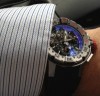
The other part of history being celebrated this year is a decade since the RM001 debuted; it is where the racing machine on the wrist started. It seems difficult to believe that the RM001 was only released 10 years ago (in 2001), and part of that disbelief must be that the watch and the (now) iconic design quickly became a sensation. I remember the time well. I was living in Paris and went into Chronopassion having seen the new innovative and daringly designed watch in the window. Laurent Piccotto (who at that time was a minority owner in the fledgling business) showed me the watch with great pride. I was fascinated by the watch. Laurent told me that the first had sold in 30 minutes. Unfortunately my bank balance did not allow the same swift decision making, as if I could I would, and so I was relegated to leaving the shop with nothing more than the daze and fascination that the watch had induced.
I was smitten and remain so to this day. Even now, the high end tourbillon series that Richard has produced over the past decade is more akin to a fleet of experimental Formula 1 race cars (even if some of the watches have been designed with other sports in mind). There is always the quest, and the need to push onwards and upwards. In Richard’s case, the use esoteric materials and design to push the tolerance levels of the watch.
Richard’s original inspiration came from Formula 1. The RM001 (and the RM002 replacement that arrived soon after) was the synthesis and embodiment of haute horologie and engineering for extreme circumstances. Richard had planned it that way. He wanted a watch that was 21st century in both design and execution; a watch that was designed from a clean sheet of paper, integrating both case and movement. Richard compared the watch design and philosophy to that of a Formula 1 car: all elements of the watch were designed together, like the elements of a Formula 1 car in which chassis and engine are developed at the same time. 
[Photo courtesy of Theodore Diehl]
[Photo courtesy of Theodore Diehl]
[Ferrari Formula 1 engine design: the parallels are all too visible]
Richard used his knowledge of high performance racing cars to influence the design and construction of the watch; from the screws through to the case. He looked at shock resistance (and changed the design of the tourbillion bridge); he looked the reduction of friction and used ceramic end-stones for the balance wheel axis; he looked to improve plate rigidity and the ease of access for watchmakers to maintain the movement; he looked at the design of the screws and used a five prong screw instead of a regular flat-head. 
[Photo courtesy of Theodore Diehl]
[The parallels with the design and the use of materials really did make the RM watch a ‘Racing machine for your wrist’]
The result was a revolutionary watch. The case was both a tactile and sensual experience; the edges were smooth and the curvature of the case would appear to be a universal form for the wrist of every person who tried it on. The design and construction of the case was to create an ergonomic form, where lateral ribs improve the rigidity, and where the curvature and the tripartite case construction create a unified structure that is extremely robust. Reading the time was clear and legible: the numbers ‘float’ over the dark surface of the plate thanks to the anti-reflection treatment on the crystal. 
The architecture of the movement was altered. The base plate was no longer something hidden by the dial; this was now an elemental piece of the design. The baseplate was covered with a PVD (physical vapor deposition) treatment that has been used on Formula 1 engines. Through heating the baseplates in a chamber, the metal vapor (carbide in this case) is attracted and binds to the metal surface. The surface is both tough and self lubricating.
Rather than have ‘finished’ plates in the usual sense of the description, the main spring and gear train are all screwed into the back of the baseplate. This made for both an ease of access; in that component parts of the movement could be seen clearly with its own corresponding plate and accessed easily once the back of the case was removed. The aesthetic look of the movement was unique and took its design cues directly from racing engines.
[Black polishing the spines of the back plate. While RM watches owe design elements and materials from the Formula 1 world, there is still traditional watch finishing utilized in all parts].
As with vintage or historic racing cars, what makes a classic, an original, is the luxury of hindsight and assessing what the watch means then and now. Does the machine still hold its lustre; the desire, after the years have passed? Even now, I look at the photos of the RM001 and the shock of the new remains. It still looks avant-garde even after a decade; yet the design seems all too familiar. Other watch firms followed suit and it is testament to how Richard’s design and vision changed the world of haute horologie. Ten years on, I would argue that Richard still “pushes the outside of the envelope” (pushes the watch to new limits) and in so doing, creates a tapestry of innovative unique pieces that some marvel at, some are perhaps shocked at, but create an oeuvre in the world of haute horologie; an aesthetic that is definitively Richard Mille. His watches are the future classics.
Andrew H
Some other reading from the archives if you are interested:
www.network54.com
www.network54.com
www.thepurists.com
Racing History at the Start Line: Richard Mille, the Grand Prix de Pau, and the RM001
Historique Racing at Pau

Good stuff, Andrew!
Even with the weather not playing along, it was a great event.

Thanks a lot for this superb report Andrew.
Thanks Foversta - when Richard started with the RM001,
The Racing Machine on your Wrist: the RM001

Thanks Andrew...I learn so much about
Thanks Mike - glad to be helping you on your path to your

A tip of the proverbial cap, Andrew. This post resonates . . .
Thanks Art. I agree! Richard will, without doubt, be

Looks like FUN!


Thanks for the report Andrew
I think the RM001 will be an important watch historically

Oooh!
The track was dicey - and there were some accidents.

Thanks for the report..


Richard Mille: When the words ridiculous and

Very true - and good point. The difference was in