
Mini Roll call Recall - Tribute
I know I missed the last one so I thought the 09/09/09 business was a good excuse.
I am pretty sure we can hit at least 15. If you don't have a picture handy check in anyway.


Bill

Aaaah, Finaly, Bill!
Finaly, we see it on your wrist!

You're right, I made a quick count and we're 15, and today we'll be 16.
With Mostel, maybe we'll be 17!
If we add those who own the Tribute To Polaris in platinum, we are over 20.
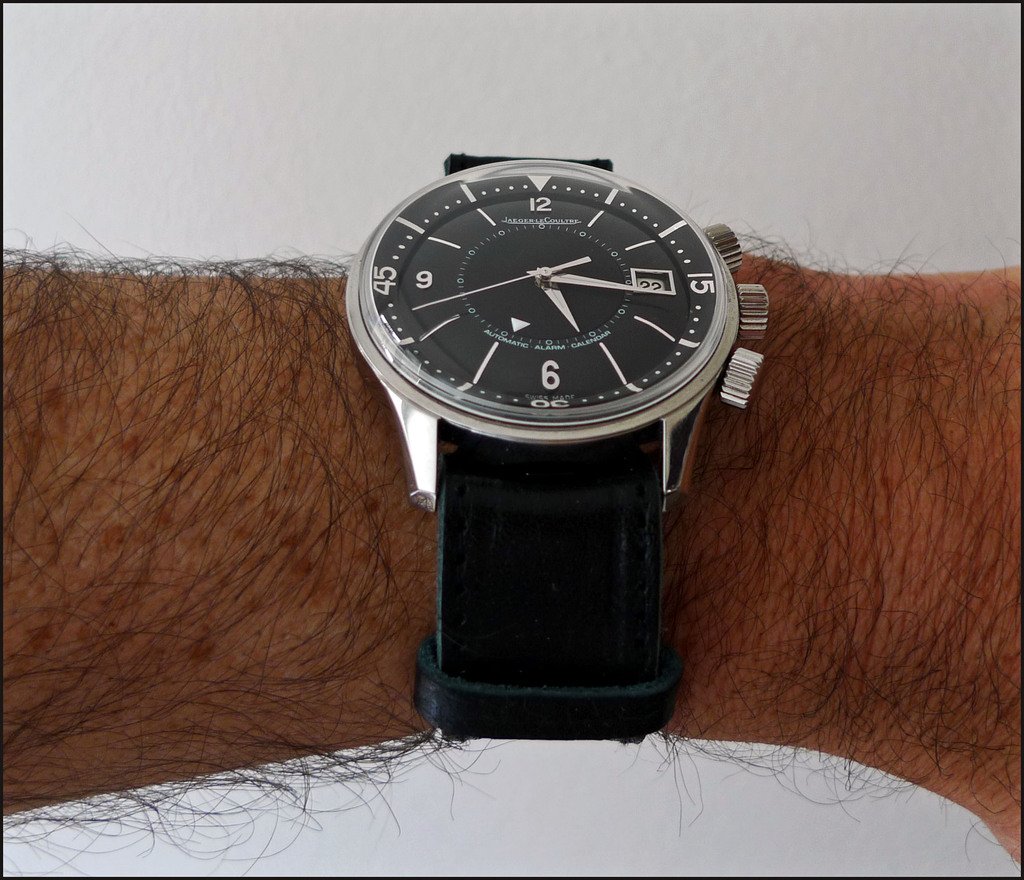
Here's my contribution, on a Leather Nato:
Here, on a simple black calf ( without stitching ) :
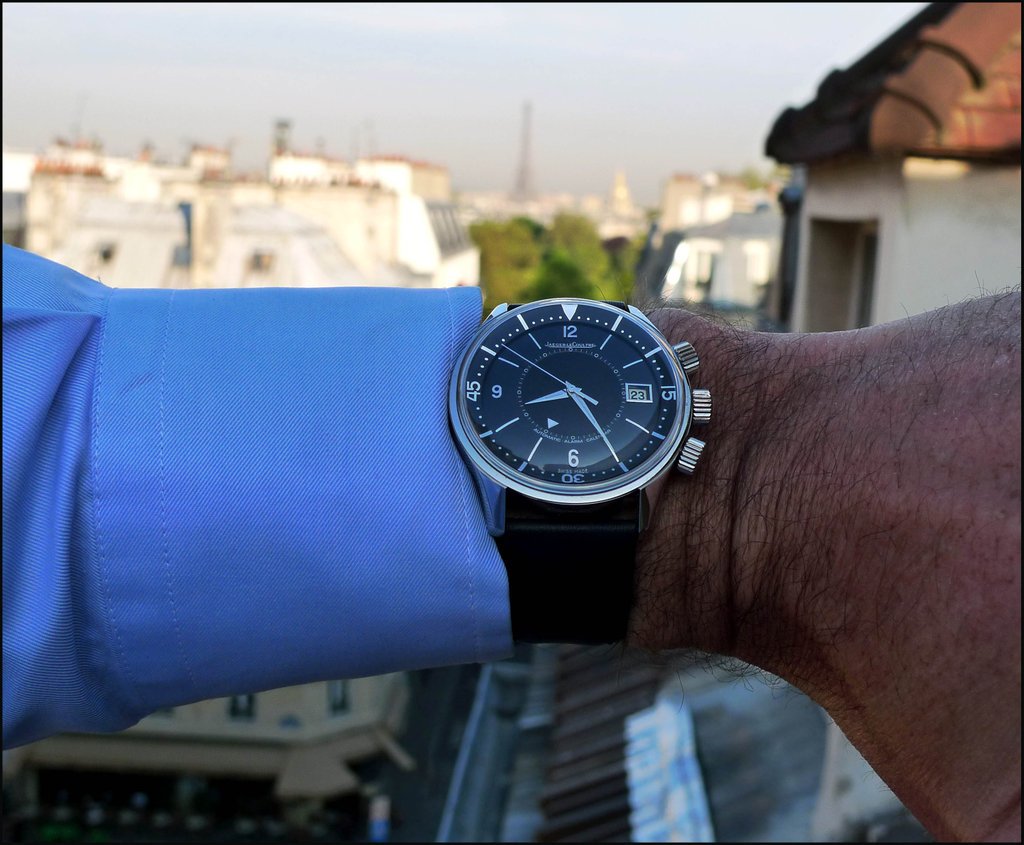
Best,
Nicolas This message has been edited by amanico on 2009-09-10 23:07:52
Unable to take part, but...
Congratulations gents and thanks for the pictures.
David

congrats bill !
try to send you more and new pixs from the lake of annecy on sunday evening. best. olivier



Polaris...
Hi Fellows,
I am happy to report that my Pt 1965 Polaris waits me at home while I am diving in the Far East. I have also secured the Paris Boutique Edition as well as the 1968 Edition. Those I will pick up immy when I'll get the time.
So sometimes in the future I'll send a picture of the whole current generation of the Family. I started to buy these watches "blind" meaning that I never saw one in metal. The Pt watch I picked up already is much nicer than I ever could imagine. It does not feel too thick or too big; it is just right. Naturally, the watch I have at home is a bit heavy...
Anyhow, I am really happy to be one of you!
Regards,
Wow, Dr Kol,
You're the only one I know to own the 3 versions of the Tribute To Polaris...
If this is not LOVE, I don't know what is Love!!!
Congrats, and please, YES, do share with us this fabulous trio!
Best,
Nicolas
Love?
You are the first one saying it's "Love". Most of my friends have just recommended a long meeting with a Schrink!
Sure, I will send pictures in due time.
Regards,
only have a Pt1965 version
Not only love...
Dear Nicolas and everybody,
A lot has been discussed about the charm and originality of Polaris. But in case I am considering the watch only as a diving tool from the perspective of a diving professional, there is no doubt that the alarm is the single most useful complication ever added to a diving watch. Period.
Blanckpain and Rolex can fight who made the first and "original" dive watch intended for scuba diving. Another fight is if it was Jaeger or Vulcain who added first to a dive watch the most useful complication. A chronograph has its position as a complication in dive watches but let's face it: minutes must be measured mostly when making the decompression or safety stops. The bezel in a dive watch is doing the same trick even when playing with the bezel, the stops are normally rounded to the next full minute.
Basically a diving watch is a very simple tool: it just must be water proof to the depth we are diving according to ISO 6425 Regulations. If these regulations are met, I can see two single complications which are useful for recrational diving: the alarm and the power reserve indicator.
In todays higly competetive business environment, the manufafturers have started to compete with the level of water resistancy of the watches. That's plain stupidity in my opinion. Every year some hundreds of thousands of new scuba divers are licenced. Surely less than one percent will never go deeper than 100 meters. The modern ultra-water-resistant watches with their helium release valves are built for saturation diving in helium enriched environment. Let's face it: how many of us are planning to buy or rent a diving bell?
I have the modern Rolexes and Blancpains plus a couple of other diving watches which are meeting my tight criterias. However, these watches can never compere with Polaris. As a dive watch it is has the same originality and at least the same prestige as the before mentioned. But what a great idea it is, when your dive watch can give you a loud alarm when it is time to stop the dive and start a slow and safe ascent towards the surface!
Emotionally I love Polaris. At the same time I admire it as probably the finest and most useful diving wath ever created. Only the new Navy Seals Alarm can compete with Polaris but even it is a great diving watch (I have ordered one), it does not have the charisma of Polaris.
So actually having all three versions of Polaris is just logical...
Regards,
Kari
Nothing to add, Kari, except that
Coming from a Master Diver ( bif I'm not wrong, you are, aren't you? ), these words sound like the best compliment ever made on this watch.
And something I totally share with you.
To be clear, I don't dive, except in my bathroom, BUT I do live with my watches, and want to share all the moments of Life ( Work, Holidays ) with them, in their appropriate environment.
So now, seeing that you do the same with these Polas maes me veeeeery happy!
Best,
Nicolas
Well, actually, as a diving instrument, both Polaris and DSA are pretty much pointless...
Kari,
Please let me react to your " I am considering the watch only as a diving tool from the perspective of a diving professional"
To start with, I love (and own) both the Polaris and its predecessor the DSA, and I feel glad that you do the same with your re-editions of the Polaris..
But, to argue that these watches were a valid solution as a diving instrument back in time (and specially compared to Rolexes and Blancpain of the time as you do, which really WERE diving instruments) is pointless.
There is no argument on deciding which of JLC or Vulcain came first as a diving alarm.
Vulcain came first, this is very documented, and it was the first watch to use the Supercompressor case with triple back and an alarm feature (actually they were the inventor of the triple back with resonaotr which was later adapted to the Polaris).
The supercompressor case itself back then had been in use for several years in many non-alarm watches already before the Polaris was created.
And, IMHO, there is also no argument to pretend that the addition of an alarm feature, in the way it is designed in the memovox, was indeed a practical and useful feature in a diving watch.
When diving in deep waters, every minute counts with regards to decompression.
And, with a memovox, be it a 857 or a 859 (or any later memovox), there is no way you can set-up a decent alarm time withing say a 10 minute range accurately, which is definitively a pre-requisite when considering serious diving.
Therefore, I consider both the 857 and 859 to be interesting watches in history, for that they have tried to bring a new complication underwater. But retrospectively, they were mostly novelties with a marketing purpose, not proper 'tools' (and I don't think that any diver will disagree on that point).
That can not be said on the Blancpain and Submariners of the time that you refer to, which were proper diving tools designed by divers for divers.
That being said, the Polaris is a fine looking watch. But we should take it only as this. A fine looking watch....
No technical justification is needed IMHO.
An alarm could be indeed a very relevant feature underwater, but for that you would need to be able to set it underwater, and to set it really accurately.
Both feature that neither the vintage, nor the modern memovoxes can achieve.
In these conditions, if one is still insisting on diving with a mechanical watch, there is nothing that can beat a rotating bezel with accurate indexes (which the NSA fortunately has).
Now, all 'legend' watches don't need to be exactly functional for us to love them I reckon, so please do enjoy your three nice Polarises as they deserve... They are just beautiful as they are without requiring any technical justification !
Correct me if I'm wrong, Clavi
I agree when you say that the Vulcain is the first Super Compressor housing an alarm, but this is not the first alarm diving watch, I think.
The Deep Sea Alarm, released in 1959 seems to be the first, while the Vulcain made in 1961 ( once again, if I'm not wrong ) is logically the 2d.
Best,
Nicolas
I think you are right
Indeed, the 857 probably predates the Vulcain, and is likely the first waterproof alarm.
However, I think you will reckon that, even more so than the 859, the 857 is pretty pointless for serious diving (I think it was even called 'skin diver' at that time).
So, I don't think that any of the vintage mechanical 'diving alarm' watches (whatever brand) did really see any use by real divers, back in the 1960's, or even in the more modern times.
For example, the Cousteau team was documented in many photos to have worn tens of different watches (including lots of Blancpains, Rolex, Omegas among others), but none of them were alarm watches, which tends to prove that the alarm was probably not so much required by serious divers.
They are very nice to collect though, as definitively have a lot of charms !!
Diving instruments
The modern dive computers are so reliable and so sophisticated that those can not be replaced by ANY kind of mechanical watch. Period.
A technical diver who is not using the most sophisticated modern systems for his diving is soon a dead diver.
Nicholas said it nicely: he wants to live with his watches. Same with me and because I am nowadays diving some 100 days a year, as an concervative person and a watch lover I am always wearing a mechanical watch as a backup.
I do not mean that I would ever use the alarm of Polaris for decompression stops, not even safety stops. But I will use the alarm to remind me about the end of the dive. Naturally, I could also use the computer.
In 55 minutes I will be picked up for a longish diving day with three dives. I love the feeling when I am ready in all respects except I have not decided yet if I will take Rolex Submariner, Sea Dweller Deep Sea, Fifty Fathoms of perhaps G-P Sea Hawk II with me for todaqys dives..
Regards,
i see in a photo u have your polaris 65
One more Paris Boutique
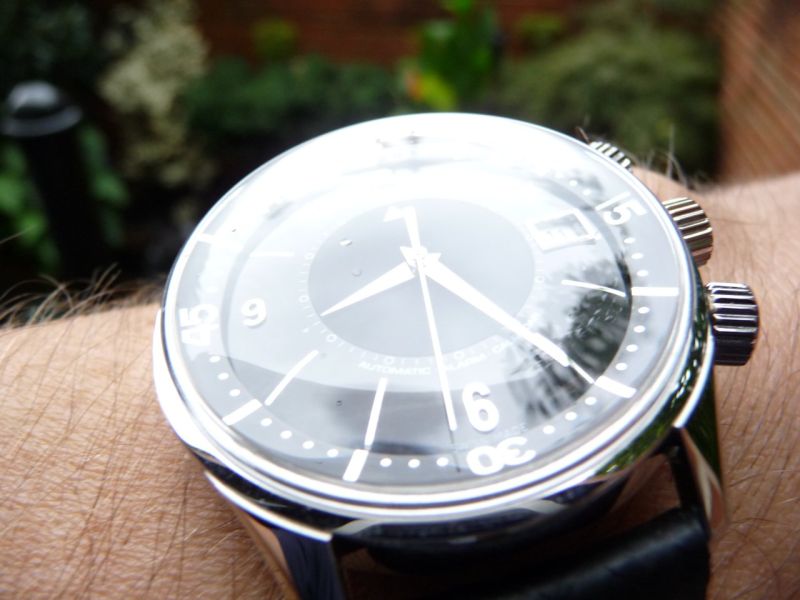
Congrats, Bill.
I really do wonder how many of the 65 Boutiques we have represented on this Forum.
Well, any excuse to speak of and photograph this beauty.
respo
Checking in
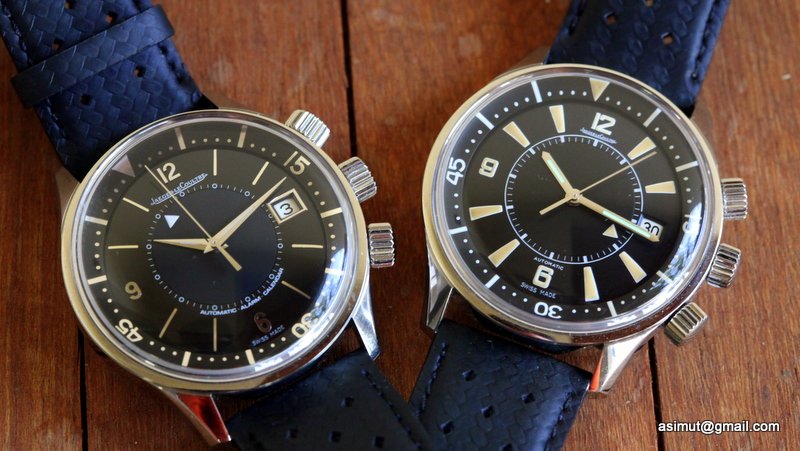 g
gCheers and HAGWE
Asi
This message has been edited by Asimut on 2009-09-11 07:16:41

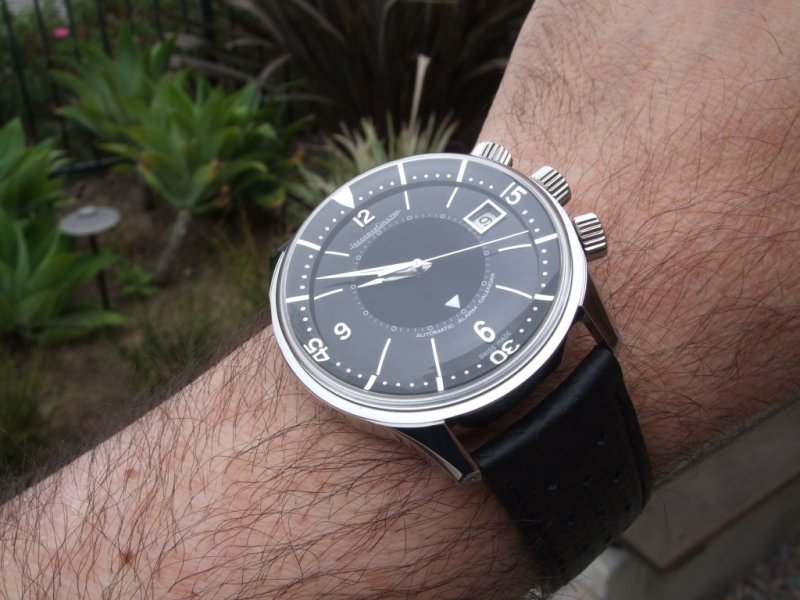
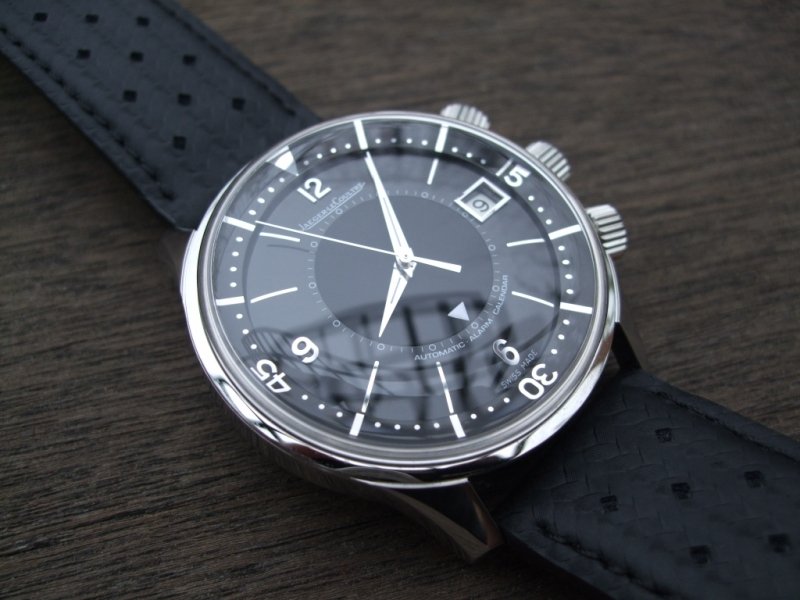


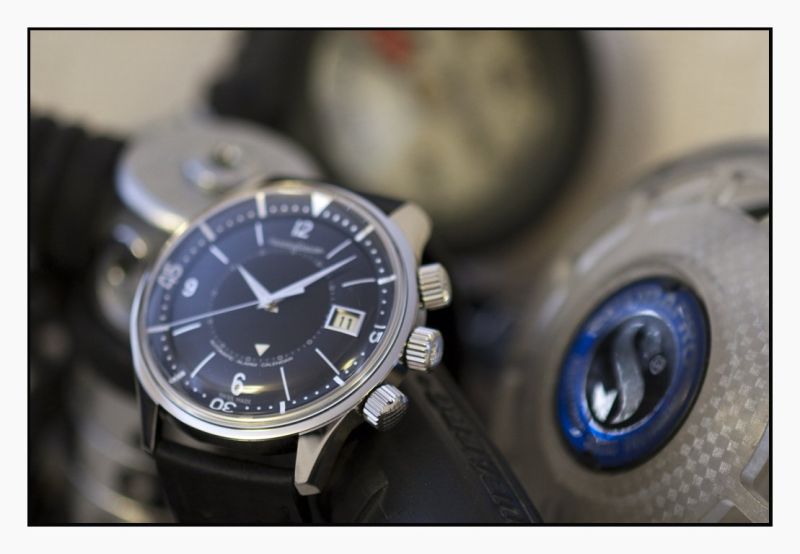
Welcome to the Polaristi Family, Bouloi
And huge congrats on this Beauty.
Don't forget to also post pics of your watch on our Polaris Roll Call, here:
jlc.watchprosite.com
ENJOY!
Best,
Nicolas

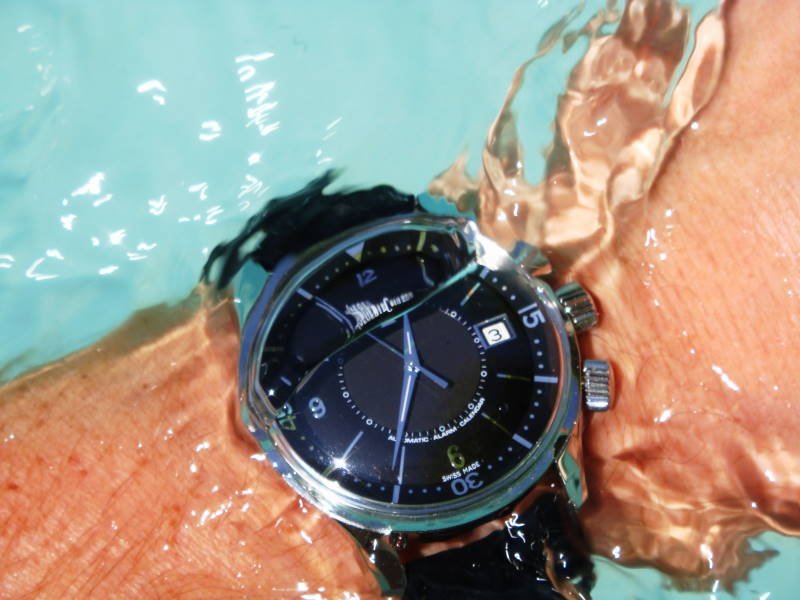
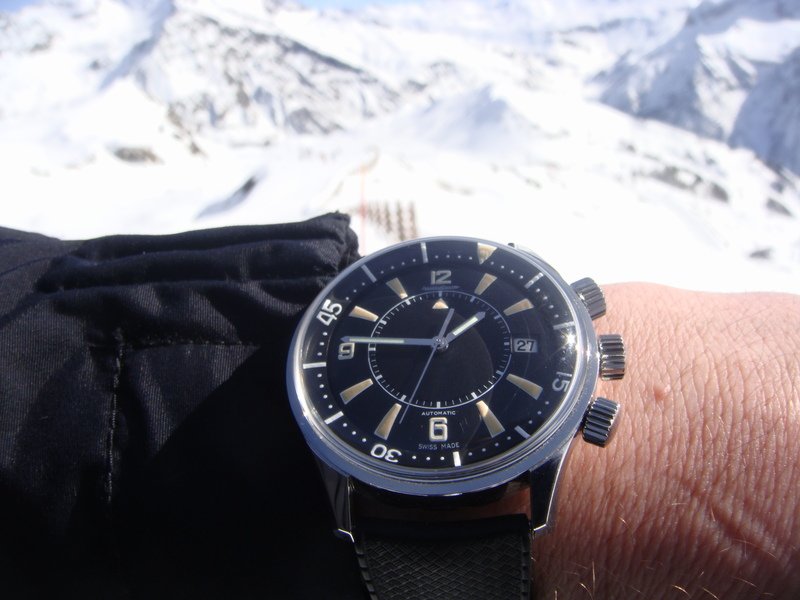
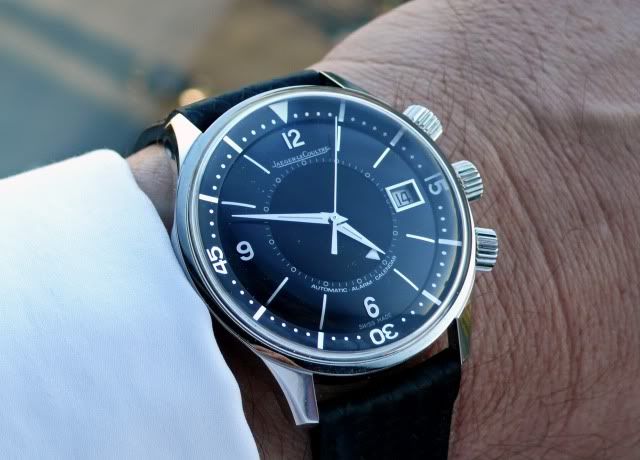
For the scuba diver with style - naturally
Bill



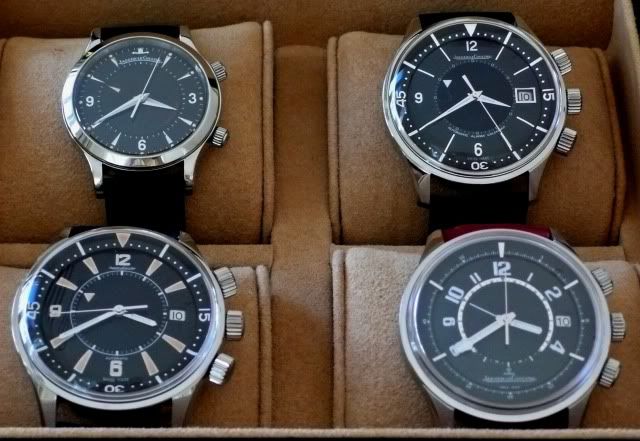
So we had 4 watches in common?
So we had 4 watches in common....
......and still 3!
Cheers
Dje