SteveG
1529

There's enamel and then ther's Enamel
my comments not really directed to this particular thread, just that the subject seems to come up regularly.
Enamel is AFAICT properly used to refer to two entirely distinct finishes, unfortunately (but not surprisingly)_ because they greatly resemble each other. Traditional vitreous enamel is melted ceramic (glass) and is of course very brittle but with a nearly indestructable surface. The process is fraught with the hazards of bubbles, unevenness, micro-cracks and color migration, while success is rewarded with a dial which (if intact) will look almost pristine 50 or 60 or more years later.
Enamel, the paint is a term applied to high-gloss paint, sometimes formulated to have a particularly hard surface, but generally simply intended to look very much like the product above. The confusion seems to stem from the collision of those whose immediate temptation is to consider the former as 'real enamel' and the latter as 'false...', but like it or not the paint and surface finishing industry recognizes both products as useful and valuable (and distinct), although they share a common name. As material for watch dials they have different strengths, the vitreous nearly impervious to many hazards (moisture, abrasion) but physically fragile and unforgiving of shocks, the glossy paint more accommodating of standard manufacturing (apply to a metal base and dry) but still likely to look great for many decades unless seriously exposed to heat or moisture.
Personally, I think I try to use the terms 'vitreous enamel' and 'glossy paint'.
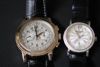
My New Watch In It's Case


Steve, it's not enamel
There's enamel and then ther's Enamel
I am enameled--
Thanks SteveG


Thanks Everyone for the comments


Nice watch. do I need to get it?

No need....it's just a Simple watch.

A watch can hardly get more beautiful than that imo§