
DonCorson
[AHCI]
3358

On-Wrist Watch Review - Louis Moinet Tempograph 20 seconds
Louis Moinet is a small Swiss brand making about 500 watches a year. Their namesake, Louis Moinet, was a watchmaker, sculptor and painter whose timepieces were bought by Napoléon Bonaparte. He was the first watchmaker to make a 'chronoscope' (time looker) that indicated elapsed time intervals, that being in 1815 with his "Compteur de Tierces". It preceded the chronograph (time writer) invented by Nicolas Rieussec in 1821 that marked time intervals with ink spots. (I guess all todays chronographs should be called chronoscopes as they don't write, but show. Let's not go into that today, however, but keep our eyes on the watches.) Modern Louis Moinet watches have a generally opulent design that focuses on their watchmaking content. Their design is by Louis Moinet with the watch production by Swiss subcontractors. The Tempograph, for example, is produced by Concepto in La Chaux-de-Fonds.
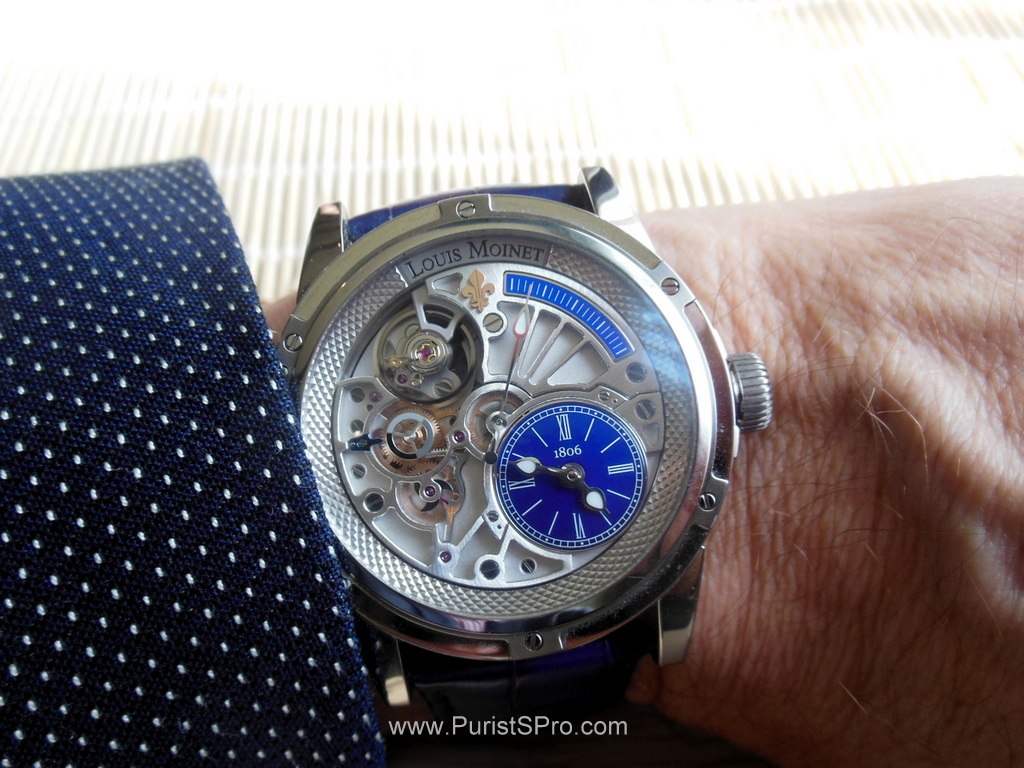
I recently had the pleasure to wear a Louis Moinet Tempograph 20 Seconds
for a month and report herewith my impressions and experiences.
Louis Moinet Tempograph 20 seconds
First general impressions: The watch in a looker... everyone notices. The open worked dial with contrasting brushed surfaces and polished bevels stands out. It really flashes in sunlight. With a closer look, one can see a large portion of the mechanics of the watch through the dial, including the entire retrograde seconds mechanism. Watch out if there are any watchmakers in your vicinity. They will rip it off of your wrist and magically produce magnifiers from their secret pockets, with which, they will inspect and say in their naturally undertoned manner: "not bad at all". When you tell them the Tempograph is the entry level model from Louis Moinet and the price of the watch the "not bad" changes to "excellent".
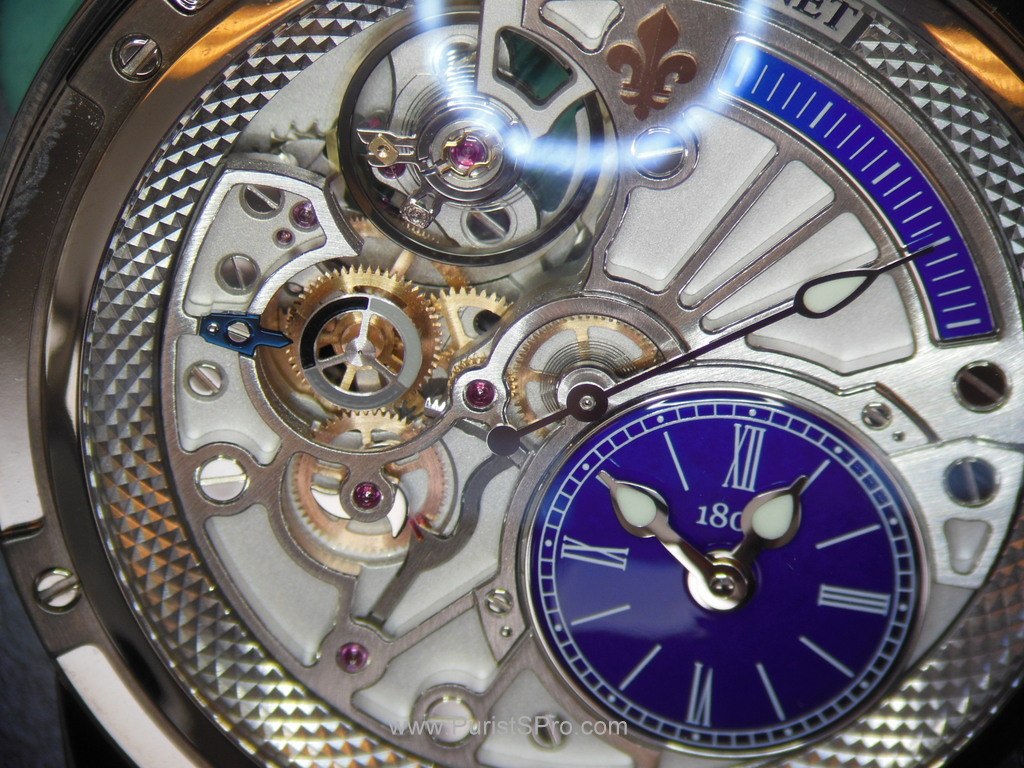
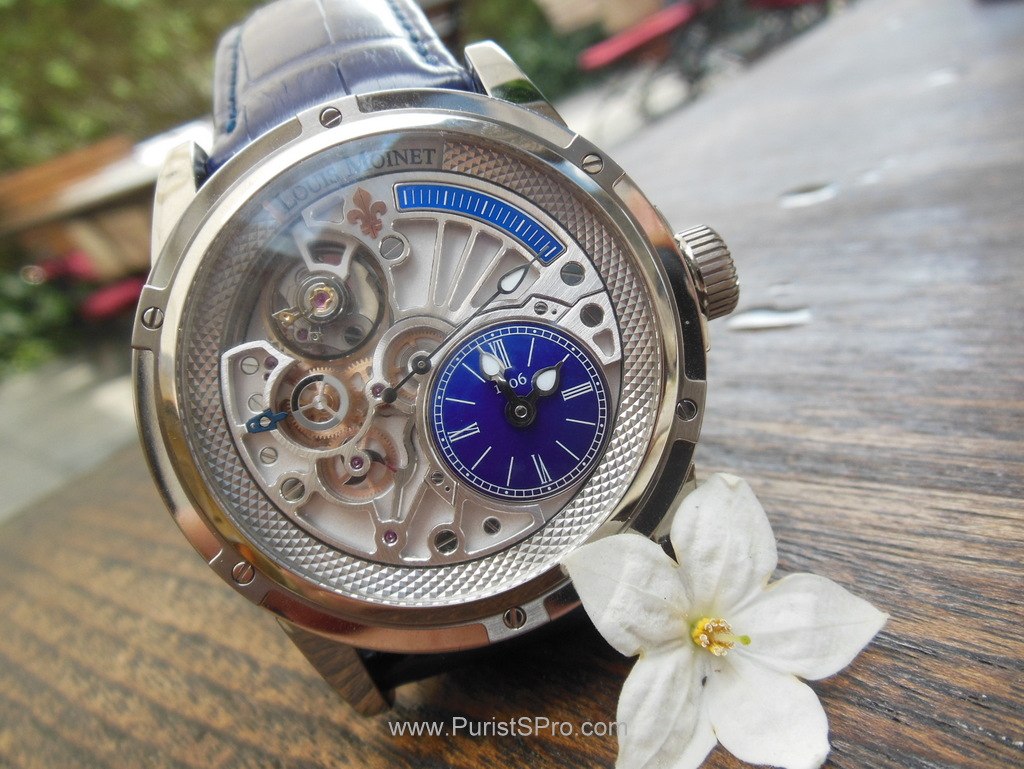
The dial is a watch's face and its expression is the basis of every watch's appeal. The dial of the Tempograph is particularly intriguing. It is open worked, but not overly busy as in most skeletonised watches. One sees great finishing, constant animation and deep into the mechanics of the watch. There is no question of the retrograde mechanism being just a module plopped onto an otherwise standard movement. It is obvious that this movemement was made to show off. The time display comes off like a sub-dial, but I never had problems reading the time and at night the "dew drop" hands with their drop of luminova are still readable. The bezel is adorned with "clou de Paris" guilloché which adds to the glowing impression of the dial.
Not to be forgotten on the dial is the retrograde seconds indication. One can admire the entire mechanism and this adds continuous animation to the dial. The seconds hand falls back every 20 seconds and an small open worked wheel with 3 colored sectors indicates the portion of the minute. This 20-second indication has its risks. It is frequent enough that one is willing to wait to see the retrograde action. The time goes by... again and again.
The watch had a titanium case which kept it light and easily wearable. Louis Moinet has been working on their cases and the newer models are less opulent than some of the early models. They are developing in the right direction. Although the case can't be considered small, at 44mm in diameter and 16mm thick, it is much more substantial than what I am used to; but at no time did it seem too large. The crown with the Louis Moinet lilly-flower logo has a lot of grip and is easy to use. Actually I never had to use it, the timekeeping was so good, with less than one minute of advance during the month that I wore it; and the automatic winding good enough that even if I didn't wear the watch for a day, it was still running and on time the following day. Note that the automatic mechanism used is of the so-called 'Pelleton type' with two pawls mounted on a rocking platform. This type of automatic mechanism is not often seen.
The strap is of an excellent quality, hand sewn Louisiana alligator leather both on the outer surface and lining. My only slight criticism is about the deployant clasp. The strap is held using a normal pin like a pin-buckle clasp on one end. This makes it easy to adjust, but it also easily opens when one is closing the deployant. It took me a while to find the right manner of closing the deployant to eliminate this risk of the pin disengaging at the wrong time.
All in all, a fun watch that really gets noticed with much satisfying holological content. I would like to thank Mr. Jean-Marie Schaller, owner of Louis Moinet Watches, for giving me the opportunity to choose a watch from his collection and wear it for a month.
A picture a day, one month with the Louis Moinet Tempograph:
Day 1: On the way to work
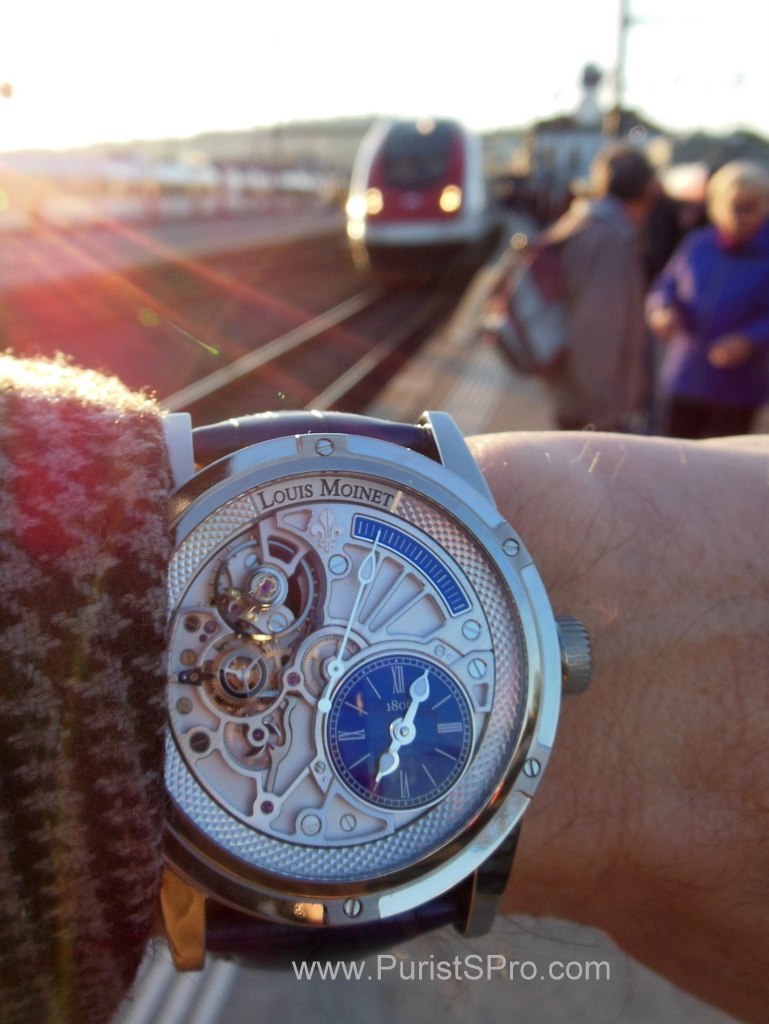
Day 2: Inspection
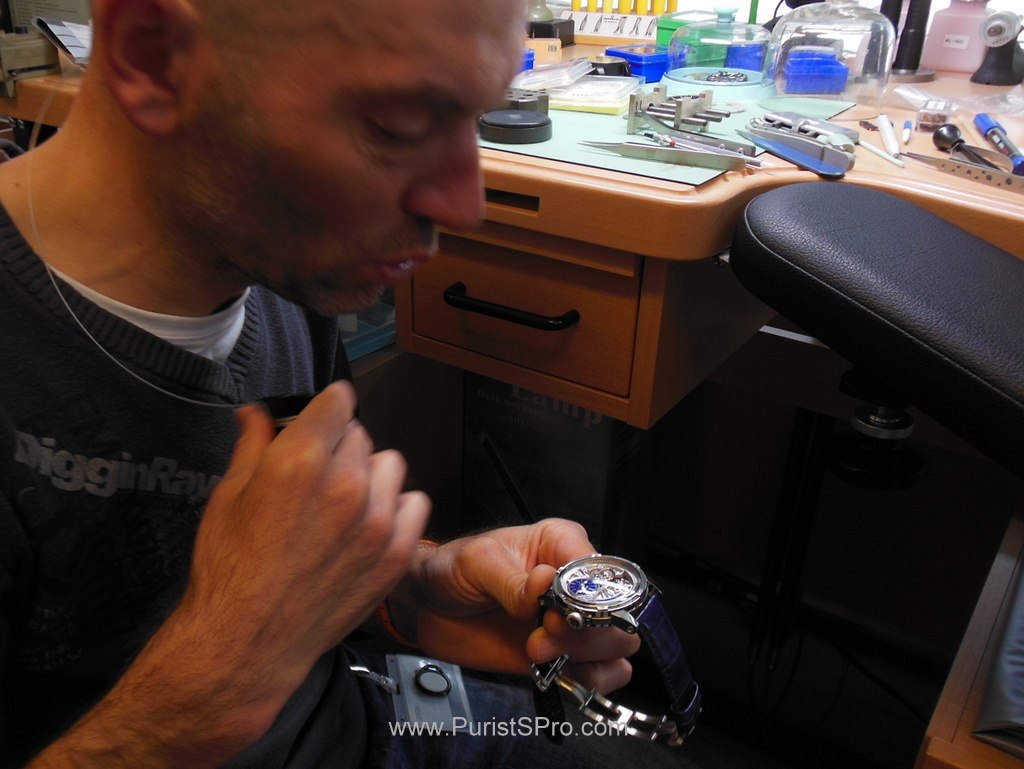
Day 3: From the back
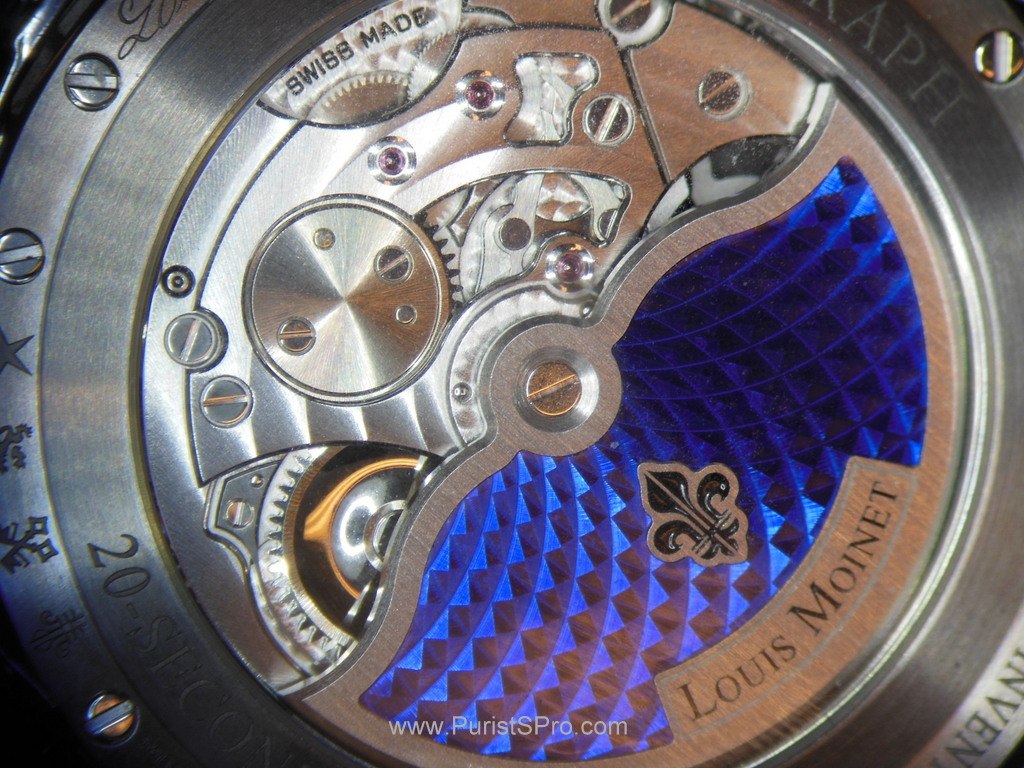
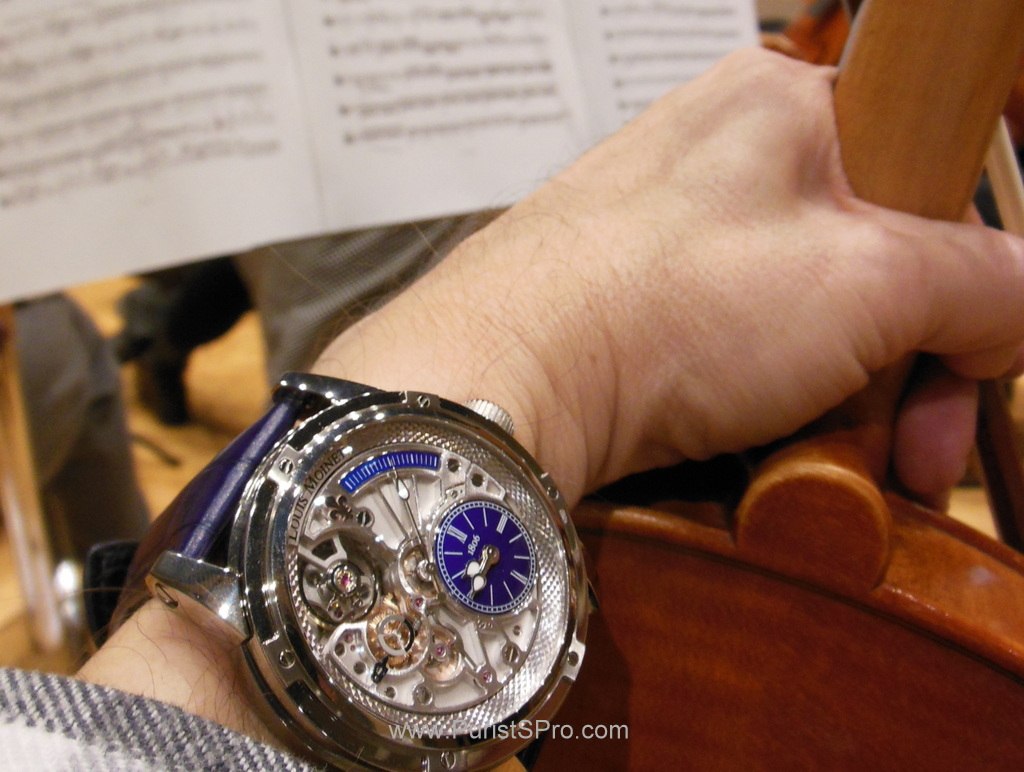
Day 4: Orchestra rehearsal
Day 5: Close up
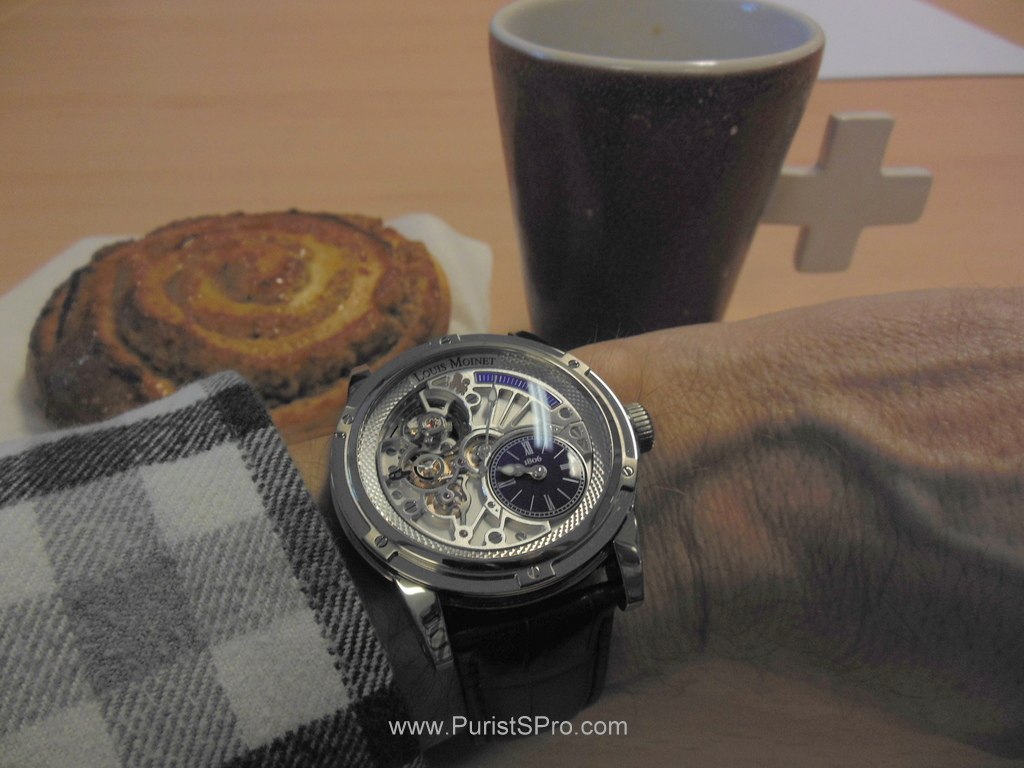
Day 6: Taking a break
Day 7:
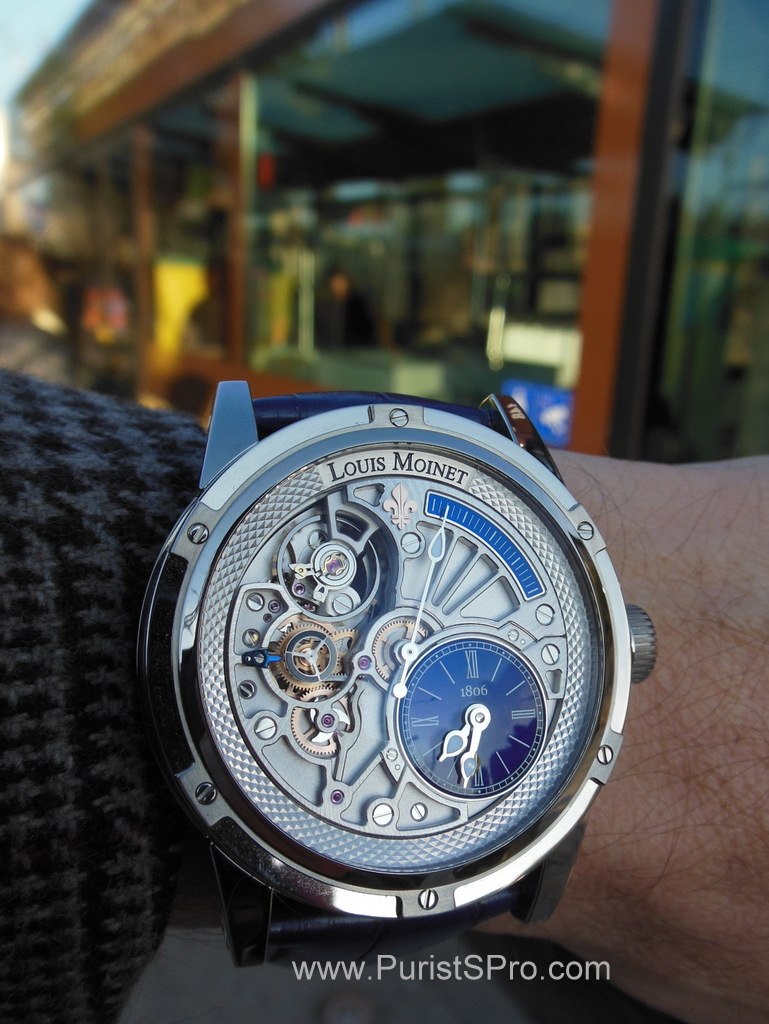
Day 8: At the yearly bicycle market
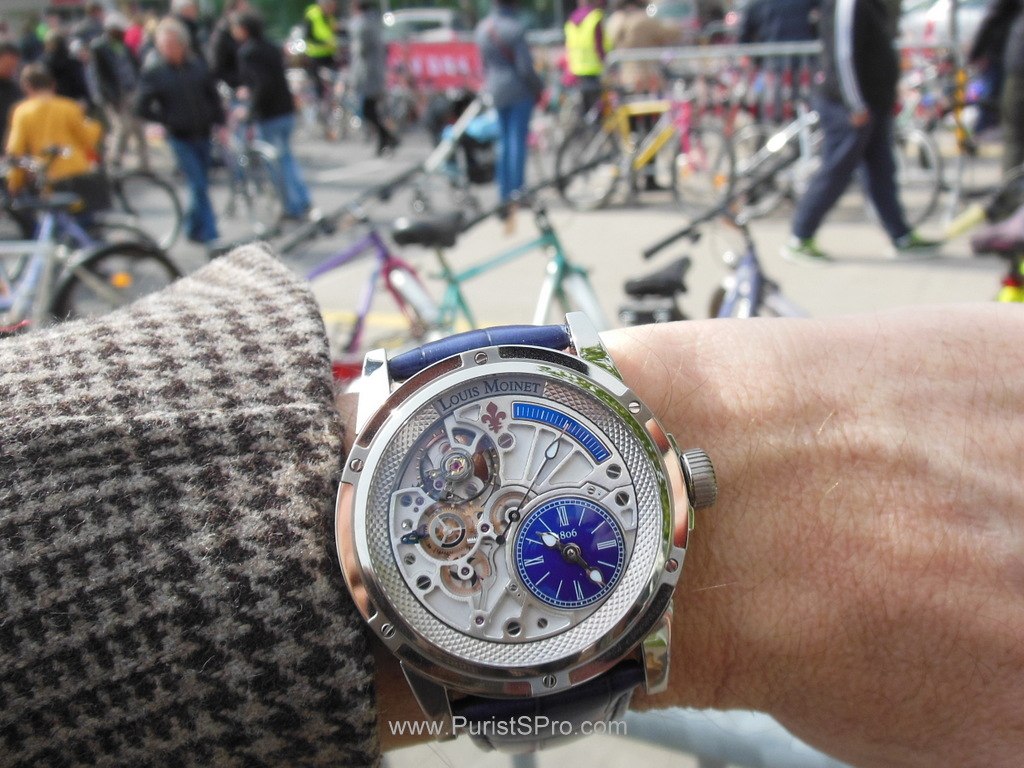
Day 9:
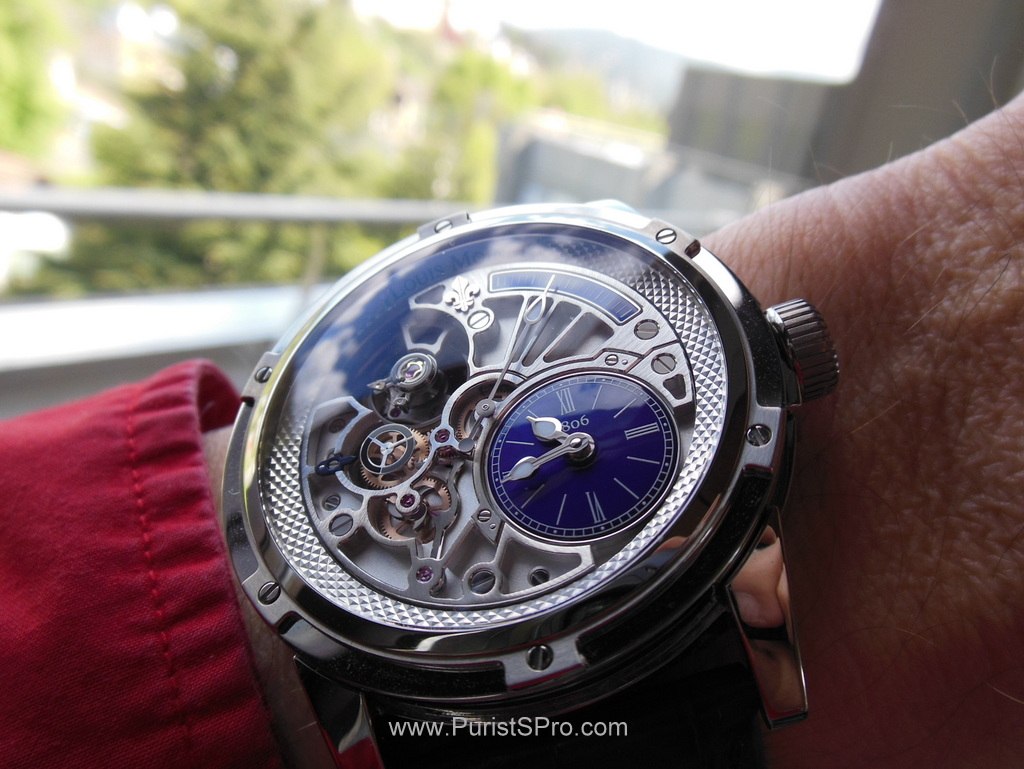
Day 10:
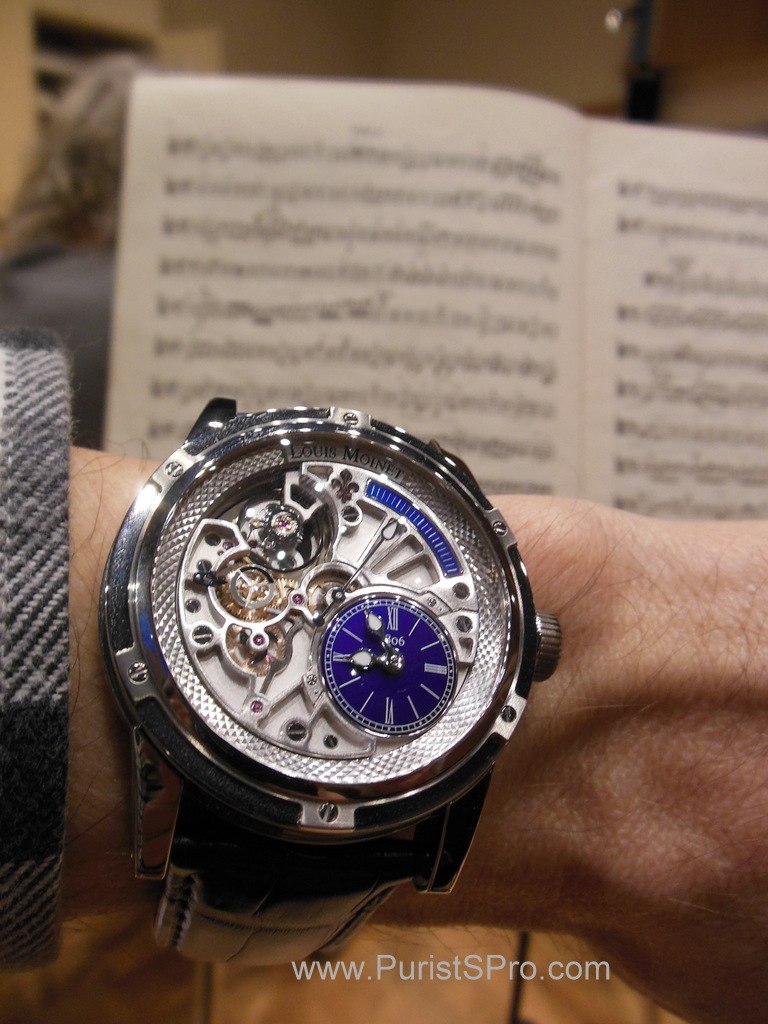
Day 11:
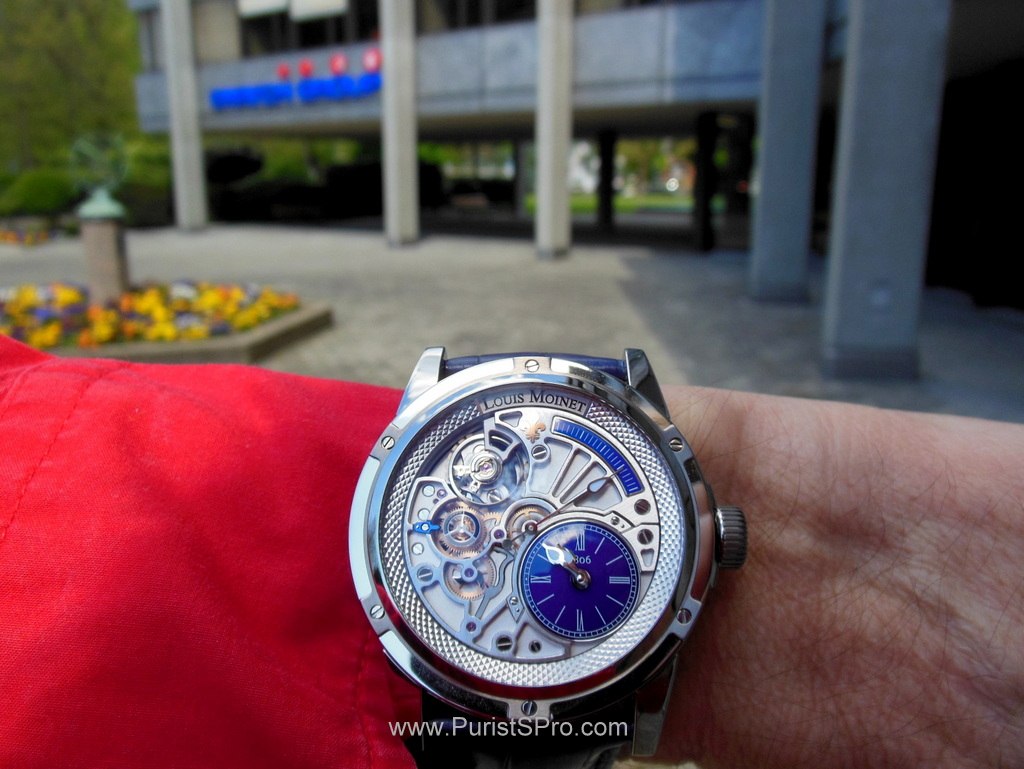
Day 12:
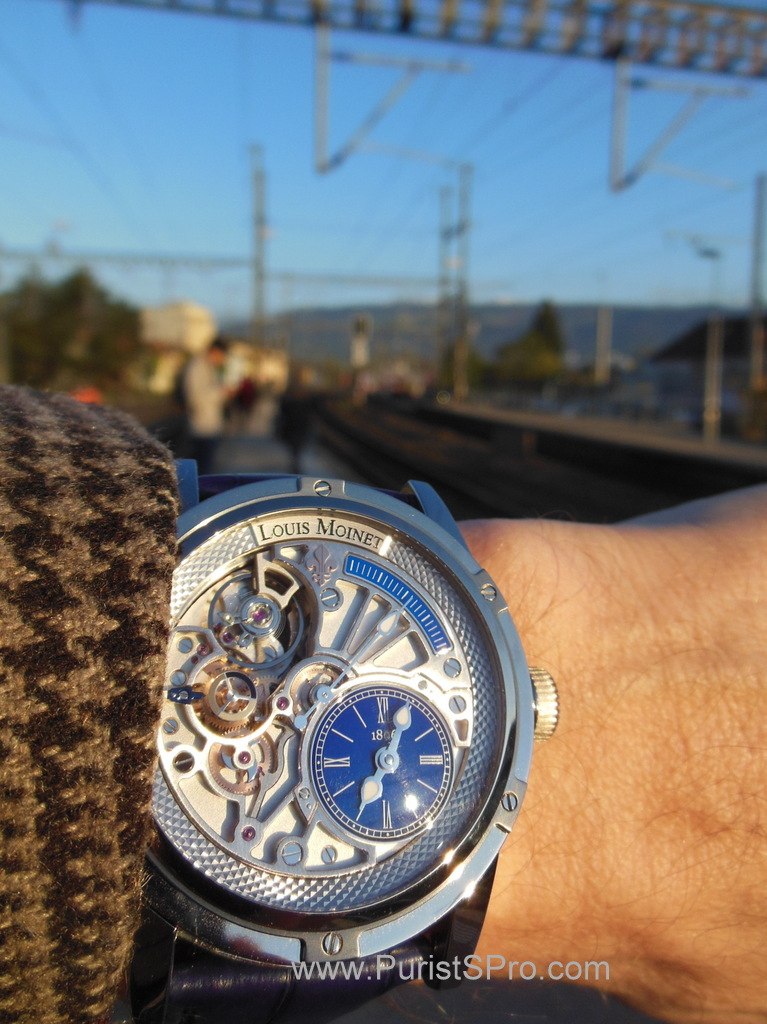
Day 13: Out for a ride
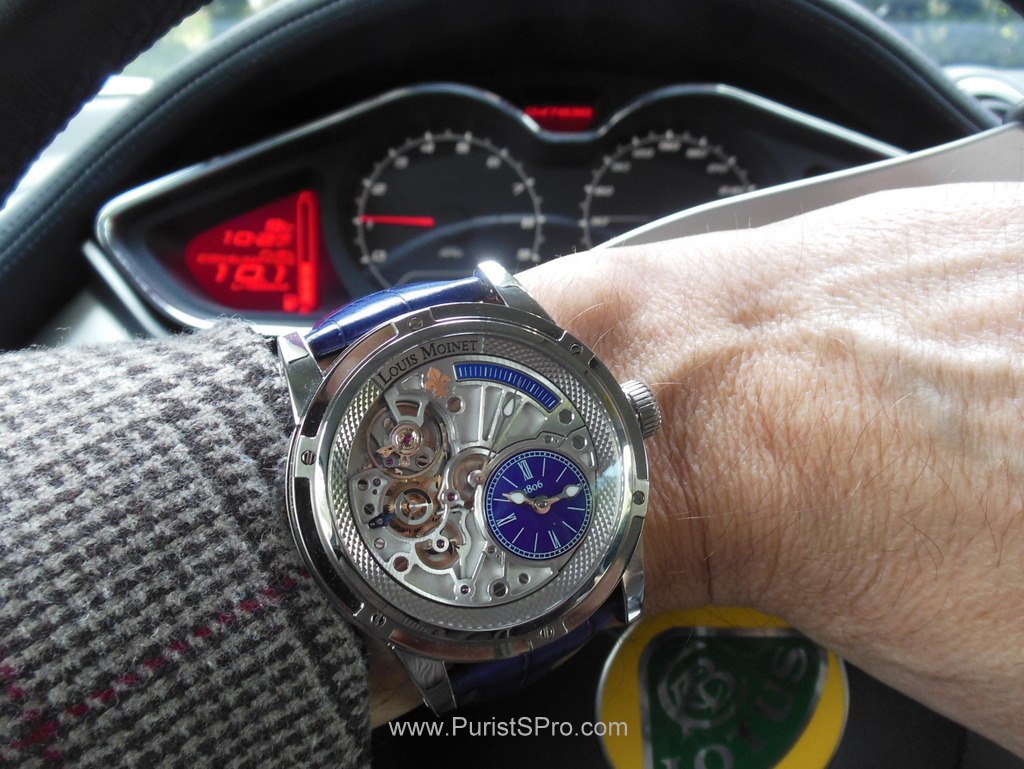
Day 14: Looking good
Day 15:
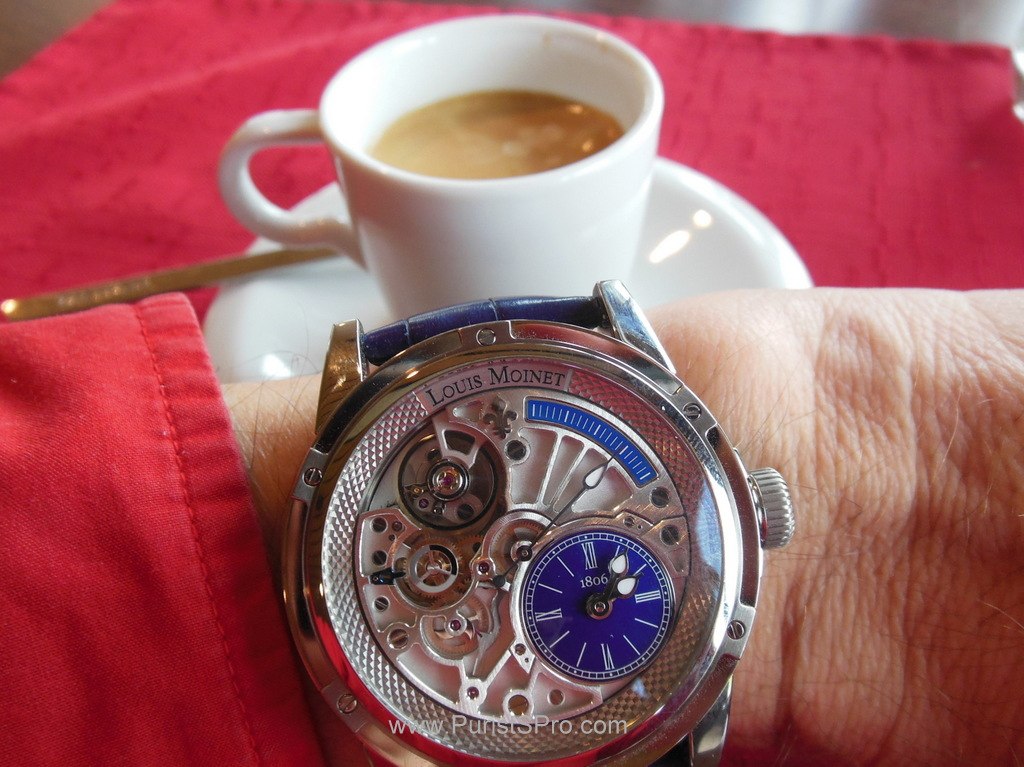
Day 17: Out to eat at the Landgasthof Schwanen, Bad Bellingen, DE
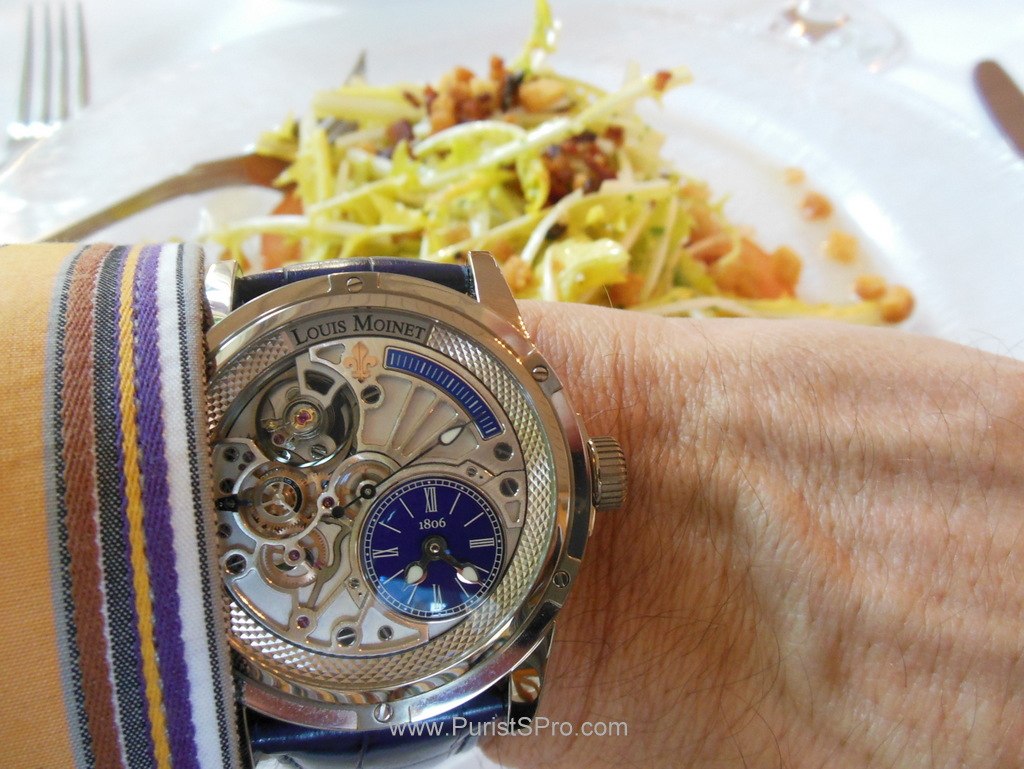
Day 18:
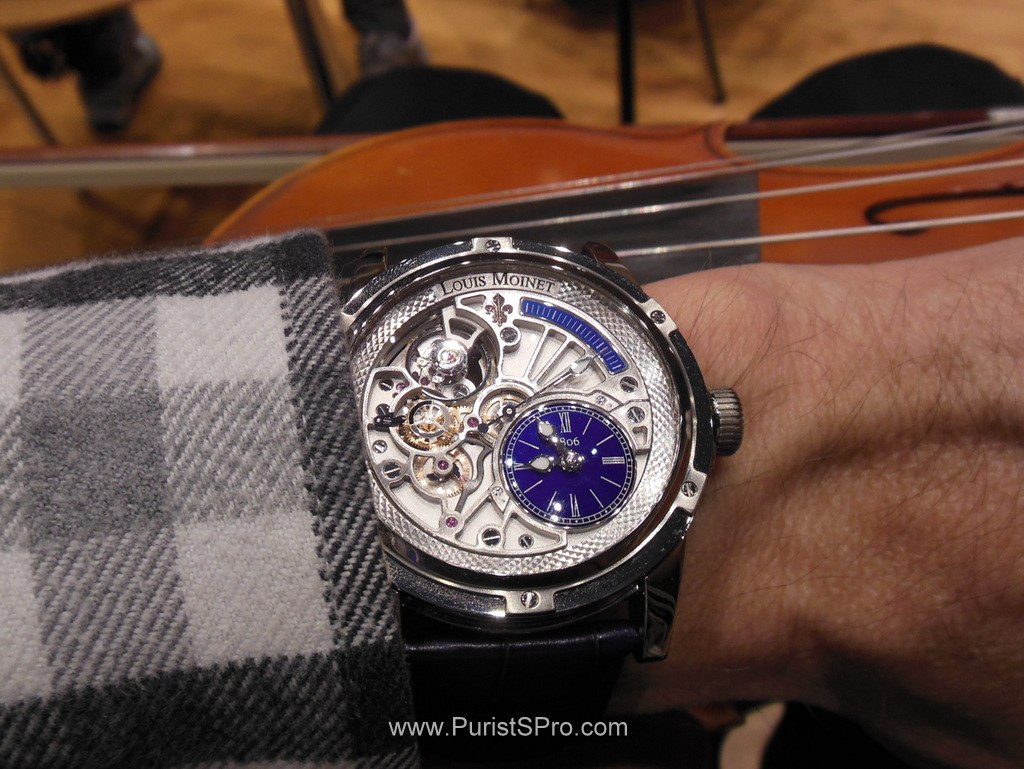
Day 19:
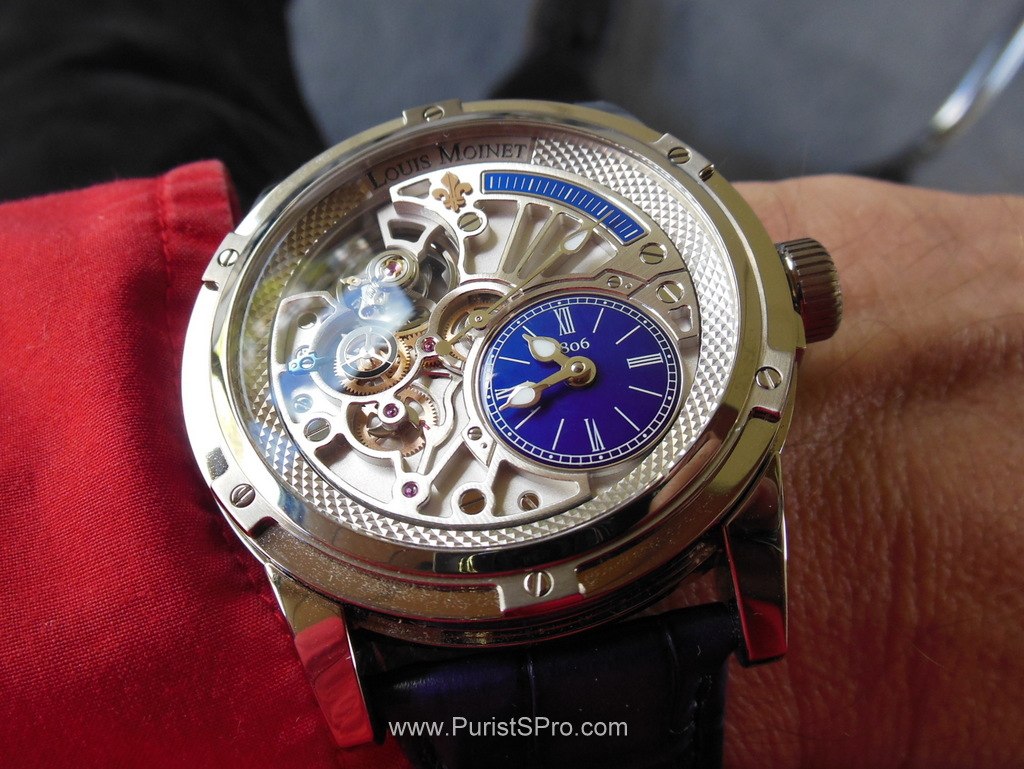
Day 20:
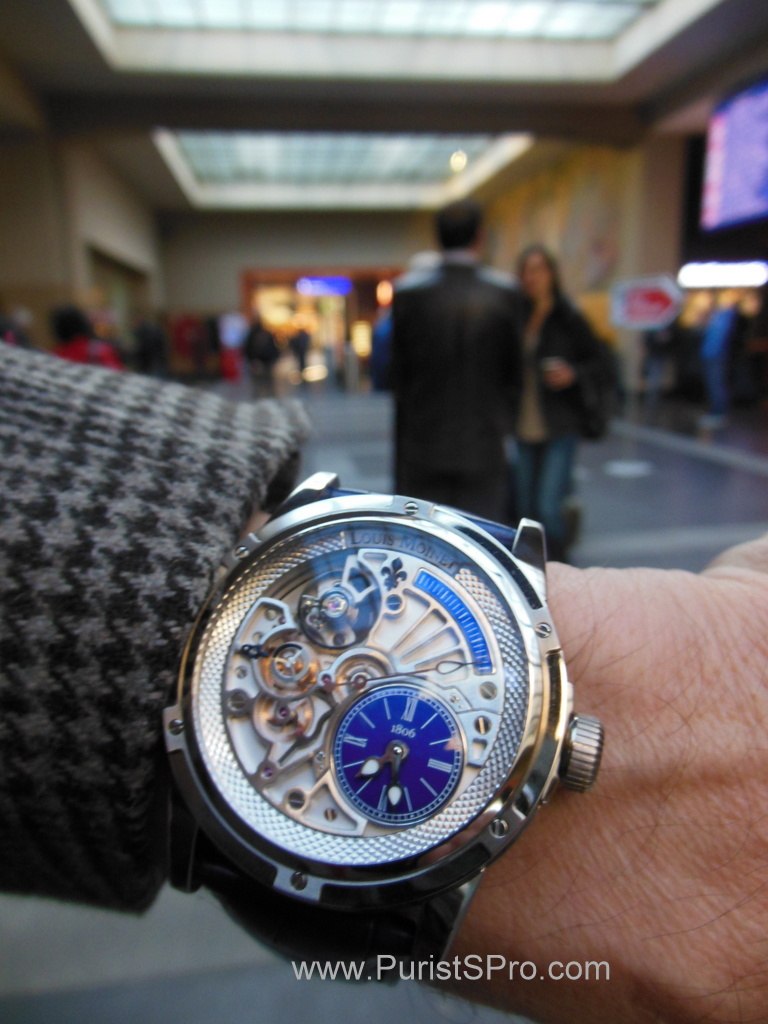
Day 21: Another watchmaker
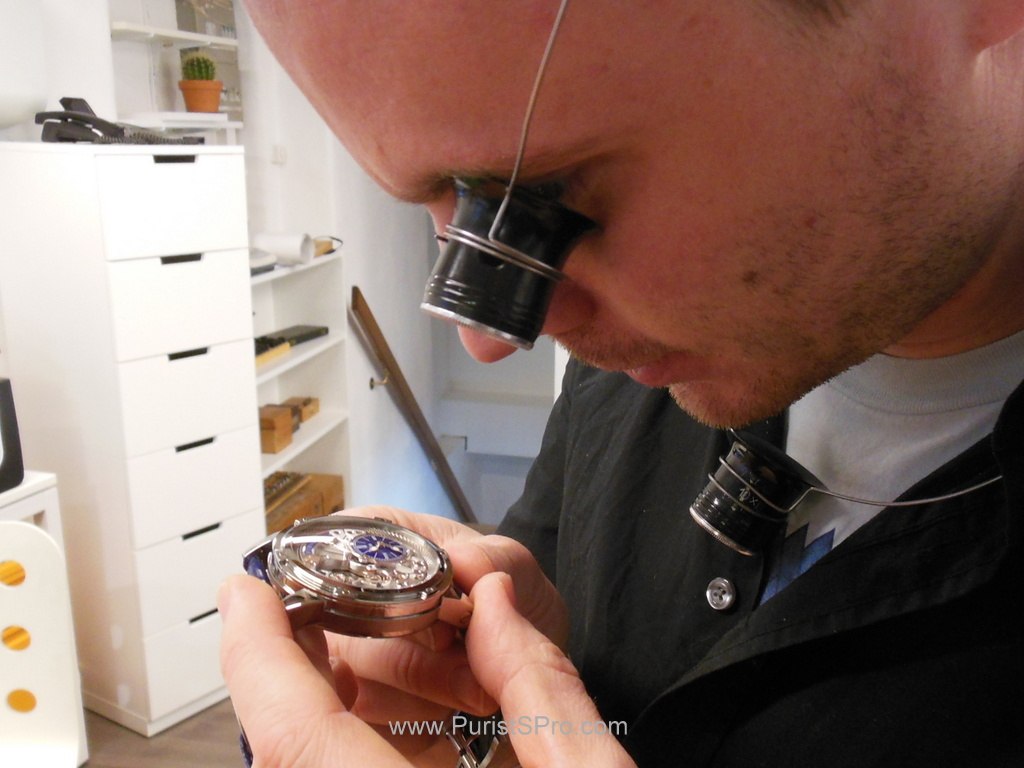
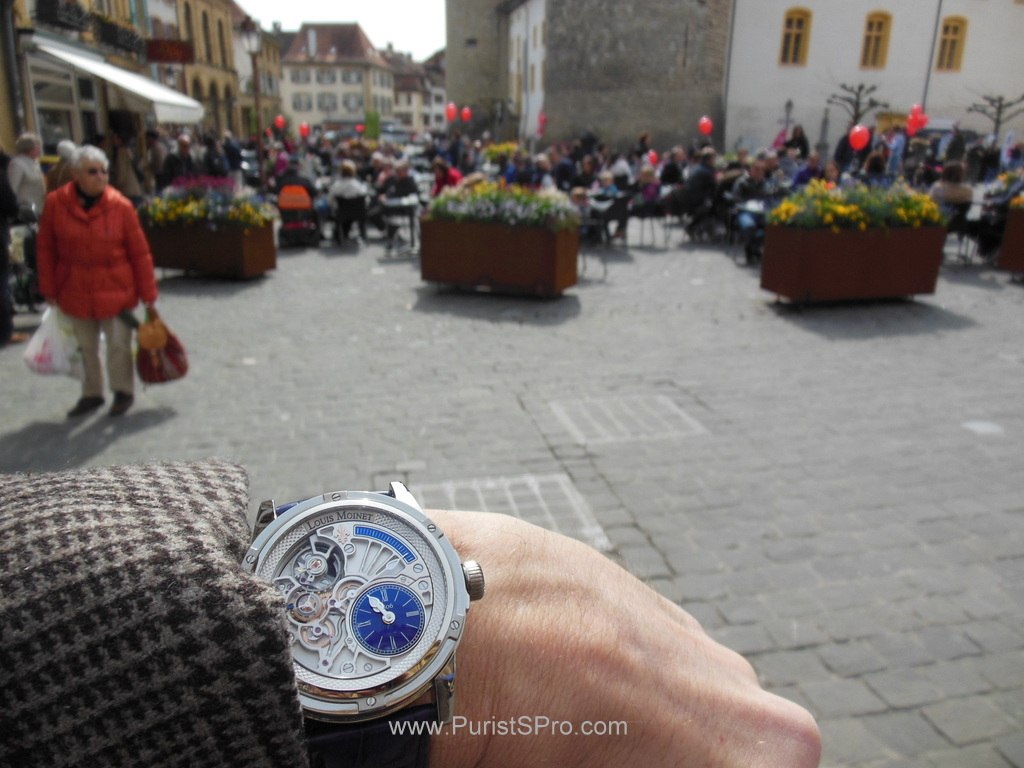
Day 22: Morning at the market place
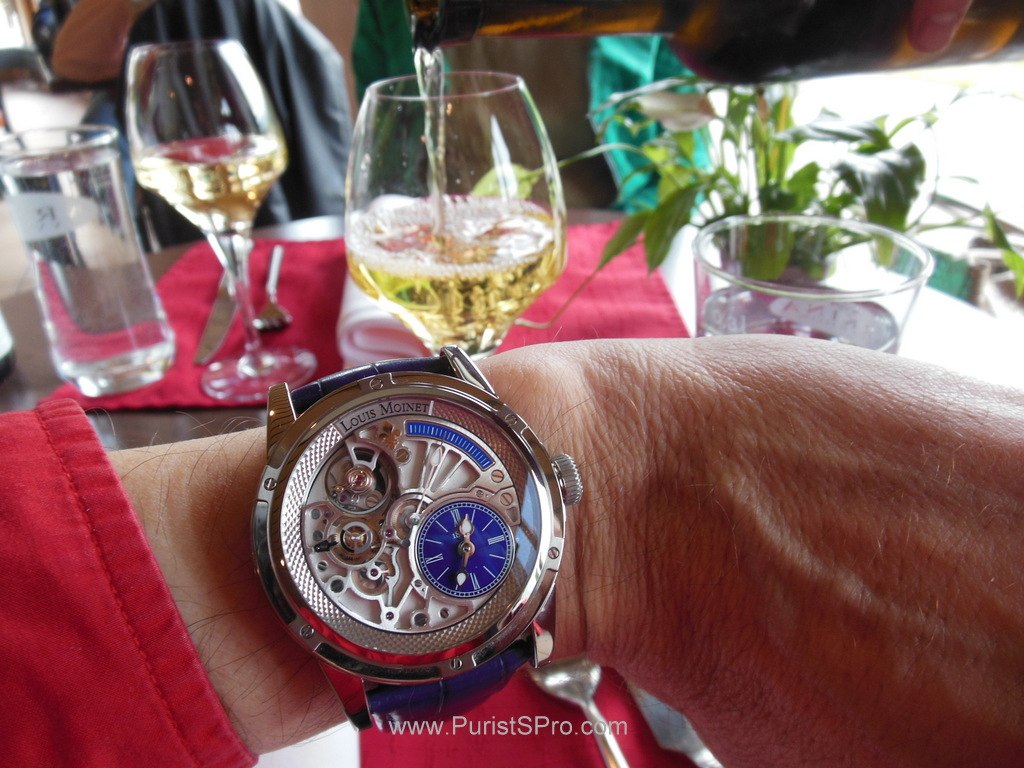
Day 23: Out to eat at the restaurant "La Table de Mary", Chesaux-Noreaz, CH
Day 24:
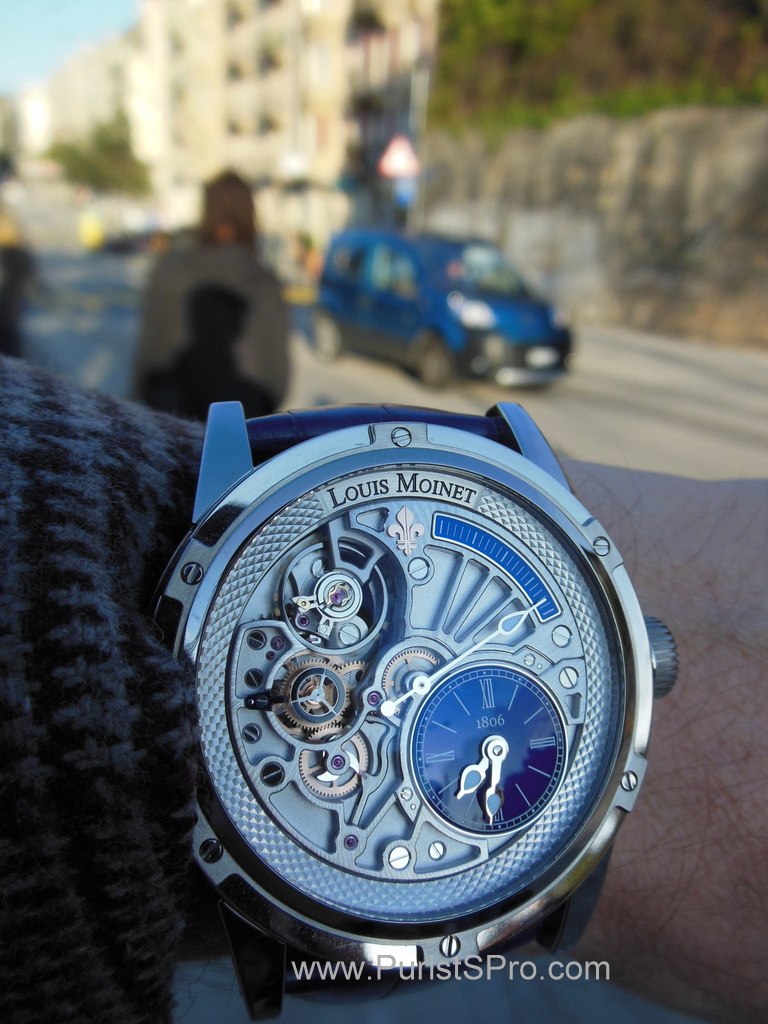
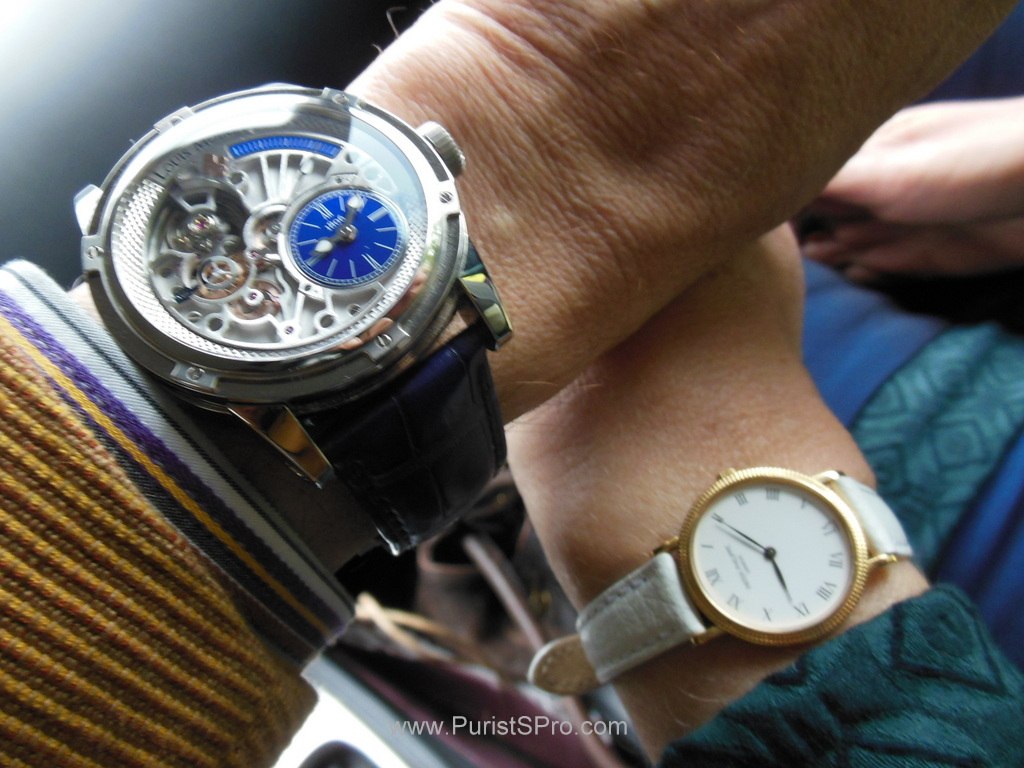
Day 25: In good company
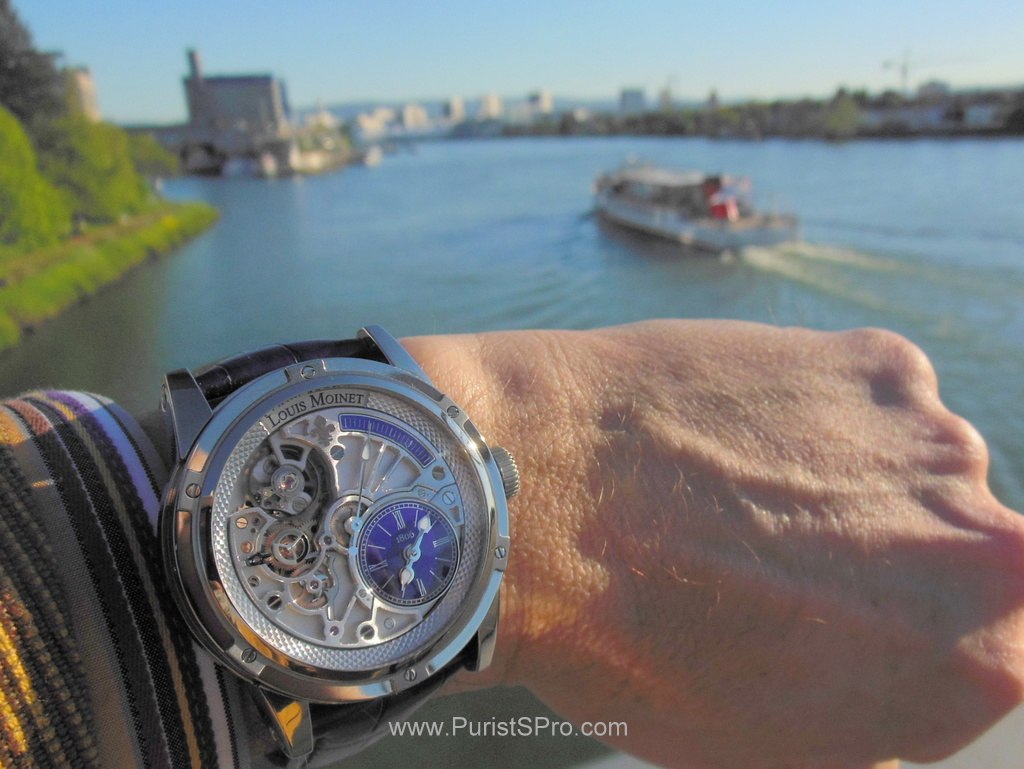
Day 26: Crossing the river Rhine on the pedestrian bridge between Weil am Rhein, Germany and Huningue, France
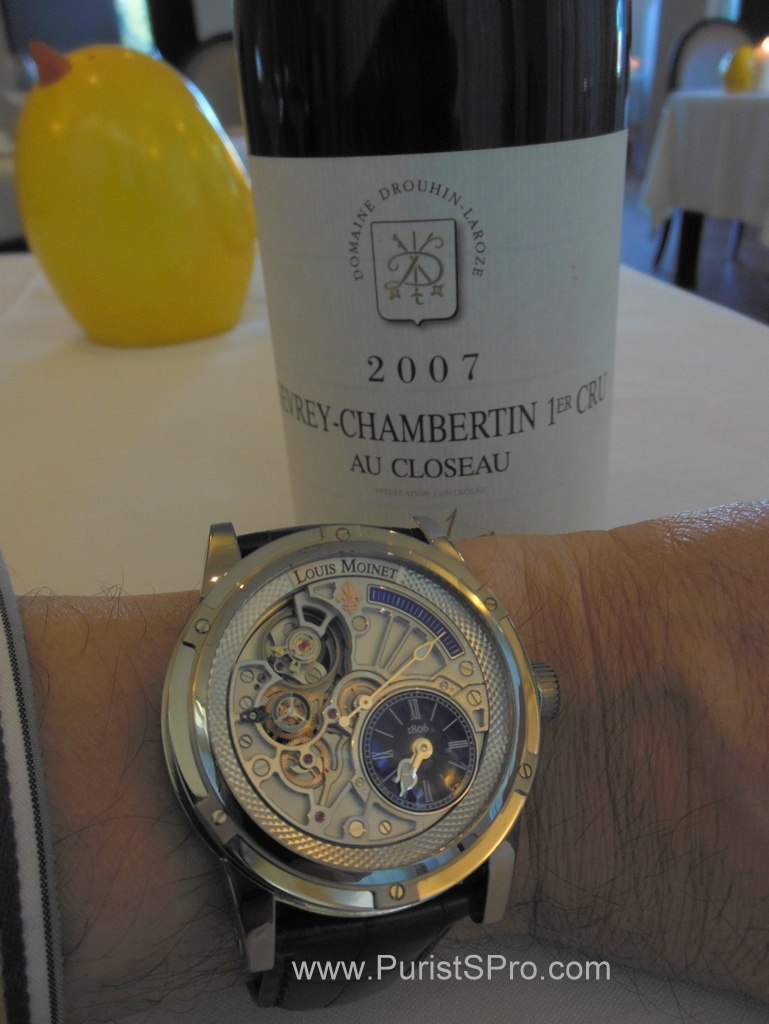
Day 27: Out to eat at the restaurant "Autour de la Table", Huningue, FR
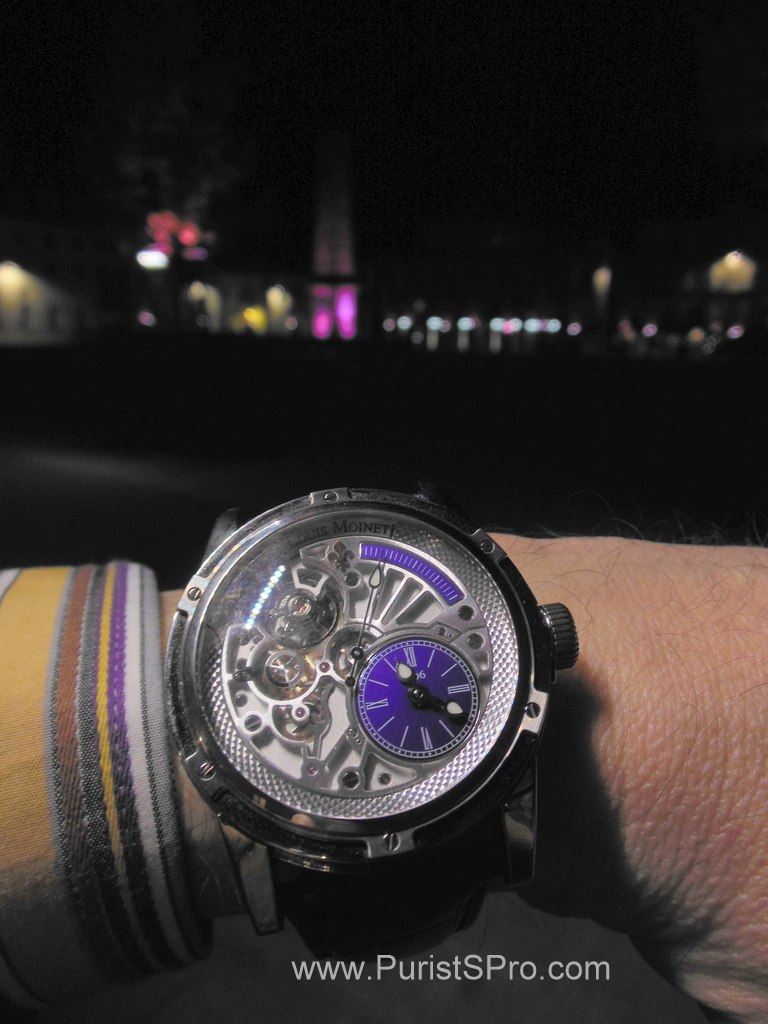
Day 28: City at night
Day 29: Spring is (finally) here!
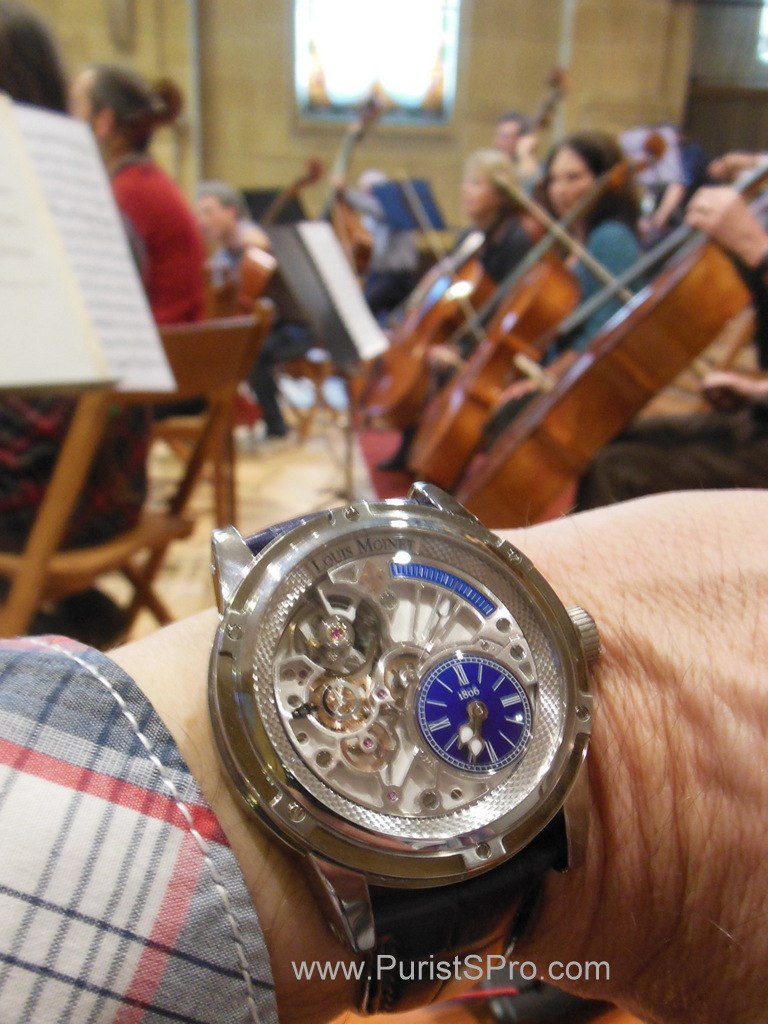
Day 30: The dress rehearsal of the Orchestre d'Yverdon is starting in a minute or two. We're playing Mozart (Clarinet Concerto with soloist) , J.-C.-Bach, Rossini. Concert tomorrow.
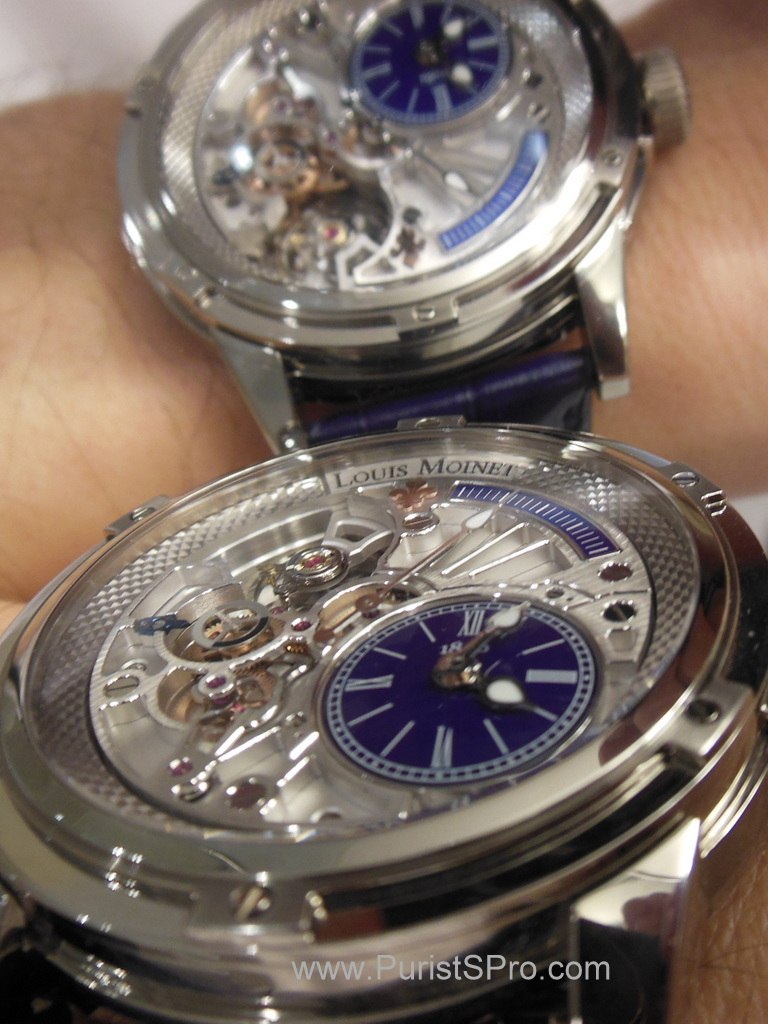
Day 31: Mirrored
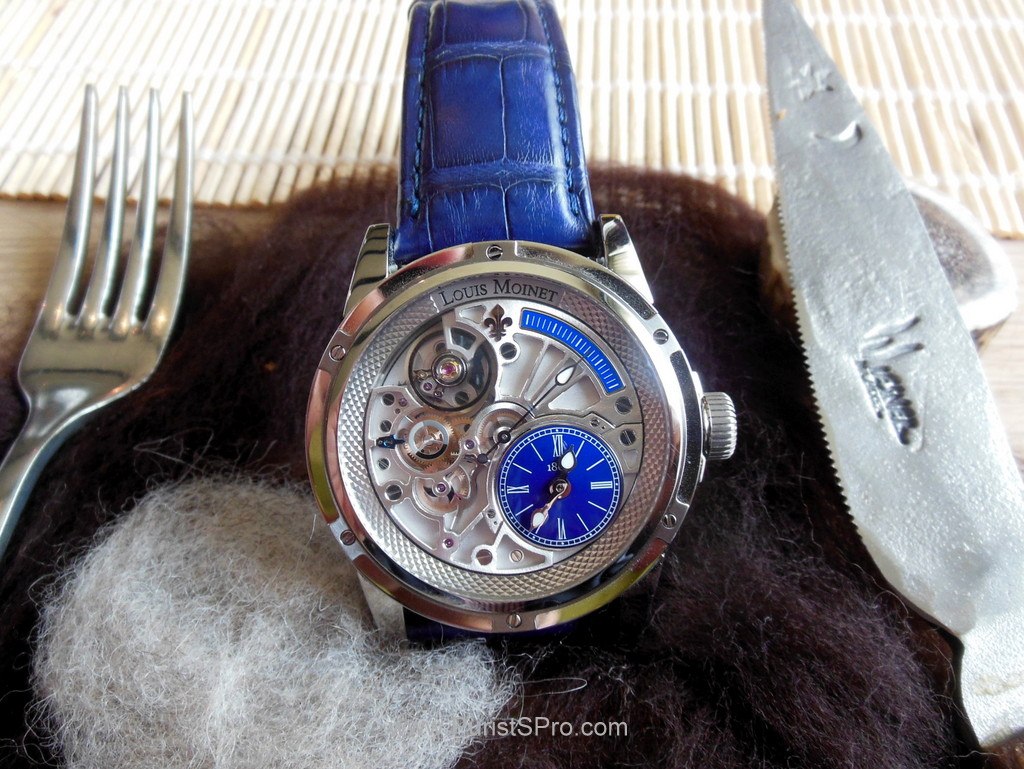
Day 32: Out to eat by Stefan Wiesner "Gasthof Rössli", Escholzmatt, CH
This message has been edited by DonCorson on 2016-05-19 13:00:36


On-Wrist Watch Review - Louis Moinet Tempograph 20 seconds

Really a beautiful piece, and a very fun post
