
AndrewD
[HoMe Moderator]
12829

Synchrotron (TO warning: horological content, sort of) …
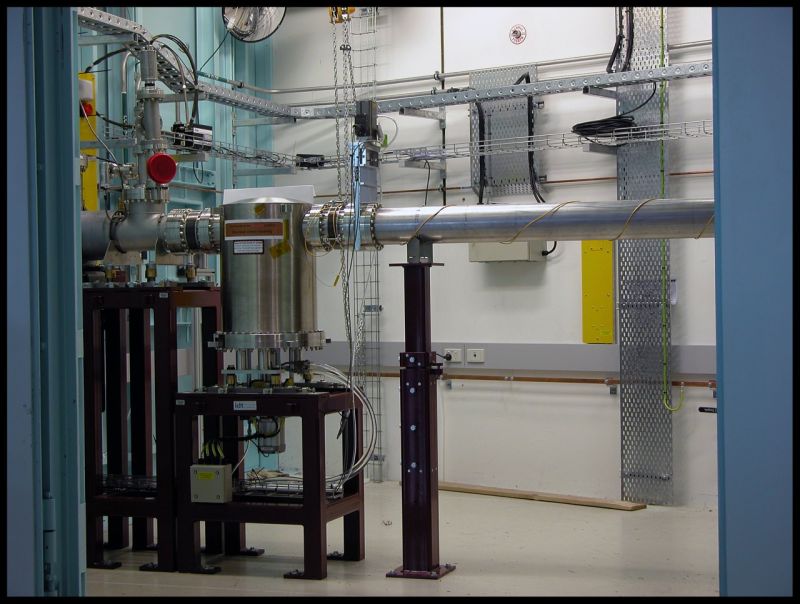
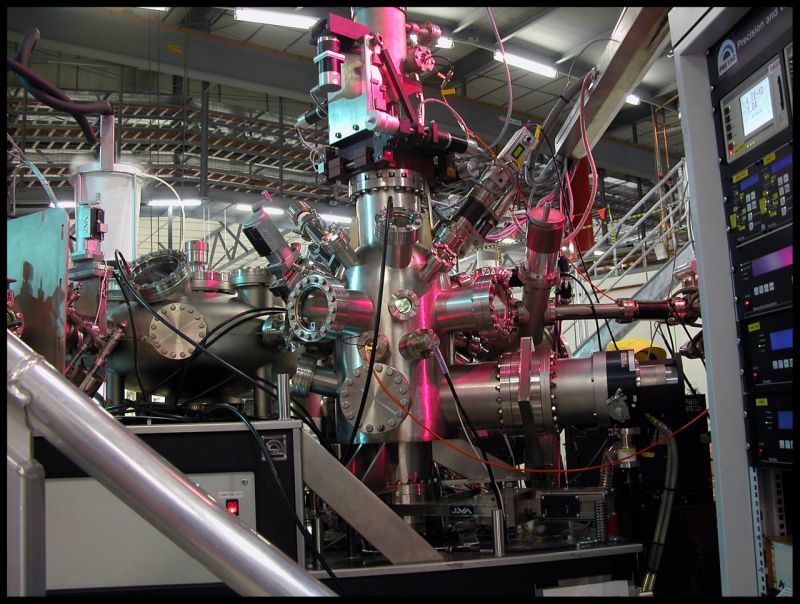
The Australian Synchrotron held an open day recently and I went along to have a look. The Synchrotron uses electromagnets to accelerate electrons up to near the speed of light and uses the released ‘light’ for various medical, scientific and industrial applications.
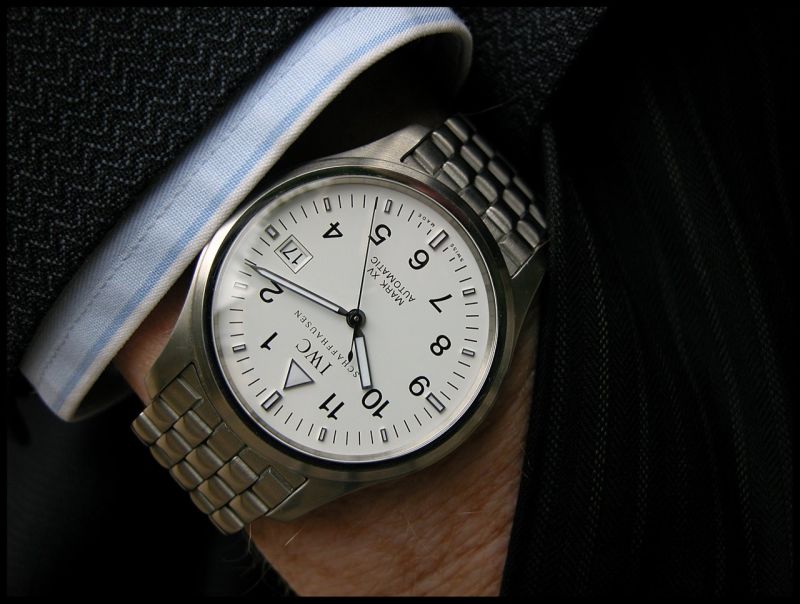
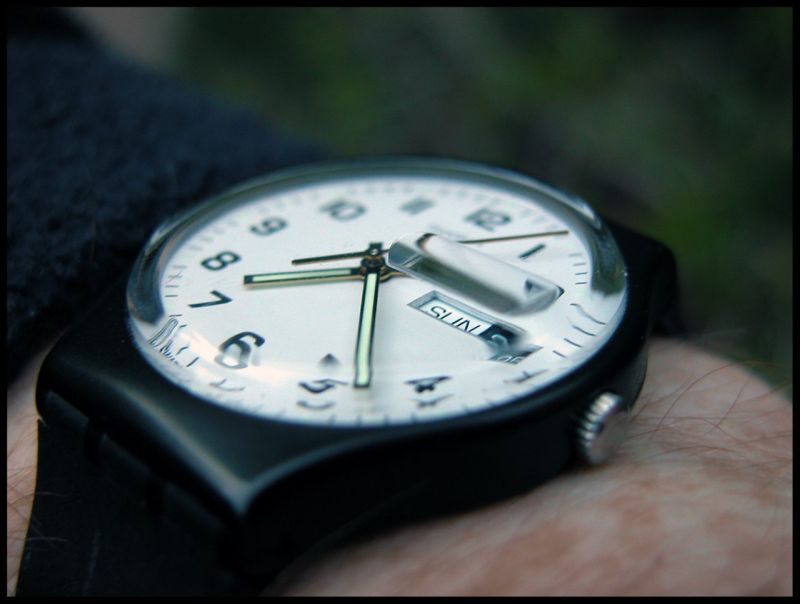
I was a little nervous wearing a mechanical watch into such an environment. I considered the IWC Mark XV; not an Ingenieur, but still protected by a Faraday cage. However, in the end I chickened out and borrowed my 7-year-old’s Swatch (and covered it with a jumper, as you never know who might see you, LOL).
Andrew


Synchrotron (TO warning: horological content, sort of) …
The Australian Synchrotron held an open day recently and I went along to have a look. The Synchrotron uses electromagnets to accelerate electrons up to near the speed of light and uses the released ‘light’ for various medical, scientific and industrial ap...

re: Synchrotron....
Hello Andrew, Thanks for sharing the pics. What kind of experiments are they running with the synchrotron? -MW
Experiments ...
The Synchrotron uses an electron gun to generate electrons that are passed through a linear accelerator and a booster ring to achieve 99.98% of the speed of light (first picture). These electrons release an intense radiation called ‘synchrotron light’ tha...

It looks a lot like . . .
. . . Dr No's laboratory. Then again, all laboratories do ;-) . . . cordially, Art

Very interesting!
The Behavior of particle physics is certainly a very interesting topic that can answer many questions; the birth of the universe, the equation of time, special atomic properties, etc. In Northern California, Stanford University runs SLAC National Accelera...
The ultimate chronograph?
Hi Patrick, Thanks for the interesting information about the SLAC and its role in particle physics. The Synchrotron was set up primarily for industrial and medical research applications. There is a lot of materials research that goes on and various groups...
The ultimate indeed...
I am consistently amazed with the progress of technology that is achieved and I am consistently amazed that many of our PuristS members are from such interesting backgrounds. I'm not going to pretend I know any more about accelerators than I do, but I tha...