
Marcus Hanke
[PuristSPro Moderator]
11295

A Journey to Romania, Part III
A Journey to Romania
Europe’s “Wild East”
Part III
by Marcus Hanke
Europe’s “Wild East”
Part III
by Marcus Hanke
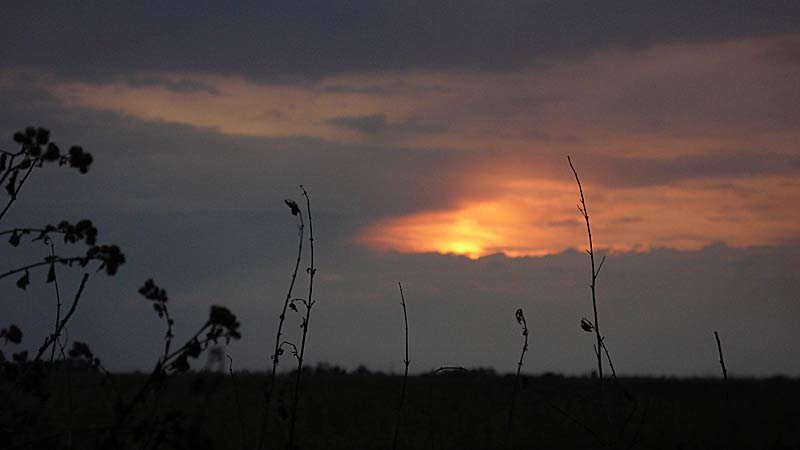
In this region we find a weird mixture of touristic seabath infrastructure, with high hotel towers and long beaches, and poor villages in the hinterland. There, we also encounter one of the few apparent problems that Romania has to overcome in order to be really attractive to more tourists: litter. As it seems, a central litter collection is lacking in many of the smaller settlements. Consequently, the villagers simply choose a place on the outskirts where they bring all the litter to, and leave it to the wind and the ubiquitous straying dogs to disperse it evenly over the landscape.
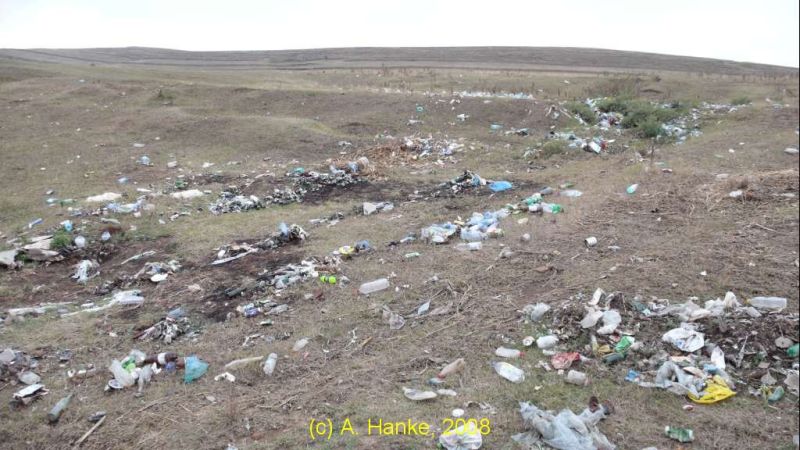
A not so beautiful sight: the Romanian litter problem
Sometimes, it is difficult to find a way under tons of empty bags, shards and beercans. This is very pity, especially in the face of the apparently massive investments into a better touristic infrastructure, which in my opinion will be in vain, as long as the people fail to understand that tourists do not want to spend their holidays within fields of litter.
Romania’s South is called Walachia, and is a traditionally agricultural area already since the ancient times. Its main feature is its featurelessness; it is absolutely flat, with barely a tree or bush disturbing the all-dominating horizontality.
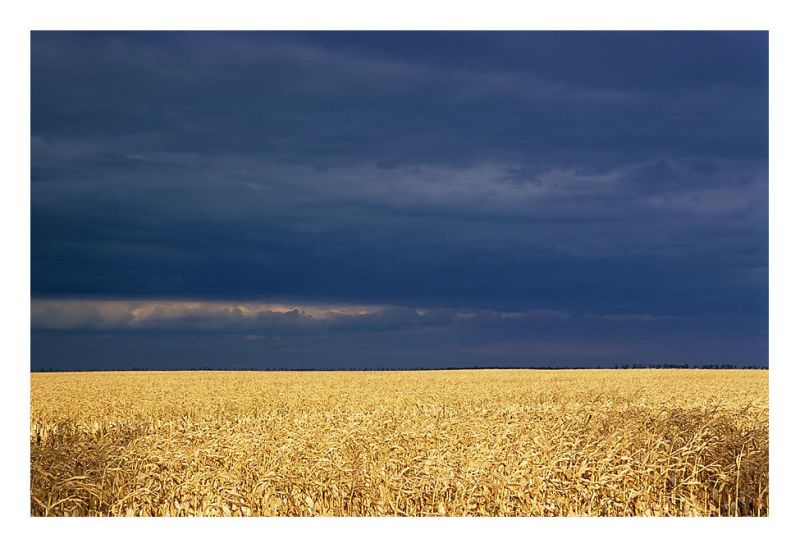
This is not an ideal place to hide for a night; our large, white truck would be a huge sign, telling all people in a wide radius that tourists are sleeping there. The vast, grey area printed in the map shows a few promising, green spots, however. Hoping that these spots would be forests, we steer in their direction, and, indeed, we not only find a forest, but a place that could be a setting somewhere in J.R.R. Tolkien’s world Middleearth: It is more a garden than a forest, full of massive, old oak trees. Tall and dark they stand, dispersed in a harvested field that shines golden in the evening sun, observing us in unreadable tranquility.
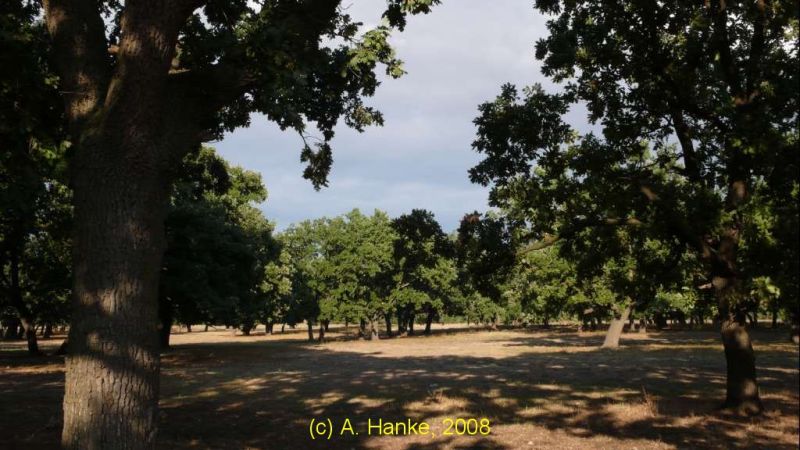
We feel small and unimportant amidst their age and massive presence. In the center of the forest there is an empty clearing, surrounded by oaks in a perfect circle. How many centuries have they witnessed passing? Were they deliberately planted in this constellation? Why? As a place to celebrate? Or as a place of memory?
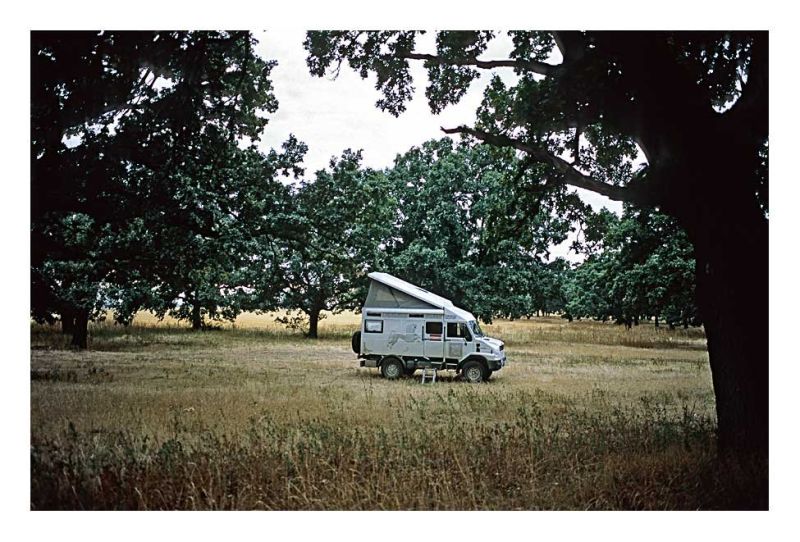
For one night, we feel safeguarded from storm and rain, and indeed, this is one of the very few nights remaining clear.
Volcanoes without heat
The next destination is lacking fame, but would earn it: the mud volcanoes near Buzau, on the Southern edge of the Carpatian arc. This region is geologically active, which is manifested by frequent earthquakes. Additionally, it is Europe’s richest oil reserve, or better: it was. The first industrially exploited oil source worldwide (in 1857) was discovered near the city of Ploesti, which then became Europe’s capital of oil.
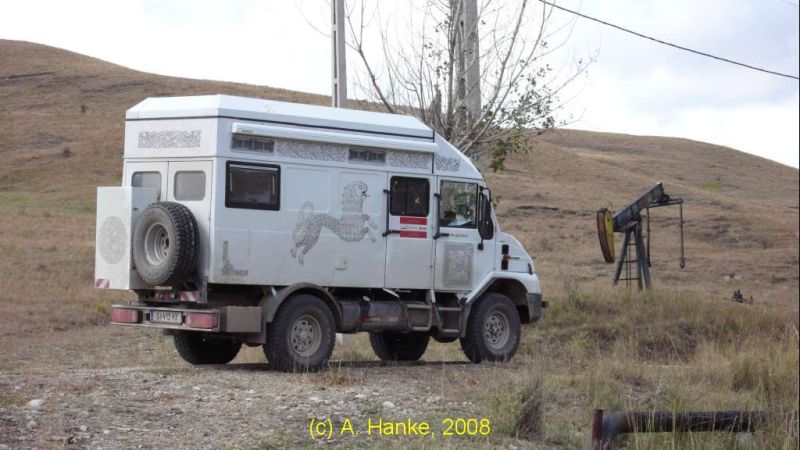
Our own oil supply - great idea!
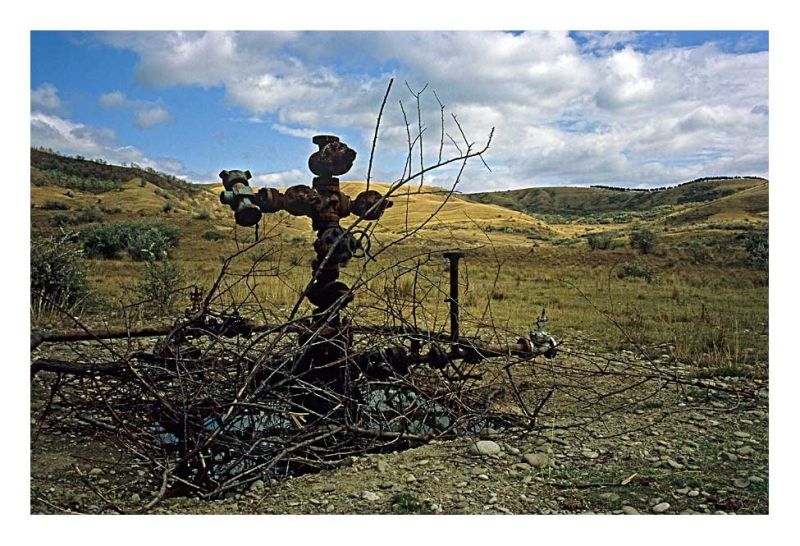
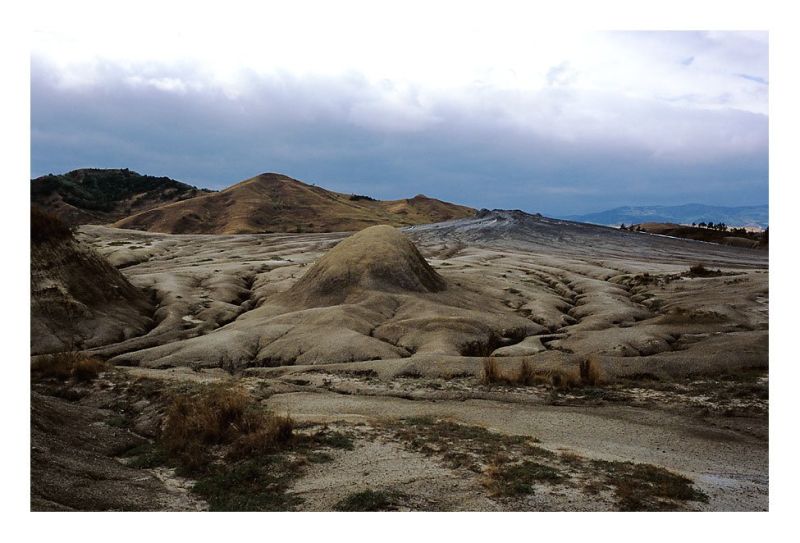
Without economic importance, the mud volcanoes have been left alone, and only since 2005 they are accessible by a paved road. Instead of spitting fire, lava and smoke, these small volcanoes thankfully limit themselves to lazily bubbling gas in small ponds of mud. So other than receiving a rather unusual skin cream coat, a jump into the craters would not cause any harm.
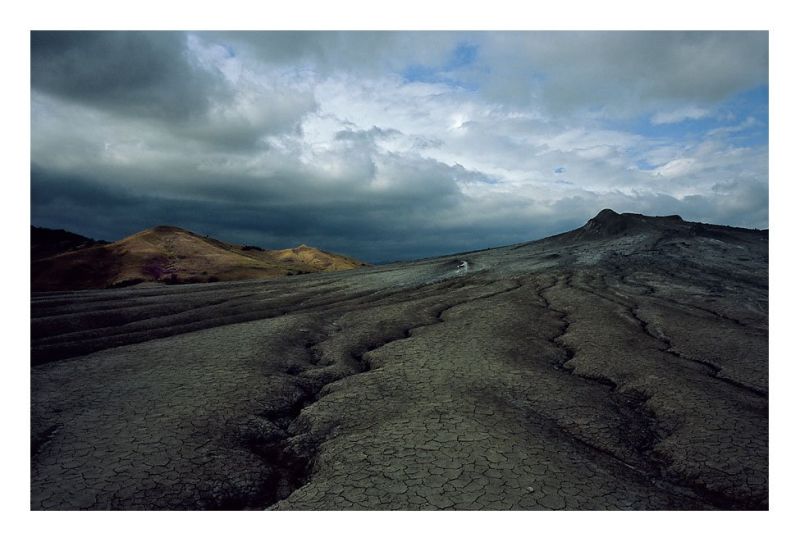
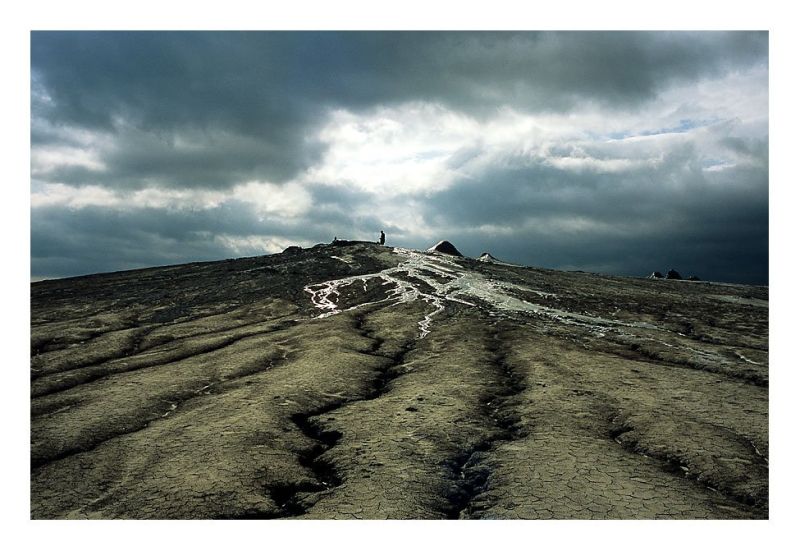
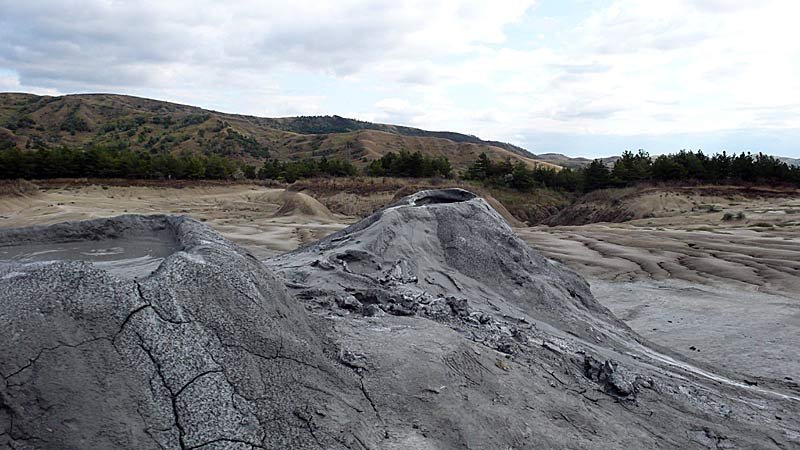
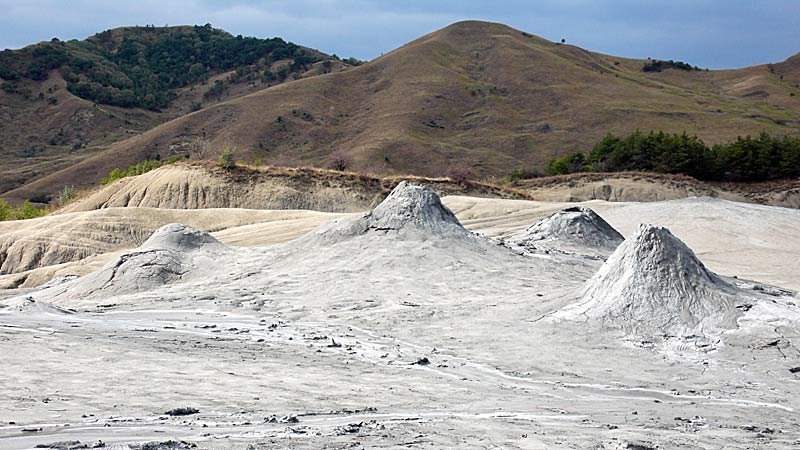
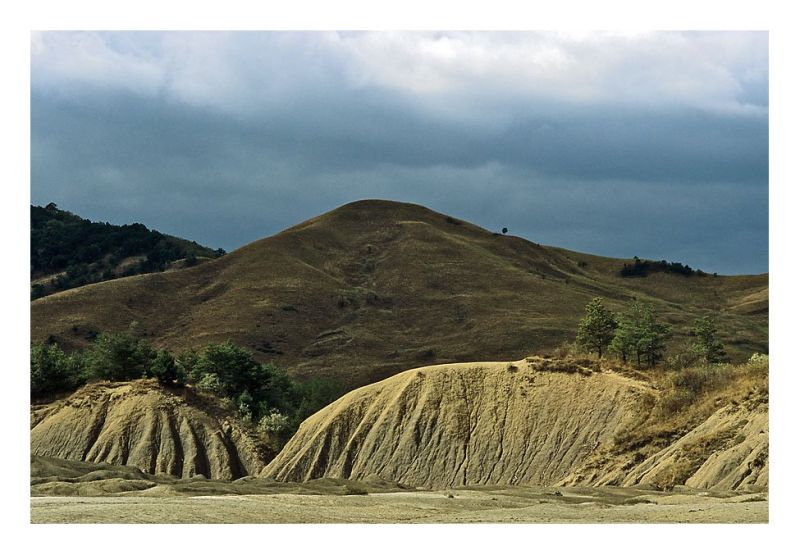
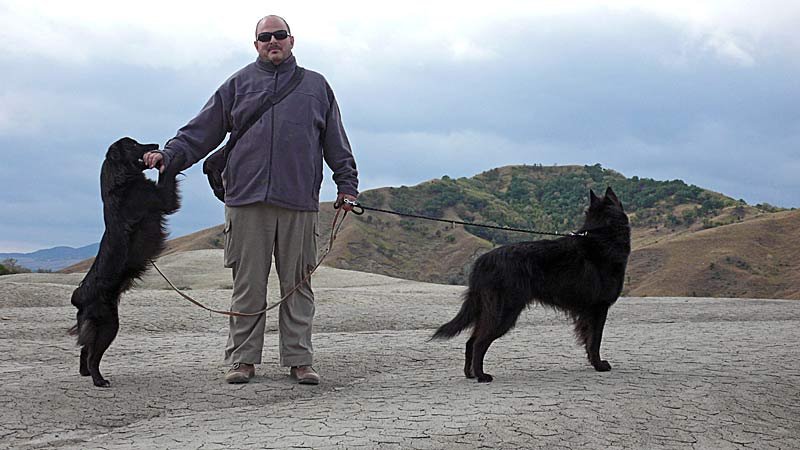
Yet the landscape is breathtaking, even without the infrequent releases or methane from the volcanoes. Here, the Carpatians are devoid of the elsewhere dominating forests, the sight we are confronted with would better fit to Spain, or any other arid country in the South. The volcano site itself is lacking any vegetation, many layers of muddy micro-eruptions have buried everything growing under tons of grey-brown material, that is now hard like stone. Phantastic, bizarre, are but some words coming to our minds when we walk around here.
Transsilvania: Fortified churches, castles, but no Dracula
Meanwhile our main direction is Westbound again, to home. But there is still a very important part of Romania we have not seen: Transsilvania. Located in the center of the Carpatian arc, this region has become famous and to a certain extent thrilling, because of the vampire myth. But before dealing with this, I’d like to point the attention of you, benevolent reader, to a culturally more interesting feature: the fortified churches.
During the middle-ages, settlers from various parts in Germany, here in their totality simply called “Saxons”, came to the Carpatians and settled here in the 12th and 13th centuries. While they were all Roman Catholic originally, they very early adopted the reformed confession in the 16th century, and found themselves in the middle of countless conflicts between barons, earls and cities of various confessions. To protect themselves from the permanent looting and burning, they decided to fortify their churches. While the erection of a mundane fortification needed the permission of the land-owning baron, such was not necessary when a simple wall was added to a church. However, the walls of these Saxon churches were much more than “simple”, and eventually became massive fortresses with several concentric rings of thick and high walls, with digs and even artillery bastions.
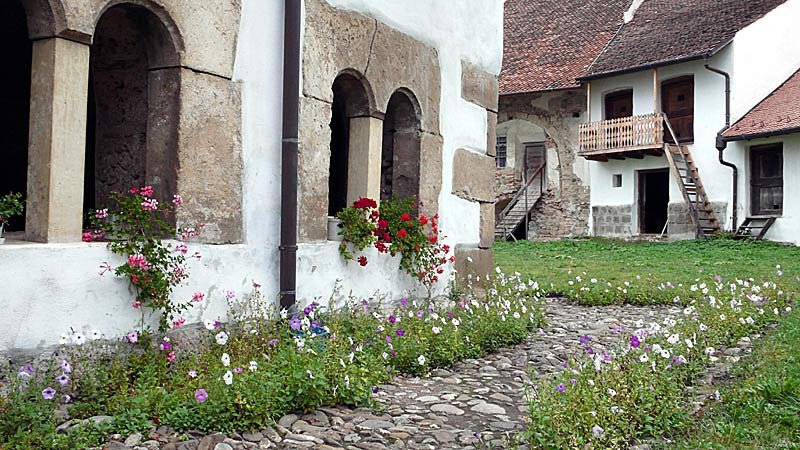
But most important of all were the food supplies: Integrated into the walls, and sometimes even the church building itself, were dozens of small storerooms, each one with individual access and stairs. They contained the food supplies and living quarters of the families of the community, while the cattle found ample grass to consume between the ring walls. This is how many of the villages survived many attacks and even sieges. The best preserved fortified churches can be found in Prejmer and Harman. Upon our arrival, the castle in Prejmer unfortunately is closed already for a long weekend, so we continue to Harman. This castle is highly impressive, with all the storerooms inside.
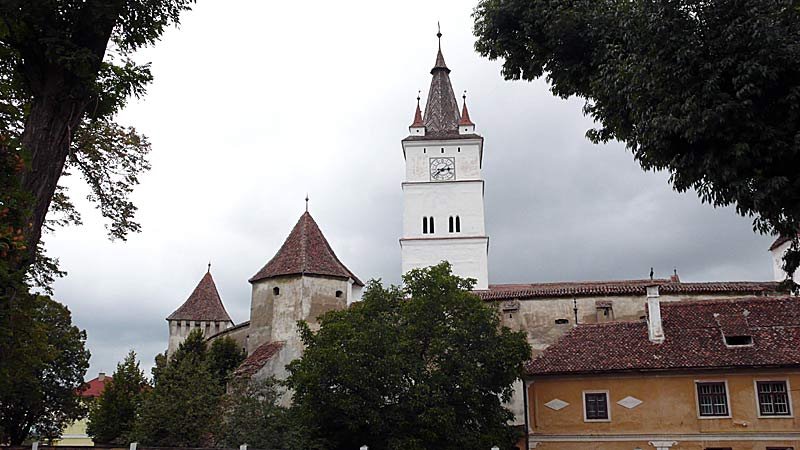
The fortified church of Harman
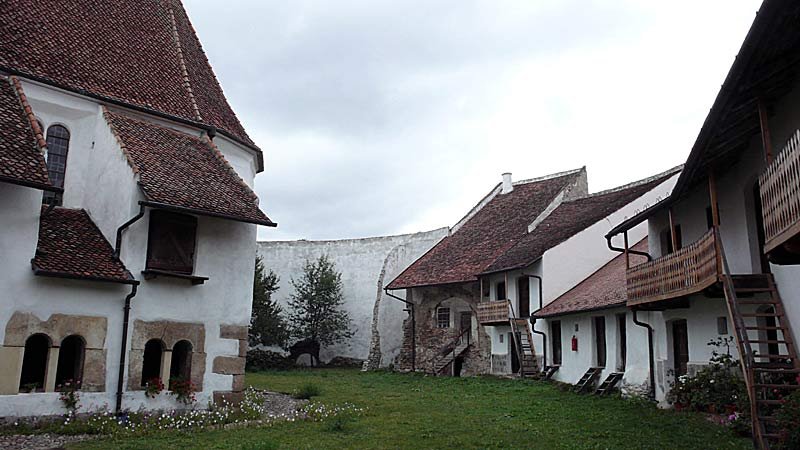
Store rooms integrated into the walls
Another interesting issue is that still many people are speaking German here. Since the communist regime did not entirely ban the use of the German language, it did not become out of use. Today, even many of the younger people speak and understand German, which has unexpectedly become a valuable asset: In Europe, people are getting older and older, but at the same time, the governments have cut a lot of the welfare budgets for the elderly, so it is increasingly difficult to assure a good care. While the purely medicinal care is of course guaranteed, the aged people mostly need a simple “helping hand”, someone who cooks and takes care of the laundry, or assists in changing cloths. This is why the young Romanians of German origin find many job opportunities in Germany, Austria and Switzerland. Most elders do not speak foreign languages and need someone speaking German to deal with. The salaries of the Romanian assistants is lower than that of the local ones, and they send home a major share of their incomes. Part of this money is invested into the restoration of the old churches, which now are mostly in excellent condition.
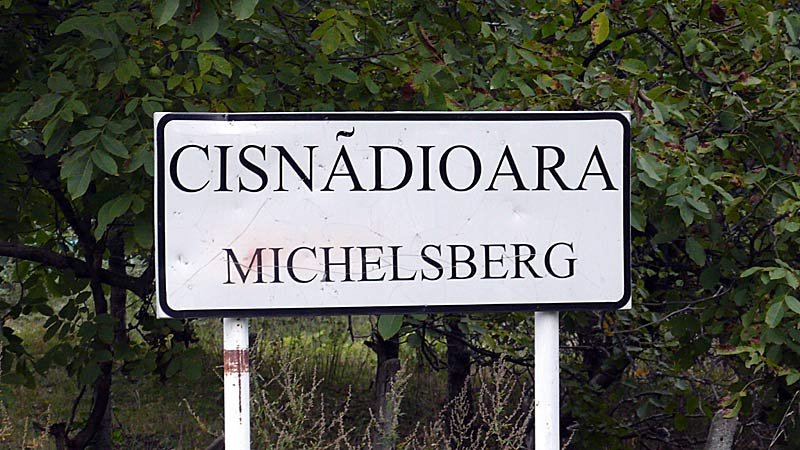
Road sign of a small village in Transsilvania, with the name written in Romanian and German
In Rasnov, the medieval farmers have erected a complete fortress, similar as the fortified churches, but without church. The walls of the castle contain many small houses, which served as food stores and living quarters for the families, in times of war.
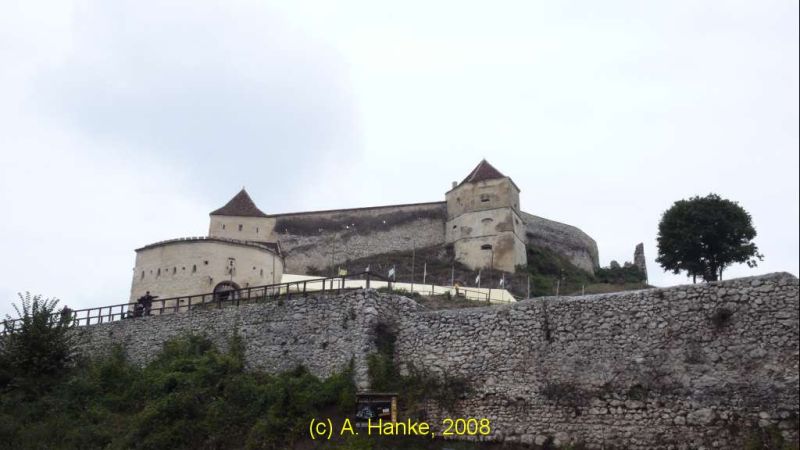
The so-called farmers' fortress in Rasnov
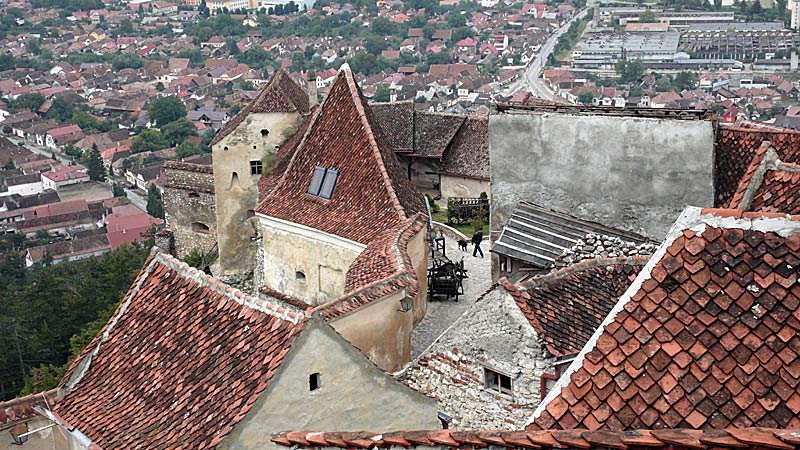
View over the roofs of the small storage houses in the Rasnov fortress
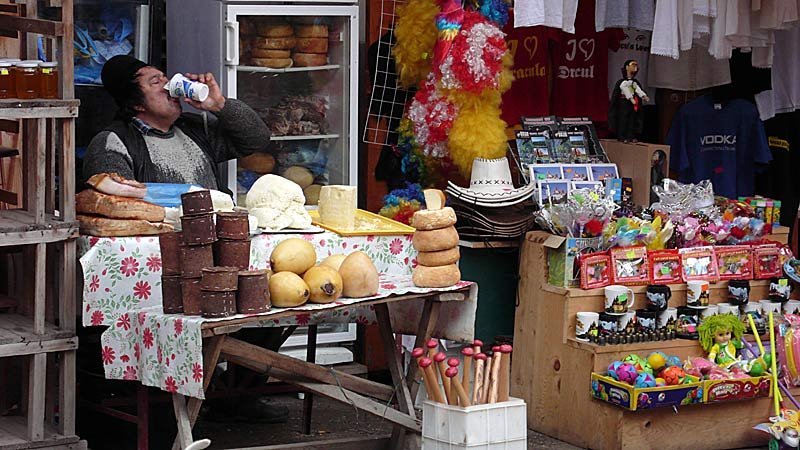
Finally, we reach a small village called Bran, with a nice castle on the hill. Immediately, the mass of tourists and small shops and stands is apparent, which is a somewhat a shock for us, because since the Moldovian monasteries we had not seen any tourist.
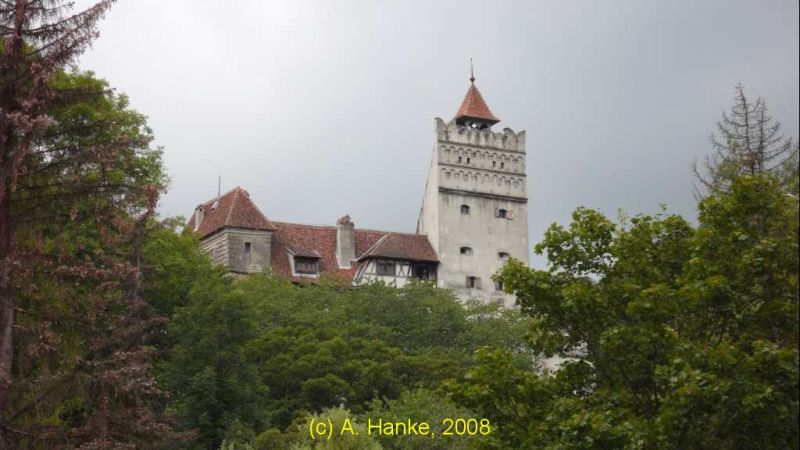
Bran castle
The solution is simple: Somehow, Bran castle has been attributed to the mythic Count Dracula. Nobody knows why, since it has nothing to do with Dracula, and has not been mentioned in Bram Stoker’s world famous novel. However, generations of avid Dracula fans were searching for the right castle, and maybe Bran, located in the dark and narrow valleys of Transsilvania, seemed to be the best choice. Since then, a veritable Dracula tourism has developed in the village.
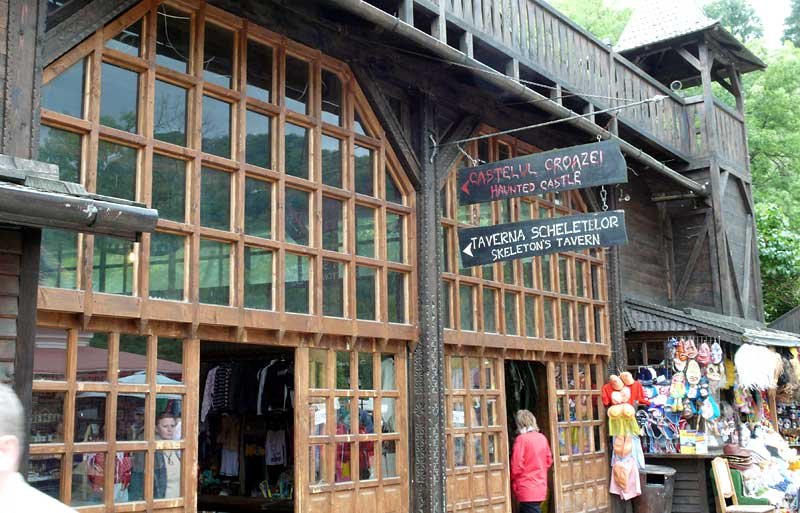
Is there any historical Dracula? Well, yes and no. There is no historical vampire, and the vampire myth in fact does neither come from Transsilvania, nor are there any typical Transsilvanian tales of vampirism. The myth is often rooted to a certain Vlad Tepes, earl of Walachia during the 15th century. He has become known of being a merciless fighter against the Osman empire, that had conquered the Eastern Roman empire and its capital Constantinople (today Istanbul) in 1453, thus challenging the Holy Roman Empire in Europe. Vlad gained dubious fame when he ordered Osman captives to be impaled. This period of continuous war between Muslim and Christian troops in Europe was extremely bloody on both sides, but apparently, Vlad’s activities were extraordinarily violent, thus earning him the title “impaler”. In Romania, Vlad is still respected as a hero fighting for his country’s freedom against the Osman invaders, but Bram Stoker took him as inspiration for his “Dracula”. This name was derived from Vlad’s official byname “Draculea”, inherited from his father, Vlad Dracul.
Back to Bran castle, Vlad Tepes spent only three days there, so it is far from being “his” castle. This does not hinder the vampire fans travelling there, trying to catch a mild feeling of horror when buying an “authentic Dracula mug” ...
A new road without sense, and an old people without road
Leaving behind the tourism magnet, we find ourselves on one of the worst pieces of country roads encountered so far. Even the most courageous Dacia drivers only rarely dared to surpass walking speed, the concrete plates seemed to have been used in a large earthquake simulation. “Drum bun”, “good trip”, is the wish written on big signs when leaving any village in Romania. Roads like this give a deeper meaning to it. It is clear that since the days of Romania’s infamous dictator, Nicolae Ceaucescu, no money was invested in repairing this piece of infrastructure. Yet he left behind one really interesting road, which we want to use after another night spent in thick forest.
The “Trans-Fagaras” is a road passing the Carpatians at about 2,000 meters, in a most challenging location. To set himself a monument, Ceaucescu dreamed of a high alpine road, like they were built in Switzerland, Austria or Italy. During the Seventies, he ordered the Trans-Fagaras to be built, mostly by prisoners, many of whom died during the construction. While technically ambitious, and optically very impressive, this road was completely senseless from its economic aspect. Only a few dozens of kilometers to the West, there is an ancient pass through the Carpatians, that only reaches some 900 meters height, and has a good road. Since many centuries, the traffic between North and South is moving there, and there was no apparent need for another road.
Consequently, the Trans-Fagaras was never really frequented, since it is difficult to drive for heavy trucks, and has to be closed for several months in winter, since it is blocked by snow. Today, it is a nice road for sightseers, which is why we chose to use it.
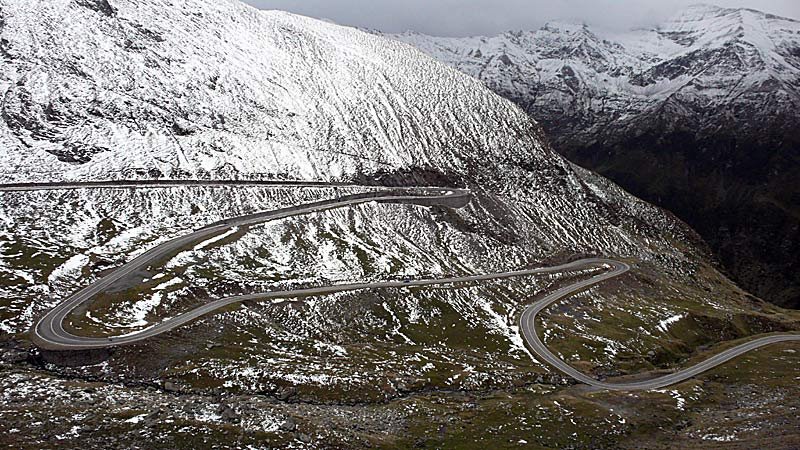
For two days, it had not rained, so we hope to end our vacation in conditions worthy a late summer. However, temperatures fall again, it starts to freeze at night. On the Trans-Fagaras road we see barely another vehicle, some spots of snow appear at over 1,600 meters. On the top of the pass is a tunnel, leading to the Northern flank of the Carpatians. When leaving it, we suddenly stand in deep snow and thick fog; late summer, yeah.
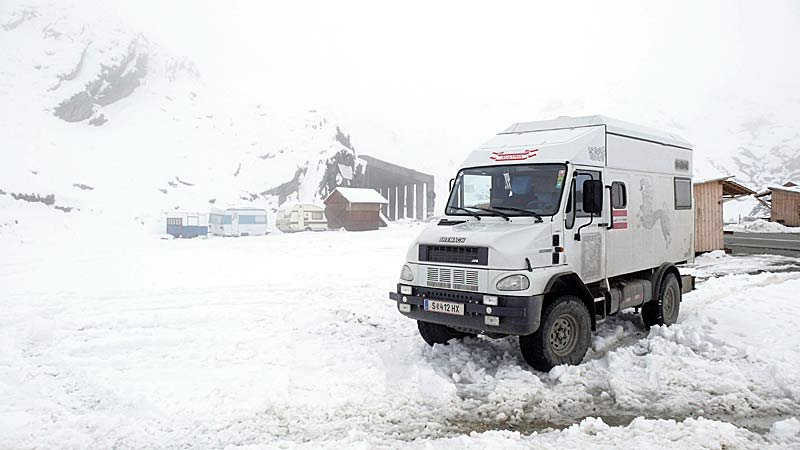
Late Summer in Romania ...
Originally, we had planned to take another pass to the South again. 2,200 meters high, the Urdele pass is not paved, not even a gravel road, but a very corrugated track. At the sight of the snow here, 200 meters lower, we immediately cancel this plan, with deep regret.
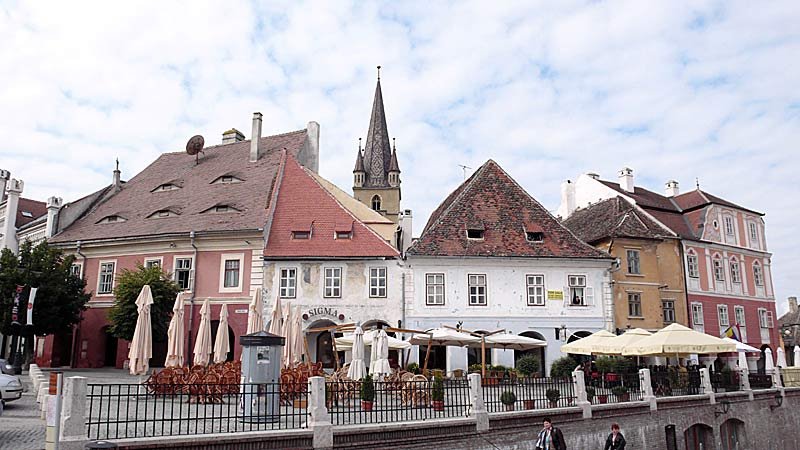
We only pay a brief visit to the town Sibiu, the old German Hermannstadt. It had been awarded the title of “European Capital of Culture” in 2007, so most of its beautiful old quarters have been nicely restored.
Before leaving Romania, I have one place I really want to visit: the ruins of the Dacian capital. The Dacian people settled in Romania four thousand years ago, until the country was finally conquered by the Romans, around the year 100 A.D. Two hundred years before that, the Dacians had relocated their capital to a place that should make it invulnerable from attack and impossible to be conquered. At the very end of a long and narrow valley, in 1,200 meters height, several artificial platforms were made, on which the new capital with the name Sarmizegetusa Regia was built. It consisted of three main parts: the civilian town, the holy quarter with many temples, and the fortress in the middle. After the Roman emperor Traian besieged and finally conquered the town in 106 A.D., it was not devastated but used by Romans as well. But now, during the pax romana, the peace guaranteed by the Roman Empire, trade was more important than defence, and the secluded location of the city became an economic problem. Consequently, it was left deserted by the inhabitants, who went to a new town in the plains, and forgotten.
Until today, only a tiny part has been excavated, the temple quarter, and there, only the mural bases of walls and columns remained. The rest is still hidden under a dark and dense forest of centuries-old trees. Several years ago, only a footpath led to the site, which was later replaced by a rough track. Meanwhile, the UNESCO has listed it as World’s Cultural Heritage, and thus the track is currently widened and rebuilt, and will eventually become a regular paved road.
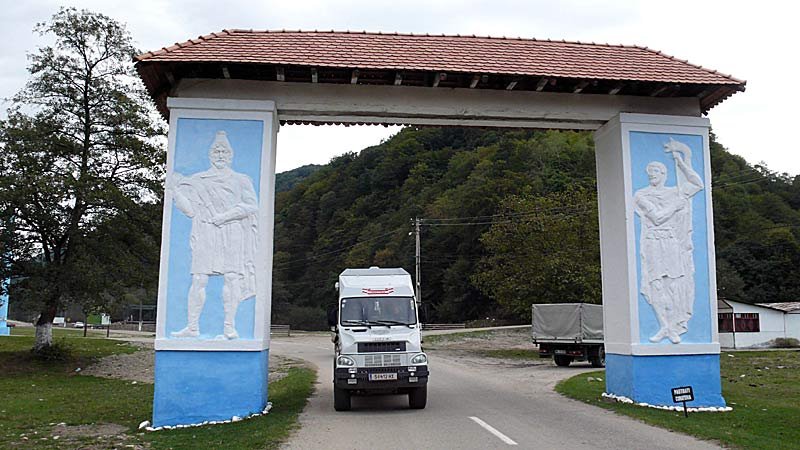
For us this means that for more than 20 kilometers, from the (modern) gate showing two Dacians and marking the limit of the old city’s territory, we have the joy of driving on a bad track, that has become devastated by heavy construction machines, and garnished with deep mud following several days of rain. We need two hours for this short distance, and our poor dogs are completely irritated, because of the massive jumps and bumps they are subjected to. Several times it appears as if we cannot continue, and I want to give up already, but my wife, who does the driving (during most of the vacations, she is the driver, I am the navigator), presses on; much to the astonishment of several road workers, standing aside and gazing at the strange sight of Gwenn working its way through the mud.
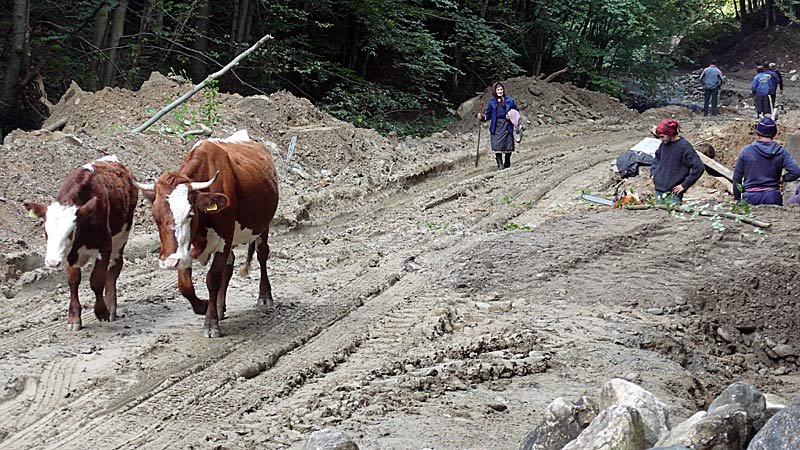
The "road" to the excavation site
Finally, no human being has been seen during the last ten kilometers, we reach the remnants of Sarmizegetusa Regia. Of the ancient fortress, only the massive ring wall is still visible, the buildings within are buried under the huge trees growing there since centuries; only a few hewn stones, covered with moss and ivy, give hints of what history is hidden in this place.
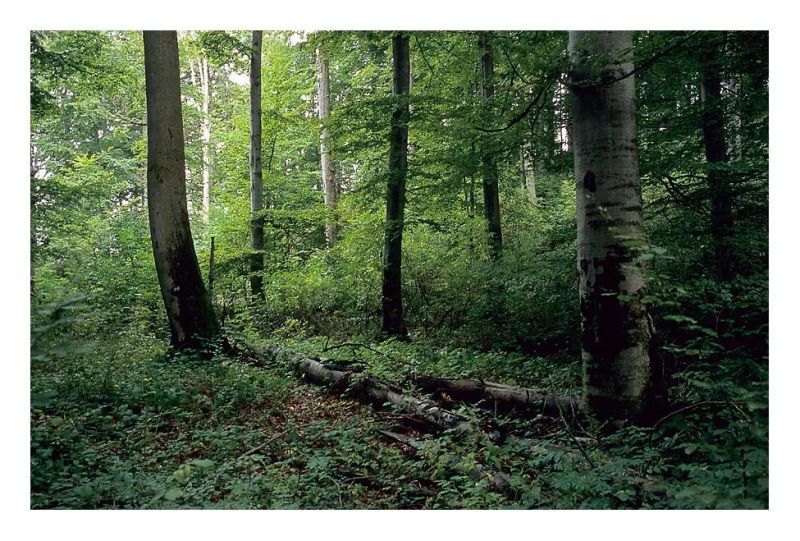
A certain Indiana Jones-feeling is present when the dense cover of branches and leaves parts to reveal the sight on what is left of a large number of temples and cult places. Among them are some weird-looking circular structures that apparently served as early calendars, with specific markers that permitted reading and interpreting the course of the sun. Everything is quiet now, the sun has disappeared, and not even a bird is singing. We literally can hear the silence. Somehow, this place is leaving the impression of immense strength, of some old power that is still here, among these stones and in these trees. We hesitate to speak loudly, even the dogs seem to express themselves in a hushed manner.
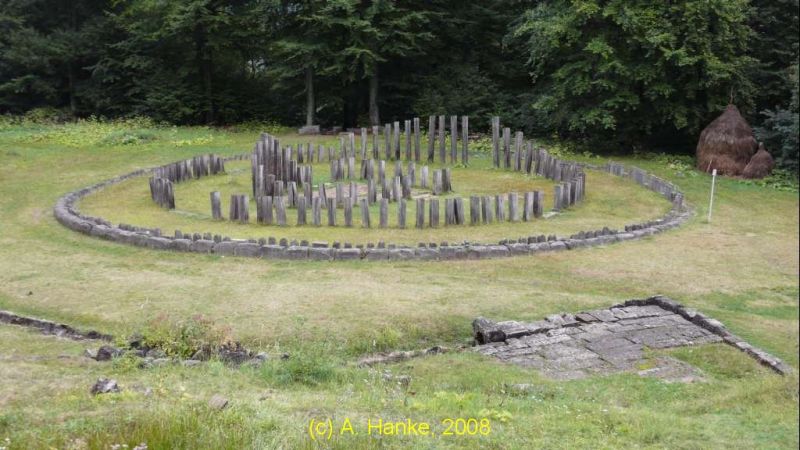
Calendar temple
Some time at night, suddenly our Chagall starts growling and stares outside, where I notice a flickering light, a candle burning only some twenty meters in front of our truck. A shiver runs over me, because we had noticed absolutely nobody since we are here. So who could have lit that candle? I take the flashlight and examine the mysterious candle, only to find one of these lights that burn several days. Apparently, it has been there all the time, but during daylight, we did not notice it. The next morning, we find several more candles, burnt out already. The mystery becomes even deeper: Who is coming up here and lights candles on two thousand years old ruins? Apparently, this place still has a spiritual meaning to somebody. I respect that and leave some money for candles under the one that made me so nervous the night before.
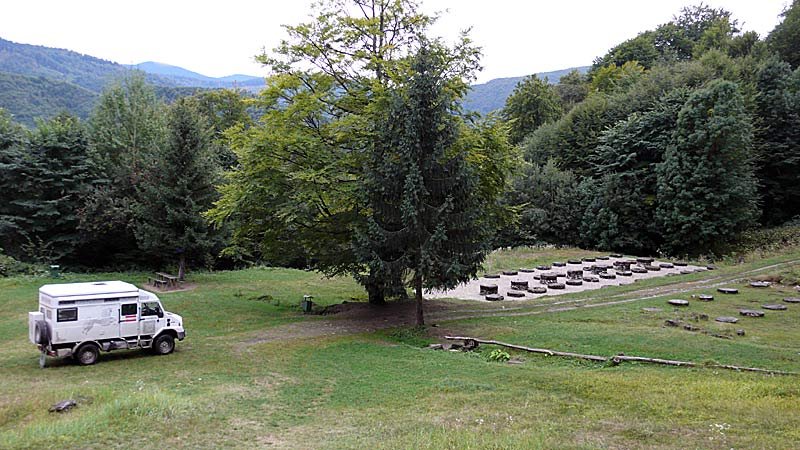
So completely without any Dracula or vampire, Transsilvania managed to give us that slight shudder of mystery ...
Some road workers now gaze at our truck returning from the old mountain site, the road has not become better since yesterday. This is the last day for us in Romania. Near our planned route to Hungary I notice a castle I had read about before: Corvinus Castle is a real prototype of a medieval castle, and I am surprised that it had not been used more frequently as a movie setting before. A possible reason might be its location in the middle of a most ugly town, that mainly consists of half-wrecked iron industry facilities, which so effectively hide the large castle, that even with the help of coordinates I had adopted from my Google Earth research, we spend quite a while until finally we stand in front of the highly impressive complex, dating from the 14th century.
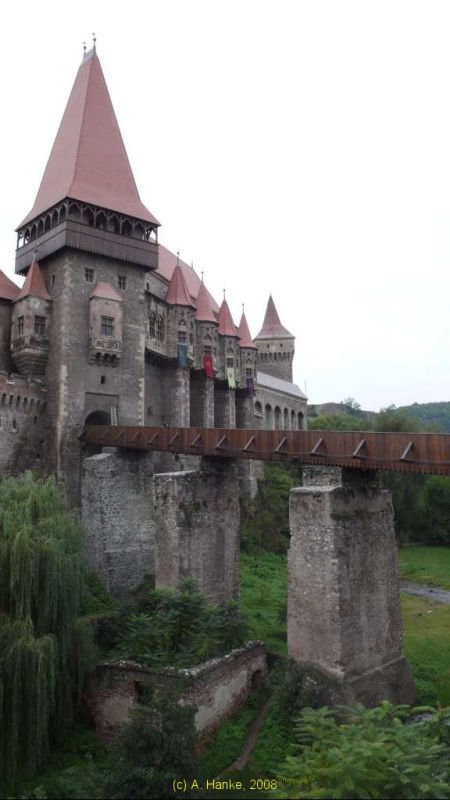
Corvinus Castle in Hunedoara
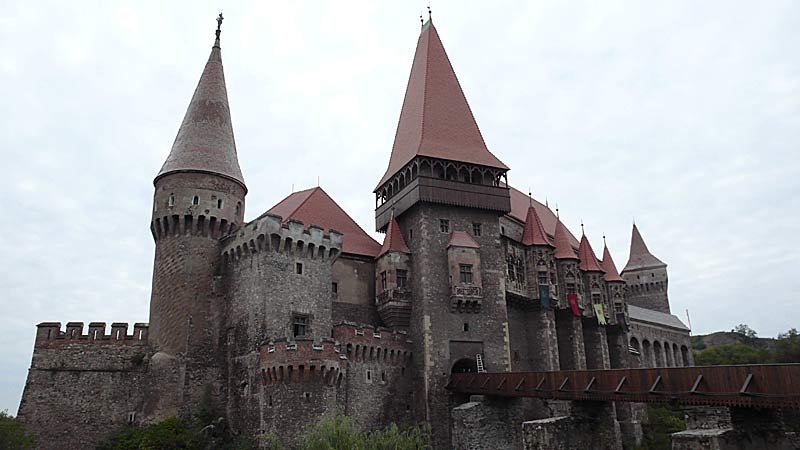
Unfortunately, a longer stay is not possible, since we want to reach the Hungarian border that same day, and an endless convoi of heavy trucks is moving only slowly on the only road connection in that direction. We join that column, and on the late afternoon, we leave Romania.
While the permanently bad weather did its best to spoil that journey, all it succeeded to was to plant the firm wish to return. Too beautiful is Romania to visit it so superficially as we did within these three weeks. Maybe next time, we will concentrate on the Maramures in the North, or Transsilvania, and try to stay on the tiny tracks - if we have better weather and less mud. Anyway, I will report on the experience, and hope you will be here to read it.
Copyright January 2009 - Marcus Hanke & PuristSPro.com - all rights reserved
PuristSPro Homepage | ThePuristS Homepage
Comments, suggestions, and corrections to this article are welcome.
