
Marcus Hanke
[PuristSPro Moderator]
11295

A Journey to Romania, Part I
A Journey to Romania
Europe’s “Wild East”
Part I
by Marcus Hanke
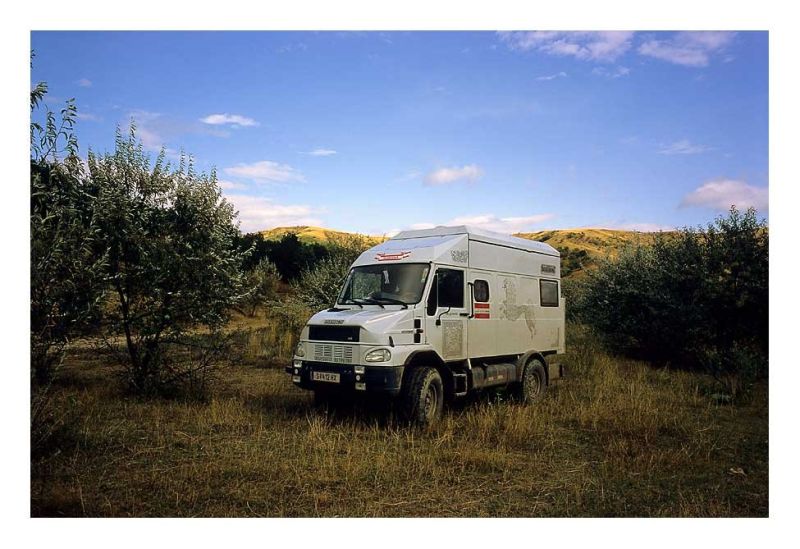
During the last years, some of my favourite travel destinations, have become increasingly unsafe. In the Sahara regions, the risk of being kidnapped, wounded or killed by either criminal, or, worse even, politically and/or religiously radicalised groups has raised considerably. Reason enough to look for alternatives, it is a good thing that the European Union has grown so quickly. Several new EU member states now offer an easy travelling, with barely any bureaucracy or difficulties at the borders - if the latter still exist at all. The small ID card is enough to pass through 27 states, in many of them it is not even necessary to change money, thanks to the Euro.
And for our most faithful travel companions, the dogs, the times of multi-lingual veterinary confirmations and documents, and time-consuming examinations is over as well (with the exception of a few member states, but even there, the currently necessary effort is nothing, compared to the hurdles that had to be overcome some years ago!). They are the first true EU citizens, having an own, blue EU passport, which contains picture, personal details, and a list of all vaccinations.
So we looked at a map of Europe, and chose a very old and fascinating country for this year’s vacation: Romania.
Having worn the dubious title of “Europe’s poorhouse” for a long time, Romania’s economy has gained a substantial impetus since the country joined the EU in 2007. It is only a question of time, until the country will reach the more advanced standards of infrastructure and tourism industry of Central Europe. Therefore, if we want to see the more original, “pure” Romania, we should not hesitate too long.
Already the preparation of the trip reveals that the country is large, and has really many sights and landmarks to offer. Three weeks won’t be enough to get more than a superficial impression, but we do our best to plan a route that touches the most interesting areas: the Maramures, the Northern region bordering Ukrainia, the historical Moldovanian province, with its world-famous painted monasteries, the gigantic delta of the Danube, ending in the Black Sea, and, of course, Transsilvania, the land of the Carpatian mountains, with its numerous historical sites and great landscapes.
A further difficulty is the lack of good maps. All existing maps have in common to only superficially mirror the reality; many roads shown by them do not exist, many roads existing are not shown on the maps. The same is even valid for complete villages. There is a rather recent road atlas, which is the base of our preparations. But when it goes into closer detail, especially when planning routes on simple tracks, we still have to rely on the old 1:500,000 scale Soviet military maps. During the Cold War, the Soviet Union launched a global mapping project, producing detailed topographic maps from all countries in the world. While for the Western world, its main sources remained limited to spy satellite and aerial imagery, the former Warsaw Treaty countries could be measured on the ground by expert teams. As a result, these maps, in spite of being thirty to forty years old, still are the best maps available for large parts of the world, including much of Eastern Europe. It is nearly impossible to get a hand on a printed edition, but thankfully, the whole collection has been scanned and calibrated for use with specific navigation software, such as Fugawi.
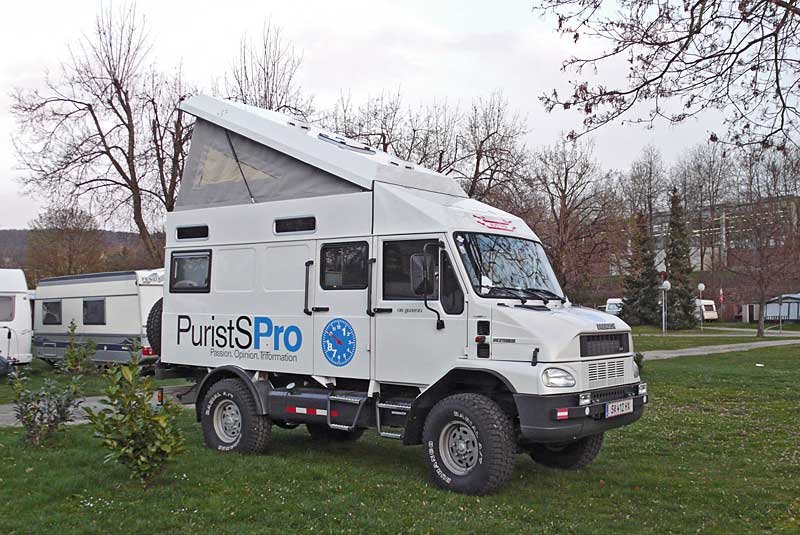
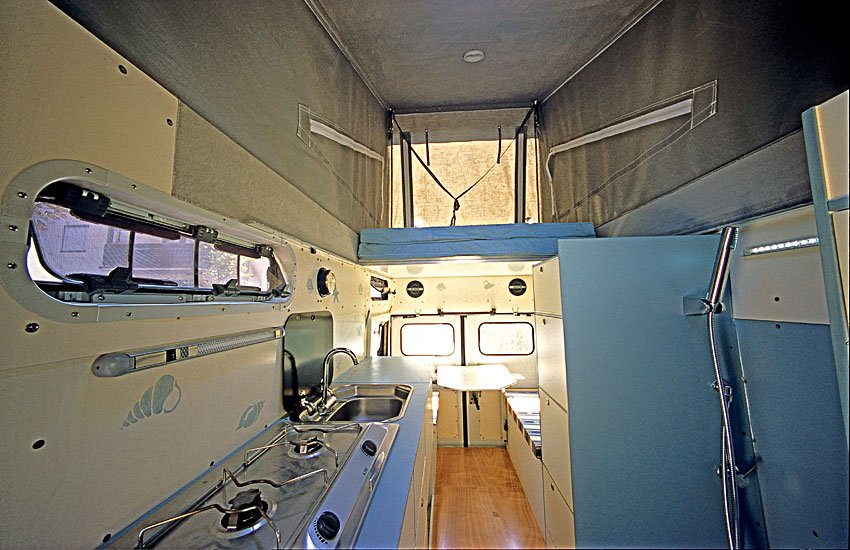
Our trip preparations included another novelty: This vacation would be the maiden voyage of our new expedition vehicle, the all-terrain truck named “Ar Gwenn” (which simply means “The White” in Breton language). Up to now, all our voyages were made with our faithful Nissan Terrano SUV and a tent. Yet, slowly, but steadily, we grew weary of the often frustrating search for places that would accommodate both car and tent, of erecting the latter in rain, cooking outside, crawling out of the tent in the morning again, with stiff back and limbs, only to be greeted by the warm tongues of our dogs .....
We therefore decided to retire our dear Nissan from the role of a travel vehicle, and replace it with something offering just space enough to cook, eat and sleep, without having to stick out a nose, while retaining the Nissan’s excellent off-road capabilities.
The solution was the acquisition of an Italian light truck, a Bremach. This small company, located in Brescia, near the Garda lake in Northern Italy, has specialised on the production of compact, but highly robust and off-road capable trucks, that are needed for narrow tracks in the Alps, and the passage through small, medieval villages and towns. With only 1.7 meters width and about 5.5 meters length, these trucks are able to pass through narrowest gaps in forests and mountains, a permanent four-wheel drive with 28 speeds to shift, full array of diff locks, large tires and a standard Iveco truck diesel engine, with a gross weight that still remains below the legally important limit of 3.5 tons, the Bremach Extreme is the perfect base for a travel vehicle.
"Gwenn" in PuristSpro livery represents the community during the 2008 Basel watch fair
After we had purchased the base vehicle already in October 2007, the various modifications and installations needed nearly a year to be completed. A trip to more distant destinations, such as the Middle East, or the Sahara, appeared a bit too risky, with a vehicle that had not been tested before. In case of technical problems, we did not want to be too far away from assistance. To stay in Europe seemed to be a very good choice, and Romania offers the right mixture of proximity and adventure for this task.
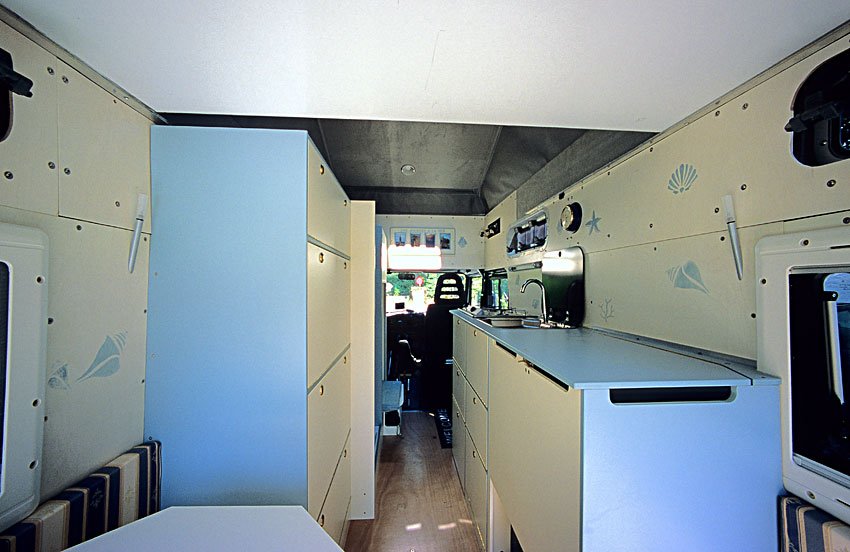
Interior views
To start with a summary
The voyage through Romania offered us marvellous insights and perspectives. The variety of great landscapes, the friendliness of the people are overwhelming. After our return, many people came asking: “How was it?”, and inevitably we bored them with long and detailed replies. However, it is impossible to sum up the experience Romania in a few sentences.
First of all, it was the vacation with the worst weather I ever had. Friends of mine had travelled through Romania just before we went there, our paths crossed somewhere in Hungary. They had sunshine all the time, heat with temperatures of over 40 degrees Celsius. But we did not have one day of 23 without at least several hours of rain. On no day the high temperature surpassed 20 degrees Celsius, with morning temperatures being always under 5 degrees, just above freezing point. Normally, in September it is very hot and sunny on the Black Sea coast, but we saw trees without leaves, mist, rain, perfectly depressing November weather.
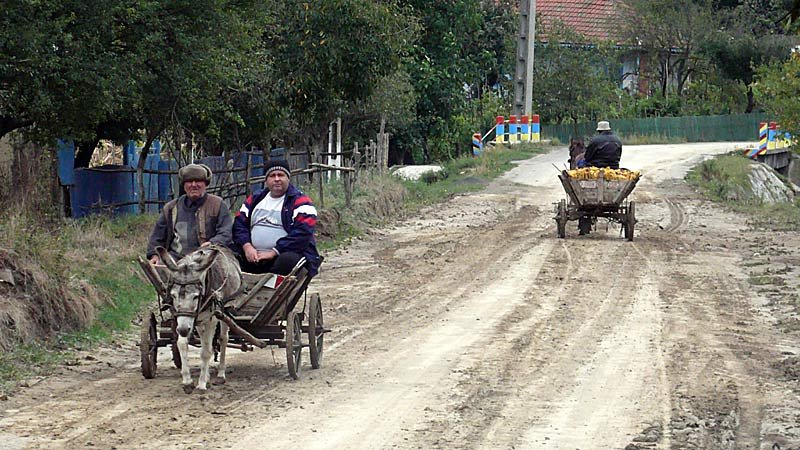
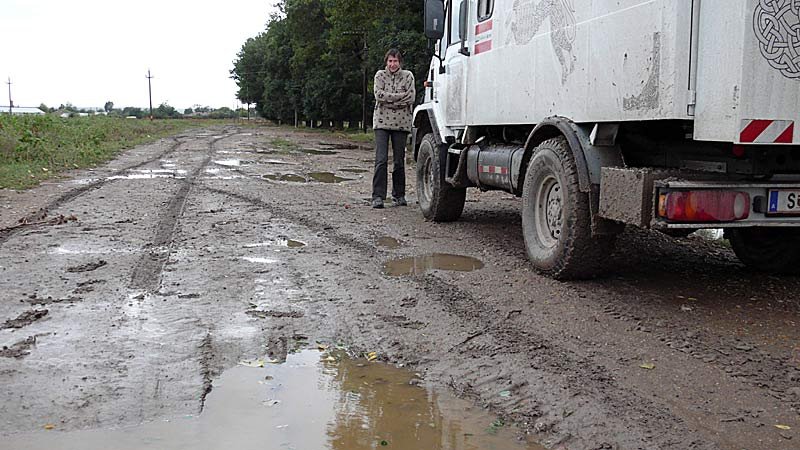
As a consequence, our off-road material had severe problems. One might not believe this, but the very bad roads and tracks in Romania are among the most difficult to drive in Europe. One reason for this is the relative absence of modern machinery and tractors in many parts of the Romanian agriculture. Therefore, most tracks are used by horse and donkey carriages only, and some have never seen a combustion-engined vehicle before.
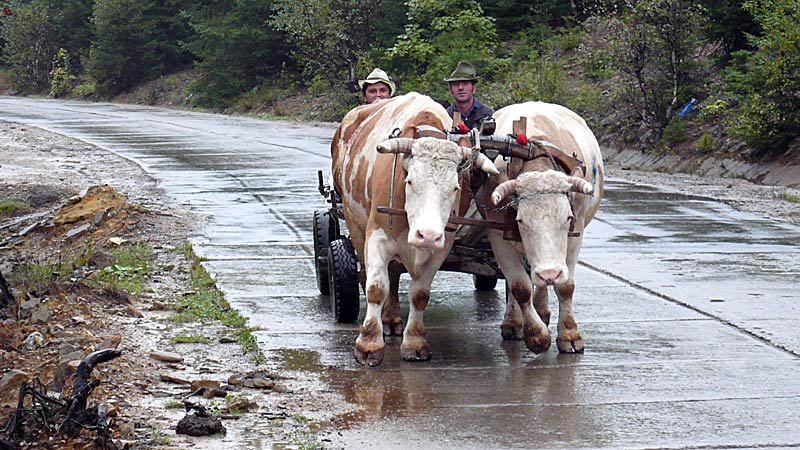
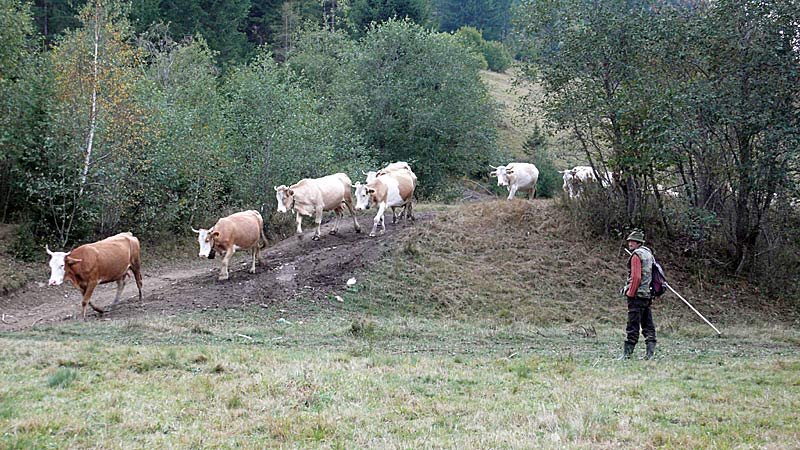
Still common means of transport in Romania
They are narrow, with deep holes and trenches resulting from the wooden wheels, and a day with rain is enough to transform them into streams full of deep mud. This mud filled the profile of our all-terrain tires in seconds, until they were smooth like racing slicks, with absolutely no grip for the wheels remaining. It would not matter how many wheels are powered, they simply all are turning without any efficiency.
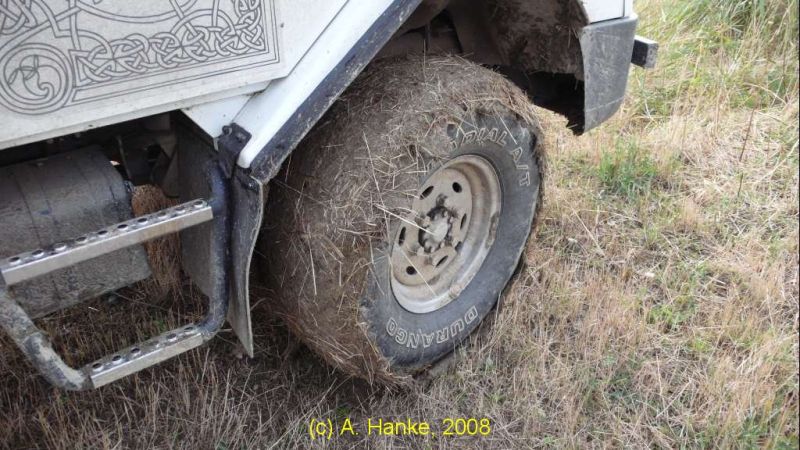
We had some really dangerous situations, gliding down the steep hills, without any way to influence the direction. As a consequence, we avoided all tracks that might eventually become muddy, which seriously limited our ability to reach beautiful places, because all the tracks in Romania are potentially muddy.
The lesson we learned: next time, we will have rougher tires, and additionally chains for the wheels, even if those weigh a ton and need hours to be attached.
Are the Romanian people as poor as many in the Western parts think? No, everything depends on the definition of “poverty”. If you are poor, if you cannot afford meals in four star-restaurants, or a Patek Philippe watch, then most Romanians are poor. However, the very strong social solidarity that is still binding the people together is apparent. Old people are supported, rather than sent into a so-called “retirement residence”, where barely anybody cares about them. The assistance offered as part of a normal everyday life has to be paid over here, where social ties have dissolved. Additionally, the definition of vital necessities is different as well. For us, a car might be vital, for the average Romanian farmer, a good horse is enough.
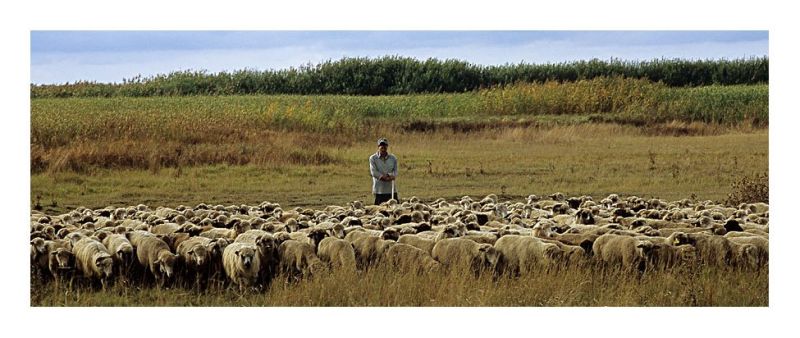
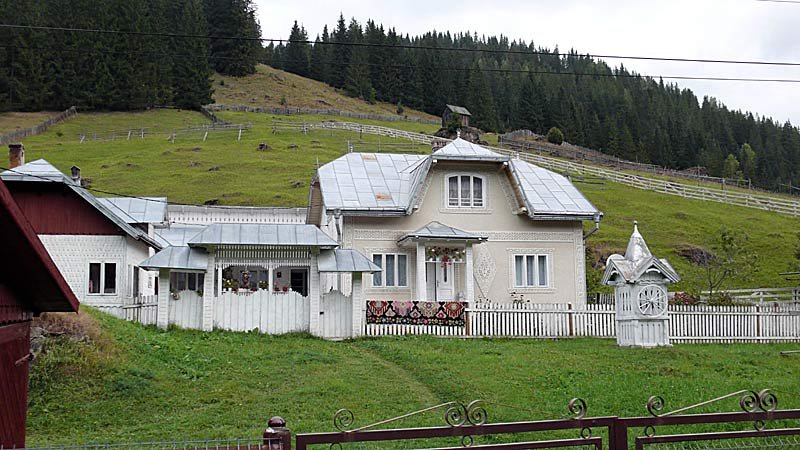
No, I did not see real poverty in Romania, but I admit not having visiting the large cities, where the situation is certainly different, especially in Bucharest. But I saw hard-working people, trying to keep their homes neat and clean, and proud of what they achieved with their own hands work. Astonishingly, many people here in Austria and Germany do not want to hear what I am saying, for them, Romania is still a poor-house full of thieves. They only hear what they want to believe, even if it is far from reality.
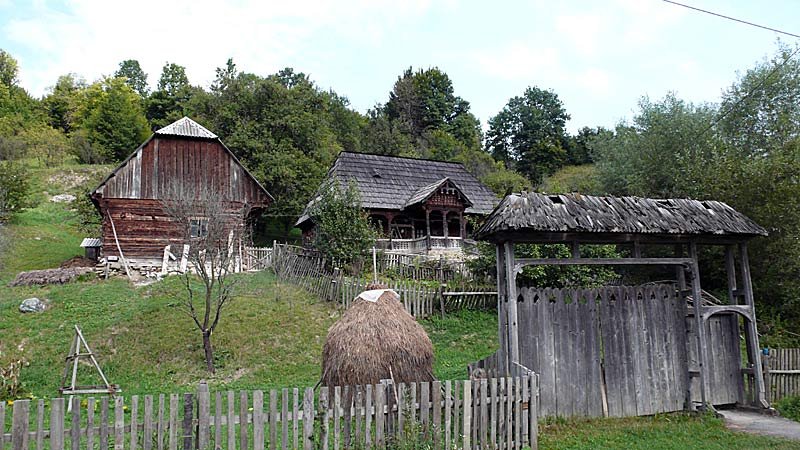
Large wooden gates and carved ornaments are typical for the Maramures farmhouses
Very old, but beautiful farmhouse
And what about the vampires? Honestly, I have seen none. not even a bear, only a huge boar apparently not amused about us intruding his dining room under the huge oak trees. Not a singly farmhouse had adorned its windows and entrances with garlic, and dark castles remained dark and silent. The modern vampires occupied the fuel stations, 1.30 Euros for a liter of diesel meant sucking the financial blood from our veins ...
Finally, the travel report
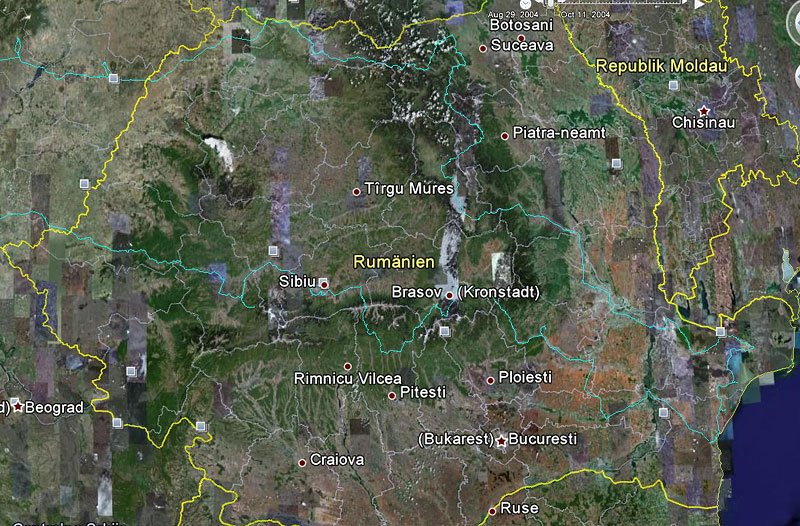
Our travel route - the thin cyan-coloured line
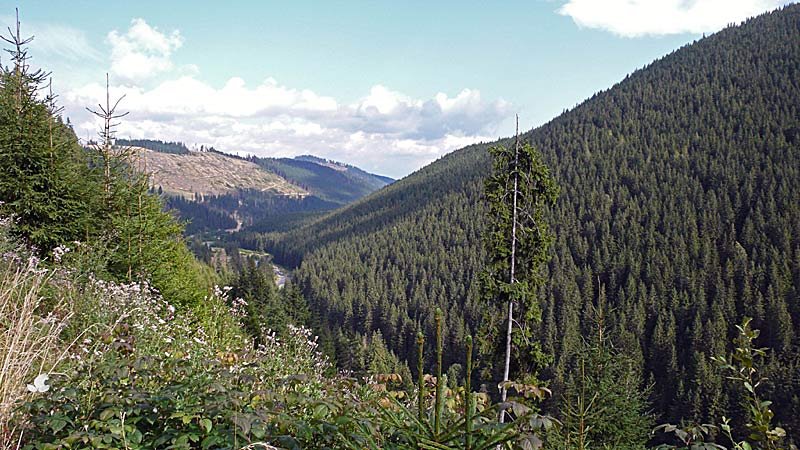
Romania’s landscape is mostly shaped by the arc of the Carpatian mountains, which is the easternmost appendix of the Alps. While the summits are not as high as those in the central Alps, the Carpatians offer a lot of highly impressive sights.
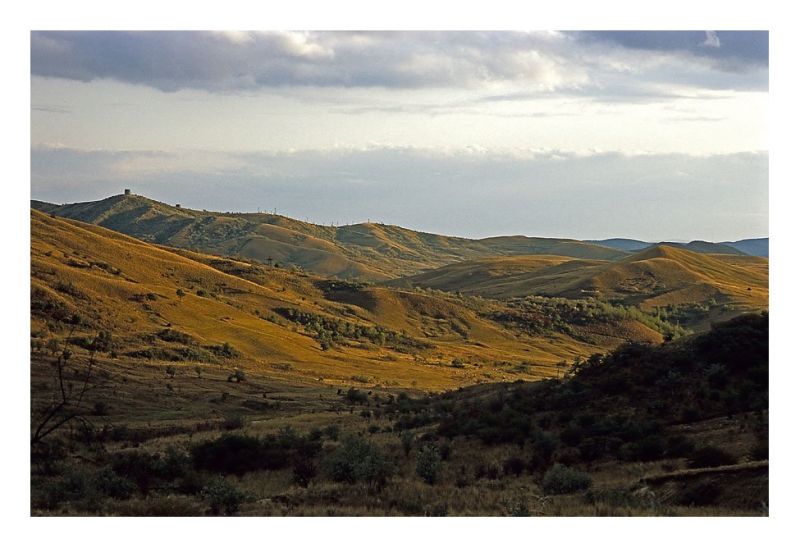
Additionally, of course, there is the historical importance of Romania, that found itself in the middle of the interest of many people and nations: Romans conquered it from the former Dacian reign, Byzantine, Slavic, Hungarian, Osman, German and Russian people settled there, and up to now, many of the various languages is widely spoken in Romania. Aside the mountains, the country also possesses the estuary of Europe’s longest river, the Danube. Millions of tons of earth and mud material carried by the stream are also the reason why Romania is the only country in Europe that is constantly growing, since the estuary - and therefore the length of the Danube - increases its area into the Black Sea for several meters each year. This Danube delta is a world-renown landmark and ecologic marvel, and of course a must-see for us, despite the long way to go there.
About potholes and a merry graveyard
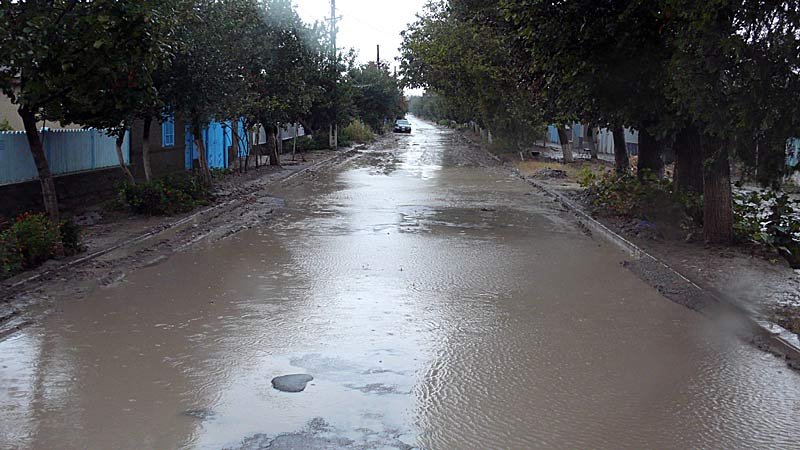
Yet we start in the North, a province called Maramures. We are welcome by a seemingly neverending series of roadworks. It is apparent that a lot of money is invested to improve the infrastructure, which is really necessary. Most road surfaces are heavily damaged, Romanian potholes are huge craters able to swallow complete cars. Older roads consist of pre-produced concrete elements, and were often made still in the communist era of the infamous president Ceaucescu. The elements disintegrated into heaps of debris over the years, sometimes the plates would simulate the tectonic movement of the continents, shifting over each other, resulting into veritable skijumps, that catapult careless drivers and their cars into the air, only to send them to the ground, with nasty noises and a rain of sparks emerging from the abused bodies. Compared with this, the inconvenience of waiting at the various roadworks seems tolerable.
Village road during rain - have a good sail!
At first, leaving the main road onto one of the many gravel roads seems to be the better alternative, but the potholes there would give a generations of astronomers a completely new impression of “black holes”. Yet our truck with its two rigid axles and leaf springs appears to feel very comfortable, as springs and shock absorbers are merrily squeaking all the way long. While we are enjoying the comfort of pneumatically dampened seats, our two dogs learn how a rodeo rider feels atop a wild bull.
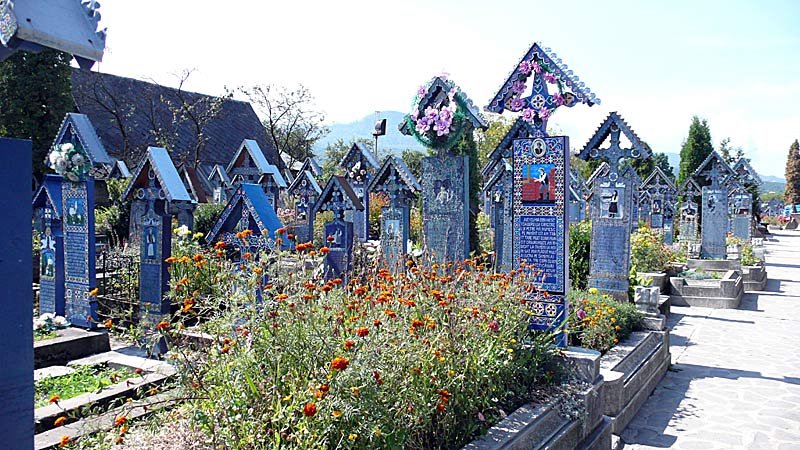
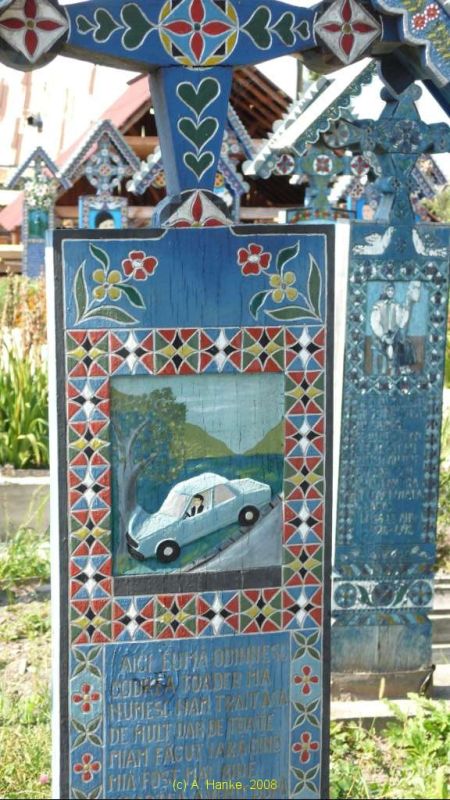
That some things are different here, is clearly shown in a small village named Sapanta, that presents a unique sight, the “happy churchyard”. More than seventy years ago, a woodcarver started to make crosses for the graves, all painted in bright colours (mostly blue, white and red), showing a scene from the deceased’s life, and telling their stories in humorous rhymes. Meanwhile, the churchyard is very famous, and the artist has found a “funny” grave there himself. Several successors ensure that the handcarved tradition will not die.
The power of religion
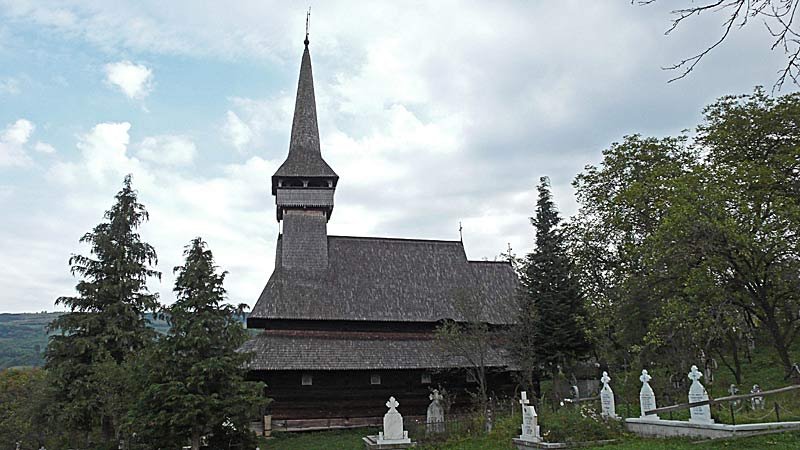
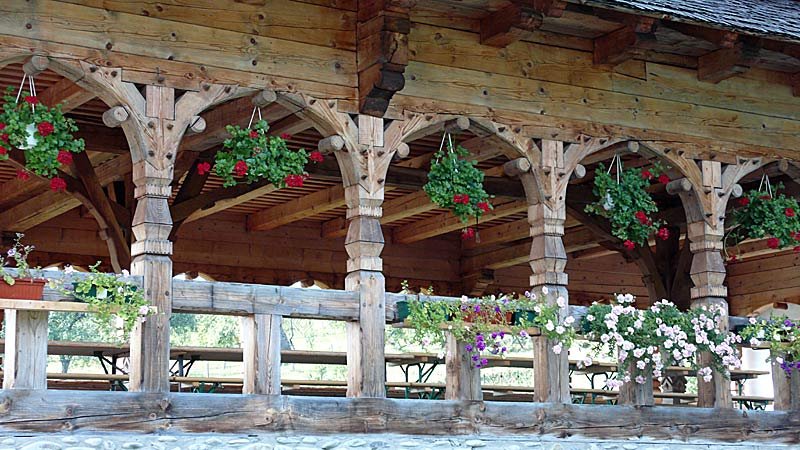
Everybody has heard about the medieval wooden churches of Norway. Barely known are the old churches of the Maramures, which do not stay behind their Scandinavian counterparts in beauty and artistic importance. Mostly dating from the 14th and 15th centuries, the wooden churchhouses were erected and used by the Romanian orthodox confession. Often they are located in romantic surroundings, gardens full of fruit trees, which also serve as graveyards; the eternal circle of death and life is thus very present.
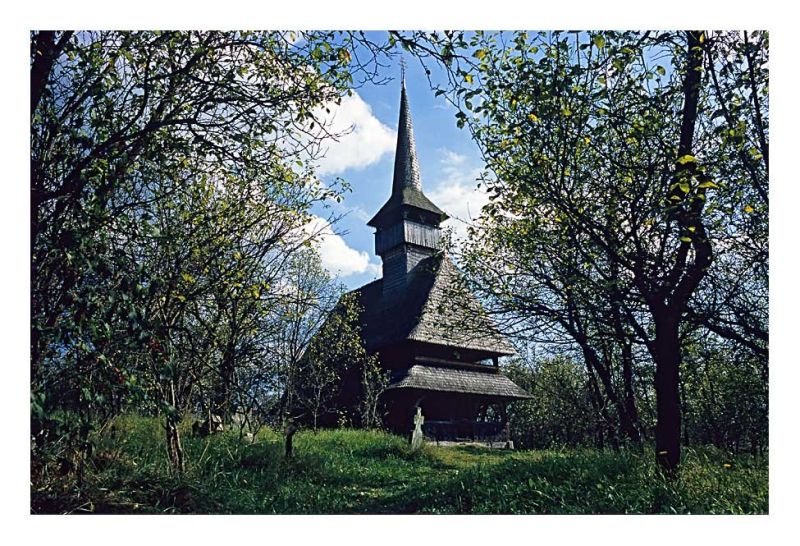
Old church of Barsana
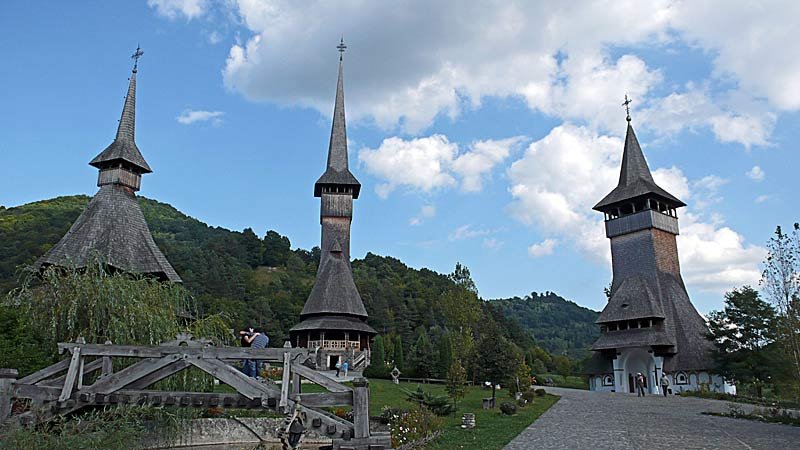
Poile church
What strikes us especially is the omnipresence and vividness of the spiritual life here. While in Western Europe, the Roman Catholic church, but also many Protestant confessions are dramatically suffering from a lack of young priests and visitors in the churches, with complete order communities in immediate danger of being extinguished, the Romanian orthodox church apparently does not have this problem: In many villages, even tiny ones, we encounter monasteries, and they all are full of monks and nuns. A new monastery in Barsana is erected in traditional style with wooden buildings; a large area with huge, impressive buildings.
The newly established Barsana monastery
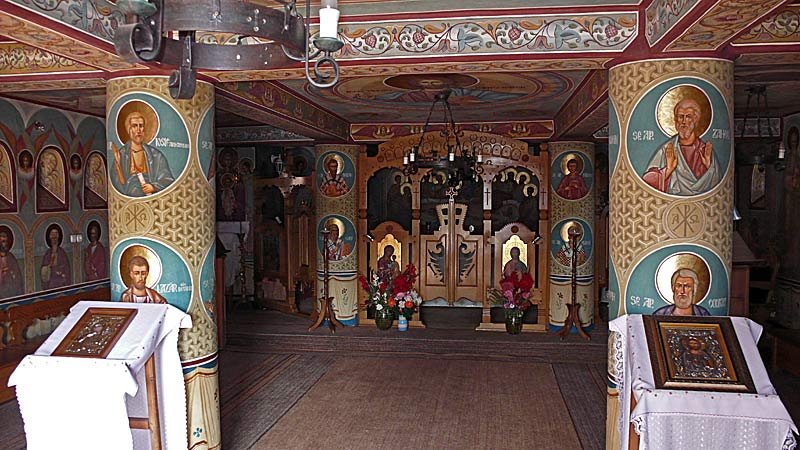
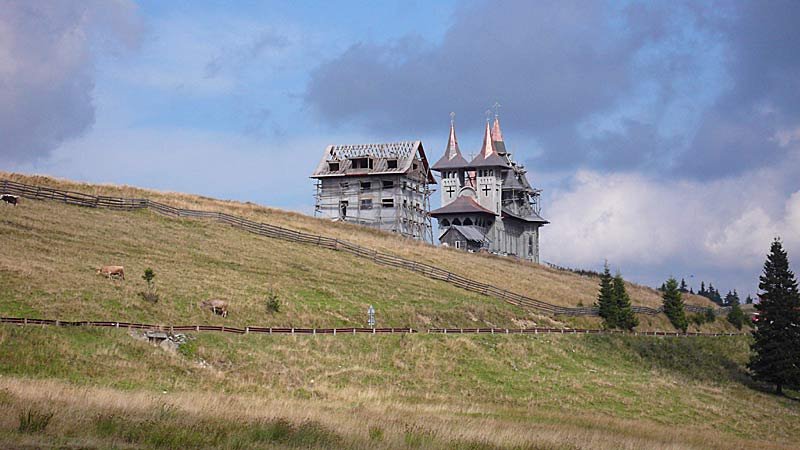
A large number of Romanians is working abroad, mostly in Italy, France and Spain. They send home a major share of their incomes, which is partially donated to the Church. As a result, the sight of newly built, large churches is very common. On Sundays, we see the crowds walking many kilometers from the mountains to attend the services, a sight that has become very rare in Western Europe.
Monastery in construction
Third-rank roads, and where they lead to
At home, people complain about the increasing number of roadsigns cluttering the environment. As a car driver, it becomes difficult to read all the information at a glance. Thus, we should be grateful for the nearly complete absence of roadsigns in Romania. However, navigation is not really improved, if the maps show villages that are not where they are supposed to be, and we are passing a village without any name signs, that does not correspond with any map.
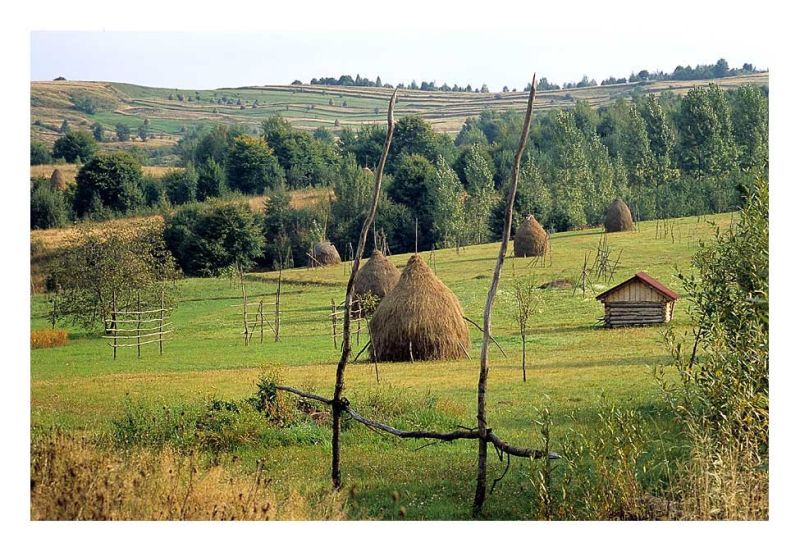
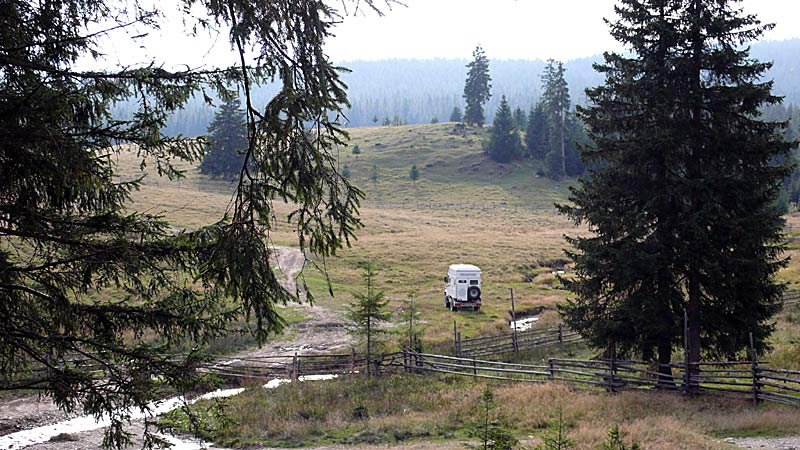
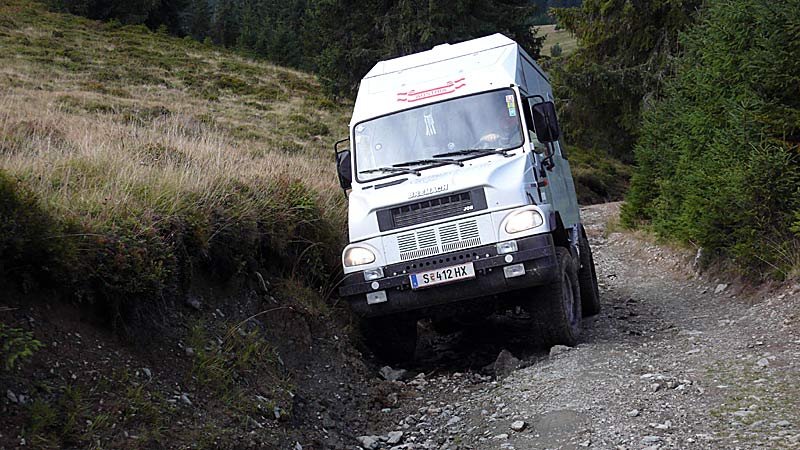
So we were left to ourselves, when we followed a small road that was designated the third rank on the map, trying to find a cozy and lonely place to staying over night. On the paper, the course of the road looked promising, yet failed to keep this in reality. Up it led, into the mountains, when the concrete gave way to gravel and finally to mud and stones. Finally, we found ourselves on a beautiful plain, a high meadow we only shared with a small river and a white horse, that followed our arrival with no sign of being impressed, before continuing to graze.
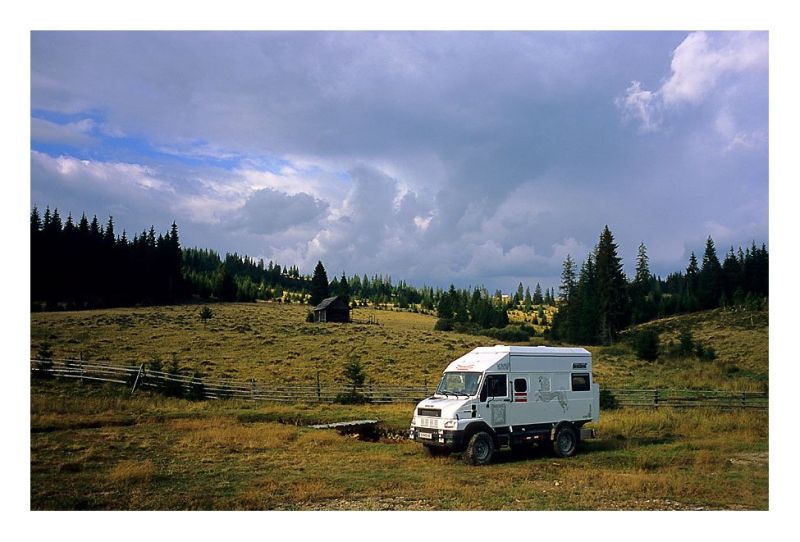
The "third-rank road" can be seen as the path leading into the small river
This place was perfect for setting up a camp, but, as nearly every night, it started raining after midnight. The following day, we only had the choice to return on the same track we had come, or to try the bad-looking path that crossed the river and disappeared in the forest. After we checked this direction during an extended dog walk, we decided to give it a try.

When we reached the settlements and the paved main road later, we had spent more than two hours for fifteen kilometers ...
Continue to Part 2
Copyright December 2008 - Marcus Hanke & PuristSPro.com - all rights reserved
PuristSPro Homepage | ThePuristS Homepage
Comments, suggestions, and corrections to this article are welcome.

This message has been edited by Marcus Hanke on 2014-02-26 00:49:24
A Journey to Romania, Part I
A Journey to Romania Europe’s “Wild East” Part I by Marcus Hanke During the last years, some of my favourite travel destinations, have become increasingly unsafe. In the Sahara regions, the risk of being kidnapped, wounded or killed by either criminal, or...
I wouldn't believe that Romania ...
is in Europe!! The potholes and muddy roads remind me of my country. I will feel at home there. Several questions: how fast can your truck go? Did you see any dracula in transylvania? Wish I could write like you...... cen@jkt


A Journey to Romania, Part II
A Journey to Romania Europe’s “Wild East” Part II by Marcus Hanke While working ourselves down from the mountains again, the slow approach into “civilisation” was clearly observable: at first, all we saw were cows, goats, and some horses. Later, we encoun...

Fantastic photos!
Marcus, I'm completely engrossed in your travelogue! I've wanted to visit Romania for several years, and your photos are putting the country ever higher on my list of places to visit. Thanks so much for these wonderful photos...truly amazing and beautif...


A Journey to Romania, Part III
A Journey to Romania Europe’s “Wild East” Part III by Marcus Hanke Leaving the Danube estuary, we pay a very brief visit to the Black Sea coast, offering our dogs a chance to go bathing. At an age of four years, our Groenendael “Chagall” is the first dog ...
Marcus, a photo for you.
Thanks for the conclusion to your article. As you know, I've been following your, and the dogs' (Thanks by the way for the information about the lovely Chagall. He is a great-looking ambassador for his breed!), adventures in Romania. I will definitely ...

Great pic!
I haven't been to the Big Island, but a regular to Oahu. I guess I need to try the other islands. Do you stay in Hilo? -MW
MW, try the Big Island sometime.
Last year I went to Maui, Oahu, and Hawaii. On Hawaii, we rented a vacation house slightly south of Hilo near the thermal hot springs (about 20 minutes from historic downtown Hilo). The east side of the Big Island is a little sleepier than the western s...
Hawaiian sea turtles and seals....
Your turtle pics brings back fond memories of my first time in Hawaii! Here's a seal that frequents the Ko 'Olina lagoons: Everyone always stops and says 'awwww, how cute!" The first itme I was in Oahu, we went sea kayaking and spotted so much marine life...




Dear all:
I want to thank you for your many kind and positive comments. Originally, I was hesitating to write this travelogue, since I was uncertain whether this kind of post would be a match for a horology-oriented forum. On the other hand, I have to admit that no...


Greetings from Romania
Hello Markus, Imagine my surprise and joy when I discovered that such a great, extensive and caring detailed report was presented for the Purists. I am a Romanian (actually a Romanian-German, as part of my ancestors were those Transsylvanian Saxons), and ...
Very Fascinating Travel Chronicle
Thanks for sharing your wonderful travel experience. Probably we do not have chance to see such a beautiful country. Nien