eric.vonschonberg
403

the worth of a watch
There are things that required much more effort to design and manufacture than a watch, and yet those things are relatively inexpensive. Some of the most advanced computer chips come to mind. When you consider how utterly complicated they are and how many people worked on them for collectively many man years, it's amazing that they are sold for only a few hundred dollars. All this is possible because of mass production. Without mass production, complicated things become very expensive.
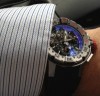
With only 20 RM027s to be built, it's conceivable that even with a $500K price tag, the other 19 (not counting Nadal's watch) would fetch only $9.5 Million which might not cover the cost of design, manufacture, marketing, and sales through ADs.
But, what if millions of people demanded a RM027, and that Richard Mille thought there should be millions of RM027s (a big assumption). It would certainly cost much more money than has been spent already on the design so far, but manufacturing processes could be built to automate the manufacture and assembly of all the parts. Even if the cost of such further development were 100 times as much as has been spent and thus totaled $950 Million, then if 300 Million customers all over the world wanted a RM027, the total cost of development amortized over all customers would be about $3. Even if the raw materials cost $100, and it cost another $100 for the automated system to manufacture it (there are maintenance and labor costs here), then the total production costs per watch would be $203. Then, even if there was over 100% markup before it got to the consumer, it could still be sold at WalMart for under $500, and that would even cover the cost of paying Nadal for his picture on the packaging.
But, the market for RM027 is not 300 Million, and only 20 will be made, so it costs $500K instead of $500.
So, what is the RM027 worth? Since there isn't a market for 300 Million RM027s and since Richard Mille has declared there will only be 20, the RM027 is worth closer to the $500K figure. In fact, it's possible, given its exclusiveness that it may be worth many millions in the future, and ultimately the worth of something is determined by what people are willing to pay and not by any imagined cost of making it.
Eric von Schonberg
I Think that the publicity that Richard Mille got ....

Any publicity is good publicity
Toys for rich people with no brains...

Why bother with a watch when we all carry a mobile phone?
RM seems to have a stigma...
All excellent points....

Yes, ignorance is bliss.
Lets just bring up another point on this matter...
the worth of a watch
Absoltuley Right Eric...
All good points Eric - but for the record
