Comments:

Source: www.panerai.com - copyright owned by Panerai(text and pictures)

Just interesting and important to remind that Panerai production wasn't principally axed on watches!
Watches only came in '36 or a little before with some protos, but the principal activity of this Company wasn't watches.
Can't wait to read your part II!
From 1936 to 1983.
And part III: From 1983 to 1997.
These last 2 parts are more about watches.


Panerai History 1860 - 1936
 |
  Giovanni Panerai (1825-1897), founder of the family business, opens the first watchmaker's shop in Florence on the Ponte alle Grazie and establishes contact with the most prestigious and longest established Swiss watch manufacturers. Giovanni is succeeded by his son, Leon Francesco. |
 Guido
Panerai (1873-1934), grandson of the founder, expands his grandfather's
business and gives it new impetus, specializing in high precision
mechanisms and becoming official supplier to the Royal Italian Navy. |
 |
 At
the turn of the century, the shop moves to the Piazza San Giovanni site
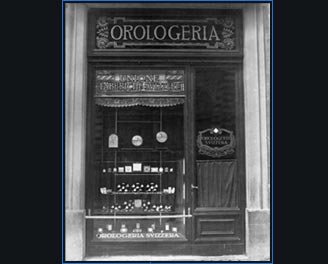
in Florence, where the Panerai boutique can be found today, and the Orologeria Svizzera name, still visible today, appears on the shop door to underline the close link between the watches and their Swiss origin. In this period, the first deliveries of precision optical and mechanical instruments are made to the Ministry of Defence. |
 |
 |
 The
first experiments with luminous materials begin and a system is
developed to make instrument dials and sighting and telescopic devices
luminous. The luminescence is achieved using a mix of zinc sulphide and
radium bromide given later the name Radiomir. Inserted into tiny glass tubes to increase its resistance over time, this mix was the subject of patent applications by Guido Panerai in Italy and other countries. |
 |
 The
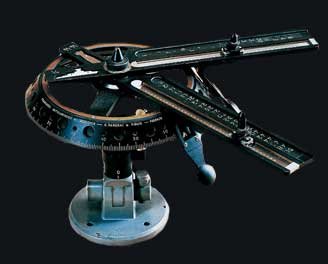
Royal Italian Navy employs the precision instruments supplied by
Panerai during the First World War. The products delivered include
luminous devices for sighting naval guns at night, timing mechanisms,
depth gauges and mechanical calculators to launch torpedoes from MAS,
high speed motor torpedo boats. |
 |
 Guido
Panerai's children, Giuseppe and Maria, continue developing their
father's business. Maria is mainly concerned with running the Orologeria Svizzera
shop, while Giuseppe devotes himself almost entirely to the company's
business of supplying underwater instruments, torches, wrist compasses
and wrist depth gauges to the Royal Italian Navy. He can take credit for the creation of the famous Radiomir and Luminor watches. |
 |
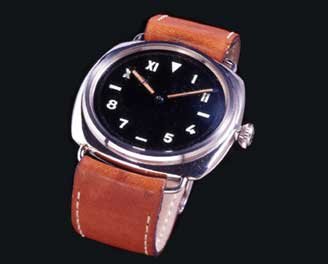
 Following
disappointing tests carried out on the watches available at that time,
the Royal Italian Navy asks Panerai to develop a watch able to
withstand the extreme conditions it will be subjected to. A Radiomir
prototype is submitted to the Command of the First Submarine Group and
the watch passed all the tests with flying colours. |
Source: www.panerai.com - copyright owned by Panerai(text and pictures)
Nice job here, Bill >>>
Just interesting and important to remind that Panerai production wasn't principally axed on watches!
Watches only came in '36 or a little before with some protos, but the principal activity of this Company wasn't watches.
Can't wait to read your part II!
From 1936 to 1983.
And part III: From 1983 to 1997.
These last 2 parts are more about watches.

I can't really take the credit
Our friends at Panerai have done a good job.
So credit were credit is due.
Thank you Panerai.
Bill
So credit were credit is due.
Thank you Panerai.
Bill