Comments:


1973 Omega Seamaster Cosmic 2000 diver VS 2015 Seamaster 300 CoAxil
I just got the 1973 Seamaster today so doing an in depth comparison would be a bit hard. The first thing I noticed is just the sizes of the watches. The '73 model is a 38mm and the '15 is 41mm. Both are Automatic movements but the exact movement of the '73 I'm unsure of at this moment. The '73 seems to fit my wrist a bit better and it's at least two or three millimeters thinner than the '15. Anyway I hope you enjoy.
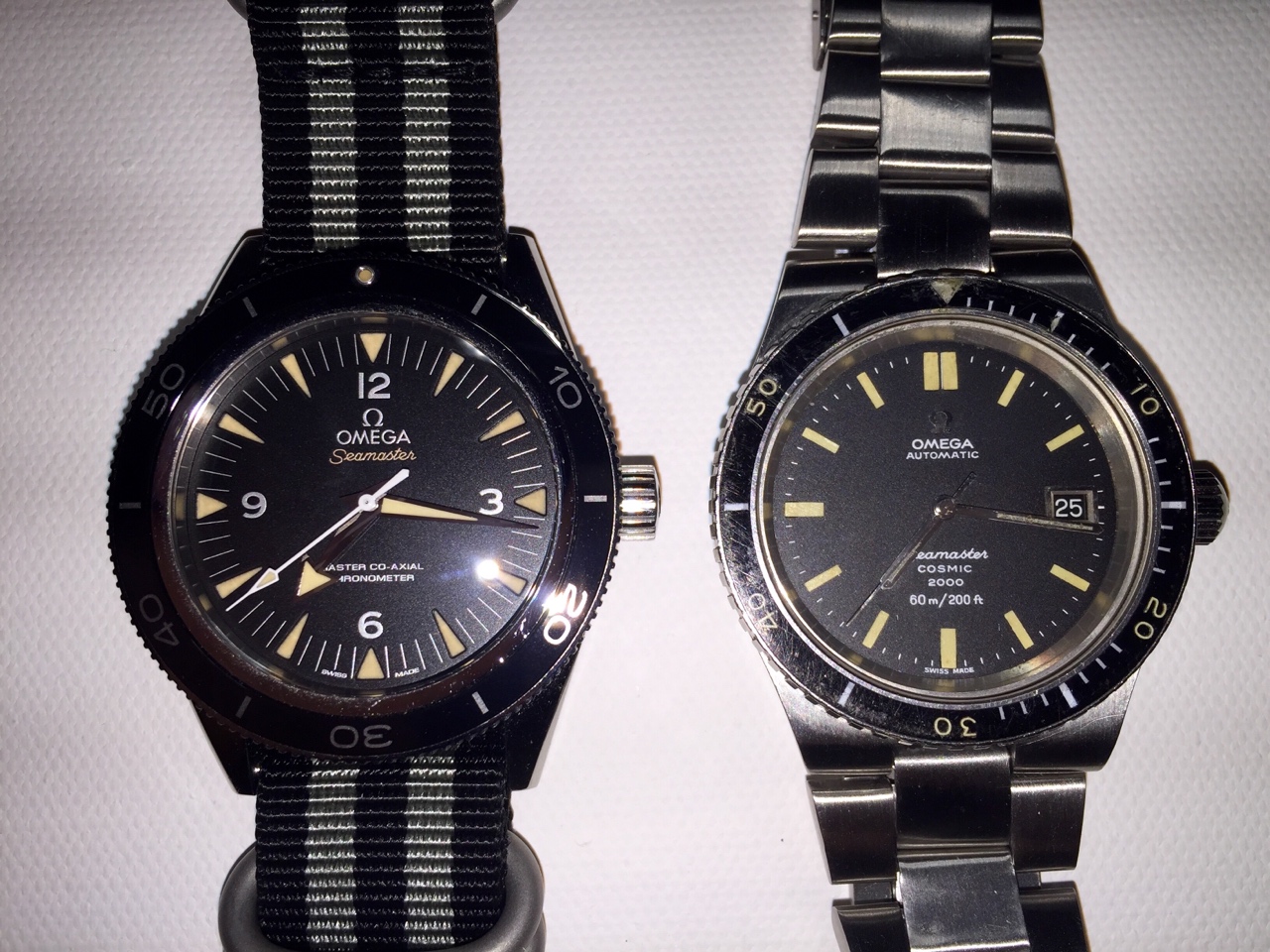
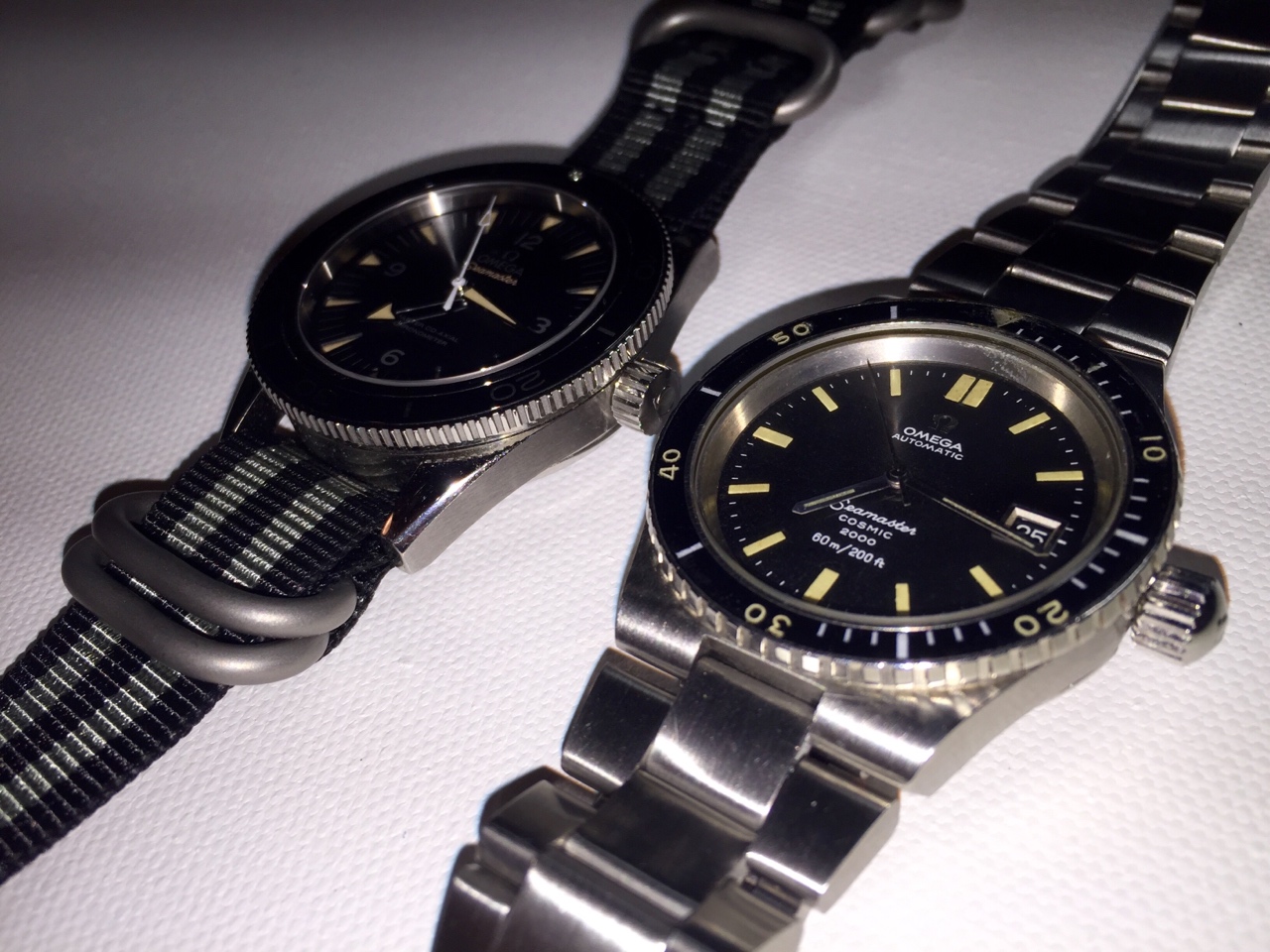
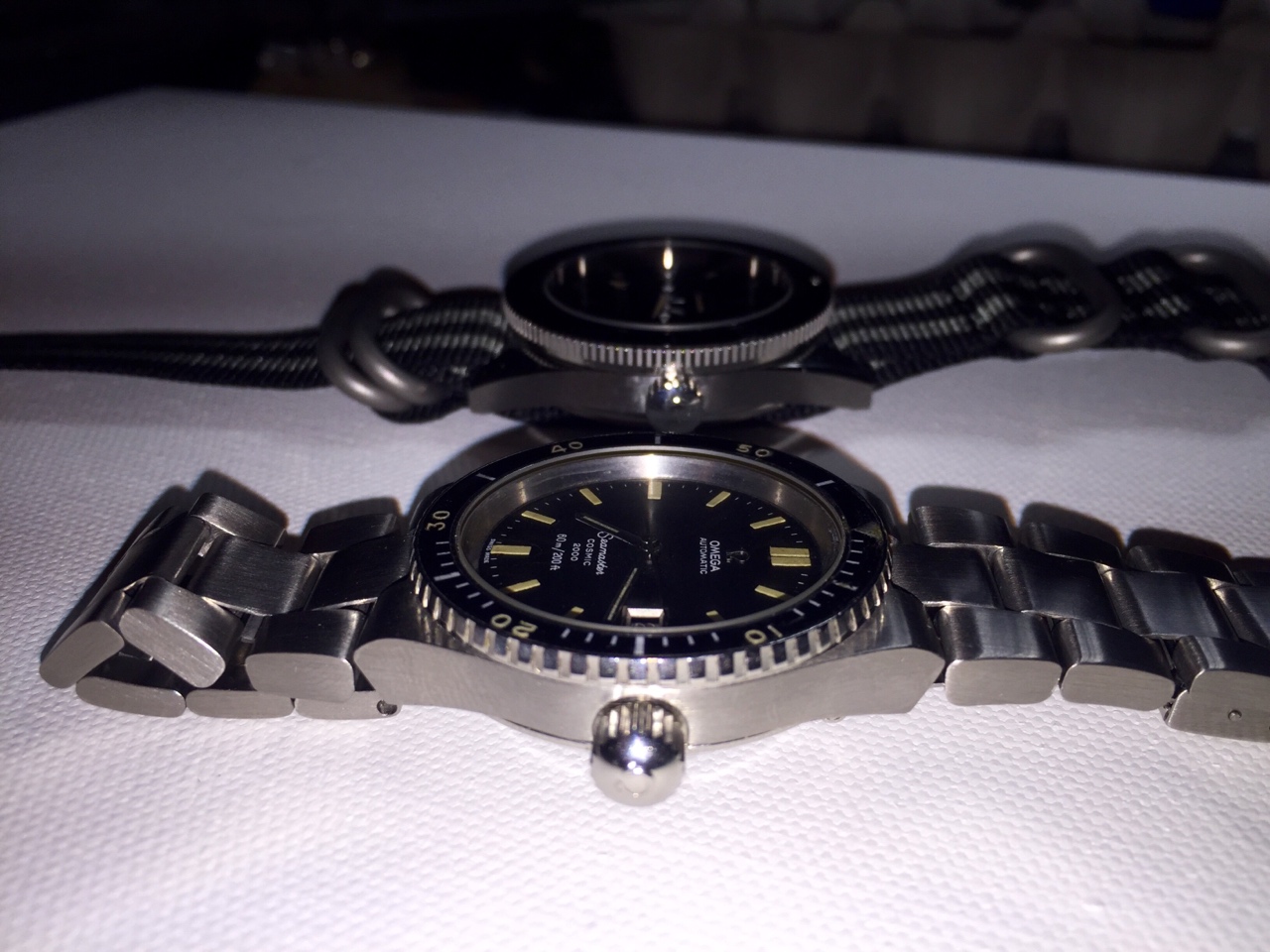
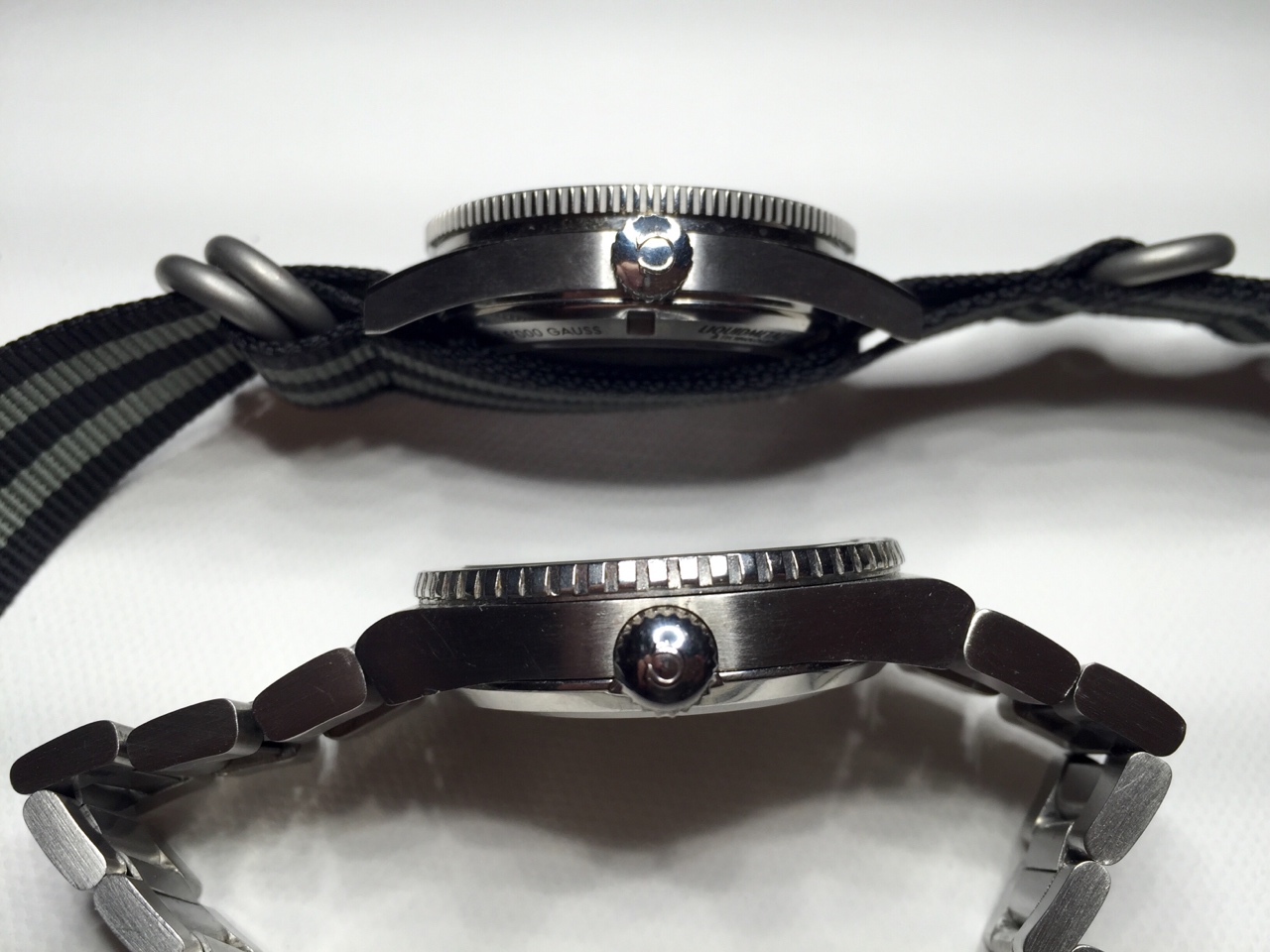
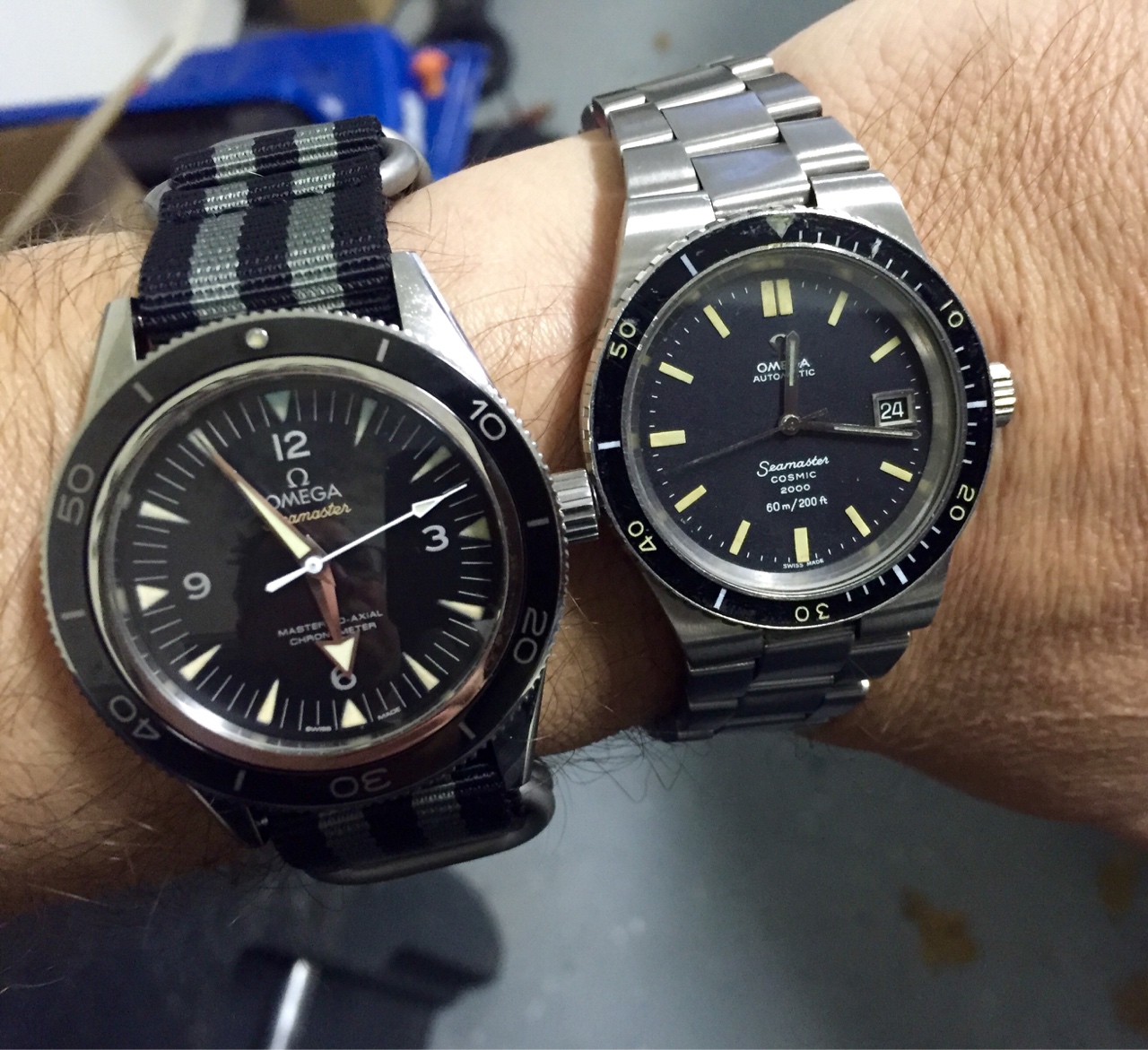
They make a perfect set.
But they are clearly two watches with different character.
That way you don't feel them to be duplicates.
Congratulations
Bill
Thanks
I'm amazed I stumbled on to the 1973 model. Now I just need the 1973, Speedmaster, speedmaster 125 anniversary and a 1973 speedmaster TV.
Good to have these 2. But if you want to make a better comparison...
You should try to find a CK 2913 or CK 14755.
Something like this:
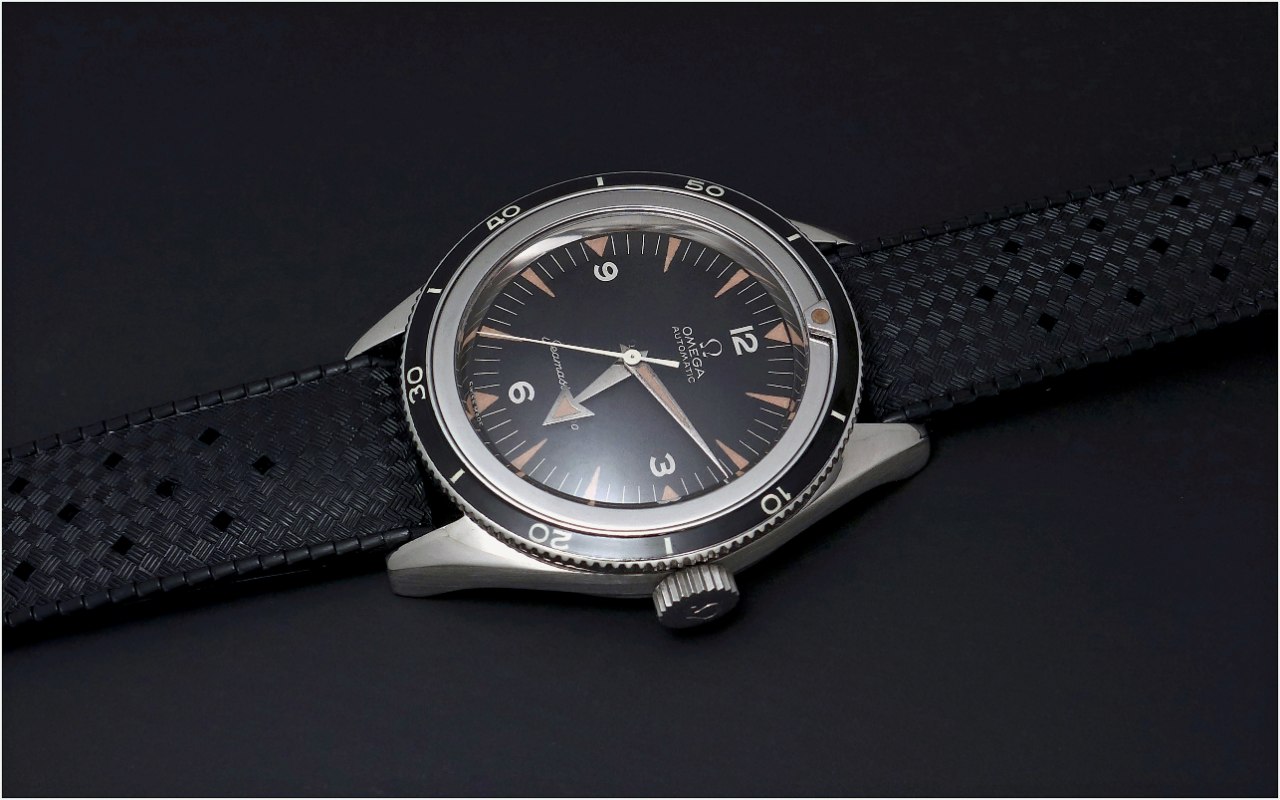
38 mm, too. This is the model which is " Tributed " with the new Seamaster 300. Best, Nicolas
38 mm, too. This is the model which is " Tributed " with the new Seamaster 300. Best, Nicolas
What year model is this?
That's a beautiful watch? I read the new 300's were based off the original Seamaster, made in 1954 I think. That would be a wonderful addition to the collection, but tough to find I imagine.
The Cosmic 2000 SM should be fitted . . .
. . . with a cal 1012. Not as revered as the prior generation of Omega movements, which helps explain their relatively low pricing on the secondary market.
And precisely why I'm enamored of models like yours at the moment ;-) . . .
And precisely why I'm enamored of models like yours at the moment ;-) . . .
Movements?
So why are some movements more coveted than another? Is the Cosmic 2000 liked less because it's hard to access the movement?
Tough question to fully answer, although no, it's not . . .
. . . due to access issues.
The largest measure of Omega's credibility is due to the success of their fabled 30 mm movement line, inaugurated in the late '30s with the seminal cal 30, which in turn produced several generations ending with the cal 7xx line in the late '60s. These movements were not only impressive technically, outscoring competitors in timing competitions during the late '40s, but also aesthetically. When the 10xx line of movements was introduced around the same time as the 7xx were being phased out, there were technical issues that resulted in a revision within a short time. Not that I have any personal experience with these movements, but from what I've been able to gather, the degree of difficulty in repairing damage due to aspects of the initial design can be greater than the ability of an average watchmaker to handle if the requisite parts aren't available. This consideration doesn't apply to the movement in yours, but the reported problems did much to lessen the enthusiasm of Omega collectors.
I suspect the more relevant reason, though, is aesthetic. The cal 10xx are, frankly, crude in comparison. That's not to say they're crude functionally, but rather, in terms of execution. Compare the regulator of a cal 10xx to that of any 30 mm movement . . . you'll see what I mean.
Admittedly, that's a shallow reason . . . but then, a larger measure of our predilections are due to aesthetics than many of us are willing to concede.
Cordially,
Art
The largest measure of Omega's credibility is due to the success of their fabled 30 mm movement line, inaugurated in the late '30s with the seminal cal 30, which in turn produced several generations ending with the cal 7xx line in the late '60s. These movements were not only impressive technically, outscoring competitors in timing competitions during the late '40s, but also aesthetically. When the 10xx line of movements was introduced around the same time as the 7xx were being phased out, there were technical issues that resulted in a revision within a short time. Not that I have any personal experience with these movements, but from what I've been able to gather, the degree of difficulty in repairing damage due to aspects of the initial design can be greater than the ability of an average watchmaker to handle if the requisite parts aren't available. This consideration doesn't apply to the movement in yours, but the reported problems did much to lessen the enthusiasm of Omega collectors.
I suspect the more relevant reason, though, is aesthetic. The cal 10xx are, frankly, crude in comparison. That's not to say they're crude functionally, but rather, in terms of execution. Compare the regulator of a cal 10xx to that of any 30 mm movement . . . you'll see what I mean.
Admittedly, that's a shallow reason . . . but then, a larger measure of our predilections are due to aesthetics than many of us are willing to concede.
Cordially,
Art
Thank you
Art your a wealth of knowledge. I appreciate you taking the time to share what you know.