
DonCorson
[AHCI]
3358

David Walter Clocks, a shop visit
One of the worlds pre-eminent clockmakers lives and works just hours from LA. So a recent trip to the city of angels was a welcome excuse to visit him, David Walter, at his shop in Buellton CA.
David, born Australian, but active around the world over the years, was educated as a watchmaker. He was active as a watchmaker specialised in chronos and complications at the Omega service center in Vienna. After philosophical differences with his employer caused him to start a long journey from Vienna through India by car, he realised that the only way an individual has to help improve the world is by making quality in all that he does. This was the seed of his professional journey to eventually become today one of the worlds top clockmakers.
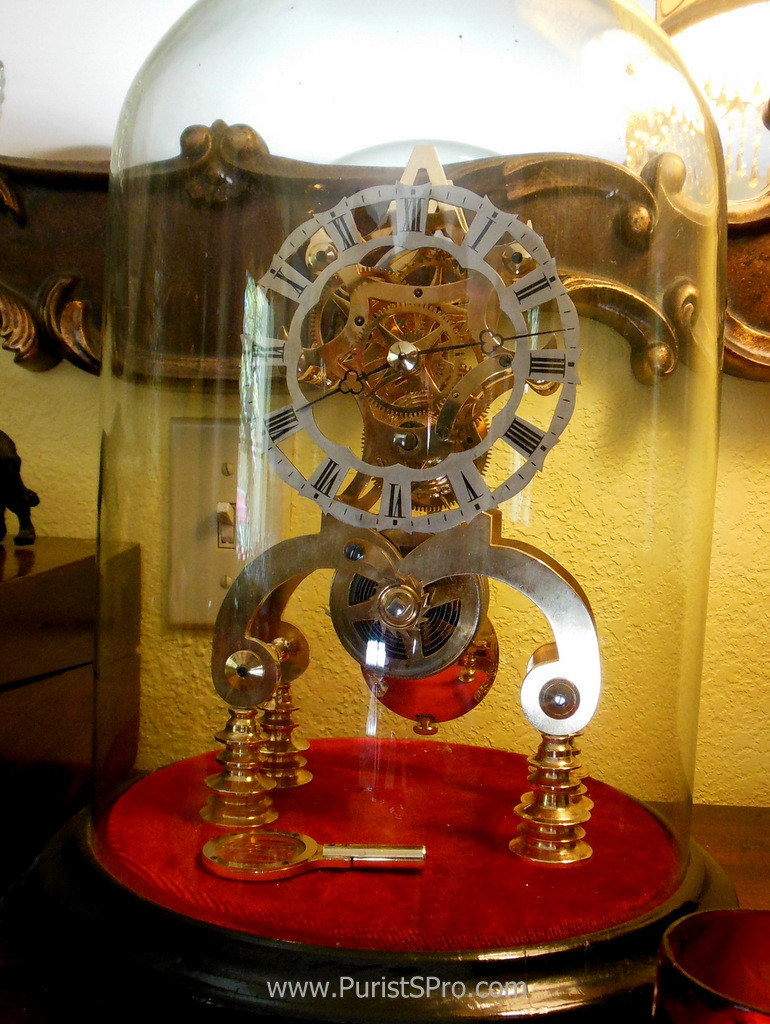
Each of David’s clocks is a unique piece. Here we see the very first clock he ever made, during his years in Vienna.
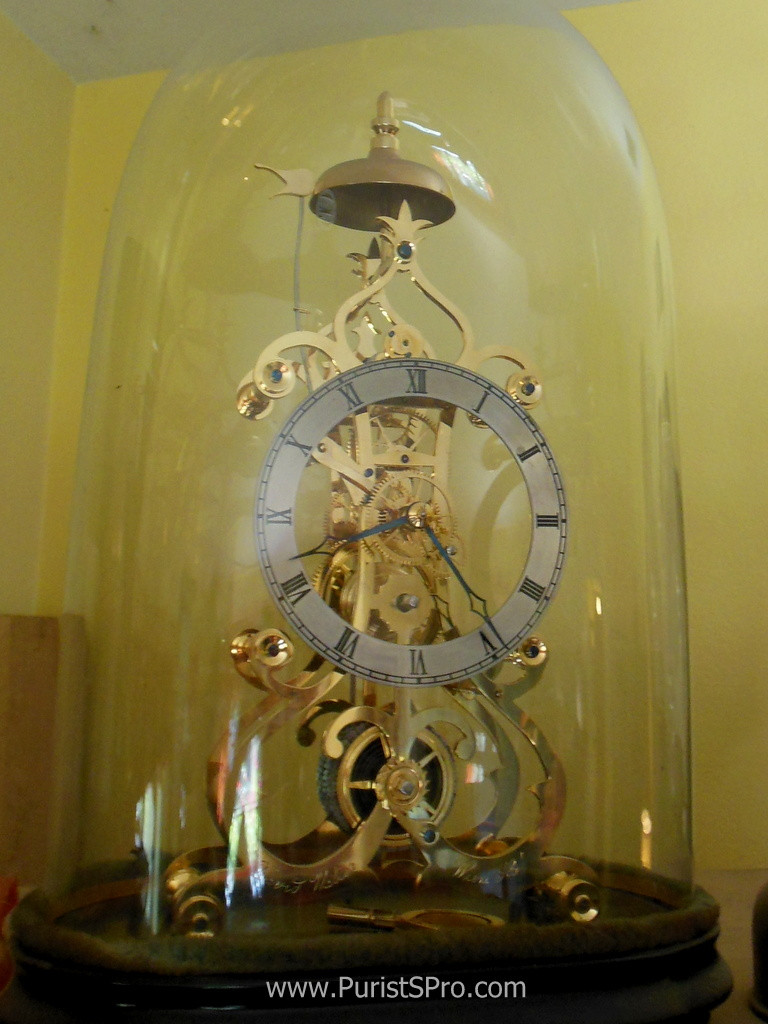
Another early striking clock.
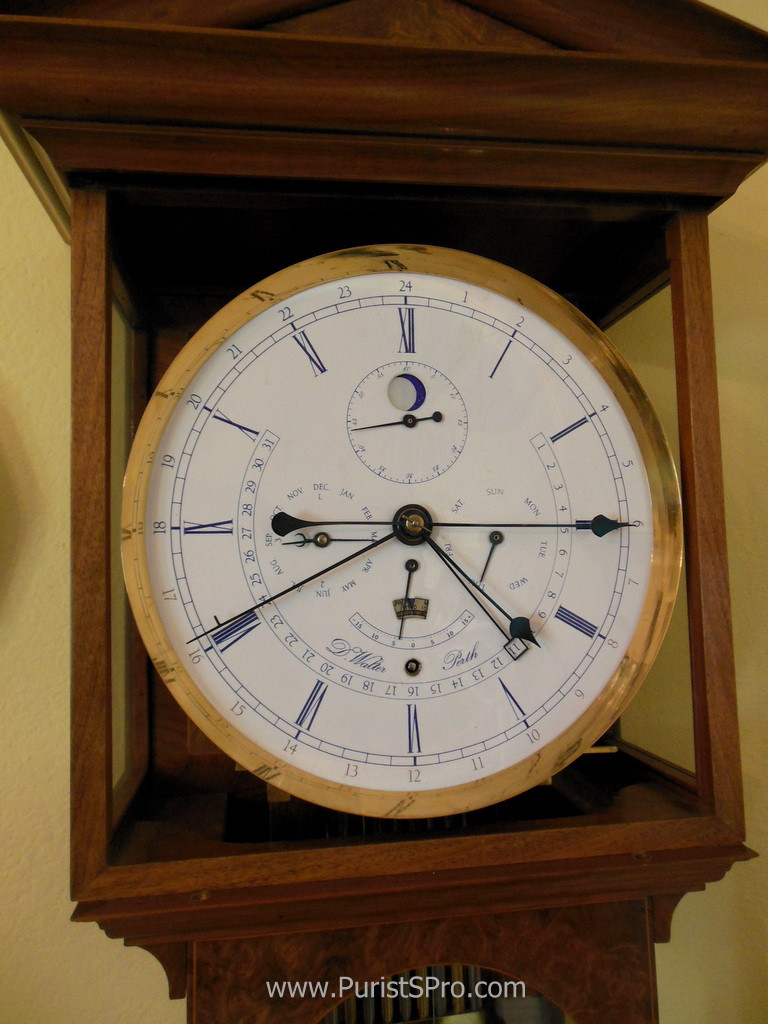
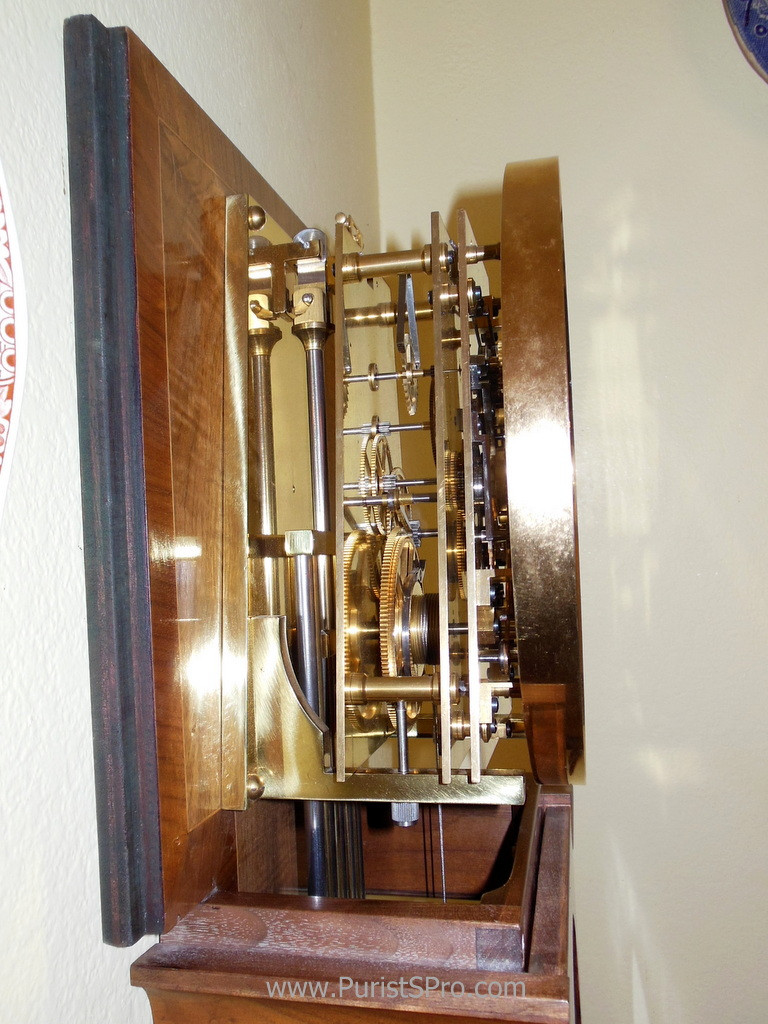
A perpetual calender, moon phase clock with a grid iron temperature compensating pendulum made during his time in Perth Australia.
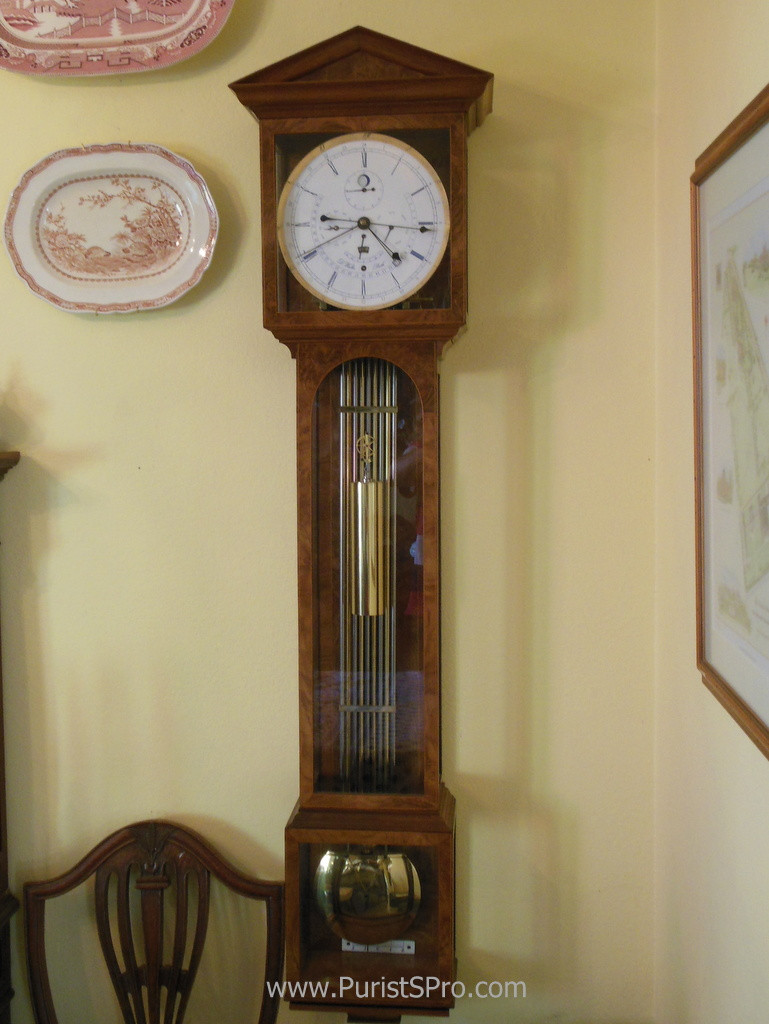
David’s shop is the totality of a two-car garage in his house. Let's go on in.
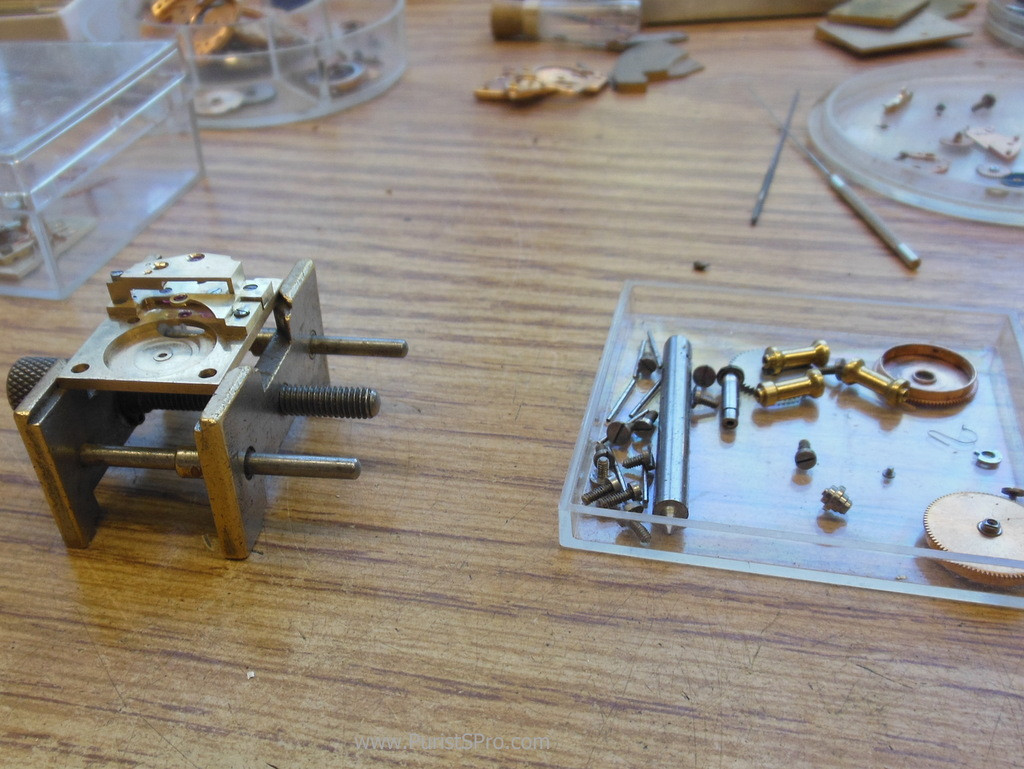
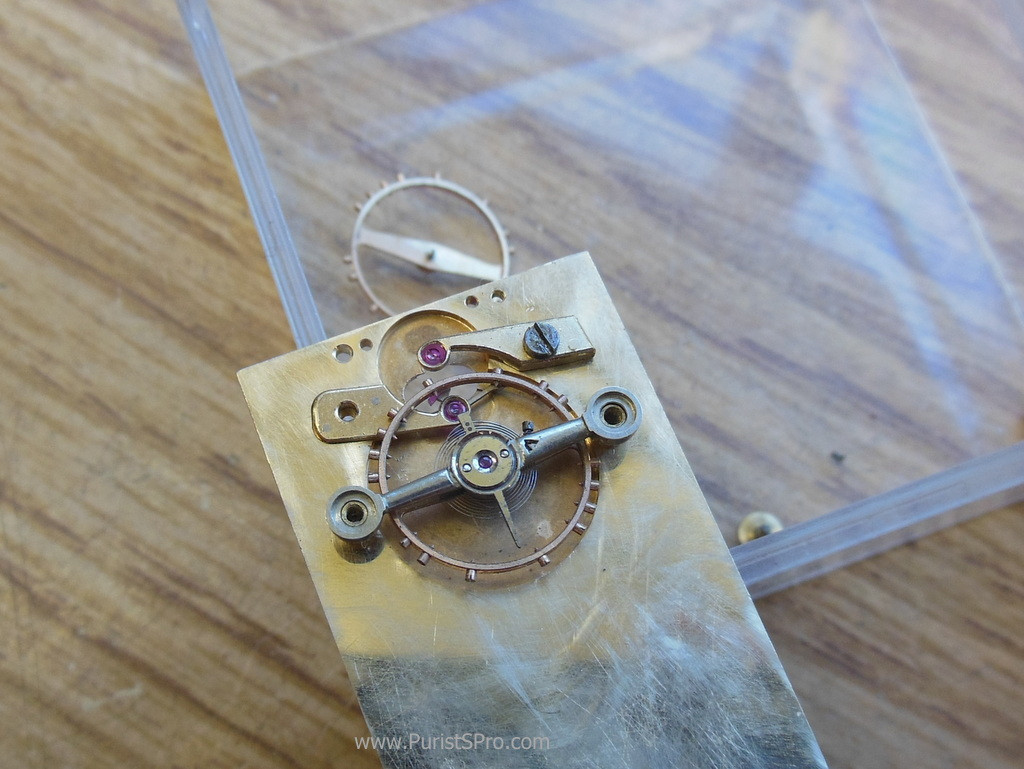
On the bench we see that he is now working on the balance & escapement unit for a small carriage clock.
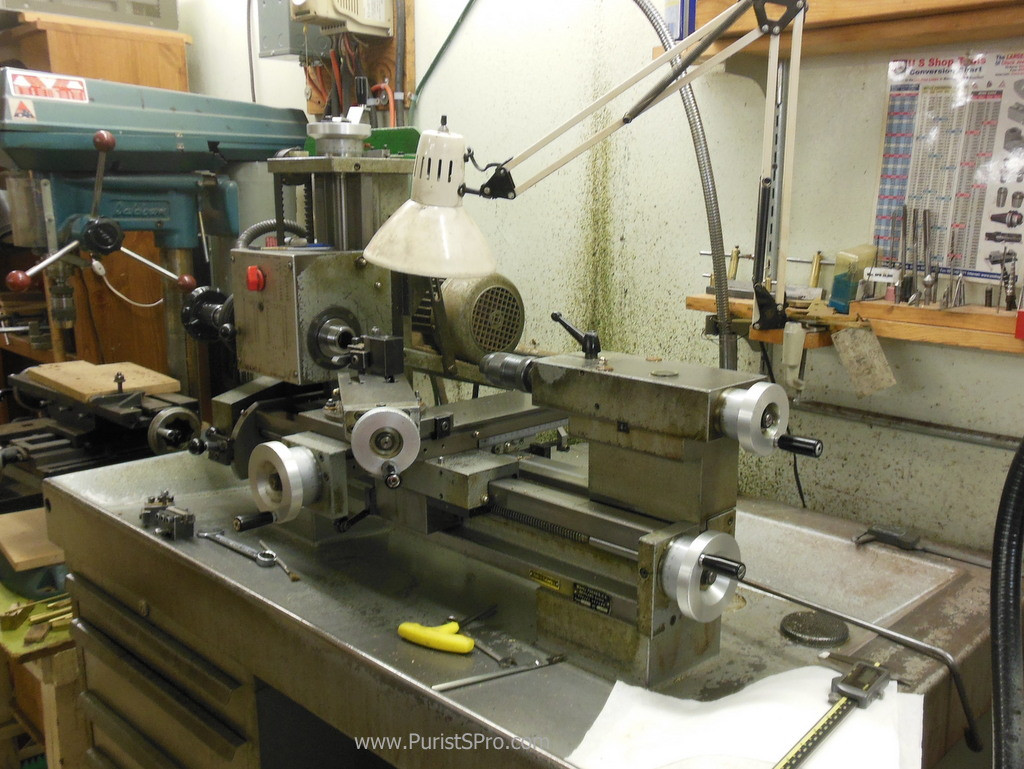
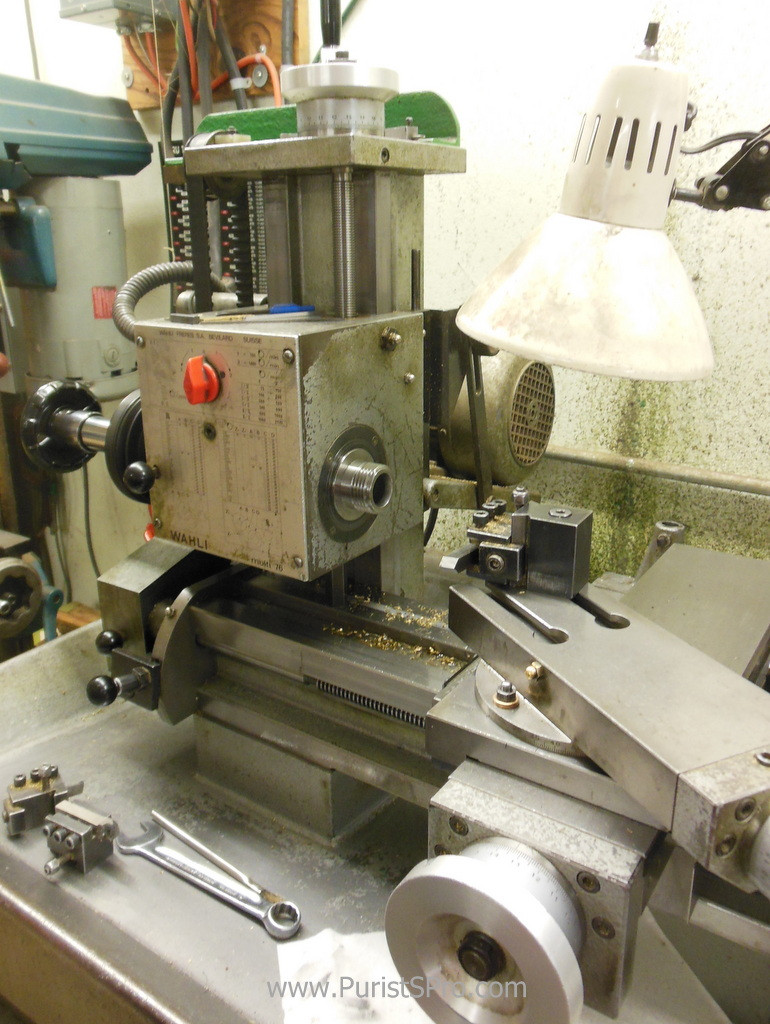
Of course he is well equipped with the tools of the trade. This Wähli lathe is of a type I have never seen before. It is possible to raise and lower the hight of the headstock. This allows many working configurations that are hard to do on a standard lathe.
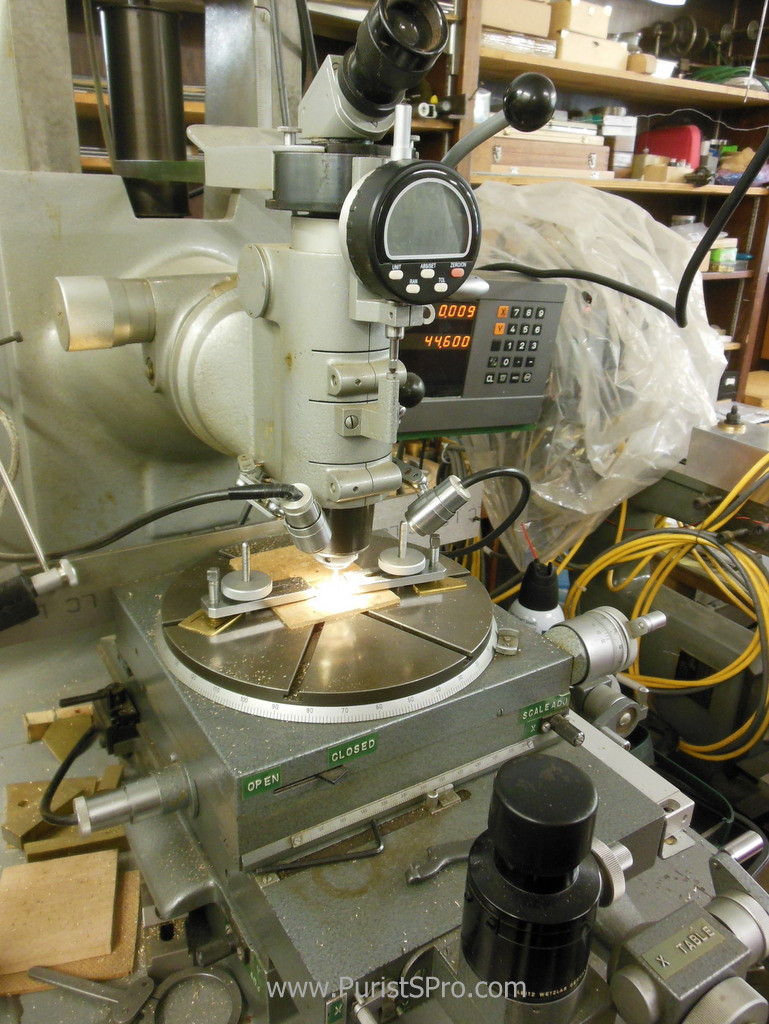
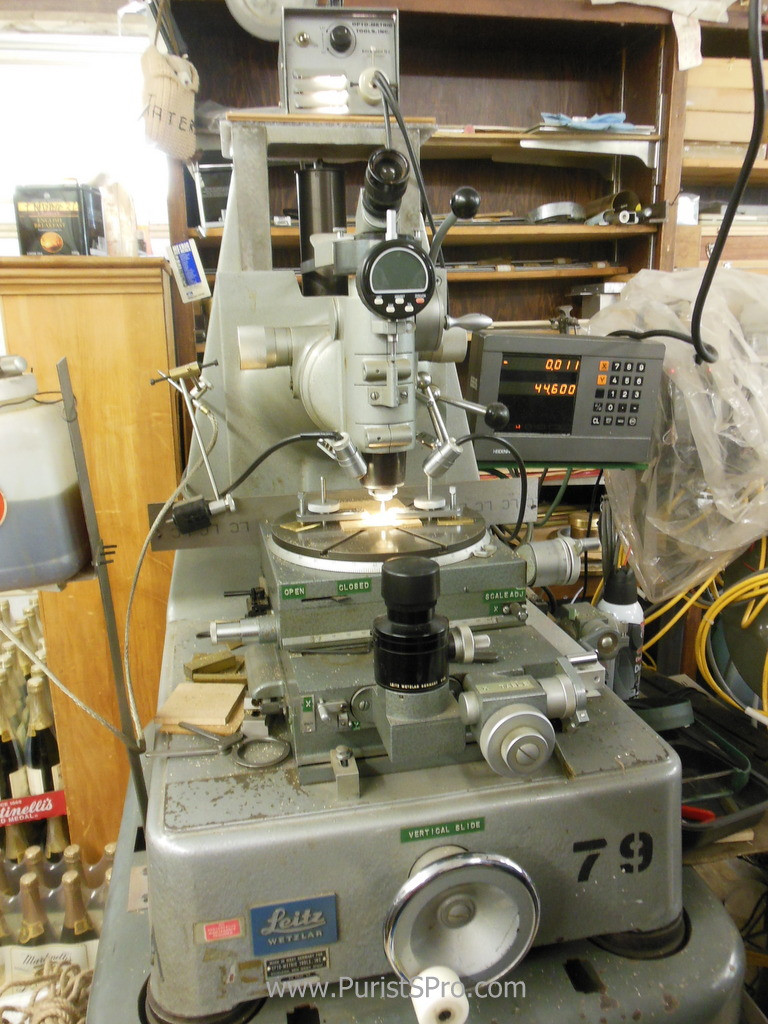
A Leitz precision pointing machine. The numerical readout is so precise that it registers the vibrations on jumping on the floor.
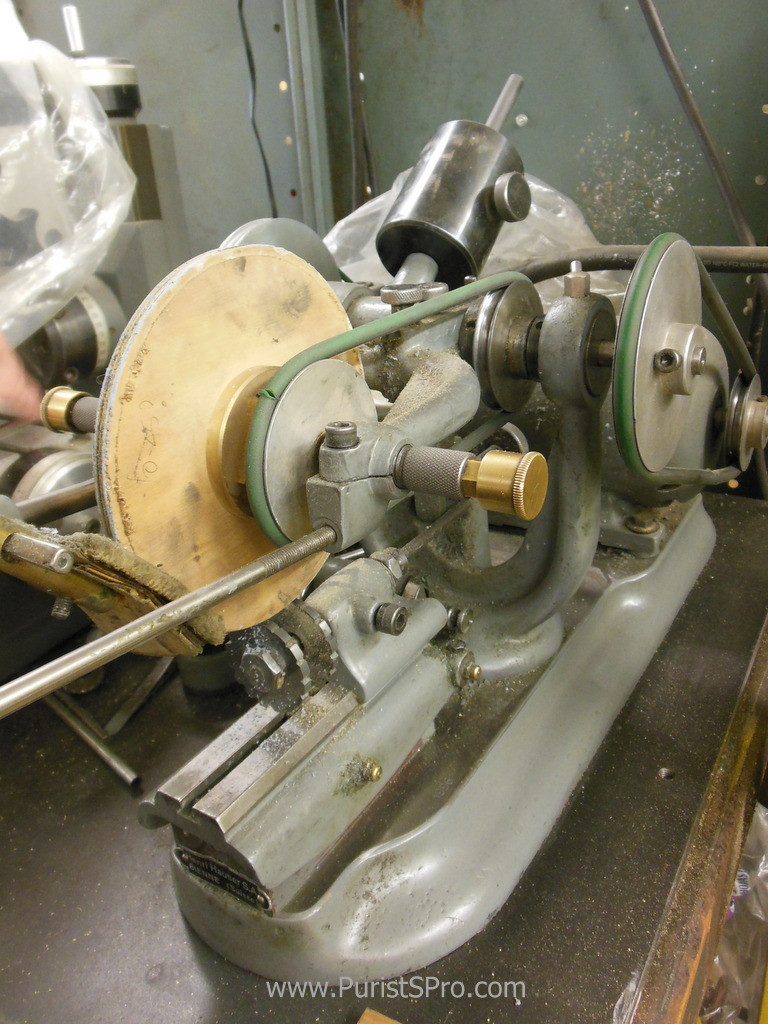
A pinion polishing machine with its wooden polishing disk.
Where do the sapphire parts come from? Well they are cut out from these half boules of sapphire as they are produced.
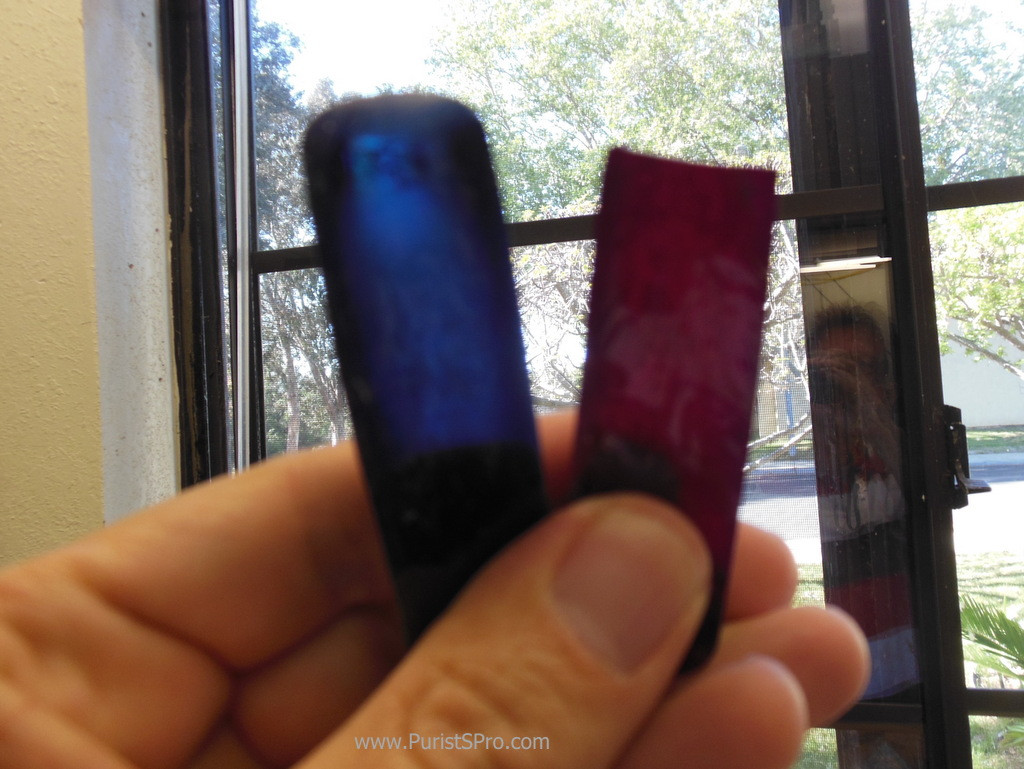
Some precision tools from Levin produced in California. The aeronautic and war machine industries also need precision tools.
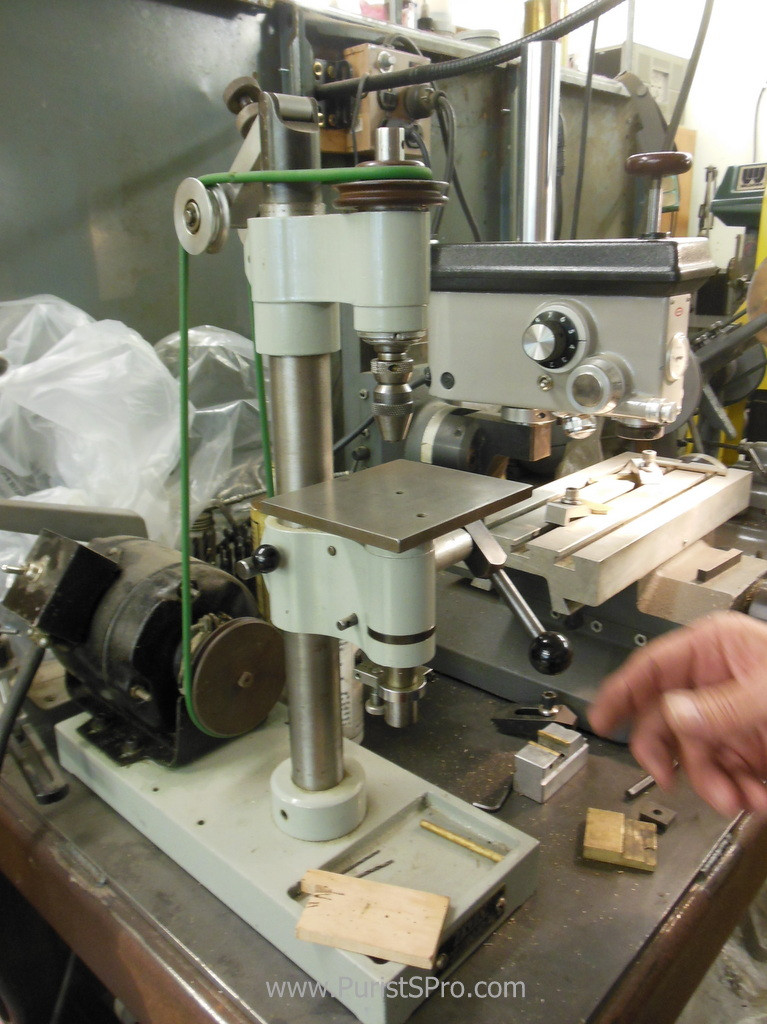
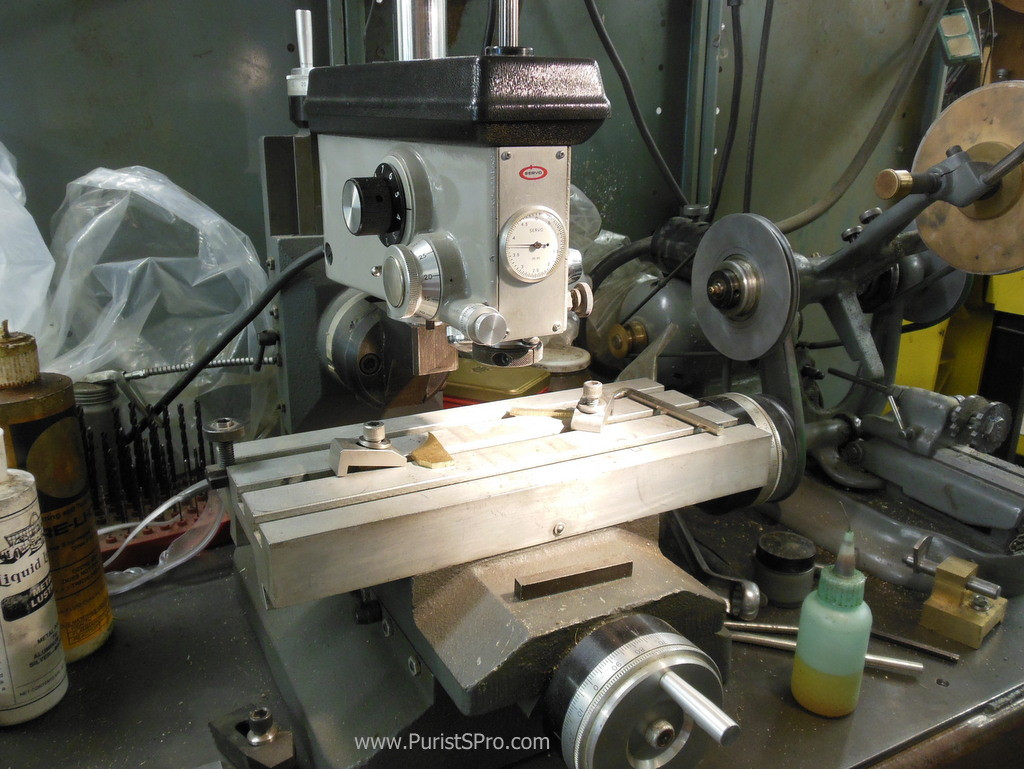
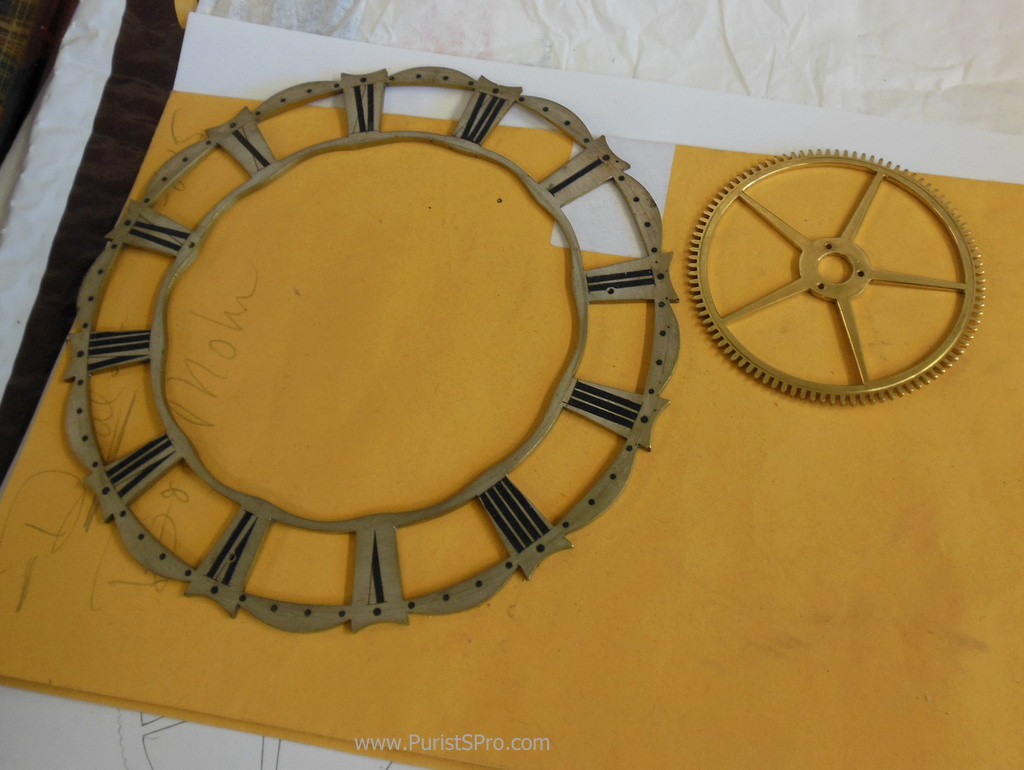
Parts from a clock movement from about 1800 which David is restoring and making a copy. This for a pair of supposedly identical clocks, of which one had had the original movement replaced at some time.
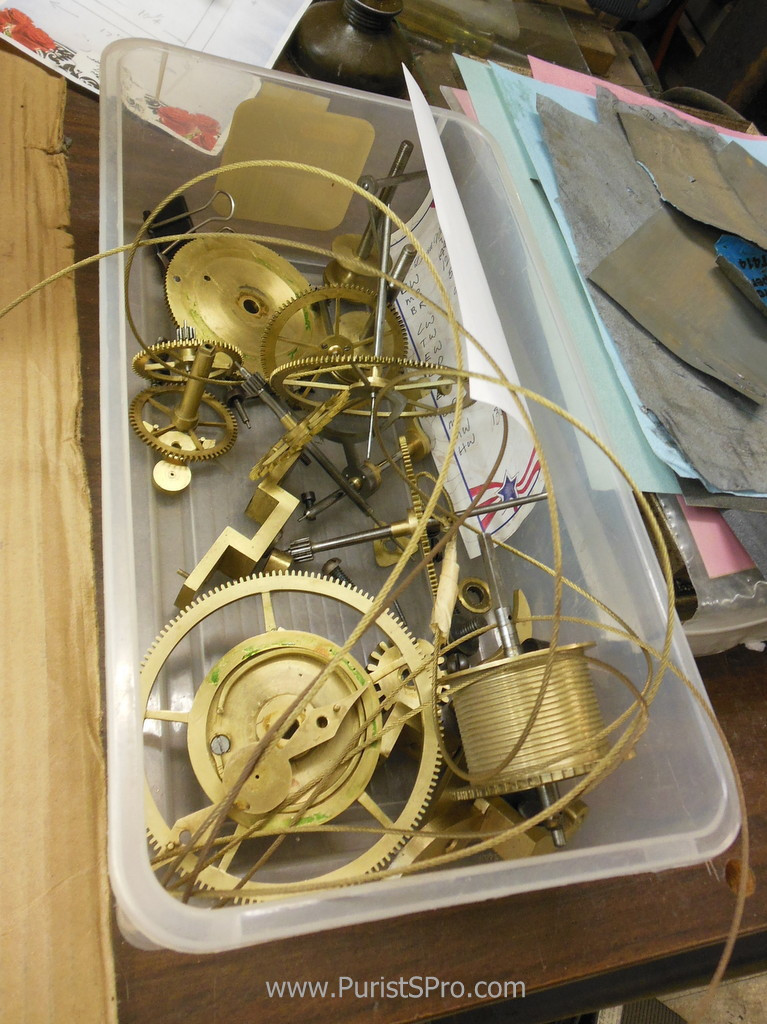
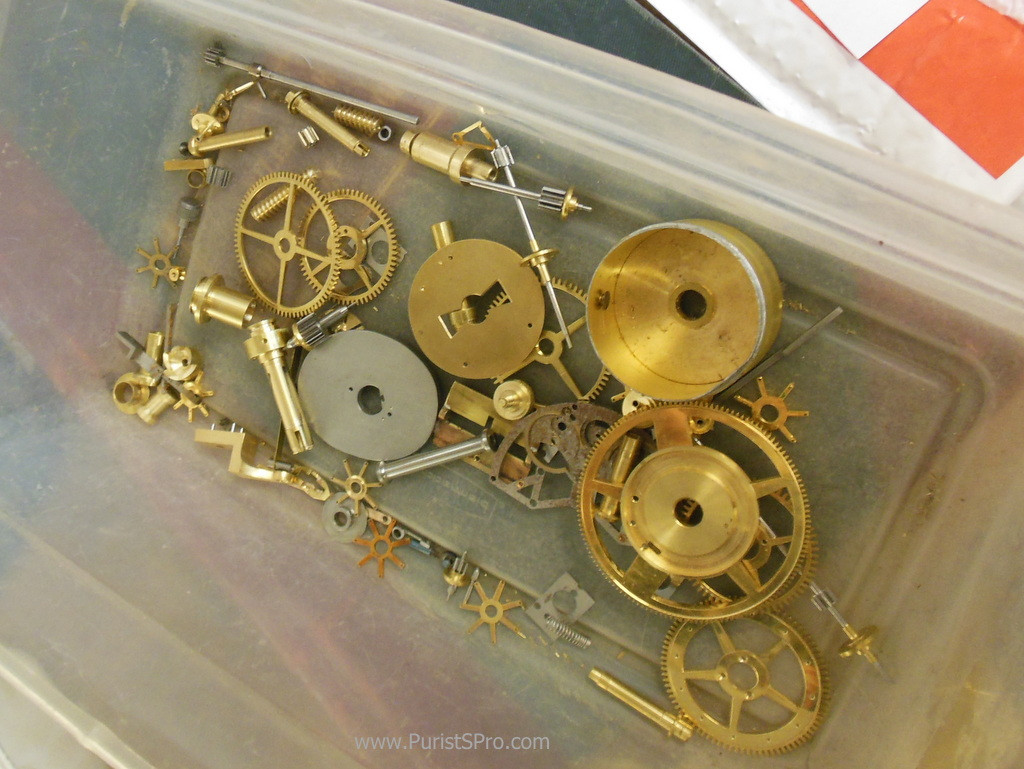
Pieces laying around.
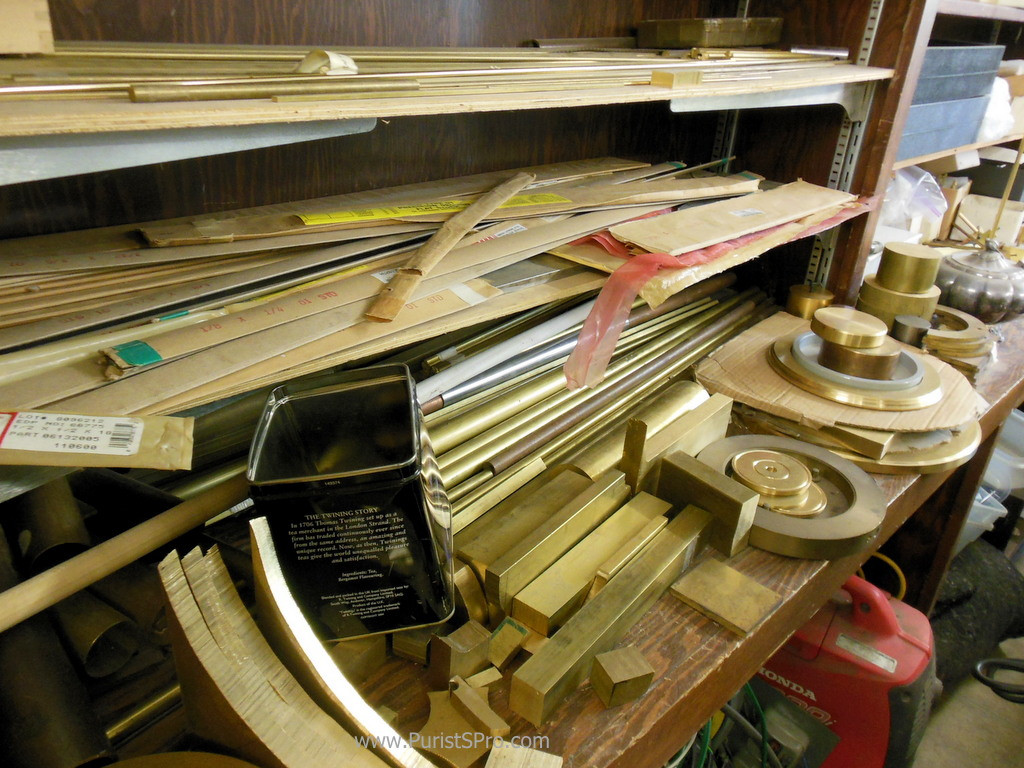
Raw materials.
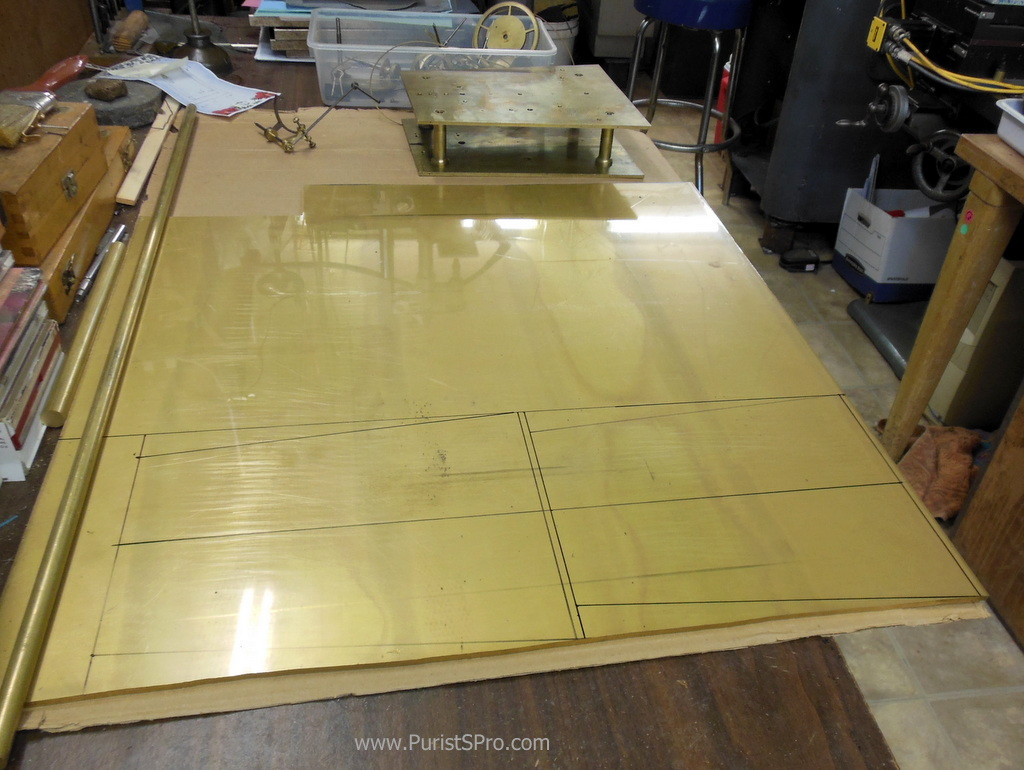
This sheet of brass will soon be a clock frame.
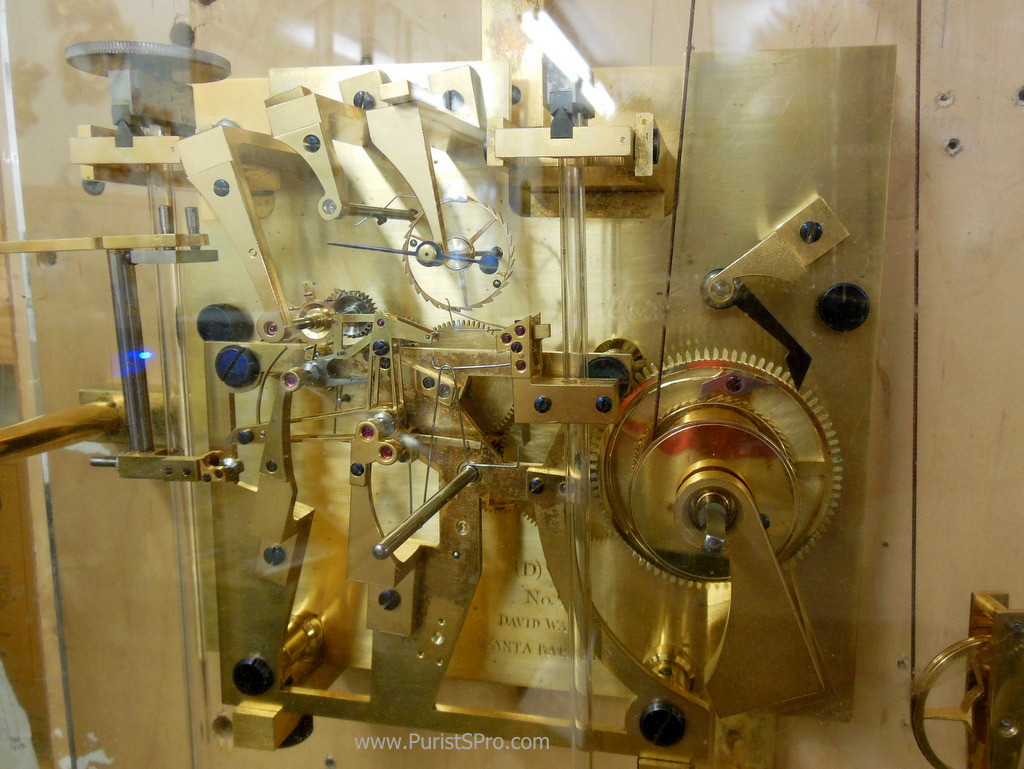
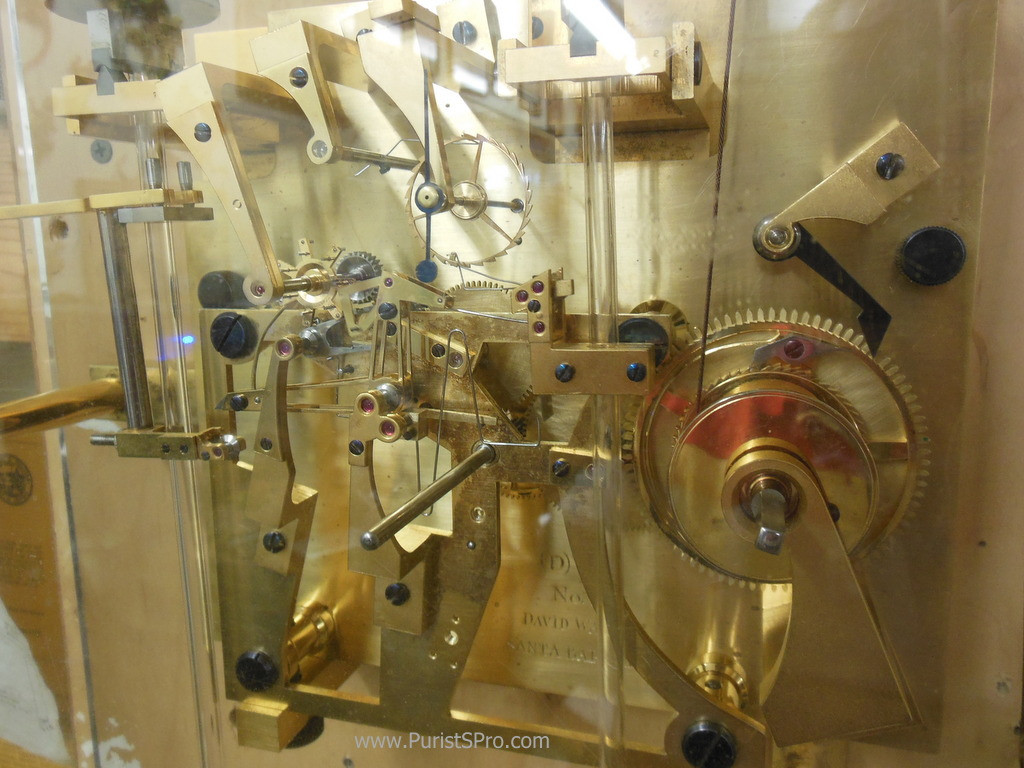
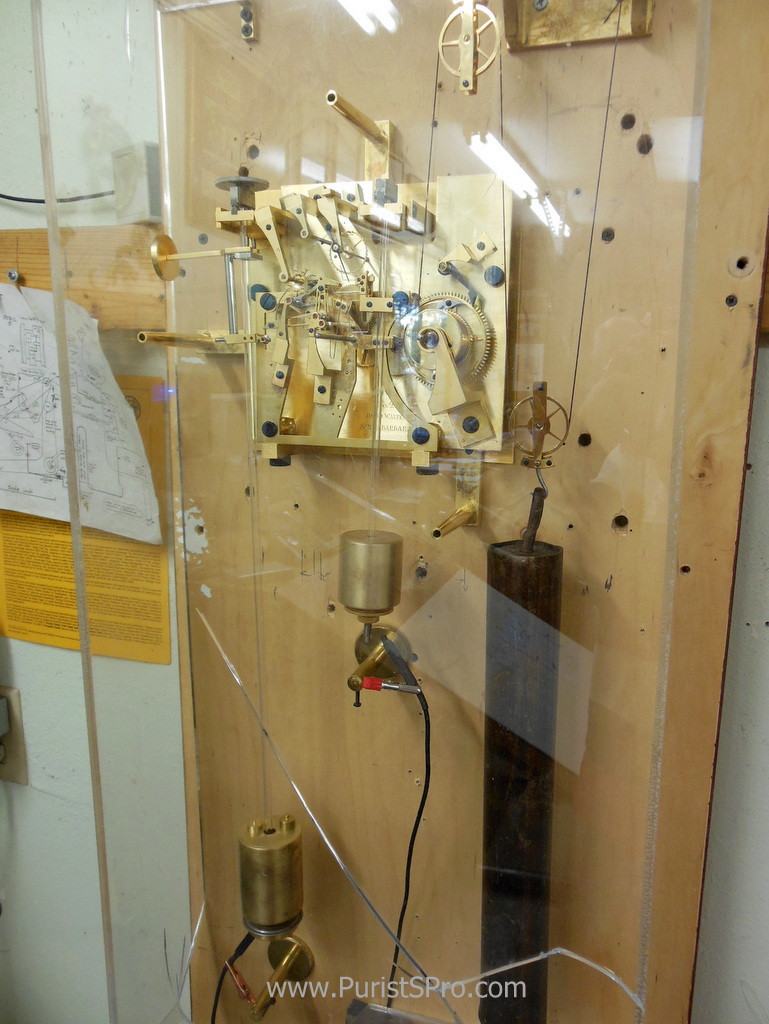
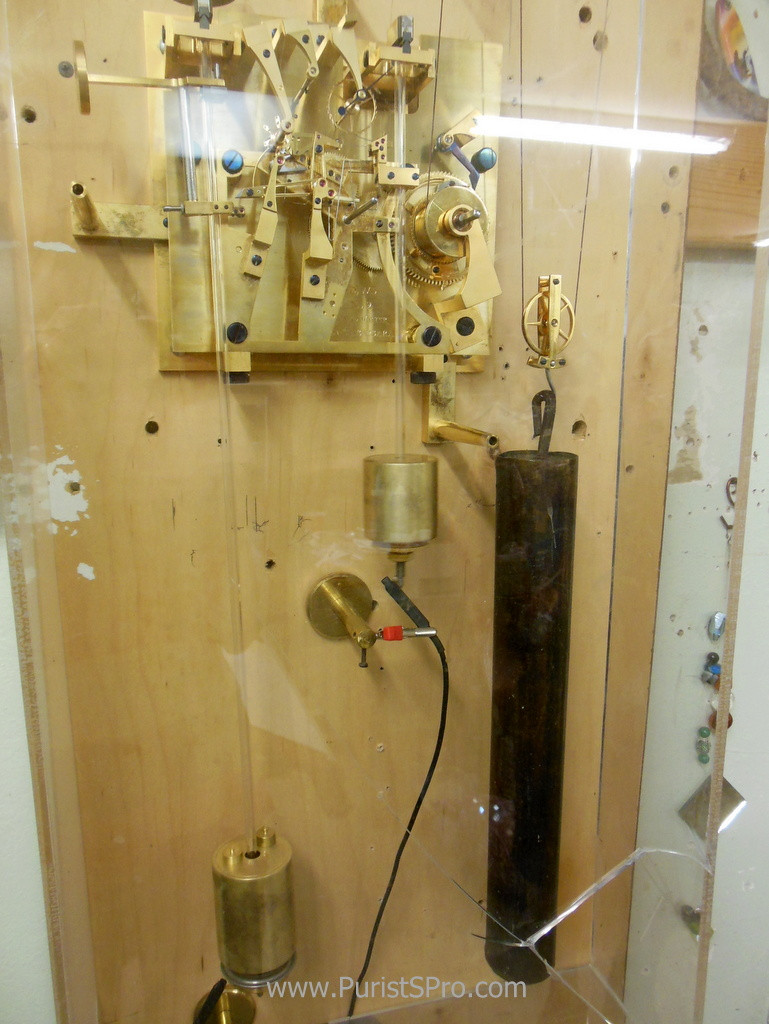
The most fascinating piece to be seen today. David’s prototype of his version of the Philip Woodward W5 clock. Philip Woodward is a British physicist who spent much time and thought on making precision clocks. His W5 is a double pendulum clock using all the tricks that physics offers to increase precision. The long pendulum is the timekeeper that swings freely, the short pendulum is the worker keeping the movement going, impulsing the timekeeper when needed and showing the time. It is synchronised with the timekeeping pendulum once every 30 seconds. The pendulums themselves are made of quartz glass, one of the most stable materials known.
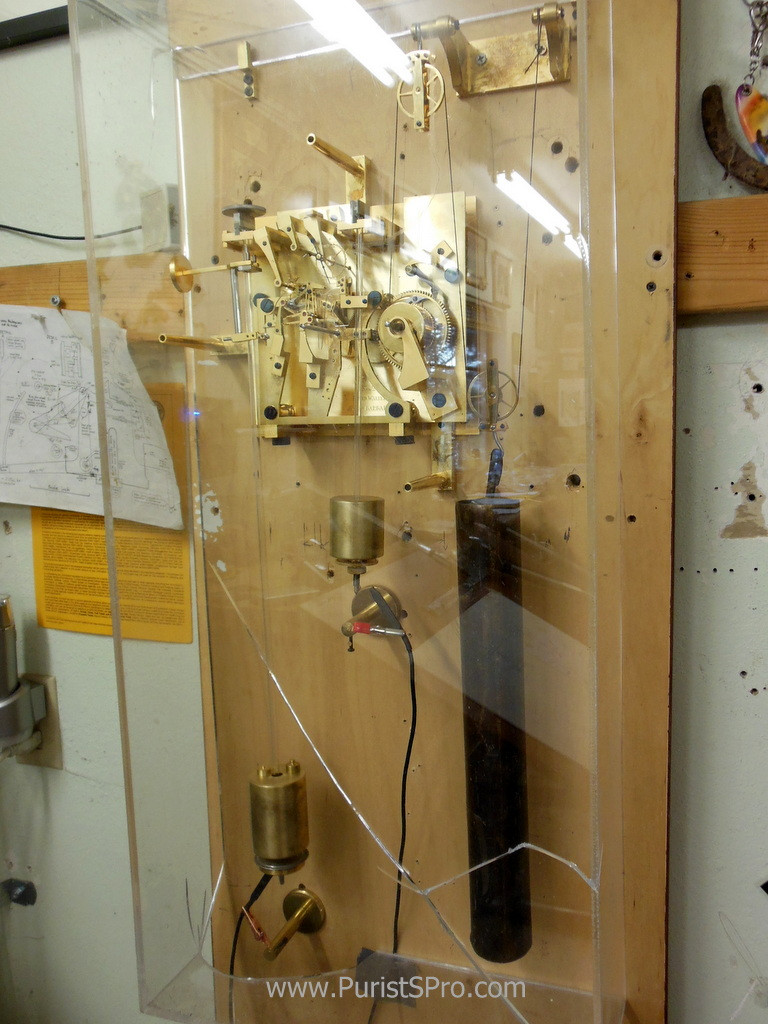
Philip Woodward was supportive of clockmakers making clocks based on his W5 and David was the first clockmaker to be able to make a working copy of the W5 clock adding many improvements of his own. His version of the clock is known as he (D)W5. You can see a finished production unit of this stunning clock on David’s website. David measures the timing accuracy to about 1 second in 100 days which makes this clock among the most accurate purely mechanical clocks ever made. Unfortunately there have bee no independent measurements of the accuracy. David is hoping that this will be done in the next year or two.
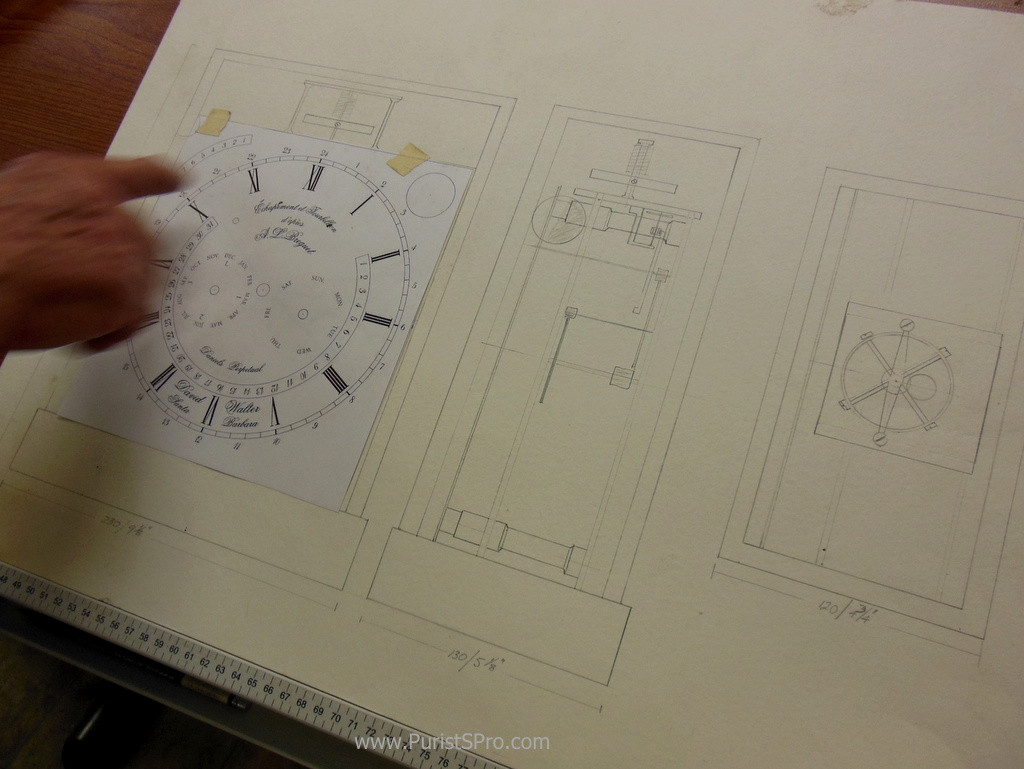
David likes taking much time to figure out all the complexities before jumping in with parts making. On the drawing table we see sketches for a new perpetual calendar clock.
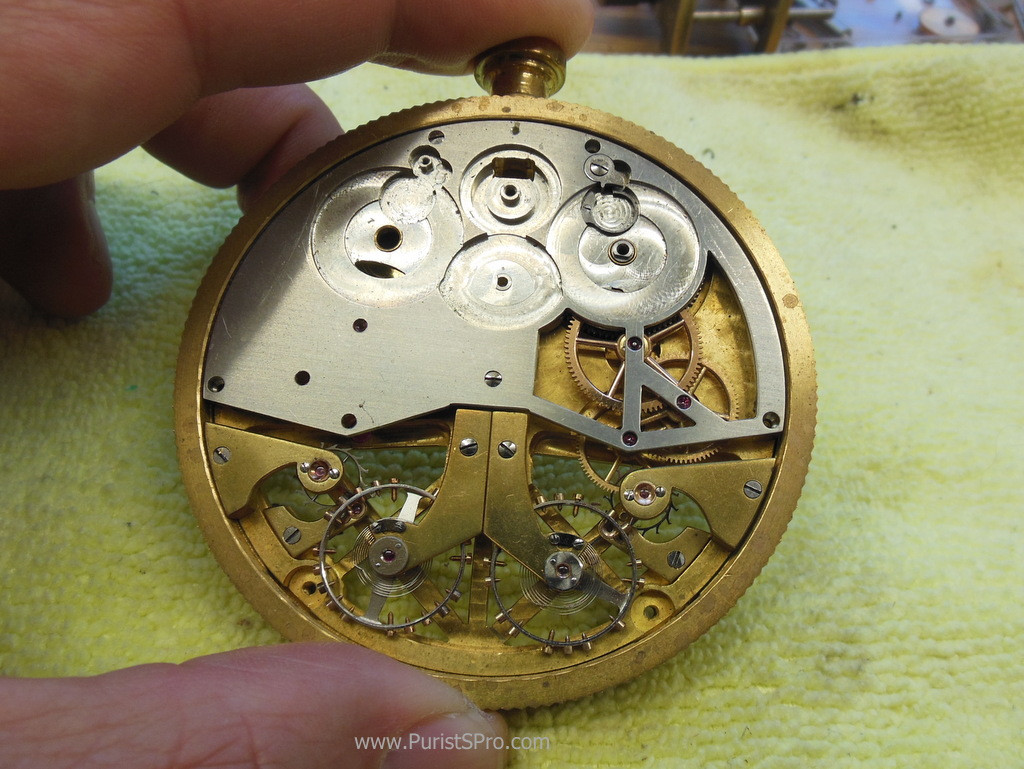
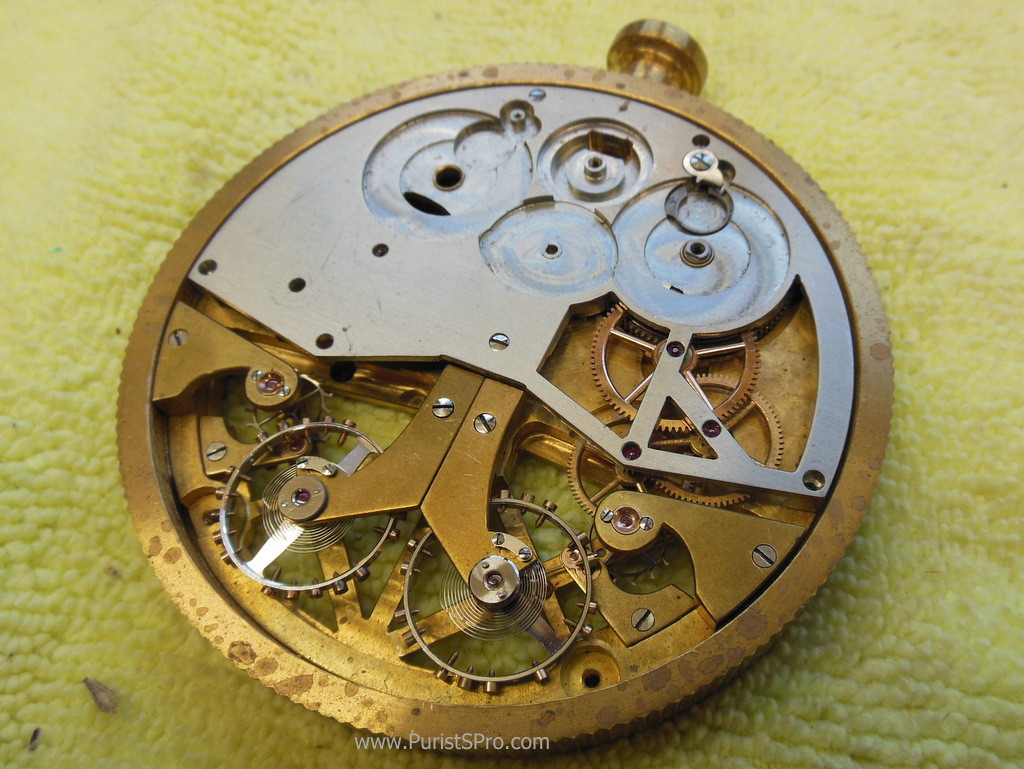
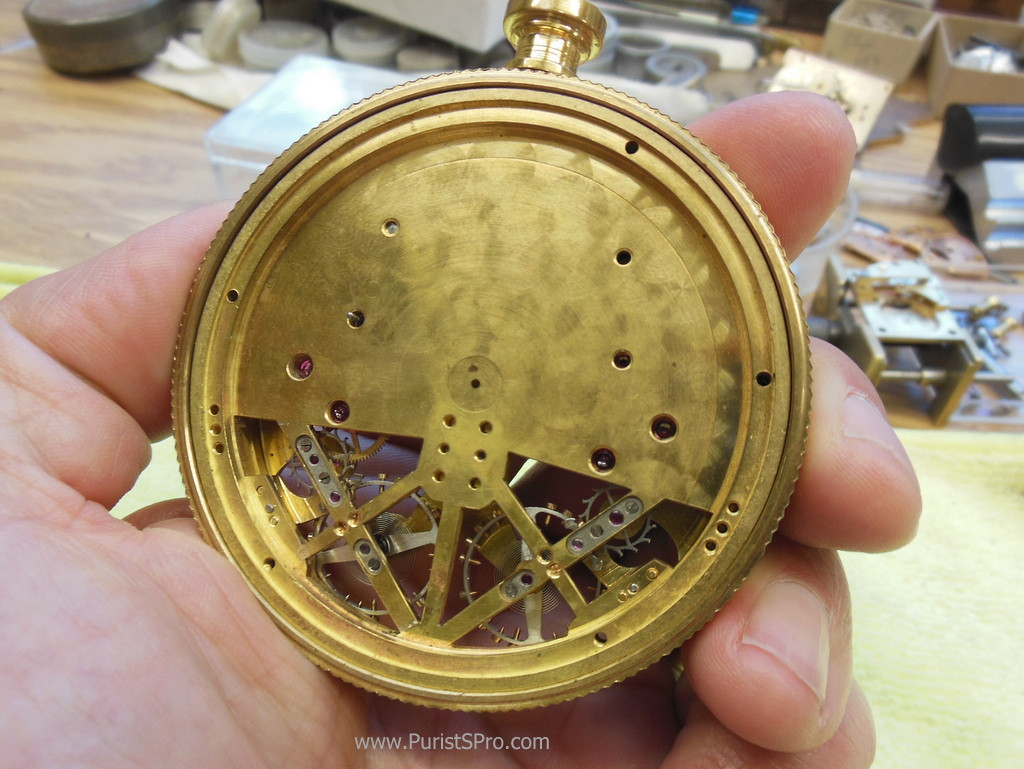
On the bench we also find a pocket watch prototype. The double movement will show mean solar time and also sidereal time.
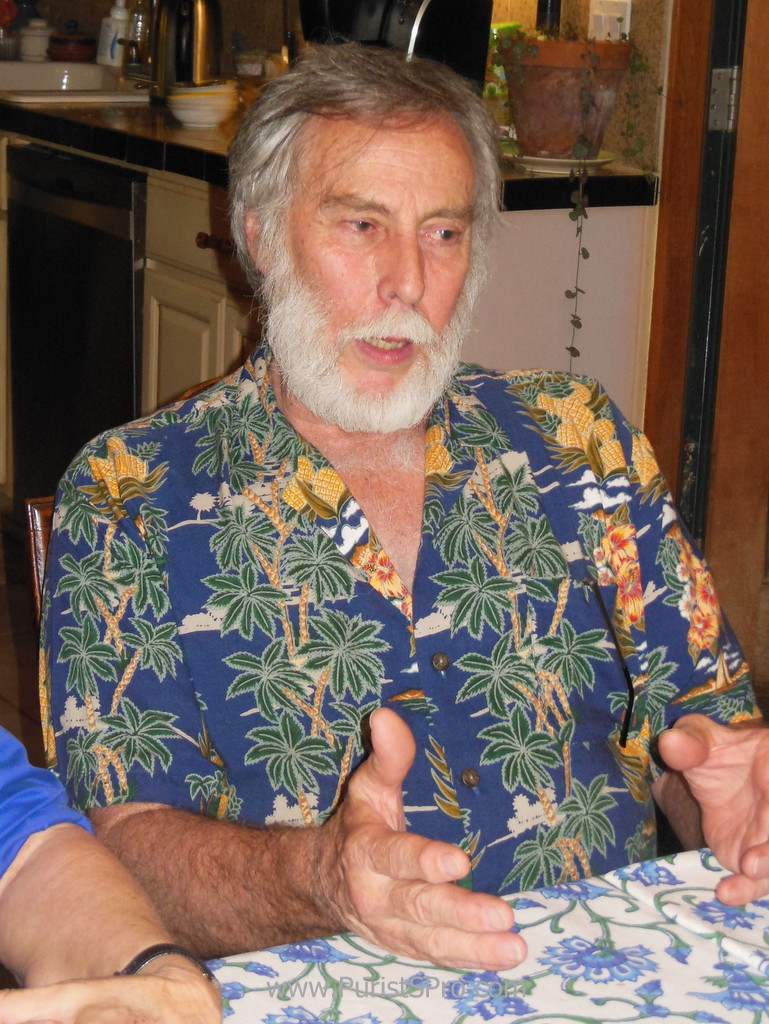
David Walter
I would like to thank David for his invitation and the interesting discussion in his shop. I hope this will also be the beginning of more discussion about clocks on the forums.
This message has been edited by DonCorson on 2015-04-21 23:50:21


David Walter Clocks, a shop visit

Very interesting article, Don. Thanks for the virtual visit.
This is great....
Clocks

Don, thanks for the report. l suppose the dw5 clock will not be made..
Yes it is...
DW5s are available...

You've been busy!

An Emporium of the Wandering Clockmaker

Great report and great pictures.
