
hmmmcamu
814

THE VINTAGE 300T SHARKHUNTER by: DOXA not Synchron
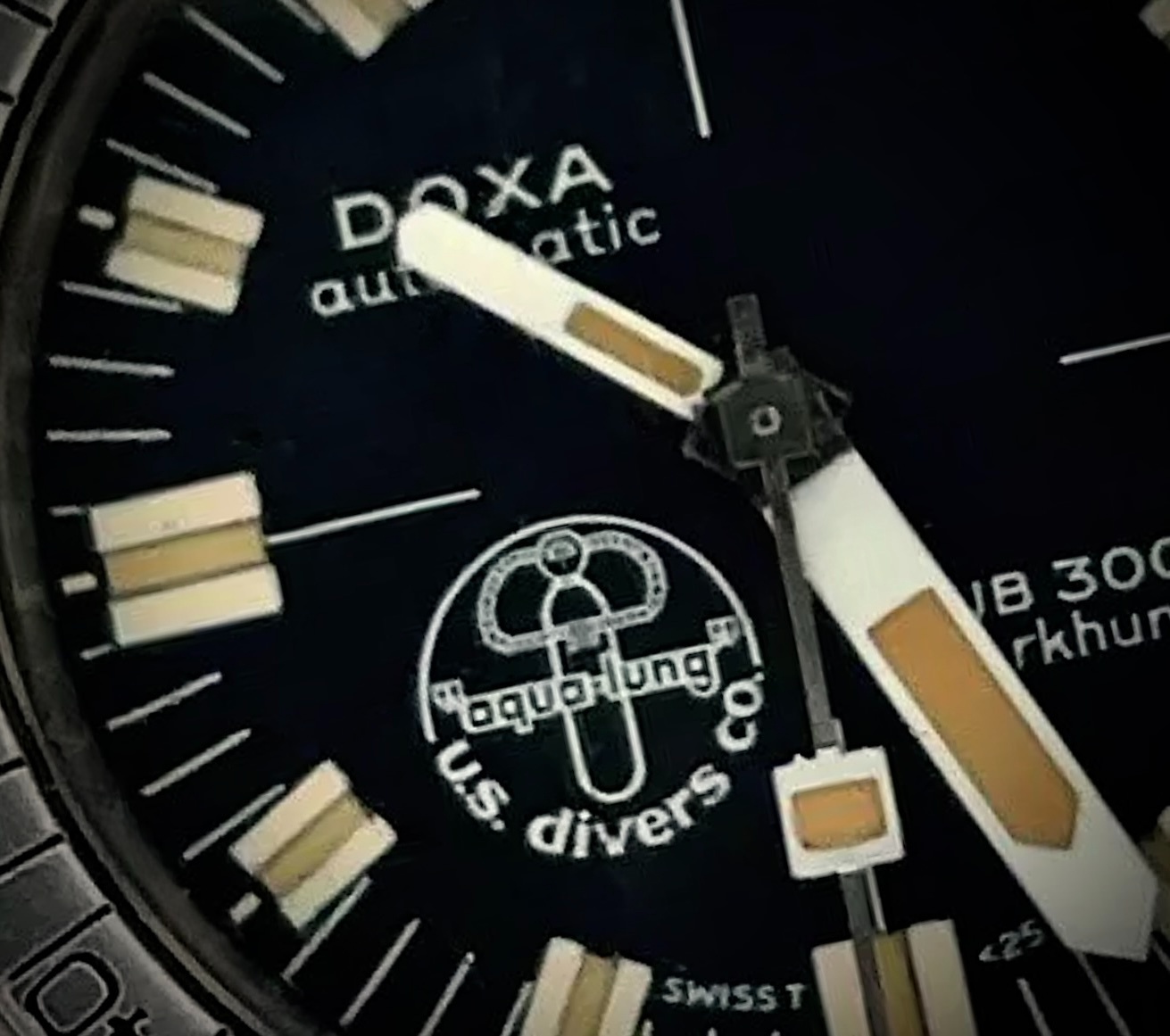
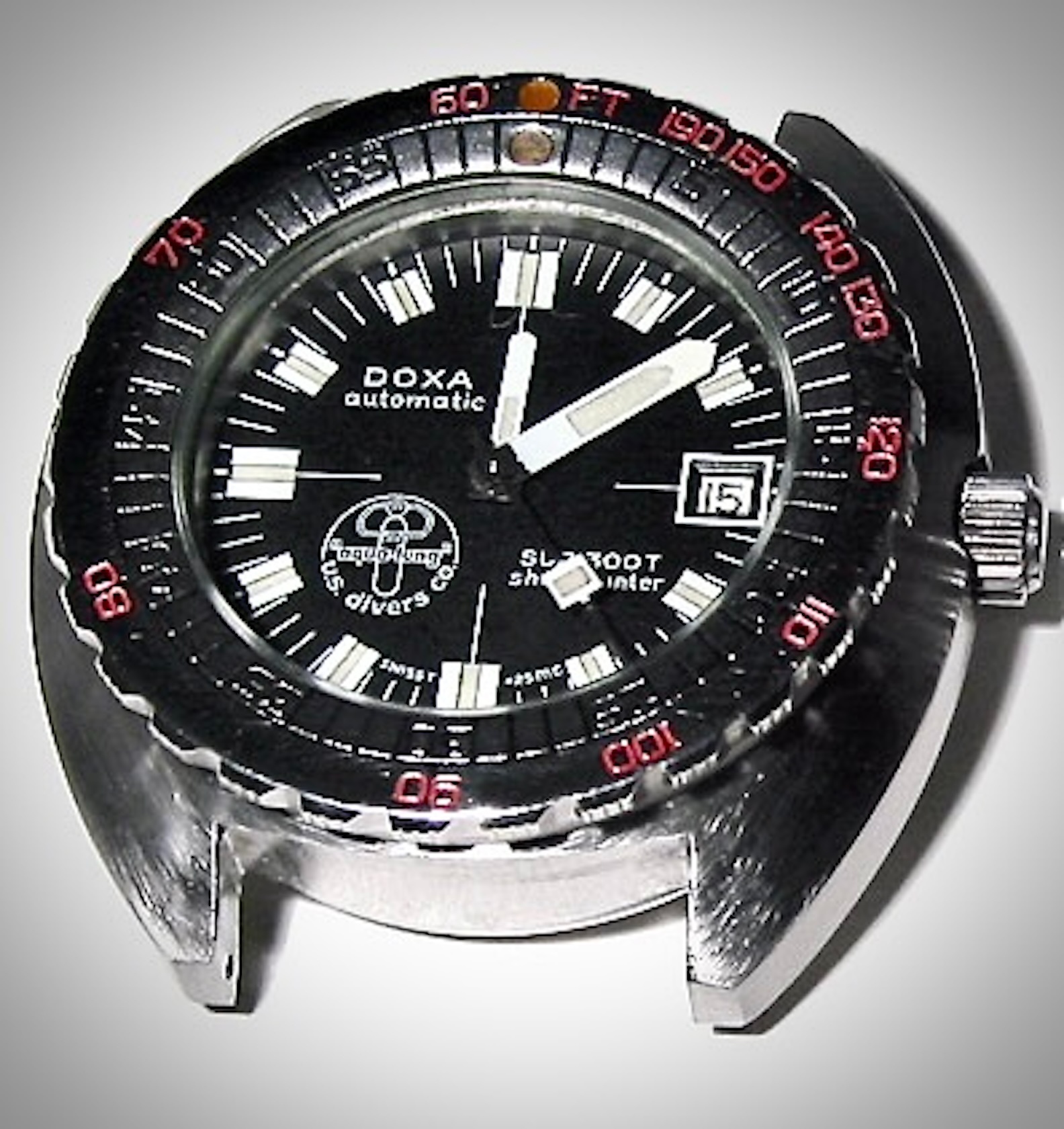
The vintage US Diver Aqualung version of the Doxa Sharkhunter should have a bezel marked in feet (FT) only
as opposed to the European version which might have a bezel marked in meters (M).
Doxa Sharkhunter with Caseback ... The Doxa Sub 300T Sharkhunter by Synchron typically features a Synchron-signed caseback rather than a Doxa caseback. However, vintage Doxa Sub 300Ts produced before Synchron acquired Doxa in the late 1960s would have Doxa-signed casebacks. If you are looking for a Doxa Sub 300T with a Doxa caseback, it would likely be from the pre-Synchron era or a reissue that reverted to the original Doxa branding.
Pre-Synchron Era Doxa Sub 300T
Doxa Sub 300T Sharkhunter (Synchron Era): This model has a Synchron-signed caseback and was produced after Synchron acquired Doxa in 1968.
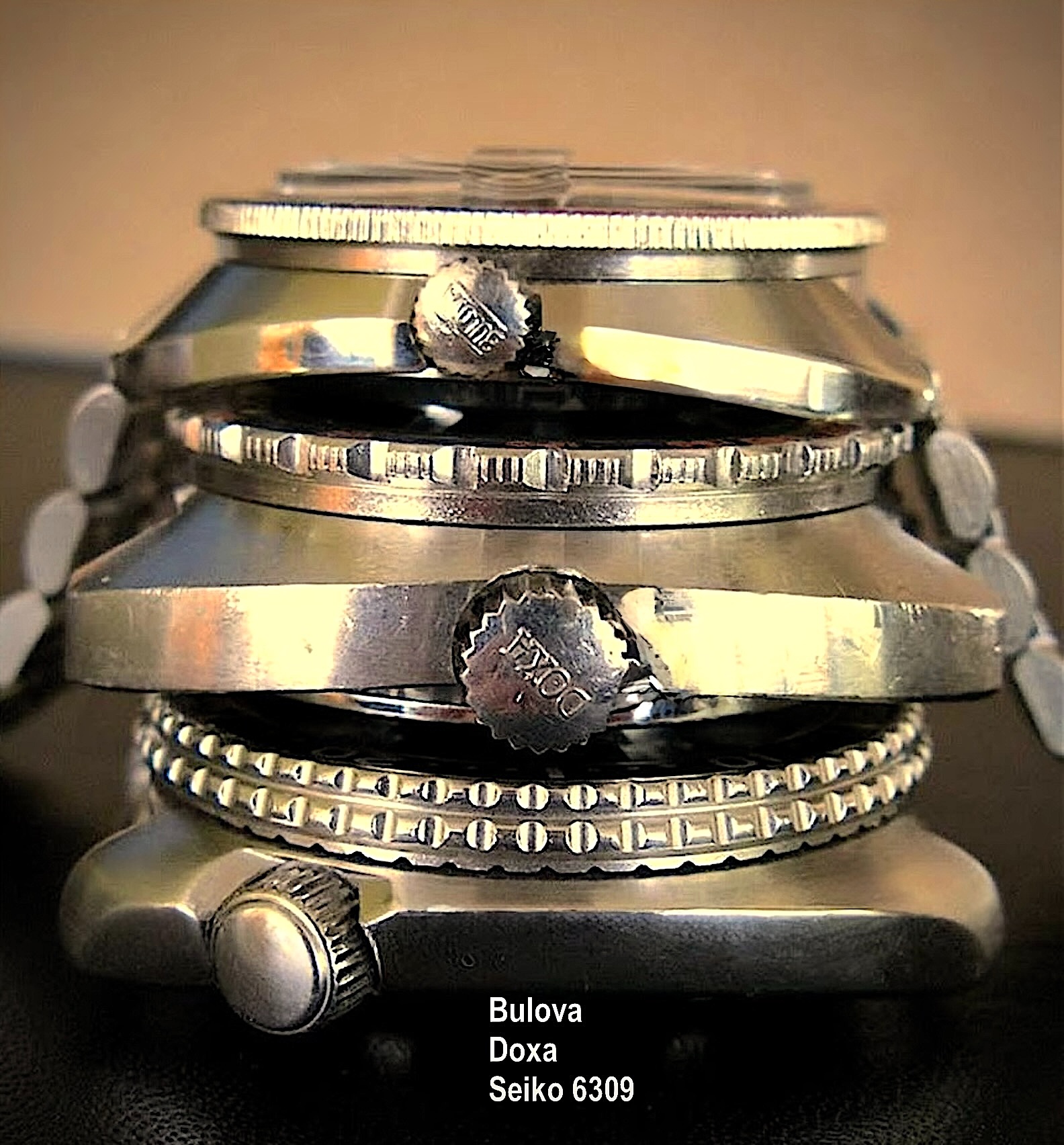
info borrowed from link below
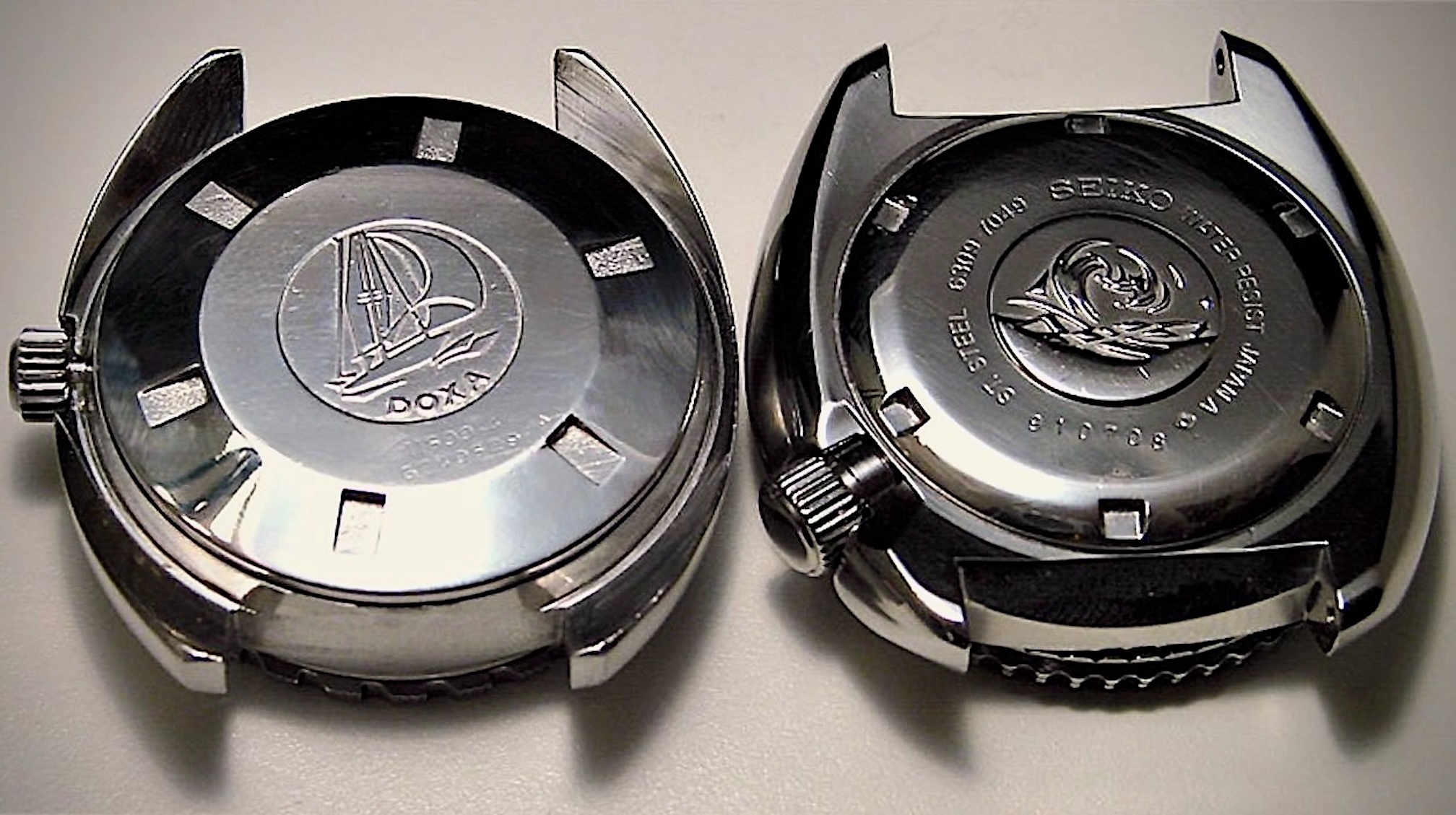
early 70s before Doxa was owned by Synchron, has the sailboat logo, while the Seiko has the traditional Tsunami wave.
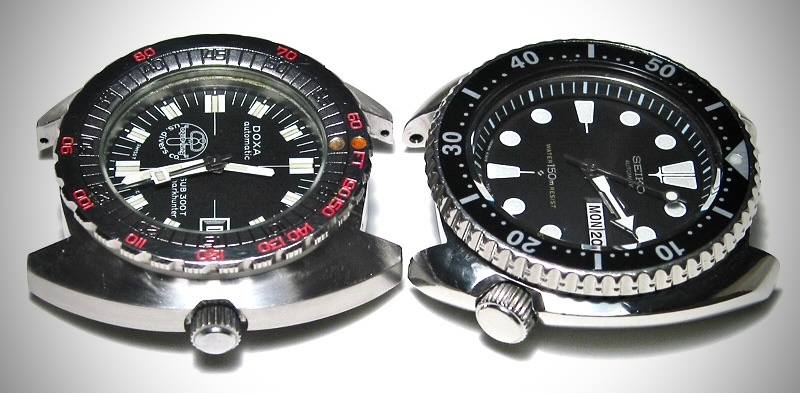
Vintage Diver Bezels Comparison
The vintage US Diver Aqualung version of the Doxa Sharkhunter should have a bezel marked in feet (FT) only, as opposed to the European version which might have a bezel marked in meters (M).
The Sharkhunter is basically a continuation of 300T line which started with the orange dial SUB in 1967. The case is a classic Tonneau design with crown at 3 o’clock and 20mm lugs. What sets the Doxa apart is the bezel. Doxa collaborated with US Divers to incorporate a Non Decompression Dive Table into the bezel. It is unidirectional and takes 60 clicks to rotate fully. The bezel on the Seiko also takes 60 clicks to rotate but it is bidirectional. The bezel insert is a simple affair with just minute markers. The fact that the Seiko bezel is able to be turned both clockwise and anti clockwise puts it at a disadvantage with regard to diving. Even though the bezel is quite tight, it is possible to knock it and turn it backwards. This obviously compromises its use to time a dive. The crown on the Doxa is located at 3 o'clock and screwed. Doxa were inconsistent with regard to crowns. Some models in the 300T range had signed and screwed crowns while some had neither. The Seiko crown is at 4 o'clock, unsigned and screwed. The cushion case has a recess which acts as a very effective crown guard.
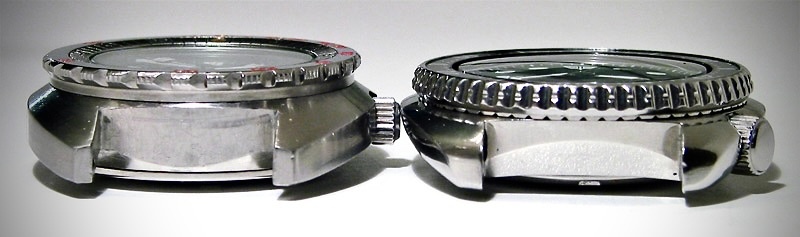
The Doxa and Seiko are fairly close with regard to size. The Doxa case size=45mm lugs to lugs, 45mm wide (including the crown) and 13mm high. Crystal is flat. The Seiko case is 45mm lugs to lugs, 45mm wide (crown protrudes another 1mm at 4 o’clock) and 12mm high. Crystal is flat. The major difference is the lug width. The Doxa is 20mm where as Seiko is 22mm. Notice also in the above shot how the Seiko case curves at the sides, whereas the Doxa is a more traditional square side. Interesting enough, in the mid to late 60s, 19mm lug width was fairly common, but 20mm was becoming the standard. 22mm was considered huge and posed a problem if you wanted to swap out the strap. For both the Doxa and the Seiko the case between the luqs is curved. This is good and bad. Good in that it is aesthetically pleasing but bad in that it can leave an unsightly gap depending on the strap or bracelet used with the watch.
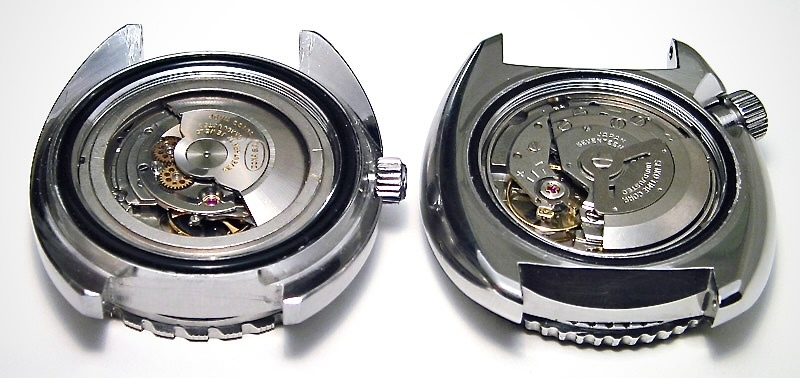
The Doxa is the Swiss ETA 2852 and the Seiko is it’s own inhouse 6309. The major differences are that the ETA is date only whereas the Seiko is day and date. Neither movement is hacking and only the ETA is manually windable. It is almost a trademark that the Seiko movements are non windable. A quick shake is all that is needed to start the second hand moving.
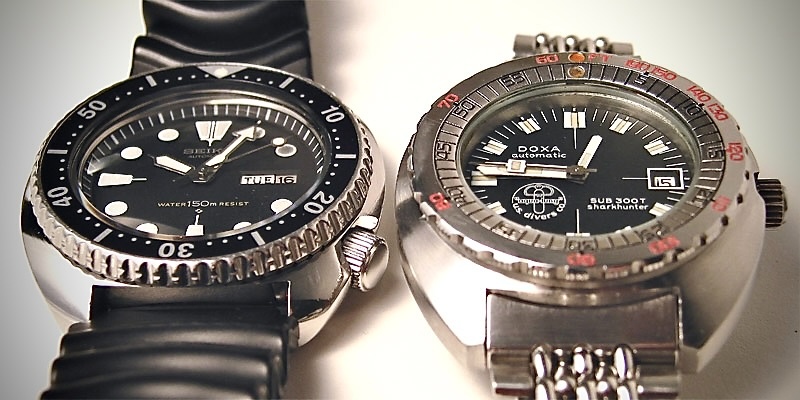
Vintage Diver Bezels Comparison
The vintage US Diver Aqualung version of the Doxa Sharkhunter should have a bezel marked in feet (FT) only, as opposed to the European version which might have a bezel marked in meters (M).

Doxa 300 Searambler- a short review
Looking for an everyday watch on a limited budget (that’s another story), and drooling over Arronax’s images of his Doxa, I took a trip to the local WOS just before Xmas. Tried on a 200, lovely and incredible value, but just not quite right. Tried on a 30...
Congrats and welcome to the club!
You've perfectly summed up why it's such a great watch! As a matter of fact the compact size, funky design as well as the excellent legibility are some of the reasons why I picked it over other watches in my small collection for a short 3-day trip. You co...

Great review of a lovely watch.
I think adding some numbers would help. Thickness figure would help support the "" easily the 300 slips under a cuff", And weight is always interesting to knwo.

Great review of a real favorite of mine.
I own the blue dial 'Caribbean' version of the same watch, and your review sums up my feelings about it very well. EXCEPT, one of your minor complaints, the bracelet width and taper. That I'd like to complain about a bit more loudly than you do. The brace...

Well said, imrootbeer7!
I'll start wearing mine a lot with the warm weather ahead. ...

I really enjoyed your review! Additionally, your pics and the other Doxa owners images are so awesome!
i especially like how good those watches look on other straps, it seems extremely versatile! Question: I am considering the 300B, does anyone here have an experience with that particular watch? I have a 6.5 wrist and worry a bit about the 42.5 diameter. T...
My wrist is only just a little larger
But because of the shape, small dial and slim case they do wear smaller. My experience was helped by trying different ones on first.

Many Doxa fans on the forum. There is something special about the Doxa 300 with an exclusive appeal the bygone history of true divers.
Originally these were sold in dive shop in Southern California alongside Rolex and at the time closely priced but the divers many professionals working on oil rigs looked at the option of 200m from Rolex and 300m from Doxa it was a no brainer. Plus the un...
THE VINTAGE 300T SHARKHUNTER by: DOXA not Synchron
The vintage US Diver Aqualung version of the Doxa Sharkhunter should have a bezel marked in feet (FT) only as opposed to the European version which might have a bezel marked in meters (M). Doxa Sharkhunter with Caseback ... The Doxa Sub 300T Sharkhunter b...