
cazalea
[Seiko Moderator]
20996

How Does It Know? Quartz Watches & Clocks
Chemically, quartz is a specific form of a compound called silicon dioxide. Quartz is a piezoelectric material: that is, when a quartz crystal is subject to mechanical stress, such as bending, it accumulates an electrical charge across some of its planes as the molecules slide against each other. For example, crystals were used in low-end phonograph (record player) cartridges: The movement of the stylus (needle) flexes a quartz crystal, which produces a small voltage, which is amplified and played through speakers. The reverse effect, also holds true; if an electrical charge is fed into across the crystal, it will bend.
A Quartz Crystal is generally used as the frequency determining device in a watch. When a voltage source is applied to a specially-trimmed, thin piece of quartz crystal, it begins to change shape producing a piezoelectric effect. When the physical size and thickness of a piece of quartz crystal is tightly controlled and fed an electrical current, we make it produce specific vibrations, known as the crystals “characteristic frequency”. Once cut and shaped, the crystal only operates at that frequency; its size and shape determine its constant output.
For watches, 32768 is the normally-used frequency. Why? Because 32768= 2¹⁵ (32768 divided by 2, 15 times) equals one pulse per second. A small circuit does the dividing work, and the resulting pulse moves a tiny motor which moves the second hand, and through a train of gears, the minute and hour hands.
The Chronomaster shown here is accurate to +/- 5 seconds per year.
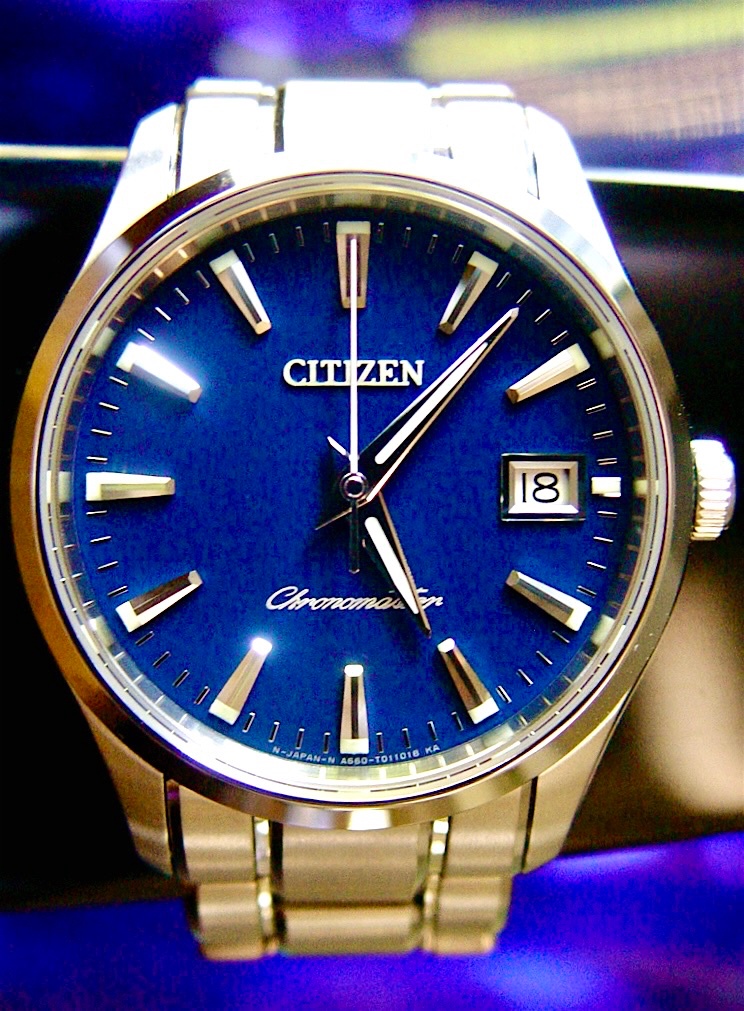
If you really want to learn more, this Wikipedia Article will help you (or put you to sleep)...
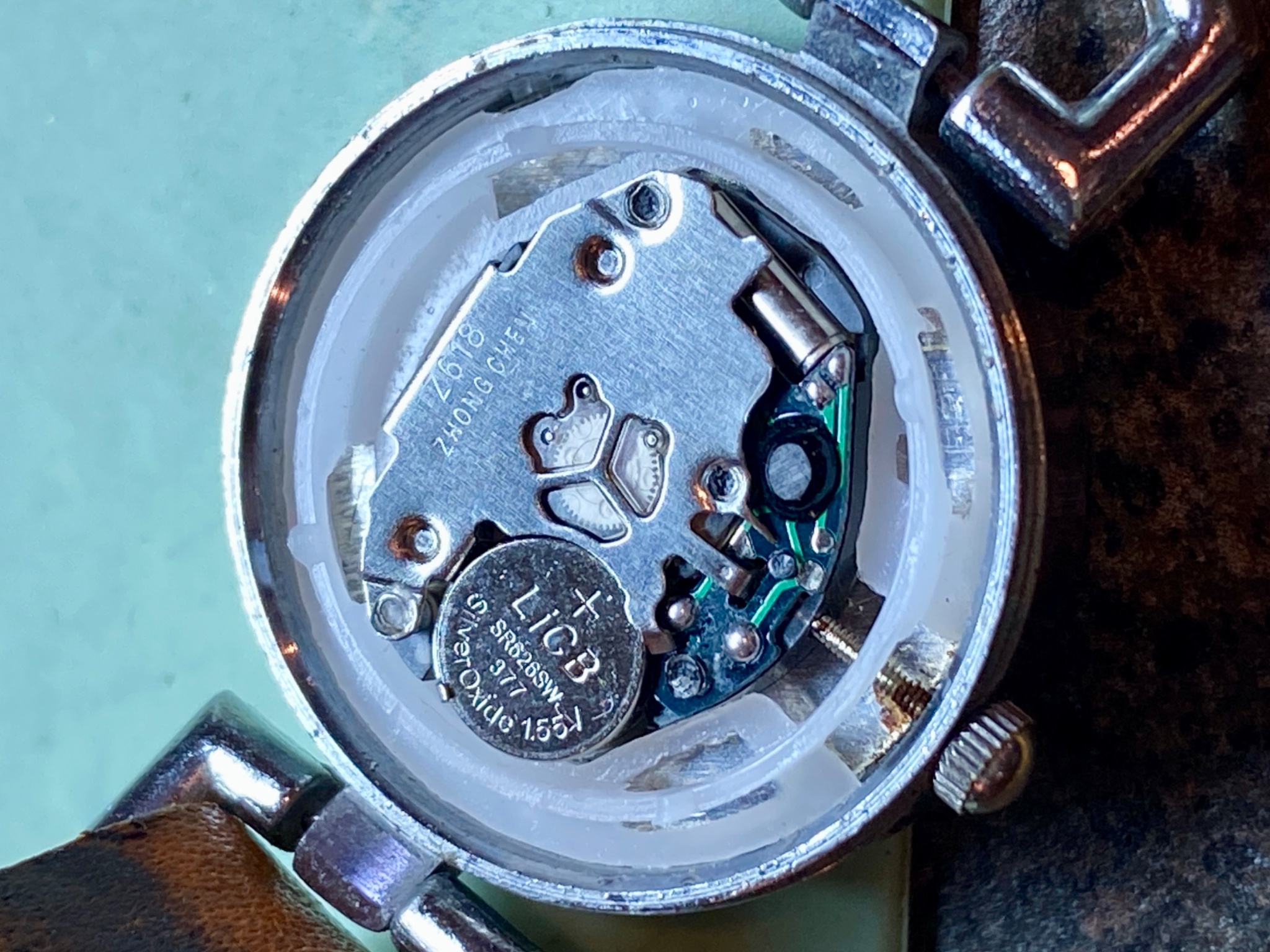
Quartz watches can be very cheap and produced by the millions:
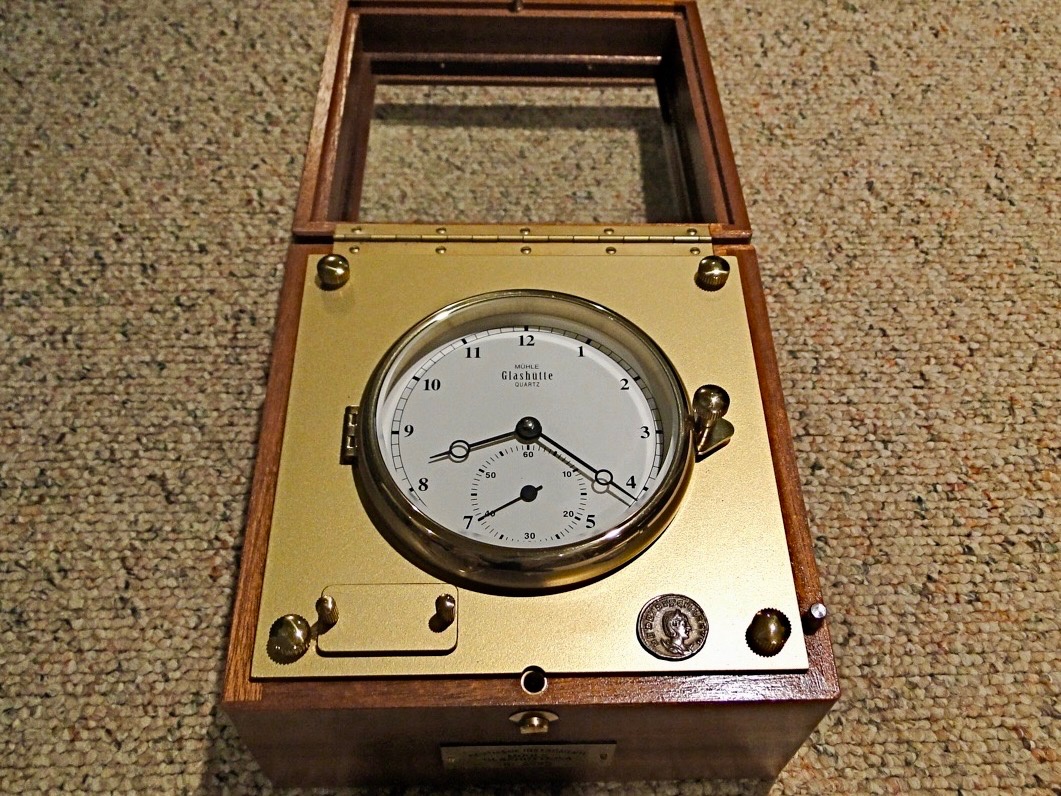
or quite expensive and used for a reference on marine voyages (independent of land or air signals)
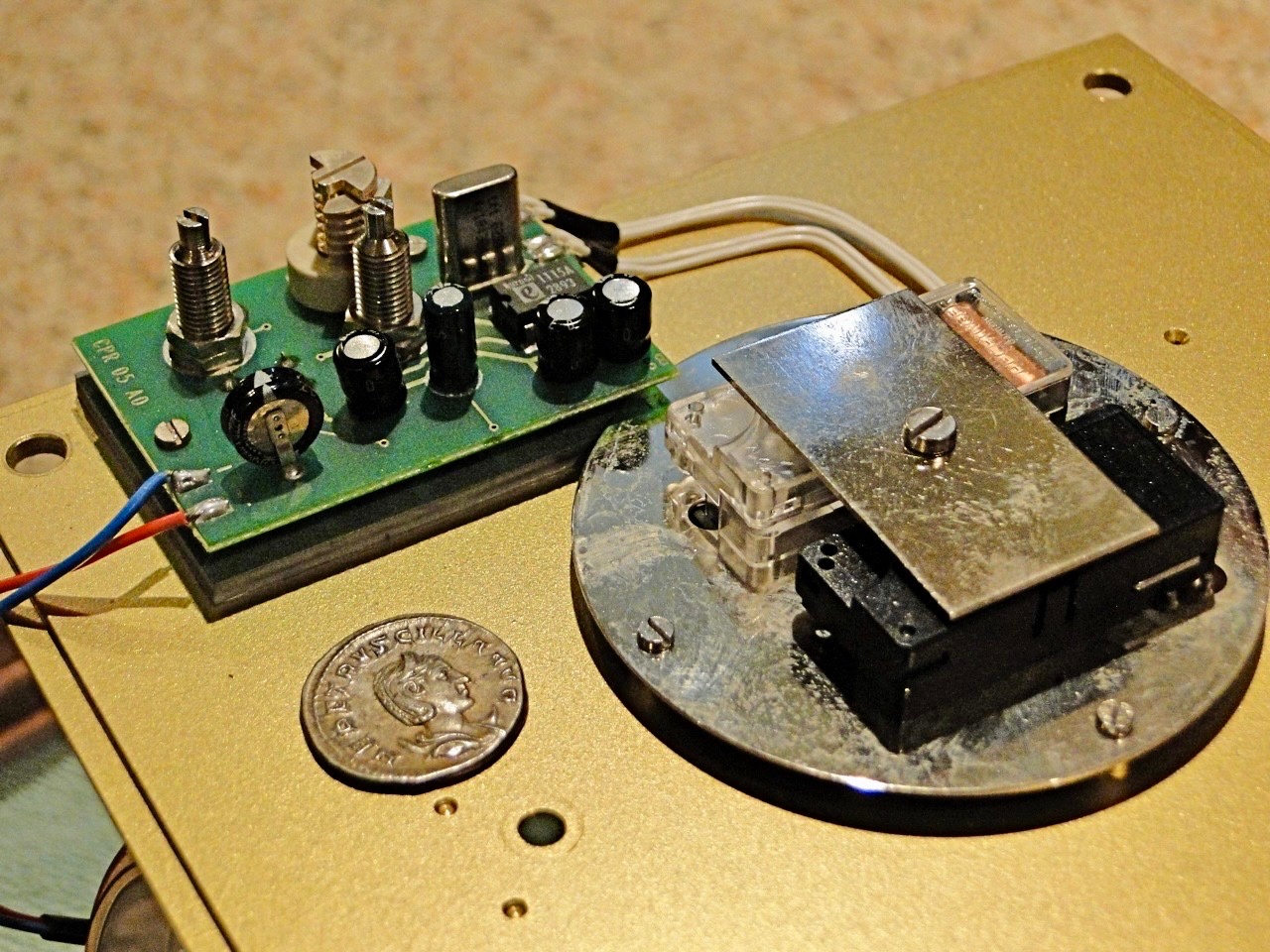
The crystal is in the vertical metal case.
Cheers,
Cazalea
How Does It Know? Quartz Watches & Clocks
Chemically, quartz is a specific form of a compound called silicon dioxide. Quartz is a piezoelectric material: that is, when a quartz crystal is subject to mechanical stress, such as bending, it accumulates an electrical charge across some of its planes ...

In some ways this is far more astonishing than a collection of springs and gears.
I think part of the disconnect that quartz watches suffer is that they have the "Black Box" effect whereas mechanical watches allow us to see and (at least pretend to) understand the mechanism and its effects.

Thanks for the explanation.
I didn't know that the same “mechanism” or reaction was used on low-end phonograph cartridges: just out of curiosity, what other “mechanism” is used on high-end phonograph cartridges? Best, Emmanuel
Moving magnet and coil
that version needs a small external power supply and the coils shown in Greg's post, to create a magnetic field through which the magnet moves

I have not owned a quartz watch in
many, many years but am seriously considering jumping back in with my next watch purchase. Strongly thinking about the Cartier tank watch in quartz, A. never need to wind/set B. Just want to try a quartz watch again. C. No one will be the wiser, and D. It...

We are the customers
…of the watch industry. And the customer is always right, even if the customer has changed his mind, and no explanation for the change of mind is required.

I know some are ideologically opposed to quartz…
But frankly it’s been practically the last real innovation in the watch world, albeit around 100 years old itself 😂 I often enjoy a nicely done quartz watch, even though those are few and far between 😊👍🏻 Doesn’t quite manage the 5 seconds a year on the cu...
I feel the same way
Star on dial indicates high-accuracy crystal movement Notice alignment of the second hand! Notice alignment of the second hand! Besides I like the revenue stream $10 at a time with batteries $.50-1.00 each... At this rate I can pay for the watches in abou...

Thanks for posting this
The shaped quartz crystal absorbs electrical energy as it bends and then returns it as it unbends. Just like how a balance spring stores up energy and then returns it as movement of the balance wheel, once per oscillation. The gross energy thus stored div...