
Marcus Hanke
[PuristSPro Moderator]
11296

Besides ...
... the issue of intent, mentioned by Jos. below, there is also the question whether a design is already long-established, a classic. It boils down to the question: who invested time and money into developing a certain design and when, and who is doing the parasitic action to avoid spending time and money, and simply copies those designs that have proven popular?
Once again, the examples you are bringing forward are far from the original problem I wanted to point out:
First of all, 90% of all "military" designs, or diving watch designs were not the product of professional designers, but the result of an exact specification sheet given by the public institution asking for offers. Rolex never "designed" the Submariner, as didn't IWC the "Mark": the military did. this is the reason why these designs cannot be copyright protected, and Bill Yao does a good job offering reeditions of these classic designs, as did Eddie Plats, and many others.
The use of old, mostly already interwar-period designs is also IMHO neither an ethic nor a legal problem.
At least the former is the relevant in those cases I have shown, when companies deliberately profit from the design efforts of others. Just take the Bell & Ross copy: B&R invests a lot of money to bring a really new design on the market, takes the risk of failure, and now, with copies issued by other companies, the latter even save money on advertising, since every B&R advertisment is also an advertisment for them. This is what I call parasitic. We call ourselves fans of watchmaking traditions: watch design belongs to this, as a integrated parted. We want watchmaking innovation, new products, new brands. But with parasitic companies, sooner or later it does not make economic sense any more to invest into new products - stagnation will be the consequence.
Maybe I am take these things too seriously, and I also do not want to issue a carte blanche to the so-called "serious" watch companies. Sometimes, parasites develop original abilities and become serious companies. Best example is IWC, which, a hundred years ago, produced and sold faked American pocket watches.
And maybe my increasingly strict views on the issue are the result of an age, in which I start being proud of what I have reached and done with my brain, and my hands, so I reacht allergic against people who take my pictures, or my texts, or my whatever I made, and thus neglect the long time and the effort I had to invest.
Best regards,
Marcus
Shameless design theft ...


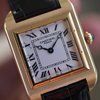


I find the 'fake movement laundering' especially shocking...
Slow down...
Sorry Nick, but you're wrong. Look at this fake GO ...
Movement not watch
Sorry again; I still think you are wrong ...
