
WHL
[VC Moderator]
4922

Watch Review: Vacheron Constantin Historiques American 1921
When a brand such as Vacheron Constantin has over a quarter millennium of history behind it, the weight of the past can be a burden. How does a watchmaker honor its heritage while creating watches for the present? Philosophically there are traits that define Vacheron Constantin: a sophisticated sense of design combined with the pursuit of technical excellence, but how do such abstract principles turn into actual watches?
One idea that Vacheron Constantin pursues involves paying homage to its past. In 1989 the brand launched the Historiques line, which exploited Vacheron Constantin’s rich heritage by showcasing watches that alluded to styles from the historical catalog. In a time when the mechanical watch renaissance was in its infancy, and when the auction and secondary markets were not nearly as well developed as they are today, the watches of the Historiques line offered collectors a chance to have an authentic and distinctive watch from this storied brand.
Over the course of the next decade, as the sophistication of collectors grew with knowledge of and access to the original watches that served as the point of departure for the Historiques models, along with the importance collectors applied to the mechanical aspects of the watch, particularly with the expectation that high-end brands create exclusive in-house movements, the watches comprising the Historiques collection, which used outsourced movements, lost some of their appeal, and the line went dormant, with a few surviving models folded into other product lines.
From 1999, Vacheron Constantin began to develop its own calibers and also to create compelling contemporary designs such as the Malte, Patrimony Contemporaine, and 250thAnniversary collection that adapted to this new zeitgeist. In 2005, the brand relaunched the Historiques line with the Toledo 1952, based on the fabled “cioccolatone” watches of the 1950’s, and added a second watch in 2007, the “Chronometer Royal 1907,” celebrating the 100th anniversary of the original Chronometer Royal pocket watches. This latter watch featured an in-house automatic caliber 2460 SCC which has earned both the Geneva Hallmark as well as COSC chronometer certification. The first one hundred watches produced can be identified by the red 12, while subsequent models have all black numbers.
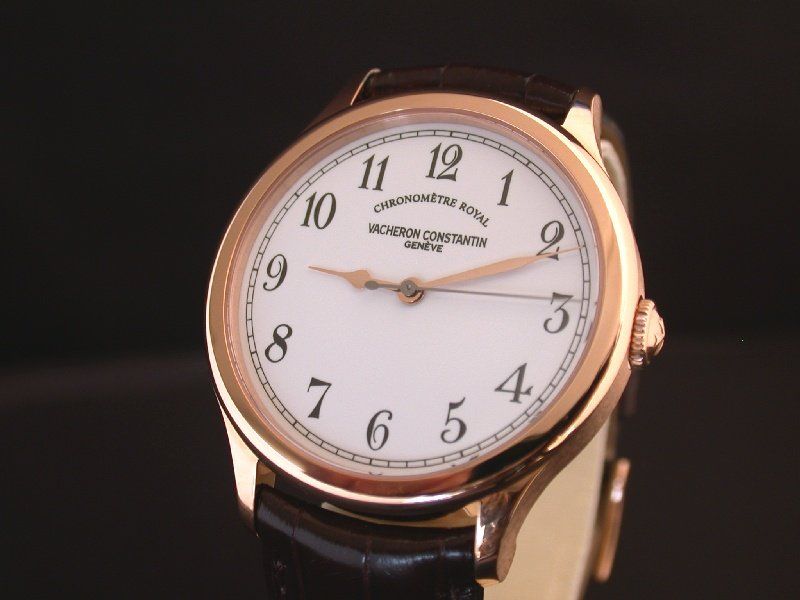
The Chronometer Royal features a tastefully large case (39 mm diameter) and a white enamel dial where even the numbers are enamel, rather than printed. One detail which is a shout out to the old school collectors who revere the “&” that used to separate “Vacheron” and “Constantin” is the signature on the rotor:
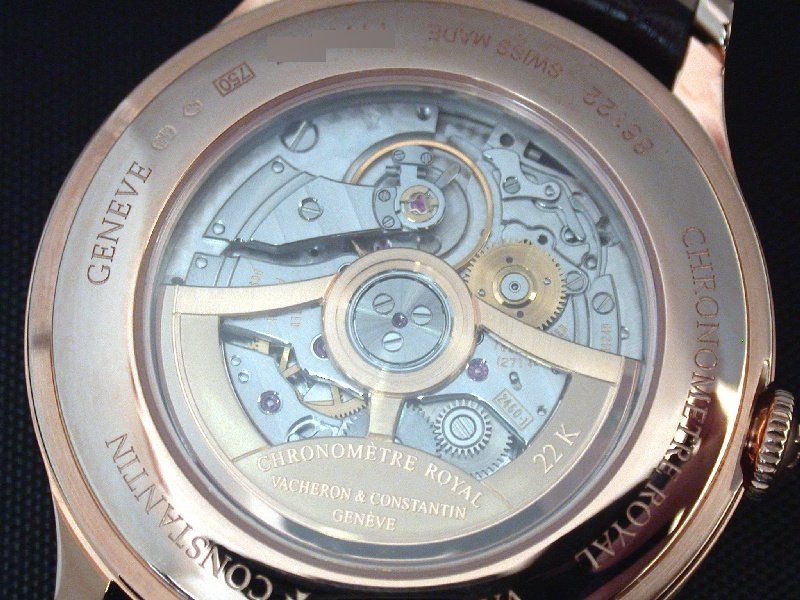
Unlike the Toledo 1952, which is more like a copy of the original triple calendar watches from the 1950’s, the Chronometer Royal takes the Chronometer Royal watches from the past as a source for inspiration rather than imitation.
Late in 2008, the second watch in the new Historiques line made its debut: the Historiques American 1921.
The Predecessors
In 1919, when the wristwatch was still a relatively new innovation, seeking to break away from the hegemony of the pocket watch and, consequently, subject to adventurous new designs, Vacheron Constantin presented an unusual watch even for that era. The dial was shifted 45° from its usual orientation:
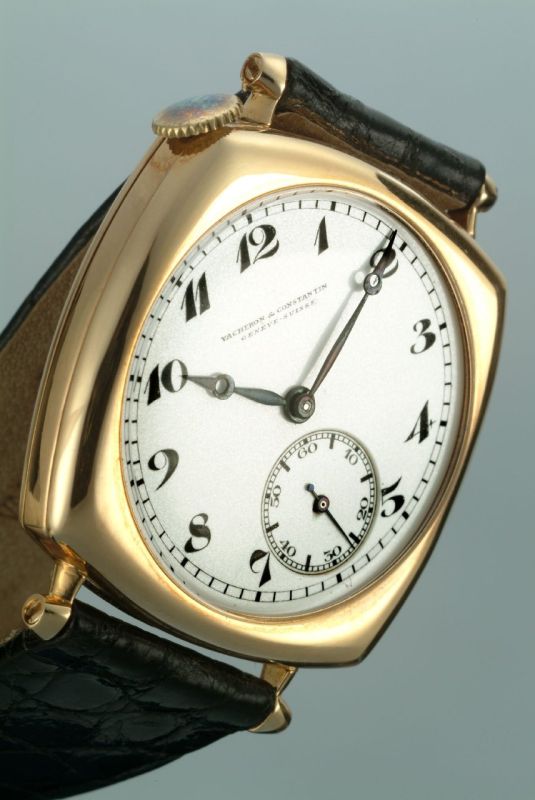
The movement, an R.A 11 lignes Nouveau Amerique, was originally designed for a pendant watch, with the subseconds on the same line as the crown. (N.B. In the 1930’s, Vacheron Constantin manufactured wristwatches with the usual dial orientation and these “Lépine” calibers, meaning that the crown is positioned between the lugs at 12 o’clock. These watches too are rare, well-liked, and sought after by collectors, though they were not especially popular at the time, perhaps due to difficulty in winding them)
In 1921, the dial was shifted 45 degrees in the clockwise direction, making the watch suitable for wear by right-handed collectors (or those who prefer to wear the watch on the left wrist):
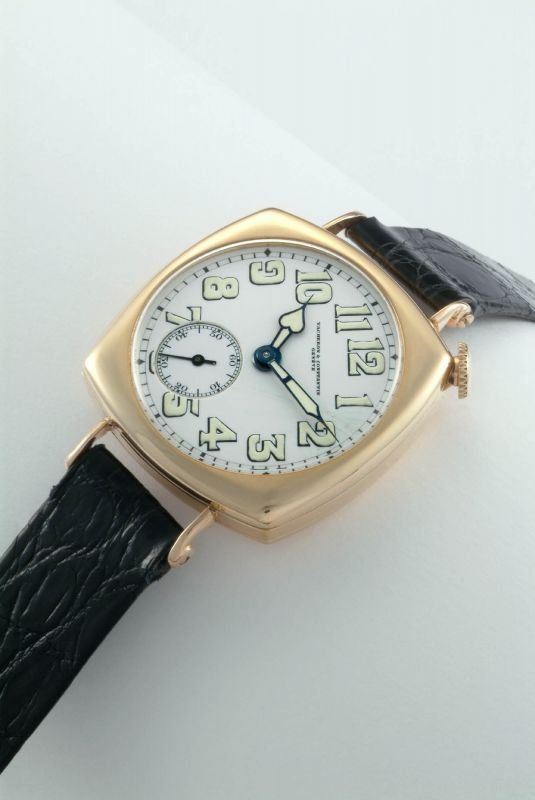
These watches that began their lives in 1919 and 1921 are extremely rare. As attention grabbing as they are to our eyes now, they didn’t have an easy time finding their audience then with only 12 of each ever having been made, and each run taking about ten years to sell through. They are highly valued at auctions: an original “crown right” American up for bid at Antiquorum’s 250th anniversary auction in 2005 sold for over CHF 70,000.
Historiques 1921
In the fall of 2008 Vacheron Constantin introduced the American 1921 to the US market, pairing it with the Chronometer Royal 1907 and Toledo 1952 in the revived Historiques collection. The watch was released to other markets in 2009, and won the “Watch of the Year” award from Montres Passion magazine that fall.
Dial
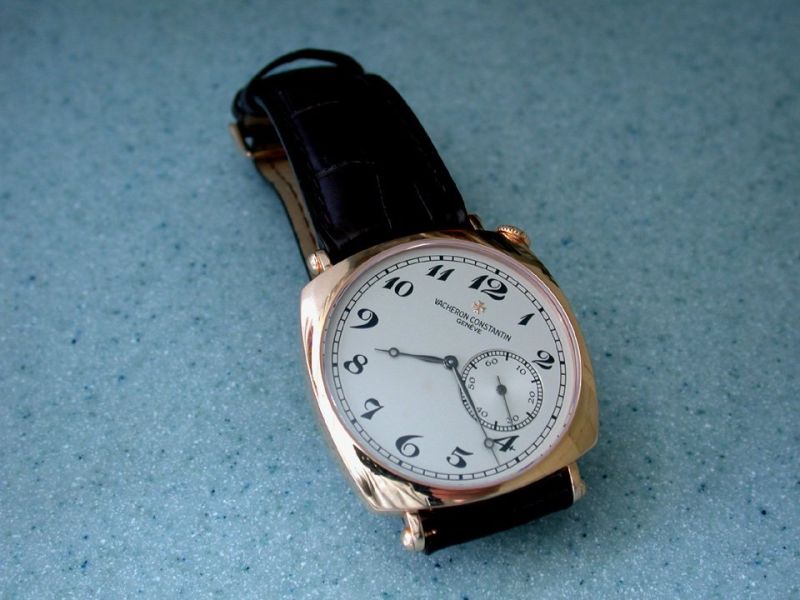
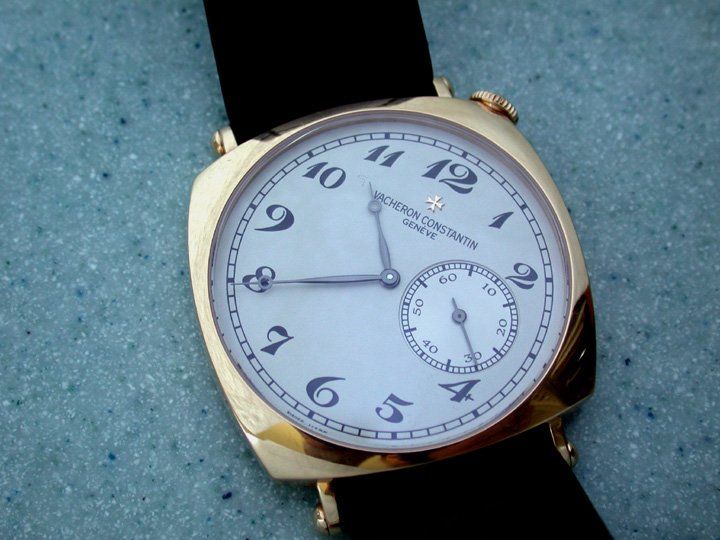
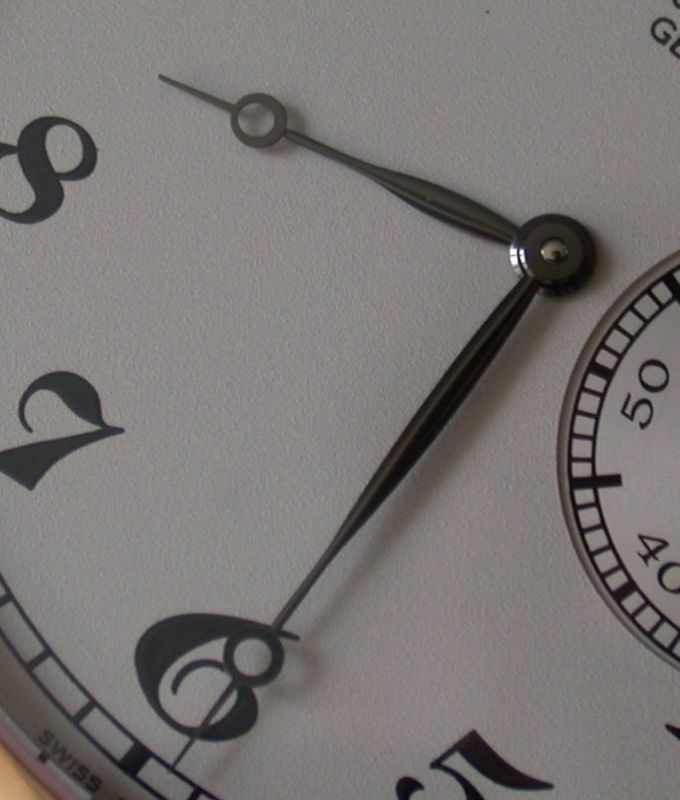
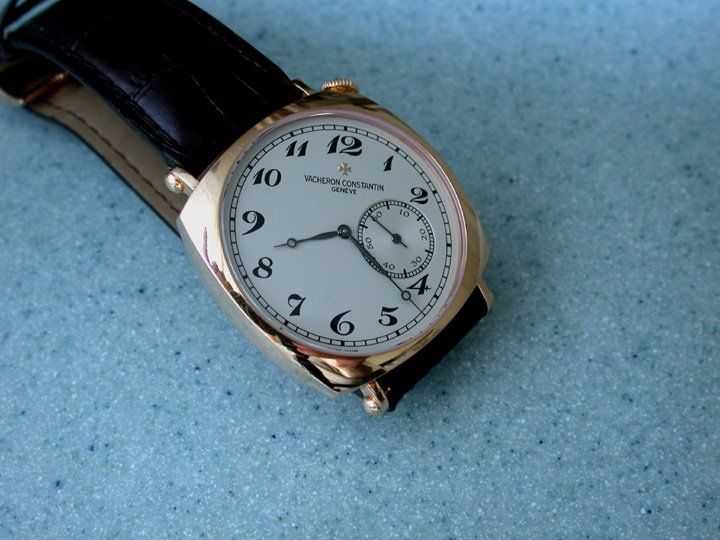
The dial of the American 1921 immediately grabs your attention. It is perfectly traditional, but literally with a twist. Breguet-style numbers with Breguet-style hands, seconds sub dial, and outer minutes railroad track: All are hallmarks of tasteful, classical design, but all are employed with an exquisite attention to detail. Note the slight emphasis give to the 12, 6, and 9, which are printed slightly larger than the other numbers.
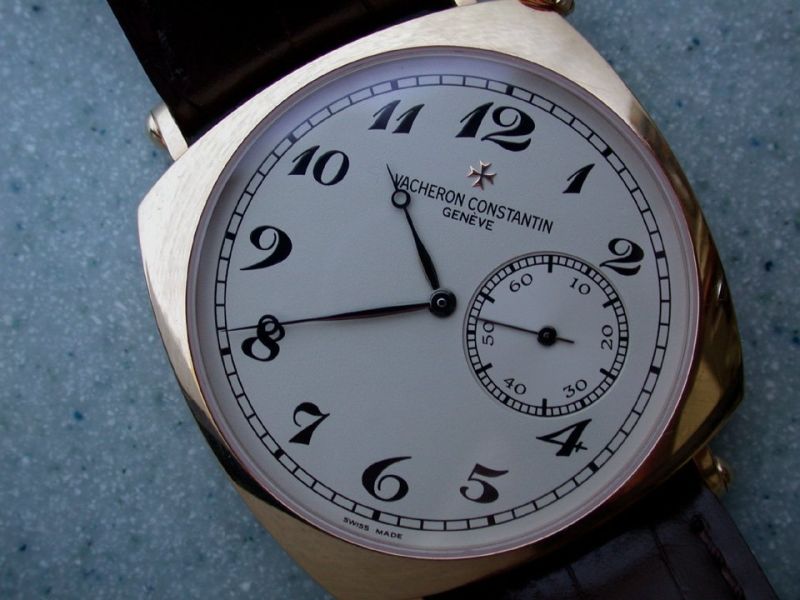
There is one detail that especially delights: the printing of the numbers on the seconds sub dial is oriented as if the watch had a standard dial, providing an amusing visual counterpoint to the twist of the main dial.
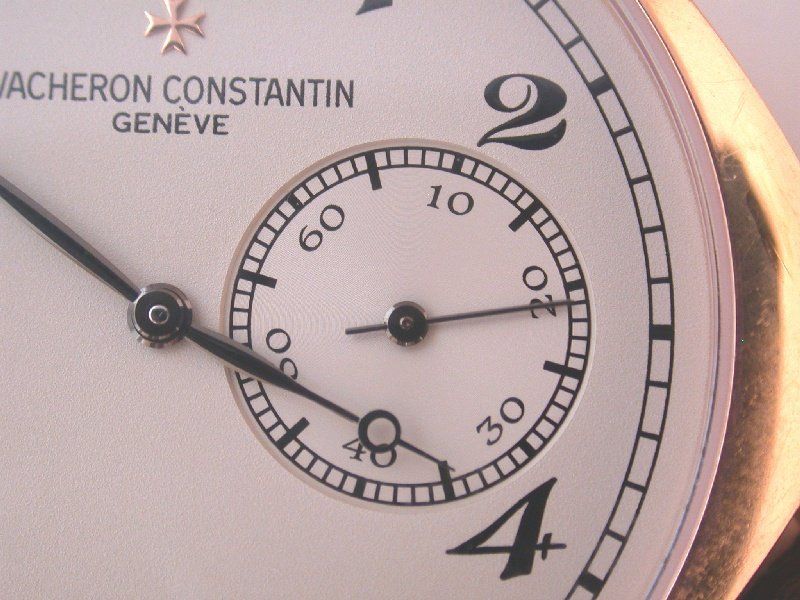
The dial is sandblasted silver, giving a delicately textured effect. The hands are black oxidized gold.
Case
The cushion-cased watches that the American 1921 are based on were of a typical size for their day, 31 mm from side to side. To suit the tastes of today the case has been enlarged to 40 mm while staying slim like the original, with a height of 8.3 mm. Also, where 18K yellow gold was the preferred metal for luxury watches, today’s collectors prefer rose gold, and Vacheron Constantin has obliged them.
The original case was designed in three parts, with the main body of the case holding the scrolled lugs with bezel and case back pressure fit to it. The polished case of the American 1921 employs a two-part design that features sculpted curves.
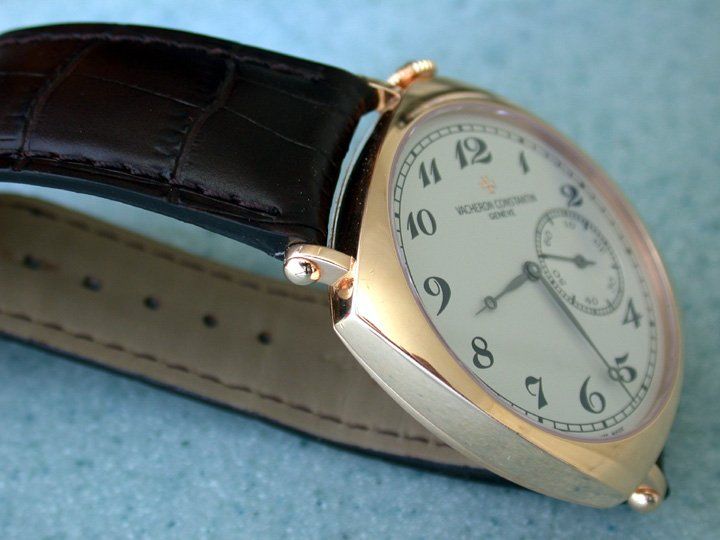
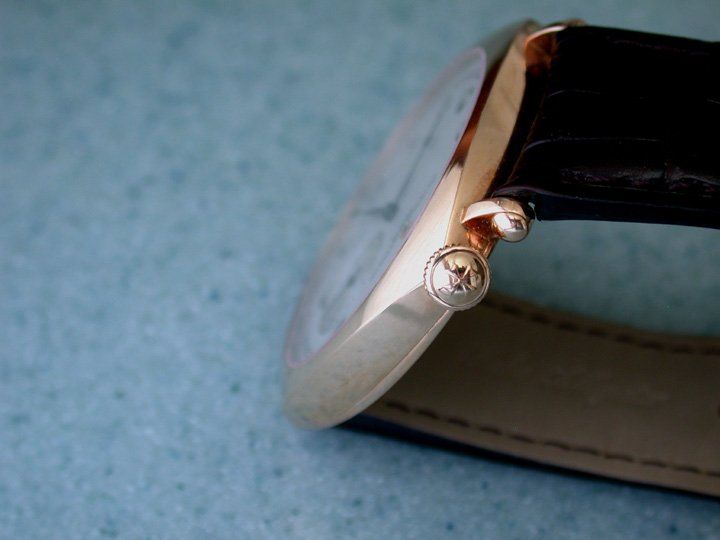
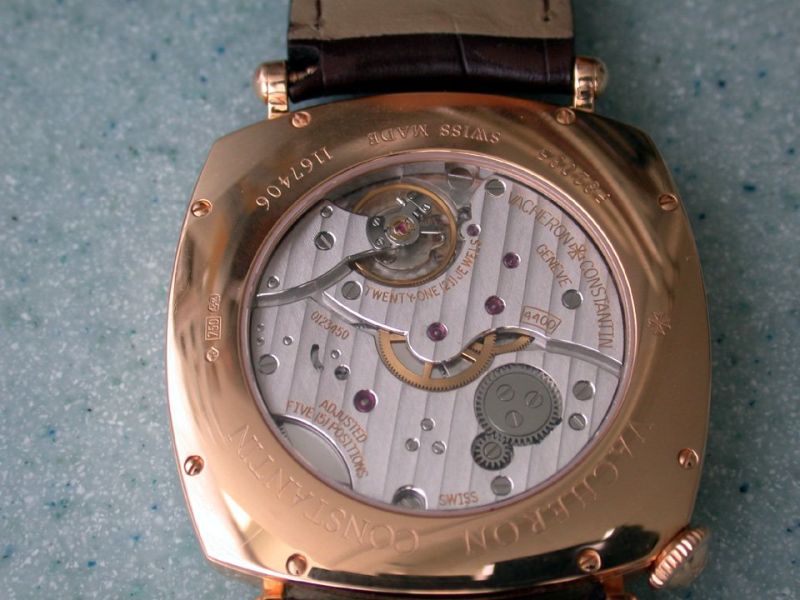
The sapphire crystal case back is held down by 8 screws and is ensures the watch is water resistant to three atmospheres.
The slightly domed crystal and soldered lugs heighten the vintage effect of this watch.
Movement
The introduction of a new in-house caliber, especially from a prestige brand such as Vacheron Constantin, excites the experienced collector. The introduction of the manual winding caliber 1400 a decade ago in the Malte Grande Classique was an important milestone for Vacheron Constantin, as was the self-winding caliber 2475 in the Jubile 1755 five years after. It is no coincidence that these flagship watches are highly regarded in the collector’s markets.
A motivating factor behind the development of this 4400 caliber was the desire to have a movement to better fit the larger cases that are in demand today. The diameter of this movement is 28 mm while its height is a still slim 2.8 mm (compared with the 20 mm x 2.6 mm of the caliber 1400). An important consequence of this larger size is that the position of the fourth wheel, which indicates the sub seconds, can be moved away from the center of the movement, allowing the dial to have a pleasing design. All too often today one sees too small movements in too large cases, creating some odd looking dials.
The caliber 4400 has been developed to earn the Geneva Hallmark, and the functional and decorative finishing is expertly done.
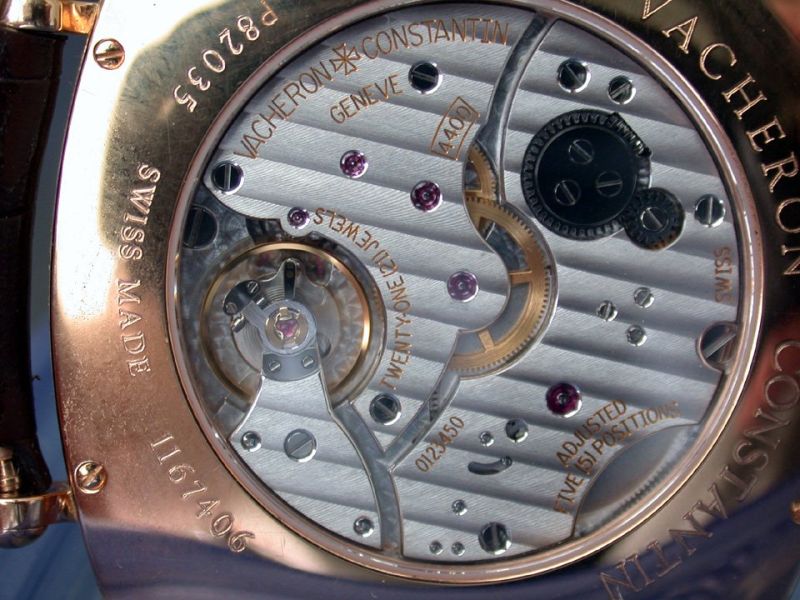
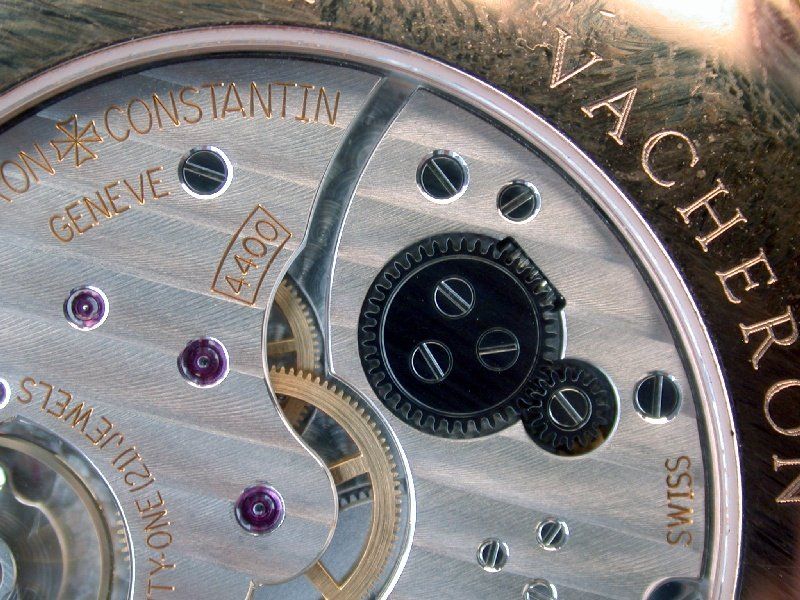
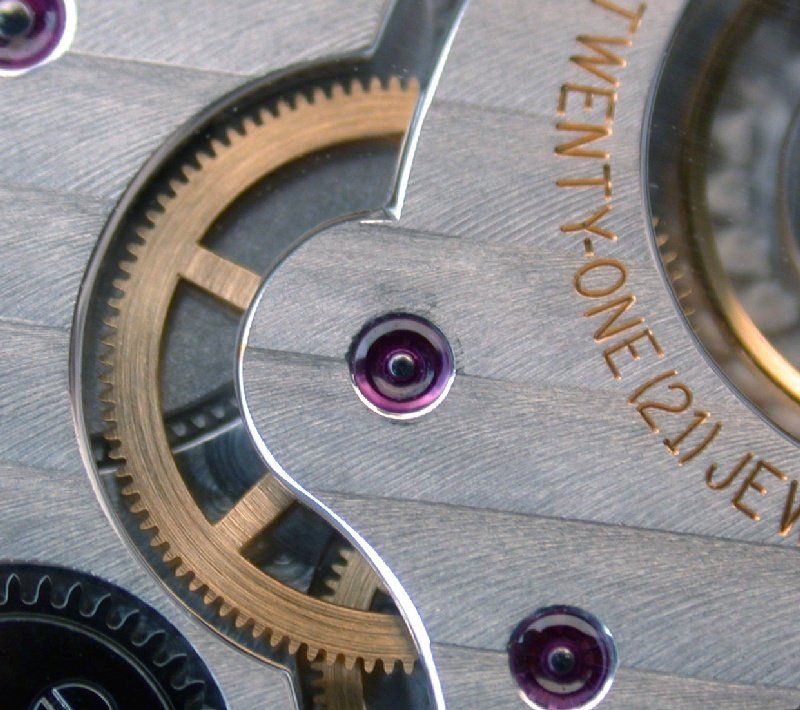
The large mainspring provides the watch with a 65-hour power reserve. The balance beats at 28,800 vibrations per hour.
On The Wrist
It was an absolute pleasure to wear this watch during the review period. It goes with out saying that I received many compliments on the watch, from friends, family, and coworkers as well as strangers. The watch is comfortable to wear and sat flush against my wrist.
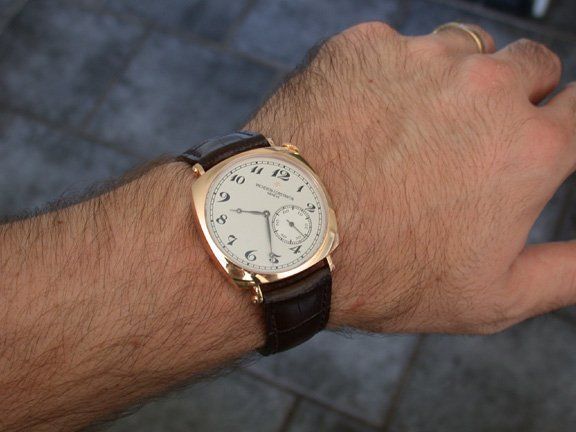
As someone who spends a lot of time at the computer, I also realize that time telling is more natural with the American 1921 than with a standard wristwatch, as my wrist on the keyboard is tilted such that the 12-6 axis on the watch is aligned with my head. It did take some time to get used to actually reading the time, but with a time piece this gorgeous, it is worth savoring the extra second it might take.
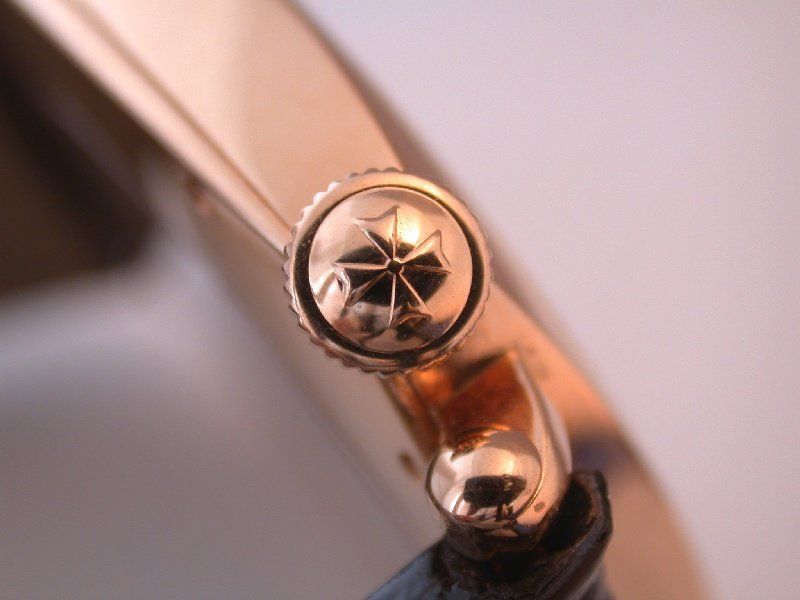
The position of the crown makes winding a little unusual at first, but I quickly made a slight adjustment by using the middle joint of my index finger rather than tip of my finger on the underside of the crown, as I usually use when winding a watch, that made winding feel natural. I only wish that both the tactile and audible feedback of winding were more pronounced, like when I wind those vintage Vacheron Constantin watches that I so adore.
Conclusion
There is so much to admire about this watch. It is the initial launching pad for the caliber 4400, which will be the flagship manual winding caliber for the future.
Some collectors on the forum have requested that Vacheron Constantin extend the design by using white gold or platinum cases, an idea that I endorse. For a taste of how this might look, we have a limited edition perpetual calendar watch that can only be found in the Geneva, Shanghai, and Moscow boutiques.
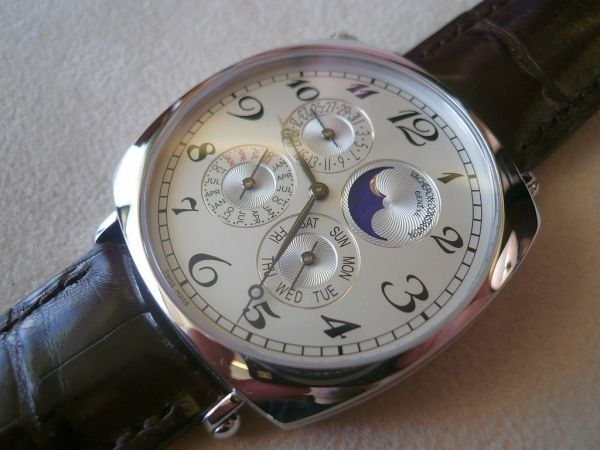
Photo by Foversta
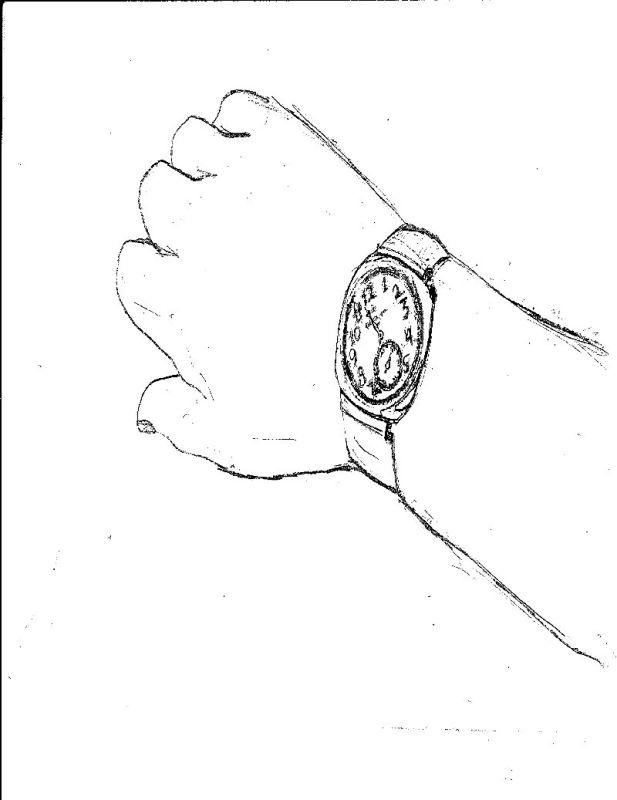
The extension that I would most like to see, however, would take its lead from the 1919 watch, and be suitable for wear on the right wrist. The whimsical nature of the watch is strong enough for me to entertain the idea of wearing it on my “other” wrist. A sketch of my efforts:
The current retail price of the American 1921 is $26,500. This is a lot of money for a three-hand watch without complication, especially when compared with other manually winding simple watches in Vacheron Constantin’s catalog. The rose gold Patrimony Contemporaine is $13,900 and the rose gold Patrimony Traditionnelle, with that same caliber 4400 as the American 1921, is $15,100. One could essentially buy these two Patrimony watches for the price of one American 1921 and I can see many collectors choosing to do just that. But I can also see collectors choosing the 1921 because it speaks to them in a way that no other watch does. In this era when manufacturers are employing exotic materials, alternative time displays, and adventurous design choices in an effort to get noticed and rise above the crowd, it is refreshing to see a watch come along that has charm, whimsy, elegance, and timelessness that effortlessly succeeds by using a historical design and traditional craftsmanship. The American 1921 is a simple watch that surprises and delights, and will no doubt leaves a smile on the face of whomever is lucky enough to wear it.
Bill
Watch Review: Vacheron Constantin Historiques American 1921

Bill, your passion for VC shows. Thanks for such a great review.

Thank you

Thanks for the excellent review Bill

This could be the start of another trend..
Even more amazing in the flesh

Wow, Bill!

Fantastic post. Thank you.

Thanks a lot Bill for this superb post.


Bill you pervertly summed all the qualities of the 1921. :)))

Thank you Bill for your review.

Thank you...
Thank you for a very fine story. Did you know that a 1921 ....

Excellent review.

you are spot on
