CR
[Moderator]
4040

6542 (and 1675) Radiation Measurements
Several WPS threads were really helpful, and fun to read, in my desire to learn a bit more about this subject. There's this one (Rolex and Radioactive Material), this one (Rolex and Radioactivity), this one (Rolex: Is the geiger counter a reliable tool in evaluating the radioactivity on a dial?), and this one (No better way to start than a 6542).
After reading those threads, I got curious about this 6542 (c.1958) and 1675 (c.1961):
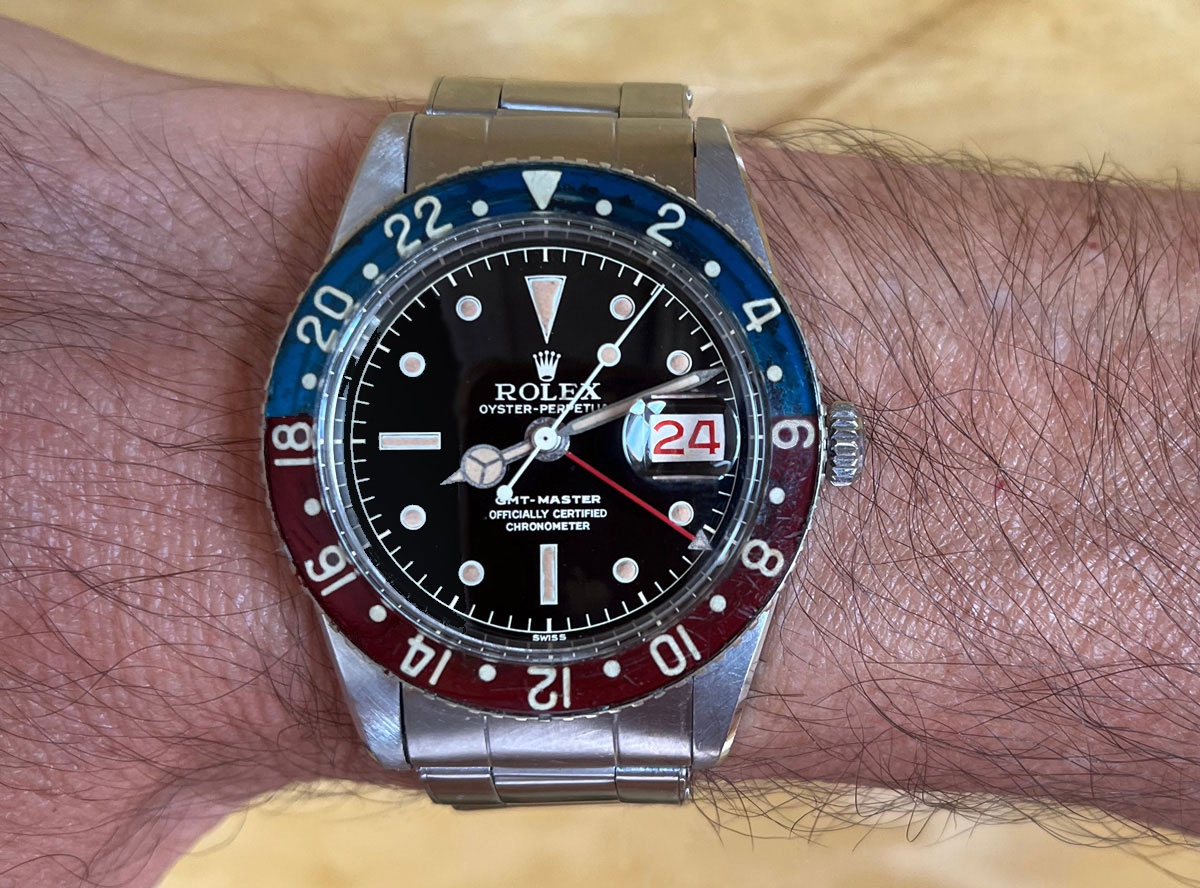
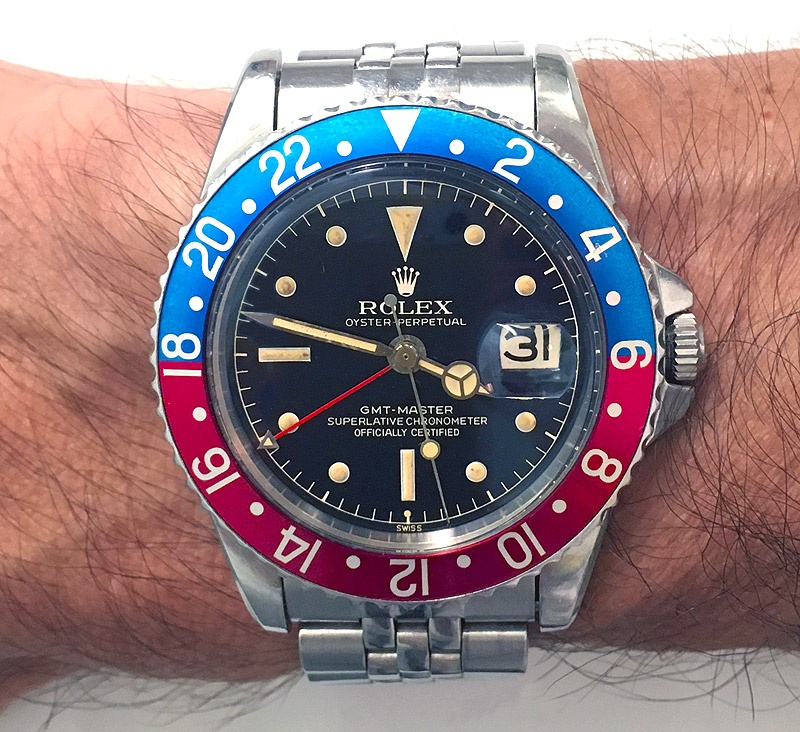
Does this 6542 contain Strontium-90? I was hoping for a "no" answer, given what I read in the "Rolex and radioactivity" thread above and elsewhere.
And what would my exposure be from wearing these watches from time to time -- a natural question?
So I met up with an old college friend at a nuclear reactor, to find out.
The first thing we did was answer the question, "What radioactive material was used in these watches? And was any Strontium-90 used?"
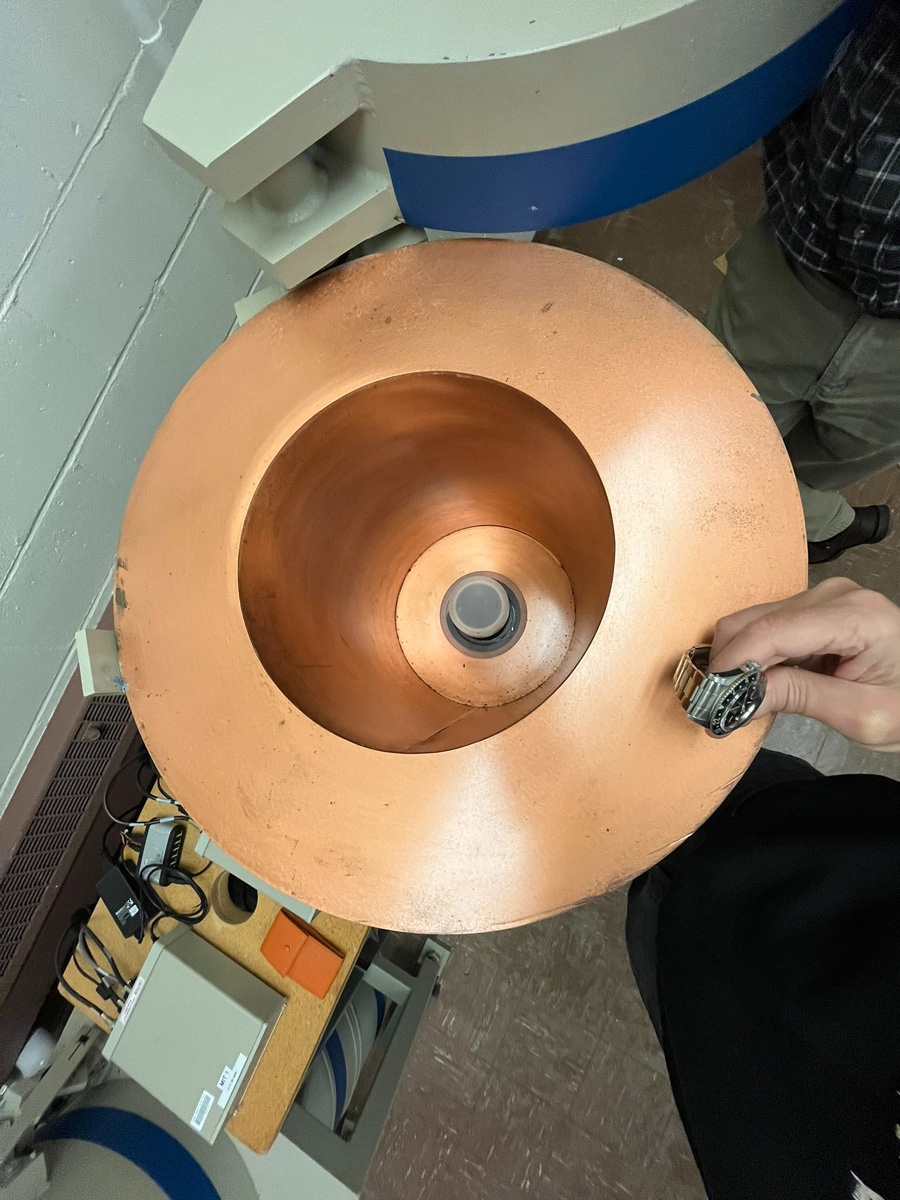
This involved a "Canberra spectrometer," whose thick lead walls you can see here:
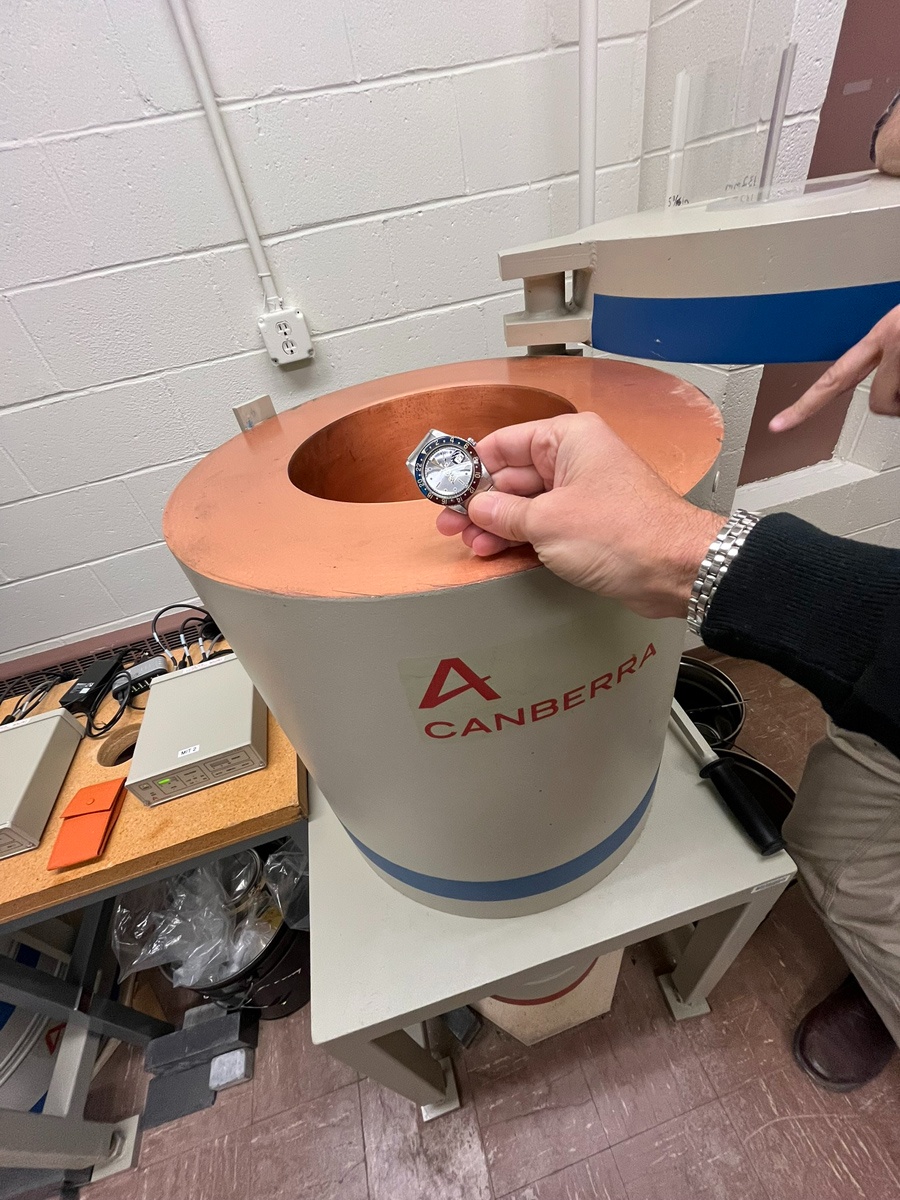
It appears that just Radium-226 was used (on both watches), with no Strontium-90 detected.
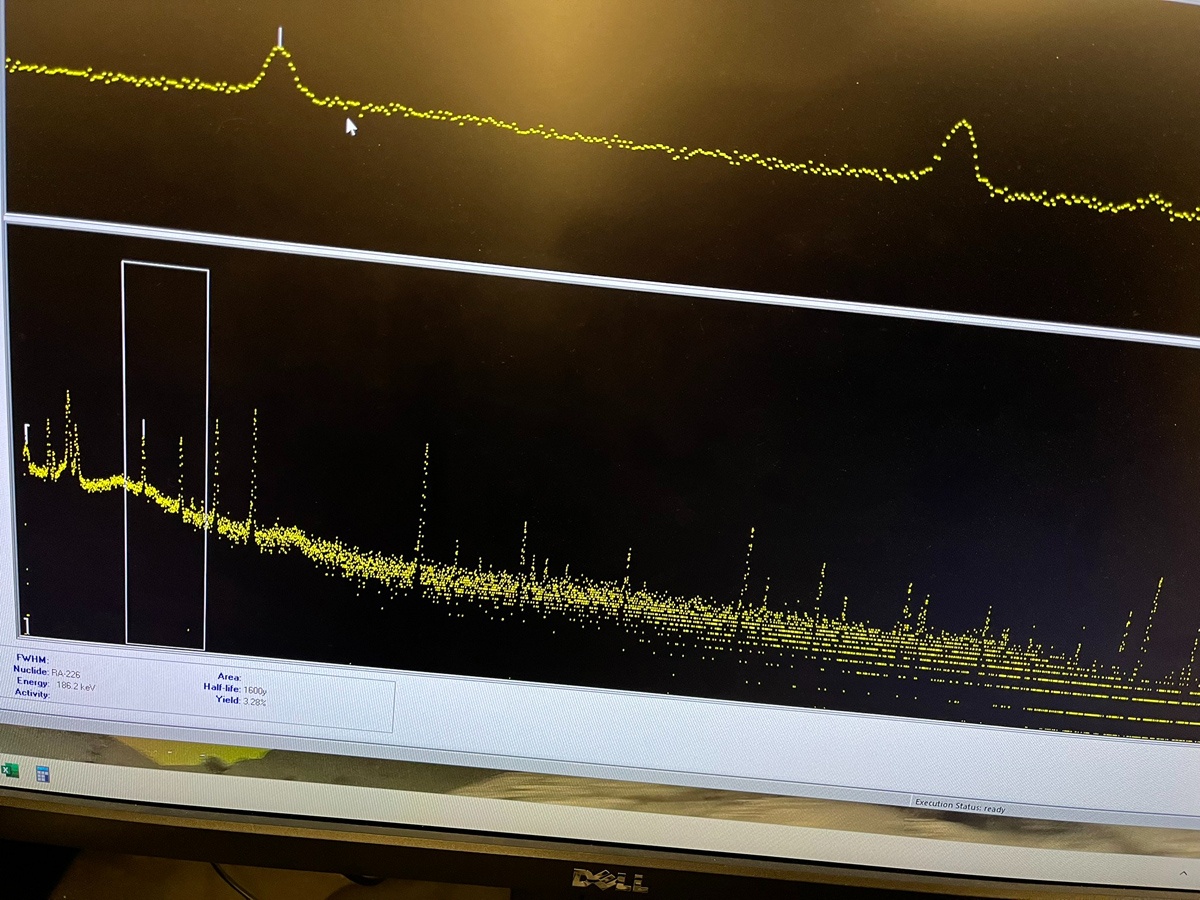
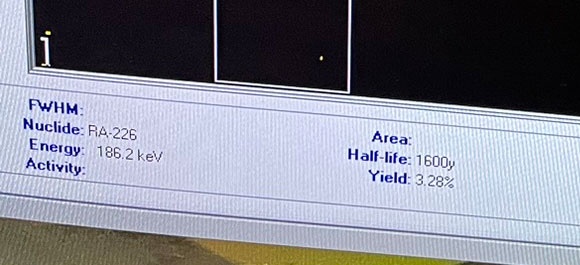
Now that the spectrometer answered (to a reasonable degree) the question of what material was used, we measured the levels with this Ludlum Geiger counter -- a fitting device for this watches, since it's around the same age:
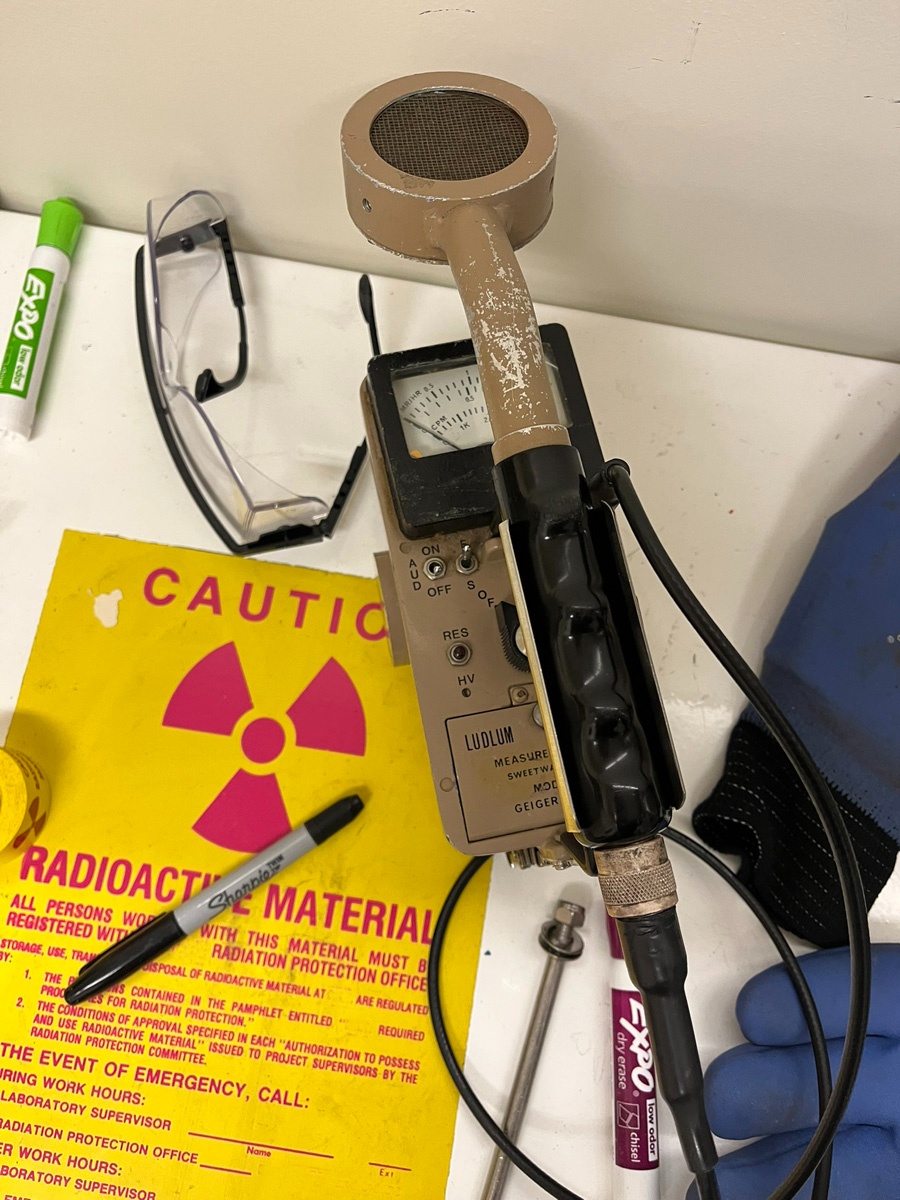
We took front and back measurements for each watch. And of course, we'd expect much lower readings on the back versus the front.
To simulate wearing the watch, I pressed the caseback against the Ludlum's pancake probe when taking the reading. I did the same for the crystal side, noting that levels drop off substantially when you move the watch even a few centimeters away from the probe.
So what did we find?
The Ludlum measures radiation levels in millirems/hour (mrem/hr).
The 6542 measurements were 12-15 mrem/hr at the crystal and 0.5 mrem/hr at the caseback.
The 1675 measurements were half of the 6542's -- 5-6 mrem/hr at the crystal and 0.25 mrem/hr at the caseback.
One millirem/hour equals 10 microsieverts/hour (uSv/hr).
This means the 6542 clocks in at 120-150 uSv/hr at the front (sleeping with the crystal against your face), and 5 uSv/hr at the back (wearing it on the wrist).
Of course, when wearing a watch, your whole body isn't being exposed to these levels. It's just one extremity. That matters when assessing health risks.
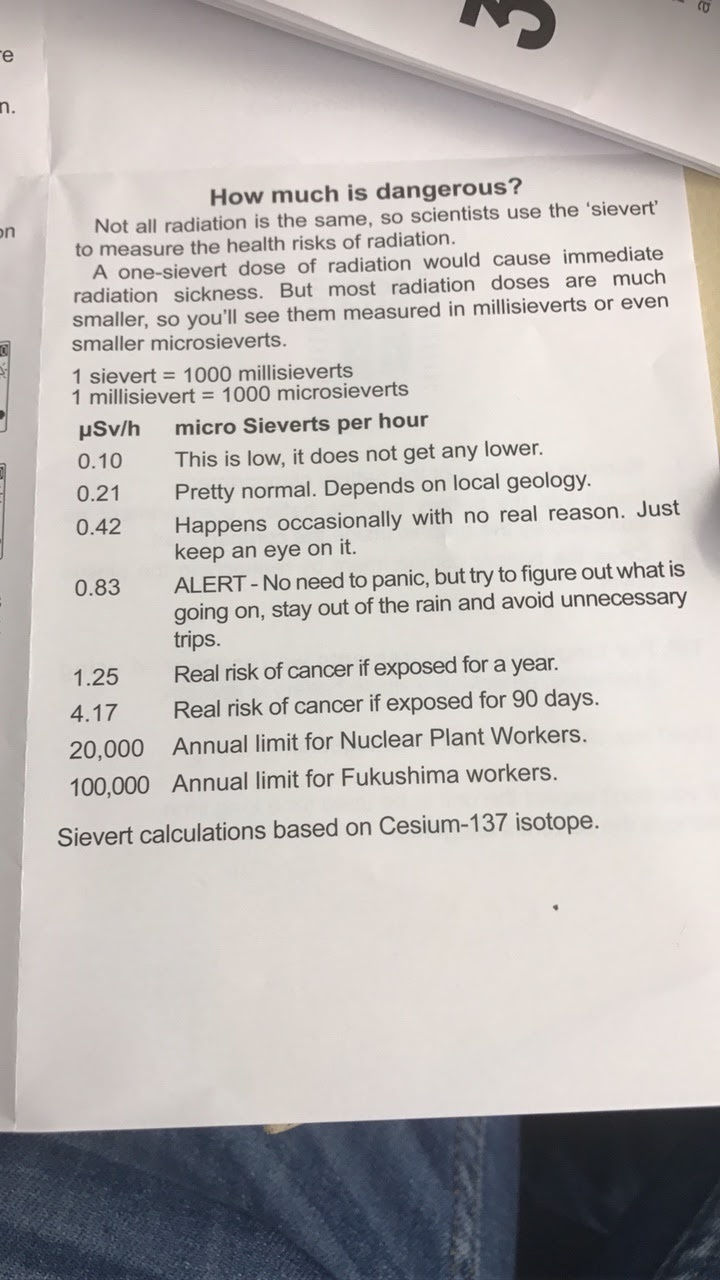
Speaking of health risks, Justin6542 posted this reference guide in a prior thread:
This was a fun exercise!
Any thoughts (or corrections I should make to my math or other information)?
Disclaimer, in case it's not obvious: I am NOT a nuclear engineering expert!
Available on the marketplace


Community
A photo report of a vintage Rolex collector's meetup, showcasing rare GMT-Master, Submariner, Daytona, and Datejust models.
50 replies23883 views
Vintage
Explore the Rolex GMT-Master's origins, its connection with Pan Am, and vintage advertisements. Discover why this iconic tool watch remains a collector favorite.
44 replies19184 views

Discussion
Explore Rolex collecting styles: 'Horizontal' for diverse models vs. 'Vertical' for deep dives into single references. Understand collector motivations and market nuances.
50 replies18799 views

Collection
Dive into the world of Pan Am memorabilia and its connection to vintage Rolex GMT-Master watches. Explore collector insights and historical artifacts.
69 replies17419 views

Vintage
Discover Amanico's rare Rolex GMT-Master 1675 with a gilt, chapter ring, and tropical brown dial. Explore the allure of vintage Rolex collecting.
65 replies14379 views

Vintage
Explore amanico's collection of five vintage Rolex GMT-Master watches, including references 6542 and 1675. Discover the nuances of gilt dials, crown guards, and rare variants.
49 replies11759 views
6542 (and 1675) Radiation Measurements
Several WPS threads were really helpful, and fun to read, in my desire to learn a bit more about this subject. There's this one ( Rolex and Radioactive Material ), this one ( Rolex and Radioactivity ), this one ( Rolex: Is the geiger counter a reliable to...

Very informative thread on the Rolex 6542 and dial materials.
I guess we can all rest assured these watches safe to wear. My argument without the science you presented is that there would have been a lot more litigation around these watches if the really posed a danger. But each person is free to assess their indivi...


Excellent point, Tony. From what I've read, radon gas buildup may be a legitimate though rarely discussed concern.
Jack Forster wrote about that some years ago, and I found a 2012 article entitled Radium dial watches, a potentially hazardous legacy? that discusses this in some depth. I'm curious about this and want to look into what it would take to measure that at ho...