
Mark in Paris
[Purist]
10488

Face to face: Patek Philippe Chronograph 5070 versus 5170
Gentlemen,
This is a
theme that comes on the table quite frequently: which chronograph do we prefer
between the 5070 and the 5170 references?
I won't give an answer to that
question (if ever there is one). But as some buyers wish to enter the world of
Patek chronographs from time to time and consider both of them, I thought it
could be interesting to come around the subject in order to provide a little
help and leaving a thread that some might find useful in the future.
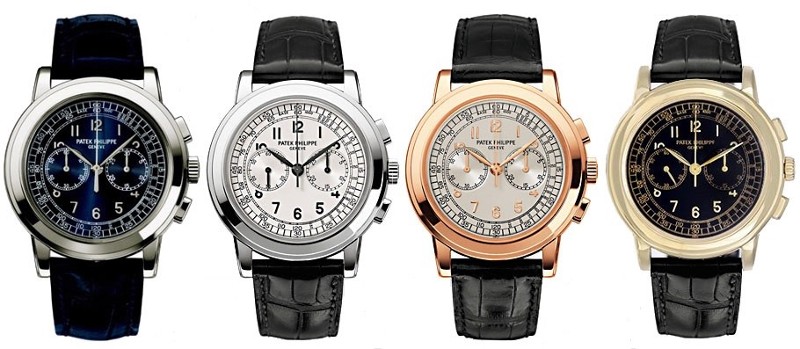
The 5070 familly
There is of
course a distinction between "which one is better" (objective, if we can remain
objective concerning the 5070 which is much appreciated) and "which one we
prefer" (subjective).
The last
chronograph of the post-WWII era, the 1463 (even if we can find some versions
of the 1579 in the early 60's too) was produced till the end of the 60's (maybe
early 70's too? I don't know). This means there was a very long period (until
the introduction of the 5070J in 1998) without a chronograph-only model in
Patek Philippe's collection.
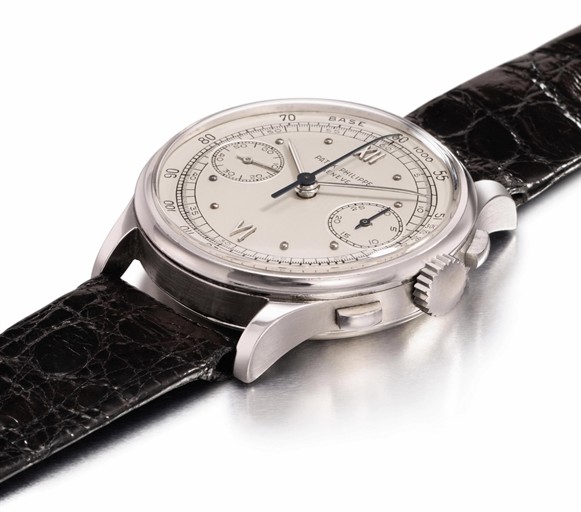
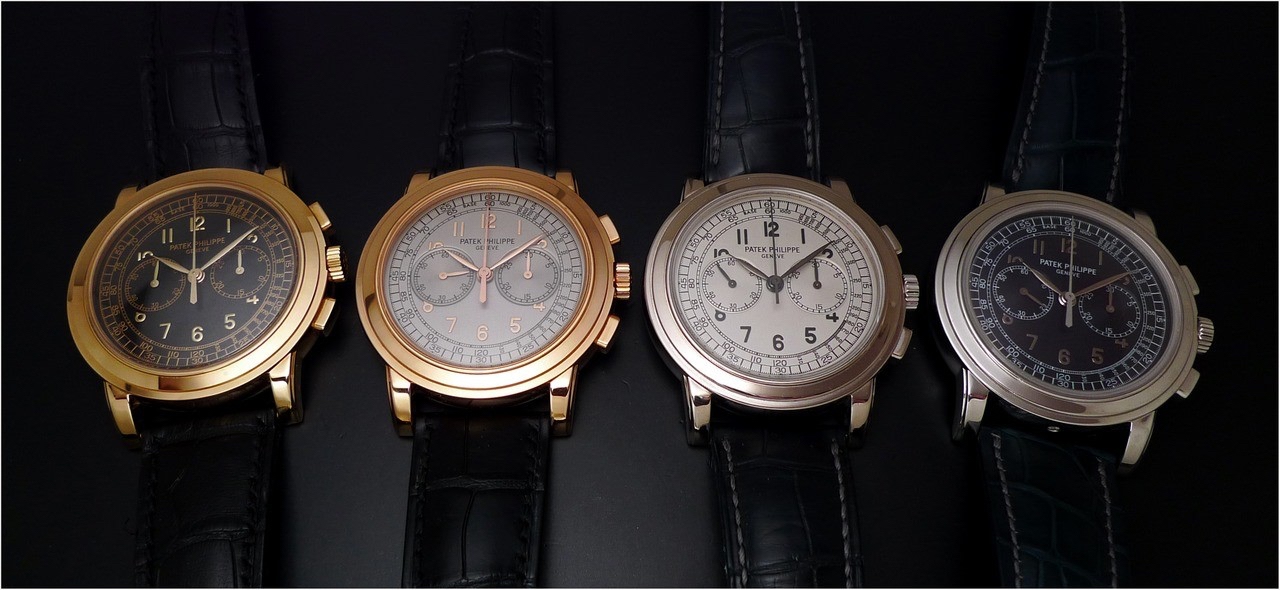
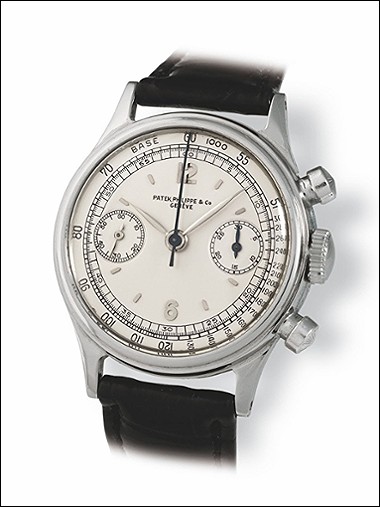
Ref. 130
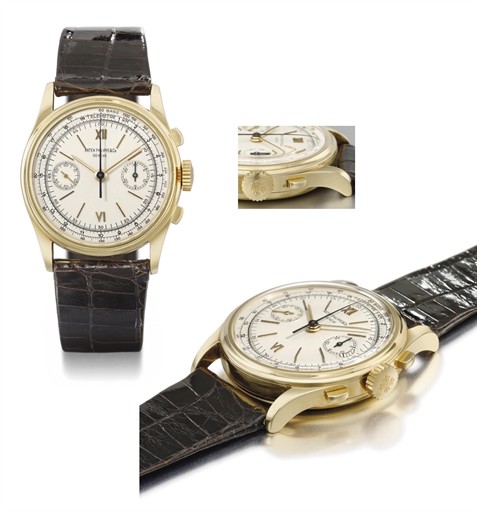
Ref 530
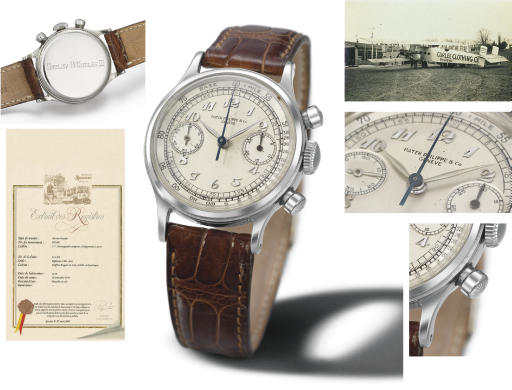
Ref. 1463
From 1998
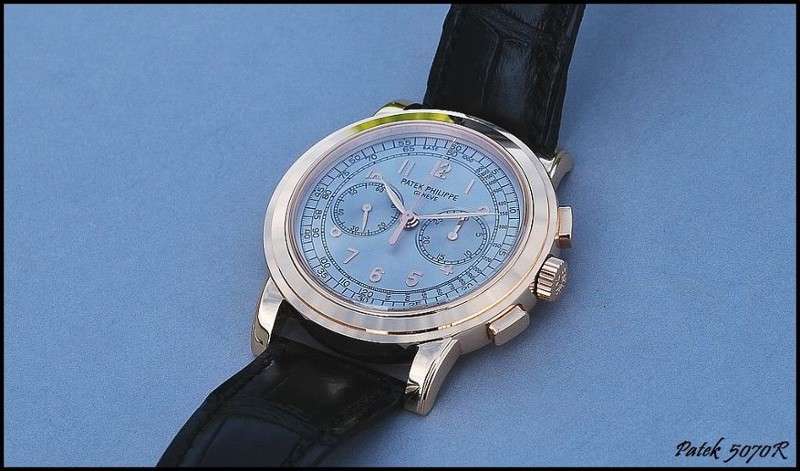
to 2003 (for the J version), from 2004 to 2008 (for the R and G versions) and
to 2009 (for the Platinum version), the 5070 illustrated the very significant
come-back of a two subsidiary dials chronograph in the manufacture's catalogue.
The design
was back then quite bold because much less conservative and classical from the
rest of the references. I could see a very little of its bezel inspiration from
the 2501 (in 1951) but, as Nicolas answered before, the Spilt-second chronograph
reference 2512 (from 1952, in 45mm) remains its main inspiration basis.
At the
time, in 1998, as for nearly every new model a brand launches, some watch fans
regretted Patek didn't create a closer interpretation of 2512's shape (by the
way it is quite fun to have a look at the few available posts from that period
on the net). They also underlined the fact the two subsidiary dials were placed
quite close to the central axles or the overall larger size (42mm) etc...
I mention
this to emphasize the fact that nearly every time a significantly new model is
launched, our tastes have to evolve and we may need time to get used to a new
design. Of course, this may not be a constant rule.
Nowadays, the
5070 (and it would also be true concerning the 5970) is considered as an iconic
patek Philippe watch as it is its most appealing chronograph from the modern
period (and the only one for a very long time).
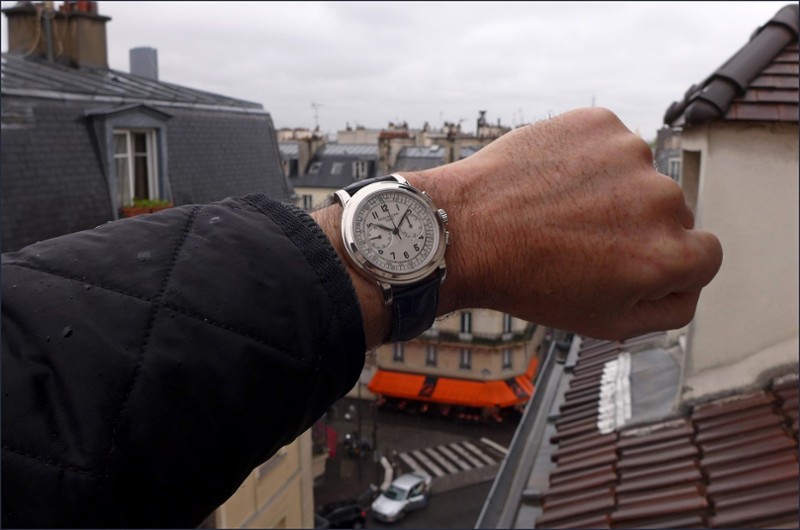
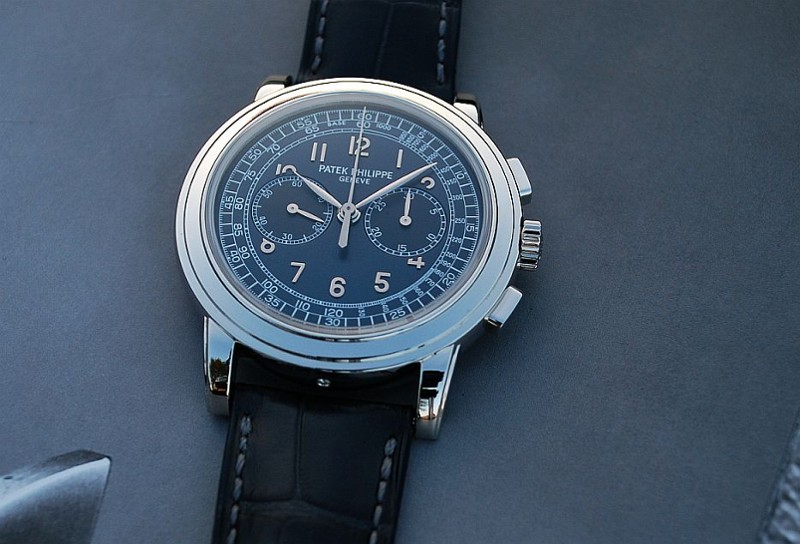
Nicolas' shot of his 5070G
Today, the 39.4mm
5170 reference (launched in 2010 in the J version) has the difficult task to
convince old clients but also new ones that it is a great and legitimate heir
to the 5070.
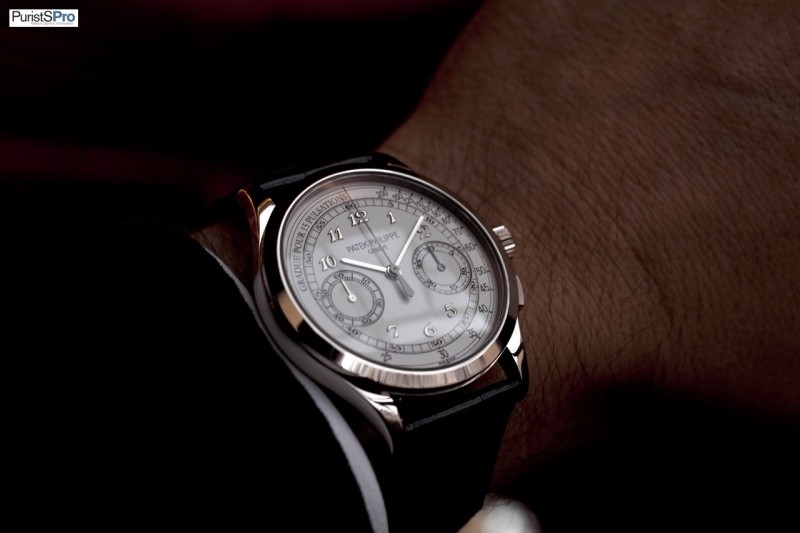
5170G
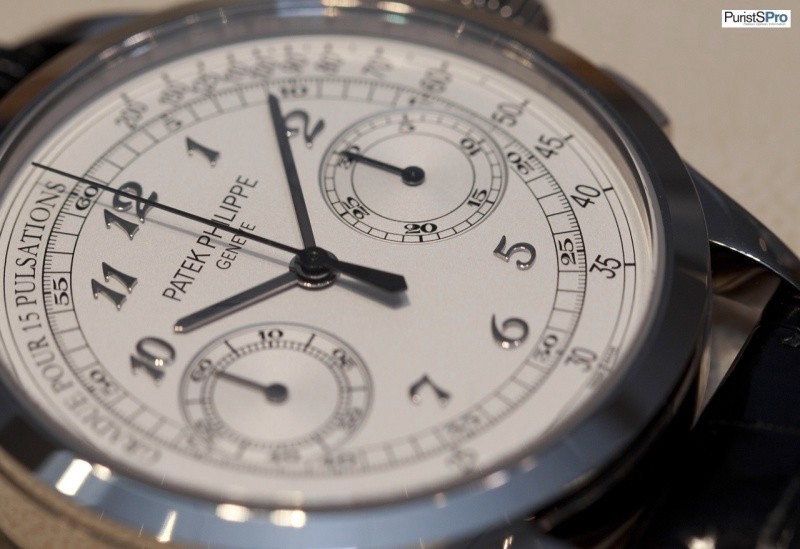
5170G
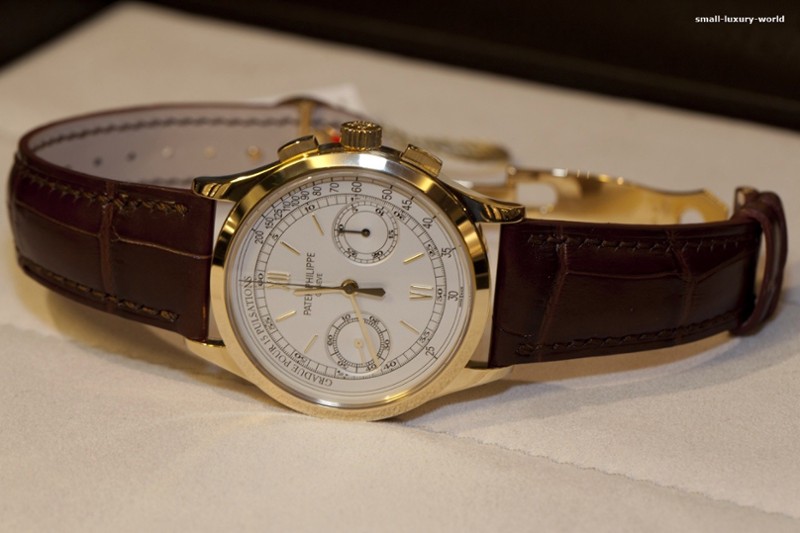
5170J
The front
side -
Aesthetically
wise, the 5170 is the "daughter" of the late 30's to late 60's 130
and 530 references and maybe, the last one i.e. the 1463 (inclined and flat
bezel, very similar classical case shape) without its specific round pushers though. This is an aesthetical and philosophical choice that takes his origin in Patek's history and will remain a classic even in decades from now.
Credit: Bruno.M1
Credit: Bruno.M1
Concerning
the dials, most of these old chronographs had a tachymeter scale (or none). The
Pulsometric scale was very rare and is a different choice the brand seemed to
want to make with the 5170J and 5170G Silver dial. The new 2015 black dial
version looses this scale and remains with a simple "rail" minute
ring. Personally, I'm a great fan of the Pulsometric scale (Tachymeter comes
second).
As regards
to the other elements, the old chronographs were produced in nearly every
possible variation: leaf, dauphine or baton hands; Arabic, Roman numerals or
applied markers only etc... It seems it
was a time when every owners could personalize their Patek chronograph.
Credit: Bruno.M1
Everyone
will have his favorite among these elements but I think it is not a good thing
going that much into details. Watches should be seen as a whole and I don't
think there is a unique best combination.
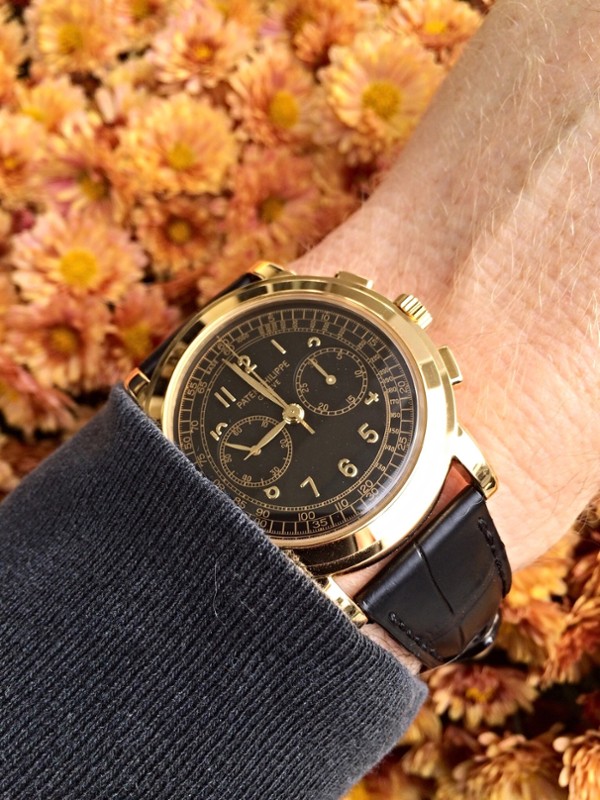
Hence, I
won't point out these aesthetical differences between the 5070's and the 5170's
dial layout.
Credit: Steelerfan1965
Aesthetical
ideal change from a period to another and to everyone his own preferences. There
is no absolute.
The
movement side -
You all
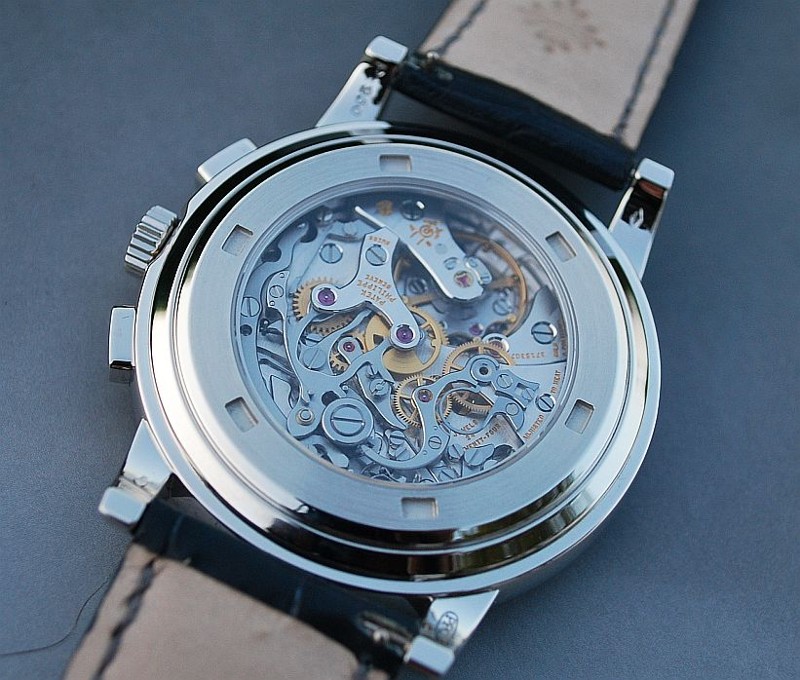
know the 5070 houses the famous and glorious Nouvelle Lemania 2310-based CH
27-70 caliber.
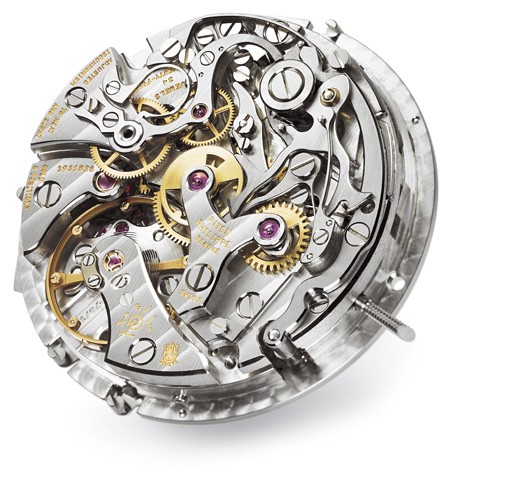
CH 27-70 (5070)
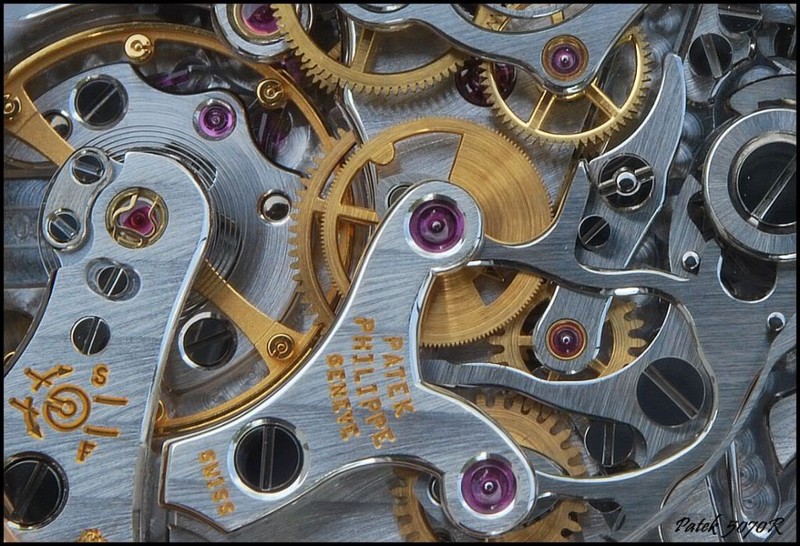
CH 27-70 (5070)
I won't
detail all the differences but mention one or two things that are, in my humble
opinion, worth noticing.
Aesthetically,
the new movement influenced the two sub-dials layout:
- Some may
say the 5070's three axles lining-up is better, others say that the 5170's
triangle formed by the name and the two sub-dials is more balanced.
- Some would
say the 5070's axles' lining up makes the observer feel the two sub-dials are squeezed
between the outer scale and the central axles, others say the 5170's two sub-dials
placed lower on the dial is disturbing.
Here again,
everyone his own opinion on that subjective matter, depending on its background.
Personally,
I like both 
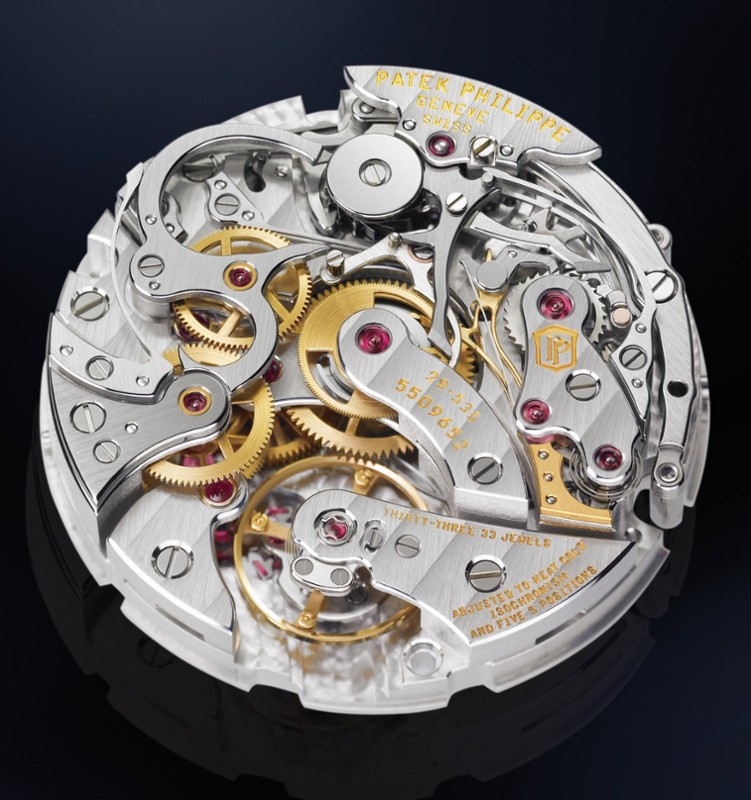
CH 29-535 (5170)
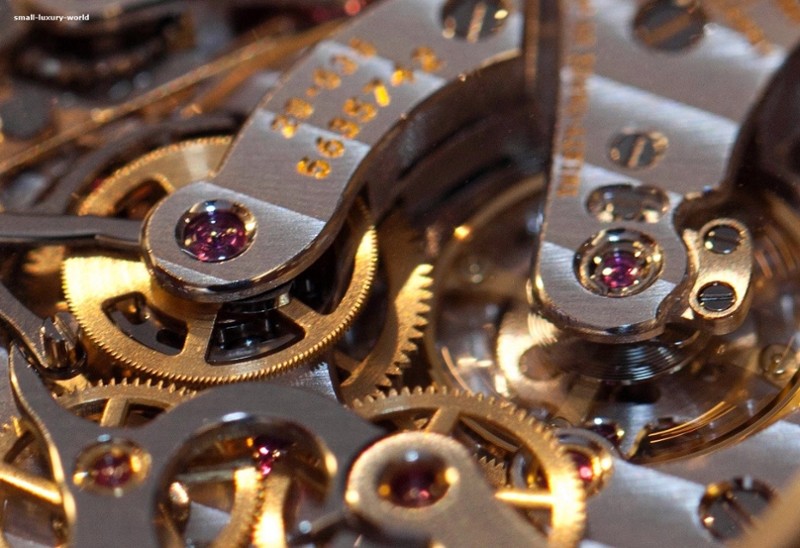
CH 29-535 (5170)
As for the
movement's finishing, I think it is very difficult to make the difference
(without a microscope), even if some may underline the fact the 5070's one has "angles
rentrants" (inward angles) the new one has very discreetly avoided keeping,
nevertheless still with a great overall look.
On the
other hand, I would say that, technically, the new CH 29-325 in-house movement (five
years development) has been cleverly improved with six new features (see
details the appendix at the bottom of this post) and, from an engineering
perspective, the design of the movement is directly coming from the work of
Patek's watchmakers. The case,
dial and the movement in the 5170 are all coming from Patek's creativity and watchmaking
mastery. I personally like knowing that the whole experience of the brand's talented watchmakers have been gathered into this movement, creating a new caliber, from the beginning.
The movement is also equiped with a jumping minute chronograph counter and a
stop-second feature, a dynamometric winding mechanism and a very soft pushers'
activation.
I like that
very much personally, even if, in the watch world, in-house movements are not necessarily
meaning the watch is more accurate or reliable etc...
Conclusion
-
I would
like to conclude in saying that Patek Philippe has left through his history
many iconic watches, proof of their technical mastery and aesthetical taste.
The 5070
and the 5170 are two very different watches coming from two different world in
this chronograph lineage, at two very different periods and I don't think they
should be opposed (hence my title o_O) and even more ranked.
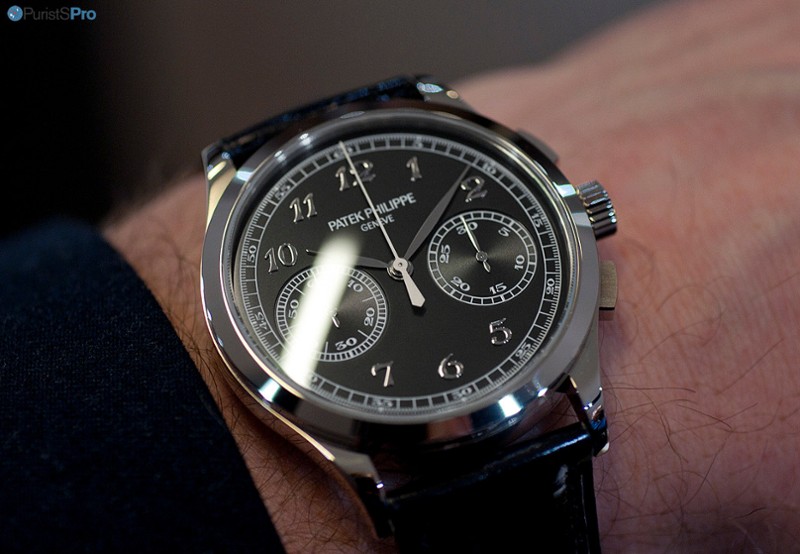
5170G Black dial
As far as
I'm concerned, they have nearly nothing in common (size, shape, movement...),
except, without a doubt to me, the brand's DNA. The 5170
has not the aura of the 5070 reference, yet. However, as every new model, it
needs time getting mature.
The fact the 5070 (or 5970) was in sight for such a long time that it has already influenced and shaped our taste. It is not necessarily that "it looks better" but it matches in a better way with how our tastes have evolved. The 5170 didn't reach this stage I think.
Like
previous Patek Philippe chronographs, the 5070 is already a legend; the 5170
has yet to become one and has already its DNA.
For
potential buyers, the "one of each metal" theme can be a good one but
getting one 5070 and one 5170 is I think a fantastic theme too
Please share your opinion on the one you prefer between those two generations, keeping in
mind it remains very personal!
Cheers,
Mark
PS: Here is another link back in 2011 from Murcielagoboy giving his opinion on that matter ( patek.watchprosite.com
)
________________________________________________________________________
Appendix:
the 6 patents behind the CH 29-535 PS movement (From Patek Philippe's website)
IMPROVED SYNCHRONIZATION BETWEEN THE CLUTCH LEVER AND THE BLOCKING-LEVER
Ordinarily, the clutch lever and the blocking-lever are synchronized by the column wheel. The engineers of the CH 29-535 PS eliminated this intermediate step by fitting the clutch lever with a finger piece that directly synchronizes both the clutch lever and the blocking-lever. This solution simplifies and improves the precision adjustment of the control sequences because the watchmaker only has to adjust one point instead of two as was the case in the past. Moreover, this approach suppresses the jump of the chronograph hand when time measurements are started and stopped.IMPROVED PENETRATION ADJUSTMENT BETWEEN THE CLUTCH AND THE CHRONOGRAPH WHEEL
The adjustment between the teeth of the clutch wheel and the teeth of the chronograph wheel is performed by a large eccentric column wheel cap, working directly with the tip of the clutch lever instead of the conventional eccentric placed next to the clutch wheel. This new system enables a more precise adjustment of the penetration between the clutch and the chronograph wheel.SELF-SETTING RETURN TO ZERO HAMMERS
The reset hammers of the chronograph counter are equipped with a self-setting system that makes it unnecessary to mechanically adjust the minute hammer function and thus increases the reliability of the mechanism.OPTIMIZED TOOTH PROFILE
The wheels of the chronograph mechanism feature an exclusive patented tooth profile (presented for the first time in 2005 when the ultra-thin caliber CHR 27-525 PS split-seconds chronograph was launched). It eliminates the risk of hand jump in both directions when starting a measurement ; limits the quivering motion of the chronograph hand ; increases energy transmission efficiency, and reduces friction as well as wear in the movement.
PIERCED-OUT MINUTECOUNTER CAM
A new minute-counter cam was created with a slot to prevent abrupt blocking in response to the reset command and therefore eliminates hand quivering.This message has been edited by Mark in Paris on 2015-05-07 02:47:25


Face to face: Patek Philippe Chronograph 5070 versus 5170

You're welcome H'

Thank you Mark
Opinions and advice

Great, great post!
I tried not to compare every details...

5070, still.
Thanks for sharing your owner experience Nicolas
No, don't get me wrong, your post is worth a second answer.

Agree 100% Nicolas my friend...No more needs to be said except...
You're welcome :)

Some very good points...
You are too kind. I took it in the rush... I will try to do better next time I have an

Very good post on patek chronographs
Yes, they both are good looking watches

for me it has all to do with "apeal"
Congratulations P@trick!!

Thanks for this comprehensive comparison!
I agree with you...
Fabulous Post
Another face to face

thanks for this post Mark !
Hehe you're right, so do I!

Great overview mark. Well researched and presented
That's an interesting project

Excellent review, Mark
Making the leap

One is not a (true) Patek and the other is not a (true) chrono ... strange timing at Patek
Well, It is hard to define what is true and what is not
Both are typical Pateks: undeniably beautiful and with a little "flaw" at the same time
Well...
I agree, except ..
It's Mothers' Day

Well, I can but it depends really on the tone

Finishings we of course want to appreciate it but not at the expense symmetry.
if I can express my humble and personal opinion: the movement too small for a large case (donut) in the 5070 is not acceptable for a brand like PP, while the decorations of the movement...
