
A look at Breguet novelties 2009, Part I
This is part one of a series of posts looking at the 2009 Breguet novelties, beginning with the Classique 5967 and the Classique 7337.
Before that, several trends evidenced in Breguet collection of recent years have been affirmed by this year’s novelties.
One is the increasing use of Frederic Piguet movements in Breguet watches. Breguet was originally a sister company of Nouvelle Lemania back when it was owned by Investcorp and prior to that, Chaumet, and at that point in time nearly every Breguet was equipped with a Lemania calibre. Both companies were so closely intertwined it is a matter of debate whether the Lemania tourbillion calibre was originally Breguet or Lemania for example. Why Breguet is relying more on F. Piguet is a mystery to me, since it has a whole catalogue of Lemania calibres. While Piguet movements are extremely fine and often cleverly designed, some are fragile due to their slimness (like the cal. 71 used in the 7337 below).
Breguet watches are also getting larger (pardon the statement of the damned obvious). What I find odd is that the company is inconsistent in the quality of its enlarged designs. For example the 7337 below remains as elegant as it predecessor, but the 42 mm new minute repeater is ungainly.
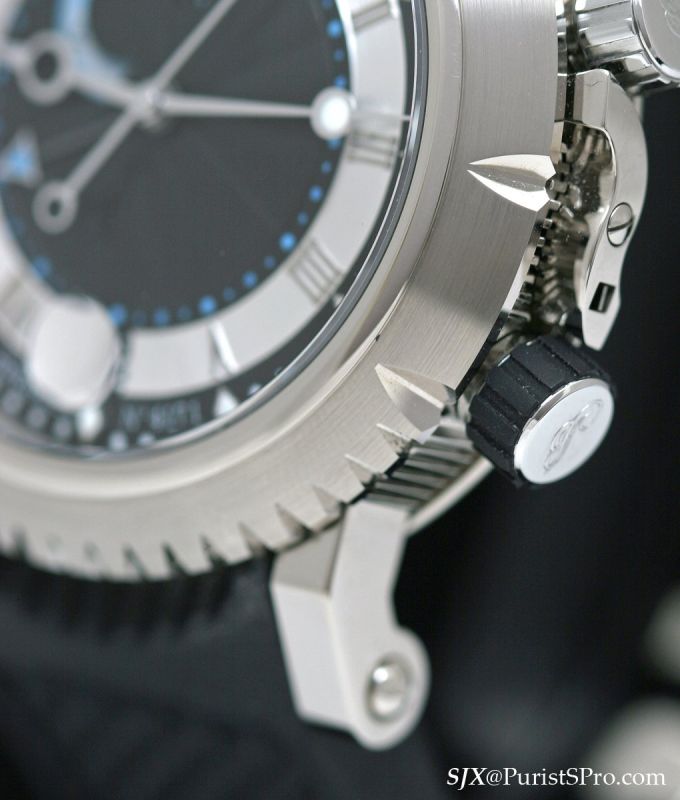
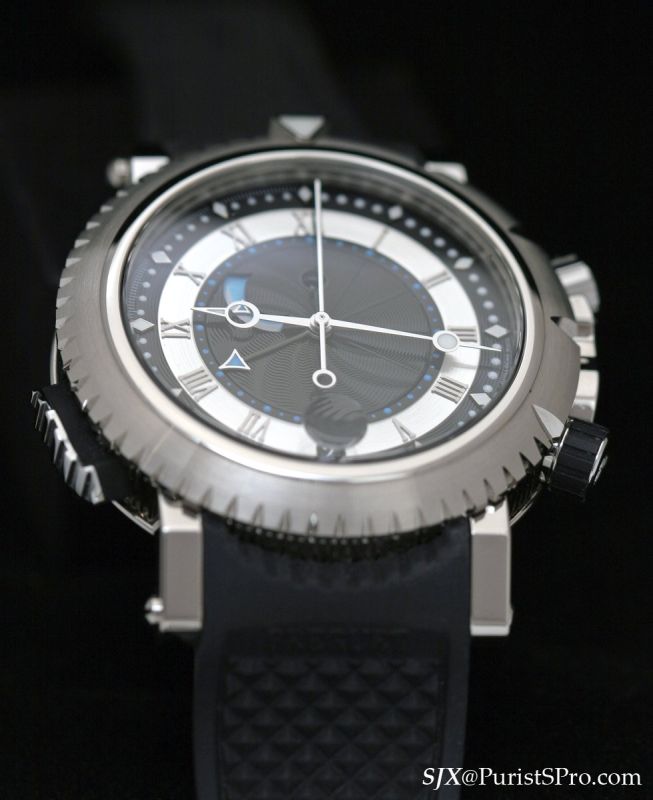
Finally, and this is one that concerns me most, is the direction of Breguet. In my mind Breguet has an iron clad brand identity that is a great asset, one that gives it the best chance of catching up with Patek as the premier haute horlogerie house (apologies to the good folks at VC which is much further away in my opinion). But several of the new models, especially the god awful Marine alarm and the overly fashionable La Tradition in ruthenium finish, are potentially dilutive of the brand. Only time will tell.
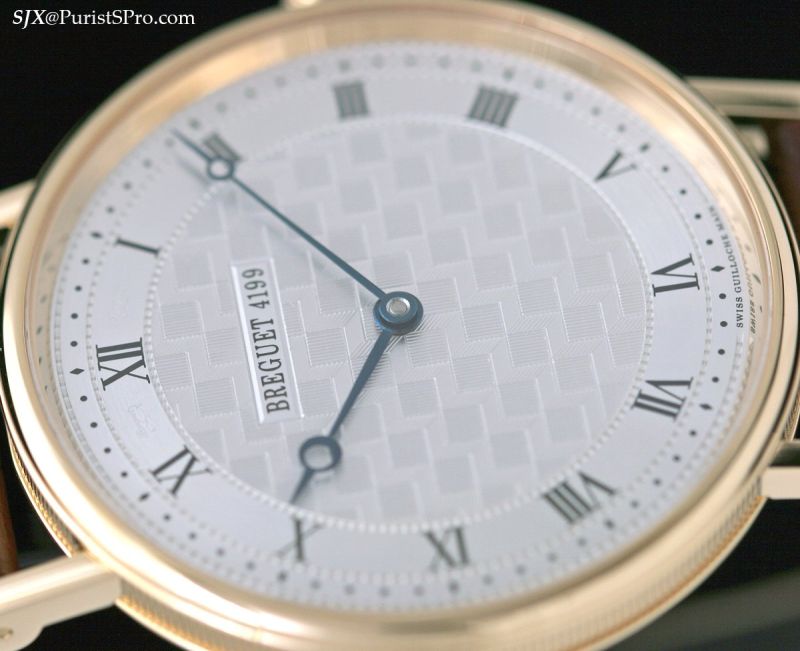
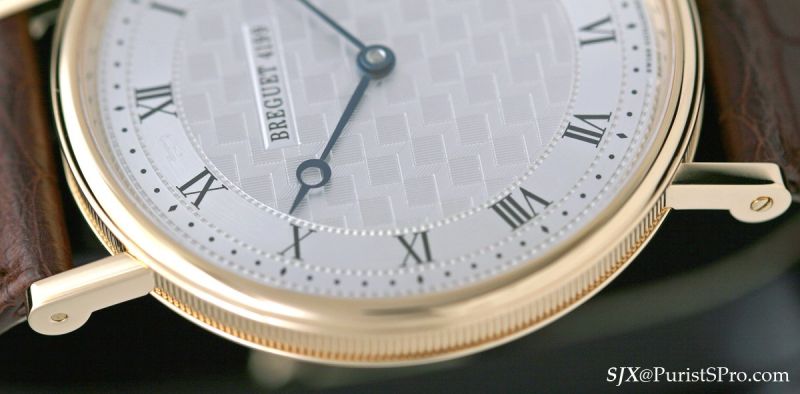
The Classique 5967 is a time-only, manual wind dress watch. It is thin and flat, 41mm wide and only several millimetres high, in the same genre as the FP Journe Chronometre Souverain and Vacheron Constantin Patrimony cal. 4400.
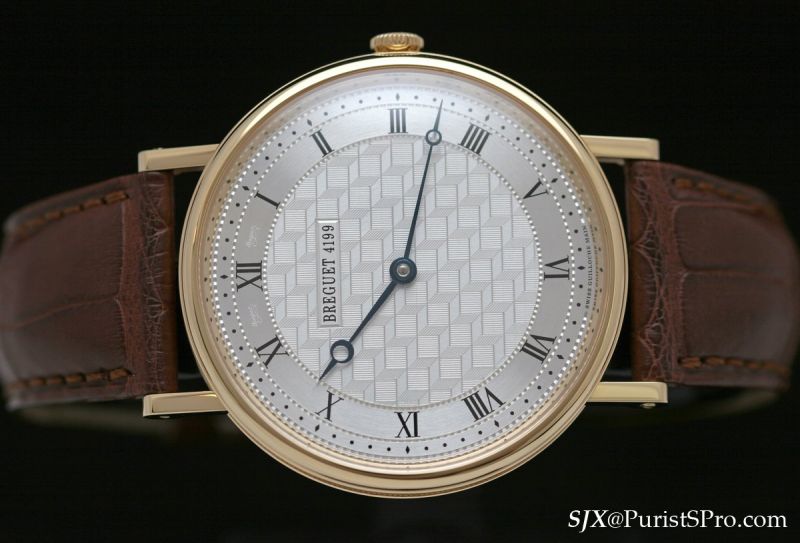
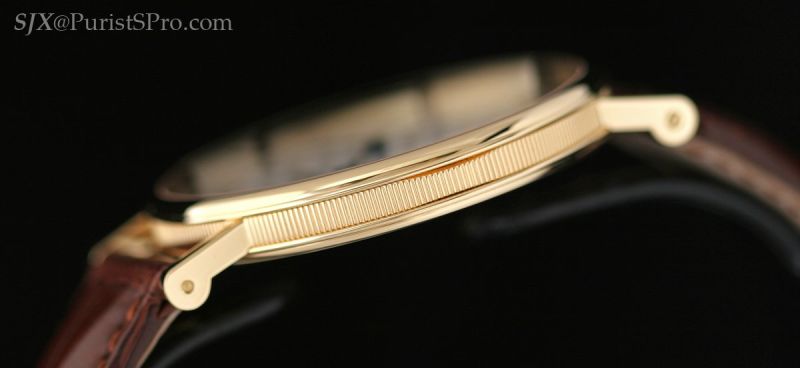
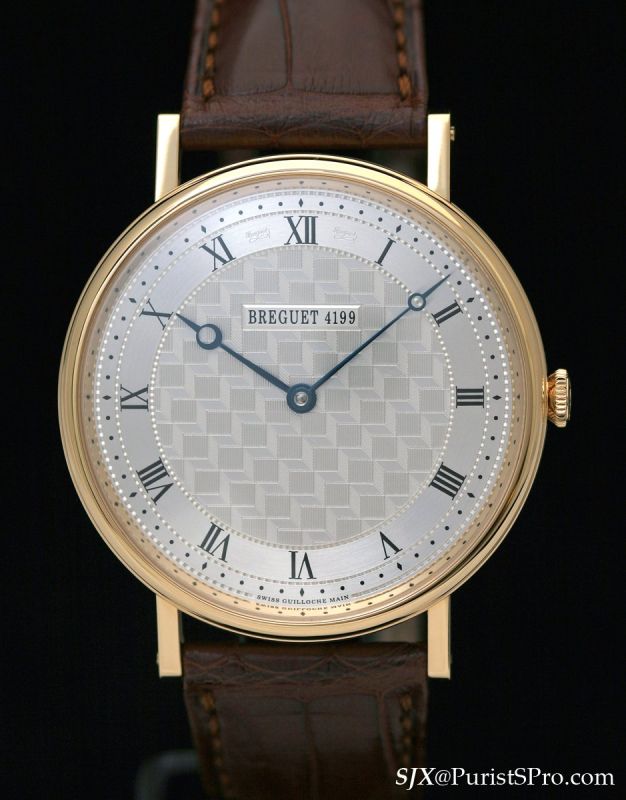
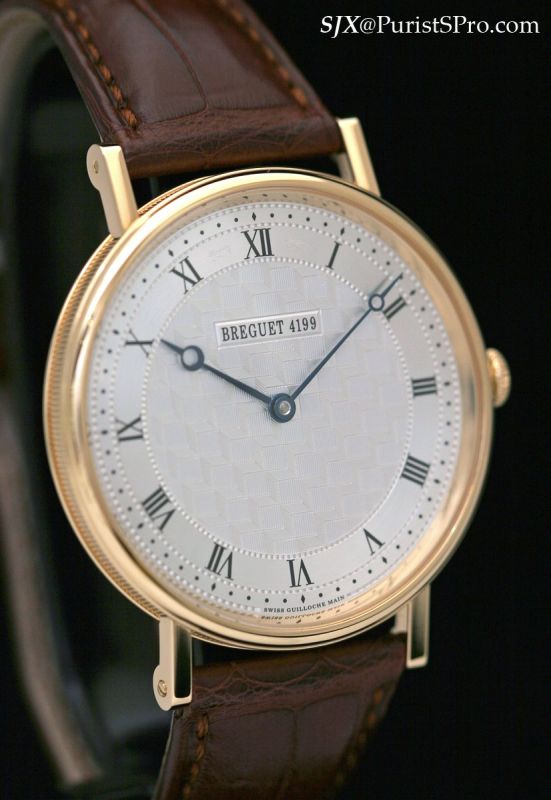
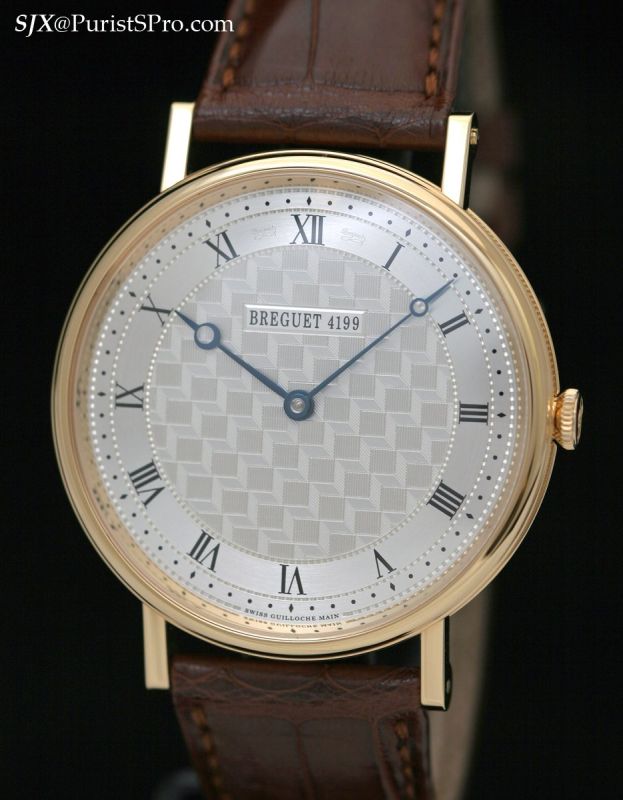
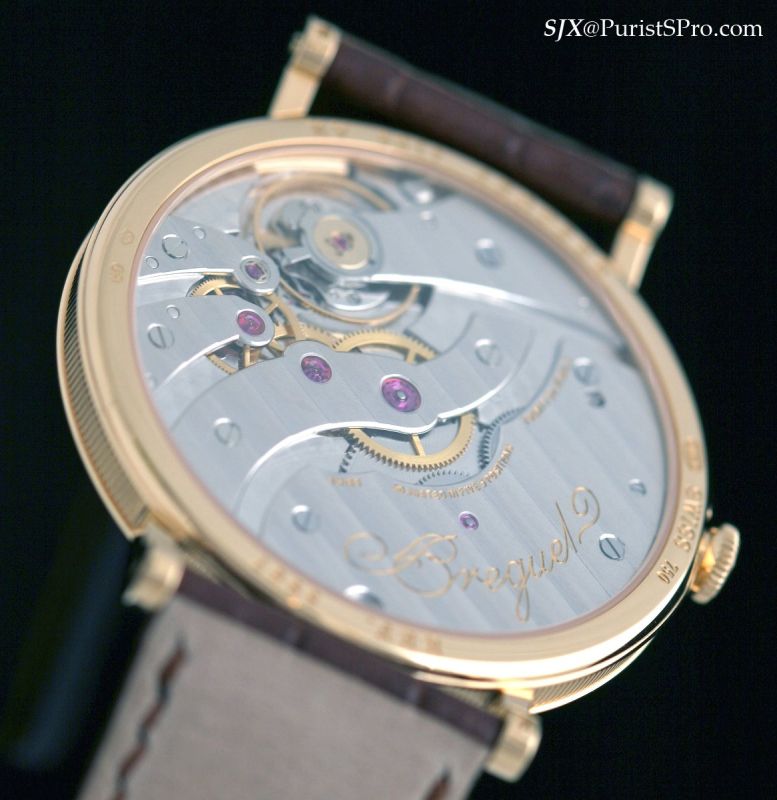
But unlike most of its competitors, the 5967 utilises a Piguet pocket watch calibre that was developed in the seventies. The movement’s origins are evident in the sweeping, classical styling of the movement bridges – no one designs movement like that today. Innovation is definitely not one of the movement’s qualities, but it possesses a great deal of charm.
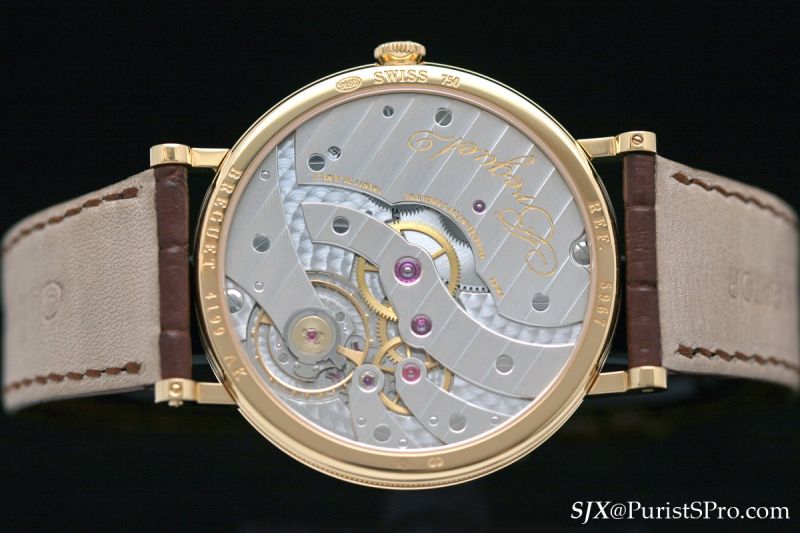
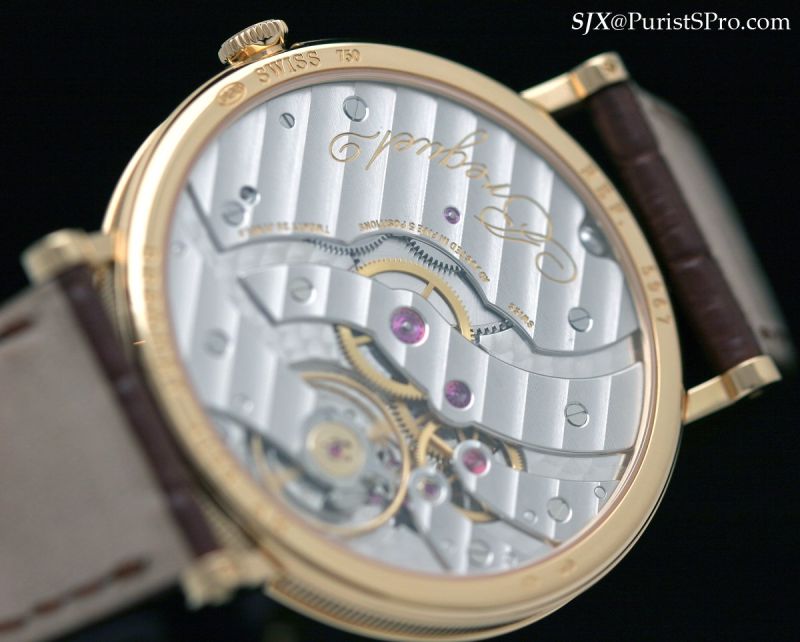
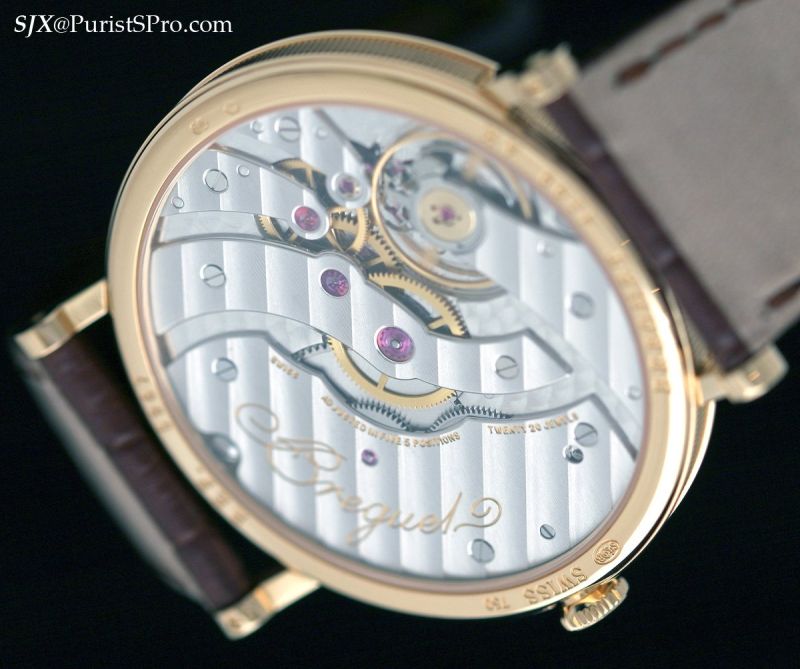
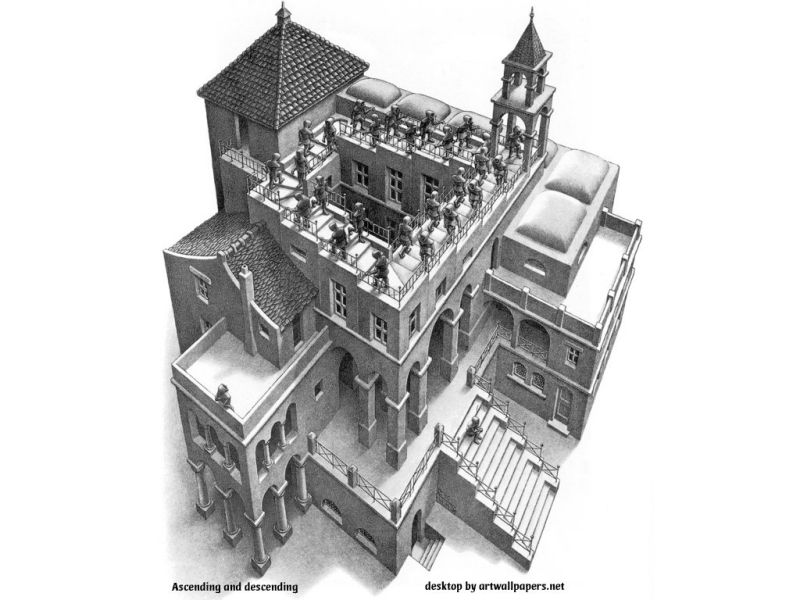
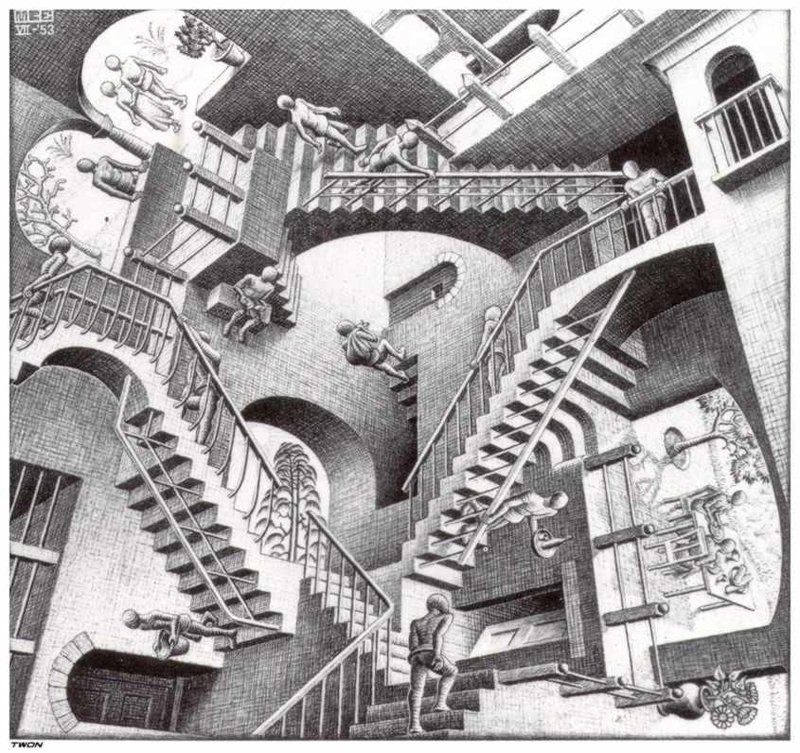
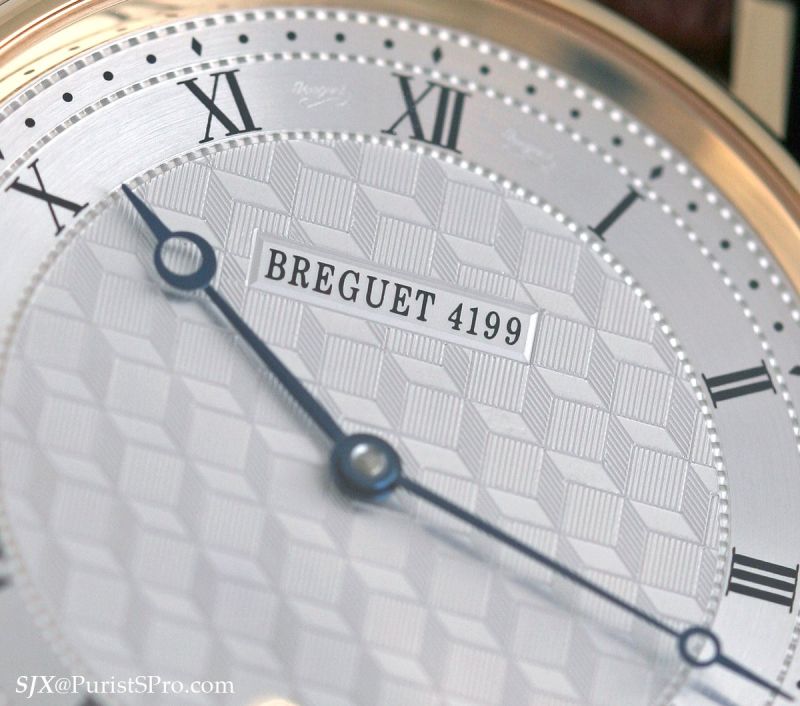
What is particularly interesting is the guilloche dial in a geometric Art Deco style which Breguet terms “Art Deco Damier”. Strangely enough, the first thing that came to mind when I laid eyes on this watch was M. C. Escher.

Surprisingly the Art Deco guilloche goes well with the elaborate Baroque aesthetic of Breguet.
The Classique 7337 replaces the 3337 (below) which was itself inspired by an original A. L. Breguet pocket watch. This dial design is uniquely Breguet, off-centre hours and minutes with a moon phase at 12 flanked by day and date in windows.
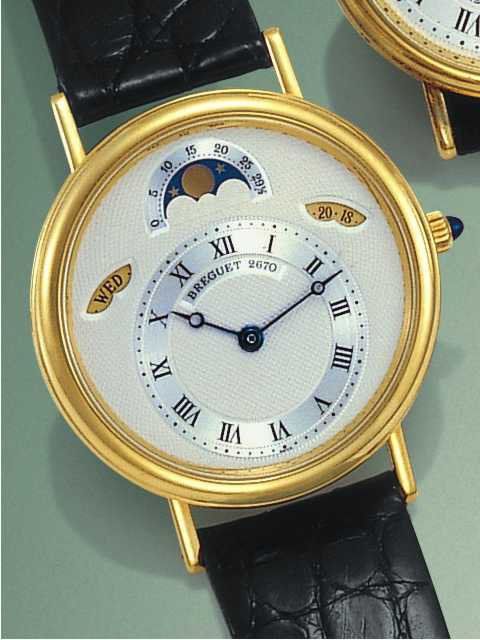
Source: Antiquorum
The dial is wonderfully detailed, with four different guilloche patterns. On a side note, the engraving on the sub-seconds is extremely clean and it makes me wonder if it is hand-turned on a rose engine, as opposed to being stamped or embossed.
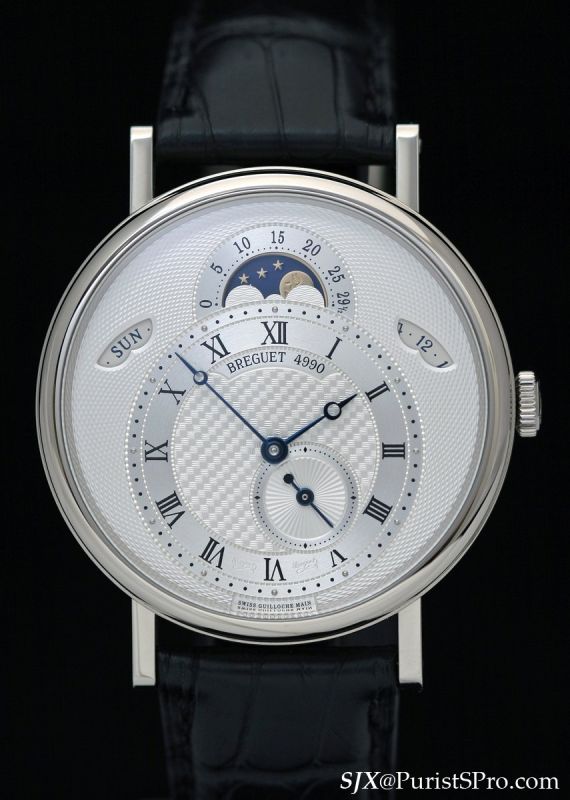
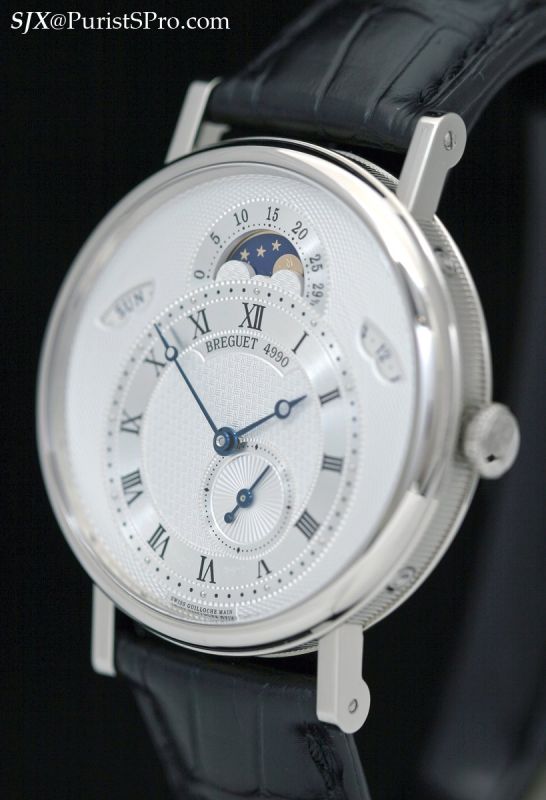
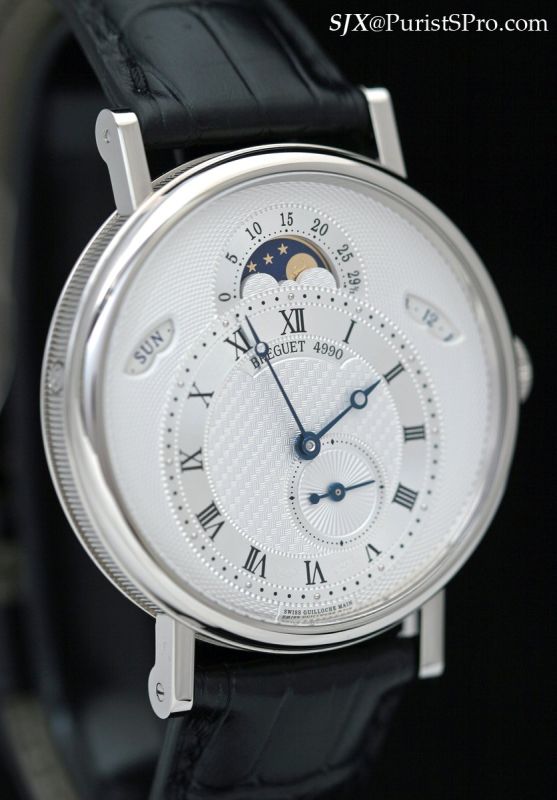
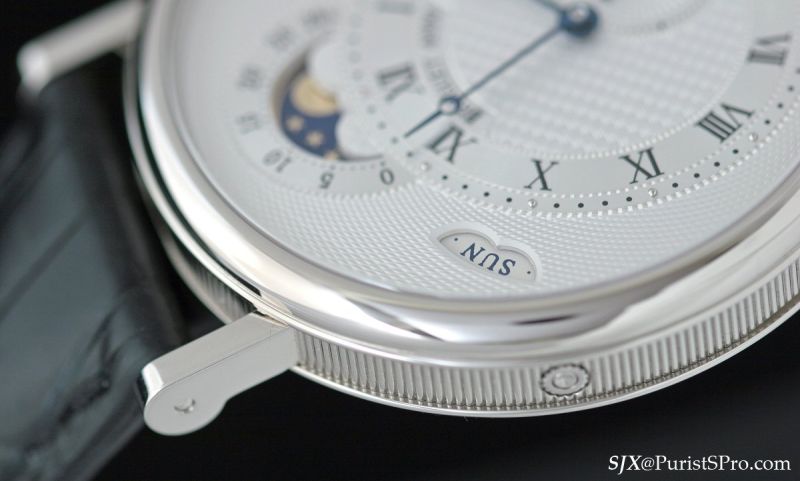
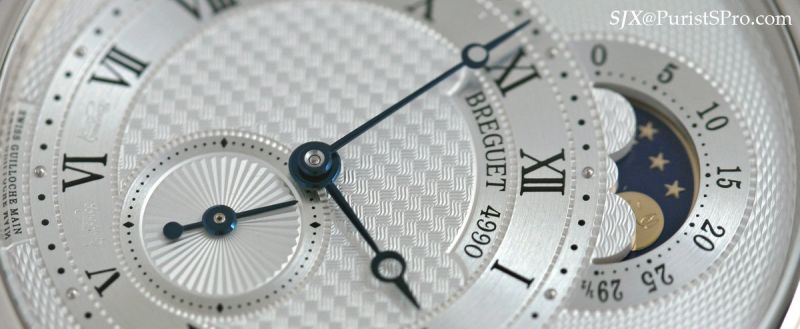
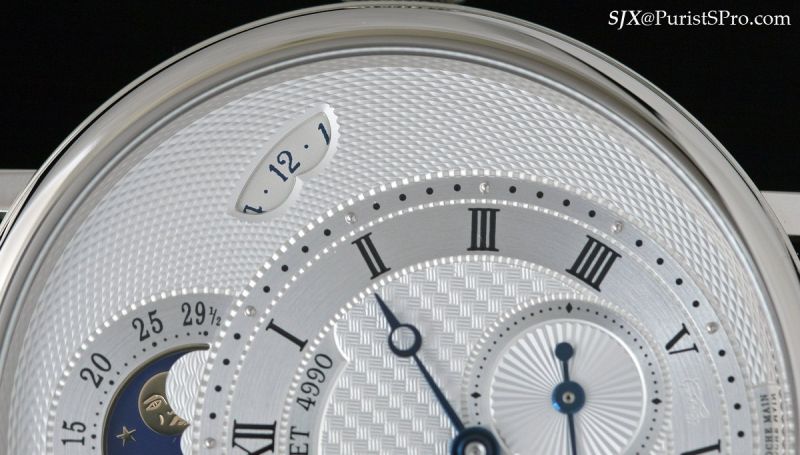
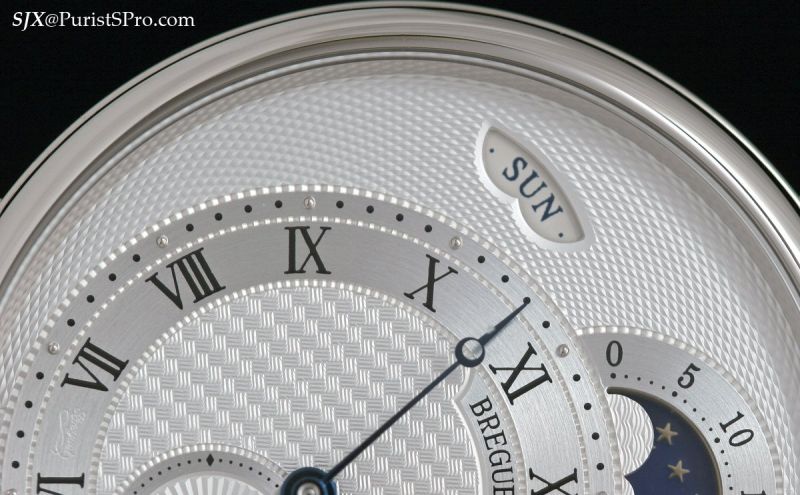
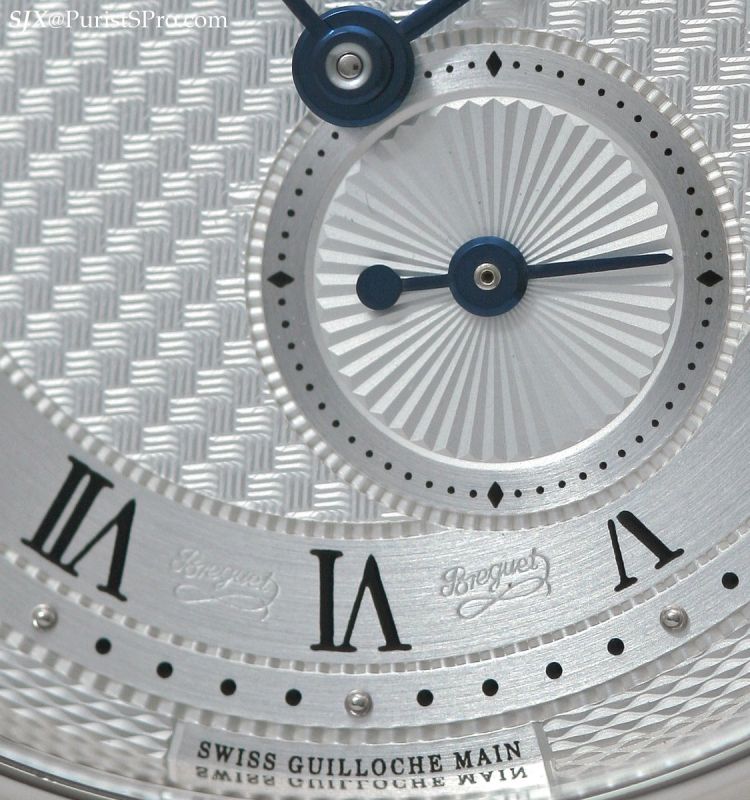
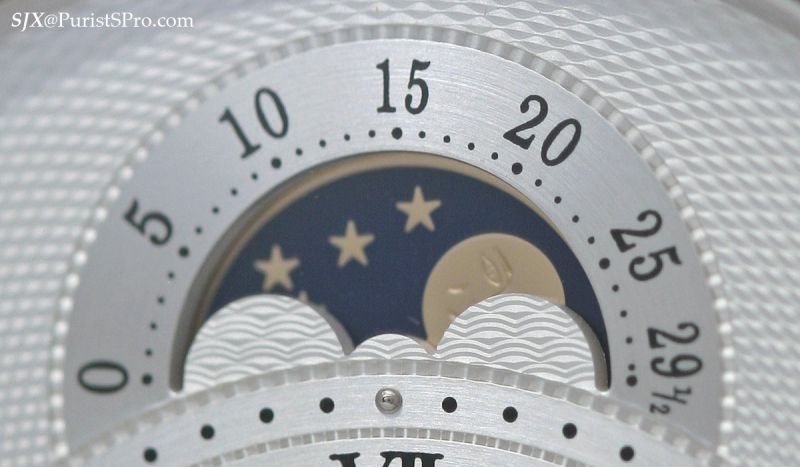
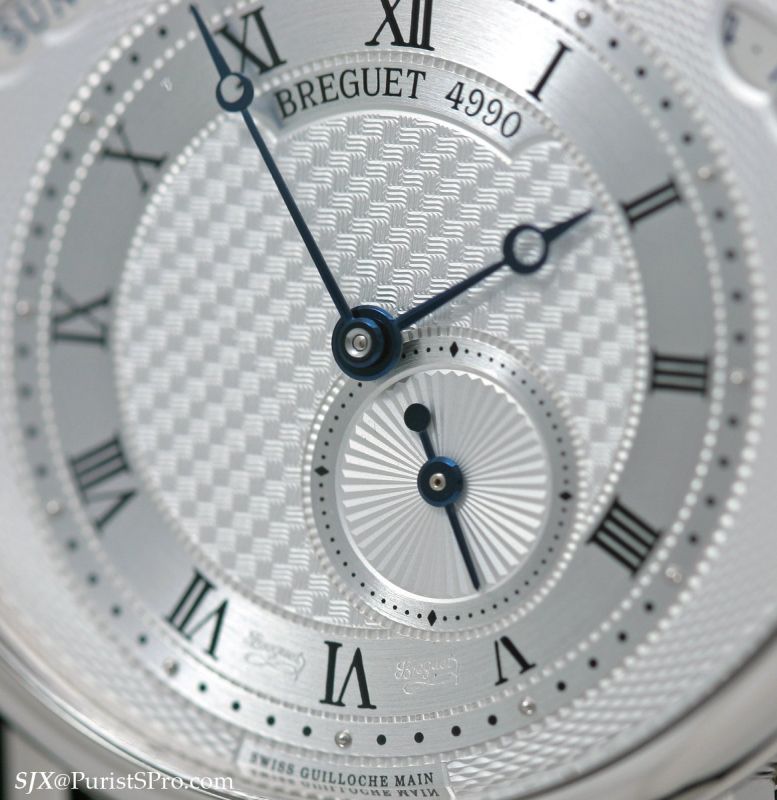
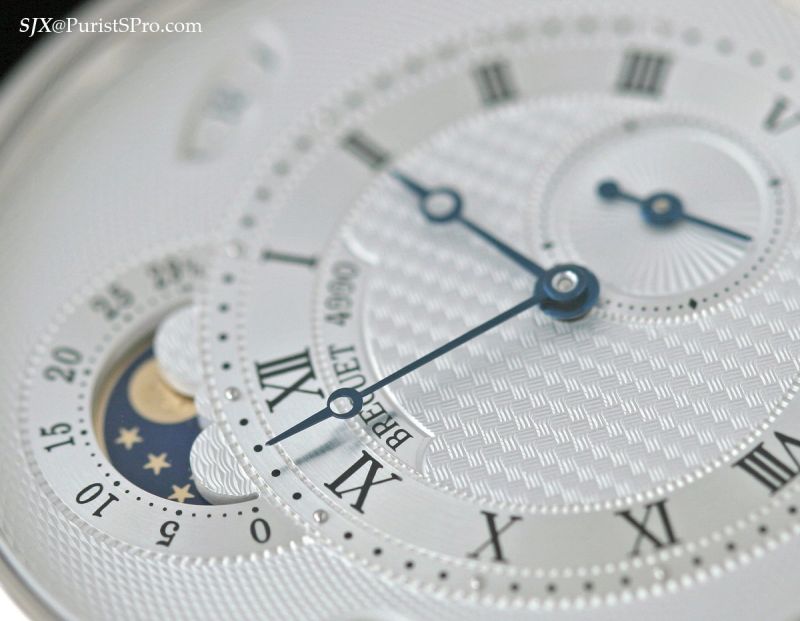
A subtle but welcome change is the 7337 is rid of the rather feminine cabochon on the crown used in the 3337.
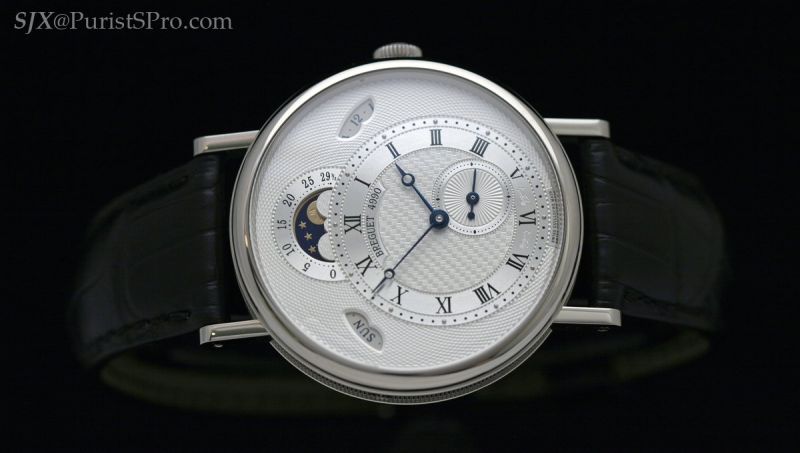
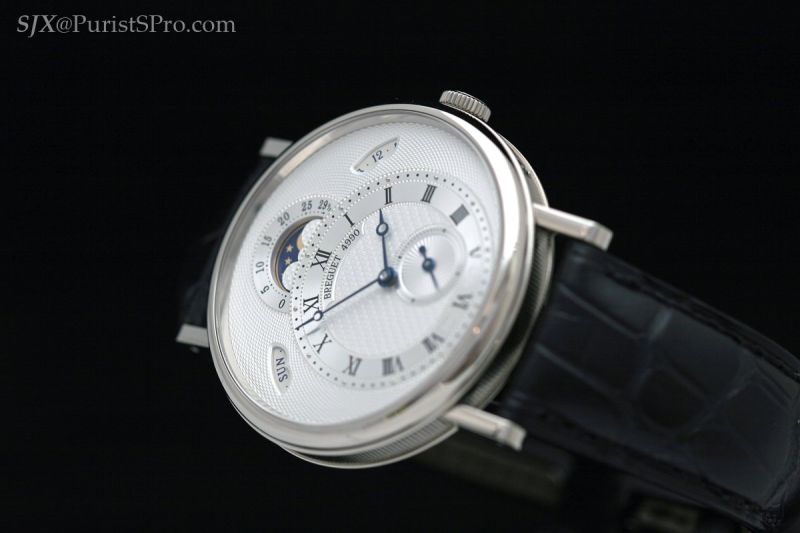
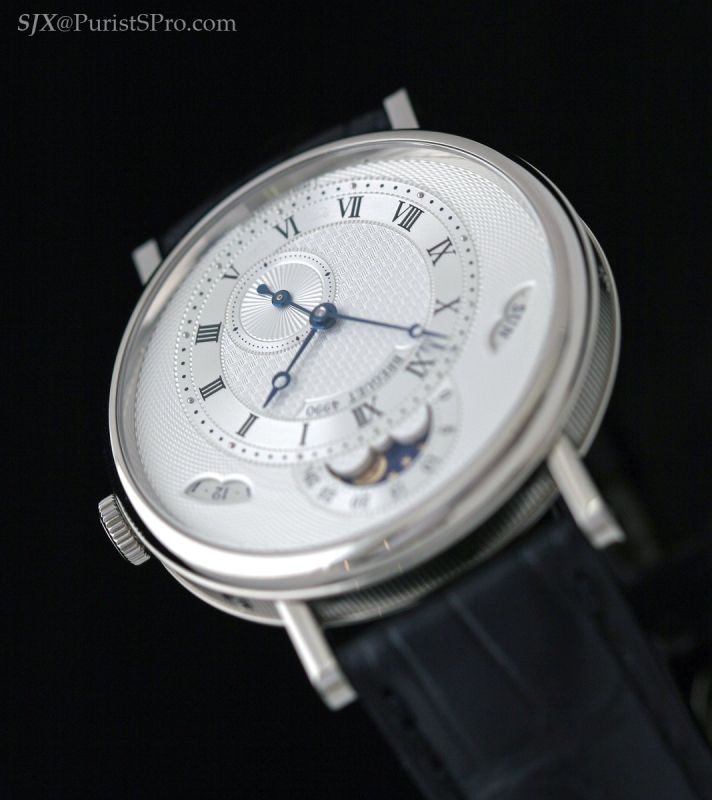
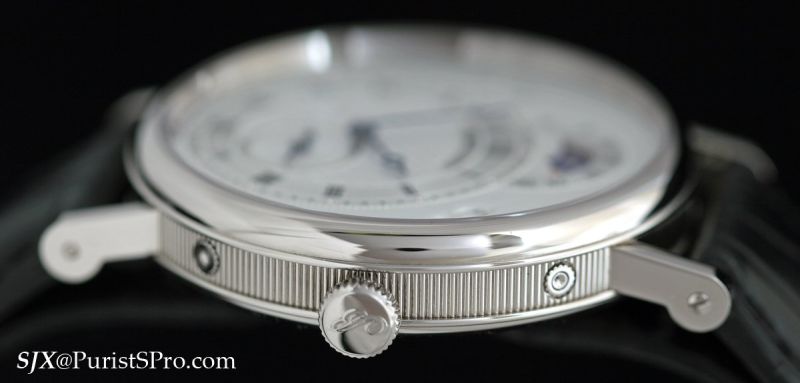
At 39 mm wide the 7337 is much more contemporary in size than its predecessor that was only 35 mm wide, but not so large that is looks clumsy. Though the movement is evidently small when seen from the display back, the proportions of the dial are perfect.
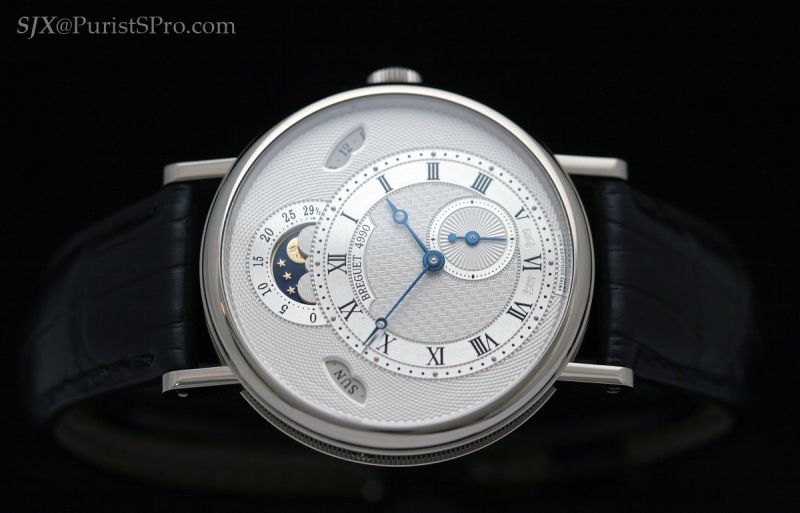
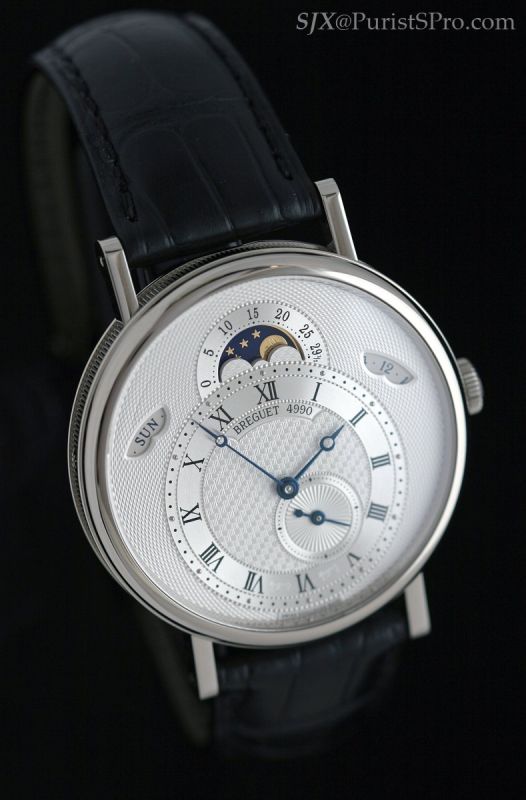
The movement is inside the 7337 is a Frederic Piguet cal. 71, an expensive, ultra-slim automatic distinguished by its open barrel. This calibre is now exclusive to Breguet, though it was used by several brands including Blancpain, Daniel Roth and Dunhill in the past.
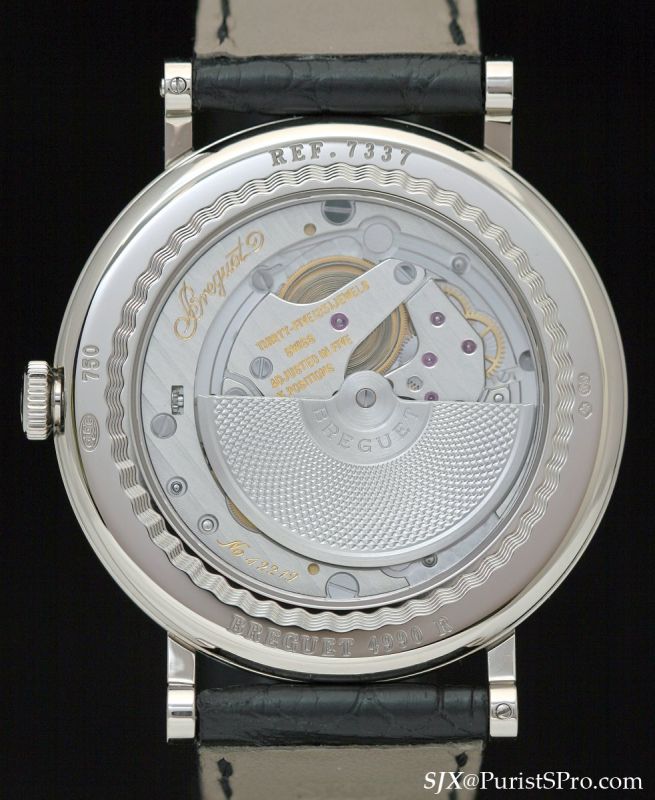
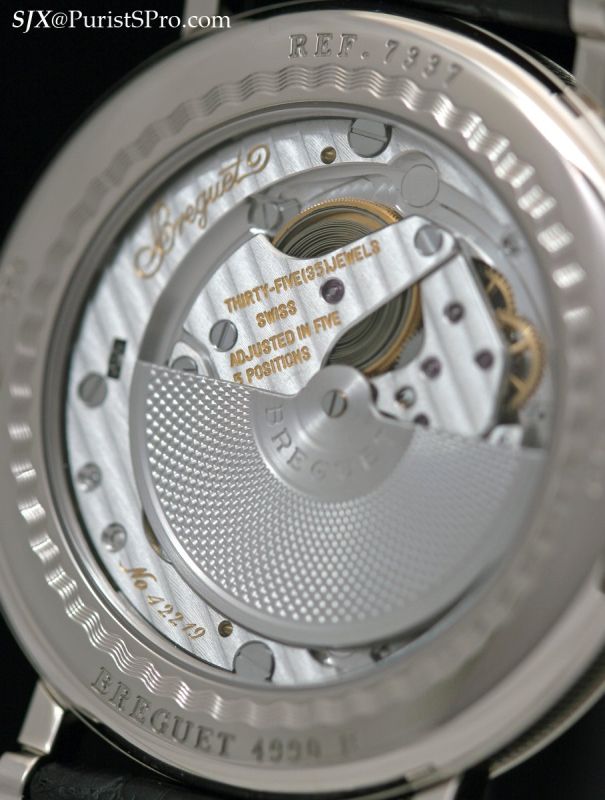
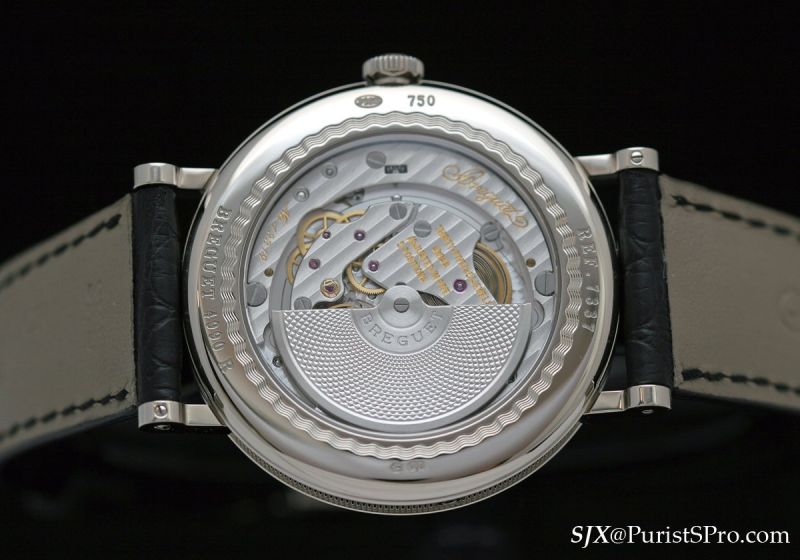
In the next post I will look at the Marine Royale, the unwanted love child of a JLC Extreme World Extreme Compressor Extreme Alarm and a Zenith Extreme Defy Extreme El Primero Extreme Starfish.
- SJX
This message has been edited by SJX on 2009-07-12 06:37:30 This message has been edited by SJX on 2009-07-12 06:38:02
Really an ecsellent post...
Congrats SJX
Tassos


I think the guilloche on both these models is beautiful...
...but I don't care for the reedy, thin lugs. The movement, like the guilloche, is similarly elegant. I love the sweeping bridges of the 5967. I find the design choices on both these watches, alternately ornate -- particularly the engine turning on the dials and the rotor on the Ref. 7337, yet sedate in a way too. The beautifully executed Geneva stripes, and small, thin movements scream "dress watch."
Thanks for the writeup, SJX.
Cheers,
Daos

Movement thought
I really like the use of the Piguet in th 5967, much better to use a somewhat common mvmt that is the right size then a 30mm exclusive mvmt in a 41mm case. On the other hand the use of the Piguet 71 surprises me. Breguet has exclusive ownership of the Lemania 8800/8810 caliber, which is a much more "exclusive" caliber of about the same size. Though it's not a total surprise, Swatch made it known that the 71 was going to be exclusive to Breguet several years back...
One thing that surprised me about your excellent report, you didn't mention the q*bert angle on the 5967 guilloche


A
Q*bert Damier doesn't quite have the same ring
Thanks for pointing it out though. 
- SJX

Great write up SJX. I was fortunate enough to see the 09 releases in person
which included these 3 pieces as well as the double tourbillon, Heritage tourbillon, the new Traditions and repeater.
I must say, save the Traditions, it seems that Breguet is moving towards the "big watch" fad/trend as well which unfortunately, does not bode well for me.
I was very much looking forward to the Heritage Tourbillon but found it less appealing in the metal than on the net. Just me though. Reminded me of the roman numeral UN Michaelangelo Grande. The guilloche was very nice but somehow it just didn't appeal to me in the metal.
Of the new Traditions, I can see why some are saying its a step in the wrong direction for this range. Its like trying to "warhol" a "van gogh" perhaps? That said, if I was to get a Tradition, I found the new Tradition white gold actually quite appealing.
The highlight for me was the new repeater (can;t remember the ref. number) in rose gold. The chiming had a very very vice resonance to it and size is more traditional from what I can recall.
Back to toubillons. Recalling that I inquired about the Regulateur self winding tourbillon a few months back, the kind Breguet staff also had that on hand for me. While some may say a traditional tourbillon should be hand wound, the very carefully and intricately hand engraved movement and the cut-out "B" rotor in yellow gold is very very breadth taking. Being able to view it side by side with the Heritage Tourbillon and even the Double Tourbillon (which is huge case wise and thickness wise), I couldn't help but feel that the older regulateur tourbillon will perhaps be the better choice for me. Not fair to compare the Double Tourbillon with the Regulateur Tourbillon? From a price perspective, definitely.
Looking at the hand work of the cosmic/celestial (? not sure how to describe it) of the double tourbillon (if I get which case back belongs to which piece, forgive me. Just so many pieces in front of me), I also found that perhaps it was not as delicately finished as I would expect of Breguet. There was a "raw-ness" and "industrial-ness" to the finish which again looked much better in the net than in person. The dial however was classic Breguet finesse. Could be my aging eye-sight and perhaps my loupe can be of a better quality. But if you are looking for a talking piece that would be hard put to miss even to the blind, then the Double Toubillon which boasts of extremely high accuracy is definitely it.
Thanks again for your report.

Thanks.....
for an interesting report.....
Why don't you like the new marine alarm?
Cheers
It's ugly
That is purely personal opinion - I find it possessing extremely displeasing aesthetics. The sharp angles on the bezel, combined with the guilloche dial, luminous-filled Breguet hands and all the protrusions from the case do not go well together at all.
- SJX
This message has been edited by SJX on 2009-07-13 05:04:56Marine context
Hi SJX,
Thanks for your post - very interesting and useful analysis. Also got me thinking.
When you next write about the new Marine alarm (which I can see why you may not like, in the pink gold version), could you please discuss it in context of the Marine collection as a whole? For example, what do you think of the more classic 5817BA and 5827BA models (say, for example, with classic leather strap)? I quite like them myself.
Cheers,
Magic.
I like the basic Marine model
- SJX
thanks
Thanks SJX for your answer,
I'm happy you like the basic Marine model, and I can see why you wouldn't like the Marine Alarm (I do'nt like it either, actually).
The chronograph is debatable to some, but I happen to like it. True, its size is a bit on the high side, but its shape and some of its reflections are very attractive to me. I also like its chronograph function with central minute, though perhaps not so much the luminous 15min on the first quarter.
In conclusion, I like both the 5827 and 5817, but like you I do find the other later models like the Alarm much less attractive and Breguet-like. (just my opinion)
Cheers,
Magic.

A wonderful well-thought out post...
I have seen the 7337 in person and I am less than delighted to report that I find it much too big in person. Although big watches are the craze right now, and even traditional companies such as Patek have decided to go bigger; I find the new 7337 to be a bit on the too big side. You'd have to be a well-built and tall man to pull that one off.
A very good review that focuses on some interesting details; especially the movement of the 5967! Not a lot of companies make the thin-bridged pocket-watch movement like the 5967; at the moment, only an IWC comes to mind.
Thanks! This article got me thinking about a few things!

Nice close ups
SamEE