
hmmmcamu
814

spherical trigonometry using a chronograph (timing device)
GPS has largely replaced traditional celestial navigation 
Consider a navigator using a chronograph to measure the time it takes for a celestial body to transit the observer’s meridian. By applying spherical trigonometry, the navigator can calculate the distance between the observer’s position and the celestial body, and subsequently determine the observer’s latitude and longitude.
They were used in conjunction with other instruments, such as sextants and almanacs, to calculate the longitude. By comparing the time with the local time at a known longitude, navigators could calculate their own longitude. This was achieved through spherical trigonometry, using the time difference and the angle of a celestial body (such as a star or planet) above the horizon.
Chronographs (with a stopwatch function), were used for various calculations, such as:
- Rule-of-three and square root calculations
- Time, speed, and distance calculations
- Fuel consumption rate and turn rate calculations
Available on the marketplace
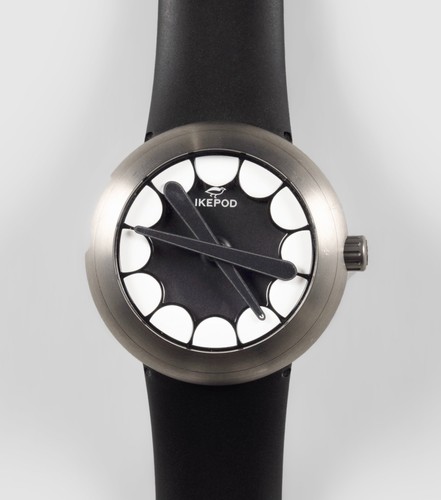
24 Ikepod listings are live on the eBay market and 7 collector listings on the WatchProSite marketplace.



So you're saying that people didn't always have iPhones with unlimited talk and data?
...btw, did not know the navigation part : )


So Top Time was a desk diver from the start? 😁
Thanks for the additional navigational detail - wasn’t aware of that one 👍🏻🙏🏻

spherical trigonometry using a chronograph (timing device)
GPS has largely replaced traditional celestial navigation Consider a navigator using a chronograph to measure the time it takes for a celestial body to transit the observer’s meridian. By applying spherical trigonometry, the navigator can calculate the di...