
AndrewD
[HoMe Moderator]
12829

Shock resistance testing
Hi All,
Tom’s early Incabloc advertisements prompted me to read about shock resistance testing of watches and I thought you might be interested in the information too. ISO 1413:1984 is the common standard employed, but is relatively easy to achieve with modern watch design.
The International Organization for Standardization (ISO) document “ISO 1413:1984 Horology, Shock-resistant watches” describes the method of testing and specifies the minimum requirements that a watch must achieve in order to be described as shock resistant. Some of the watches that pass this test have “Shock Resistant” engraved on the watch. I assume “Shock Proof” is some literary licence taken by the manufacturers and obviously overstates the truth.
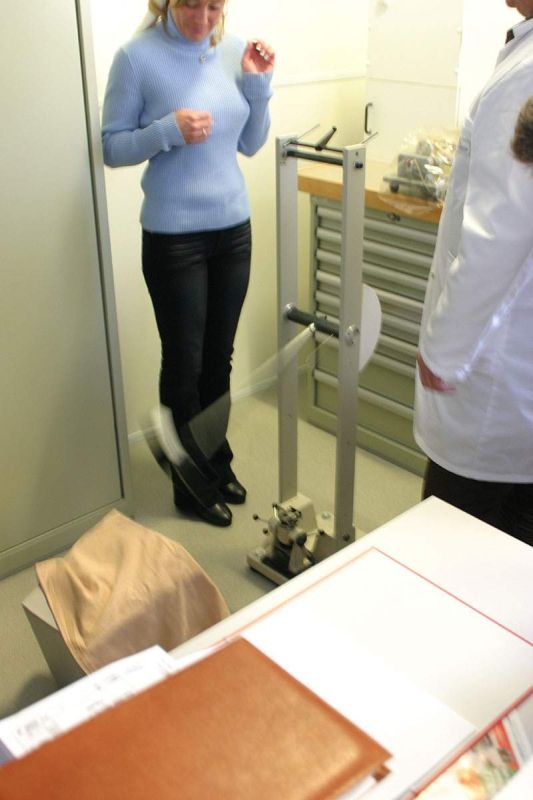
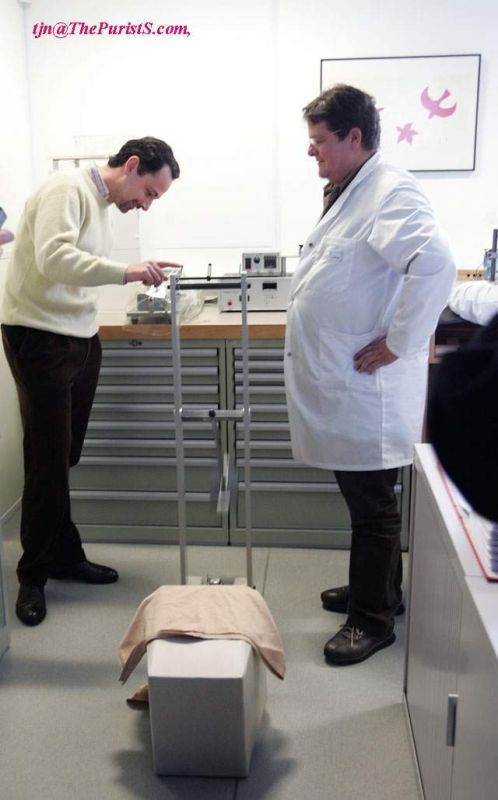
The test is based on the simulation of the shock received by a watch falling from a height of 1 m on to a horizontal hardwood surface.
In practice this is achieved by applying two shocks, one on the 9 o'clock side, and one perpendicular to the front of the watch on the crystal. The shock is delivered by a hard plastic hammer weighing 3 Kg mounted on a pendulum delivering an impact velocity of 4.43 m/s. The watch must be able to maintain its accuracy to +/- 60 seconds/day as measured before the test.
Regards
Andrew

Shock resistance testing
*I can't look*

The JLC impact test.
I would say "yes" to both ...

Some years ago…
You call that shock protection?
Live torture tests

A few years back
You might appreciate this story ...