
elliot55
2886

Start Of The Next Baktun - Redoux - PART II
Throughout the ages, man
has always been in pursuit of new and imaginative ways to track time. From noting the position of the stars
in the sky to measuring the cast of a shadow, and ultimately building clocks
and watches, the measure of time has gone on for thousands of years.
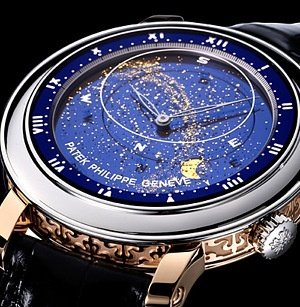
Patek Philippe Sky Moon Tourbillon (ref 5002)
- Early BC: Ancient civilizations track the movement of celestial bodies in order to determine and define the optimum planting and harvest seasons.
- 2000 BC: Stonehenge is considered to be an early form of a sundial structure. The Greeks and Egyptians design and construct similar, obelisk-like structures, presumably for the same reason.
- 1500 BC: The Chinese develop a way of using the cast of a shadow to understand the time of day – The Sundial. Because it is relatively simple to build, the sundial is used the world over.
- 325 BC: The Greeks develop a system based on water flowing from one container to another at a steady flow. Called Clepsydras, the passage of time is measured by reading graduated markers on each of the containers.
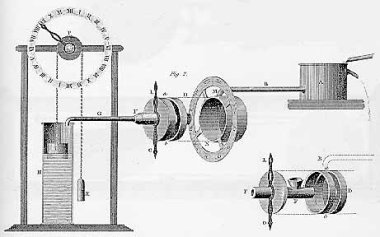
Clepsydras Time Keeping Device
- 1000 AD: Advancements in metallurgy account for the usage of mechanical parts in water clocks, eventually leading to concept used to create the first clock.
- 1275 AD Considered one of history’s greatest technological achievements, the first mechanical clock is invented - probably in England or maybe in Italy – although it is still unclear who deserves the credit.
- 1370 AD: The first mechanical clocks with “strikers & gongs” appear.
- 1400 AD: Blacksmiths are hired to make clocks that sound bells on the hour.
- 1500 AD: Brass, Bronze and silver become the desired metals used in clocks. The use of weights is replaced by springs, which deliver greater accuracy.
- 1540ish: Reformer John Calvin bans the wearing of jewelry, forcing Geneva’s jewelers to learn another craft. Refugees from France and Italy alter the future of Switzerland by teaching the art of clock making, ultimately leading to the creation of the first known guild of clock makers.
John Calvin - The Reformer
- 1574: The first pocket watch is created, but like the first clock, there is some question as to whom deserves the credit. The watch is made mostly of bronze and depicts St. Georges slaying a dragon on the front, with a crucifixion on the back. 535 years later, the timepiece still functions.
- 1602ish: Galileo notices that a pendulum can be used to keep time.
- 1680: Minute hands begin to appear on clocks.
- 1690: Considered just a novelty, second hands begin to appear on clocks.
- 1700ish: Manufacturers design and build clocks in all shapes, sizes and styles, ranging from grandfather clocks (known as longcases) to highly decorative table clocks with enamel paintings. Clock ownership widespread.
- 1735: John Harrison, a self-proclaimed carpenter, develops a method to make a pendulum clock function on sea faring vessels.
- 1770: Abraham Louis Perrelet invents a mechanism that operates in both directions, thus creating the first, self-winding pocket watch. The invention is still utilized today.
- 1790: The first “wristwatch” appears, credited t o Jacquet Droz of Geneva.
- 1801: Abraham-Louis Breguet invents the Tourbillon escapement, which compensates for the errors in timekeeping caused by the force of gravity when the watch is in different positions.
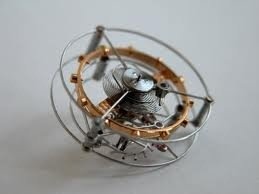
Tourbillon Movement
- 1822: Nicolas Ricusse invents a device to measure the distance traveled, called a “seconds chronograph”, giving rise the era of the stopwatch.
- 1830: Breguet introduces watches equipped with a button for setting the time.
- 1914: As a result of World War I, officers realize the importance of having the time on their wrist instead of in their pocket. Wearing a wristwatch becomes the preferable form of timekeeping.
- 1927: Charles Lindbergh completes the first successful transatlantic solo flight from New York to Paris in little over 33 hours. He wears a watch co-developed by Longines called the Lindbergh Hour Angle.

Charlies Lindbergh
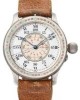
Longines Lindbergh Hour Angle
- 1929: Antoine LeCoultre invents the world’s smallest mechanical movement: Caliber 101. Over 80 years later, it is still listed in the Guinness Book of World Records.

Antoine LeCoultre
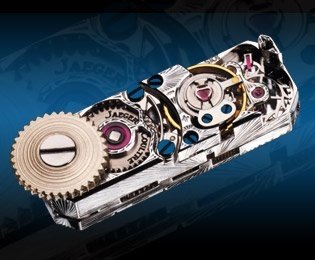
Caliber 101
- 1932: First clock to use a quartz crystal regulator
- 1933: Rolex launches the Bubbleback, featuring the first “auto-rotor”, a development that the inventor, Hans Wilsdorf, described as “perpetual motion, wherein the winding mass turns smoothly both clockwise and counter-clockwise, as well as pivot a full 360 degrees on its staff at the center of the movement”. The Bubbleback (and its successor, the Oyster), gains International fame as it becomes the first truly “waterproof” timepiece. In what can only be described as pure marketing genius, Rolex hires Olympic swimmer, Mercedes Gleitze, to cross the English Channel wearing a Bubbleback. Despite being exposed to the harsh elements during the swim, the watch keeps perfect time.
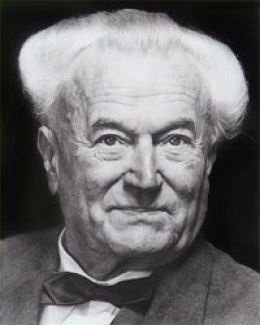
Hans Wilsdorf - Rolex Founder
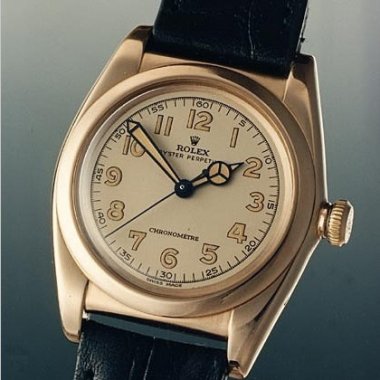
Rolex Bubbleback
- 1955: Dr. Essen of The National Physical Laboratory invents the atomic clock, a device so accurate it can keep time to within a couple of seconds every 100,000 years.
- 1957: American watchmaker, Hamilton Watch Company, produces the first battery-operated watch. Years in the making, this timepiece eliminates the need for a mainspring by utilizing an “energizer”, giving eventual rise to the quartz timepiece.
- 1963: Seiko invents the first quartz-crystal, battery-powered chronometer.
- 1969: Astronaut Neil Armstrong wears an Omega Speedmaster on his voyage to the moon.
- 1973: Hamilton Watch Company introduces the first digital, quartz-crystal wristwatch. Named Pulsar, the firm debuts the timepiece in the motion picture, Live and Let Die, a James Bond installment starring Roger Moore as 007. The watch is hugely popular and very expensive.
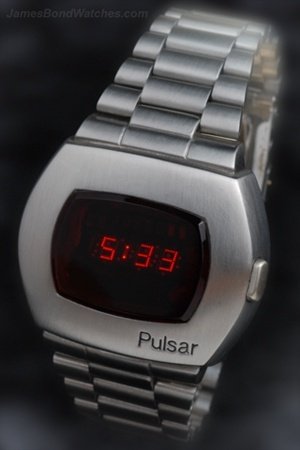
Pulsar Digital Watch
- 1983: Swatch introduces the first all plastic, Swiss-made quartz watch, marketing the line as fashionable and affordable. Today, The Swatch Group is the largest watch manufacturer in the world.
- 1989: To celebrate its 150th Anniversary, Patek Philippe creates the Calibre 89, deemed the world’s most complicated watch. With 33 complications, the watch has two faces, a thermometer, perpetual calendar and equation of time. [In 2009, the one-of-a-kind piece sold for 5.2 million dollars at Antiquorum’s 35th Anniversary sale, setting a new world record]
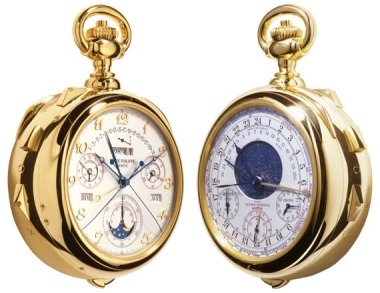
Patek Philippe Calibre 89
- 2000: Watch companies begin to explore the usage of new, high-tech materials, such as silicon and ceramic, in their movements, many claiming to be “lubricant free”.
- 2004: Known as a continuous cold caesium atomic clock, the FOCS-1 in Switzerland goes into operation with an uncertainty of one second in thirty-million years.
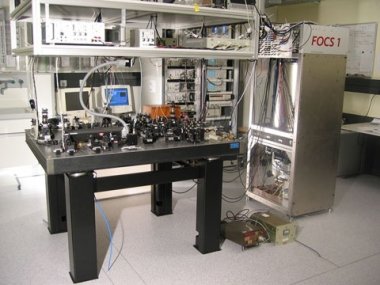
FOCS-1 - The Most Accurate Clock
- 2007: President George W. Bush has his (fifty-dollar) Timex stolen by a member of an adoring Albanian crowd.
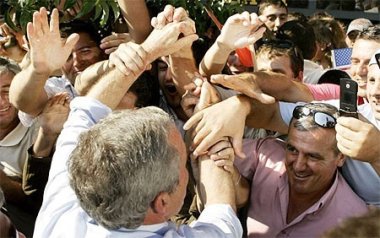
Bushs Timex
- 2012:
Everyone can make a Tourbillon. The Chinese are selling them for under a thousand
dollars!
DISCLAIMER:
The timeline is based on already-published information. The author makes no claims to its accuracy and is not responsible for any disparities in the reported dates and related milestones listed in the timeline. The timeline is provided for informational purposes only.
Happy New Year Everyone!
- Scott
Start Of The Next Baktun - Redoux - PART II
Throughout the ages, man has always been in pursuit of new and imaginative ways to track time. From noting the position of the stars in the sky to measuring the cast of a shadow, and ultimately building clocks and watches, the measure of time has gone on ...

Great post.
Lots of interesting information, some new to me, some not. I've enjoyed the reading. Thanks, Vte :)
Thanks VMM
When I was doing the research I stumbled upon several items that were totally unknown to me. - Scott

Good Catch, Bruno...
... I suppose it was getting a little late for me. Which is why I also added a "disclaimer" :-) - Scott

I feel dizzy, now. ;)
Now, you should add your own guidelines, don't you think? Best, my dear friend. Nicolas.
I was feeling dizzy myself...
... and then I caught myself before hitting the kitchen tile. It's hard enough copying and pasting all that stuff, let alone trying to get it right. Have a beautiful day, my friend. - Scott

To conclude..
your great timeline post all I would like to say is T hank you and most of all Thank you John Calvin ;) All the best in 2013 Damjan
It is interesting...
... how Calvin inadvertently created the Swiss watch industry. It almost sounds like crazy talk. Many thanks, Damjam - Happy New Year!