
cazalea
[Seiko Moderator]
20827

SEIKO PROFILE SERIES: AUTOMATIC COLUMN WHEEL CHRONOGRAPH
This installment of our SEIKO PROFILE series will cover the Seiko Flight Master automatic chronograph with power reserve.
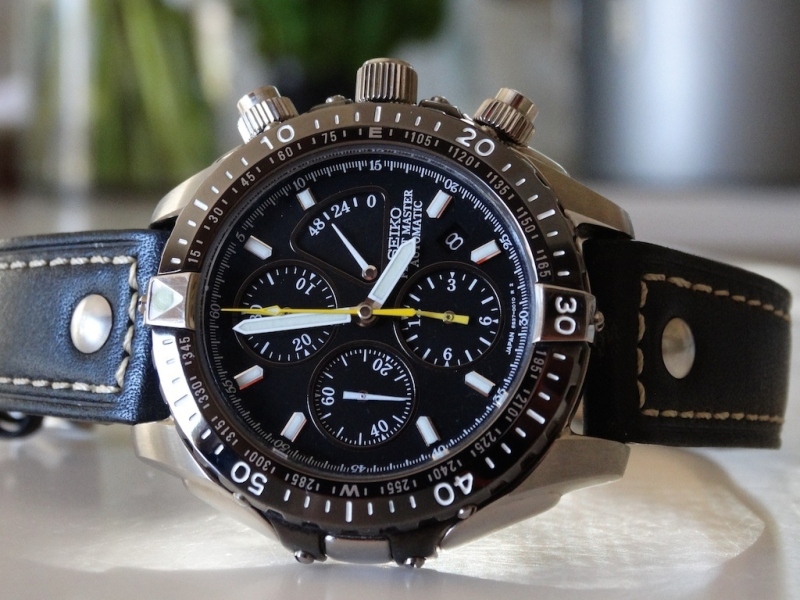
This watch features a number of other nice features of interest to watch enthusiasts, including:
- ceramic bezel with compass degree markings
- titanium case and bracelet
- easily visible, luminous hands
- column wheel operation of the chronograph portion of the movement
- sapphire crystal front and rear
- screwdown crown and locking chrono pushers
- water resistance to 10 BAR
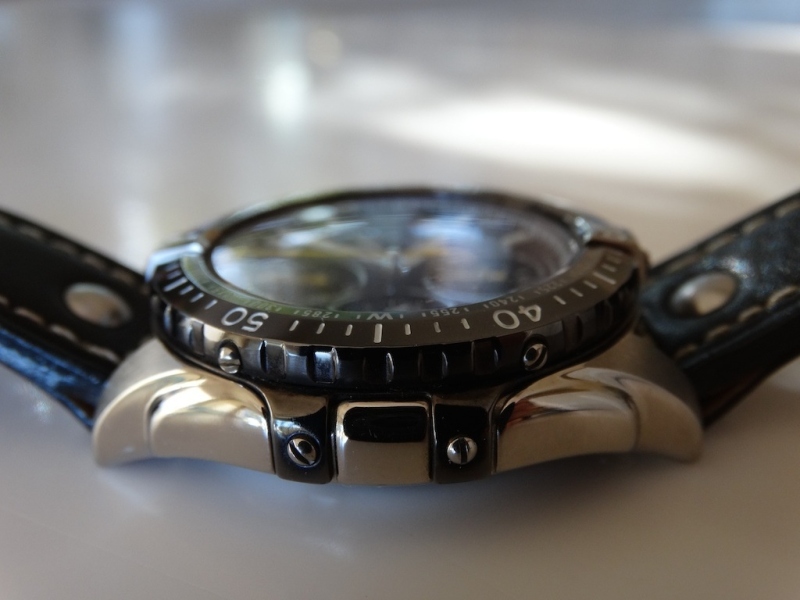
The bezel is retained by two brackets that are fastened by screws into the side of the case.
The front, domed crystal has anti-glare coating.
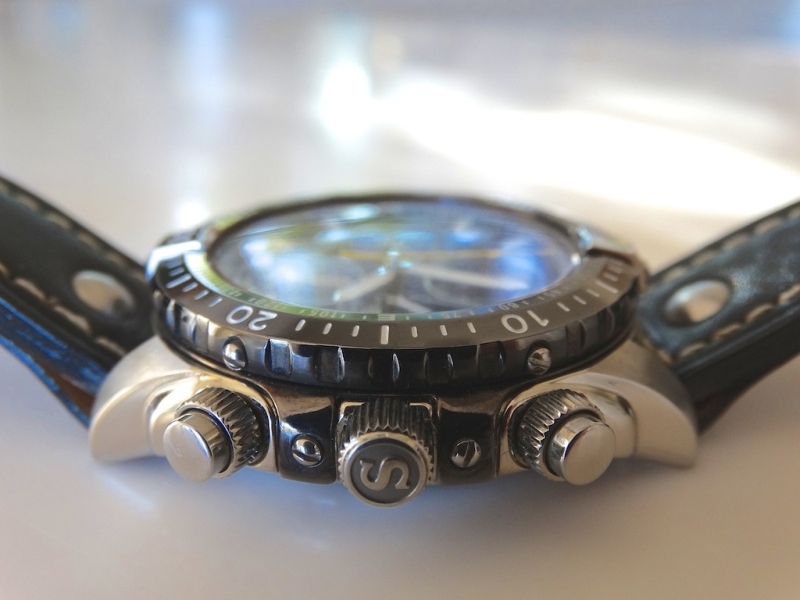
The chrono pushers operate normally with the threaded collars turned in (above) and lock when the collars are (unscrewed) to the outer position.
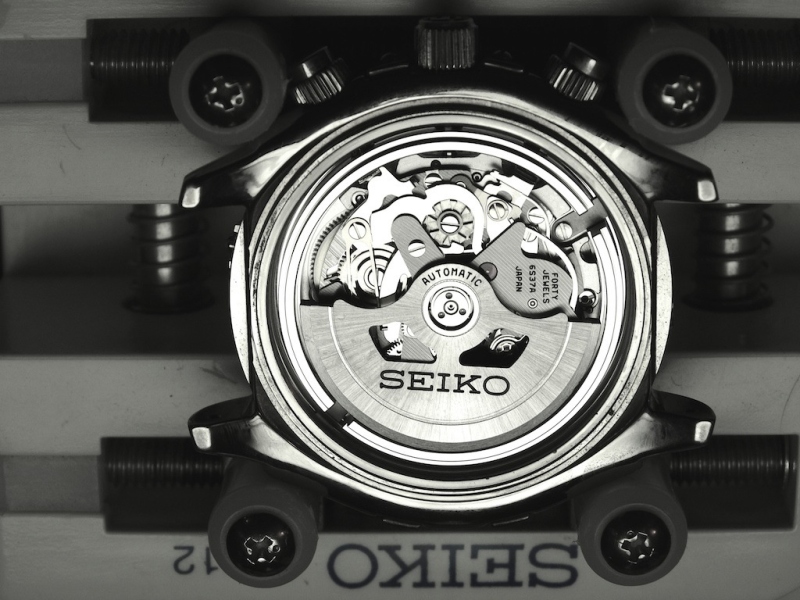
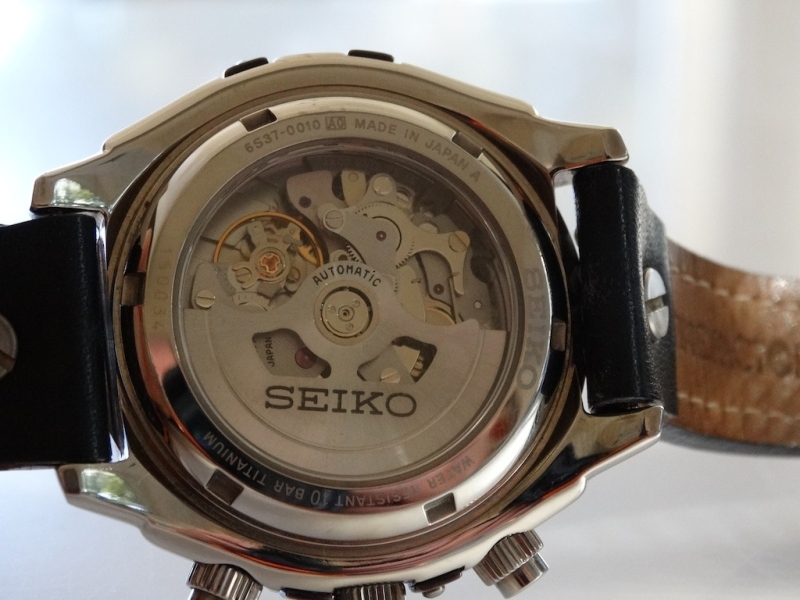
The movement is nicely finished with a combination of brushing, polishing and textures.
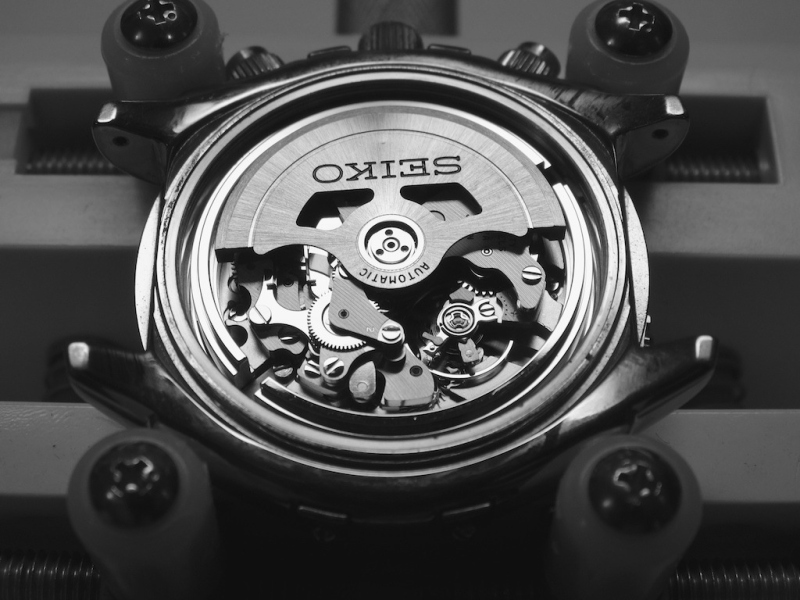
When I press on the start/stop pusher, the lever is lifted out of the castellations on the column wheel.
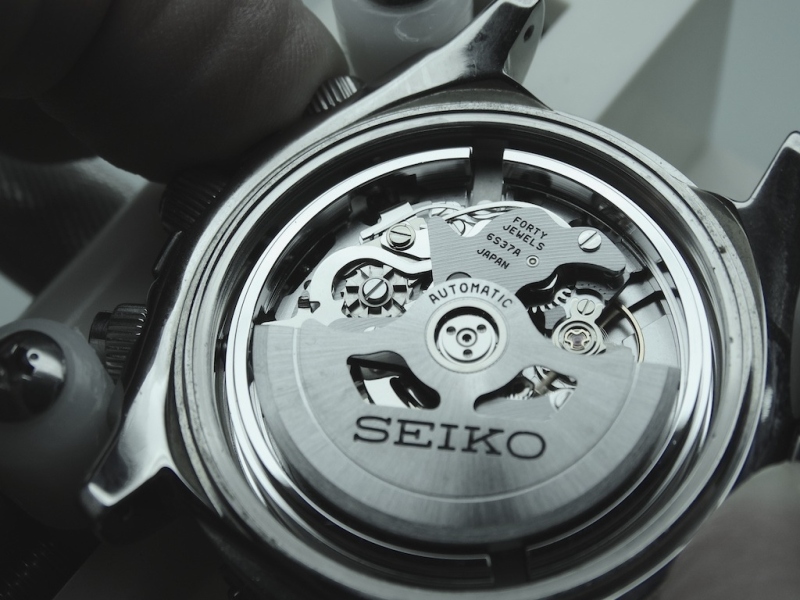
The watch I own has a 6S37A movement. As you can see by the table below, it is part of a large family of Seiko Chronographs.
| Movement | Winding | Date | Power Rsrv | Jewels | Finish | Color |
| 6S37 | auto | yes | yes | 40 | brushed | rhodium |
| 6S77 | auto | yes | yes | 40 | brushed | gold |
| 6S78 | auto | yes | no | 34 | brushed | gold |
| 6S28 | auto | yes | no | 34 | brushed | rhodium |
| 6S74 | manual | no | yes | 35 | stripes | gold |
| 6S99 | manual | no | yes | 35 | skeleton | gold |
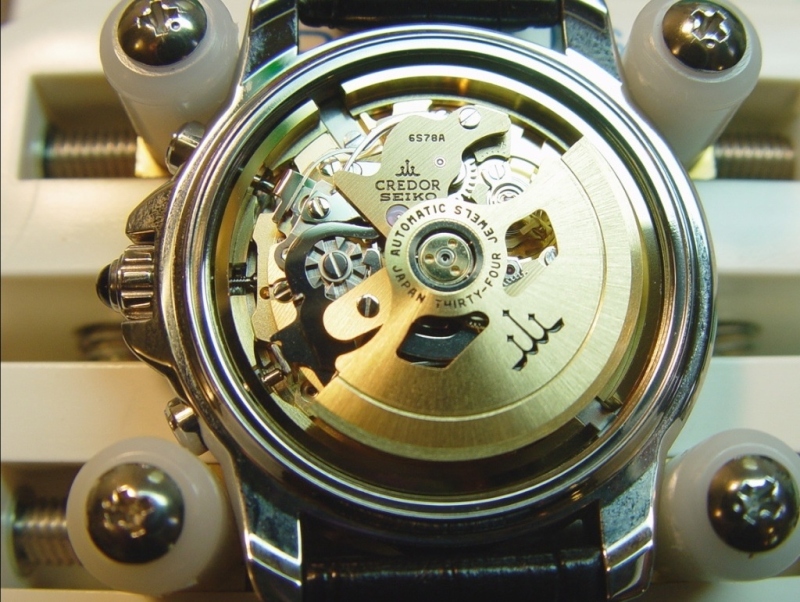
And here's a look through the case back.
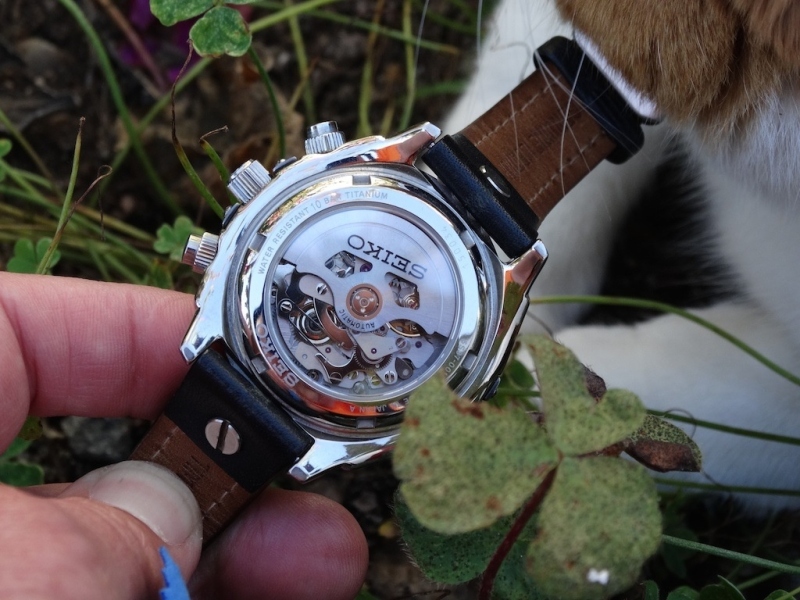
NOTE: This is the basis upon which TAG Heuer developed their 1887 movement. President Jean-Christophe Babin explains, “The intellectual property was from Seiko Instruments (SII), which is the engineering company under the Seiko umbrella. Their prime client in watches is Seiko and in 1997, they developed a patent for a new chronograph. When we decided to launch our own chronograph programme, we looked at all the chronographs on the market and the one from SII was the one that fit our needs the best, especially because it featured an oscillating pinion, an invention by Edouard Heuer in 1887. It was also a perfect match for our existing range of chronographs... Rather than [trying to get] around the patent, as other companies might have done, we contacted SII, said you have a great patent, which hasn’t been used very much, so we acquired the intellectual property and elaborated on it. We had the broad freedom to develop our own caliber. Caliber 1887 is our caliber, based on that intellectual property, we have industrialized it, which is the toughest part – being capable of producing the high quality standard at reasonable cost, which is really a tough challenge. We redesigned the movement, following the patent, leading to a movement with different dimensions; the plate is bigger, we have reduced the thickness, and we may add some modules for complications in the future."
That's history, so let's go back to the front of the watch. I love its complicated but business-like look. I'm not sure why; I have pondered this a number of times.
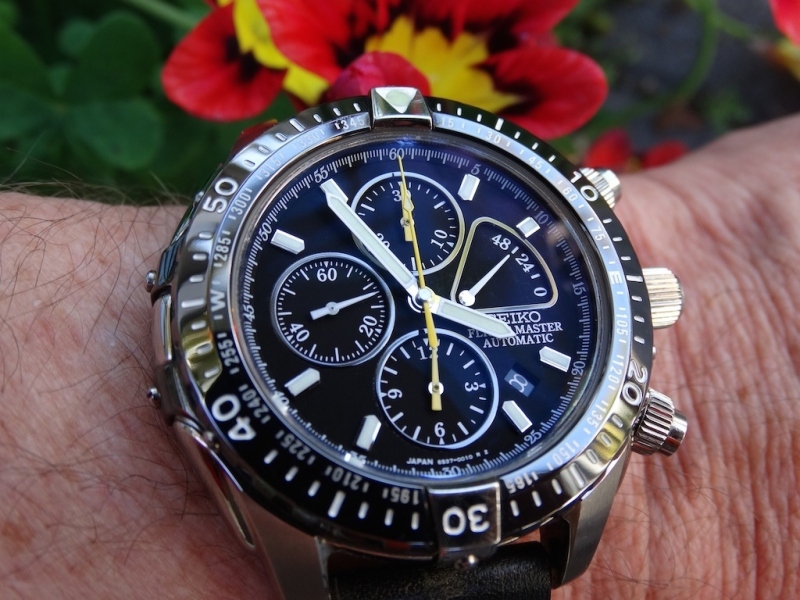
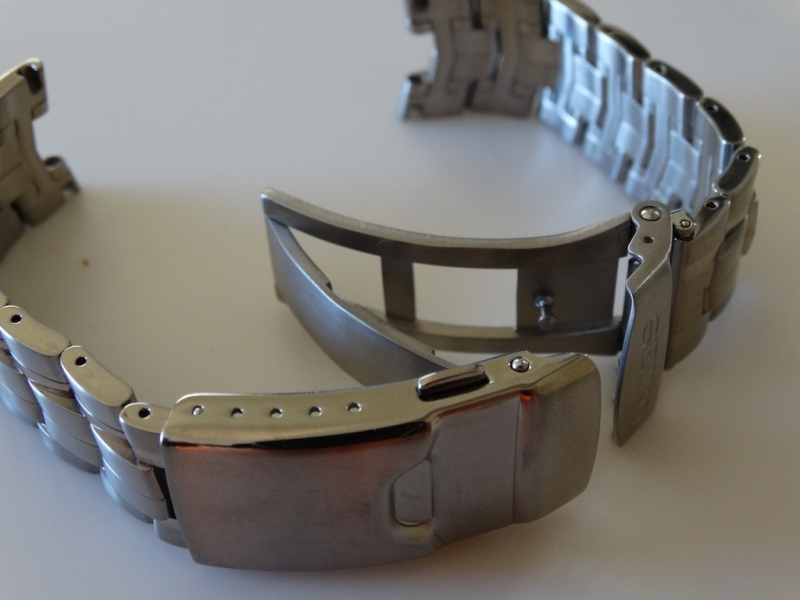
The watch came on a bracelet, but since I didn't have a bracelet tool at work when it arrived, I put on this strap "temporarily." Ten years later and the watch is still on the same strap (Thanks Timefactors). I dug out the bracelet for this post. Here's what the watch was intended to look like.
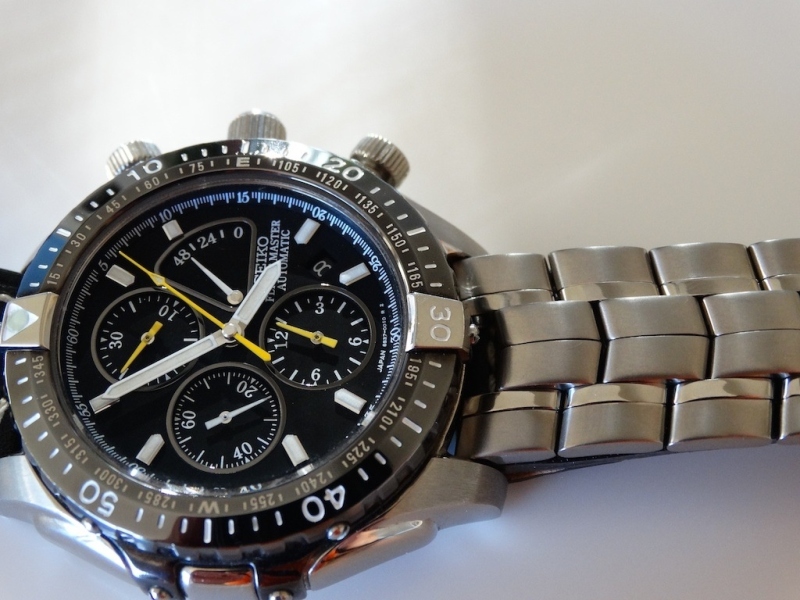
The links are nicely brushed, with an interesting pattern of shapes.
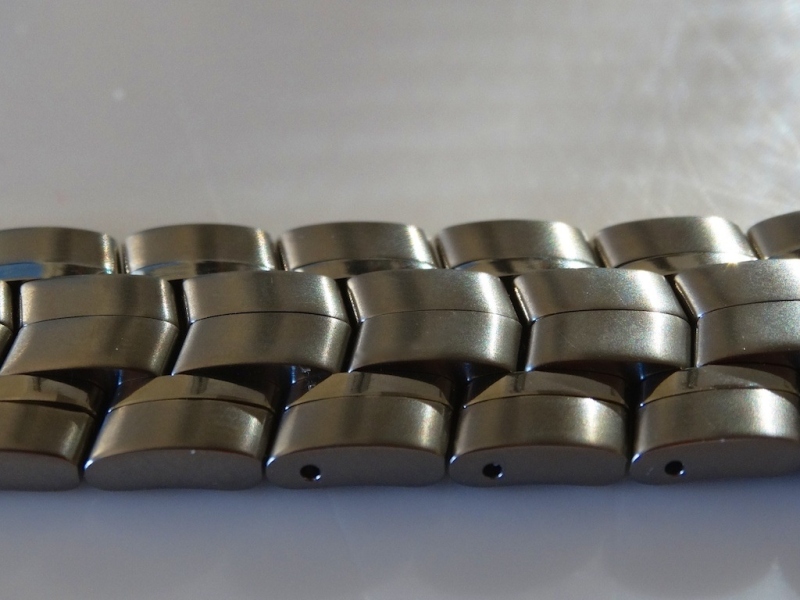
The buckle is nothing too special but it is brushed on the top surfaces and polished on the sides.
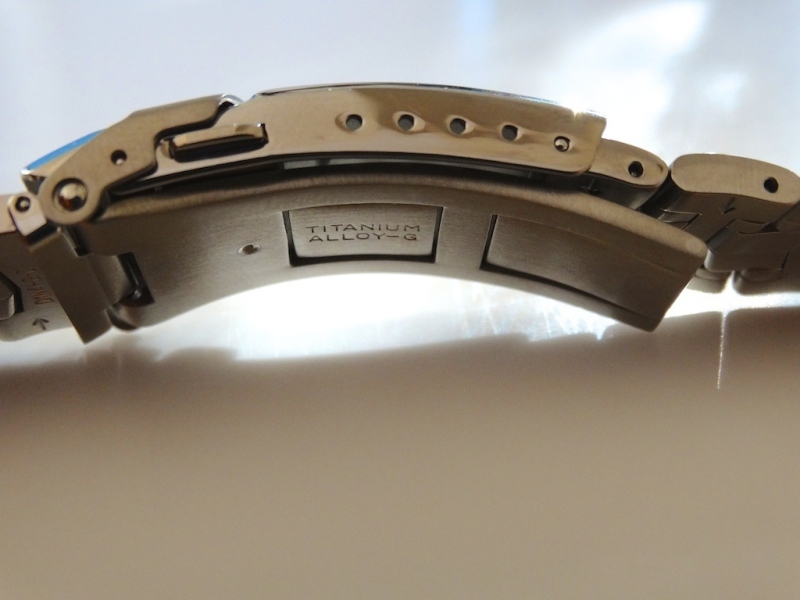
Someday I might put it on.
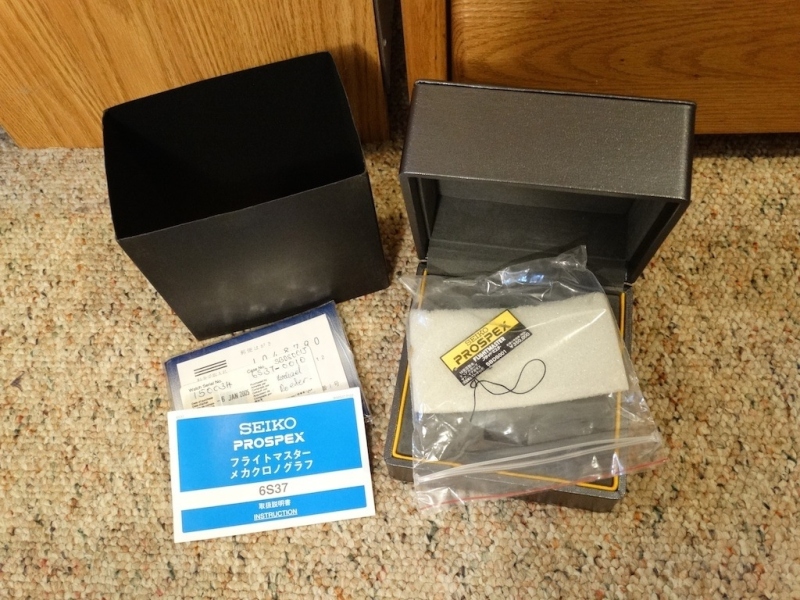
The supporting materials and packaging get the job done with no nonsense or luxury.
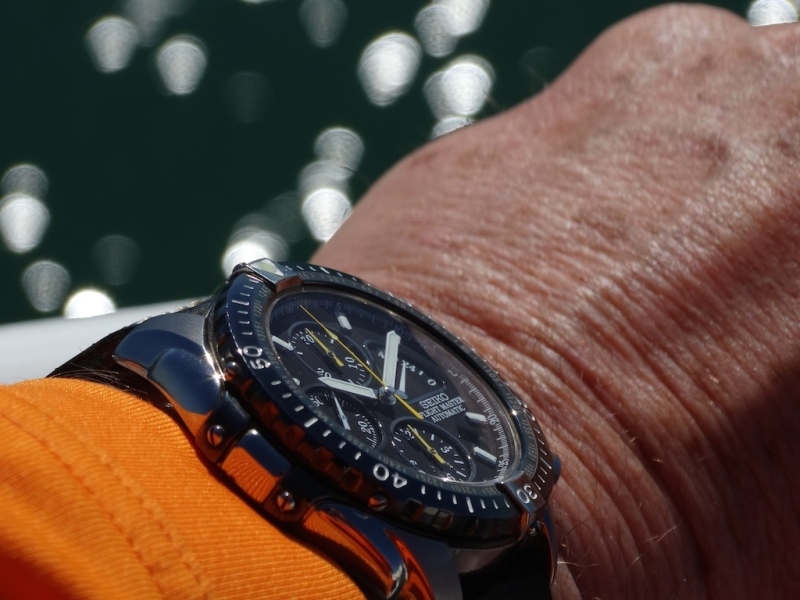
And here's an action shot to finish this profile.
Does anyone out there have one of this family of chronographs?
Cazalea
This message has been edited by cazalea on 2014-03-18 14:33:24
SEIKO PROFILE SERIES: AUTOMATIC COLUMN WHEEL CHRONOGRAPH
This installment of our SEIKO PROFILE series will cover the Seiko Flight Master automatic chronograph with power reserve. This watch features a number of other nice features of interest to watch enthusiasts, including: ceramic bezel with compass degree ma...

Watch and pics are great. Like the compass detail on the bezel
The movement looks well finished too. Great report including the previous, many thanks. Love this Seiko forum, I have just ordered a SNZH51K due to a recent report and I'm waiting for the right vintage King Seiko to come along. Cheers Steve

Fascinating
Hey cazalea, This has truly been a fascinating series of posts. Sorry I cannot contribute much as this is a totally new area for me. Fascinating that Tag Heuer turned to SII for a chronograph. Growing up, I heard a lot of "Japanese just copy this or that"...
Here's one thought - A Landmaster Automatic
I love this watch. It has a high-quality 8L335 automatic movement that winds and hacks, compass bezel (that can be turned to line up straight, something I failed to do for this picture) very exotic case design, etc. I forget which strap it came on but I l...
I think you nailed it!
Not too keen on the Landmaster, a bit too Bear Grills for my nature, but that Astron Quartz of yours is gorgeous. The hunt is on. Much appreciated, Dean
Here's a bit more on the watch - the commemorative Astron
I just reset the Daylight Savings time on this (yes, yes, I know a bit late) and the watch was 1 second fast since last November. Titanium case with ceramic top Limited Edition. Apparently only 10 came to the USA and luckily I got one of them. Here's the ...
Thanks for this
Unfortunately preliminary searches on the usual major websites show up no results currently on the market. They are proving rare indeed. I might just settle for the new Astron GPS (love the technology). Dean
A very nice watch indeed
I have had mine for about a decade, and like it on the bracelet. I don't believe there had been very many new automatic chronograph movement designs prior to this one since perhaps the 1970s. Here is a rendition of the movement with most of the rotor phot...
I suspect it wouldn't wind too well with only that much rotor
hence, we normal mortals have to put up with all that mass swinging about and blocking our view of the innards. Steve, thanks for adding those pictures. I haven't the inclination, talent or equipment to do that level of photography. I know you have a few ...