SteveG
1529

regarding that Guillaume Balance
Several pages ago I posted about my Tiffany pocketwatch:
home.watchprosite.com
to which ei8htohms was kind enough to respond in part:
"The balance is not Guillaume in my opinion, but rather a traditional
split bi-metallic balance. At least, it does not have the
usual
tell-tale sign of Guillaume balances: the rim on the short side is
usually extended. "
which sent me amateur researching the question of visually distinguishing between a Guillaume and an ordinary bimetallic
split balance. I found a few threads at the NAWCC website bemoaning the lack of absolute clarity on this subject. I found a
few pictures at Google image search, alas, most of them were mine.
In an effort to add to the discussion, here are pictures of a few ordinary bimetallic split balances: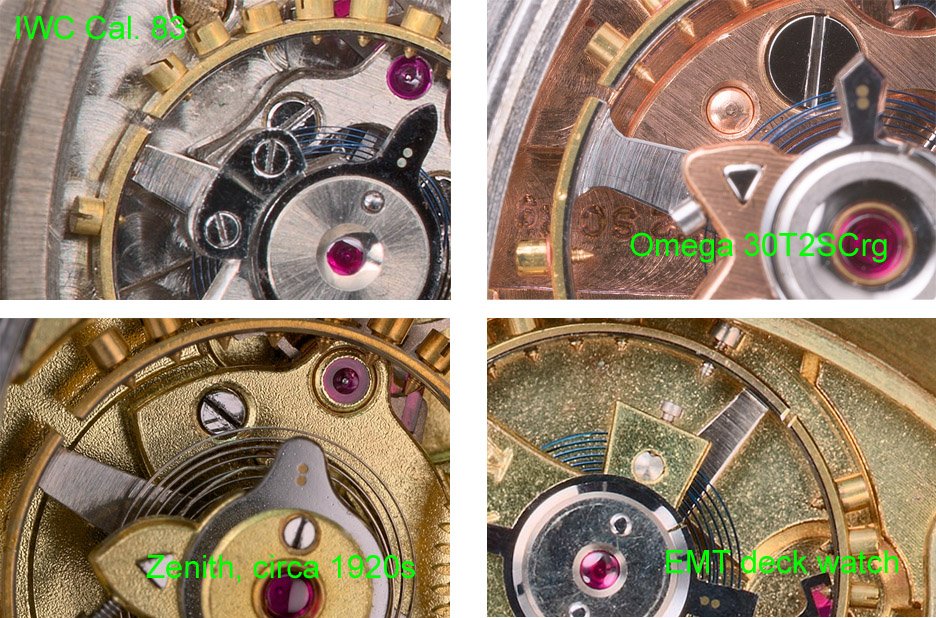
This seems pretty straightforward, each is split just barely past the balance arm.
Here are pictures of watches for which the seller (usually somebody I can safely assume is more knowledgeable than myself)
has indicated a Guillaume balance: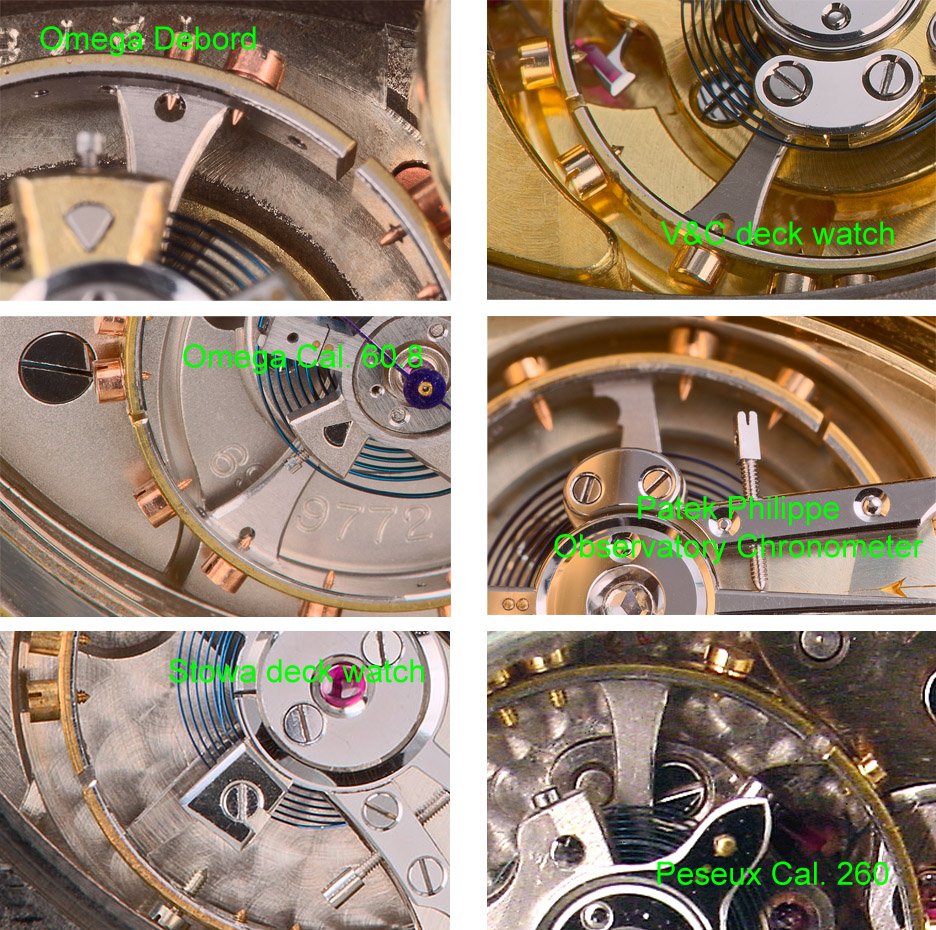
Here things are bit more complicated. Some balances show one screw past the balance arm, some two (or two holes), some
also have a screw directly at the arm. The outlier here is the Stowa, which shows only a distinctly elongated tail.
Finally, here is a picture of the subject Tiffany balance: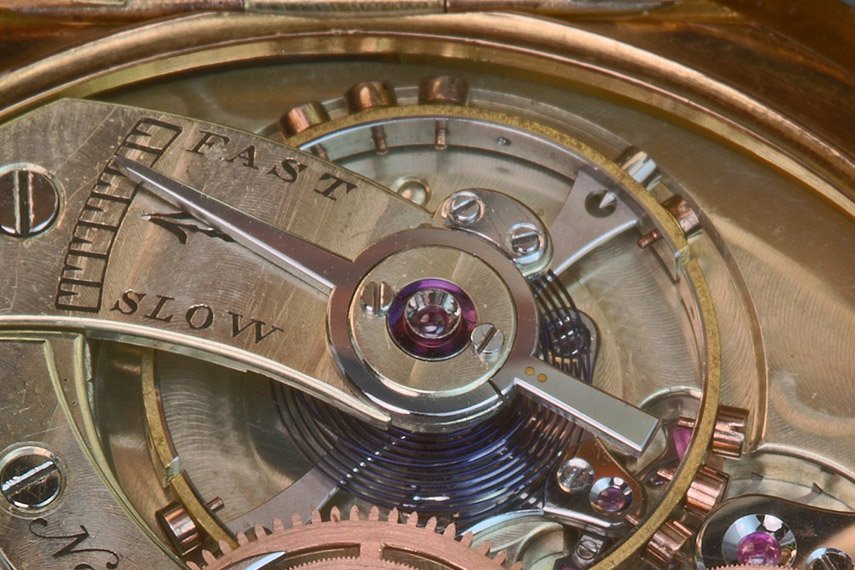
This seems to me to have a lot more in common with the latter group than with the former, mixing a modest (but not immediately
truncated) tail with space for one screw plus a screw at the balance arm, yet another variation.
I hope this helps a bit at least as stimulation!


regarding that Guillaume Balance

Hello, Steve,....
Thanks so much Suitbert!

Terrific- Thanks!
Thank you, Sebastian! I looked around
A picture for comparison

Thanks, Yes, indeed!
