SJX
[Purist]
8540

An analysis of Cartier's 2013 collection
Cartier’s new collection presented at SIHH 2013 is notable not just for the various watches, but for a few trends that reflect the brand’s development as a watchmaker. One is the invoking of Cartier’s historical timepieces with the new Crash and Mysterious timepieces. In the past, even during its first golden age of EWC watches, Cartier timepieces were distinguished by unusual, innovative and groundbreaking case designs. Not just mere shapes like the Tank and Santos, but in terms of construction like the swivel-cased Basculante, the waterproof Tank Etanche and even the Tank a guichet, with the jump hour display integrated into the case front.
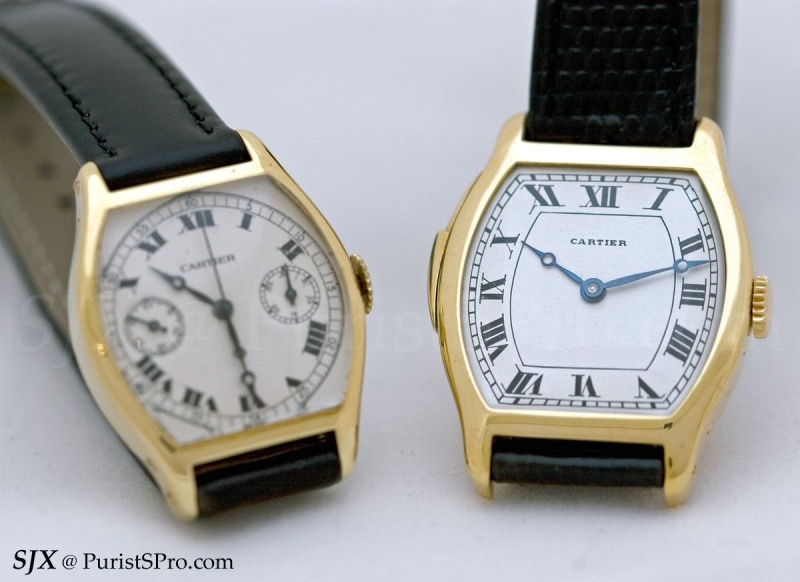
A pair of 1920s Cartier Tortue watches
For Cartier Fine Watchmaking specifically, the first few years of the line after its introduction in 2008 were ambitious, but the focus was largely on technical complications, arguably to establish Cartier’s reputation as a watchmaking. More than a dozen new calibres were introduced in that time, and most were complications, big and small.
The emphasis on complications is exemplified by watches like the Astroregulateur, Astrotourbillon and the two ID concept watches. Of the existing Fine Watchmaking models, the Santos Skeleton watches are the only example of watchmaking driven purely by aesthetics, that is not say with no complications.
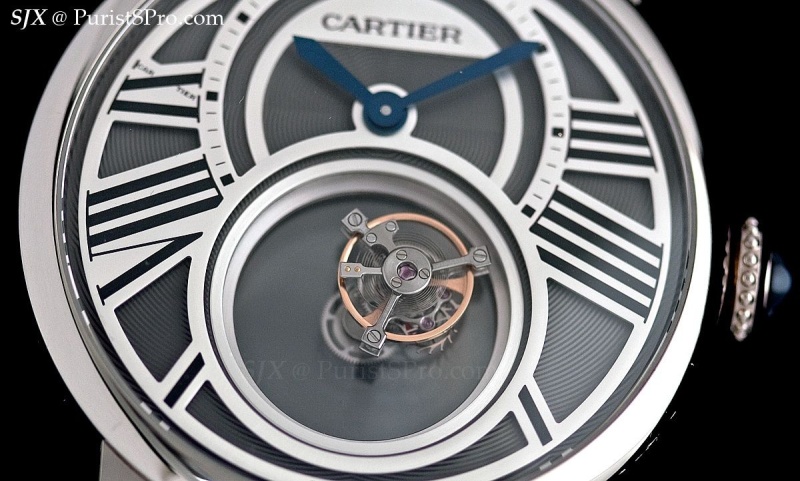
The Double Mysterious Tourbillon
This year’s two Mysterious watches are as much about aesthetics as technical watchmaking. These not only remind us of the iconic Cartier mystery clocks, but I believe also signals the maturing of Cartier Fine Watchmaking. I expect that means that the collection will see more emphasis on historical inspiration, aesthetics, alongside complications. I would not be surprised to see more form cases in the Fine Watchmaking line; currently the bulk of it is round.
And the new Crash with teardrop bracelet, though not part of the Fine Watchmaking line, reinforces my opinion that this is the case (no pun intended). Though Cartier reissued various historical case styles while the Collection Privee Cartier Paris was still in production, that more or less ceased after the Fine Watchmaking line made its debut.
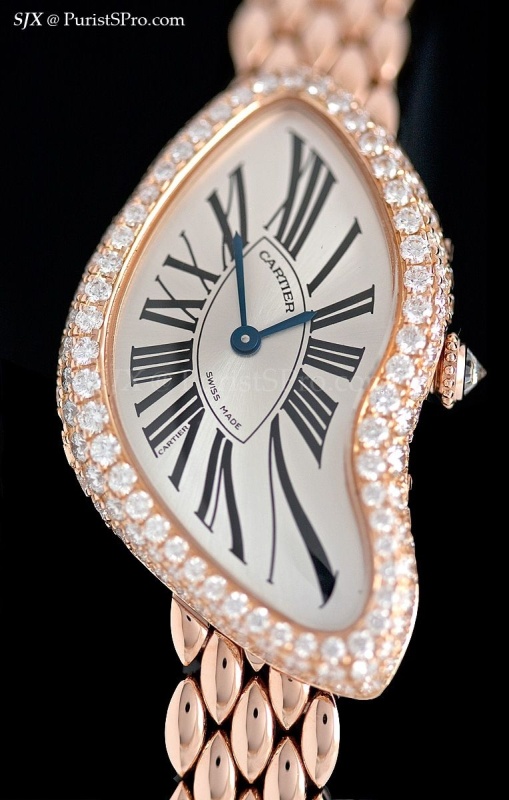
The new Crash
The second trend is obvious, and something that is happening across the industry. In-house, or manufacture or whatever you wish to call it, essentially not ETA, movements are slowly making their way across the mid-range collection. The new Calibre de Cartier chronograph with the 1904CH-MC, with a price of about US$11,000 for the basic steel model, is a good example of this. And future releases, perhaps during 2013, will also use the 1904 MC.
Unlike the development of the high-end Cartier watches, this will take place more gradually in my opinion. ETA movements remain reliable, and according to comments made by Johan Rupert, accessible to the group.
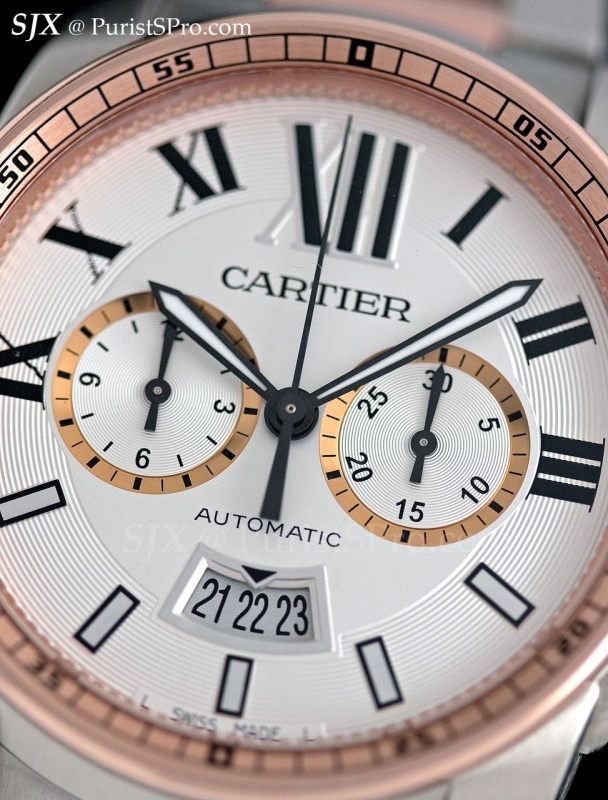
Calibre de Cartier Chronograph
The growing use of more sophisticated, but it has to be said, still mass produced, movements in the mid- and maybe even entry level watches is as important as the growth of the Fine Watchmaking line. These watches appeal to a much broader market, and give buyers in that segment an alternative to mass brands like Omega, Breitling and Rolex, and also more technical brands like JLC and IWC.
- SJX
This message has been edited by SJX on 2013-02-09 06:17:38 This message has been edited by SJX on 2013-02-10 19:41:52 This message has been edited by SJX on 2013-02-17 21:11:58
Available on the marketplace