SJX
[Purist]
8540

Creativity by committee
Product development at Cartier is a rigorous and complicated undertaking involving dozens of people from marketing and technical development. Watches are not created in isolation but with careful regard to the overall brand strategy and identity. In fact, new watches are so important that Cartier CEO Bernard Fornas himself approves every new launch. For those who say that too many cooks spoil the broth, or that committees are the death of creativity, Cartier is here to prove you wrong.
The development area in La Chaux-de-Fonds
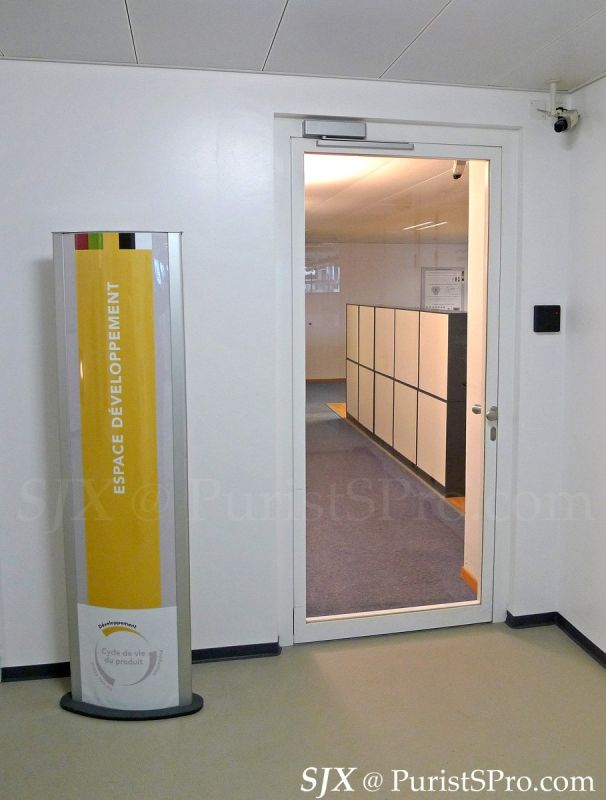
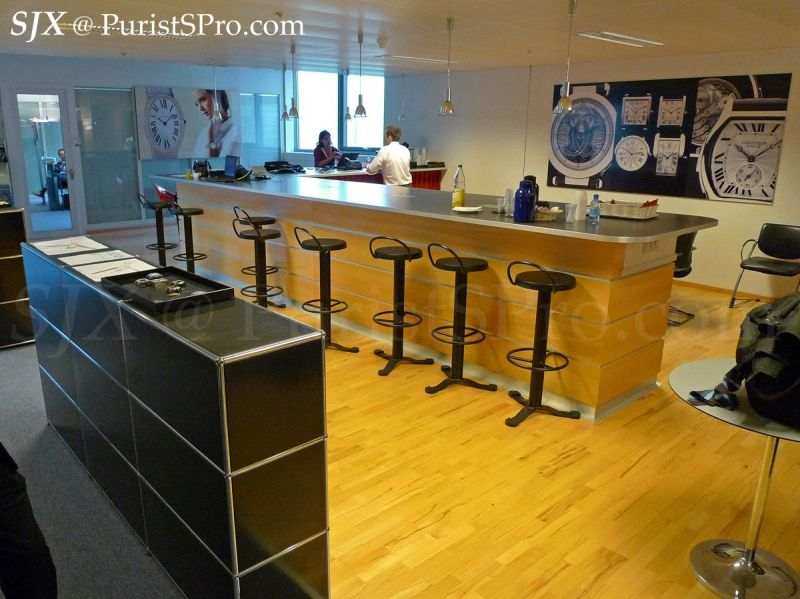
The Studio
The creation of a new Cartier watch generally starts with the Studio at the manufacture in La Chaux-de-Fonds. Every week, about 14 members of the product development team, with about half from marketing who fly in from Paris headquarters and the rest from the manufacture (including head of technical development Carole Forestier), gather in the Studio for a full day meeting to discuss any of the 150 to 200 projects that are simultaneously underway at any one time.
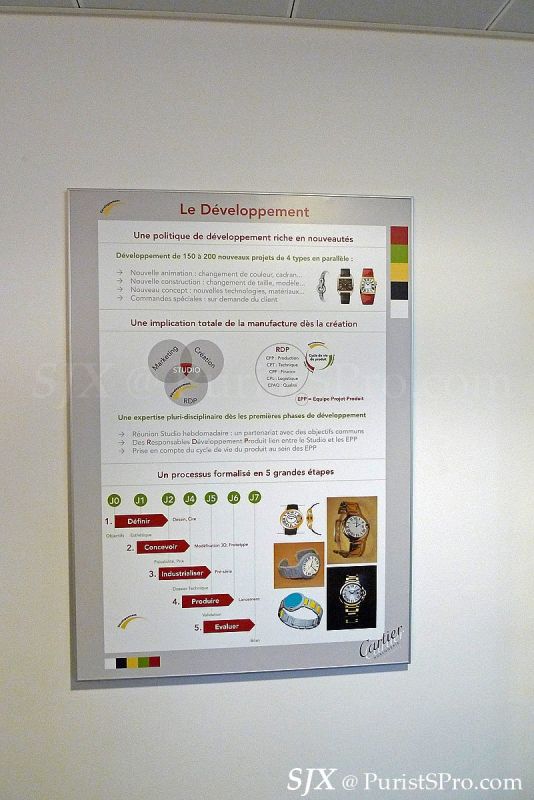
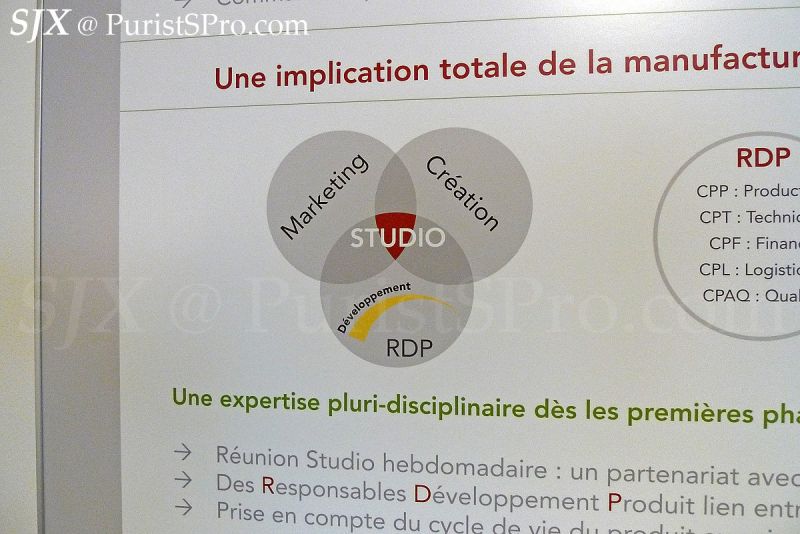
The Studio encompasses Marketing, Creation and R&D...
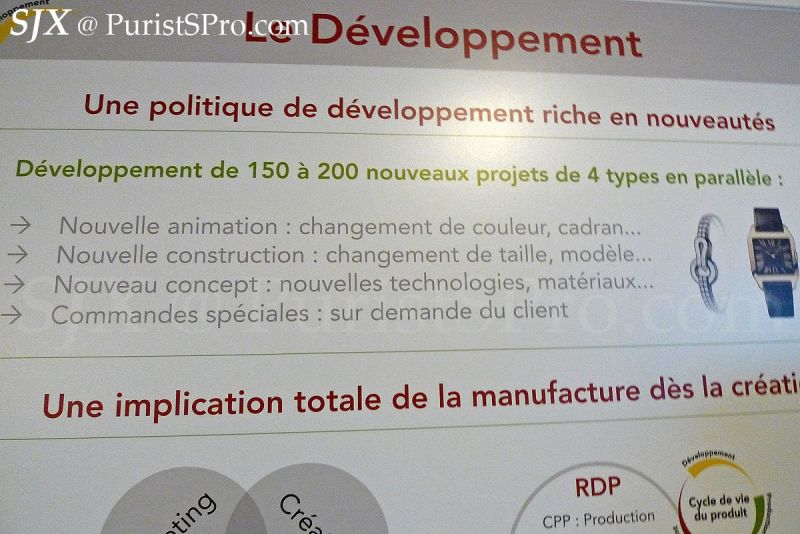
And it works on new products, concepts and special orders
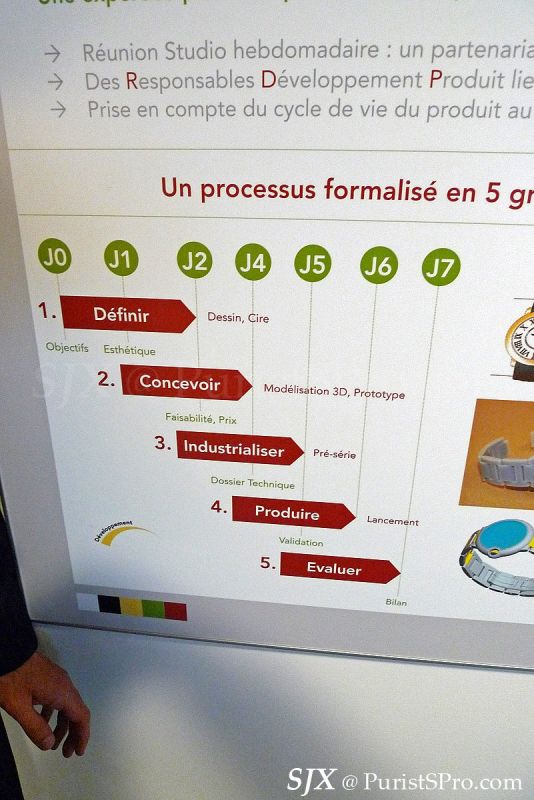
The five steps for production: concept, prototype, pre-series, production and evaluation
Each these marathon sessions, dozens of projects are discussed, and they can be at any stage of the development process, starting with new concepts all the way to finalising the strap for an upcoming product. It typically takes 12 to 18 months for a project to get from concept to final product. The level of attention to detail is amazing, absolutely no aspect of a watch is left to chance. Even the style and colour of stitching for the straps are important, so important that there is an entire display case of strap materials and samples in the Studio.
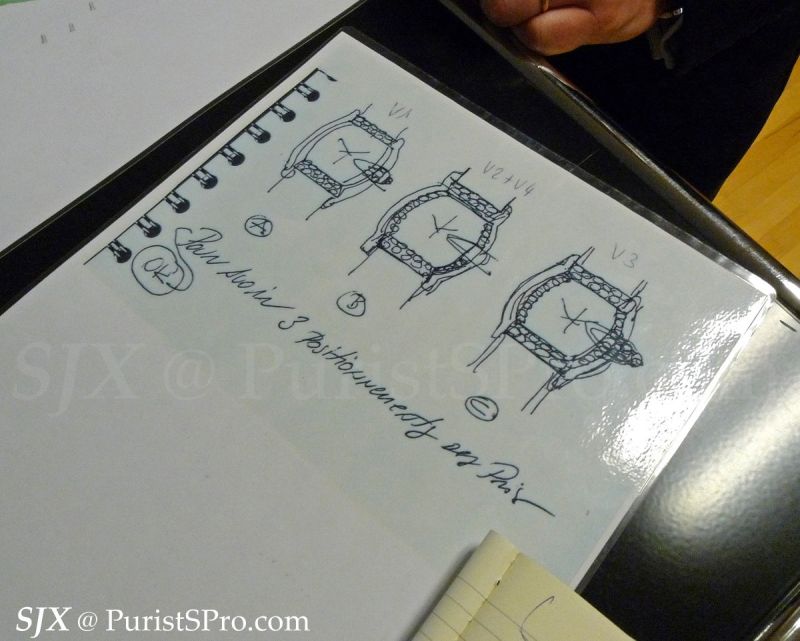
Below: Sketches for the Roadster; this is what it looked like before it was finalised
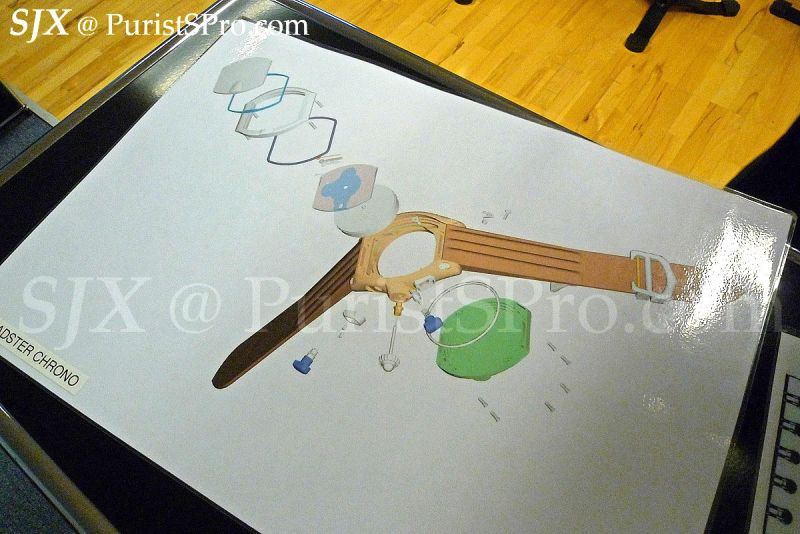
Below: Strap options in terms of construction and lining
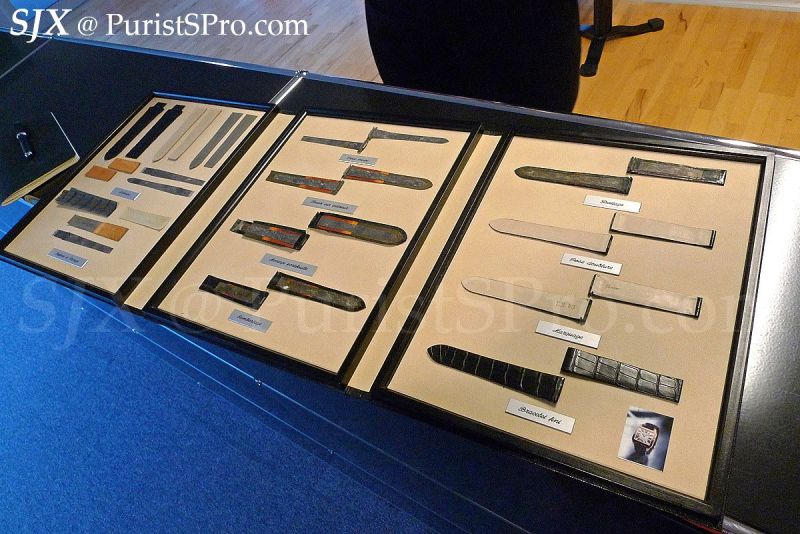
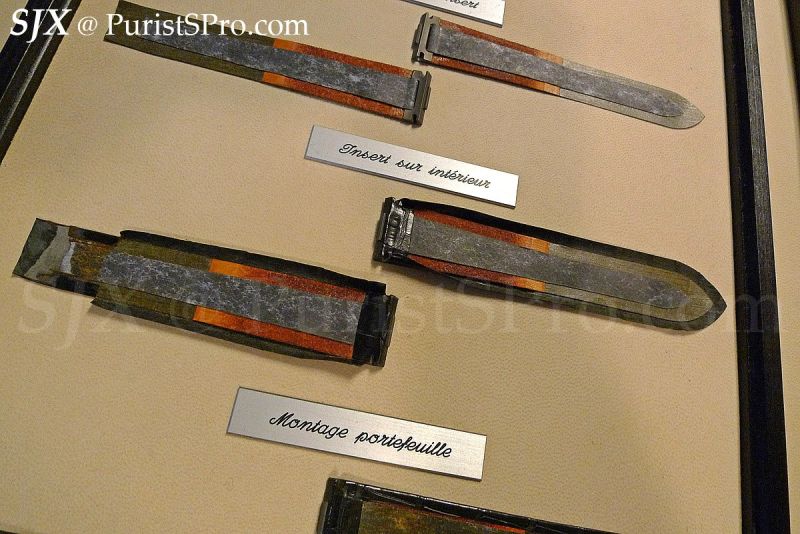
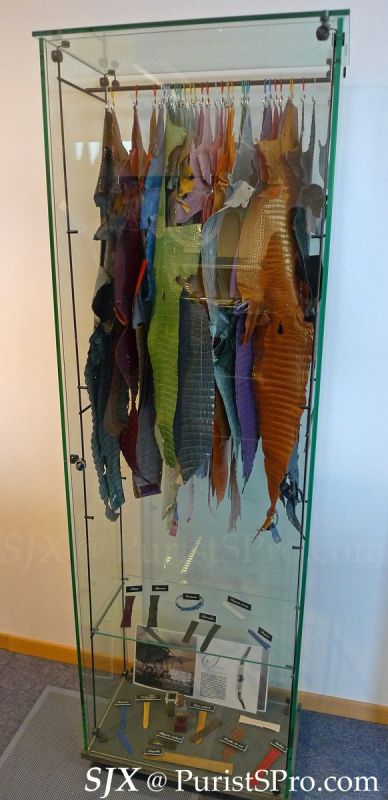
A plethora of colour swatches are available, mostly in alligator hide
From a marketing perspective, watch development comprises five essential stages – creation, pricing, marketing, production quantity and launch. The product development meetings in the Studio deal with the first step of creation, from concept to final product, while the latter processes are generally the domain of the headquarters in Paris.
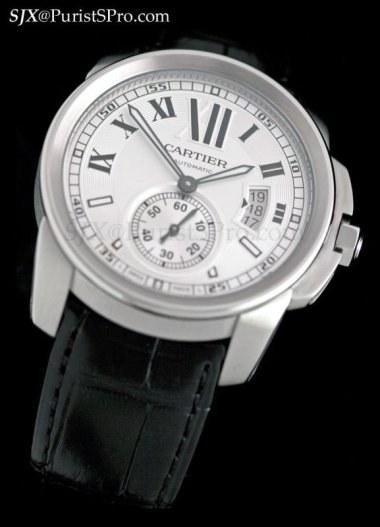
The genesis of a new product can come from any part of Cartier but it is always thoroughly worked through during the Studio meetings. For instance, according to Hélène Poulit-Duquesne, the Director of Watch Marketing at Cartier, the Calibre de Cartier was developed because Cartier needed a masculine and technical watch to increase its appeal to male clientele. On the other hand, some other ideas have originated from Carole Forestier’s prolific notebook sketches.
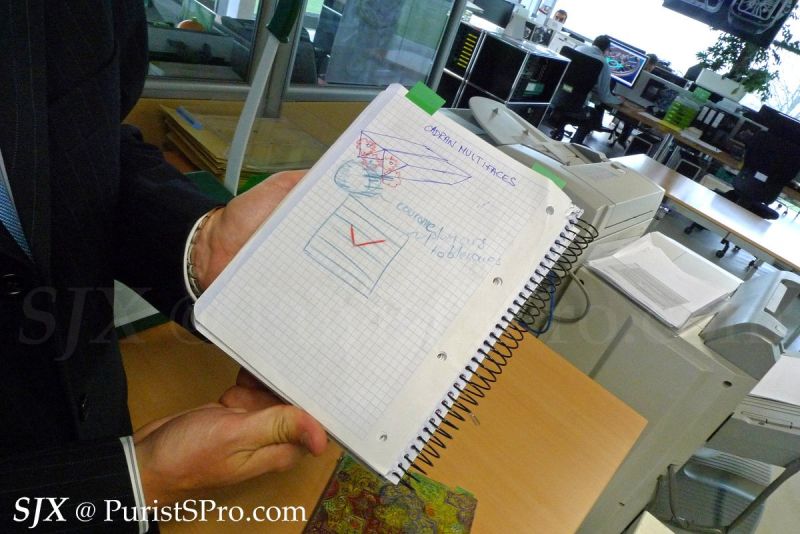
Sketch for the Santos Triple 100
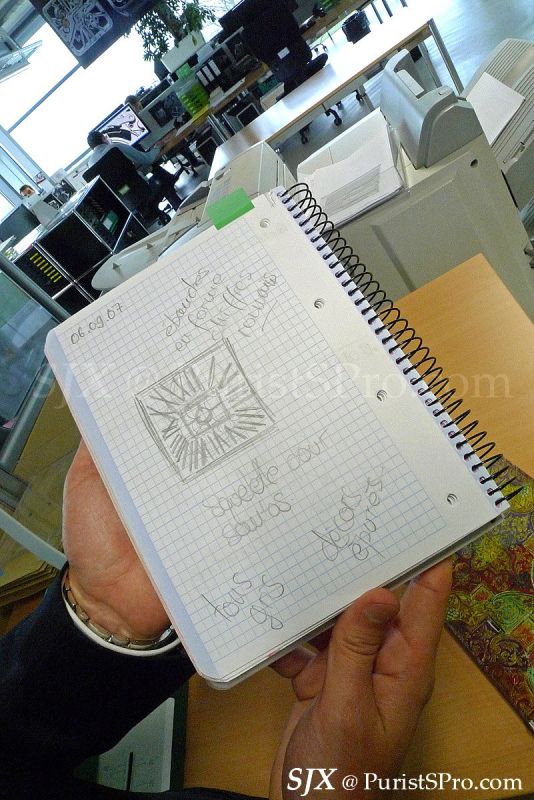
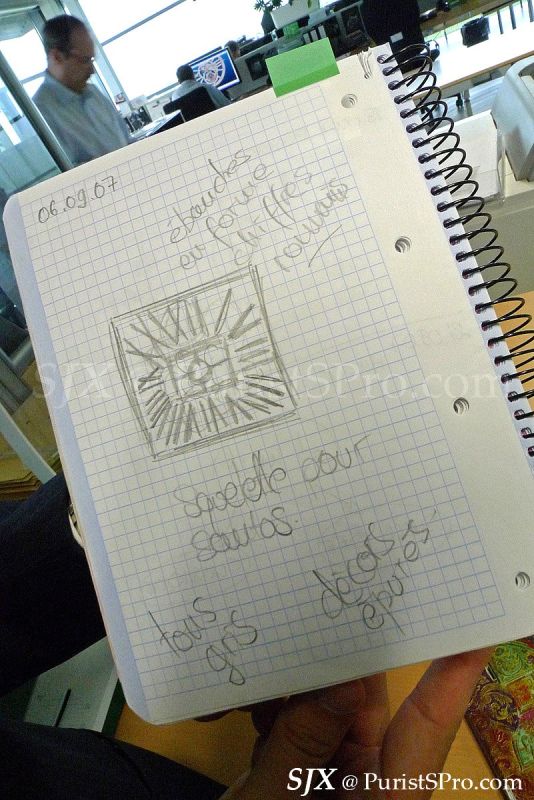
Santos Skeleton
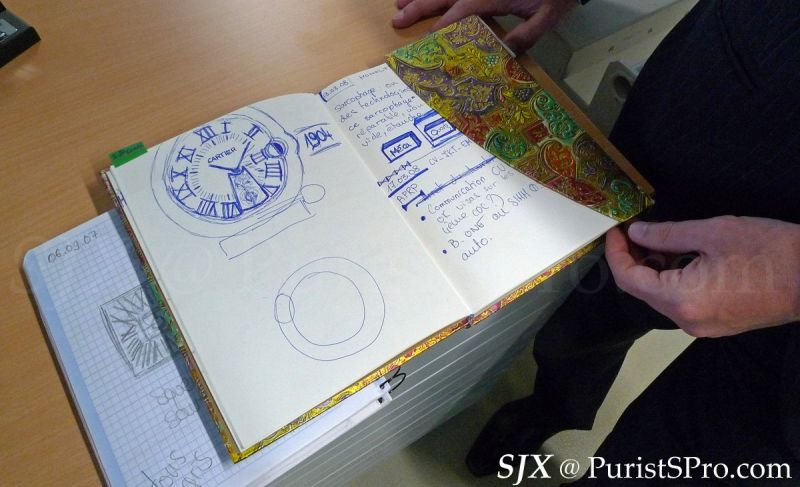
Astrotourbillon
But this process is dynamic; ideas go back and forth between departments and people. As an example, the Astrotourbillon was conceived as a result of a Studio meeting and Carole Forestier was told to create a tourbillon that was different from all the others.
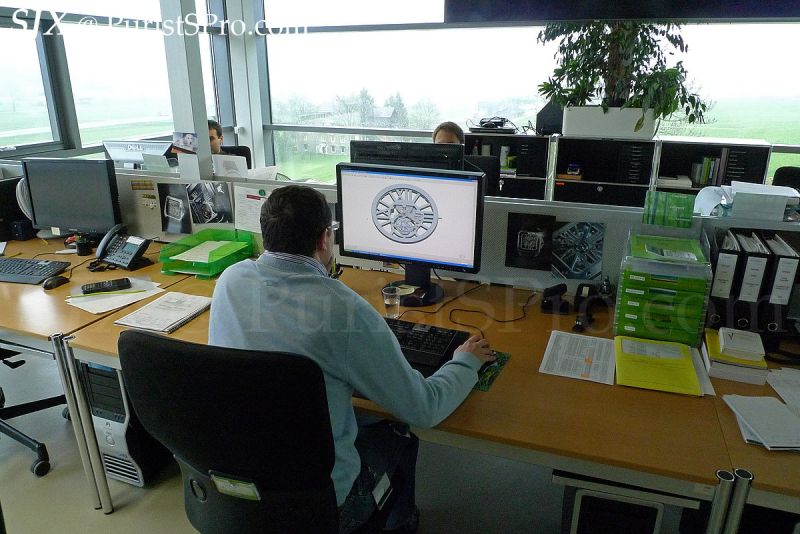
Below: The Technical development department
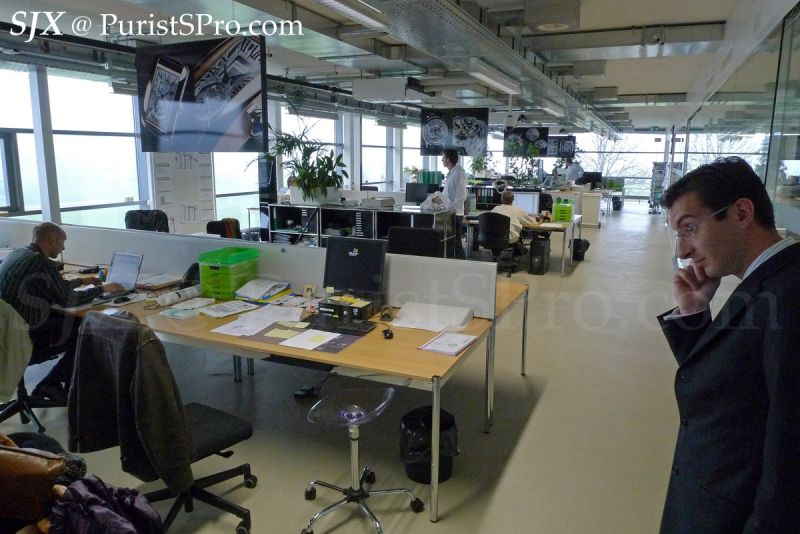
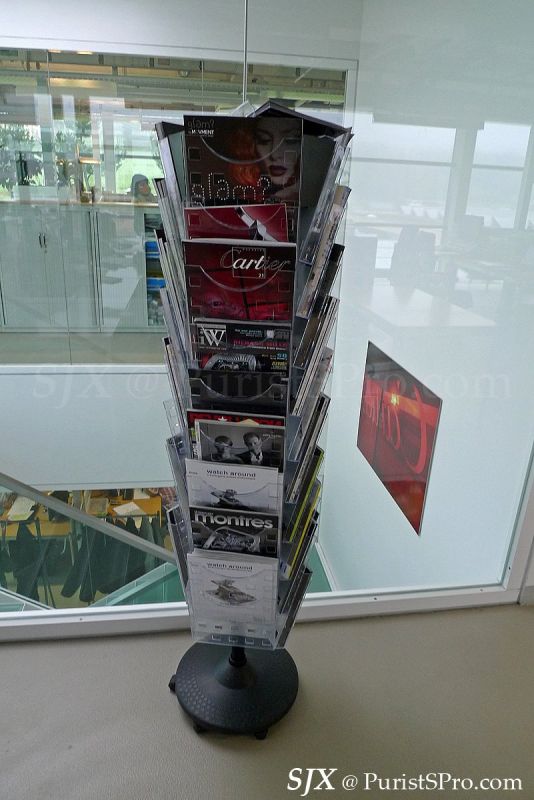
The brains in Cartier keep track of the industry through the print media, with a rack of the latest magazines, and of course through the internet
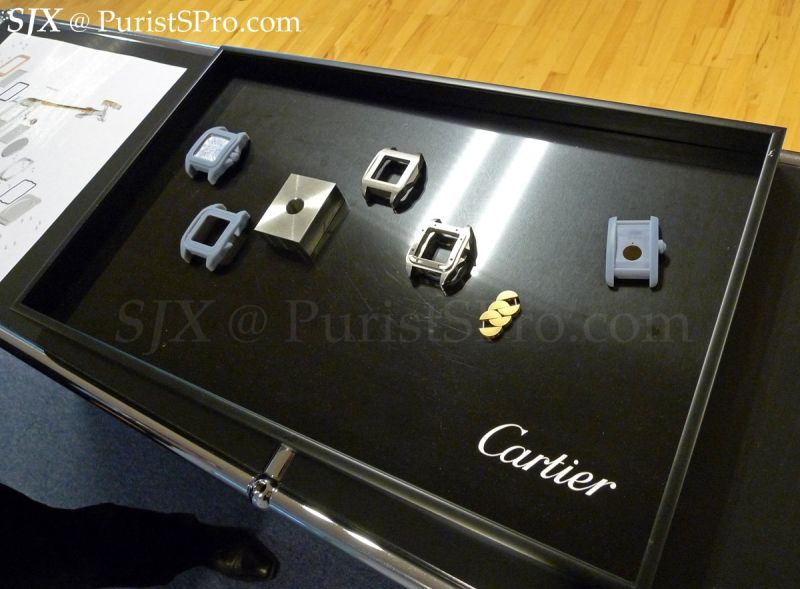
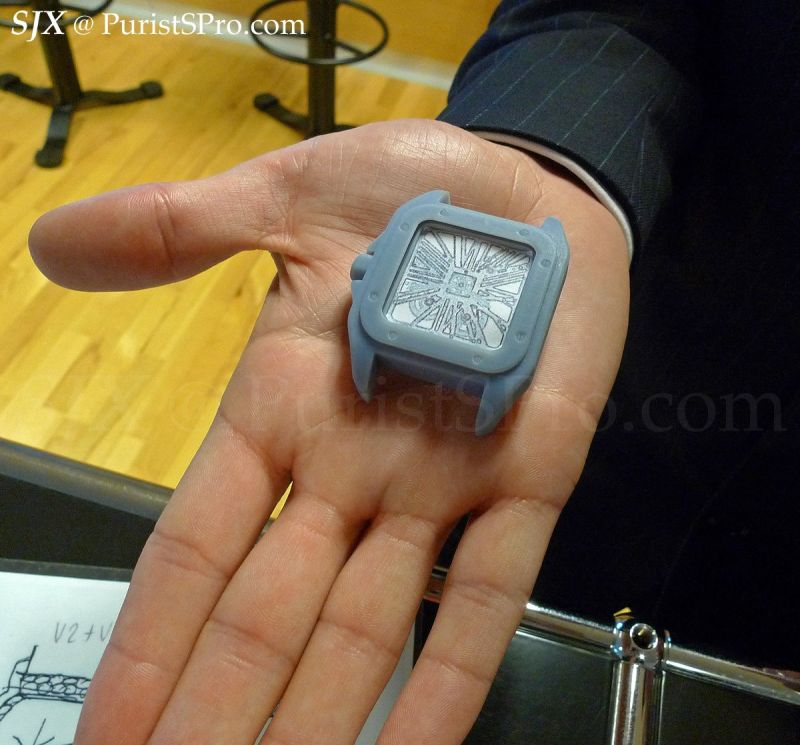
Afterward the concept is approved, prototypes and models are created. As a result, the proceedings of these meetings are not only conceptual, but also tangible. There is a lot of metal, plastic and leather in the form of models and mock-ups being passed around. Very often, multiple iterations of products are presented, in different case shape and sizes, or with more minor variances like hands and crown.
Below: Various stages of the Santos 100 Skeleton
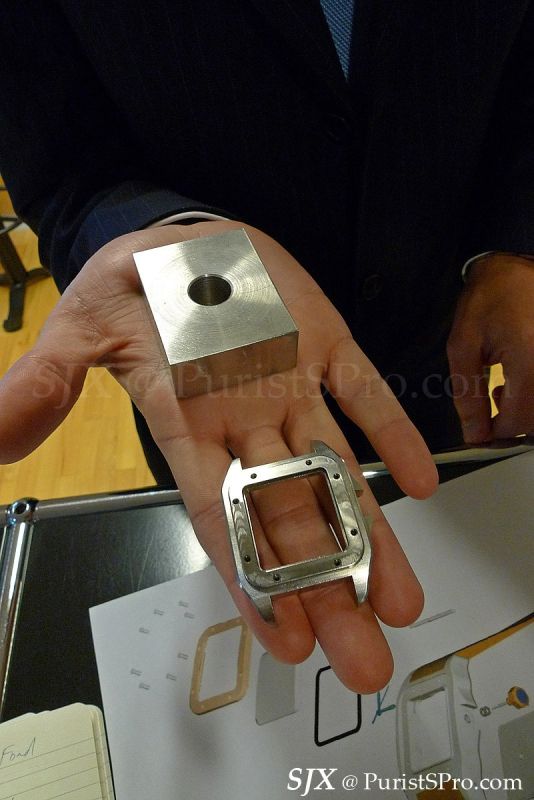
And it is not only new products that are evaluated, but also line extensions and custom orders, like a new dial for the bestselling Ballon Bleu or a custom made Santos Mystere. Sometimes, product ideas are turned down, for various reasons. For instance, a recent order for an unusual bespoke Crash watch was declined, because it was too far from what Cartier wants the Crash to be.
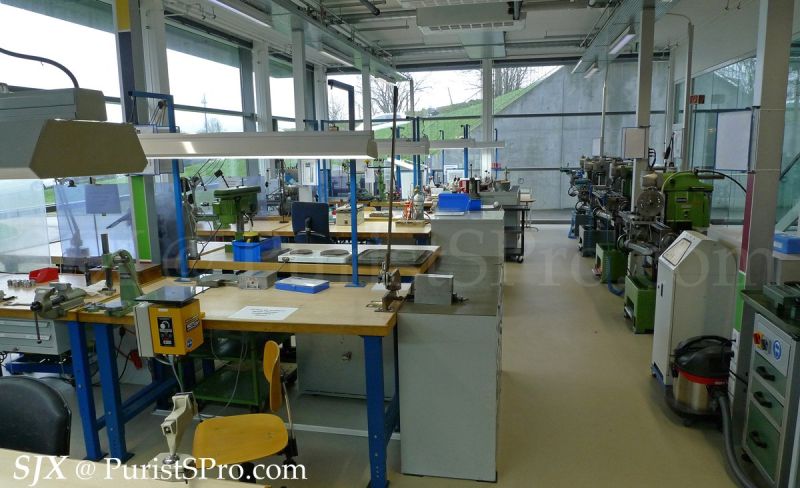
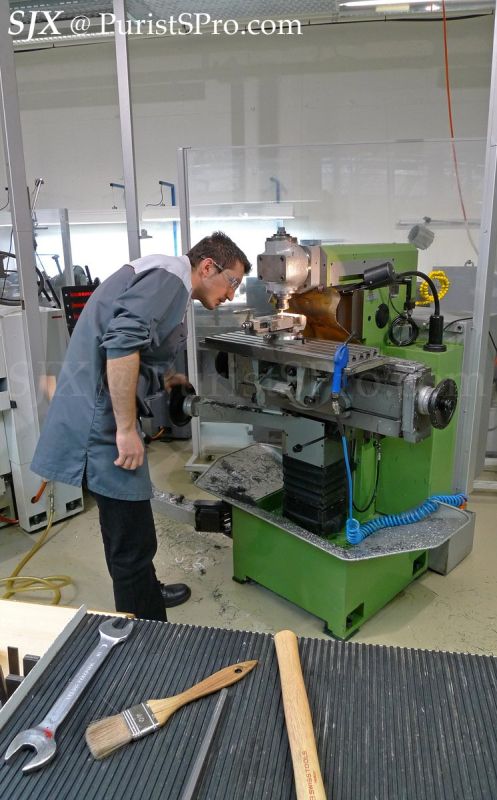
In fact, there is a department dedicated to create prototypes for evaluation. Fully equipped with the necessary milling and drilling machines, the prototyping section can create practically an entire watch from scratch, even the strap.
Resin models...
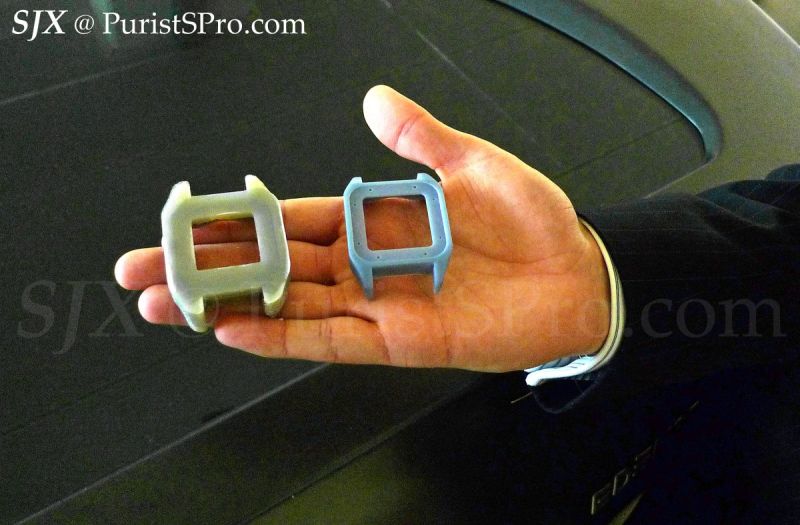
are printed in 3D by this machine.

Subsequently, actual protoypes - cases, movements, the works - are made here.
Like other firms in the industry, Cartier works with a three year strategic plan for its products. Because Cartier is a large, multi-product brand, the development of watches is part of a broader strategy. For example, one can discern the recent push towards male-oriented products with the Fine Watchmaking collection as well as the new lines of leather goods and even the male-accessories sections in new boutiques.
Right now the minds at Cartier are working on the product pipeline extending several years down the road. The collection to be presented at SIHH 2011 is already largely fixed and I have heard it will be mighty impressive. In fact, there is a rumour that a notable collector has already ordered a customised version of one of the upcoming novelties before even seeing it. Fortunately, it is only 3 months to SIHH.
- SJX
This message has been edited by SJX on 2010-10-12 05:47:00 This message has been edited by SJX on 2010-10-12 18:16:47 This message has been edited by SJX on 2010-10-17 18:51:53
Available on the marketplace




Creativity by committee
Great Post...
Custom orders have long been offered by Cartier
I wanted to

All too often the extensive and exhaustive work behind the
An telling anecdote


Superb post
You are right