Nate1580
27

Returning to the Original Ludwig Perpetual After a Very Difficult Ownership Experience, Need Advice From Long-Term Owners
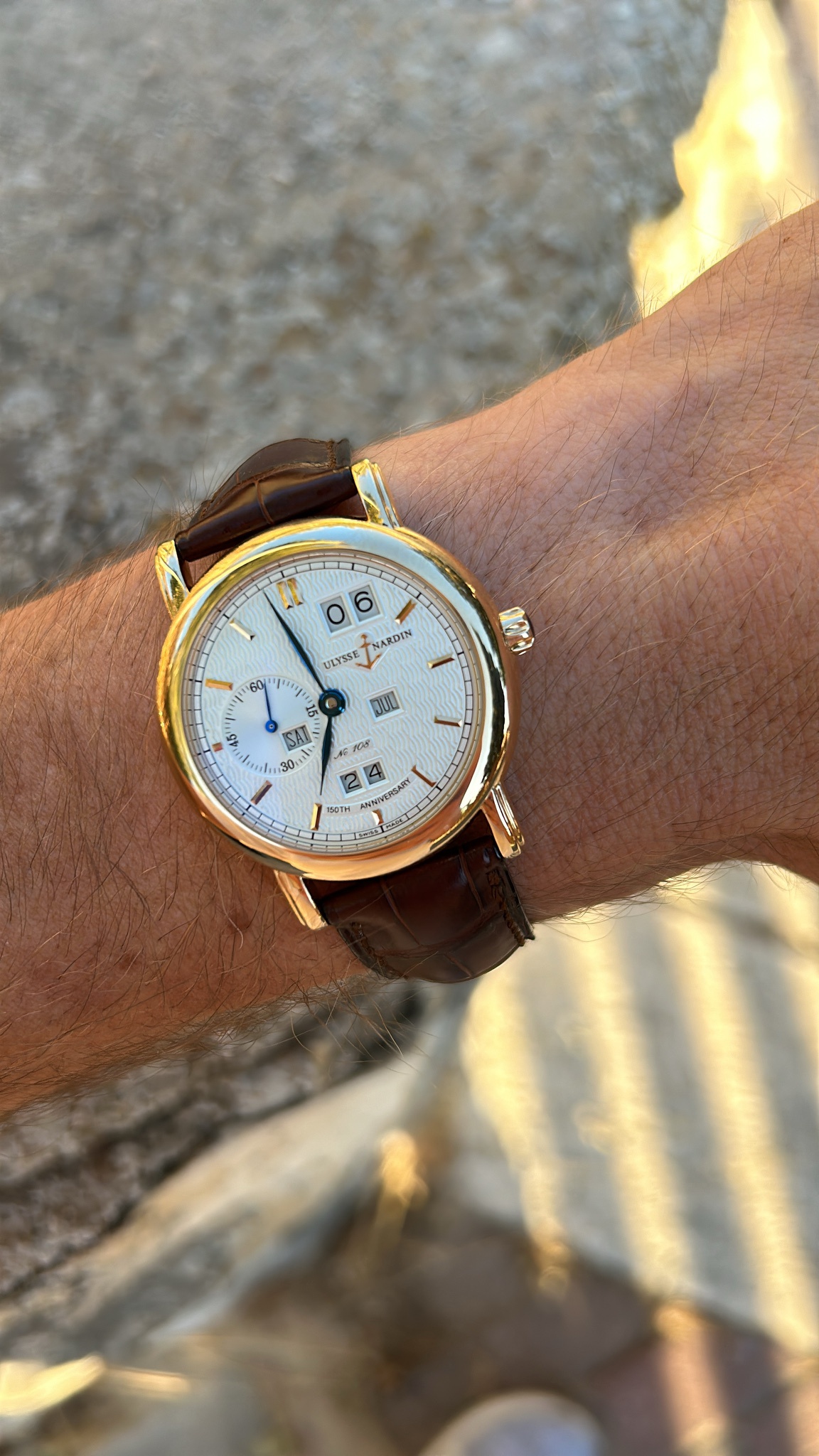
Hi everyone,
I’ve been going back and forth on this for years and would really value insight from those of you who have owned or lived with the Ludwig/Oechslin perpetual calendar pieces long term.
A few years ago I purchased an early Ulysse Nardin Ludwig Perpetual Calendar ref. 336-22 (original rose gold version without the GMT complication), full set, for what at the time felt like an unbelievable price, around $9,400 from Rostovsky Watches - https://www.rostovskywatches.com/watch/Ulysse-Nardin-336-22-Ludwig-150th-Anniversary-Perpetual-Calendar-in-Rose-Gold-on-Brown-Crocodile-Leather-Strap-in-Silver-Dial-Only-150pcs-Made/64099?srsltid=AfmBOoqfXNECKaP-6WQfVO-XDcMAysCUrxitNF7VgBIuyEmuafOXGzg7
Honestly, the buying experience and customer service themselves were wonderful and I still remember the excitement of getting that watch.
Unfortunately, despite absolutely loving the watch conceptually, I ended up having an extremely frustrating ownership experience.
The watch would consistently stop after about 4 days of wear. I then sent it to a private watchmaker who had worked for Ulysse Nardin in the past, and after his work it improved somewhat, but would still stop after roughly 7–10 days. Usually it would stop overnight, around 4am.
At that point I sent it multiple times to Ulysse Nardin in Boca Raton. Every single time it came back “within spec.” Amplitude looked good. Timekeeping looked good. Calendar switching looked good.
I wore the watch constantly, typically 16+ hours a day. I made sure it was fully wound. I tried every possible solution I could think of. I literally spent almost two years trying to figure this out.
Eventually I gave up and sold it (with full disclosure to the buyer of course), but I’ve regretted it ever since. It was the watch I had purchased for my master’s degree graduation, and I genuinely believe Ludwig Oechslin’s perpetual calendar system is one of the most brilliant and elegant complications ever made.
So what I’m really trying to understand now is this:
1. For those who own or have owned these early Ludwig perpetuals, is it normal for them to require occasional manual winding even when worn daily?
In other words, is the automatic winding system sometimes not quite sufficient on its own long-term because of how power-hungry the modular perpetual system is? Do some owners effectively “top up” the watch manually every few days to keep everything stable?
2. Has anyone here experienced something similar?
Meaning:
- a watch that tests perfectly on the bench,
- but in actual wear still gradually runs down over the course of days unless actively managed?
3. Is this simply the nature of these earlier modular constructions?
I understand these use a modified base movement with the perpetual system added on top. I’m wondering whether, in real-world wear, there can sometimes be marginal winding efficiency or energy delivery despite technically healthy performance numbers.
4. Have later versions improved meaningfully in this regard?
For example:
- the GMT ± perpetual models,
- later executions like the Ulysse Nardin El Toro,
- or the more “in-house” evolutions.
Are they genuinely more robust in day-to-day ownership, or fundamentally still very similar?
5. If you were buying today, where would you personally go?
- Original late 90s / early 2000s Ludwig pieces
- GMT ± Perpetual
- Later models like the El Toro
Part of me desperately wants to go back to the original because of how special it felt. I genuinely miss that watch and I’m friendly with the collector I sold it to who would probably sell it back to me (for a very healthy profit 😂)
Though I’m scared of repeating the same experience again. Perhaps it would be best to get a different one (or a newer model.. )
As another side note: I recently found this yellow gold example for sale on eBay from Japan:
https://www.ebay.com/itm/188345303226
Interestingly, this one appears to have only the rotor in white gold/rhodium plating, whereas my rose gold example had the full silver-colored rhodium plated movement finish throughout.
Does anyone know why that is?
- Earlier production?
- Different movement finishing generation?
- Transitional execution?
I’d also love any thoughts regarding:
- buying from Japan and importing to the US,
- experiences with Japanese dealers,
- and honestly whether this particular watch seems like a good example to pursue.
And if by any chance anyone here owns (or is considering selling) one of the earlier original Ludwig perpetuals, I would absolutely love to hear from you.
Sorry for the extremely long post. This whole experience genuinely stayed with me more than almost any other watch I’ve owned, and I’m really hoping some of the experts and long-term owners here might help me finally understand whether:
- I simply had an unfortunate “lemon,”
- whether this behavior is actually somewhat normal for these watches,
- or whether I should instead be looking toward one of the later evolutions of the platform.
Thank you all very much in advance, I truly appreciate any insight.
Returning to the Original Ludwig Perpetual After a Very Difficult Ownership Experience, Need Advice From Long-Term Owners

Hi my friend, sorry to read that your experience with this piece has been extremely frustrating, to say the least.
❤️
Sorry to hear about your bad experience.
Thank you 😊
I hope you can find a specimen

I find this watch very appealing and I fully understand your desire to come back to it.

I have the Perpetual Ludwig GMT +/- ... and I can't say that I've ever had an issue with its power reserve.
Wish you posted here before parting with this special watch
Interesting:)
Thank you 🙏
