
cazalea
[Seiko Moderator]
20995

OR, why are the lines drawn where they are? OR what is time anyway?
Riley,
A GREAT question.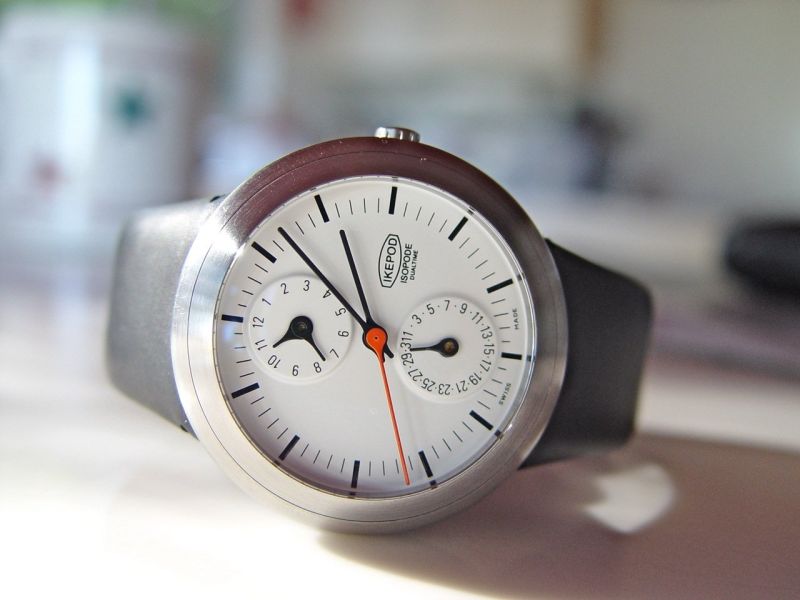
IKEPOD with independent sub-dial set at 1/2 hour past Greenwich Mean Time (a very rare feature on dual-time watches)
Since it's winter, and some of us have bad weather (or heaven forbid) football games on in the house, here's a suggestion.
Just for fun, grab a six-pack ( or two, trust me) and go on over to the Wikipedia and read up on (I suggest this order)
- Standard Time
- International Date Line
- Time Zones (not to be confused with that other watch website)
- Greenwich Mean Time
- Coordinated Universal Time AND Universal Time
- Daylight Savings Time
- nautical time
Imagine the hassle for shipboard IT personnel? I read this recently
"The servers on board most ships are set to Zulu time or Greenwich Mean Time (GMT). That is the one global time zone with a zero offset, the time zone from which all others are calculated. Our US Pacific Time Zone, for example, is currently GMT -8:00. So onboard time-keepers (and computer servers) keep their time constant, which helps ships cruising in different time zones stay synchronized with one another and saves shipboard administrators a lot of hassle. However, the crews and passengers want to know the local time. GMT, or Zulu time, doesn't cut it when it's time to ring the dinner bell out in the South Pacific."
I have seen stories about variable speed master clocks on older ships, where you could set the time/day/distance equation and the clock would run slowly enough during the journey (let's say 5 days from London to New York) and would be on time when they arrived, with no "jumping" for each time zone. All the "slave" clocks throughout the ship would be controlled from the one master time-keeper. On the reverse journey the process and settings would be reversed. Of course you have to make sure the passengers use shipboard clocks and not their own watches, or the captain's table could be a mess!
"Before 1920, all ships kept local time on the high seas by setting their clocks at the morning sighting so that, given the ship's speed and direction, it would be 12 o'clock when the sun crossed the ship's meridian. The local apparent noon is 12 noon."
Like with so many other things, we in the US of A have been insulated from some of the more disruptive effects of wars, like having your time zone changed by invaders (even in the last century). The Japanese changed zones of some of the territories conquered in WW II, but I can't find the articles right now.And we don't have the shock of a 3.5 hour time change going from Western China to Eastern Afghanistan!
Before attacking
- solar time
- sidereal time
make sure you have some beverage left (I'd get a whiskey)
Cheers
Mike
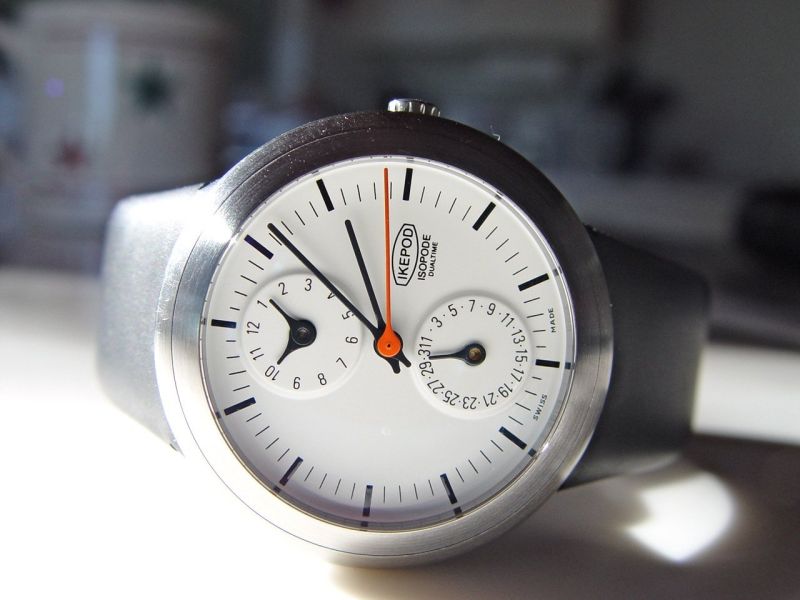
IKEPOD with independent dial set at Greenwich Mean Time
This message has been edited by cazalea on 2008-12-30 14:20:02

