
Will the T-25 dial of the Explorer 14270 develop patina?
I just tried this and notice the dial of the Explorer 14270 has tritium (T-25) on it. I would like to know if this will develop patina (yellowing) over the years?
The seller tells me it will not develop the much-loved yellowish effect but isn't that contrary to what tritium dials are all about? Unless I am wrong. I find that curious, as we see numerous Explorer 2s of the same era developing nice patina. The Explorer 1 is from 1998. Is there a difference in the tritium quality used?
If the T-dial 14270 doesn't yellow-out in the years to come; would it then be more practical to get the 114270 which is a much improved model?
I am hoping someone can advise or perhaps share a picture of their 14270.
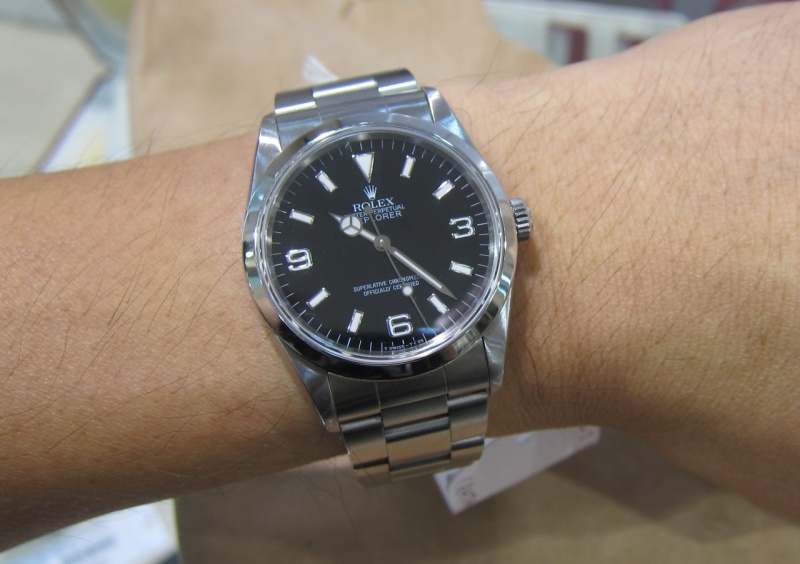
Any advice is much appreciated.

It will depend on differenrt factors, such as light, warmth humidity, and so on.
I saw some recent T swiss < é( which didnb't develop any patina, and I saw the contrary.
Best,
Nicolas
Hmmm that's make it a more difficult decision
Tried searching online for some picture references, that's also hard to know for sure if the cream tone is a result of lighting or real patina.
Best if some of our fellow Purist can share their 14270s to see
There are almost no chances it will get some strong patina
If it didn't get some, yet...
Why not going on a former model, such as the 1016?
Best,
nicolas This message has been edited by amanico on 2012-05-10 09:49:08
Haha...always the devil aren't you
Am afraid to venture into the 4digit vintages, and to be honest I don't know much about them and very afraid of getting burned.

Don't be afraid..............

Oh no, there's 2 of you....haha
Here in Malaysia, we don't get much choice and prices are usually higher. So it's difficult to come across them.
But I suppose it's never a no-no, if I am pointed in the right direction, meet the right piece at the right price, I'll be bitten too

Send the money to Amanico and he help u find a 1016. Trust the lawyer. [nt]
Lol.....contrary to everything everyone says about lawyers
It's the 114270. Super white luminova zero patina.
very good to know they have other beauties besides watches

That's the reason we need to travel.


Depending on conditions,
as Nicolas mentioned I suppose and I also read somewhere (old wives tale?) that storing it in the dark helps. The same reason I went for this Exp. 2 (1994) that showed some signs of patina, hoping that it will darken over time. The tritium used must be the same for both Explorers I presume.
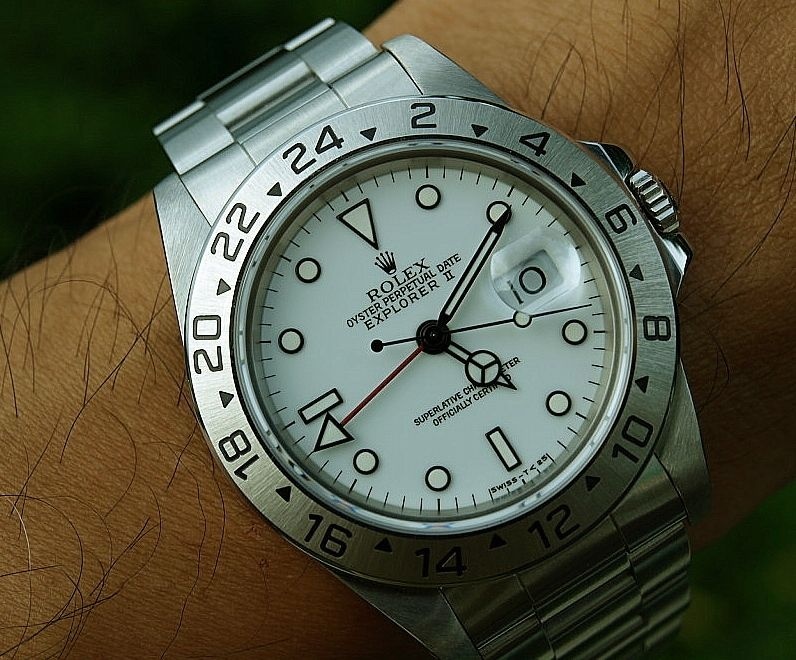
cheers
fernando
Thats what i thought too Fernando
Assuming Rolex used the same type of tritium quality as the Exp2, it should then age quite similarly as well.
Have seen some really nice examples of patina aging on the Exp2 before, but just so little from Exp1 14270 owners. For 1016 models, needless to say, if its patina you want, its patina you got.
That's a beautiful wrist shot too.
I've seen Explorer IIs before 1995 / 96 developping some very warm patina, though.
When, at the same time, I know a lot of 16570 from ' 95 / 96 which didn't develop a strong patina, much more subtle.
Best,
Nicolas
This message has been edited by amanico on 2012-05-10 22:13:55Thats the thing.....is it the different quality of the tritium used or
Maybe both. Hard to say since we don't have accesss to the technical informations
Abotu the composition of the tritium used.
But it is a matter of fact that dials from before 95 / 95 had a stronger patina...
Best,
Nicolas