
Green Submariner C in different depths
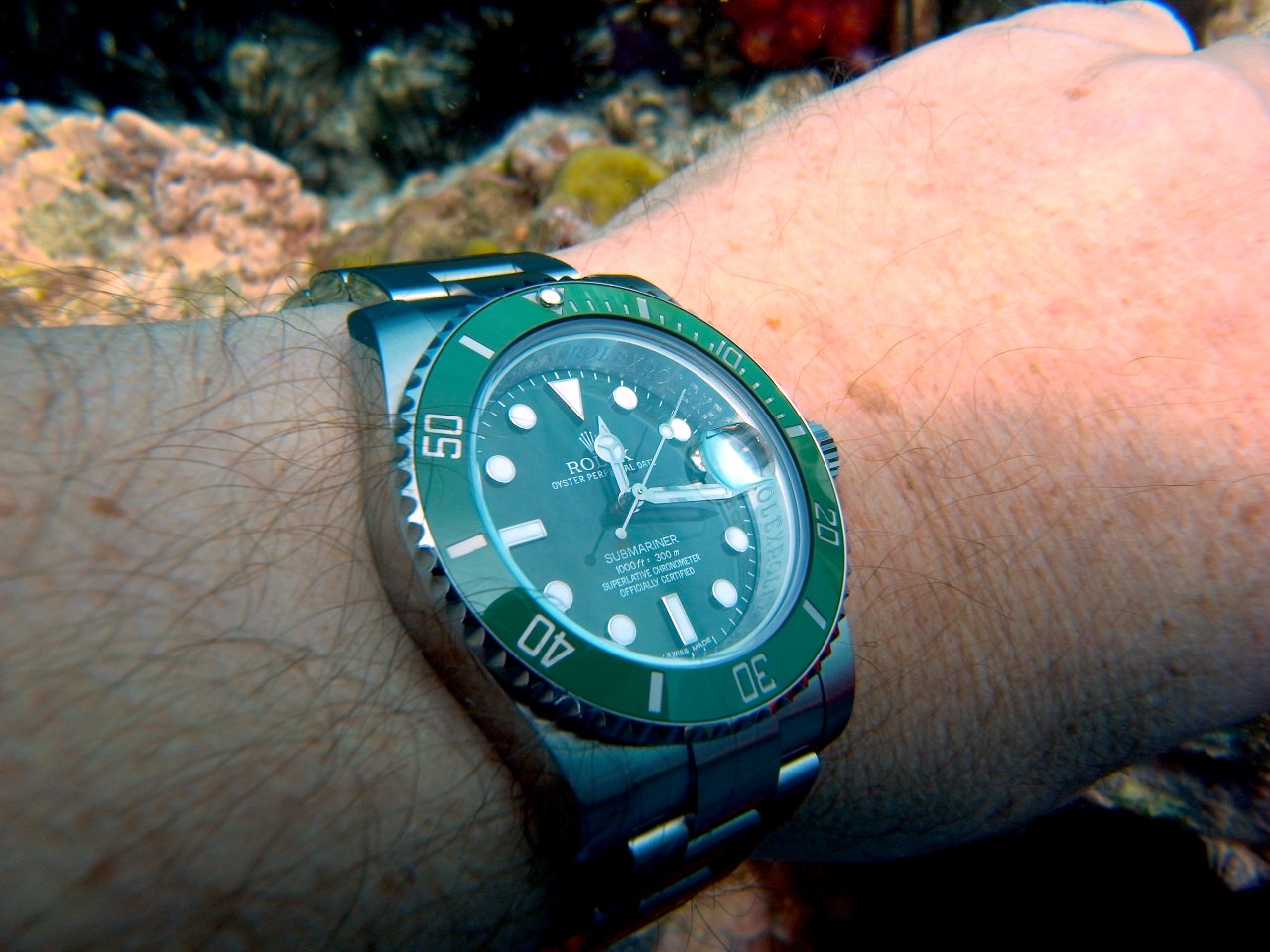
That was in about 10 meters. When diving into about 20 meters, the dial is still playing tricks.
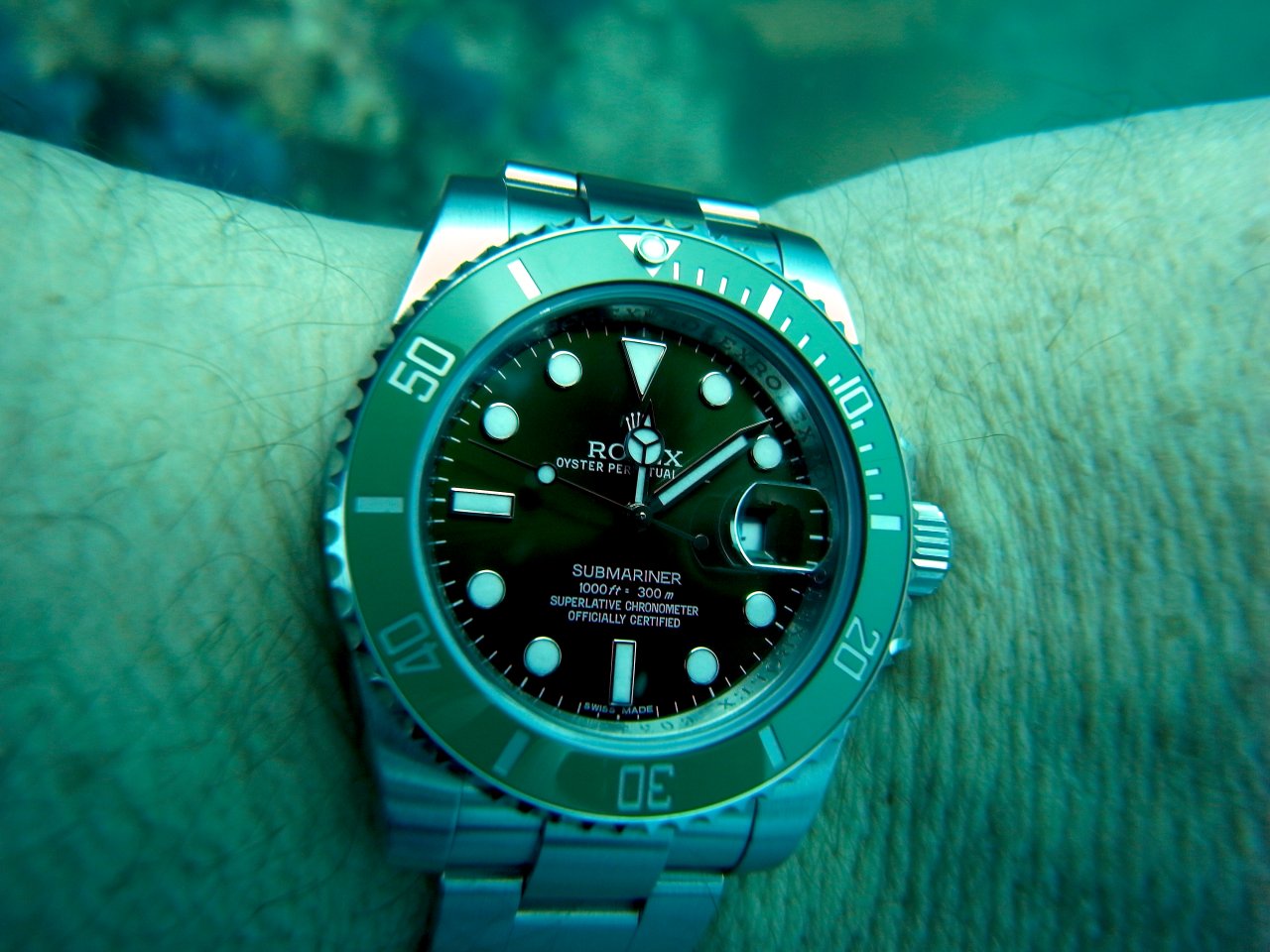
And finally, when diving to the maximum depths of scuba diving, 30-40 meters, we have a Rolex with black dial.
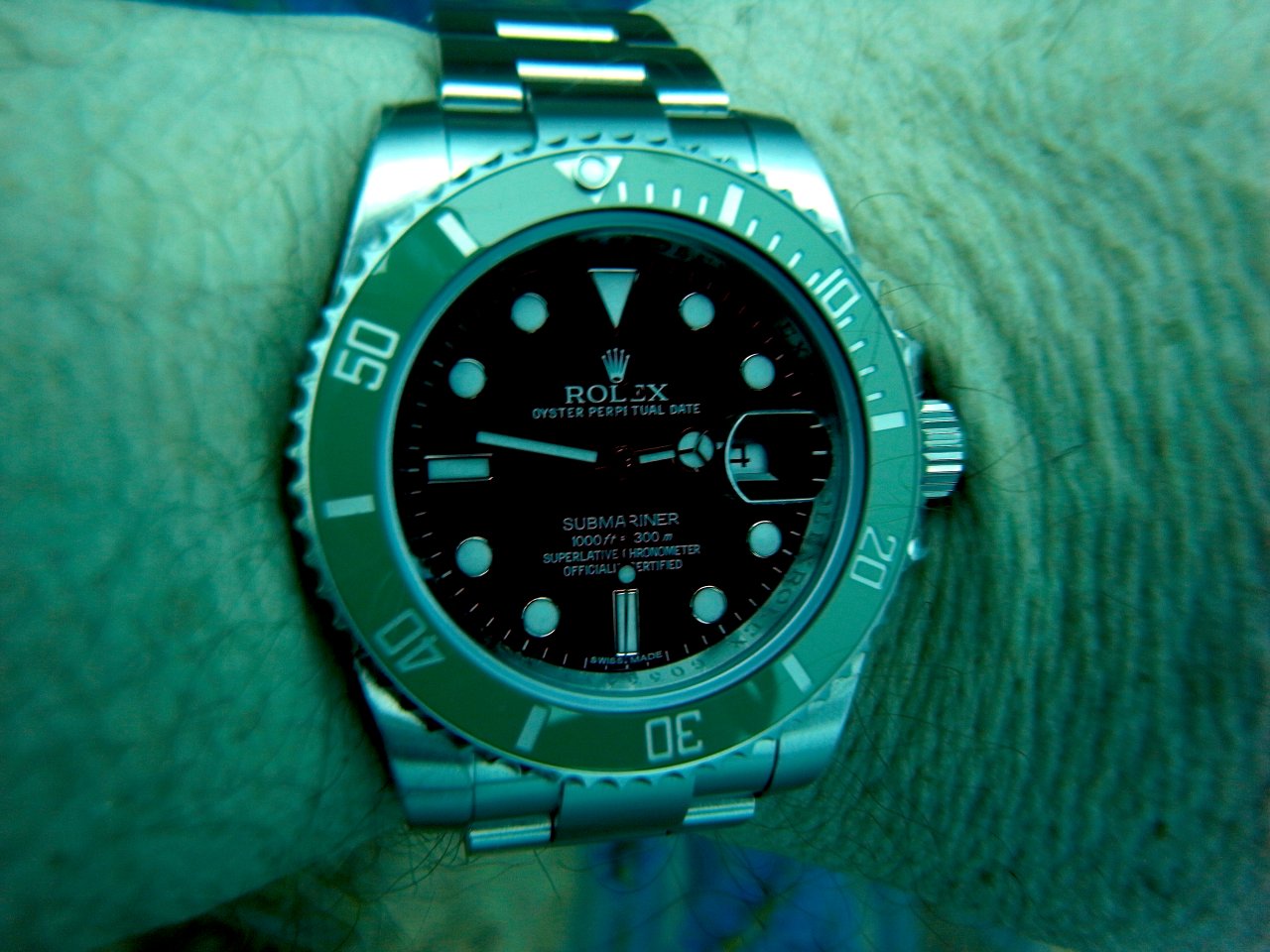
I start to understand this very special diver's watch. It really shows its character under the surface! I hope you enjoyed it. Kari

Apprantly it IS easy being green
Kari, those are really nice photos of the green monster. I have to admit, I am really beginning to like the green sub a lot. Nice to see the sub right at home in its natural element.
Best,
respo

Greater contrast as the depth gets greater...

Thanks for the action shots, Kari!
Looks like you have been enjoying your Green C to the fullest.
Wear it in the best of health and in the safest of depths 
Best regards,
Alex


Wow
Nice shots u have there. I supposed that the color change on the dial due to the dismissal of certain color spectrum correlated to the increase of depth when going underwater.
U picked the right watch, but still i think u must rely most on your Dive Comp, to make sure ur dive parameters are within limit .
Cheers
ACTUALLY THE GUYS IN ROLEX HAS STUDIED
their stuff.
It would be very difficult to explain the Color Absorption in water but I will try, anyhow, to give some kind of idea.
Our eyes see only a narrow segment of the entire electromagnetic spectrum - the wawelenth range from about 400 nanometers (nm) to about 760 nm. Differences within this range we perceive as colors. When white light (white light consists of all the perceivable wawelenths) strikes an object, the object absorbs some wavelenths and reflect others. We see the color of something based on the light wevelenths it reflects. If an object reflects all wavelenths, we say the object is white. If it reflects no wavelenths (absorbs all visible wavelenths), we say the object is black.
Even when it is very clear, water absorbs light passing through it, transforming it into heat. However, water does not do this uniformly because wavelents with less energy absorb more easily. Therefore, it absorbs colors toward the red end of the visible spectrum more rapidly than the blue end. This is why red tends to disapear very quickly as you descend. Usually you don't see much red below 4 meters/15 feet because little light of that wavelenth reaches any deeper. This does not mean that the color red suddenly blinks out at 4 meters, but that practically speaking, red is gone. Color absorption is a continual process, so there's less of all colors i.e. at 2 metres than 1 metre. This gradual filtering process affects the weaker wavelenths faster.
In order following red, water more readily absorbs orange, yellow and green.
In practical terms this means that:
Red disapears at about 4.5 m/15 ft, orange at about 15 m/50 ft, yellow and violet at about 30 m/100 ft, green at about 76 m/250 ft and blue some meters deeper (source: PADI, The Encyclopedia of Recreational Diving)
In other words, Rolex has done their job well. The most expensive Submariner can be acquired with blue dial and the most expensive steel model with green dial and green bezel. What makes it very intersting that entering to the depths where the blue or breen bezels are totally turning black, we know that we are reaching the absolute limits of scube diving. Technical divers go deeper and their Sea.Dwellers are naturally having black dials and black bezels.
I hope that the above also explains why the new range of Rolex diver's watches are having blue lume.
***
What comes to the diving computer vs. diving watch, this issue is quite simple:
Some 20 years ago there were no dive computers as we know them today. divers had a Submersible Pressure Gauge (measuring the air in the tank), a Depth Gauge and a Diver's Watch (measuring the time). Today all these functions can be found from a dive computer.
But diving can be dangeros! So many of us divers follow the logic of aviation: Double or triple systems! We dive as Buddy Teams, we have always two regulators, and many of us are having in addition to the dive computer a mechanical Depth Gauge, a second Pressure Gauge and a good Diving Watch.
Having a good diving watch is a way to add safety. If the computer fails and we are i.e. a bit narced by nitrogen, we can measure i.e. the decompression stops or safety stops with a reliable diving watch. But that is not the whole story:
We divers like to tell everybody about our hobby and what would be a better way than wearing a diving watch also above surface. And let's face a fact: Rolex is producing diving watches which are among the best!
Regards,
Kari
.
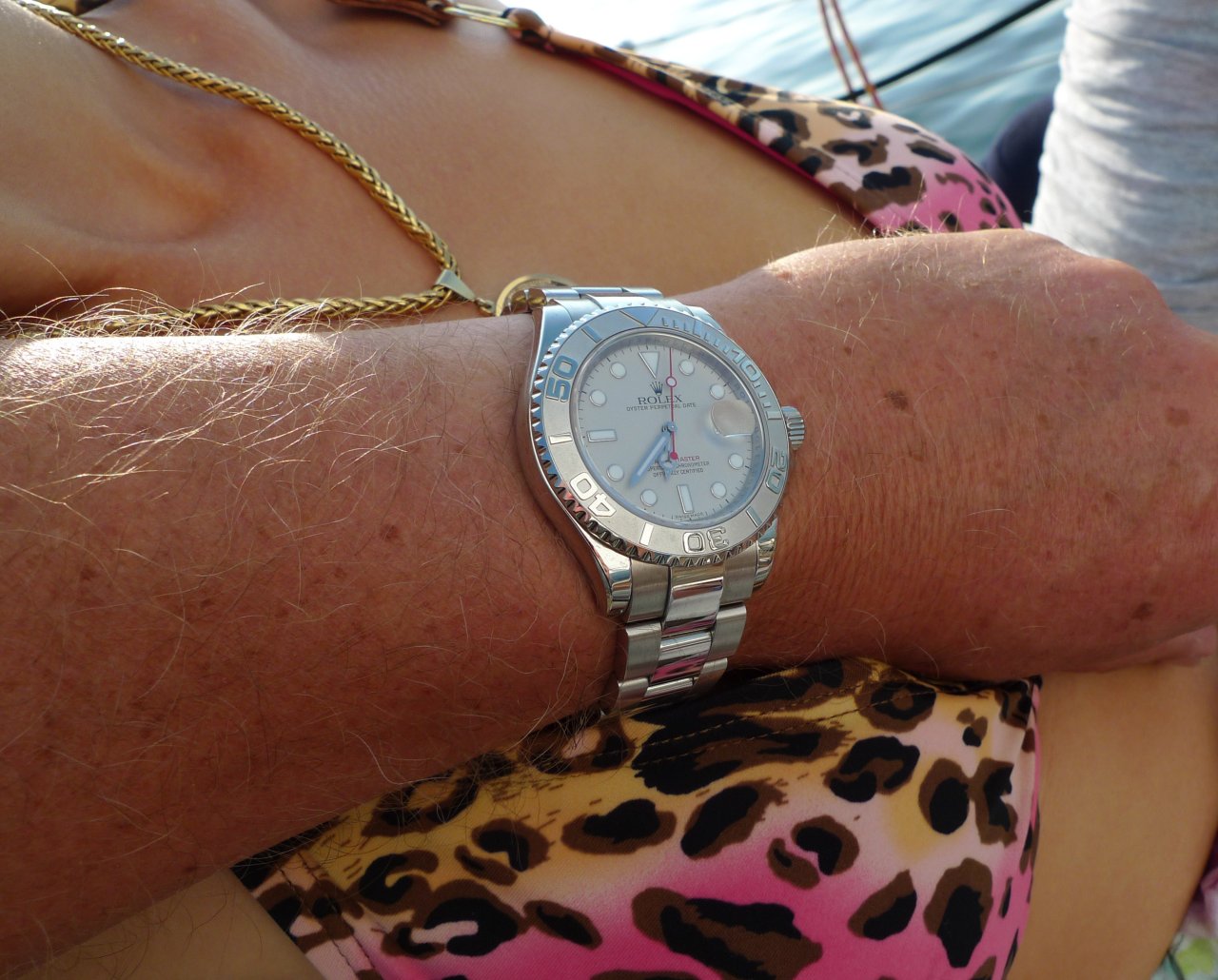
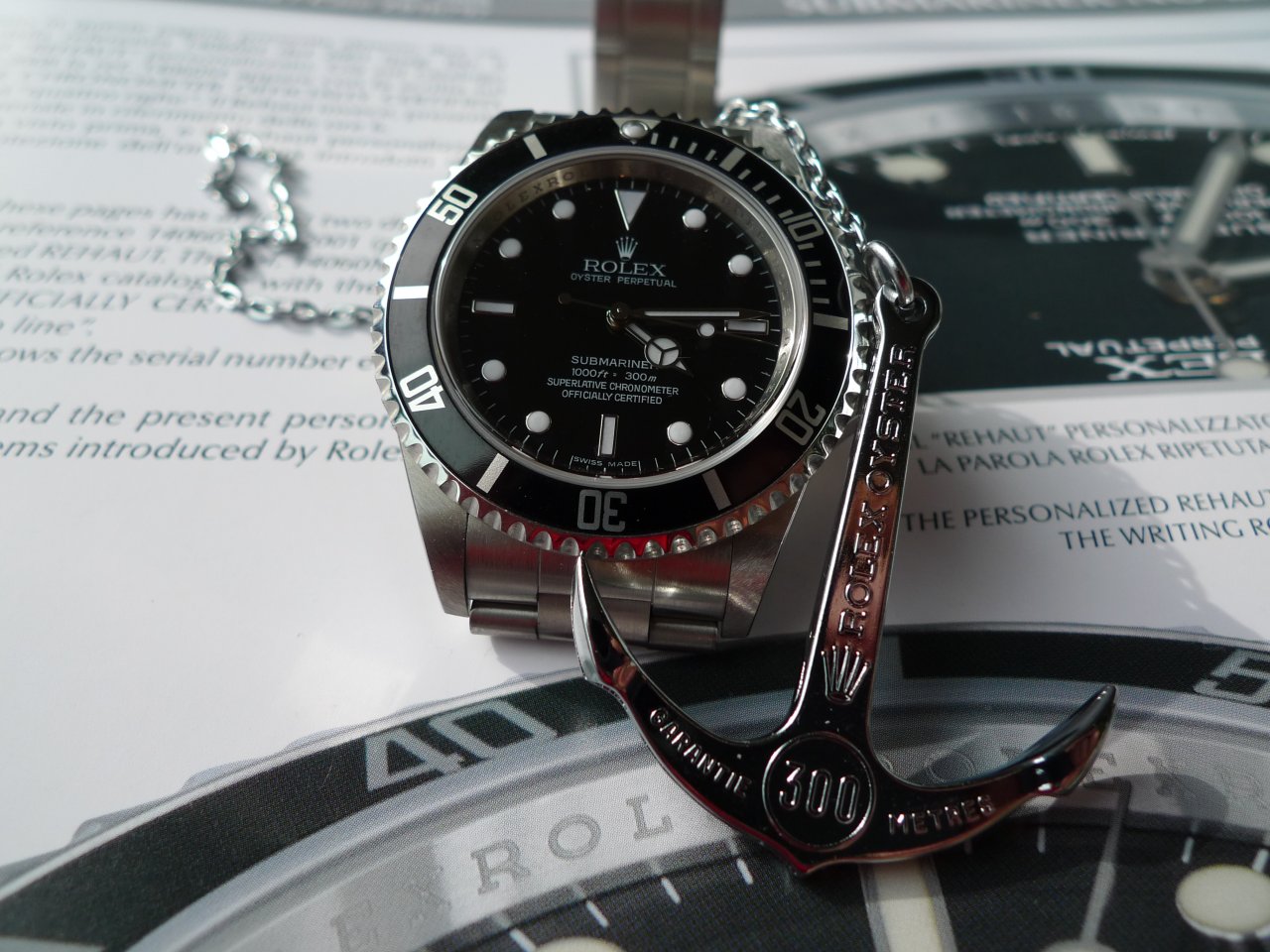
I tested this pet-Rolex of mine under the surface. Yes, the red seconds han turns into black.
But out of all rolex diving watches my #1 choice remains

True....however
...the colour loss is not so exact. What are the ambient light conditions for those PADI figures? The water turbidity?
But to depend on your watch dial for depth...nice romantic thought!
But the real demonstrate the vaguaries of colour change....the 40m photo....green dial is now black....green bezel is...still green...
The blue lume is a slightly different matter. It will definitely be more 'penetrative' through the water...but how far can a watch be from your mask? 50cm? Not much for the light being emitted from the lume to travel...whether that light is blue or the more usual green....
Still jealous of your warm water dives, Kari. The water temps have reached a balmy 15C...at the surface....

Thanks Dr. Kol,
The dial remains a mystery
for me. In certain light, even on surface, the dial turns black. but I guess this is the charm of the watch.
Best, Kari
I am
but still, the good old Kermit feels "easier". I will wear both, every other they the Kermit, every other day the new Frog, and in some months I will know hat I like.
Best, Kari
Refractive index...
Just guessing here, jporos, but the black of the dial vs the green of the bezel is probably attributable to the different paths light will take between the two.
In the case of the bezel, light (already stripped of some of the colour spectrum due to depth) travels through water to the bezel, and green light is reflected back through water to the eye. In the case of the dial, the same light travels through water, through the sapphire, through the air gap between sapphire and dial, to the dial, dial reflects green light, which then travels back through the air gap, back through the sapphire and back through the water to the eye.....much more opportunity for absorbtion, hence the darker dial.
Thanks BDLJ,
