
PuristSPro report: Glashütte Original at Baselworld 2014
reported by Marcus Hanke
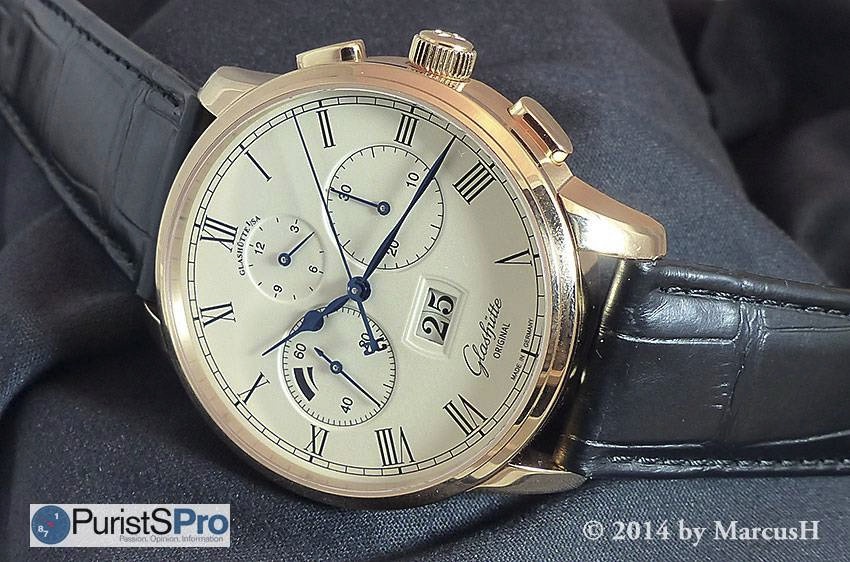
In the center of Glashütte Original’s novelty show this year stood a new selfwinding chronograph movement; finally, as I might add. Since years, there was a large gap in the line of Glashütte Original chronograph movements. While the magnificent PanoMaticChrono, the PanoGraph and the (discontinued) PanoRetroGraph are marking the upper limit of the chronographs offered by GO, the other chronographs were only equipped with a modular mechanism based on the cal. 39 standard movement; a construction that was originally developed and made by Dubois-Dépraz, and - with the designation cal. 10-60 - in use already long before Glashütte Original became a member of the Swatch Group.
While this module itself is a solid and reliable construction, it was never esteemed worthy for the high level of watchmaking GO watches normally have. Thus it is not astonishing that demands for a replacement of it regularly surfaced since more than ten years.
The good news is that a completely new selfwinding chronograph movement is now ready for use and released in two different models. The bad news (depending on your point of view) is that the old DD-module will still be used, at least for some time, in the Sixties chronograph, for example.
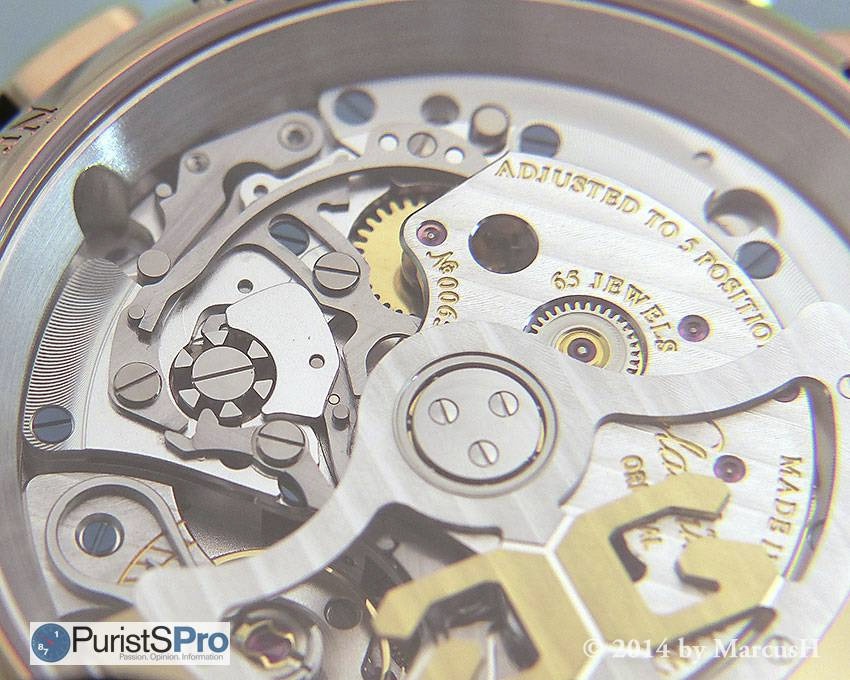
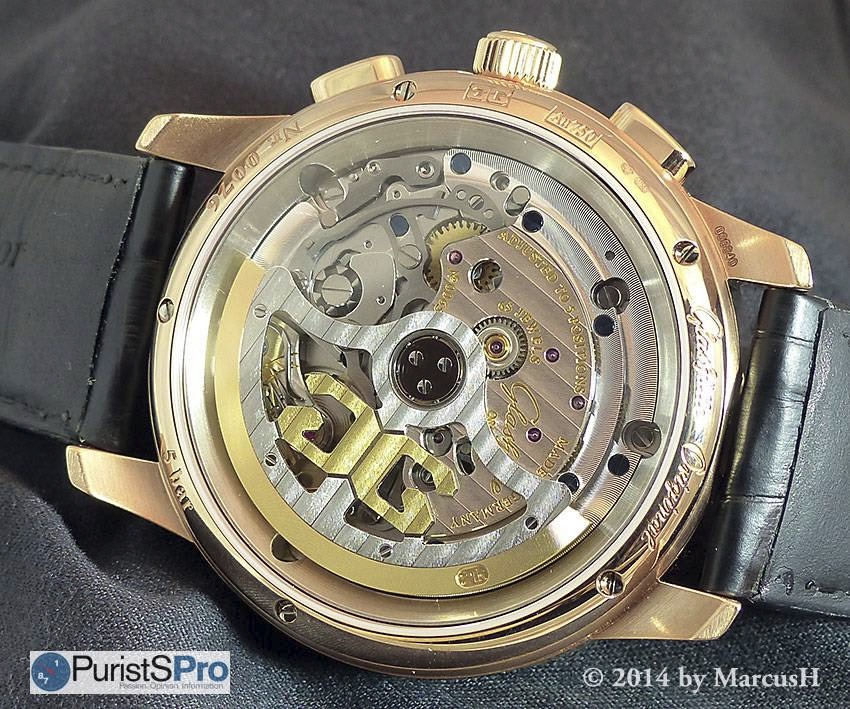
The new cal. 37 chronograph movement is a beautiful construction with modern aspects, well integrated panorama date and a power reserve indication, bidirectional winding rotor and a long power reserve of 70 hours from a single mainspring barrel. The lack of any high-tech materials in the classic Swiss lever escapement makes it charmingly traditional. If one wonders about the swan-neck regulator on the balance cock: this serves for changing the beat only, since the fine regulation of the freesprung balance made from 14k gold is done via four screws in the balance wheel.
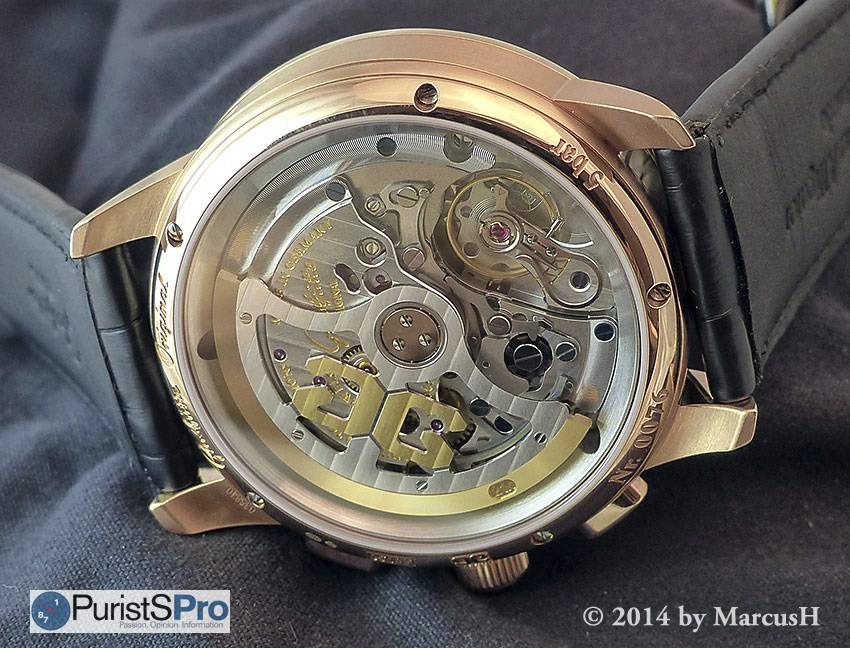
Regarding the finish, it differs a bit from the lavishly decorated movements of the above-mentioned „upper-class“ chronographs: There are no screwed châtons, no bevels on bridges and cocks, and the decorative stripes are limited to the selfwinding mechanism, including the rotor. Beneath, the static movement parts are wearing a grainage finish, which, however, does not completely hide traces from milling. The technical finish, though, is excellent, including the teeth of the wheels and the polishing of all moving surfaces, like the levers of the chronograph mechanism.
Normally, it is typical for column wheel controlled chronograph movements that there is barely any noticeable difference in the pusher feeling of the various operations: Regardlessly, if the mechanism is started, stopped or reset, the energy necessary to press the pusher, and the tactile feedback is always the same. On cam- and lever-operated chronographs this very different, since starting the chronograph is normally rougher and needs more force, than stopping or resetting it.
The GO cal. 37, although having a column wheel, is unique in this respect: Starting the chronograph is rather smooth, but stopping or resetting it needs much more pressure. This was confirmed to me by several other visitors of the novelty presentation. If the - according to Glashütte Original - „simplified column wheel“, or the power transfer from the running movement to the chronograph mechanism via an oscillating pinion is responsible for this, is unknown.
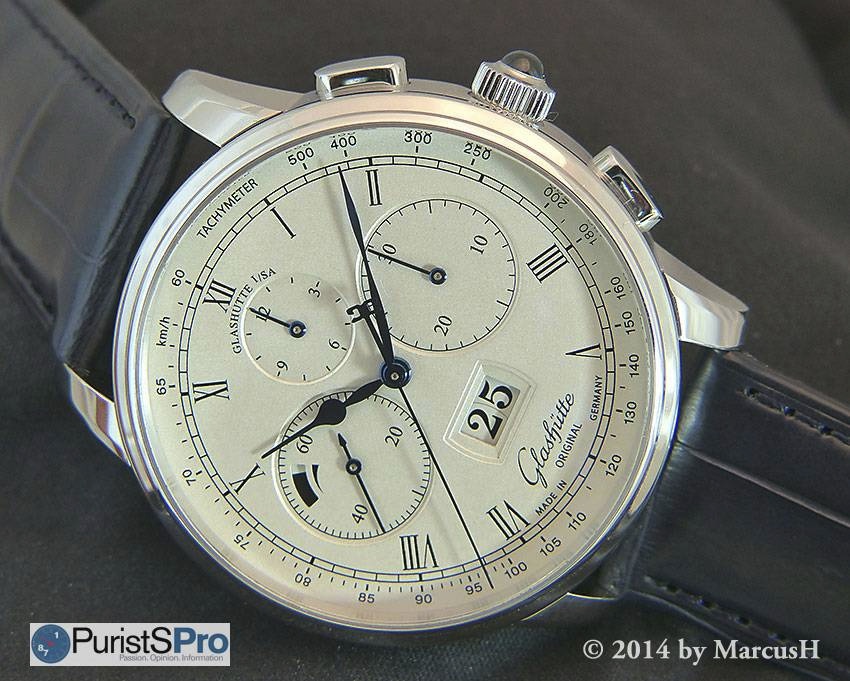
The first model equipped with the new cal. 37 chronograph movement is the Senator Chronograph Panorama date. This very classic-looking watch has perfect proportions, with a diameter of 42mm, and a very decent height for a selfwinding chronograph of 14mm. Offered in pink gold and platinum only, especially the platinum distinguishes itself by its uniquely hand-finished dial: The dial base is made from massive gold, and pure silver powder is mixed with a liquid agent, until it has a paste-like consistence. The silver paste is then rubbed onto this metal, until an even coat is accomplished, and after evaporation of the thinner, a thick silver coat is left.
Regarding the dial layout, the panorama date at 6 causes a rather unusual location of the subdials, with the 12 hours counter at 12. Very nice is the perfect integration of the power reserve indication in a small window in the small second subdial at 9.
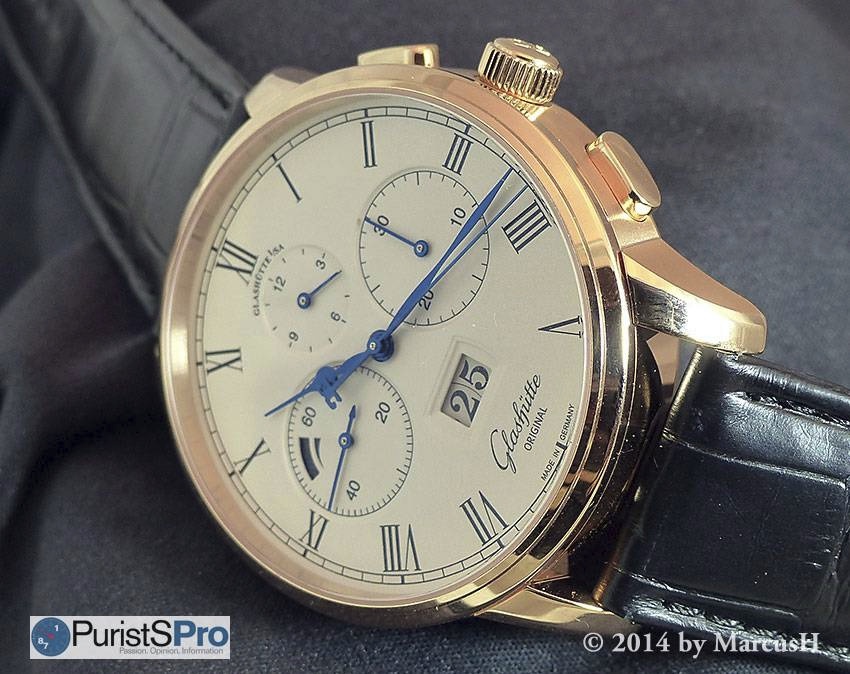
Although equipped with the same new cal. 37 movement, the second new chronograph, the Seventies Chronograph Panorama Date, looks very differently. Mainly responsible for this is the different presentation of the 12 hours-counter at 12. Instead on a conventional subdial with hand, as on the Senator Chronograph, the counter is shown by a disk rotating in an arched dial cutout. Thus it consumes much less dial space, which is used for the manufacturer logo.
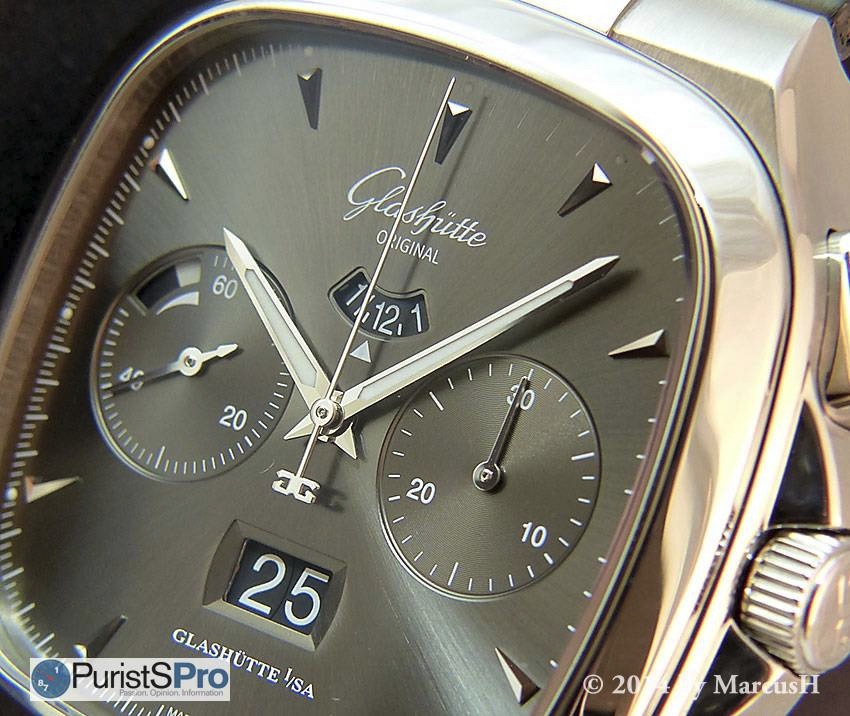
There was some discussion on the reasons for this solution on the Seventies’ dial, and it was stated that with the adoption of the same subdial as on the Senator, the logical placement of the logo under the panorama date at 6 would have appeared much less harmonious than on the circular Senator.
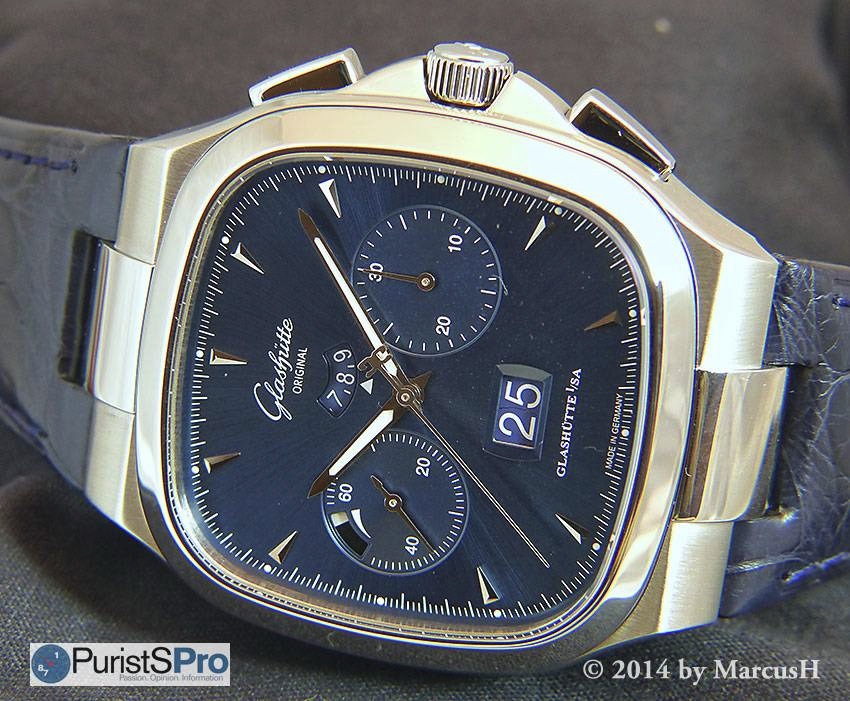
Anyway, the hours counter windows appears more modern and therefore a good match with the overall design program of the cushion-shaped Seventies case. The only drawback is its legibility: Even with aging eyes, a hand is normally recognizable and its position can be deducted by its position above the subdial. Numbers passing an index, however, must be clearly identified to be interpreted. This is why I was absolutely unable to read the elapsed hours on the Seventies Chronograph without reading glasses, but had not problems on the Senator’s conventional counter.
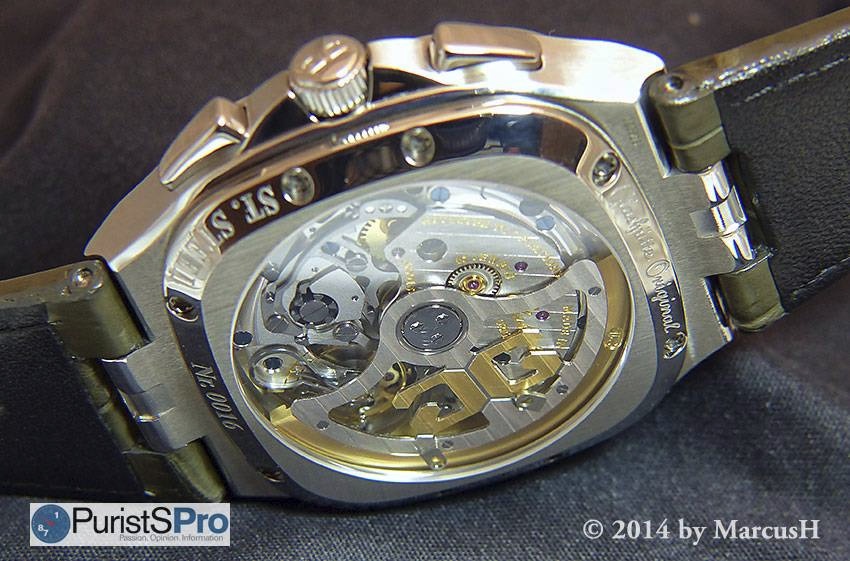
The Seventies Chronograph is available in stainless steel only, with metallic dials finished in silver, ruthenium-grey or blue color. All markers and hour and minute hands are made from white gold, while the chronograph hands are made from Pfinodal, a copper-nickel-tin alloy that is very strong to prevent any bending of the hands when reset to zero.
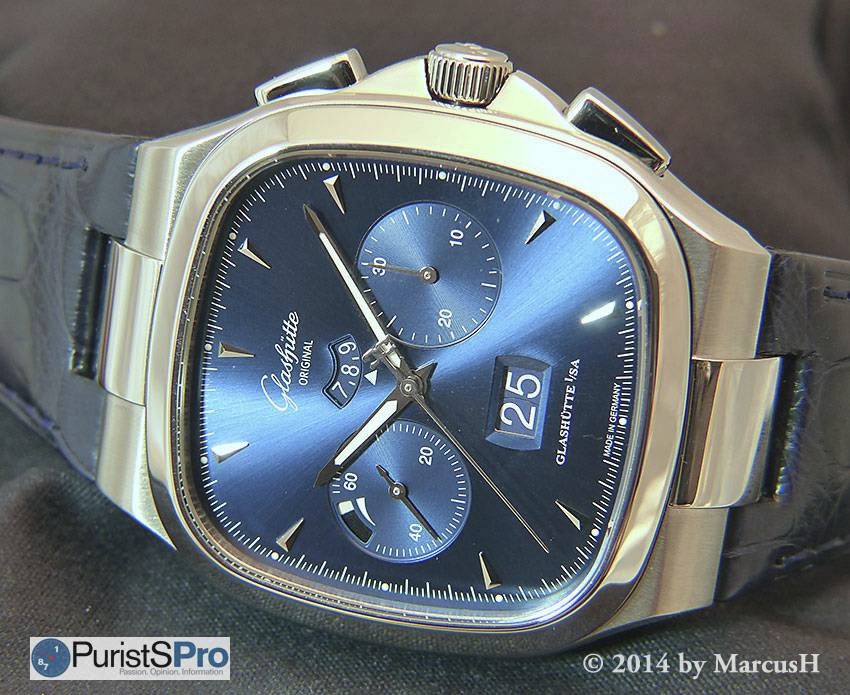
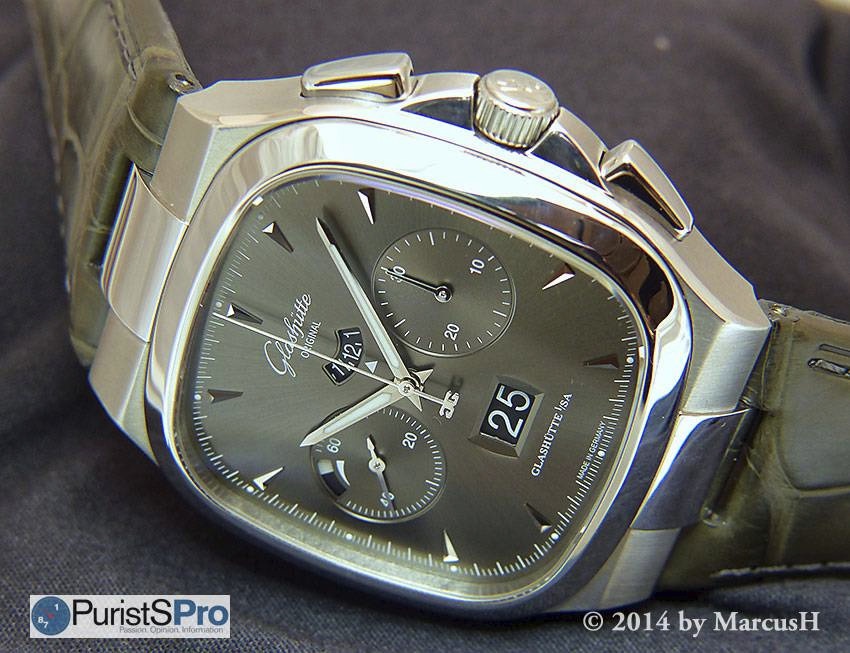
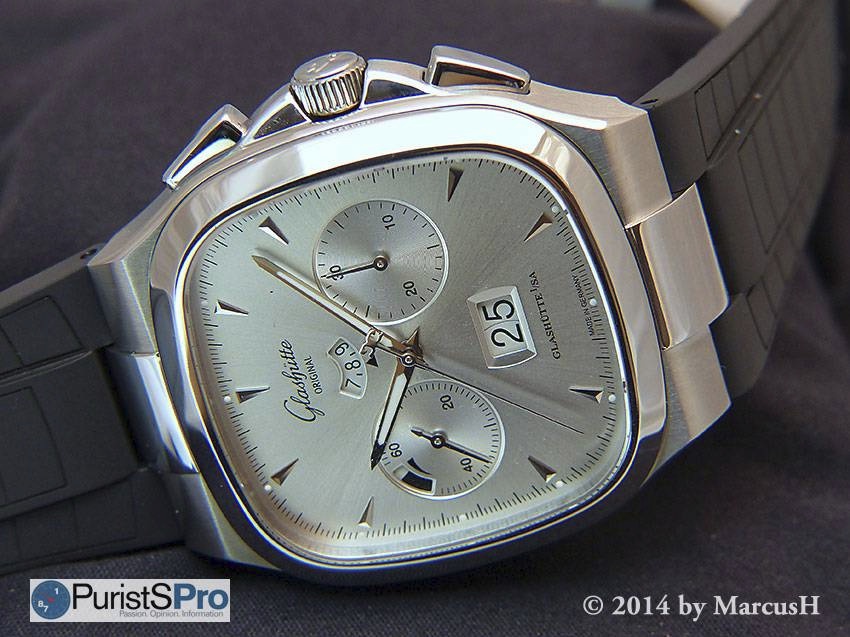
Besides a stainless steel bracelet, the Seventies chronograph is offered with alligator and rubber straps; the latter unfortunately only in black, while rubber straps in blue or grey would appear much more appropriate with the respective dial colors.
Following the new cal. 37 chronograph, which is clearly marking a large step forward in Glashütte Original’s history, the other novelties might be economically less important, but by no means less spectacular, in the contrary:
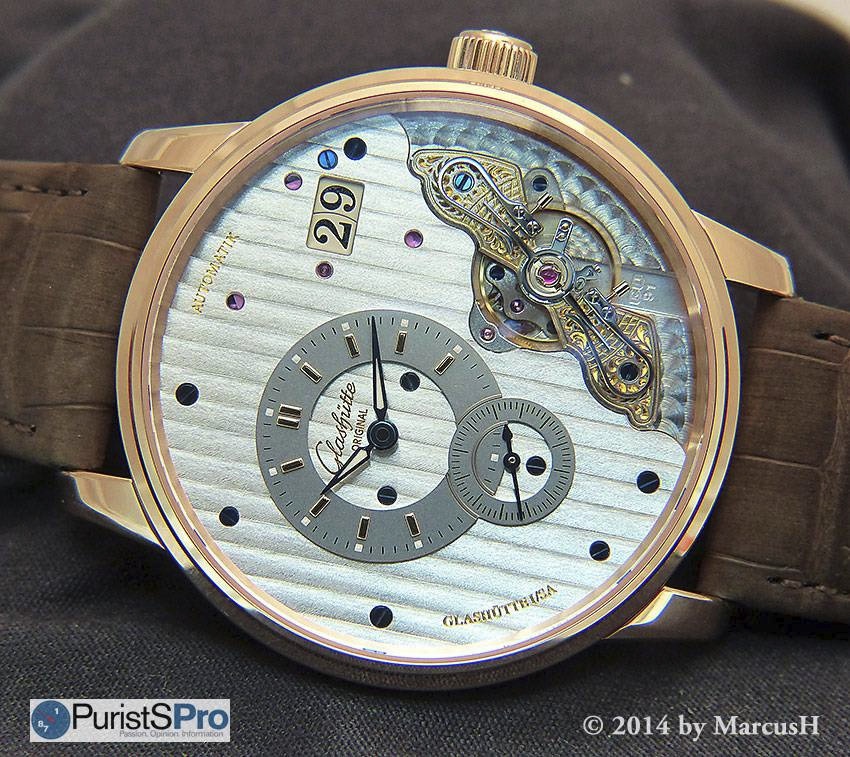
The PanoMaticInverse adds an automatic movement to the hand-wound PanoInverse, which was a big success when launched in 2008. Common trademark design element of the „inverse“ series is the escapement that is relocated from the rear to the movement’s upper side. The abandonment of a conventional dial leaves a rudimentary, eccentric index for hours and minutes and a plain view on the movement’s unique double swan-neck arrangement and hand-engraved balance cock.
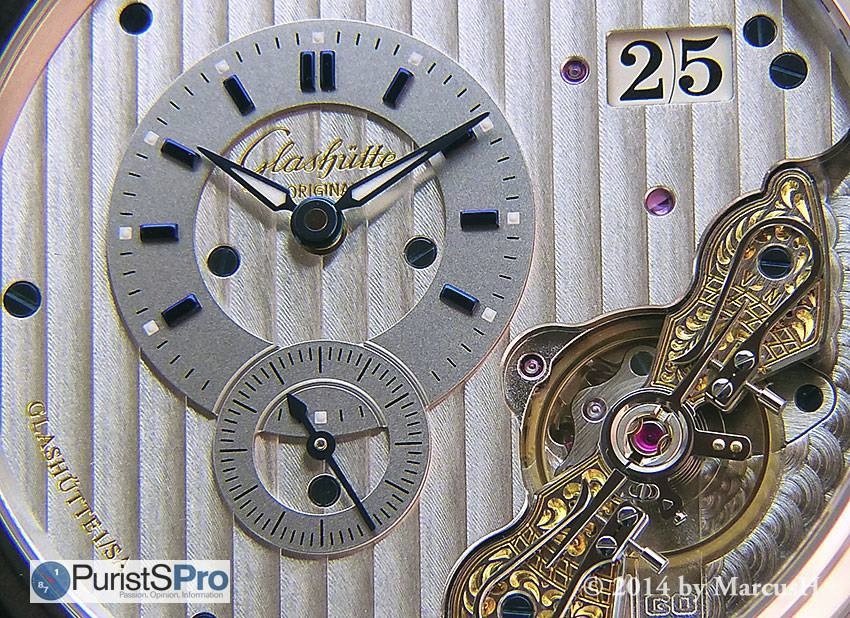
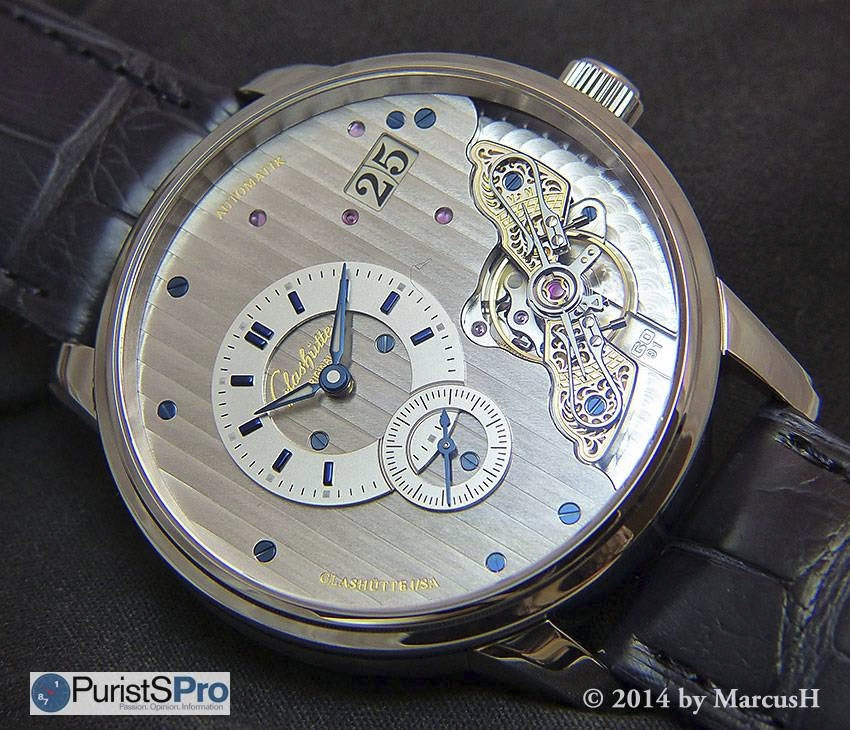
The new PanoMaticInverse adds a higher practical value with the selfwinding movement and the panorama date, and the availability of a stainless steel variant will make it highly successful in the market, without doubt.
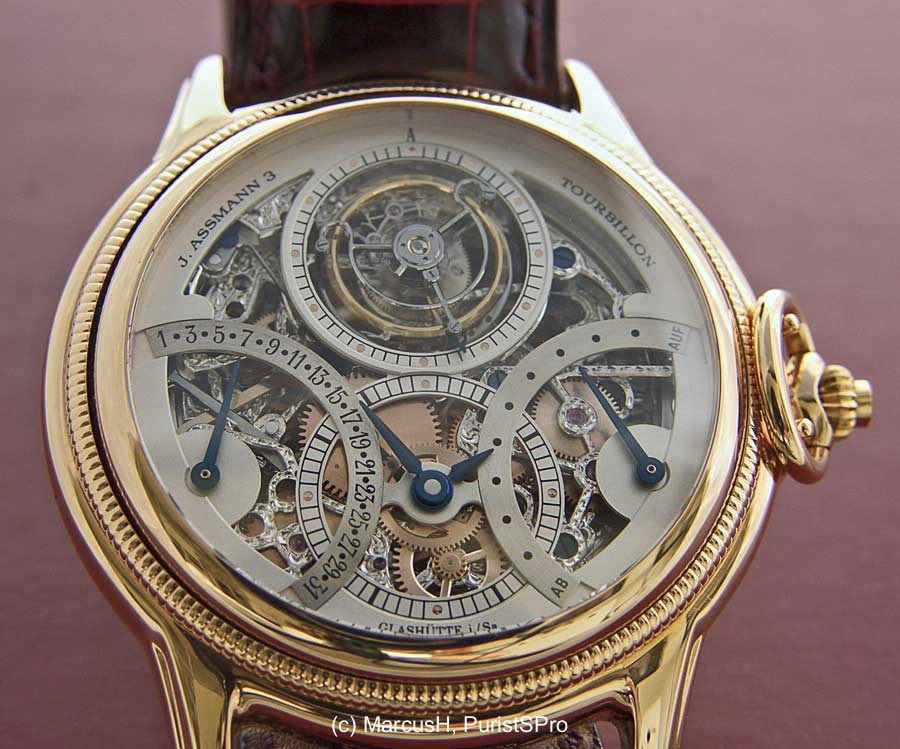
Glashütte Original has a longstanding tradition in offering exquisite timepieces with marvelously skeletonized and hand-engraved movements. This Assmann 3 tourbillon shall serve as but one example:
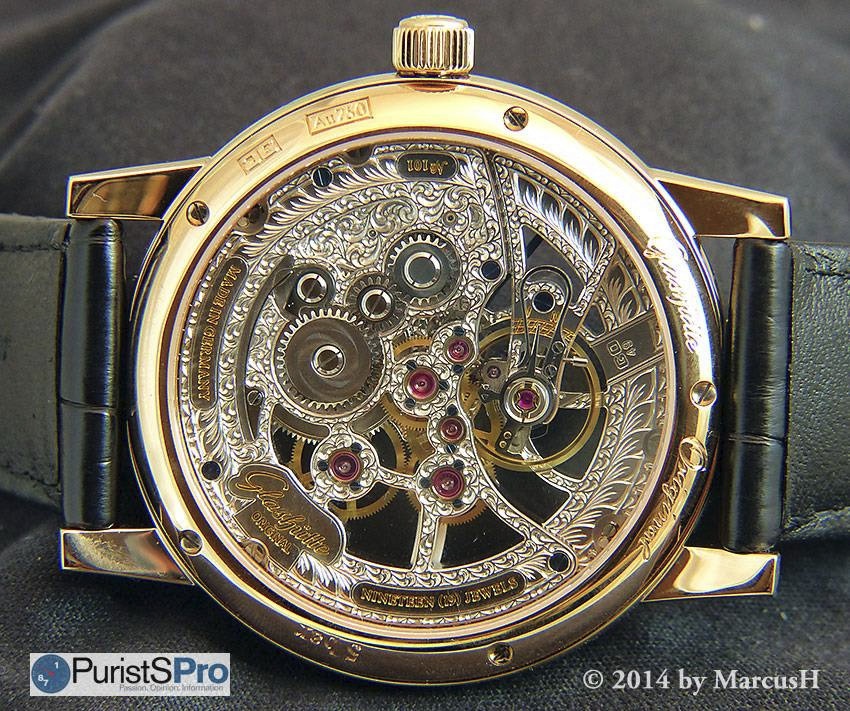
This year, the Senator Skeleton with the well-known cal. 49 hand-wound movement is especially beautiful: Even under a strong 15x loupe, the hand-engraved decoration is flawless, and perfectly arranged on the filigree braces left from the original movement.
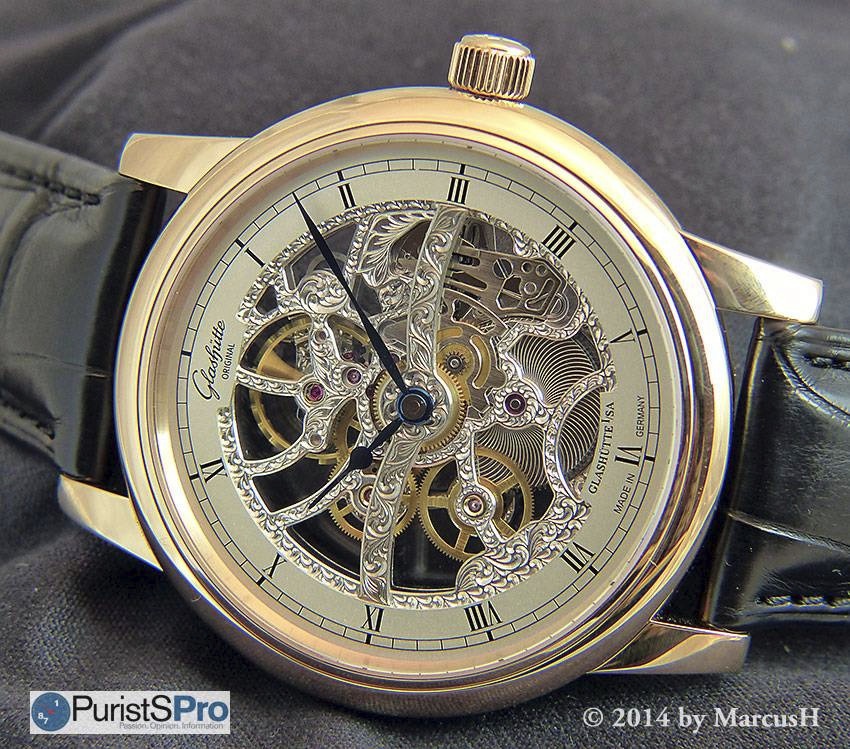
This is among the best made engraved skeleton watches I have ever seen, and probably the most beautiful one I have seen in the recent years.
Finally, the lady’s timepiece line Pavonina receives the addition of a glittering specimen, full-set with 513 diamonds, even on the delicate lugs.
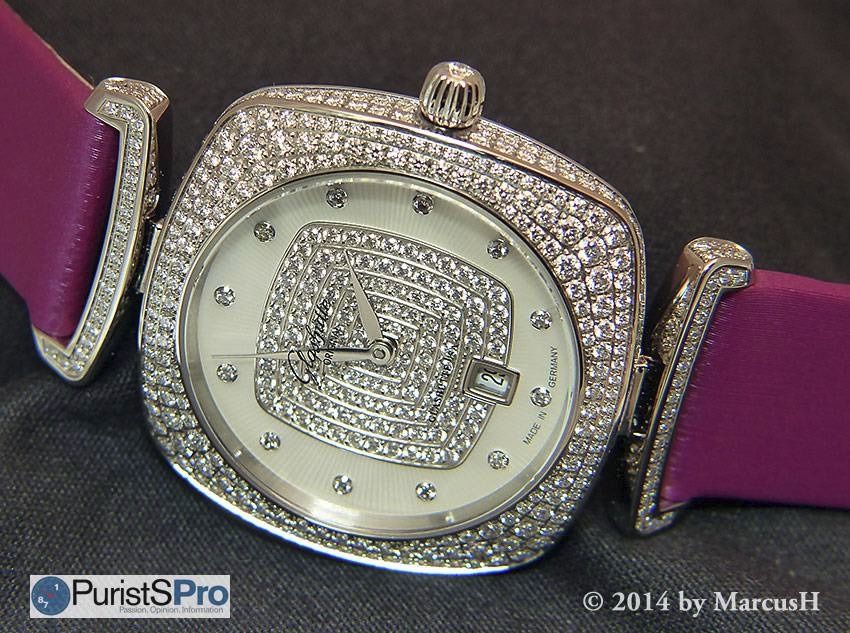
This is especially nice when exposed to moving light, as shown in this video of the Glashütte Original Baselworld 2014 novelties:
Copyright April 2014 - Marcus Hanke & PuristSPro.com - all rights reserved


Interesting covering, Marcus.
The Watch which interested me the most is the PanoMaticInverse...As I love the manual version, and much prefer it to the automatic, which I find less harmonious, dialside.
One question: I lastly paid a lot of interest in the " high end " chronographs segment from G.O.
If I got it right, the only Panograph available is in Rose Gold?
You who are our secret squirrel, do you know if it will be available in white metal, and most specifically, in stainless steel?
Best,
Nicolas
Don't bet on it ...
Marcus
Thanks for your answer.
I am so interested that I think it will be my next G.O...
I will wait till one or two years, then will decide in consequence...
Thank you!
Best,
Nicolas.
Great Report! Quick thoughts...
Not sandblasted ...
I just wanted to correct this misunderstanding: The silver coat of the platinum Senator dial is hand-rubbed onto the base material. This sounds easier than it is. IN fact, hand-rubbing is one of the oldest silver- or gold-coating procedures known, and normally needs no special equipment. Basically, you need silver or gold powder, a little water to stir it into a viscous paste, and firmly rub this onto the base. When the water is evaporated, a thick layer of silver or gold is left. So far the theory. Practically, the success depends on the base material's ability of bonding with the coat, so that it does not come off at the slightest movement. The metal has to be either very soft or rough, and even then, an even coat of precious metal needs a lot of skill and experience.
Regarding the watch dials: what adds more difficulties even are the recessed edges of the subdials and the date window, since there should not be any residue collected there. Additionally, the inscriptions are engraved and filled with black lacquer by hand - before the silver coat is applied. Consequently, it is necessary to individually protect the engraved parts with a clear shellac layer, which is removed after the application of the silver coat.
I do second your opinion regarding the movement finish.
Marcus
Thanks for clearing it up!
Thanks for the great review, ...
Thanks for the great review/clutch seems to be an oscillating pinion
You are completely right!
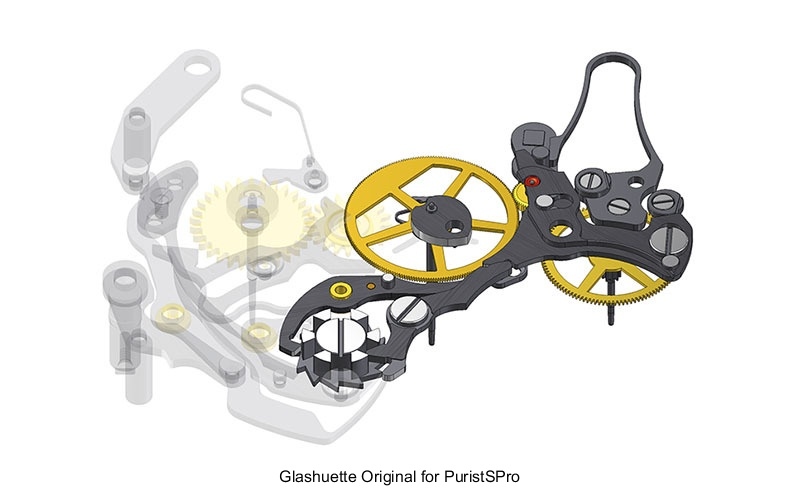
I will correct my report.
Marcus

Glashuette Original handwind chronograph pusher feel
This is what I keep asking myself, too ...
Marcus
