
Thian Hock Keng (THK)
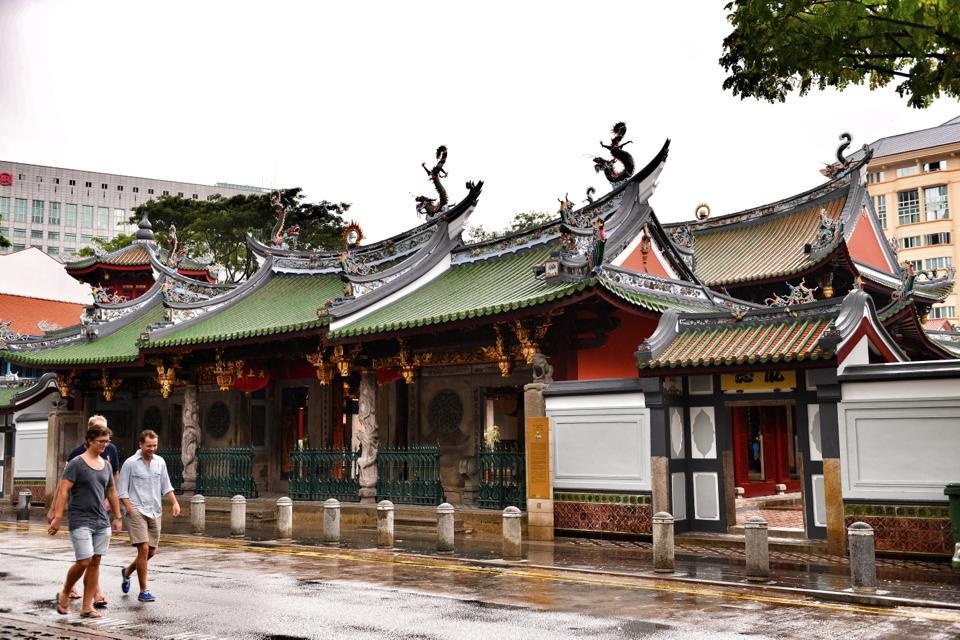
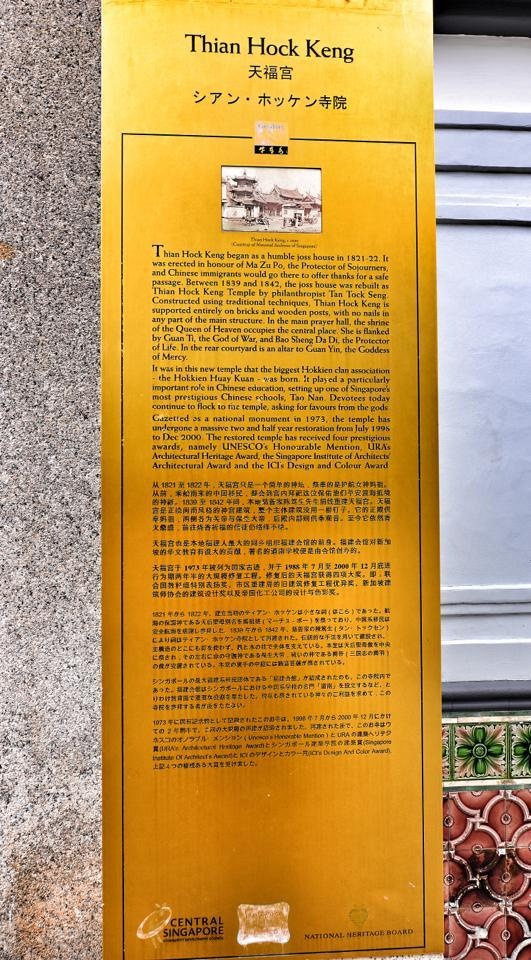
After the British established a trading port in Singapore in 1819, early Chinese immigrants started to arrive, crossing the hazardous South China Sea. A “joss house” was built from 1821 to 1822 for them to pray and thank the Goddess for their safe passage. Thian Hock Keng Temple was later built on the site from 1839 to 1842. The renovation cost of $30,000 was covered by donations from devotees, also one of the philanthropist Tan Tock Seng. It served as a temple, school andcommunity centre. Grateful immigrants, some of whom became successful businessmen, contributed to the construction. A year after construction began, a statue of Mazu arrived from China and was installed with great ceremony in the temple's newly completed main prayer hall. No expense was spared to obtain the finest materials and craftsmen from China. Many materials were recycled, however -- the timber, stone columns and tiles were formerly ballast on Chinese junks, and mosaic pieces used on the temple roof to create bird feathers, dragon scales and flower petals were broken pieces of pottery and cutlery from ships. In 1907, the temple received its most precious gift -- a calligraphic panel from the Emperor of China himself, Guang Xu of the Qing Dynasty. Thian Hock Keng Temple was gazetted as a national monument on 6 July 1973.
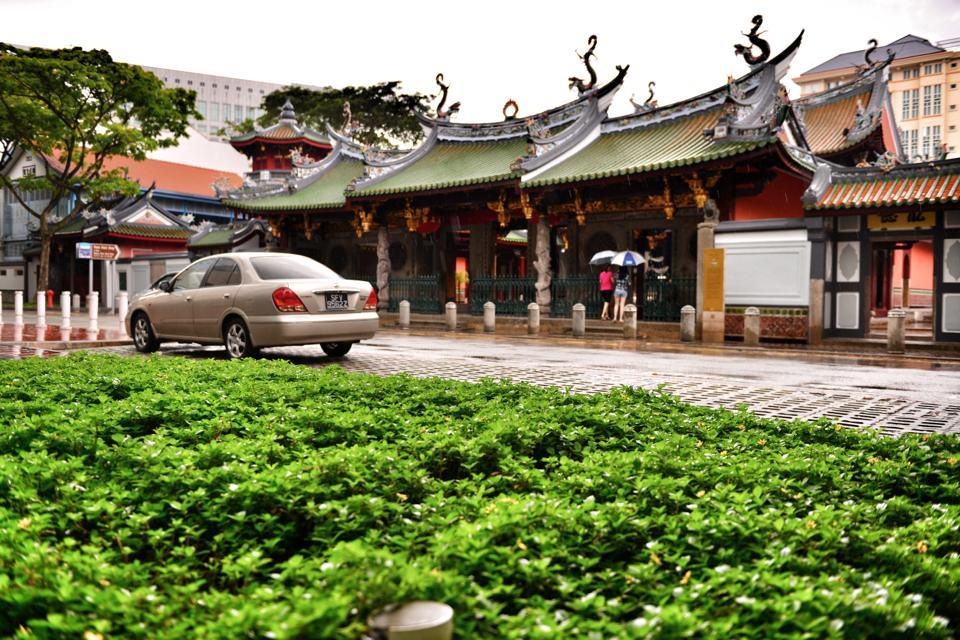
(From Wikipedia, the free encyclopedia)
THK - The Facade


THK - The Ornate Entrance


THK - The Temple Grounds


THK - The Deities


THK - The Mates


I assume it was
Nothing
like Full Frame ! Love the Nikon more each pasing day !
THK was refurbished, for years, with craftsman from China, and kept as "original" as possible.
I am now based in Beijing, however, back this week in Singapore, on business of course. So took some time yesterday morning for some shooting theraphy !

A warm thank you for a trip to Singapore ...
Beautiful pictures of a gorgeous place.
I should have a picture of one of those stone lions tucked on my old iPhoto folders (I need to import those to Aperture some day).
Cheers,
Nilo
Warm is the word !
Singapore is terribly warm, especially coming back from freezing Beijing ....
Nilo, U know Singapore well ! Perhaps even better than most Singaporeans do !
Happy Anniversary ! And thank you for the kind words.

I feel blessed
this holiday season. It was both a visual and etheral experience visiting THK.
Glad u found it interesting.
Happy Holidays to you and your family !