(finance) anyone pursuing/earned the CFA charter?
there seems to be many of you here with gd taste so; Wondering what the finance chaps like you prefer


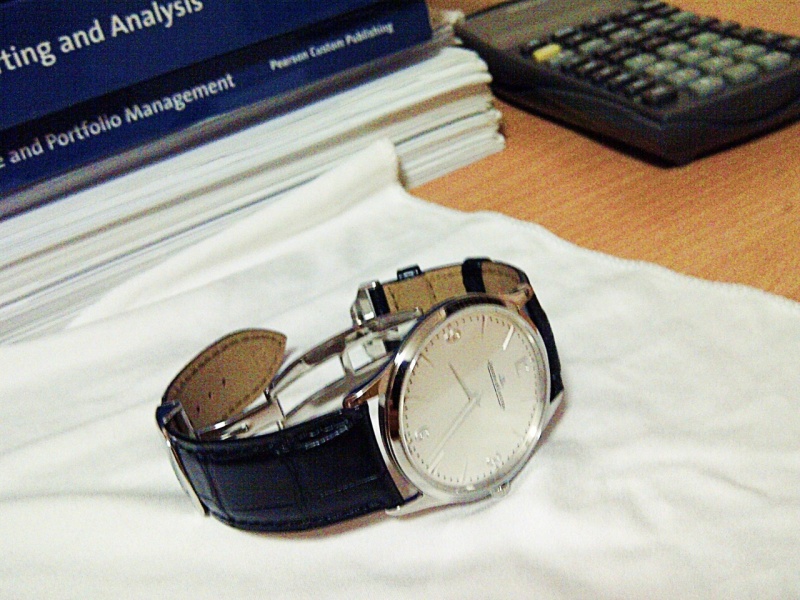
Yes, and they wear something like this
Hi xsw,
Do you have a CFA designation?

Regards,
ED-209
nice double linked bracelets
Always feels great putting those on.. and yea nice pam, always get to see it around here.
the other is a ladies watch?
No designation yet, i'm far away from the big boys. got a band 8 in the last L1 exam, Hope I can meet expectations this dec.
You're not alone!
I guess watch nuts are not bound by professions so if there are many lawyers and doctors here, there must be us
Mind you I'm the only watch nut in my company almost full of Charterholders. My colleagues laugh at me for spending over a few grands on a watch that "you need to wind yourself!?"
Taste vary, I'm more into independent watchmakers in general with a few mainstream brands that you can't miss. Lange & Sohne is my favourite mainstream.
yeah I hear you
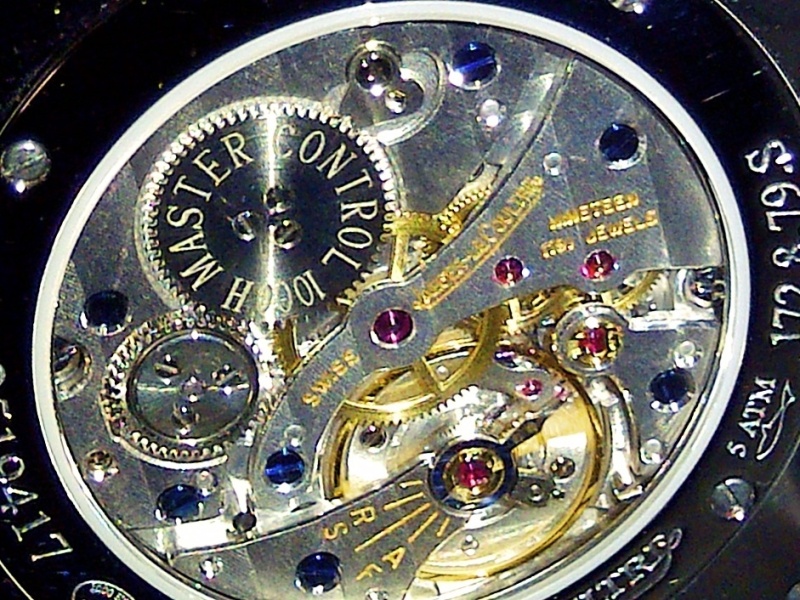
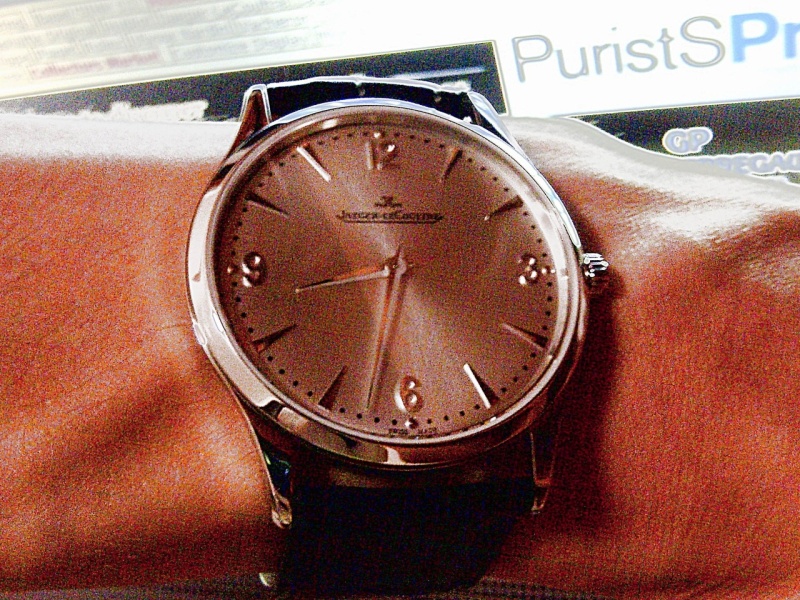
I prefer a JLC and subtle things like ultra thins and reversos. However all the watches seem the same to me. Just different metals on different calibers on different movements which translates into different functions on different dials and caseback. :-P

No...
OTOH, I met many, many people with CFA proudly printed on their business cards, but couldn't really be impressed with them, either (meaning they did not really stand out among the crowd in the real business world). I understand it takes time and money and devotion for certain period of time ONLY for that tests. IMVHO, there are better ways to spend time. Life is too short, for me, to spend time for such tests. I must be wrong and minority here Good luck. It shouldn't hurt your career, either. CPA may be different as it can be a bit more useful....My less than 0.02 yen....
Depends on what area of finance
Regards,
ED-209
ps - I don't have a CFA nor do I plan on taking it, but know quite a few people with the designation
Yes, prevalenet...
).Ken
I tend to agree...
.. even though I'm a charterholder myself. I'm originally from a computing background but sat the tests as my employer is in the finance industry and it's beneficial to have some sort of qualification on the finance side for me.
I do agree with Ken that while the exams are difficult, it's usefulness (in terms of material learned, not the fact that you have the "designation") is somewhat debatable. There's a significant overlap of material between the CFA course and an MCom course (in my case). I'm sure we would be able to learn the same knowledge from other courses.
I guess what sets it apart is the rigorous fashion of the CFA exams. There are only 3 exams covering everything, and the coverage are quite comprehensive (ie, exam questions touch on very fine details), as opposed to courses that are perhaps separated into many subjects tested over longer periods. Personally, I feel that it test a candidates "memory capacity" more than anything.
As for the practicality of the course, nothing replaces work experience. A CFA charterholder does not immediately become good at analying stocks, or managing investment portfolios. It only provide fundamental knowledge to work in the finance industry.
I agree with you sidneyc
Regards,
ED-209
It really depends if...
If you're on the institutional side, it makes a HUGE difference for your firm. In the past few years almost all prospective client RFI/RFP's will ask how many of your employees have post graduate degrees and specifically mention CFA's.
But I guess some people are happy with their current positions and are not interested in (either not motivated nor can handle the increased responsibilities) a senior management position.
Regards,
ED-209
Ed, I really understand your point...
... it must a cutulral thing. Those designations must be certain benchmark to measure something. I concur that it must or may depend on where you are. I worked in US for 15 years until last year, had spent before that 2-year vacation at graduate school, and I know how useless it is in the real business world. But I admit that it MAY mean something to SOME people or company. CFA must be really something (I have never thought about it, so I have no idea), and I DO respect those who passed the three stages - but all I could think was that I was sorry that they had to endure such a long road of stress and that s/he must have a good memory.
Don't get me wrong about my comments on CFA or MBA. I am already in a senior management position of a big financial institution, but there are many or almost all senior management position do not have those designation - there are many other ways to climb the corporate ladder, I guess. In big US companies, those designation may be very important, but as a business counterpart, I couldn't care less - as long as s/he can close the deal and show the result. While I agree with you, Ed, about the value of CFA or MBA in US, my point is, again, that I couldn't care less whether the business counterpart has it or not. I guess the sense of value is not universal. I agree that it really depends. We may have to agree to disagree here
Apologies to the OP that I got the discussion carried away....
Ken
CFA
CFA candidate here, though I have passed all the exams. I tend to to agree with the previous posts that solid work experience trumps designations/certifications/seals of approval. That said, I took the exams relatively young (passed Level 1 during undergraduate studies) as the level of competition for institutional finance jobs was quite difficuilt at the time and even more so now. For younger workers, I find it to be particularly useful as it has become a checklist of sorts. Two nearly identical candidates, the nod goes to the Charterholder or one going through the process versus a candidate that is not.
With regard to the overall usefulness of the program, I believe there is a fair amount retained though subjects that are not part of my job, such as valuing derivatives, fade fairly quickly. If I was able to turn back the clock, I think I would do it again.
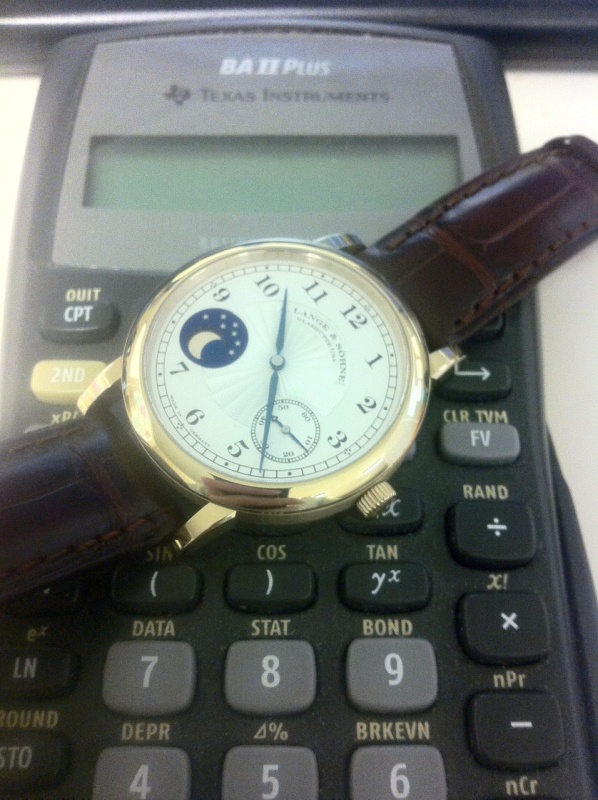
I'm relatively alone with my watch obsession at my company. I recently purchased a Lange 1815 Moonphase Homage to F.A. Lange. 95% don't even notice it, 4% notice it and are shocked at the purchase price, while the remaining 1% truly appreciate it. As a first Lange for myself, I couldn't be happier .
Nabil
Wow, congrats!
As for CFA, I understand it. I guess it must be necessary, but sad to be judged by such a thing. Life is not only the career. But without proper career, we cannot enjoy this hobby. Well, this is the world and era of competition all the time. Good luck to all. Work hard and play right with this hobby!
Ken
thanks everyone for sharing your views
Its great to hear from different perspectives!
PersonallyI know what I'm getting into. Asked a few charterholders and they don't really care much on the designation itself. So it isn't really a big deal. However, all things equal, its always good to have it (if u really like finance) in general.
Right now I thoroughly enjoy the "finance 101" I get to learn in level I. Topics like valuation, DCFs, derivatives, portfolio management and so on are a few of my favorites. It ain't new to me since I'm a finance student but I really appreciate how it goes in depth into some of its theories and applications in real life; I'm definitely looking forward to more of this stuff.
Ultimately the markets is irrational and most of the stuff we learnt can't be directly applied like a piece of the puzzle with any professional qualification be it--CFA, CPA, etc. or MBA.
I'm still learning though!
Good luck!
Ken

not much help but......
The problem I see with some of the replies to you is that they are interchanging experience vs/with credentials. Apples and oranges if you ask me. Generally the one with more with real world experience will trump the person (to a certain degree) who has is freshly out of grad/doctorate school and a student all his/her life. Conversely if you took 2 people with the same amount of experience but one has more titles than the other, it'd probably be a different story. From personal experience, I had a similar discussion with a close friend. His wife is a pharmacy tech and they were complaining that she should be making as much as a pharmacist. Her logic was that she knew more and could do more than the new PharmD's coming out of school. Of course she has 15+ years in the field on them and they were just entering the real world. She didn't see that once the pharmacists get into the flow of things, it wasn't even debatable. See what I'm saying?Besides, seeking higher education is a personal achievement it may not help you financially but it can make you a better person and I think that's what is most important. Good luck and all the best to you whatever you decide.
-MW