
Ref 2545 Double Seconds.
Hi all.
Not too long ago, when I asked about Ref 2545 39mm Omega cased by Central watch Case Co. Gator gave me the link about an Omega Ref 2545 which had Double Second Hands sold by Christie for 20,000 USD.
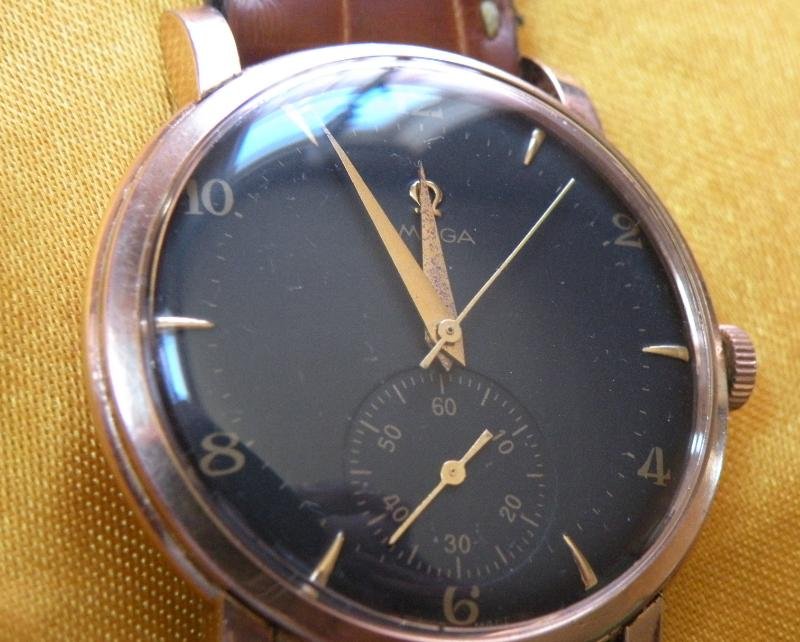
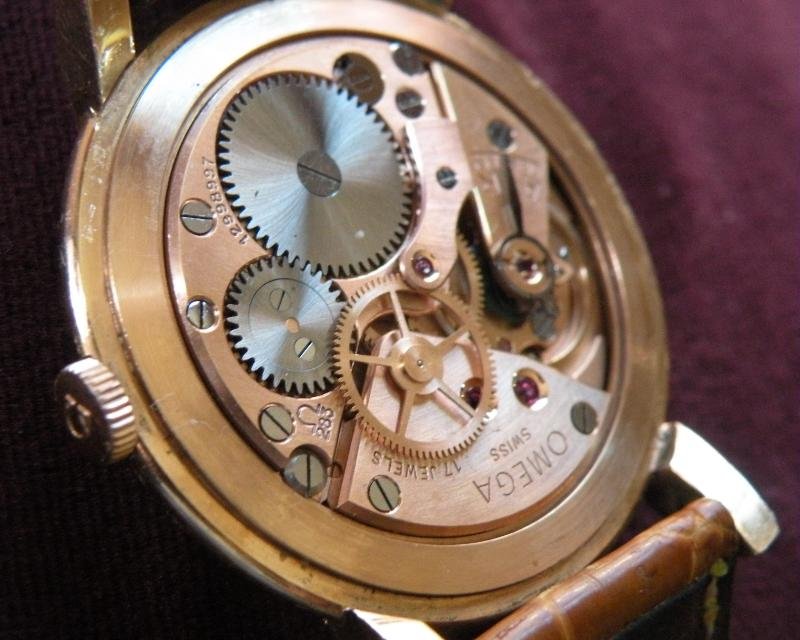
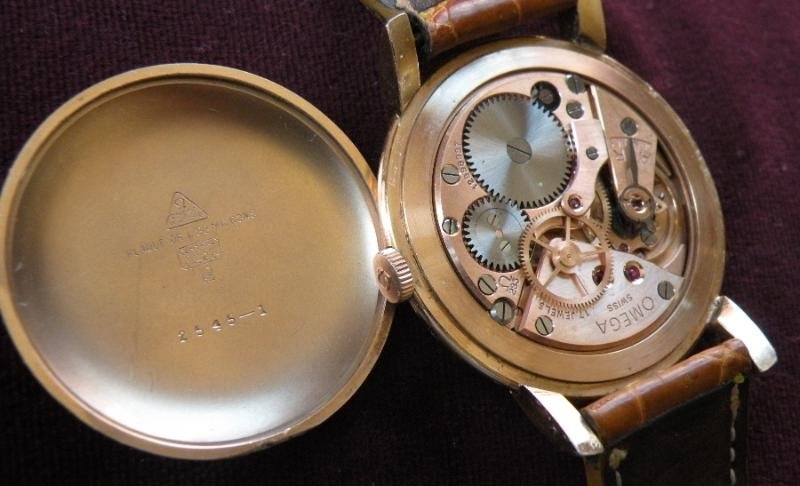
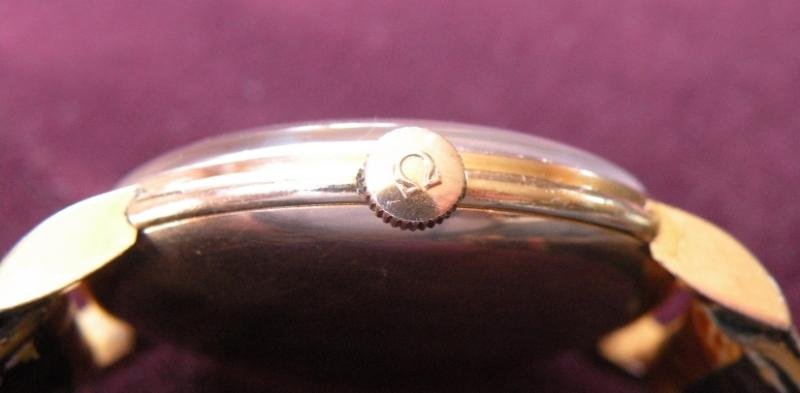
Today, I received one like that, I mean an Omega Ref 2545 283 cal, 39mm with Double Seconds.
Here it is.
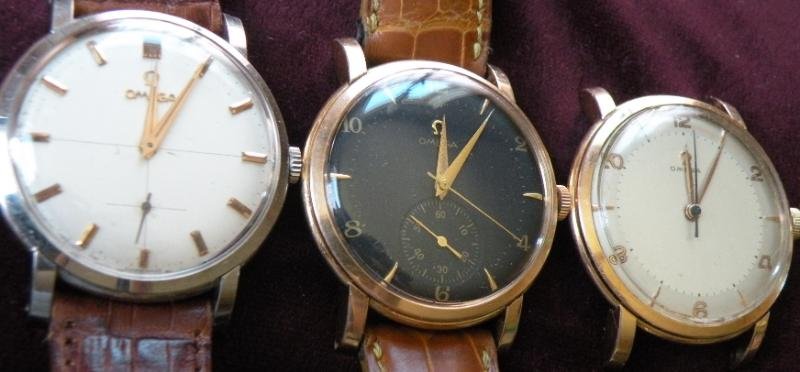
Picture taken with her Sisters (2544 and 2545)
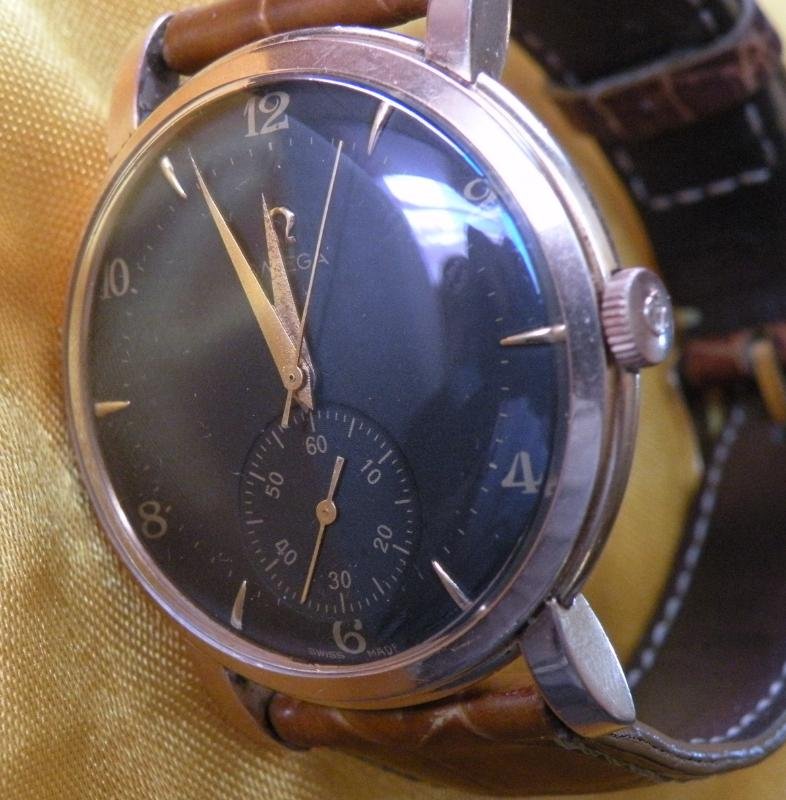
And the best part of it is it doesn`t cost me 20,000 dollars, but only a small fraction of it.
Cheers !!!.
Hoi.

That is a facinating...
if bizarre piece. I like that the hands are almost perfectly opposite each other, looks much nicer than some random offset between them
congrats
a
Guess the seconds differntal is like a GMT hour hand ? hhahahaha
I still find it hard to believe that Omega produce this at the factory. It would be a simple conversion for a standard Sweep sec model. You would need to find a sub second dial and a extra sub seconds hand. The pinion is there all you need to do is place the hand on it !
The case itself is interesting at 39 mm in diameter. One of the largest 30 mm movement case designs.
Good Hunting
Bill

Yes interesting.
I wonder what the thought behind 2 second hands was? Like an "almost" chrono ("we ran out of development money to add pushers") ;-)

Hio, congrats...
i have not seen this model especially the extra long second hand, very interesting.
congrats on this rare bird.
thanks for sharing.
stefan
I love it.
Hi all.
I love it just because it is big and looks very unusual. At the first thought, maybe it did not come out of the manufacturer that way but it looks like only this model (2545, Cal 283) has this feature and somebody already spent quite a bit of money on Christie's auction for one like that.
When I have it oiled, I will take more pictures inside and see what and how the wheels, pinions etc...look like.
Best regards.
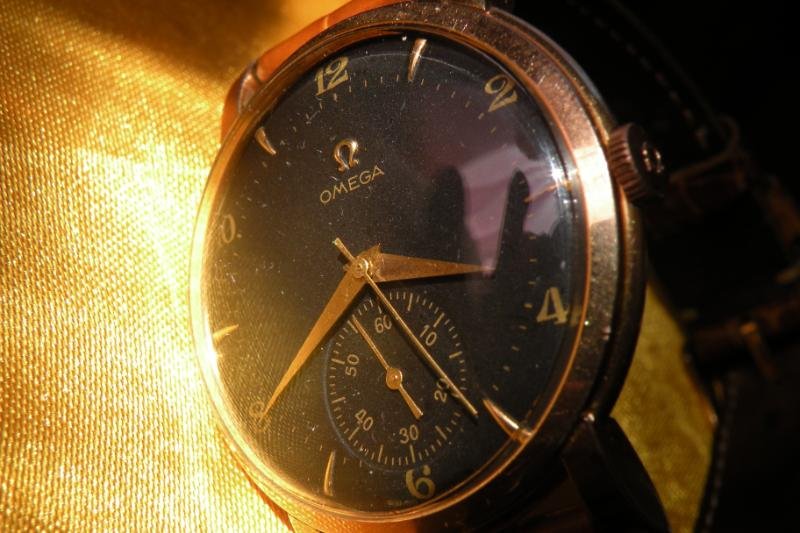
Glad to have been of service...
BTW, when you have the watch cleaned, you should probably ask the watchmaker to synchronize the two seconds hands. Looks kind of funny out of synch like that. I took another look at the Christie's watch and it was aligned properly.
You'd probably want to get an extract from Omega's archives on a watch like that to be sure it was one of the prototypes. Although if you are in the US, you're out of luck, unless a nice European forum member can help you out.
http://www.omegawatches.com/spirit/history/order-form
Excellent purchase!
gatorcpa
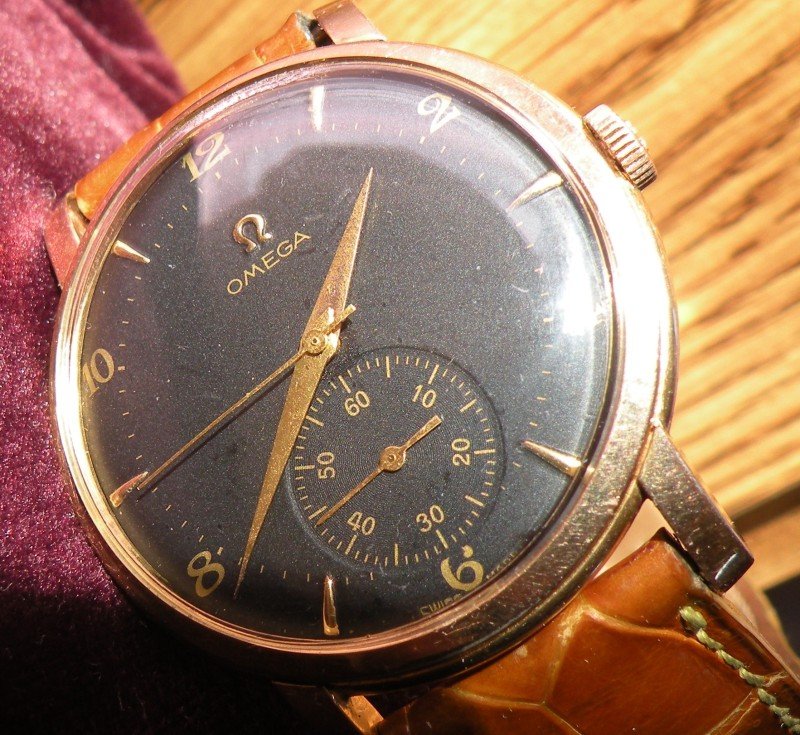
Like this ?
The seller set them 30 seconds apart, now they are synchronized.
Hi Erich.
My second hand is creeping not jumping and I don't think it relates to the dead beat.

It is the same as with mine...
Hoi,
it is the same system as with my example and Bill and Ben both have explained how easy it is to create this peculiar feature.
It has nothing to do with a prototype for the jump hour and I assume that at the auction it was the same system as with our 2 watches, just described wrongly...
Ben pointed out that up to now there is only one example of a 30 SC jump second prototype to be known to have surfaced so far...
AFAIK it is (was?) in the possession of the well known chronometer expert Fritz von Osterhausen and is illustrated in various publications.
Our watches are interesting as a collector´s item but they are not of great value - they are just to be enjoyed as not so common pieces.
I don´t mind the value, I love it for just what it is.
Enjoy your watch, as it is a rare XL ref., most probably (one of) the largest 30 mm references ever built (together with the sub sec version
Ref. 2544 ) - I think this is the more interesting fact...
kind regards
Erich
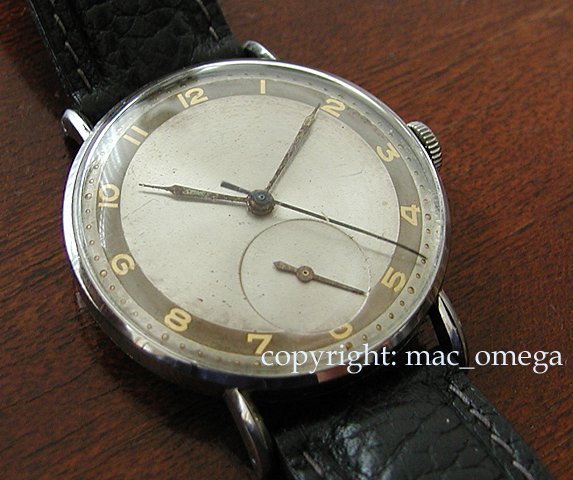
Here is mine!
Hi all,
I want to share pics of my example with 2 second hands as I bought it (as is) - and I have no suspect that the seller did some "special work" on it
to enhance the value or desirability of the watch. He was no watch guy and was selling various items out of estate buys...
The watch was not in very good condition when I bought it: The Omega logo and wording had faded but was still visible with a magnifying glass under a certain angle though.
I decided to leave the vintage surface of the dial background and had only reprinted the logo, wording and minute track.
I have no actual pictures as the watch is in the bank vault at the time - the pics show the watch in the condition as I bought it... meanwhile it had been restored to some part (as mentioned) and is waiting for a better matching pair of hour/minute hands as these ones had lost all the gold plating.
The movement is a very early and pretty rare Cal. 30 SC T1 in average condition.
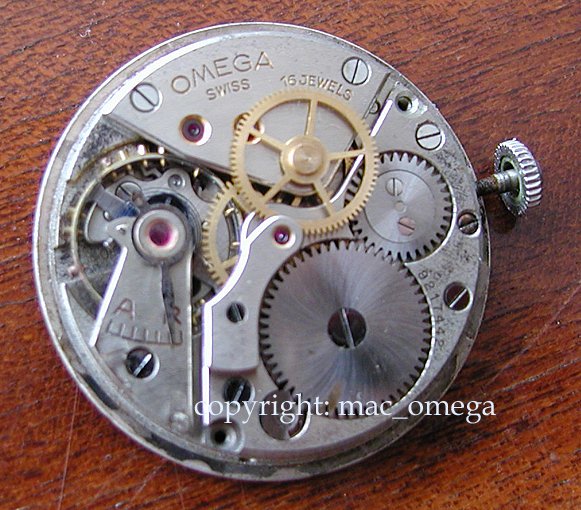
IMO these watches are NO prototypes for the dead second (=jumping second) chronometer as the movement would require a special device for the jumping of the second (as it is realized in the Cal. 372 movement which is based on a later Cal 371 and not on the Cal. 30 SC or 28X though!).
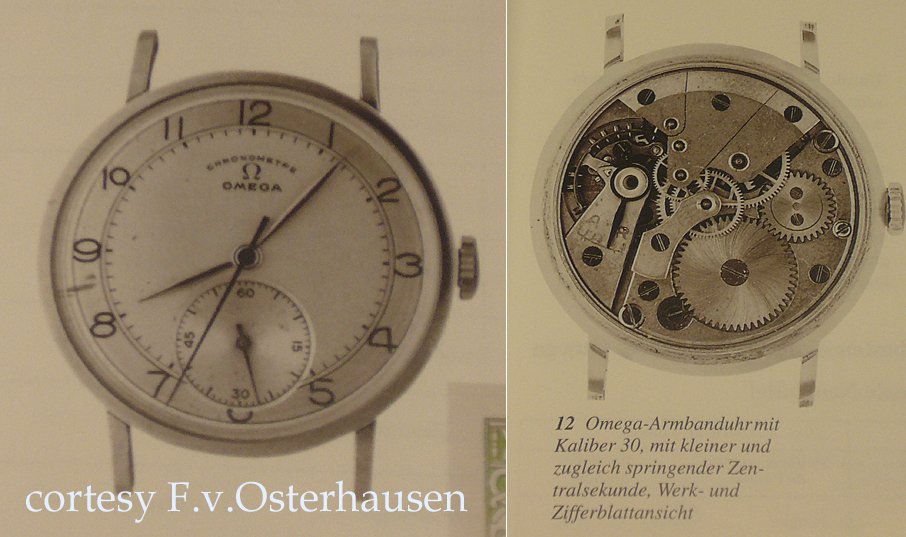
The early prototype however (I know only one example from the books) was based on a 30 SC T2 with a special jumping device and this part is obviously absent here.
Below you find pics of this early prototype taken from the German journal "Klassik Uhren" 3/97 - courtesy Mr. Fritz v. Osterhausen. It is an article about 30 T2
chronometers written by Mr. Osterhausen and Bernard de Geus. I am not sure if it is "our" Ben de Geus or not!? Ben chime in please!
Concerning the mentioned high price in the auction - I am still in doubt if it was a prototype or not as there was no movement picture available!
Maybe it was a faulty description by the auction house and at least 2 WISes have "shot up" the price onto such an insane range... just an assumption...
The center sweep second hand of my watch is "creeping" and not jumping, so NO prototype at all, but an interesting watch with a rare Cal 30 SC T1 with only 4500 examples built in total.
In the thread there was risen the question "what for?" of the second second hand 
I guess it might have been custom made for a physician or for some military purpose where it might be useful to have a large second hand ... but it does nor really make sense... just for an eccentric maybe??
I had ordered an extract from Omega some years ago when they had offered them for free in a local promotional campaign ... but they did not specially mention the second hand.
I don´t know how thoroughly they researched their archives during this promotion campaign (as it was for free and there had been an overwhelming amount of requests).
I think I will spend these 75 SFR for another extract - and hope it will disclose some more information and shed some light on this interesting topic.
Hope you enjoy the story
best
erich
This message has been edited by mac_omega on 2010-07-08 14:13:00
I think that you are on to something here...
... as there are things in the auction description that do not make sense given that the cal. 372 is totally different than the 30mm movements. it wouldn't be the first time items were misstated in an auction description.
Perhaps these were "special order" watches for people in certain professions, as you said.
Nice little mystery we have here!
gatorcpa
Admitted Erich,
you clever man, Ben is officially baptized as Bernard.
And yes, in order to conduct tests for the Jump Second Program, a 30mm was heavily modified (as depicted in your post) and the synchrony of both the seconds indicators (each driven via different paths) was compared in an easy manner. As far as we know only ONE such a prototype was ever handbuilt (in the early forties) and I cannot imagine it ever ended up in the commercial circuit, but then again: you never can be sure...
For some reason the project was shelved at the time until many years later it came briefly on the market in a different form, but was quickly withdrawn again for reasons of reliability and technical service.
As Bill has explained already, since the 30mm SC-version possesses an indirect driven sweep-second it is ridiculously easy to attach an extra sub-second to the timepiece. Change the pinion for one with the longer shaft (as used in the sub-sec. versions), get yourself a little hand and dial from the mentioned version and there you go: two metal indicators rotating in 60".
But for what purpose? If you really want to, you could probably add a third (sweep sec.) indicator, or maybe even a fourth.. (kind of helicopter effect). In the early days it might have looked funny or even impressive - nowadays we're fully used to multiple indications on a dial, so the visual impact should be less dramatic.
So, peculiar? -Yes, for a collector. Very valuable? -I don't think so.
cheers, Ben.
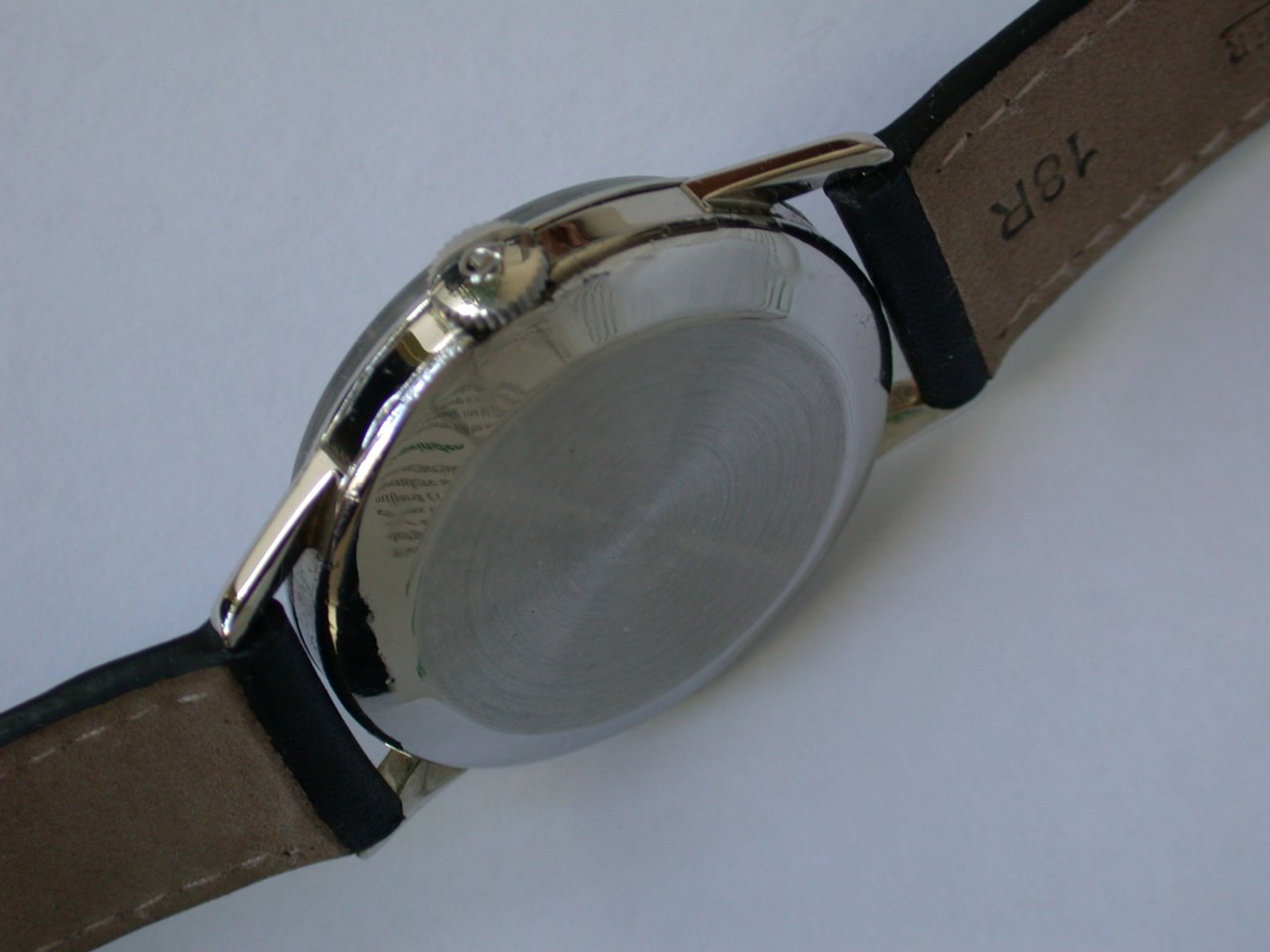
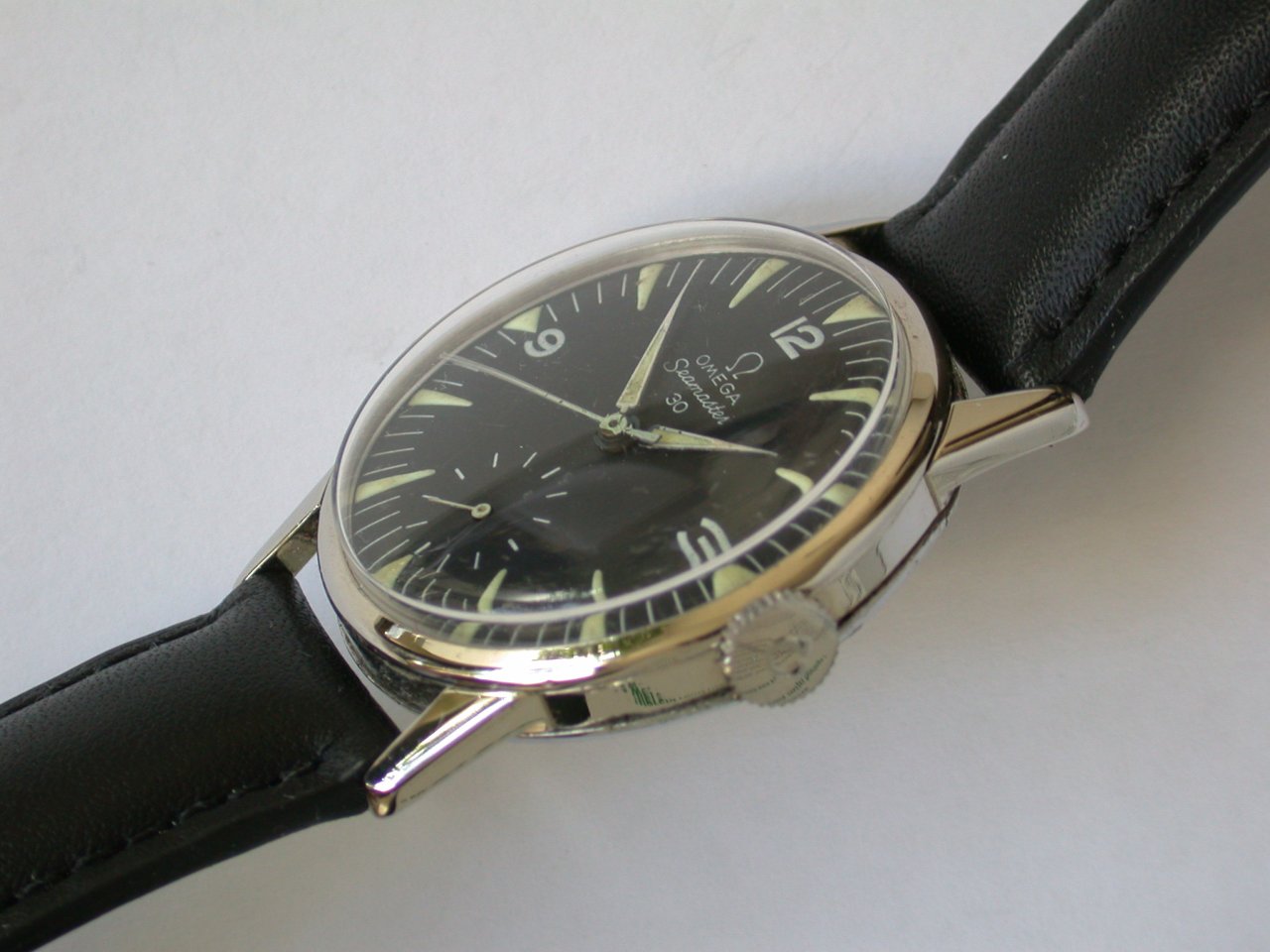
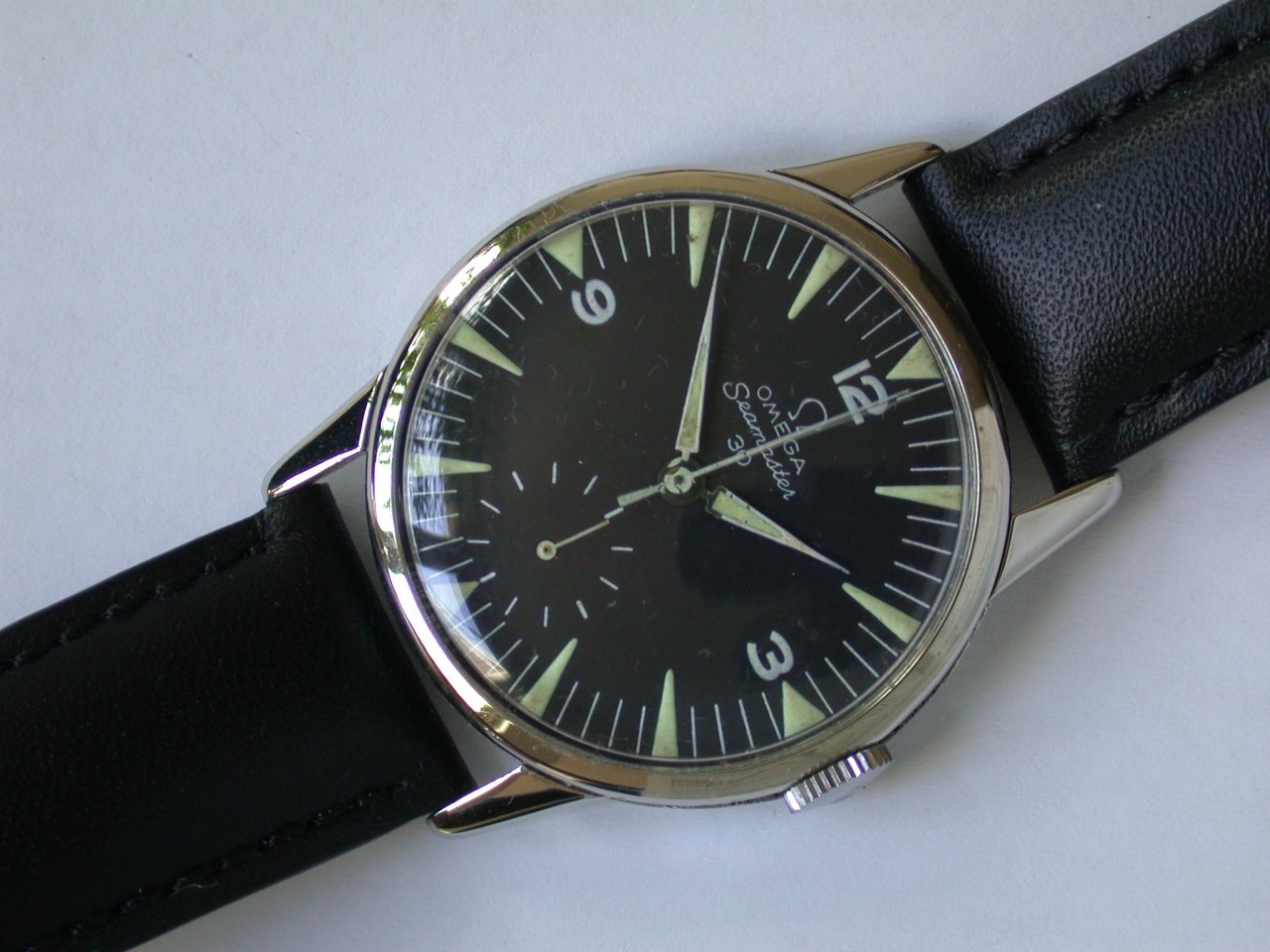
Another double seconds
As maybe vissible, the back of the casing can't be original, because there was a bit cut out near the crown to make it fit.
Looking forward to some comments, Boconoc
 This message has been edited by boconoc on 2010-10-28 04:28:11