vintage constellation

pictures would really help as they did a lot of things
i dont 'think' they ever did a constellation as you describe, but they did 'i think'(again), a long time ago, do a handwind chronometer with red star with movements based on the Kew Observatory winning movement. they also did the 'unnamed constellation' called the Globemaster, but that should have 'certified chronometer' on the dial.
having said that there have been a lot of strange Omegas coming out of south america over the years with red stars, gold stars, redone dials, you name it. thats why pics are very important.
not a lot of help i know, but the best i can do without seeing it
Graham
vintage omega red star
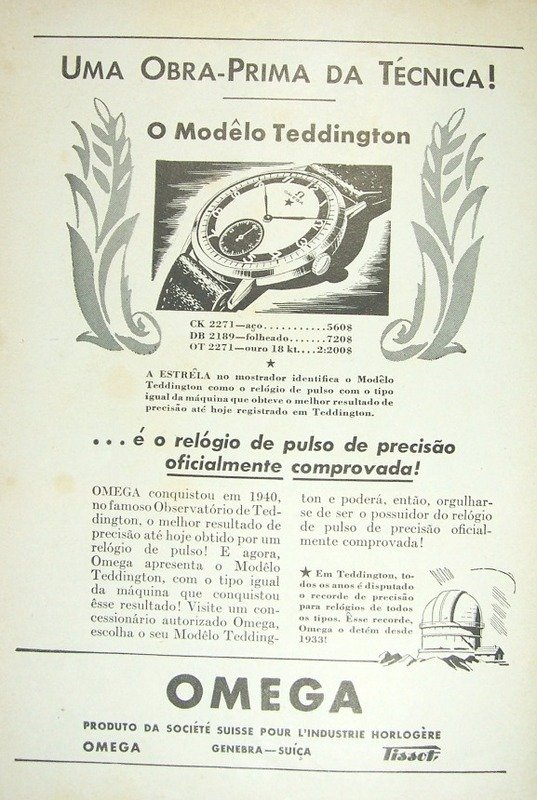
Here is an ad for the "Red Star" watch...
...which has the case references for these watches, called the Teddington in Brazil.
If it not one of the three listed references, I'd be wary. Also, the "red star" was a manual-wind watch. The Constellation was an automatic. So if it automatic and has a red star, then it is a repainted dial at the least.
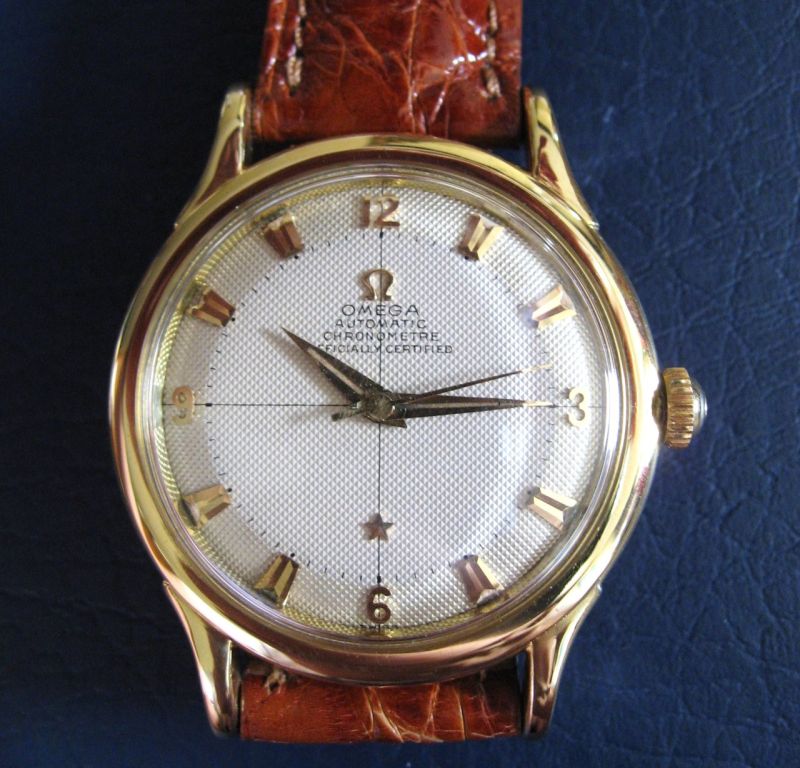
The no-name Constellation (called a "Globemaster" in Omega advertising) was originally sold only in the USA. These would have a gold star above the 6, just like the regular Constellations of the early 1950's.
Hope this helps,
gatorcpa
no-name Connie
... like this:
In my modest opinion the 'hype' about red-starred Teddingtons is truly a hoax. These 30mm movements were absolutely bog-standard ones - Omega's clever references to any good results during 1947 tests at the Laboratory in London served only the purpose of giving new incentive to the "trailing" Southamerican market at the time. But anyway, what about it? we all love a good myth now and then.
ciao, Ben.
This message has been edited by B.de.Geus3 on 2009-06-27 06:23:28
Nice Globemaster, Ben!
This is what Omega has to say on the subject of the red star models.
From the Omega Vintage Database entry for case. ref. 2271:
"...The red star which is sometimes featured under the Omega logo identifies the watch as being equipped with the same type of calibre as the one which obtained the best results until that point at the 1940 Kew Teddington precision competition."
Whether any additional adjustments were made to the standard 30mm calibre, I haven't a clue. However, tweaking a movement for better results on certain models was not unheard of at Omega in the 1940's. They did this to some military watches sold during WWII. See ref. 2179.
Hope this helps,
gatorcpa
Yes, i don't think that..
.. anything was changed from the technical lay-out in the movement - no 'special' parts inside. It seems that the 30mm was surprisingly accurate and stable from birth.
In WW2 the RAF had strict time-keeping demands and in order to catch the possible odd-one-out, people in Omega House in London had to make overtime to check and -if needed- make slight adjustments. Altogether a rather time consuming enterprise but the reputation was at stake. Maybe the factory did the same for the red star versions.
thanks for the info gato,
Ben.
another 'star'
however this time from a competing brand in le Locle, Switzerland.
Anytime a star is involved on chronometers, reference is made to observatoria. And what do people watch there...? ...Yes!
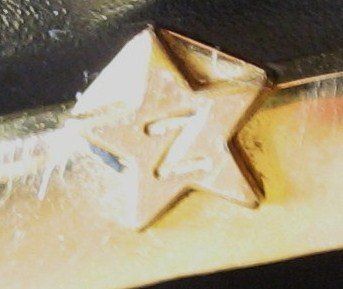
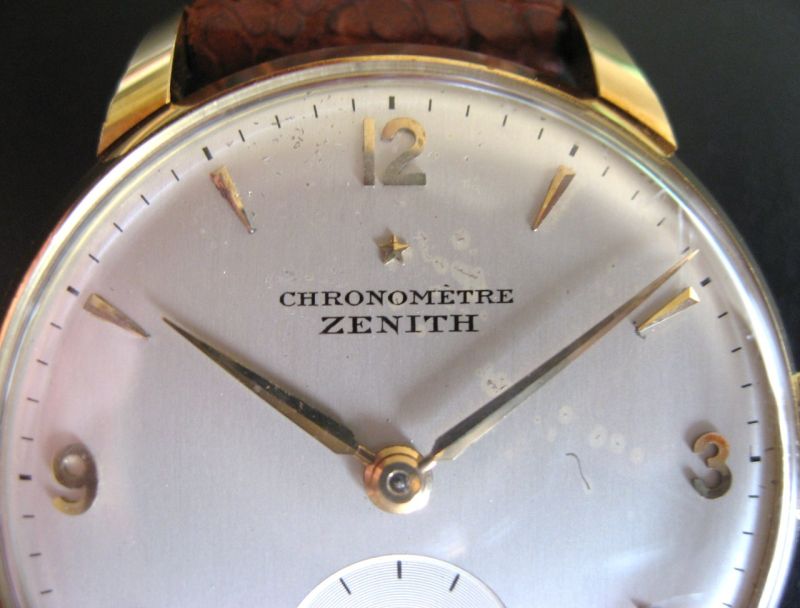
The watch with a star
Good day everyone… The watch with a star…. Good point Ben,... Here is a ad for the 135 …
 And my steel 36.5 mm screwback captain case example…
 I am still up in the air about the red star Omegas
personally. You can not collect
everything…
Good Hunting
Bill Sohne
I am still up in the air about the red star Omegas
personally. You can not collect
everything…
Good Hunting
Bill Sohne
Feast your eyes...
The real attractiveness of the 135 is situated in it's internal organs (Peseux 260 as well)
Feast your eyes:
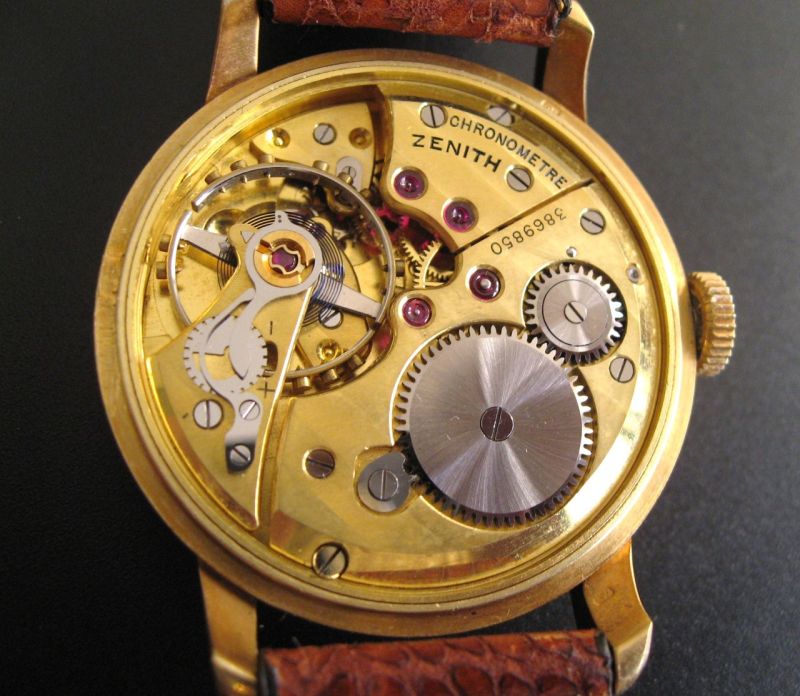
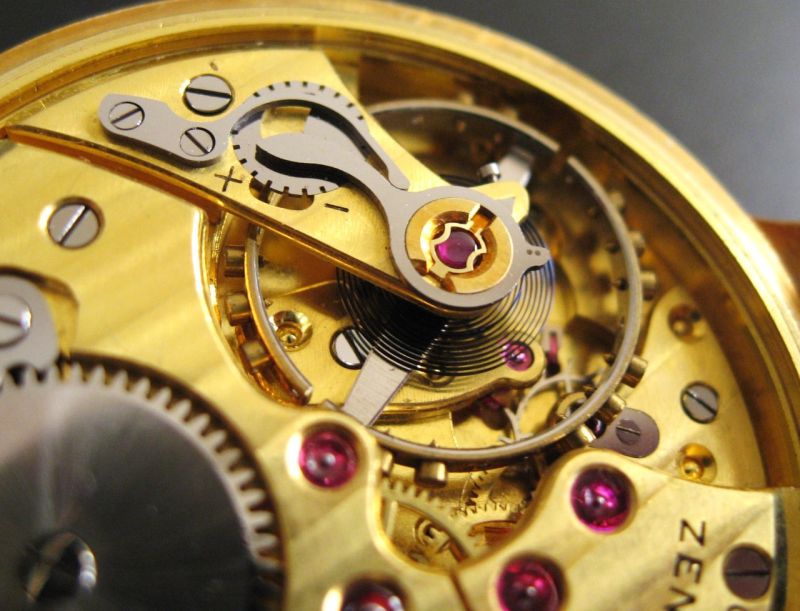
That is what i call a pretty sight,
ciao, Ben.