
SIHH 2010: by SJX - A Comprehensive Report
SIHH and Geneva 2010
By Su Jia Xian
January 2010
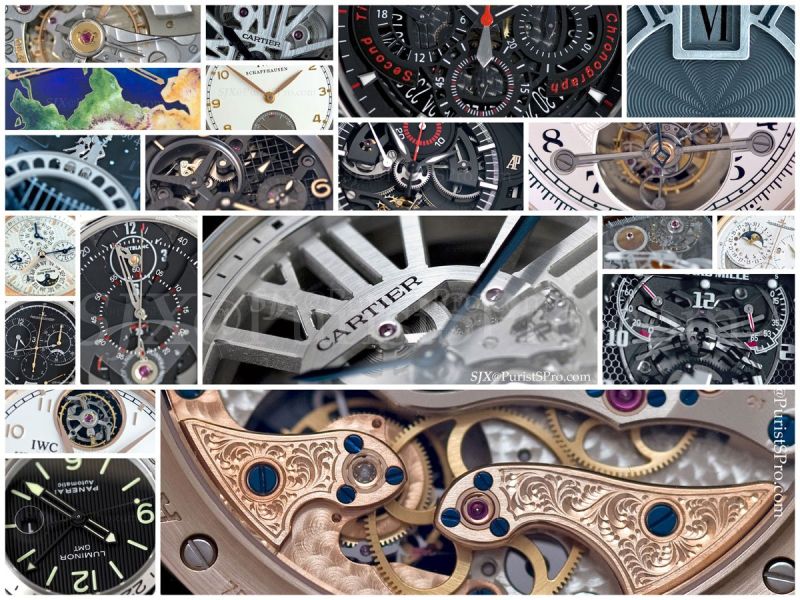
I present my report on the watches presented at SIHH and in Geneva in January 2010.
This year’s fair was excellent for two main reasons. One being the exceptional range of products and the other being the upbeat sentiment amongst participants. Though Richemont, which dominates runs SIHH, is still cautious, with CEO Johann Rupert making prudent statements, brands appear to be optimistic, judging by their new launches. Stronger brands especially, those with money and high brand equity, are aggressively pushing ahead.
This report comprises 756 photos and 14,773 words – it was a pain to complete but I enjoyed it and I trust you will do. It covers 17 brands, including three that exhibit outside of SIHH. Compared to my 2009 report it is longer and larger, and I also hope better as well I hope (click here for my 2009 report).
Majority of new watches launched are included but I did miss out on a handful. However, I believe all the important new products are included.
The brands covered are:
A. Lange & Söhne
Audemars Piguet
Cartier
De Bethune
Franck Muller
Girard-Perregaux
Greubel Forsey
IWC
Jaeger-LeCoultre
MB&F
Montblanc
Panerai
Piaget
Richard Mille
Roger Dubuis
Vacheron Constantin
Van Cleef & Arpels
All photos and text are mine, and plenty of the content is opinion. Questions and comments can be emailed to me at SJX (at) PuristSPro.com (remove spaces).
Enjoy,
- SJX
This message has been edited by SJX on 2010-02-11 23:34:08 This message has been edited by AnthonyTsai on 2010-03-16 19:17:06 This message has been edited by MTF on 2013-01-12 08:26:41SIHH 2010: A. Lange & Söhne

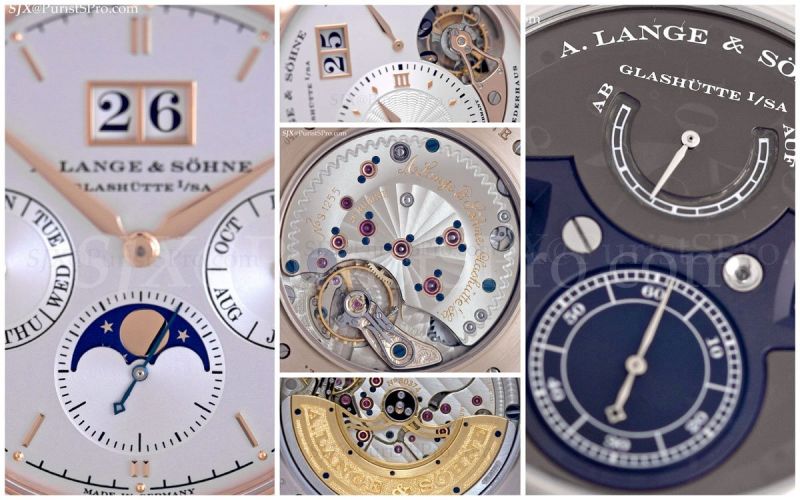
Lange had a superb range of products this year. In contrast to previous years where the collection was led by a highly complicated watch that was complicated for the sake of being so, the range this year is a gifted balance. Both commercial products with wider appeal and cerebral complications are well represented.
Small complications like the Referenzuhr and annual calendar launched this year are necessary to make Lange more accessible, both financially and intellectually, because they are fairly affordable (by the lofty standards of Lange) and easy to understand. Lange needs that broader appeal to develop over the long term.
Interestingly Lange did not present any new ultra-complicated movement, instead the primary new calibre for 2010 is the L021.1 of the new Lange 1 Daymatic. The movement is new and not based on the Langematik. It has a 50 hour power reserve and Lange’s in-house balance wheel and hairspring.
Below: Lange 1 Daymatic in rose gold, yellow gold and platinum
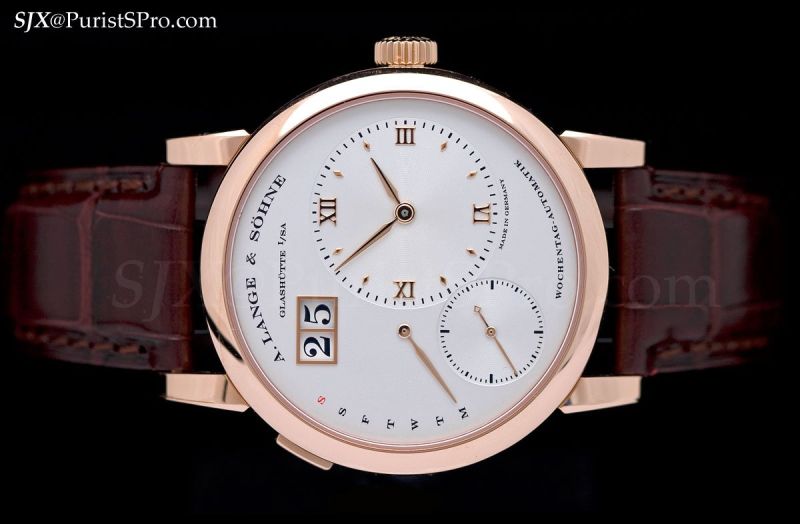
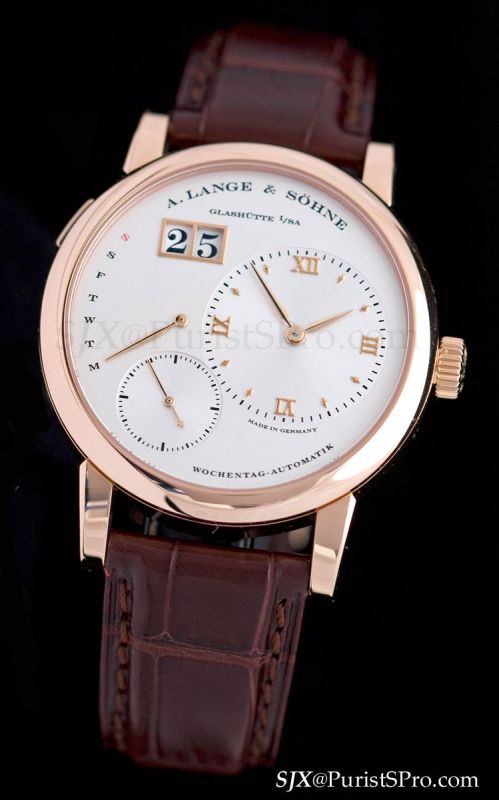
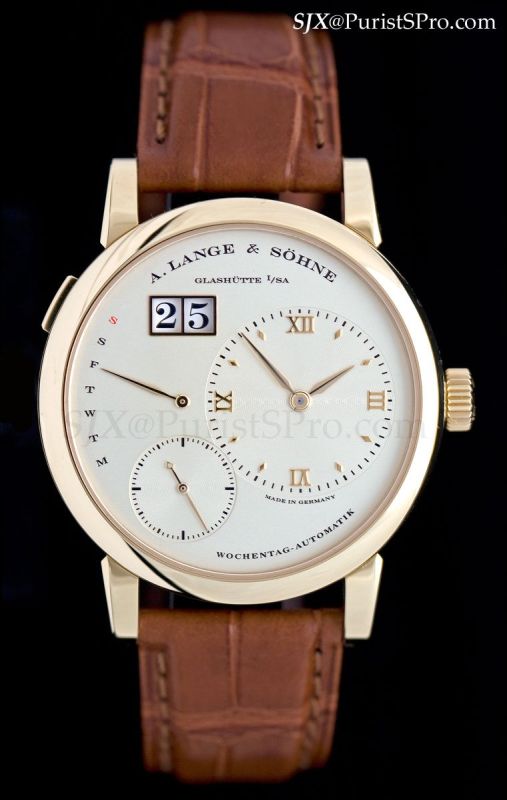
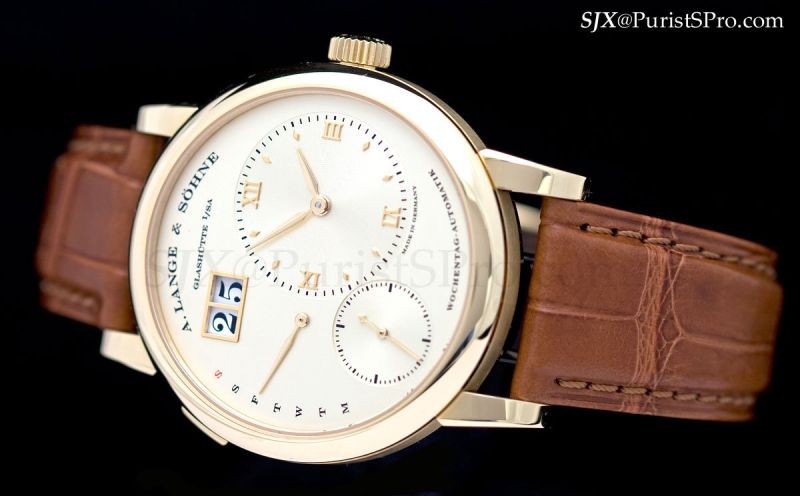
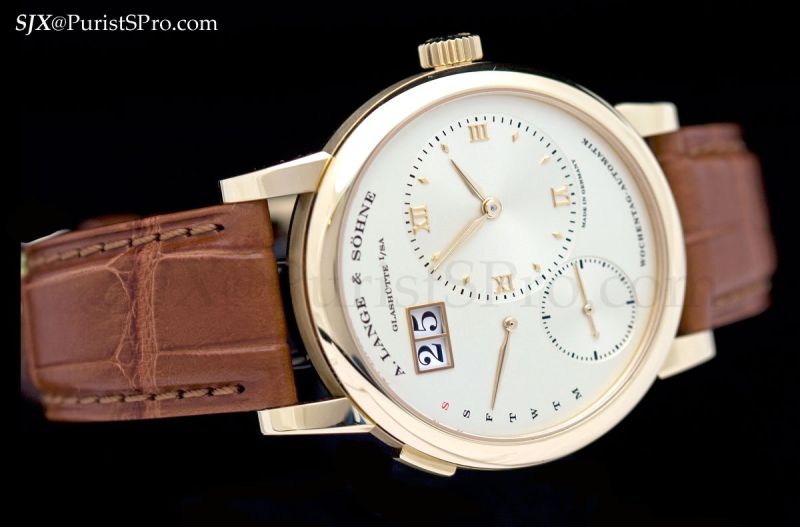
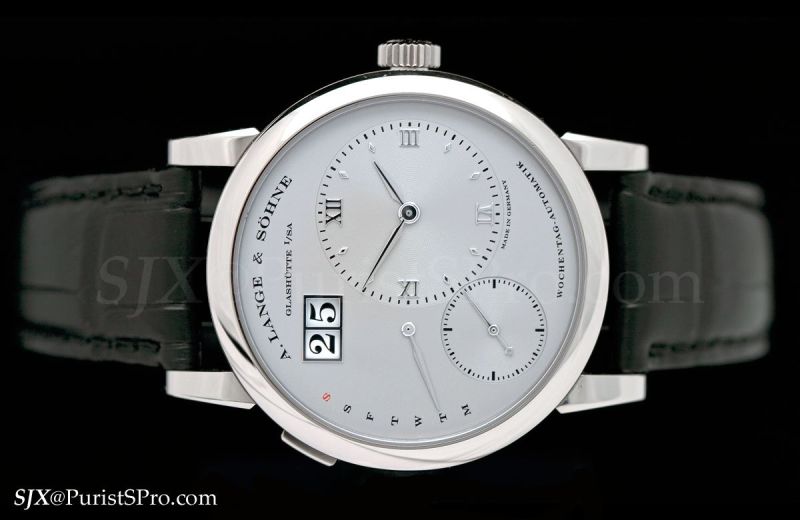
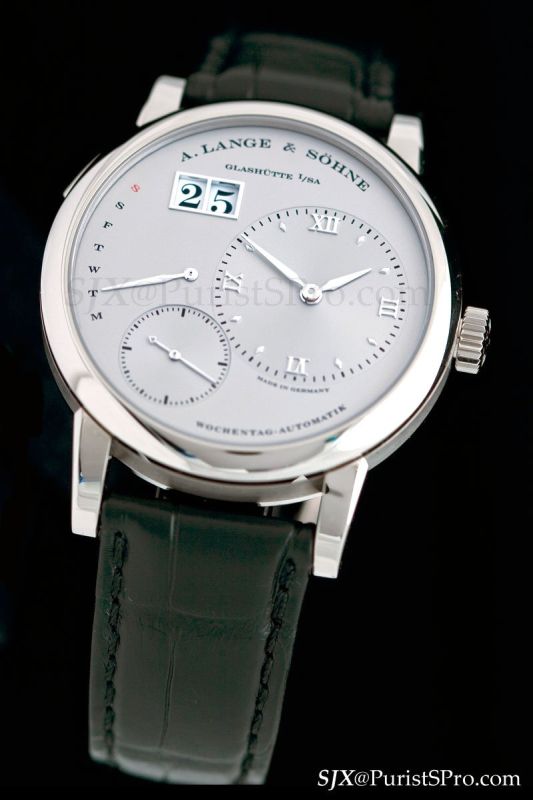
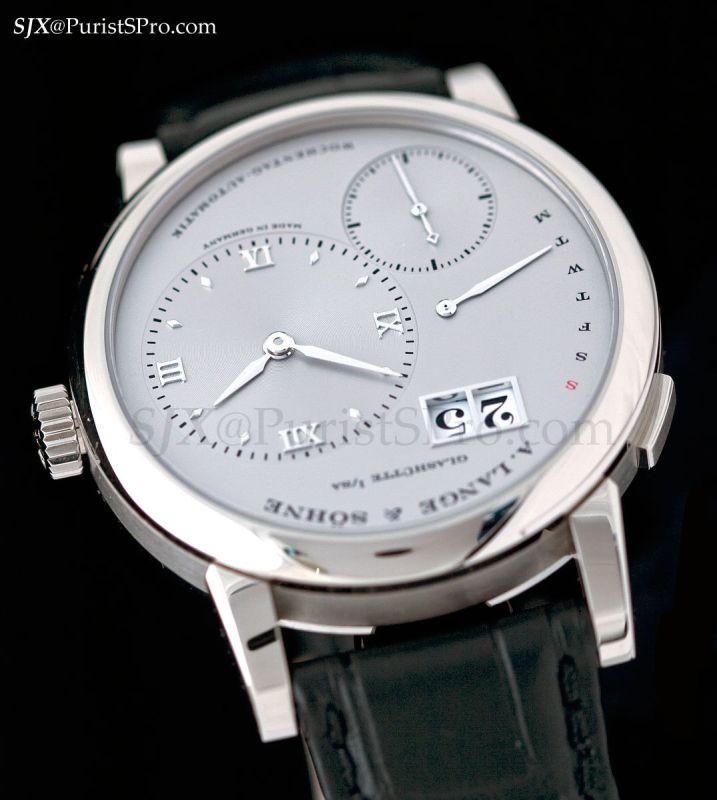
Available in yellow or rose gold, or platinum, this watch is a visual mirror image of the original Lange 1. Though it is marginally larger than the original at 39.5 mm in diameter, that increase is almost imperceptible without a side by side comparison. It displays day and date, probably making it the most practical watch in the whole Lange line-up.
Below: L021.1 of Lange 1 Daymatic
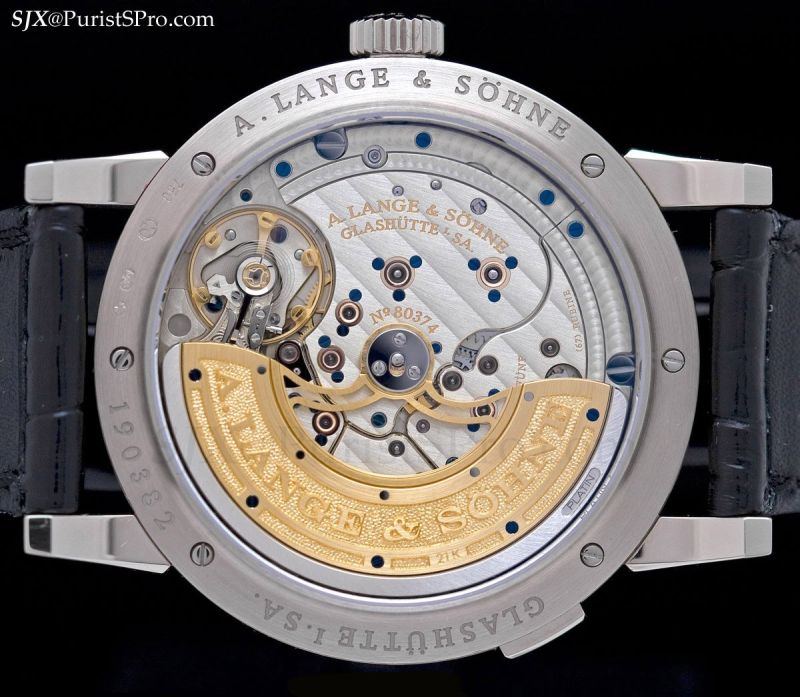
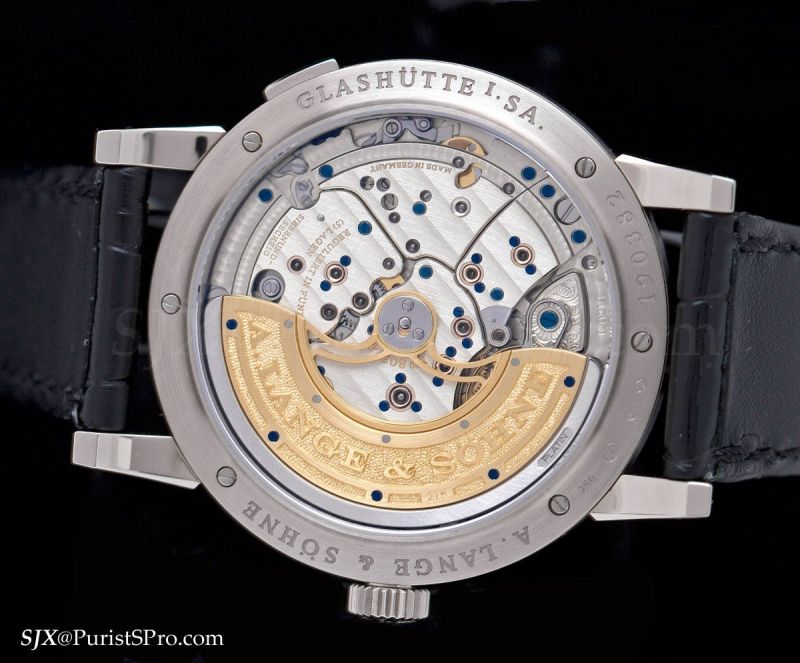
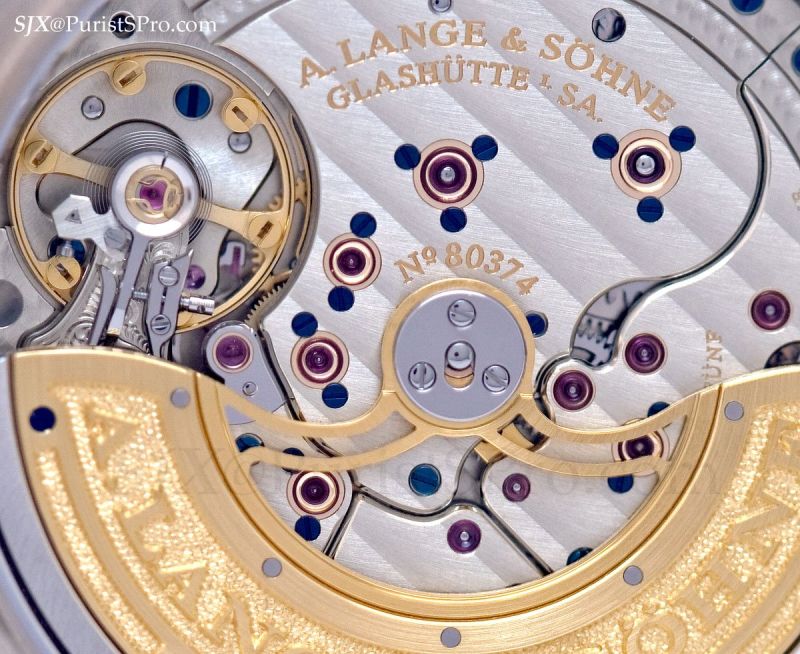
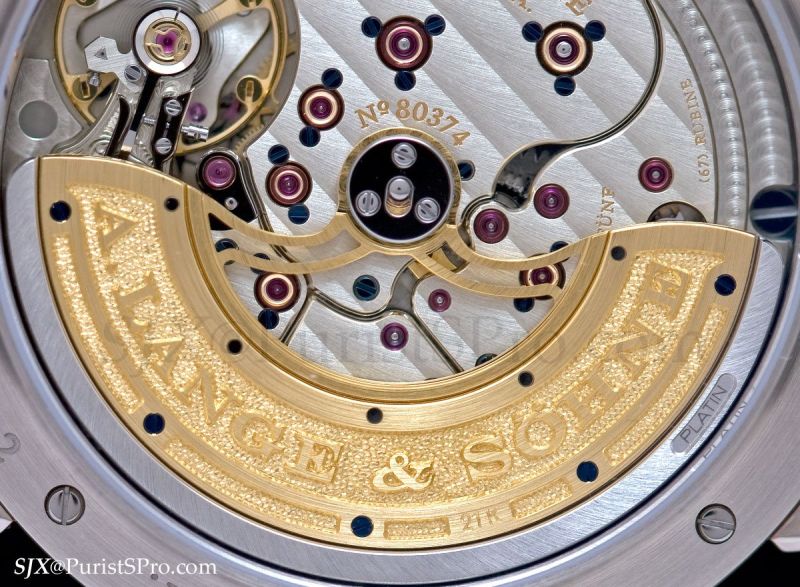
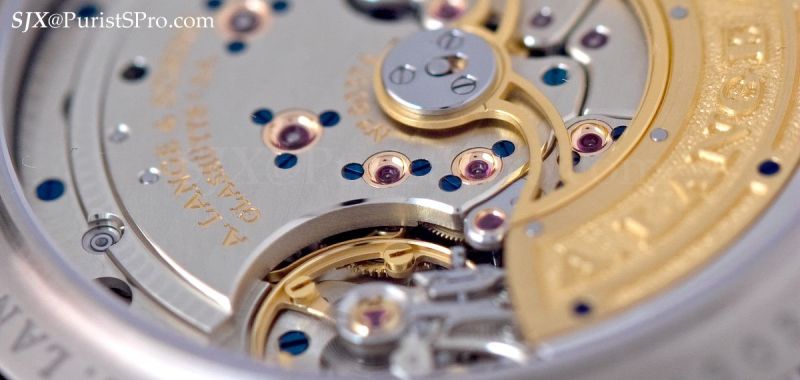
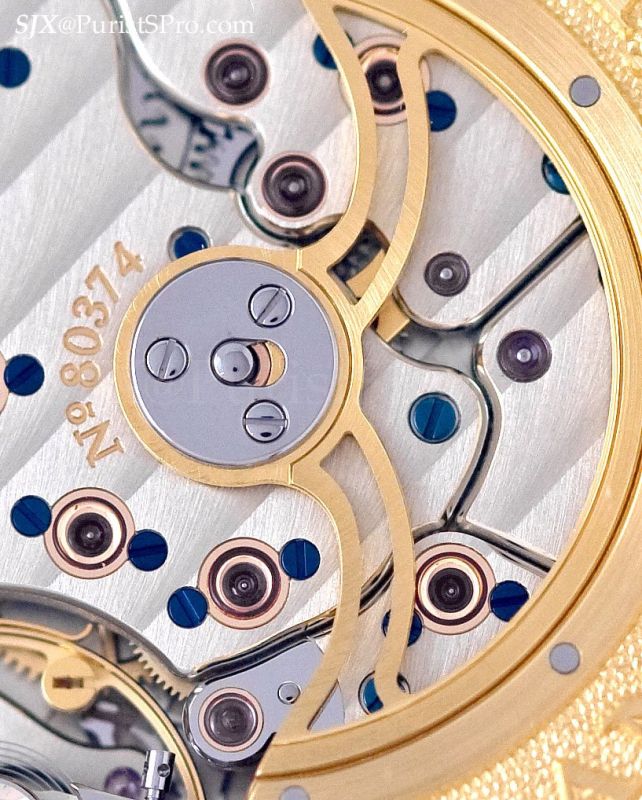
The main theme of the 2010 collection is the brand’s 165th anniversary. To mark this date, a three piece collection titled “F. A. Lange Homage” was unveiled, comprising the Tourbograph, Lange 1 Tourbillon and 1815 Moon Phase. These are remakes of past Lange limited editions with tweaks, major and minor; admittedly this is not particularly creative but the watches are beautiful and incredibly well made, so it is difficult to criticise them.
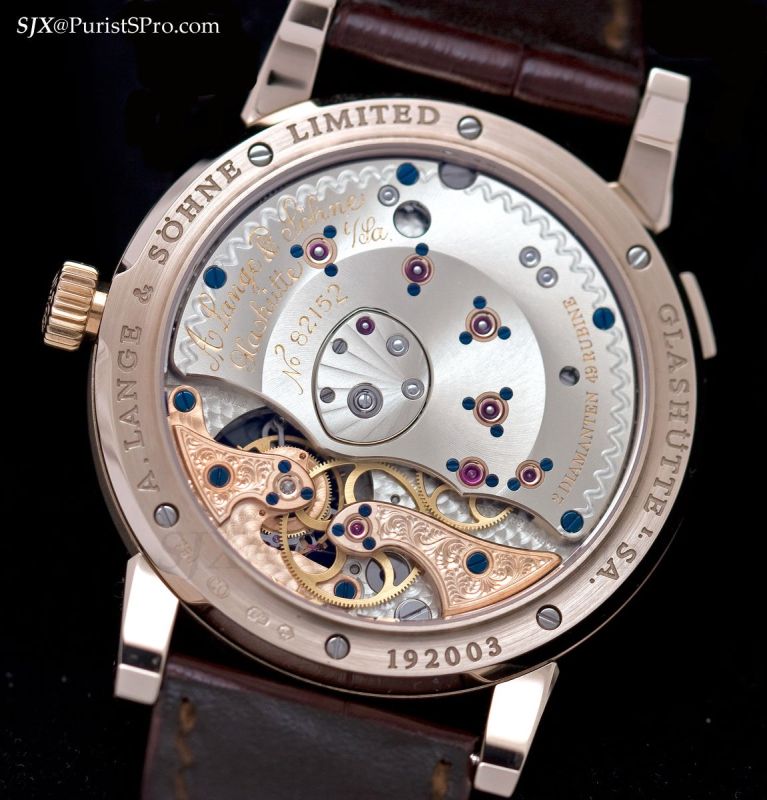
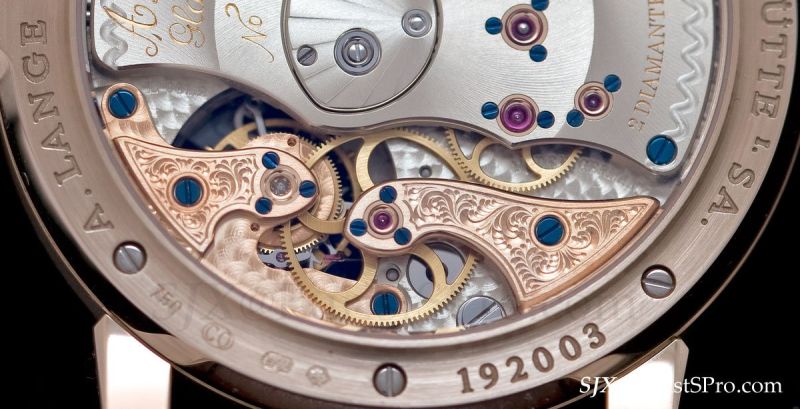
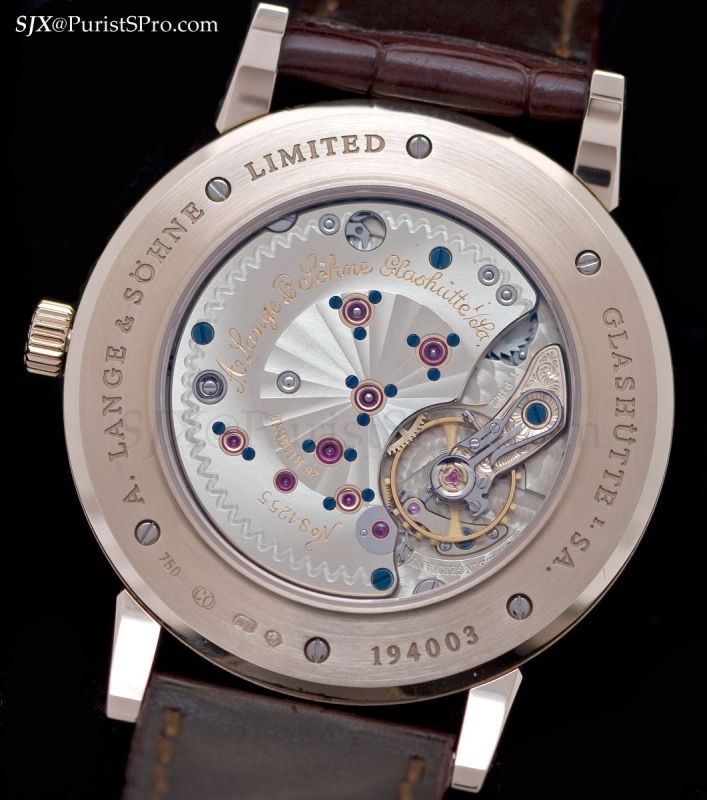
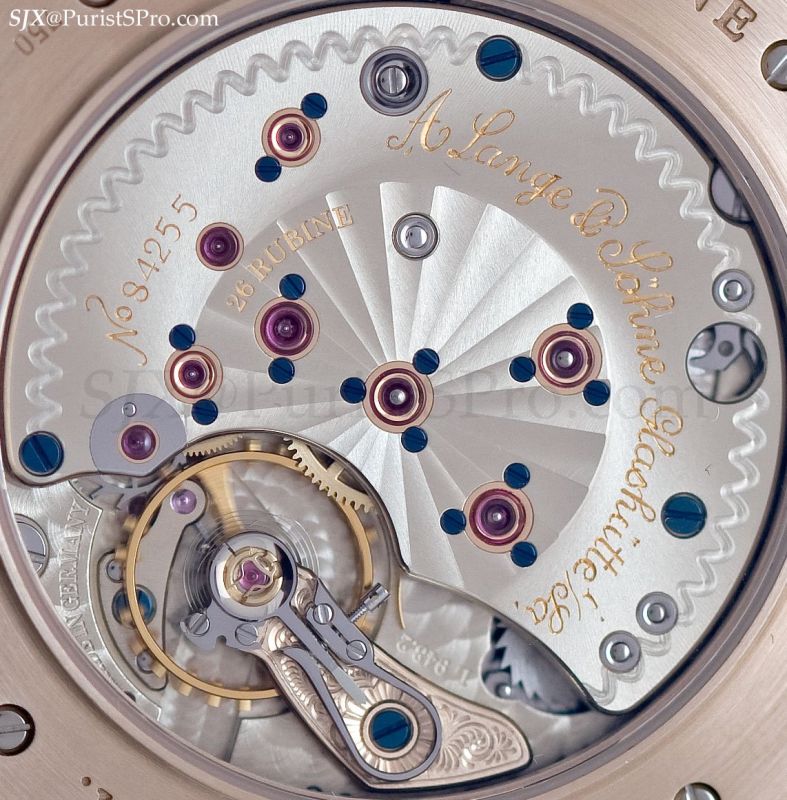
All three watches are cased in a unique honey coloured gold alloy that is twice as hard as regular 18 ct gold and exclusive to Lange. Each of the watches in the anniversary collection also features a solid honey gold balance cock that is hand engraved in Lange tradition. Another feature of the collection is the distinctive guilloche motif on the dial. All of that reminds me of the Lange 1A.
The movement also features a unique finish, a sunburst and chased decoration reminiscent of vintage pocket watches. This is the only the second instance of a Lange without the conventional movement decoration, the other being the Wempe 1815 “Side-step”.
The first of the three watches is the Tourbograph Pour le Mérite, a rattrapante chronograph with tourbillon and chain-and-fusee mechanism. 50 of these will be made, completing the original 101 piece edition promised when the first Tourbograph in platinum was launched.
Below: Tourbograph F. A. Lange Homage
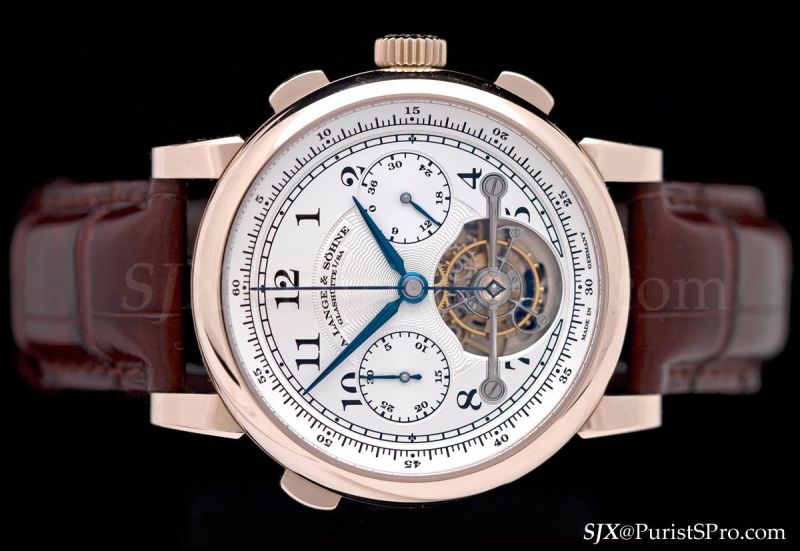
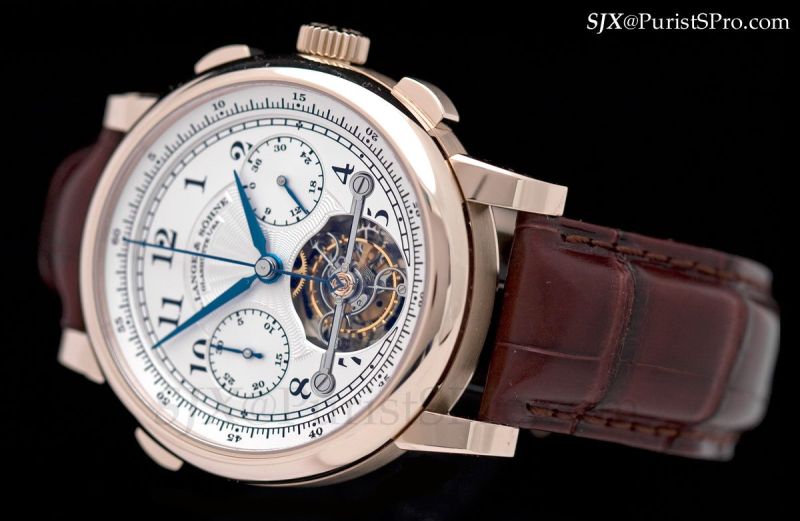
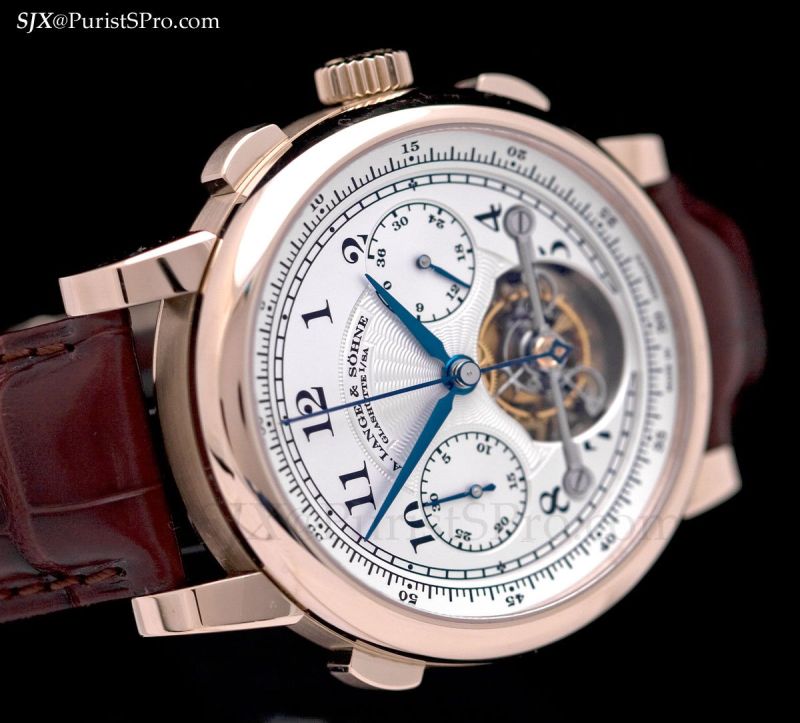
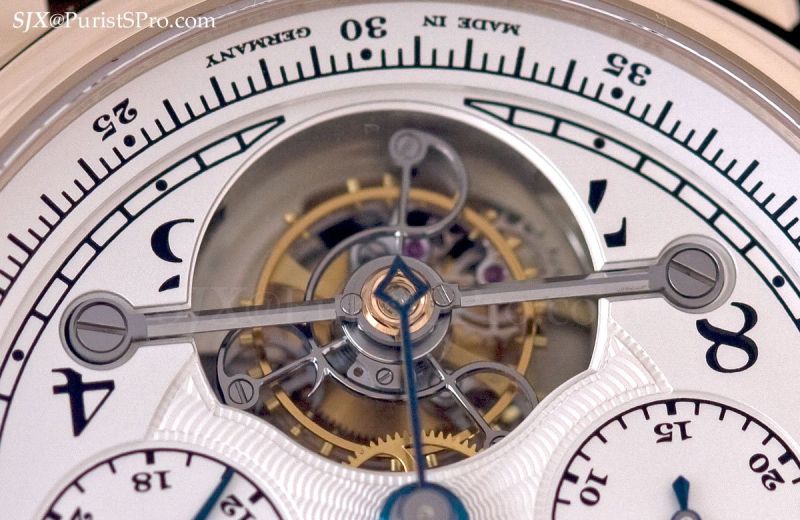
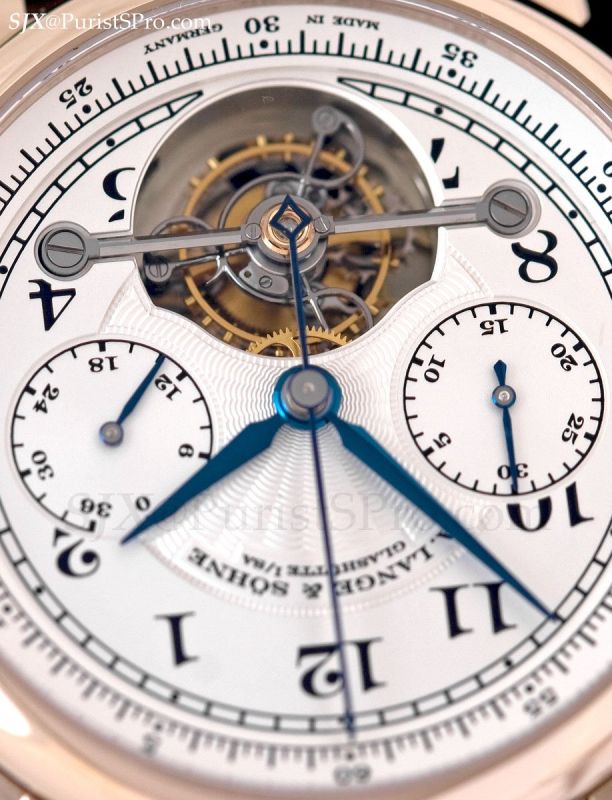
This is a lordly watch; remarkably expensive but also utterly impressive. This gold Tourbograph has a richness of colour that is amazing and I prefer it to the platinum Tourbograph which was too monochrome.
Below: Tourbograph L903.0
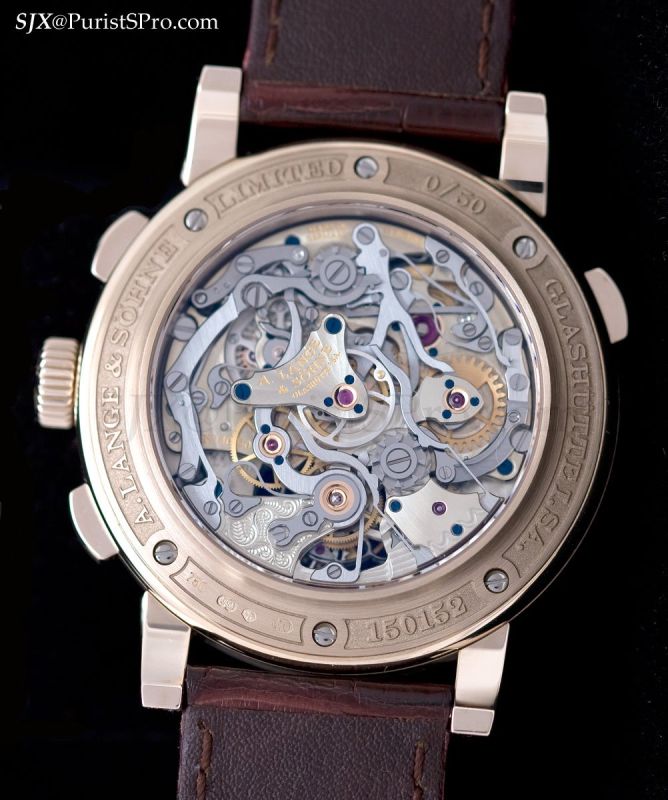
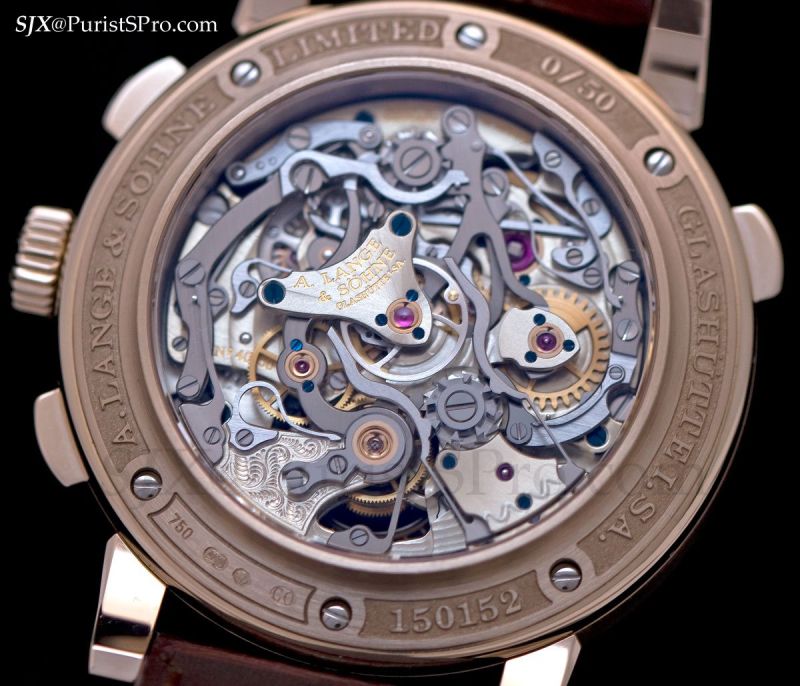
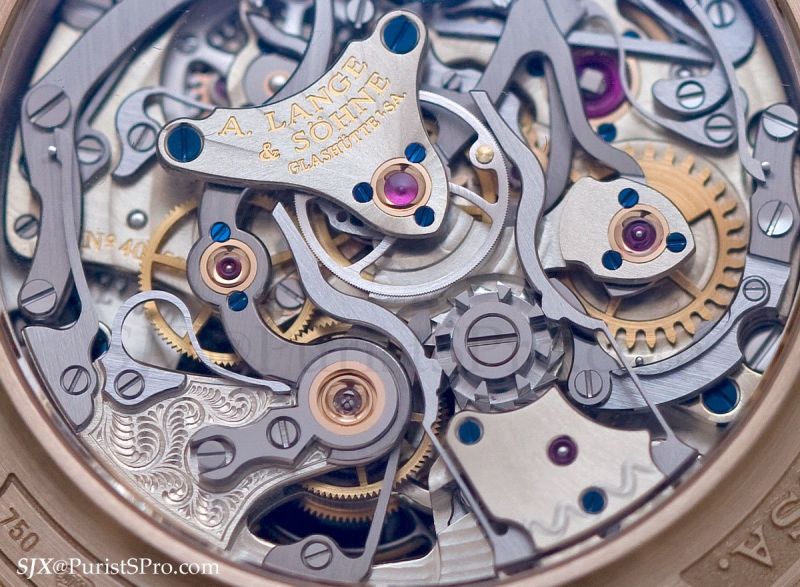
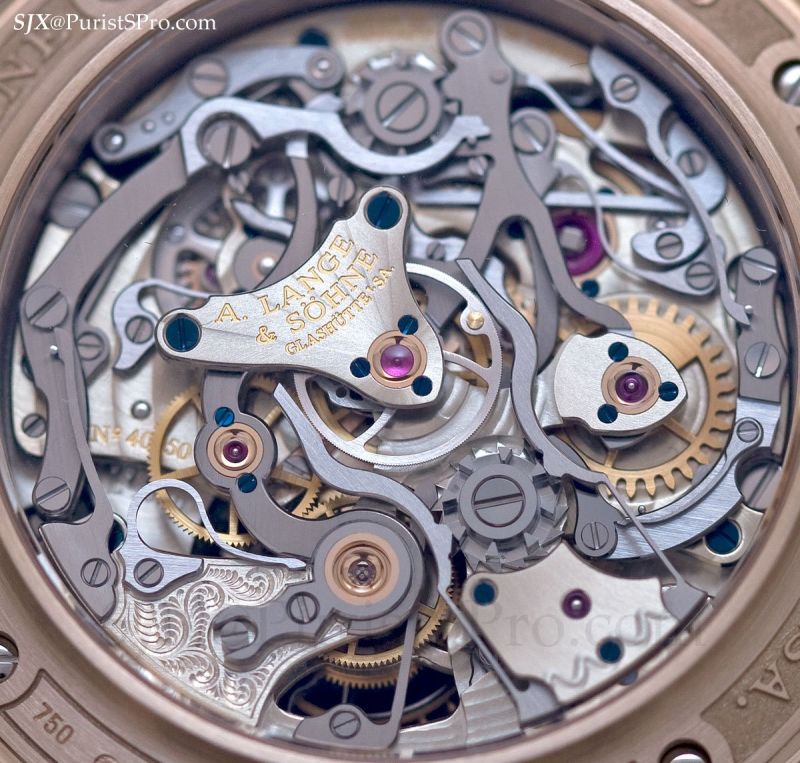
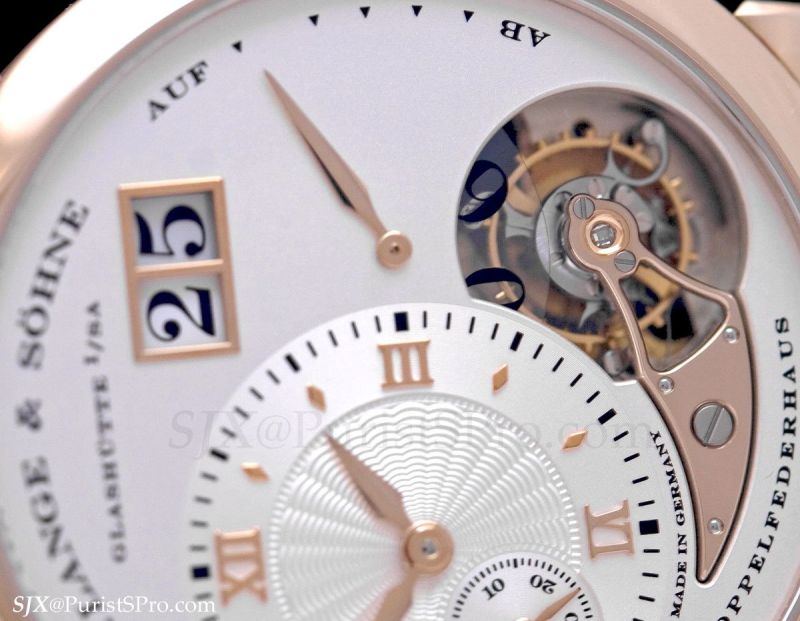
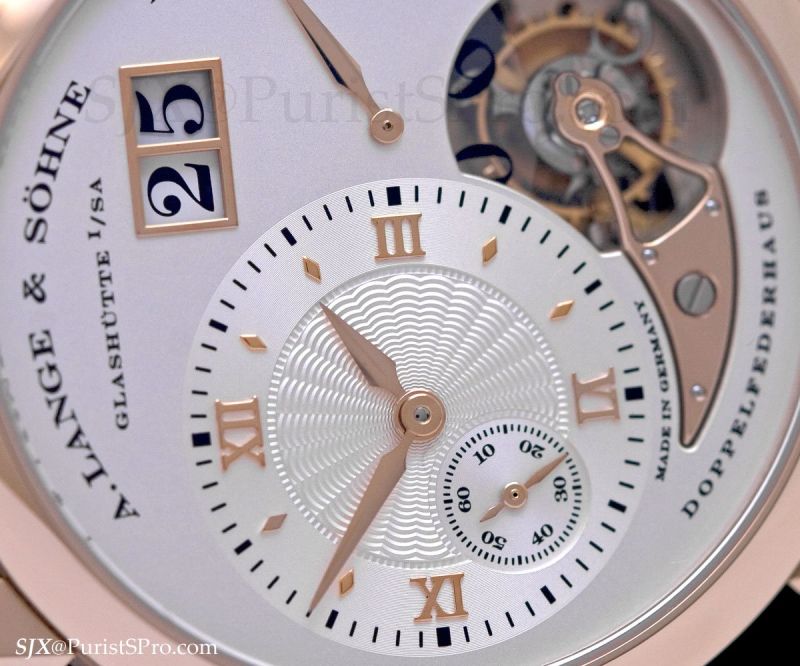
Second is the new Lange 1 tourbillon. Unlike the original this has the added feature of a hack seconds first seen the Cabaret tourbillon. Another improvement over the first Lange 1 tourbillon is the enlarged aperture for the tourbillon on the dial; on the first model the cut-out was too small, leaving the tourbillon looking constricted.
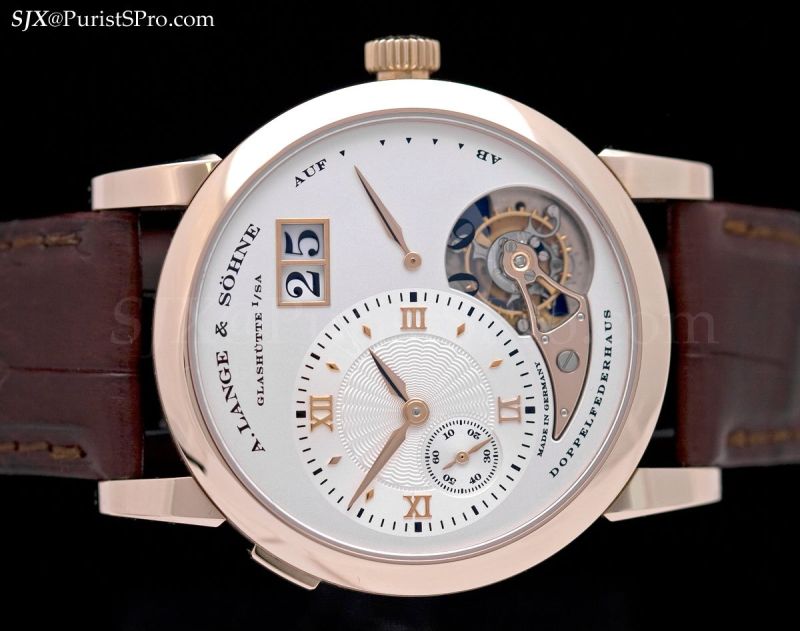
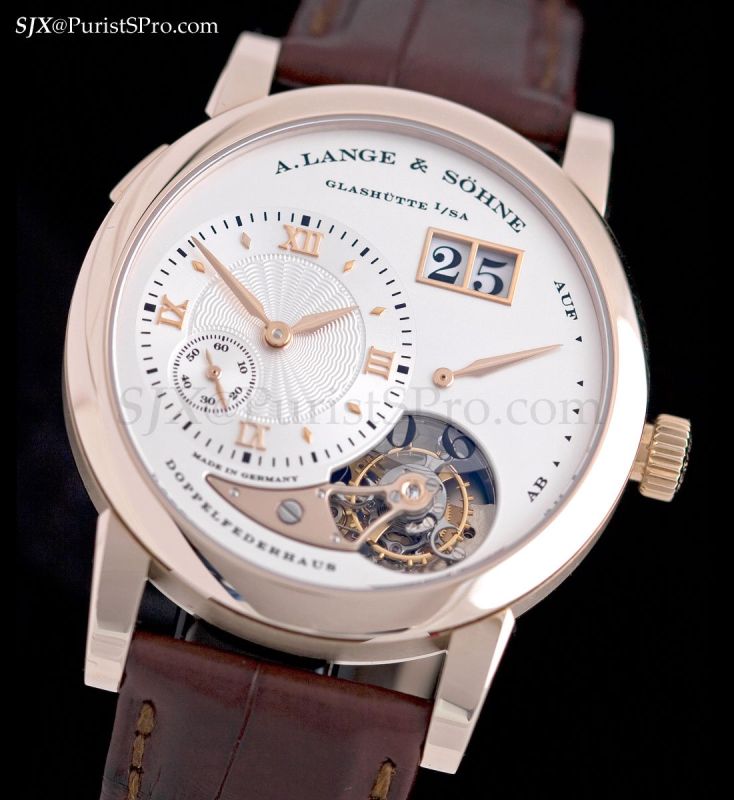
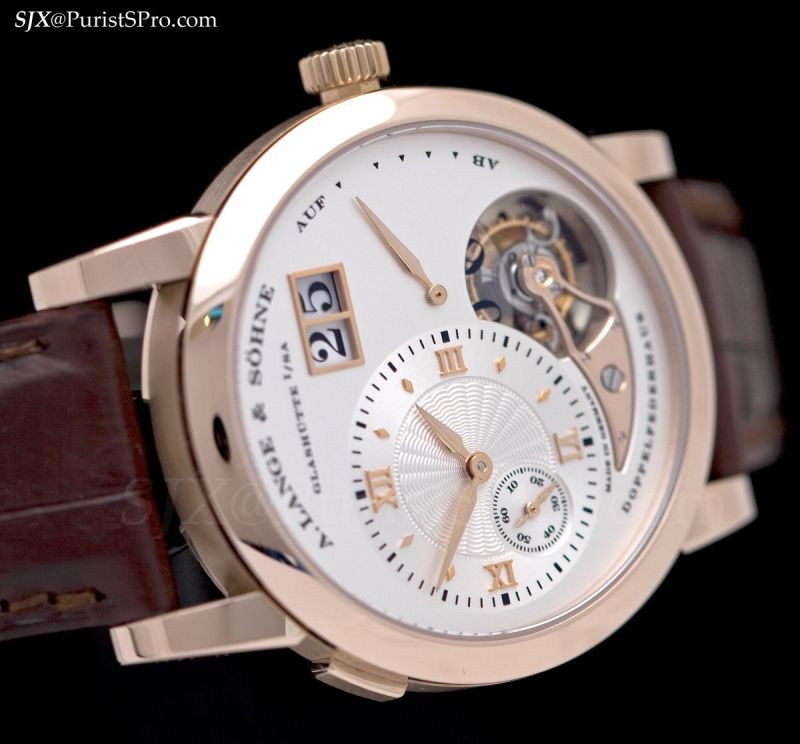
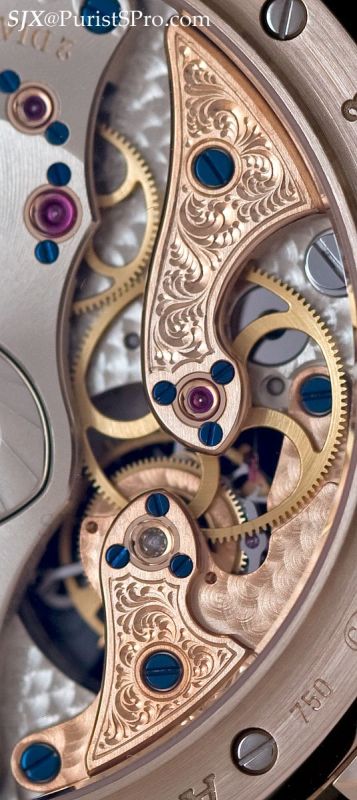
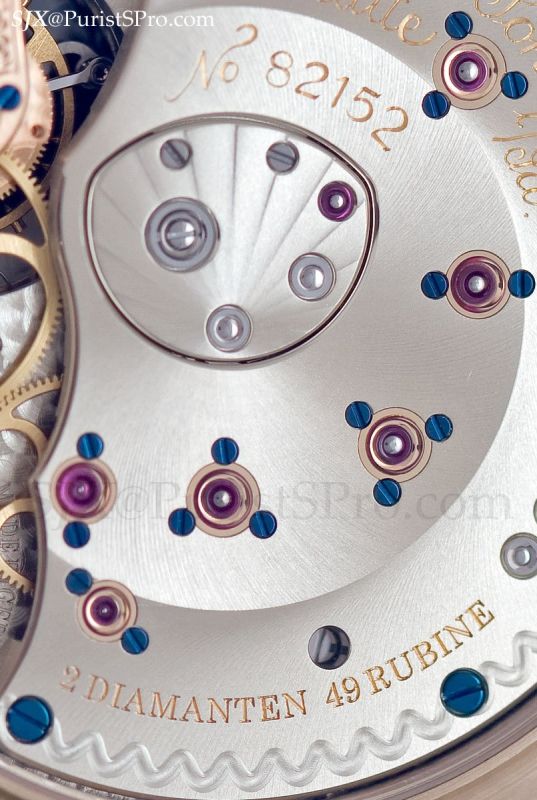
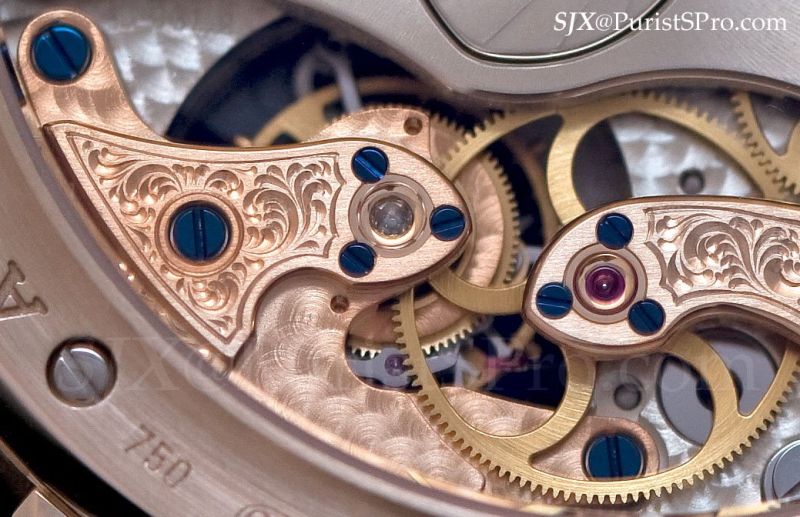
Above: 1 Tourbillon F. A. Lange Homage
As a result of the larger cut-out on the dial, one of the discs for the big date is sapphire so as not to obstruct the tourbillon cage. The exposed sapphire disc gives the watch a mildly informal look which is atypical for Lange. 150 of these will be made.
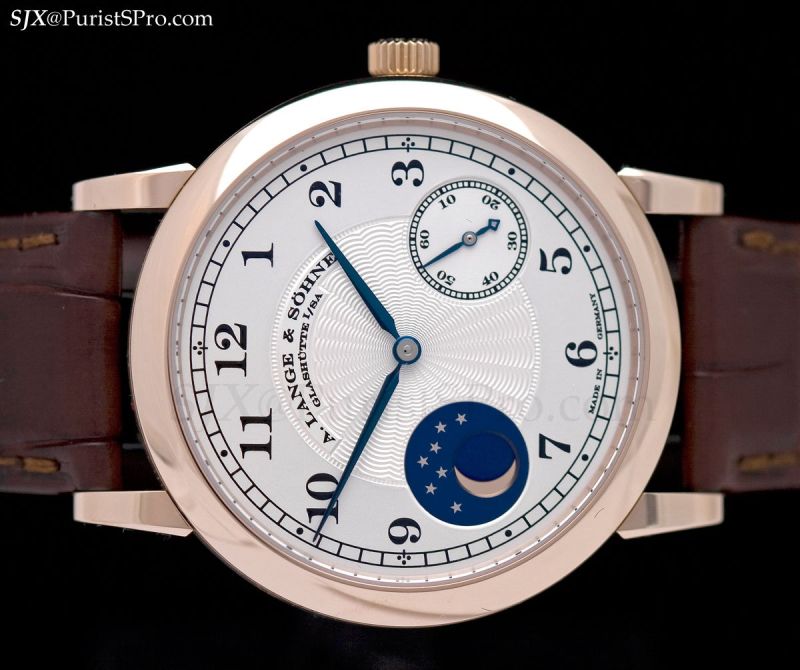
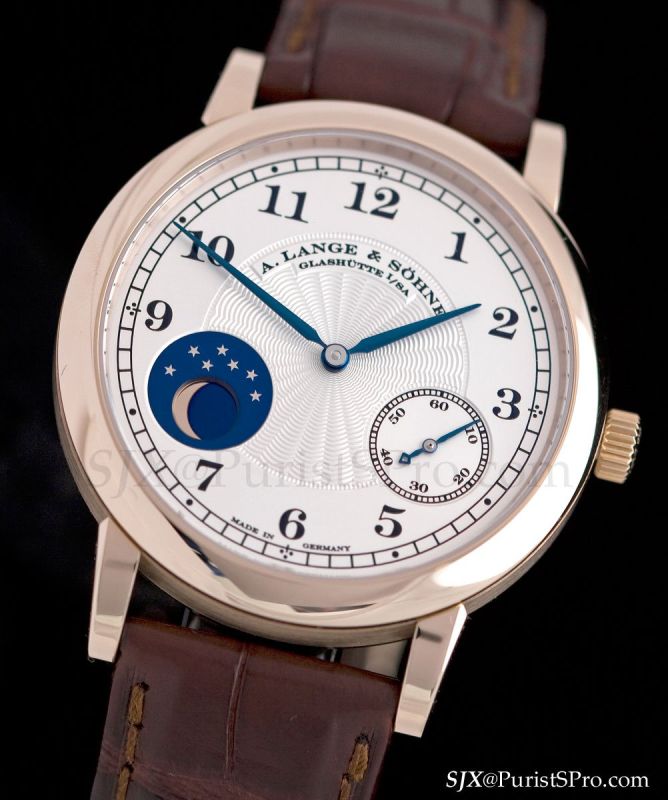
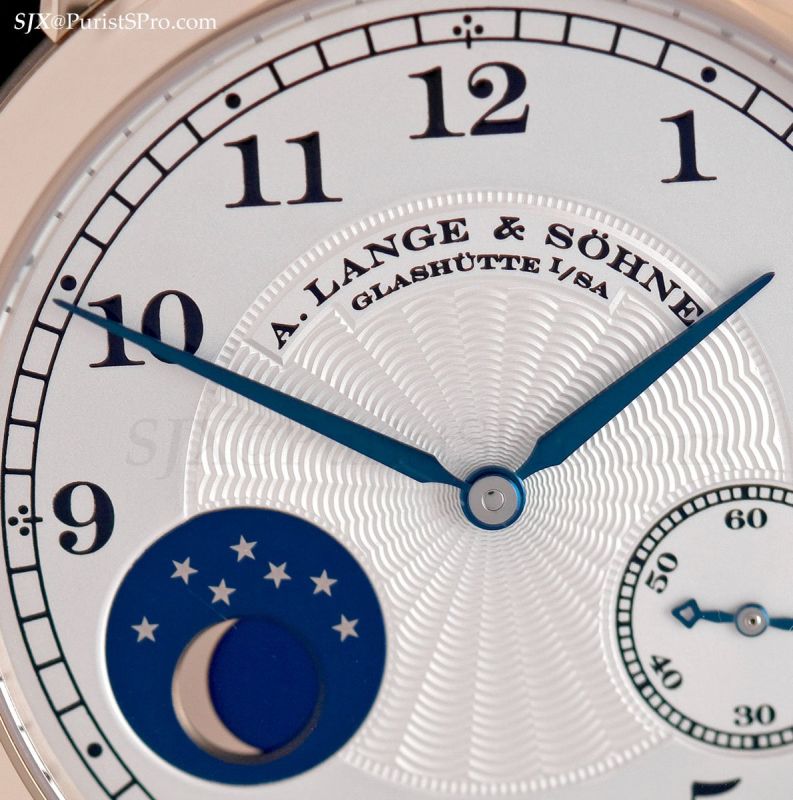
The last of the three pieces is the new 1815 Moonphase. Though this is mechanically identical to the original 1815 Moonphase, with the same one-day-deviation-in-1000-years accuracy of the moon phase, it looks completely different and is no less attractive. Especially fetching is the blue and gold moon phase display. 265 will be made.
Below: 1815 Moon Phase F. A. Lange Homage
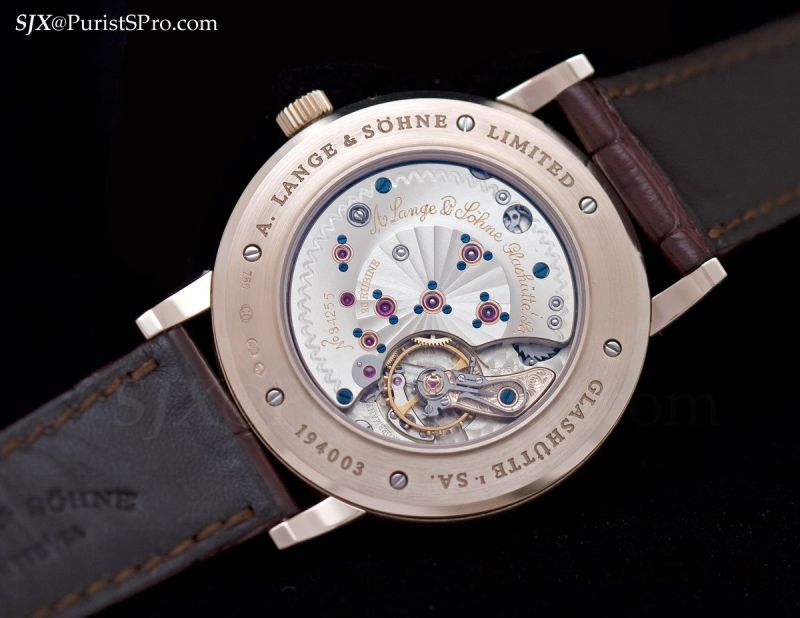
Lange’s previous attempt at a luminous watch, the Lange 1 Luminous, did not really go anywhere. This year the brand remade the Grand Lange 1 Luminous and the new version is still uninteresting. However, Lange unveiled another luminous watch during the fair and this one is astonishing.
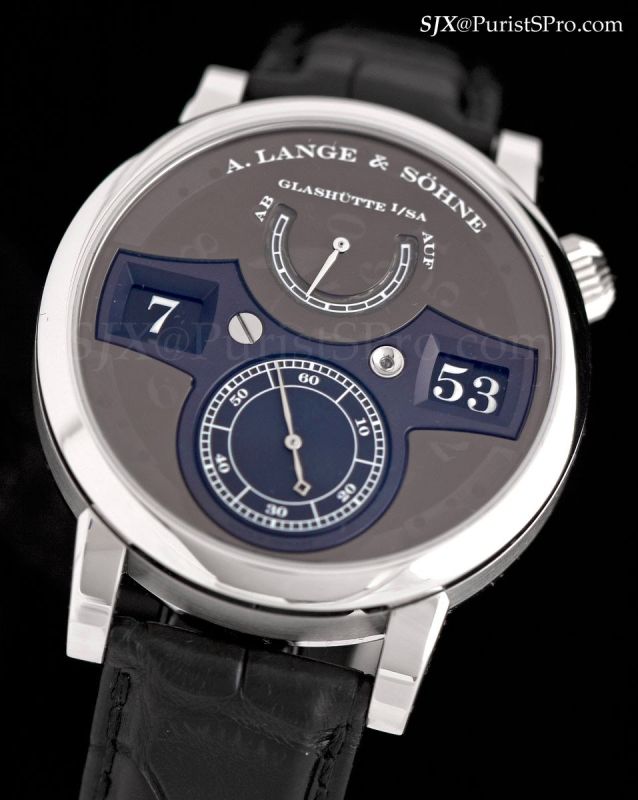
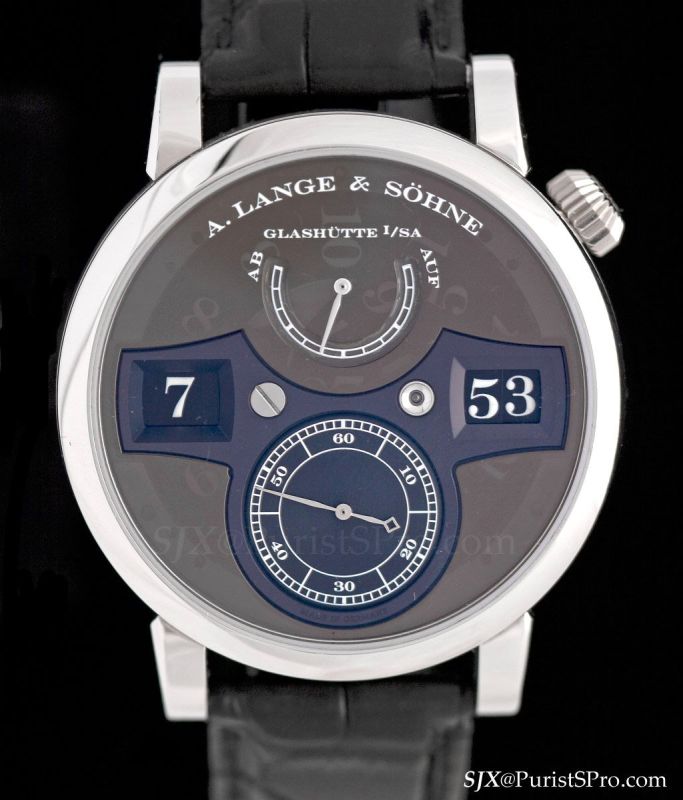
The Zeitwek Luminous watch is absolutely unconventional for the brand, it might even be considered avant-garde. This platinum Zeitwerk feature discs with luminous numbers and a translucent, grey-tinted sapphire dial. The dial allows the luminova numerals on the discs, not just in the window, to be charged during the day and reveals them at night. To complete the look, the German silver bridge on the dial is black PVD coated. During the day this has a dark, almost brooding look, but at night it glows tenaciously.
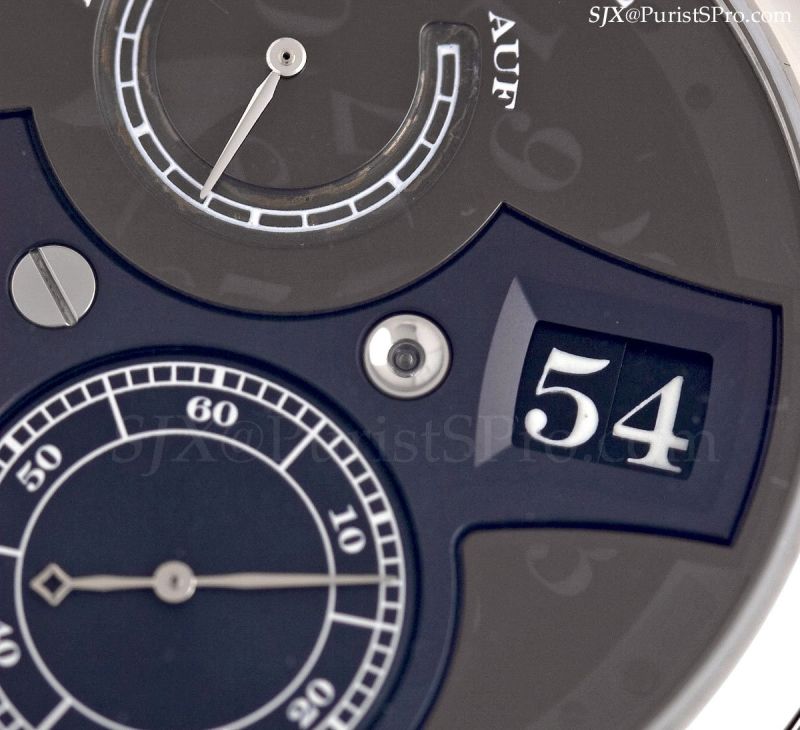
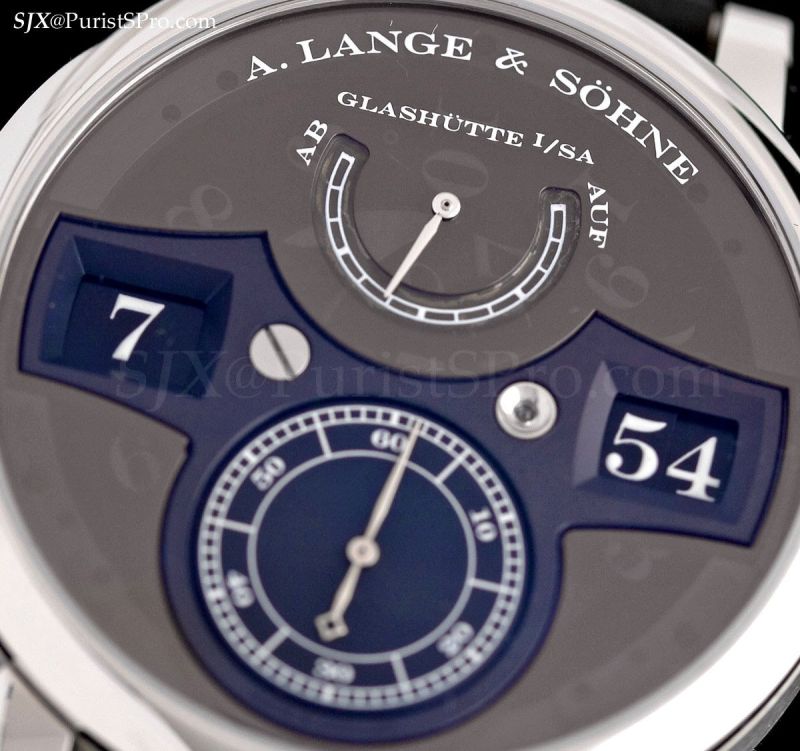
This avant-garde PVD Lange is utterly cool (yes, Lange und cool in the same sentence). It is a tad gimmicky, but the lesson is this: gimmicks are forgiven if a watch is truly high quality and innovative. Only 100 cool people will get to wear the Zeitwerk Luminous.
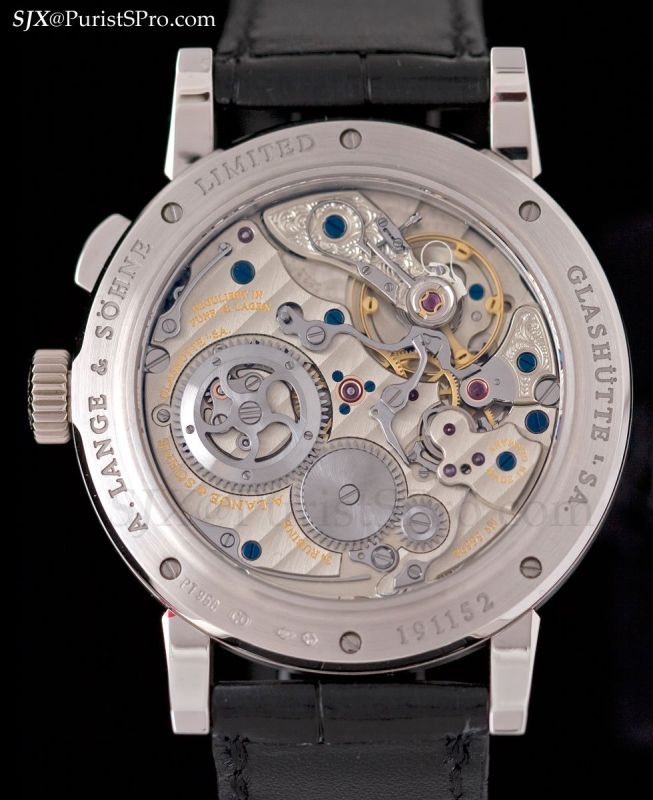
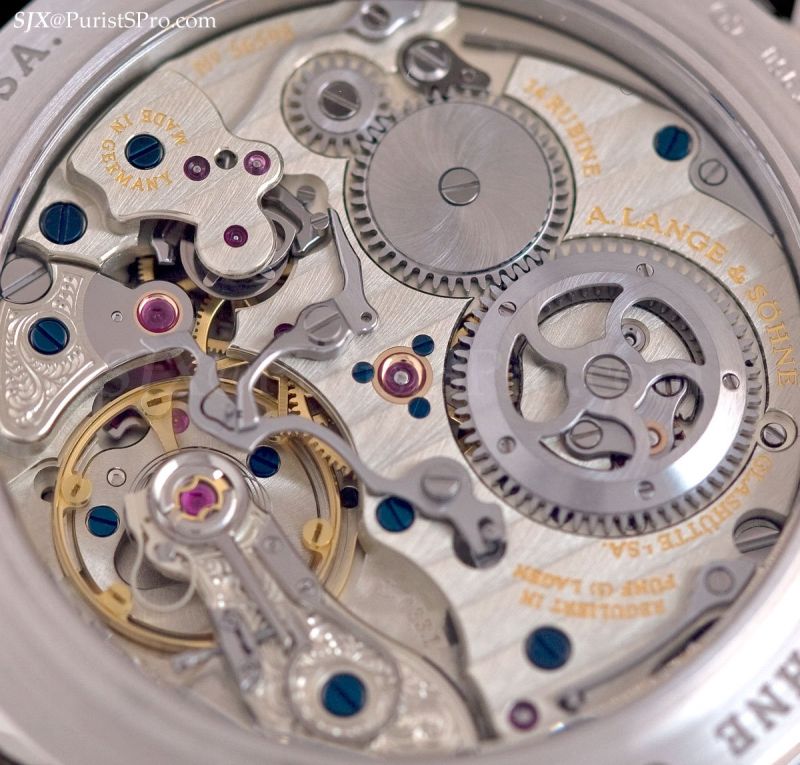
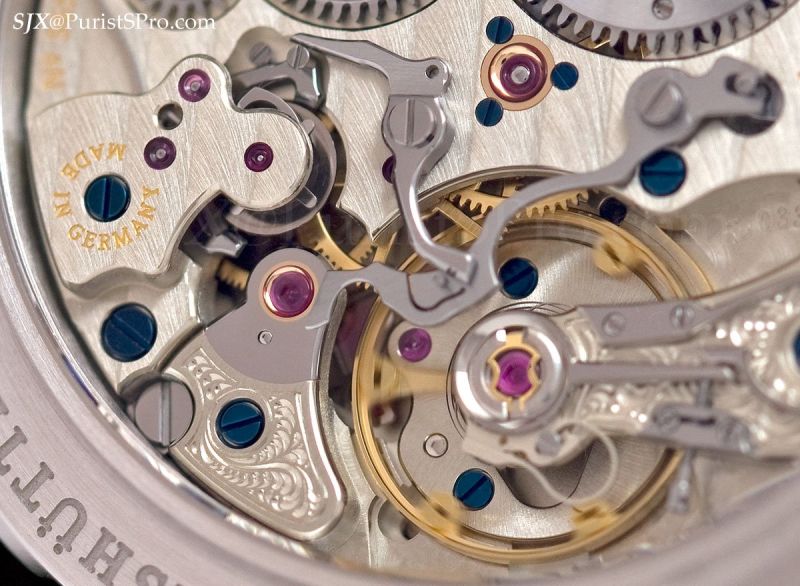
Though the Lange 1 Daymatic was the primary new movement, another new calibre was launched in the Richard Lange Referenzuhr. It features a seconds hand that can be reset with the button at 2 o’clock, meaning it can record periods of up to a minute and almost mostly not useful. But it is a novel small complication that is likeable and well finished.
Referenzuhr in platinum and rose gold
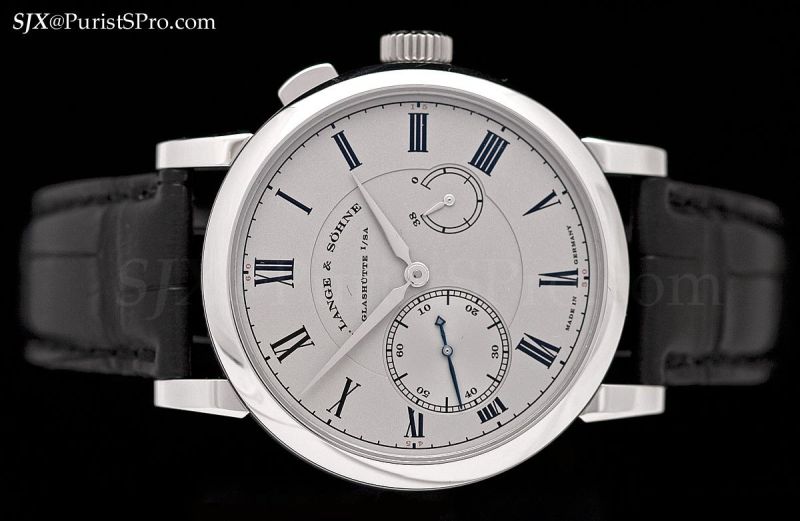
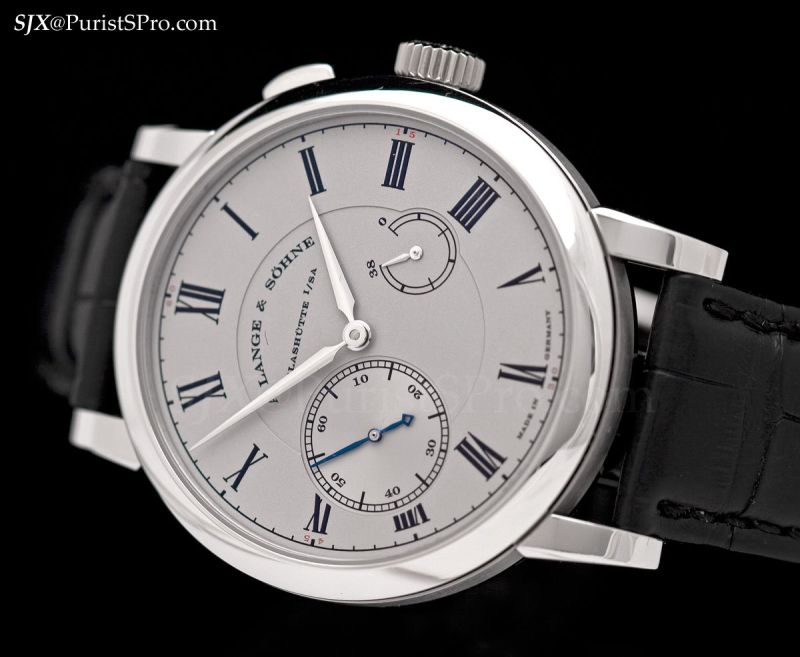
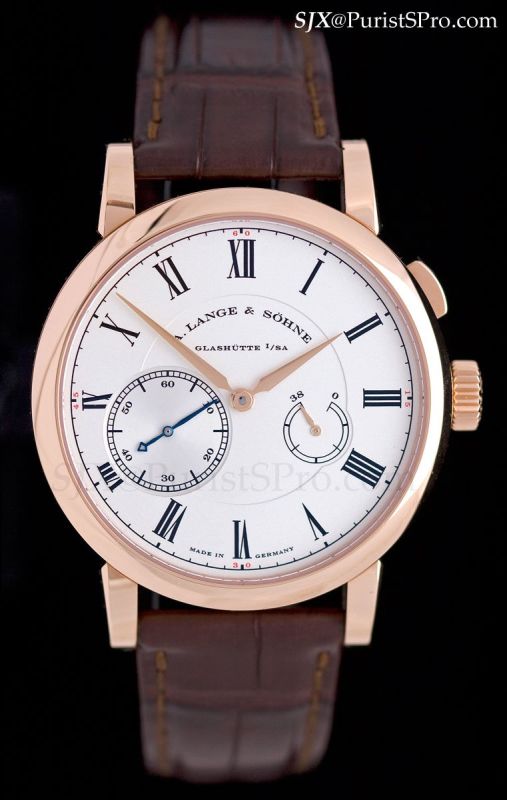
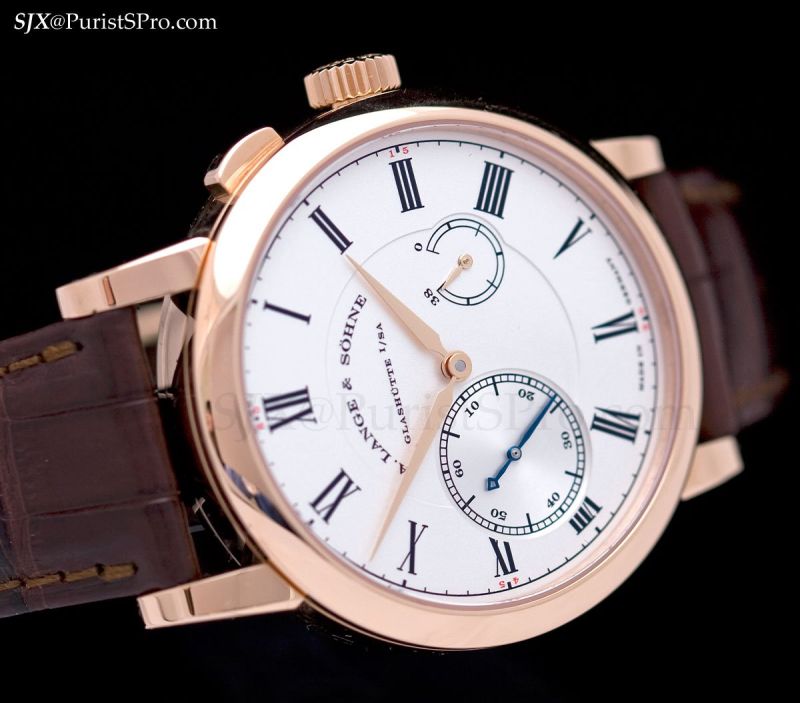
Referenzuhr L033.1
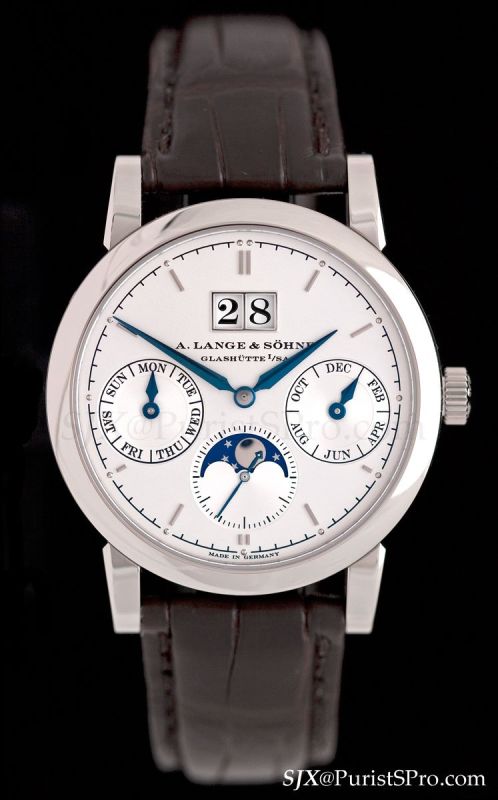
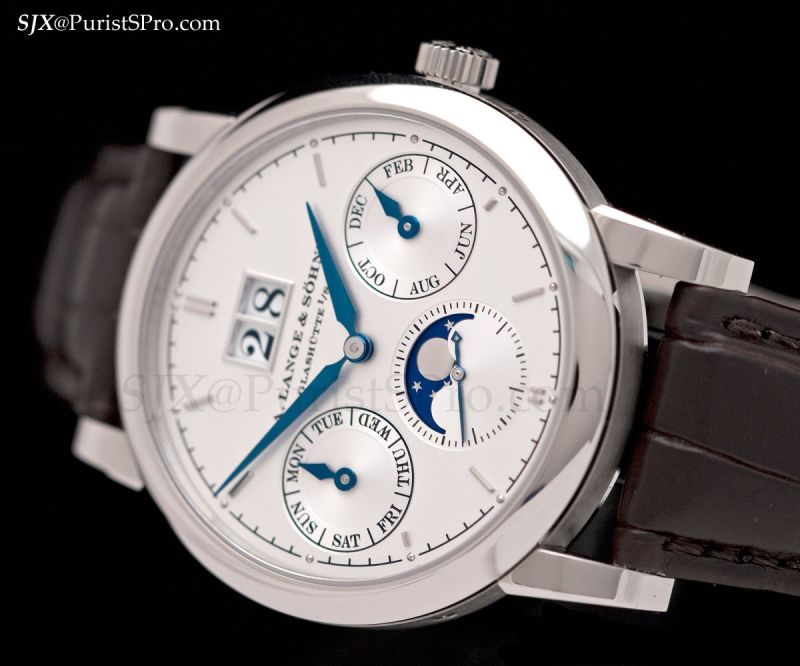
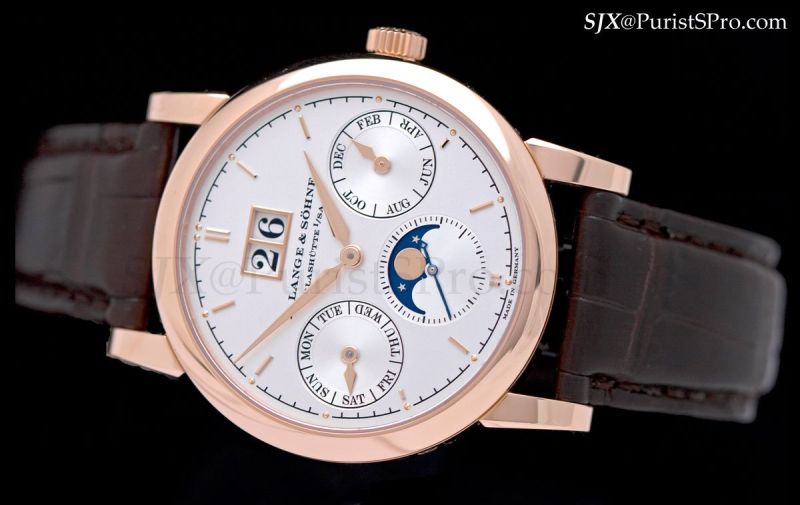
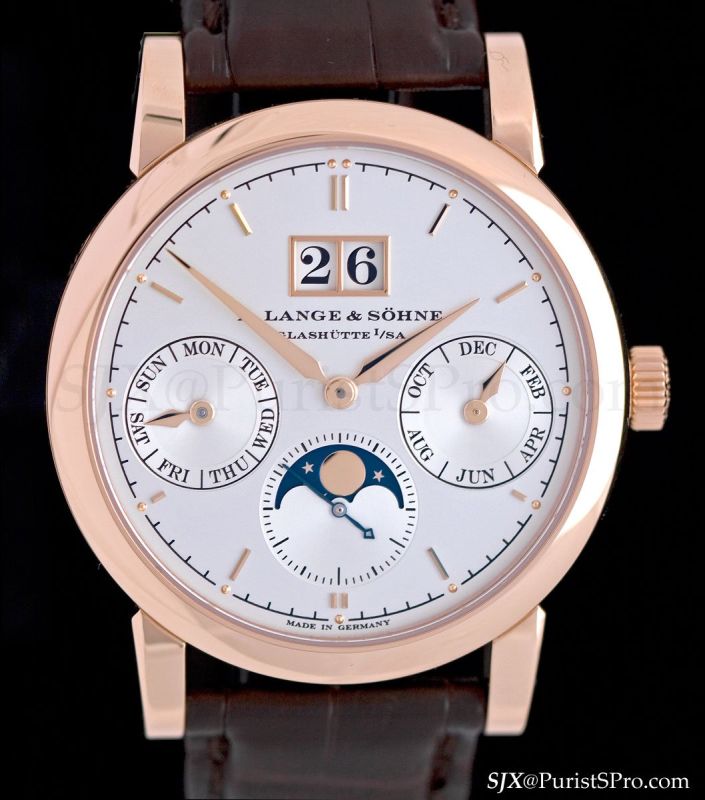
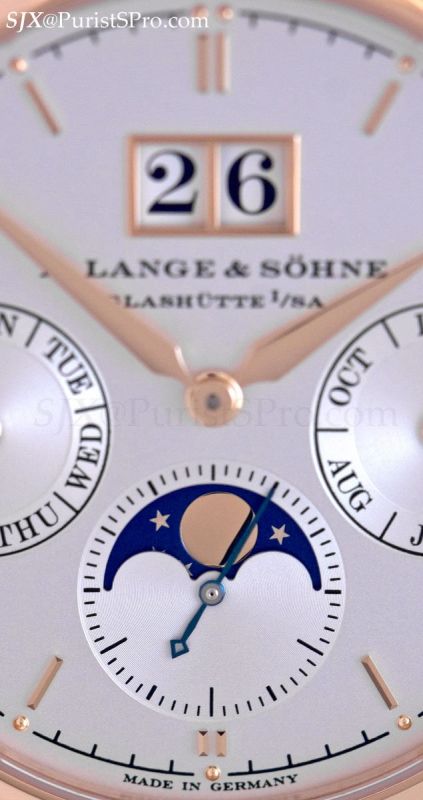
The other small complication presented was the Saxonia Annual Calendar. Available in white or rose gold, this watch uses the Langematik movement with a newly developed annual calendar mechanism. I’m lukewarm towards the design, which I find uninspired. But I like the idea of a Lange annual calendar tremendously. This is part of the Saxonia range, which is entry level, so this annual calendar is priced as such.
Saxonia Annual Calendar in white and rose gold
Finally come three chronographs. The first is the revival of the 1815 chronograph, in white or rose gold. It features a much cleaner dial than the original which makes the lack of a big date less obvious. One reason why I did not like the first 1815 chronograph was the lopsided dial with the two sub-dials below. That is not so apparent here for some reason.
1815 Chronograph in rose and white gold
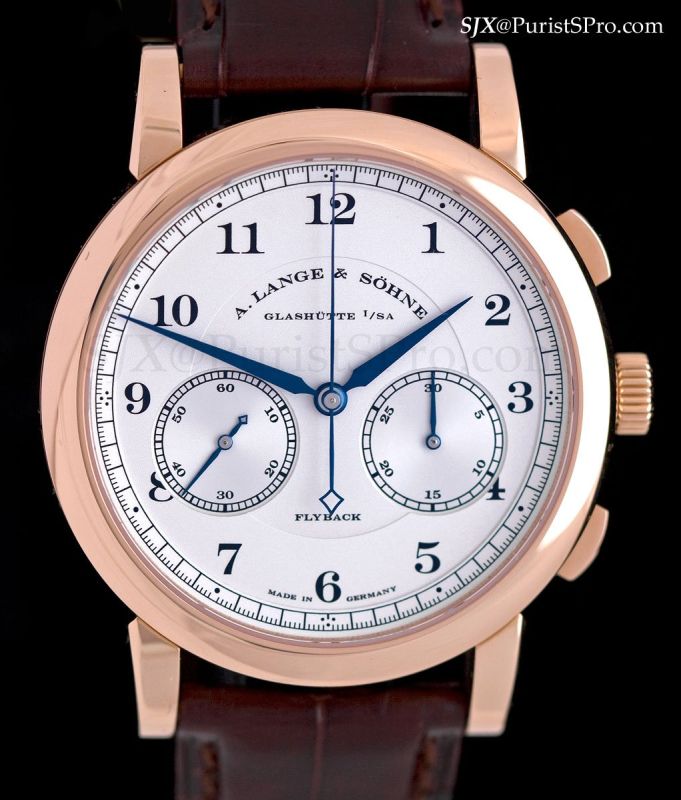
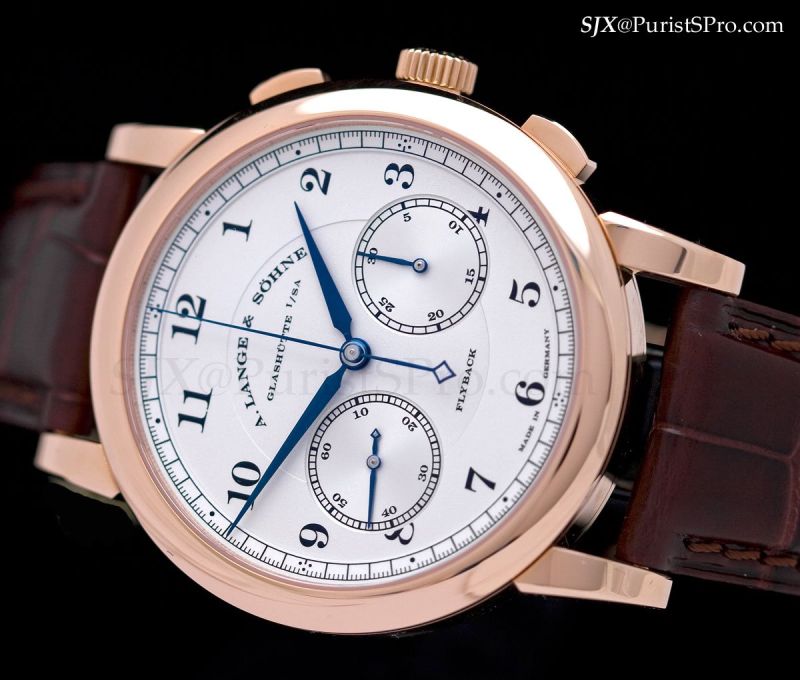
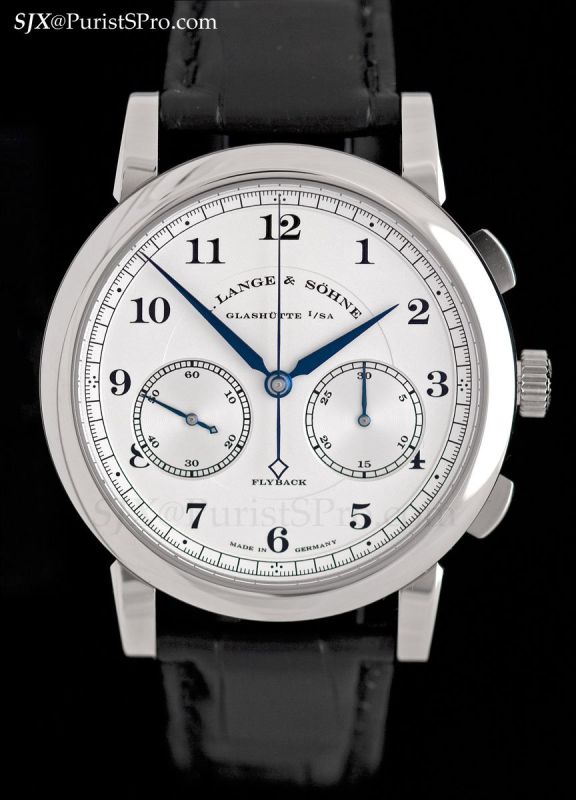
Notably the movement is not identical to that of the original 1815 chronograph, instead this calibre has been improved with a 60 hour power reserve (compared to 36 for the original) that was achieved by using a new mainspring. The calibre also boasts Lange’s in-house hairspring and adjustable mass balance. Perhaps these upgrades may come to the Datograph when it returns from its hiatus.
New L951.5 of 1815 Chronograph, note in-house balance
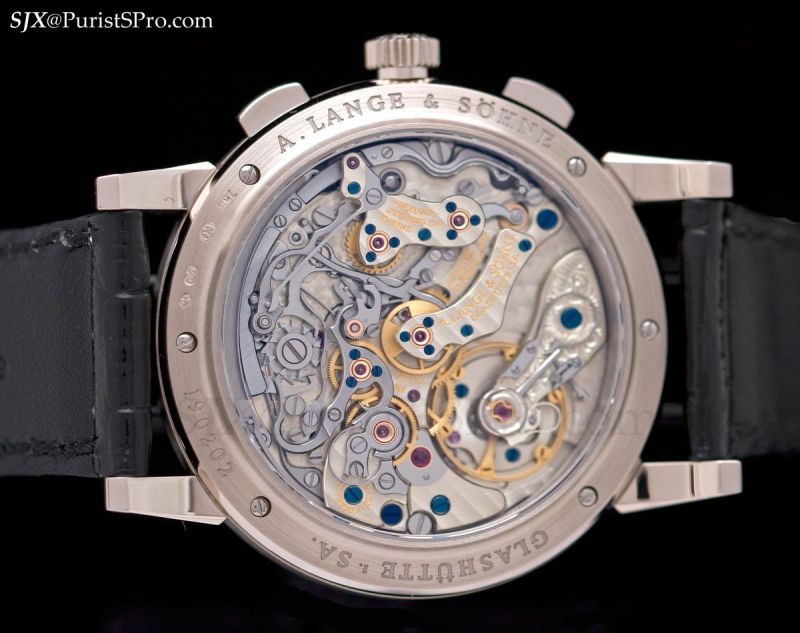
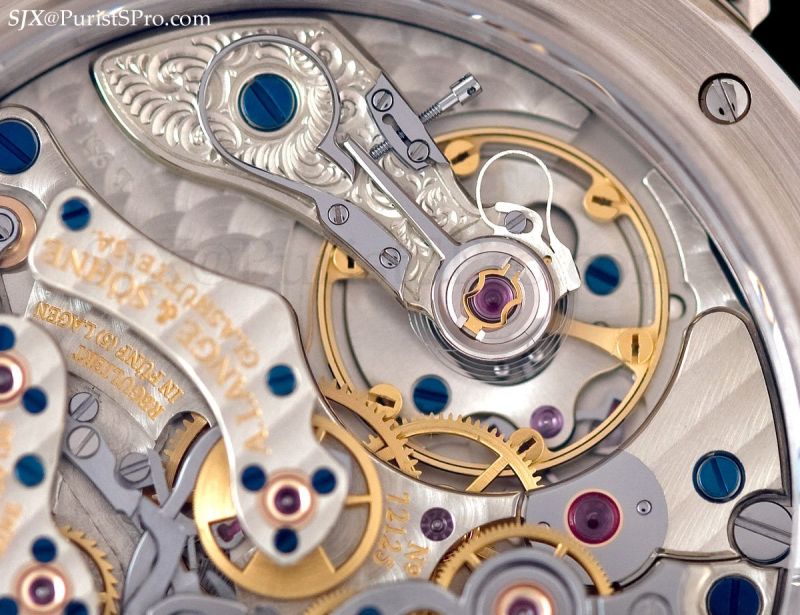
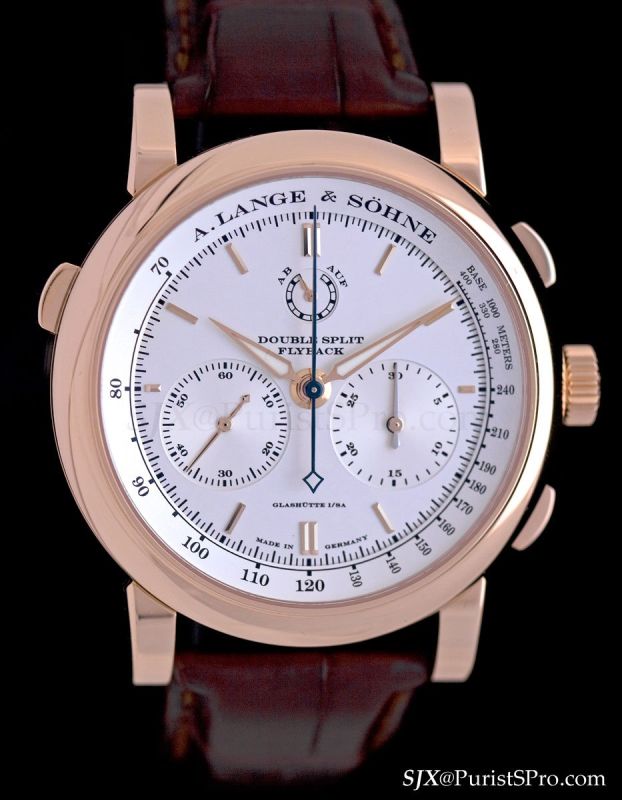
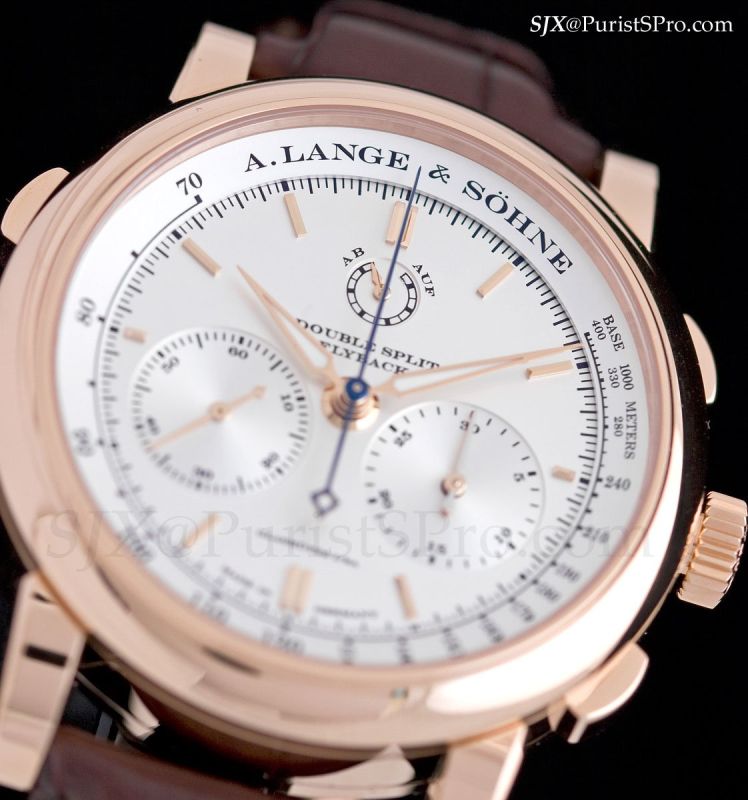
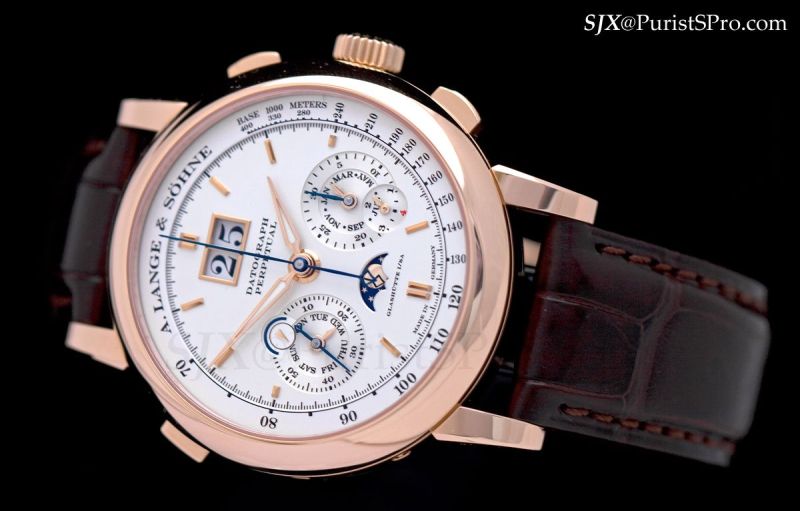
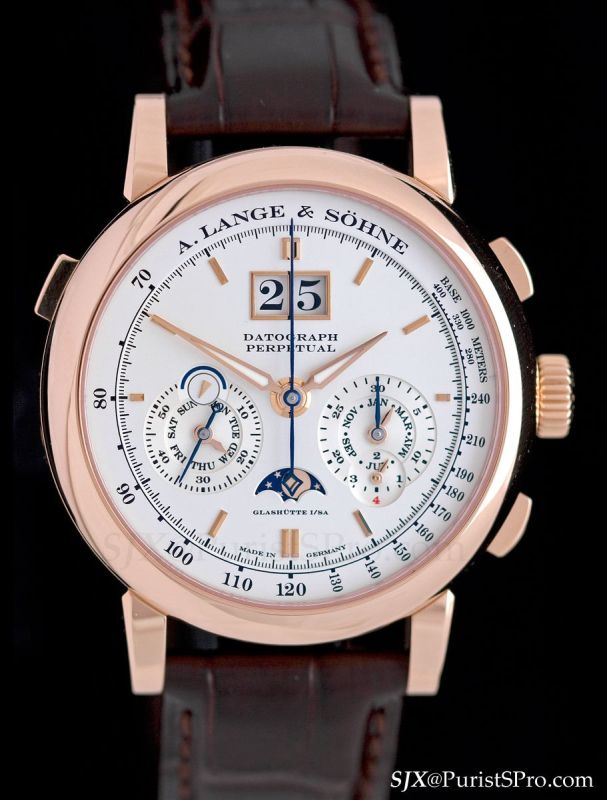
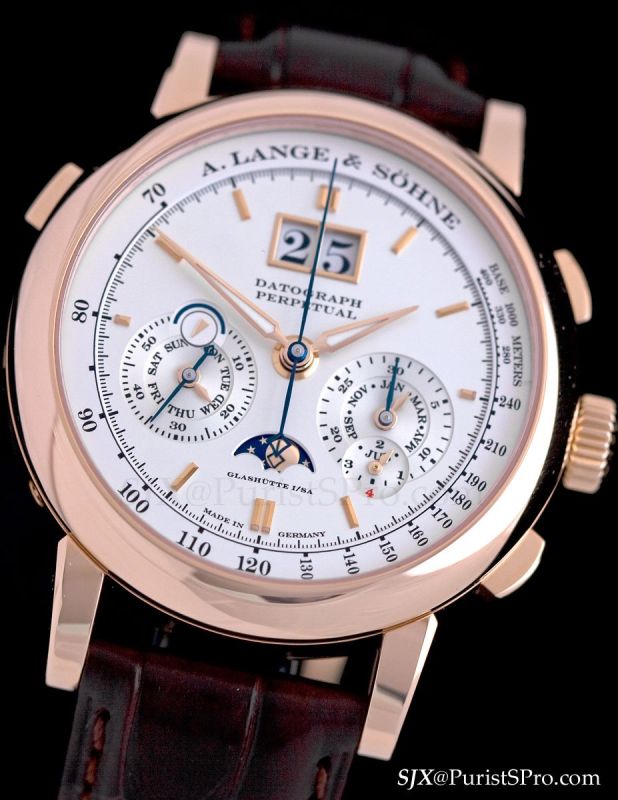
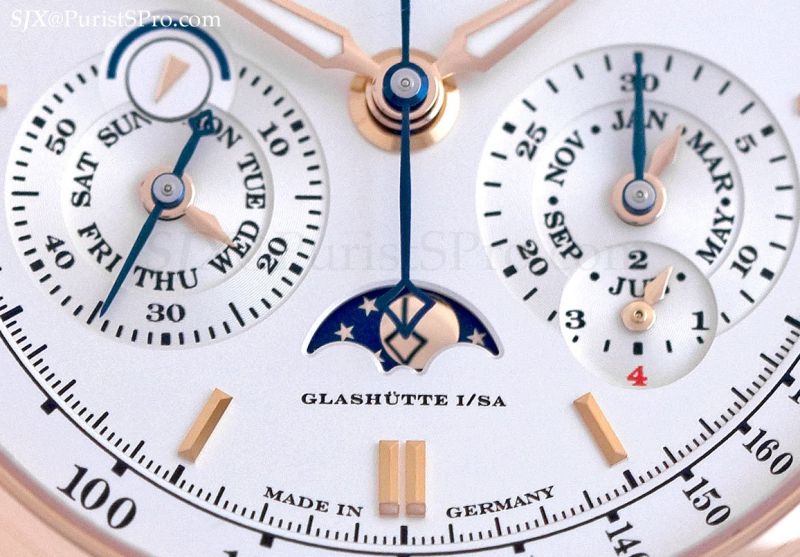
Also, the Datograph Perpetual and Double Split are now available in rose gold with silver dials. Note that both watches have different dials from the platinum versions of the same watch. The new dials feature baton markers all round, instead of the alternating baton-Roman indices on the platinum watches. The change is subtle but gives the watch a very different look, cleaner and sleeker. Somehow I find the new dial works better with the Datograph Perpetual, probably because of its blue steel elements, while on the Double Split the new dial looks basic.
Double Split followed by Datograph Perpetual

The TurboGraph..... To die for!
Thanks for this excellent (no BS, really good) report and less than grainy  photos.... nah... seriously good shots and work.
The new Lange stuff doesn't excite me too much but that's just me. The Turbograph however.... oooolala! In my wildest dreams unfortunately!
well done again my learning friend!

I must confess...
although I like the Annual Calendar as a practical piece, its design reminds me of Union Glashutte from about 7 years ago (which is not a bad thing, but was a VERY different price point.
-Dean

Great shots and report on the Langes!
Thank you for providing the clear shots of the Referenzuhr especially!
Helps me alot!
Stephen

there isn't one that i don't like.
wow. all are gorgeous but can not afford any ;0(((
thanks for sharing
Tony
SIHH 2010: Audemars Piguet

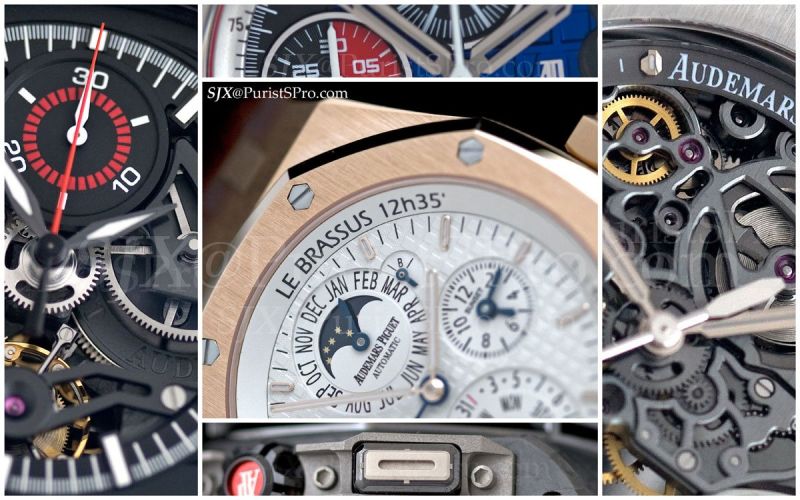
Audemars Piguet presented a good range of watches with something for everyone. What was unusual was the relatively few high complication watches. On more than one occasion AP unveiled a bewildering number of complications, but this year the quantity was more manageable.
All of the new high complications are still tourbillon watches (blame Renaud et Papi) but the fact that there are fewer of them is indicative of the general demand for tourbillons, even at the expensive, interesting end of the market.
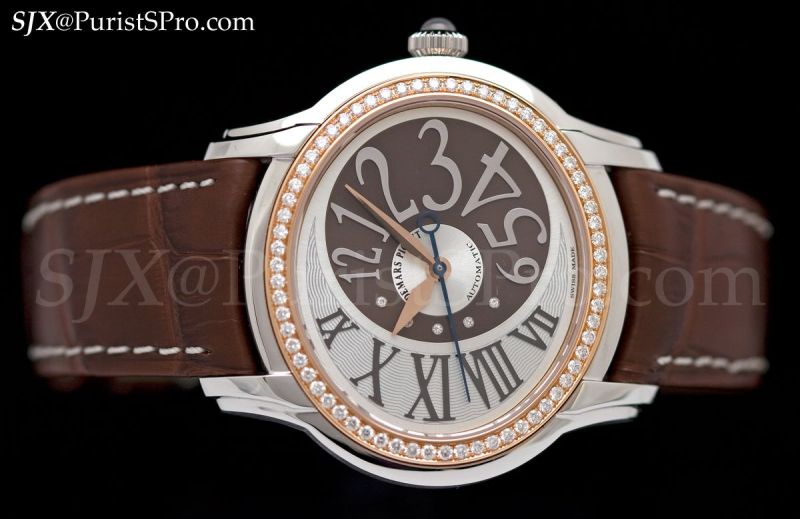
The Millenary collection had several new models added. The men’s and ladies’ versions of the basic model both have new dials.
Men's followed by the ladies' model
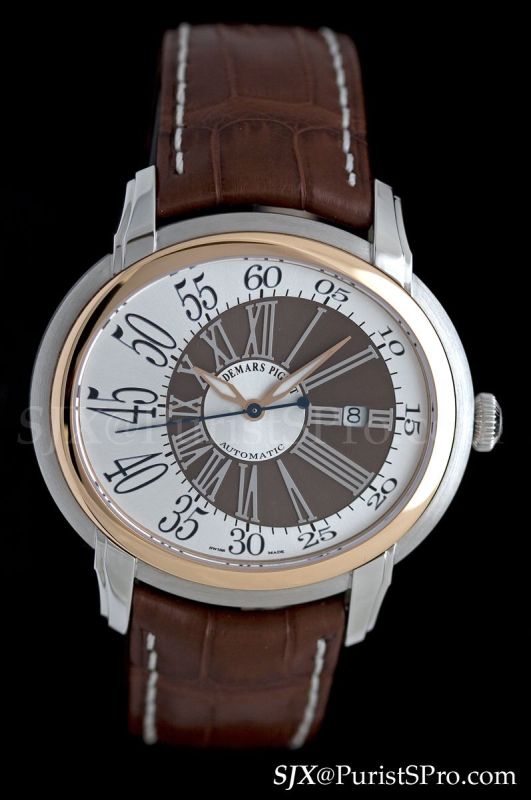
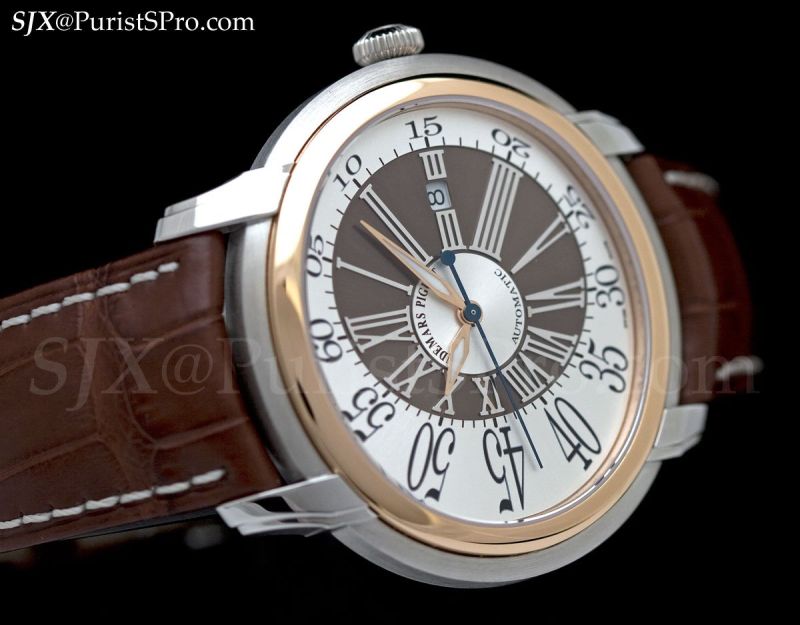
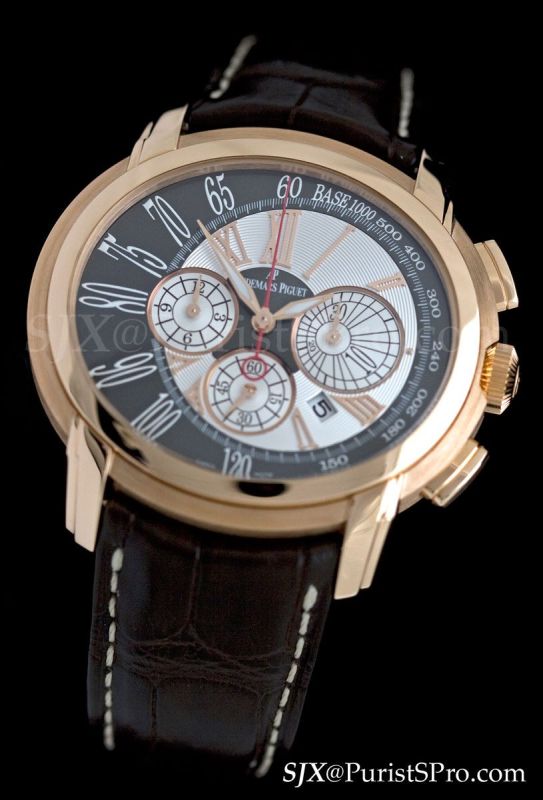
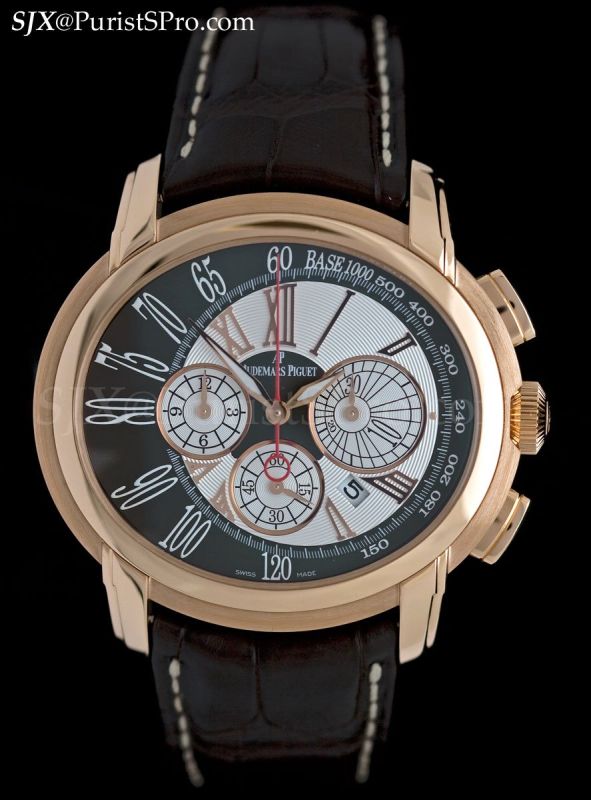
Also receiving a facelift is the Millenary chronograph launched last year. It is now in rose gold with an attractive silver and brown dial.
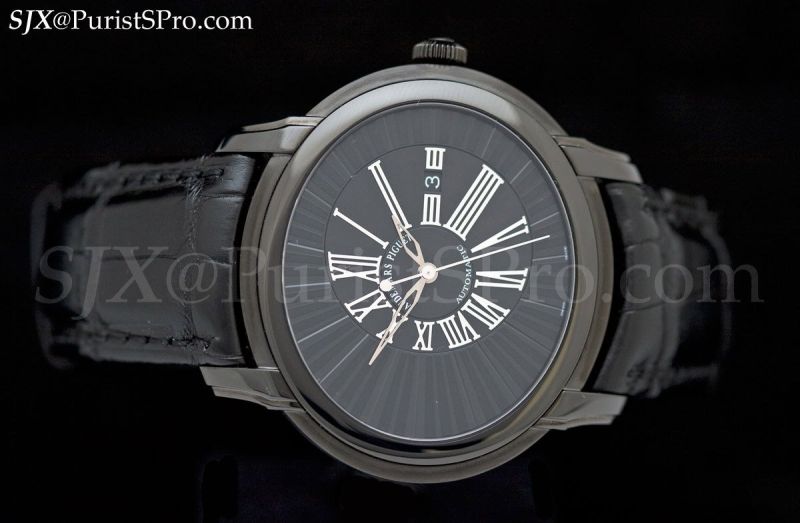
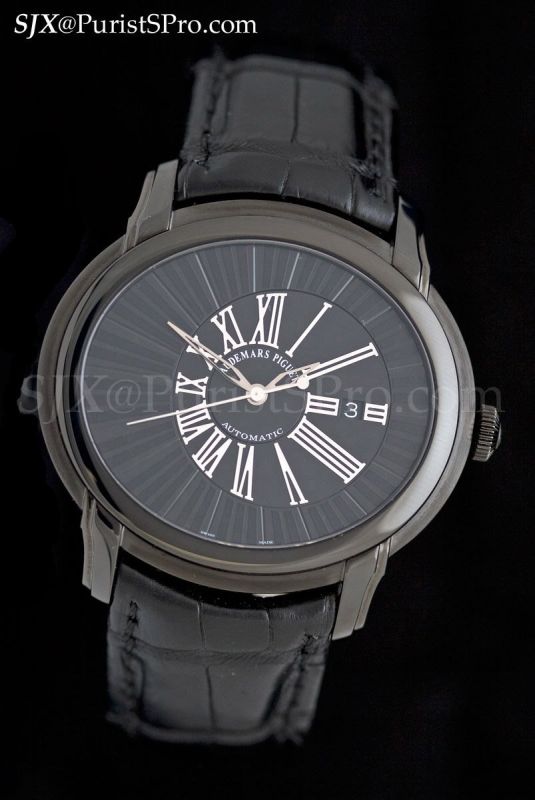
Another new Millenary is the limited edition dedicated to Quincy Jones, a singer-songwriter, hence the piano key motif on the dial. The watch is 45 mm wide and features a black PVD coated case. Surprisingly for a celebrity-themed limited edition, it is not a Royal Oak Offshore. One would expect otherwise, but this is a fairly ordinary watch in look and feel.
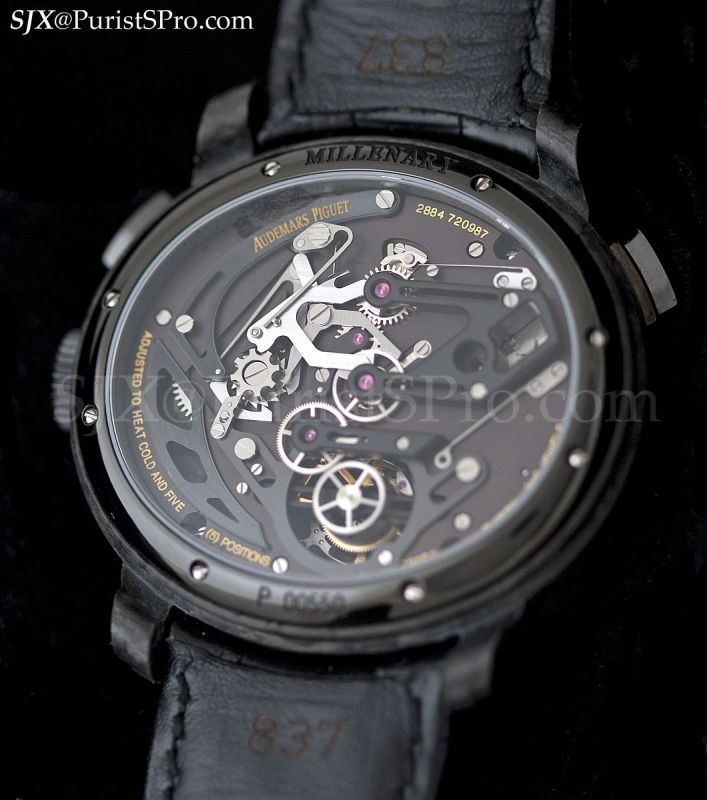
Now we come to the piece de resistance of the Millenary line, a tourbillon chronograph housed in a forged carbon case with a ceramic bezel and pushers. The Millenary Carbon One was launched and delivered late last year though it is officially part of the 2010 collection.
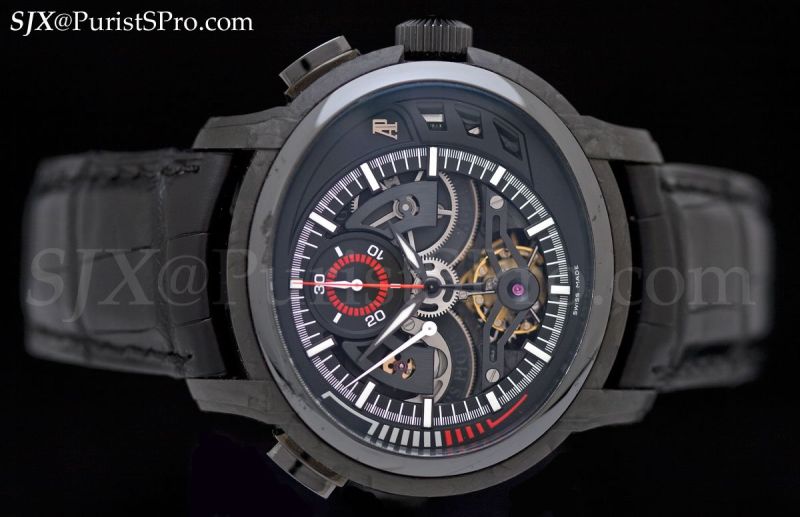
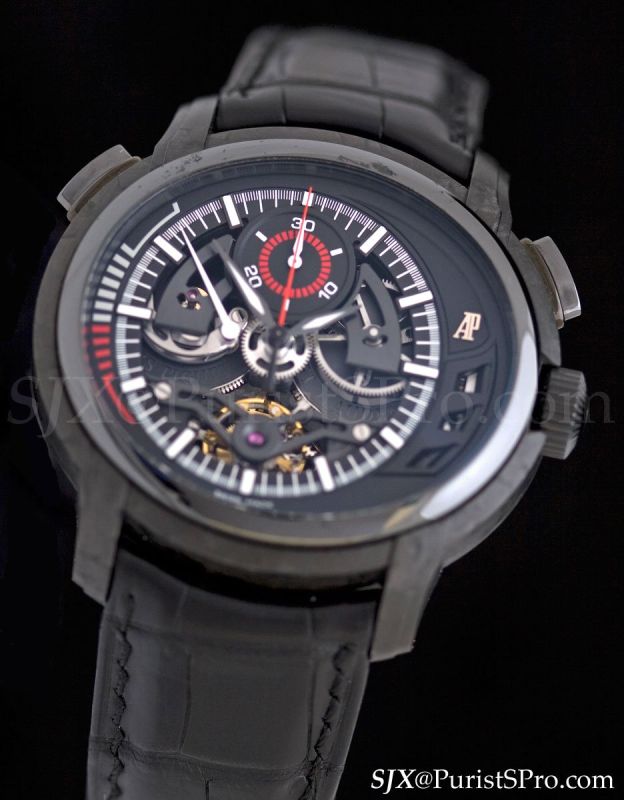
The position of the pushers at 10 and 2 o’clock, coupled with give the black and red colours give the watch an aggressive look. Its light weight gives it an unobstrusive feel on the wrist (only 69 g) though I am wary of the resistance of both ceramic and forged carbon to sharp knocks.
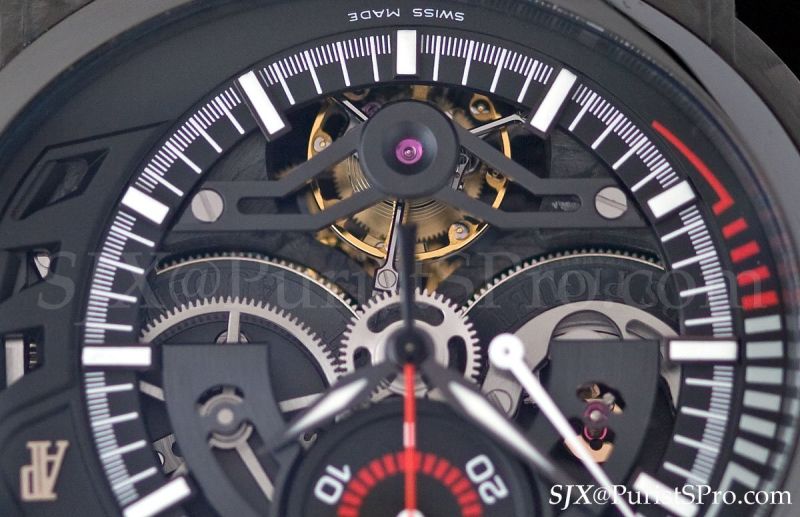
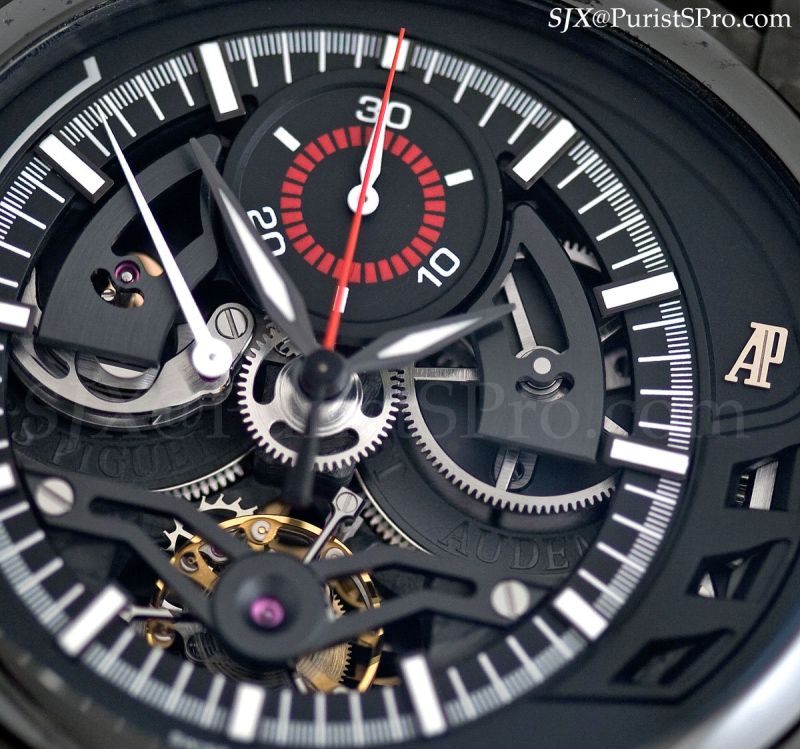
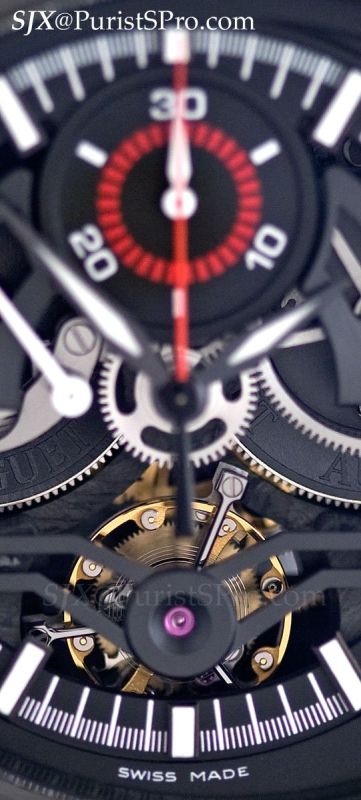
Unsurprisingly, the movement features bridges made of blackened steel or eloxed (meaning anodised) aluminium and a carbon fibre base plate. AP also touts its “rapid rotation twin-barrel system” which is also found in other Renaud et Papi tourbillon movements. Most of what comprises this watch, inside and out, has been used in prior models from AP or Richard Mille in one way or another; a similar movement was used in the Millenary Maserati MC12 of a few years back. But the Carbon One is nonetheless a sharp looking watch.
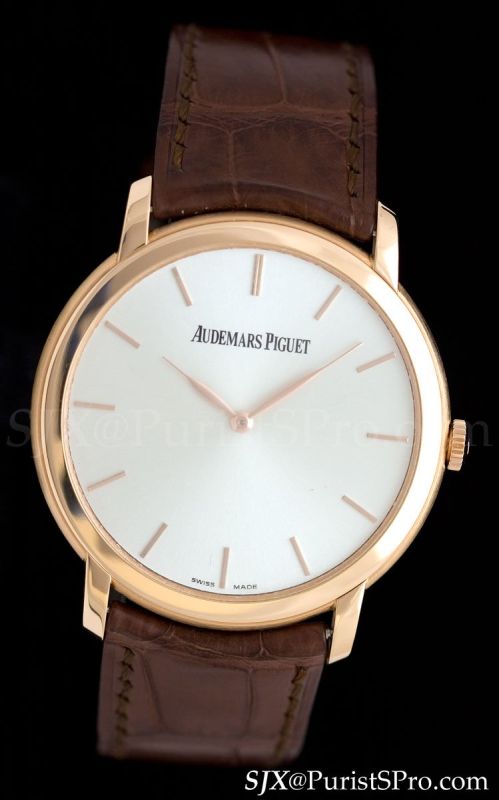
The classical Jules Audemars line received several new models as well. All of them are subtle, elegant watches. The first is an ultra-slim automatic containing the famous cal. 2121 first used in the 1972 Royal Oak and now a workhorse base for many AP watches.
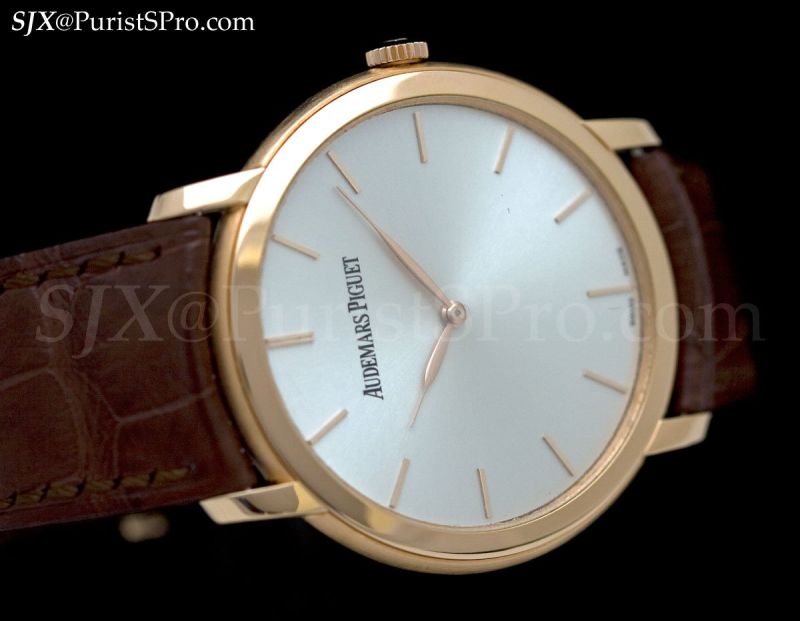
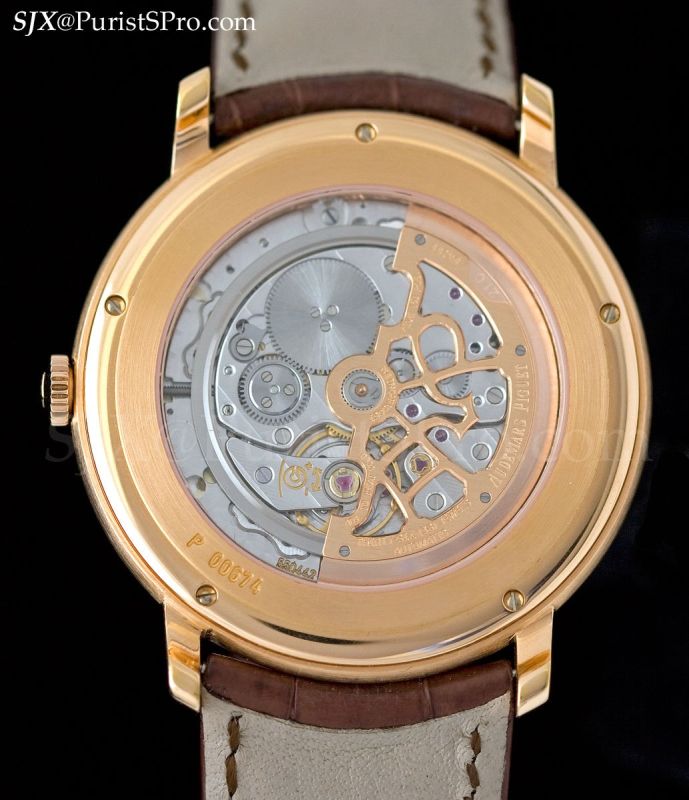
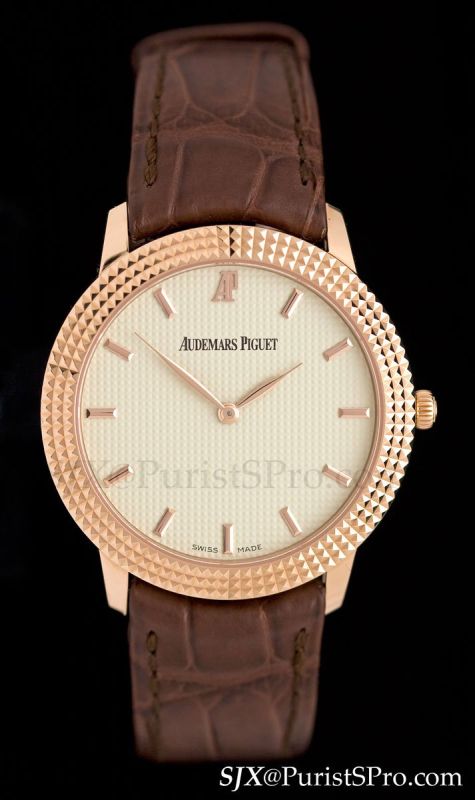
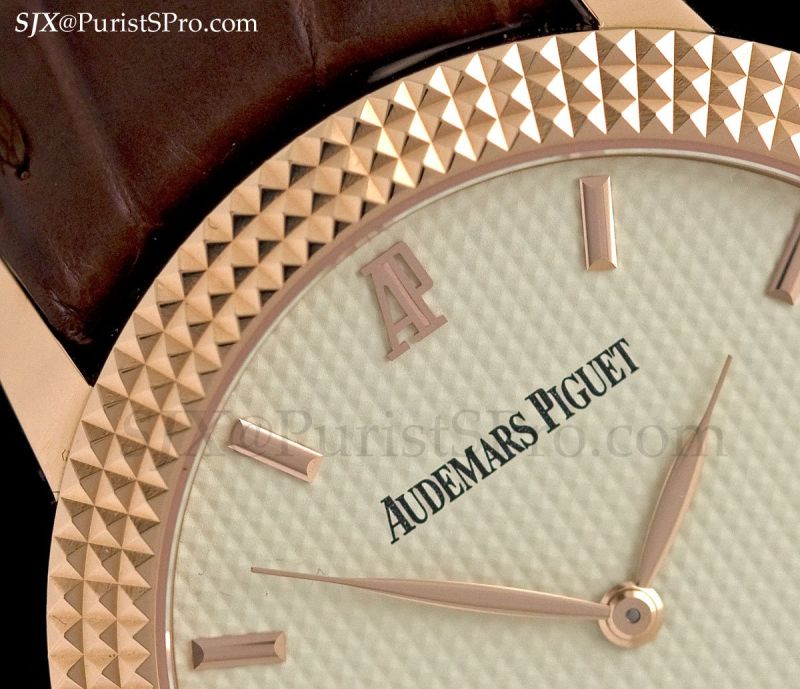
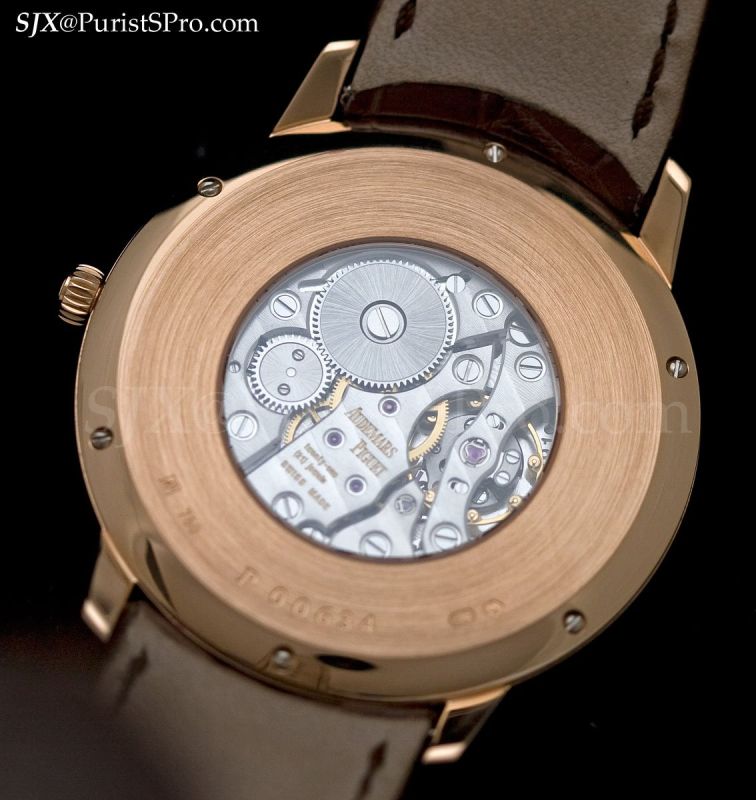
Another new Jules Audemars is a hand-wound, available in both men’s and ladies’ sizes, with a clous de Paris dial and bezel. Patek Philippe has applied this hobnail pattern to great effect throughout its range so much so that it is almost quintessential Patek. But the motif is a traditional guilloche pattern so it’s nice to see another haute horlogerie house making use of it and using it well.
The Jules Audemars perpetual calendar, first seen as a limited edition in platinum with a blue dial two years ago, is now also available in rose gold with silver or brown dials. This is a large, flat and handsome watch. The platinum version feels very elegant on the wrist though it can be difficult to read at times, I expect this new silver dial variant to be far more legible. Inside beats a cal. 2121 based perpetual calendar that AP has been using for twenty years but remains a enduring.
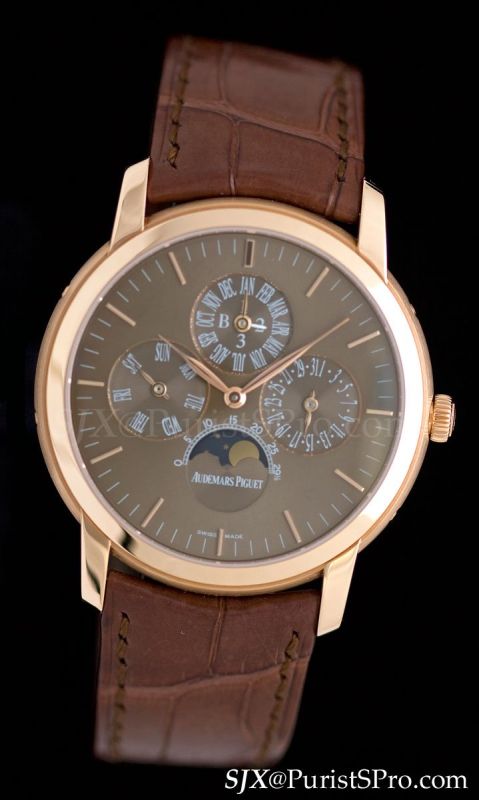
Now onto the Royal Oak collection which makes up the bulk of the new collection.
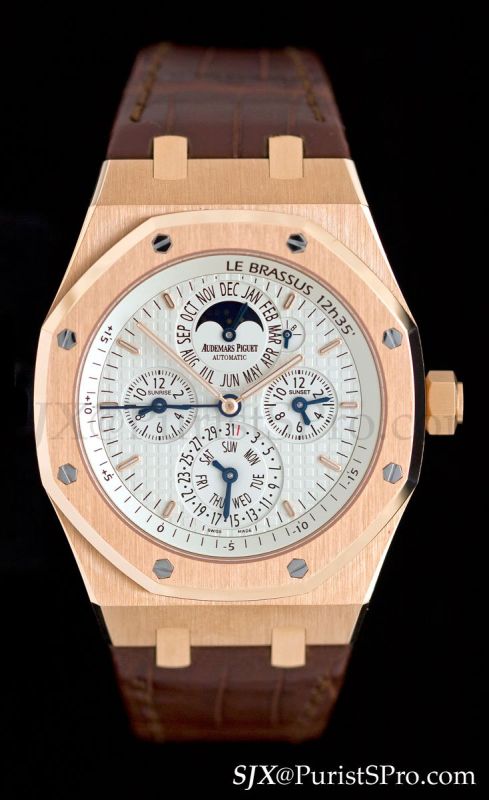
A crowd favourite (at least amongst the non-Offshore crowd) was the Royal Oak Equation of Time. The original EOT was introduced in the round Jules Audemars case with the city coordinates engraved on the bezel, in an unsightly font at that, which bothered me. This new Royal Oak version solves that problem by putting the city on the outermost dial ring.
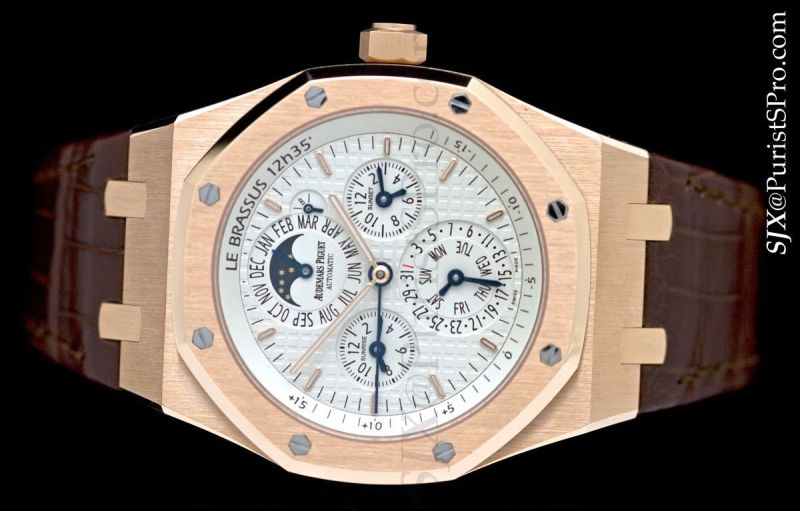

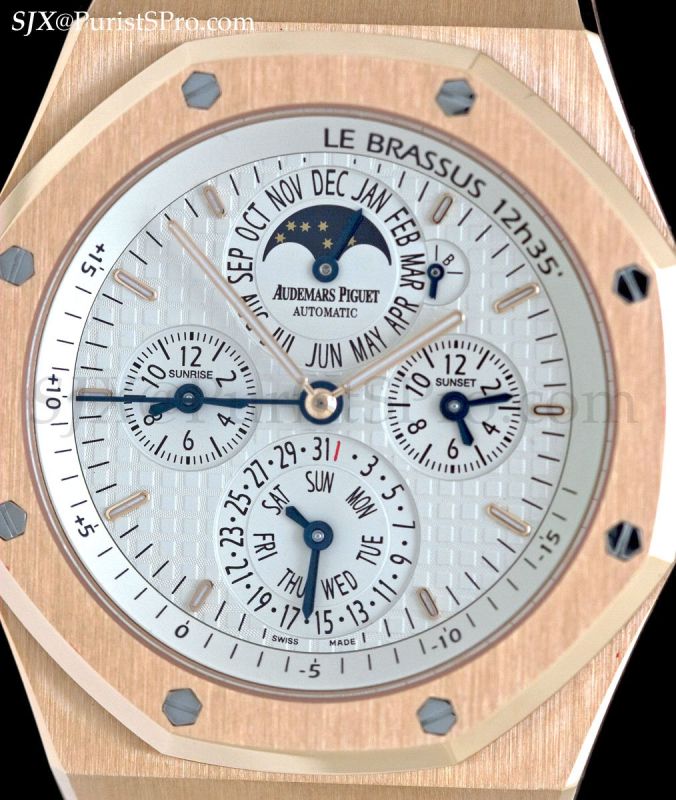
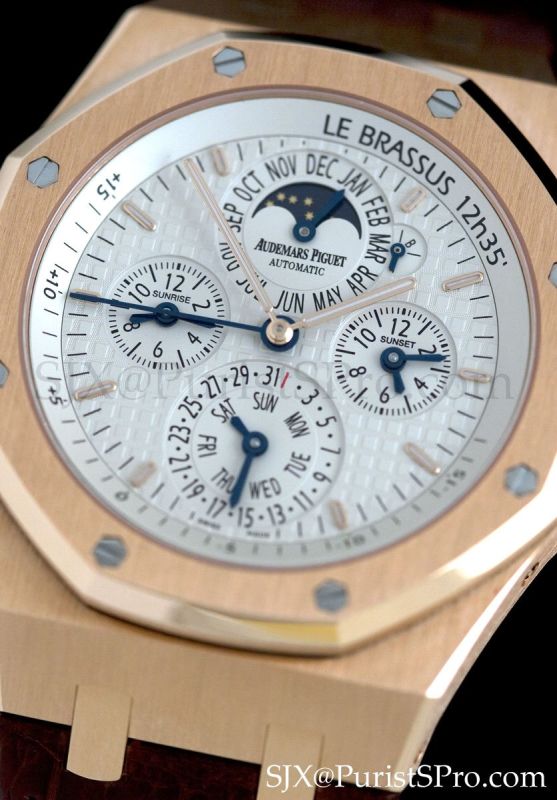
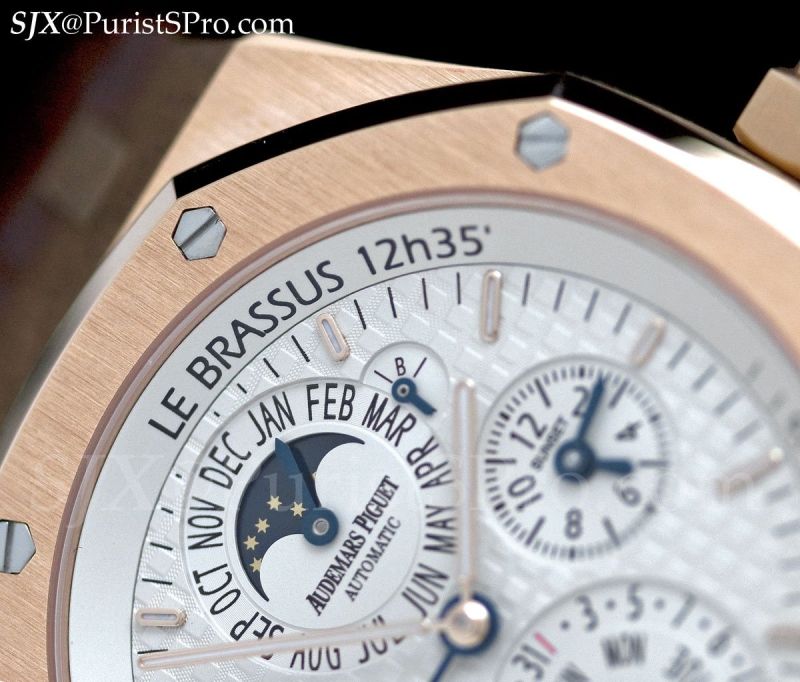
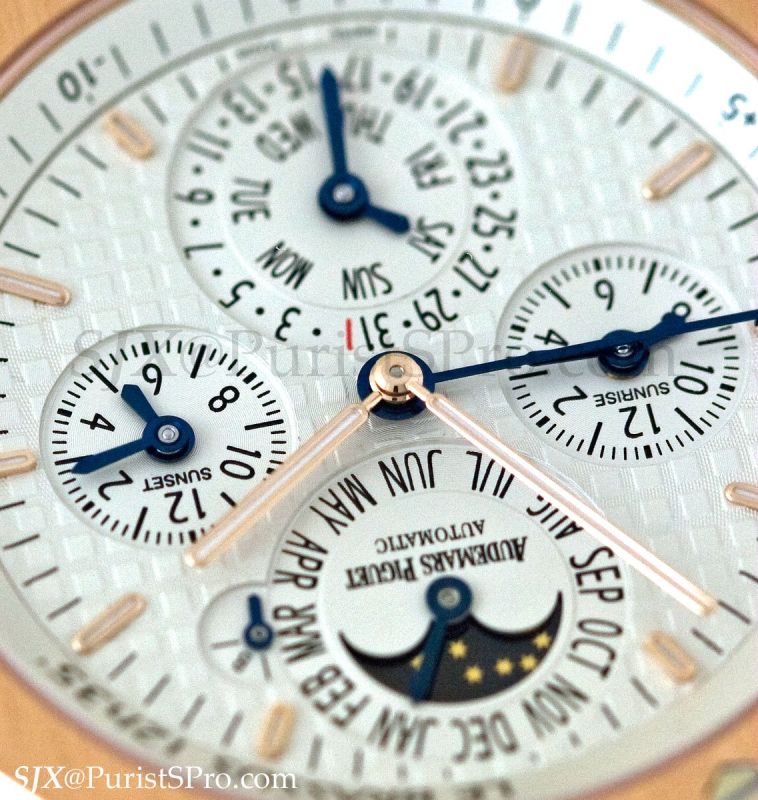
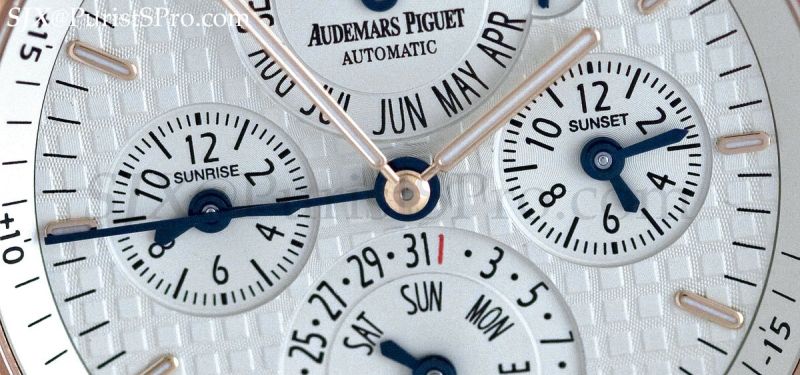
Its case is large at 42 mm wide, but thin at 10.5 mm high, giving it the proportions of the classic Royal Oak Jumbo, though it is larger in size. Inside is the venerable ultra-flat cal. 2121 (notice how many times I am mentioning this). The Royal Oak has long been available as a perpetual calendar based on the cal. 2121, since the mid 1980s at least, and the Royal Oak EOT is a long awaited and worthy update to a classic.
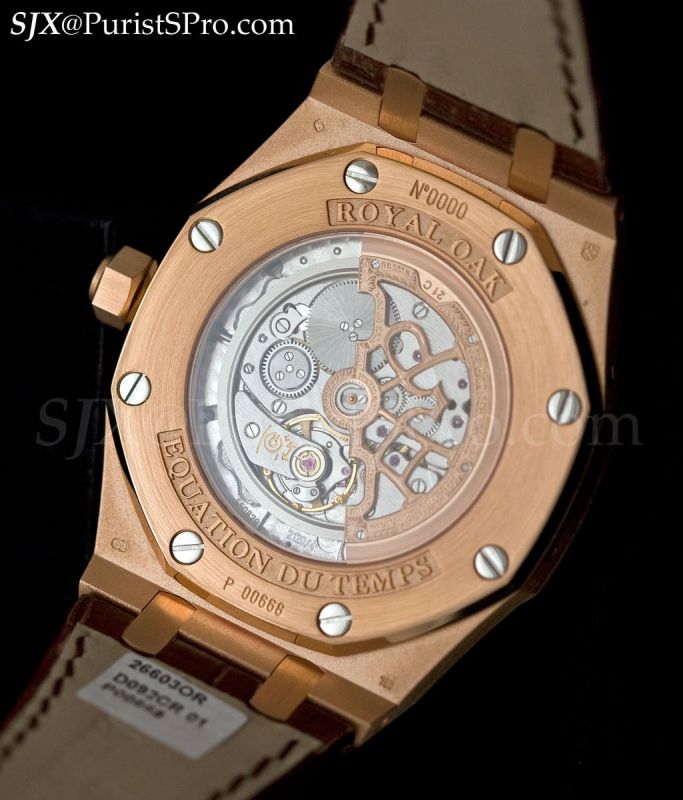
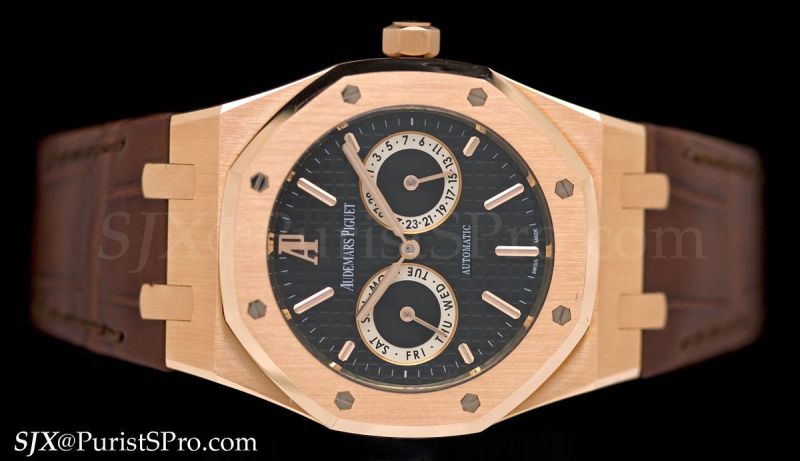
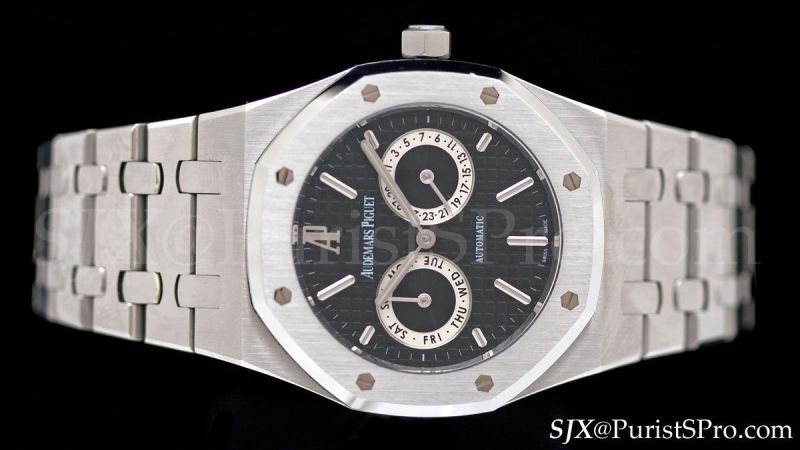
Several long existing Royal Oak models have undergone face lifts. The classic but largely neglected Royal Oak Day-Date has been tweaked, giving it a slightly more modern look and a larger 39 mm case.
In rose gold or steel
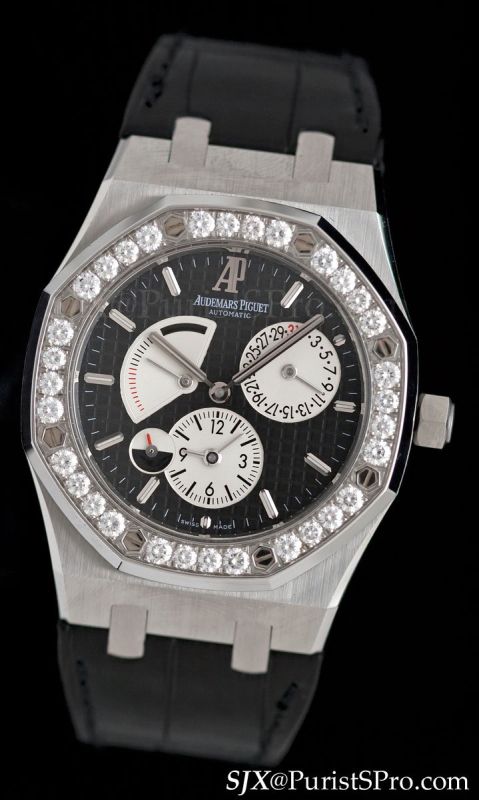
On the other hand the Royal Oak Dual Time is now available as a ladies’ watch with a diamond set bezel.
The Royal Oak Tourbillon Chronograph is now available with a rubber-clad bezel like the Offshore Rubberclad, though this is a Royal Oak and not an Offshore.
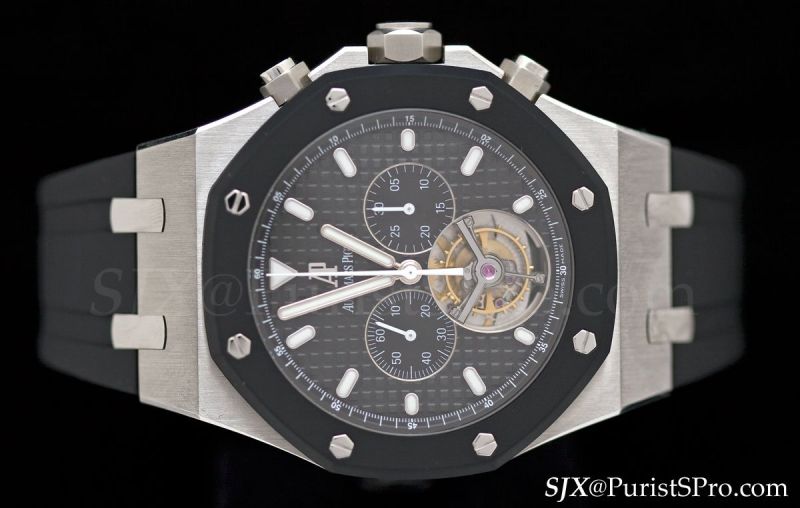
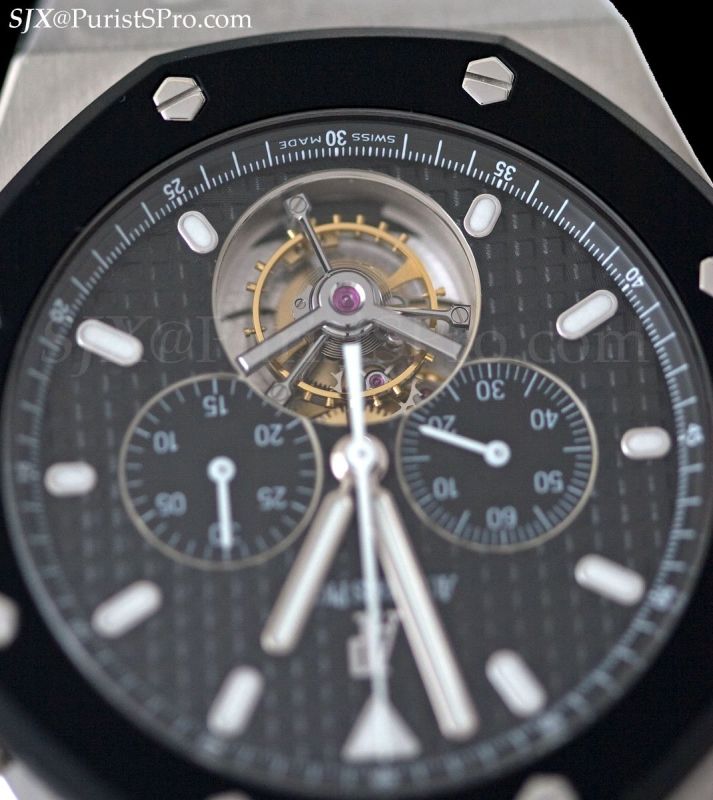
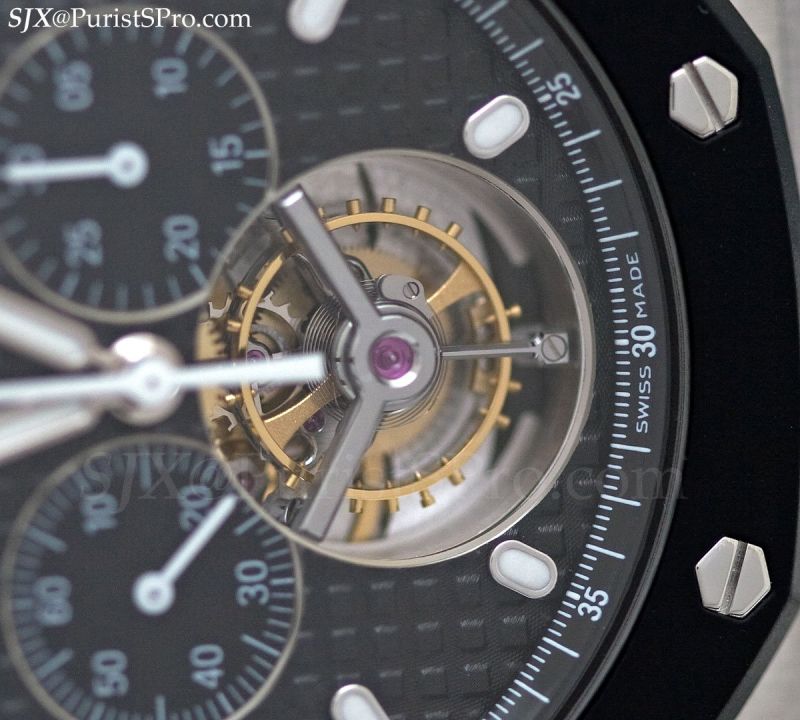
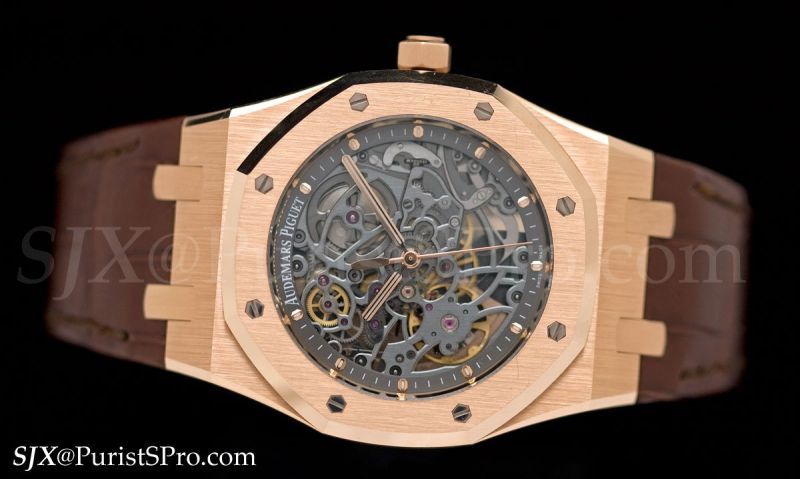
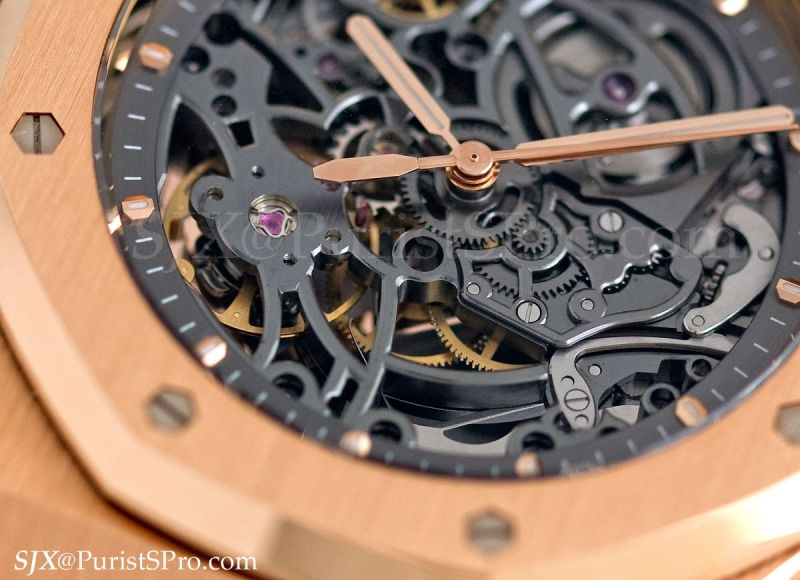
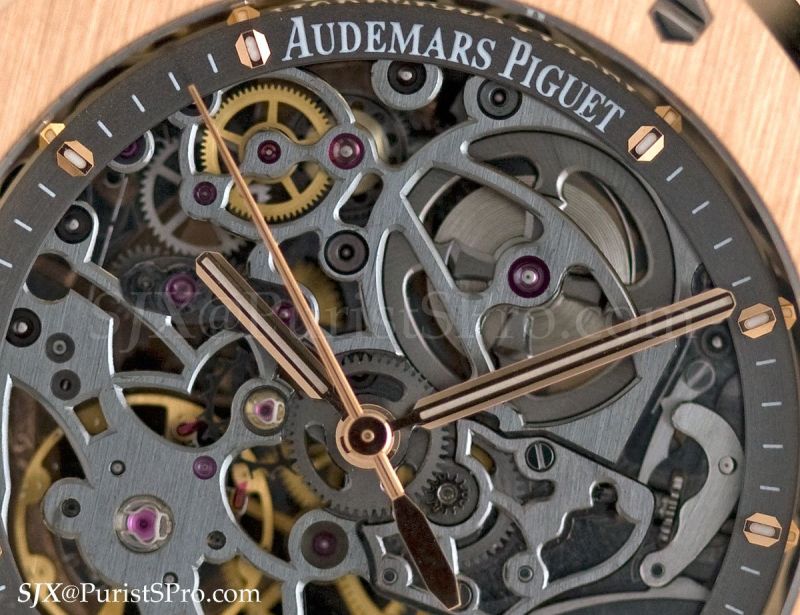
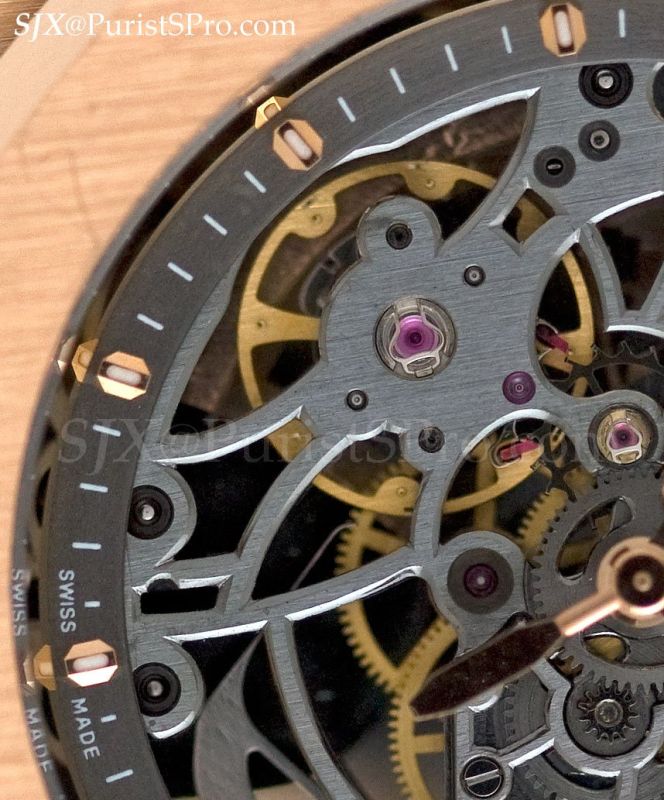
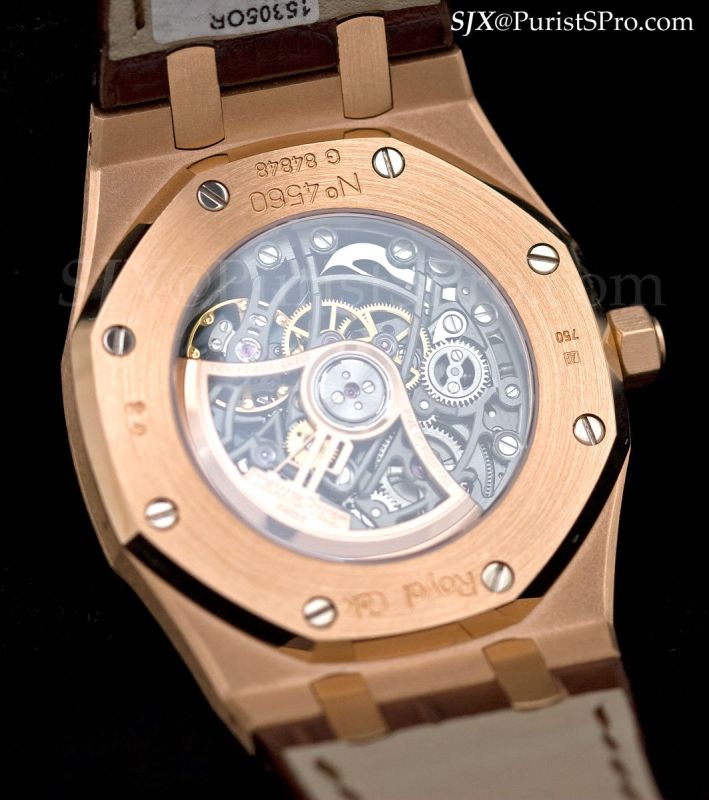
Rounding off the Royal Oak range is another watch that’s well worthy of note, an automatic skeleton based on the 15300. This watch is strikingly different from past iterations of the Royal Oak skeleton which were mostly skeletons with the fussy, baroque decoration that is usually found in skeleton watches.
Skeleton in steel
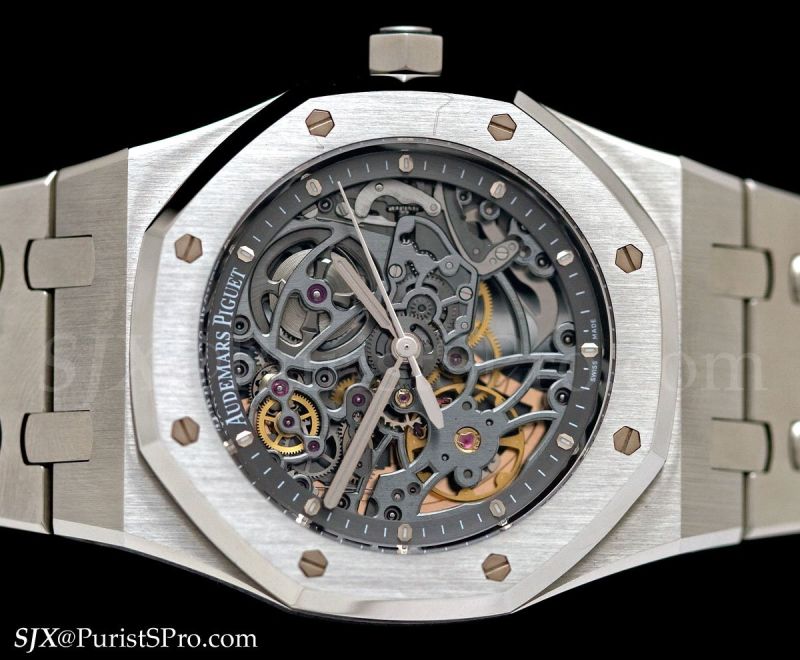
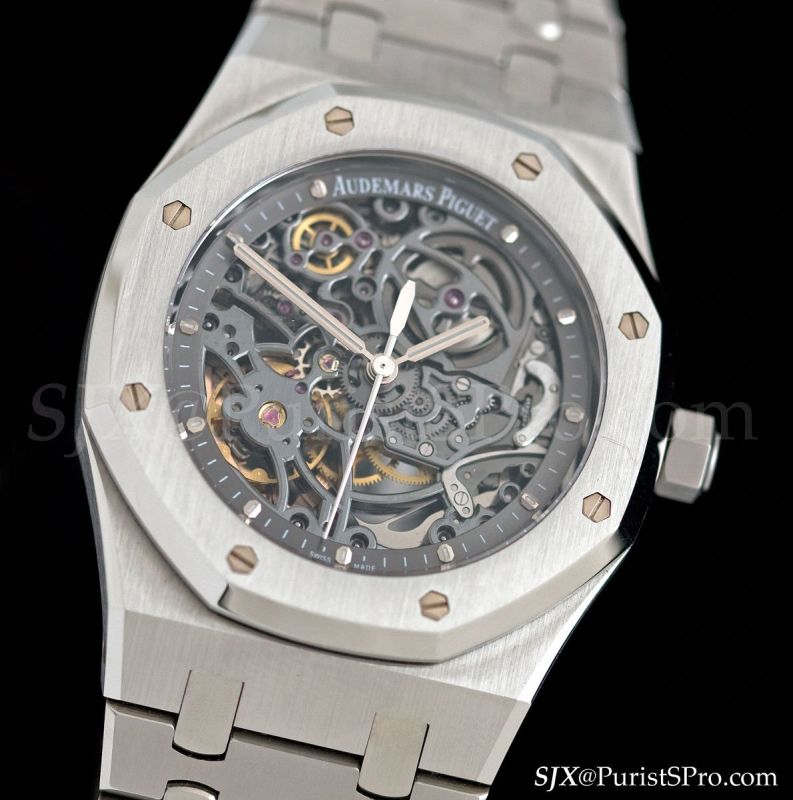
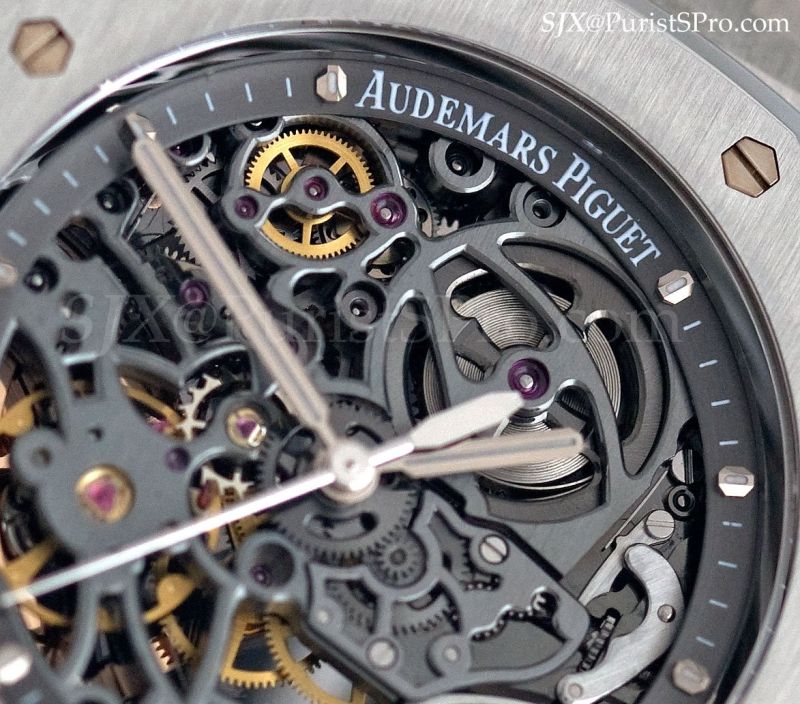
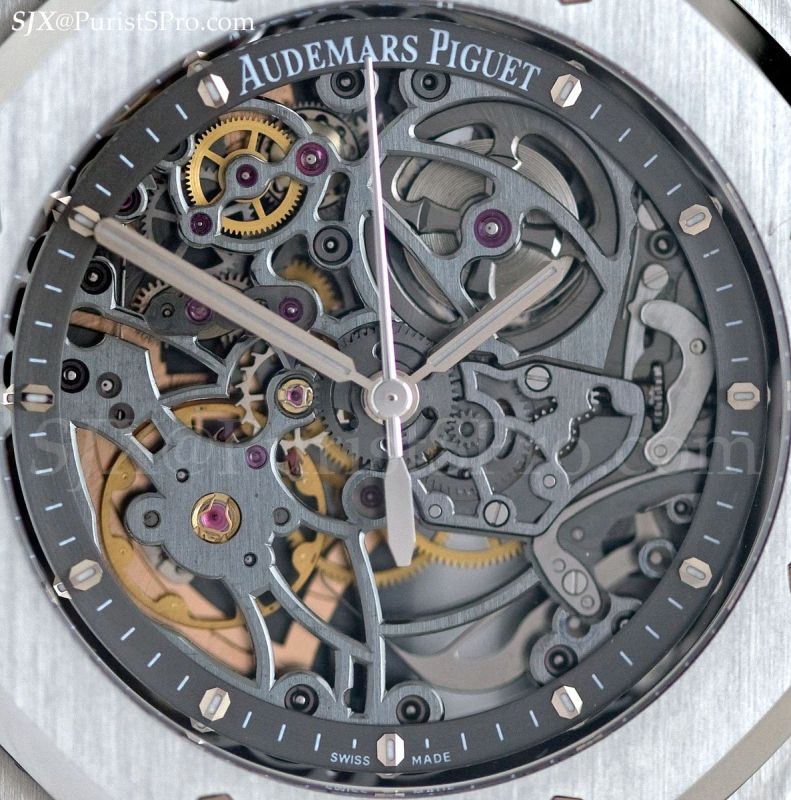
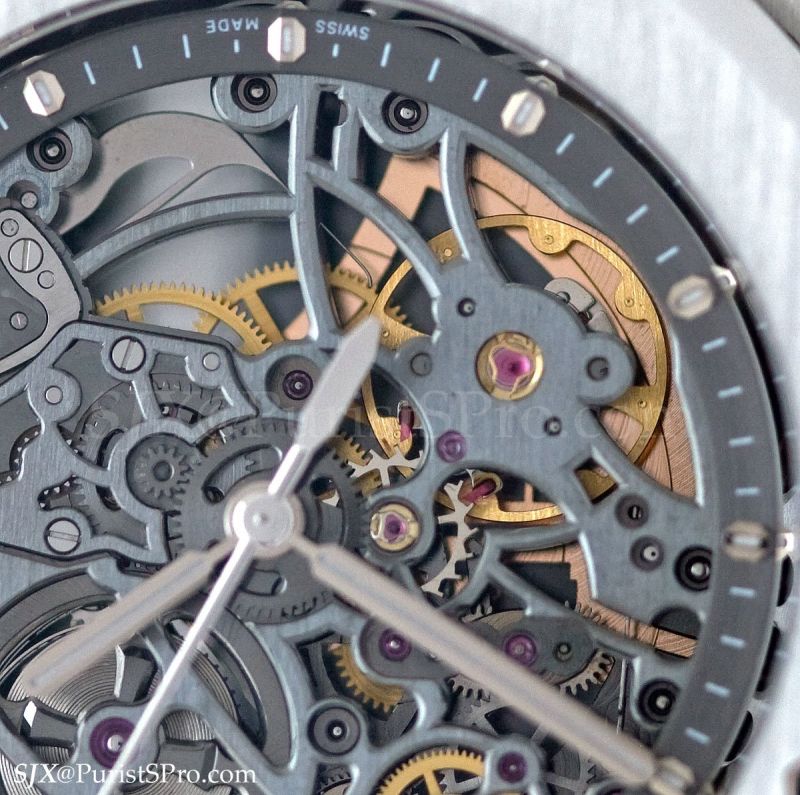
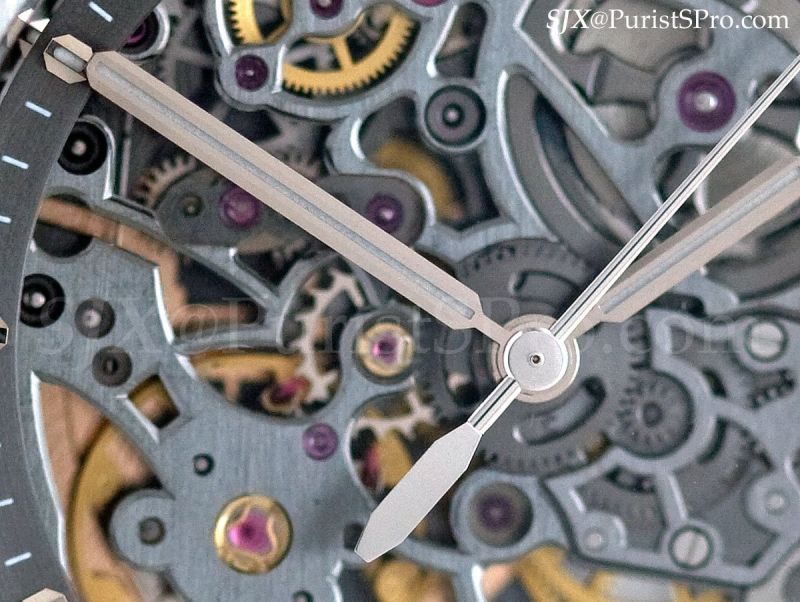
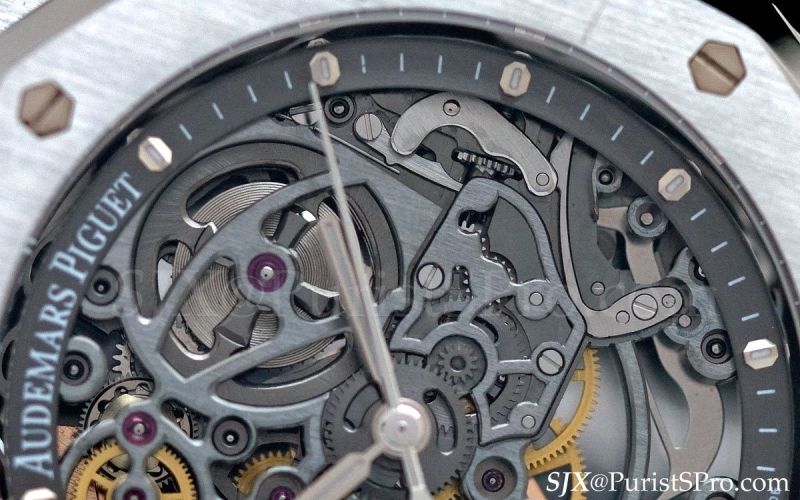
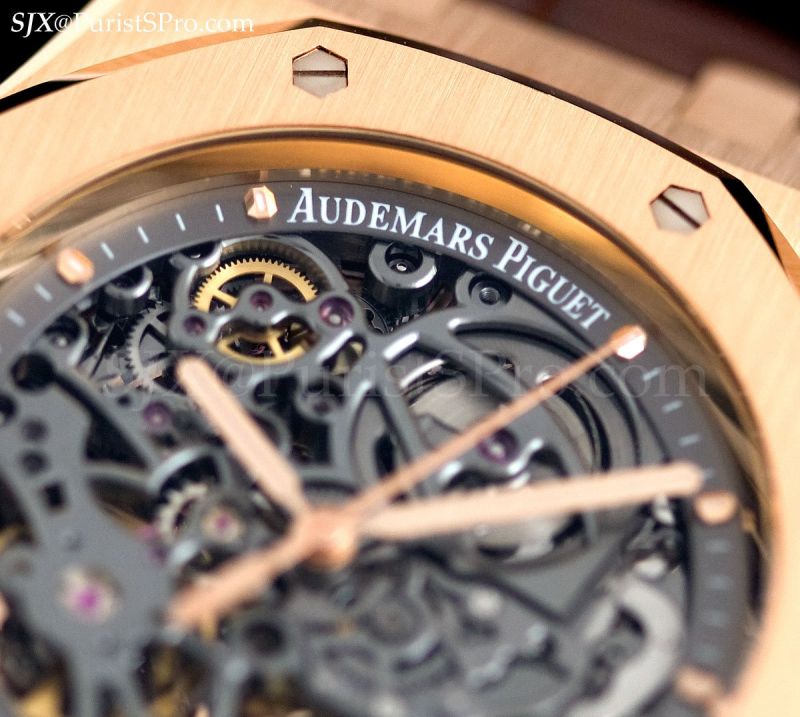
The movement, a cal. 3120 in-house automatic, sports ruthenium finished bridges, cleanly brushed and bevelled. The finish is simple and slightly industrial in look and feel but attractive, and it goes well with the complex case. I would not characterise it as exceptionally refined in finish but it is well done and appropriate for the look of the watch.
In rose gold
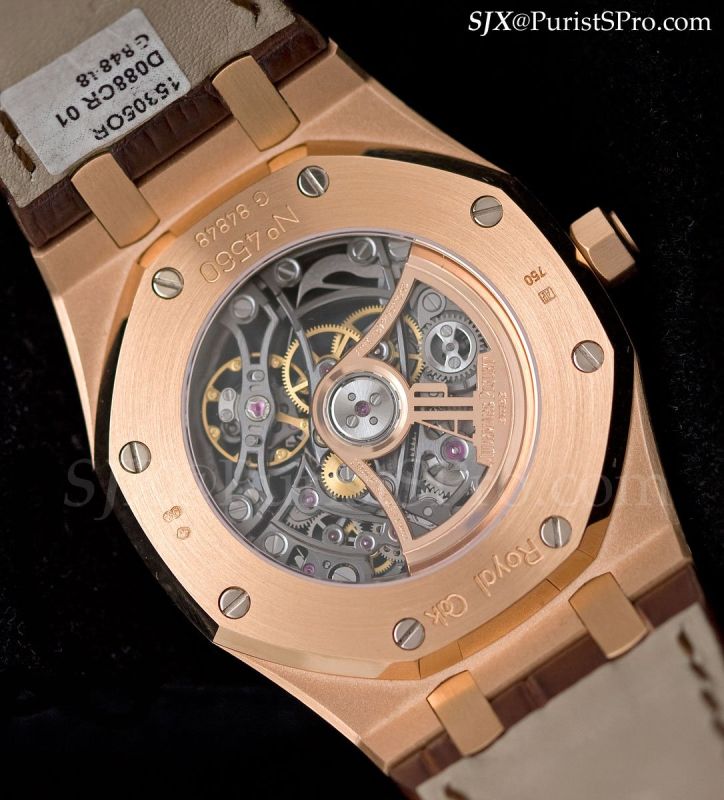
Now on to the Offshore, everyone’s favourite Royal Oak. The first is a watch that many have been predicting, and some hoping, for some time. The Offshore Scuba was first launched in a variety of limited editions sold at boutiques, and now it is part of the regular collection as the Offshore Diver.
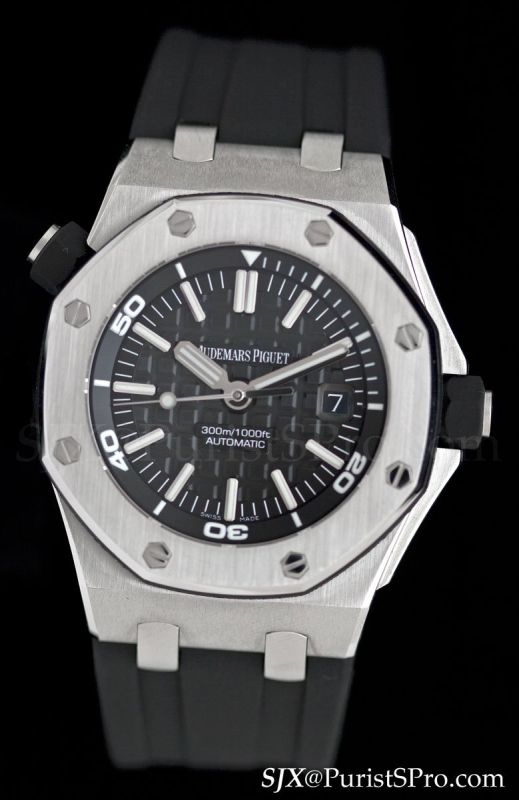
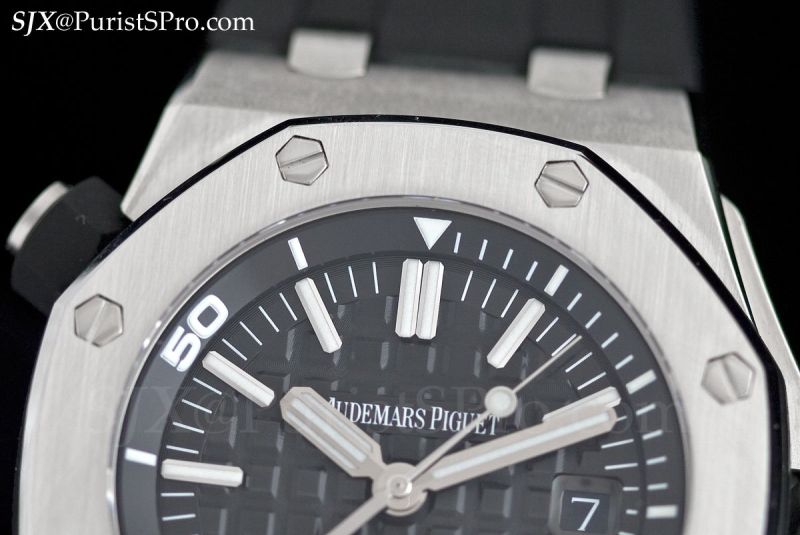
Water resistant to 300 m, it uses an internal rotating bezel for elapsed time. It is largely identical to the Scuba, except the hands have been replaced by a pair similar to those found on various limited edition Offshores.
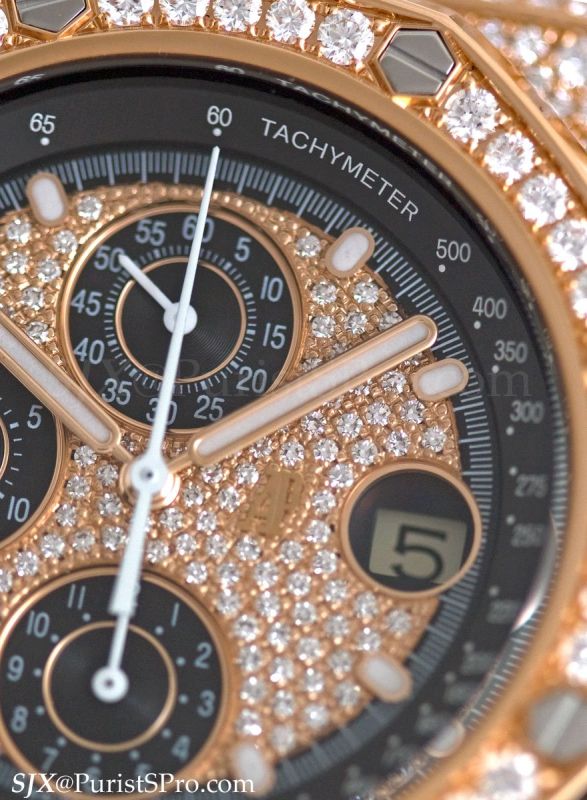
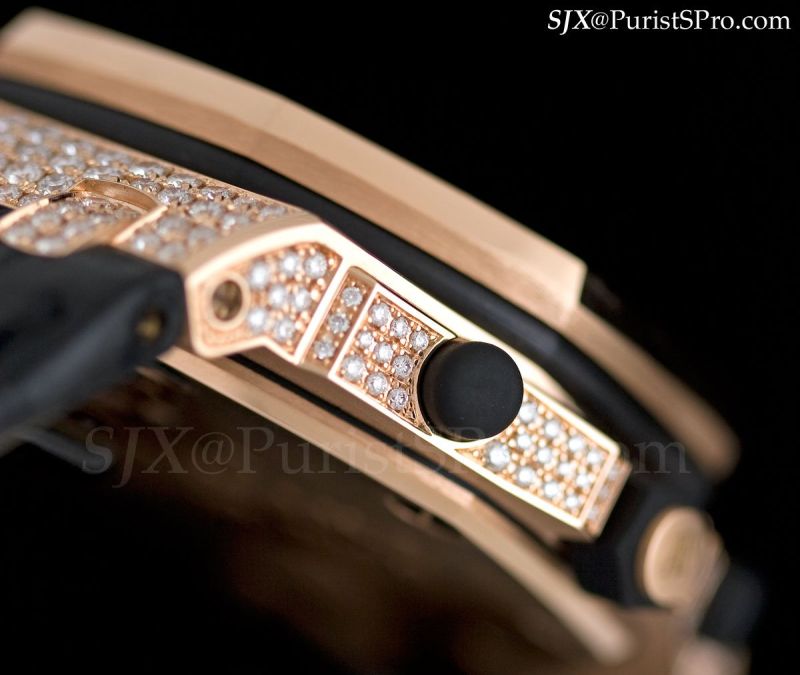
And for those who think the Diver is too discrete, AP unveiled a pair of diamond-set men’s Offshores. One is the yellow gold watch you see below, but it pales in comparison to another that I saw but did not photograph, an Offshore chronograph on bracelet set with some 70 ct of baguette diamonds and priced at over a million dollars.
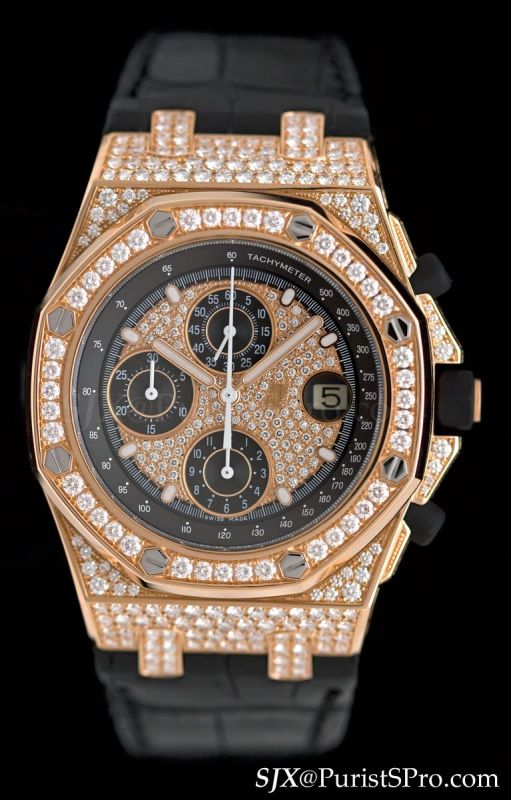
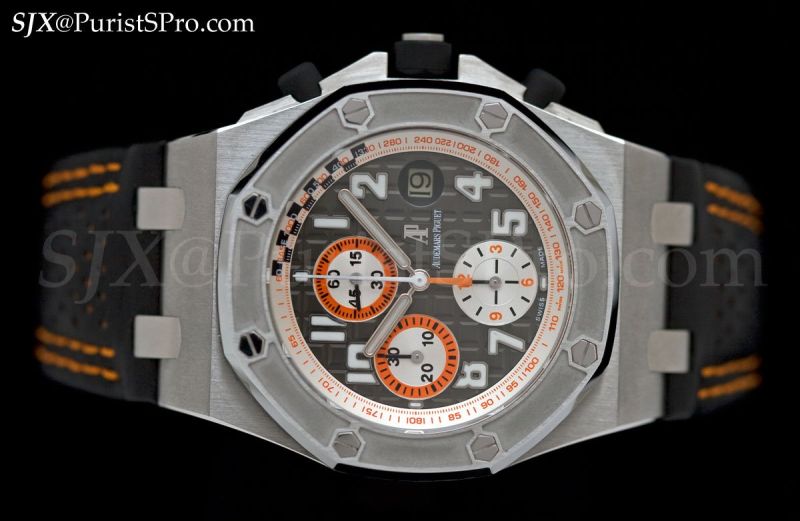
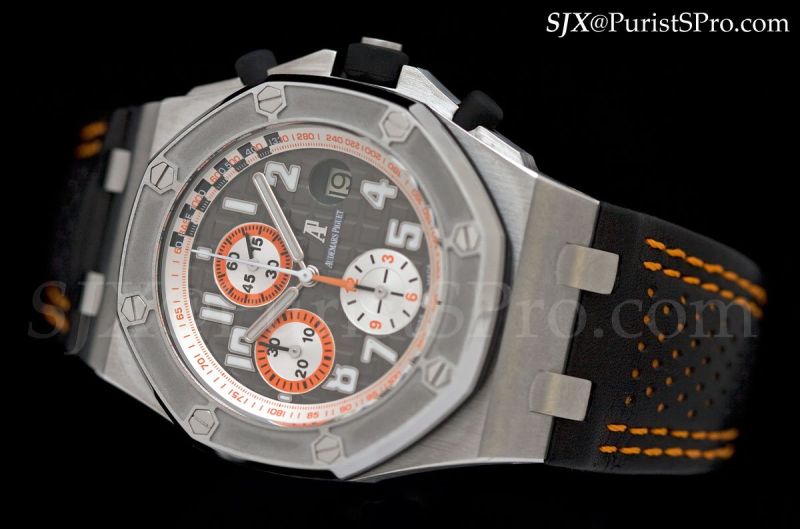
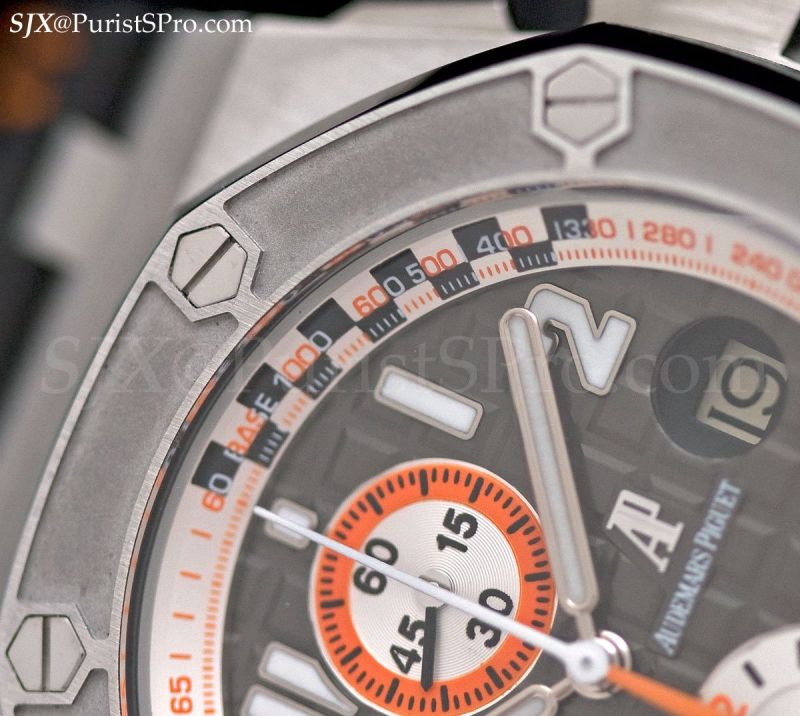
Of course AP has to also present a few mandatory Offshore limited editions. The first is a 100 piece edition to commemorate for automobile racing, with 60 pieces for France’s Tour Auto and the remainder for the Belgian National Classic Tour. Both are identical except for the case back engraving.
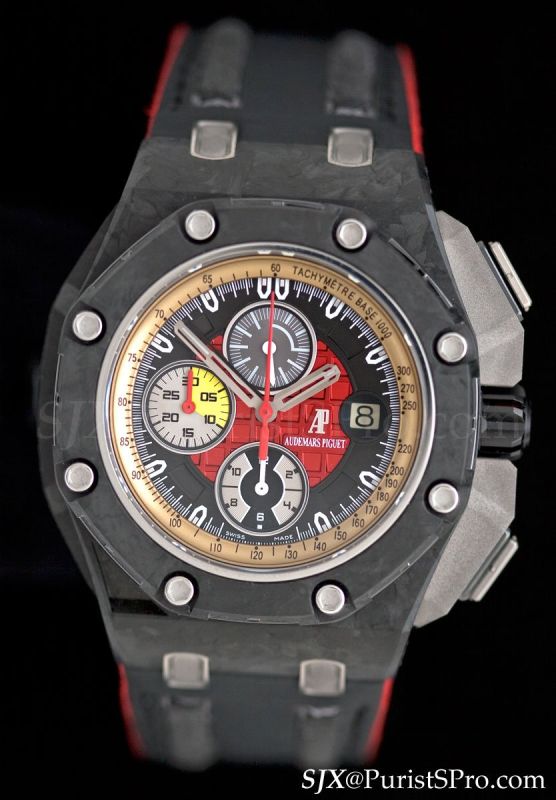
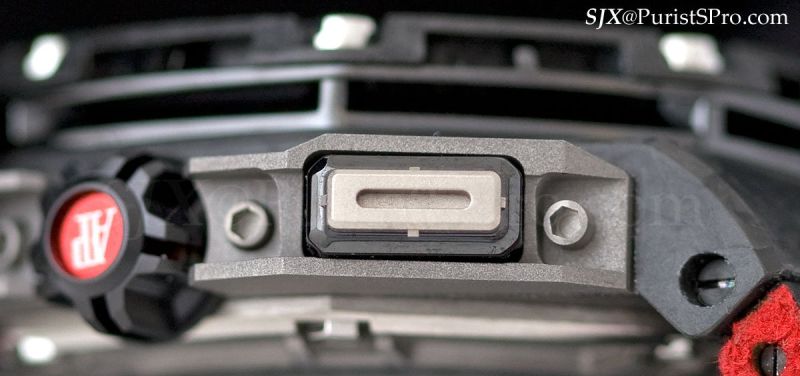
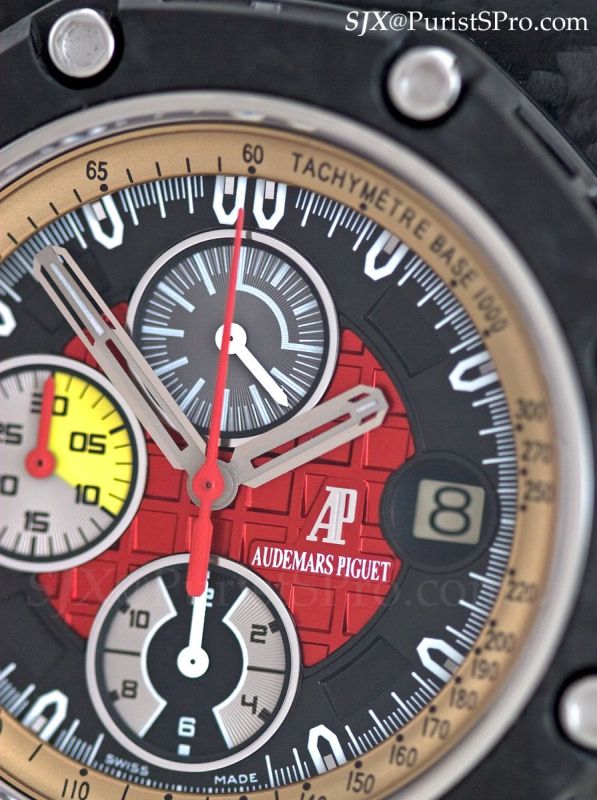
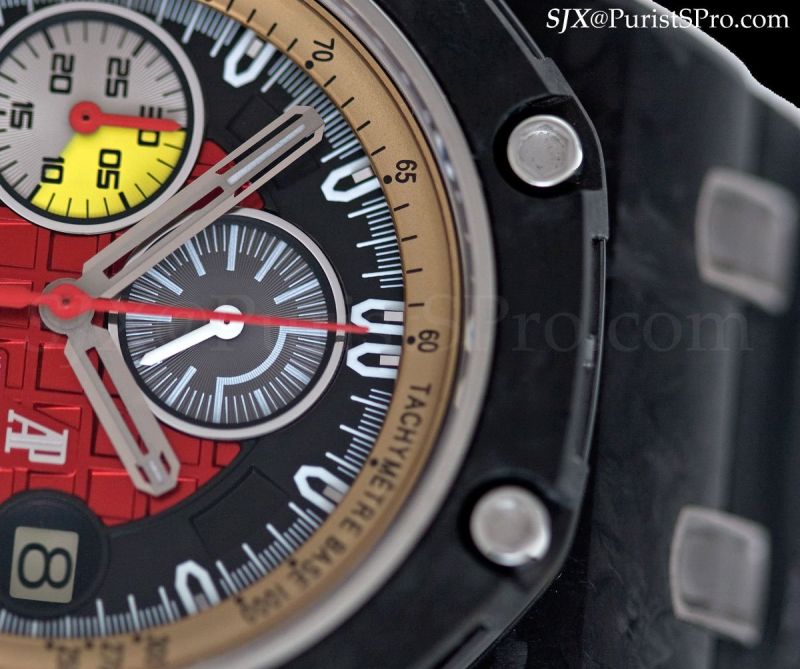
The next Offshore limited edition is one that I am sure has been causing conniptions amongst Offshore fans the world over. This Offshore Grand Prix is a pastiche of Offshores past – is that what biologists term evolution? It’s as if AP had raided the Valhalla of Offshore-dom and extracted DNA from each of the glorious Offshores of old before combining them into an über-Offshore.
Offshore Grand Prix in forged carbon
Offshore Grand Prix in rose gold
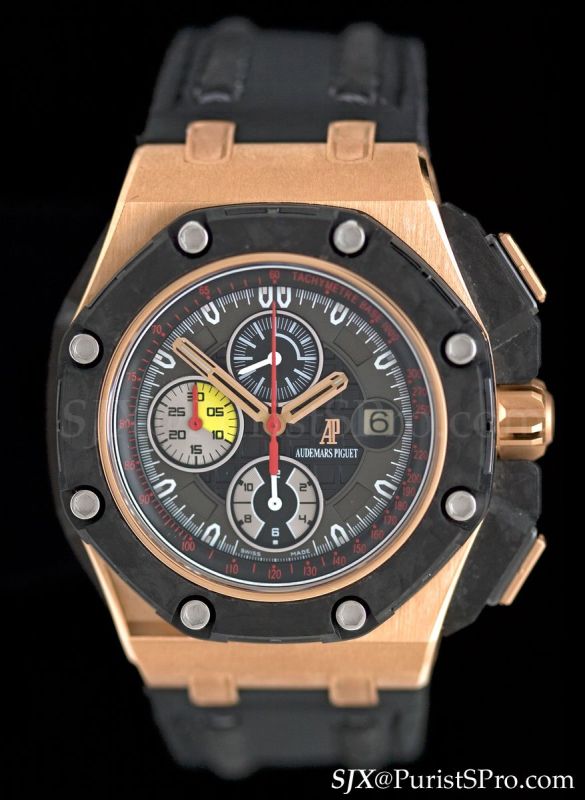

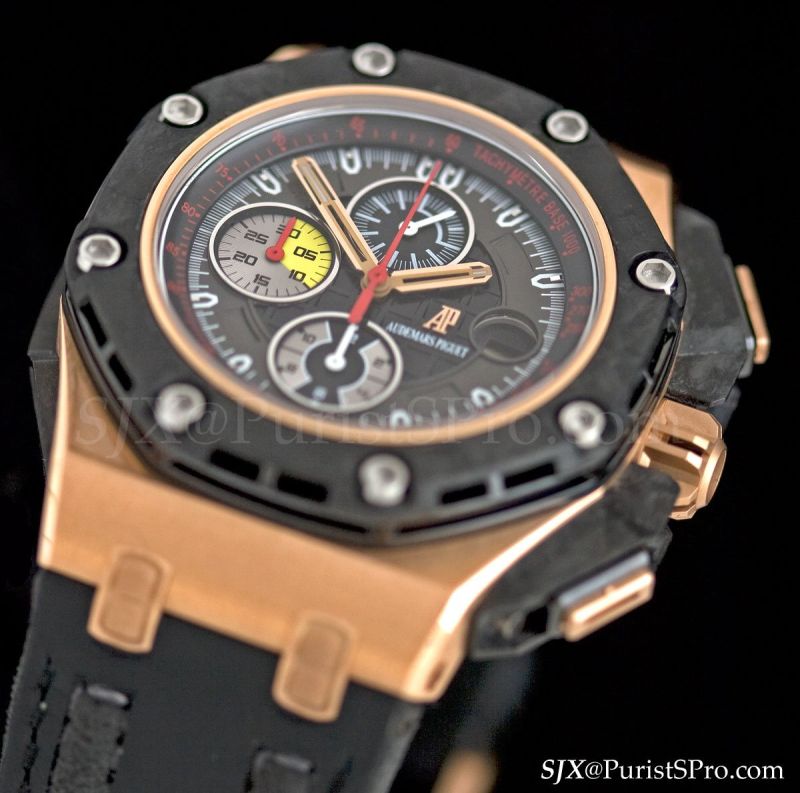
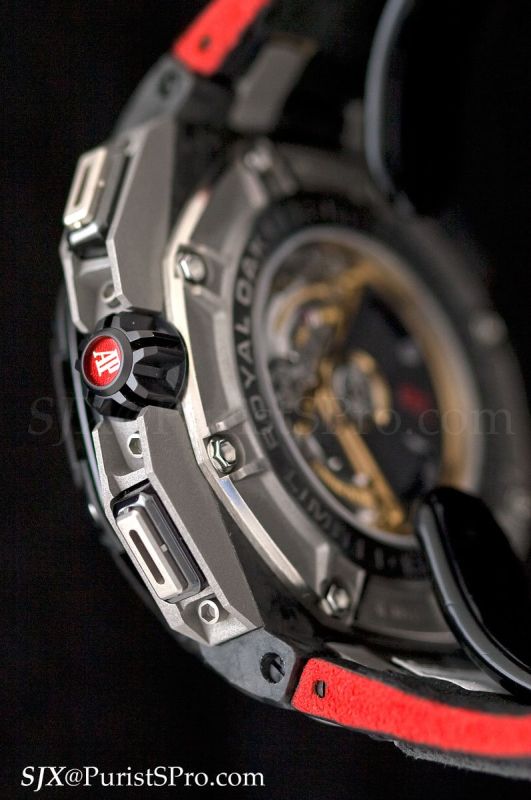
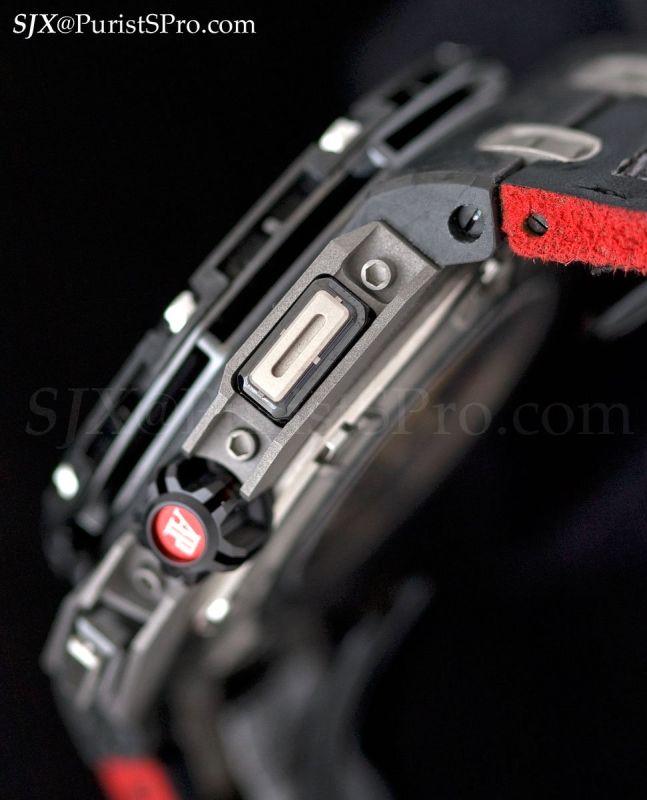
The Grand Prix is a riot of screws, slots and vents. And it sports an appropriately varied colour scheme. But bizarre as this watch looks, it is appealing in a fundamental, “mine’s bigger” way. In case anyone doubts how powerful this watch is, the checkerboard dial guilloche used is a special inverse and sloped “Mega Tapisserie” guilloche.
This watch has a display back and the rotor is decorated with more sloping vents but I was so distracted by the front I forgot to photograph the back.
Offshore Grand Prix in platinum
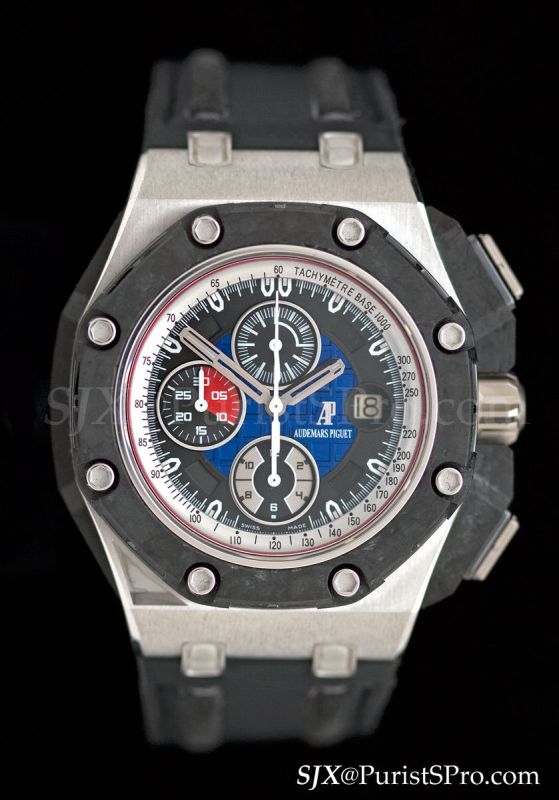
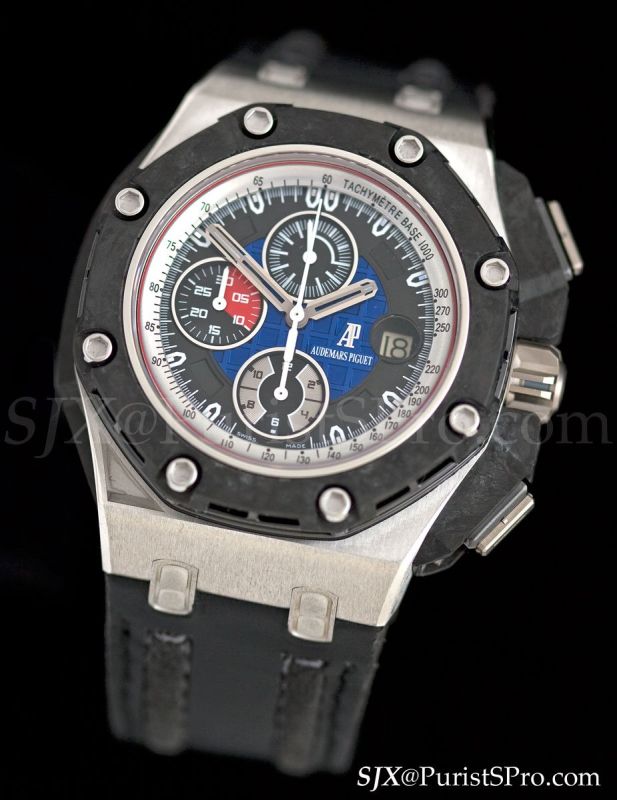
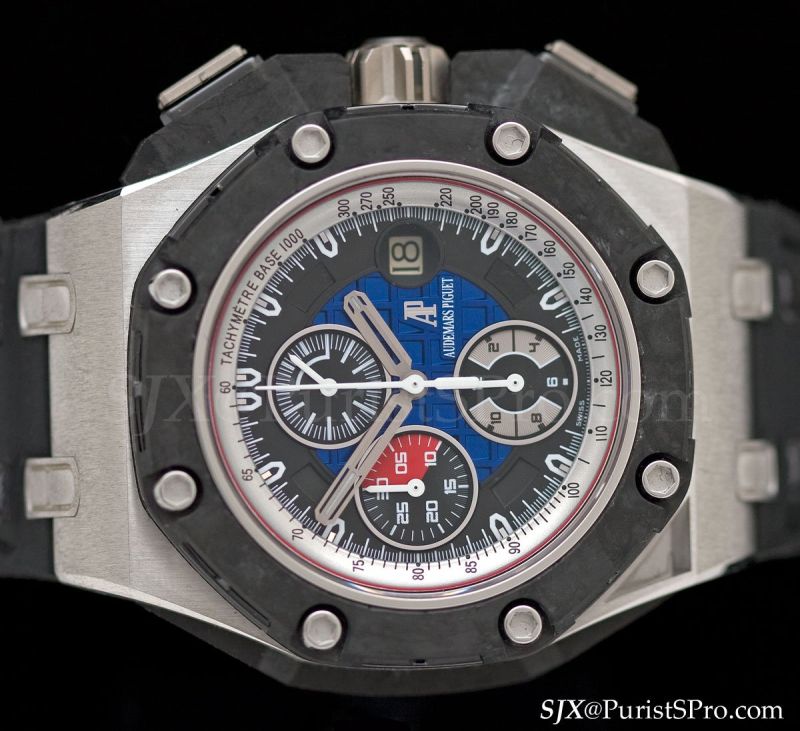
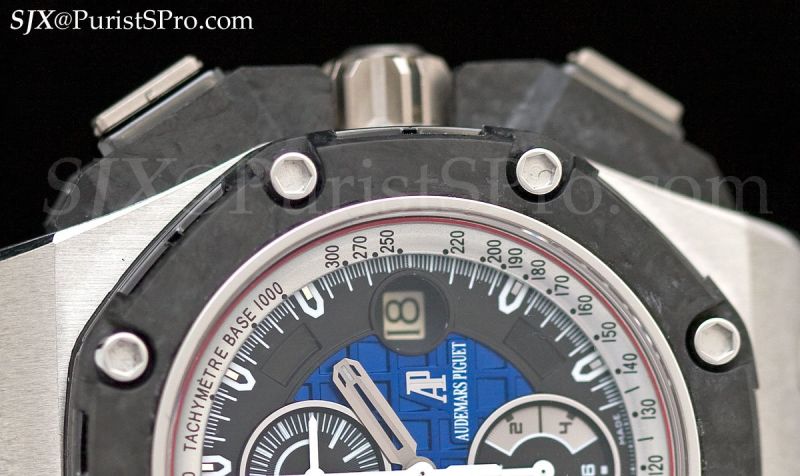
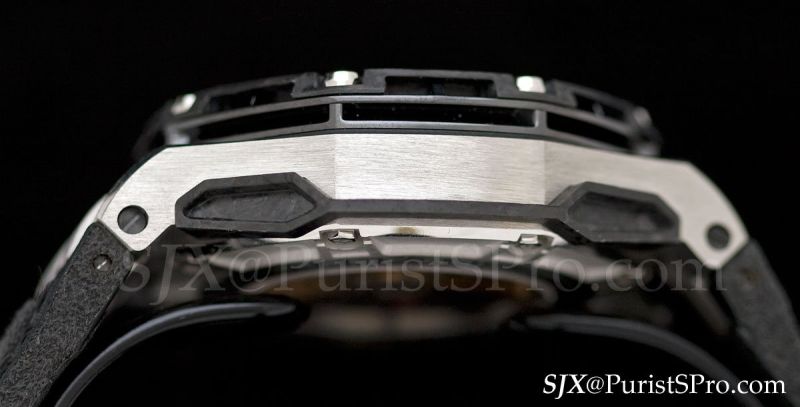
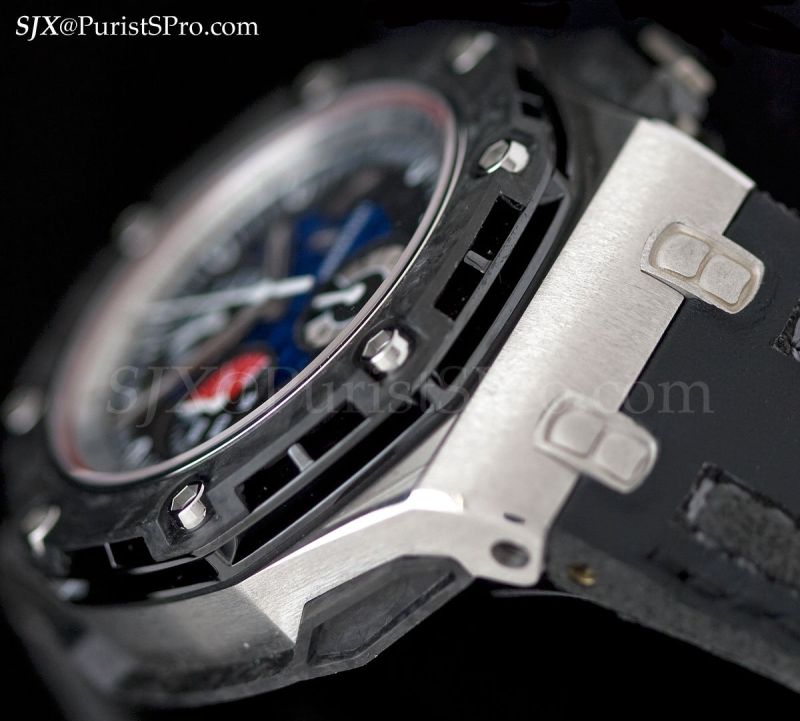
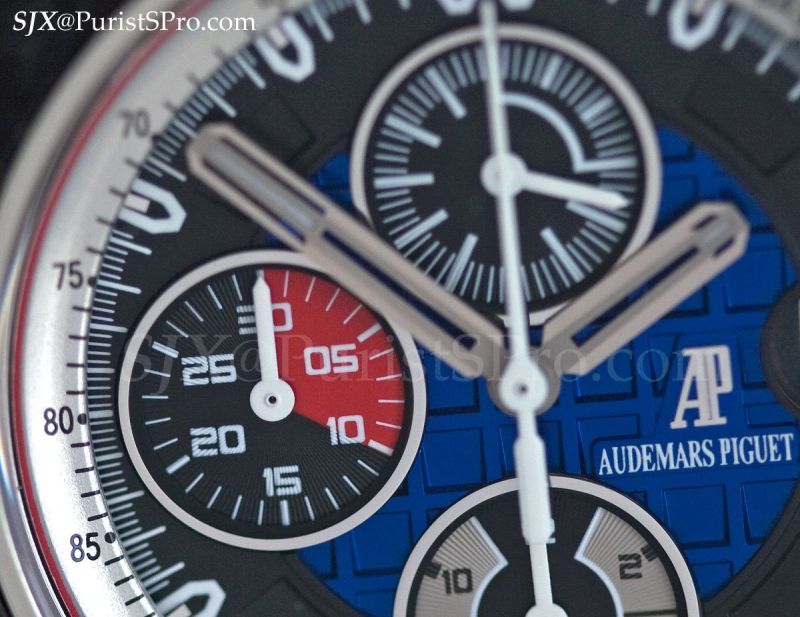
Three versions are available: forged carbon, rose gold or platinum, with 1750, 650 and 75 pieces made respectively. Especially attractive is the forged carbon version, the red accent on the side of the calf and alcantara strap is a pleasing touch. Though the market for Offshore limited editions has cooled severely, I can imagine the premiums that will be asked for this watch before it even hits dealers.
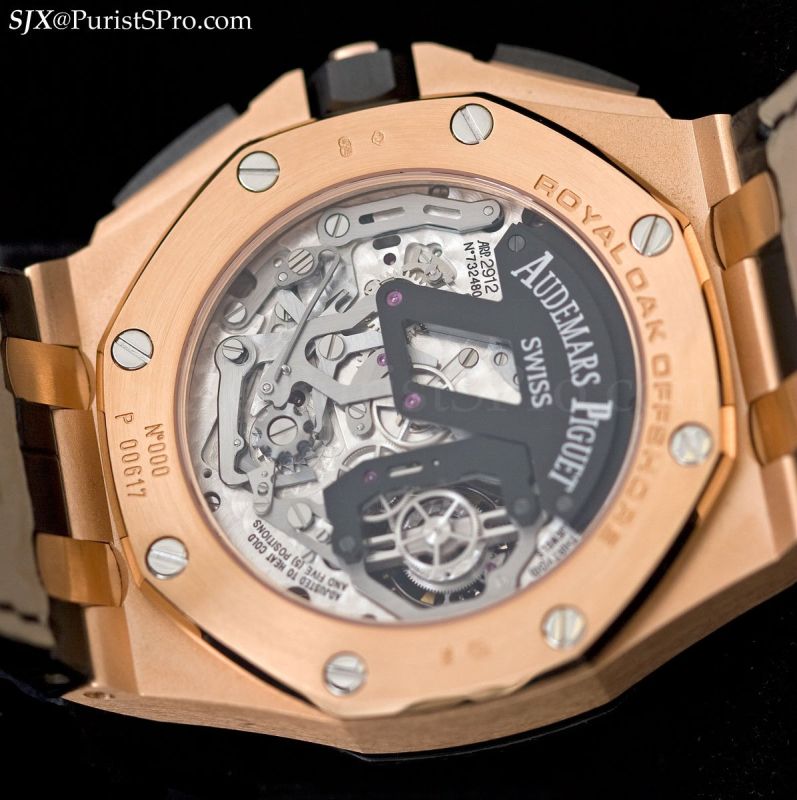
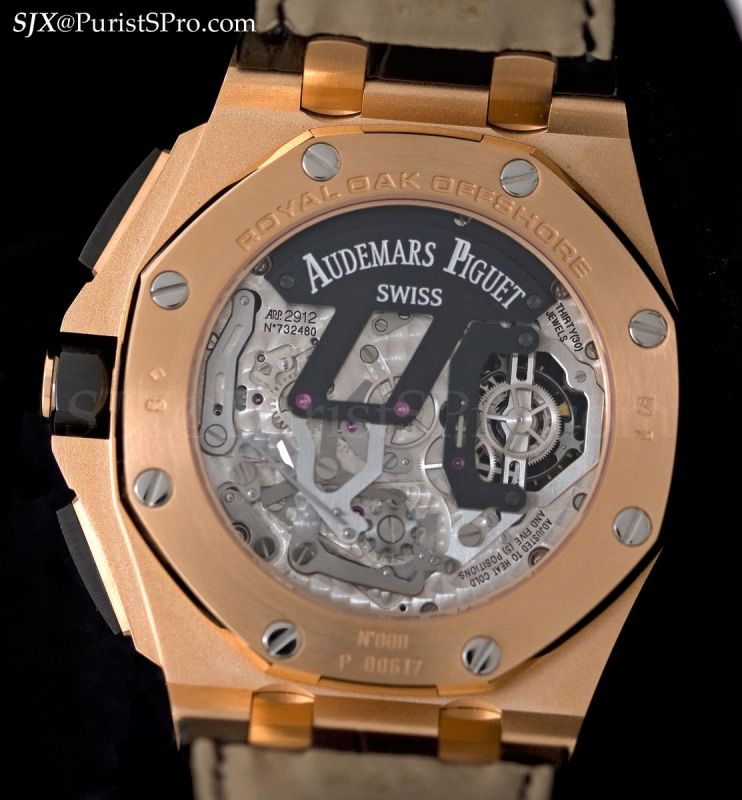
This year, for the first time, AP presented an Offshore high complication, a tourbillon-chronograph with a ten day power reserve. It is 44 mm wide which makes it the same width as the normal Offshore chronograph though this feels and looks more massive. The case is rose gold with a forged carbon bezel as well as a ceramic crown and pushers. It has a massive black anodised aluminium tourbillon bridge that partially obscures the escapement, though it complements the overall aesthetic of the watch well.
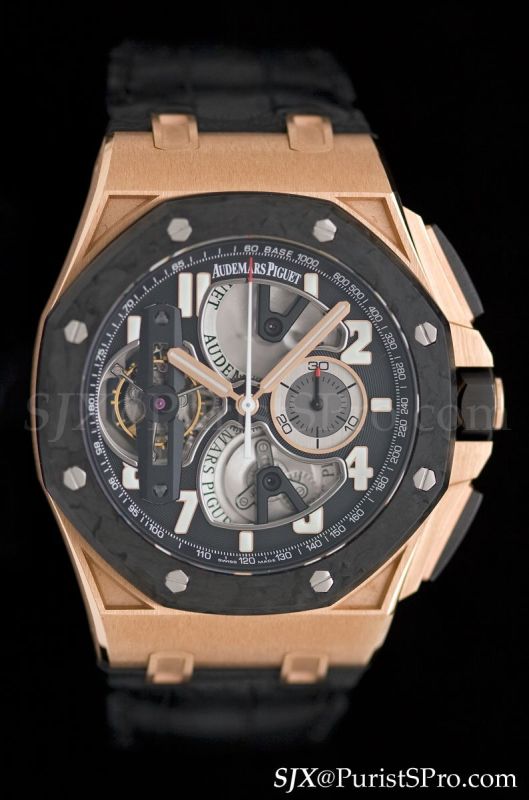
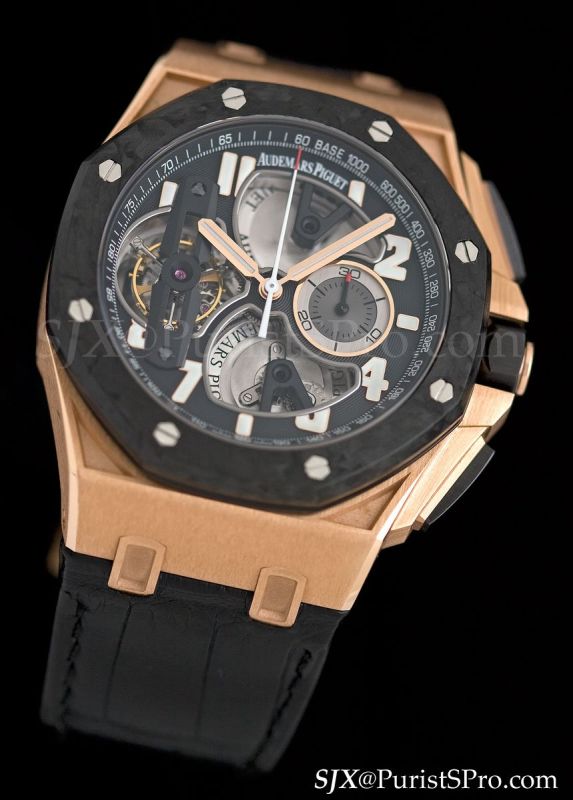
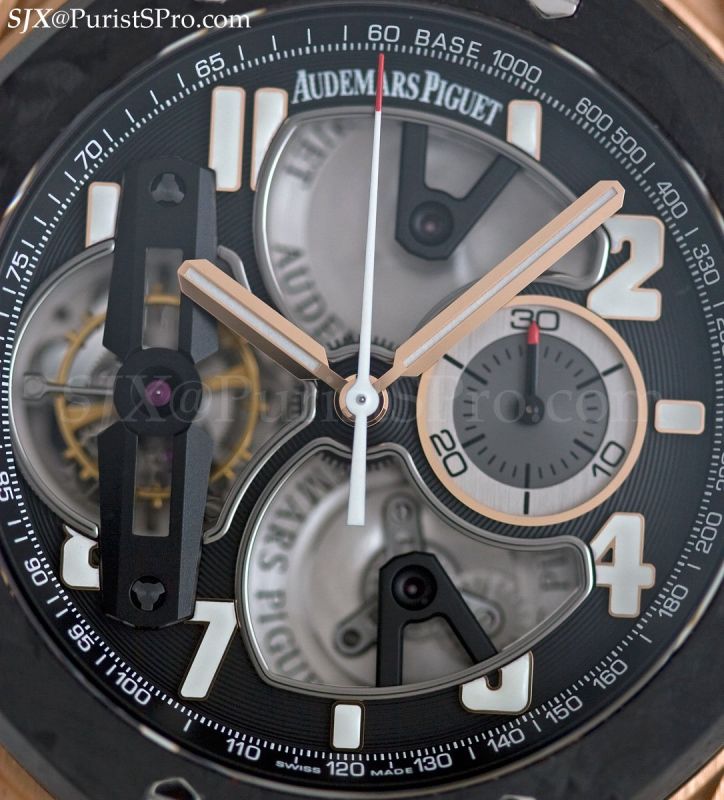
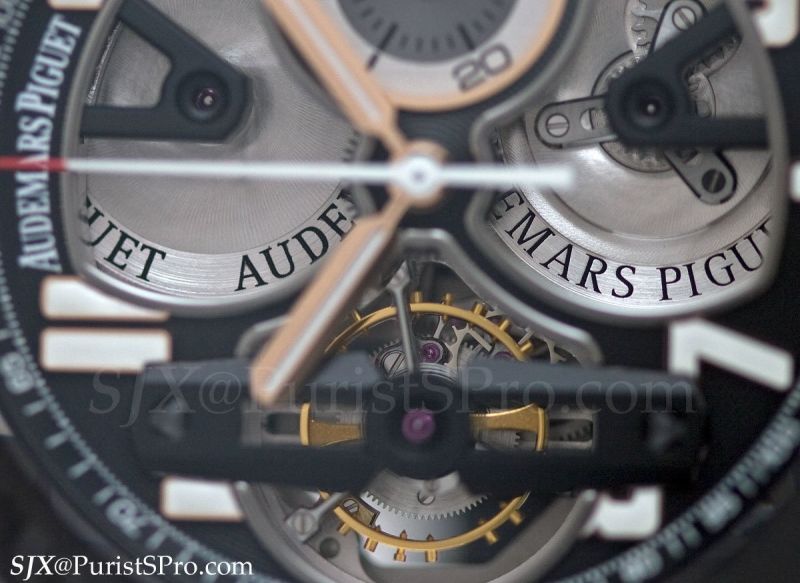
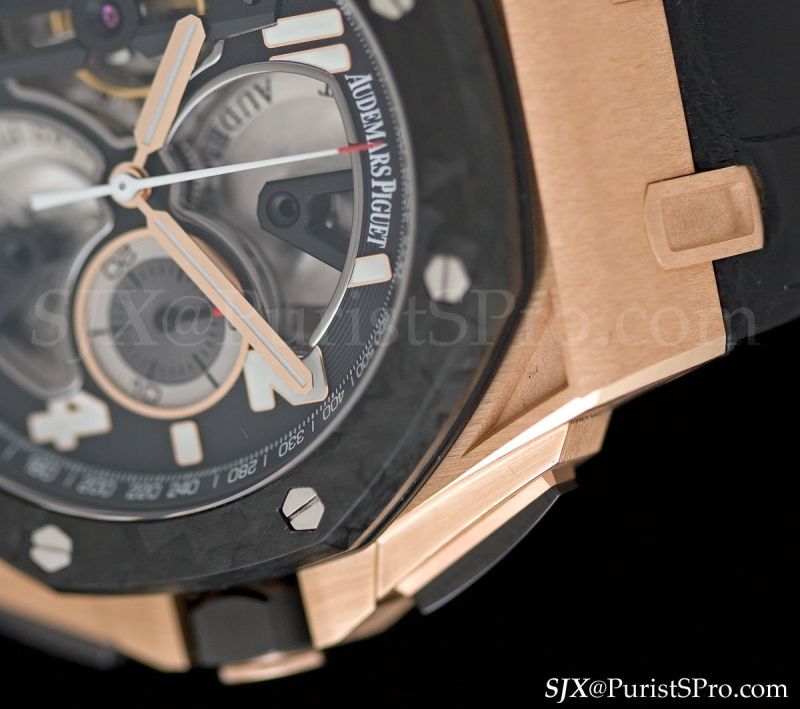
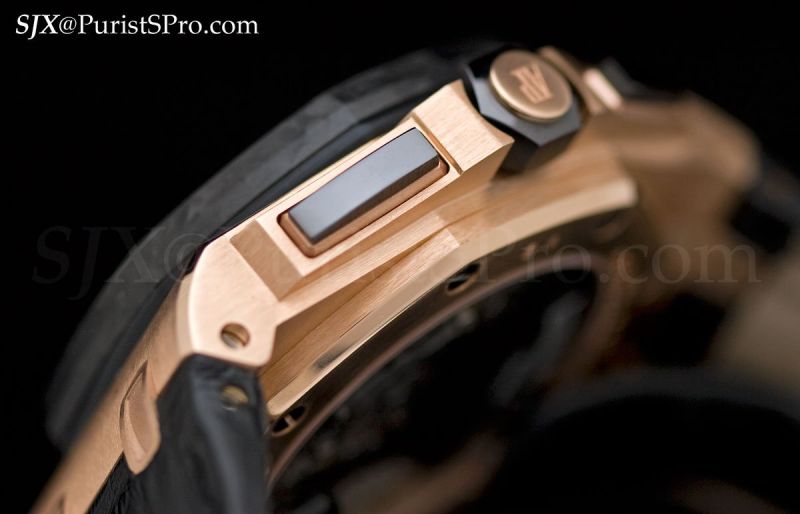
Hopefully this is the first of many exotic complications in the Offshore case. It is so large that it can accommodate a lot, giving watchmakers a lot of space to work with. One that I have suggested, and hope to see, is a Starwheel Offshore. Maybe in a black case (ceramic? carbon?) with a black movement (ceramic? carbon?), but I am being far too creative.
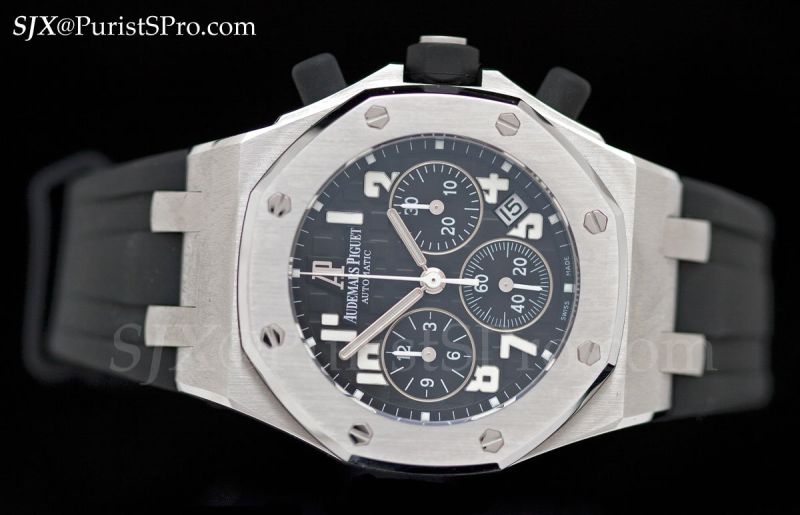
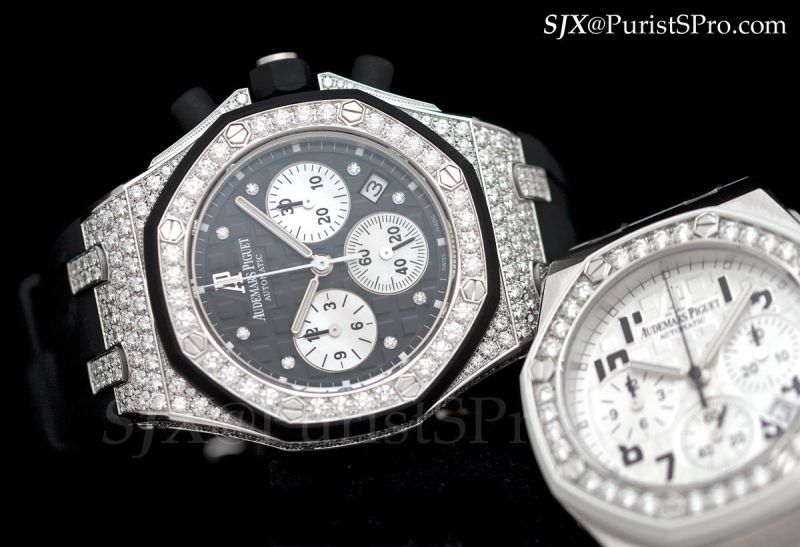
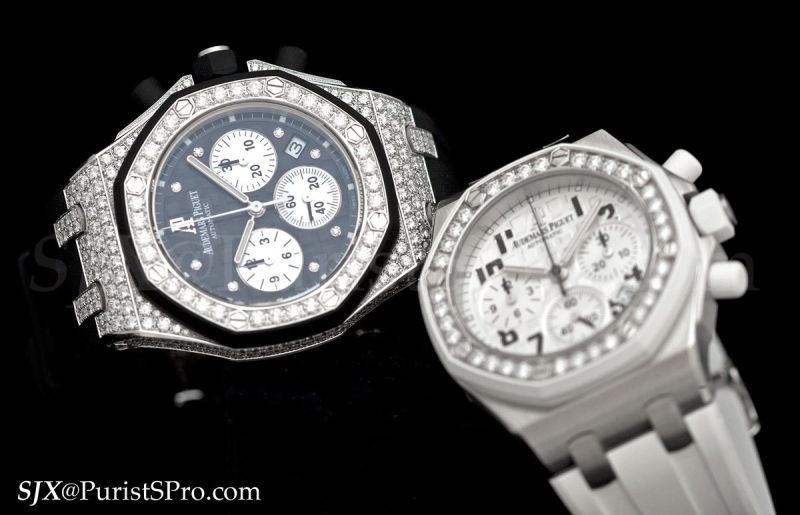
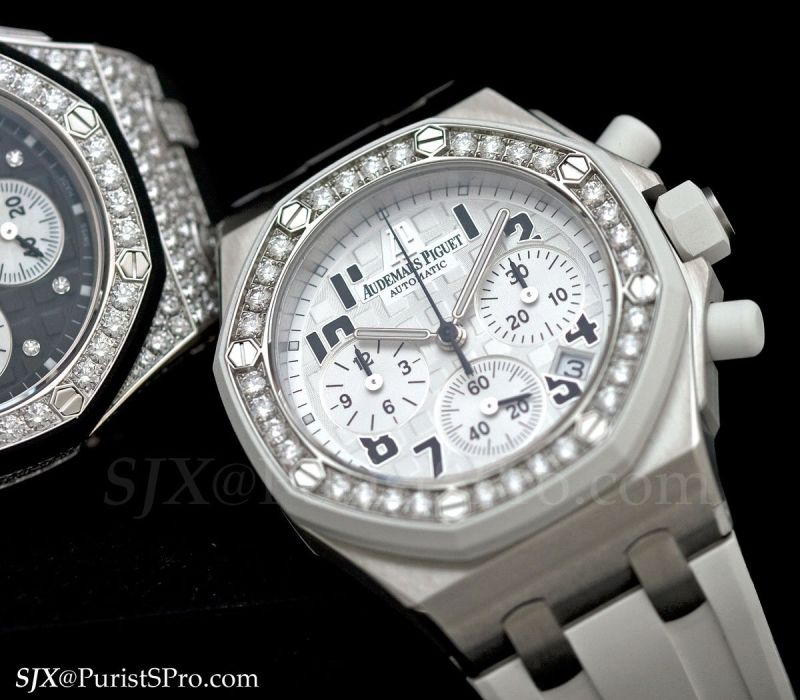
And though most want it bigger, AP presented the Offshore chronograph in a 37 mm case for ladies. It contains a Frederic Piguet 1185 calibre.
Three versions of this are available, a plain steel version, steel with diamond-set bezel, and a white gold version with a fully set case and mother-of-pearl subdials. All three are identical in dimensions, though only the two diamond set versions are strictly ladies' watches.
This message has been edited by SJX on 2010-02-13 04:24:41

What AP need is a dedicated chronograph movement
to match their 'positioning' as a sports watch company.
Most of their chronographs are bolt-on stop watch mechanisms on the tried and tested JLC-base. Of course, they have tourbillon chronographs but they only time 30 mins epochs......now, I ask you.....what use is that in the real world?
It does not matter if AP outsources their dedicated chronograph movement (non-tourbillon),,,,,,,sighing hopes...
Regards,
MTF
This message has been edited by MTF on 2010-02-13 01:54:15
I disagree, but then...
my position on this has been so often misconstrued that I have decided not to engage in any further public discussions on this.
Oops...did I just contradict my decision?
;-)
TM


I said 'dedicated' and not the dreaded 'integrated' word
Thomas,
As an AP fan myself, with a dedicated chronograph movement in one of my AP watches, I was careful to specify 'dedicated' chronograph movement.
Otherwise, it's like me (physician) saying: "Well, I started off planning to do a liver transplant but whilst we were all looking at the MRI scans, we decided that maybe we could append a piece of kidney or adrenal gland, here and there, and make it do something else instead. It will work just as well and actually even better than most people's original organs because our hospital is in the top-3 world ranking" and we have very good skills.
I also corrected my typographic error: 'tried and tested' and NOT 'tired and tested' JLC base.
Regards,
MTF
As I've written in a post elsewhere...
we needn't "pretend to disingenuously effete euphemisms " - when we mean shit, we should write shit, and not sh!t.
Otherwise, don't use sh!t (shit) at all. (crap? or how about just "damned lousy?" )
See? Now you've gone and done it; you got me to slip further down the slippery slope of not wanting to engage in this topic ever again...
Point of order - the 3126 is not a tried and true JLC caliber (thanks for the typo correction, by the way, that "slip" - Freudian or not - did ring my alarm claxon's to a possible flame alert) but an AP in house development (I know you knew that, I point it out to underscore the point that your original point was what you meant, and not the back pedaled position of appeasement taken later)
Yes, I am well aware that it is not "most" of the AP chronos currently installed (not yet, anyway)
I am also aware of the possible future alternatives being considered, which you vaguely imply/reference, but do we really need to slag an old warhorse, tried and true, to pave the way for a (possibly glorious, possibly not) new replacement? Afterall, I know you know I am very well personally acquainted with one of the possible future alternatives (you were with me when you were on the phone calling across the Pacific...)
Isn't it a longstanding PuristS credo to appreciate all watches FOR WHAT THEY ARE, allowing for all the wonderful diversity and loving them DESPITE their quirkiness or imperfections?
Afterall, how else can we otherwise love, even tolerate, some of the crap that everyone seems to ooh and aah and fawn over when lovingly posted by their new, proud owners?
AGAIN, I have no particular love for the Offshore, though I know those who don't really know me might too easily conclude this and look at my comments as fan boy blind devotion apologies.
The Offshore needs no apologies, and those who buy it mostly buy it for the design of the cases and dial; yes (gasp) even for the fact that it is popular and a status statement, much like most of the Rolex and Patek buyers in the world. (come on, who wants to argue with me that most PP 5016 owners buy it because it is "the ne plus ultra standard production grand complication PP" and the most expensive (non-jewelled) model and thus for the bragging rights inuring, and not necessarily because of how great and consistent the repeater sounds are, or how fine the anglage, or how well regulated every single piece is, leaving the factory?)
The 2326 is a FINE movement - what are we comparing it, the 7750 derivatives? the 2892 modular evolutions?
It is not a GREAT movement.
I'd be interested to read what is a great movement, to those 2326 haters...
Ooof, 500 words more than I ever wanted to write on this subject, ever again.
Forgive me my weakness of character to not be able to resist a provocative temptation...I am now going to flagellate myself in penitence; the bracing cold here only adds to the stinging...
Cheers, and of course, ya know I luv ya, man, "disingenuously effete euphemisms" and all!
TM
Admit it...you just love flagelllation! LOL!
I was very careful not to diss the actual movements in use. I have a number of those movements too, in my small AP collection. So, I have to praise them!
As a fan, I like to see AP being able to offer a range of engines at every price point and tastes. At the moment, there is a gap in the portfolio tha needs to be plugged to portray a sports/engineering/technology/F1 image. Then, the consumer can pay their money and take their choice:
Haute de gamme engine.
Pure-bred racing engine.
Stock engine.
I'm sorry I did not make my point clearly.
Regards.,
MTF
This message has been edited by MTF on 2010-02-13 08:52:16
I find it extremely unfortunate...
Hi, SJX,
I find it extremely unfortunate that the "standards" of the field of watch appreciation (and product positioning) have evolved to the point that 37mm case sizes are assumed to be or "look like" ladies models.
This not only shows an ignorance of past size standards, even limited to Royal Oak and RO Offshore models - the annual calendar; or the triple date, for example - but a throwback to strictly "mens" models or strictly "ladies" models; how positively cavemanish is that?!? So maybe woman should remain barefoot and pregnant, except when allowed out in public adorned with gifted jewels as some sort of "arm candy?"
Or men should remain hairy chested and inconsiderate louts who help not one whit with child care or be allowed to step into the kitchen?
So far I have not seen where it was stated by AP the model is a ladies model, but I certainly can understand how it can be construed as such (this is not the first time this subject has come up)
(I realize the absurd extension of my point of course - hey, Thomas, so you want iced models for men too? hahahahah...no comment. )
I just hope AP marketing has the wisdom not to label the basic non-jeweled model, and thus limit, its appeal as such, when the final "categorizations" are done.
Cheers,
TM
SIHH 2010: Cartier
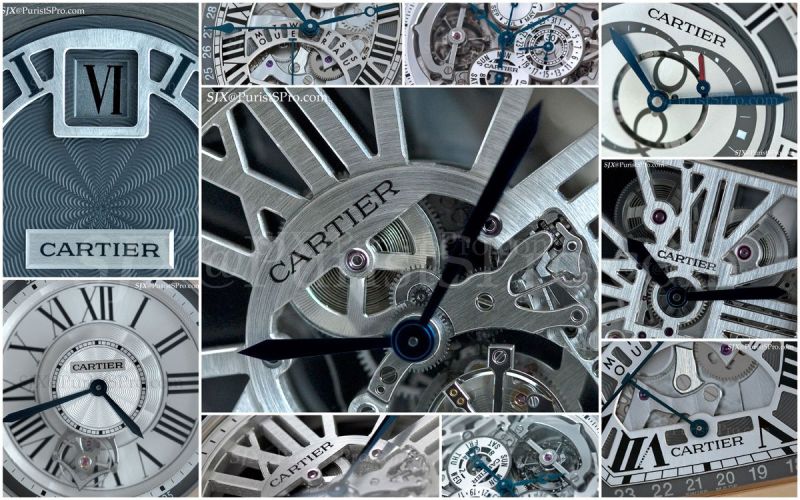
Last year saw the first models from Cartier’s new range of high horology watches, intended to replace the Cartier Collection Privée Cartier (CPCP). Those watches demonstrated a serious and careful effort in creating a respected range of complications. More importantly they have been well received by consumers but they have also been noticed by industry, with the most frequent comments being a grudging respect for the quality of the product and the price point.
Cartier has continued its push upwards and 2010 sees a slew of new high horology models that more than double the size of the range. But before moving on to that let’s take a look at Cartier’s new case shape for 2010 – the Calibre de Cartier.
When I first saw images of the Calibre I was not impressed, it looked dull and the wide date aperture seemed like a repeat of the mistake IWC made with the ceramic Doppelchronograph. Fortunately in the metal it looks far better with a well detailed case.
Calibre de Cartier in steel
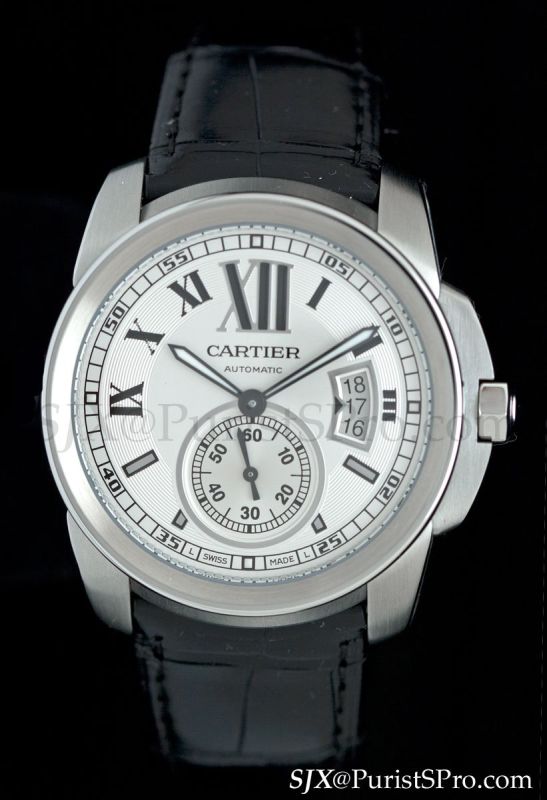
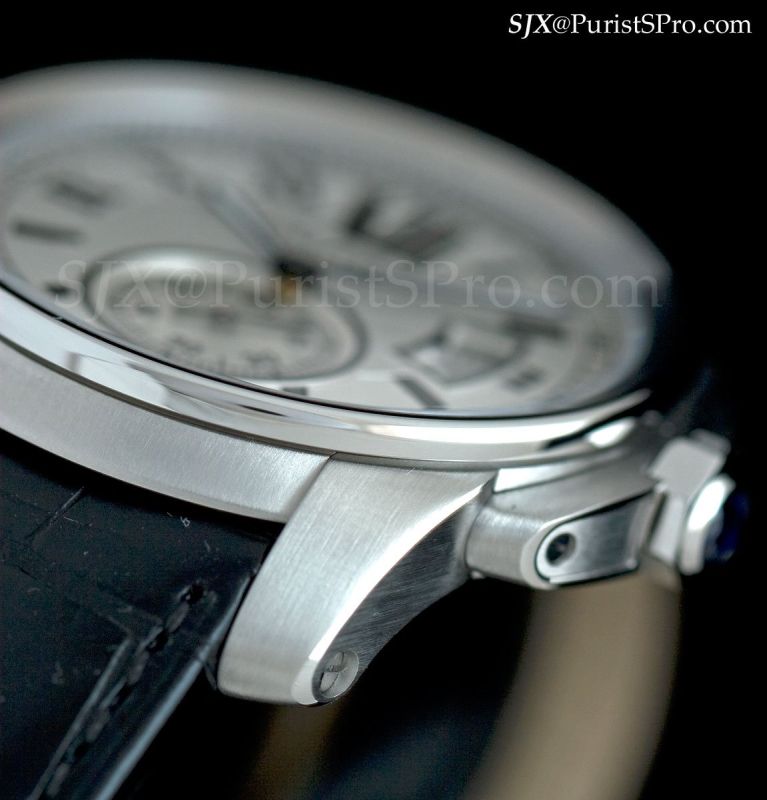
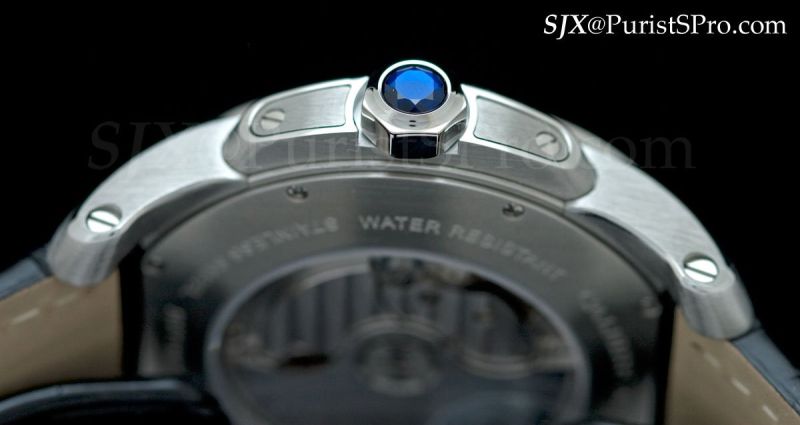
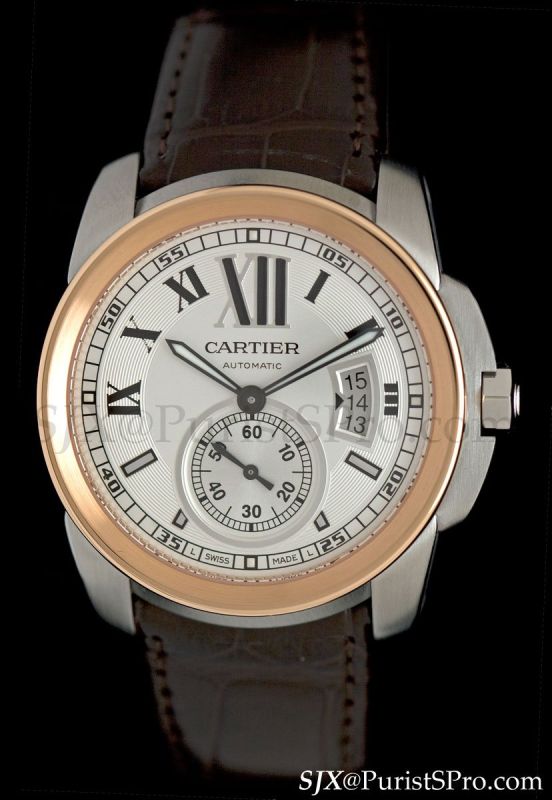
Intended as a sporty looking, daily wear watch, the Calibre is 42 mm wide. It is a moderate size and I am sure many women will be wearing one, even though it’s designed as a men’s watch. It looks different from any existing Cartier but retains enough of classic Cartier design elements, like Roman numerals, sword hands and a crown cabouchon, that it is recognisable as a Cartier. Though the dial design leaves me lukewarm, I find there are too many elements on the dial, this watch has all the qualities necessary for it to be a commercial success. Three versions are available, steel, steel-gold and gold, with either a silver or black dial.
Steel with gold bezel
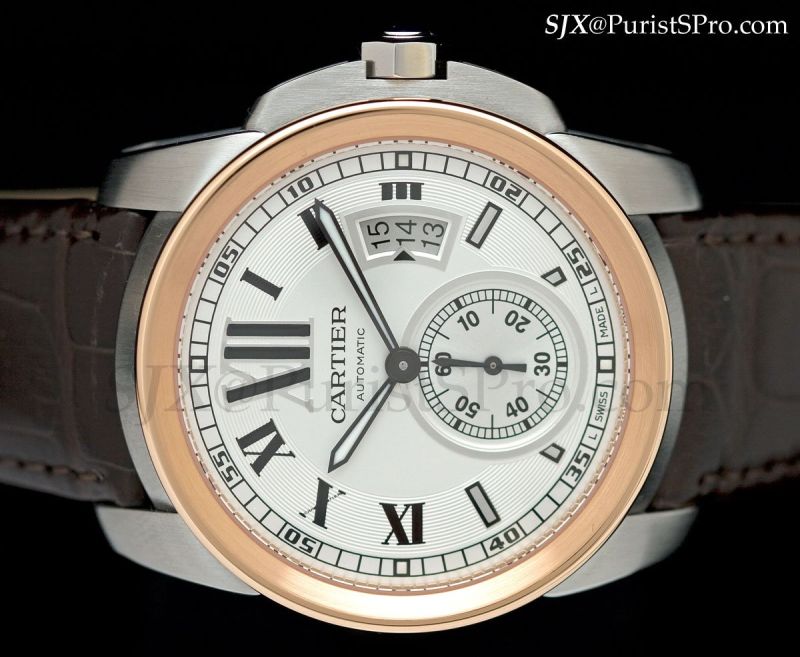
In rose gold
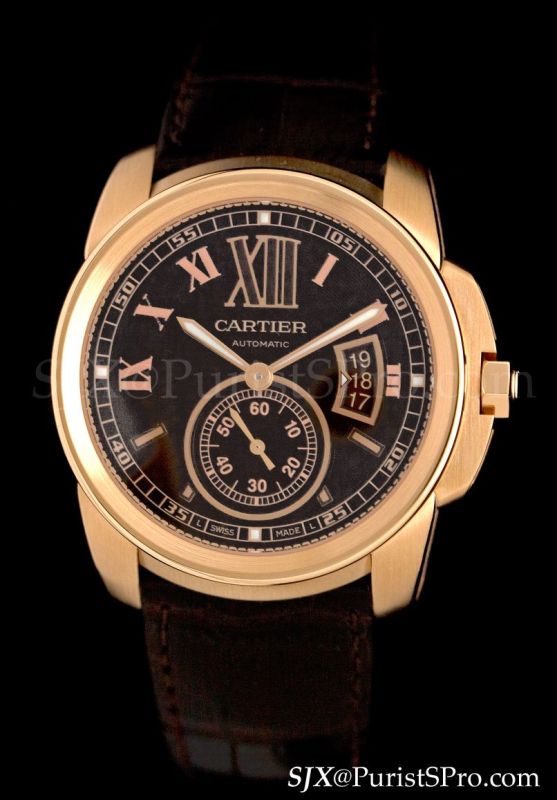
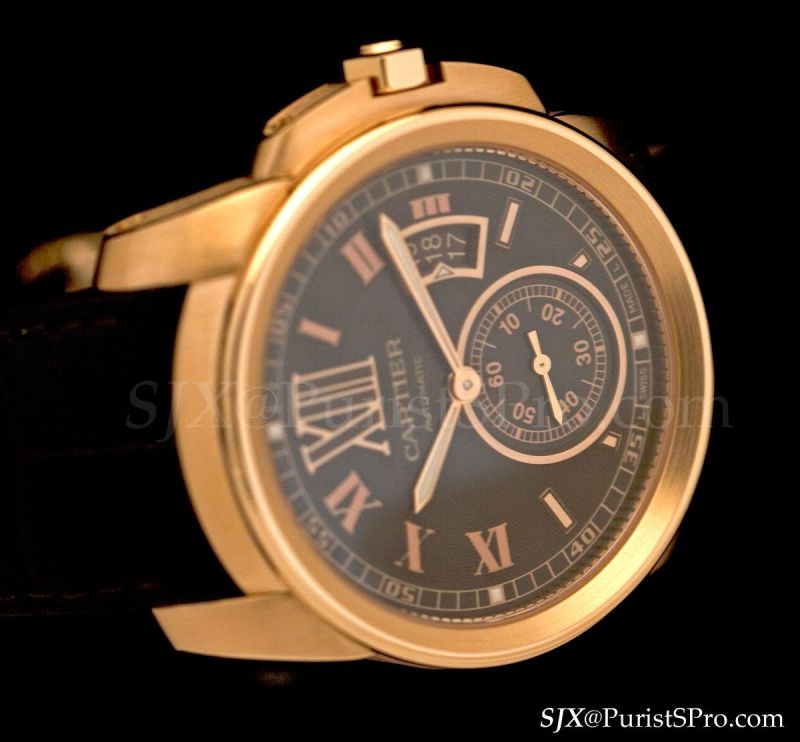
This watch is positioned as an entry- to mid-range timepiece though it has a newly developed in-house movement, the 1904 MC manufactured at Cartier’s La Chaux-de-Fonds facility. An in-house movement, even a simple one like this, at this price from Cartier is an interesting move and I expect to see it in other watches eventually.
The 1904 MC is a fairly large but slim twin barrel automatic with a 48 hour power reserve. So named because Cartier made the first Santos for Brazilian aviator Alberto Santos Dumont in 1904, the 1904 MC uses a pawl winding system that is similar to that found in the IWC Pellaton and Seiko Magic Lever. This pawl winding seems to be finding favour amongst Richemont companies, Panerai is another company that uses it inside its in-house movements.
Two complicated Calibre de Cartier models were also unveiled, though these are also part of the high watchmaking collection. A central chronograph utilising the movement found in the Rotonde chronograph of 2009, as well as a flying tourbillon. Unfortunately I somehow did not get photos of these. The Calibre chronograph is especially good looking with a complication and design that suits the chunky case perfectly. Both the Calibre tourbillon and chronograph are 45 mm in diameter.
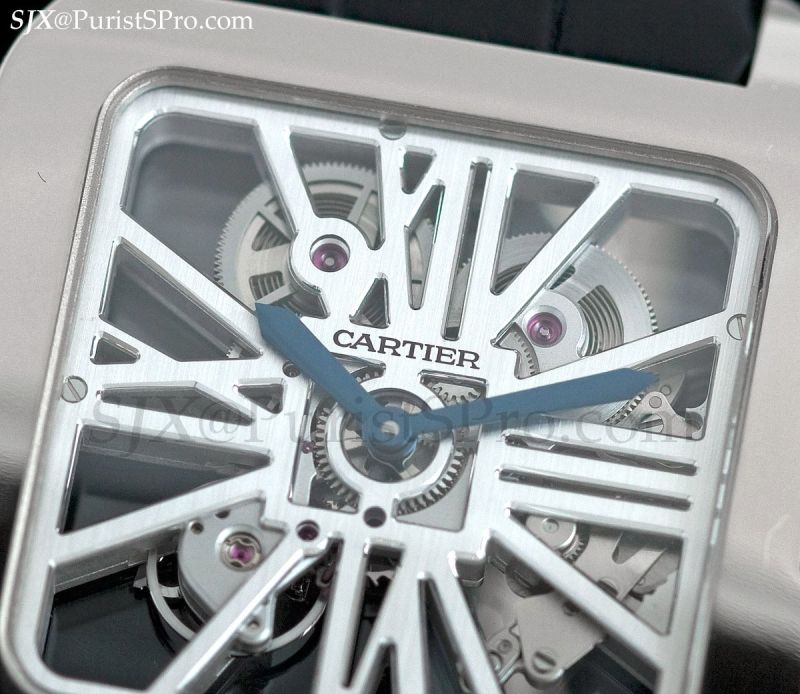
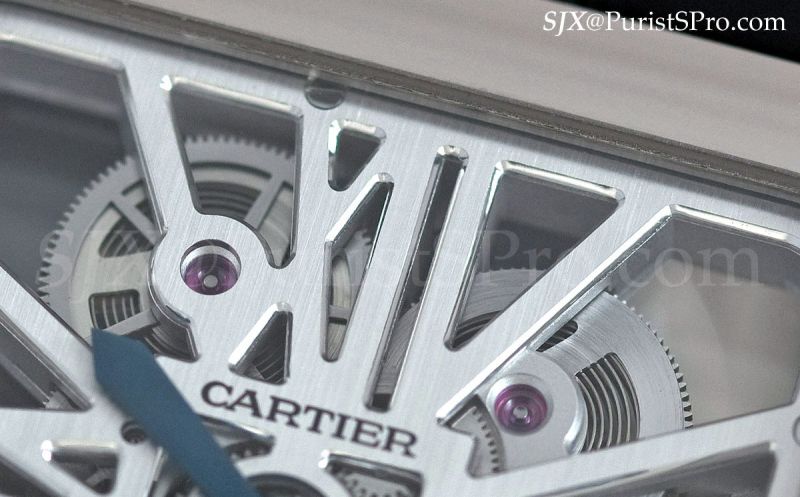
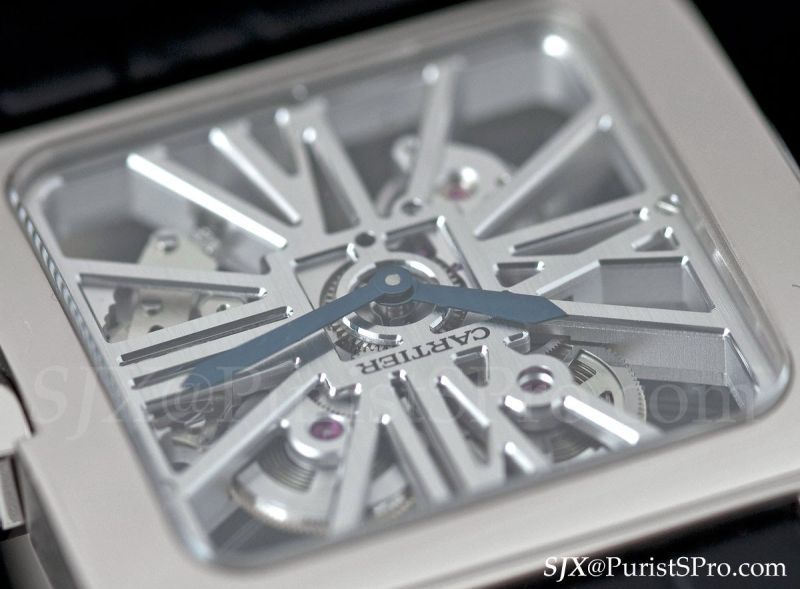
On to the high horology models, beginning with one of my favourites, the Santos Dumont Squelette in white gold. This movement was first used in the Santos 100 Skeleton, which I found disproportionately large and thick for the skeleton movement. Now the movement has found the perfect case in the form of the slim and simplified Santos Dumont.
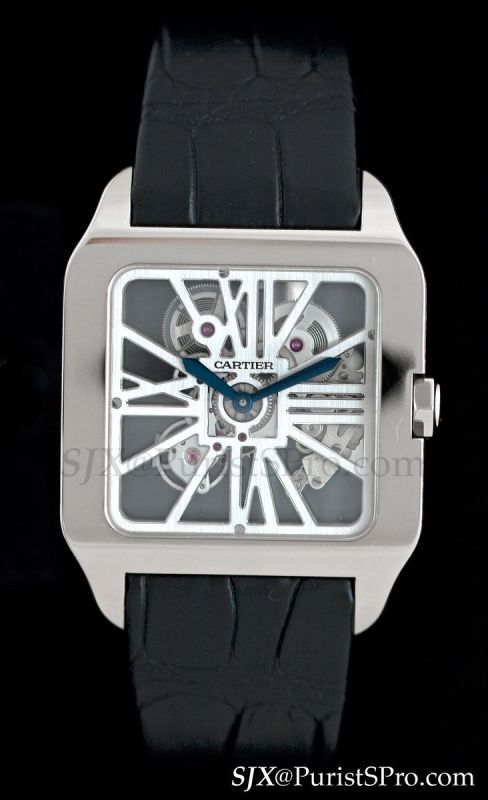
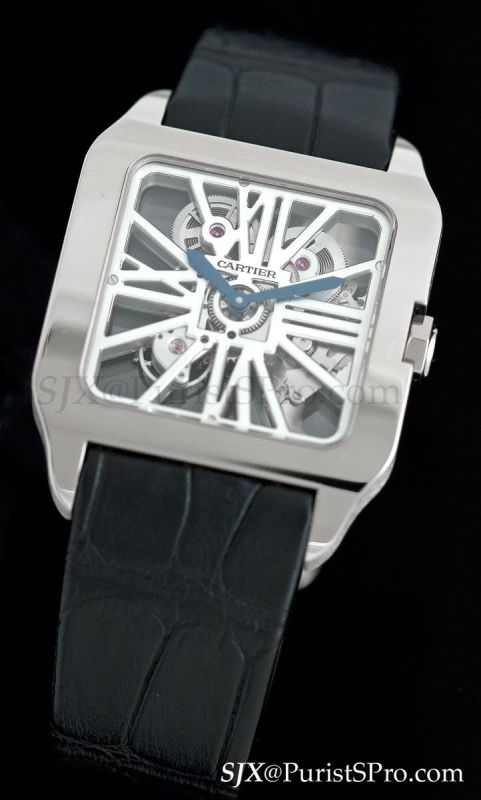
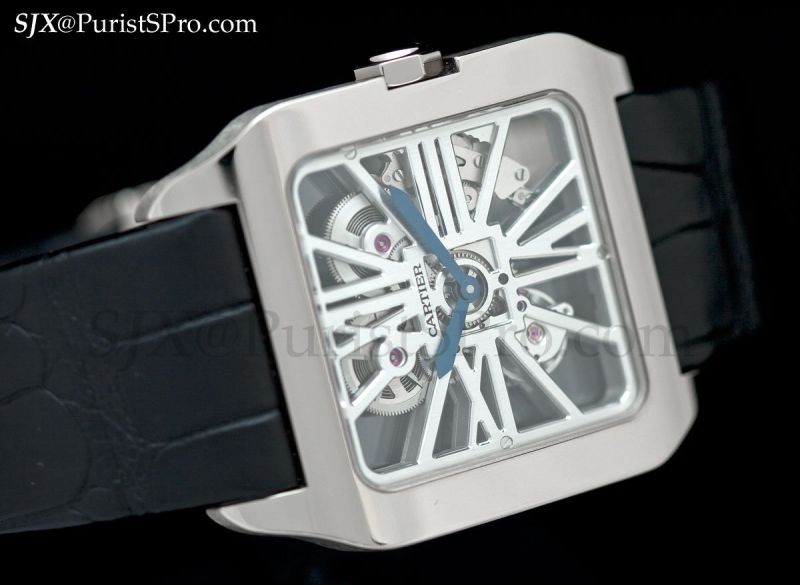
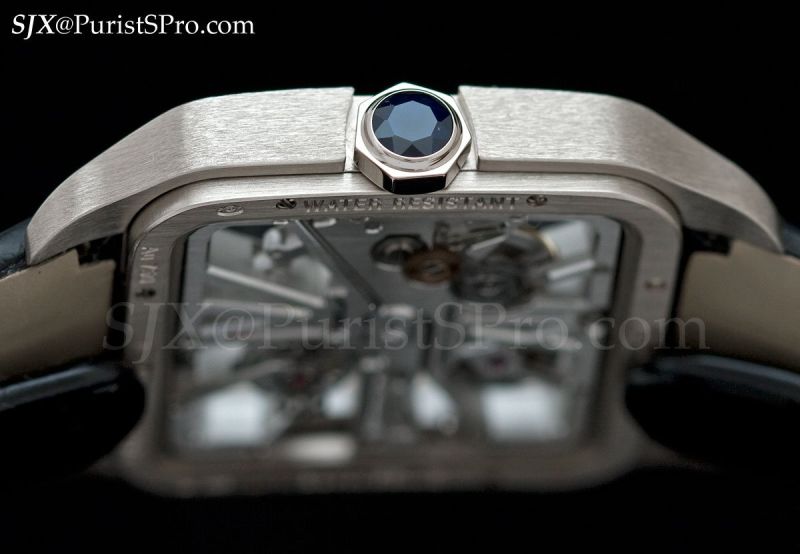
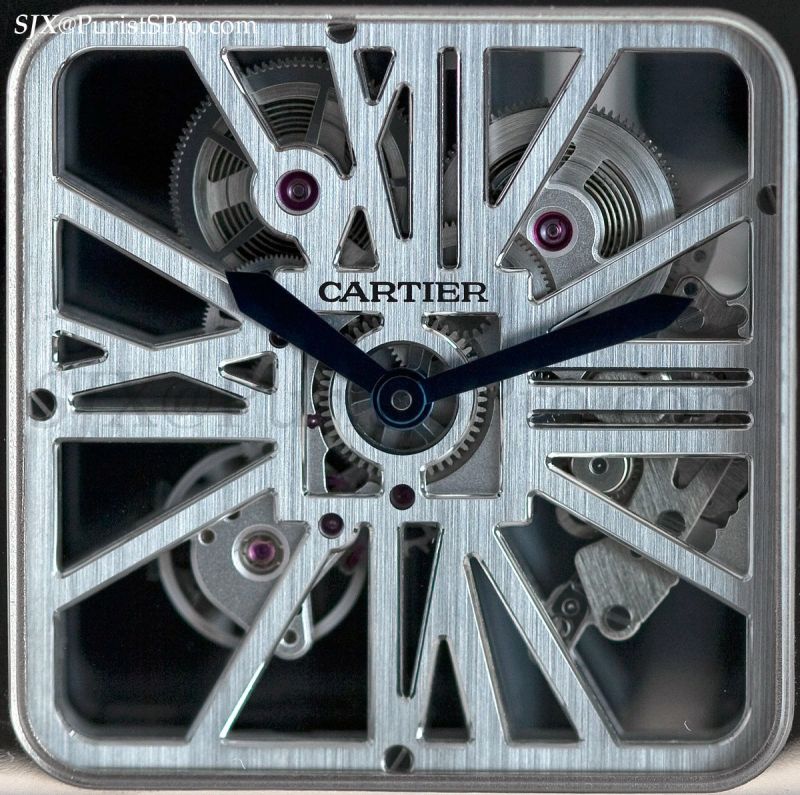
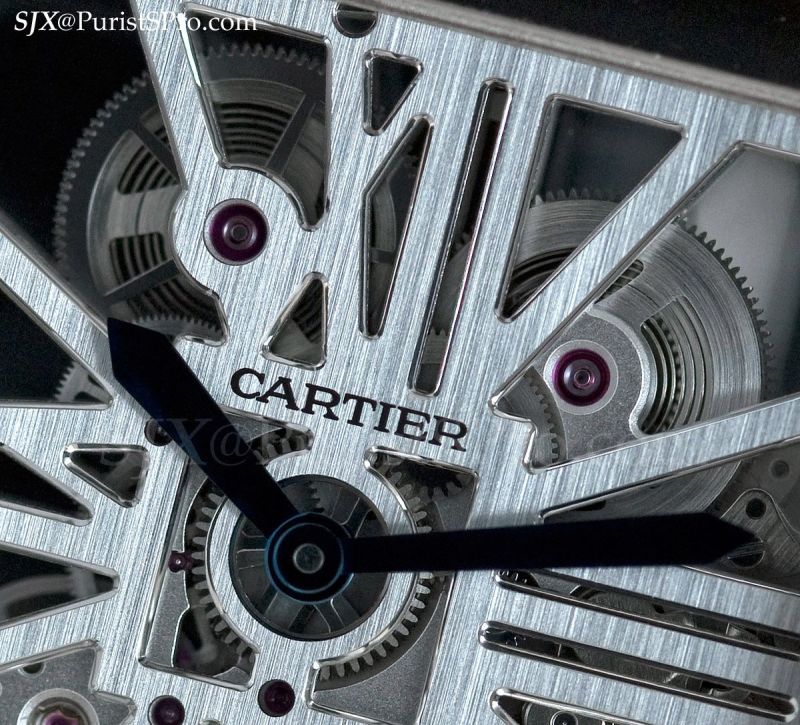
What’s notable about this calibre is the fact that it was designed as a skeleton from the ground up, versus being a skeletonised existing movement, so the bridges and baseplate are integrated into the design of the movement as Roman numerals. All movement edges exhibit a careful bevelling, though the finish of the edges display a regularity consistent with mechanical application. That, however, is consistent with the clean aesthetic of the movement. And at this particular price point, lower than top tier high watchmakers like Lange and Patek but above mid tier firms like JLC, the level of movement finish is highly sufficient.
The second skeleton watch unveiled this year is the Rotonde de Cartier Flying Tourbillon Skeleton. This watch looks stunning and manages to look harmonious, despite the small movement floating in a large case. It is 45 mm which means it will take some ambition and much optimism for smaller wristed folk to wear. 45 mm is probably the right size for this though, as a smaller case would cut into the open space on the dial and reduce the light, delicate feel of the movement.
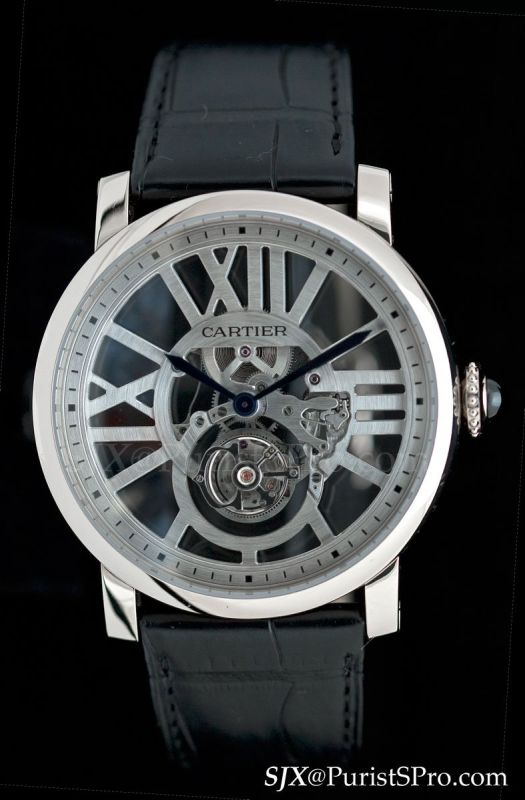
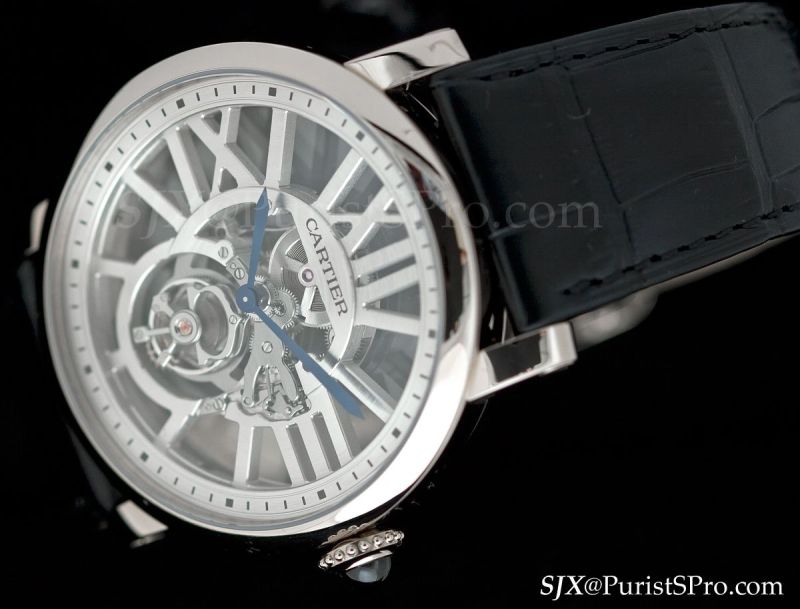
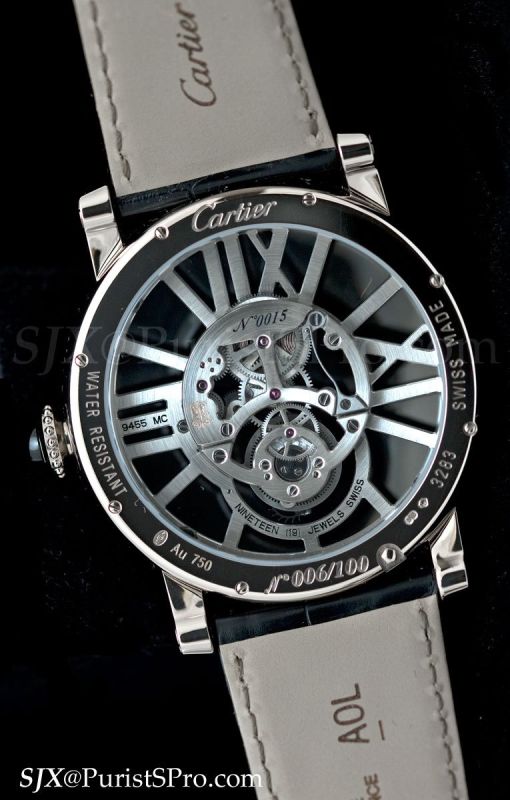
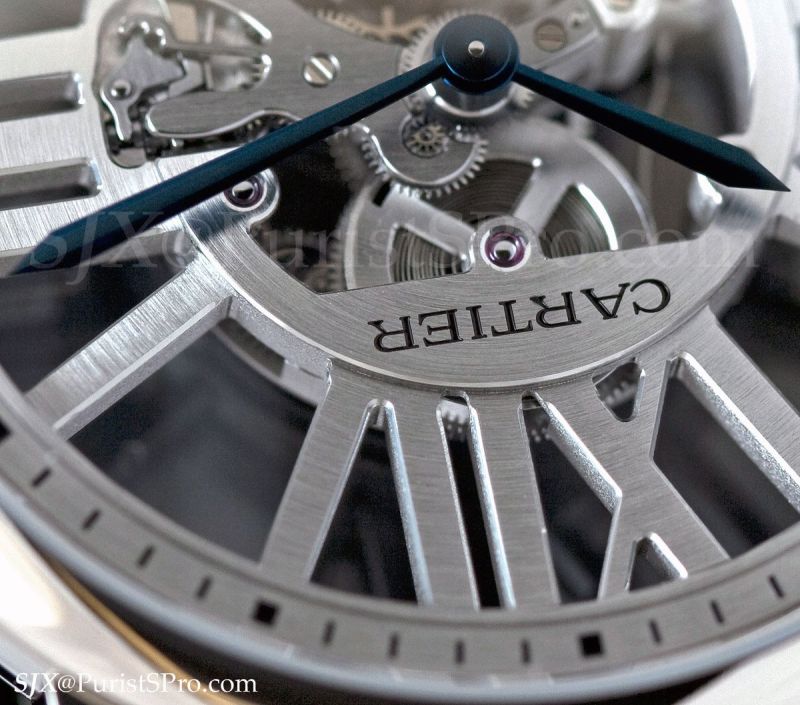
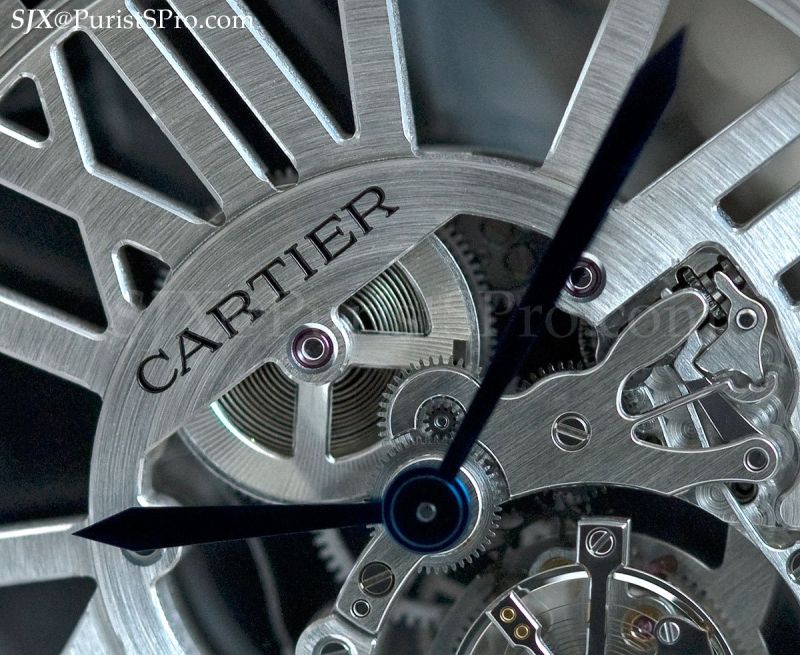
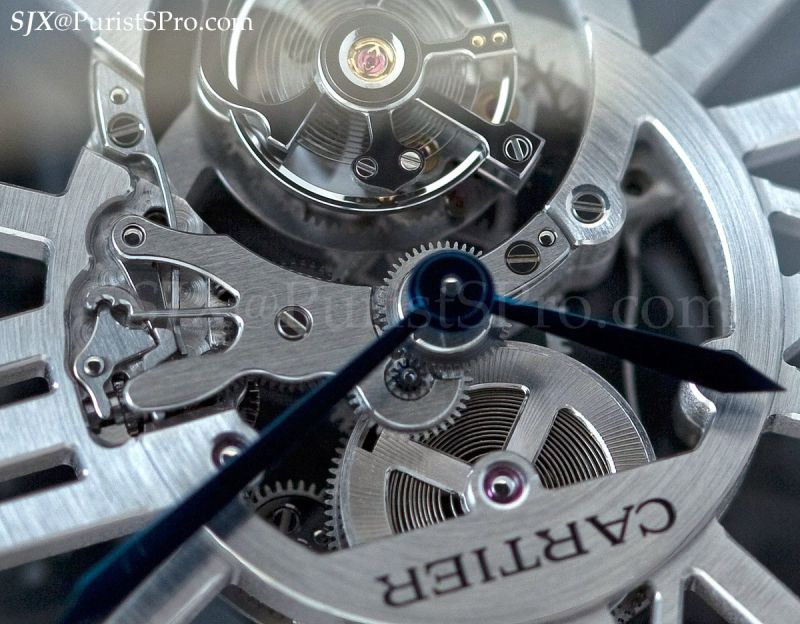
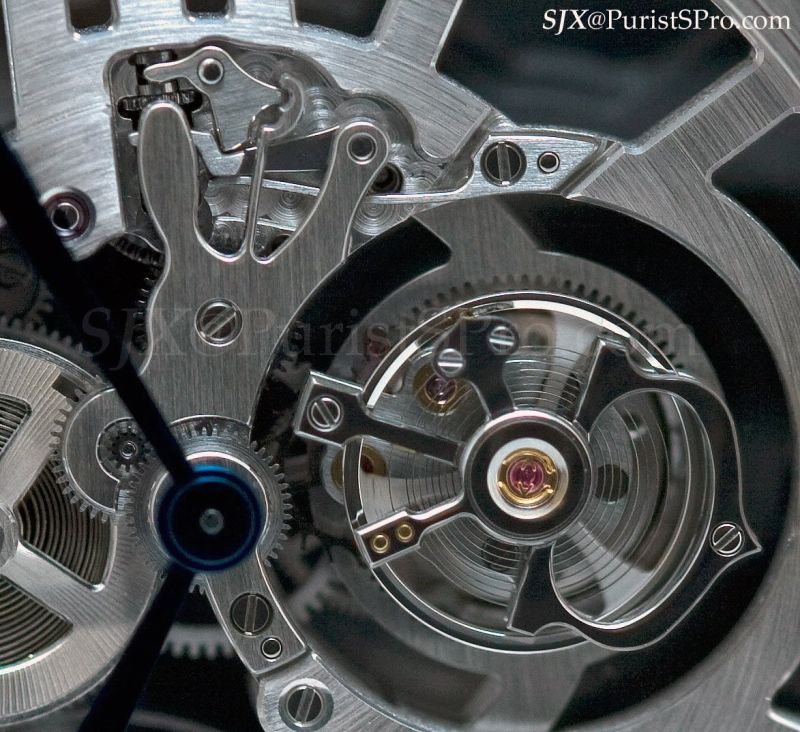
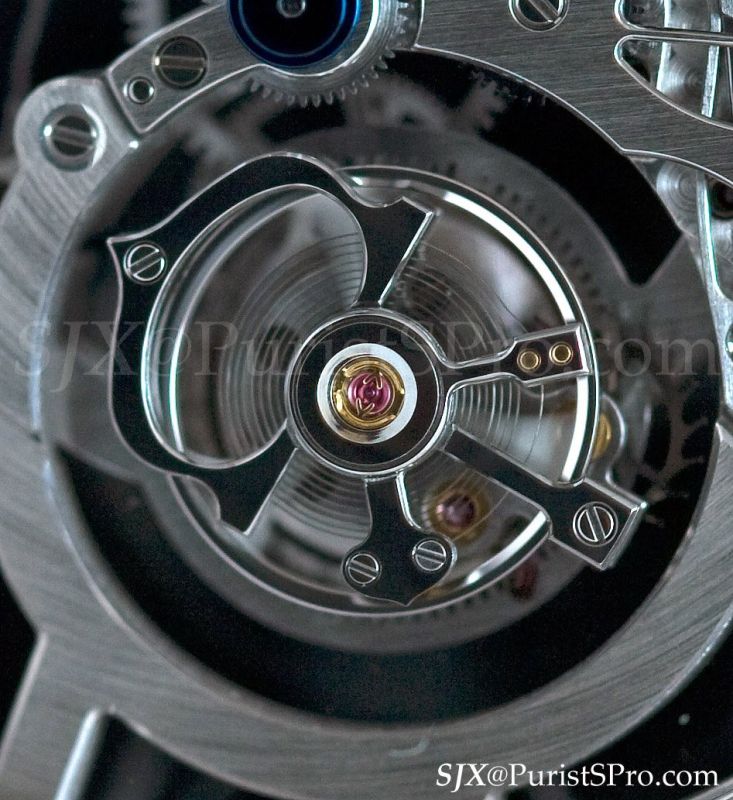
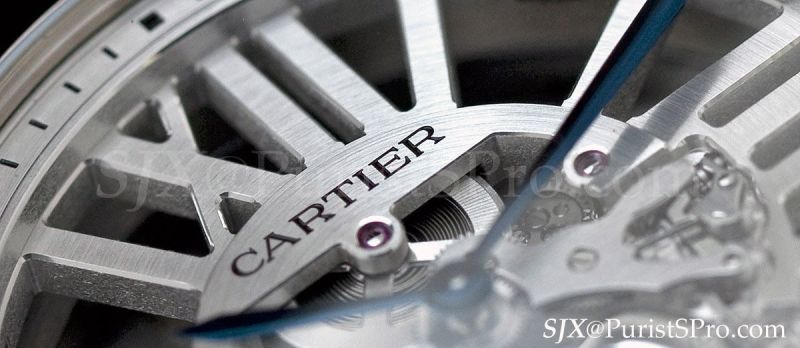
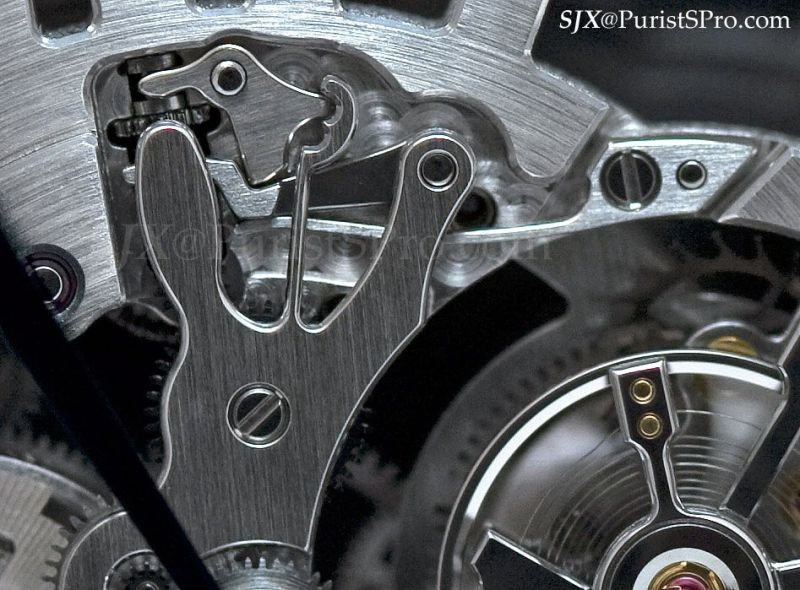
It uses the 9455 MC calibre manufactured in Geneva and is derived from the Roger Dubuis tourbillon calibre though it has been heavily and evidently modified. The movement has the Geneva Seal and is a marginally better finished than the Santos Dumont Skeleton. For instance the keyless works of the tourbillon have a deeper, more evident bevelling than the skeleton. However, the Roman numeral bridges exhibit a similar sharply bevelled edges as the Santos skeleton.
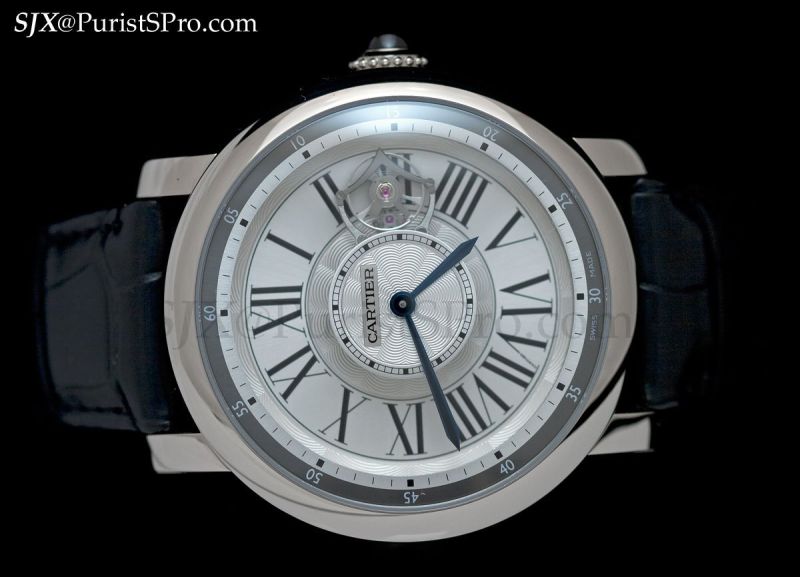
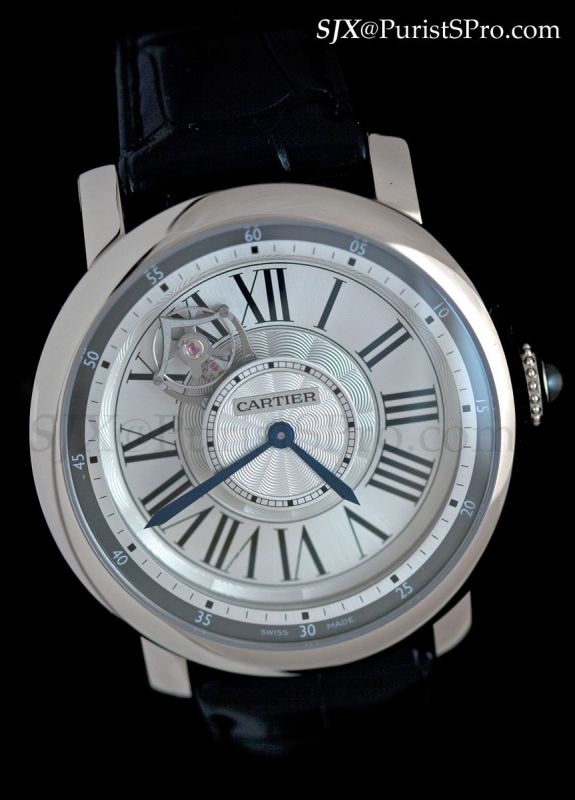
Another tourbillon, but one that is decidedly more interesting, also introduced was the Rotonde de Cartier Astrotourbillon. It features an orbital tourbillon – the entire tourbillon cage makes one revolution around the periphery of the dial each minute.
Astrotourbillon with baguette diamond set bezel
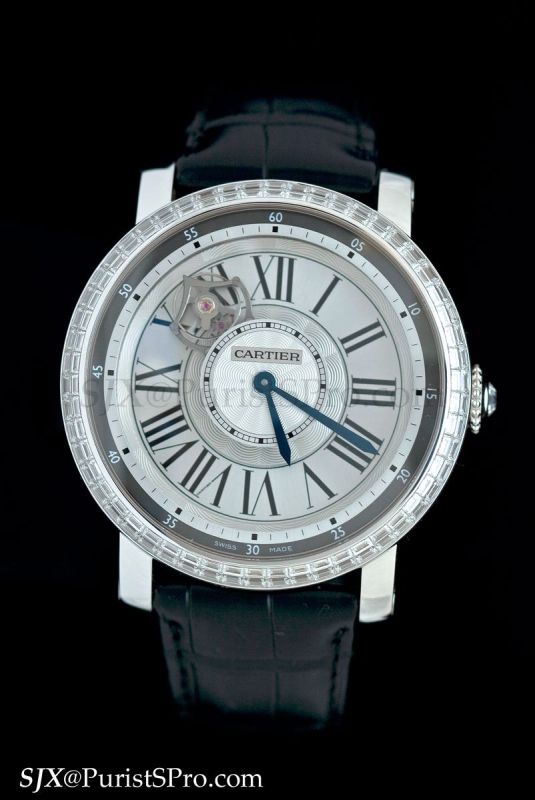
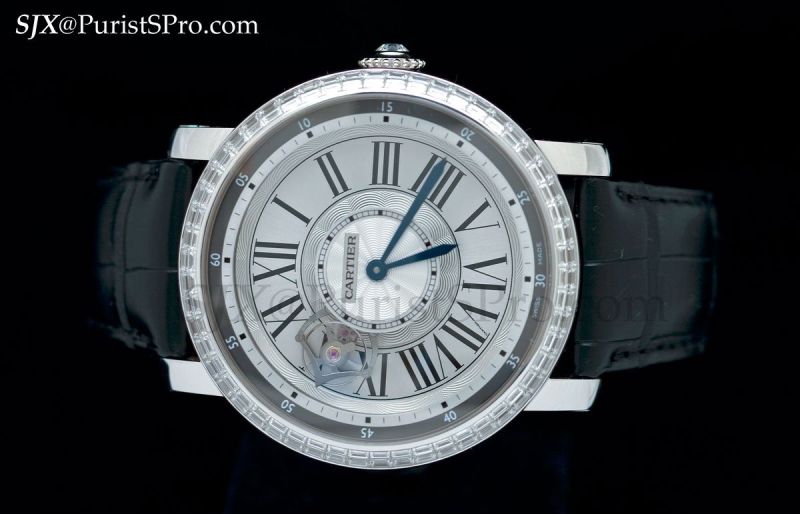
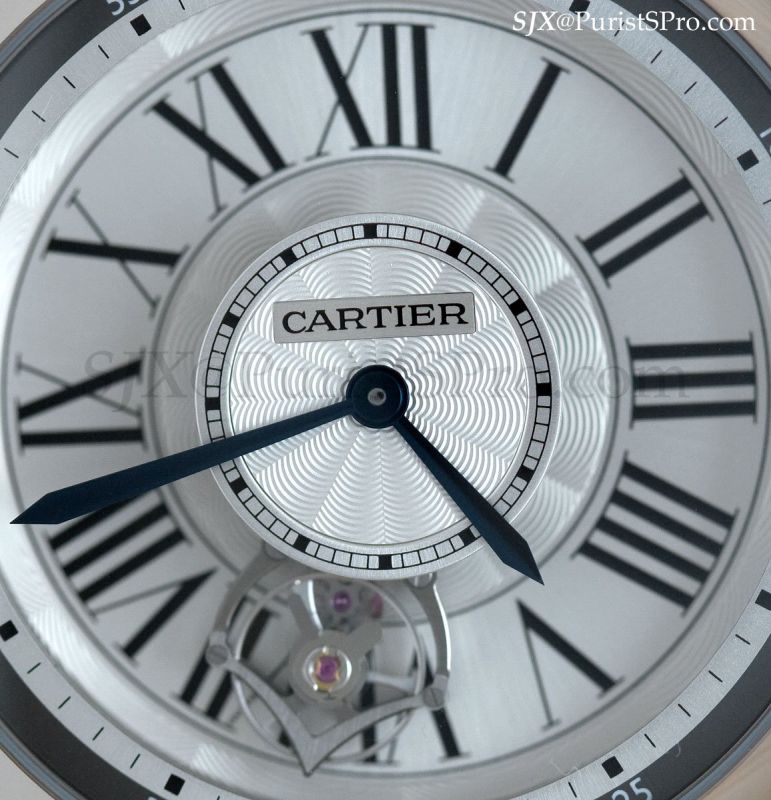
Positioned above the movement, the tourbillon makes its way across the vast empty sweep of the dial, giving the watch a significant feeling of depth and also size (the case is 47 mm wide). Though fabricated from titanium for low weight, the carriage still requires a platinum counterweight on the other side of the rotational axis which is hidden beneath the guilloche centre of the dial.
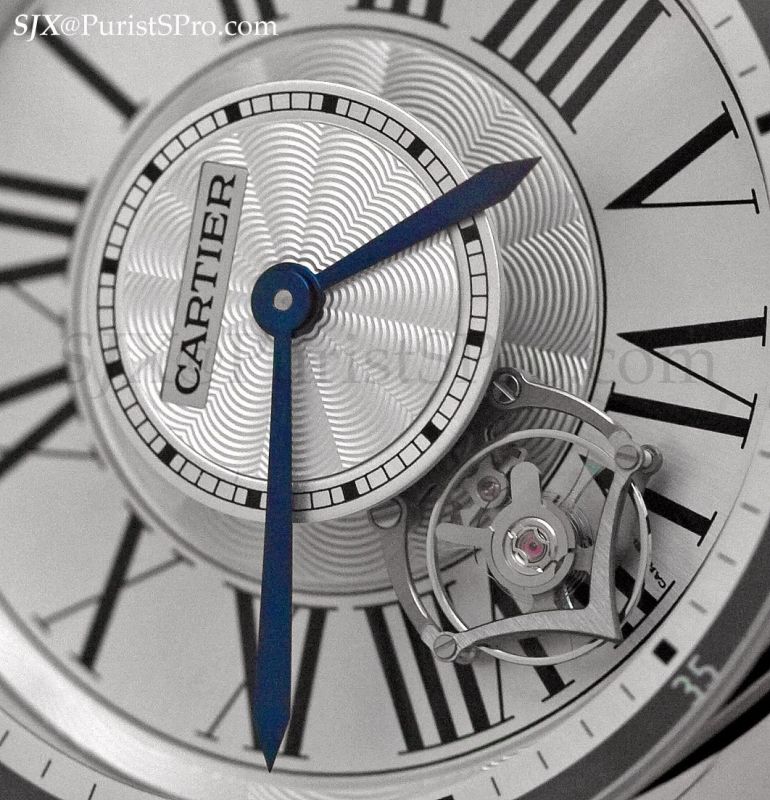
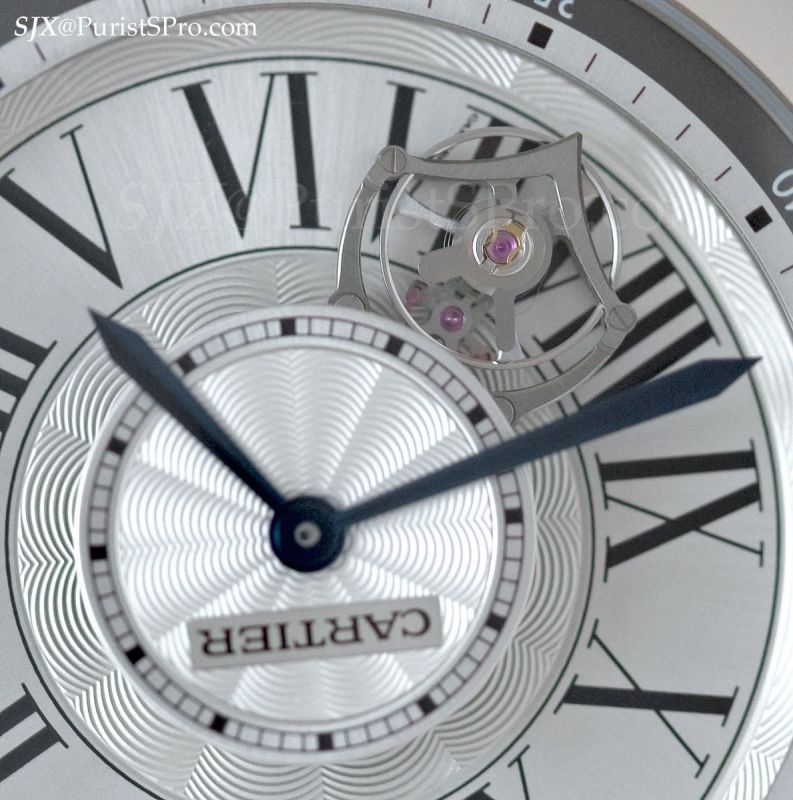
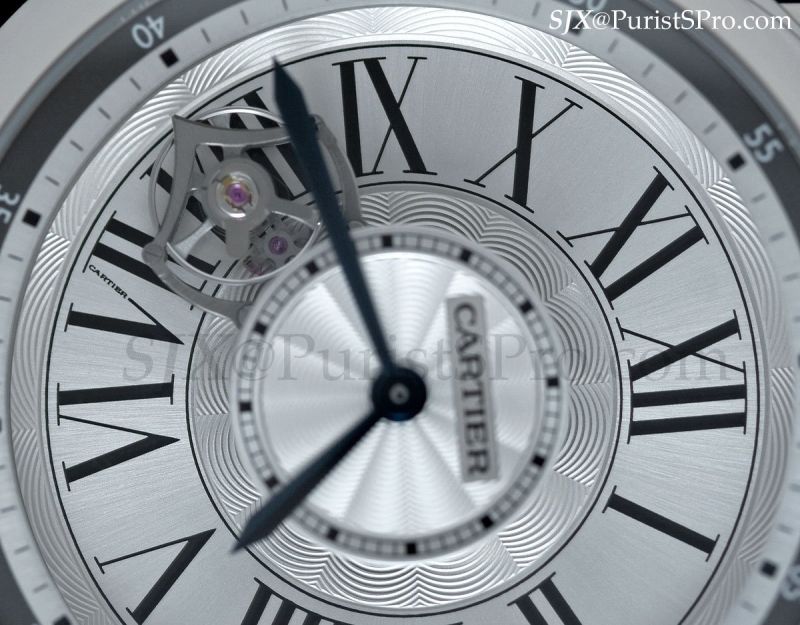
This watch was five years in the making, according to Cartier, and is entirely made at La Chaux-de-Fonds. Remember that Carole Forestier, who is head of Cartier’s technical development, was the originator of the concept for the Ulysse-Nardin Freak so this watch is right up her alley. I like the idea and execution of this watch, it is but it is very large. Cartier has also priced this fairly realistically which is further compelling evidence of the state of the market for tourbillon complications.
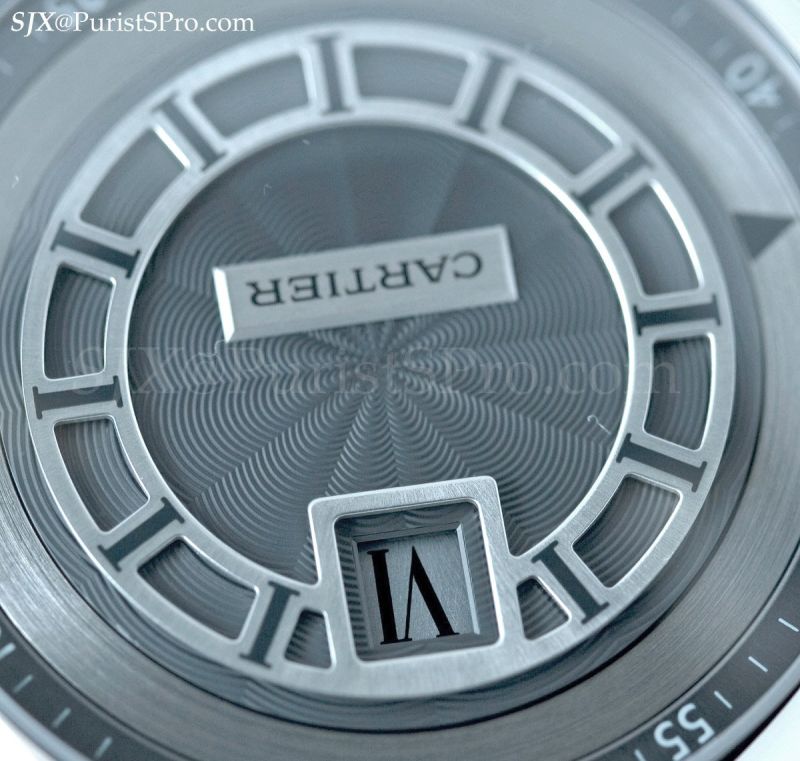
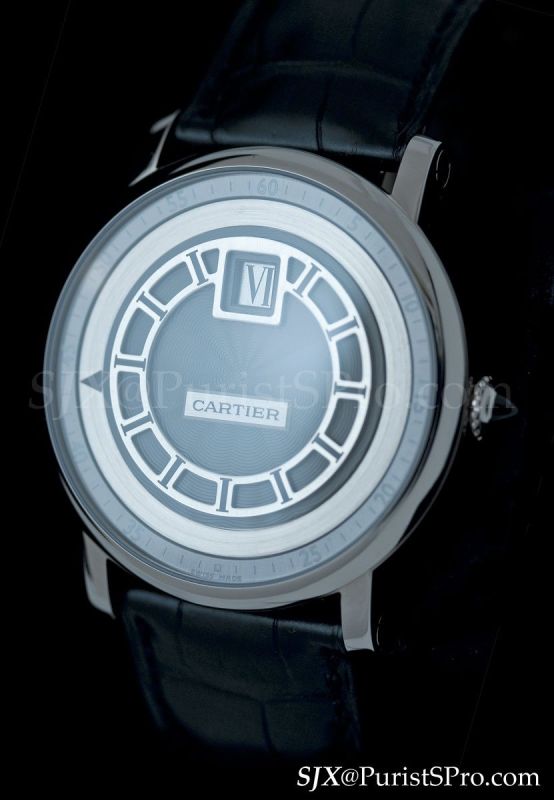
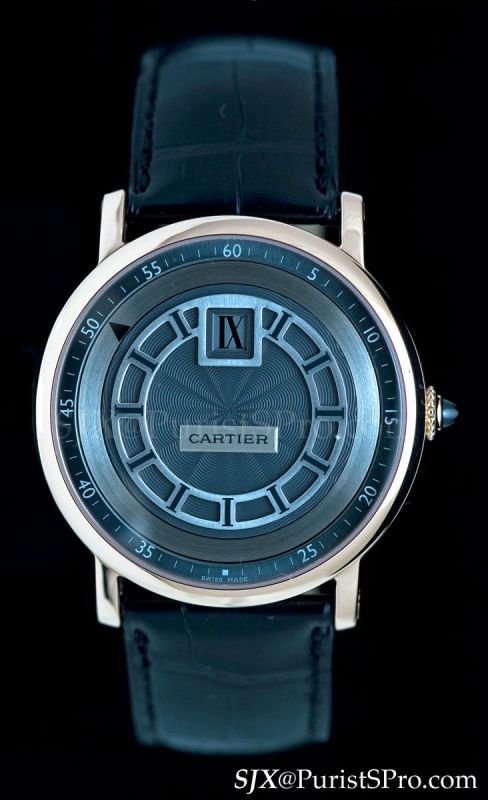
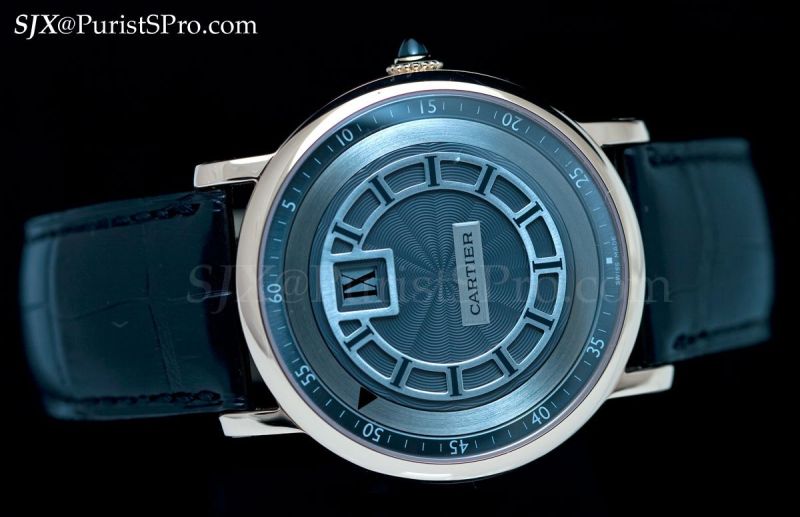
Though much simpler than the preceding tourbillons, my favourite Cartier watch for 2010 is the Rotonde de Cartier Heure Sautantes. This jump hour is inspired by an earlier 20th century Cartier pocket watch. It’s dutiful to the original but reveals its modernity with the numbered minute track. At 42 mm this is a modestly sized watch and an ideal size. The movement is decorated with the interlocking “C” Cartier logo, instead of the striping found on the rest of the range, because this was originally designed for the CPCP which had the “C” logo decoration on all its movements.
Heure Sautante in white gold
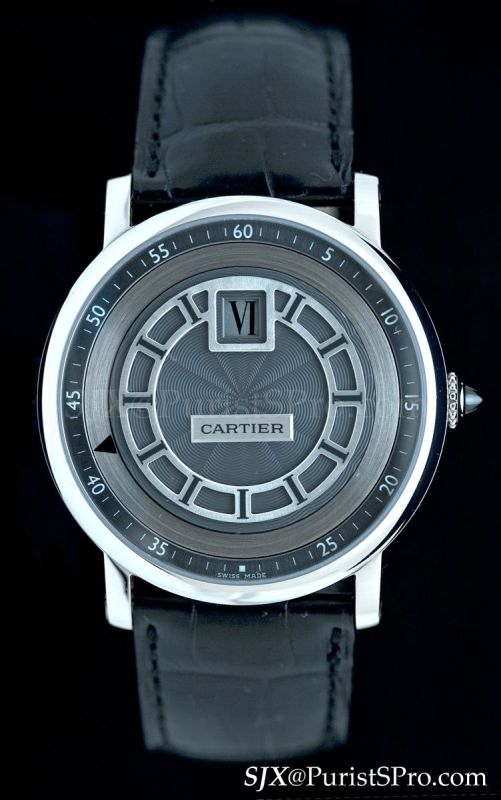
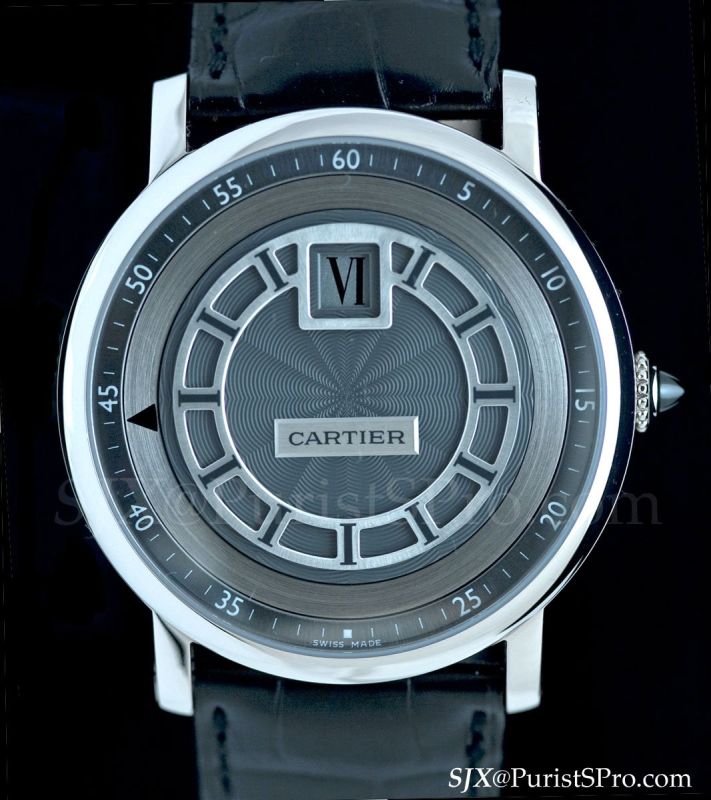
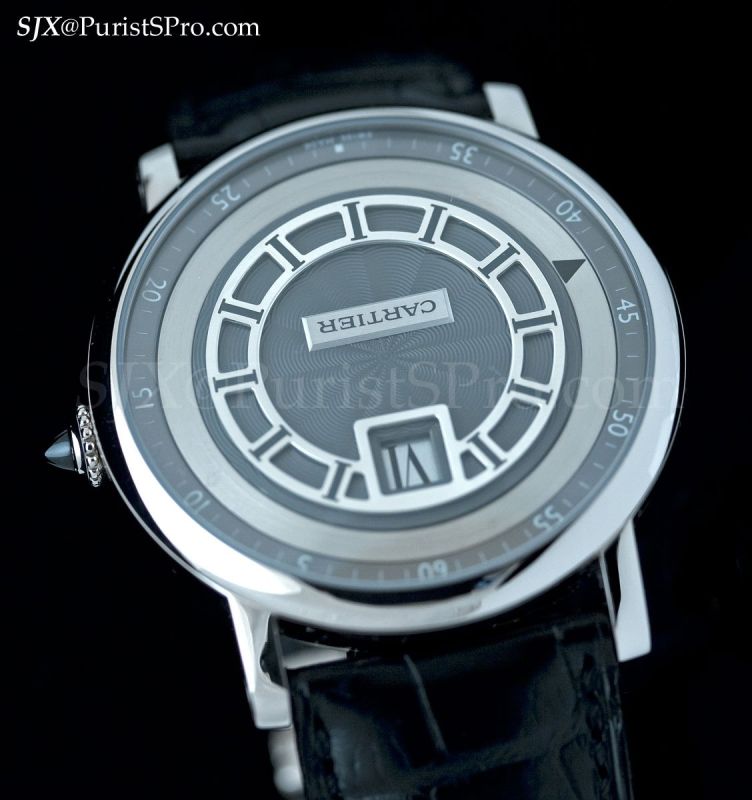
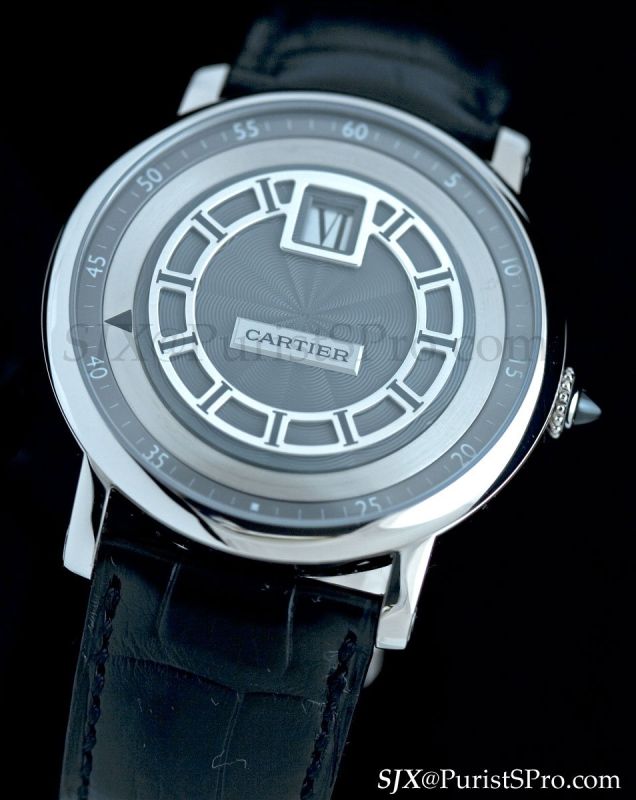
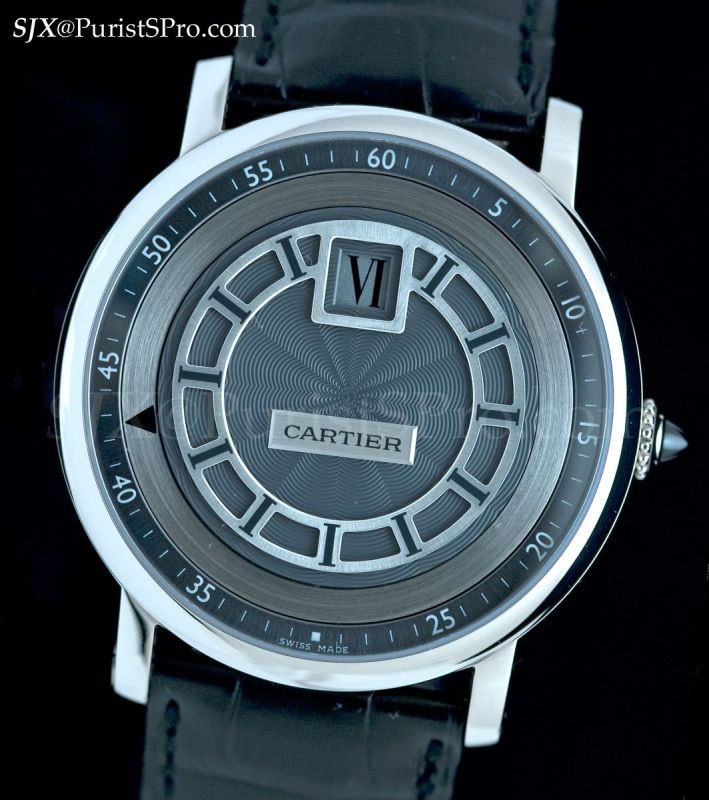
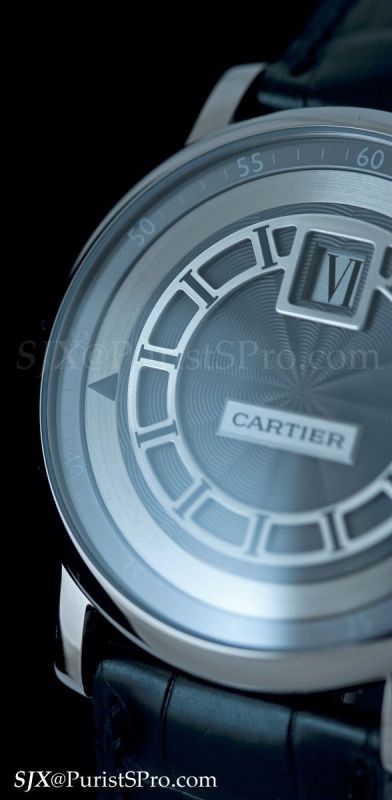
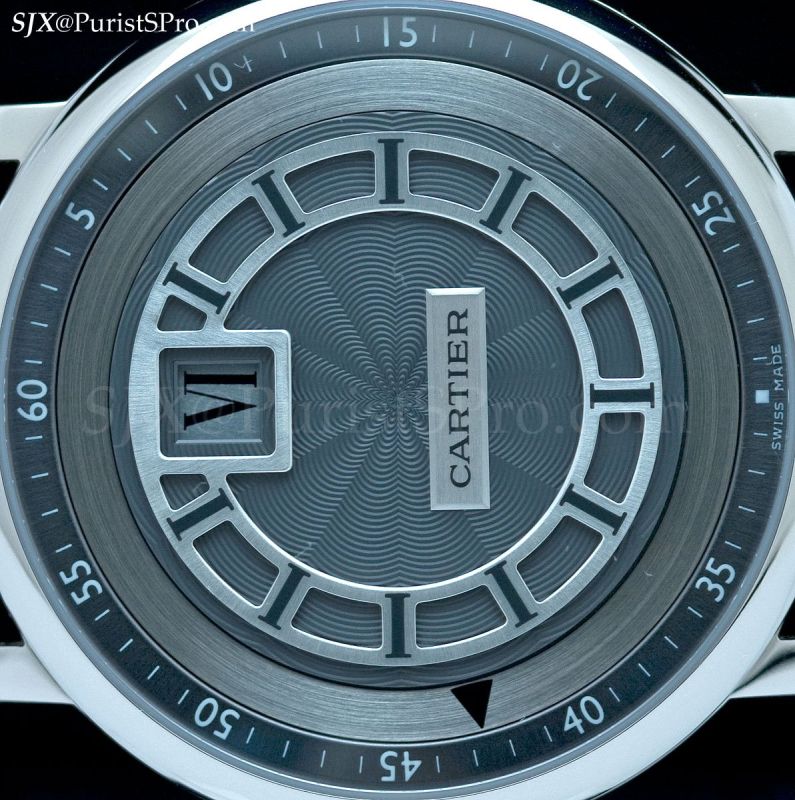
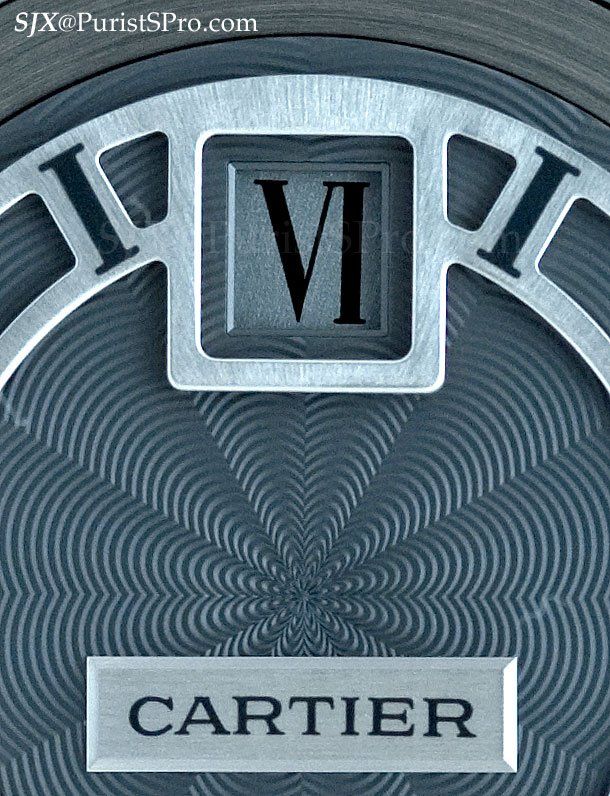
Heure Sautante in rose gold
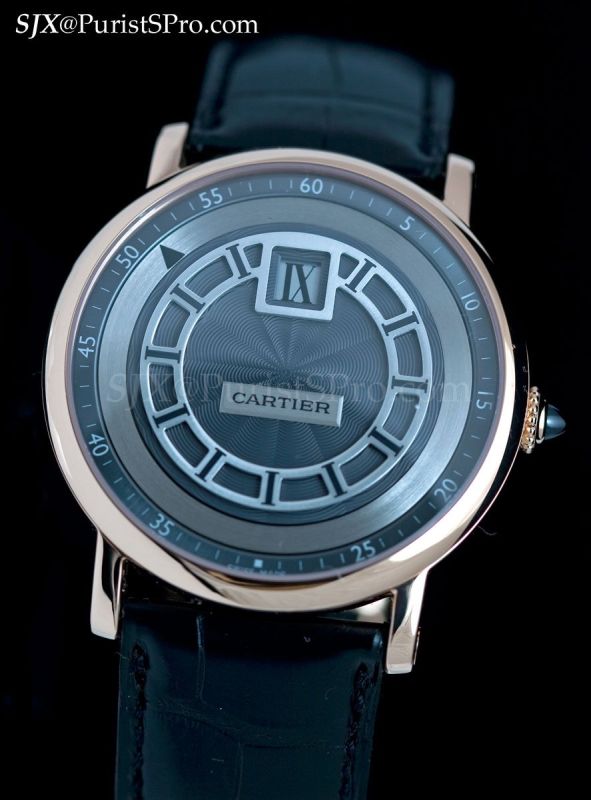
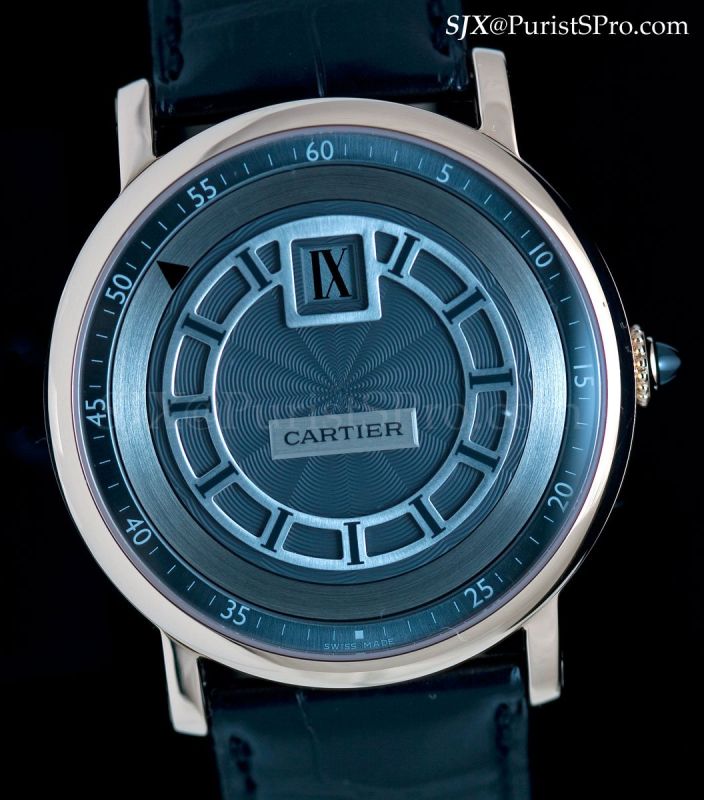
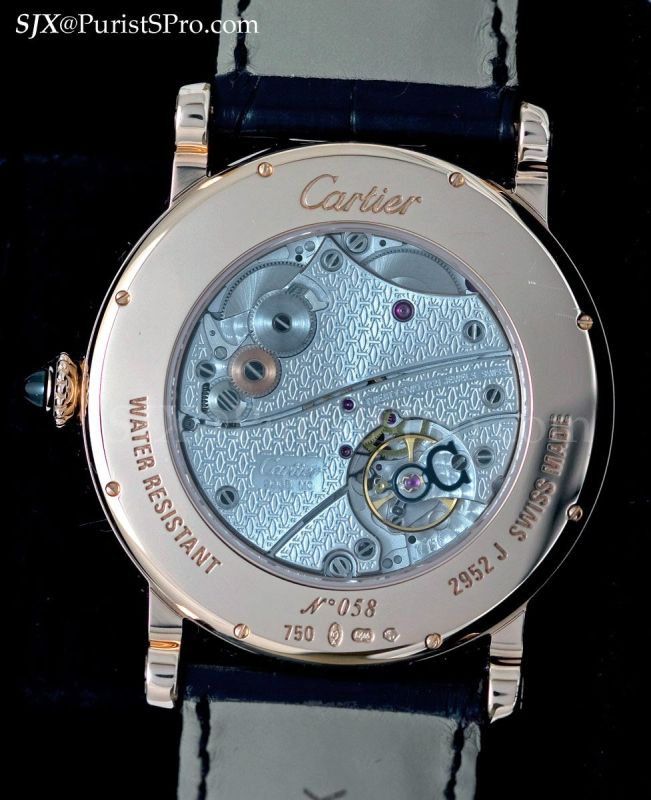
Another small complication shown was the Rotonde de Cartier Dürer's Folium Seconds. The seconds hand on this watch travels in a curve modelled after Dürer's Folium, a form of cycloid. Albrecht Dürer is of course best known for his woodblock prints.
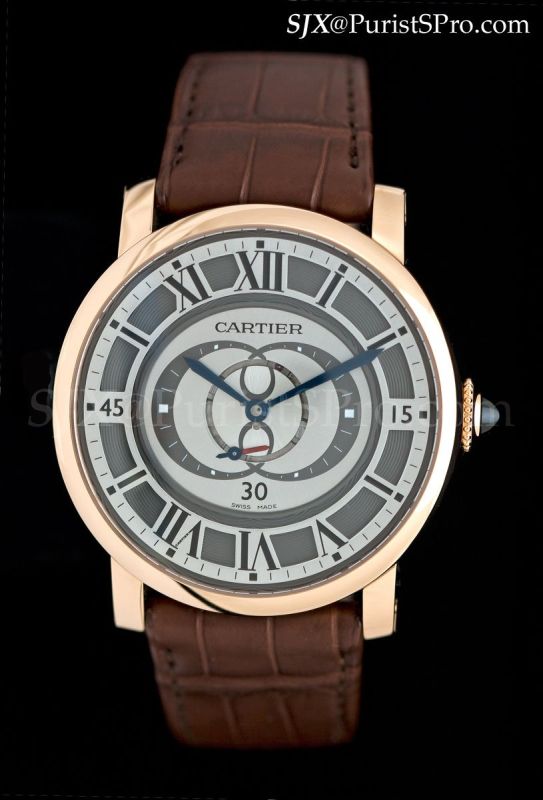
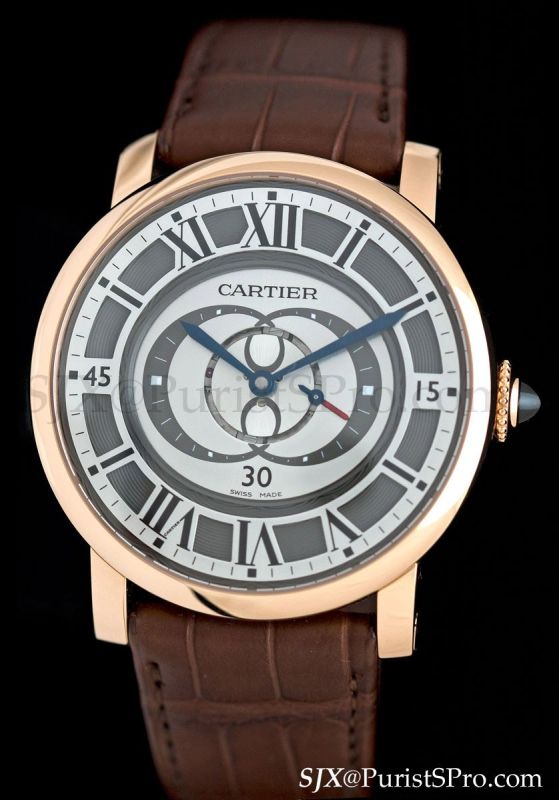
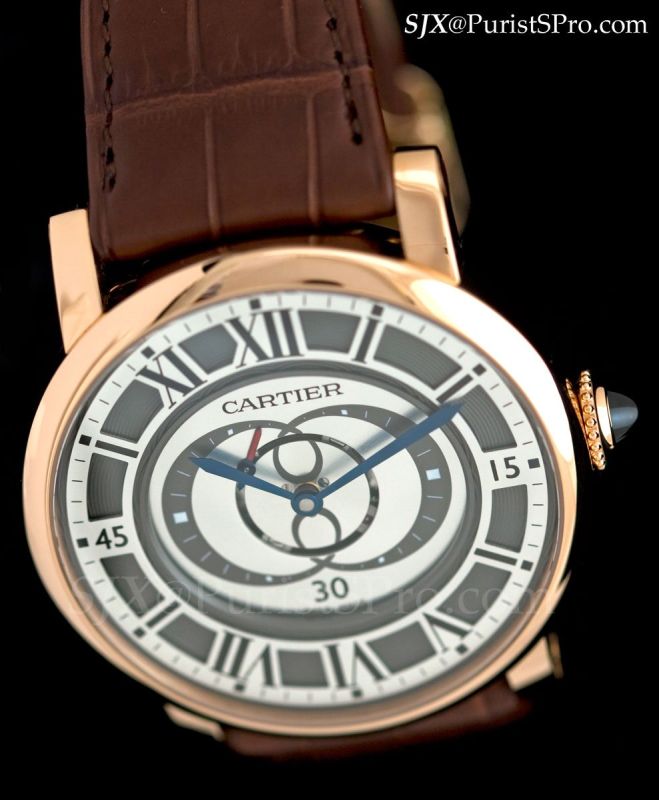
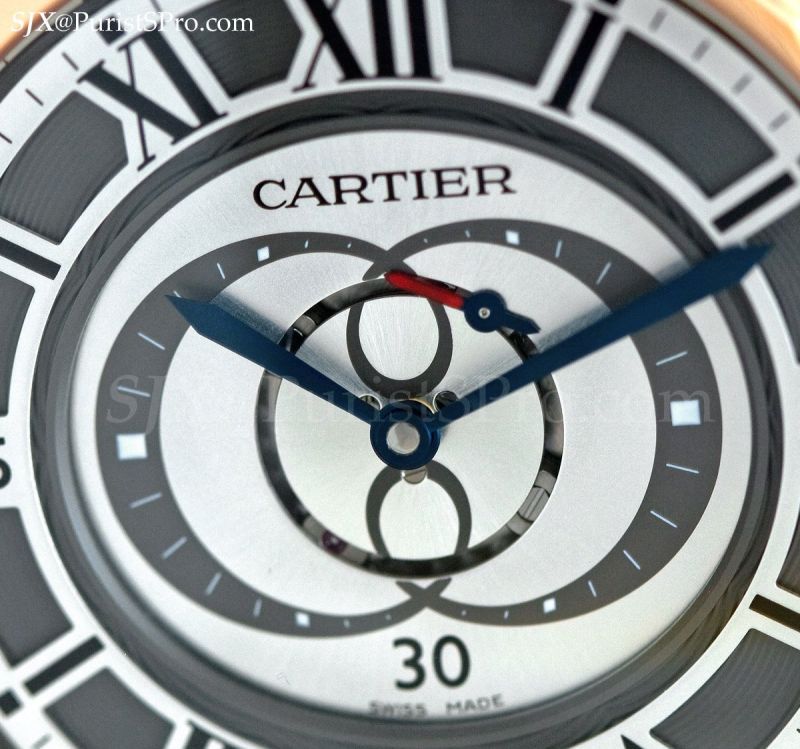
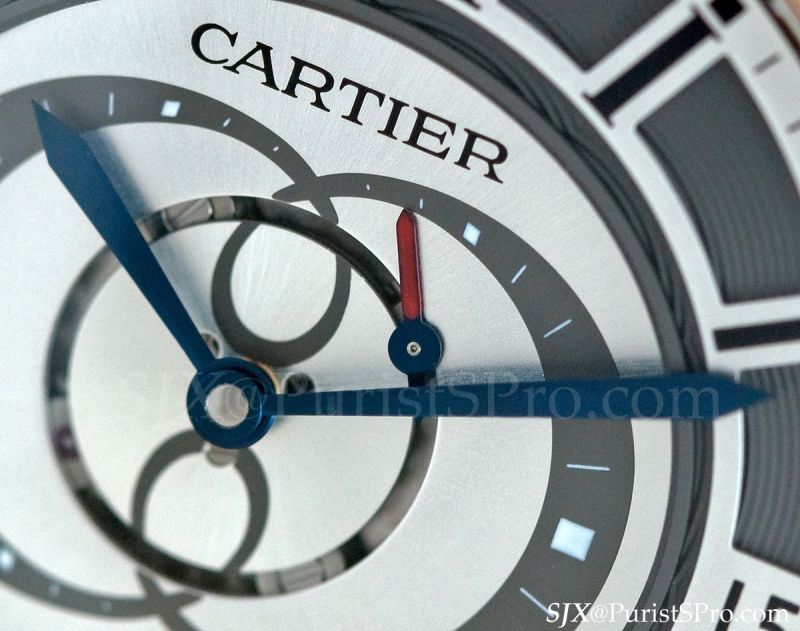
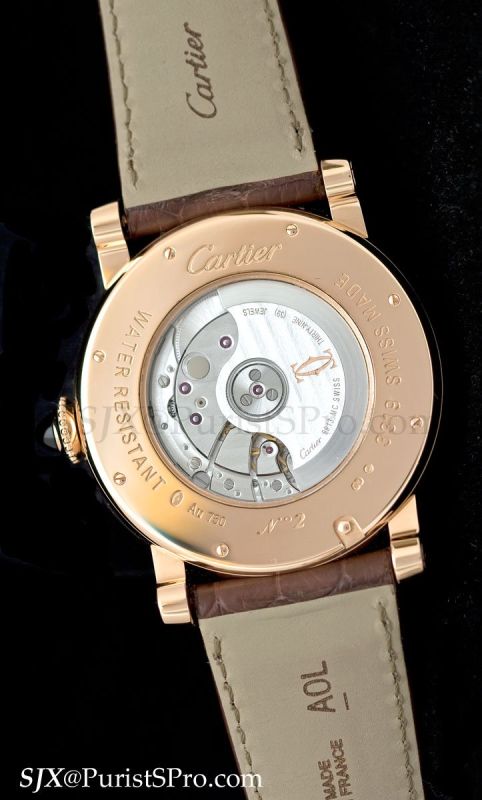
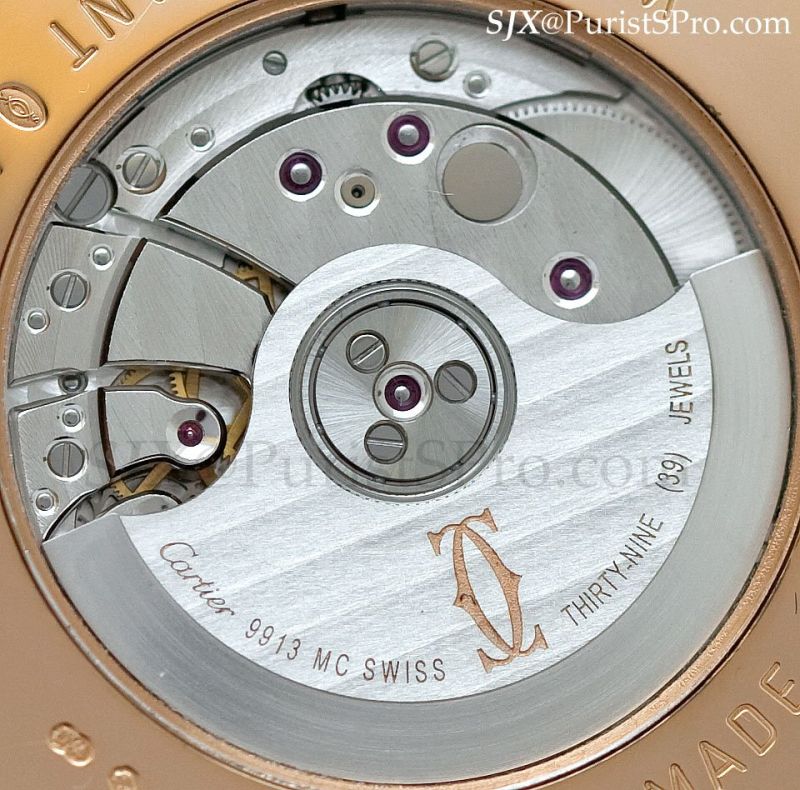
The base movement for this watch is a Roger Dubuis automatic calibre; note the separate bridges for the escape, third and fourth wheel characteristic of classic Geneva style movements that RD heavily draws from. This is reminiscent of the Infinity Looping from Pierre Kunz, except this Cartier is much more elegant and subtle.
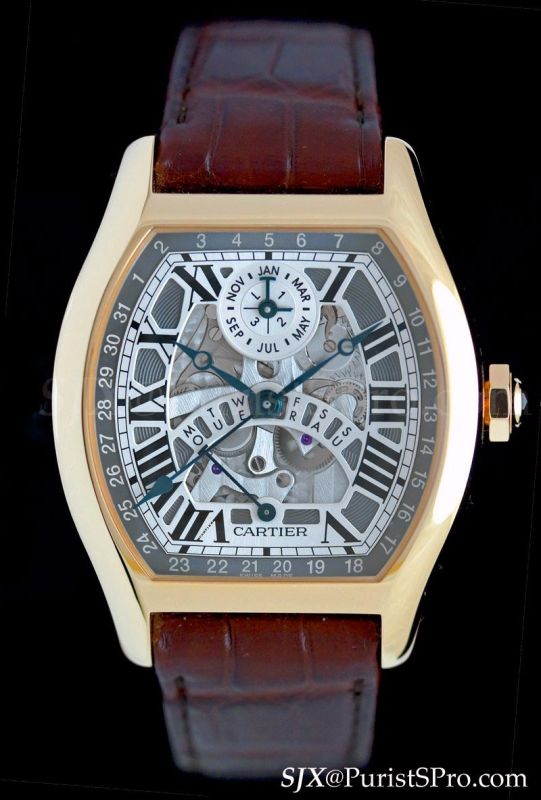
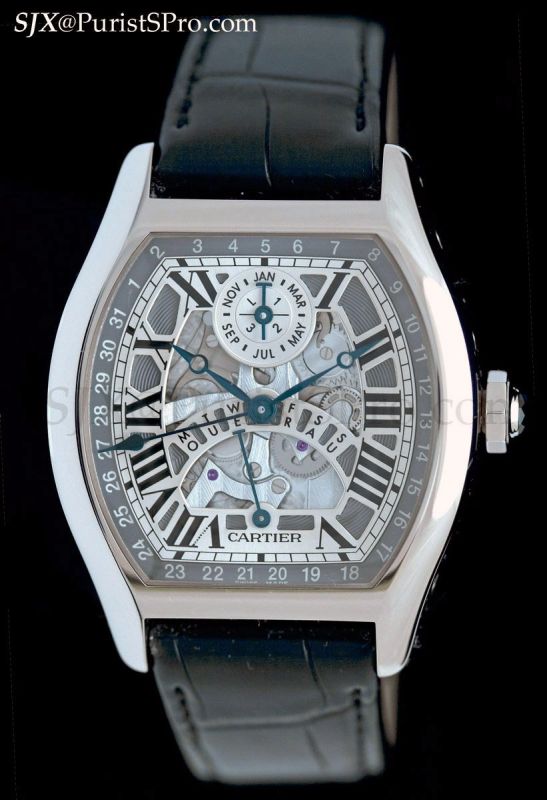
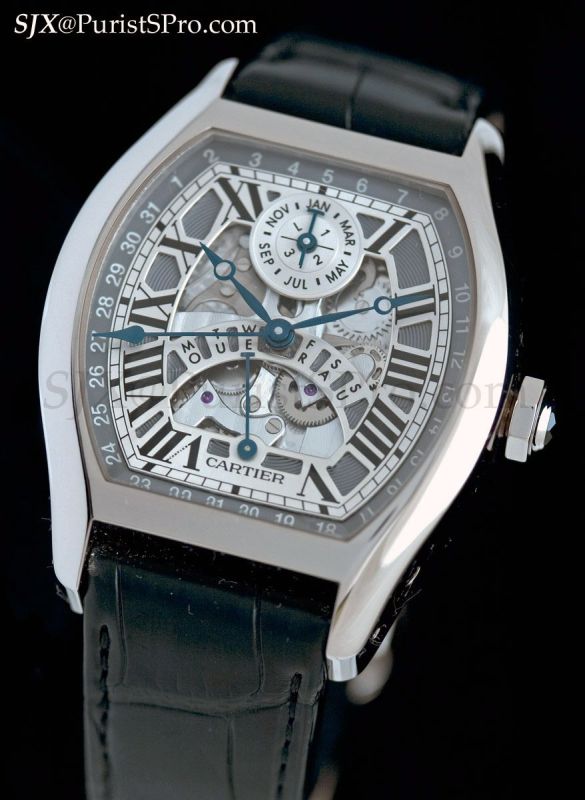
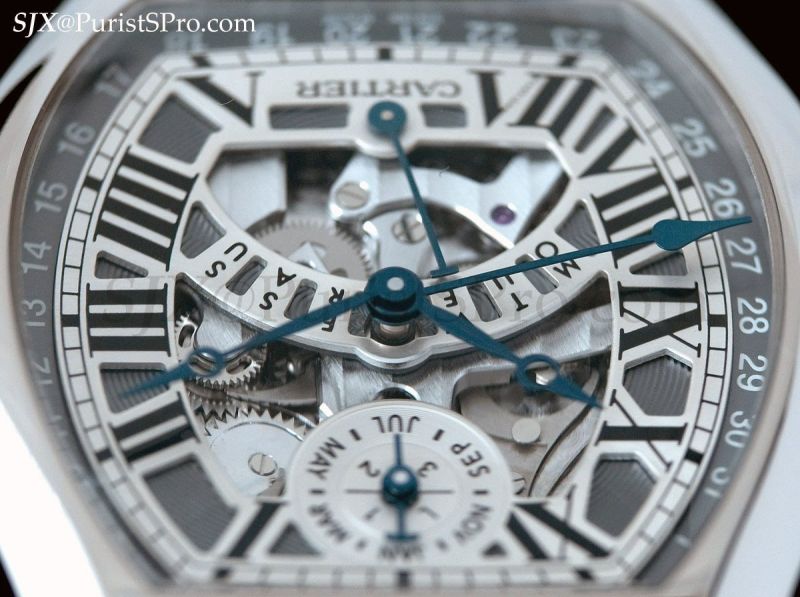
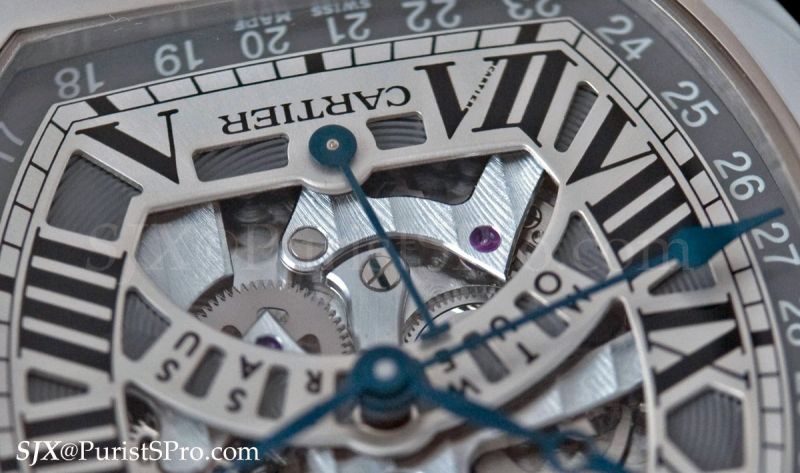
One of the strengths of the now defunct CPCP range was the large number of exotic form cases, ranging from the well known like the Tortue to the rare, for instance the Tank Obus. Cartier has revived the Tortue case shape for the first time in its new high watchmaking collection with the Tortue Perpetual Calendar. I am certain more case designs – Cartier has a hundred year’s worth of them – will be added to the high watchmaking collection.
The Tortue Perpetual Calendar is a chunky watch at 45.6 mm wide and 51 mm long, but that’s mitigated somewhat by its shape. Shapes like tortue and tonneau tend to look feminine if made small and slim, witness the Patek Gondolo ref. 5098, but Cartier managed to avoid that by giving the case the right proportions. And the open dial which exposes the levers of the perpetual calendar plate contrasts well with the sleek, curved case.
Tortue Perpetual Calendar in rose gold
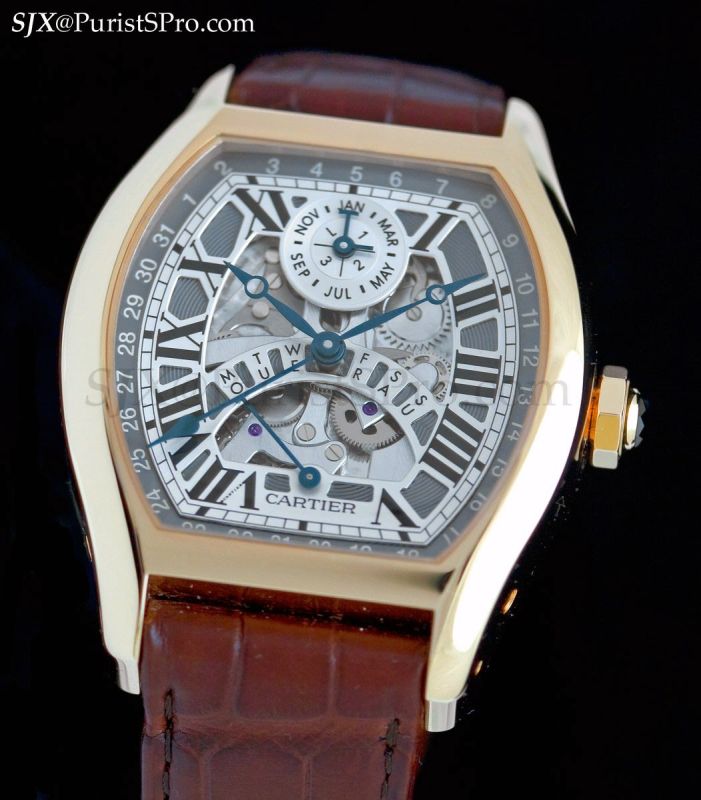
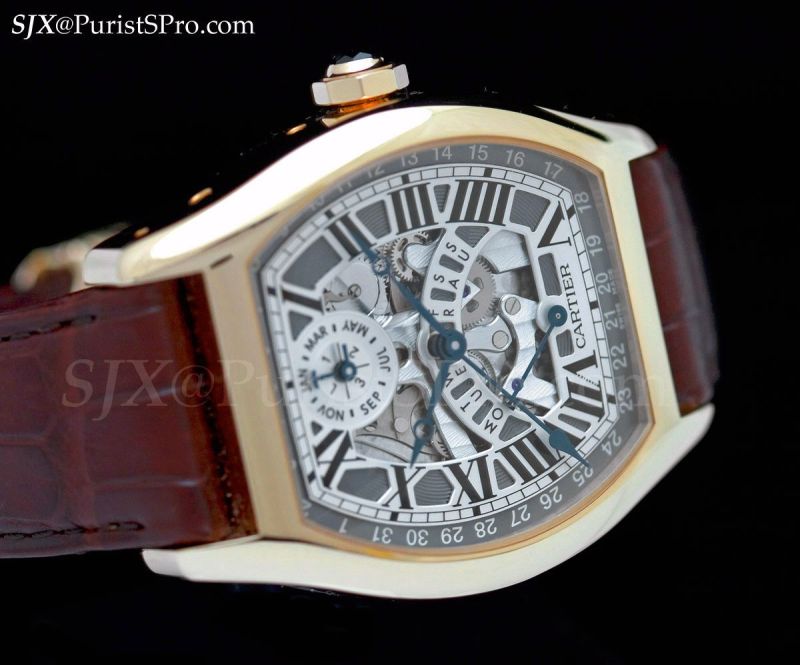
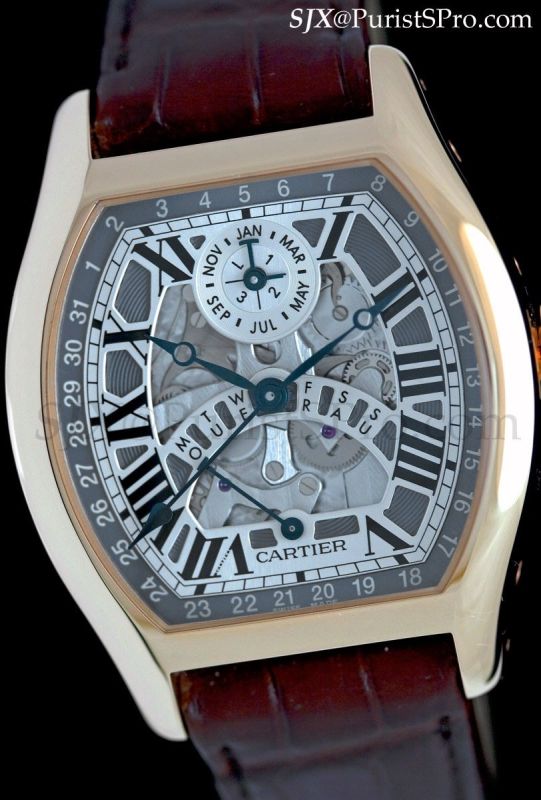
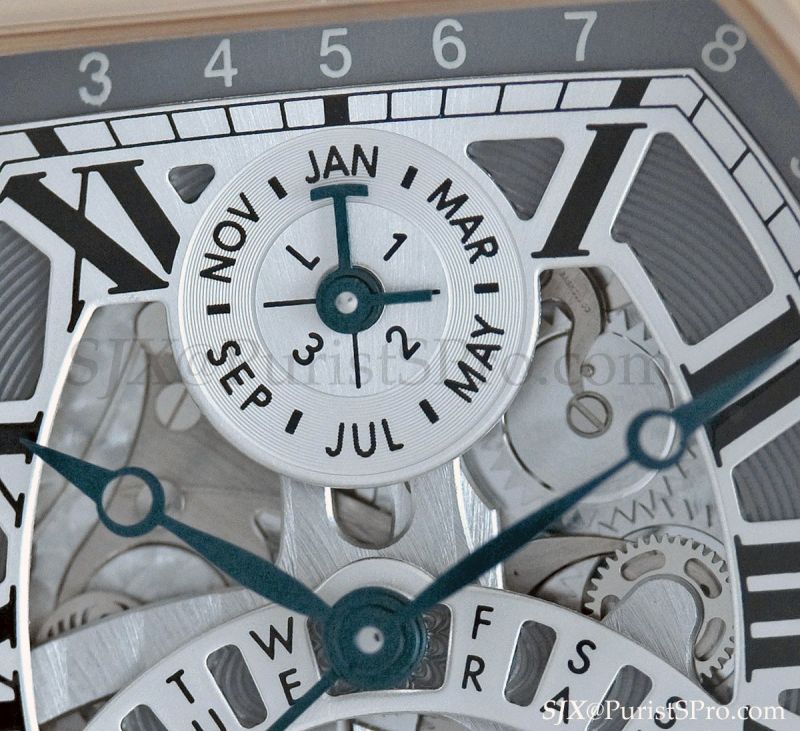
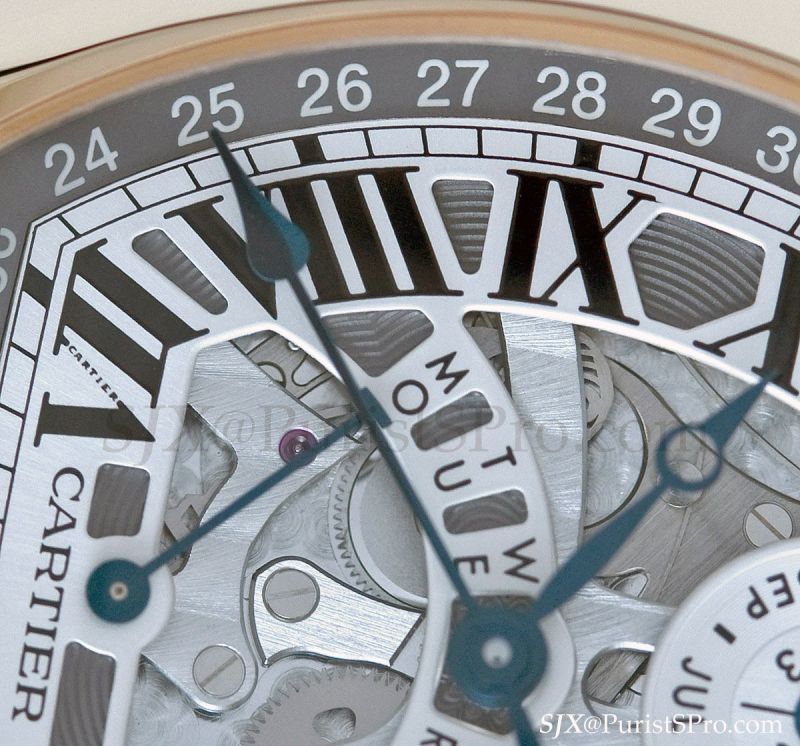
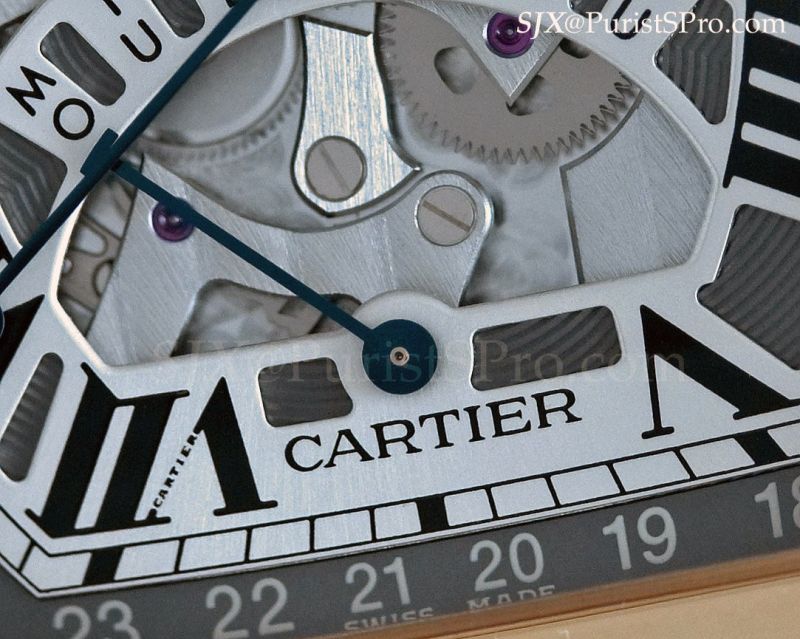
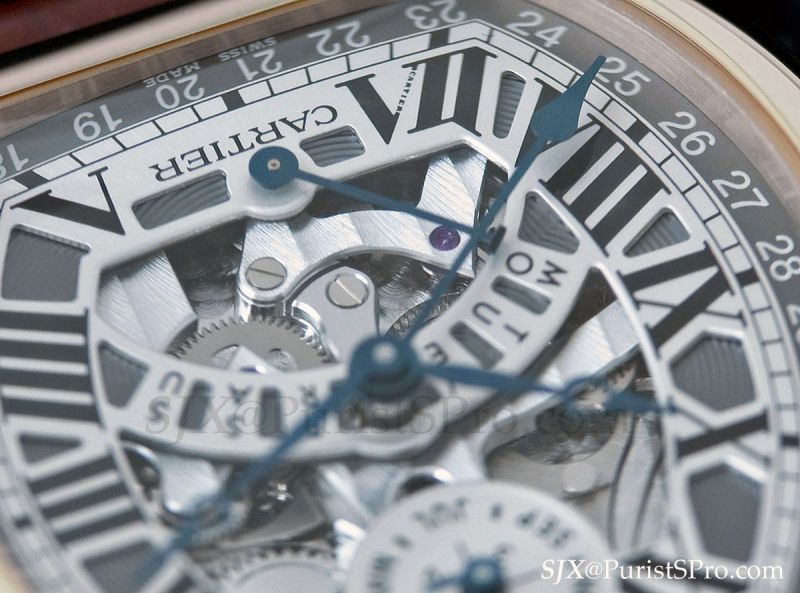
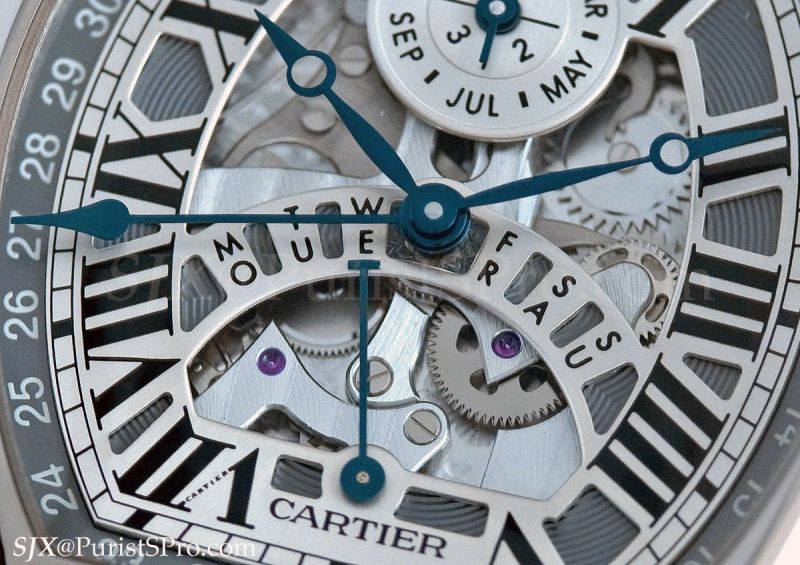
In white gold
Lastly is the most complicated watch Cartier presented this year, the Rotonde de Cartier Grand Complication Squelette. It’s a skeletonised, monopusher chronograph with perpetual calendar and tourbillon; one of those whoppers that Renaud et Papi does so well.
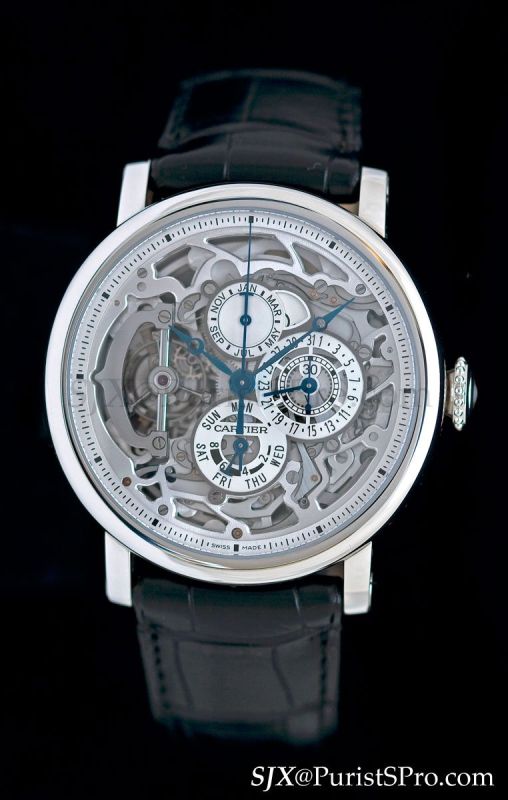
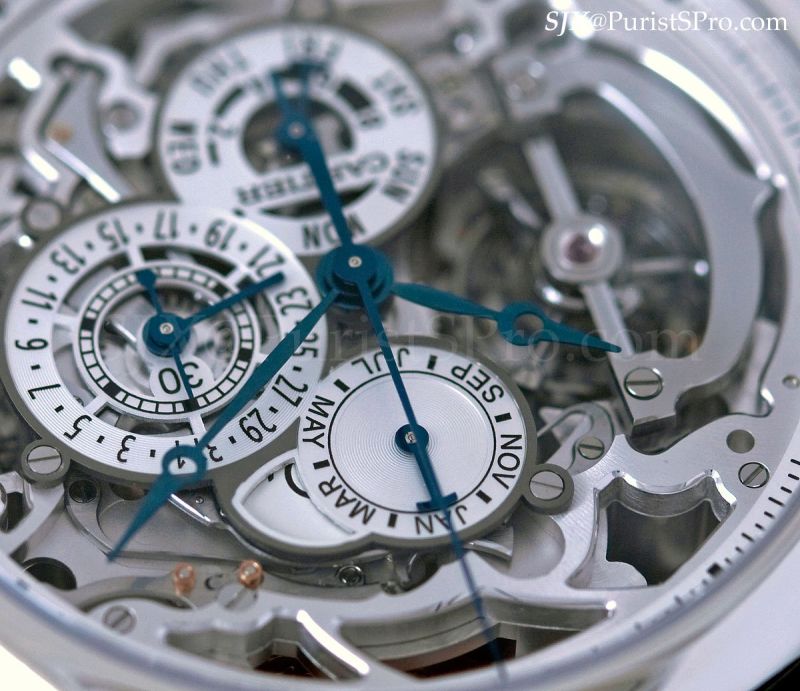
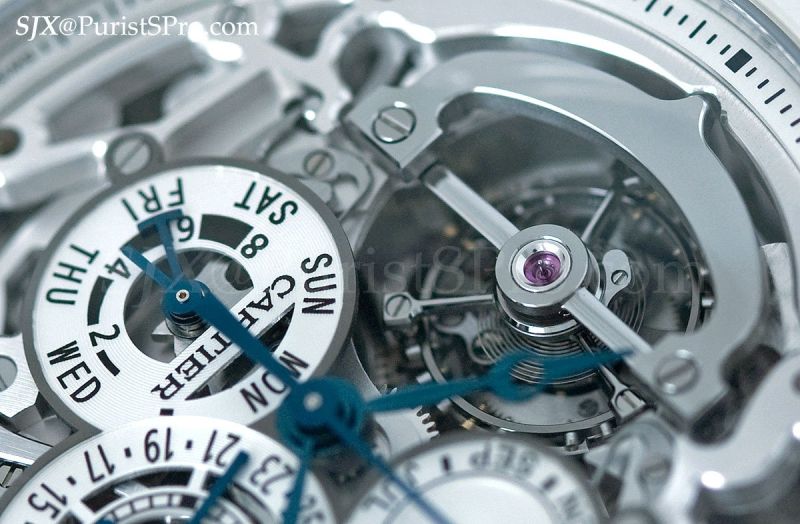
This watch is not to my taste, it is too complicated looking and yet another Renaud et Papi grand complication (they are beginning to feel generic). Moreover, unlike the rest of the Cartier high watchmaking collection this watch is actually fairly expensive when compared to others in this rarefied segment.
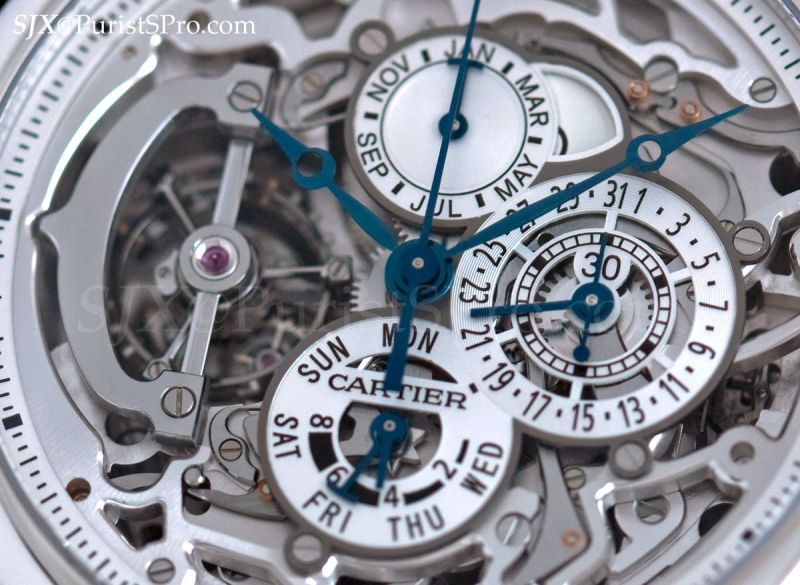
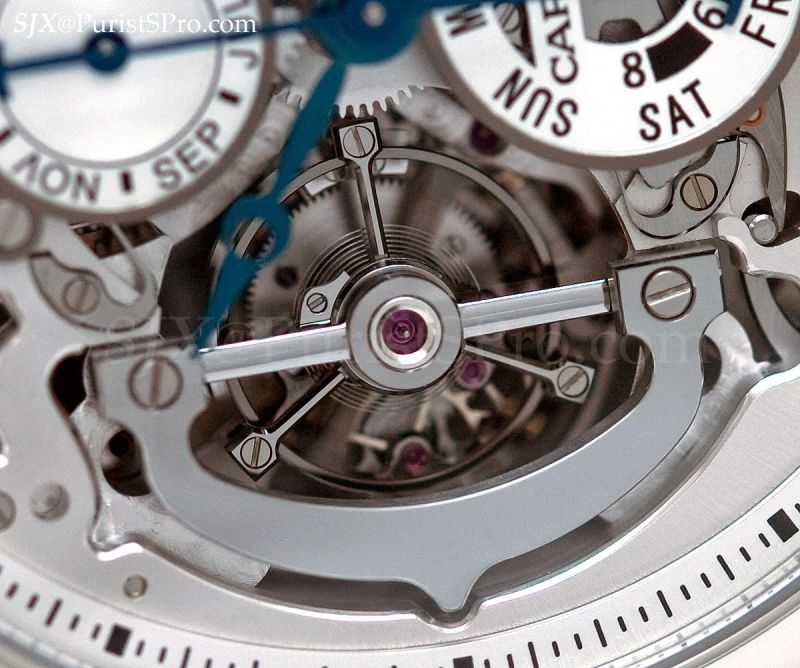
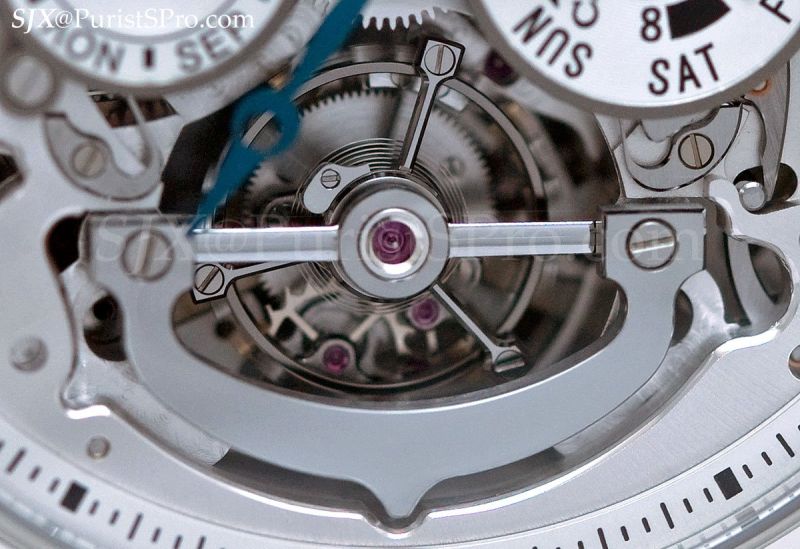
But Cartier has unveiled a Renaud et Papi super-complication every year for some years now, and will continue to do so for the foreseeable future. Each year they manage to sell all of the watches, an accomplishment several high horology brands wished they could manage. That is the strength of Cartier.
This message has been edited by SJX on 2010-02-11 02:27:06
Your report is again amazing
my favorite watch too, especially in white gold.
Thanks SJX, it was worth the waiting.
GEO

SIHH 2010: De Bethune
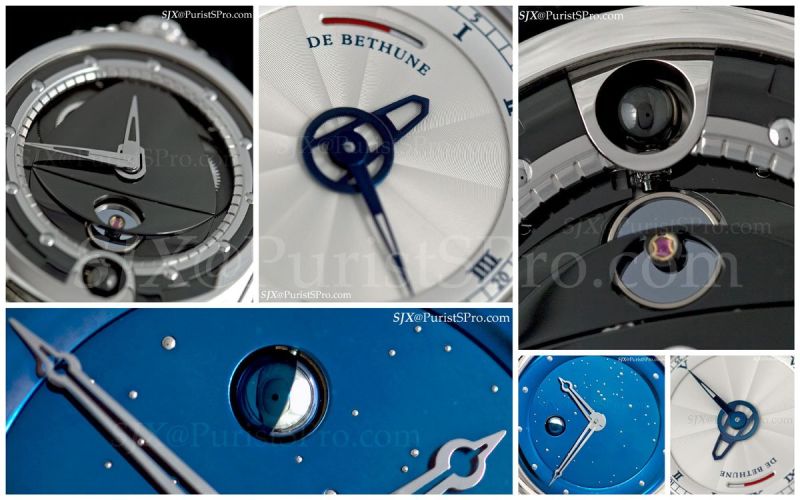
De Bethune exhibits at the quietly palatial Four Seasons hotel during SIHH. This year David Zanetta and Denis Flageollet had only a small handful, actually only three, watches to show, but they were outstanding, as always.
The DB25 Moon Phase was launched late last year but here are some quick photos. The version shown last year was a prototype with different hands while this is an actual production piece.
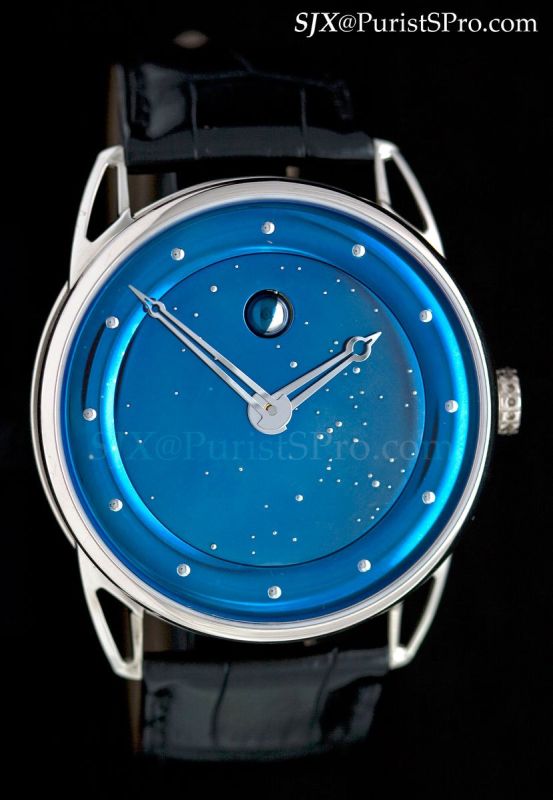
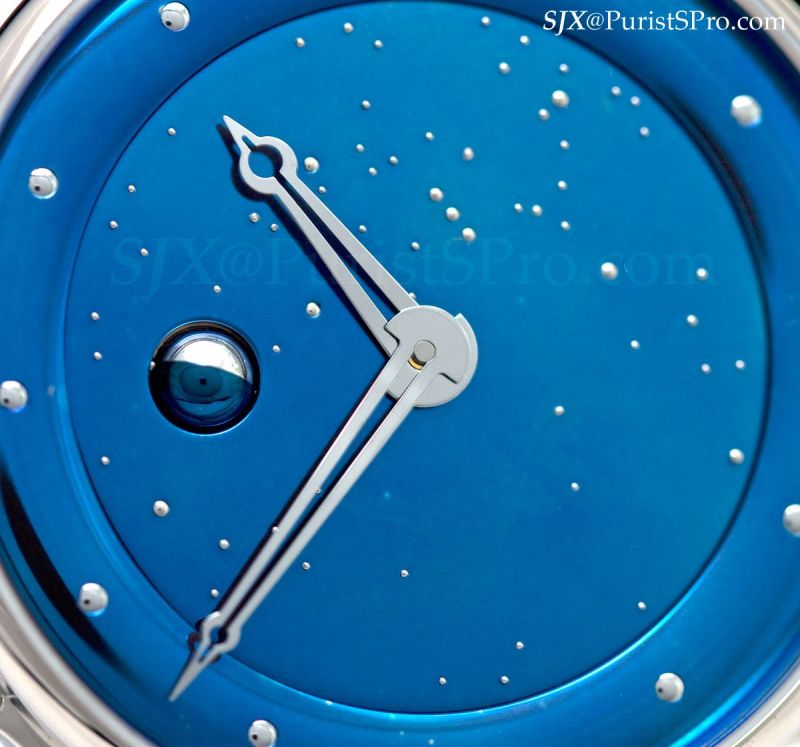
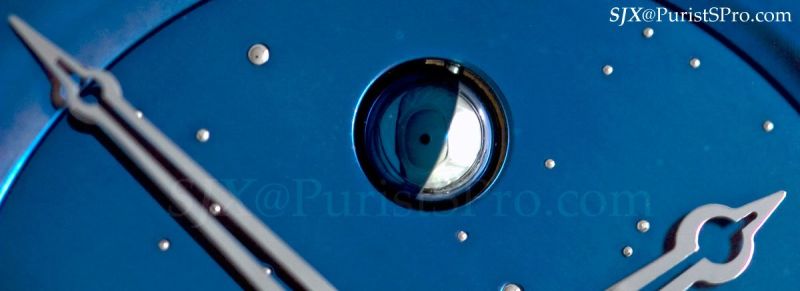
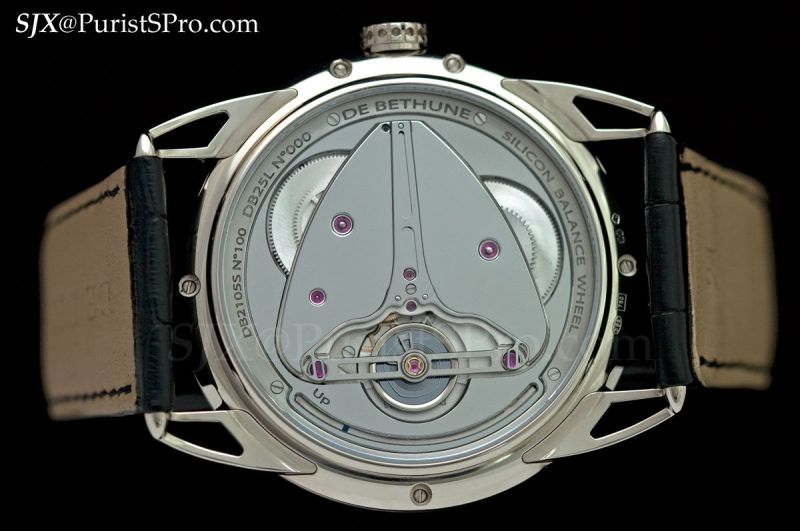
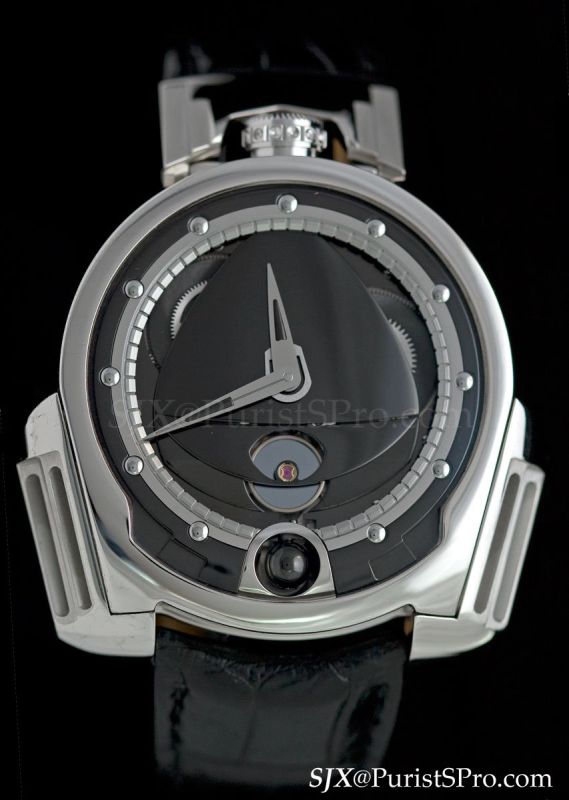
Originally available with a remarkable polished or sandblasted titanium dial, the Dream Watch One now comes with a unique glossy black dial. The dial is polished steel and heat treated to achieve the colour. Consequently the dial colour is remarkably deep, unlike anything I have seen before. Black dials are rarely engaging, but when done right they are spectacular and this falls into that category.
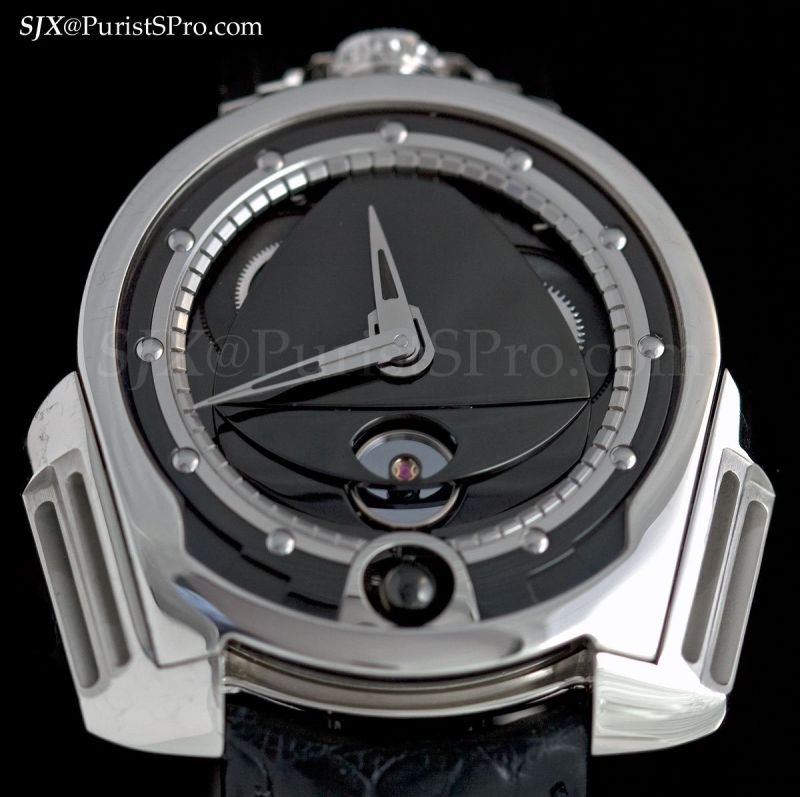
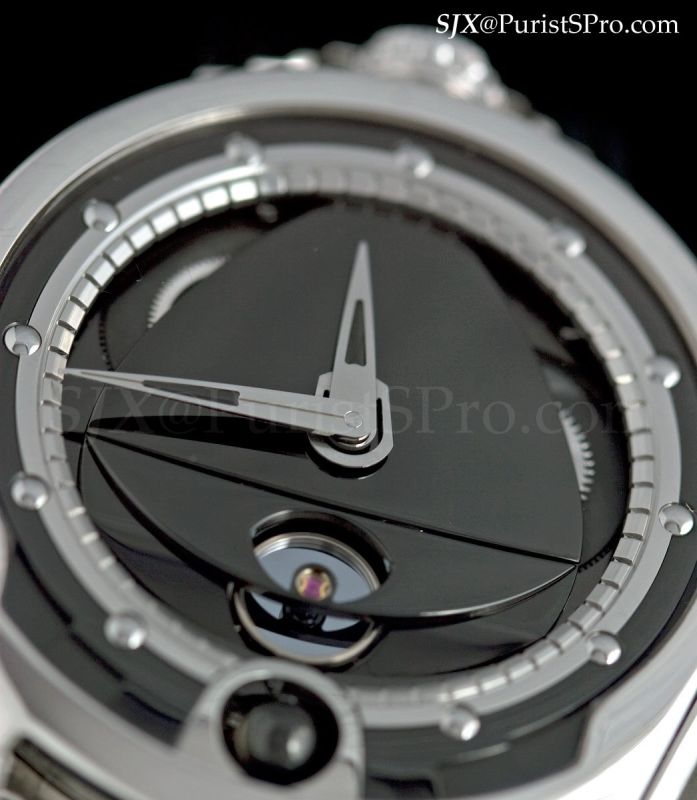
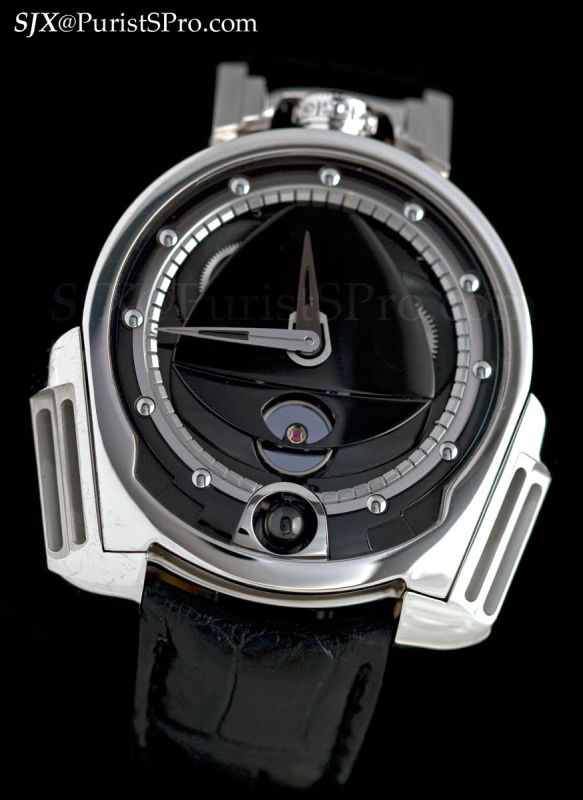
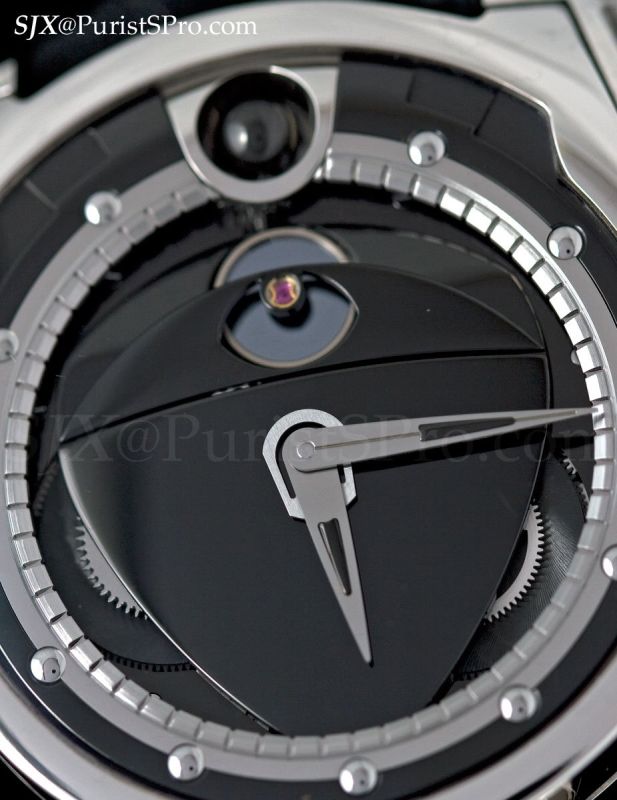
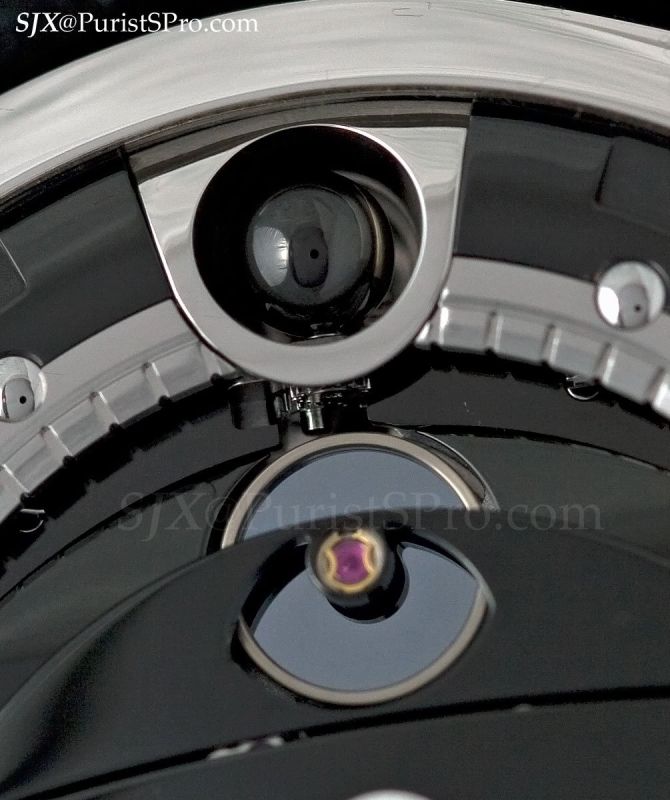
Clients have long clamoured for a smaller De Bethune watch, previously the smallest was 44 mm. David Zanetta originally made a smaller watch as a custom order, but now the DB25 is available in a 40 mm case.
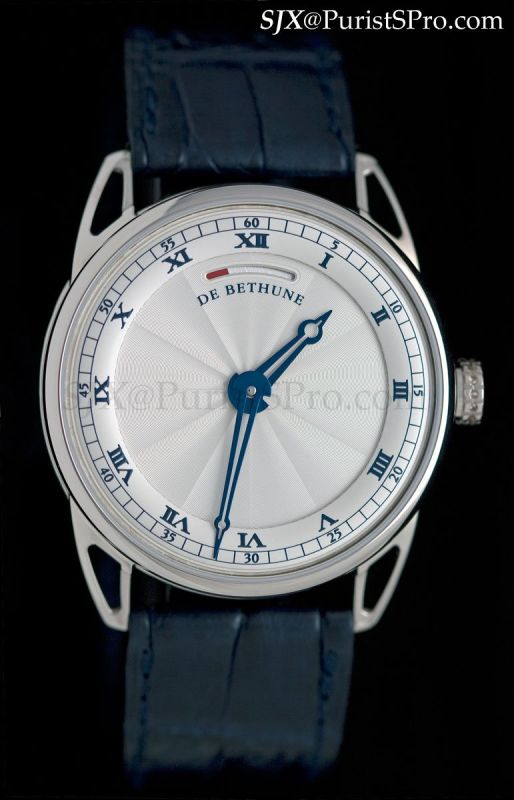
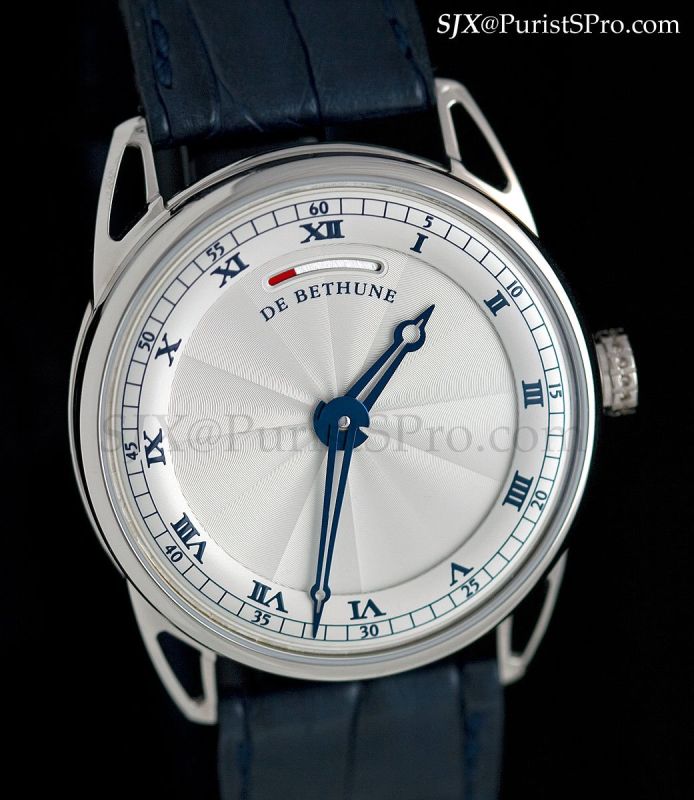
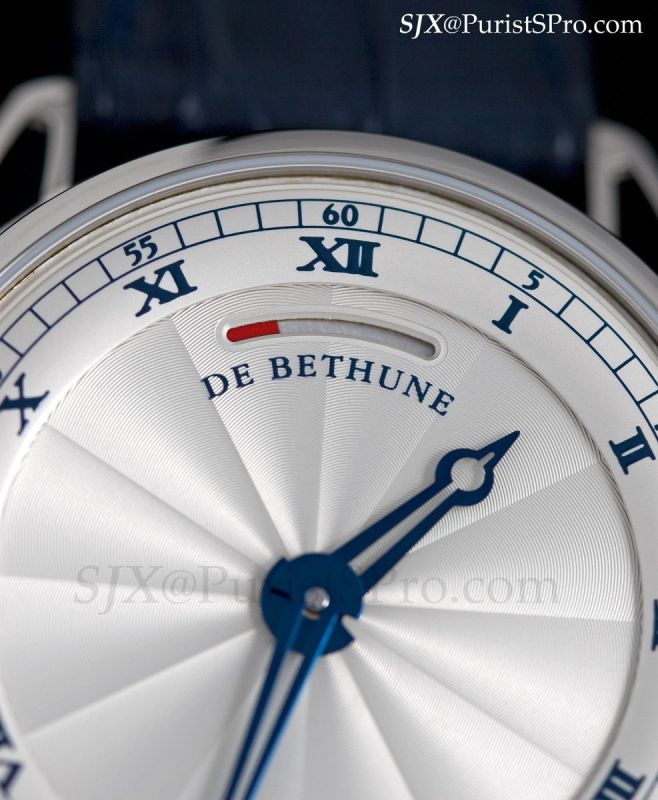
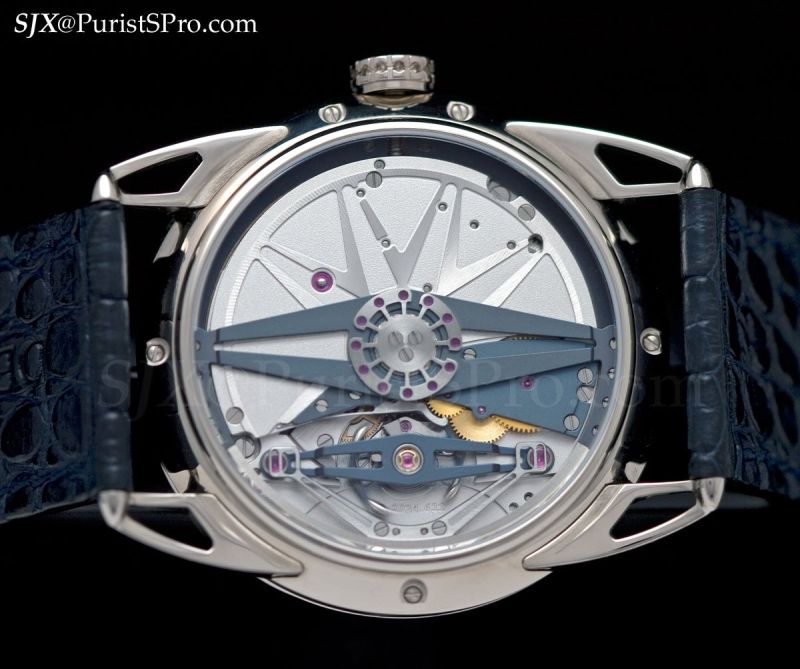
Though almost identical to the original DB25, with the movements remaining the same automatic (shown above) or hand-wound (below) calibres, the 40 mm variant is also offered with a new style of hands which are attractive in an eccentric way.
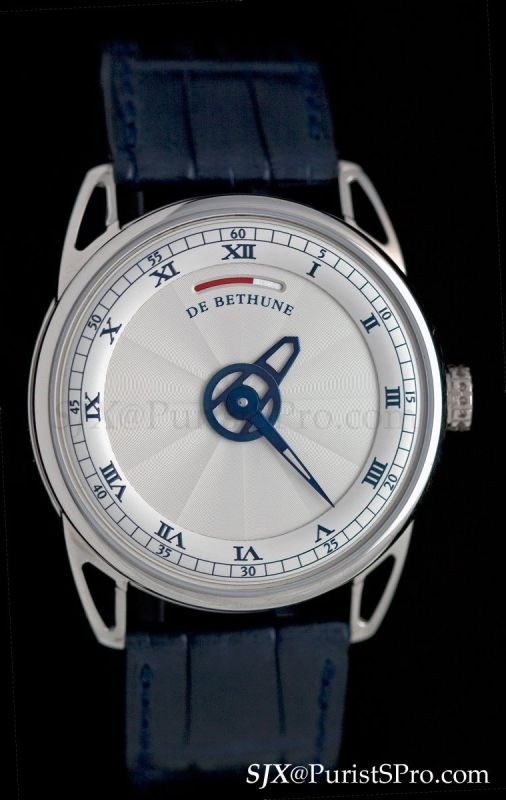
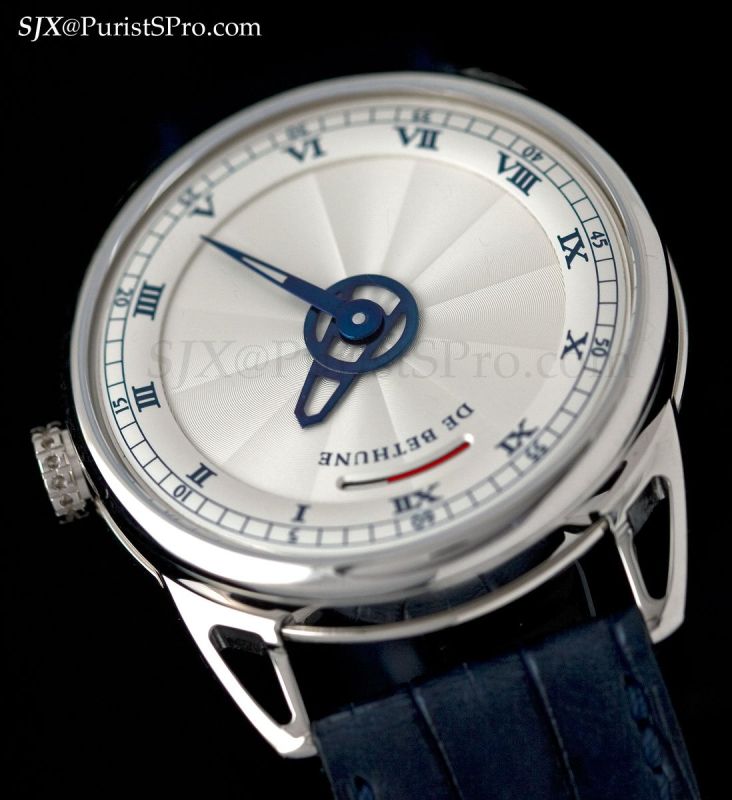
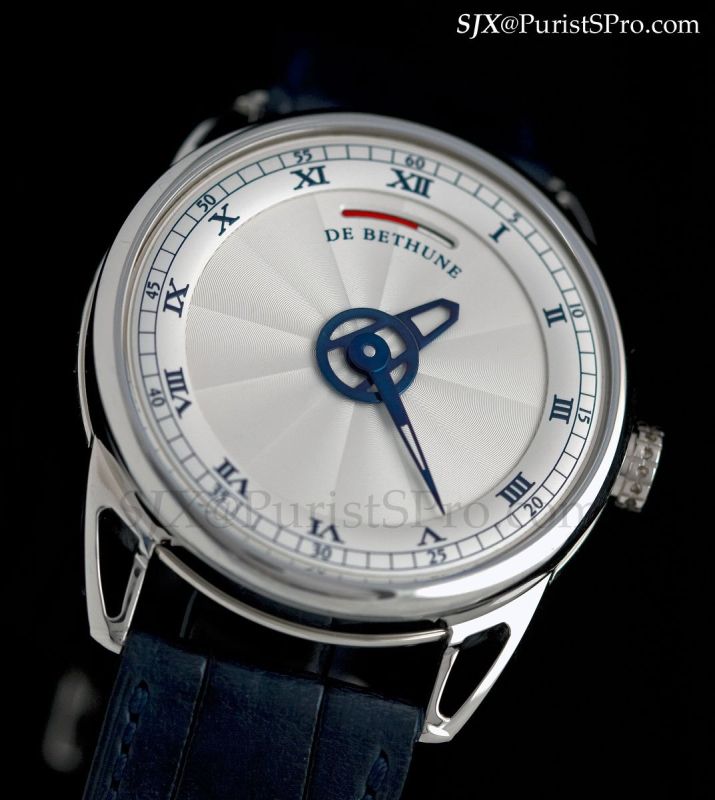
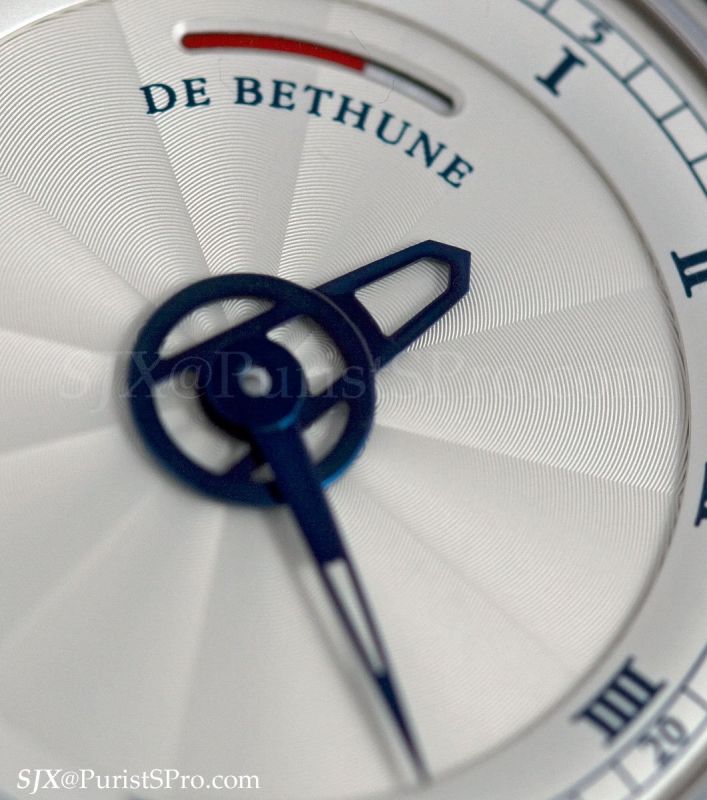
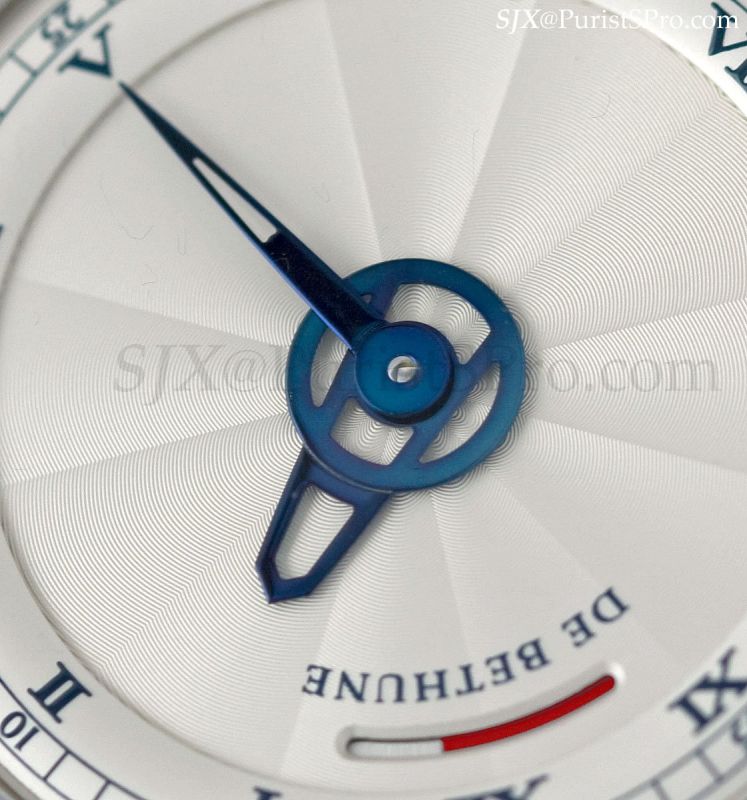
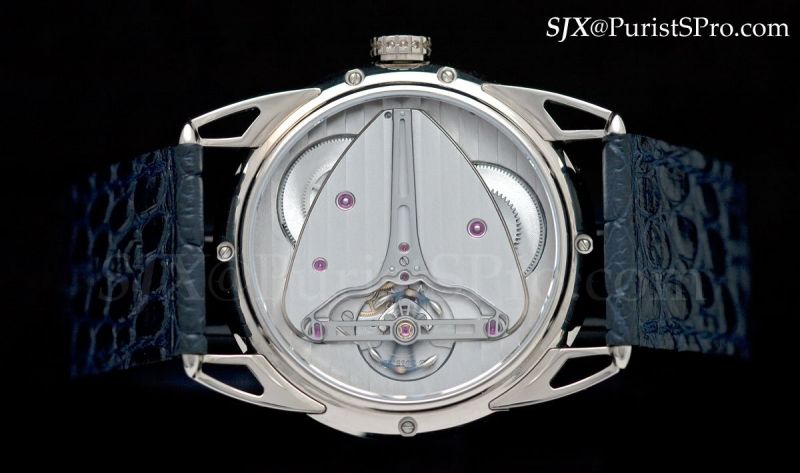
The mini DB25 is still a good size watch by most measures, yet it looks surprisingly diminutive. It lacks the punch of the 44 mm DB25. David Zanetta also thinks the DB25 works best as a 44 mm watch. Nonetheless the 40 mm will do well in allowing more to wear a De Bethune.
This message has been edited by SJX on 2010-02-12 20:11:50I know aesthetics are personal


SIHH 2010: Franck Muller

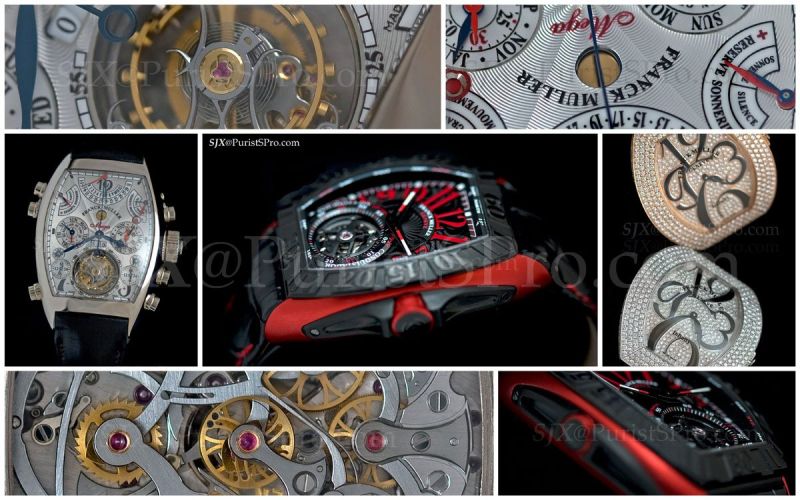
Three years ago Franck Muller showcased a prototype of the Aeternitas Mega 4, which it says is the most complicated wristwatch ever made. That’s an overused and much debated title, but this watch is certainly a strong contender.
This year, at the complex of chateaux in Genthod known as Watchland, Franck Muller displayed the third working production Aeternitas Mega 4. The first two have been sold, one to an American and the other to a Japanese collector.
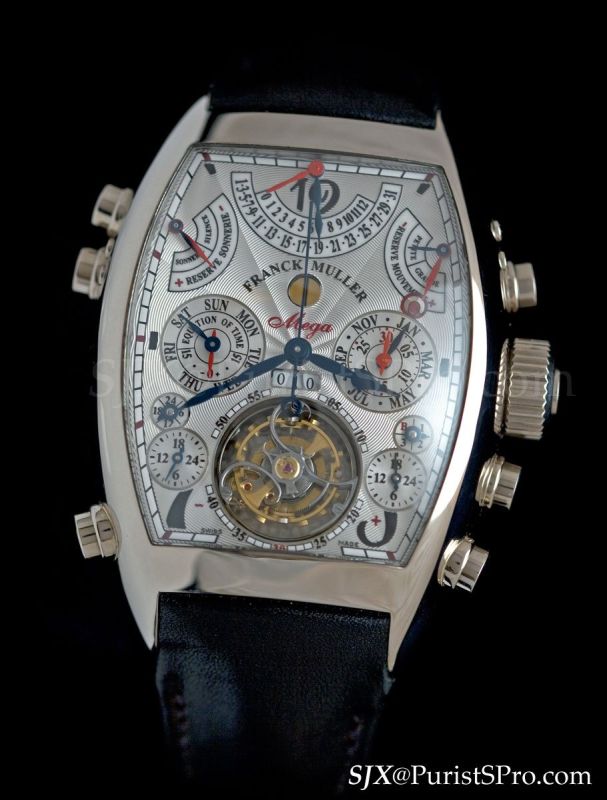
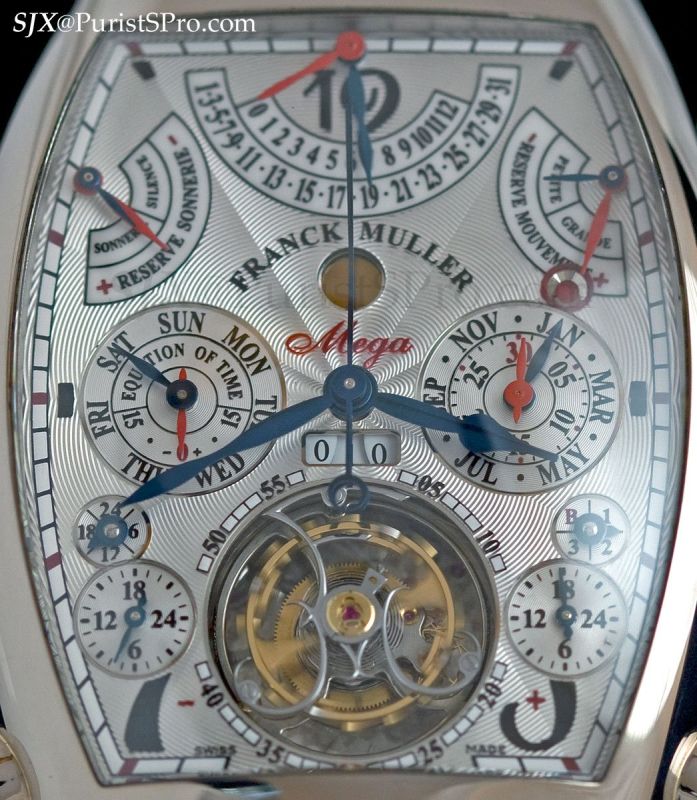
The Aeternitas Mega 4 is the Avatar of watchmaking. It is the largest and most expensive watch I encountered (though there was apparently a $10 million dollar diamond-set Vacheron floating around Palexpo but I could not lay my hands on it). This piece was actually working; I activated the chronograph and repeater just to be sure. The chimes were muffled, unsurprising given the size of the watch, but pleasant sounding.
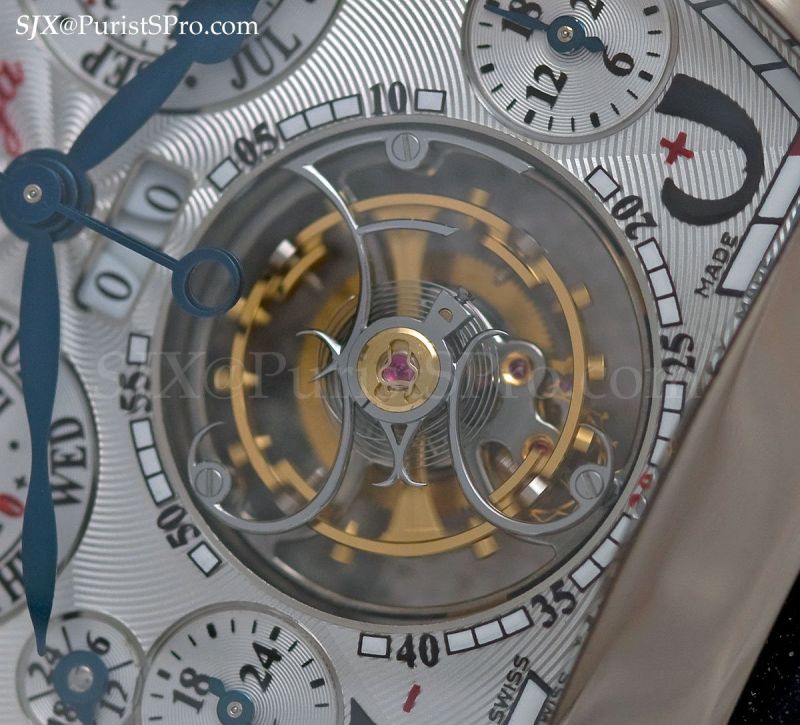
Created by an old watchmaker of the old school, Pierre-Michel Golay, who created the automatic grande sonnerie wristwatch for Mr Gerald Genta, the Aeternitas Mega 4 contains a rattrapante chronograph, grande et petite sonnerie with Westminster Carillon, a 1000 year perpetual calendar, equation of time, two additional time zones and a tourbillon.
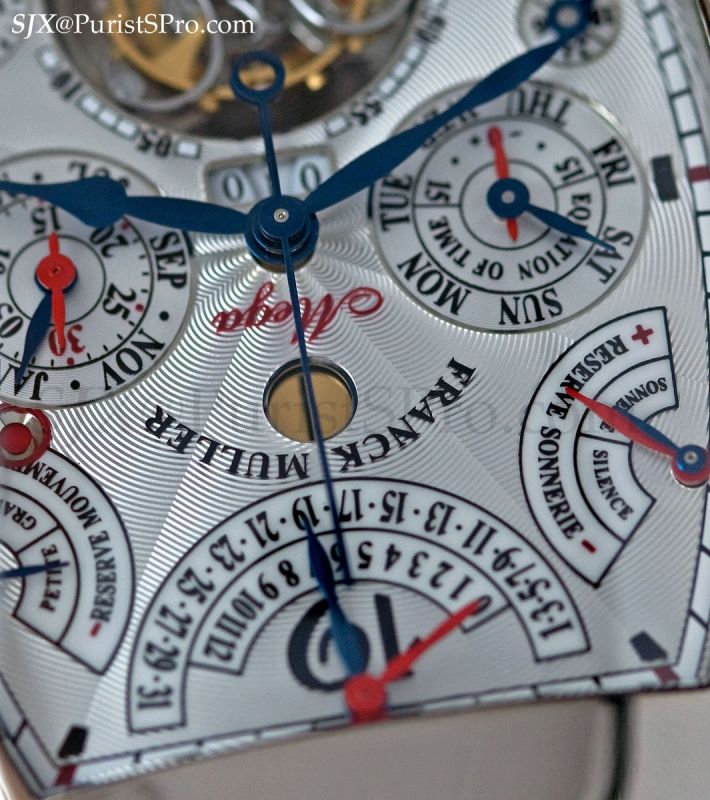
That leaves it with 7 pushers, 99 jewels and over 1400 components. To accommodate all that, the Cintree Curvex case is an ungodly 42 by 61 mm and almost 20 mm high. The movement is a sprawling but attractive expanse of levers and wheels; it bears the aesthetics and finish of a classical Geneva movement in many of its parts.
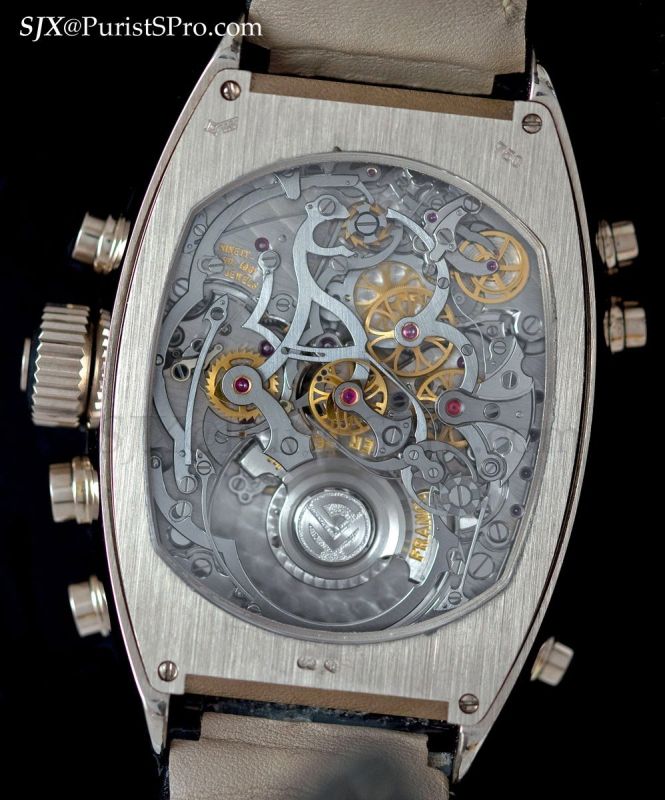
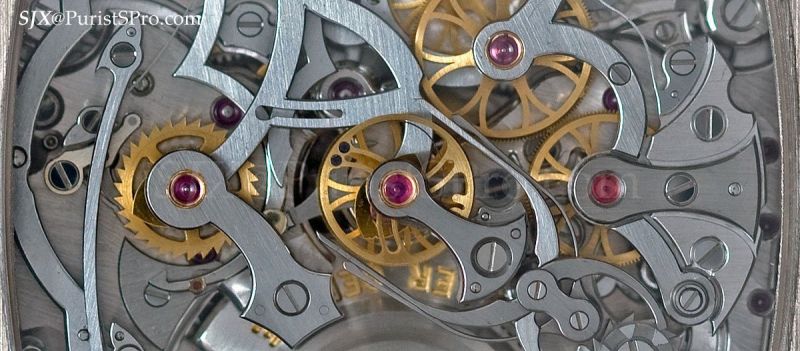
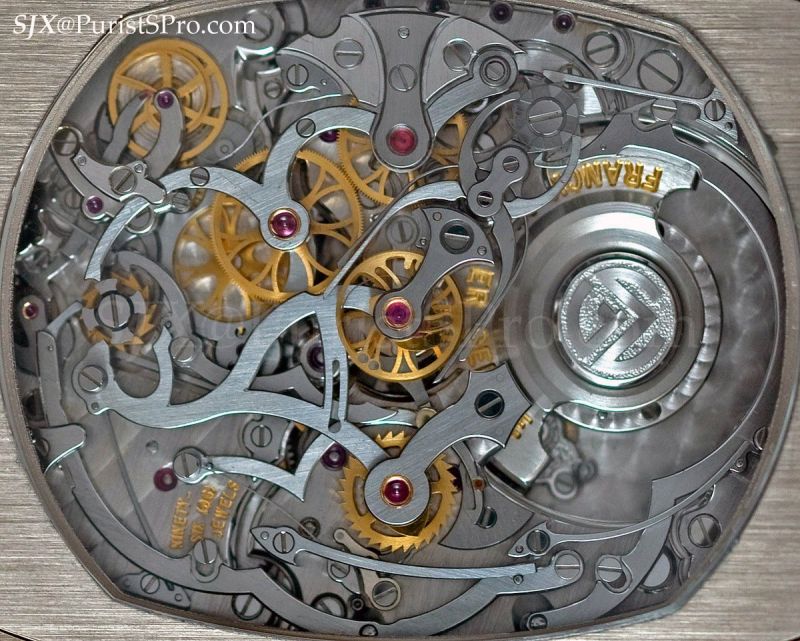
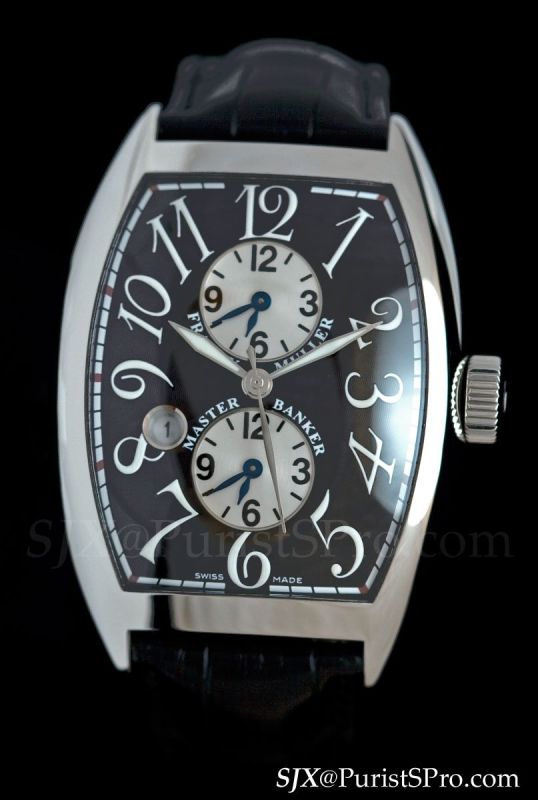
In addition to the Avatar watch, Franck Muller did show several new models. One is a new Master Banker in a massive 9880 size case. The Master Banker is a classic Franck Muller watch and almost iconic for the brand. This new version is almost as large as the Aeternitas Mega but nowhere near as thick.
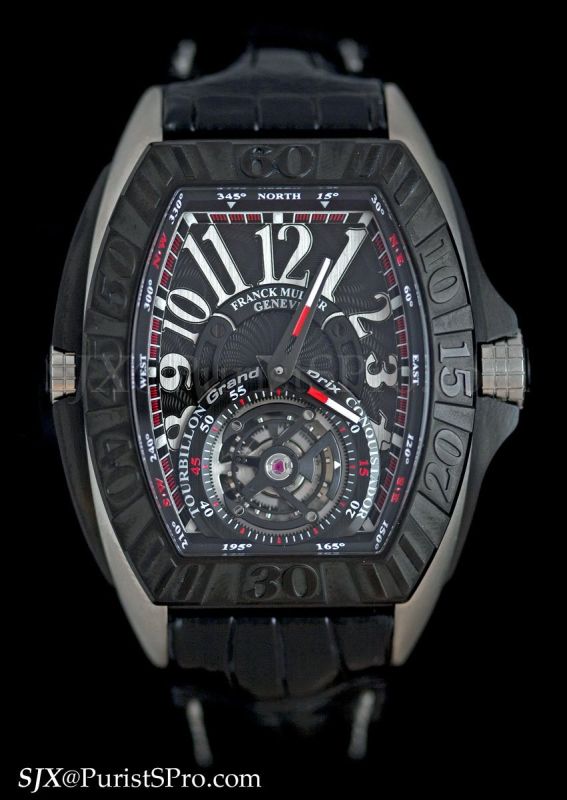
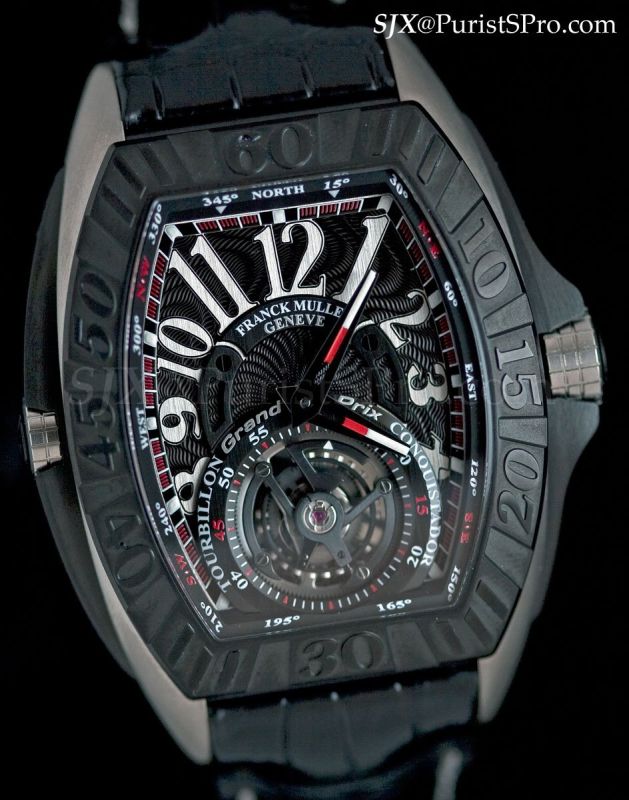
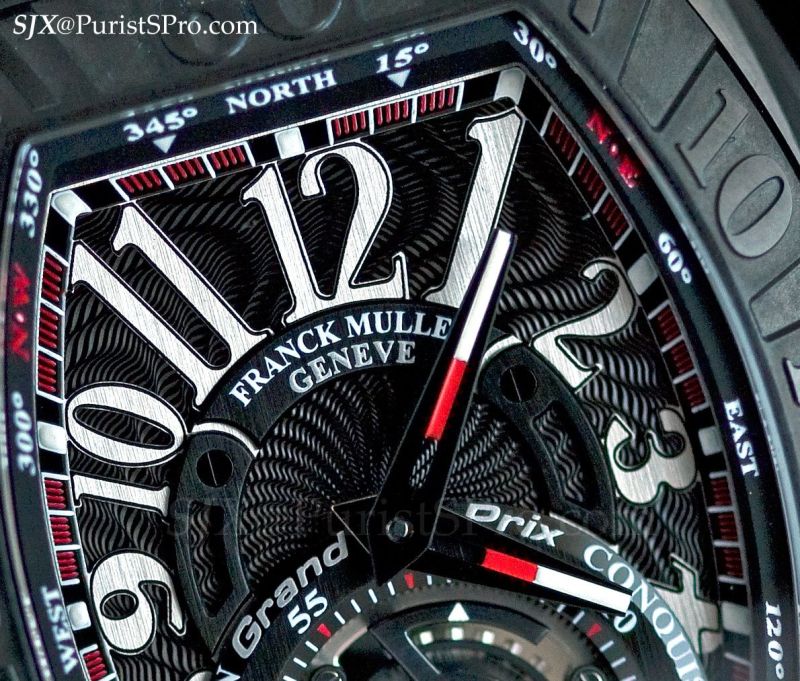
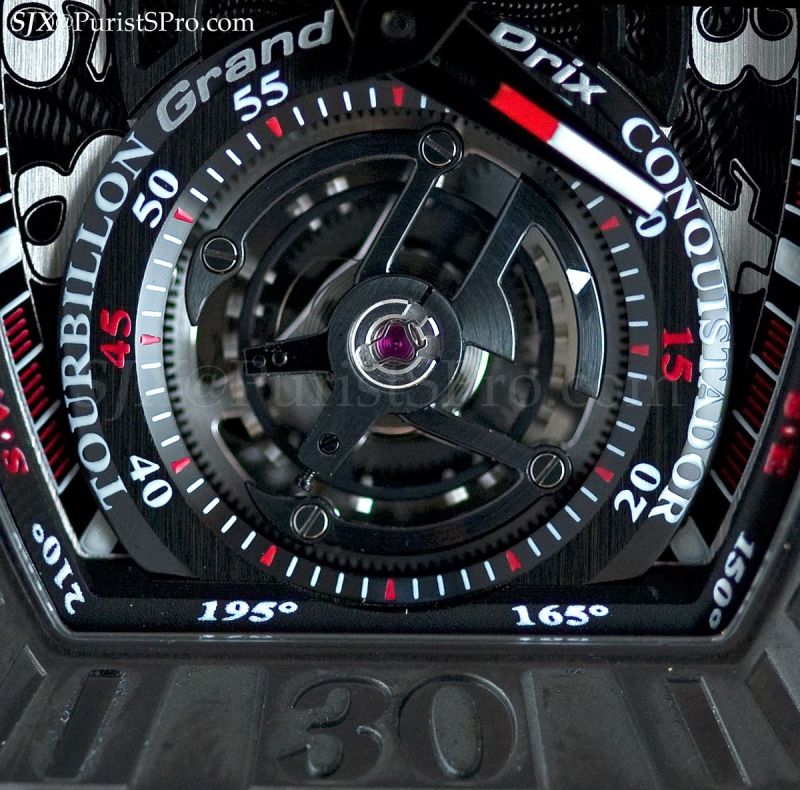
Another new release is the Conquistador Grand Prix tourbillon, contained in a case crafted from titanium and Ergal, an extra-hard aluminium alloy, though it is also available in gold.
In titanium and Ergal
Rose gold and titanium
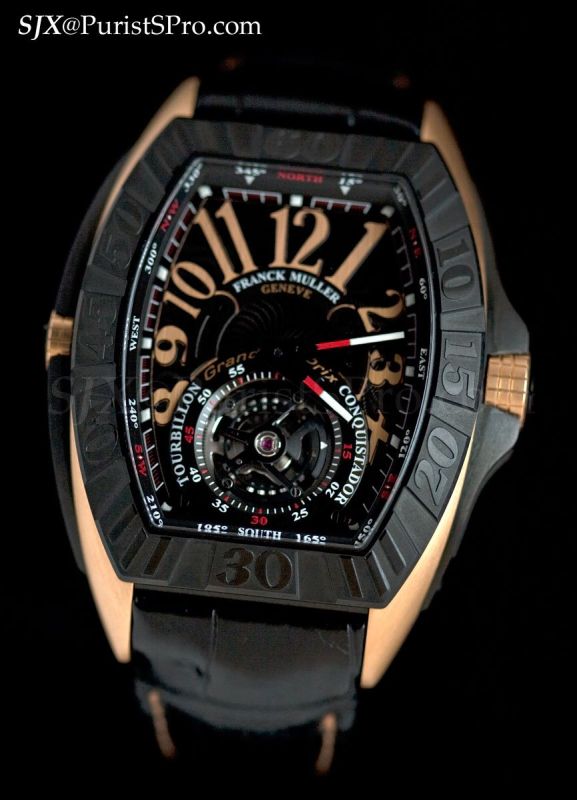
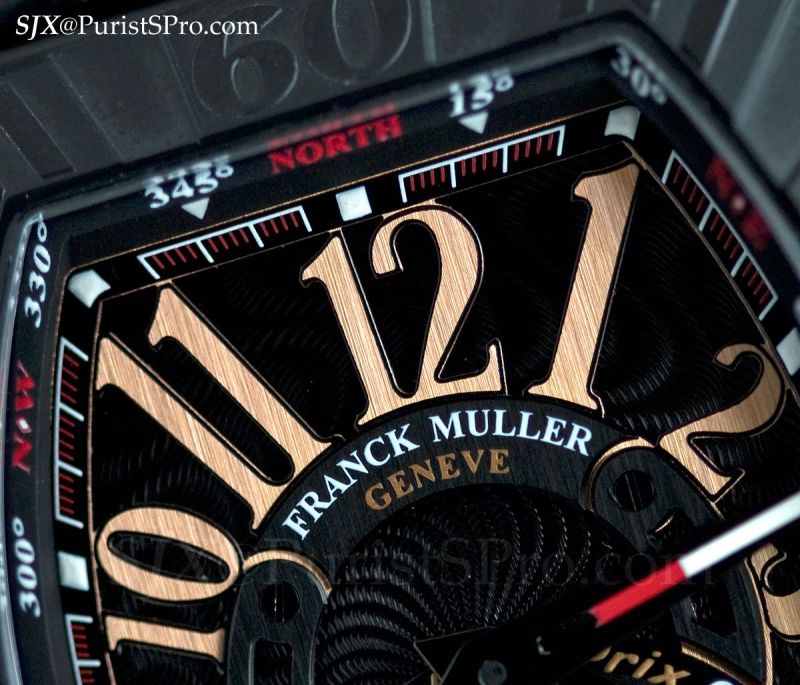
Ergal can be anodised in various colours and one of them is a bright, electrifying red. Red, when found in watchmaking, is typically enamel, ceramic, carbon fibre or some plastic, all of which have a different tone from anodised metallic red. The red Ergal case retains the shine and grain of the metal yet is extremely vivid.
Titanium and red Ergal
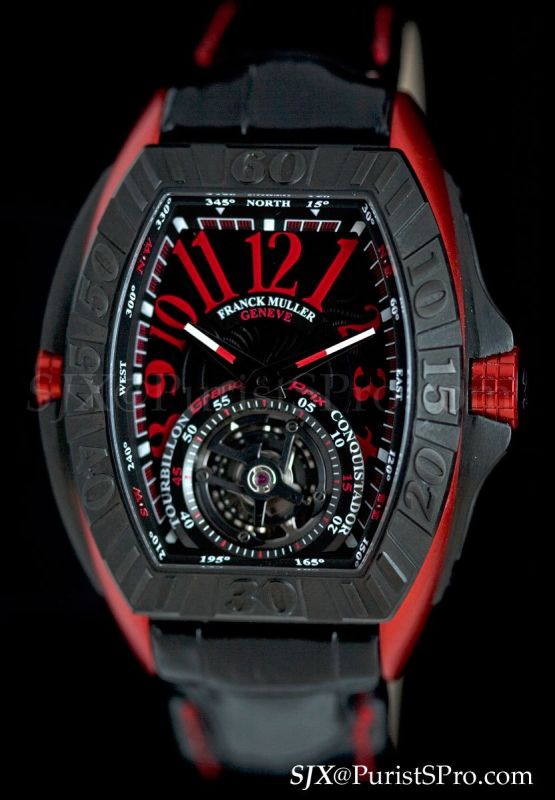
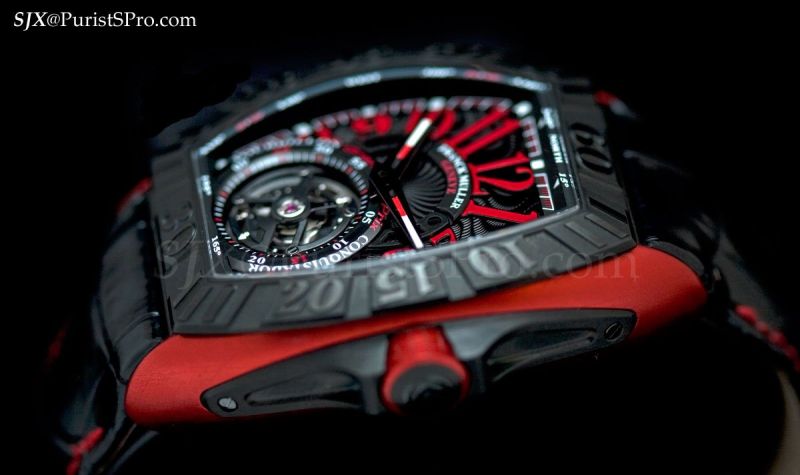
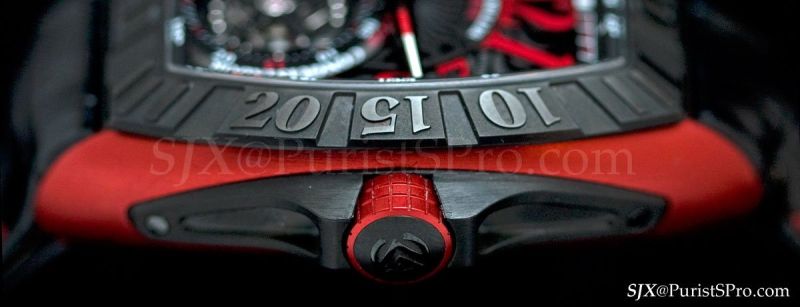
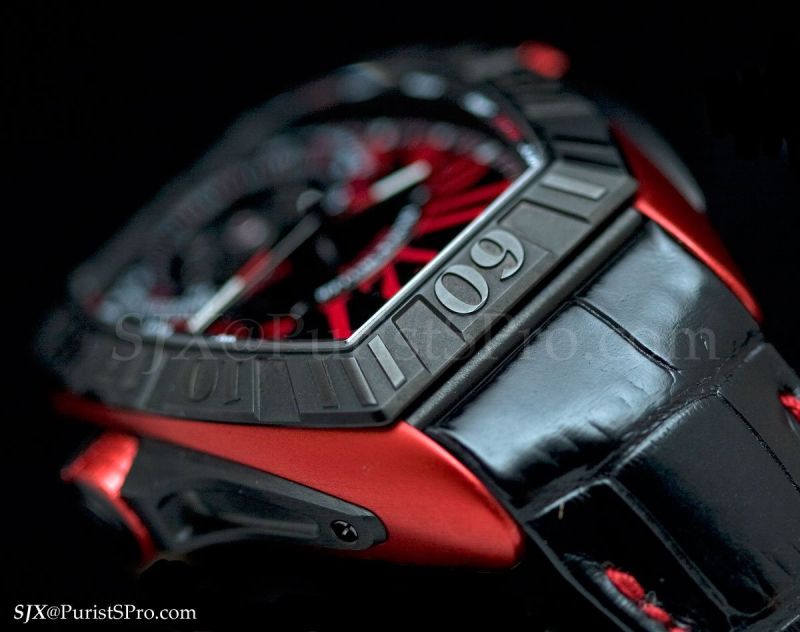
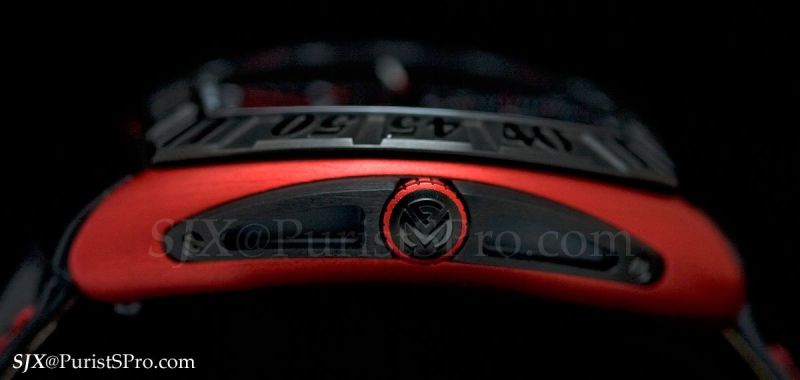
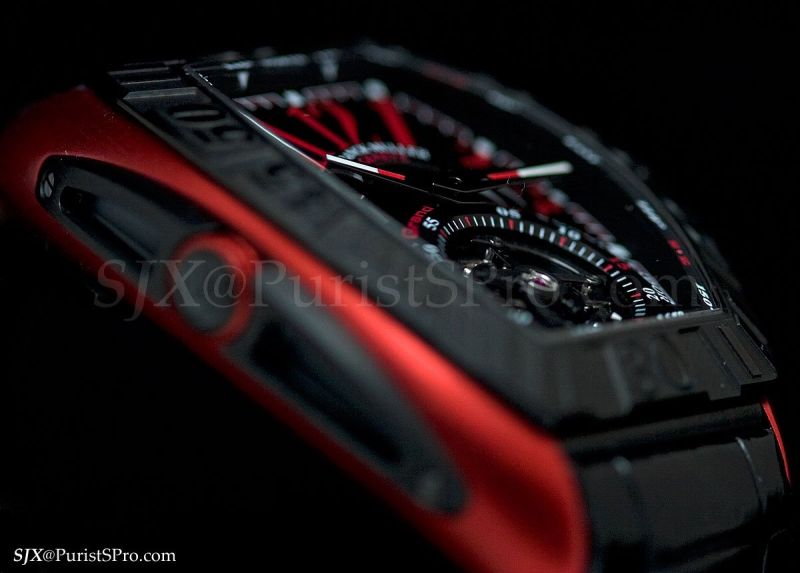
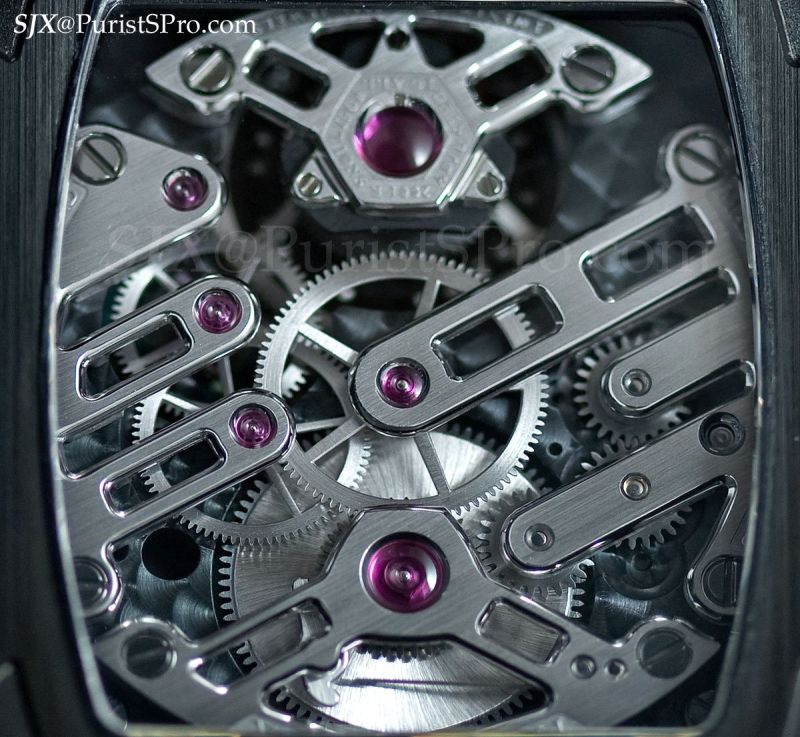
I don’t the look of the Grand Prix watches, the dials is much too busy and confused, except for the red version which is extraordinary because of its striking coloured case. With the red watch you forget what the dial looks like.
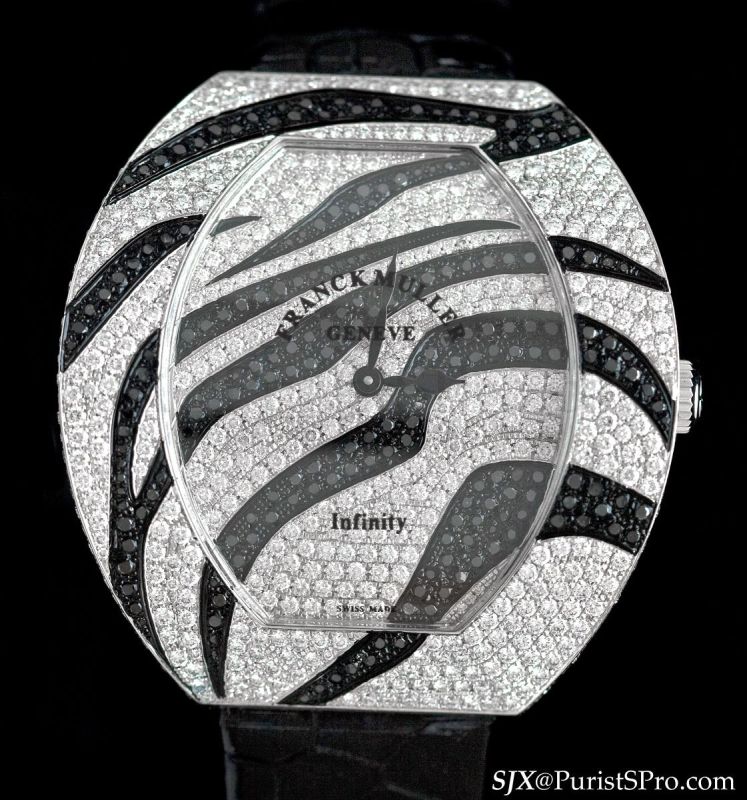
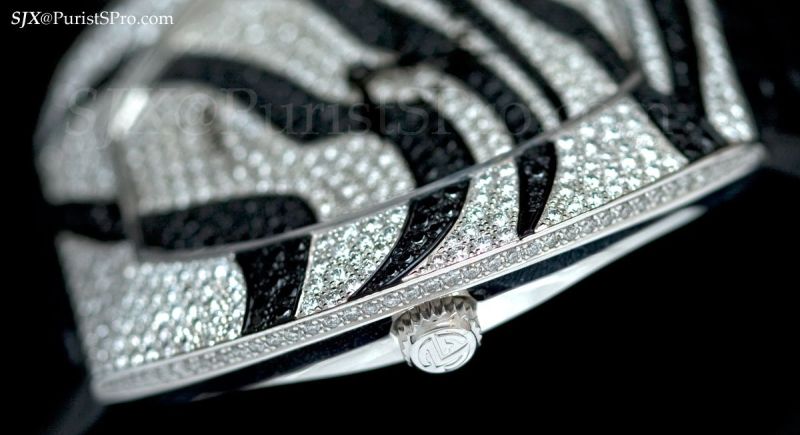
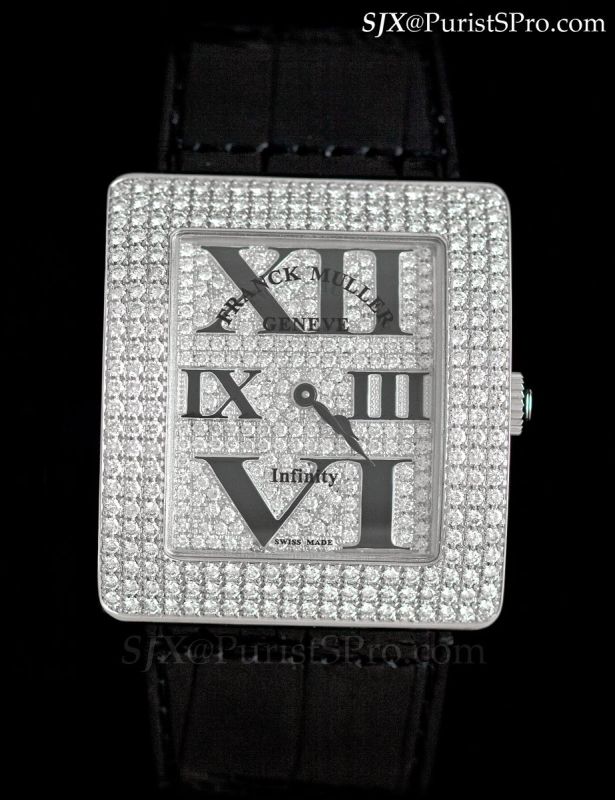
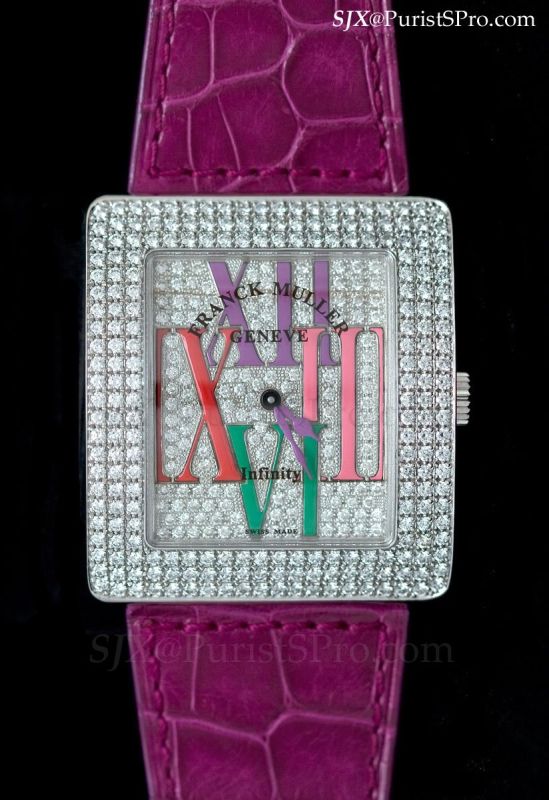
To round it off Franck Muller also showed several new ladies’ jewellery timepieces from the Infinity collection. They are all quartz and available in a multitude of colours and motifs, including several animal-themed patterns. These are exactly the kind of watch that particular target market wants.
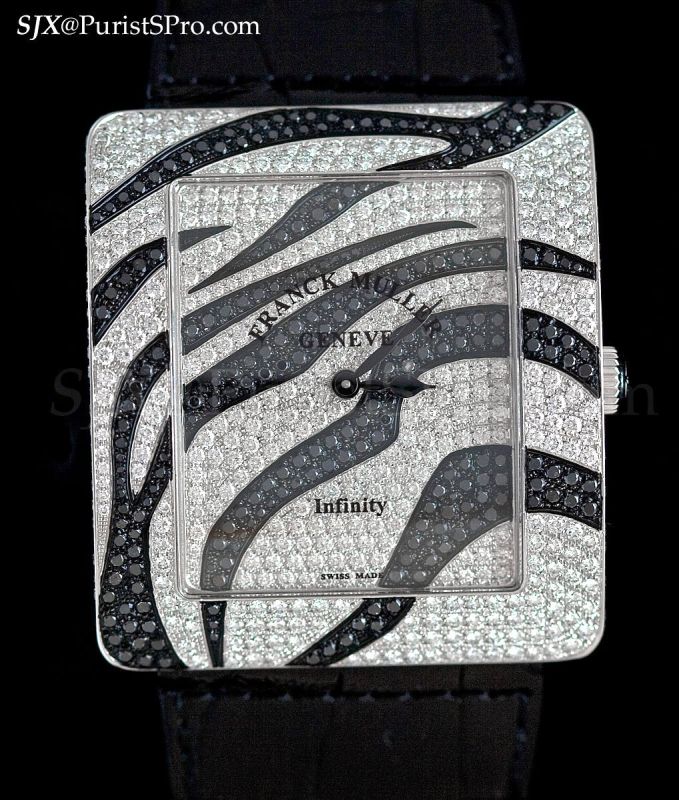
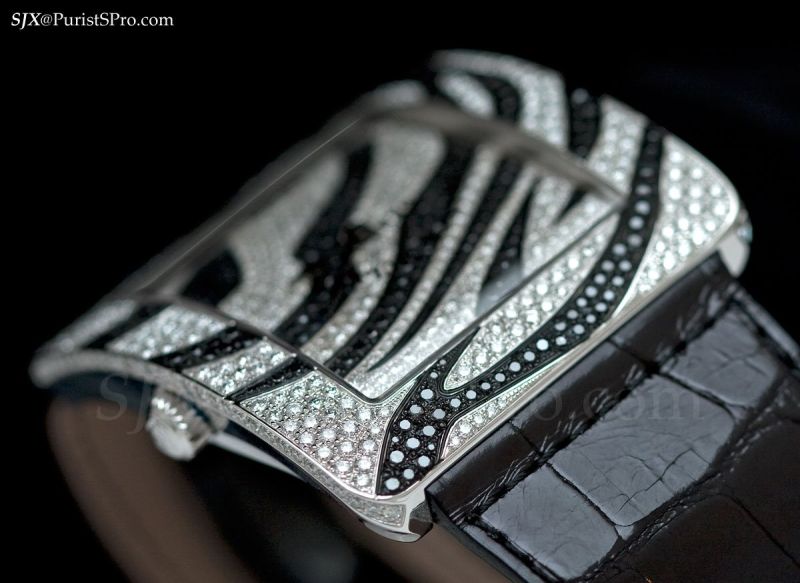
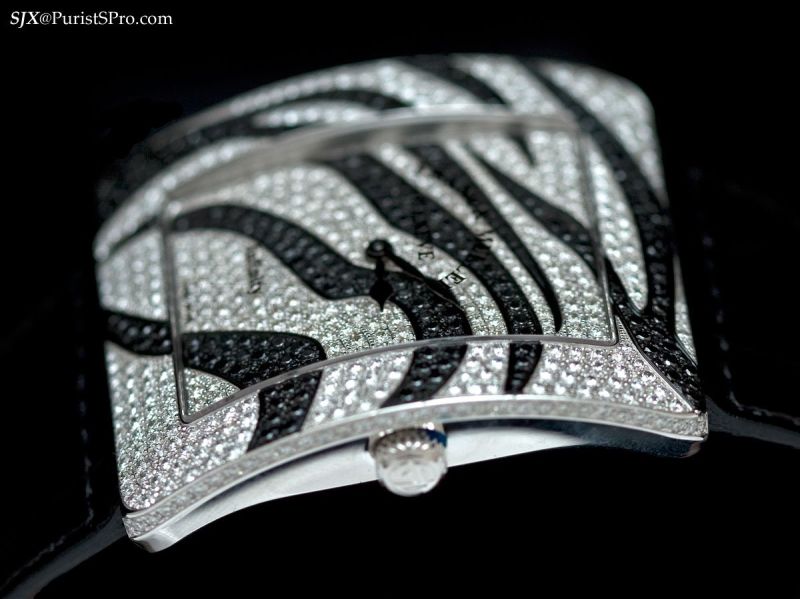
Thanks a lot for the FM report.
Thanks SJX.
Fr.Xavier

Thanks for the FM report
The Aeternitas 4 is just amazing to look it, although a highly impractical watch.
Don't know why they made the master banker case so large. I thought 8880 is already too large (in fact, I thought 7880 should be the upper limit)...
SIHH 2010: Girard-Perregaux

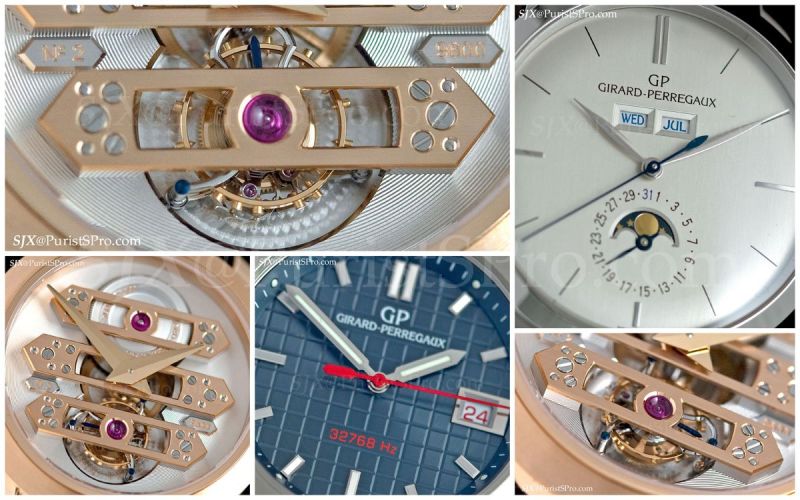
Girard-Perregaux offered a compact and straightforward collection this year; all new models were derivatives in one way or another of existing products.
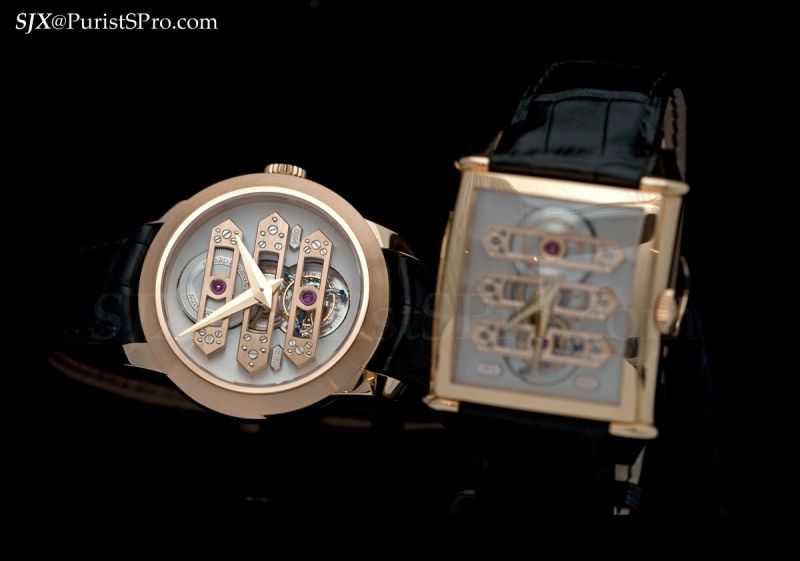
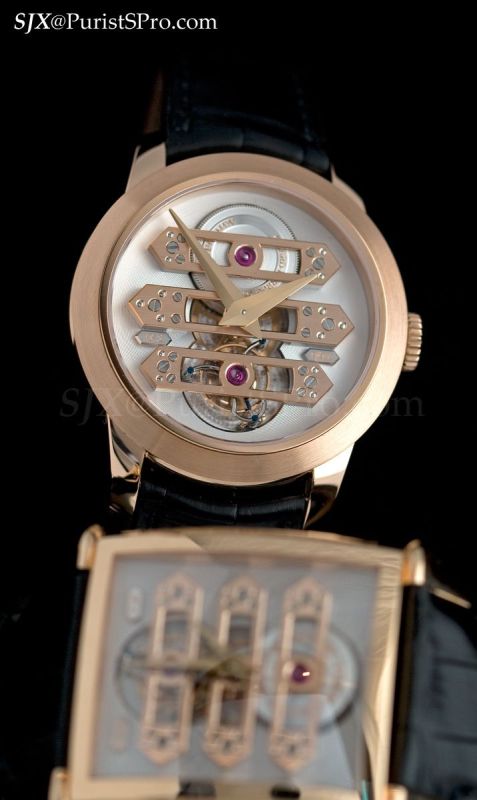
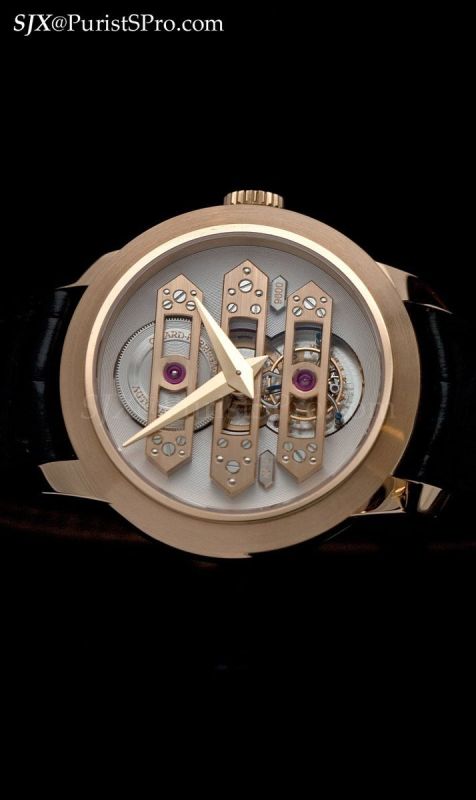
GP has made so many variations of the Three Gold Bridges tourbillon I’ve lost count. Yet it remains iconic because it is visually stunning and representative of the brand. And so predictably the flagship new product for 2010 is another variation of the celebrated Tourbillon with Three Gold Bridges.
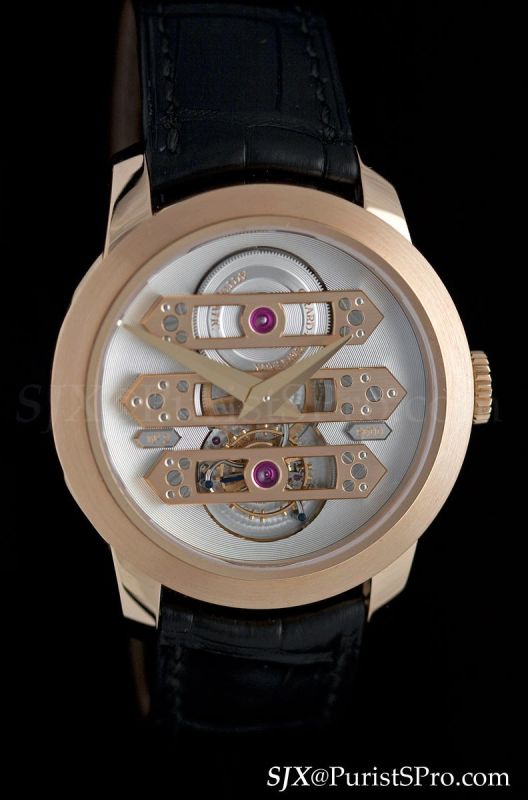
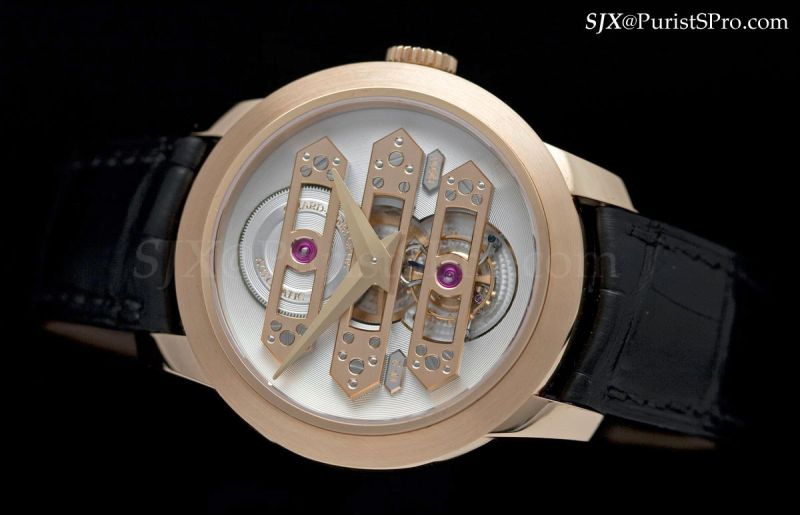
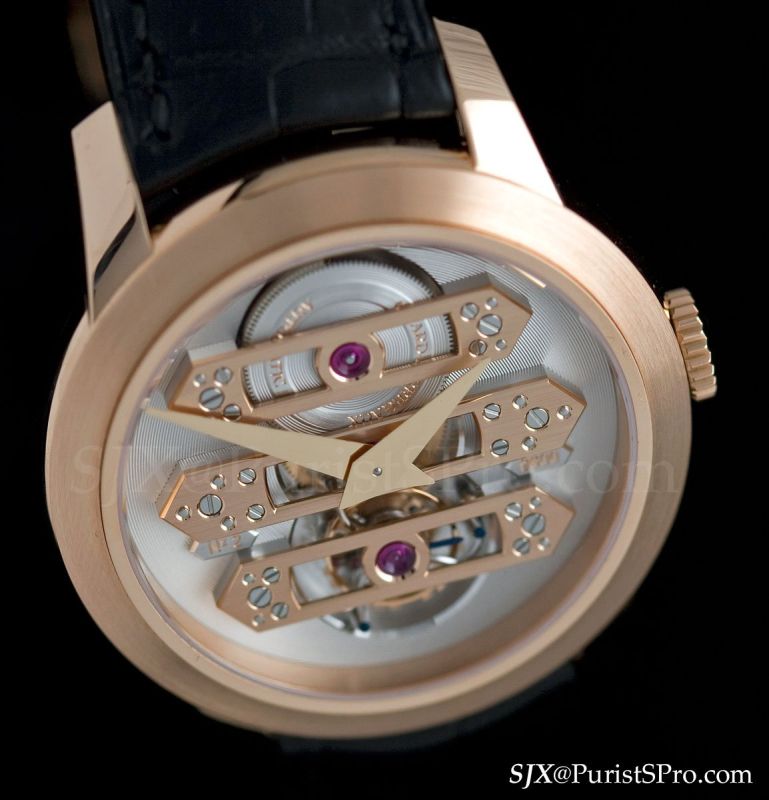
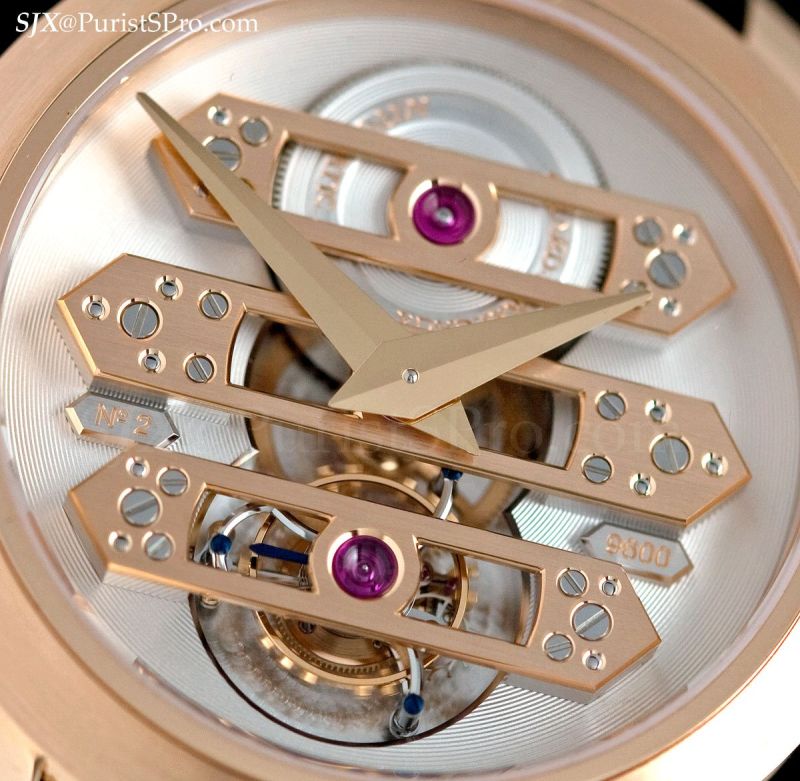
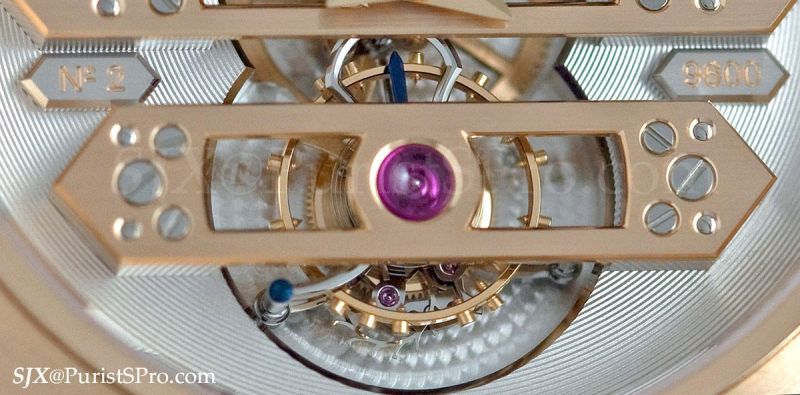
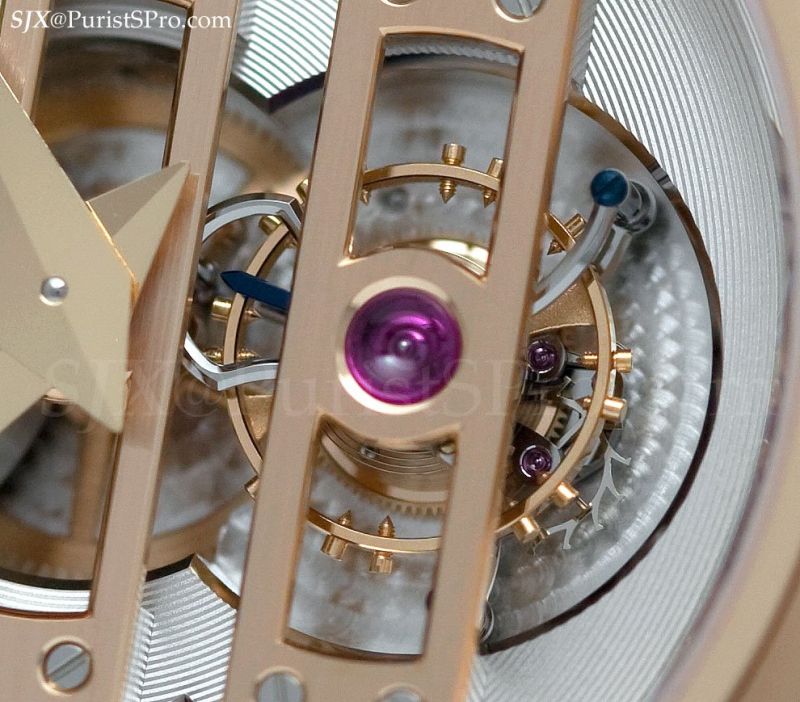
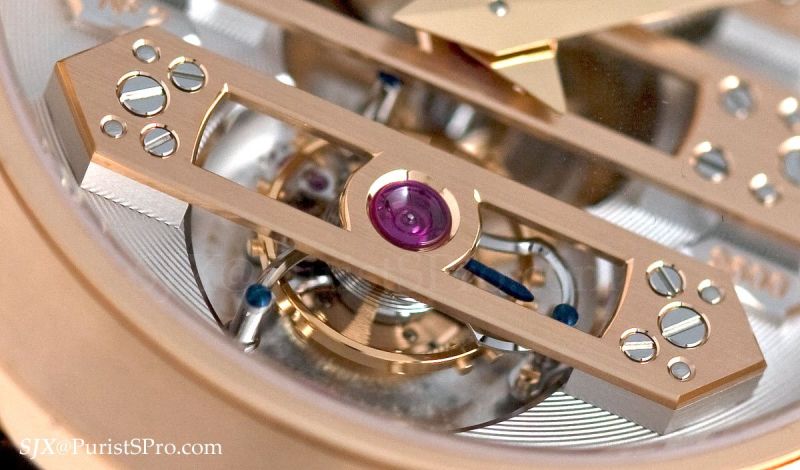
This version is similar to the square cased Vintage 1945 tourbillon offered last year with its straight bridges inspired by a vintage pocket watch. Unusually though this is housed in a rose gold case that is 41 mm wide, making it the largest round, tourbillon-only Three Gold Bridges.
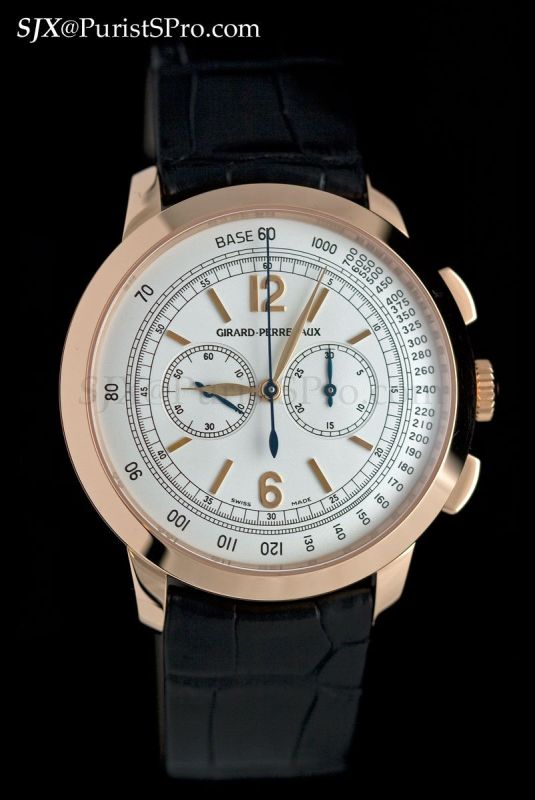
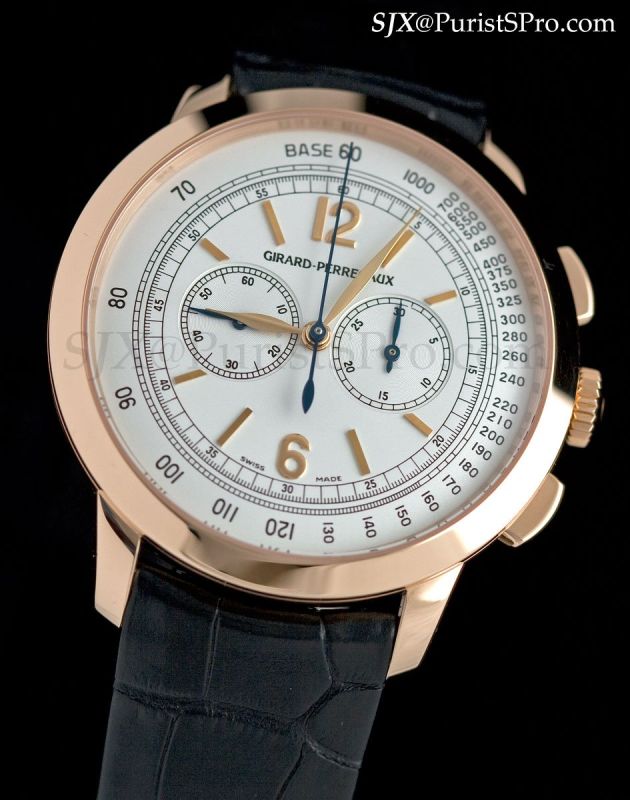
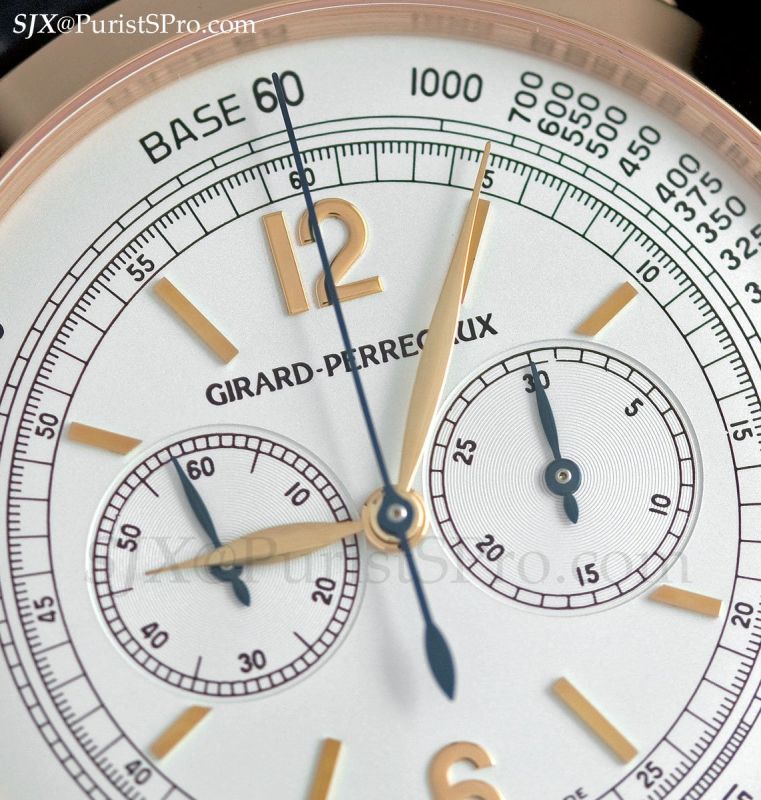
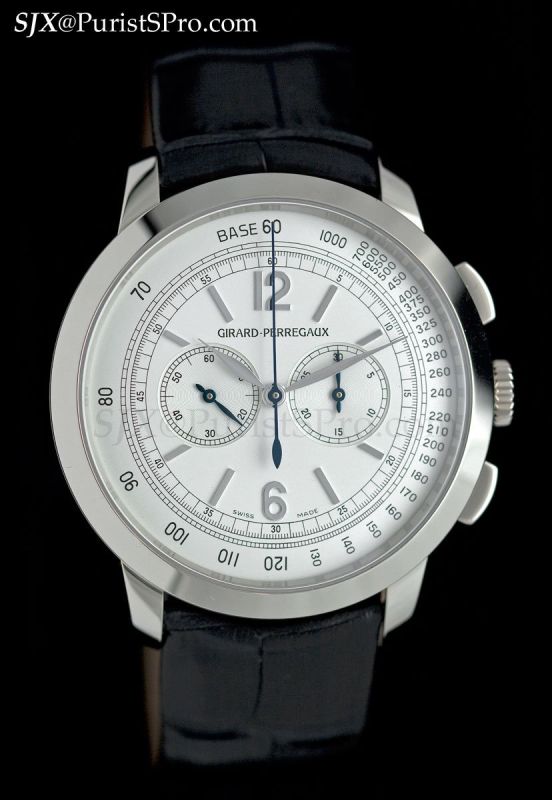
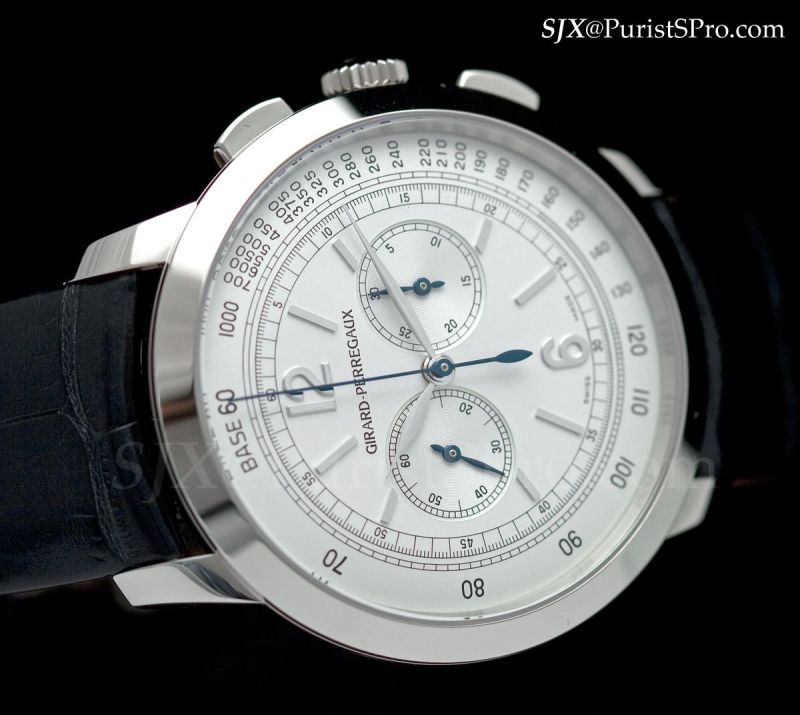
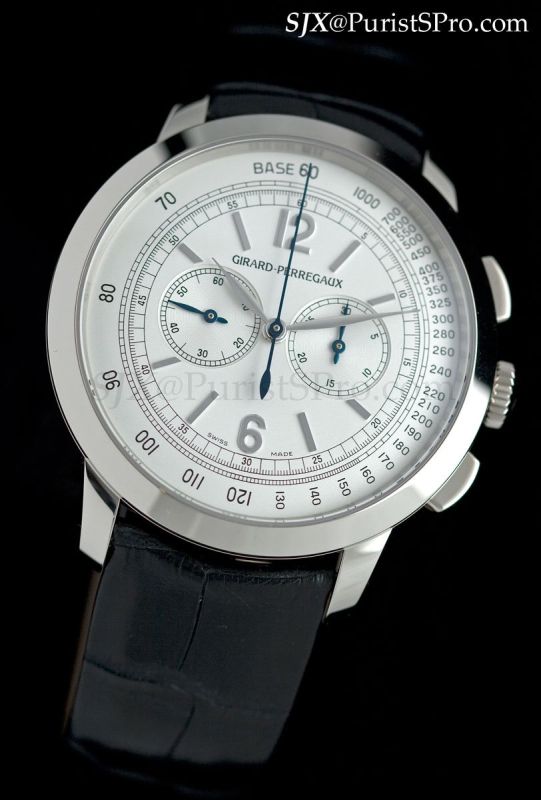
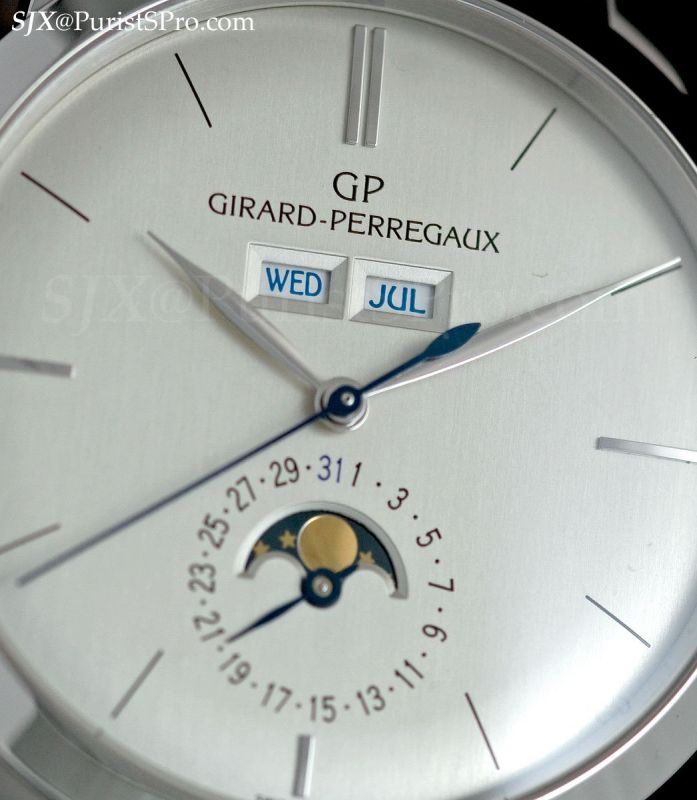
Several new models were added to the Vintage 1966 range of round, formal watches. The first is a chronograph, 40 mm in diameter in rose or white gold. Despite its vintage aspirations this watch has the proportions of a contemporary timepiece with a wide tachymetric scale on the dial due to the small (10.5 ’” or about 24 mm) movement. But it remains a fine-looking watch that sits in the segment of a high quality and mid-priced retro-look chronograph.
Rose gold followed by white gold
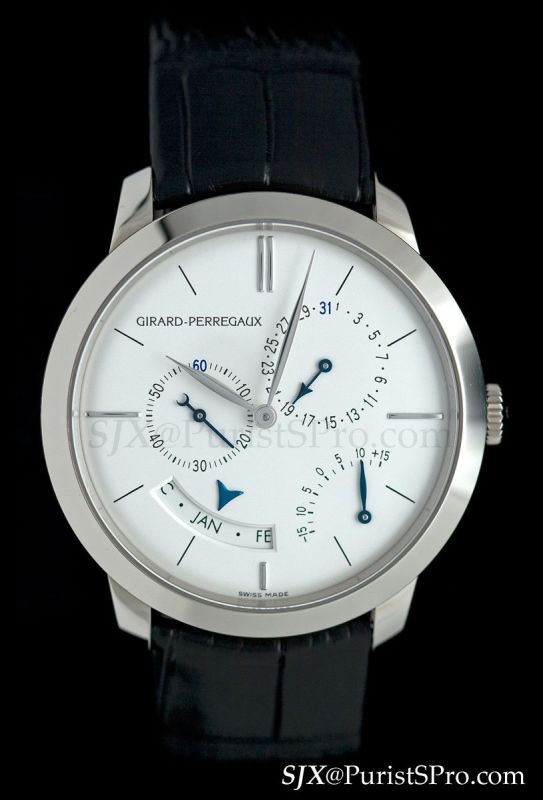
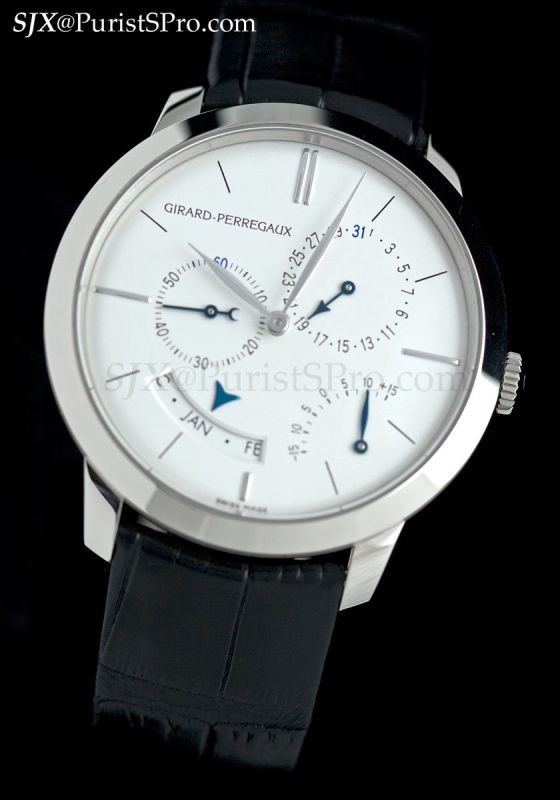
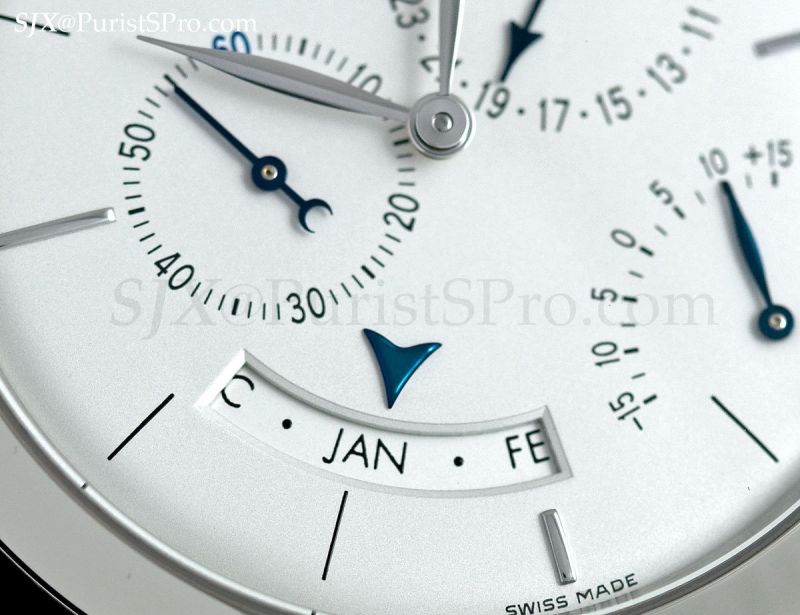
Last year GP unveiled the Vintage 1966 Annual Calendar with Equation of Time in rose gold, this year it is presented in white gold.
The other two new Vintage 1966 models are a pair of palladium-cased limited editions. Each limited to 199 pieces, they are the Full Calendar and Small Second respectively. Both are 40 mm in diameter with silver dials and blue accents giving them a restrained, serene look.
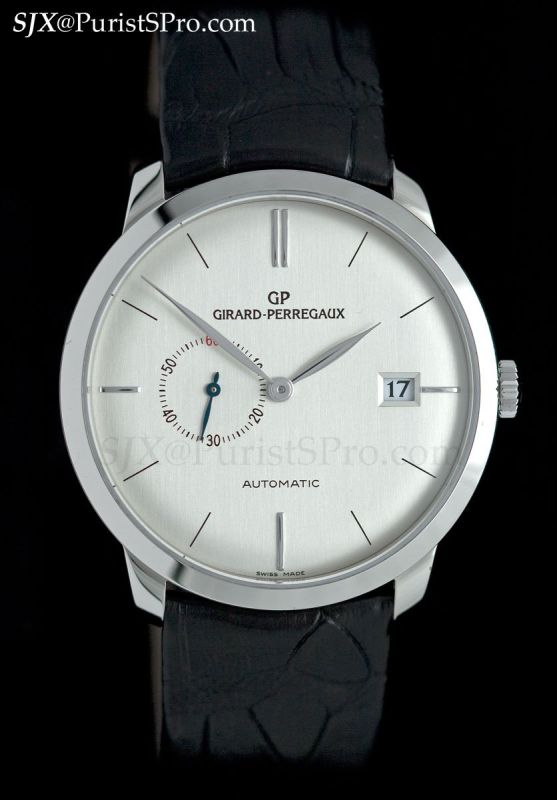
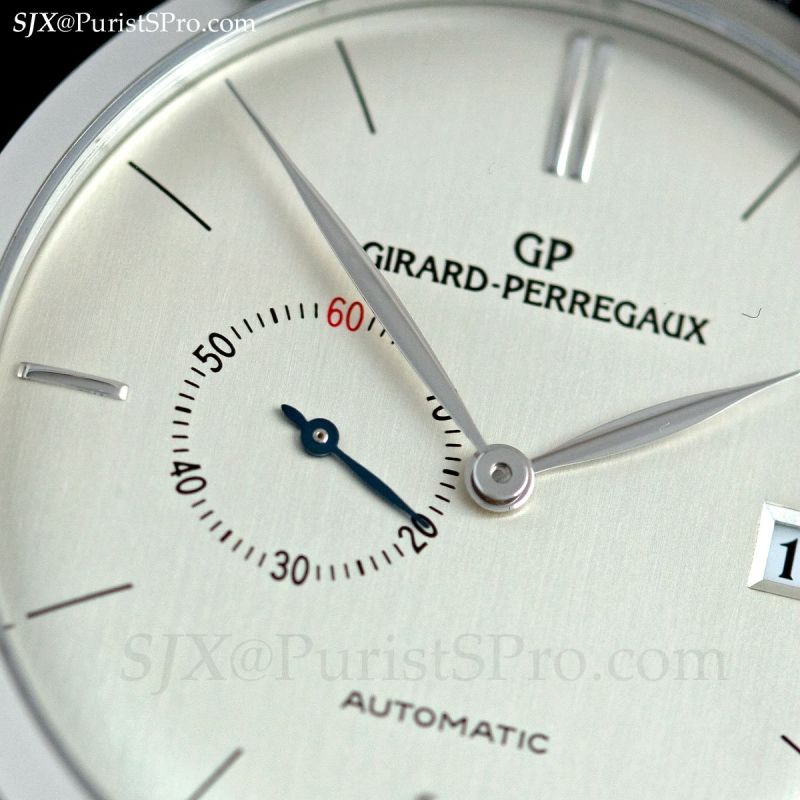
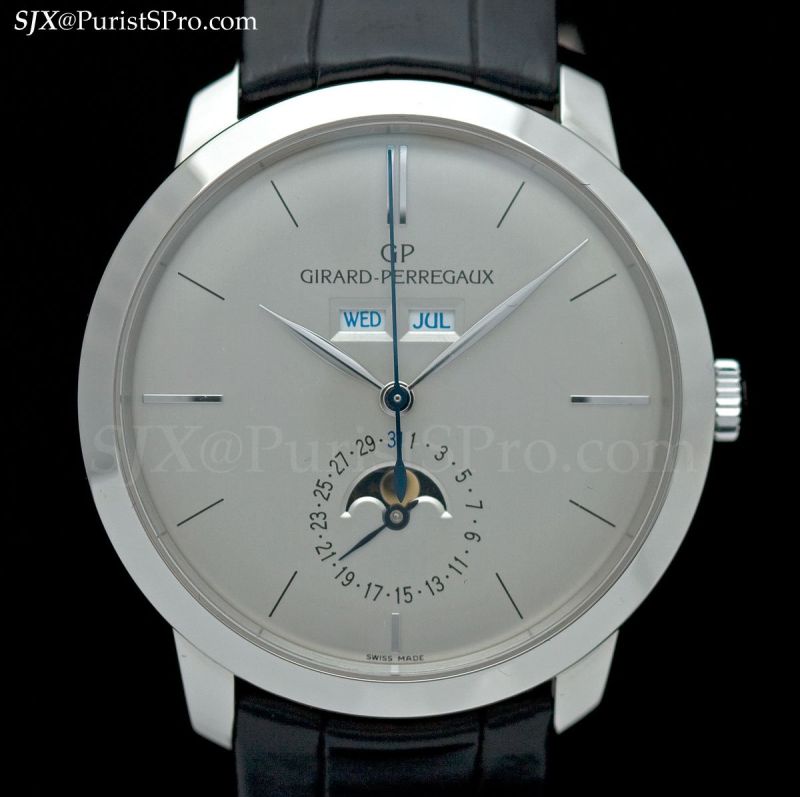
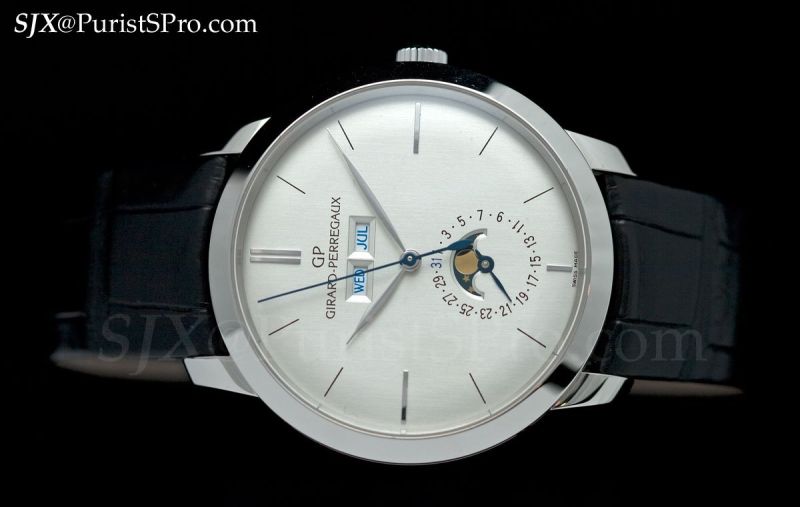
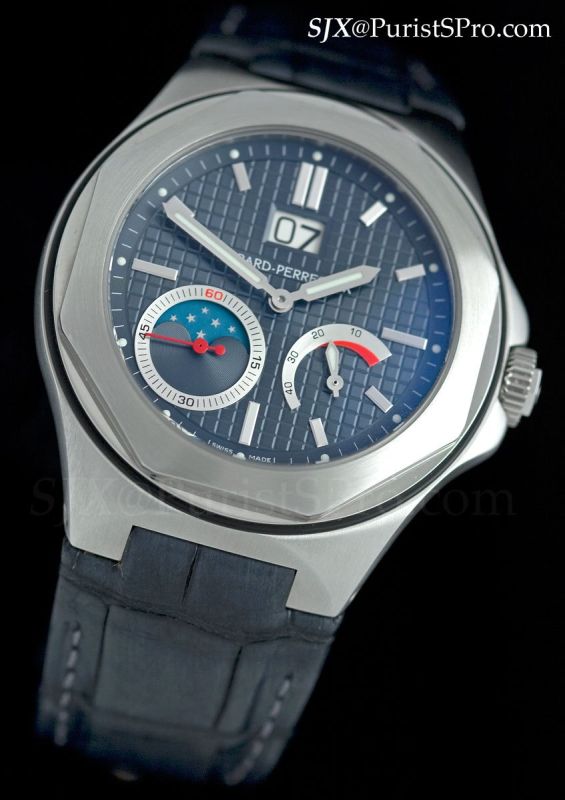
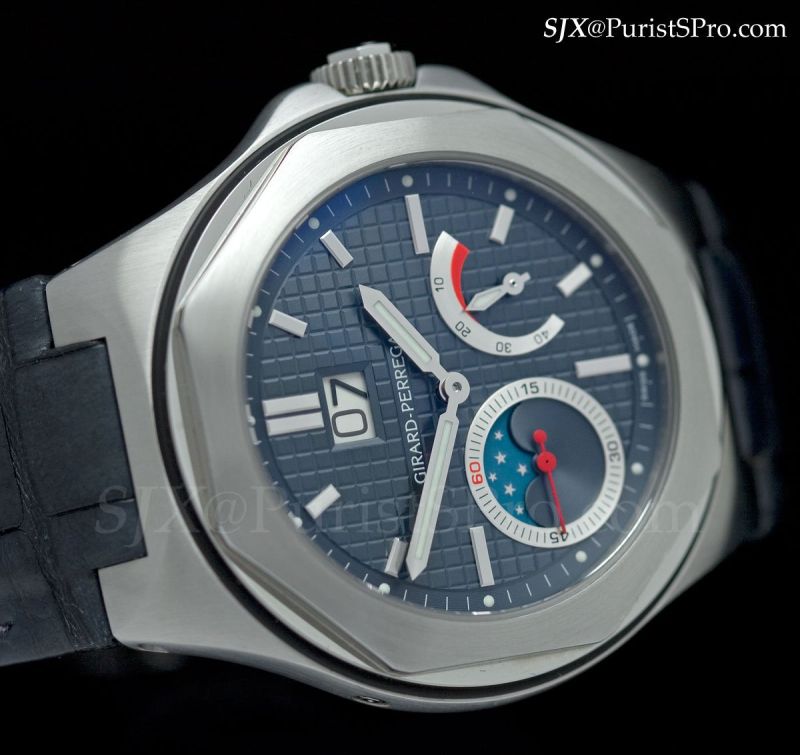
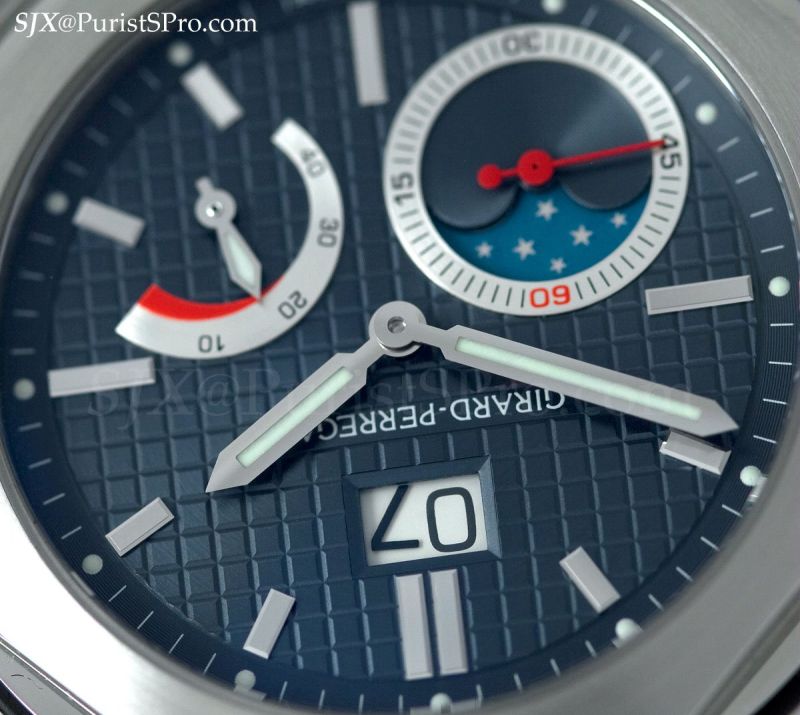
One of the most interesting watches GP unveiled is the Laureato Quartz. Mechanically it is a run of the mill quartz watch, albeit handsomely finished, but it is notable because it is a high-end quartz watch for men, which is rare.
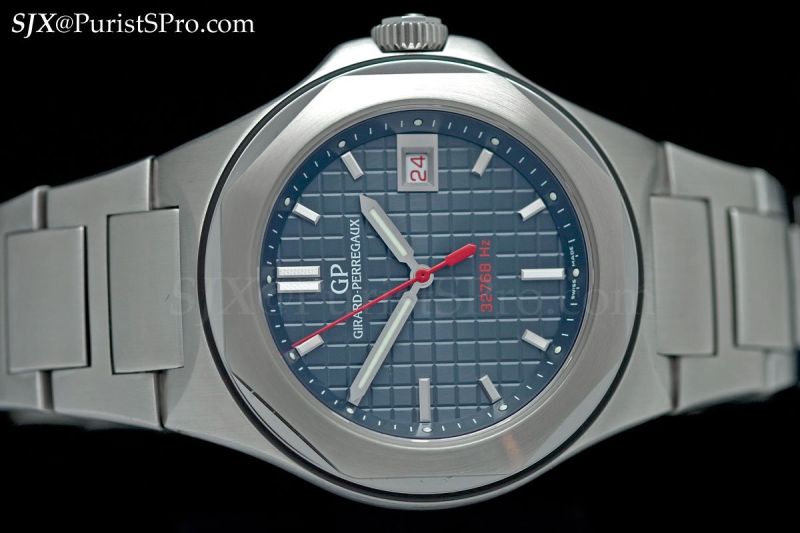
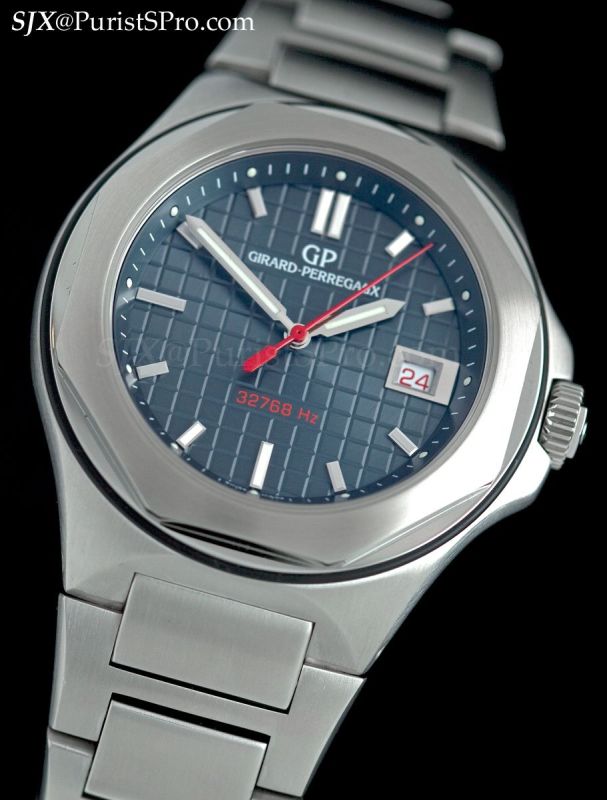
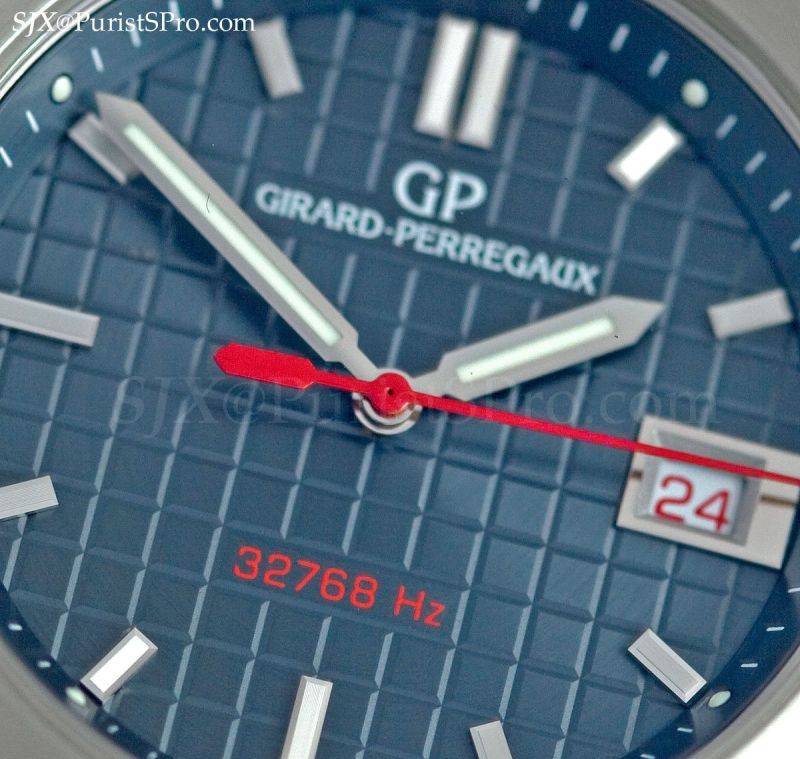
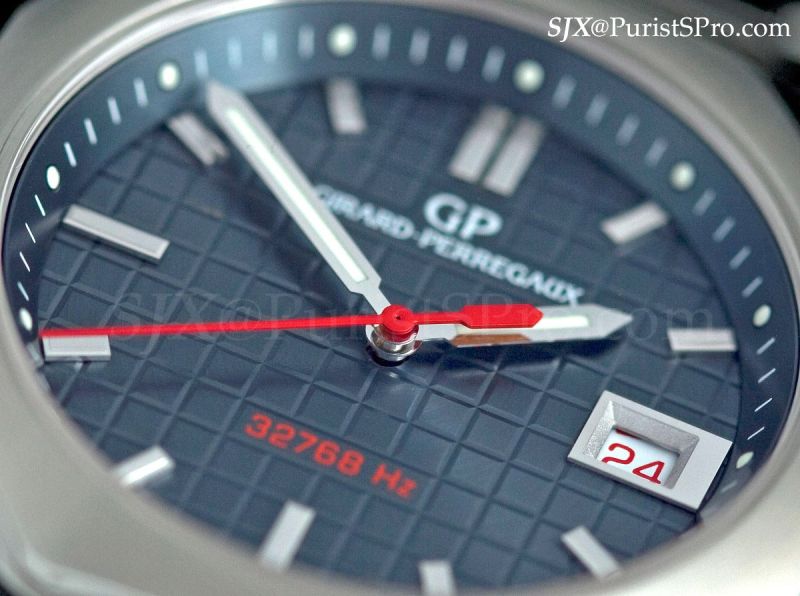
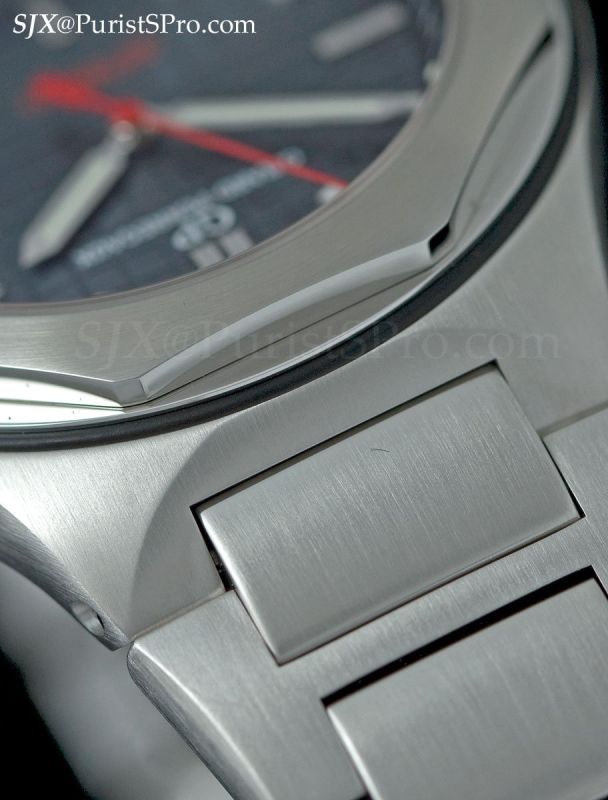
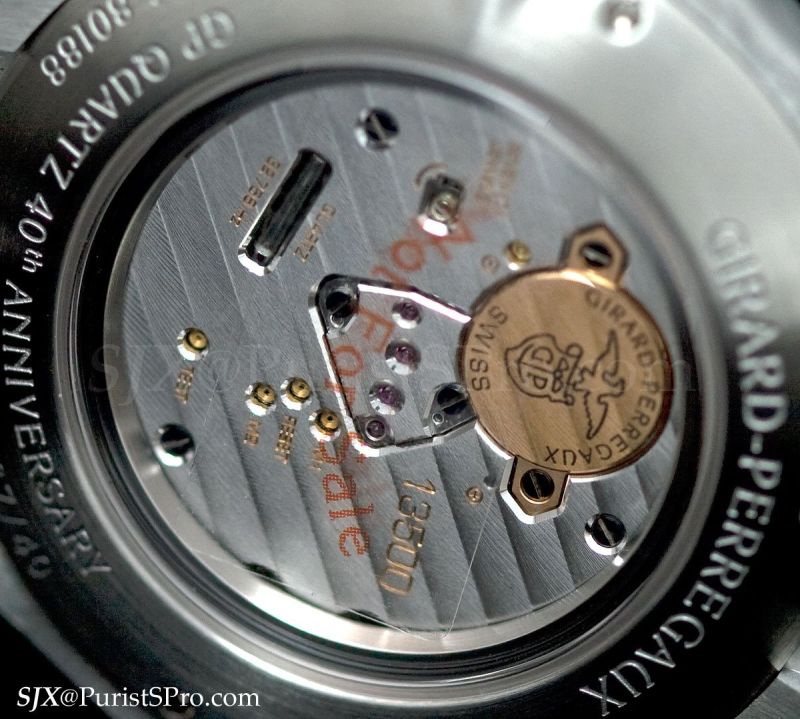
This is a 40 piece limited edition to make the 40th anniversary of the first GP quartz calibre. And it is either a stroke of genius or evidence of a glaring lack of ideas. This is likely a one-off, I doubt this marks the start of the return of luxury, Swiss quartz watches in a big way but I could be wrong.
The other new model for the Laureato range is the Big Date that is now available on a strap.
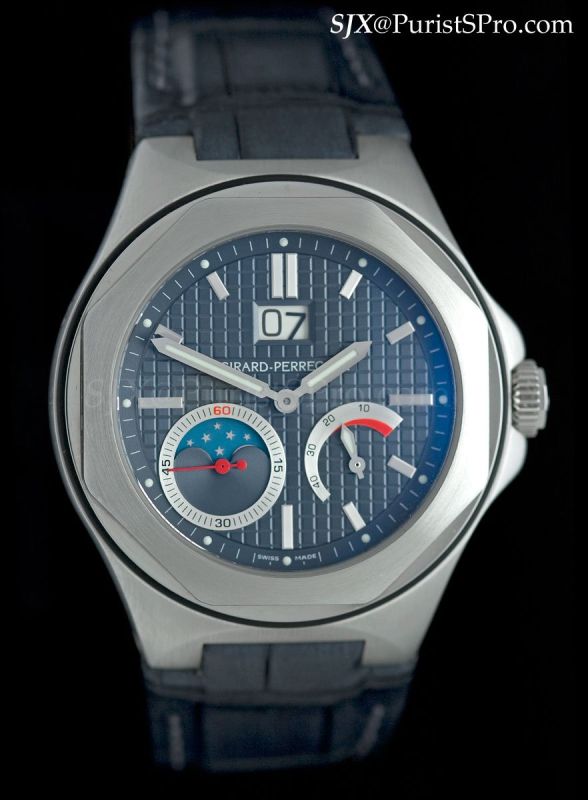
The well known ww.tc range also got two additions. The first is the ww.tc Small Second in rose gold. At 41 mm it is a men’s watch but this version would look right on a lady’s wrist too.
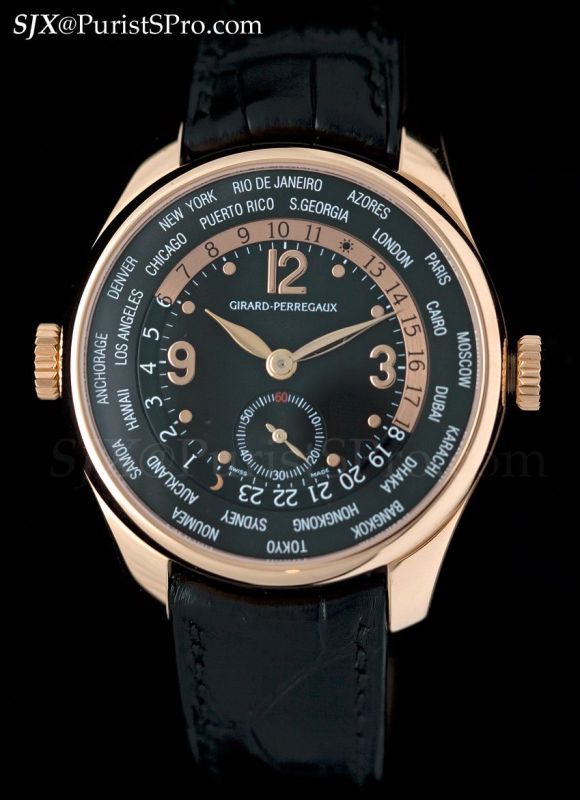
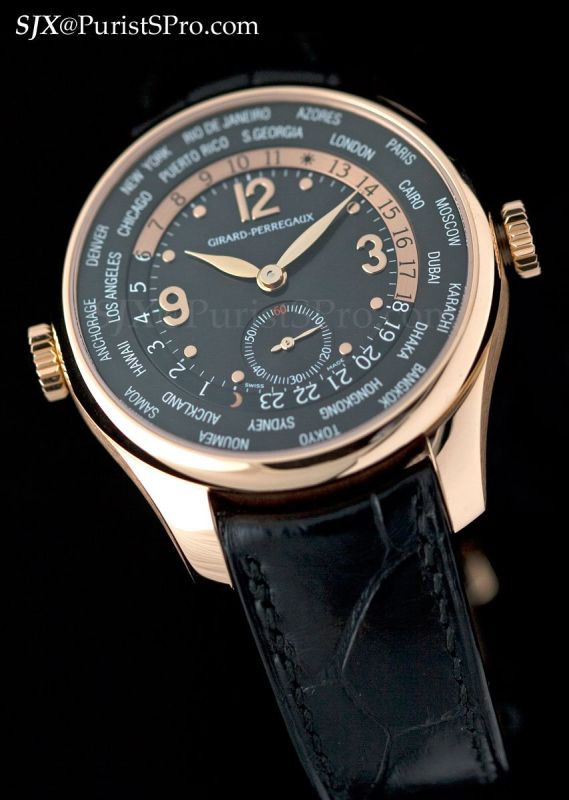
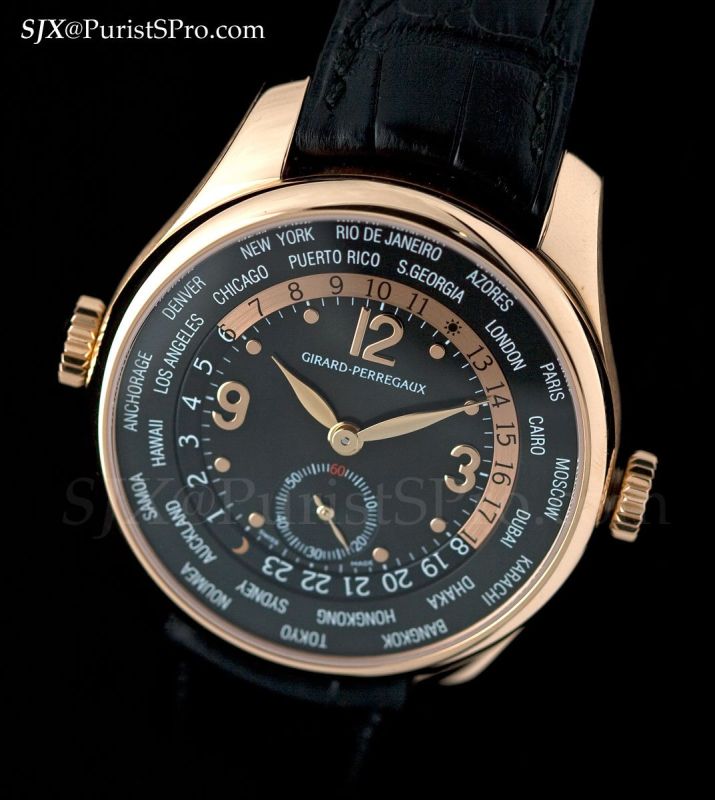
The other is the ww.tc chronograph in steel. Previously the ww.tc chronograph in steel was only made as a limited edition, this is regular production.
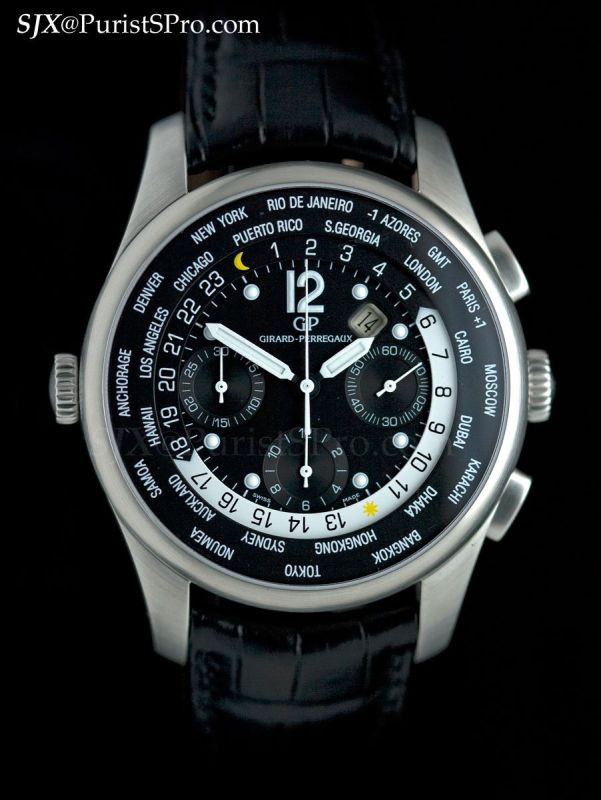
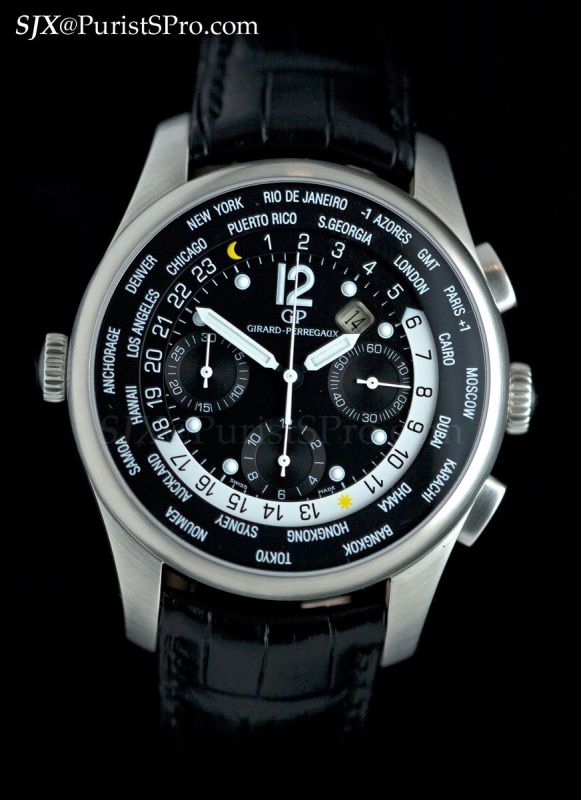
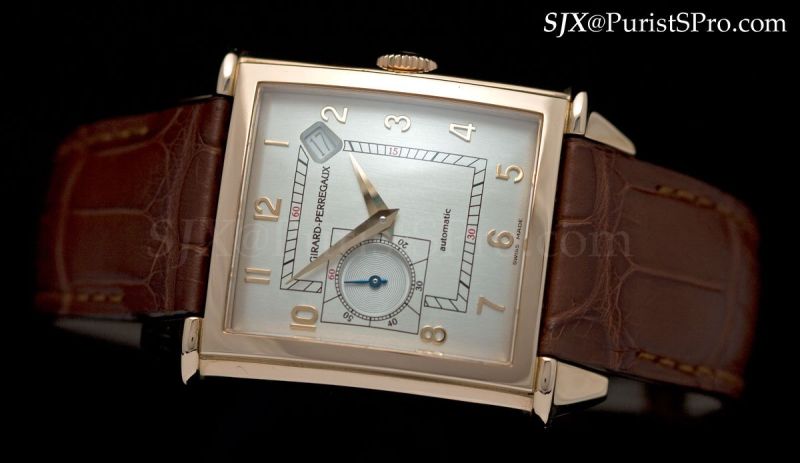
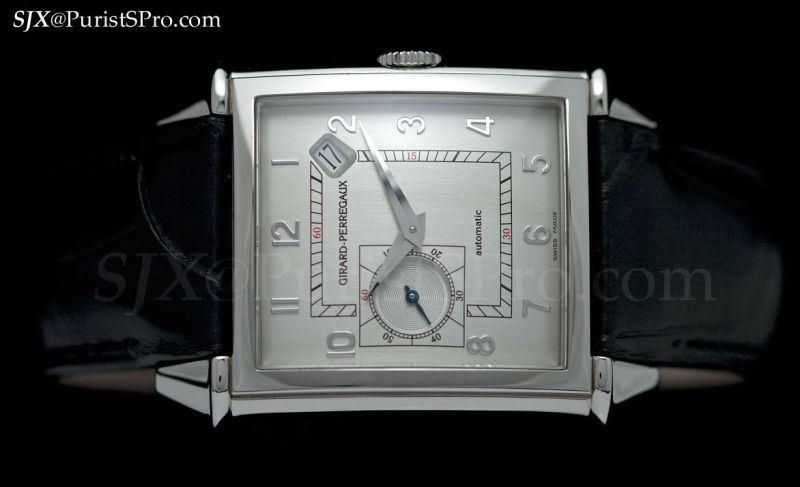
Finally the Vintage 1945 is available in a larger, curved case. Last year saw the introduction of the Vintage 1945 automatic in a case that is curved on two axes, horizontally and vertically, this year’s addition is in a bigger case.
In rose then white gold
Thanks for your pics and thoughs, SJX.
My 2 GP Champions, this year, are the Vintage 66 Chrono, and the new World Time.
Smart move from GP!
Best,
Nicolas
SIHH 2010: Greubel Forsey

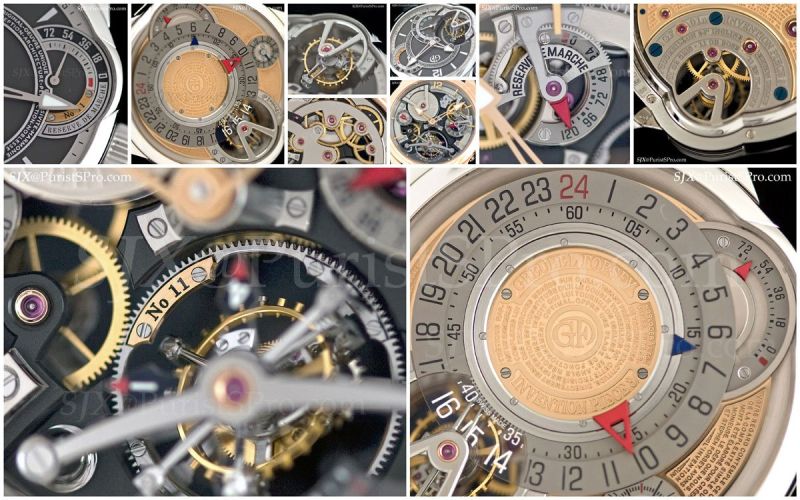
Greubel Forsey presented three impressive and exotic tourbillons – though each is a variation of an existing model – at their SIHH debut (no doubt thanks to Richemont’s 20% stake in the company). When I first encountered GF when it was established some years back I thought their watches appeared rather aimless in design. Yet the company has miraculously created a house style of sorts, such that all GF tourbillons do look like GF watches.
The three new watches presented this year further continue that distinctive style of wonderfully intricate and nerdy looking timepieces that further boast an extremely fine level of decoration.
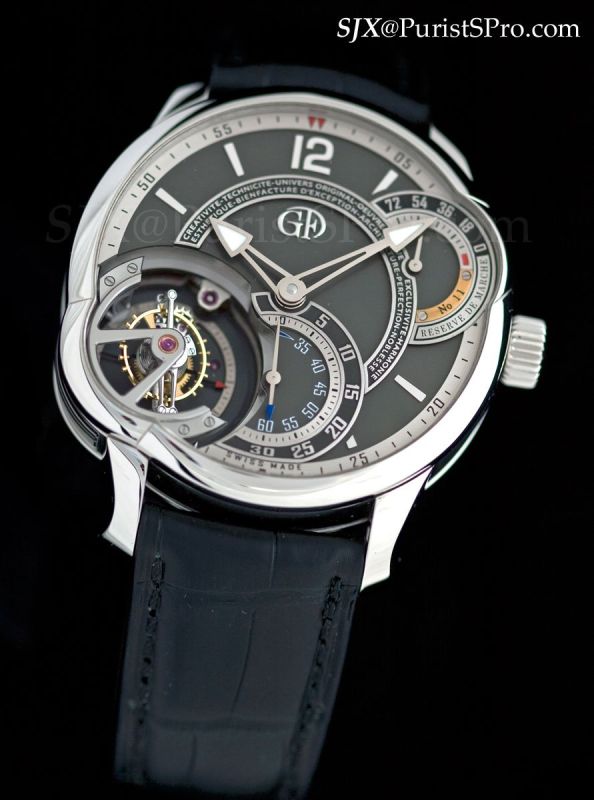
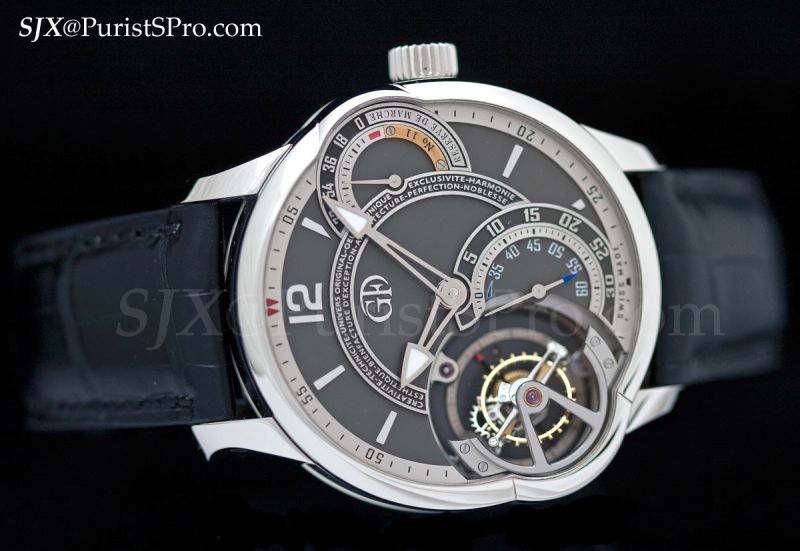
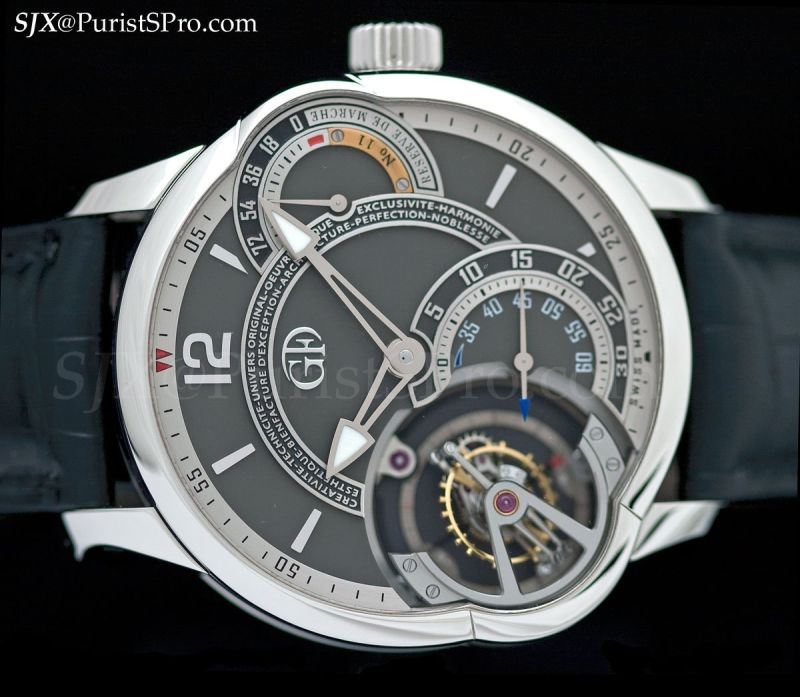
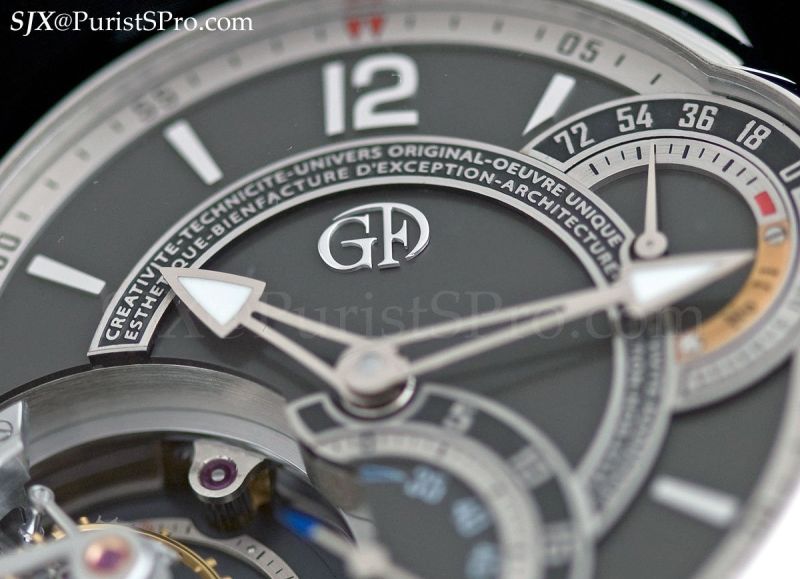
The first was the Tourbillon 24 Secondes. Though the model was introduced some years ago, this updated version features a new dial as well as a new triangular tourbillon bridge. The dial is blackened solid gold and multi-tiered with several lines of text as is Greubel Forsey tradition. However the real point of interest is the tourbillon cage which makes one rotation every 24 seconds, giving the watch a frenzied air that is somewhat lessened by the seconds hand that travels at a leisurely pace.
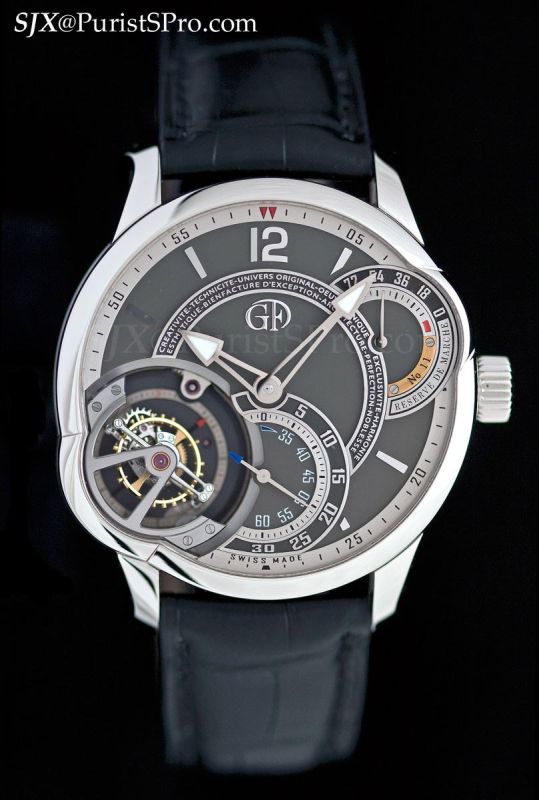
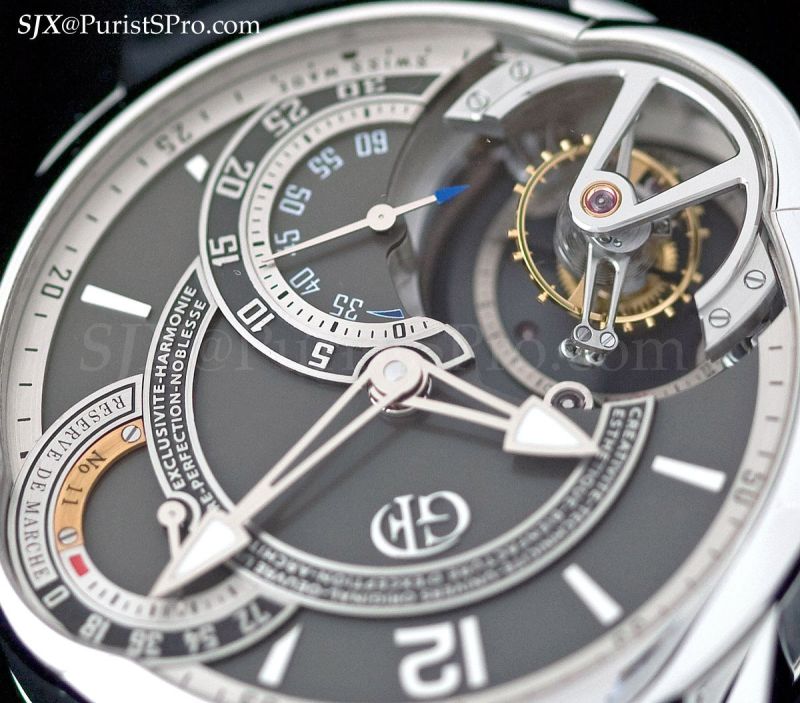
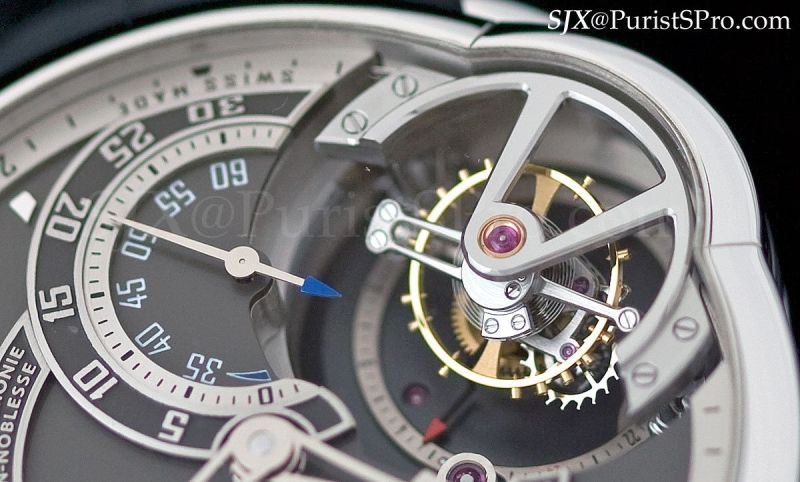
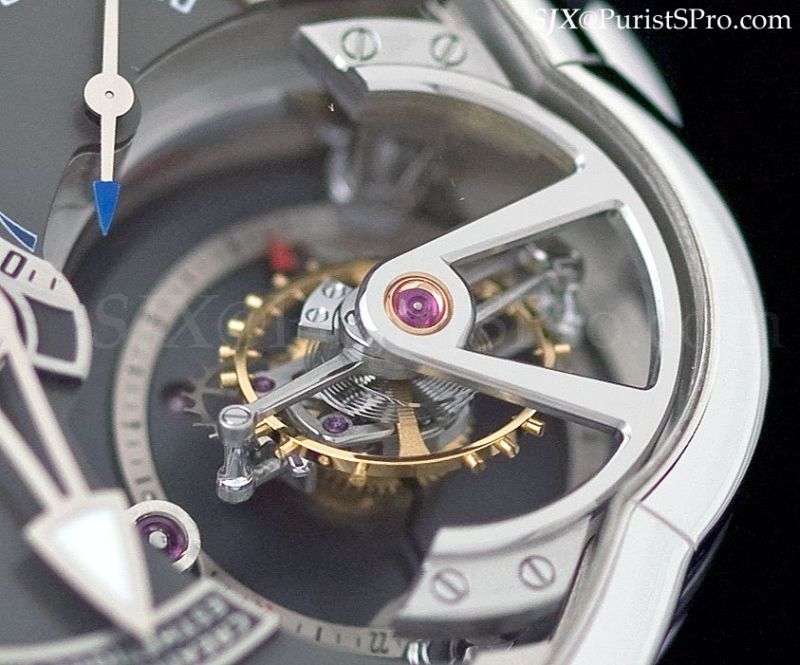
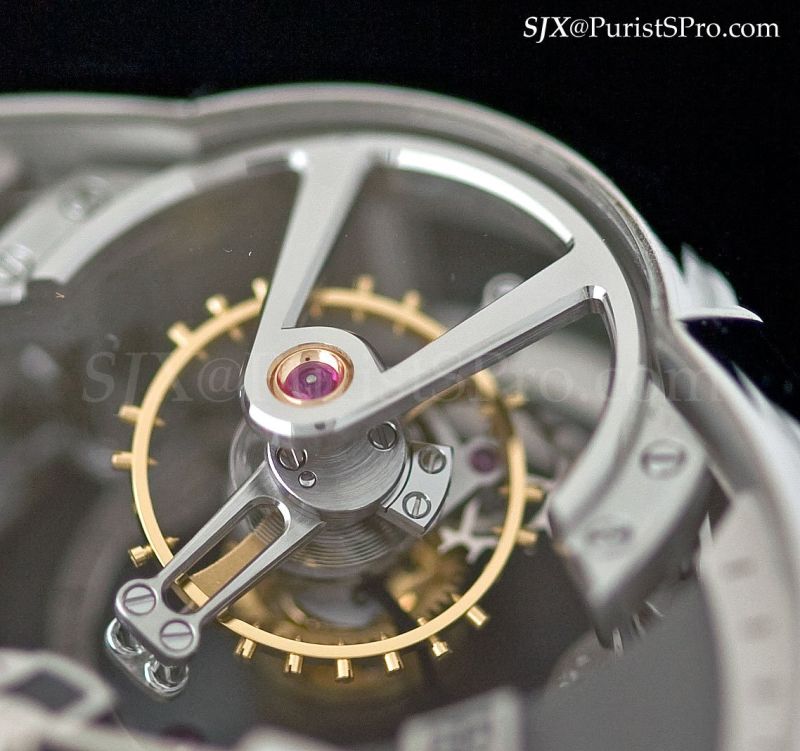
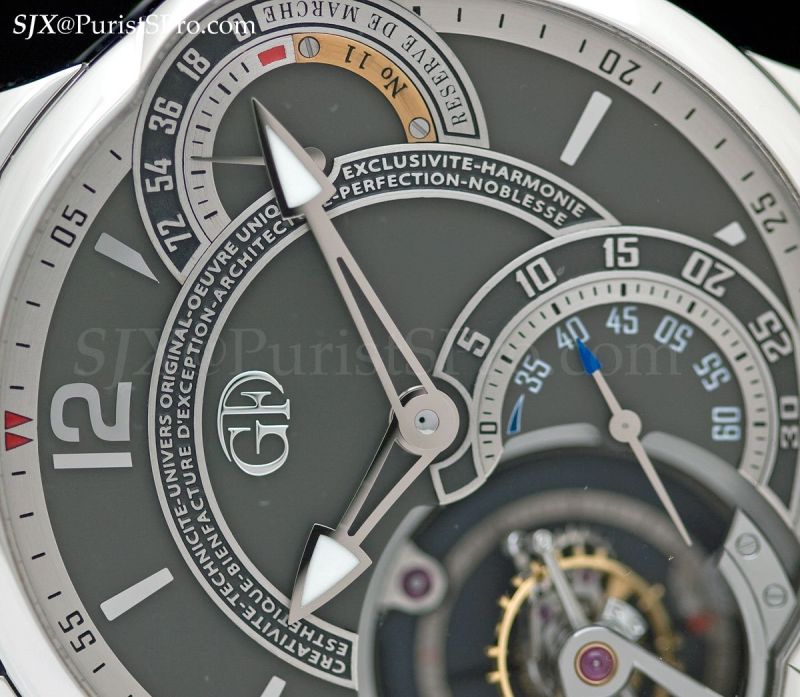
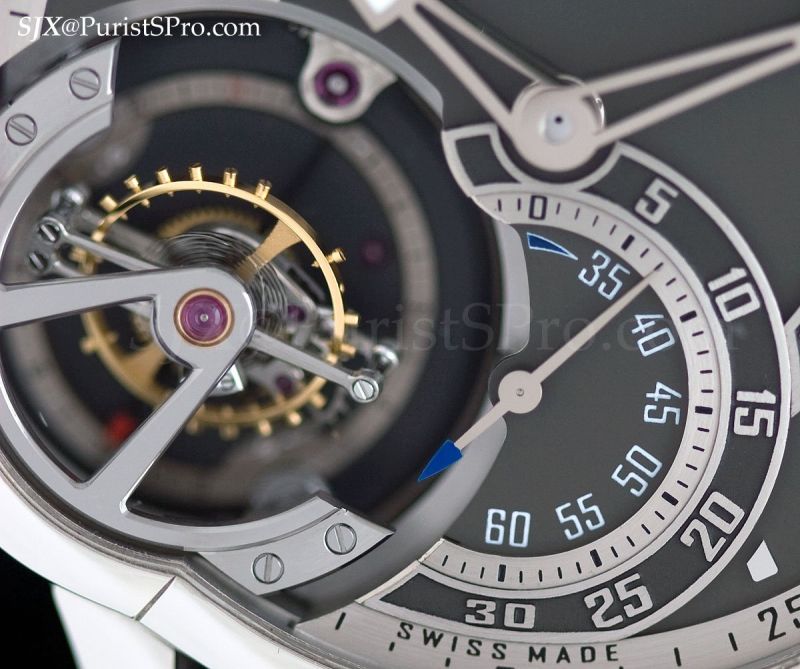
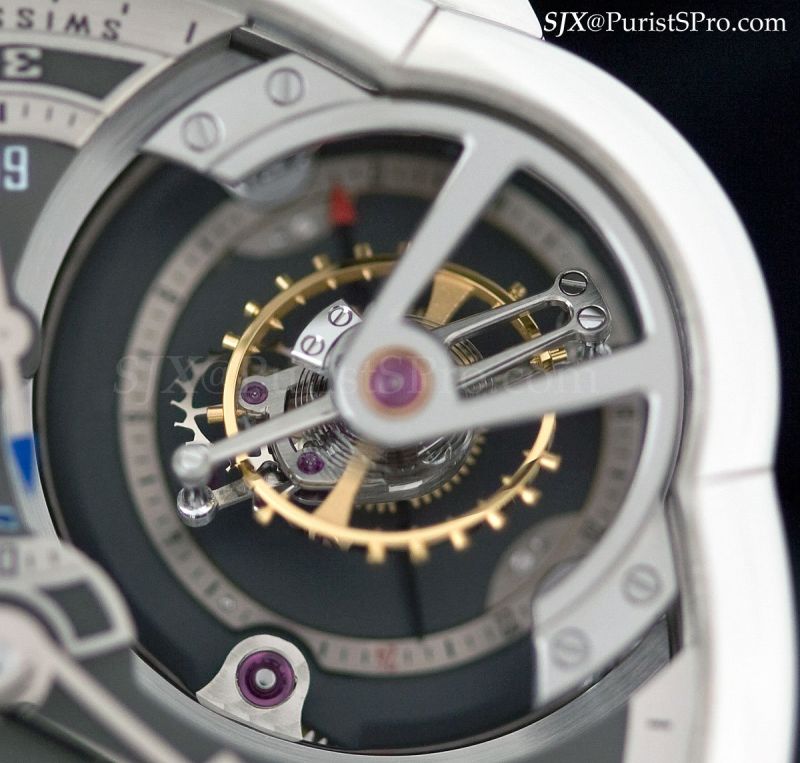
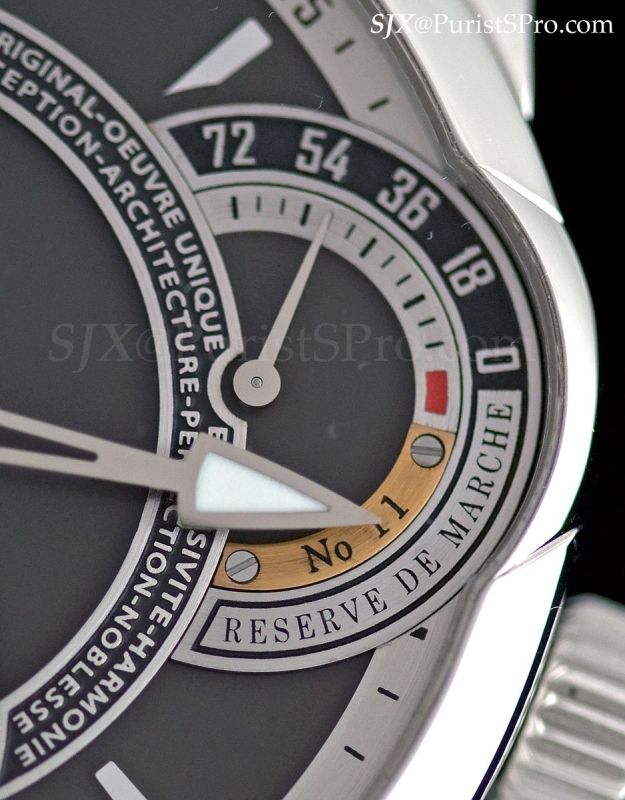
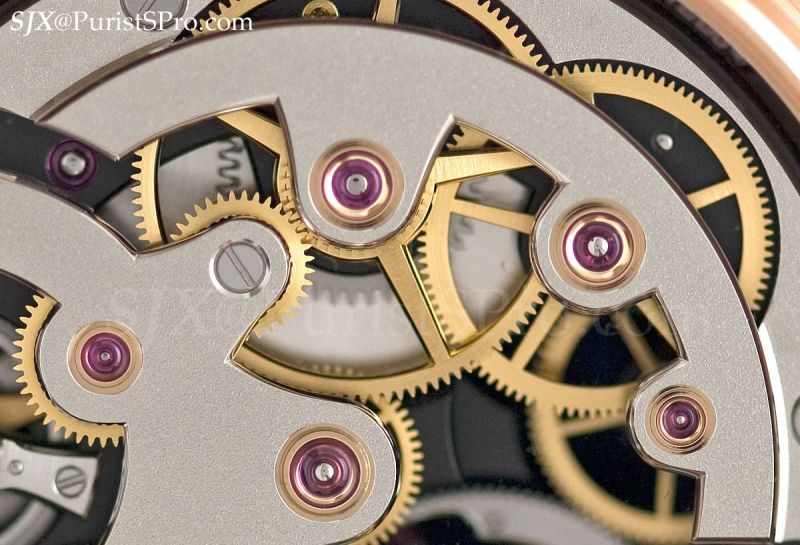
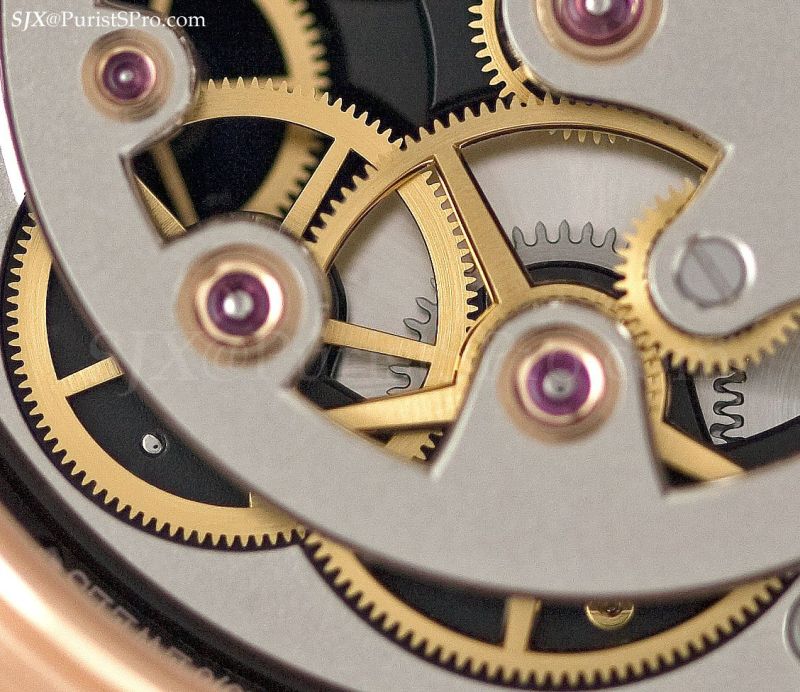
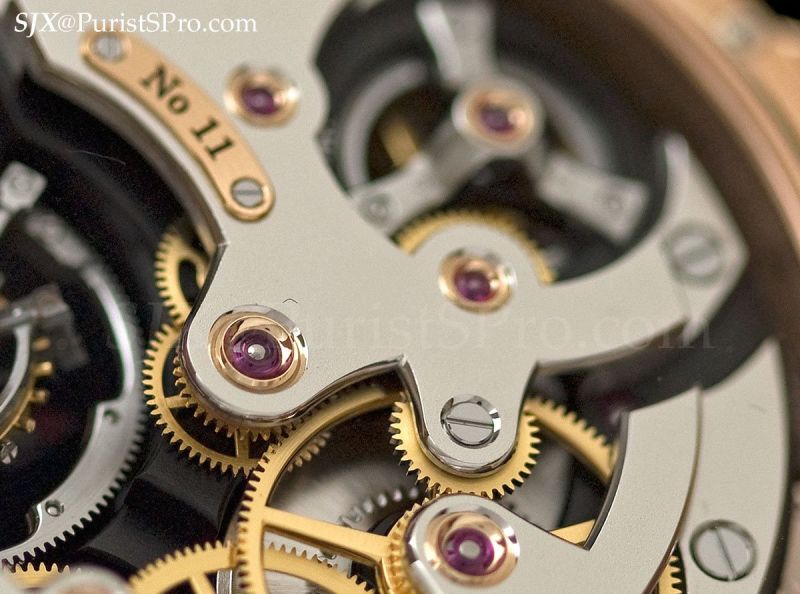
The second remarkable piece shown was the rose gold version of the Double Tourbillon Technique which was originally launched in white gold. Double refers to the twin axes of the tourbillon.
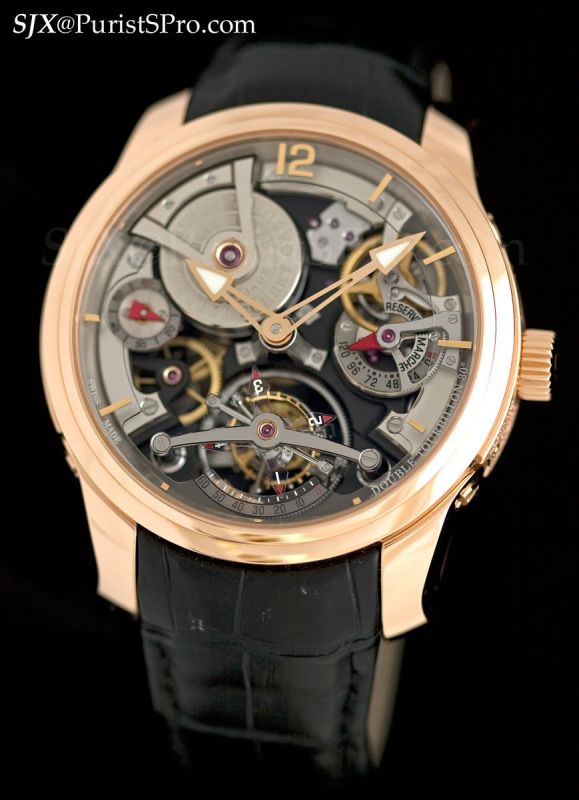
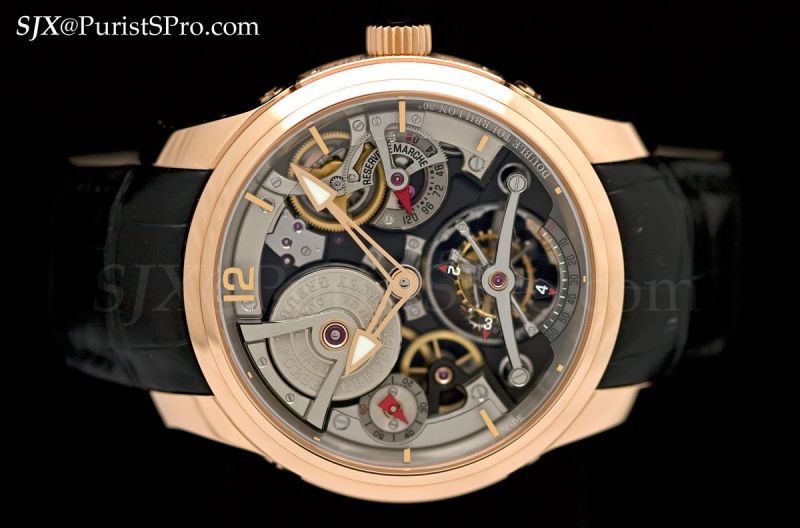
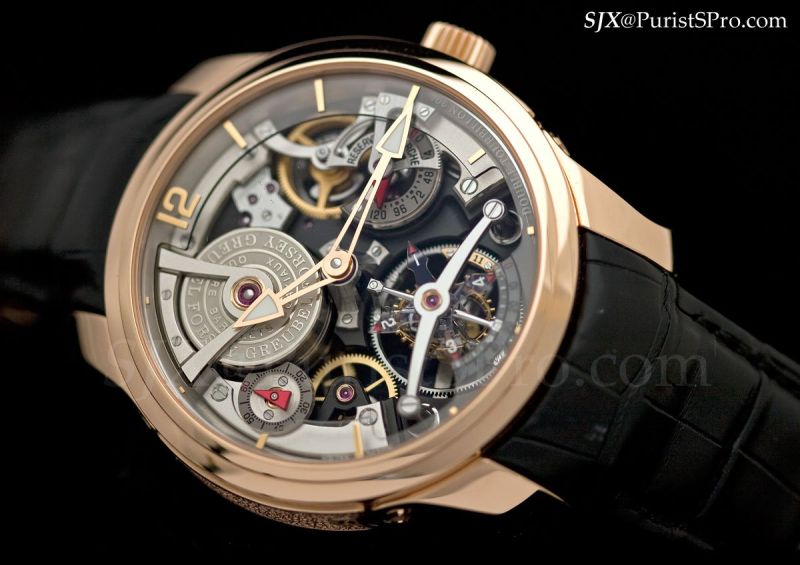
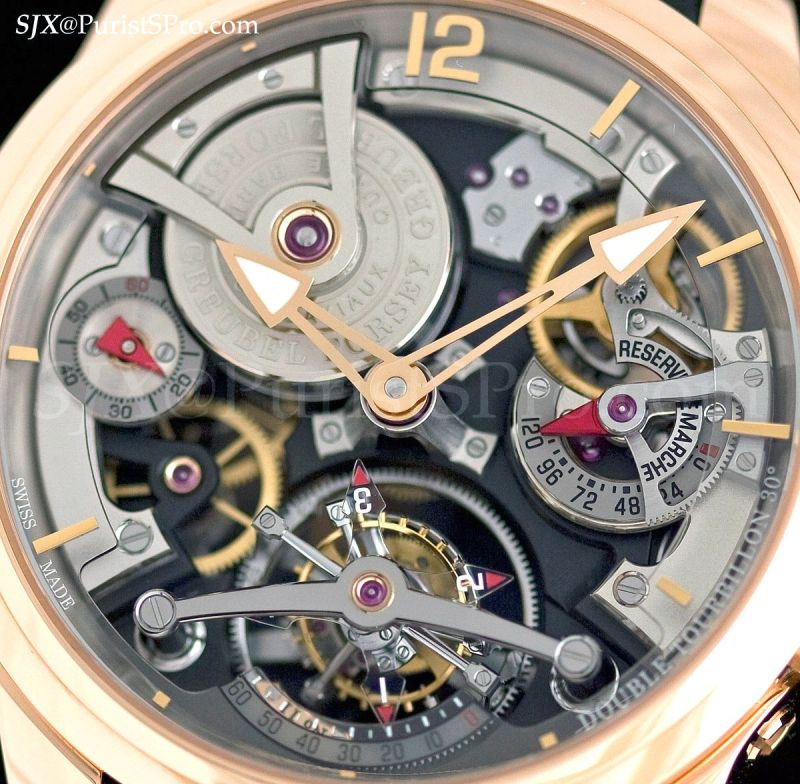
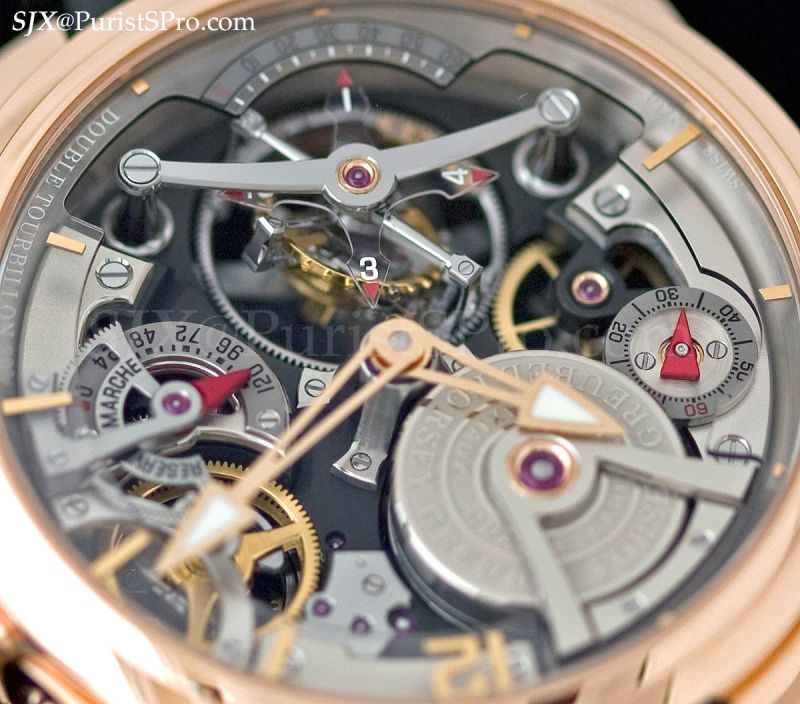
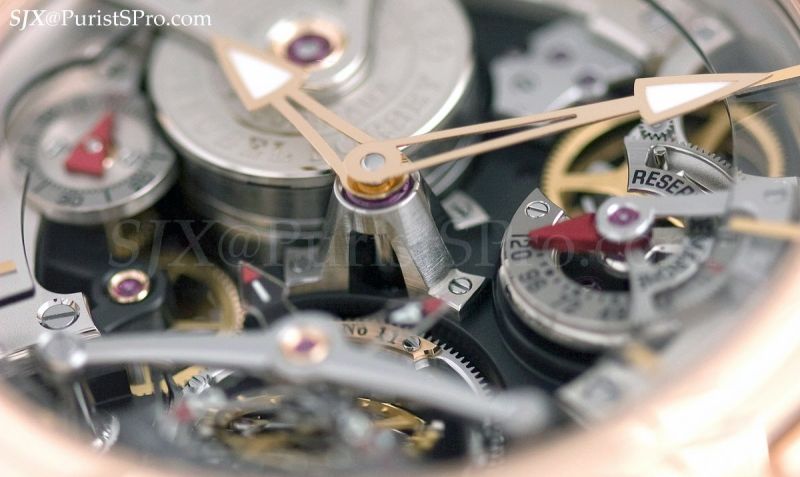
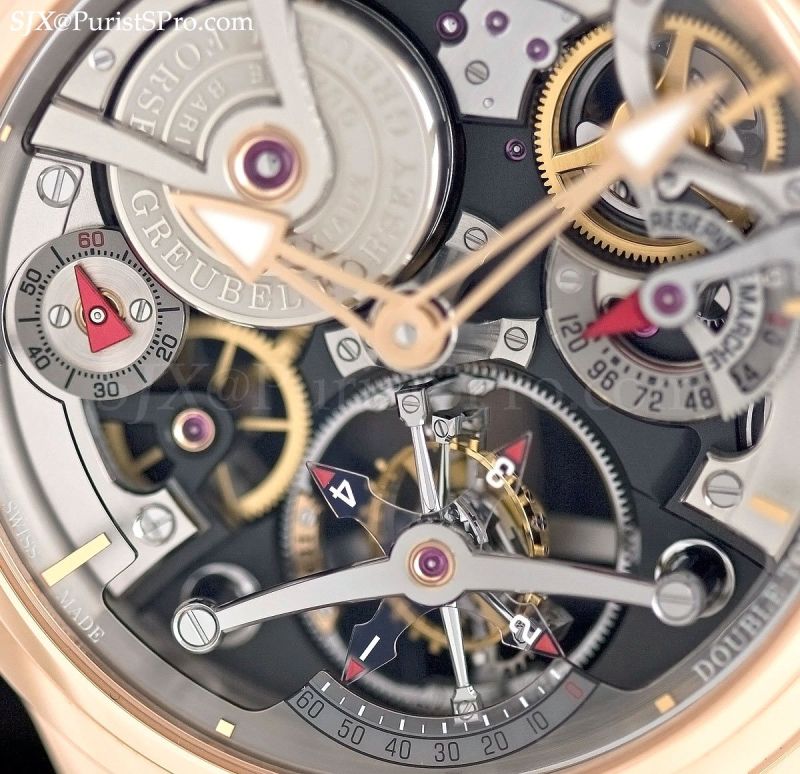
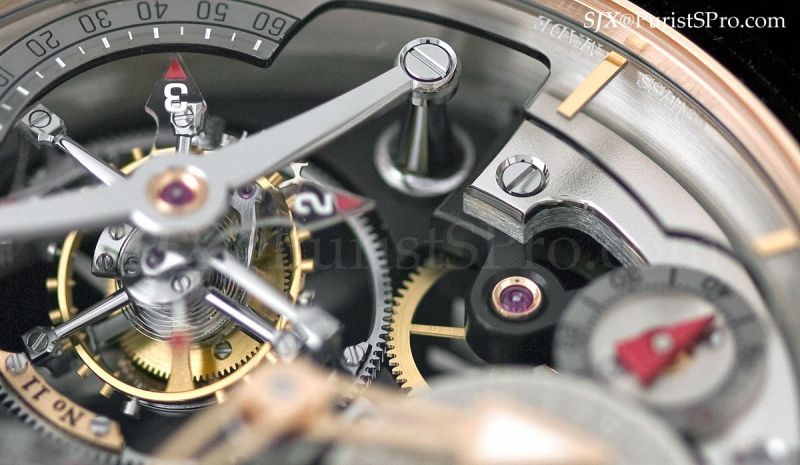
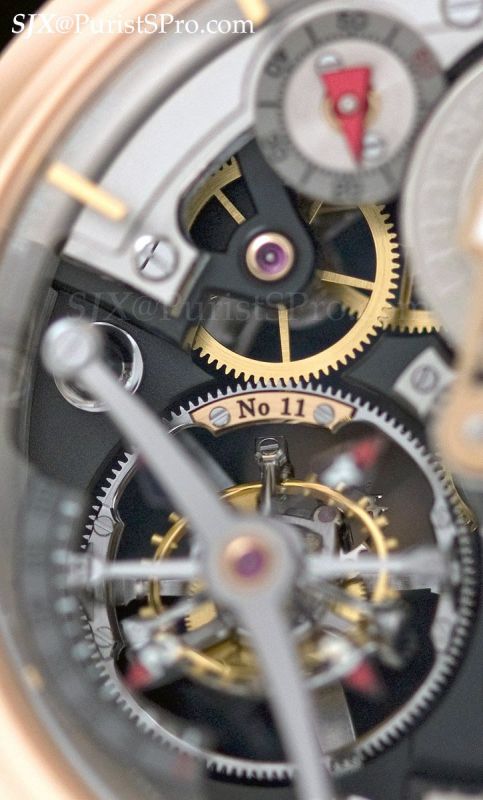
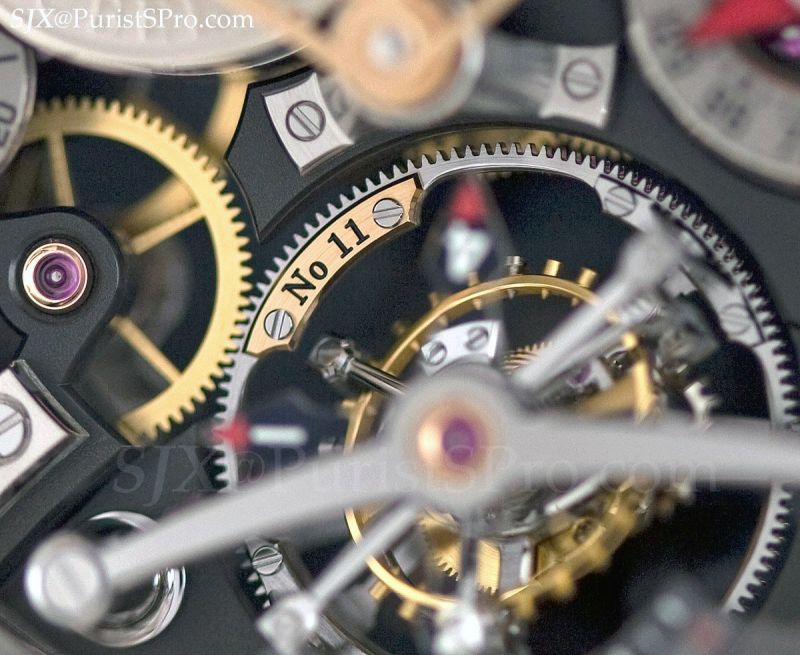
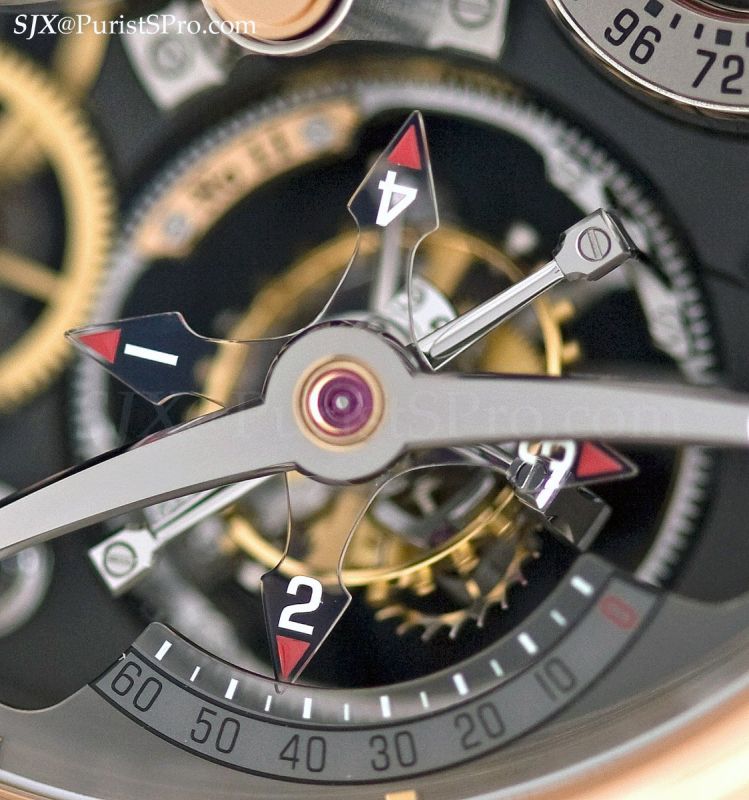
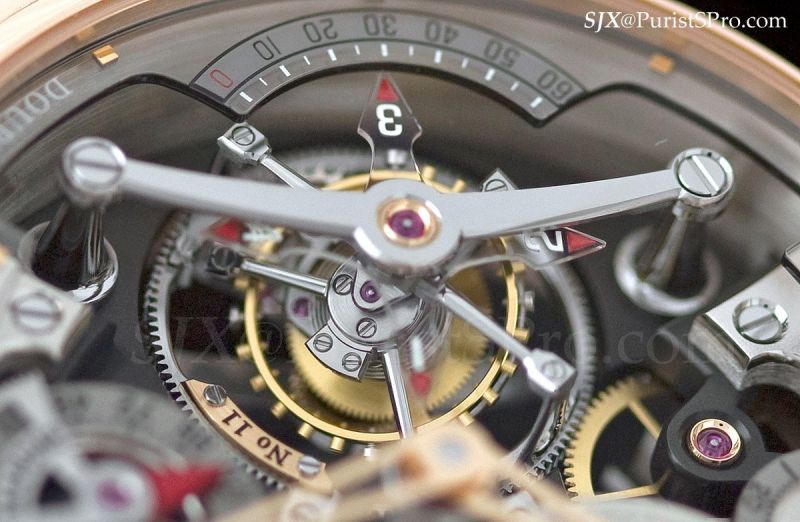
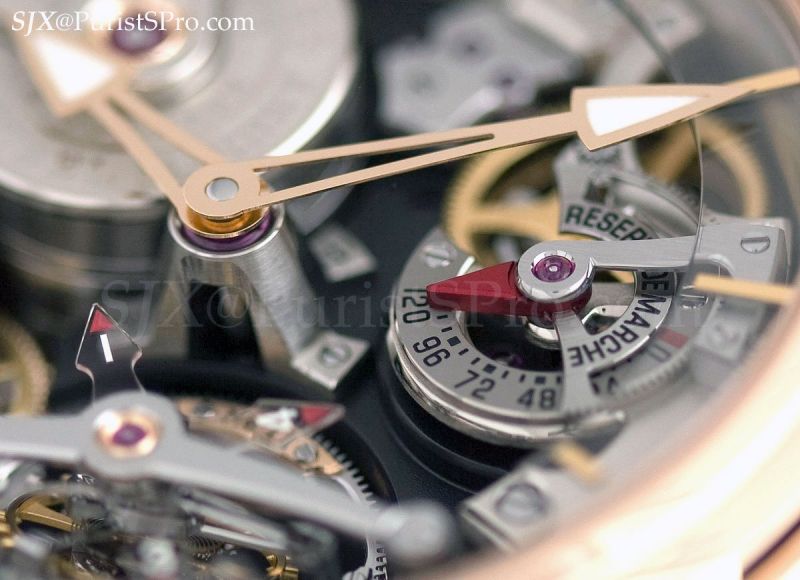
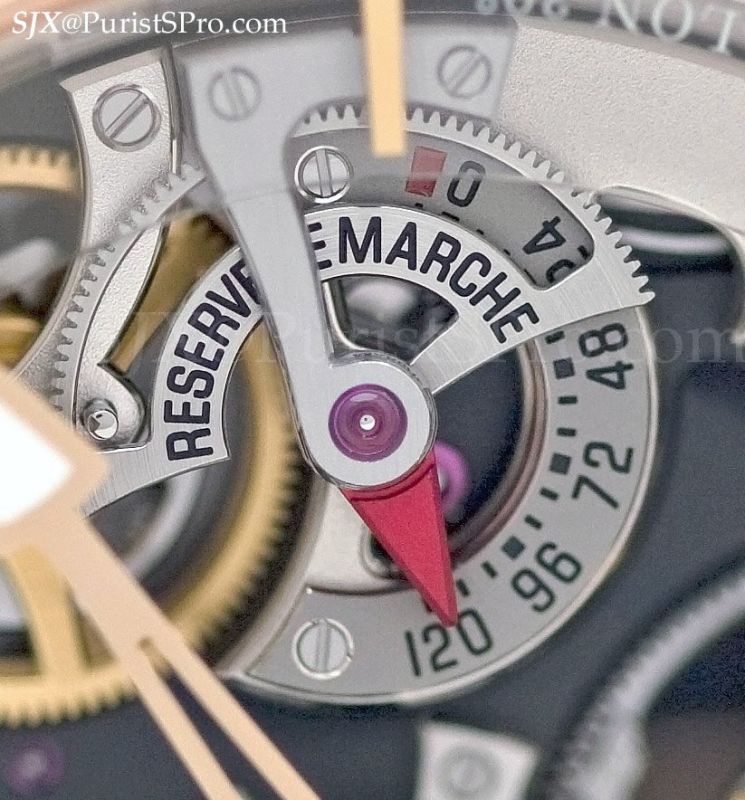
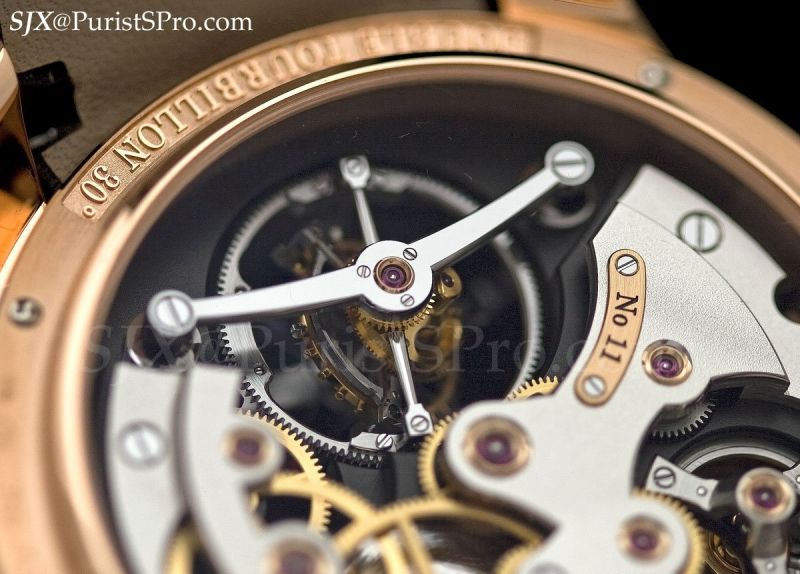
This watch has no dial, save for sapphire on the perimeter of the face, instead GF has thrown the dial side open and exposed the intricacies of the movement. As a consequence the watch has a remarkable sense of depth, and when viewed sideways the perception of depth is compounded by its height since it is fairly thick. I particularly like the three legged bridge that supports the hands, which has a remarkably architectural feel to it.
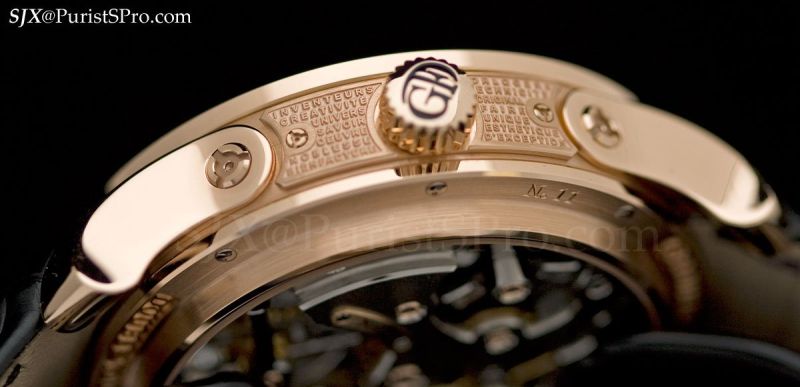
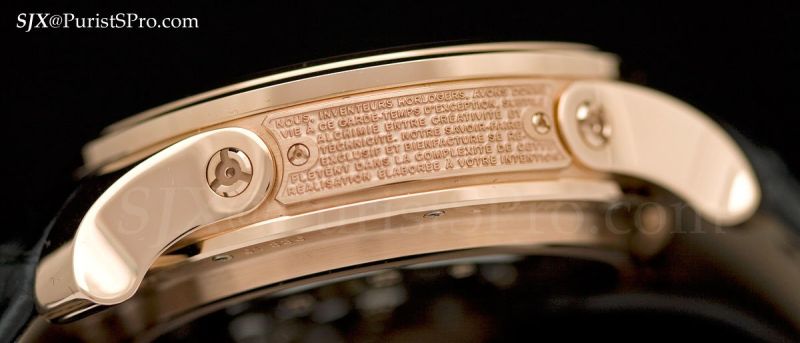
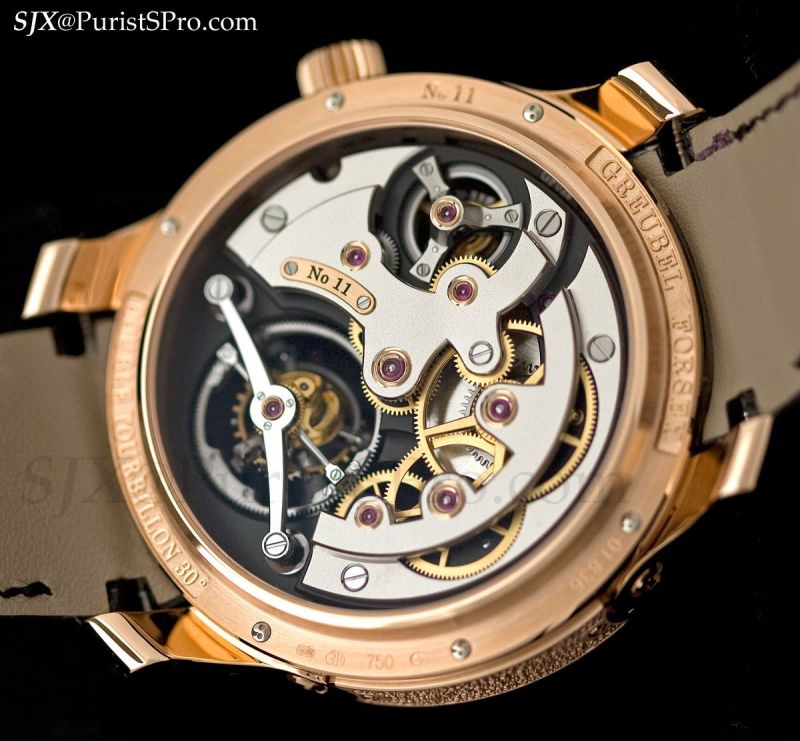
Lastly, the Invention Piece 3 was presented in a platinum case. This is actually a variant of the Tourbillon 24 Seconds Incline, clad in a wholly different dial and with a 24 hour time display instead of the usual 12 hour.
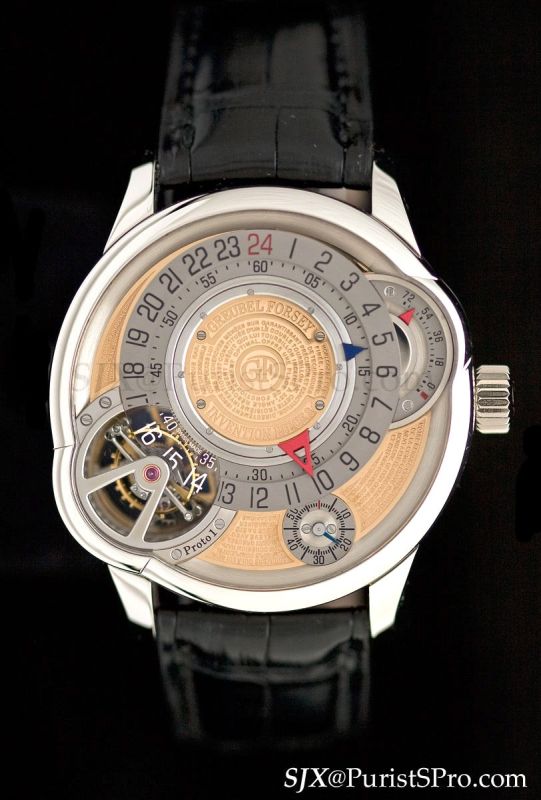
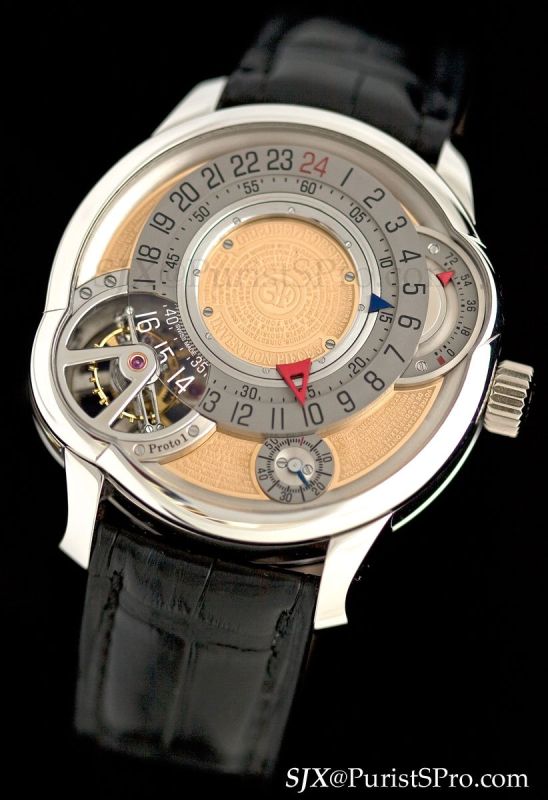
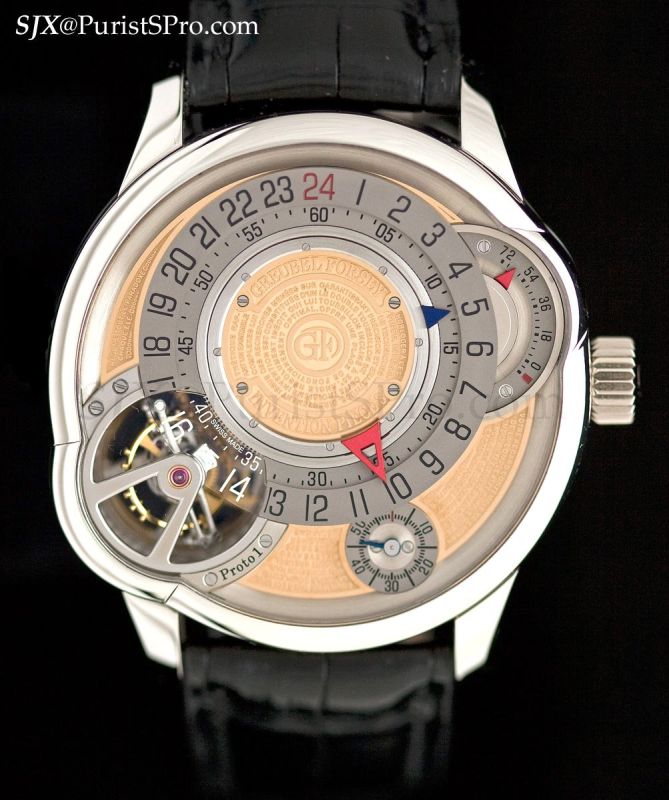
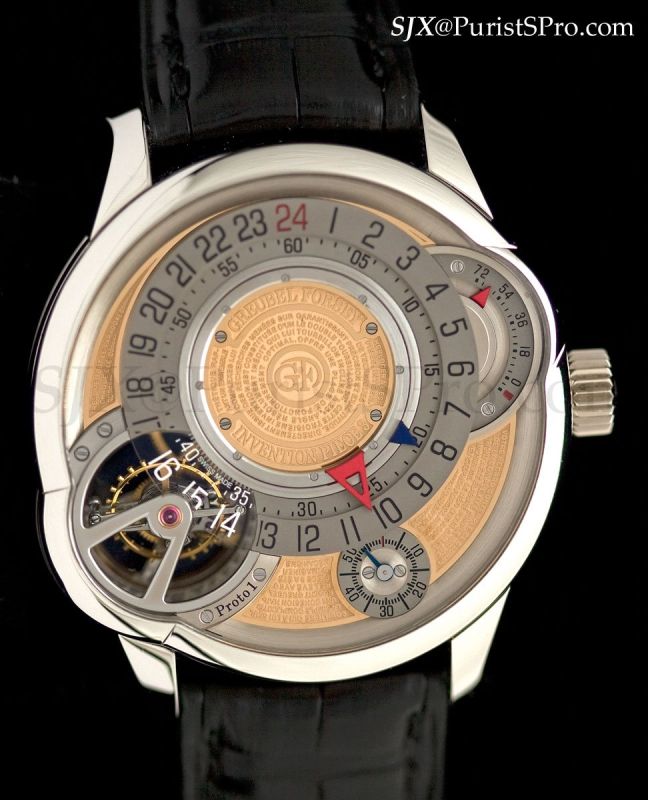
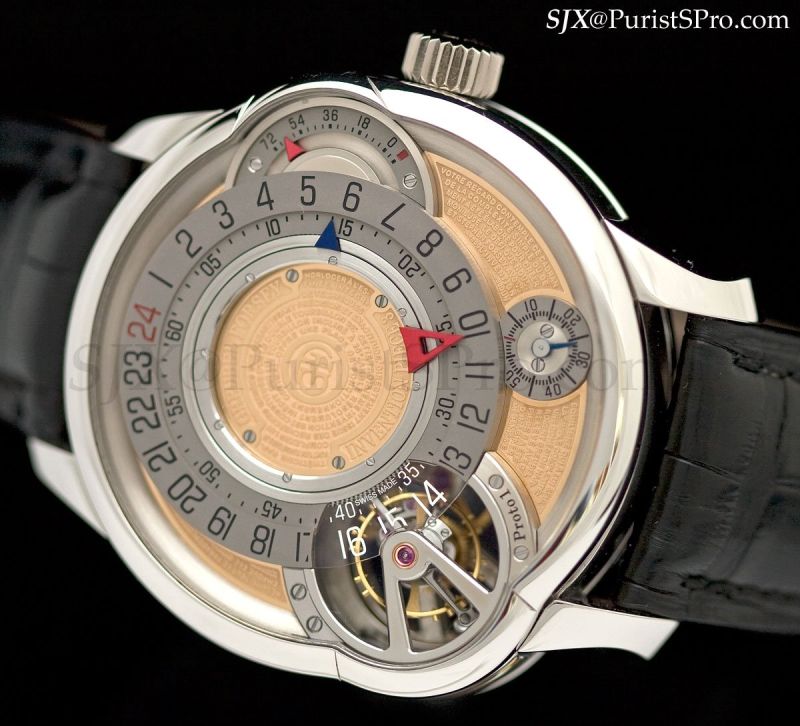
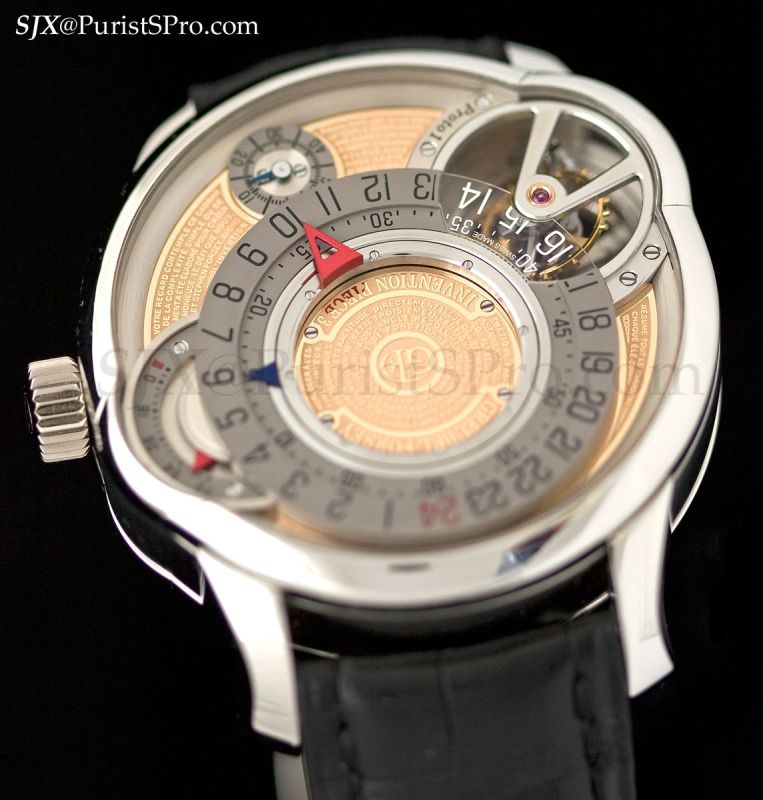
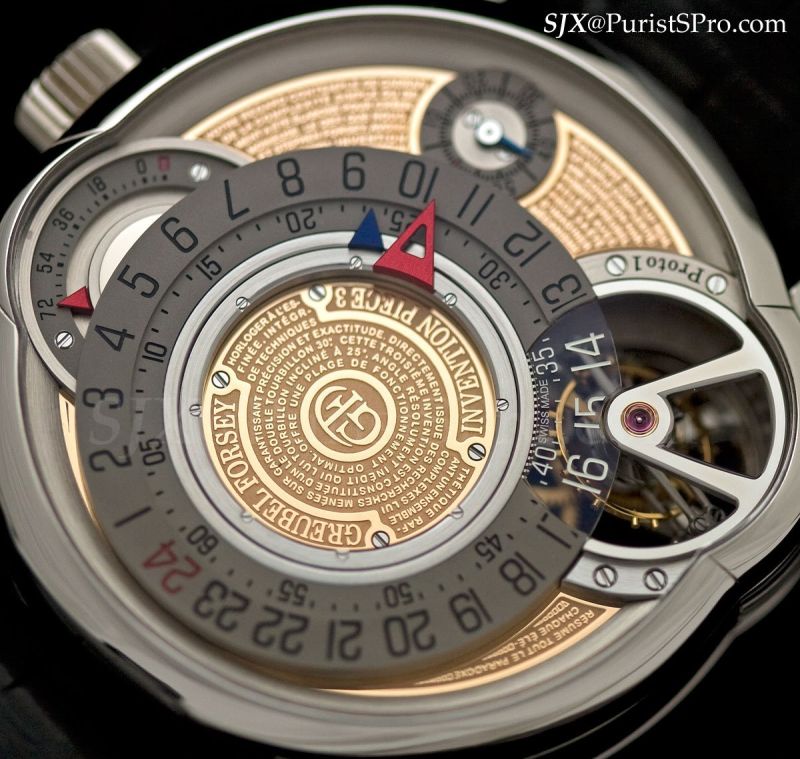
This watch looks like it has the entire contents of the British Library on its dial and back. The text on the rear can be specified by the owner and as such I will not publish photos of the back in the interests of privacy. Aztec or Mayan hieroglyphics come to mind when one looks at the mass of letters on the dial.
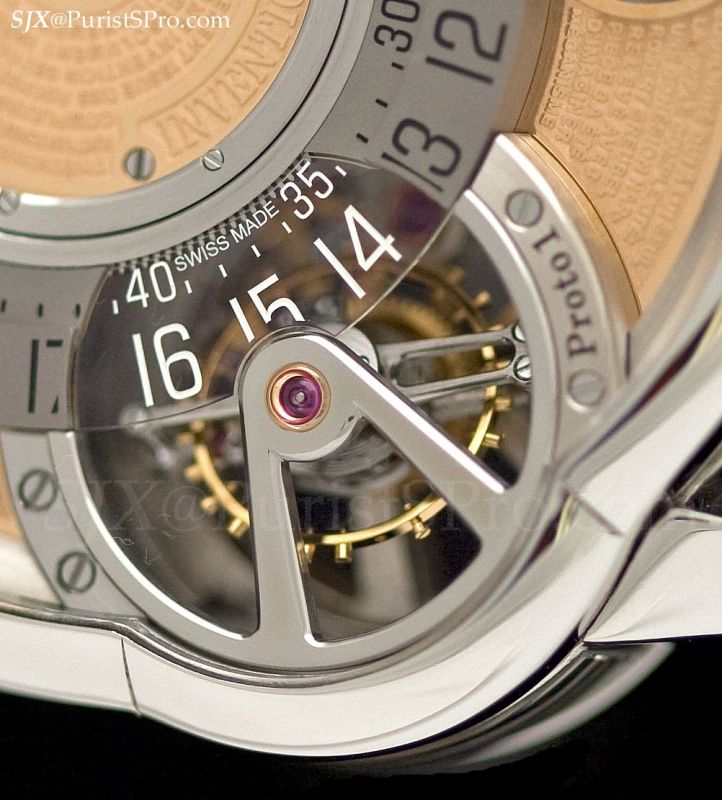
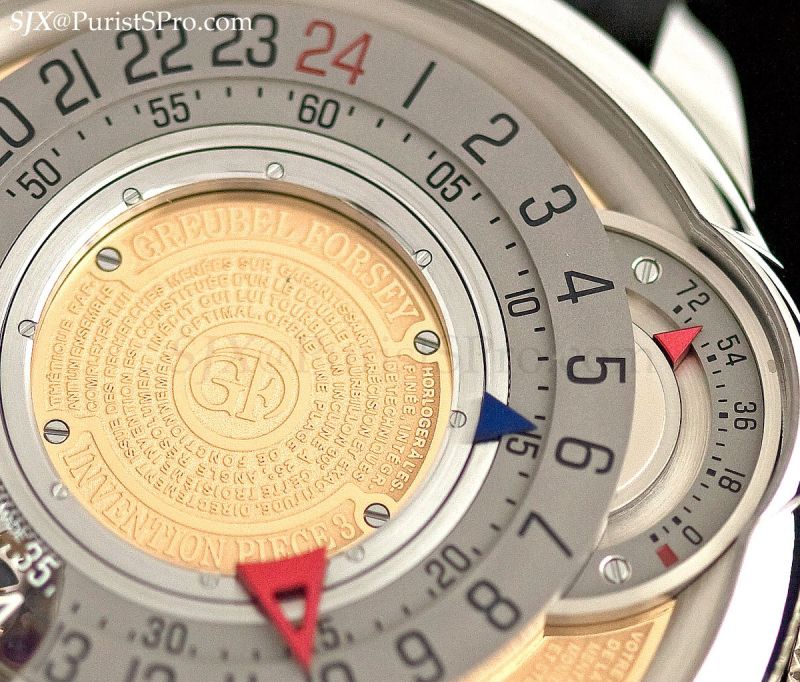
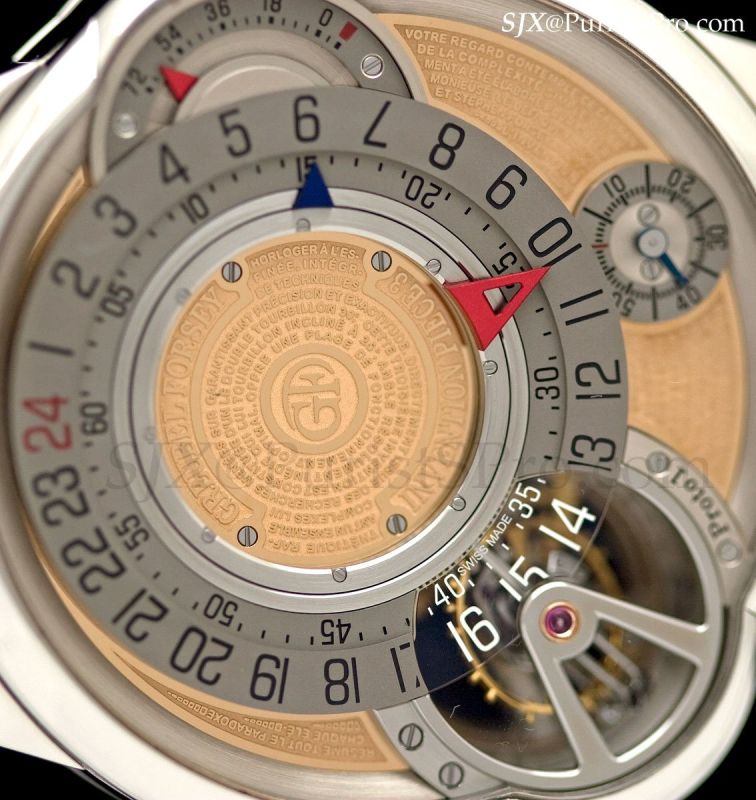
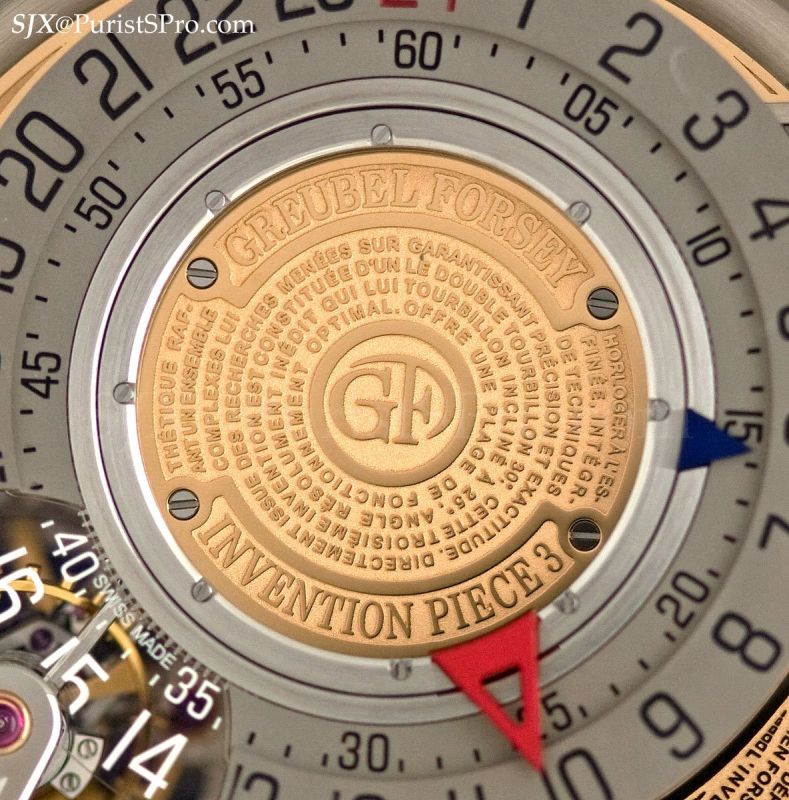
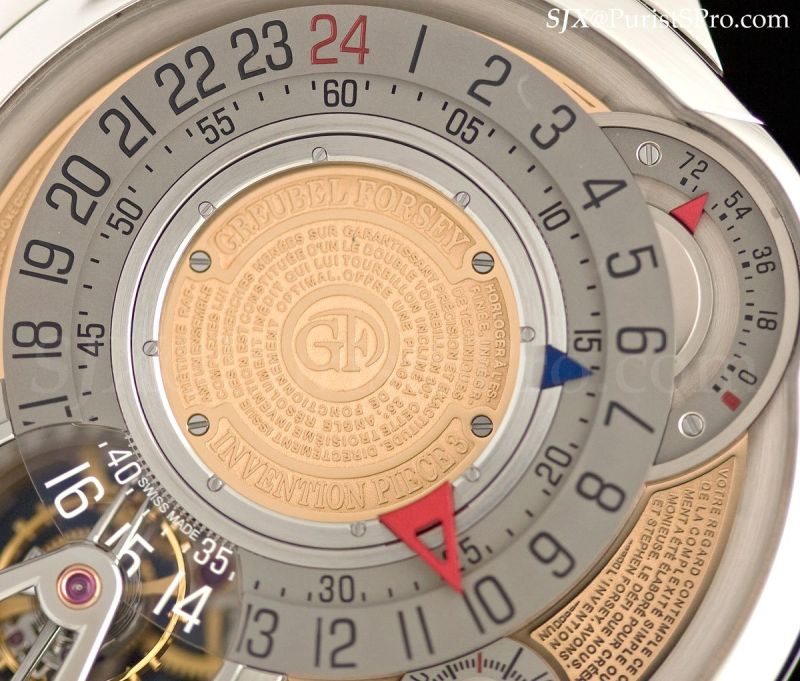
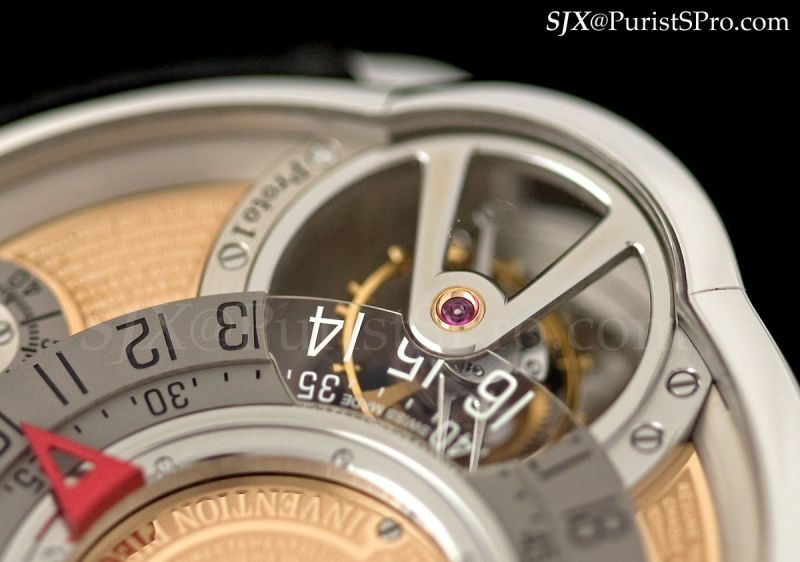
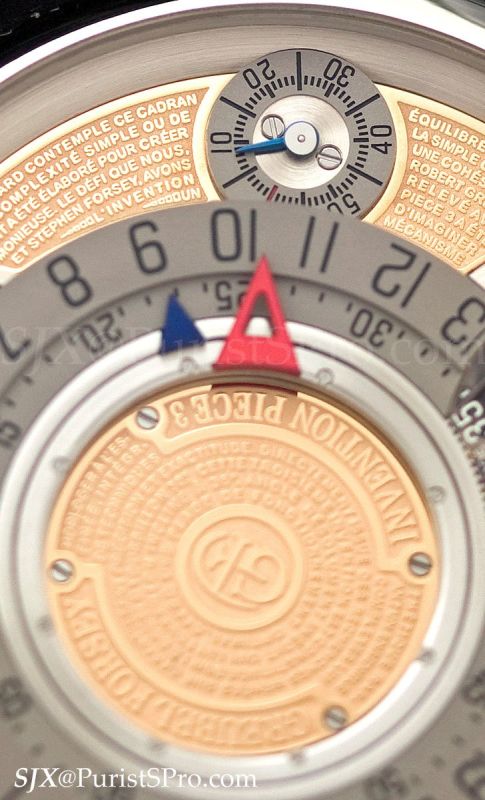
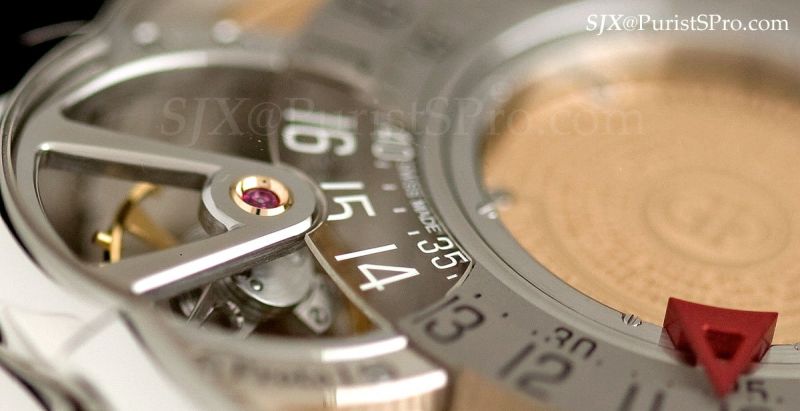
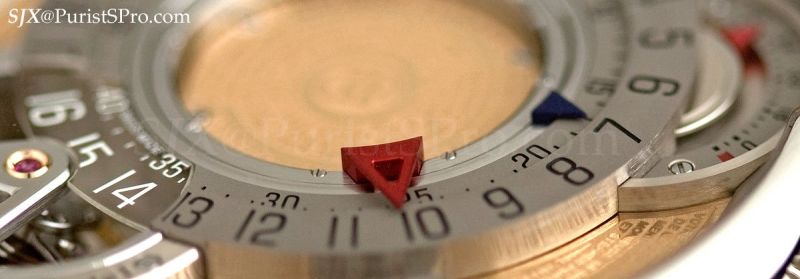
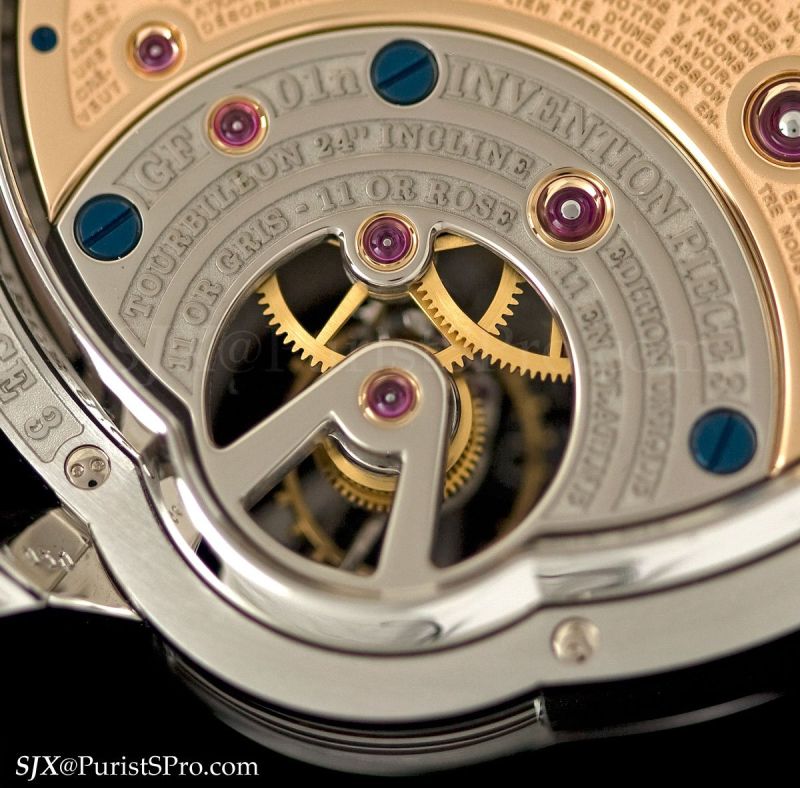
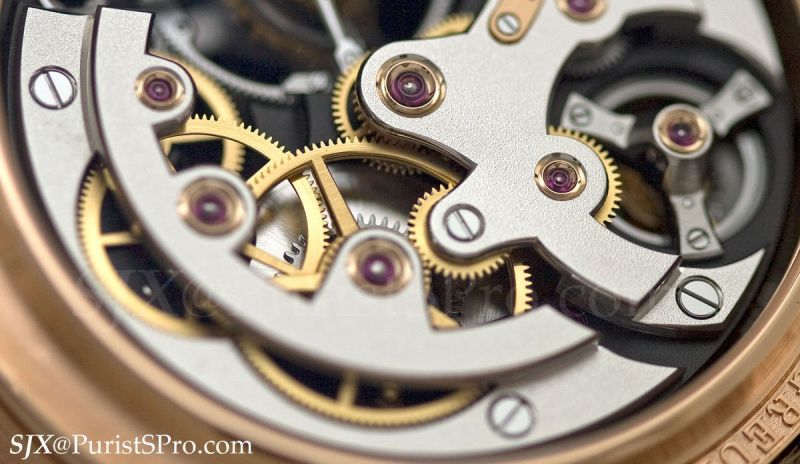
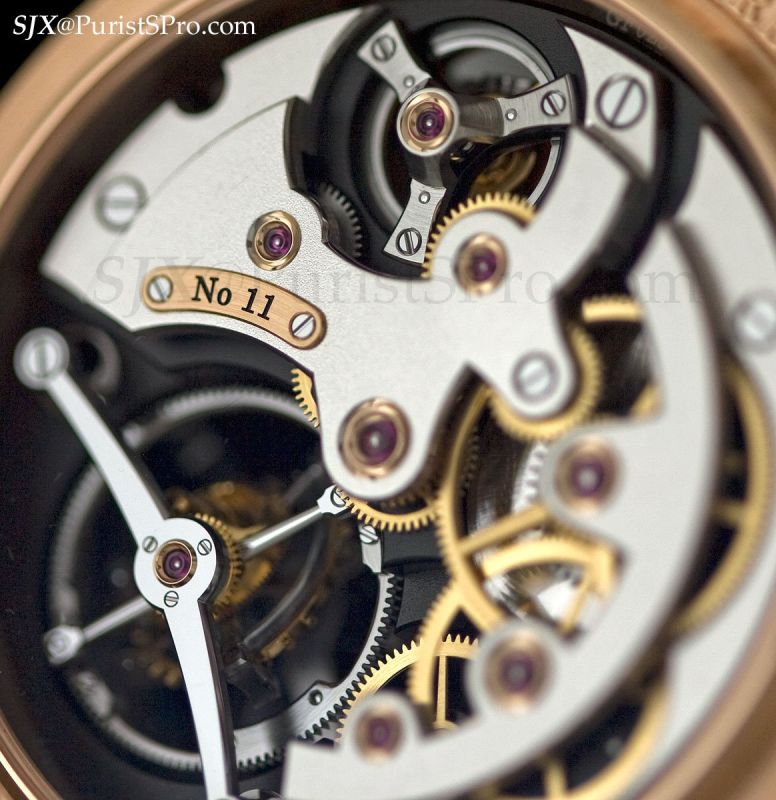
There are several things I like about GF watches. I like their quirky design; the use of high quality materials, notably on the dial; and the out of the box thinking that goes into each watch. In particular, GF also uses frosted finish on the movement to great effect.
Close-up of Double Tourbillon Technique GF02s
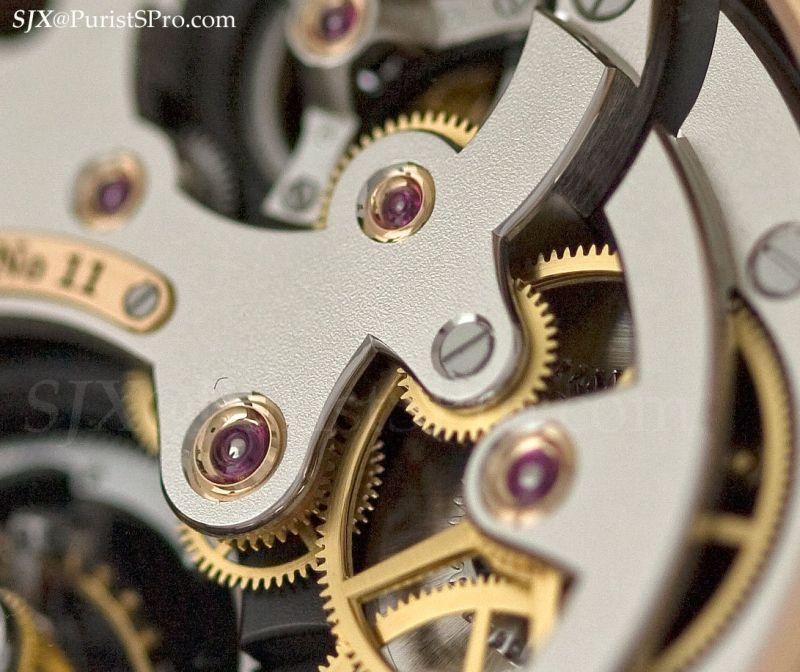
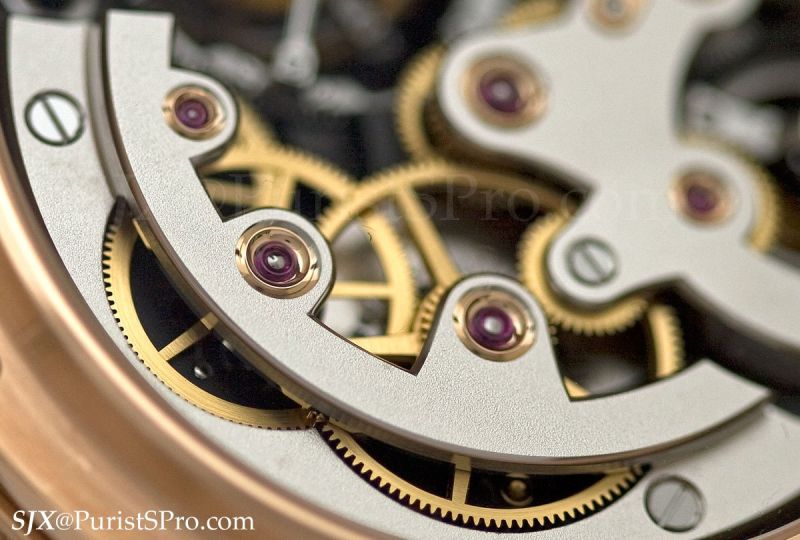
Their watches are amongst the most expensive tourbillons out there, but they are so different a peer comparison is difficult. Though I doubt their tourbillons provide a significant improvement in timekeeping versus conventional tourbillons or even a plain lever escapement, but they represent a tremendous amount of creativity executed attractively.