SIHH 2010: IWC

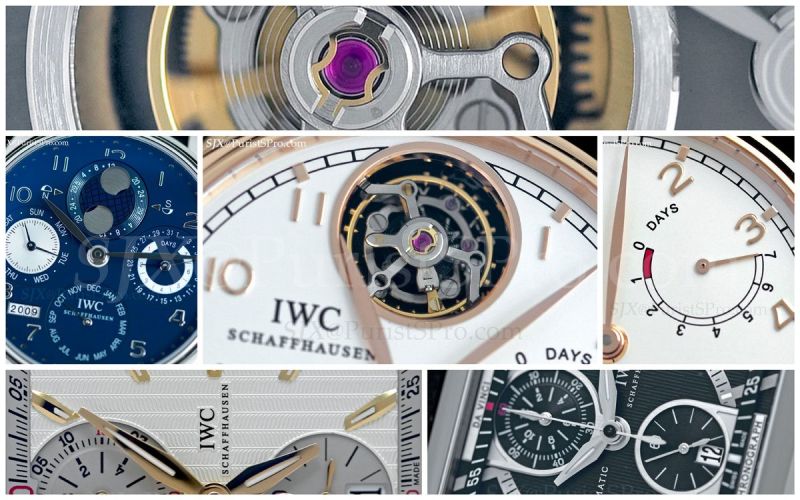
In contrast to previous years, IWC’s collection this year is tight and focused, almost entirely consisting of new Portuguese models. Another notable trend of the collection is the lean towards more classical designs, which is itself a result of the watches being Portuguese models (that is almost a tautology). IWC’s best selling single line is the Portuguese so this emphasis is expected given last year’s soft demand for luxury watches.
One of the primary new additions to the Portuguese line is the Yacht Club chronograph. Named after the vintage IWC model of the 60s and 70s, it contains the same automatic chronograph movement found in the Da Vinci chronograph. This watch is portrayed by IWC as the sort of watch one wears on a yacht (Jean-Claude Biver told me that should be a Hublot but who knows?) and the theme of the IWC booth at SIHH was one of nautical luxury.
Yacht Club in steel
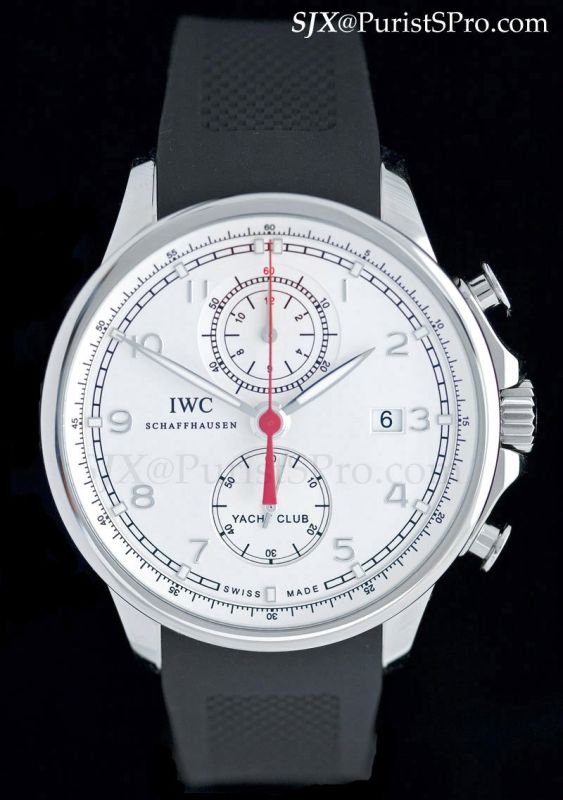
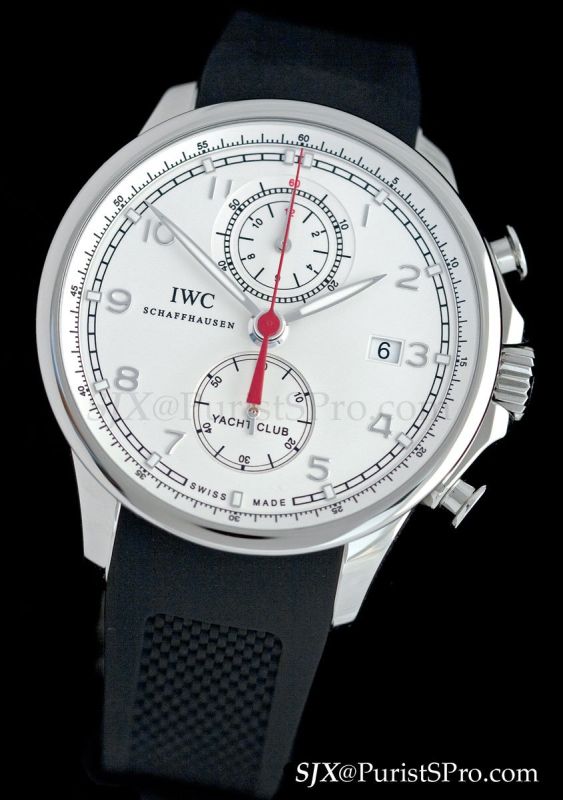
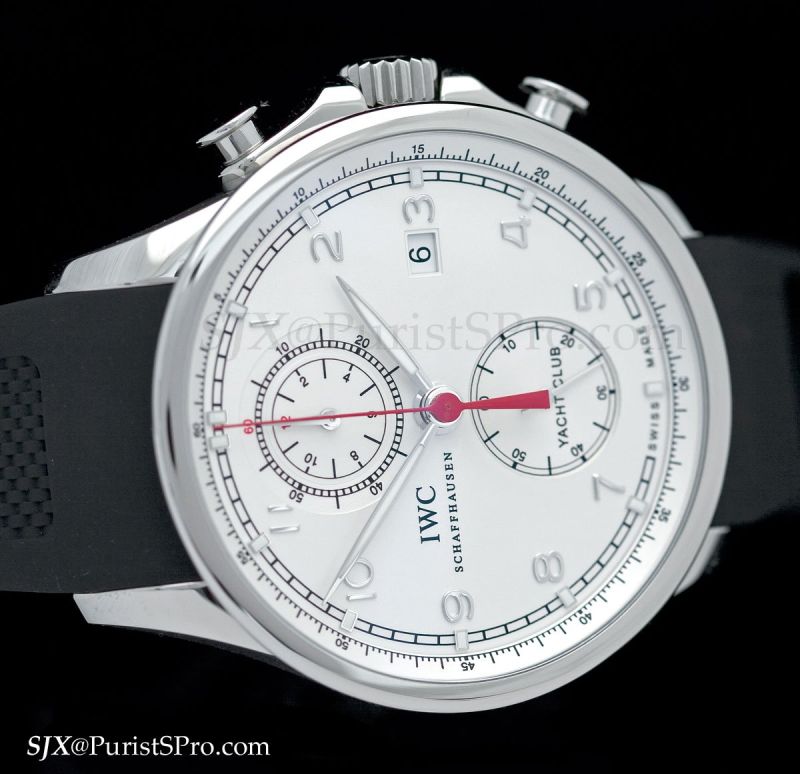
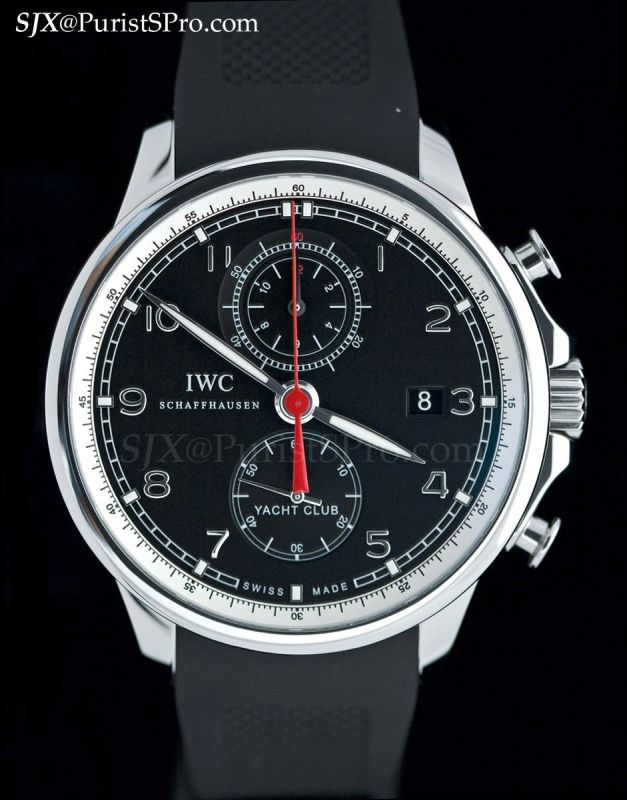
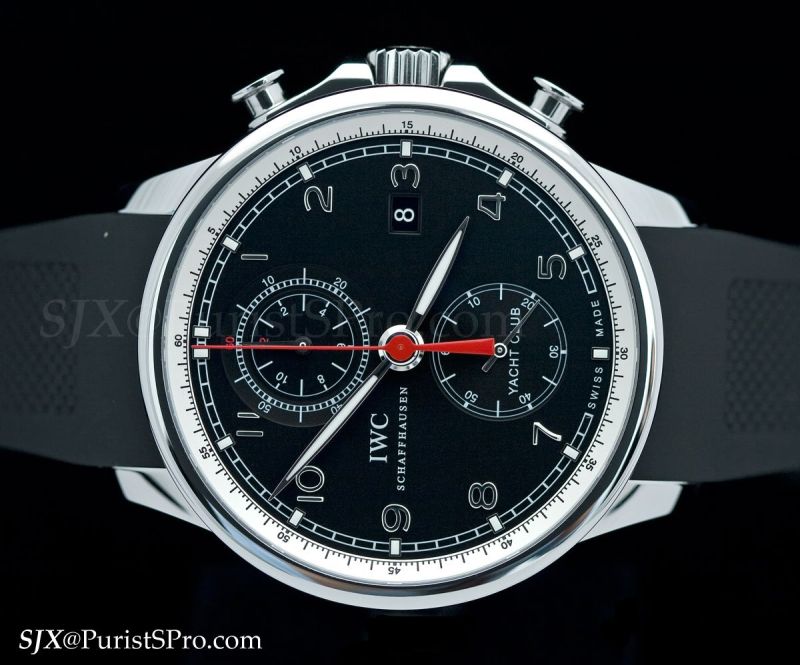
At 45.4 mm wide this watch is quite big and it has an unusually styled case for an IWC, with pump-style pushers and crown guards. The dial is a bit large for the movement, leaving the date floating at 3 o’clock and compelling the designers to fill the perimeter with two minute tracks, ostensibly one for the chronograph elapsed seconds and the other for the minute hand.
Rose gold
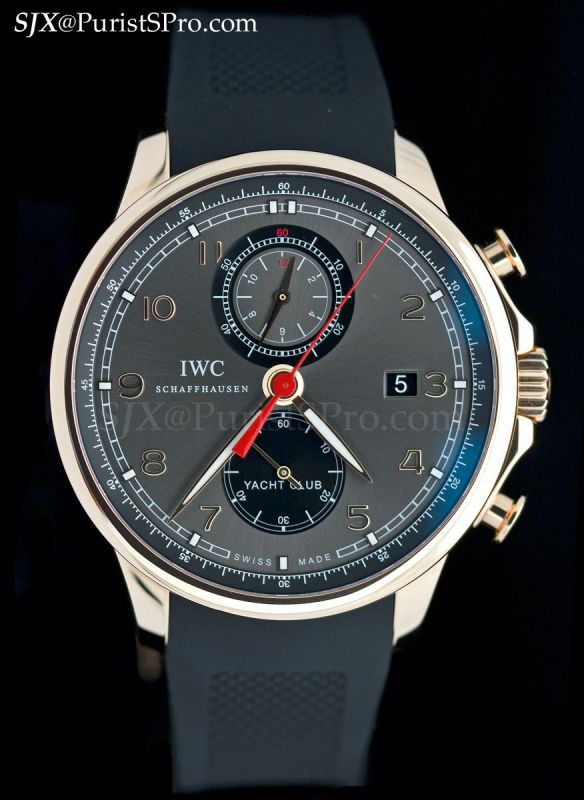
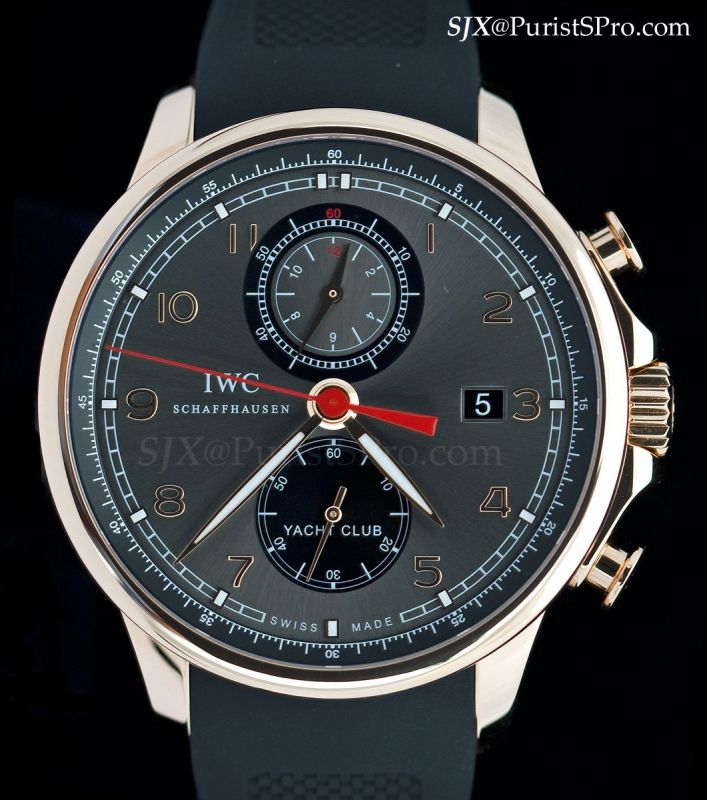
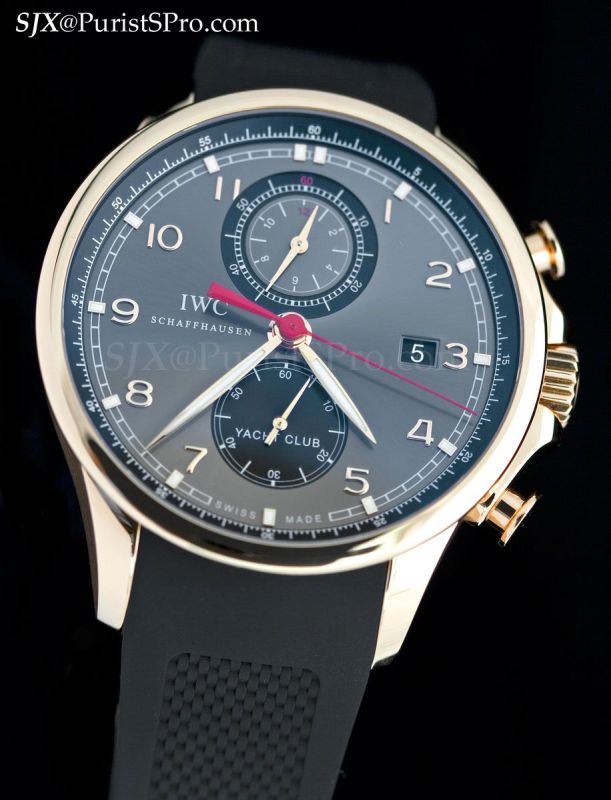
Three versions are available, steel with a white or black dial or rose gold with a grey dial, all presented with a rubber strap. Water resistance is 60 m for the times one falls off the boat.
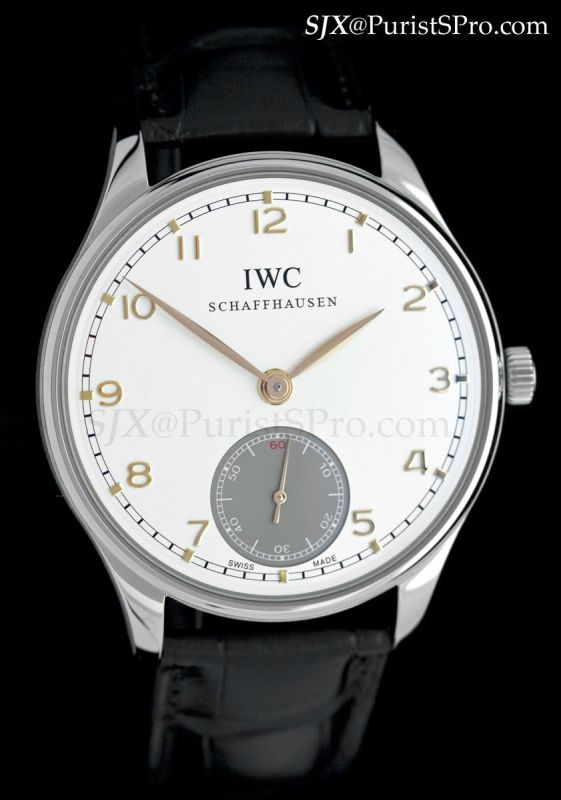
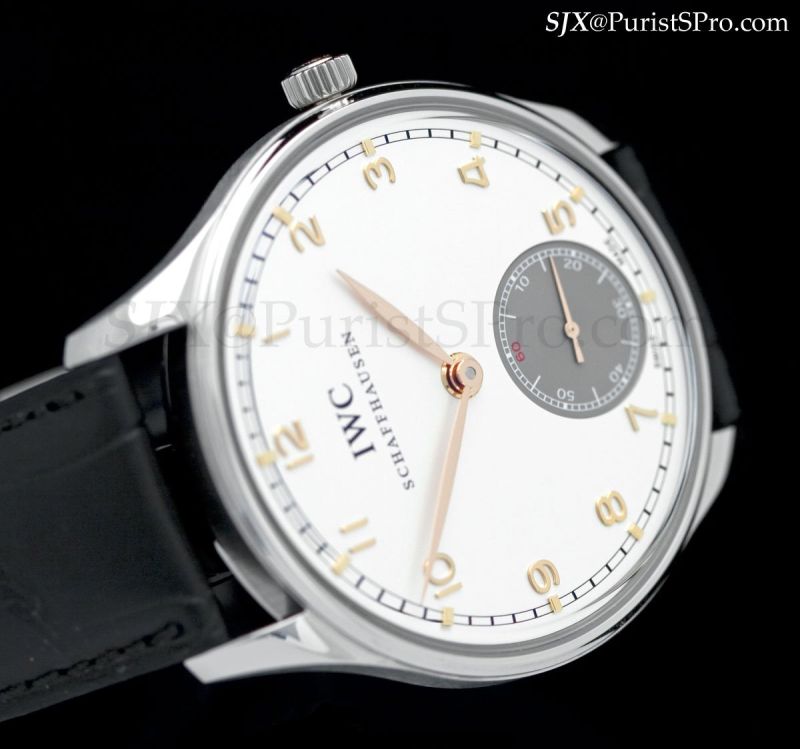
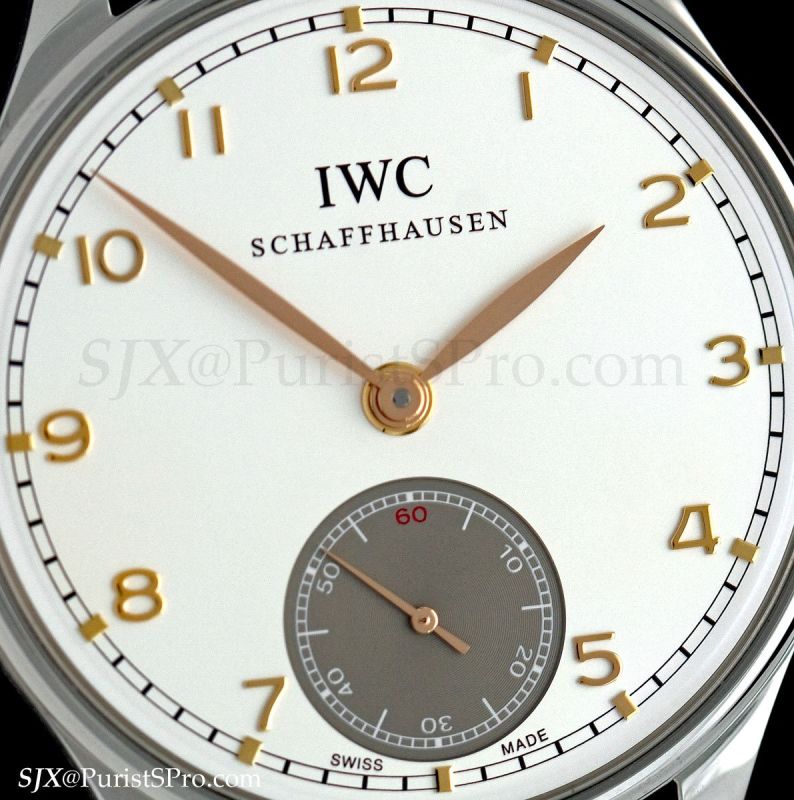
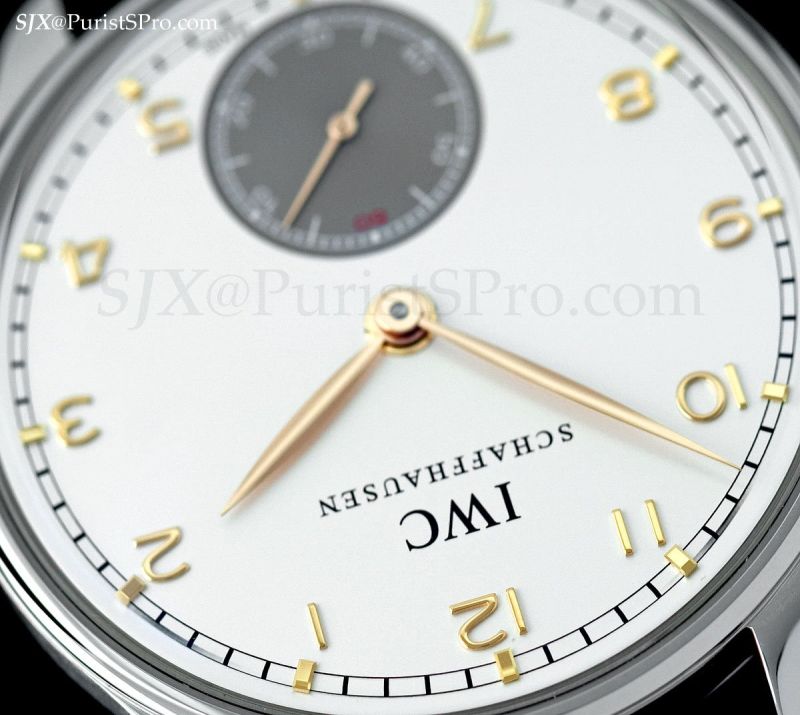
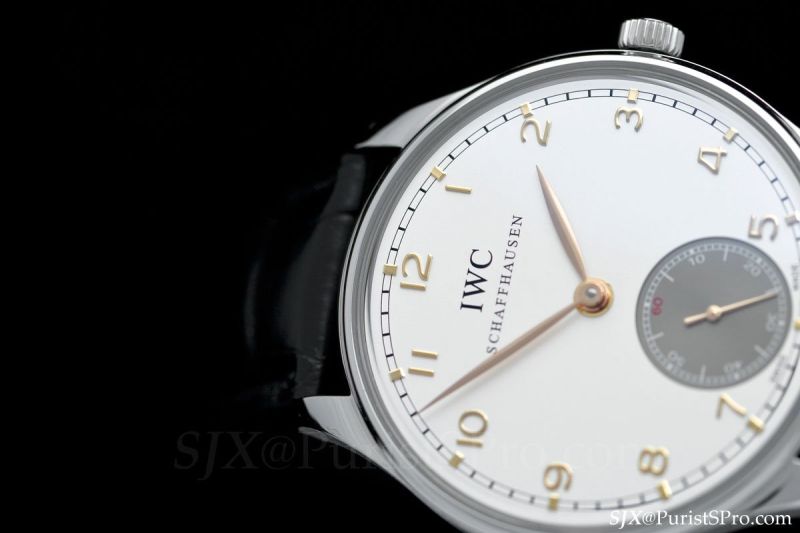
Another large, but decidedly simpler, Portuguese is the Hand-Wound. Catering to those who desire the highly collectable Jubilee Portuguese but did not spring for the Vintage Collection (which somehow did not turn out to be the blockbuster it was hoped to be), the Hand-Wound is 44 mm wide but slim at 10 mm. The dial possesses minimalism almost to the point of being boring, but interest is maintained with several details: appliqué hour numerals and markers, as well as a contrast colour sub-seconds dial with a red “60”.
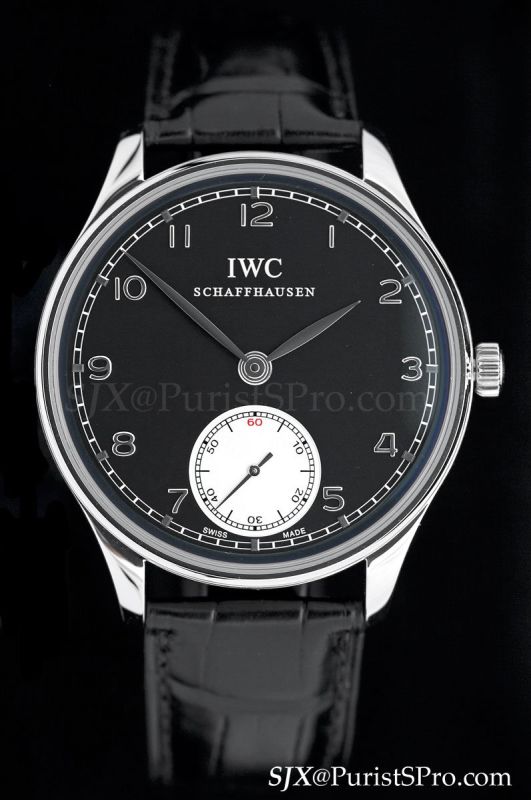
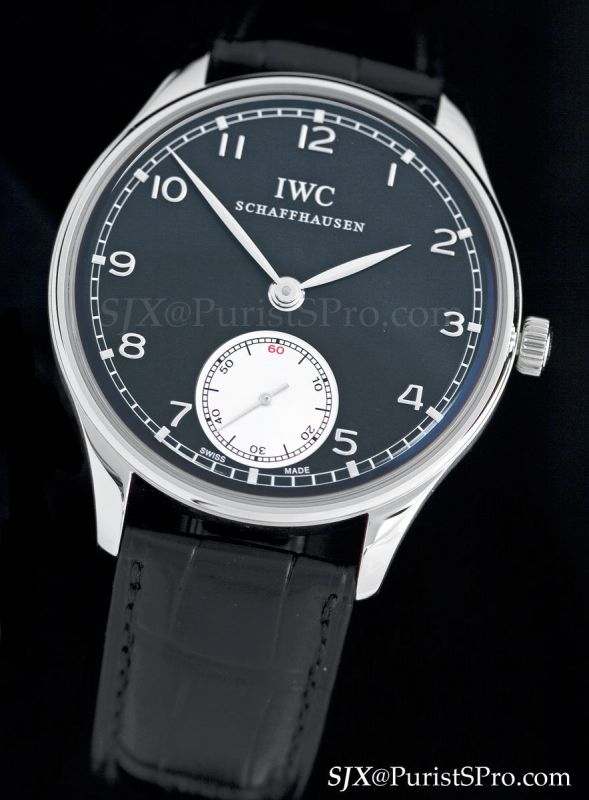
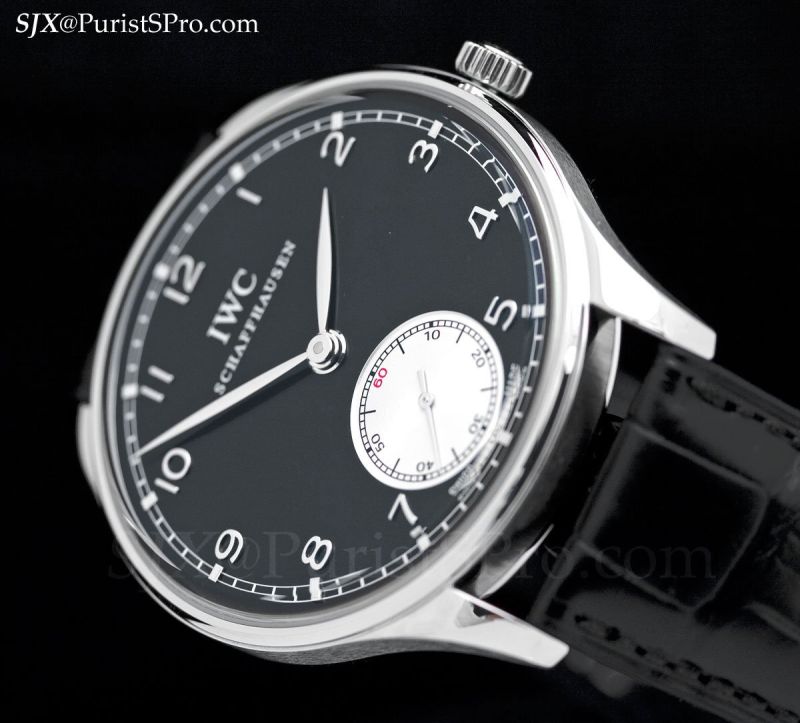
The black dial version has silver-plated indices and a silver sub-dial while the white dial version has rose gold indices and an unusual grey sub-dial. The white faced Hand-Wound is more striking and though the grey sub-dial initially throws you off, the design and colours actually work very well. I like the white dial version quite a bit.
Three more complicated models were added to the Portuguese collection, two tourbillons and a Grande Complication. Both tourbillons are additions to existing base movements. IWC has a long history of doing that, for example the Destriero Scafusia, and which IWC alumni Richard Habring continues with his namesake watches.
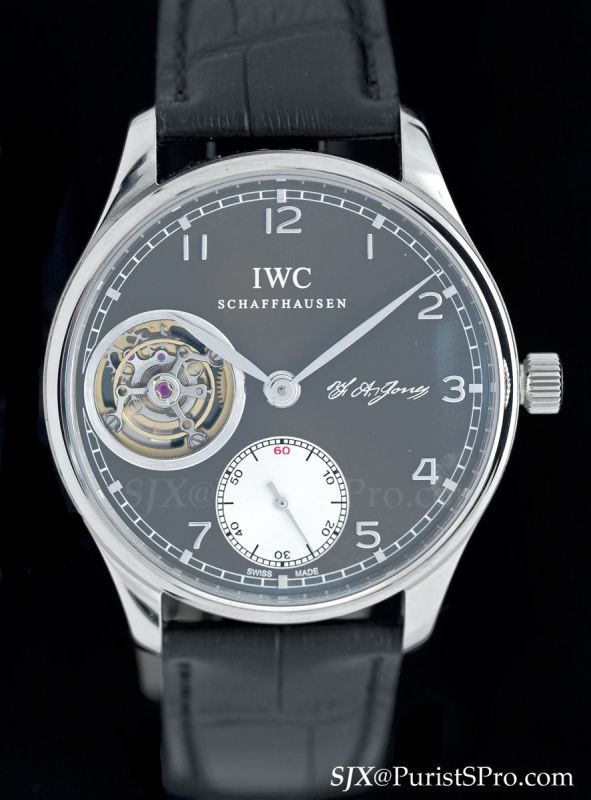
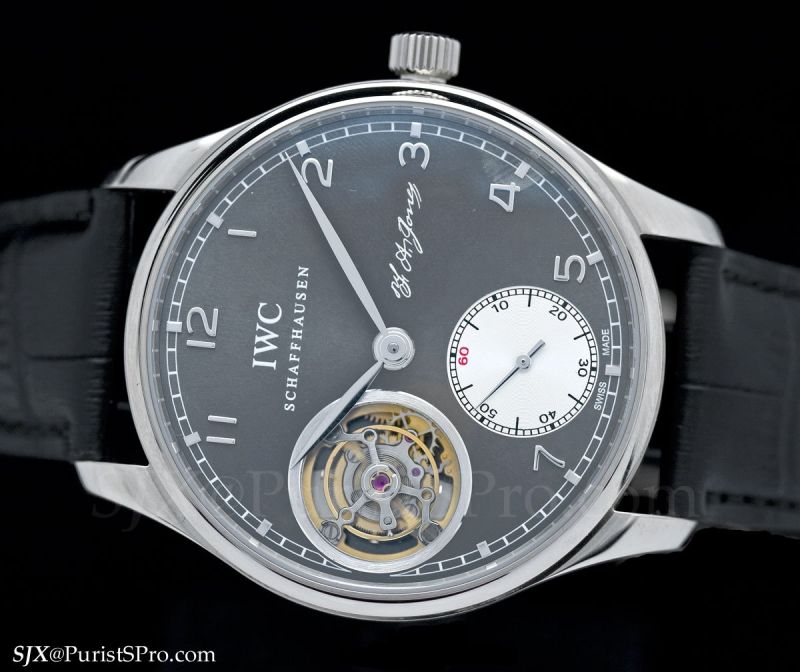
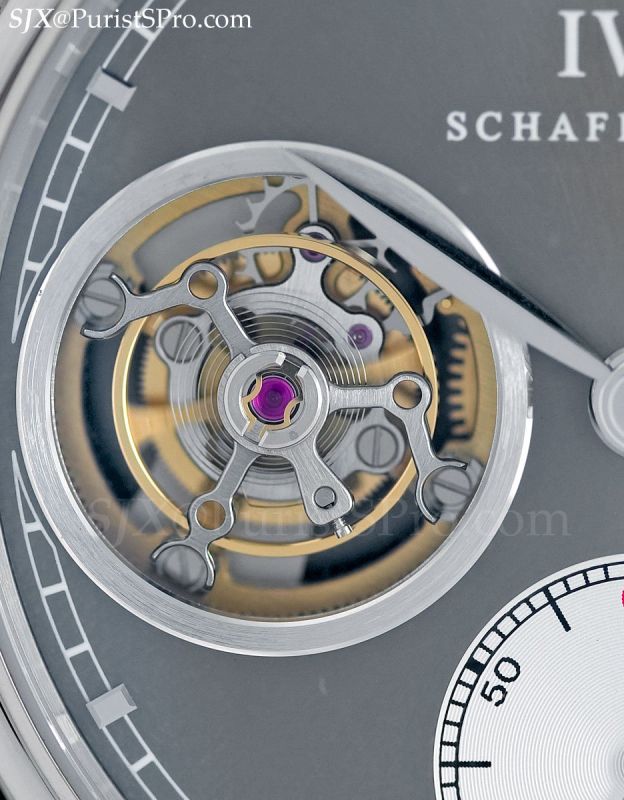
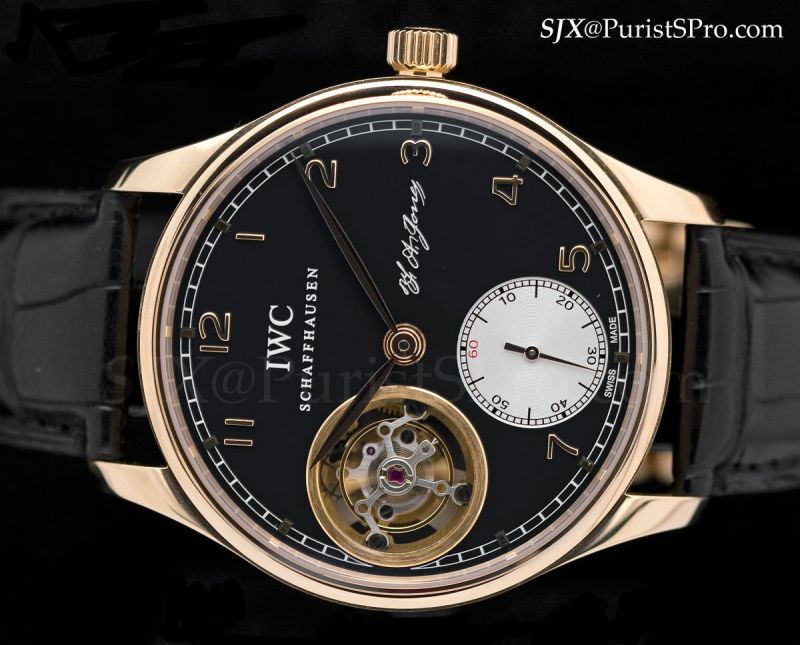
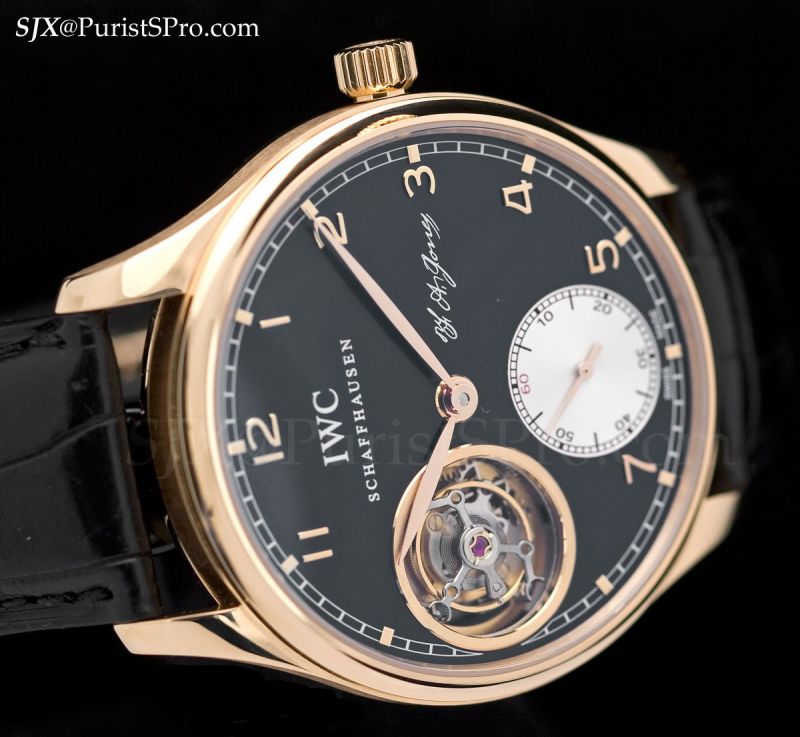
The Tourbillon Hand-Wound is exactly what its name indicates. It’s a limited edition in platinum or rose gold, with F. A. Jones’ signature on the dial. If I were a watch designer I’d take away the signature and close the dial, leaving the tourbillon visible only through the rear. But then again it is easier to sell an exposed tourbillon than an invisible one, and there are a few hundred of these to sell.
Tourbillon Hand-Wound platinum
Tourbillon Hand-Wound rose gold
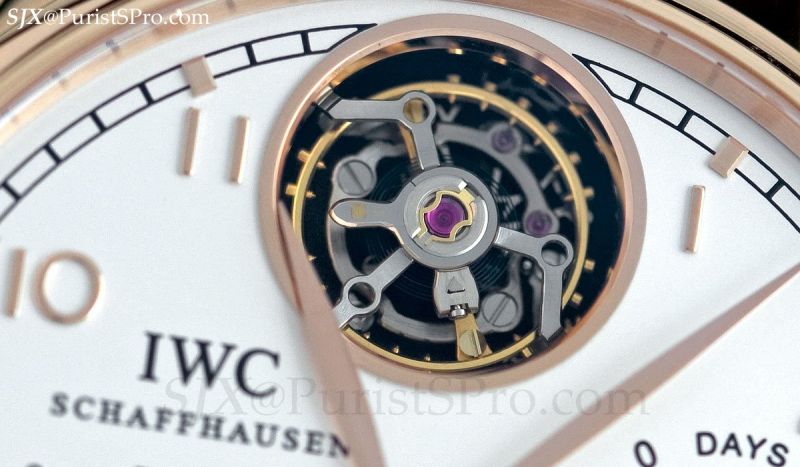
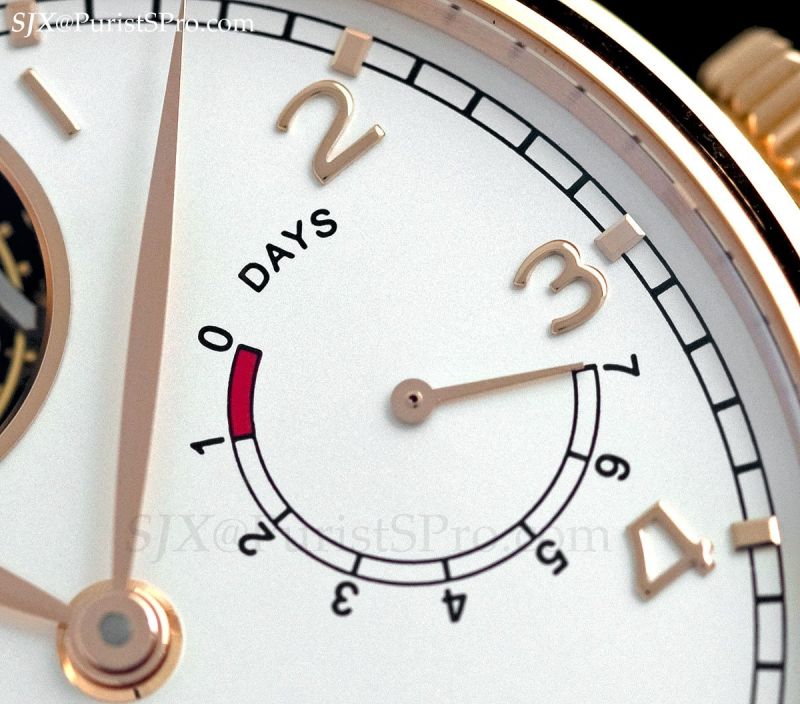
The other tourbillon is the Tourbillon Mystère Rétrograde. Available in platinum or rose gold, this features a retrograde date and power reserve. Inside sits an automatic movement with a 7 day power reserve.
Tourbillon Mystère Rétrograde rose gold
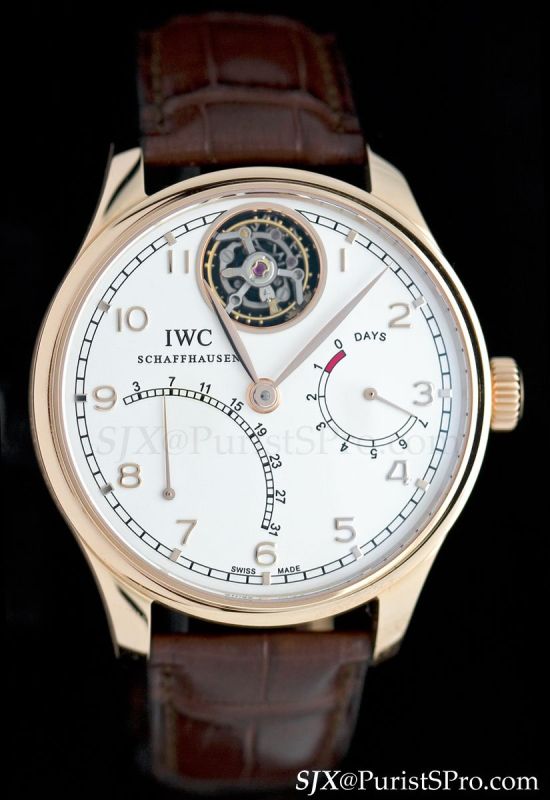
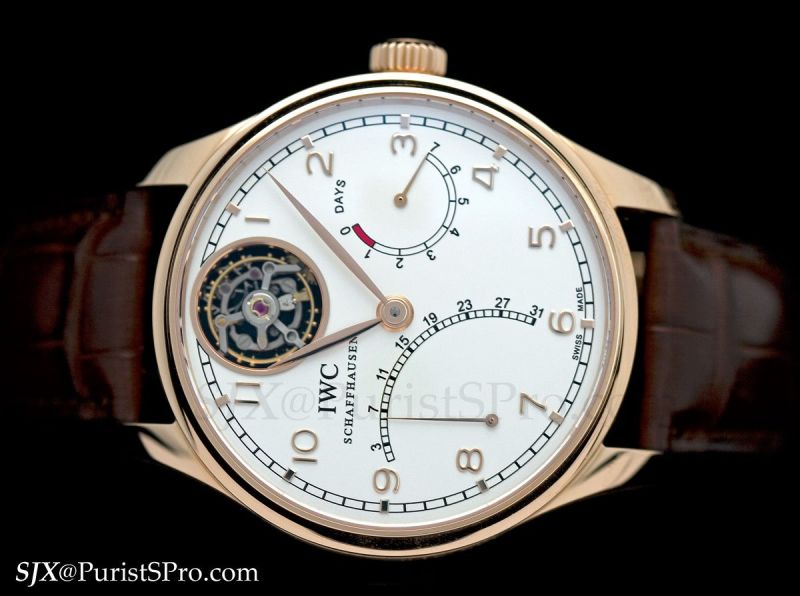
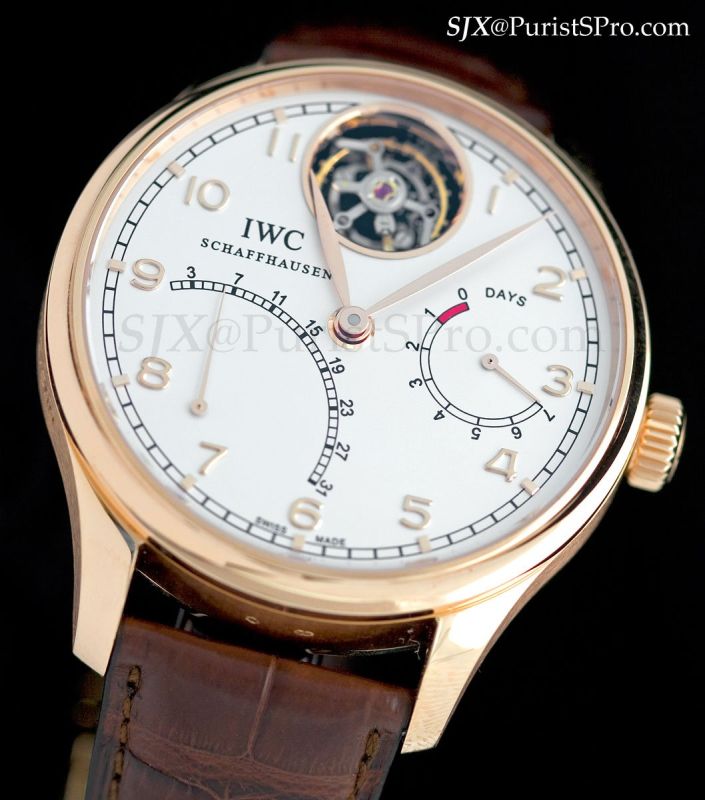
Tourbillon Mystère Rétrograde platinum
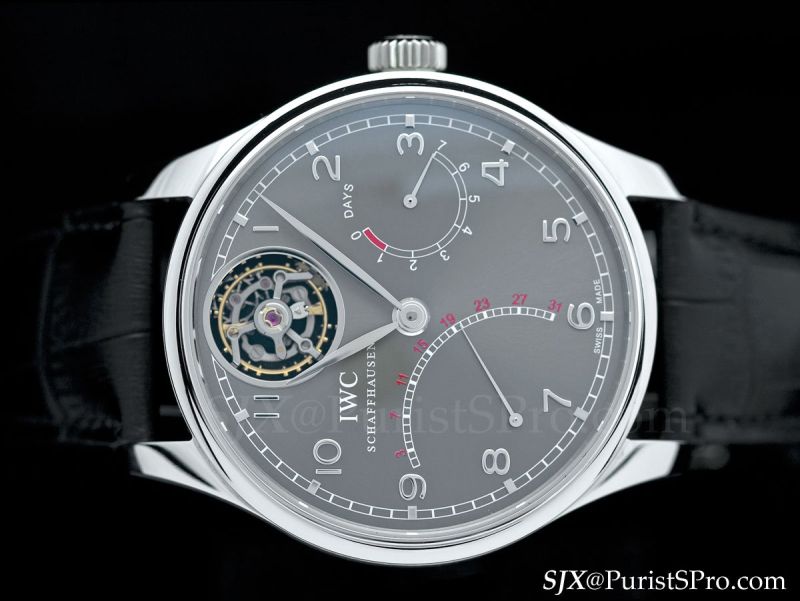
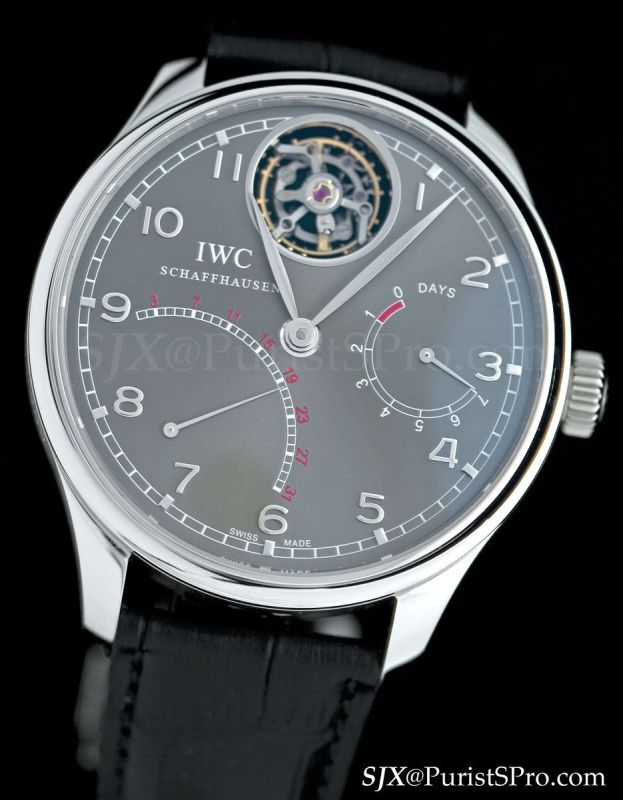
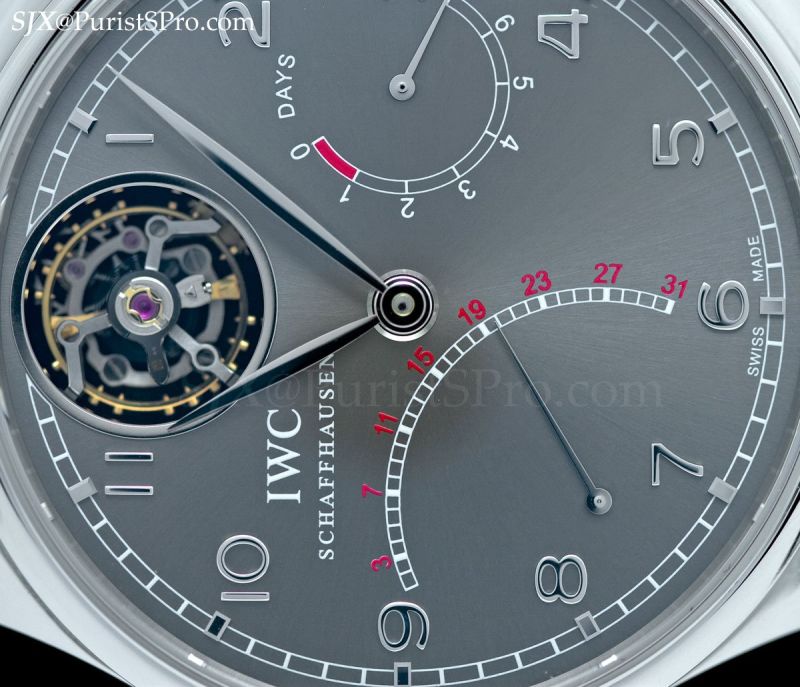
I prefer this to the hand-wound tourbillon. The two displays on the dial fill up some of the space, and because they are differently sized and eccentrically positioned, they give the watch a more imaginative air. Also, I prefer the slightly more complex case of the automatic tourbillon. It sits in a case similar to that used for the 7 day Portuguese, while the Tourbillon Hand-Wound uses a slimmer case like that of the Vintage Collection Portuguese.
The third complicated model is the Grande Complication. 20 years after its launch the IWC Grande Complication, based on a Valjoux 7750 no less, remains a clever piece of engineering that simplified the traditional grande complication.
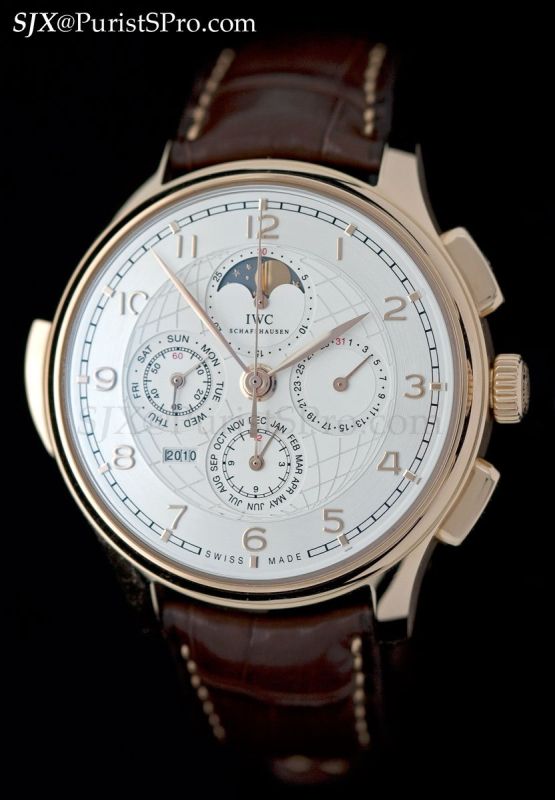
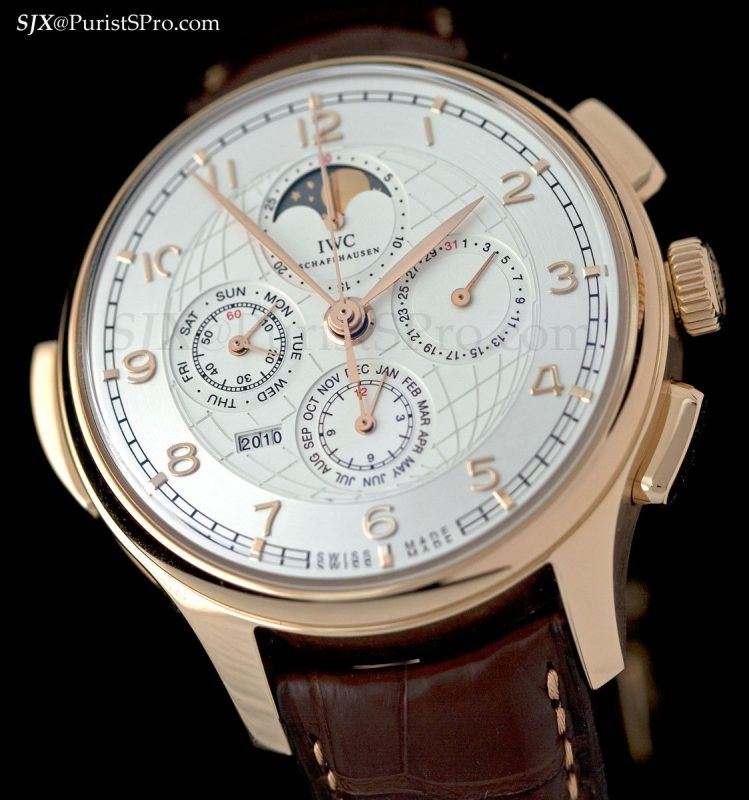
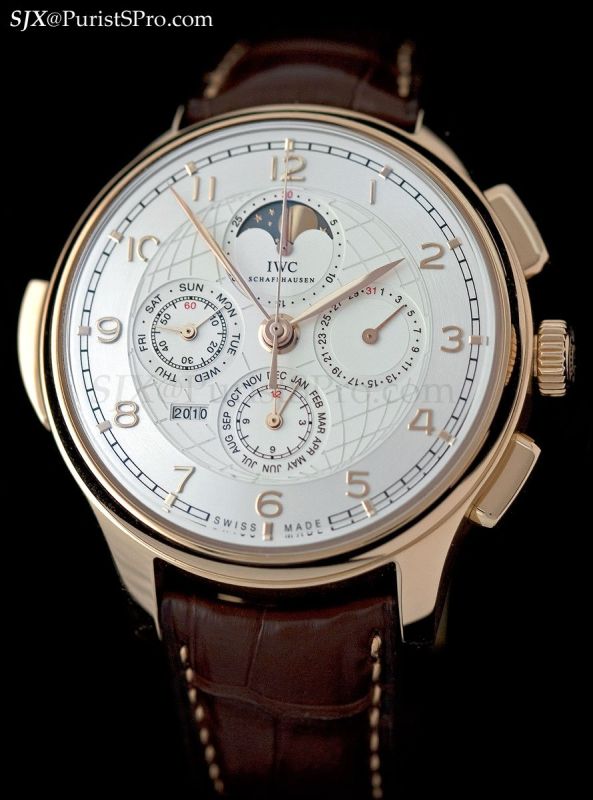
IWC has now put it in an enormous 45 mm case which unfortunately gives it a very wide dial. This is compounded by the fact that the Portuguese line is characterised by thin bezels and lots of dial area. As a result the sub-dials are clustered in the centre and this unfortunately reminds me of the enormous Zenith Grande Complications with tiny El Primero-based movements.
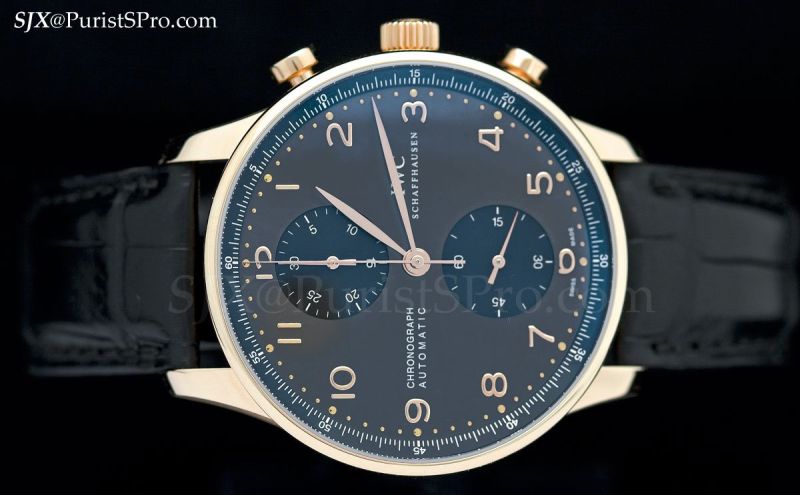
Besides the new models, a couple of existing models in the Portuguese collection were updated with new dials, including the Chronograph which is now available in rose gold with a grey dial.
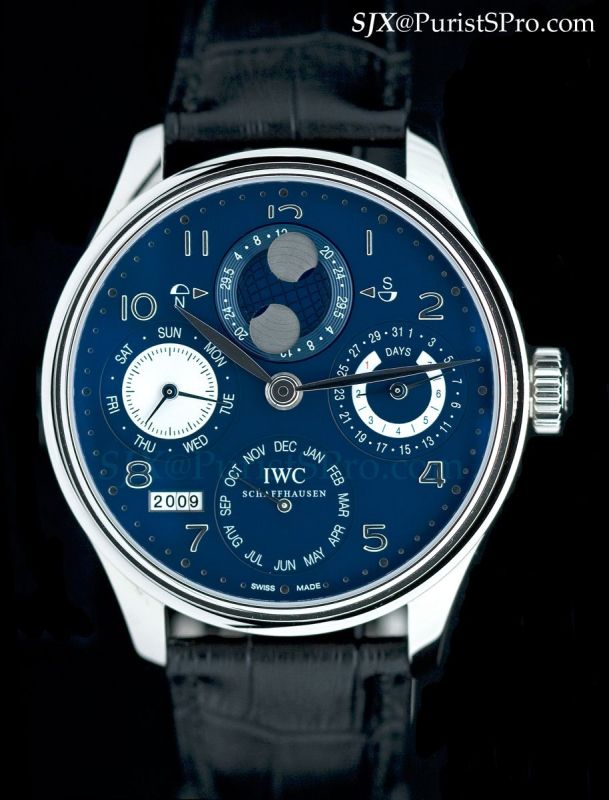
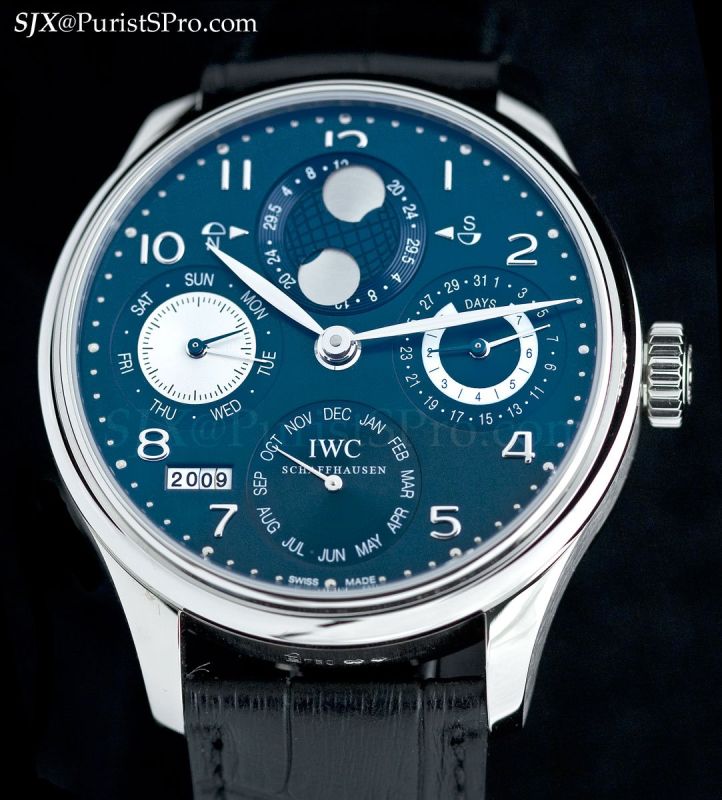
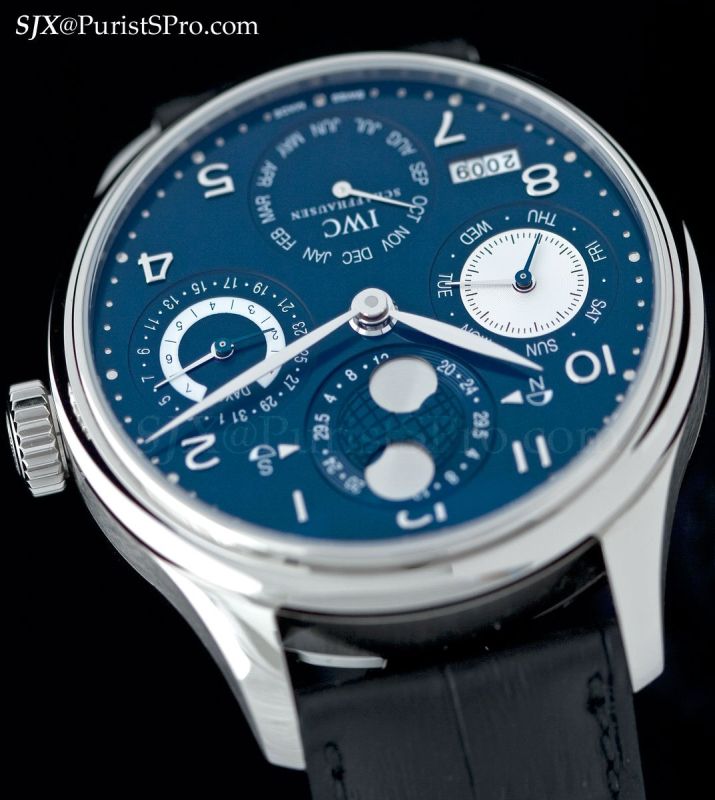
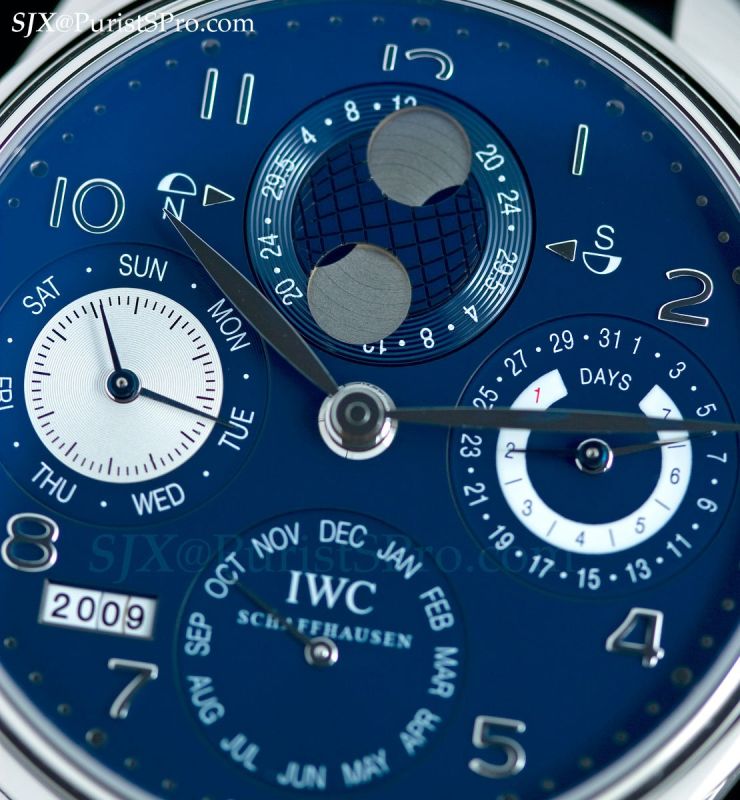
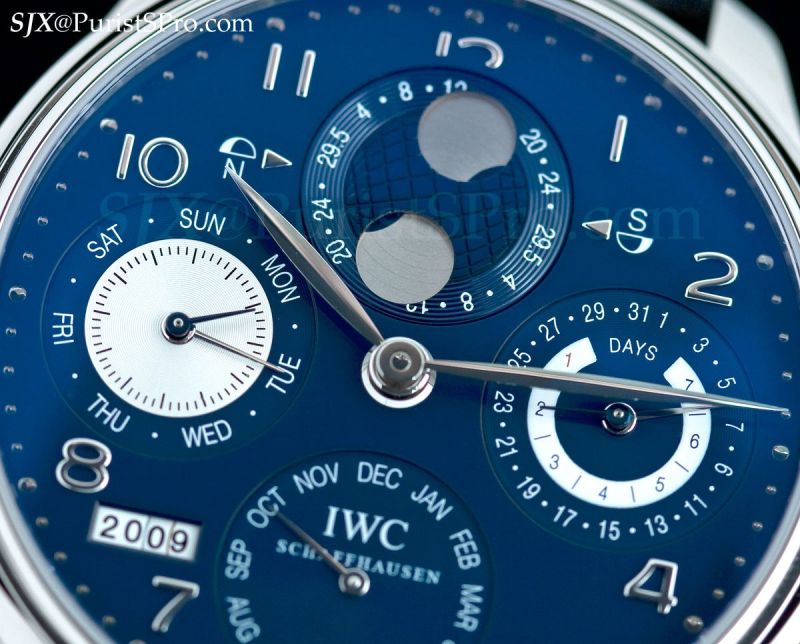
Also, the Portuguese Perpetual Calendar is now offered with the option of a dark blue dial and a white gold case. The dial is a dark, flat blue, not the lighter tone of the Laureus watches. I like this new dial; it is discreet and reduces the impact of the 44 mm case. This watch is wholly characteristic of IWC – an innovative movement paired with a restrained design.
Though the Portuguese collection was the primary recipient of new models, the Da Vinci collection enjoyed the addition of the Chronograph Ceramic. I never liked the Da Vinci case, it seemed to me like an attempt to be different while trying to reuse the case shape of the vintage Da Vinci while trying to make a complicated case that could fill a long press release. Surprisingly, this ceramic version – ceramic case, titanium pushers and crown – looks great.
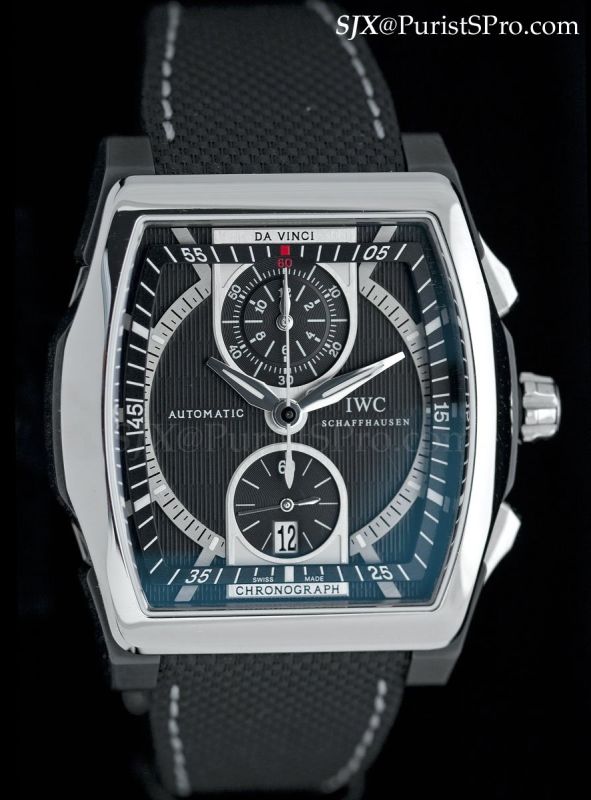
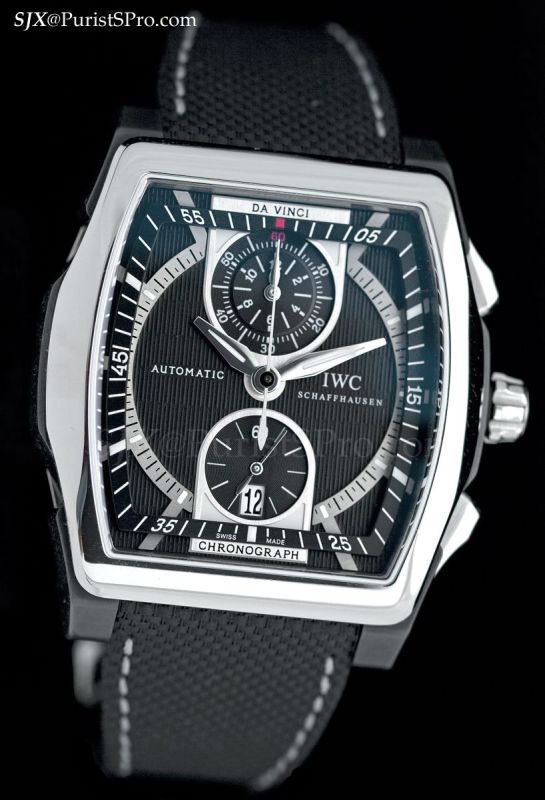
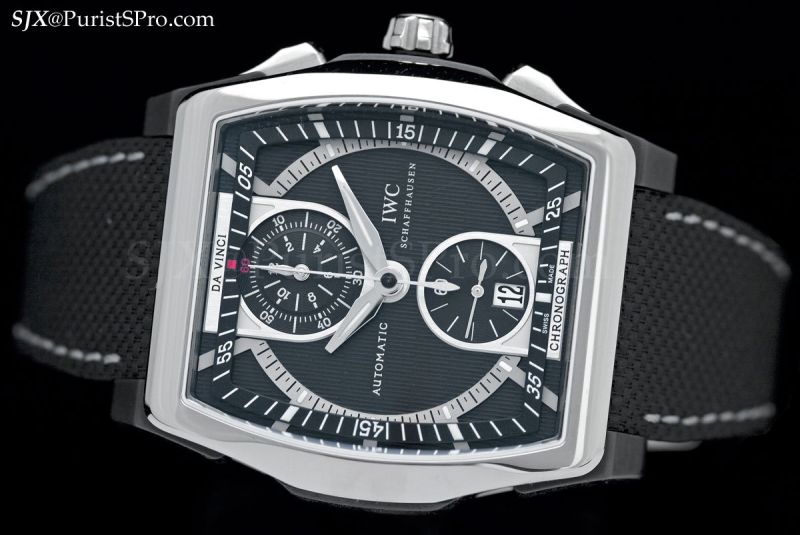
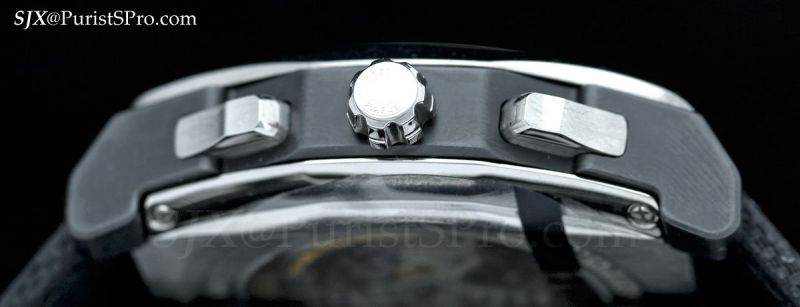
The dial is multi-levelled and aside from a red “60”, it is monochromatic. It reminds me of Darth Vader, which is never a bad thing for a male sports watch. Its case dimensions are slightly larger than the metal case Da Vinci chronograph, this Darth Vader watch is slightly larger at 44 by 53 mm. Oddly enough this is my favourite of the 2010 collection, along with the blue Portuguese perpetual. This will certainly be the first of more sporty looking Da Vinci models. Taking the line in that direction will likely make sell as well as IWC’s other collections.
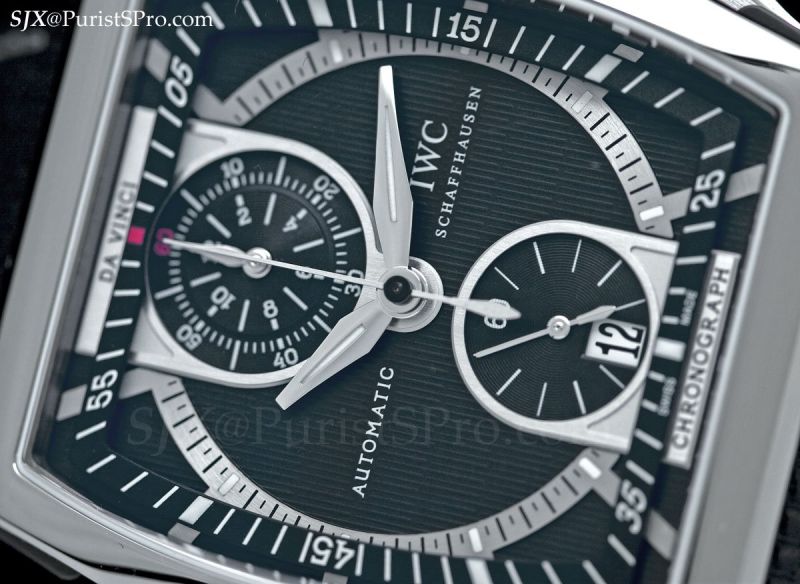
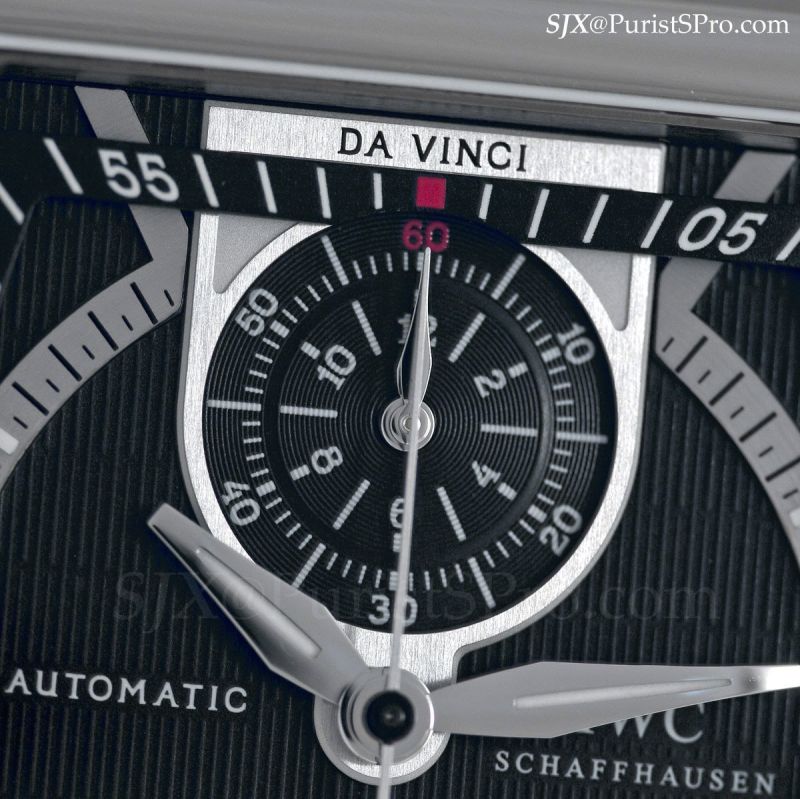
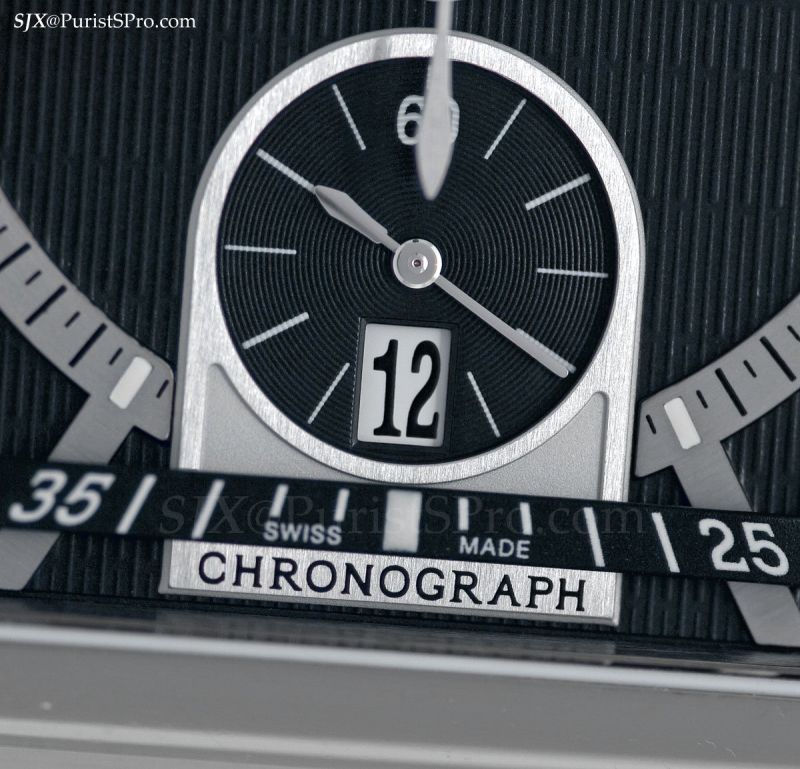
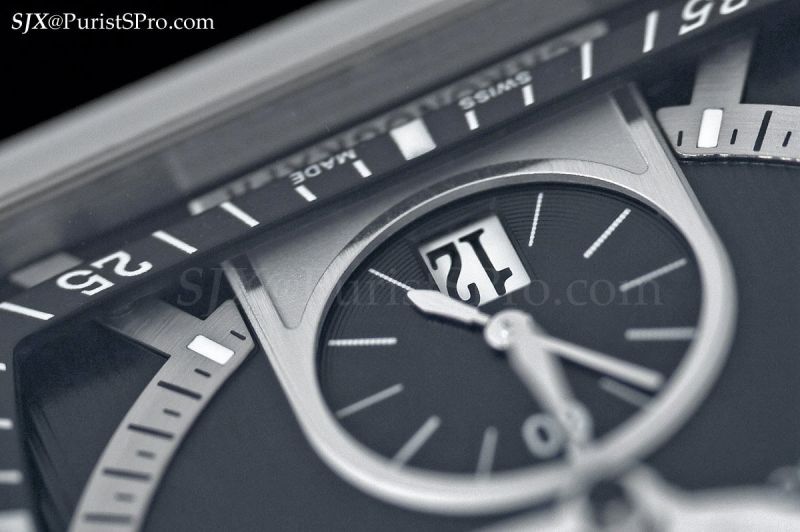
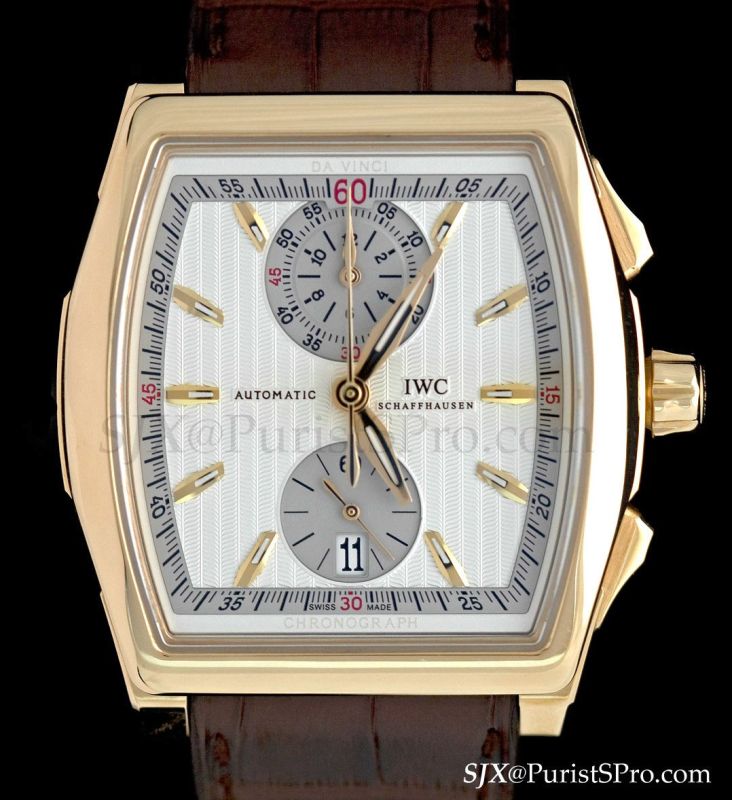
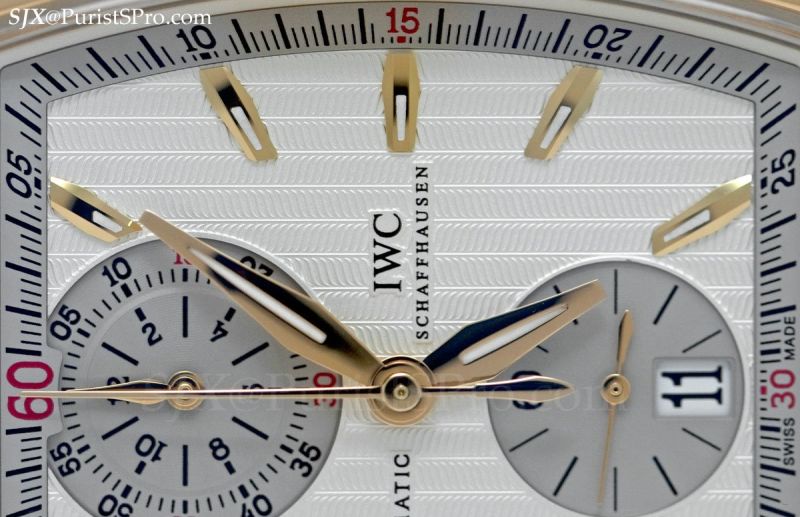
Lastly, the regular Da Vinci chronograph has been given a guilloche dial, first seen on the Kurt Klaus limited edition. This is an improvement in my opinion; it balances the complexity of the case.

SIHH 2010: Jaeger-LeCoultre

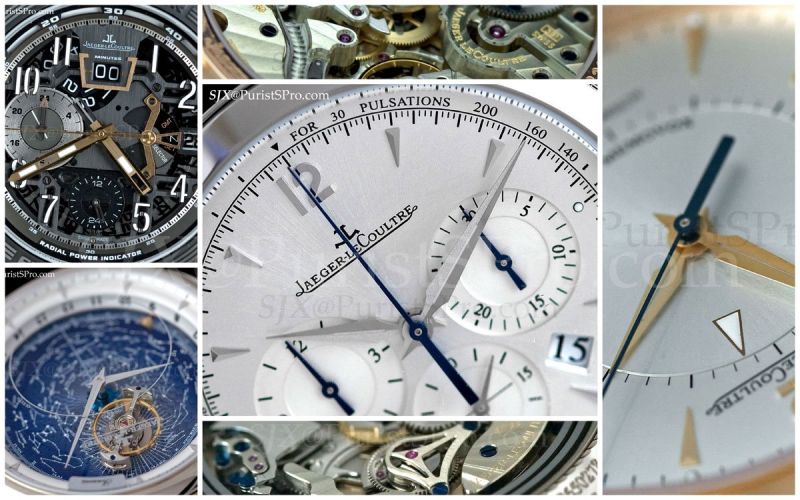
Jaeger-LeCoultre presented a small collection this year, which is a surprise since they never do.
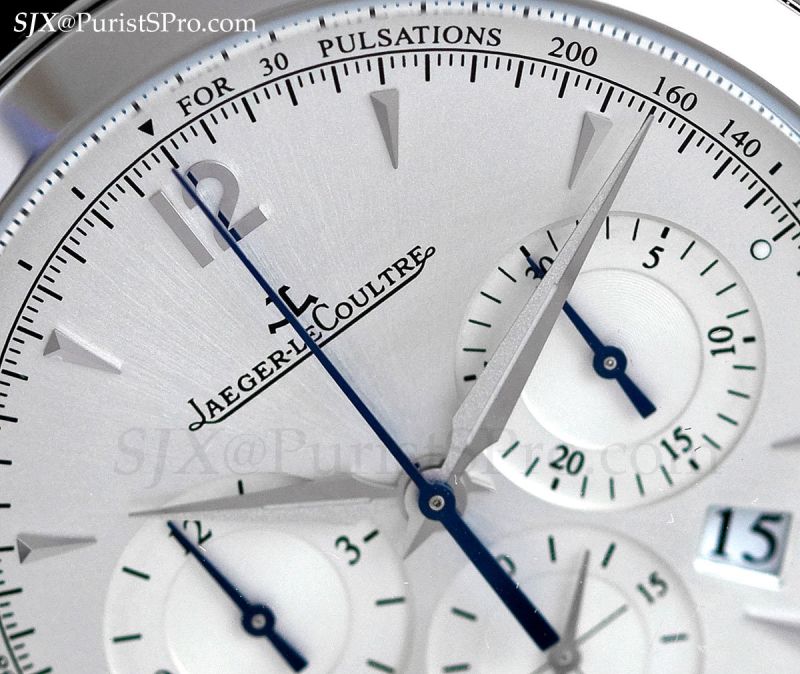
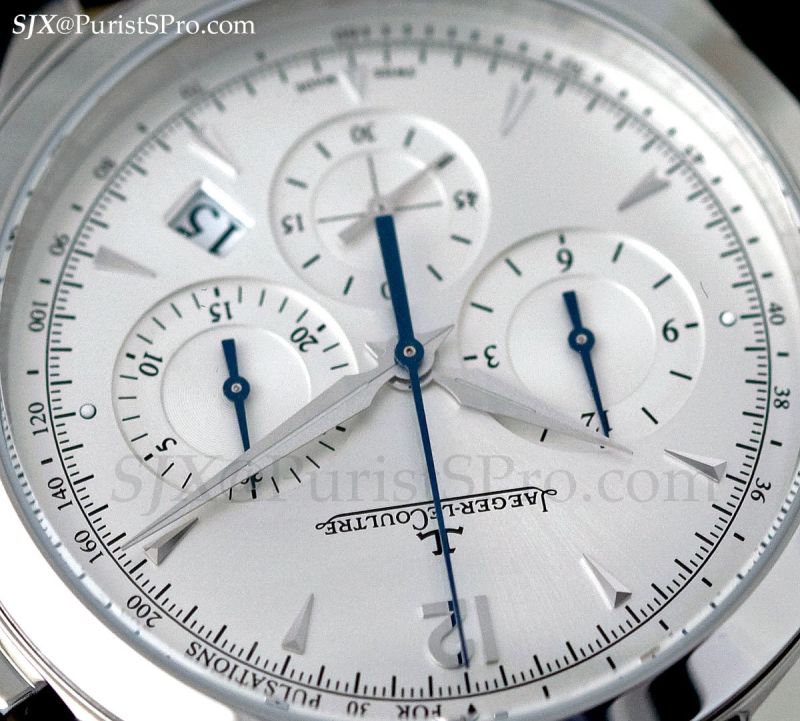
To start with, two models previously found in the LMH-era JLC Master range have been revived. The Master Control chronograph has returned with an automatic movement; the original was Meca-quartz, a very interesting and mechanically sophisticated quartz calibre, but desperately small. The new Master Chronograph is 40 mm fortunately but reminiscent of the old Meca-quartz chronograph. Both rose gold and steel versions are available. The blue steel hands are particularly striking on the steel version.
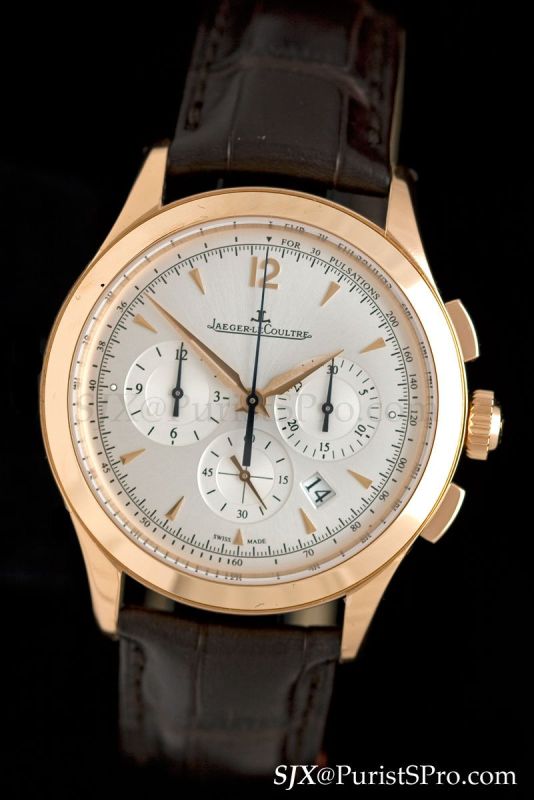
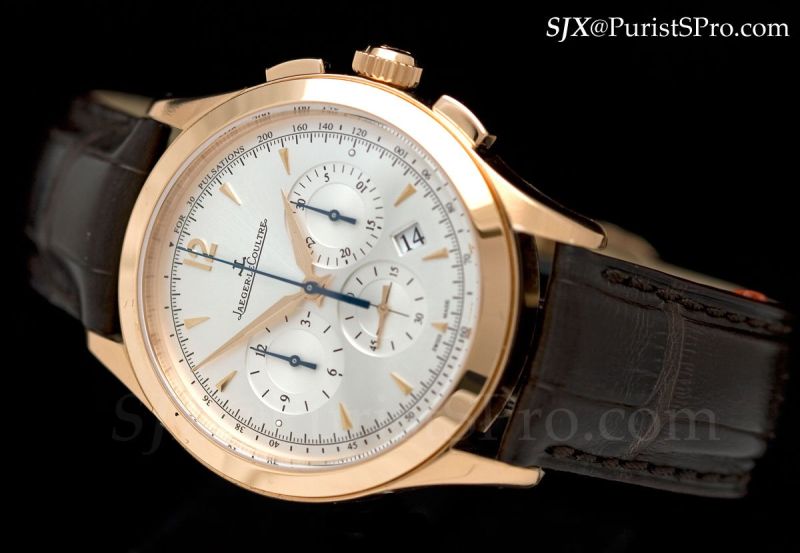
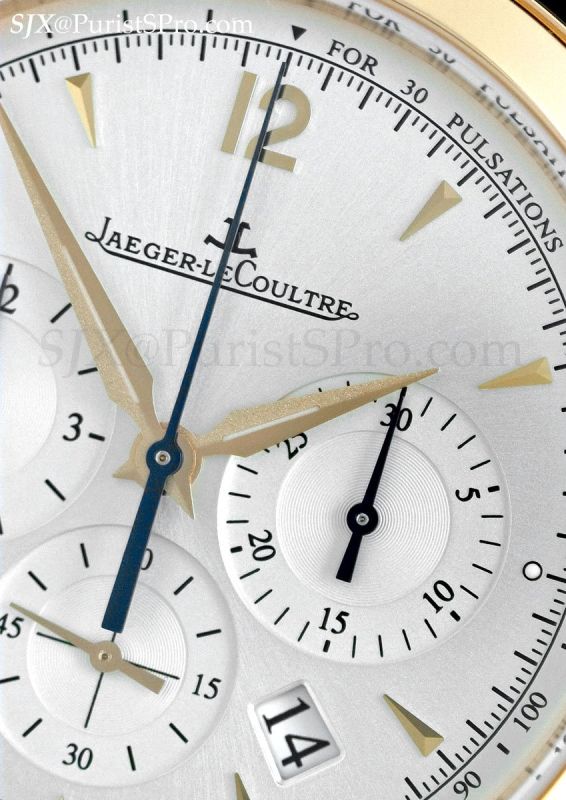
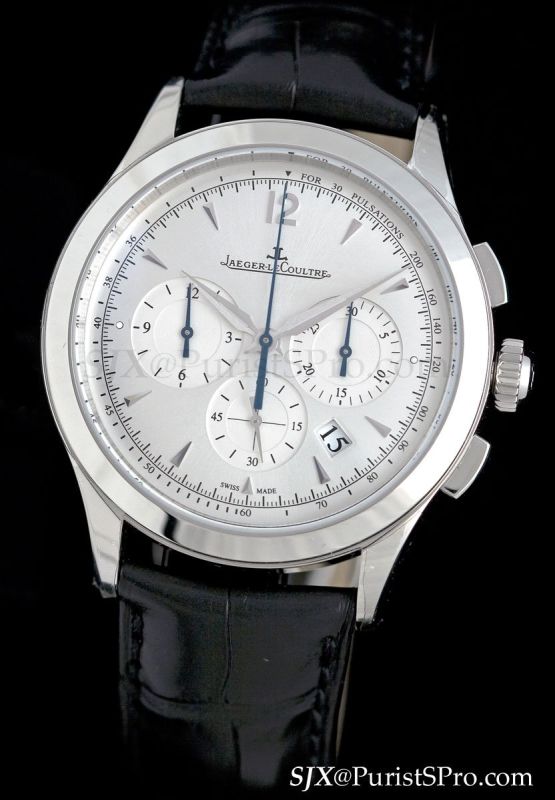
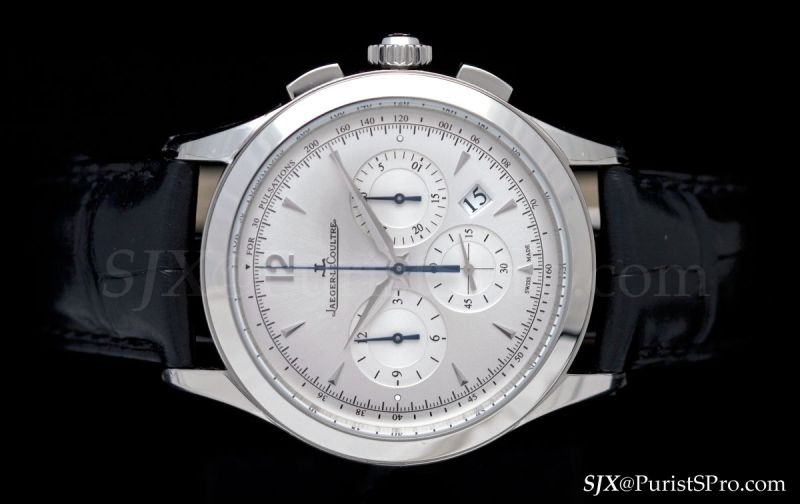
Also brought back is the Master Memovox. JLC has a long history of making alarm watches and the old Master Memovox (a contemporary of the Master Control Chronograph) was almost quintessential JLC so it was only a matter of time before it was brought back.
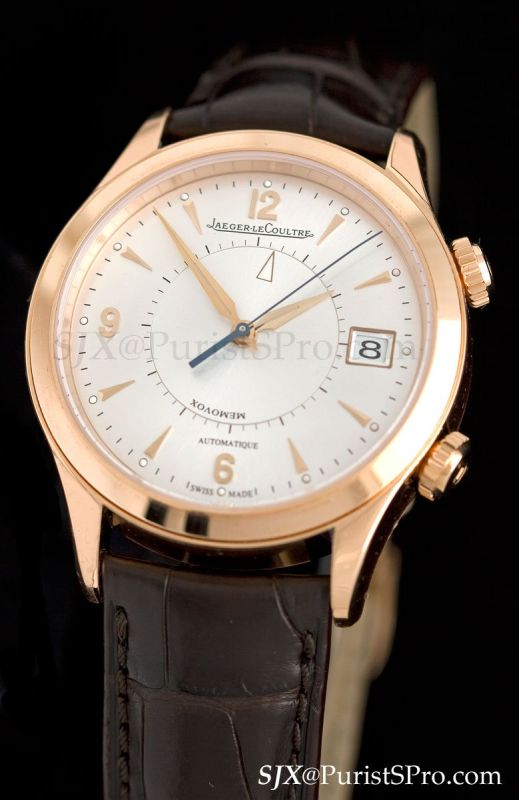
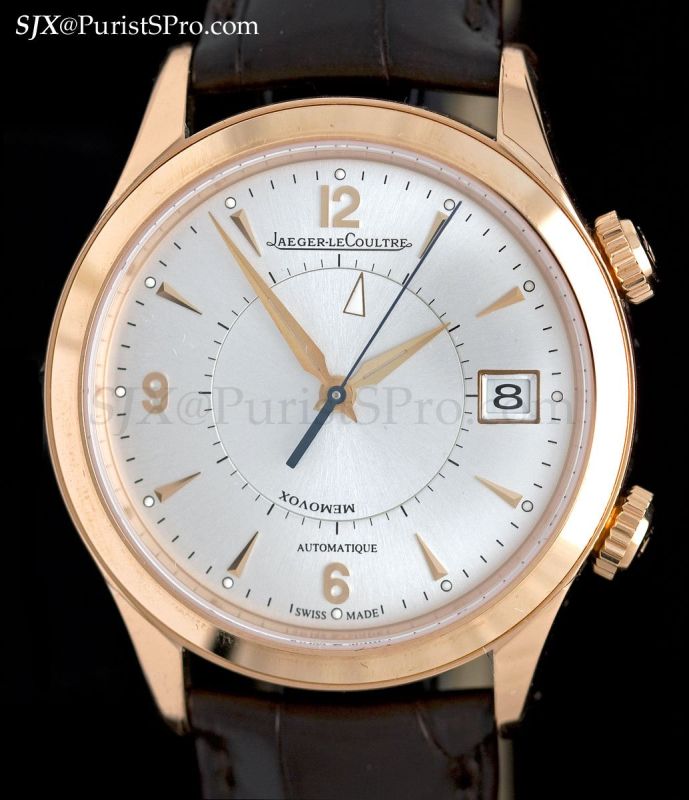
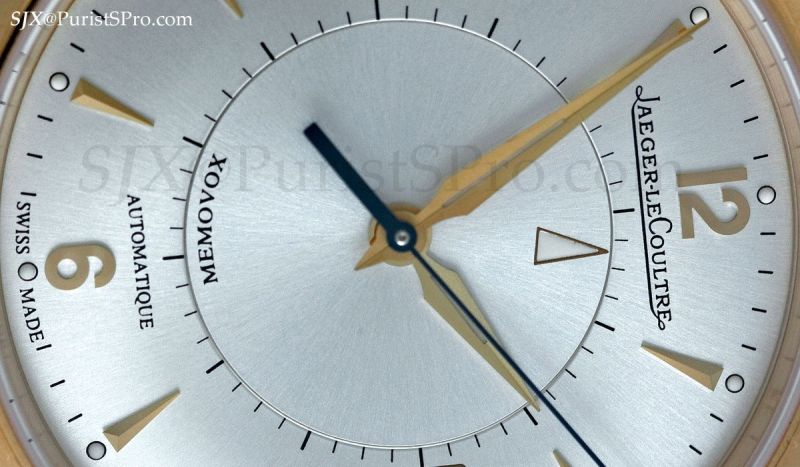
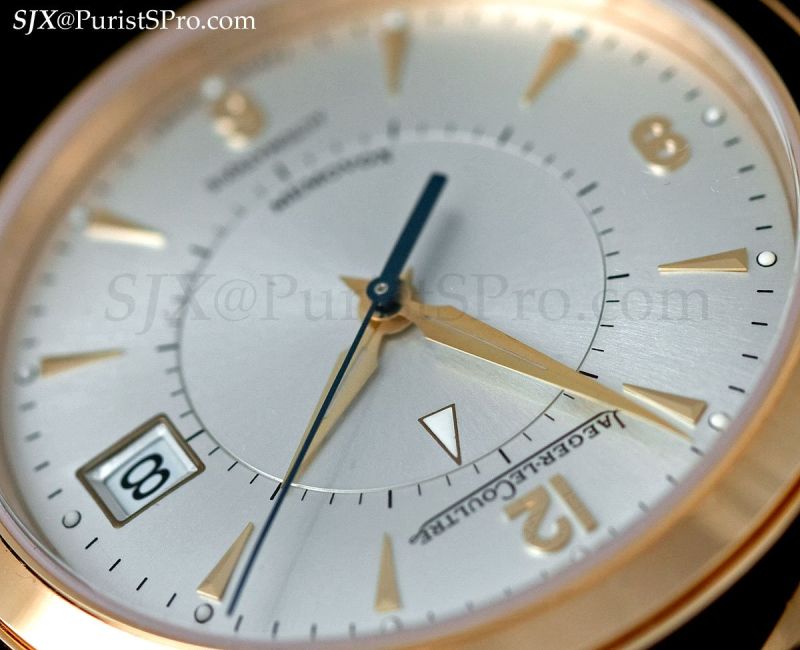
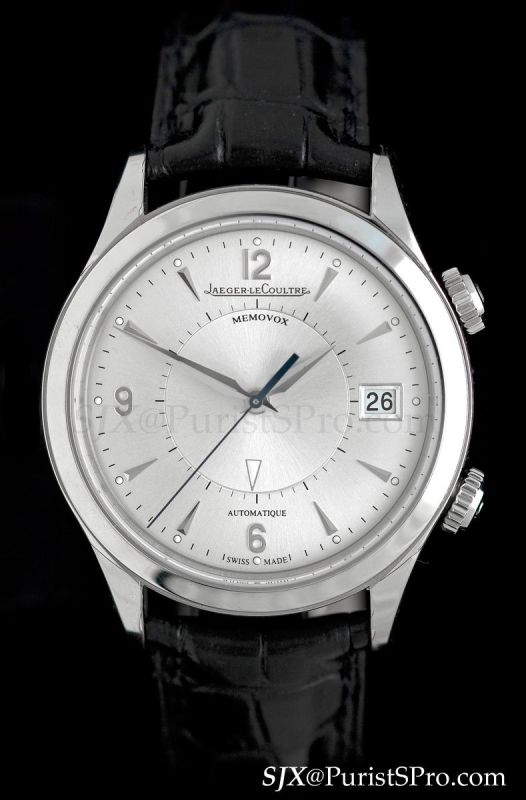
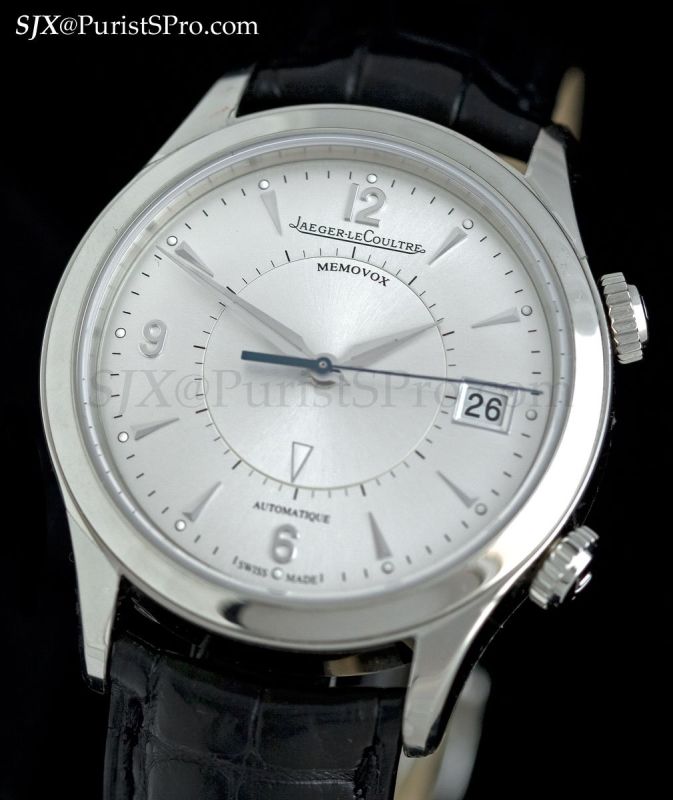
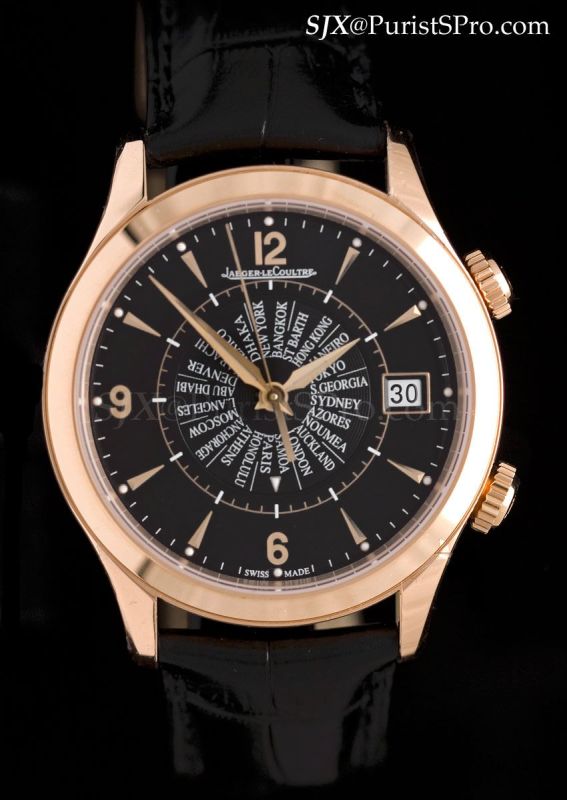
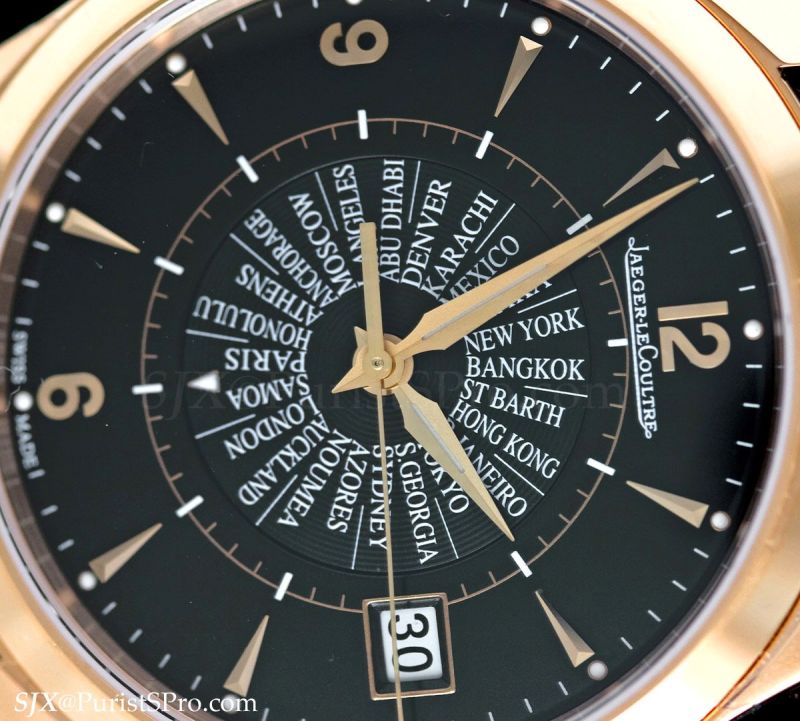
A limited edition Memovox International (750 in steel and 250 in rose gold) with city disc in the centre of the dial allows tracking of two time zones. This is a retro looking watch that goes back even further in JLC history than the Master Memovox. This, as well as the Master Memovox, are 40 mm in diameter.
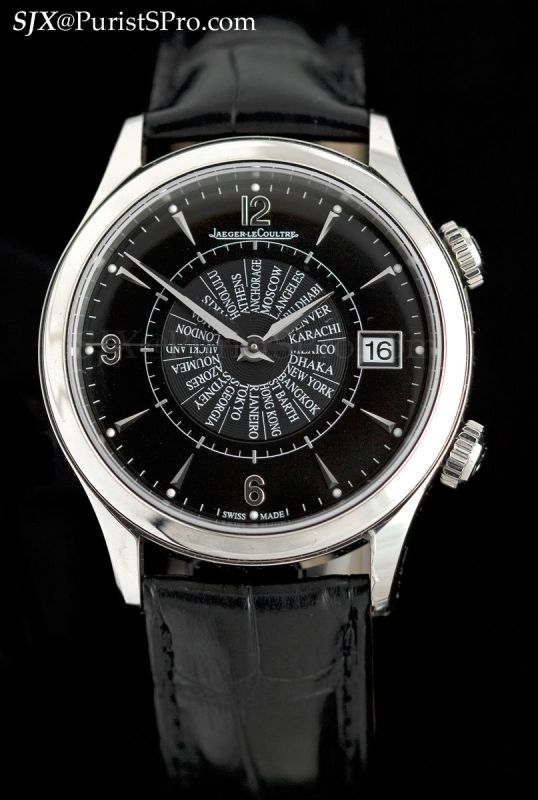
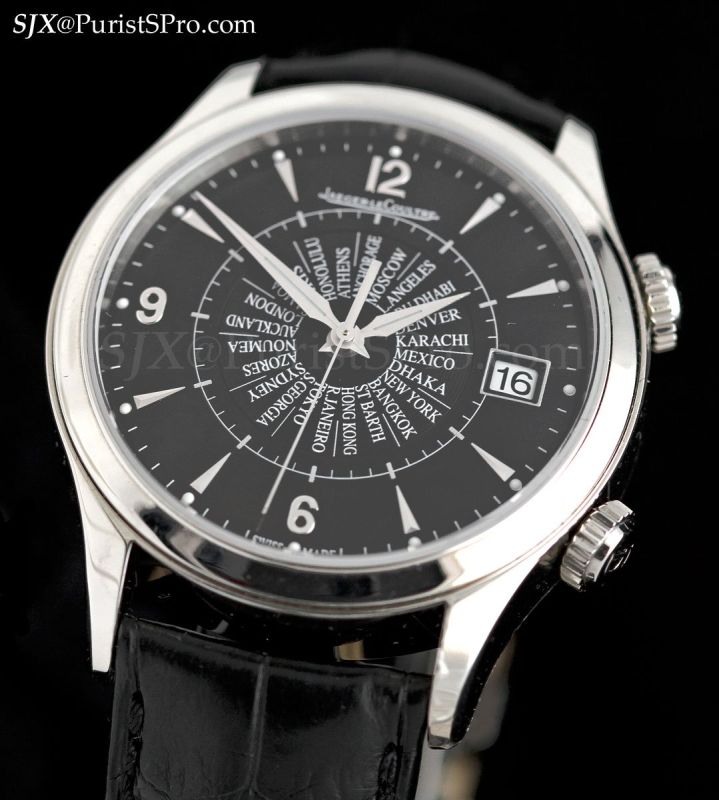
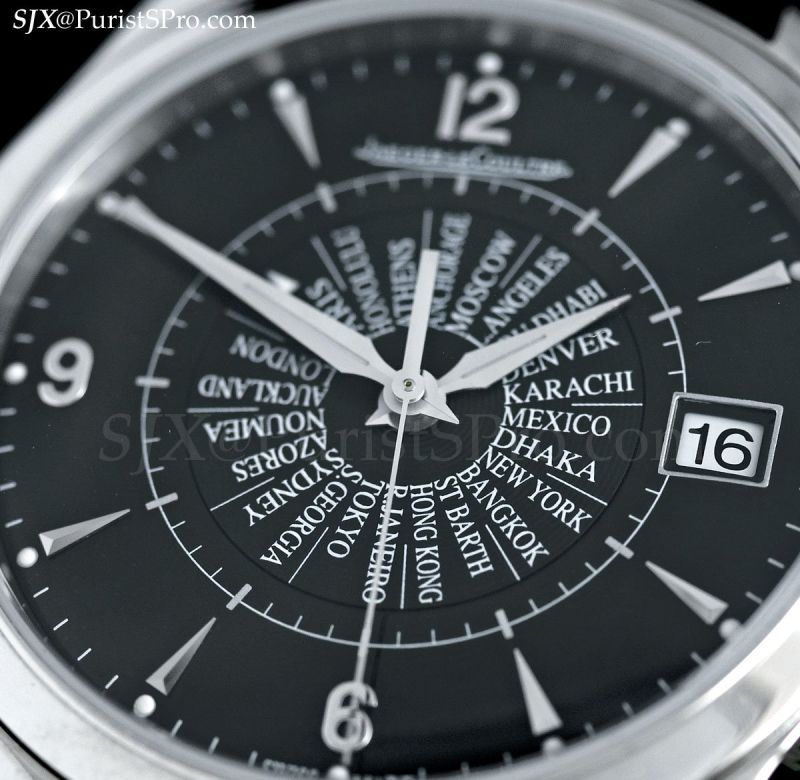
JLC introduced the Master Grande Tradition collection last year, which was meant to showcase traditional watchmaking, JLC-style. Added to the Grande Tradition collection this year is watch with a double Grande in its name, the Master Grande Tradition Grande Complication. Dimensions are 44 mm wide and 15.6 mm; the unbroken vertical sides of the Master case exacerbate its thickness.
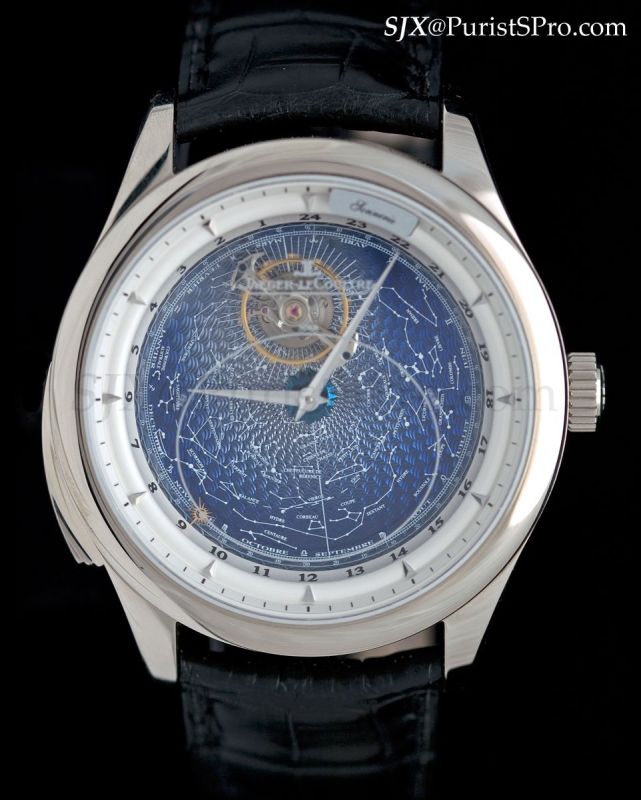
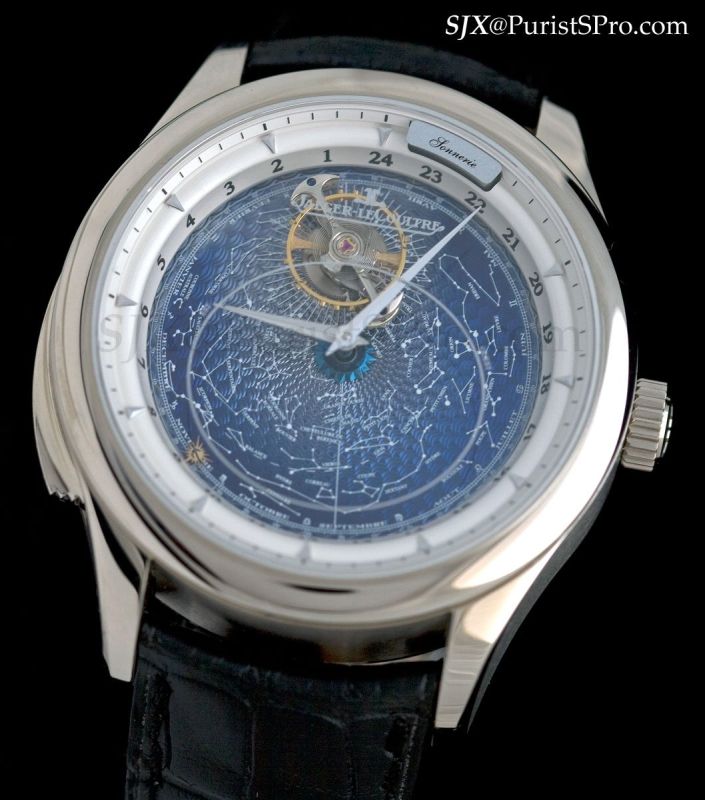
Limited to 75 pieces and cased in white gold, this watch features a flying tourbillon, sky chart, Zodiac calendar and minute repeater. But since this is JLC, the complications are not merely complications. The minute repeater uses a crystal gong where the gongs are connected to the crystal for resonance; the repeater also uses the trebuchet hammers first developed for the Hybris Mechanica super-grande sonnerie; and the escapement is silicon. To top it off, the dial is a pleasing shade of blue enamel over a guilloche base.
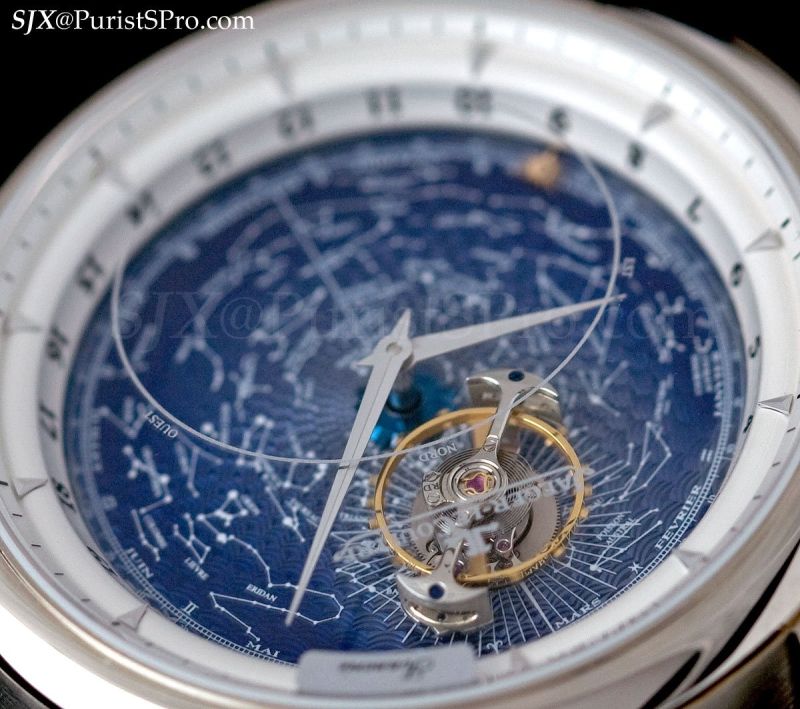
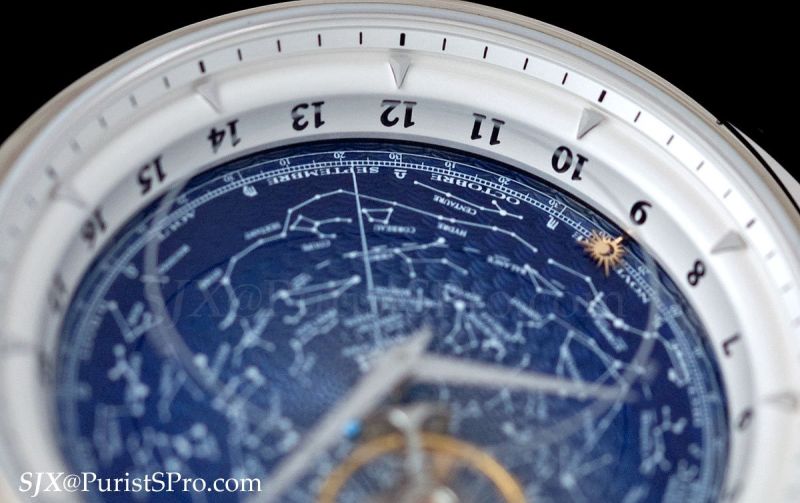
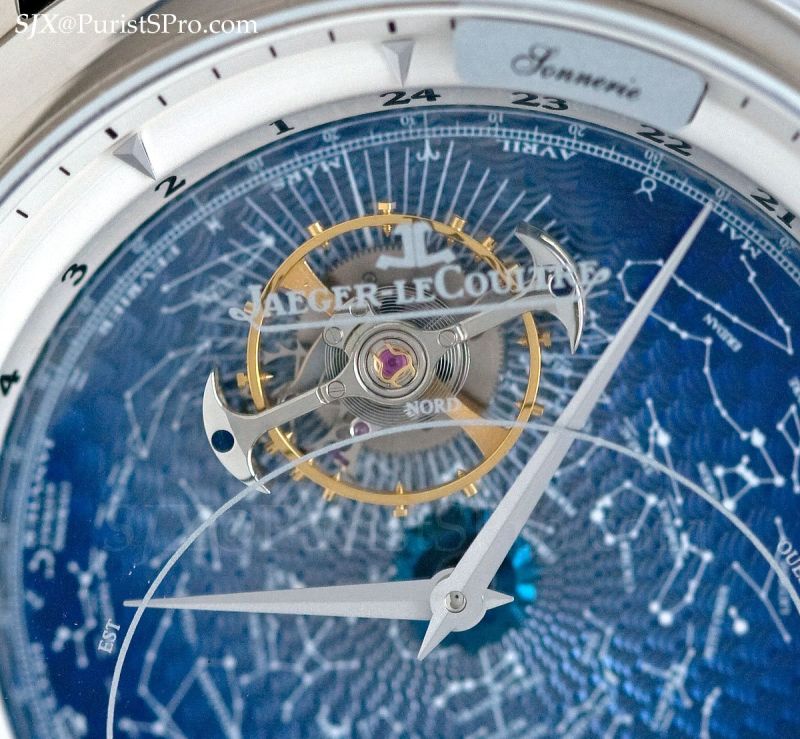
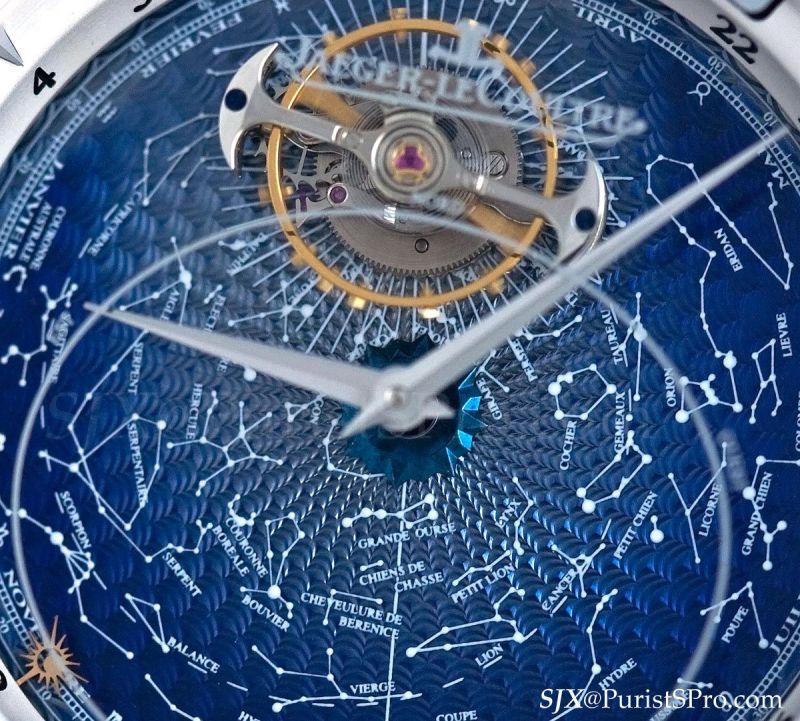
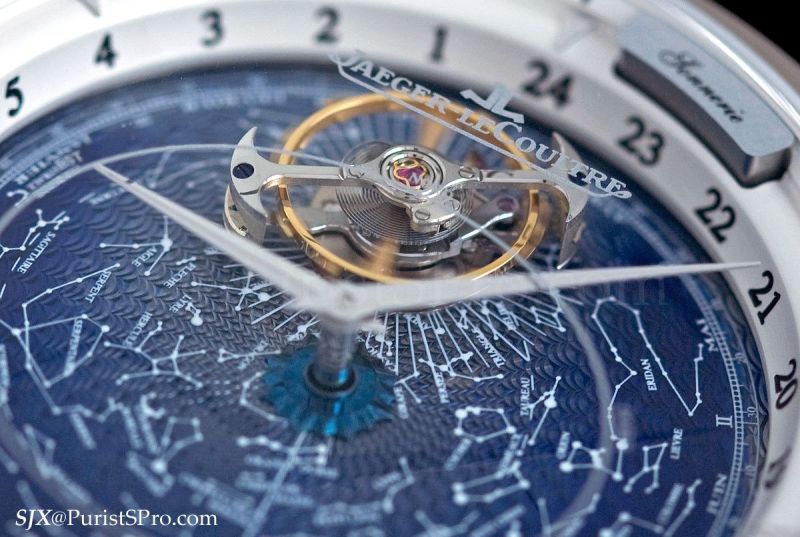
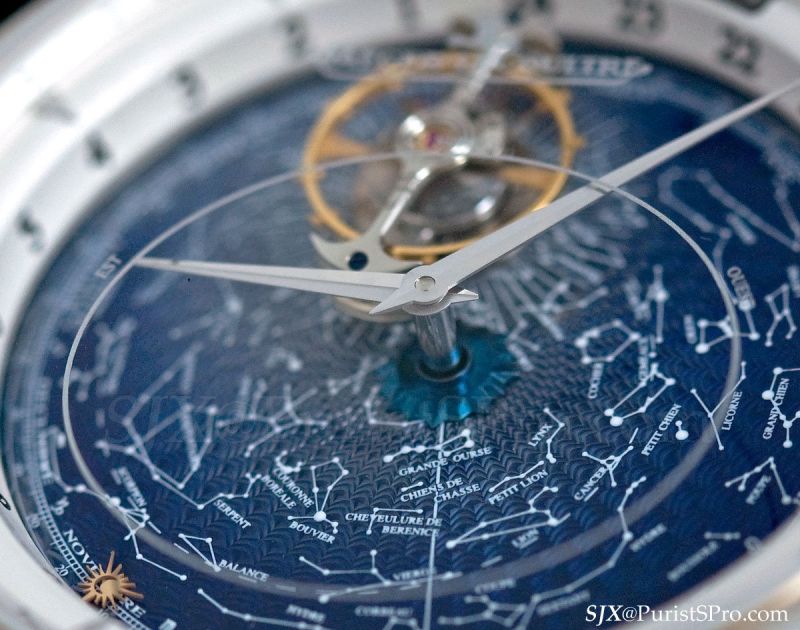
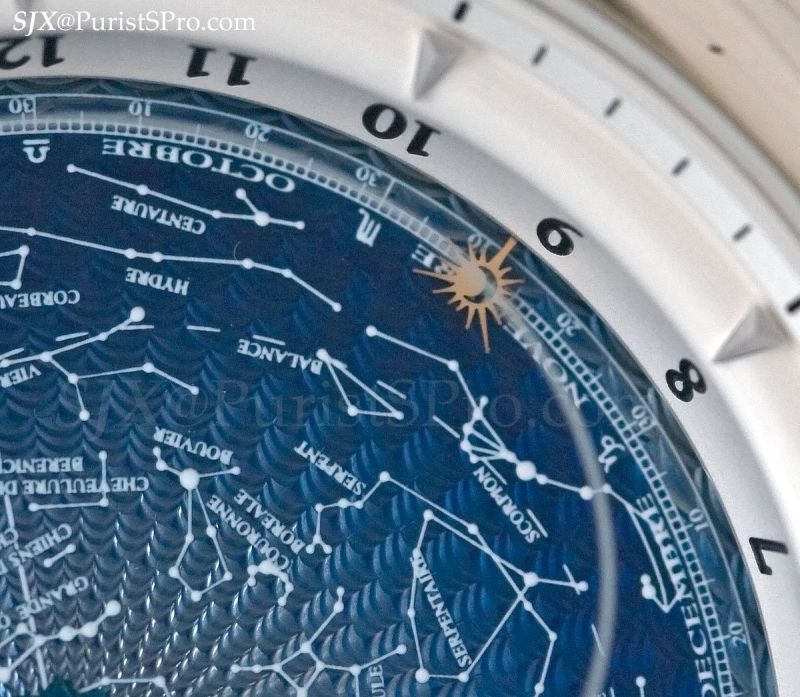
This watch is impressive and the repeater chimes loud and clear; the level of movement finishing is excellent but a tiny bit short of top tier haute horlogerie houses (think Patek and Lange). But beyond movement finish in isolation, JLC excels at delivering a unique combination of ambitious innovation and complication at a fairly compelling price, which no one else really does.
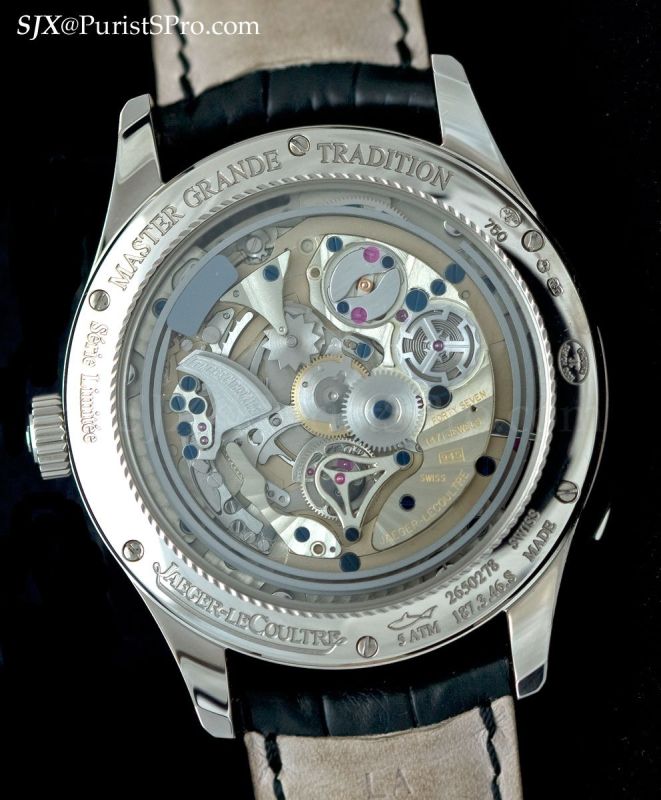
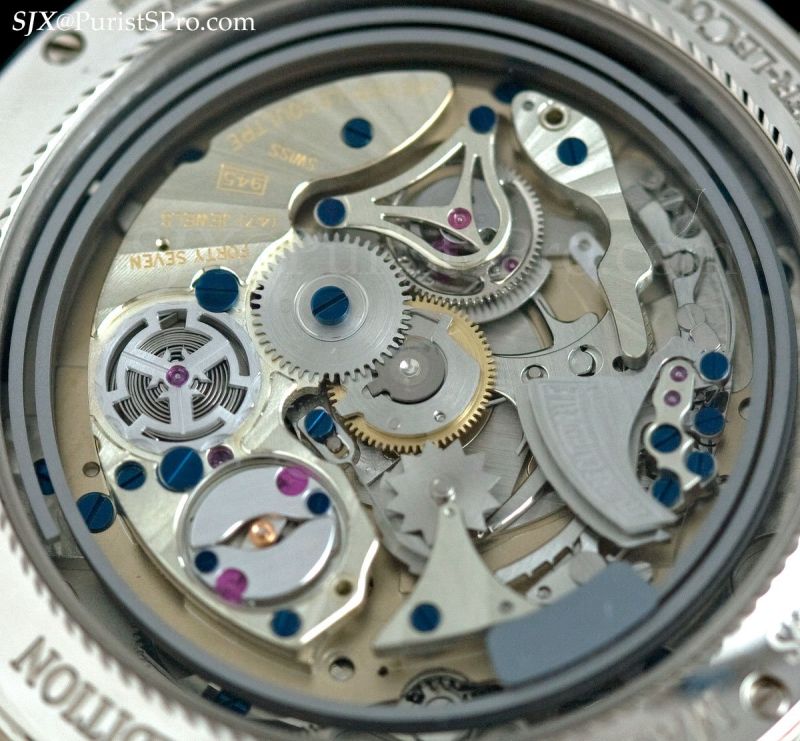
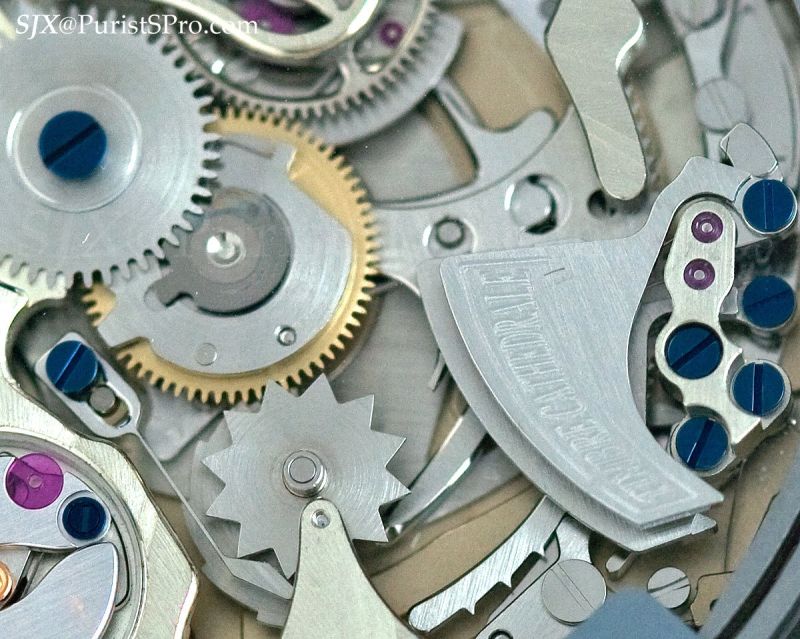
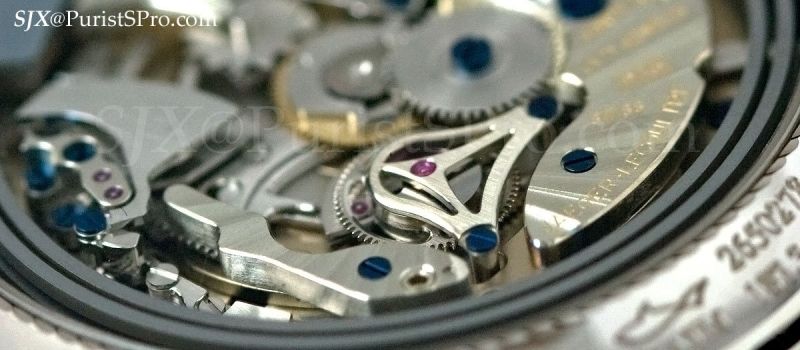
The other major complication presented was the Duomètre à Quantième Lunaire. This is the third watch of the Duomètre line after the chronograph and grande sonnerie. Like the others it has two barrels and gear trains, one for the escapement and the other for the various functions. Both barrels have 50 hour power reserves and power reserve indicators on the dial.
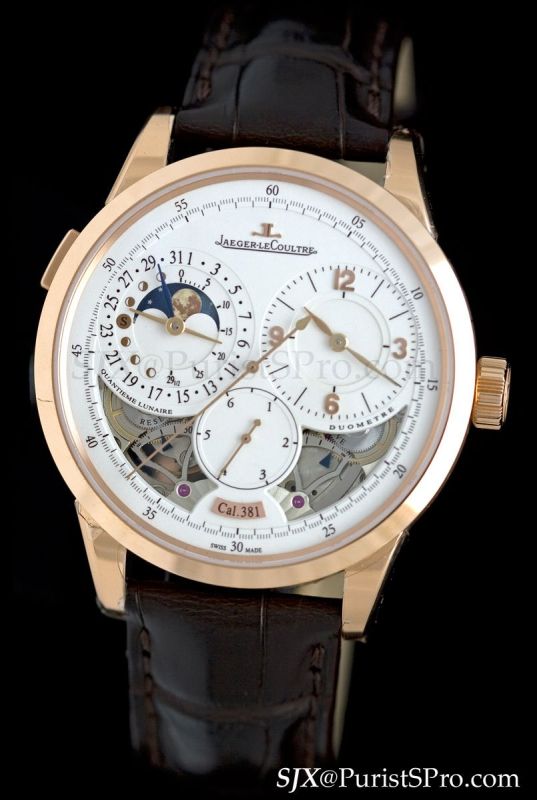
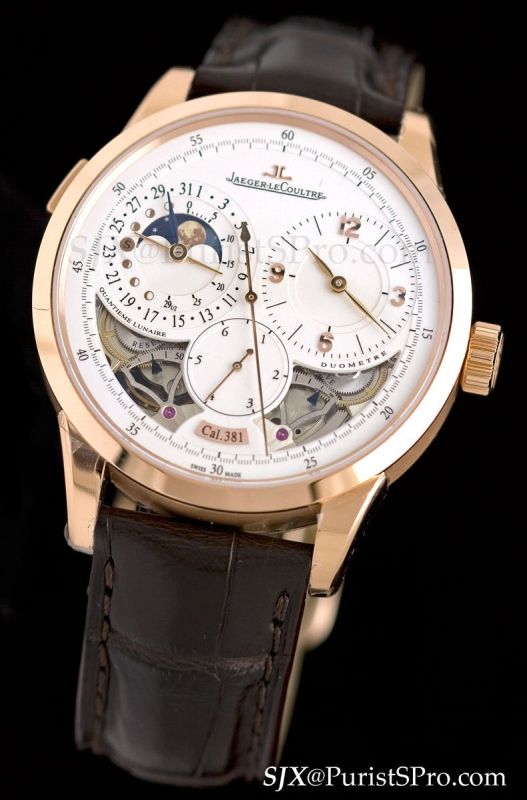
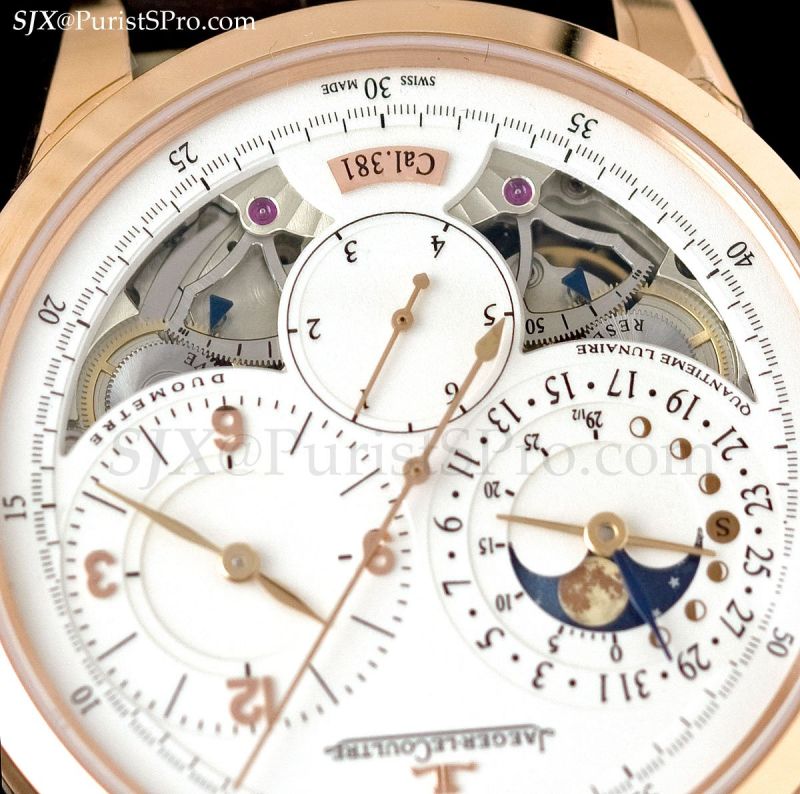
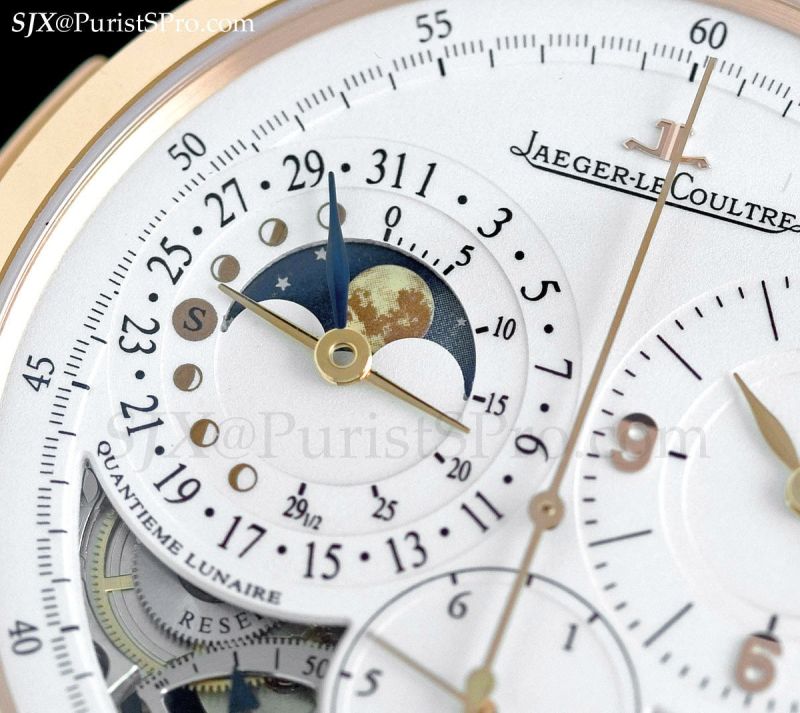
But unlike its predecessors, this watch has a set of modest functions, date, moon phase and 1/6 seconds. The date is advanced with the button at ten while the moon is set by a pusher at 12. Note that this watch has both a constant 1/6 second counter at six as well as a constant central seconds hand. The 1/6 seconds counter is driven directly by the escapement, hence the 1/6 increments; the escapement beats at 21,600 bph (21,600/60/60=6).
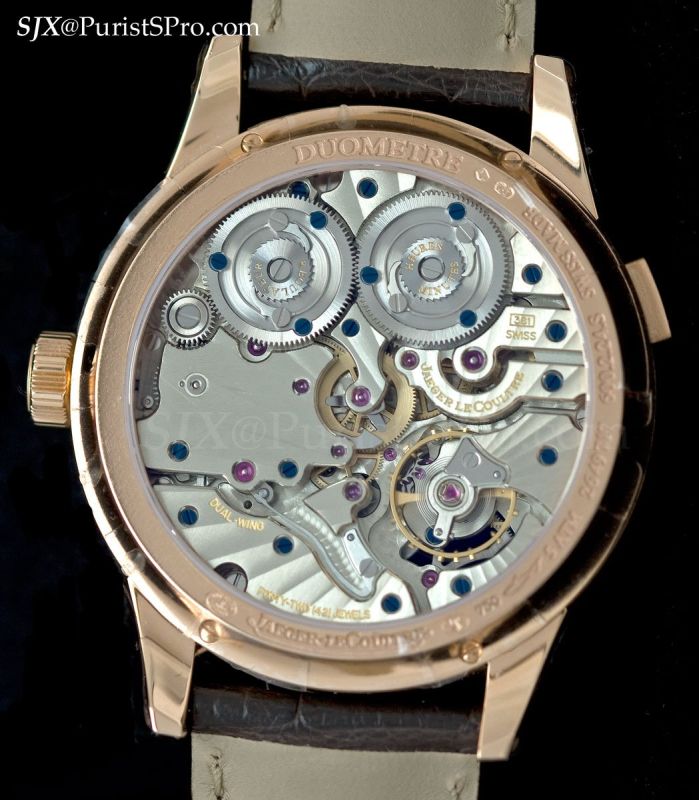
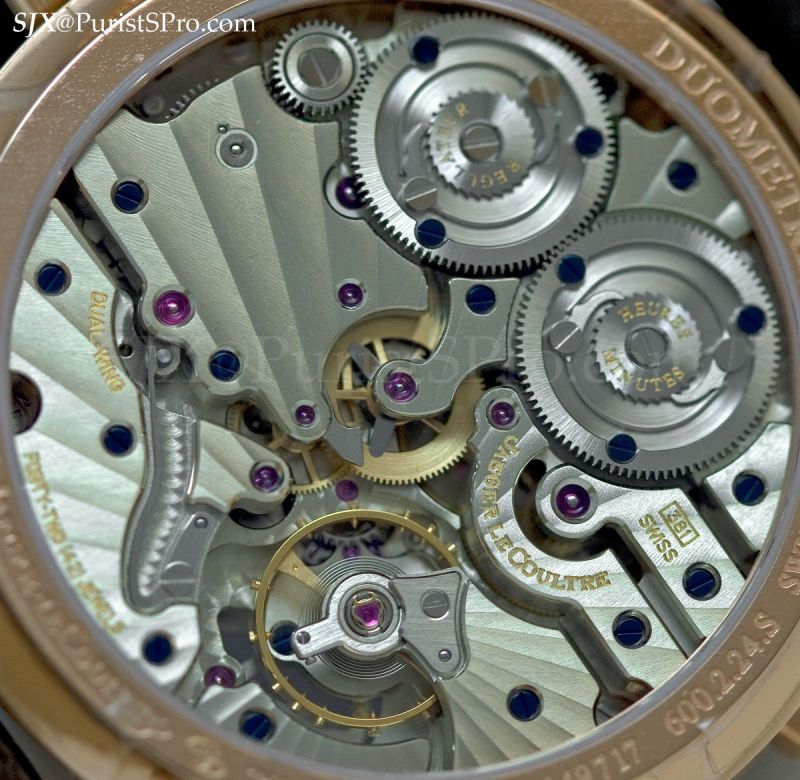
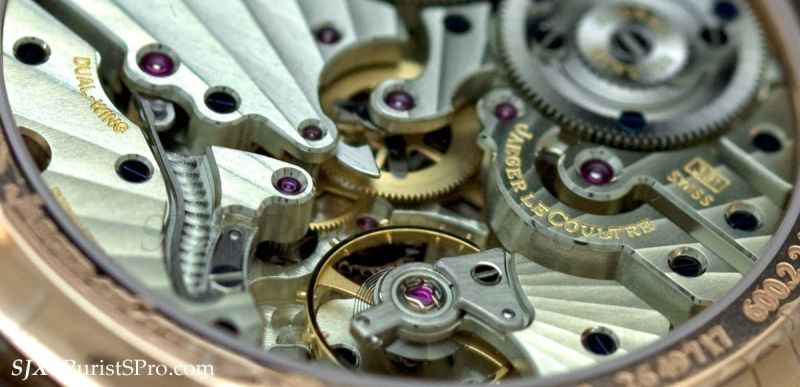
Like the Duomètre this is a handsome watch, except for the moon phase disc which is printed quite crudely and lacks depth or richness; perhaps the production version will be different. Two version will be available, in rose or yellow gold, with the latter being a limited edition of 300 pieces.
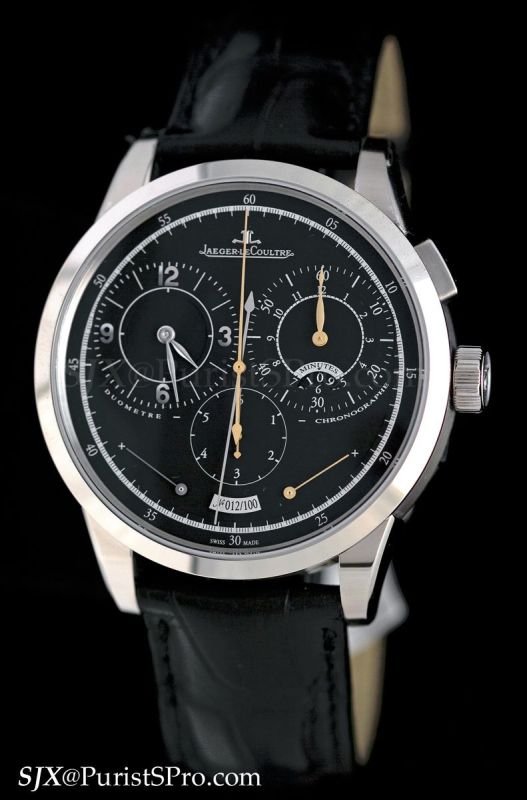
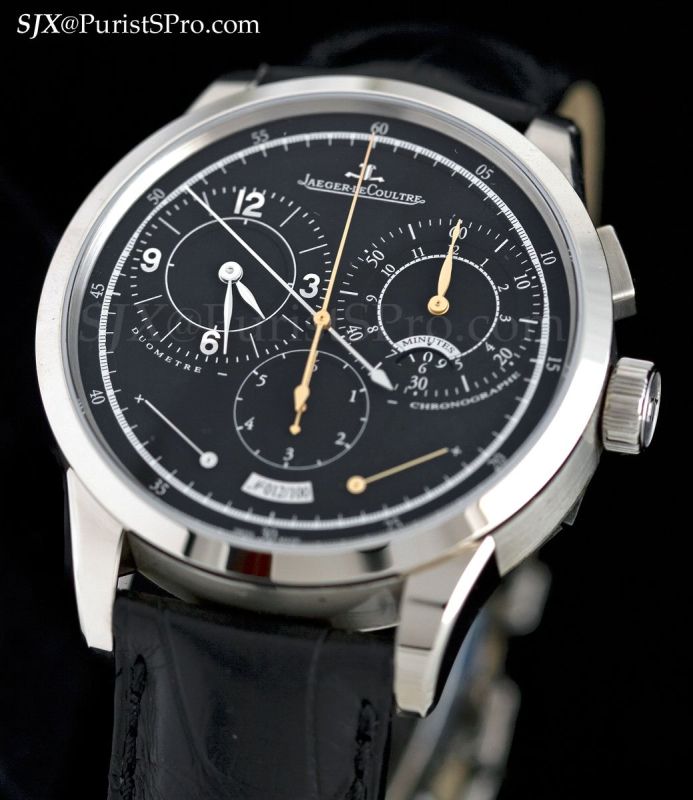
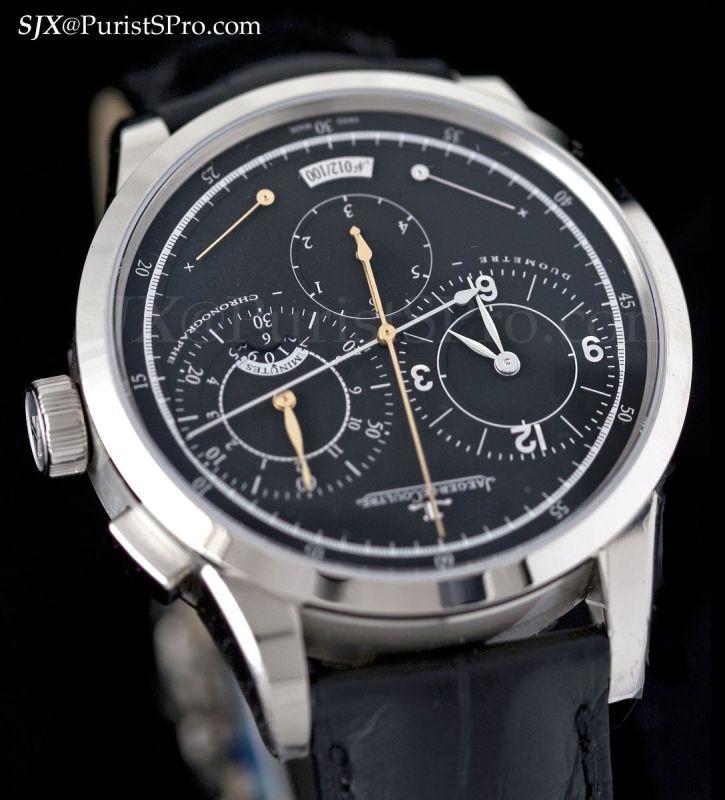
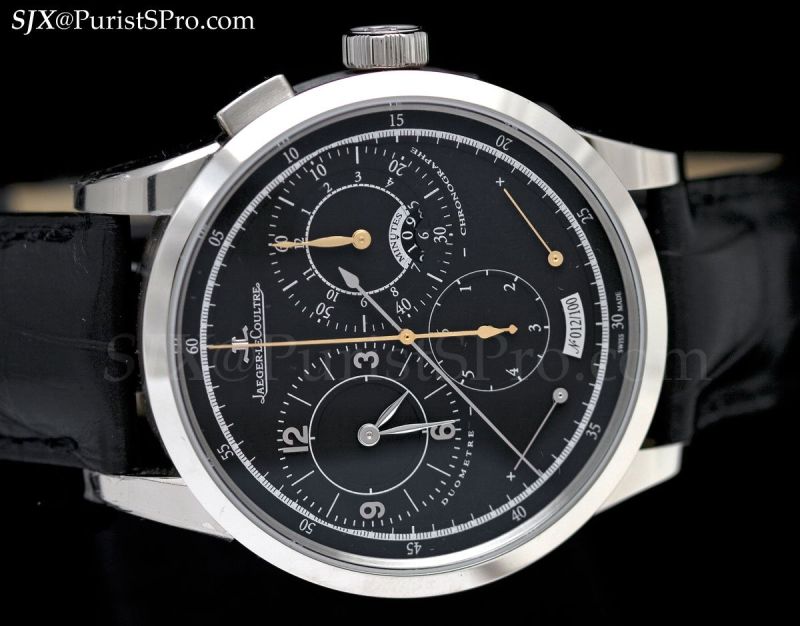
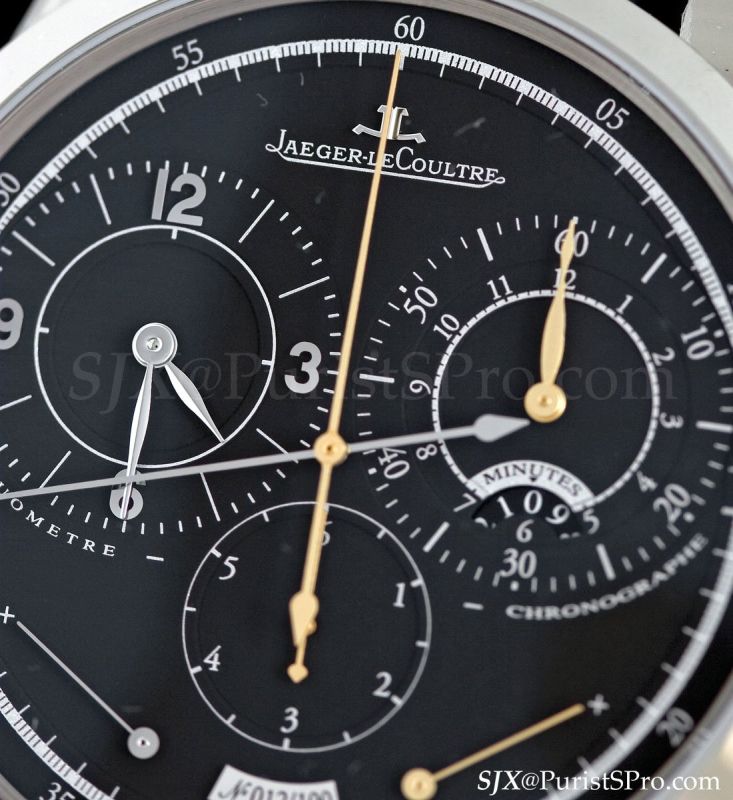
The other new model in the Duomètre range is the chronograph with a black dial. Unlike the original which looks sedate, this version has striking gold hands which contrast sharply with the dial. I like this version tremendously.
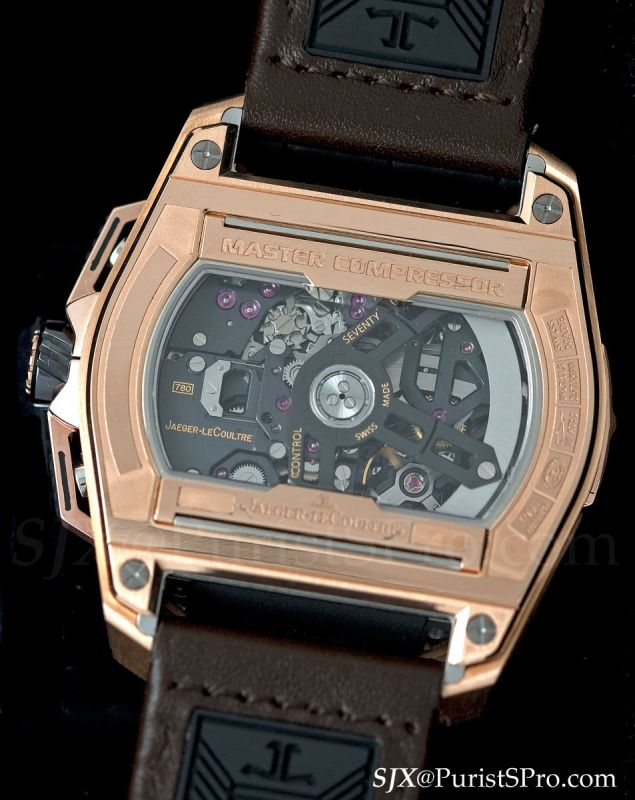
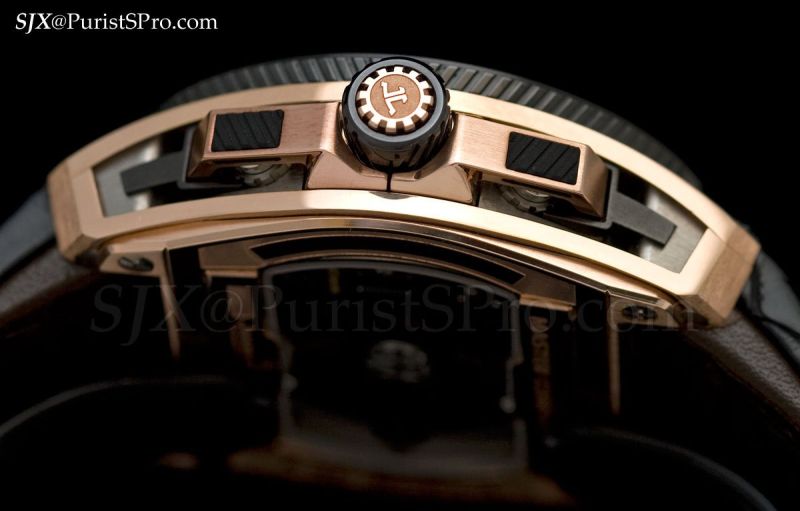
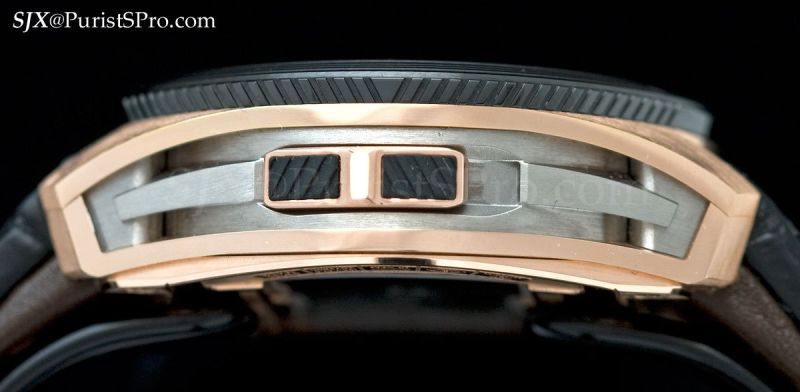
Now on to the sports watches. The flagship sports watch for this year is the Master Compressor Extreme LAB 2. It’s a chronograph with second time zone function made for use in extreme (cold) environments. Three mountaineers scaled a Himalayan peak in late 2009 wearing this watch (along with the Extreme LAB 1 and a vintage Geophysic) and then named the mountain after Antoine LeCoultre.
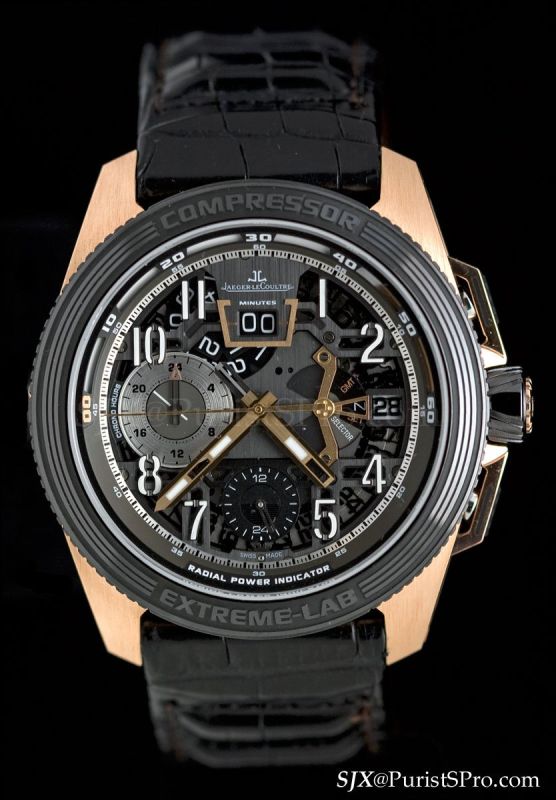
Very rarely do I encounter a watch that I do not know how to use intuitively, this is one of them. To start with, this watch includes a function selector in the crown, similar in principal to what Renaud et Papi does for Richard Mille. One push of the crown allows the setting of date and second time zone, another allows the setting of the time and a third push brings it back to neutral allowing only winding of the watch. This removes the need for pulling out the crown, which enhances protection against the elements.
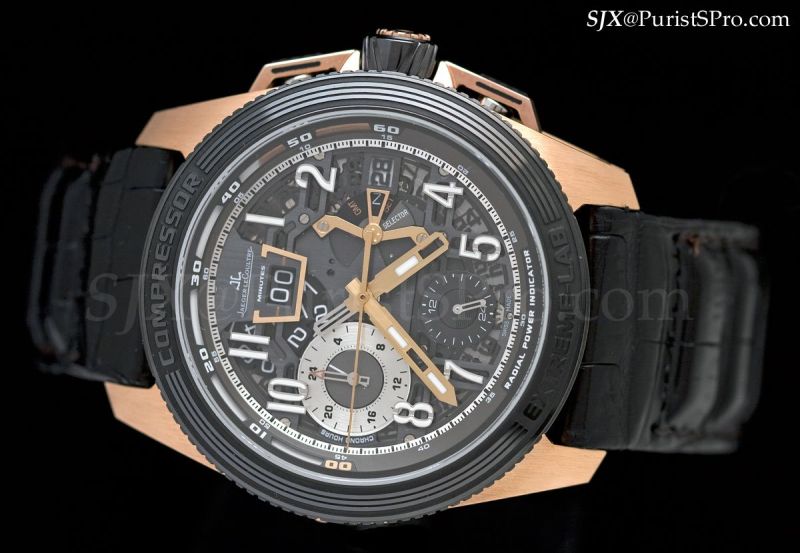
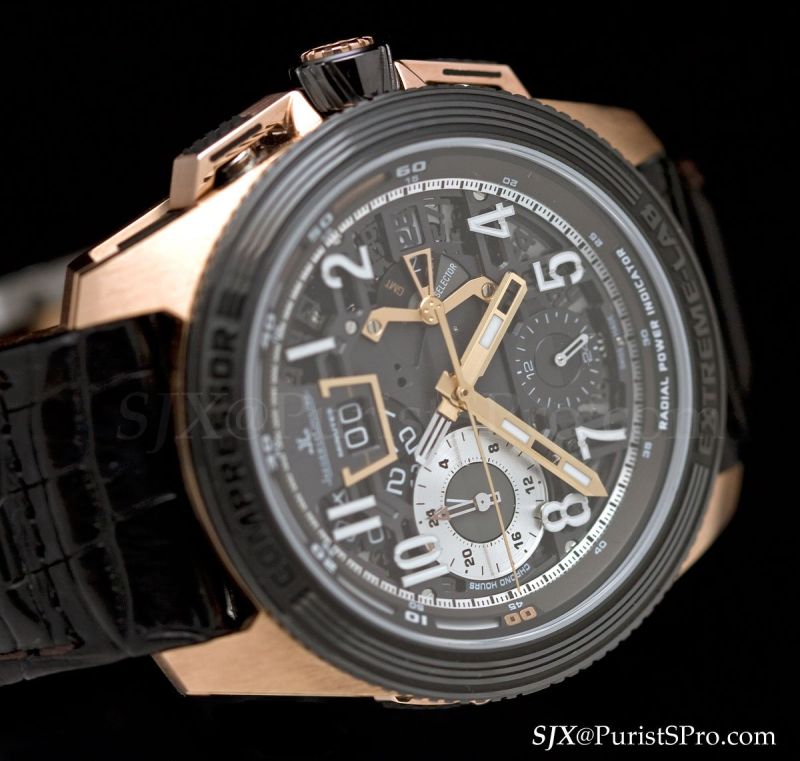
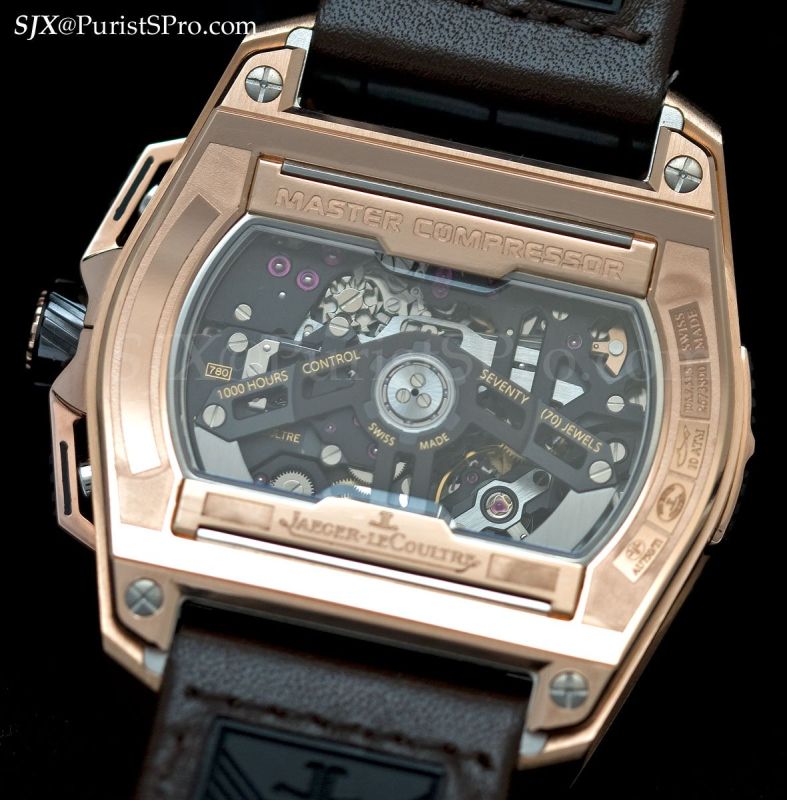
In addition this watch also has a rather complicated hack seconds system. When setting the watch the seconds hand does not hack, instead a sliding pusher on the left of the case has to be slid and pushed in order to stop the seconds hand, and then slid and pushed back to start it.
It doesn’t stop there. The power reserve is displayed in a large, semi-circular arc on the top half of the dial perimeter while the elapsed minutes are displayed very legibly on two discs at 12 o’clock. The hour counter and constant seconds are co-axial at nine o’clock, while the elapsed chronograph seconds starts at nine o’clock as well, presumably to stay away from the minute counter aperture.
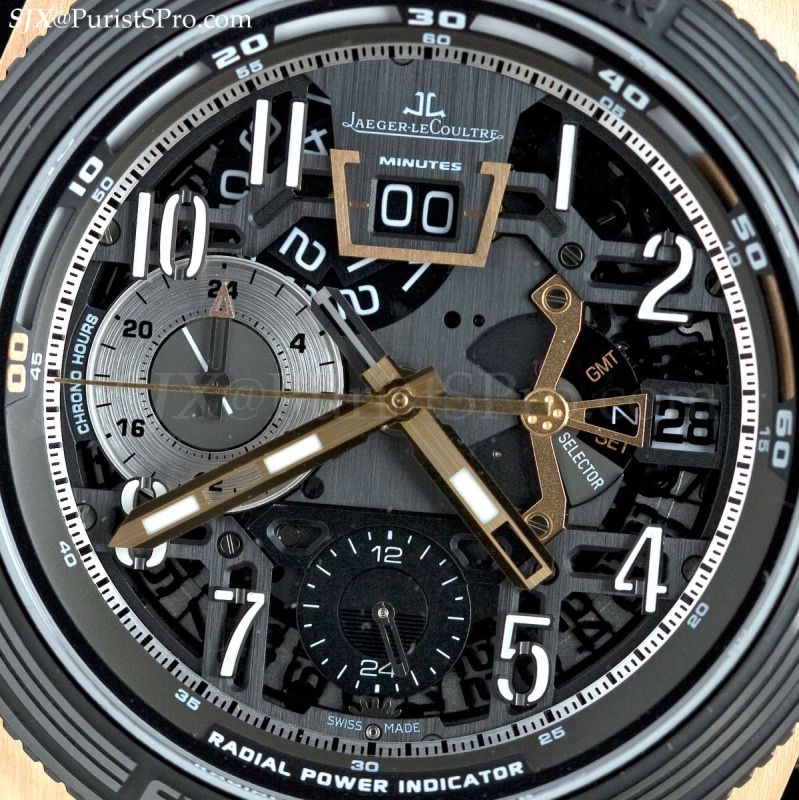
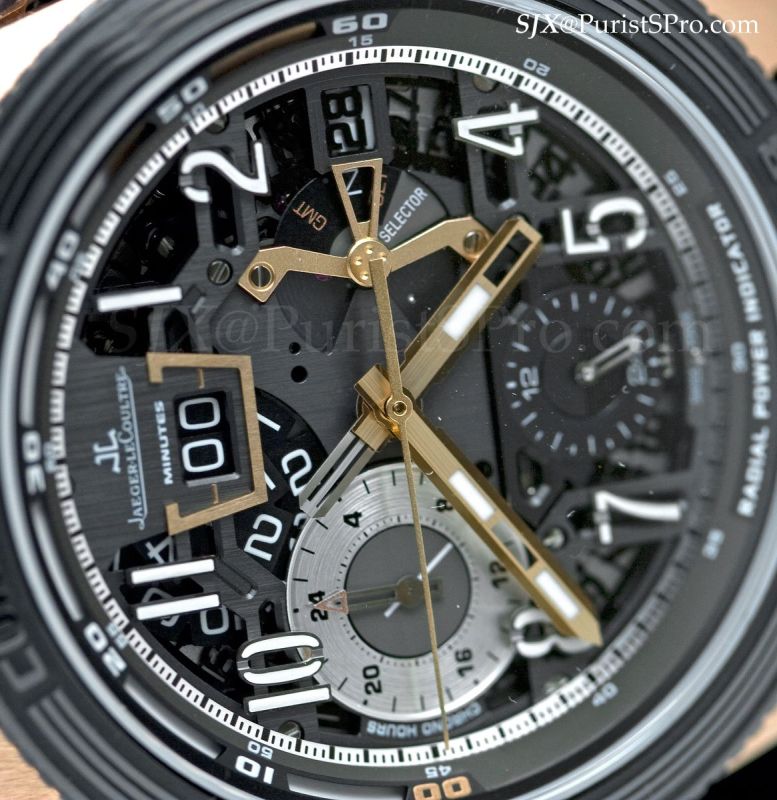
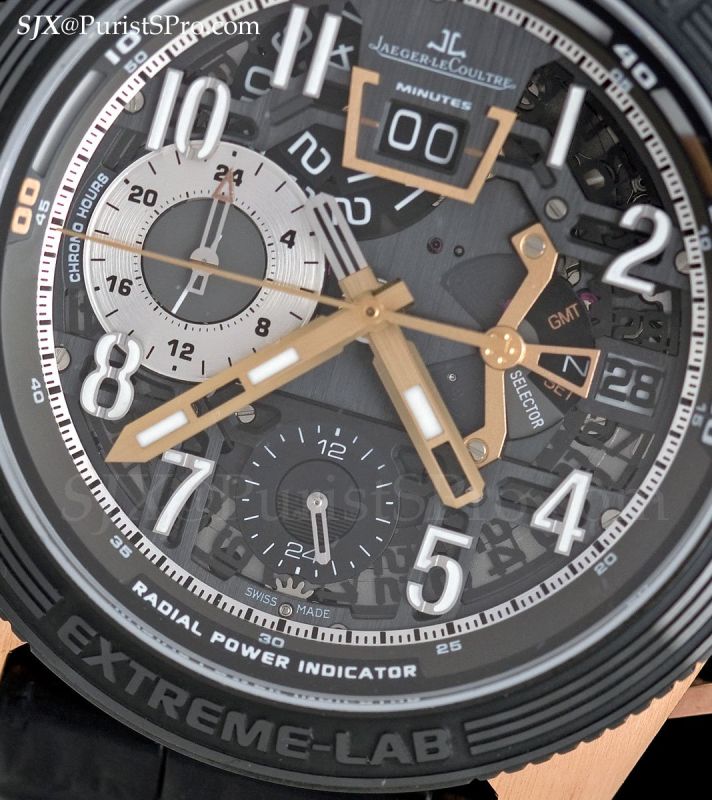
In addition there are numerous other elements mentioned in the press release, including the case and movement construction which are too numerous to list here. All of that is packed into a 46.8 mm case. Two versions of this will be available, rose gold or titanium, both of which have ceramic bezels and crowns. The rose gold is limited to 200 while the titanium is a 300 piece edition.
Another new sports watch is yet another limited edition Extreme World Chronograph, 500 in steel and 200 in rose gold. The dial is Texalium, the trade name of a fabric laminated with plastic that resembles carbon fibre but which unlike carbon fibre is available in numerous bright colours.
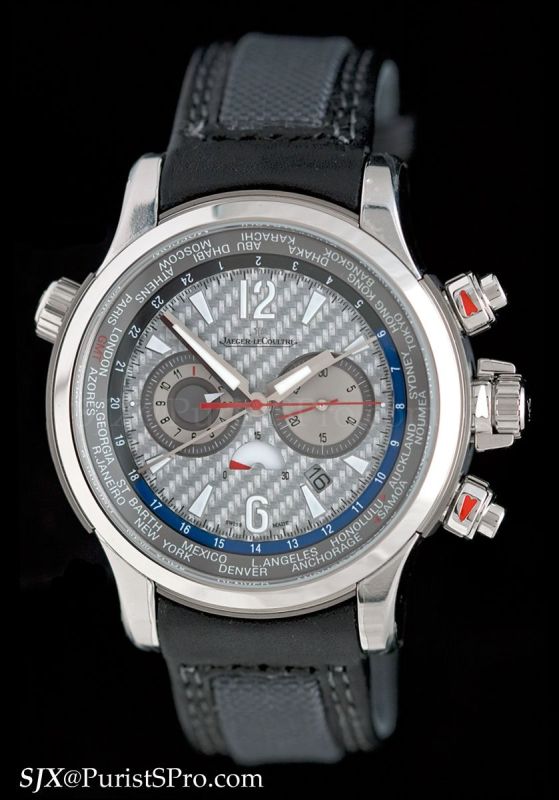
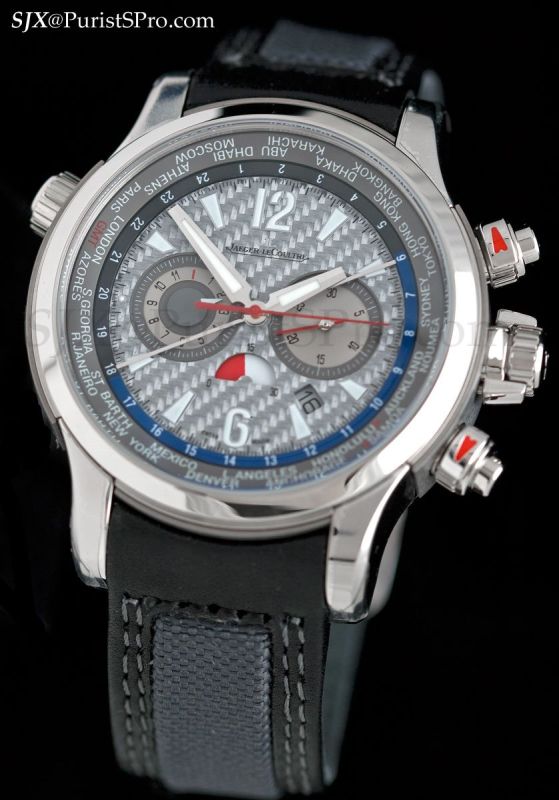
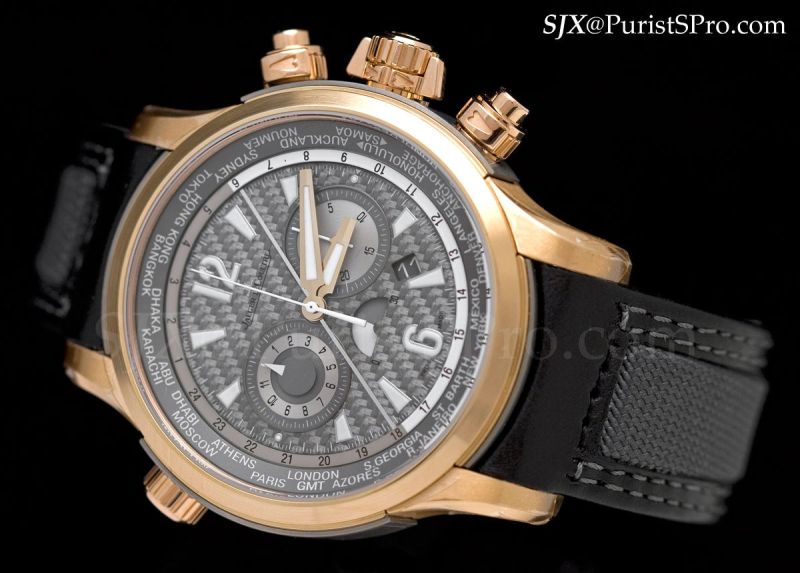
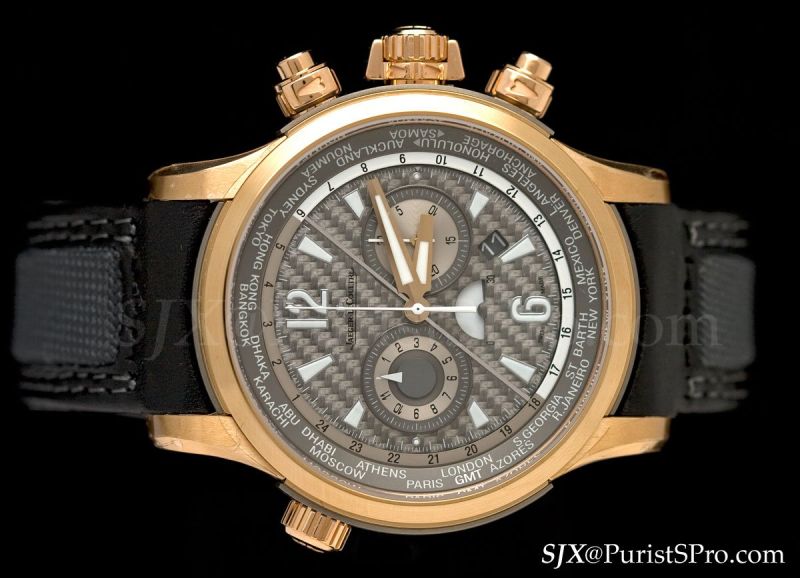
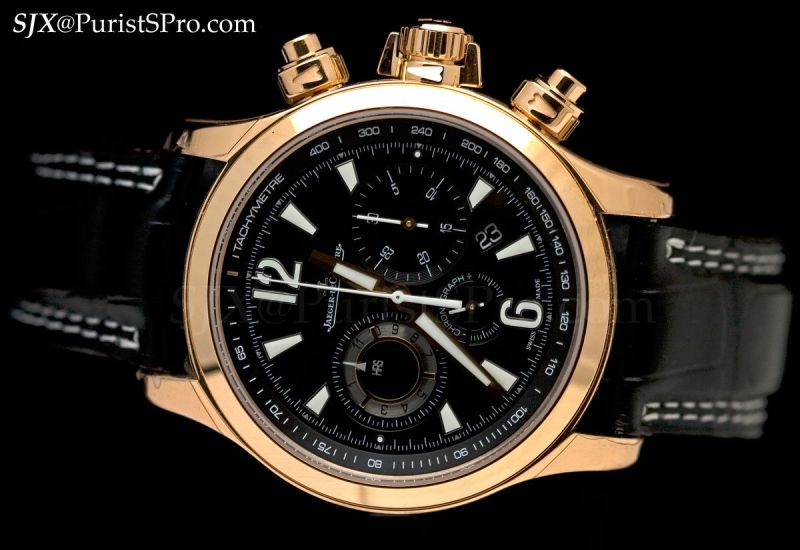
The Master Compressor chronograph has also been updated with a slightly different dial that is cleaner and more serious looking than the original.
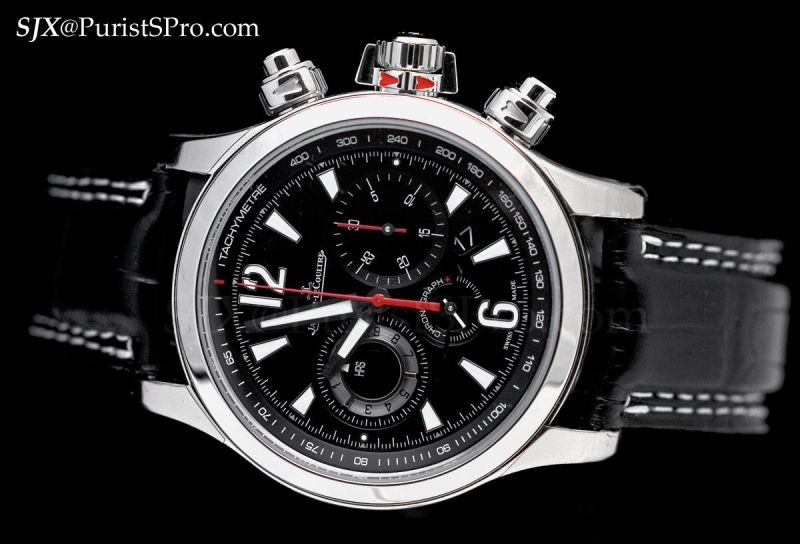
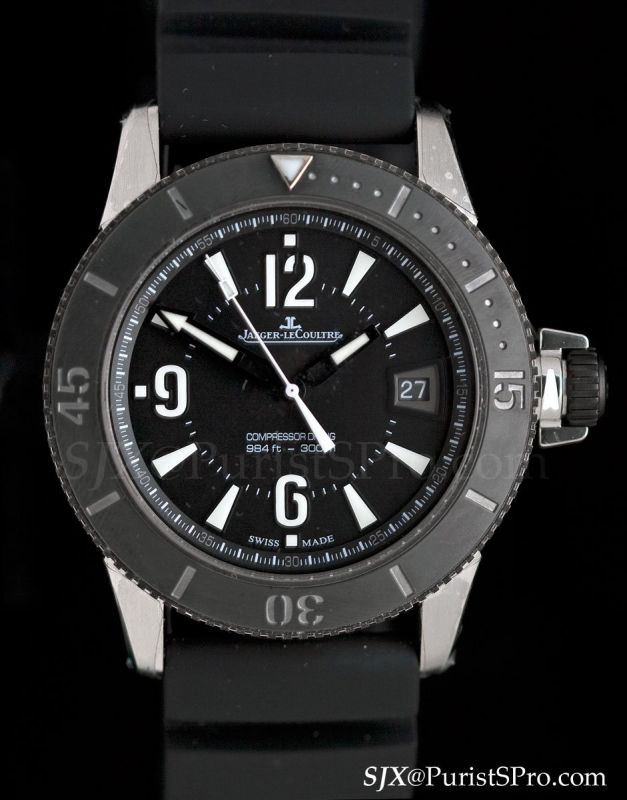
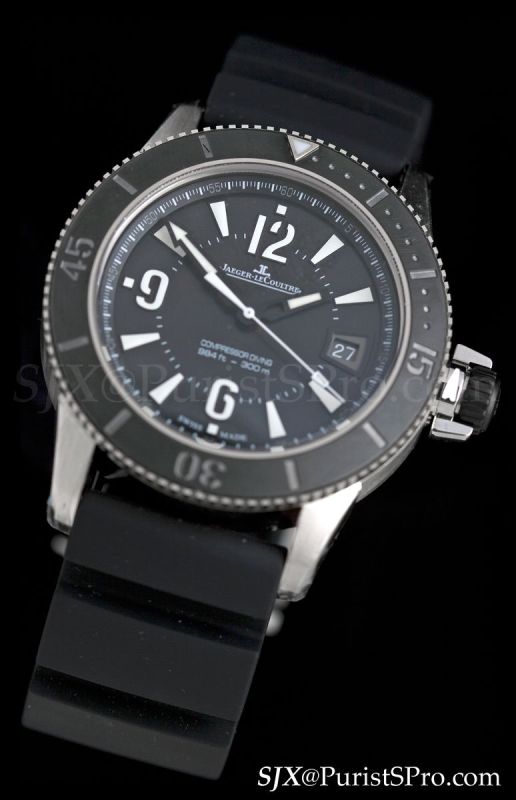
The Navy Seals Master Compressor now has an entry level automatic model. It’s a limited edition of 1500 pieces and 42 mm in diameter, though somehow it feels like a smaller watch.
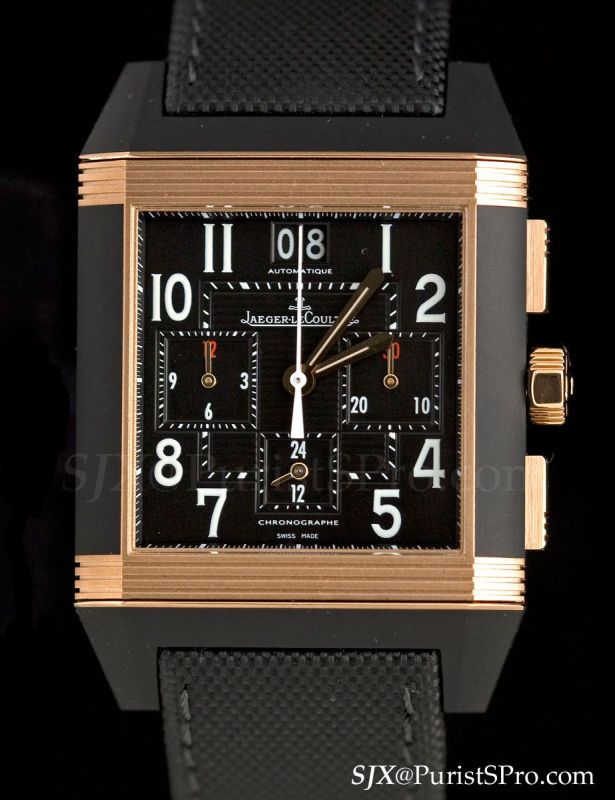
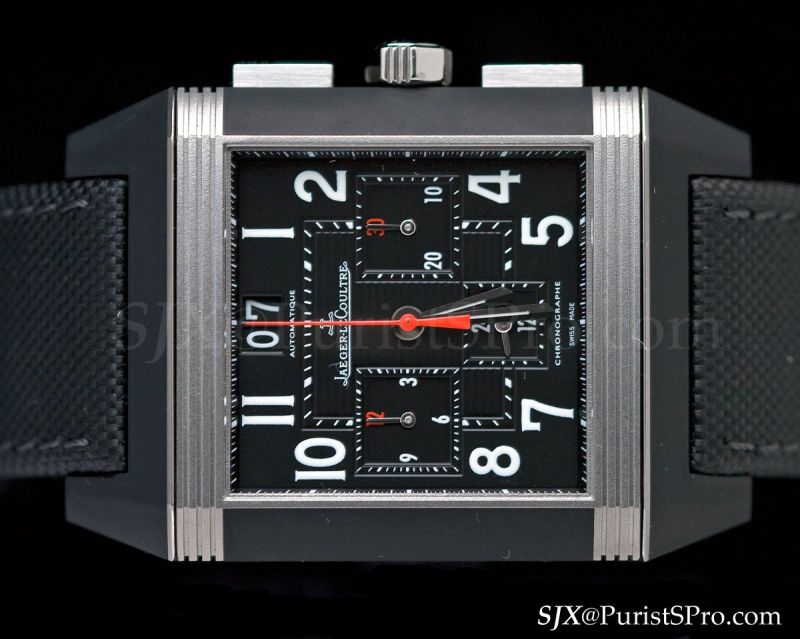
Finally we have a handful of watches from the Reverso collection. The first is the Squadra Chronograph GMT Palermo Open, named after a polo tournament. Though it looks like ceramic the case is actually rubber coated. In steel or rose gold with the latter being limited to 500 pieces.
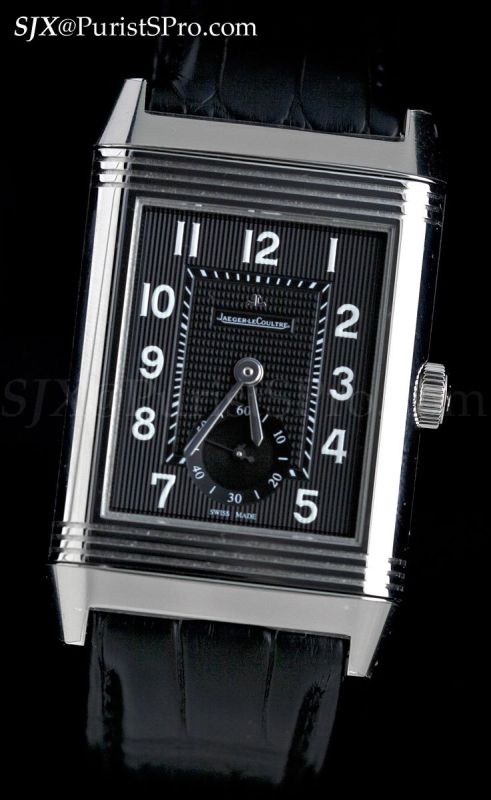
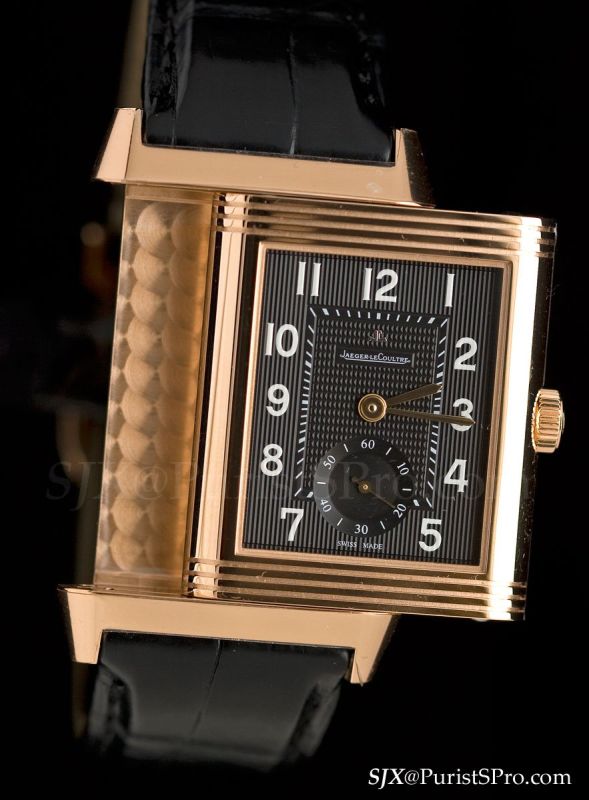
And receiving a facelift is the Reverso Grande Classique which now has a round, as opposed to square, sub-seconds dial.
This message has been edited by SJX on 2010-02-13 01:21:39

Brilliant compilation of pictures, SJX
I'am amazed by the quality of your pictures, knowing the light conditions at the SIHH....
The worst to take in pic is certainly the MGT Grande Complication dial...I had a big fight to take some decent pictures...
Do you authroize me to use some of them to complete my review?
Honestly, I don't know how you do this, my friend...Your work is unhuman, and the SIHH 2010 is an excellent post.
Some corrections, actually:
1/ The WG black dial Duometre à Chronographe is not a Boutique Edition, so it is availabe at the JLC Boutiques, as well as at JLC ADs.
2/ It is difficult to judge the finish of the MGT Grande Complication as:
- JLC wants to work again on the dial.
- The movement is a proto, not the definitive watch.
3/ Same observation on the QL than what I said on the 2/ .
JLC is not happy with the moonphsae disk, and they will work on it, again.
4/ An unusual small collection this year?
You have the re introduction of the Master Memovox and the Memovox International + the Master Chronograph + the Duometre QL + The MGT Grande Complication + the Extrem Lab II + The Navy Seals Auto=quite an impressive offering, this year, compared to the previous year, which was more a consolidation year....
Best, and thanks for this awesome post!
Nicolas
Thanks for the info
I've corrected the info on the black dial Duometre.
As for the finishing of the GC, I do understand that is a prototype, but going by the finishing on the production versions of last year's Master Grande Tradition, I do not believe the finishing is truly top tier. It is VERY good, but not quite there.
- SJX
IMO, this latest Grande Tradition has a better finished movement
Than the 2 previous MGT, the Tourbillon QP, and the Minute Repeater.
It is indeed another league, but we'll see the definitive watches, and we'll be able to objectively judge.
Actually, I agree that by essence, a JLC can't be finished at the same level than a Dufour or a KV.

Best,
Nicolas
SIHH 2010: Maximilian Büsser & Friends

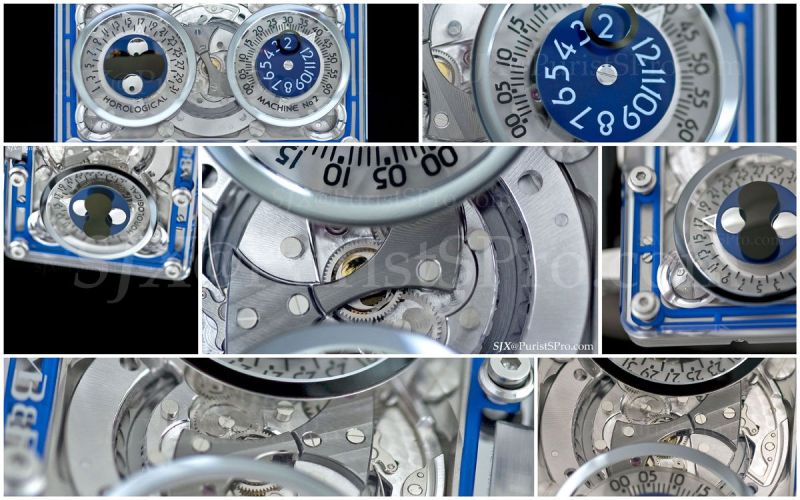
Maximilian Büsser & Friends presented one new model, the Horological Machine No. 2-SV for sapphire vision. The front panel of the watch has been replaced with a clear sapphire block, exposing the workings of the double retrograde. Running along the edge is a bright blue gasket, framing the exposed components.
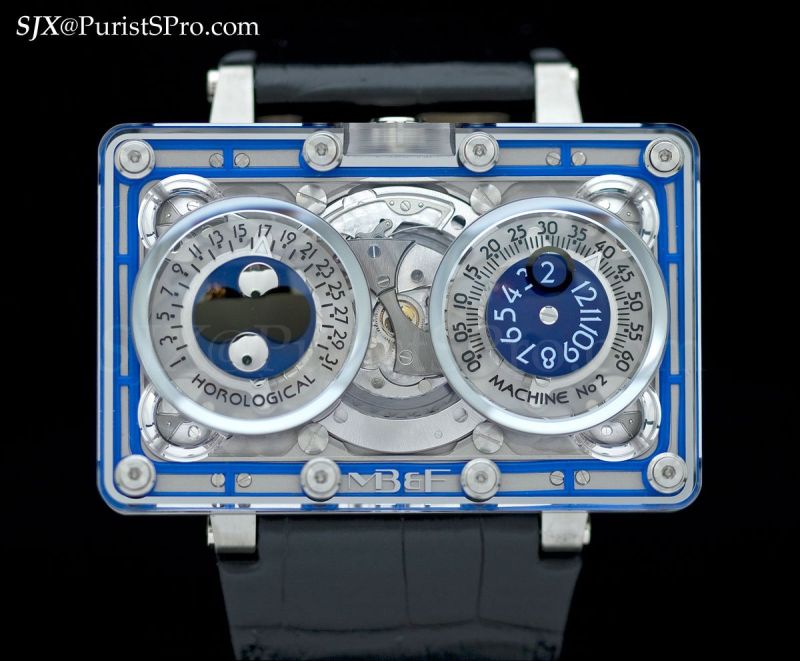
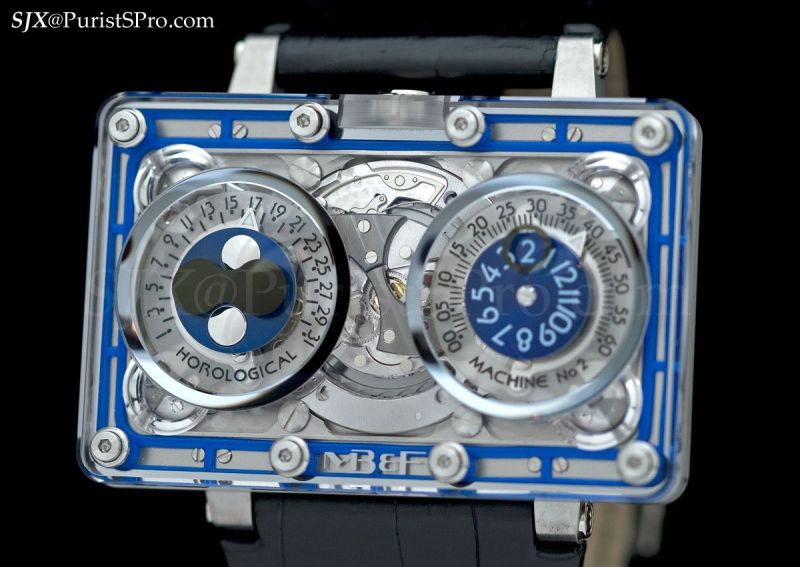
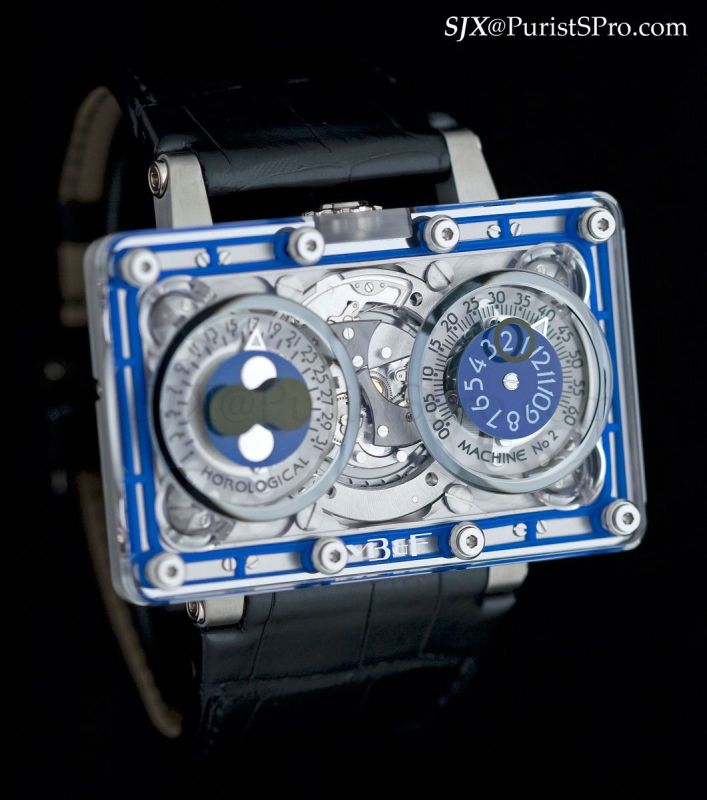
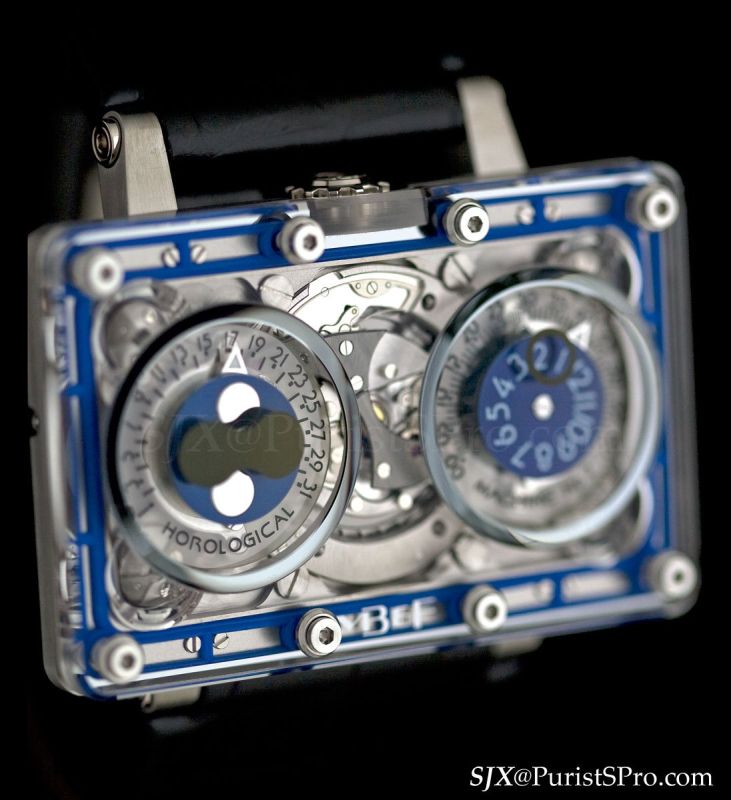
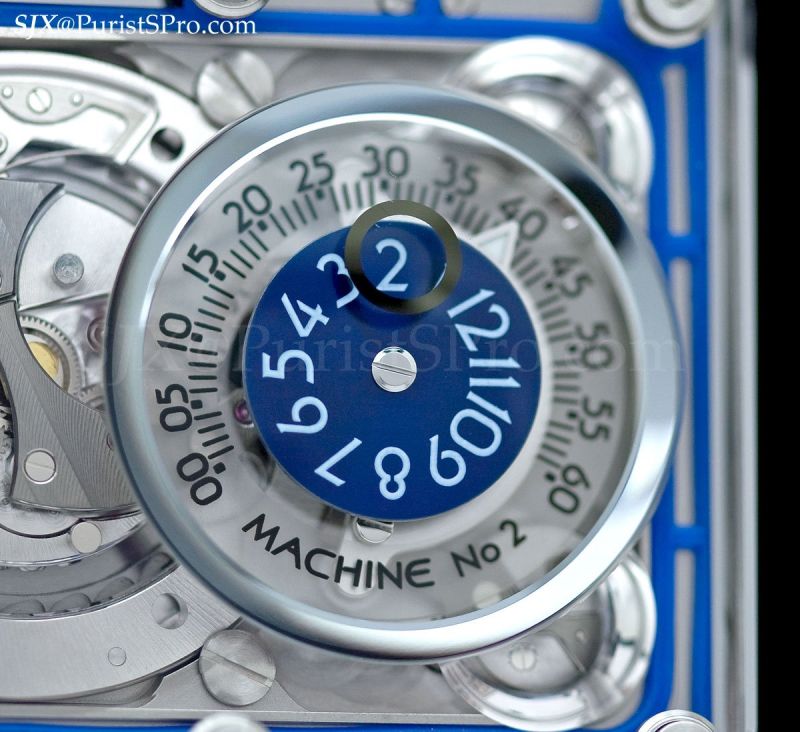
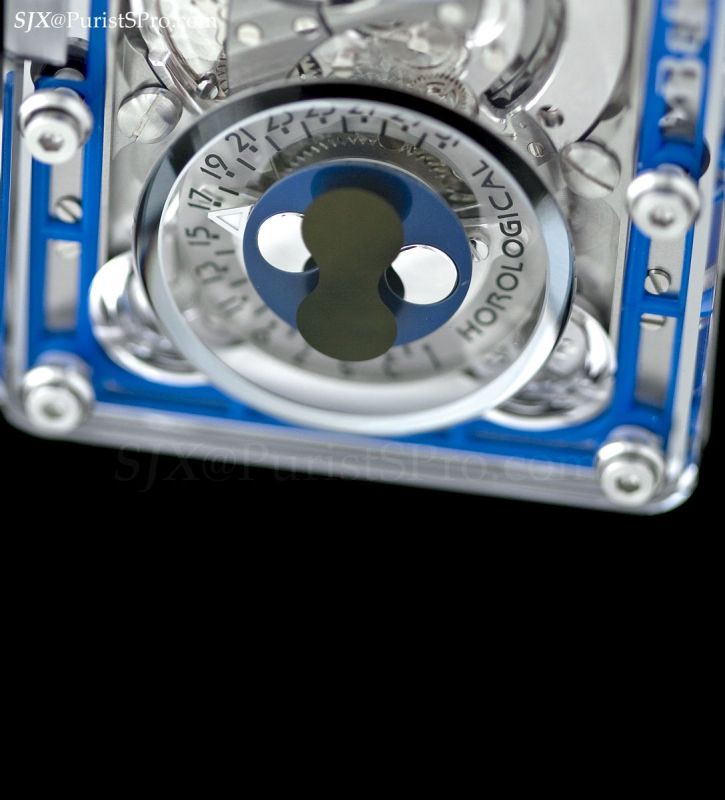
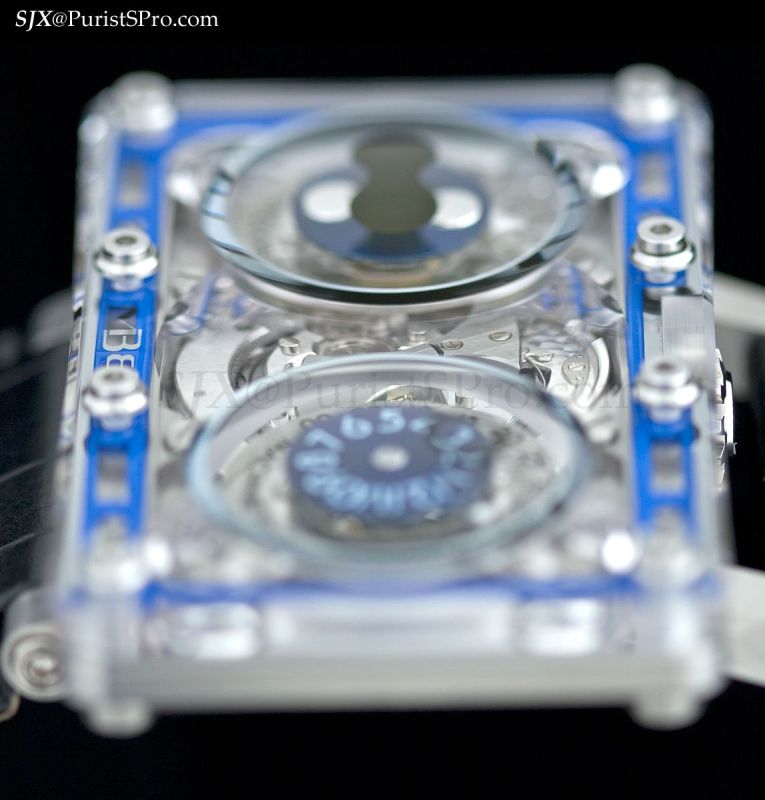
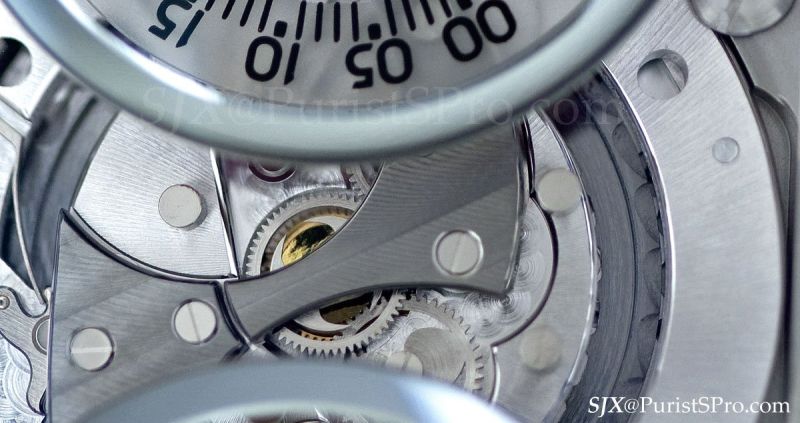
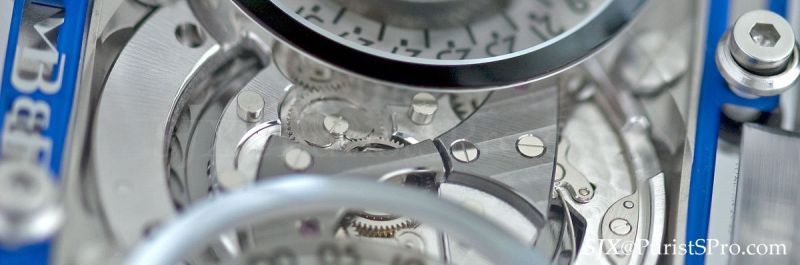
Max says making the sapphire plate, machining and then drilling it, is a hugely expensive with significant wastage. This is the fifth variant of the HM2 and certainly most stunning. 25 will be made.
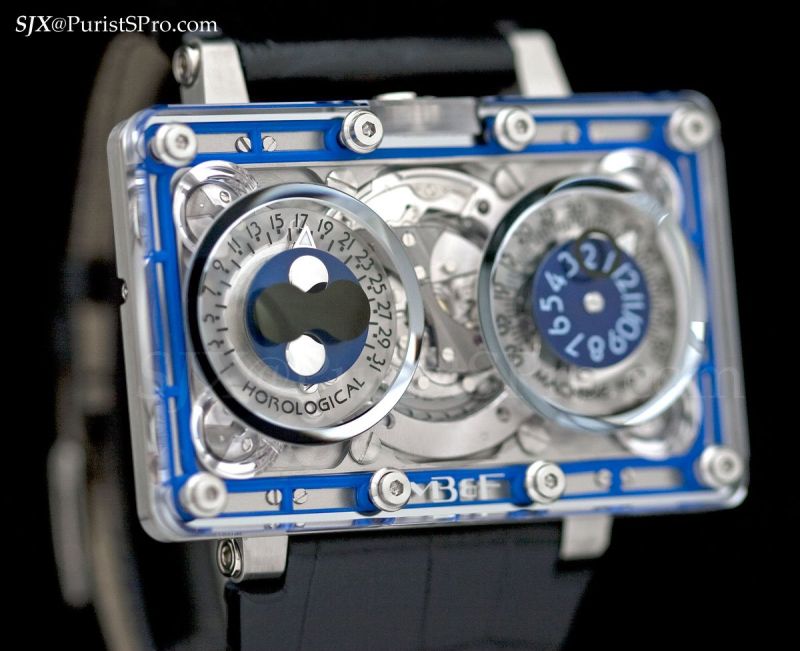
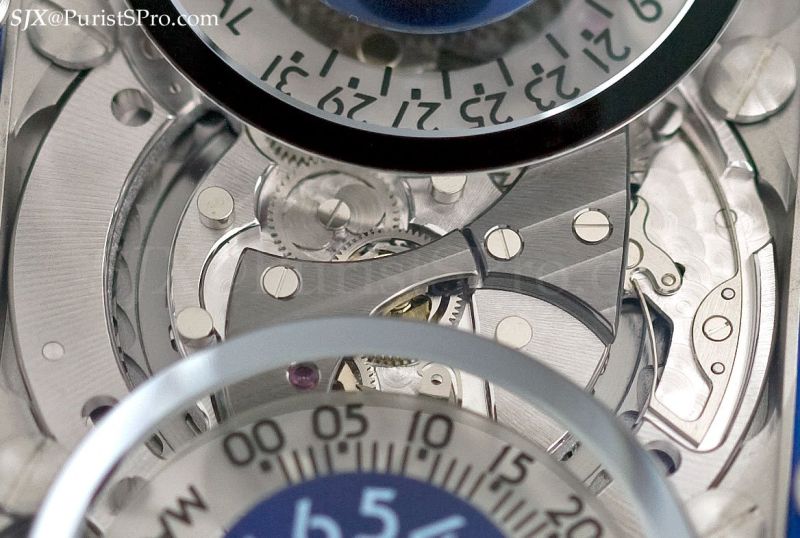
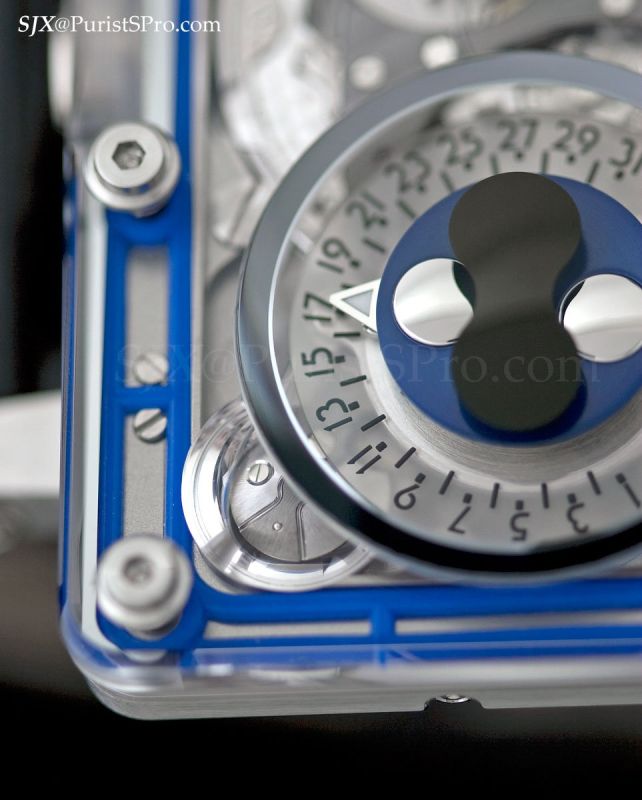
Several more watches will be presented by Max this year and I am sure the HM4 will be quite a sensation.

i m biased
hahaha..

No idea of what will be the HM4...
Can't wait to discover it !
Fr.Xavier
from
SIHH 2010: Montblanc

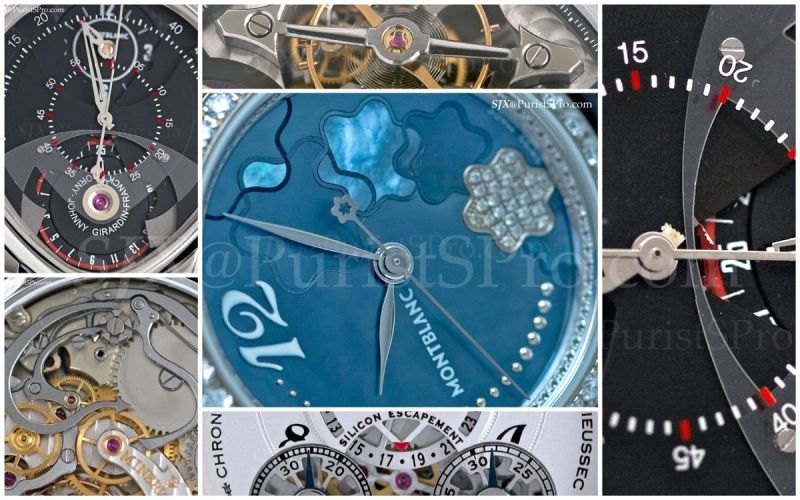
Montblanc unveiled a collection that was fairly balanced between high horology and mass market watches.
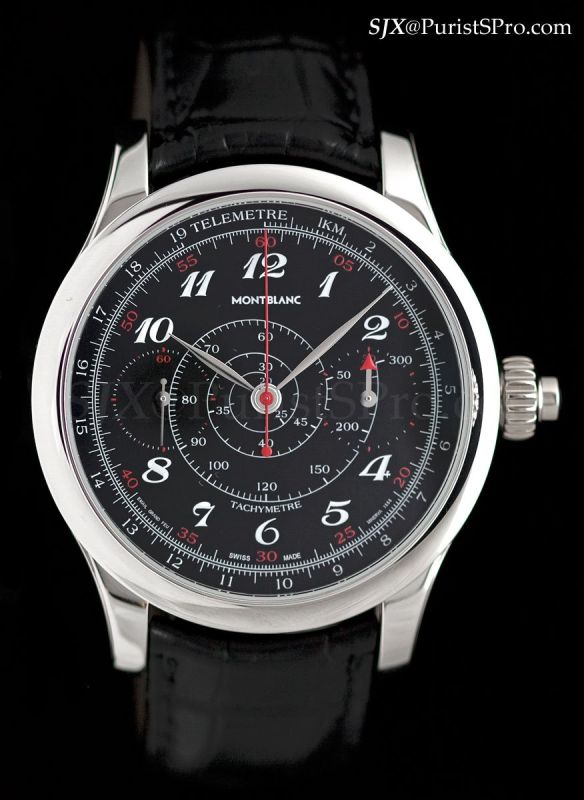
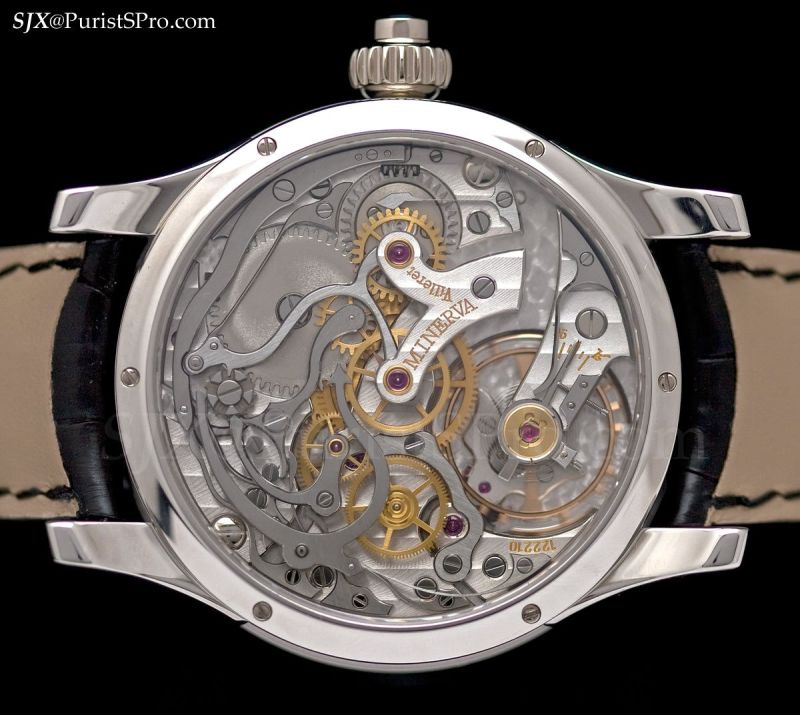
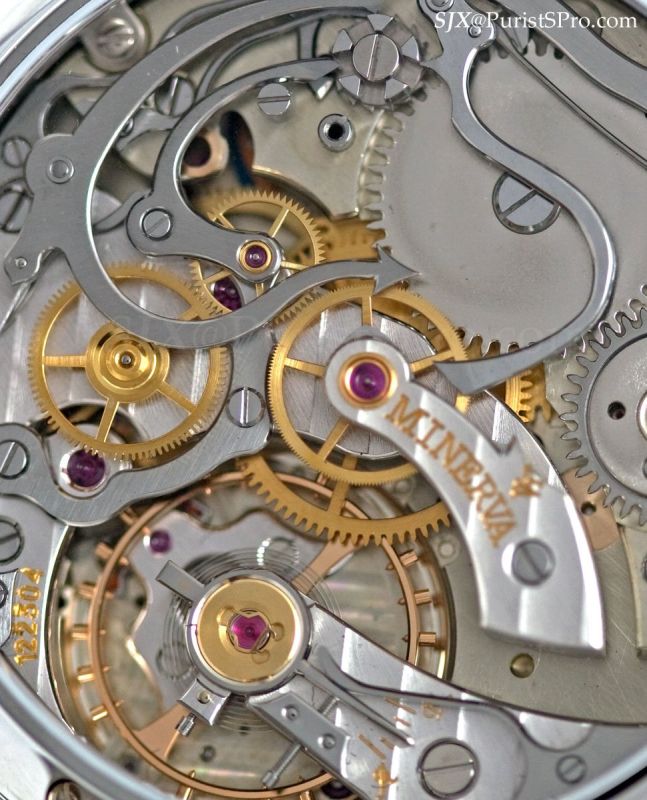
Starting at the top with the Villeret 1858 collection: the first is the Villeret Vintage chronograph. Fitted with a grand feu enamel dial (white for rose gold and black for white gold), this watch sports both a telemetric scale as well as a spiral tachymetric scale on the dial.
Though the case is not overly large at 43.5 mm, especially when compared to some of the giant 47 mm watches in the Villeret range, the case is bulky due to its shape; the flat sides of the case and lugs make it appear overly thick. Nonetheless this is a strong and good-looking product that incorporates many of the suggestions initially given when the Villeret range was launched, namely smaller cases and less superflous text on the dial.
Another addition to the Villeret range is the ExoTourbillon Chronographe. This is a handsome and impressive watch but the name is clumsy (anyone remember a cartoon named ExoSquad?) and the press release tagline even worse: “The Emancipation of the Tourbillon”. Since women already had their go it must now be the turn of the tourbillon. But the watch does not deserve to be ridiculed.
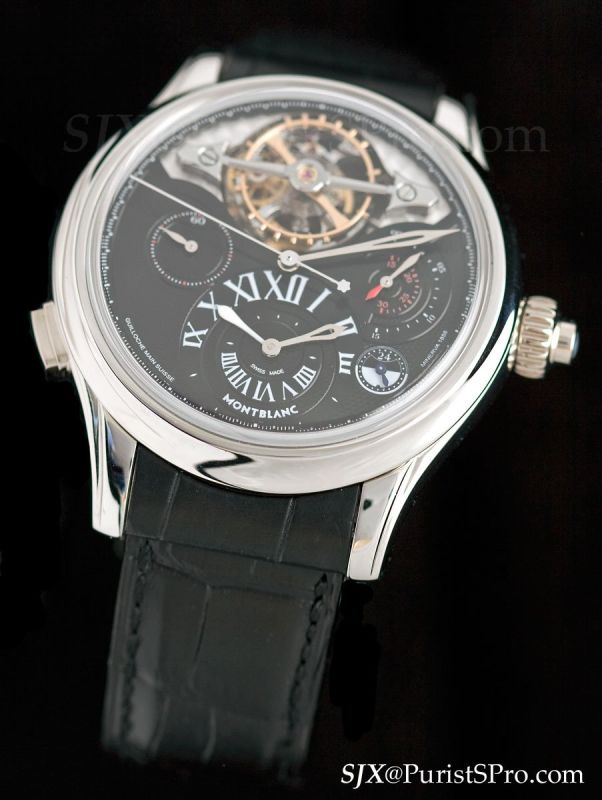
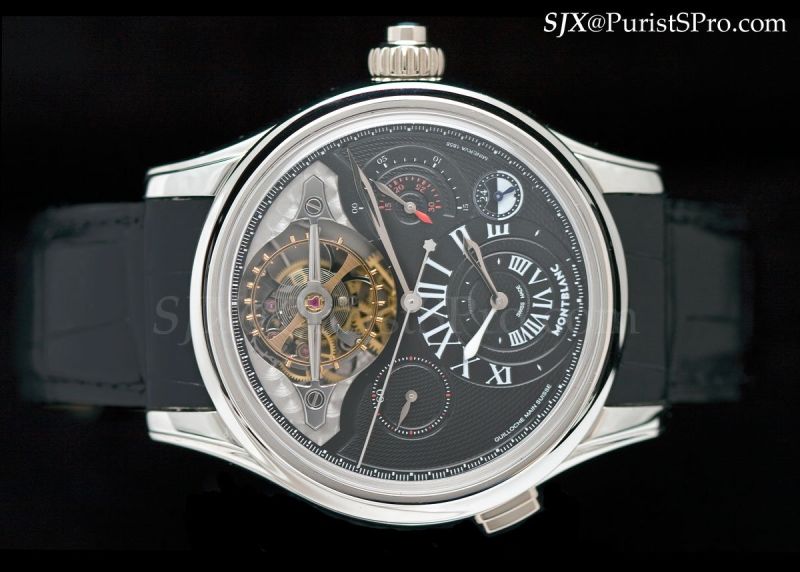
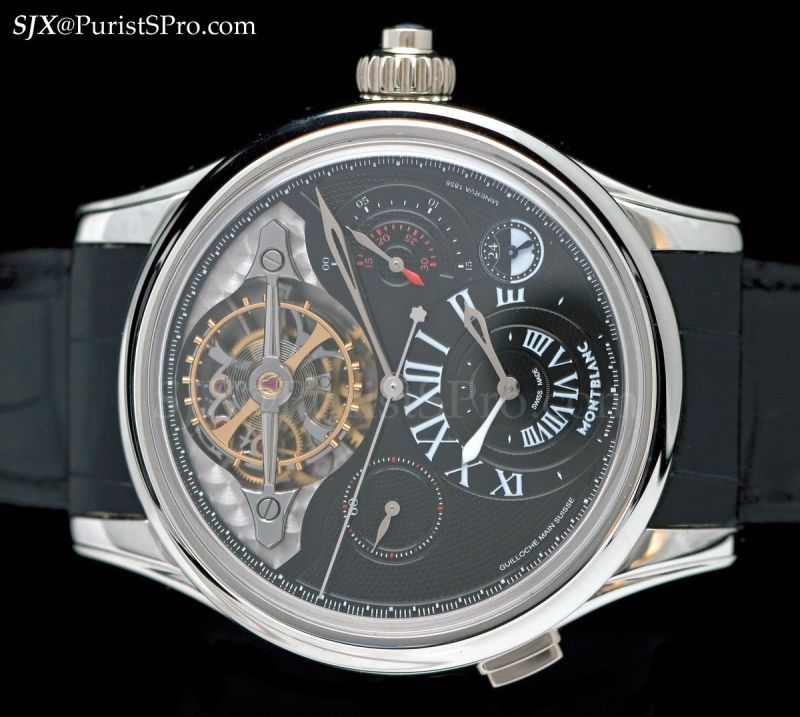
The reason for the name is the unique construction of the tourbillon. Because the Minerva movements use such enormous balance wheels, being pocket watch calibres, Montblanc decided to put the balance wheel above the tourbillon cage, which is consequently smaller than the balance wheel.
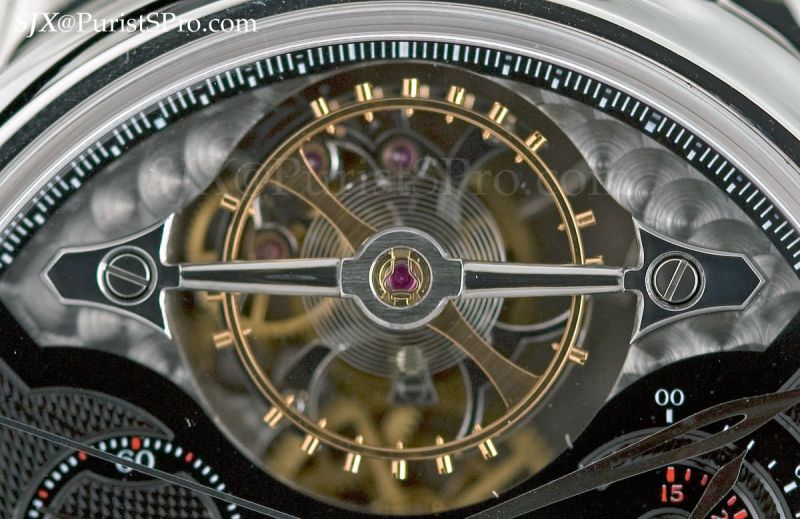
This allows the ExoTourbillon to consume less energy, 30% according to Montblanc, than a regular tourbillon regulator, freeing up torque for the chronograph. In addition, Montblanc says positioning the balance in this manner frees it from the inertia of the cage, further improving timekeeping. Whether all of these claims are genuinely practical is debatable but I like the concept and the interesting ideas that are percolating at Montblanc Minerva.
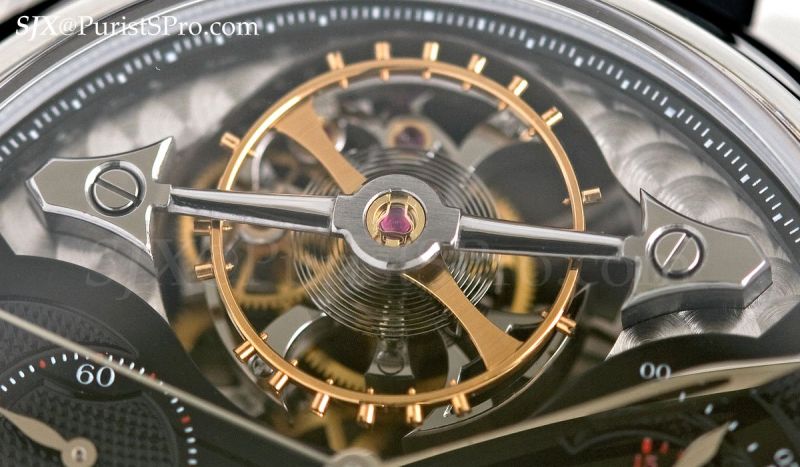
At first glance this is a peculiar looking watch, it does not look like a tourbillon since there is no cage apparent at first glance. Aside from its size of 47 mm, I like the look of the watch. Generally I do not like perlage as dial decoration, one reason being the association with refined watches like the brilliant Breitling for Bentley chronographs. But in this case the perlage decorating the area around the base of the tourbillon bridge gives the watch a slightly more mechanical feel which sets off the rest of the dial well.
The third addition to the Villeret collection is also the major release for the year. Known as the Metamorphosis, this is the result of the TimeWriter project at Montblanc, which was started to support independent watchmakers by developing their ideas.
Most admirable about the project is the fact that the intellectual property that results from each TimeWriter development remains with the watchmakers who created it. So the ideas behind the Metamorphosis belong to Johnny Girardin and Franck Orny who have set up Telos Watch SA to further develop their watches. I assume that revenue from the watches produced by Montblanc goes to Montblanc though.
The Metamorphosis is the first of the TimeWriter creations which will be presented biennially. Its primary concept is that of dual dials, in this case accomplished by a quartet of wing-like plates that slide in and out under the bridges of the dial, allowing the watch to display either the date or the elapsed chronograph time. Notable is the circular disc that rises up at six o’clock to function as the elapsed minute disc during the transformation. It is difficult to describe how the functions double up as both a date and chronograph without an illustration (the pictured watch was not working), but it’s sufficient to say it’s accomplished by a clever placement of hands and numbers.
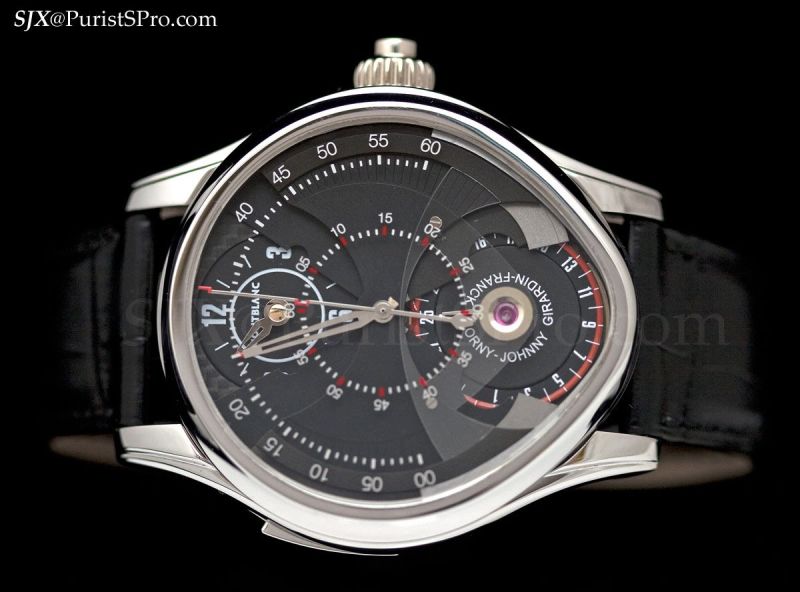
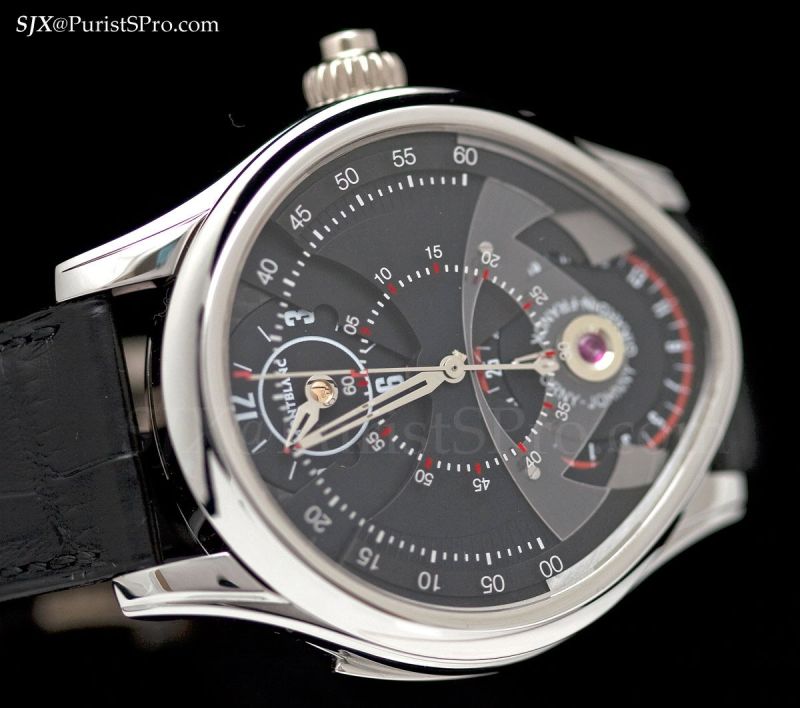
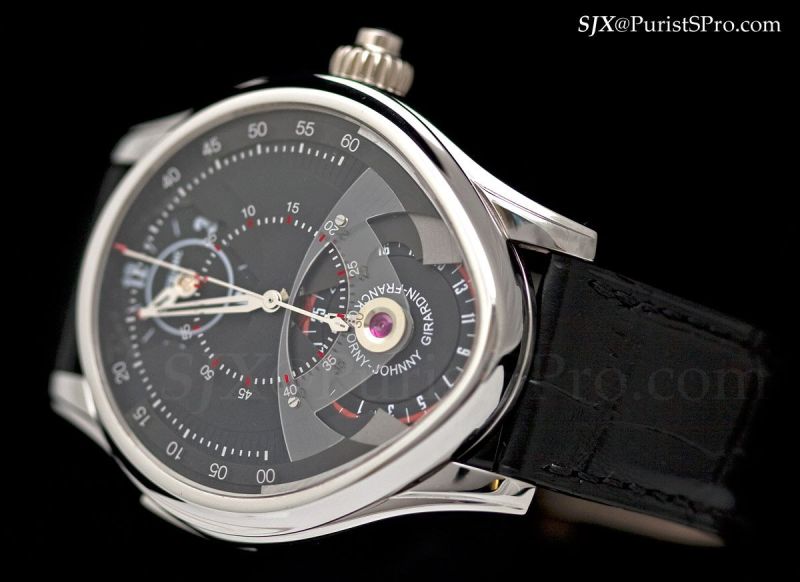
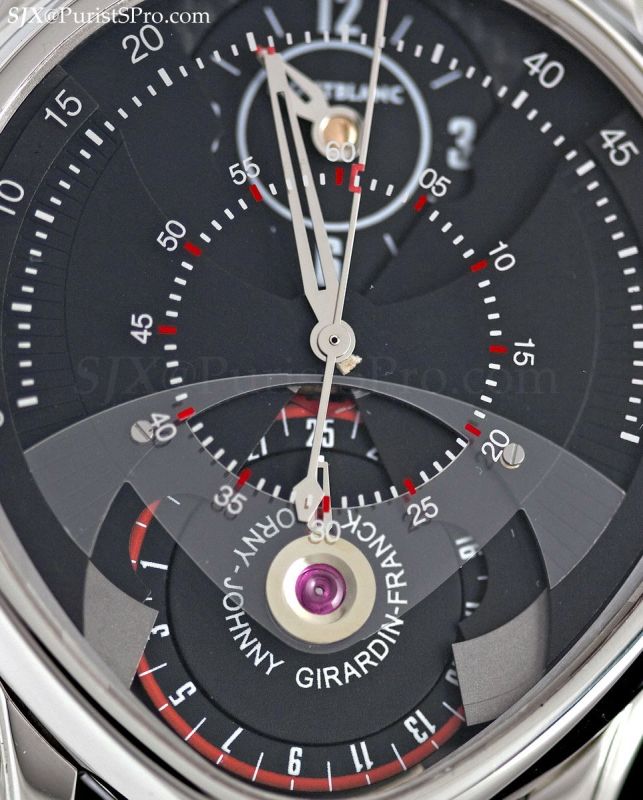
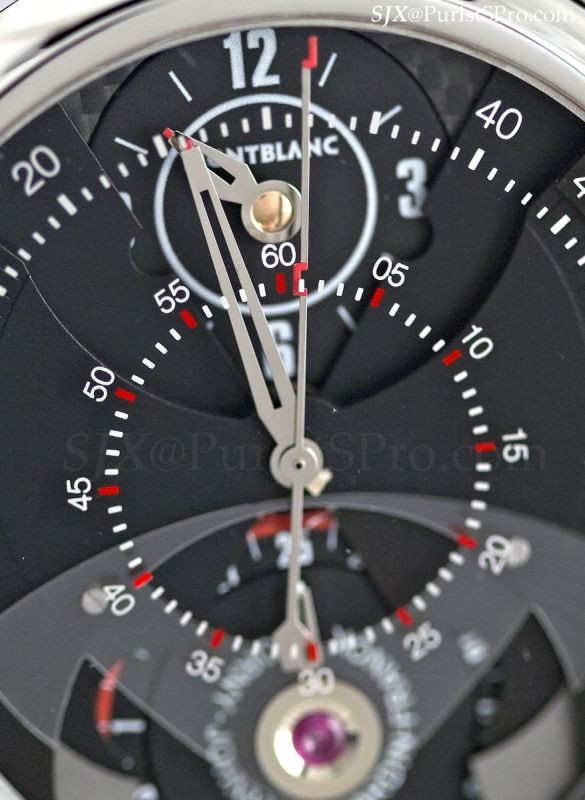
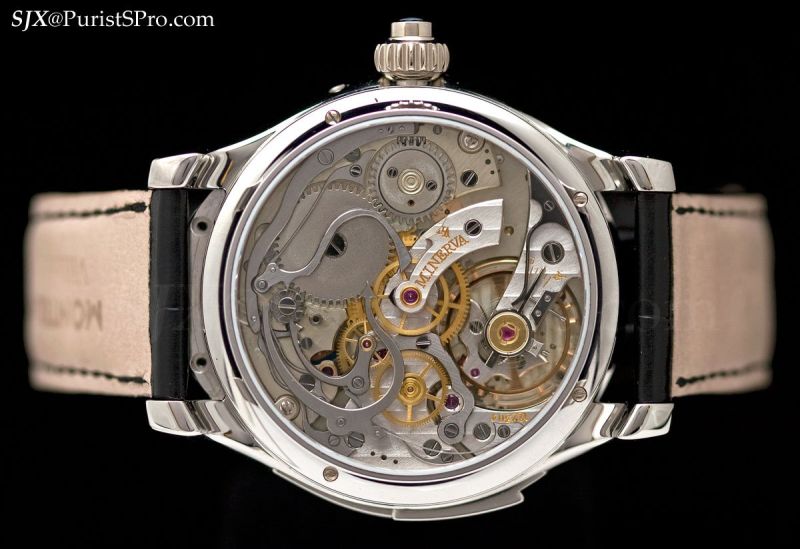
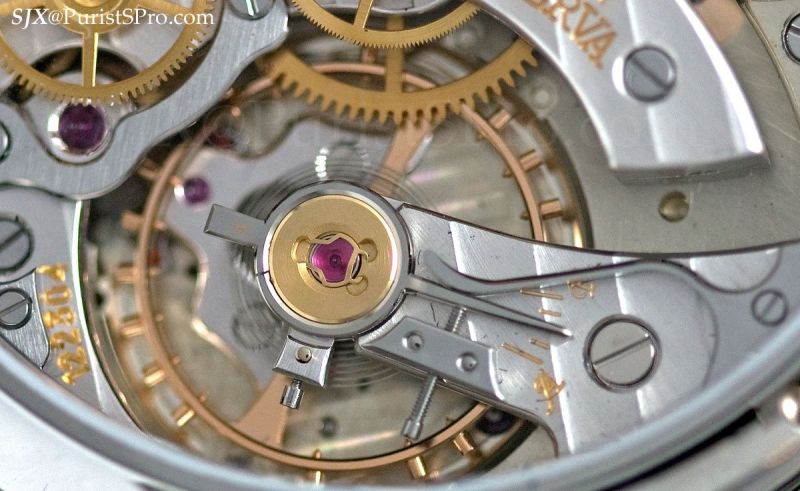
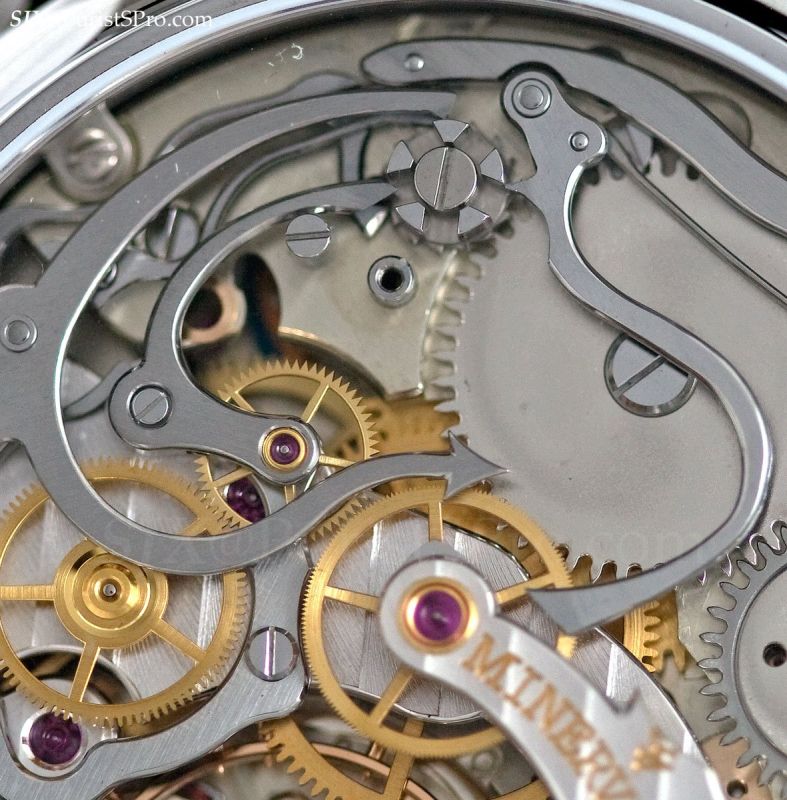
What is most interesting is how this is achieved. From what was explained to me, mostly in French and a little bit of English, the mechanism is similar to that of a minute repeater. Pulling a slide on the case winds up a small spring that unwinds rapidly to power the transformation of the dial. Like a minute repeater this is paced by a centrifugal regulator. In short, this mechanism is similar to what drives a repeater, except here it powers the opening and closing of the dial plates.
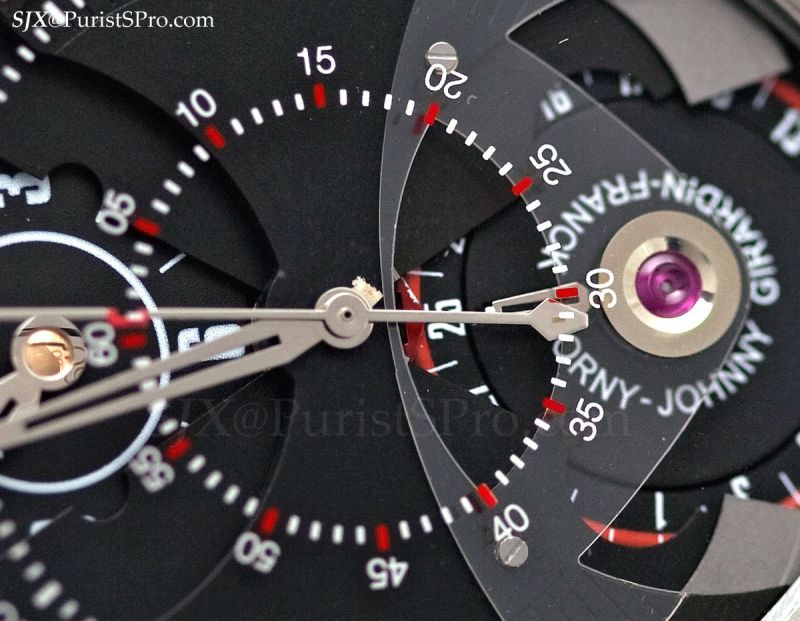
Not only is this watch mechanically impressive, the dial itself is engaging due to the multiple, complex layers. The case is 47 mm and in the same shape as first seen on the Villeret tourbillon with a protrusion at six o’clock. 28 of these will be made in white gold and the price is an absolute whale (developmental costs have to be recouped after all and this is Richemont).
And truthfully, for me as well as for many others, the price would be easier to accept if the watch came from as struggling independent not backed by a large brand. That being said, Montblanc deserves high praise for both the TimeWriter project and the willingness to experiment.
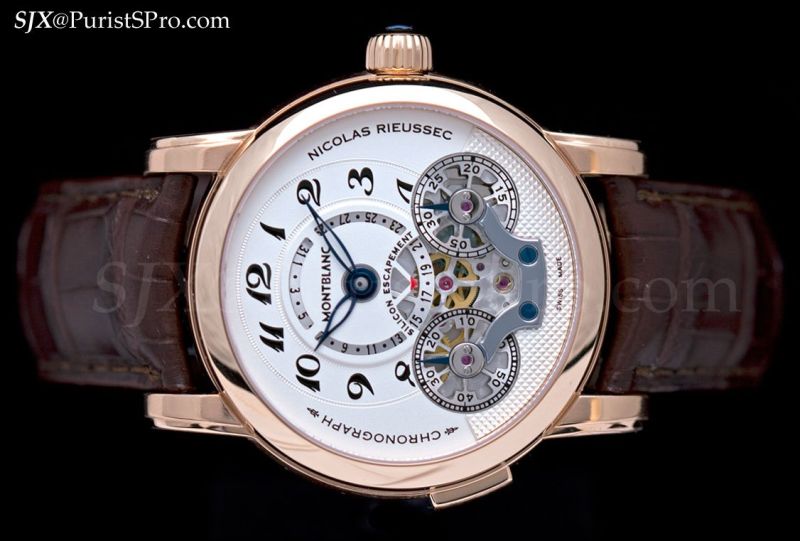
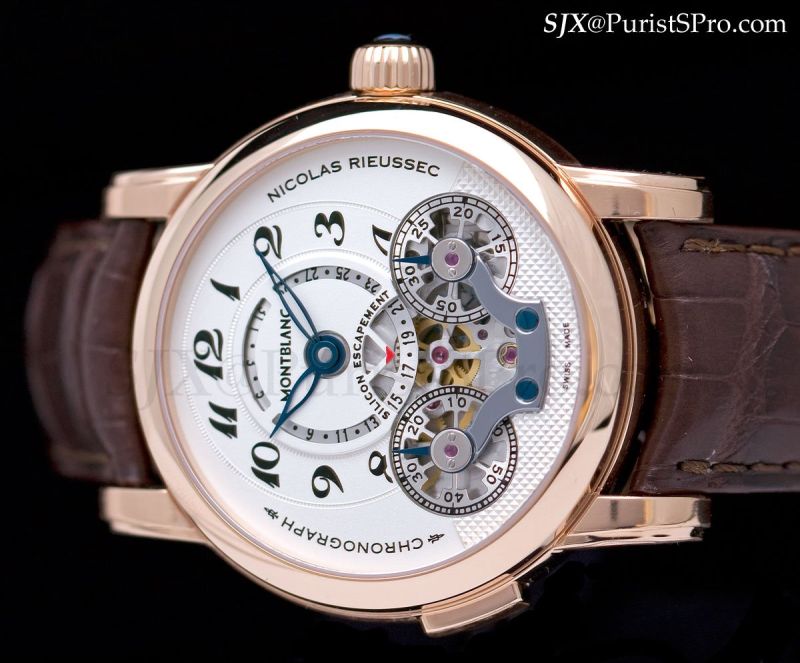
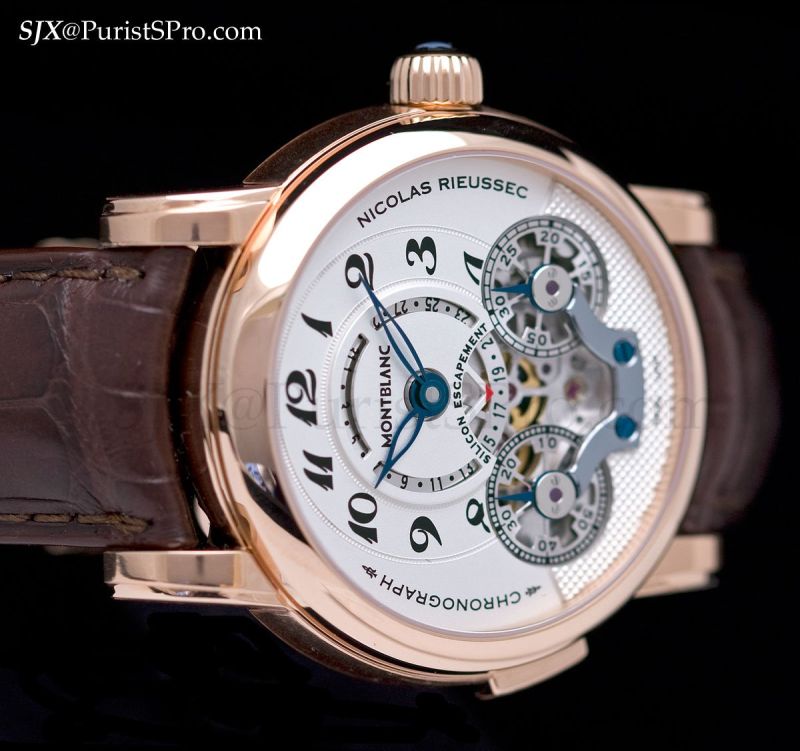
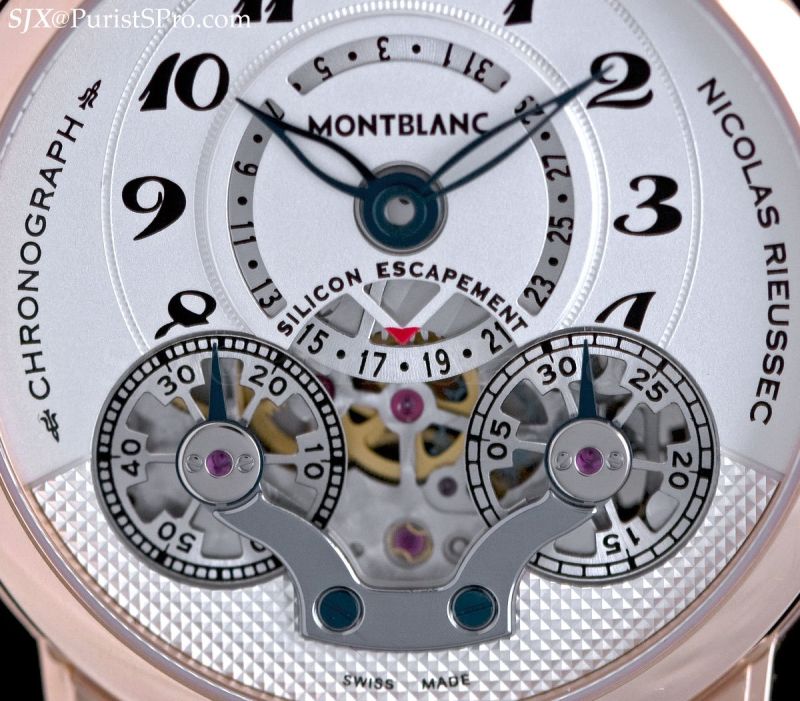
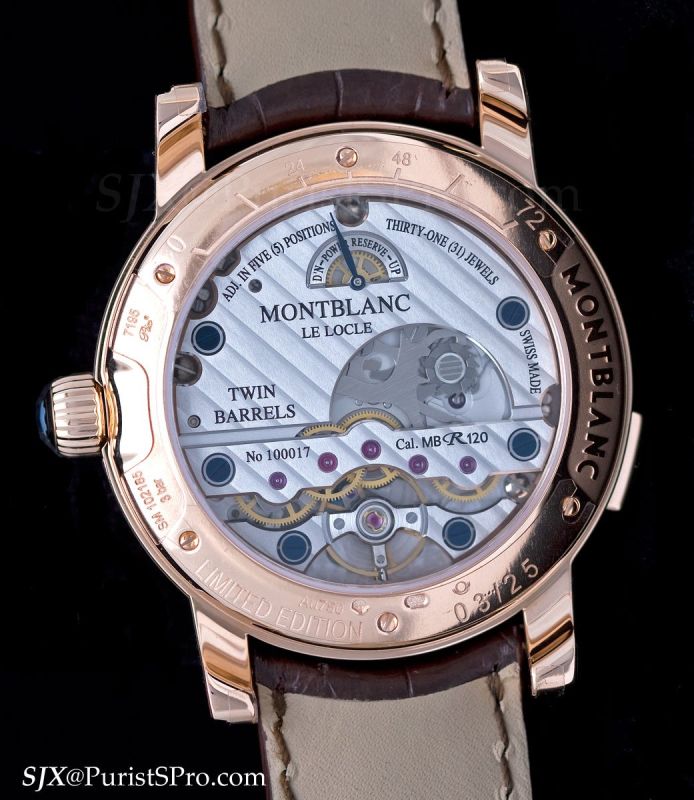
Moving away from the Villeret collection and back to earth, Montblanc added another Rieussec chronograph. This is largely identical to last year’s skeleton dial version, except this year’s edition has a silicon escapement. 25 will be made.
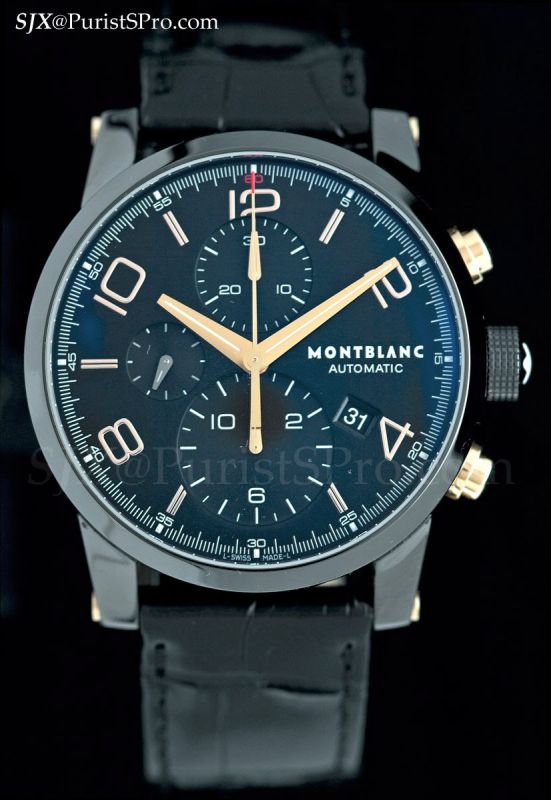
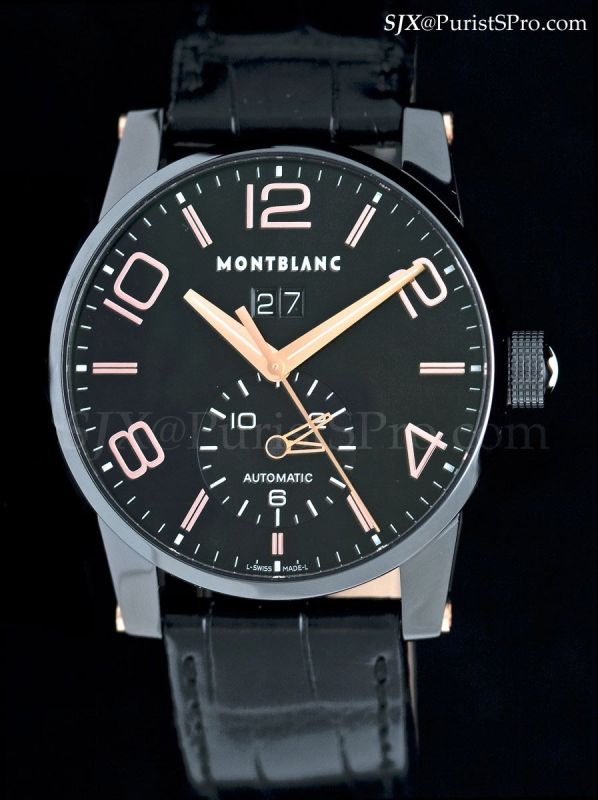
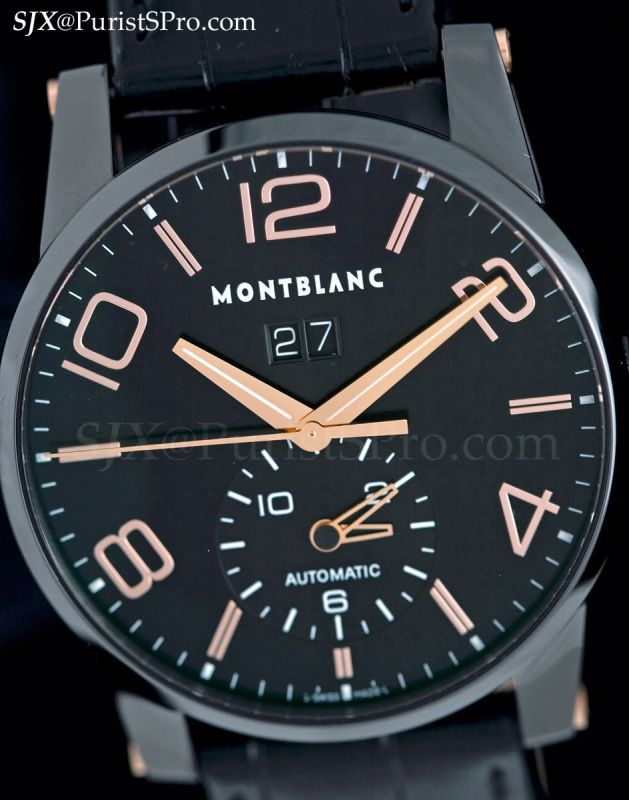
Two black DLC coated models were added to the TimeWalker collection. The first is a chronograph while the second is a dual time zone with big date. Montblanc calls the coating Dual Carbon: the surface of the case is hardened first before the black DLC coating is applied for higher resistance to scratches.
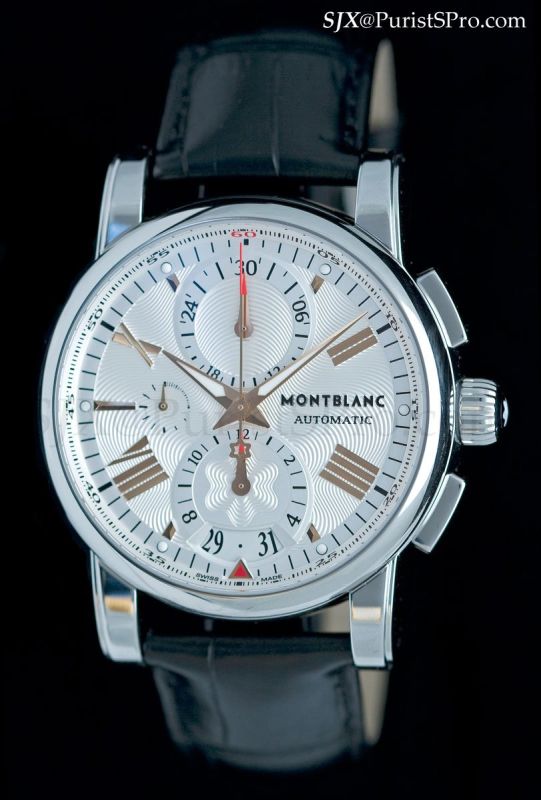
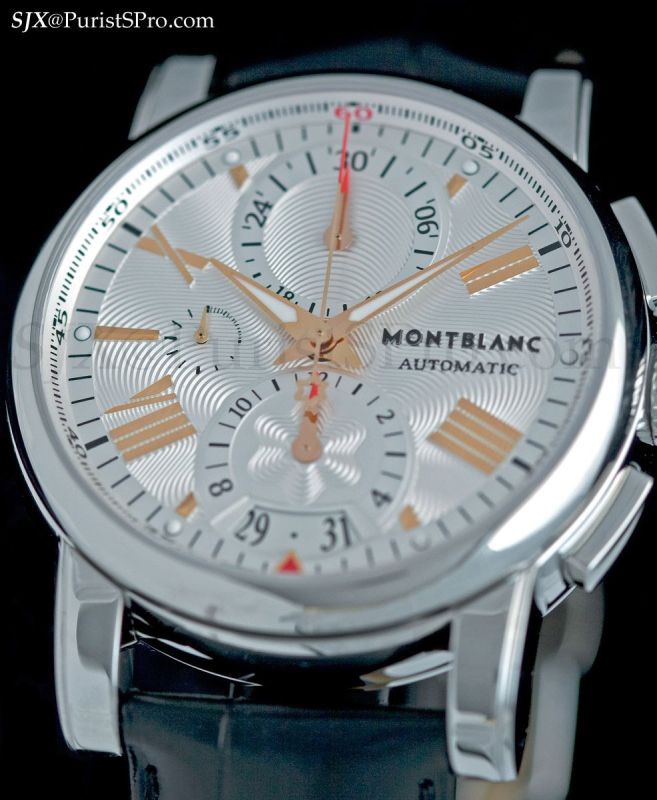
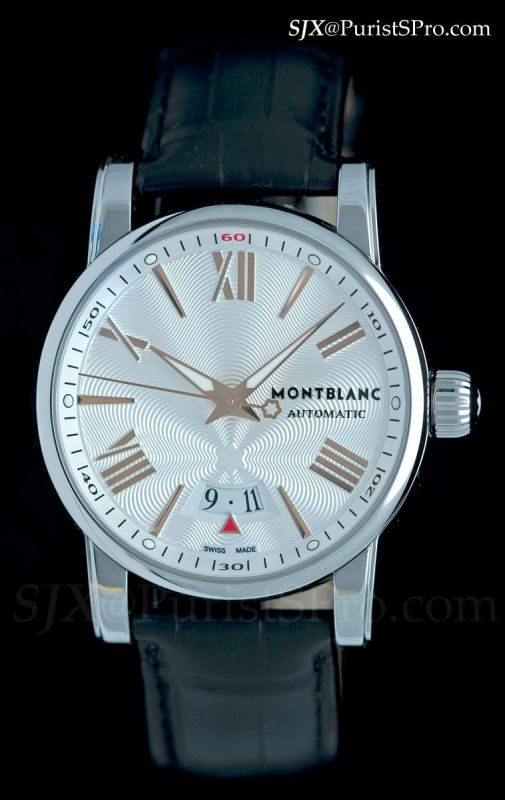
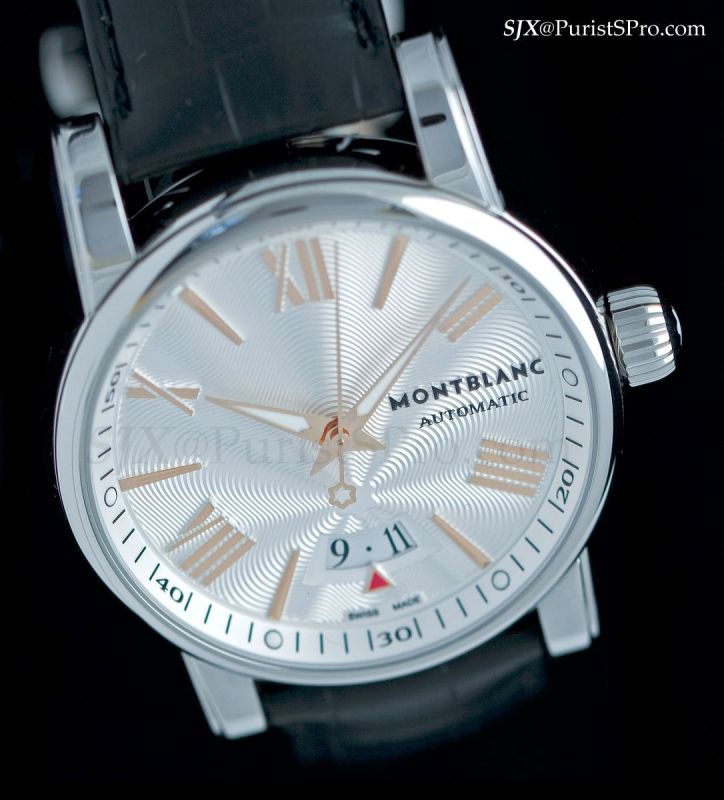
Two models were also added to the Star 4810 range, an automatic and a chronograph. These are distinguished by their deep, star-shaped guilloche motif. Though the guilloche is almost certainly embossed instead of engine-turned, it is attractive and at this price one can’t expect more.
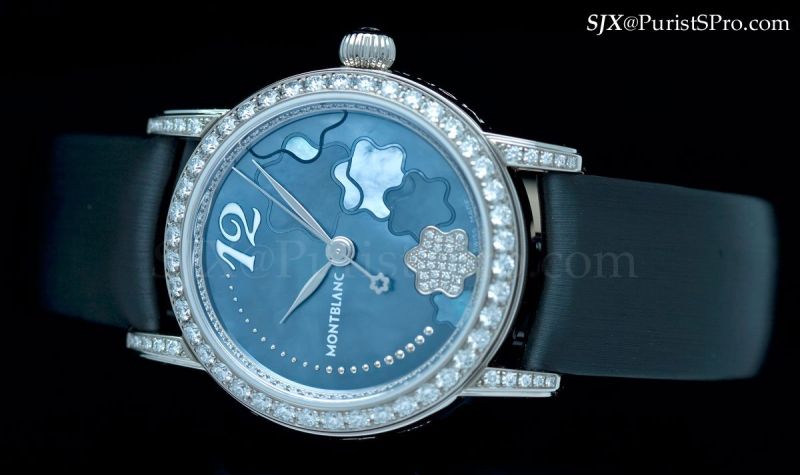
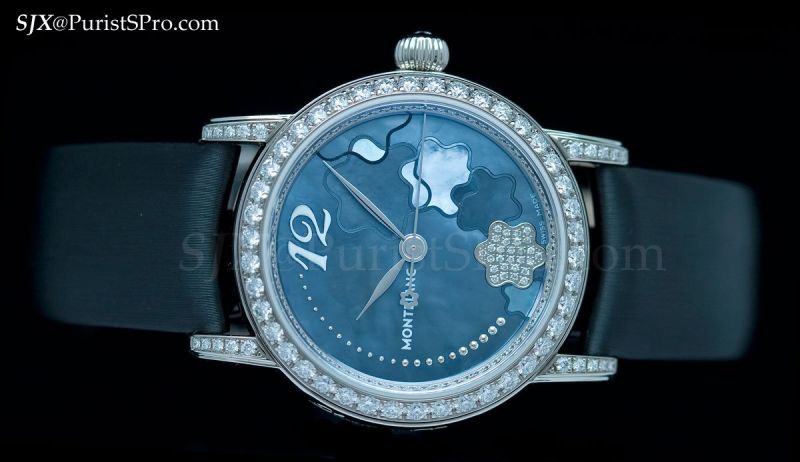
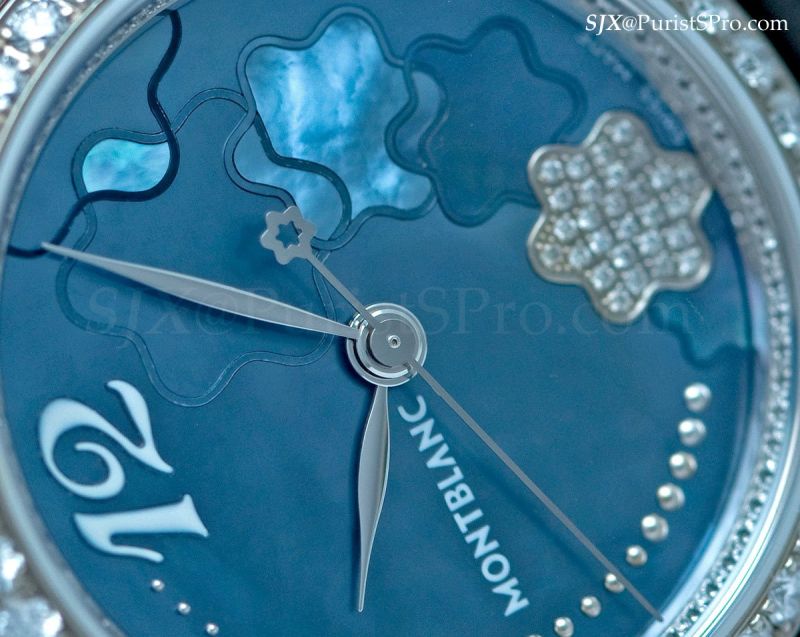
The final watch is the Star Magie d’Étoiles, a limited edition jewellery watch. Shown is the black mother-of-pearl version, also available is one with a white mother-of-pearl dial. The movement is quartz but this is an attractive ladies watch with interesting dial work.
very interesting where Montblac
was a few years ago and there it is these Days.!!
from some average Watches to ultra High end.!
oh ! LOVE those Minerva Movements.!!
thnaks
Tony
SIHH 2010: Panerai

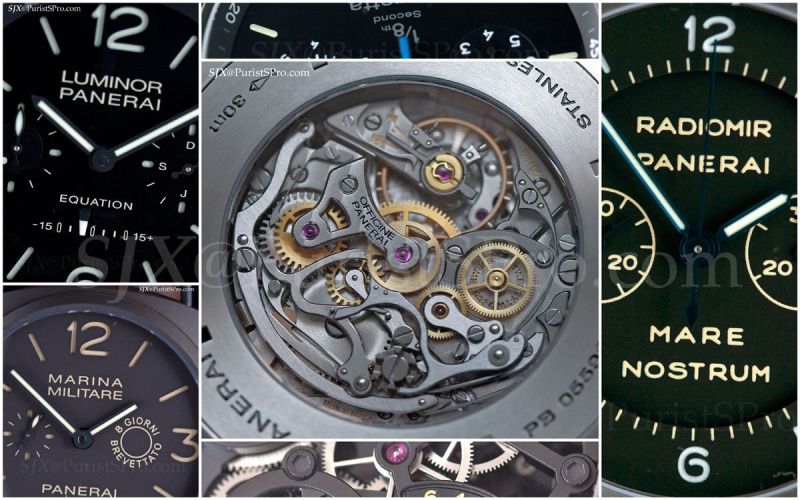
The primary thing that struck me about this year’s Panerai collection is the seemingly liberal use of faux vintage ecru luminova – which works terrifically for the Panerai aesthetic. 2010 is a good year for Panerai, it never has bad years, and this year’s collection is led by a pair of complications that are startling.
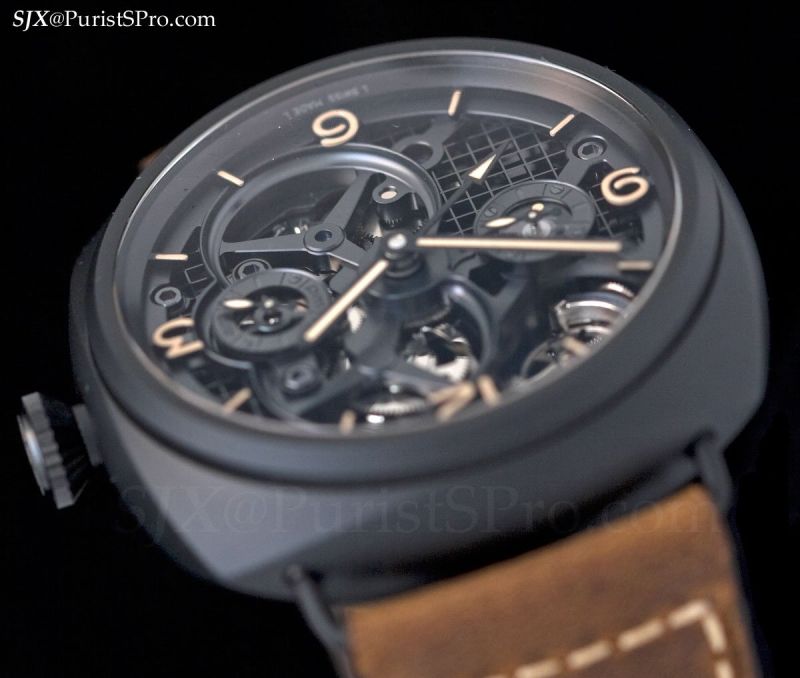
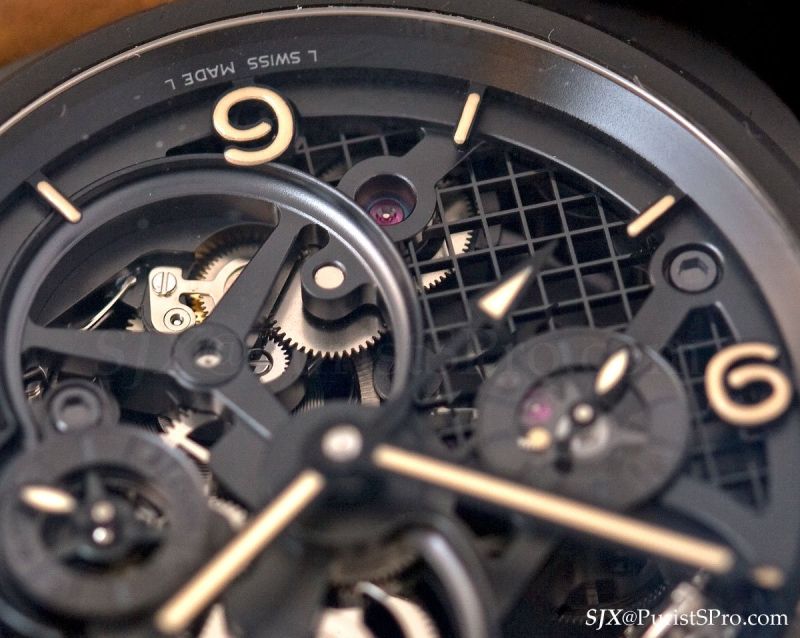
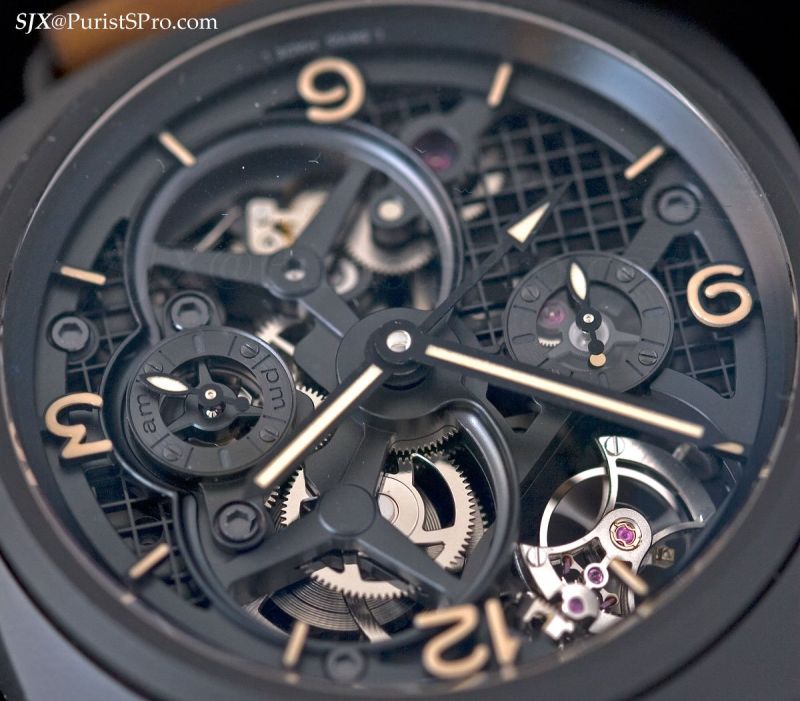
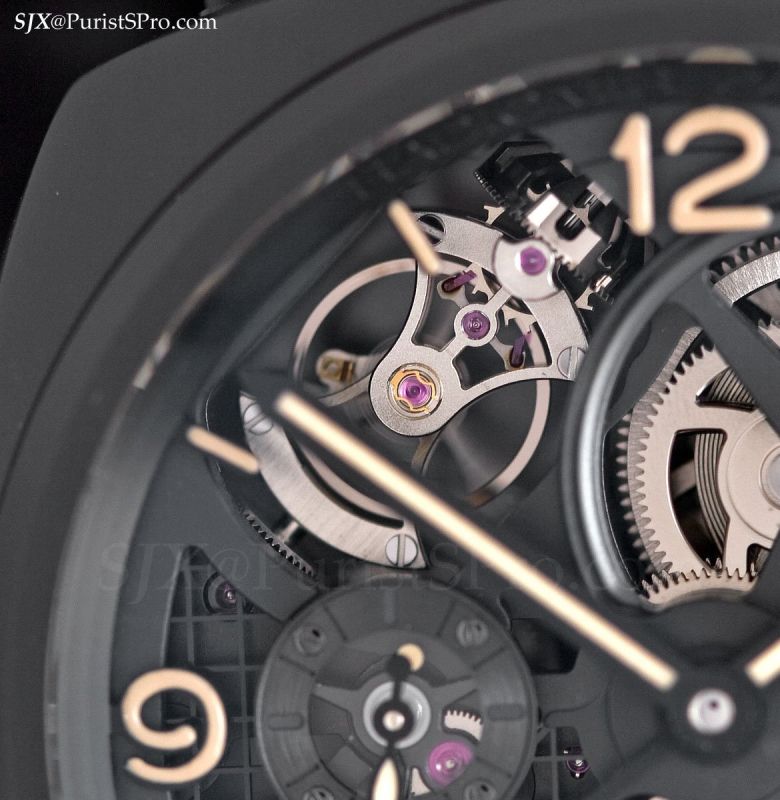
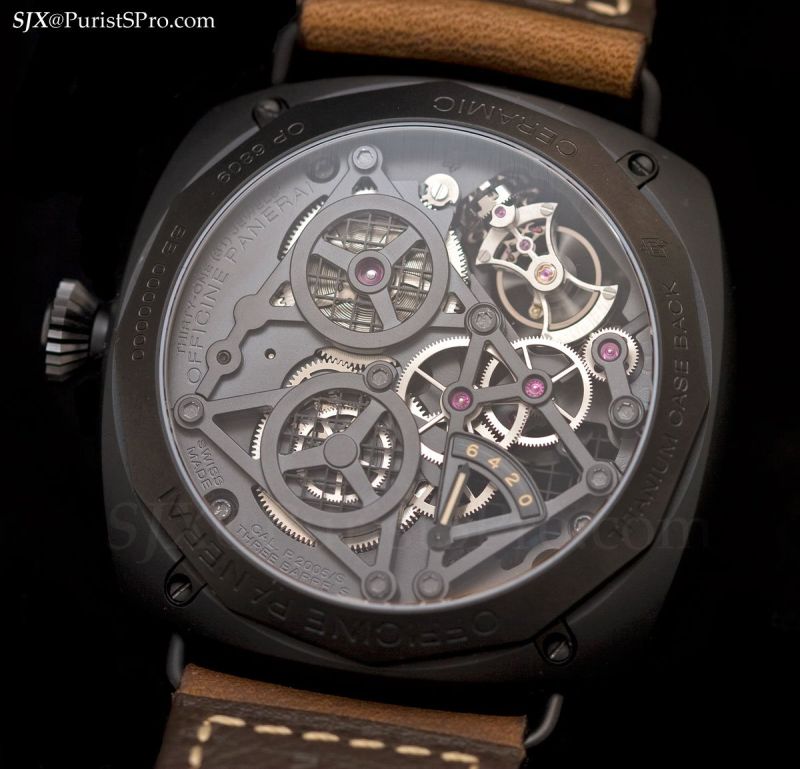
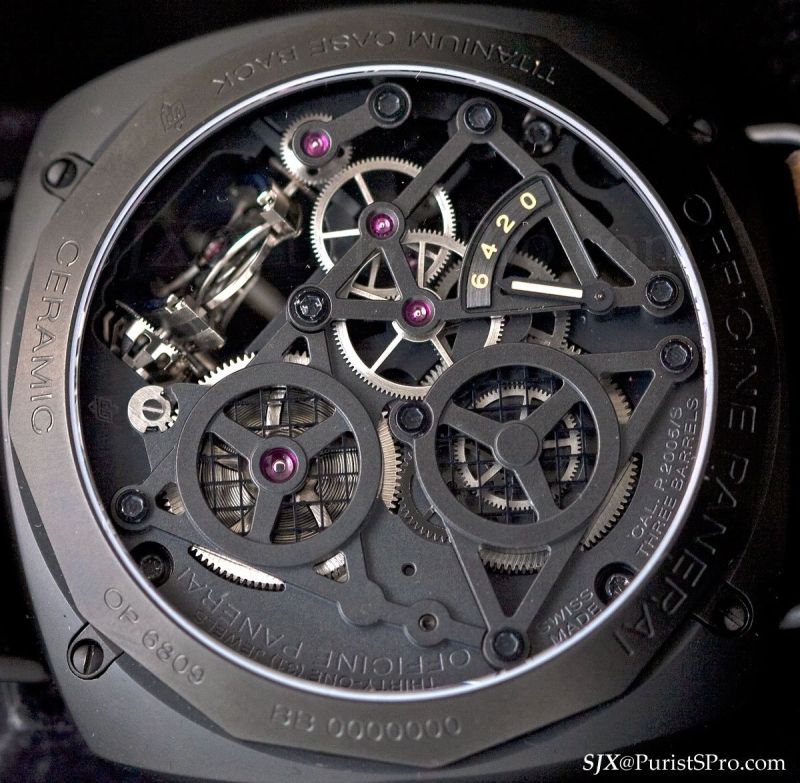
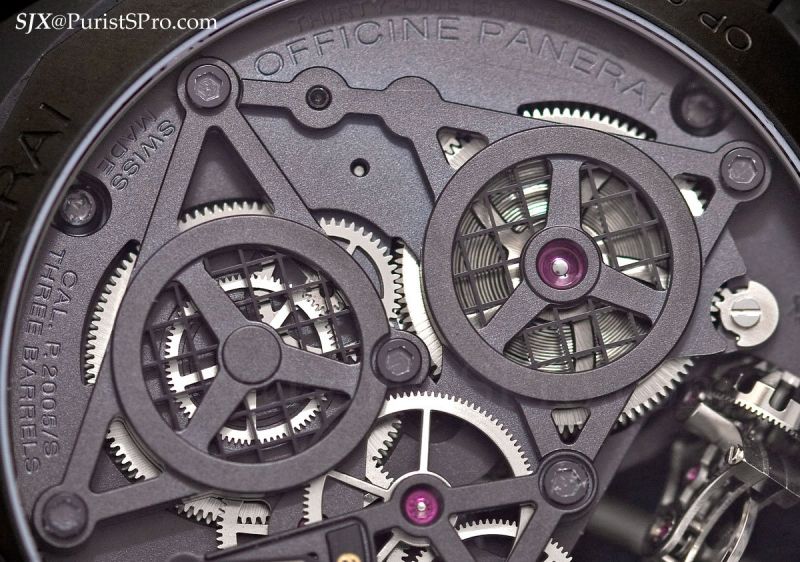
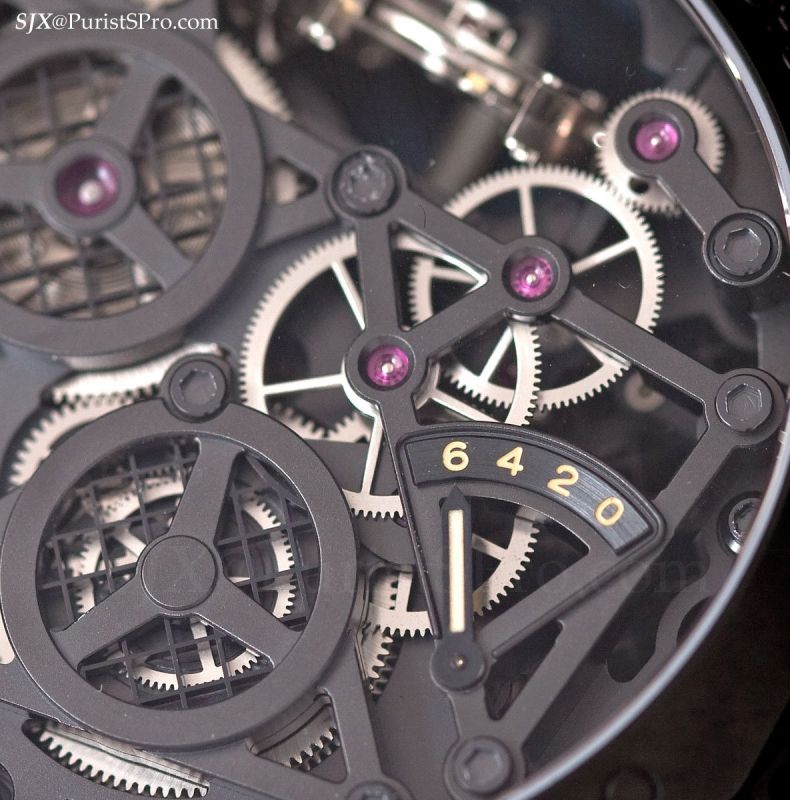
The first is the Radiomir Tourbillon GMT Ceramica – I went “wow” when I saw this one – it’s an impressive watch. I like the look tremendously, but I can’t decide if it’s ugly or good looking because it looks exceedingly strange, especially in a Radiomir case.
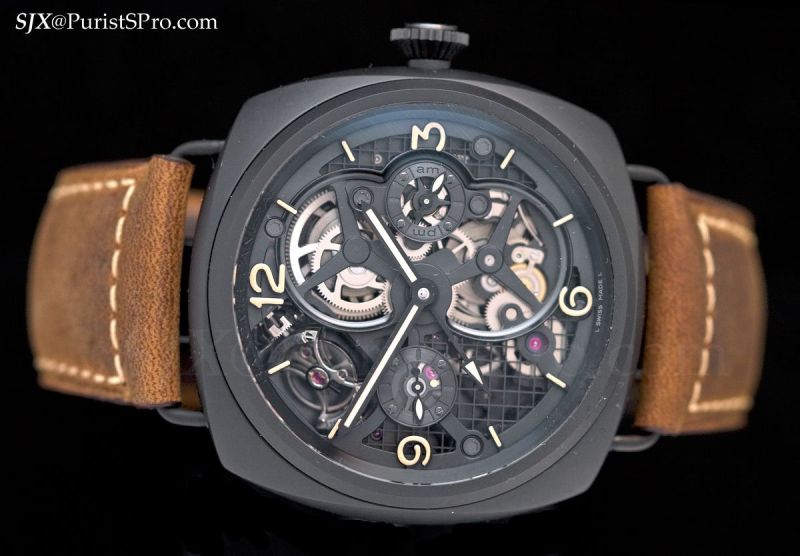
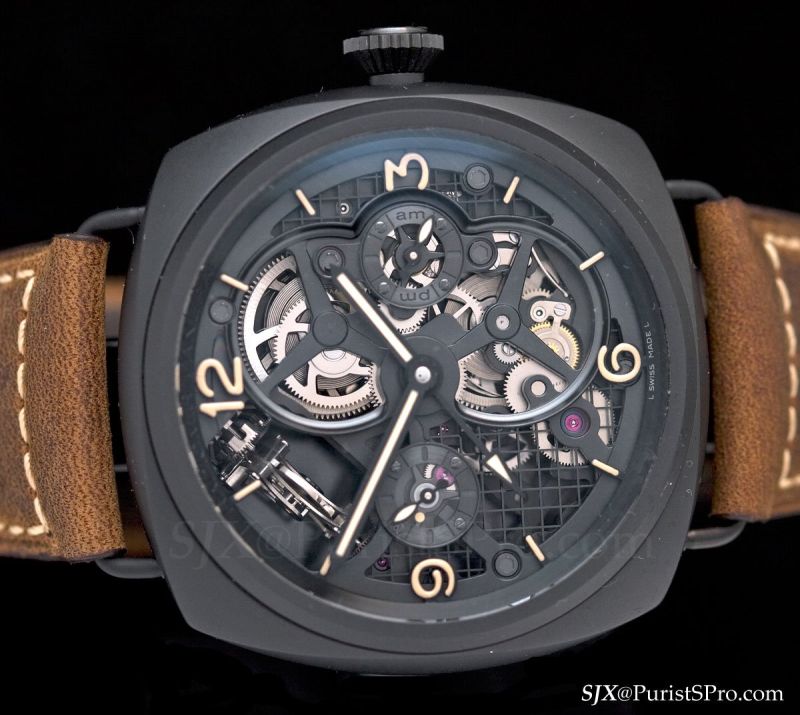
Housed in a 48 mm ceramic case, it contains a skeletonised version of Panerai’s tourbillon movement; the movement is mechanically the same as the ordinary tourbillon. Particularly out of the ordinary is the movement design – the base plate is a mesh-like platform, giving the movement a military-industrial type look.
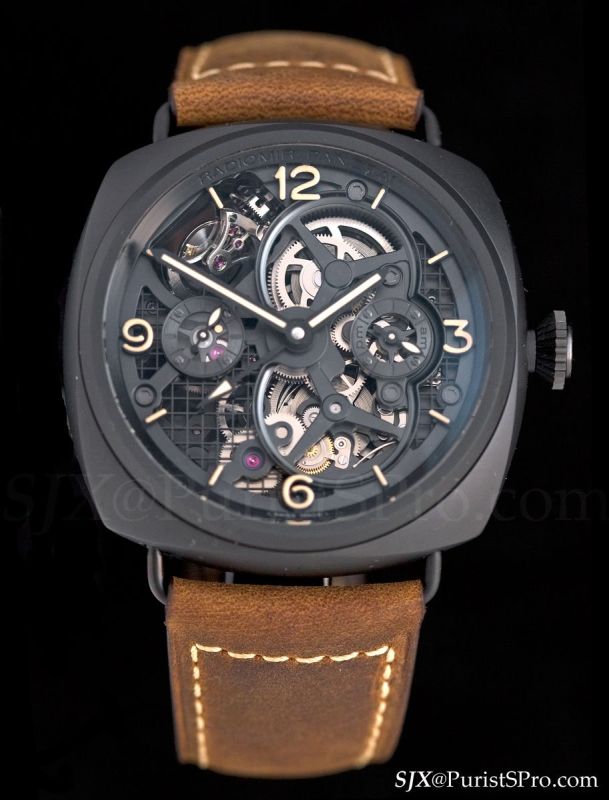
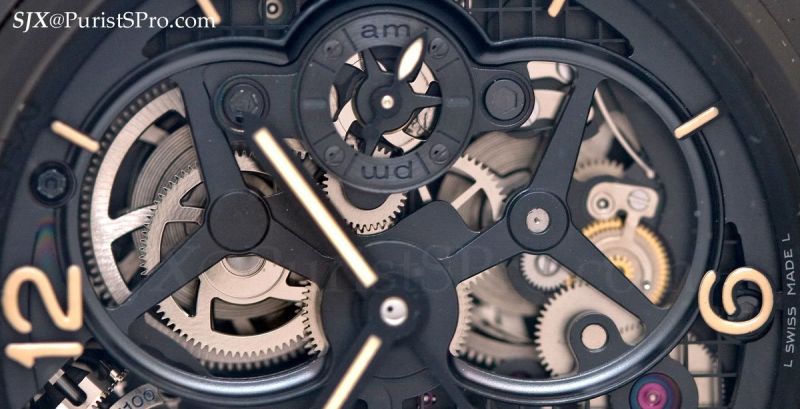
The second complication is much more complex but simpler looking. Measuring 50 mm across, the titanic Luminor 1950 Equation of Time Tourbillon is a tribute to Galileo Galilei. It displays equation of time on a linear indicator at six, sunrise and sunset at eight and four respectively, and a star chart on the rear customised for the buyer’s location. At three sits the date and month, while the tourbillon is visible from the display back.
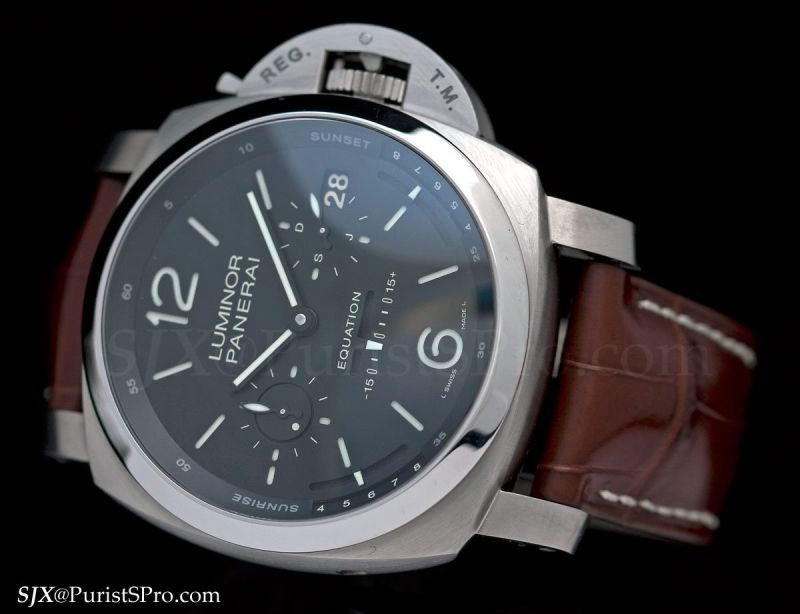
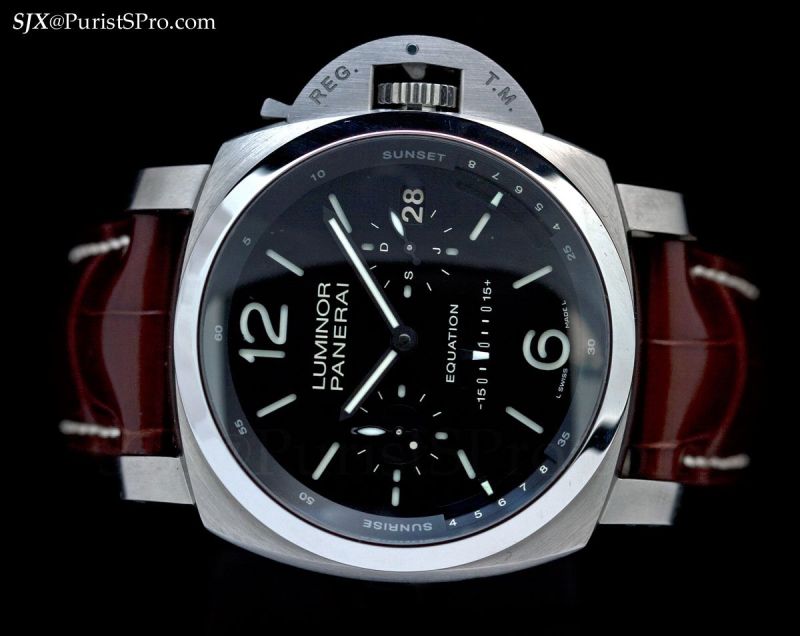
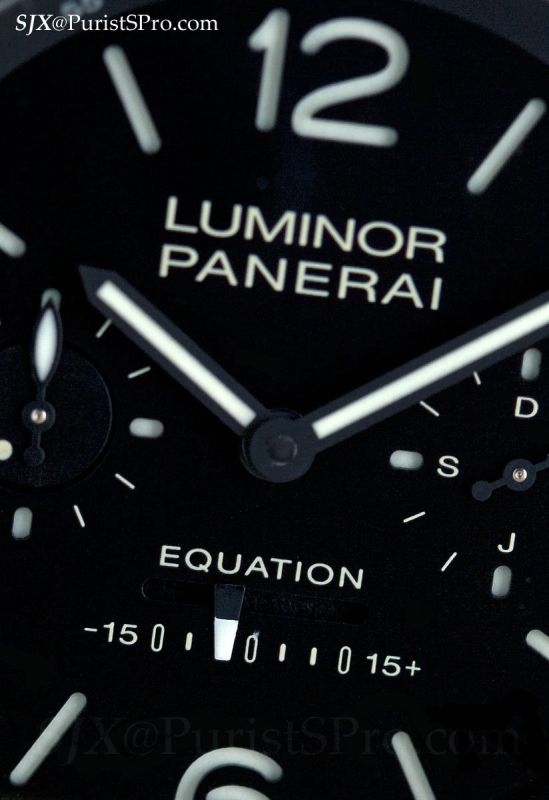
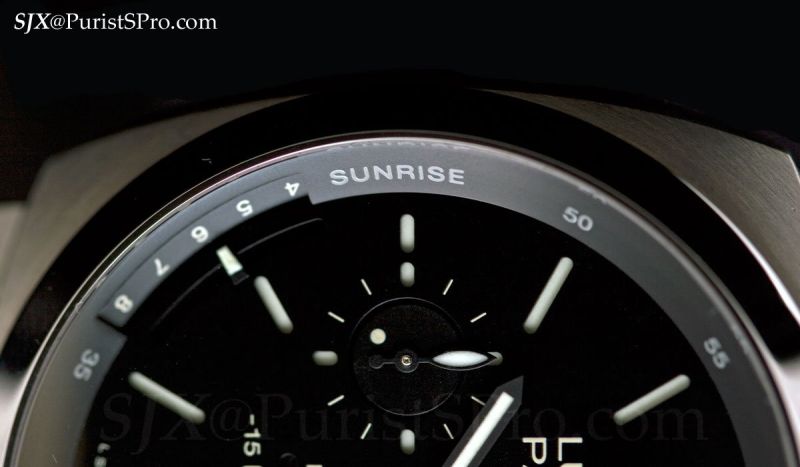
This watch was developed with help from Richemont’s head of technical development, whose name I can’t recall. Regardless it is still an impressive watch and a good sign that Panerai is putting effort in serious watchmaking instead of sitting back and enjoying the trouble-free revenue from entry to mid range watches.
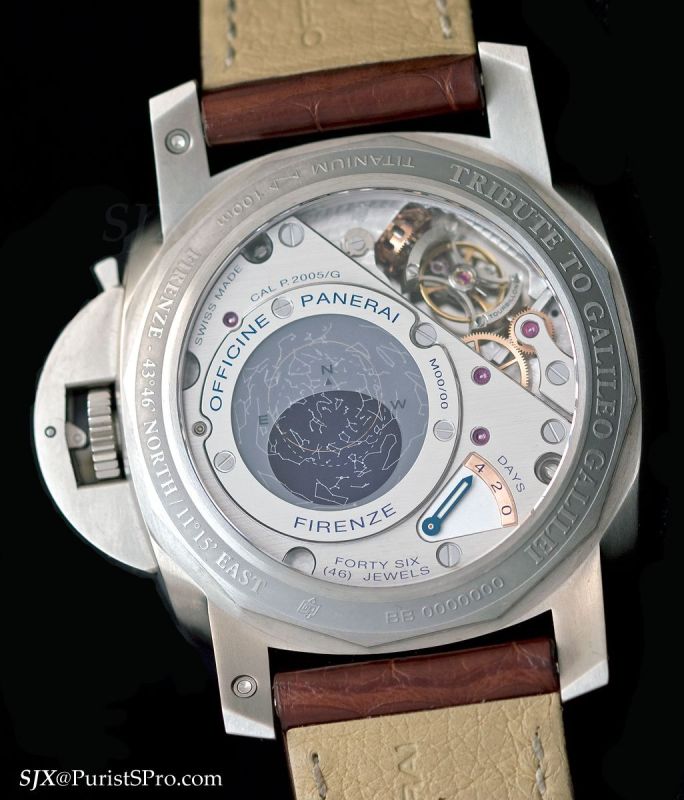
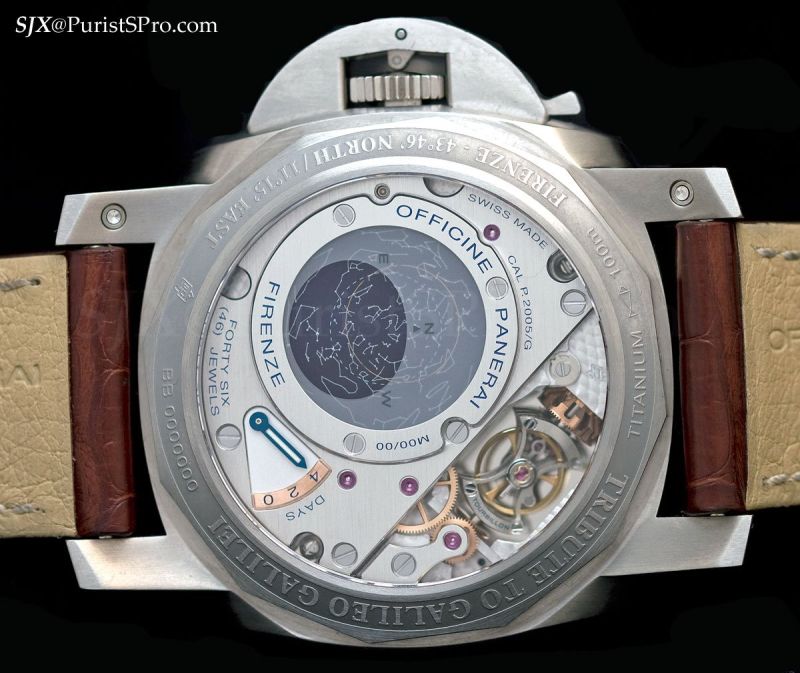
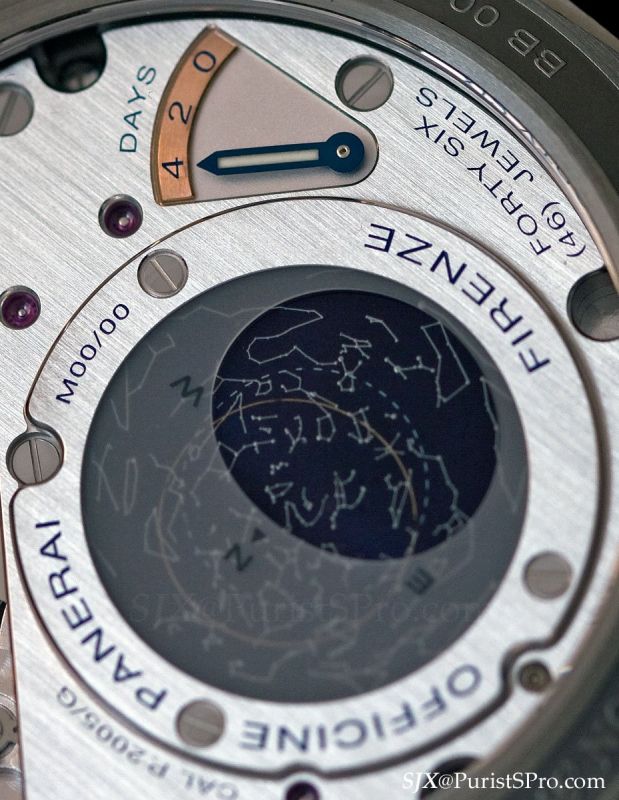
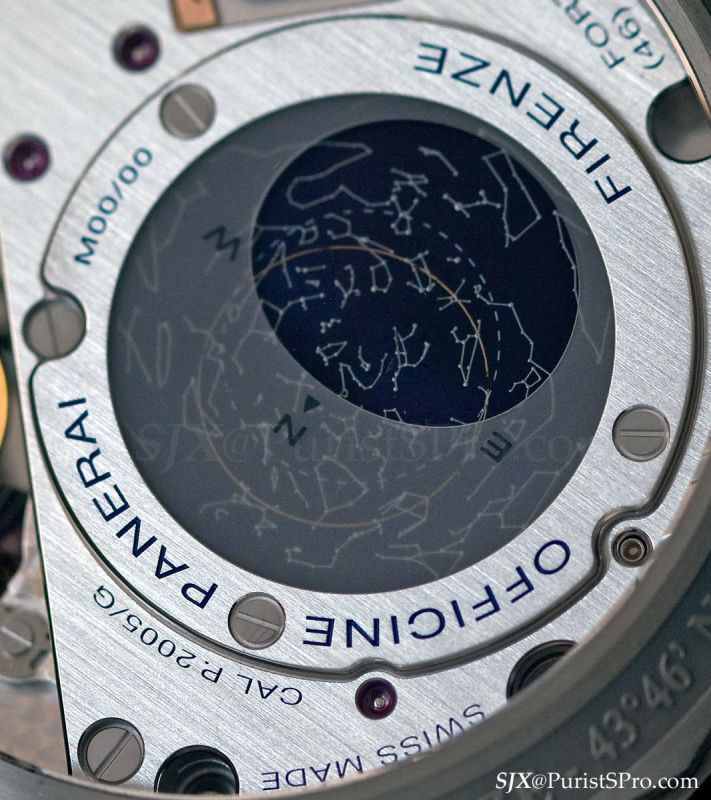
Both the skeleton tourbillon and equation of time watch are limited to 30 pieces.
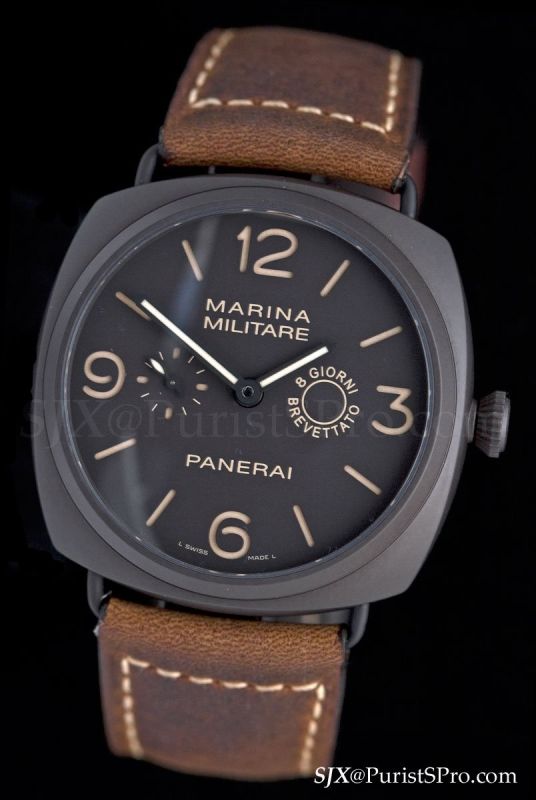
On to the simpler watches. Two special editions were unveiled, one being the Radiomir Composite. This watch is a mountain of brown tones. The case is aluminium coated with ceramic, resulting in an unusual brown shade. Though the dial is also brown, it’s a different shade, and it complements the ecru indices and hands nicely. All of that is set off by a distressed brown strap.
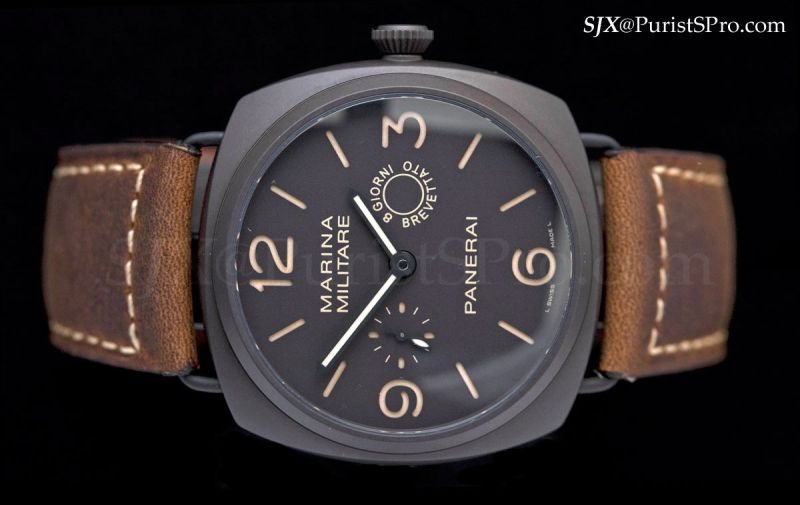
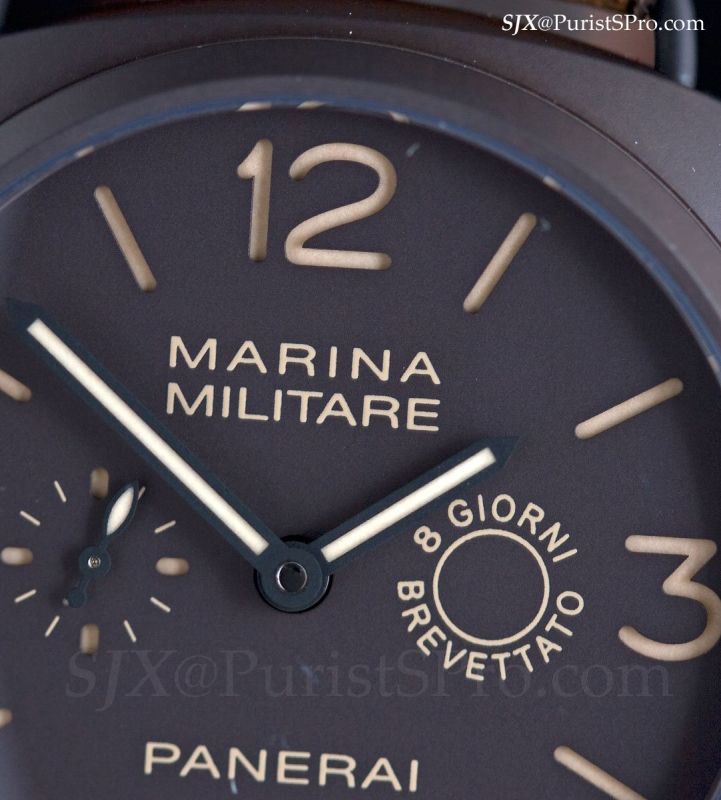
The movement is the hand-wound P.2002 calibre with an 8 day power reserve (like that matters to the potential customers). I never thought I’d like a watch this brown but I do like this one. 1000 of these will be made and there will probably be 3000 buyers, so purchasers, brace yourselves.
The other special edition is the Mare Nostrum chronograph. Last year saw the launch of the ridiculous 60 mm Egiziano. Panerai followed up this year with the 52 mm Mare Nostrum. Logic would dictate such watches are made for sitting in a display case, unless you’re Sylvester Stallone, but then logic isn’t present in the Panerai pear wood box.
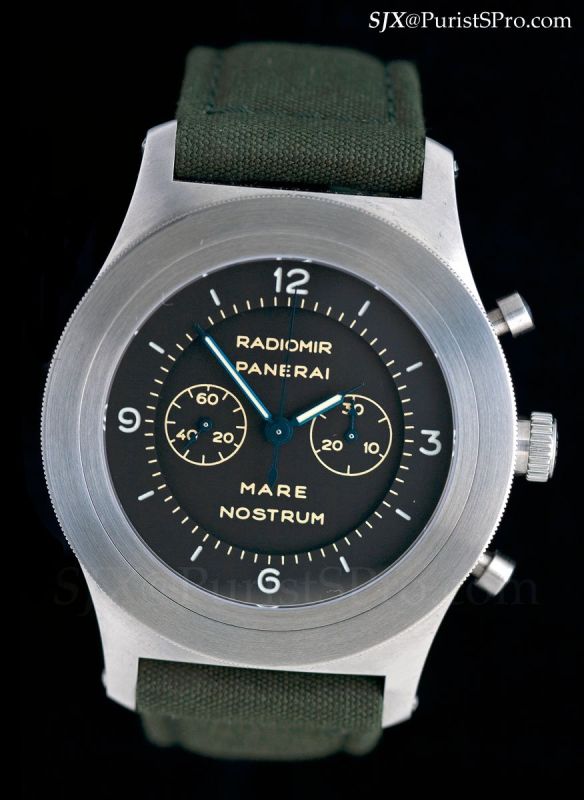
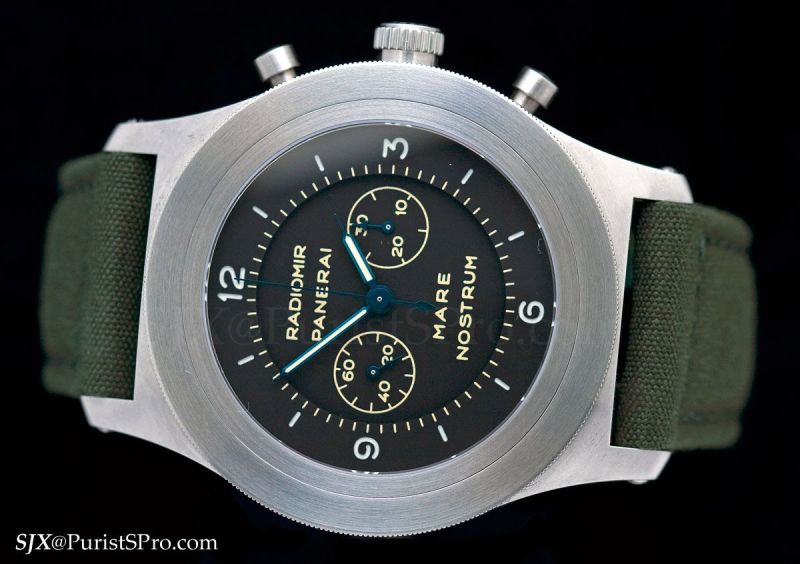
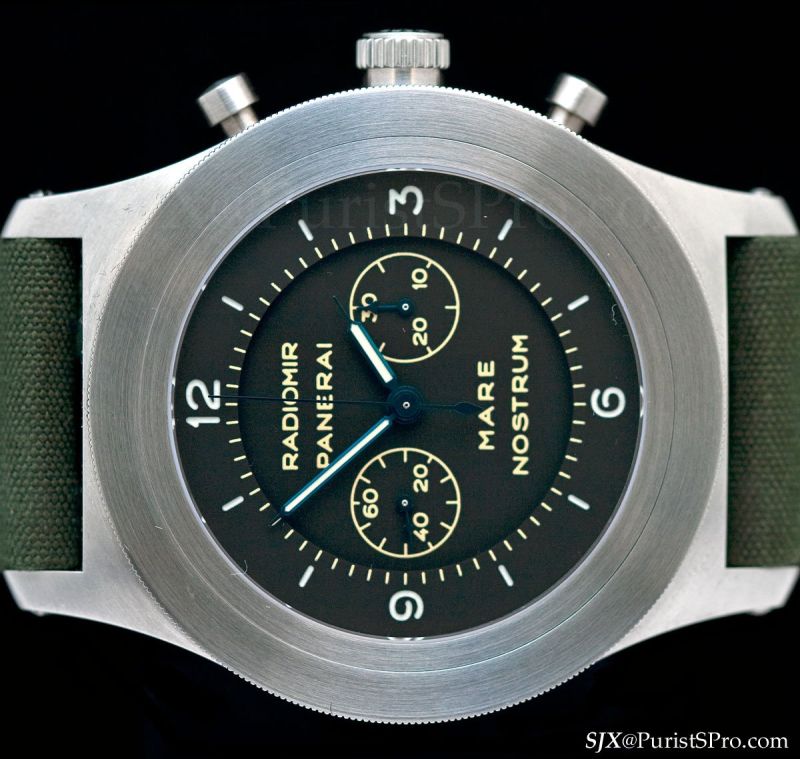
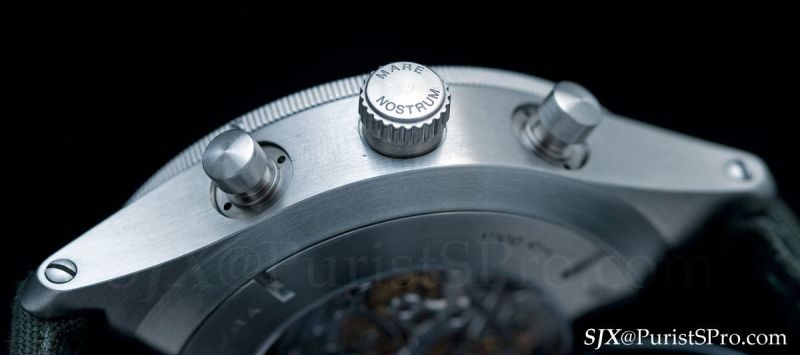
That being said, the Mare Nostrum is a magnificent watch to behold. This watch is modelled on a deck watch prototype of the Second World War era and Panerai did a superb job in recreating the look and feel of a vintage watch, right down to the drab green strap. Not only does the dial look old, but so do the blued steel hands.
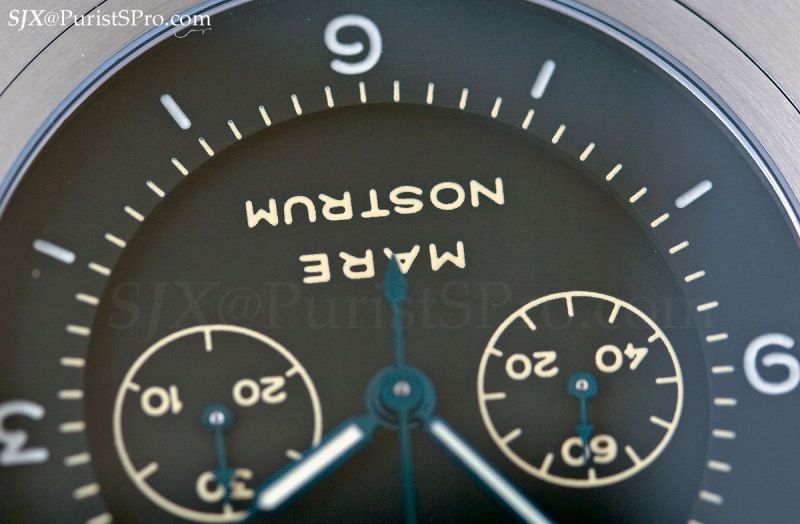
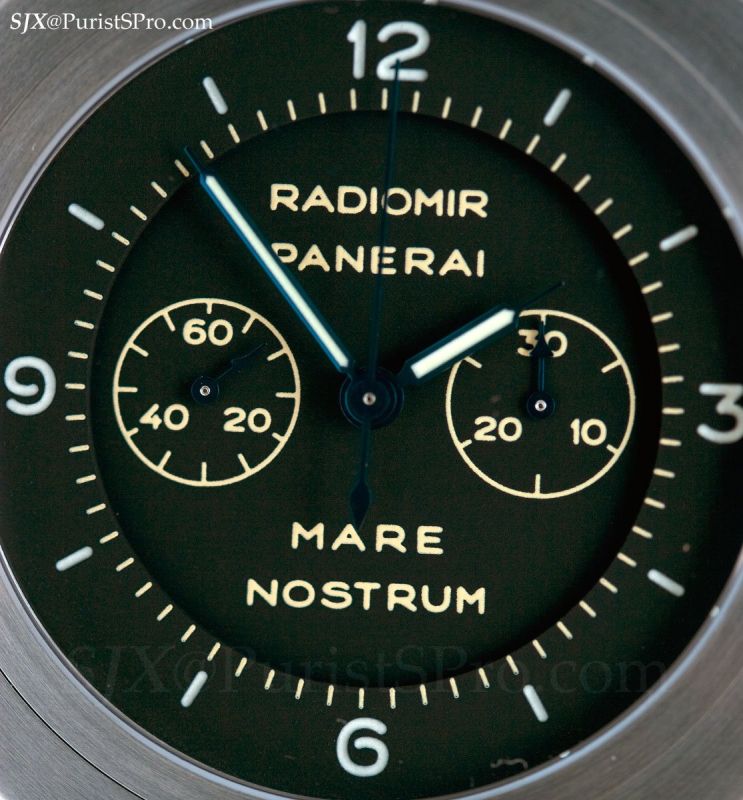
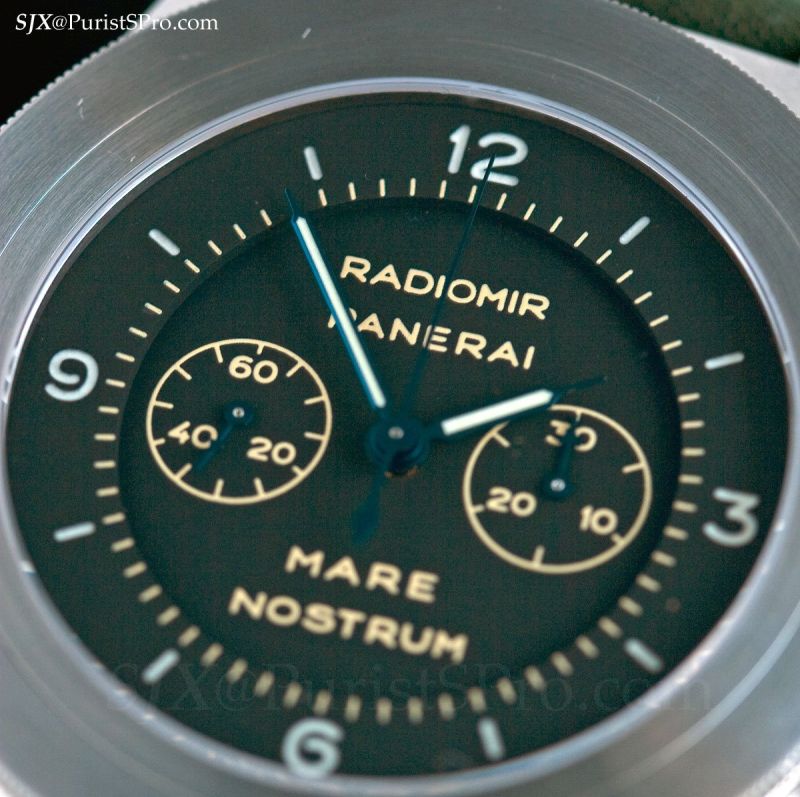
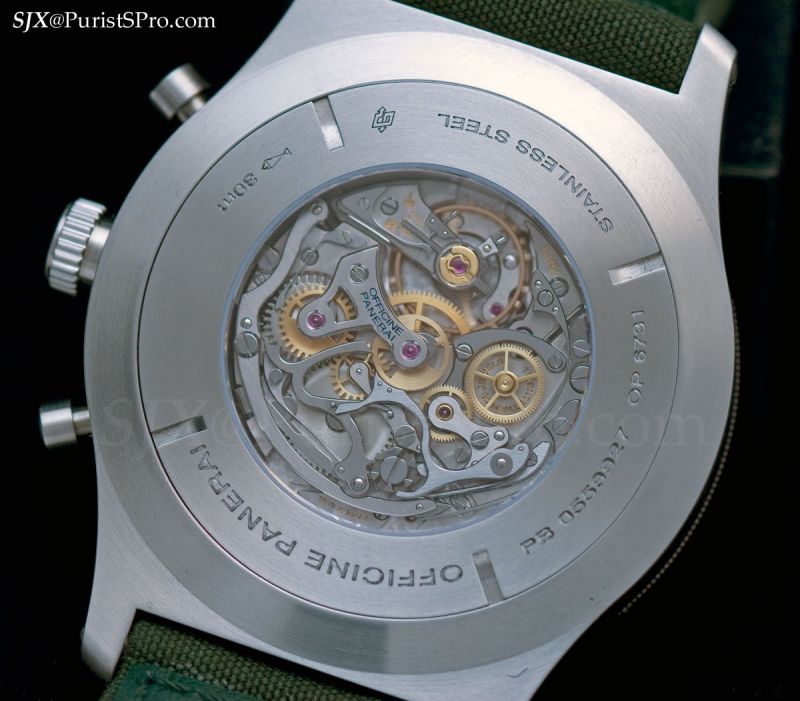
Flip it over and the movement is totally incongruous though, it’s a wonderfully finished Minerva calibre from Montblanc; the original had no display back naturally. A final point worth noting about this design is despite the use of a small movement in a vast case, the design retains good proportions on the dial thanks to a wide bezel and hour track. 99 of these will be made and I can just imagine the hysterical rush to land one of these.
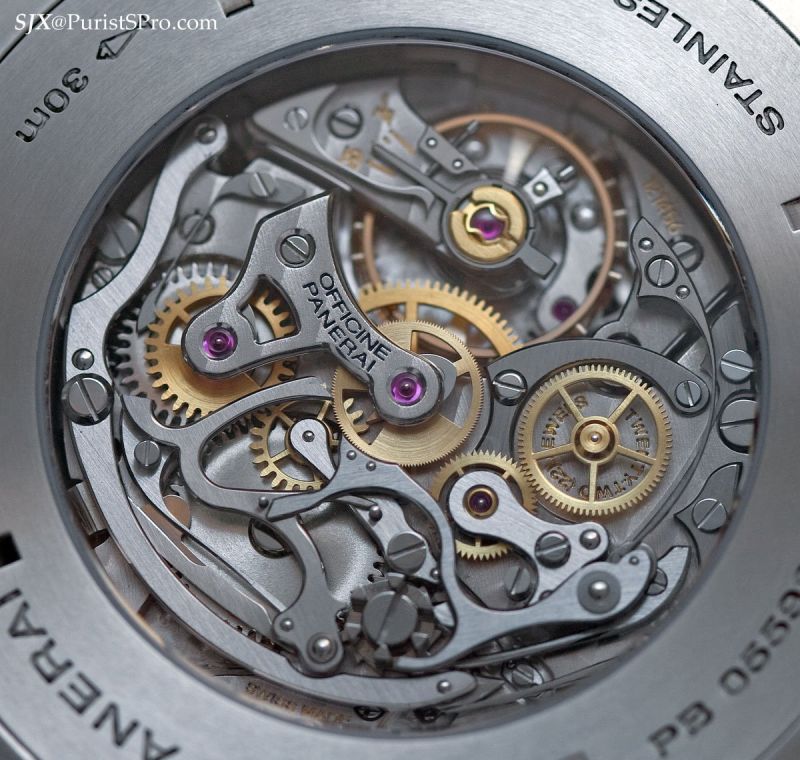
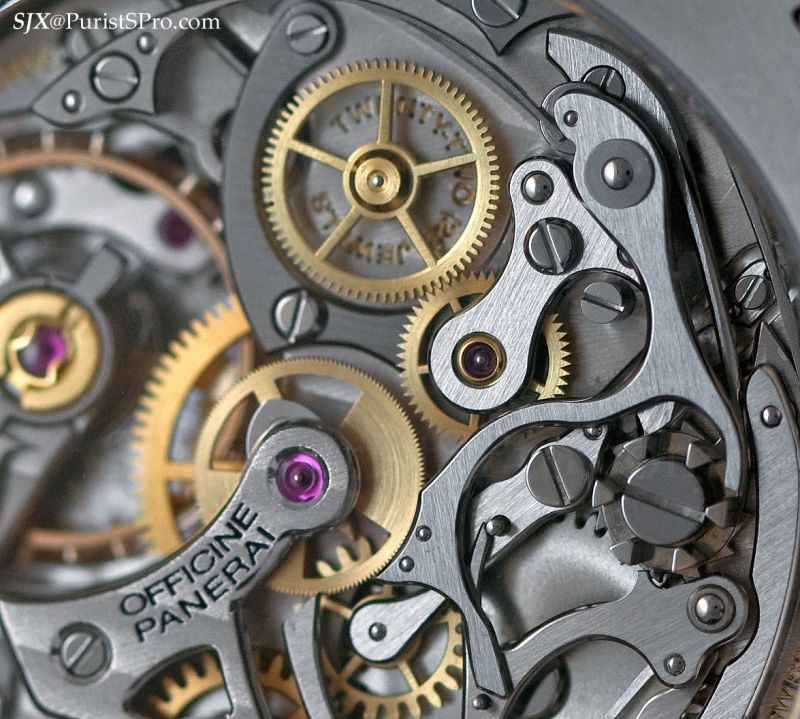
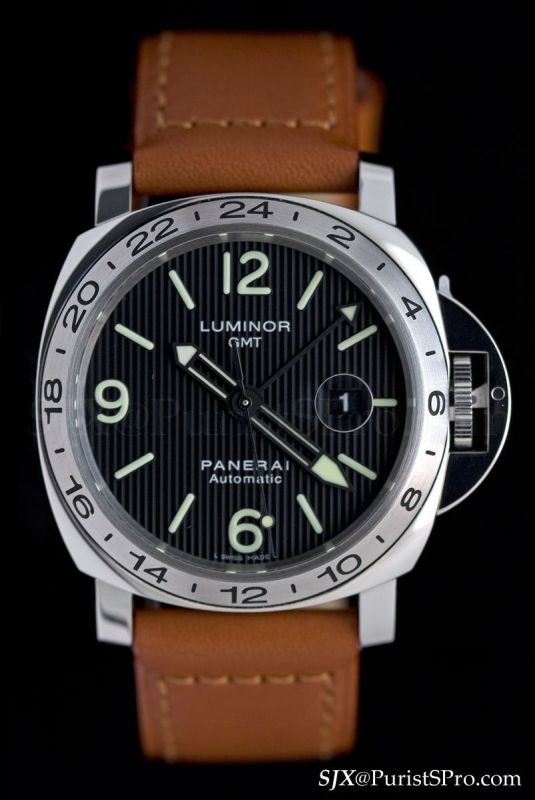
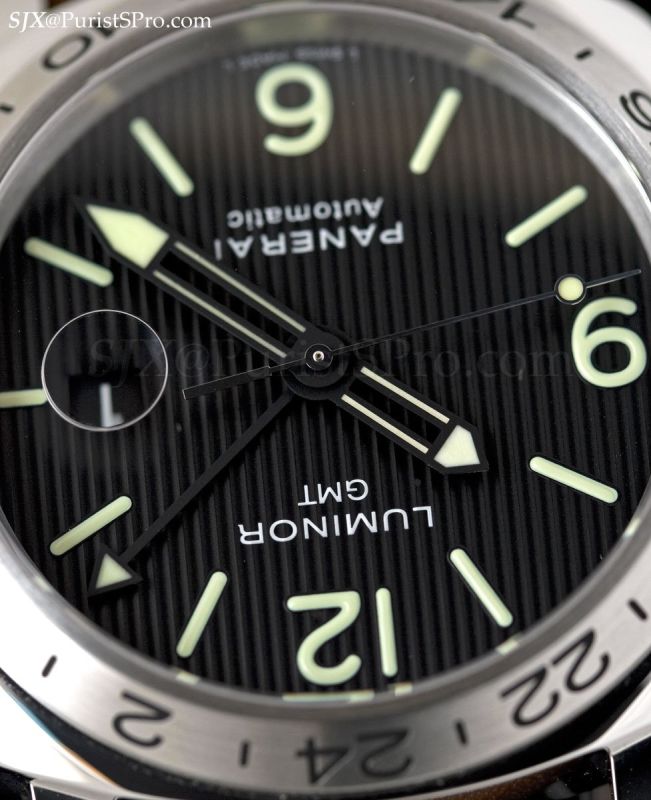
Moving onward to the bread and butter watches, starting with the Contemporary line. Revived in 2010 is the PAM029 GMT with ‘tuxedo’ dial, which earned that moniker due to the pinstripe guilloche on the dial (though a dinner jacket should not be pinstriped). The original was one of the A-series Panerai watches unveiled in 1998 and this 2010 remake is the latest in a series of A-series inspired models from Panerai, following last year’s remake of the PAM028 power reserve in a PVD coated case.
A Panerai with an unusual dial, in itself is unusual, made its debut at SIHH. The PAM359 is a 44 mm, 1950 case watch with the P.9000 entry level in-house movement. What sets it apart is the dial, which has Arabic hour indices at all 12 hours. This is apparently inspired by a vintage Panerai of some sort. A dial similar to this was used before on an automatic Luminor but here it looks too artificial vintage and I don’t like the look at all.
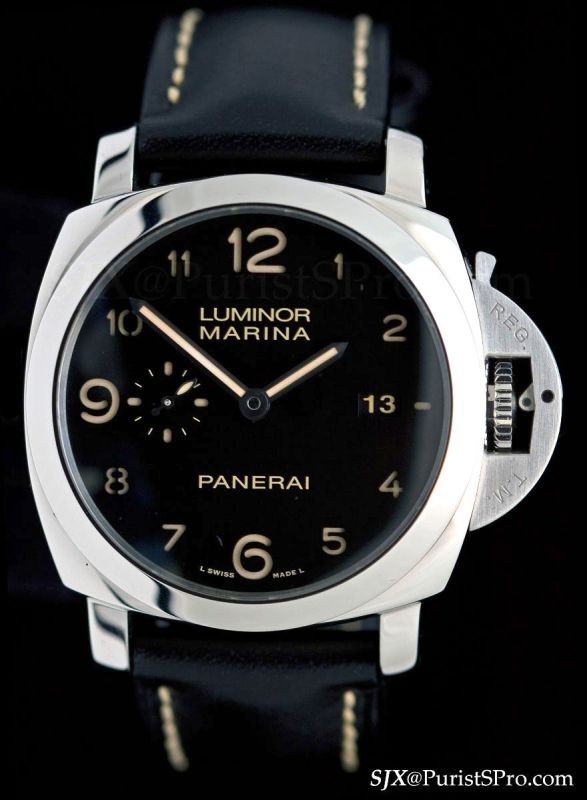
Several more 44 mm 1950 watches were unveiled. The PAM351 and PAM352 are the strap and bracelet versions, respectively, of the same automatic P.9000-equipped watch in a titanium case. Last year saw the launch of the first P.9000 watches which were in steel cases.
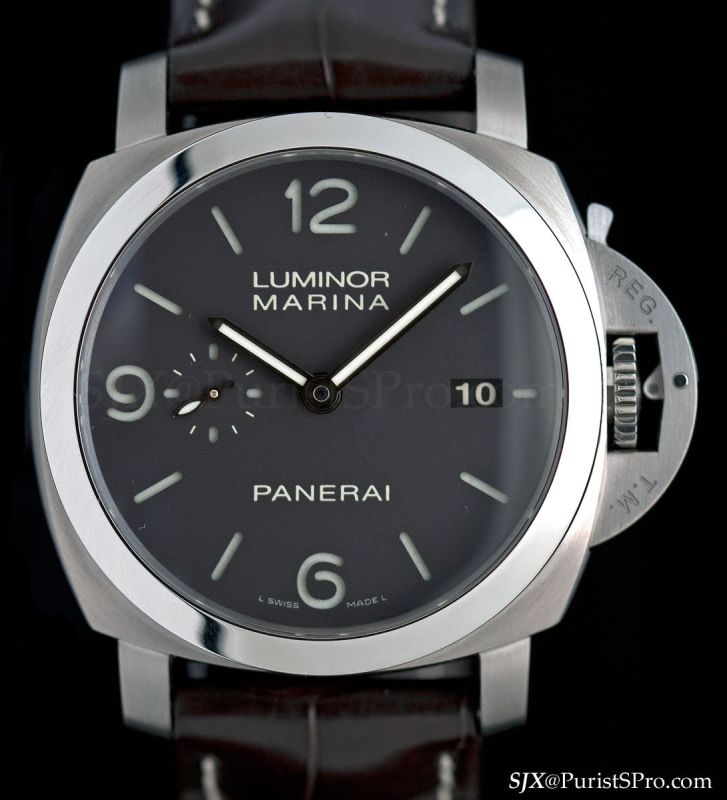
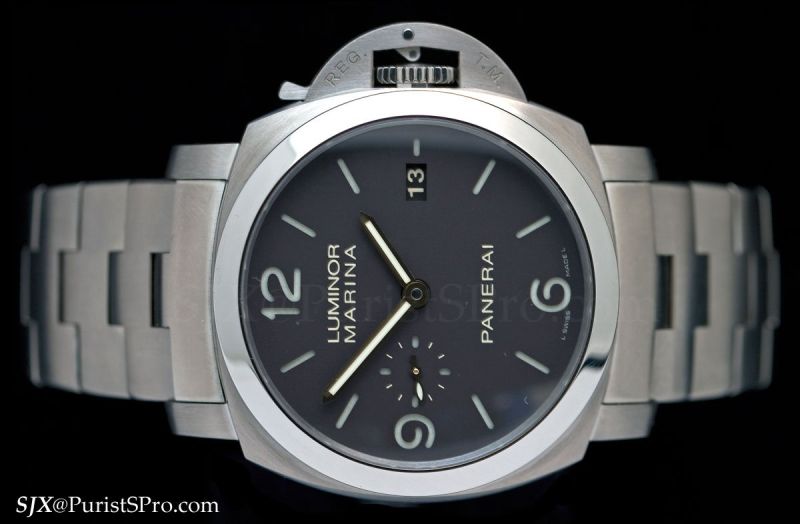
Another model is the PAM347 GMT Power Reserve in steel on a matching bracelet with the P.9002 calibre, which further expands the class of entry-level, in-house movement Panerai watches.
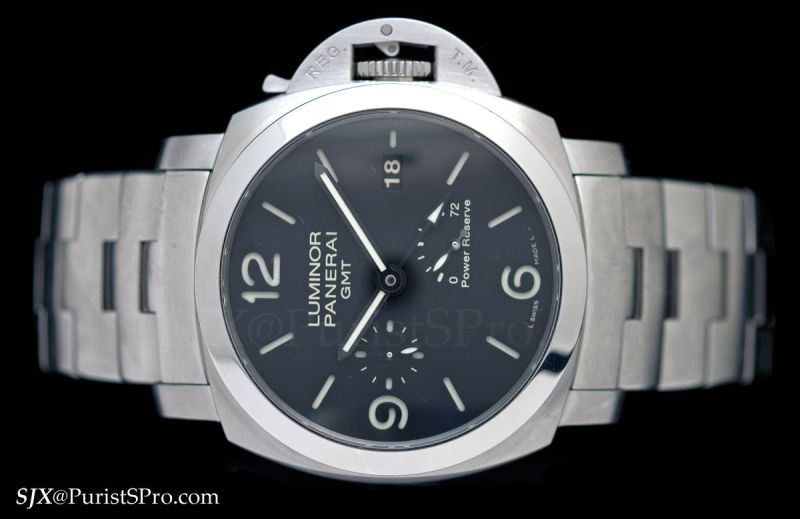
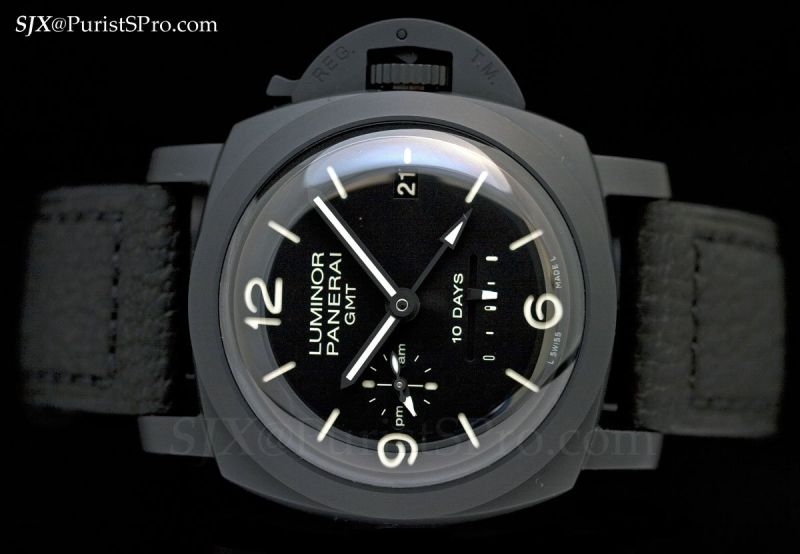
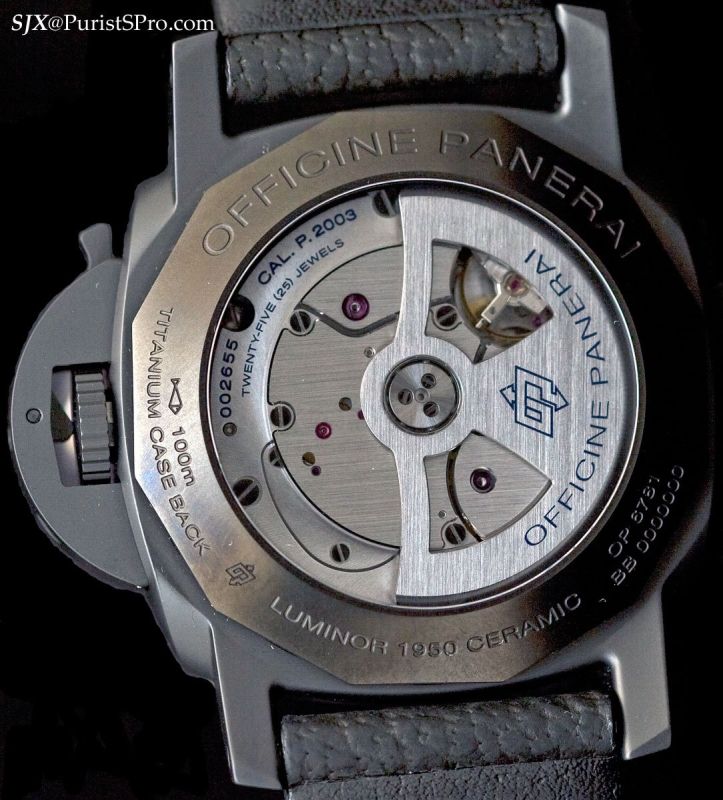
The next watch is a sure hit, PAM335 GMT in ceramic. Housed in the 44 mm case is a 10 day automatic with GMT and power reserve indicator. What’s unique about this is the grey tinted sapphire display back. It gives the movement a ruthenium-plated look, which is what I initially thought it was. This is a clever touch and allows the display back to blend in with the dark theme of the watch, hiding the otherwise jarring rhodium finish.
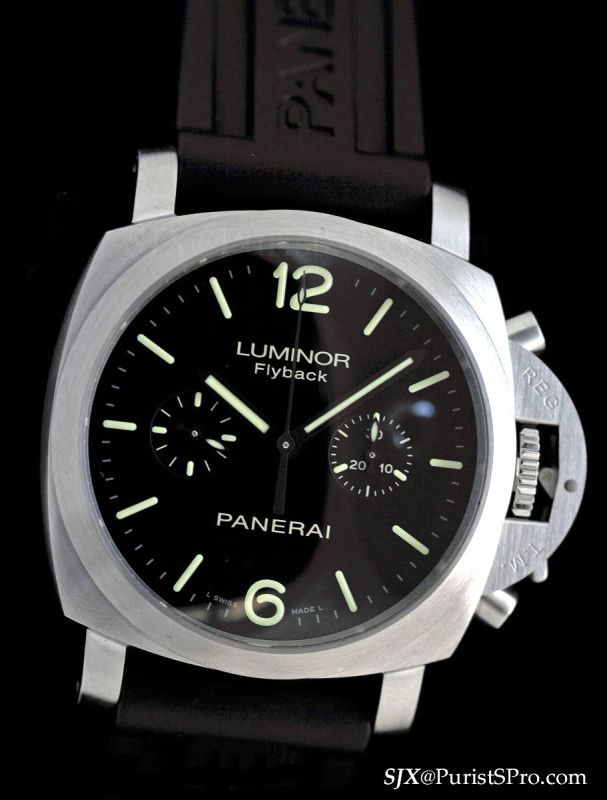
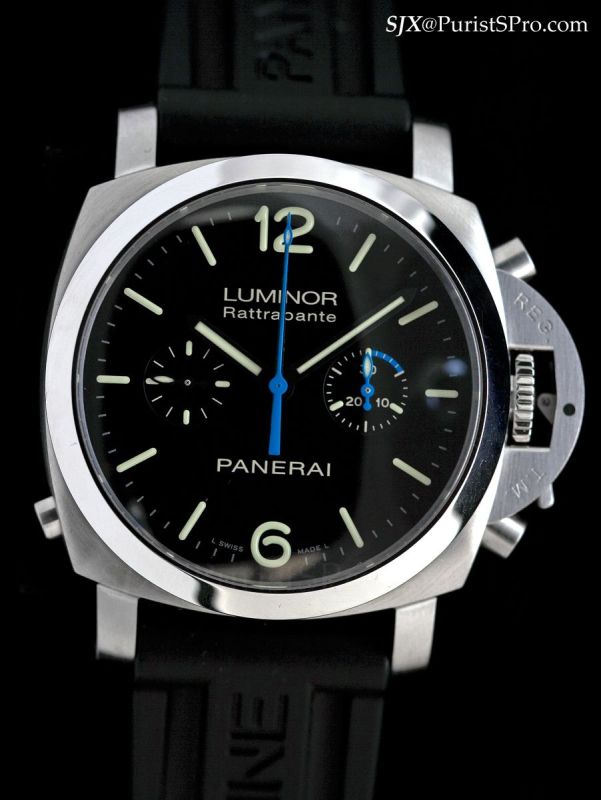
Also introduced were a few chronographs, a rattrapante (PAM362) and a flyback (PAM361). Both are housed in 44 mm, steel 1950 cases with Valjoux 7750 based calibres inside.
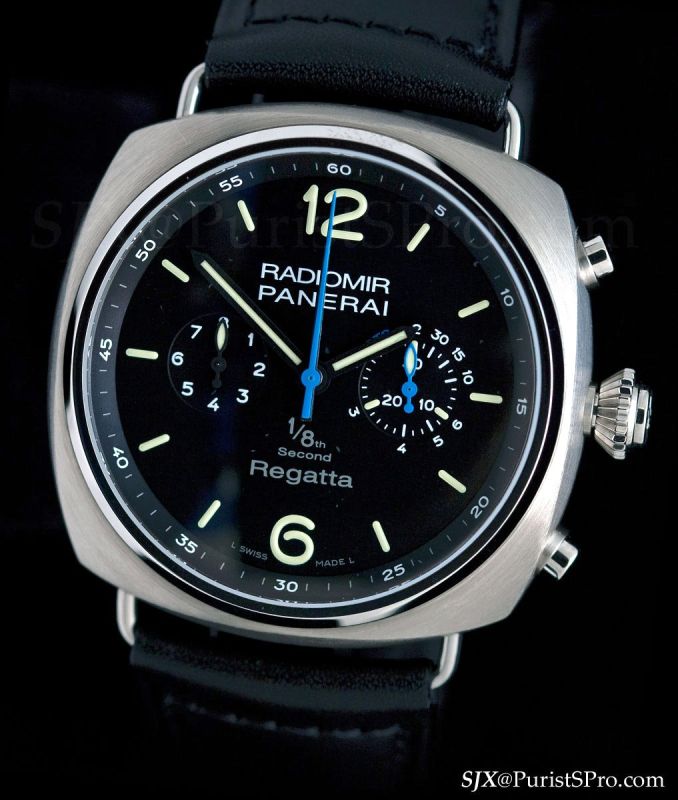
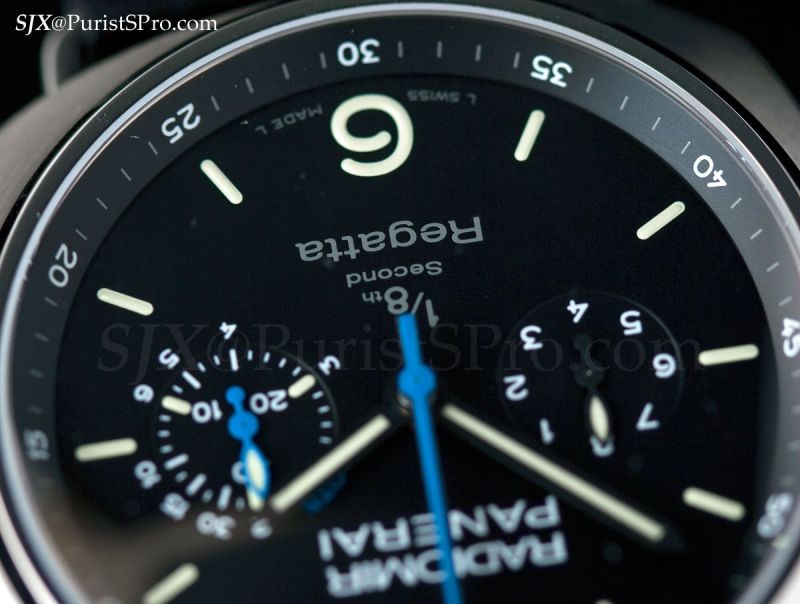
The next chronograph brings us to the Radiomir watches. The PAM343 is a foudroyante chronograph, officially known as the Radiomir Regatta 1/8 Second Titanio. Equipped with a Valjoux derived movement, the Regatta chronograph is made to commemorate the Classic Yachts Challenge 2010. It’s 47 mm in diameter and titanium.
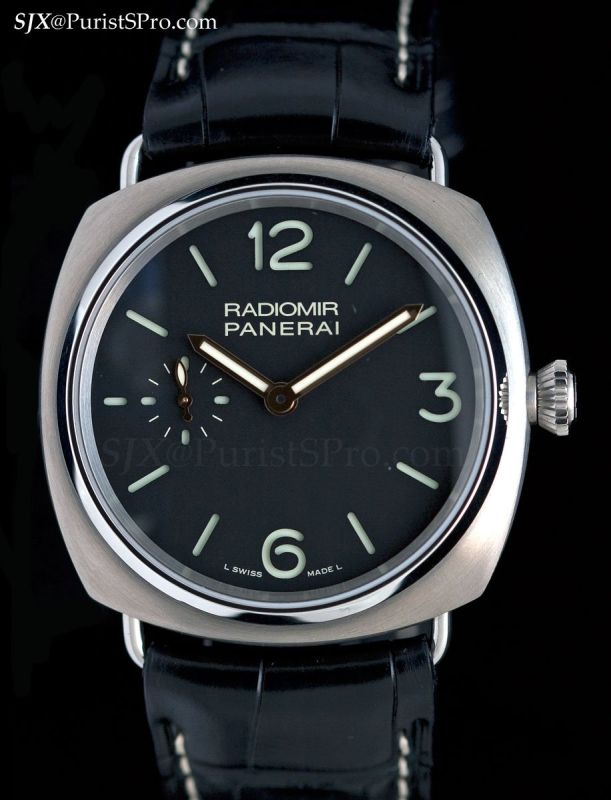
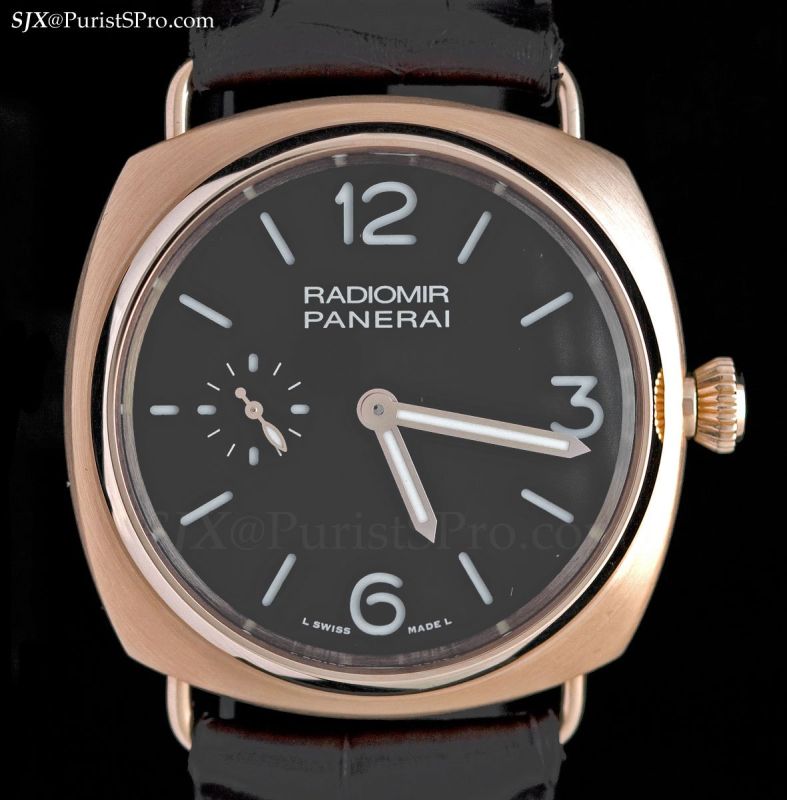
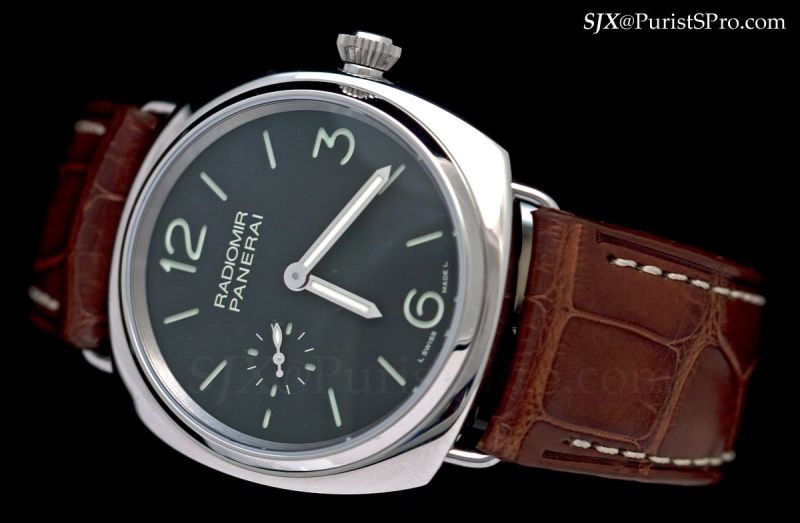
Panerai unveiled one of its smallest watches ever this year with the new 42 mm Radiomir. Available in steel (PAM337), titanium (PAM338) or rose gold (PAM336), this Radiomir is almost a dress watch. All versions use the P.999/1 calibre, an in-house, hand-wound movement. The titanium version is the most attractive – its brushed case and gold hands are extremely eye-catching.
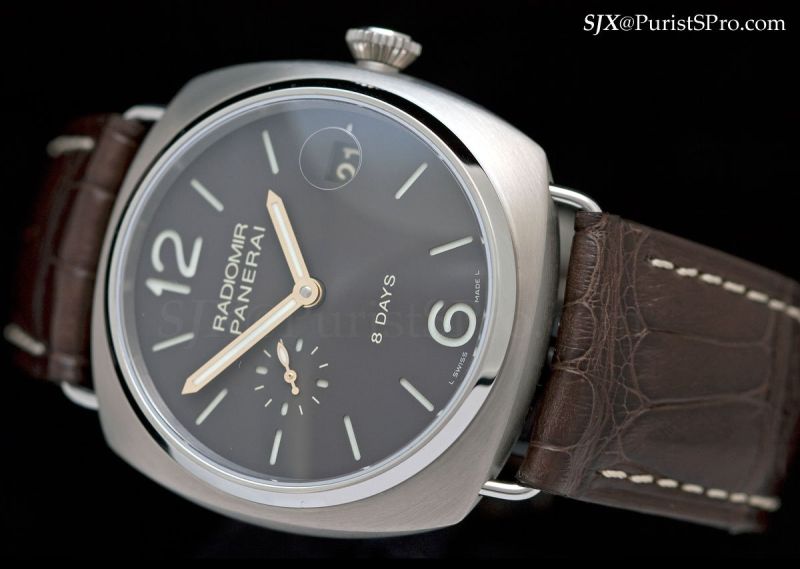
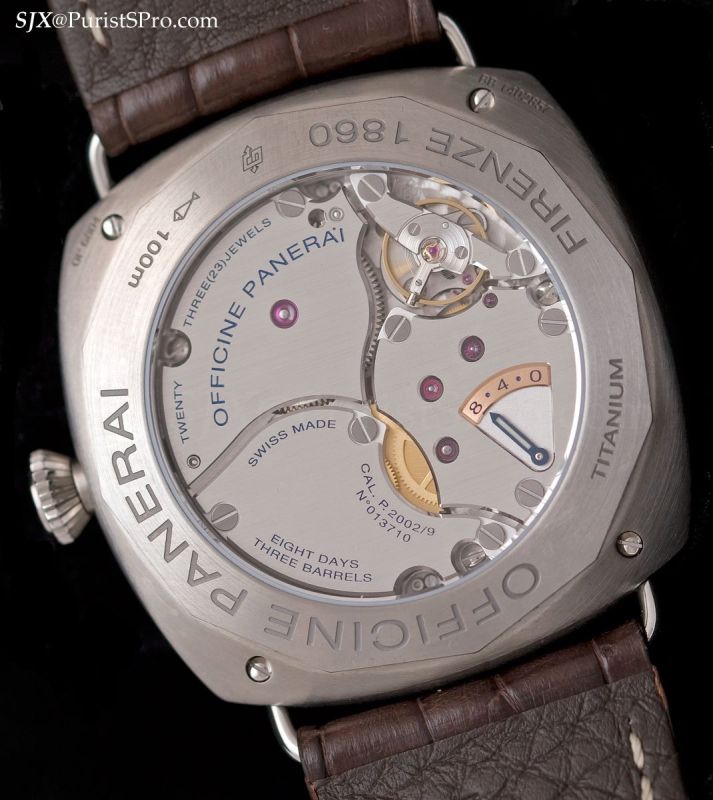
Another new Radiomir is the PAM346, an 8 day watch in a 45 mm titanium case. The movement is the in-house P.2002/9. Gold hands and a titanium case, once again a winning combination, this time with the added bonus of the 8 day movement.
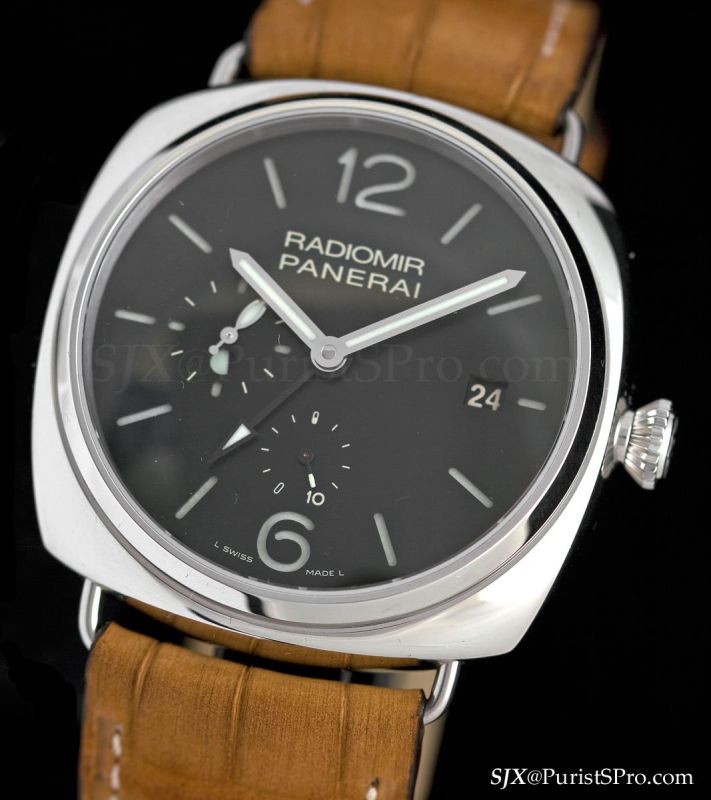
Last is the PAM323, a 10 Days GMT in a 47 mm, steel Radiomir case. Silver hands and a steel case make this plain in appearance but it’s not a bad looking watch. A titanium version will eventually come along anyway.
yes yes
PAMs have the best showing from the Richemont gp this year,,,excellent range,though all pricey end. the skeleton tourby...wht a weirdo and still a winner!! hope to see a pam tourby with a cut out dial one day. and the Composite...now that's a real looker.
great report mate

Me too
so many great brands with so many amazing looking watches my favourites are Panerai Richard Mille Lange & Sohne Jaeger Lecoultre Vacheron Constantin and the Debethune in no particular order although the De bethune Pams and RMs were stunning and left me speechless if only i could afford one
 thanks for the amazing reviews SJX and the pics just absolutely superb
some great New Models
Panerai did it again this year.. always impressive.
wow. Several New Models i'd love to have ( but my only small problem i have is not enough of this: $$$$$$ )
thanks
Tony

Much appreciated these live shots!
Especially of the PAM 300 and the 339, both of which are due to land on my wrist in due time...
Stephen

impressive line up...
of new models by Panerai, they have been going strong for many years now and entering a completetly new segment now with the astronomic watch. I wonder whent the first minute repeater is coming....
My favorites this year are the 335 and especially the 343. I am a big fan of the Radiomir case and love my 189 Blackseal. I am really tempted to add another Radiomir to my collection.
thanks for your excllent post SJX, outstanding indeed. I wonder how you manage to cover all the brands!
Cheers,
Stefan
SIHH 2010: Piaget

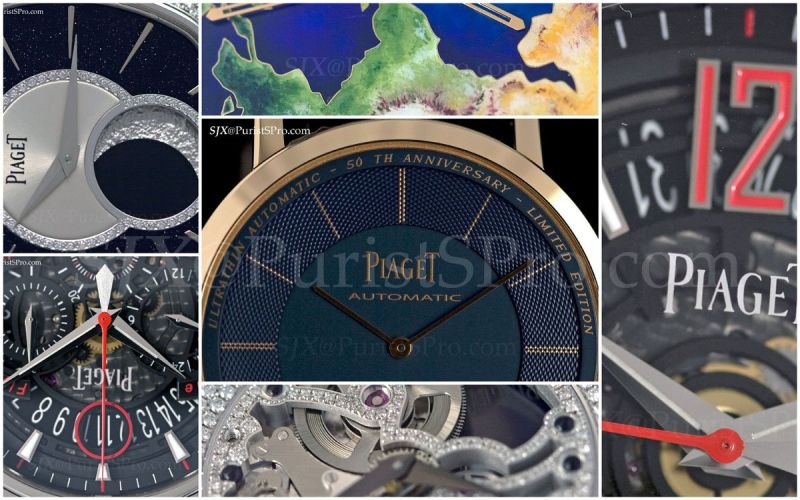
Being predominantly known for making ladies’ jewellery watches, Piaget is slowly but surely moving towards earning recognition for its solid range of men’s watches with respectable, in-house calibres.
Last year Piaget’s flagship launch was the Polo FortyFive, a 45 mm titanium and steel sports watch. This year the main new product goes in a totally different direction. Created to celebrate the 50th anniversary the ultra-flat 12P movement, the thinnest movement in the world at the time, the new Altiplano pieces with the 1200P and 1208P calibres are the slimmest automatics available today. Piaget has a long, if not particularly well known, history of ultra-slim watches, so these new calibres are here to remind the public about that tradition.
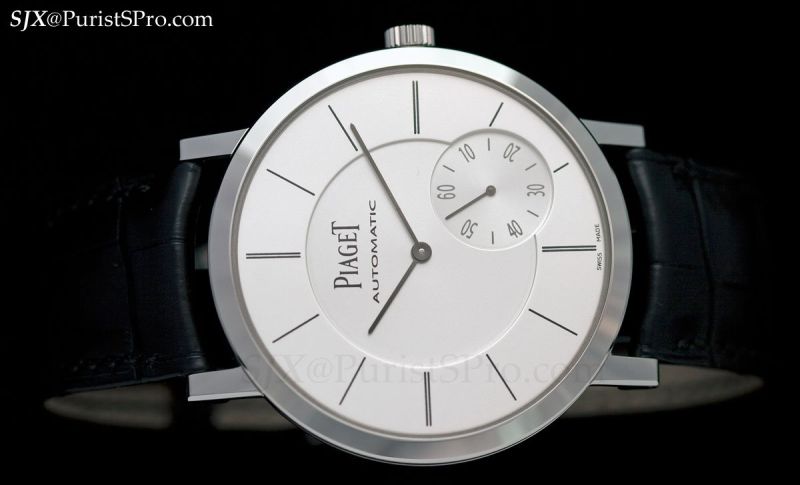
Both calibres, one with seconds and the other without, are 2.35 mm high and sit in cases 5.25 mm thick. Aside from the seconds hand on the 1208P, the other discernible difference is the platinum micro-rotor on the 1200P and the gold rotor on the 1208P. The movements are large at 13 ¼ ’” in size (just under 30 cm) but everything else about them is small. A longish 40 hour power reserve is achieved thanks in part to the small balance wheel. Movement decoration is of a high standard but modern in style.
As a matter of historical interest, though these are the slimmest automatic movements today, and will probably remain so for some time, Jean Lassale made even slimmer automatic and manual wind movements in the seventies. They were extremely thin, a hair over 2 mm for the automatic and just over 1 mm for the manual-wind, and also overly delicate. The company went south after a few years, was eventually acquired by Seiko and is now defunct.
The first version of the new Altiplano is the Altiplano 43 mm with the 1208P movement, available in rose or white gold. Piaget smartly gave this watch a three-tiered dial with the sub-seconds recessed into the lowest level, preserving the overall height.
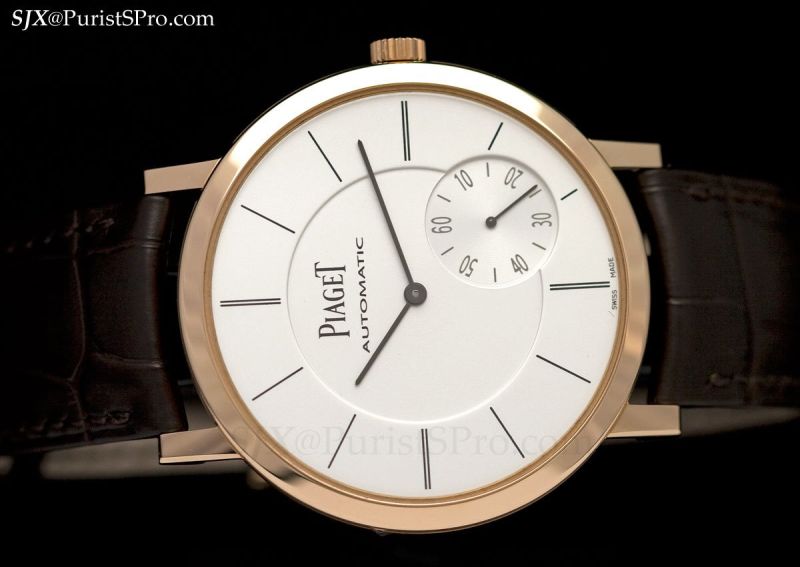
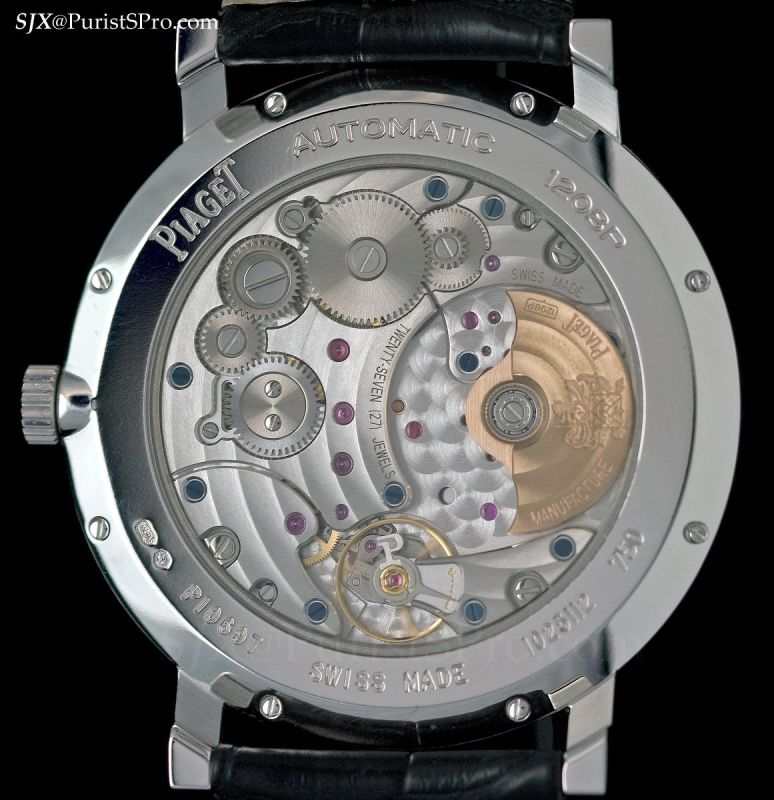
Fitted with the 1200P is the Altiplano 43 mm Anniversary Edition. Also presented in a white or rose gold case, with 235 pieces made of each, the Anniversary Edition watch features only two hands against a dark dial (blue for the rose gold and black for the white) with a guilloche hour track. The obligatory limited edition spiel runs in a semicircular arc from nine to 12 but the letters are small and not especially prominent.
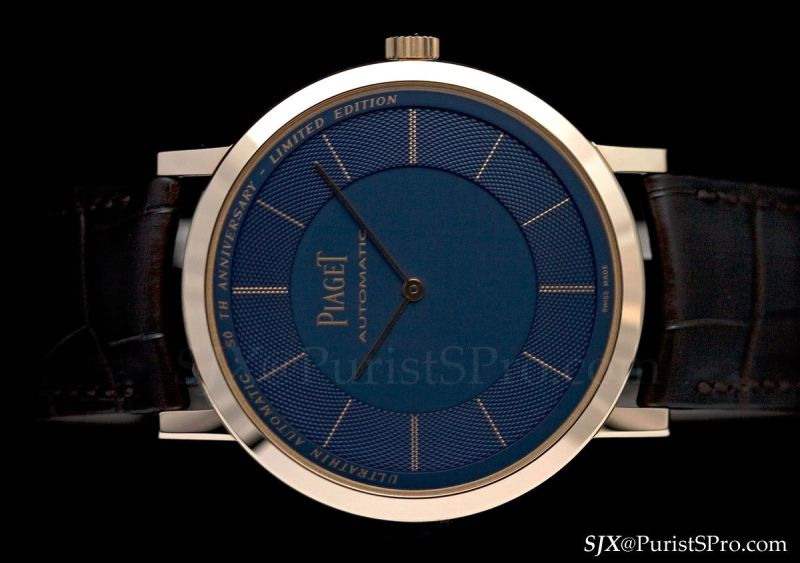
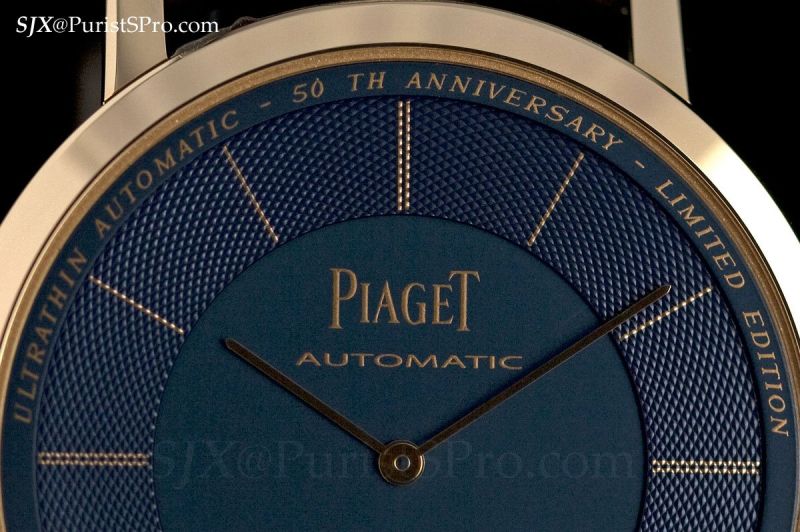
Both ultra-slim Altiplanos are large at 43 mm, but elegant due to their pure design and thinness. That being said I would not be surprised to see a smaller, perhaps 40 mm version in the future.
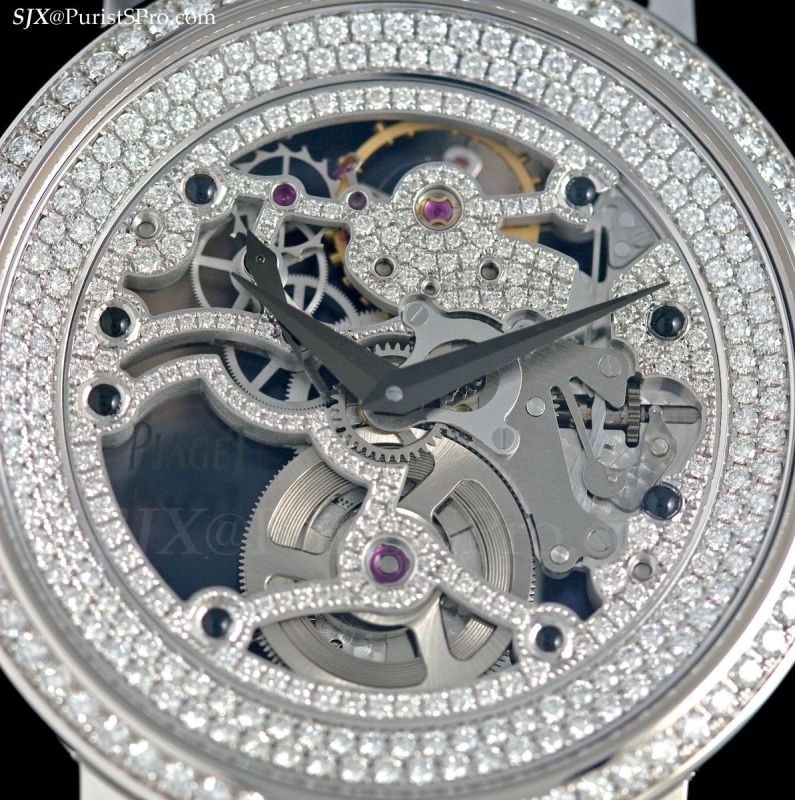
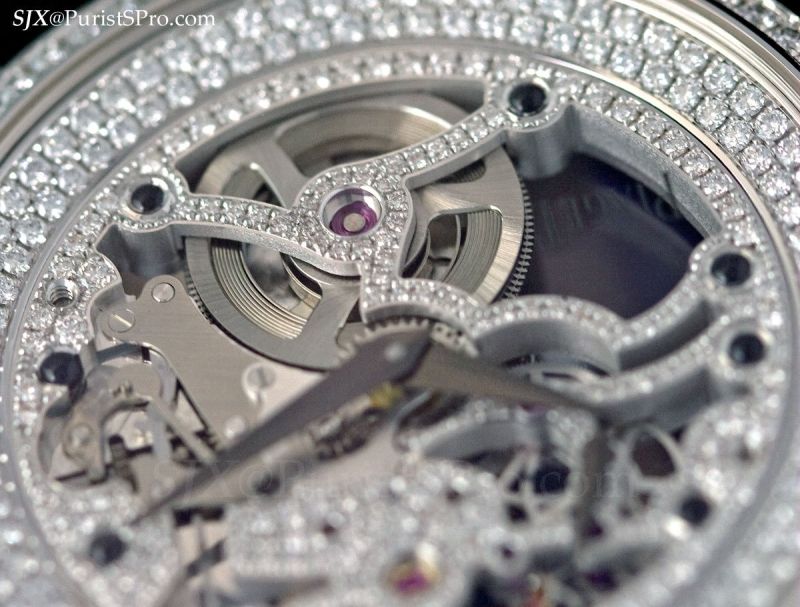
Another addition to the Altiplano collection is the Gem-set Skeleton. This is a 40 mm, though it looks small, white gold watch set with nearly 400 diamonds, albeit small ones, totalling about 2.5 carats. The manual-wind movement alone has 174 diamonds set on the bridges, which are solid gold.
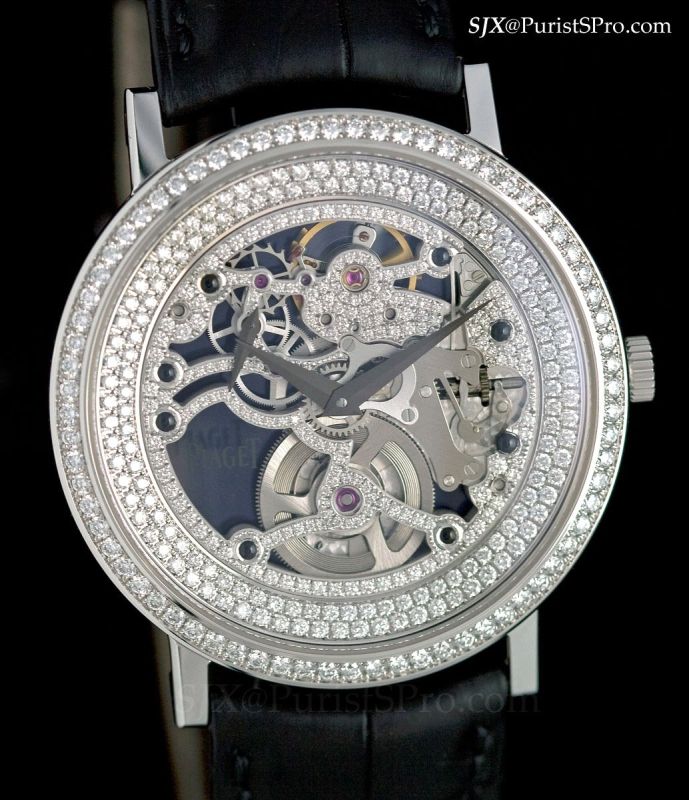
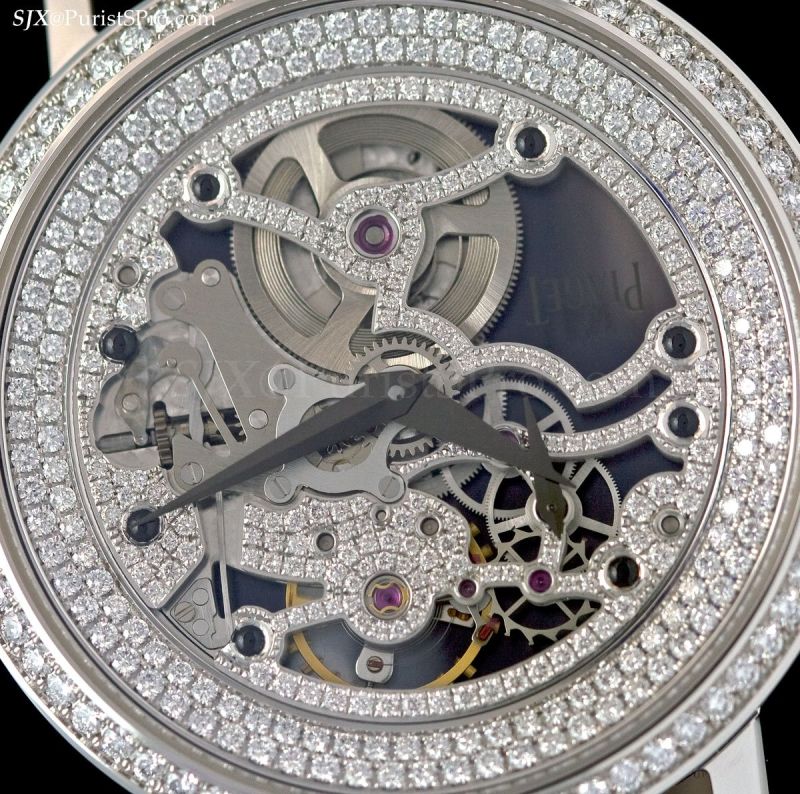
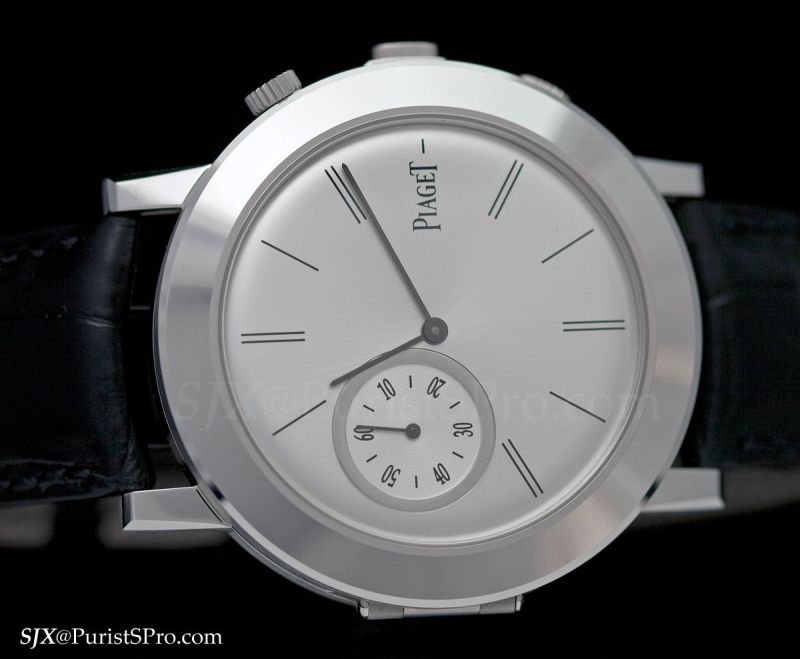
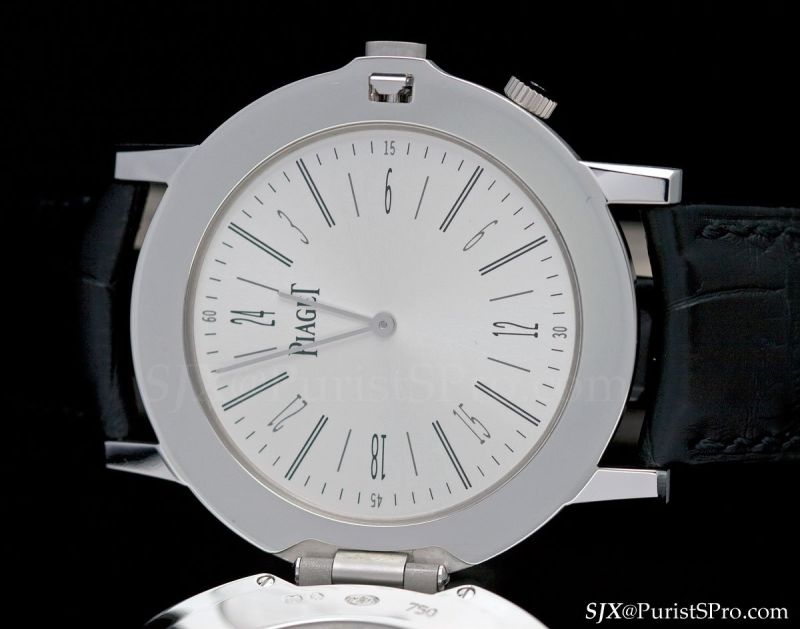
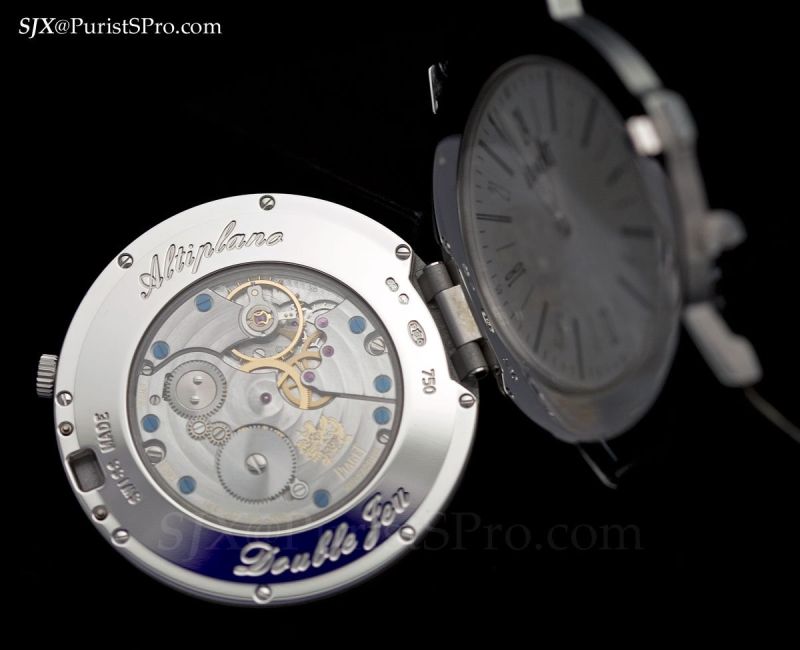
Receiving a facelift is the Altiplano Double Jeu. Fitted with two slim movements in a 43 mm hinged case, the Double Jeu displays twin time zones exceptionally legibly. The lower dial now displays the time in a 24 hour format.
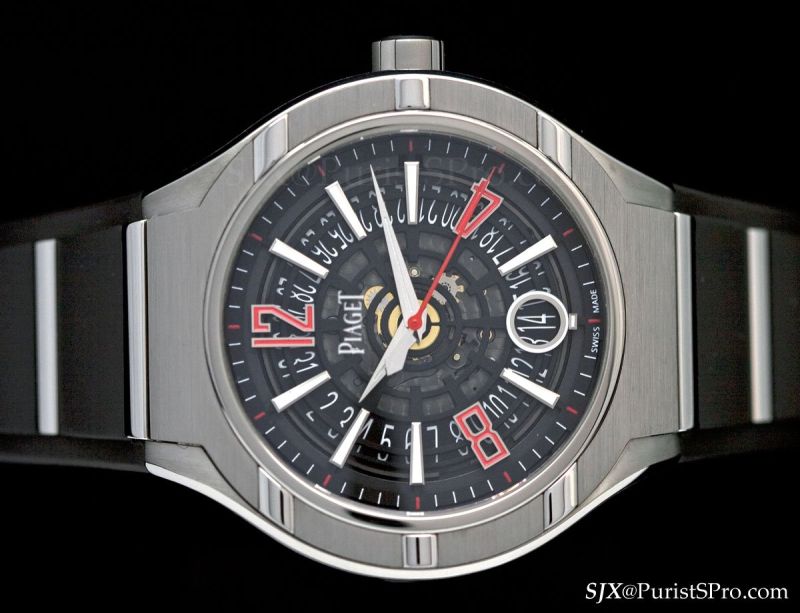
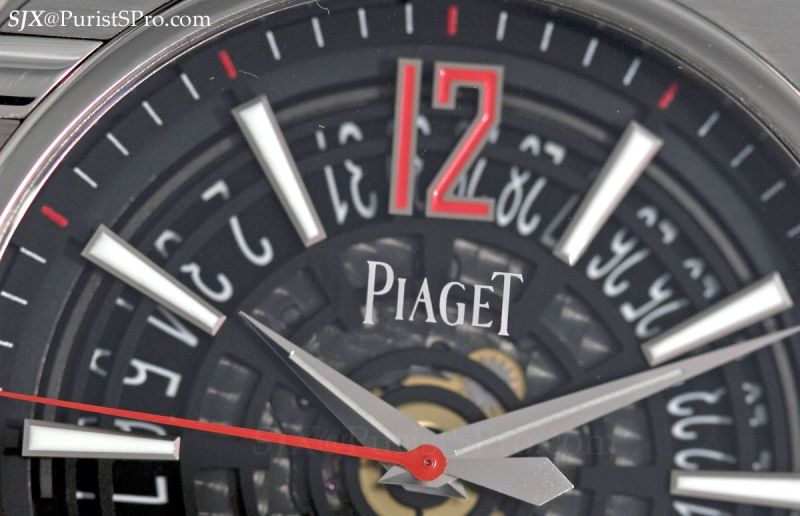
Also receiving a facelift is the well received Polo FortyFive. I spoke positively about this last year – I was wrong as the 2010 edition is even better. Piaget has cut open the dial, exposing the main plate, as well as giving it a liberal dash of red. The hour markers sitting on a track above the date wheel is especially striking. One aspect of the FortyFive I did not like last year was the text on the subdials of the chronograph. With the open dial the text is no longer apparent at all. This is the perfect dial for the watch.
Polo FortyFive Chronograph
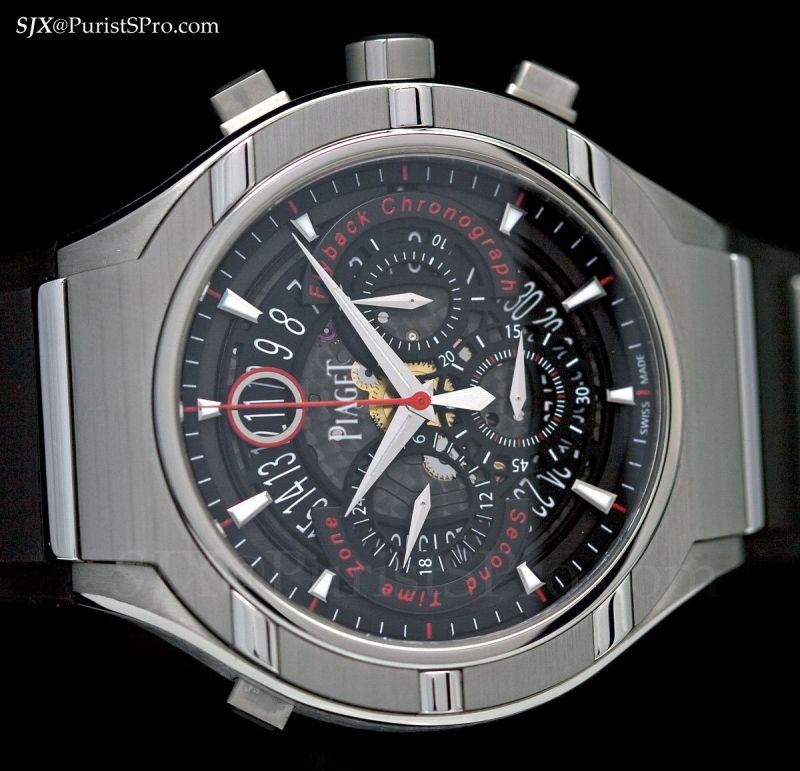
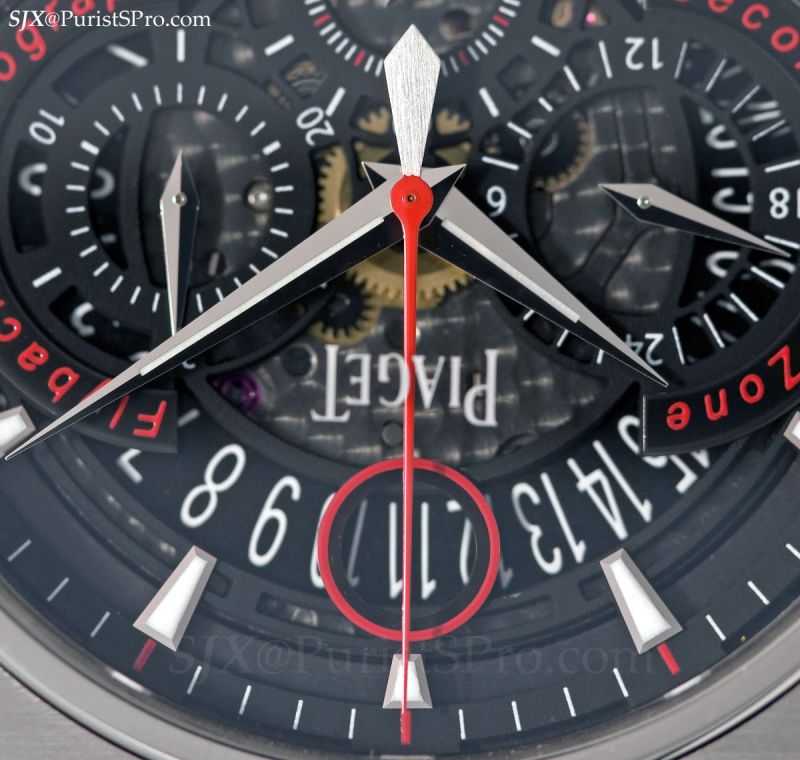
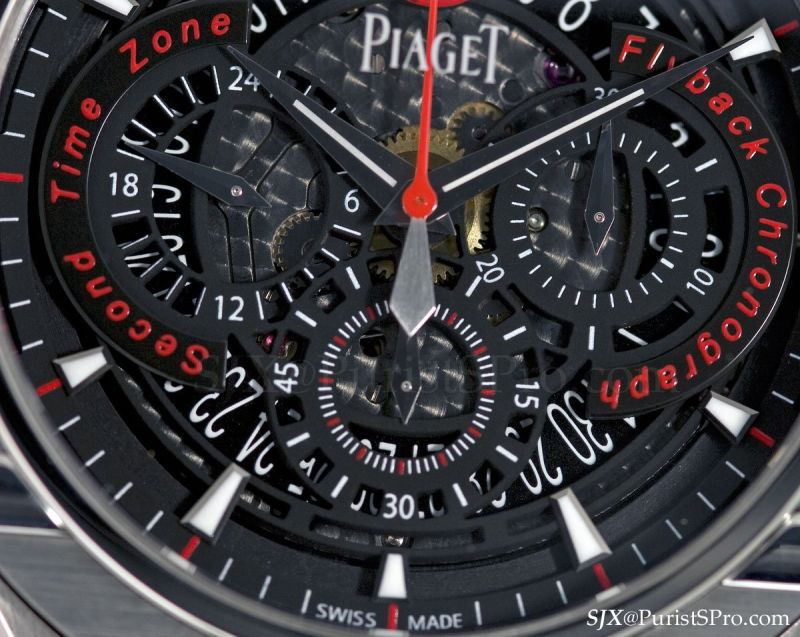
The case is titanium with horizontal steel inserts as before. Both versions use the same in-house movements first seen in last year’s FortyFive. Attractive as it is, this variant of the FortyFive is a limited edition.
Polo FortyFive Automatic

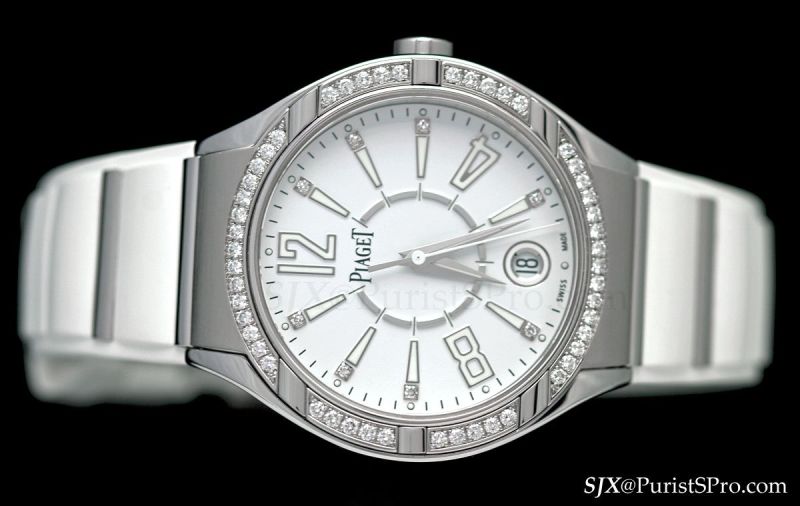
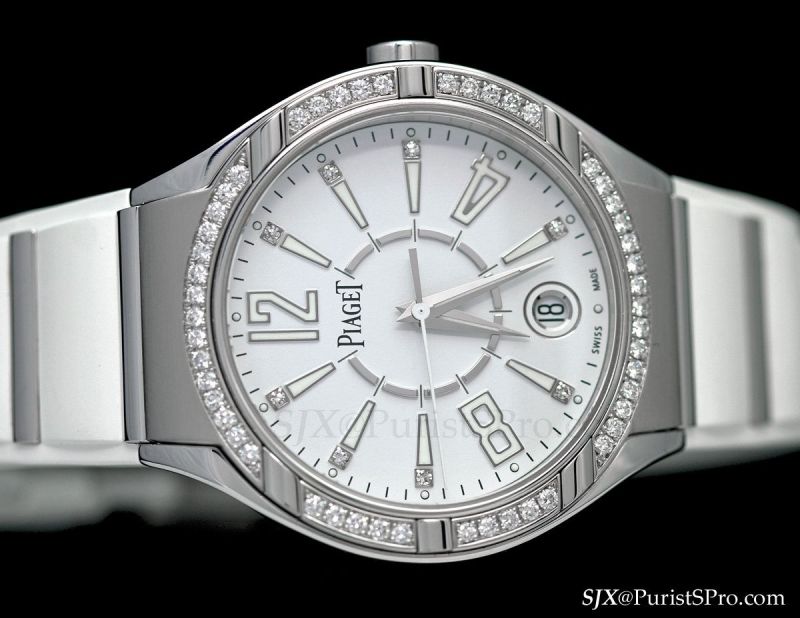
Ladies now have the option of the sports Polo in a smaller size in various iterations, including the ubiquitous white-with-diamonds combination shown below.
Two new models were added to the Emperador Coussin line, though both are variations of the moon phase model launched last year. The first features a cloisonné enamel dial, depicting Asia and the Middle East in this case, but presumably any region the customer desires. This is a beautifully crafted and attractive watch but the hands are disturbingly unsophisticated.
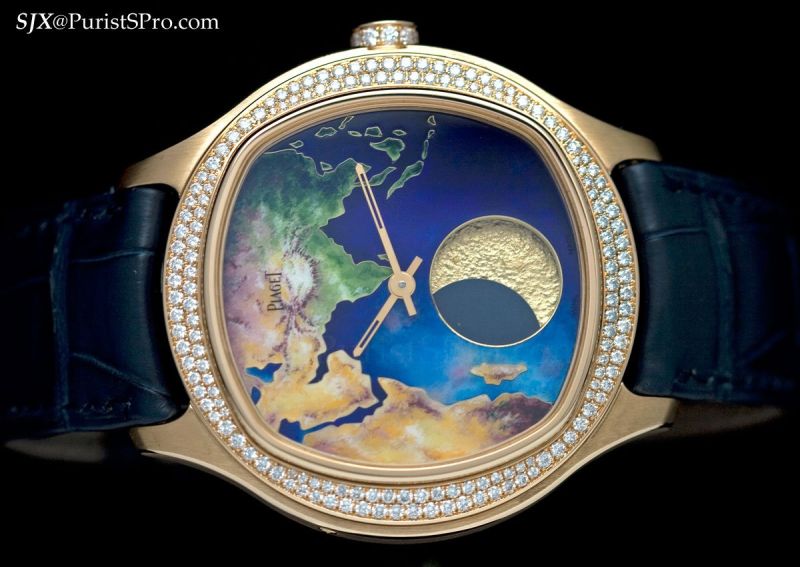
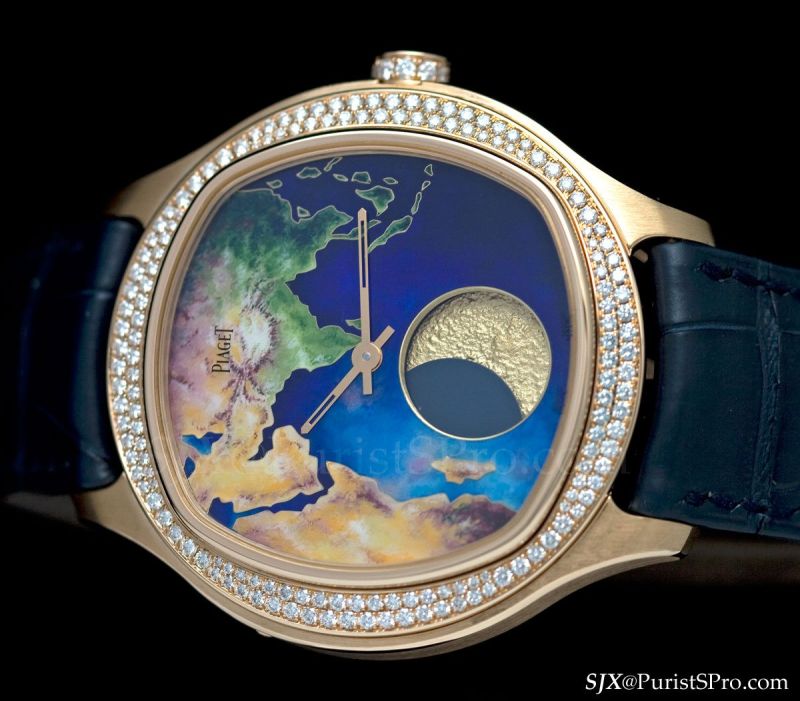
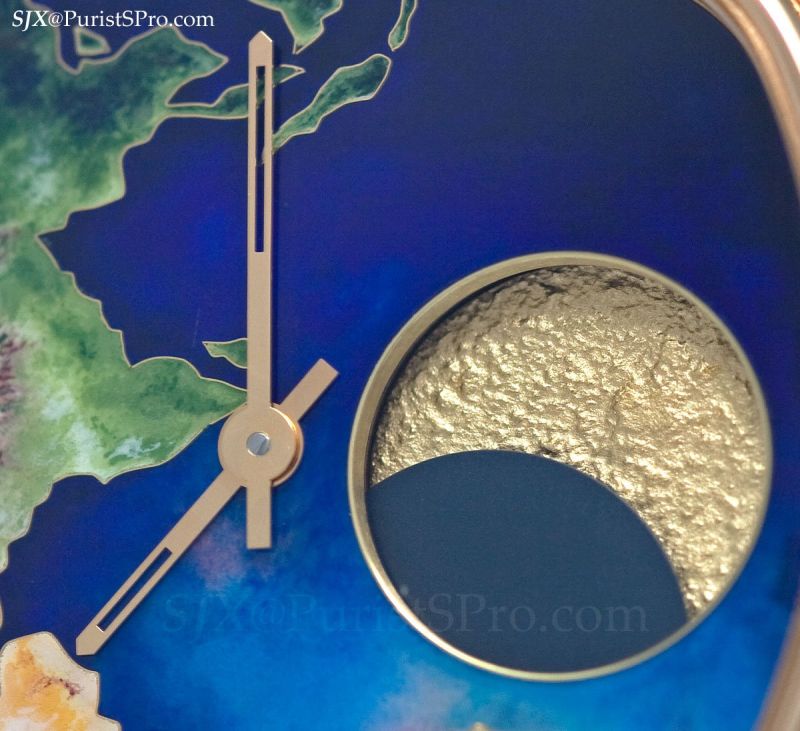
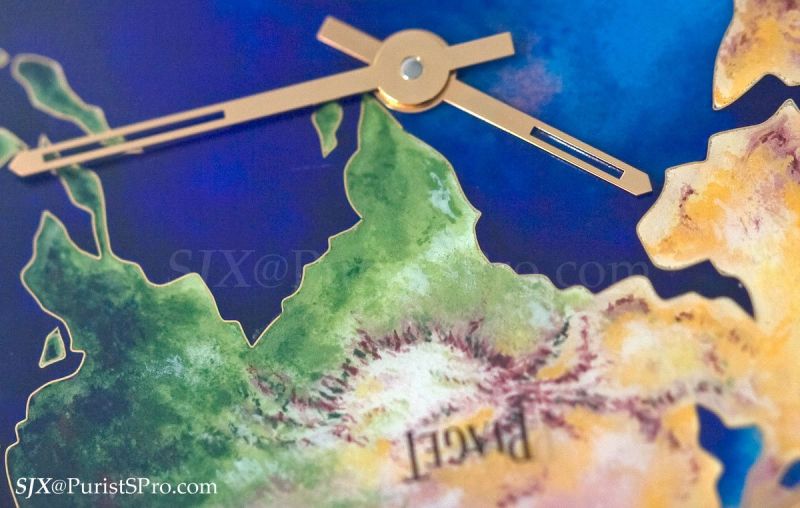
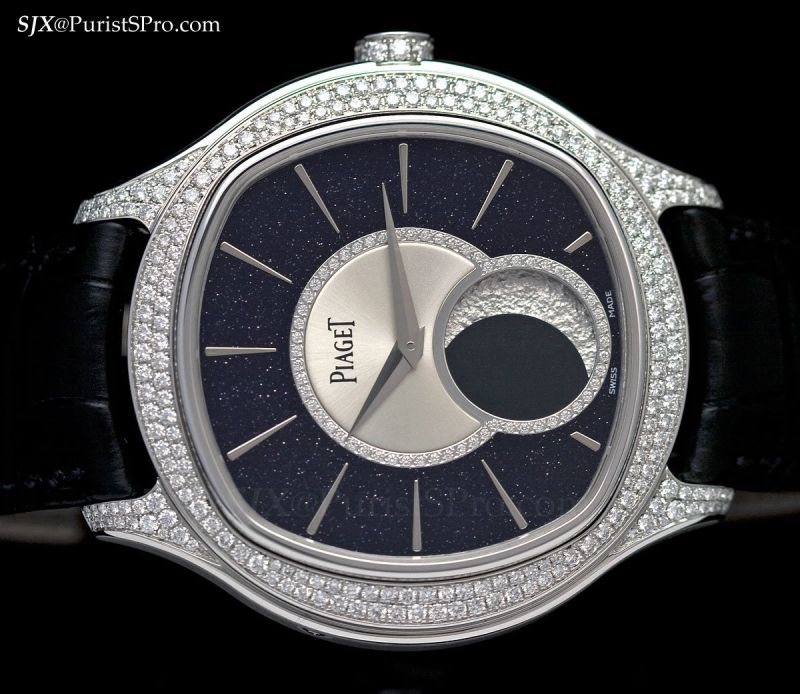
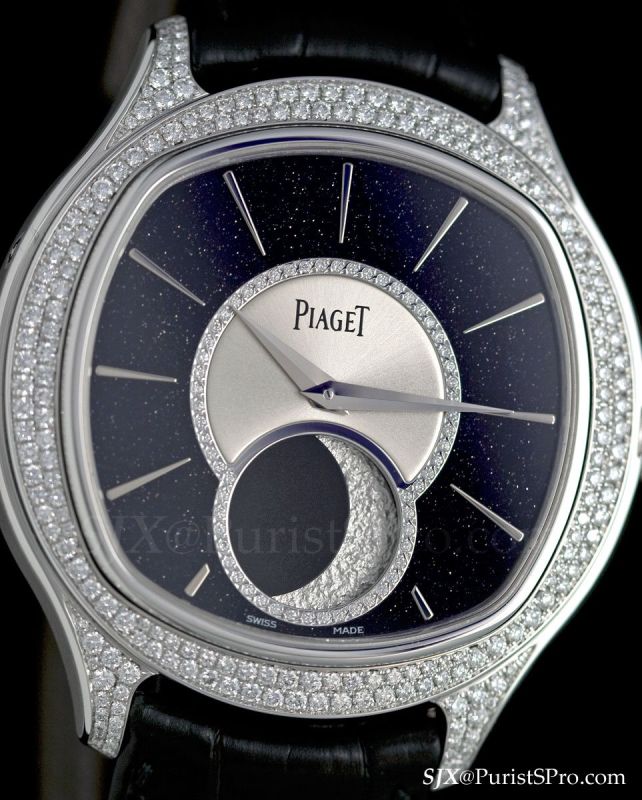
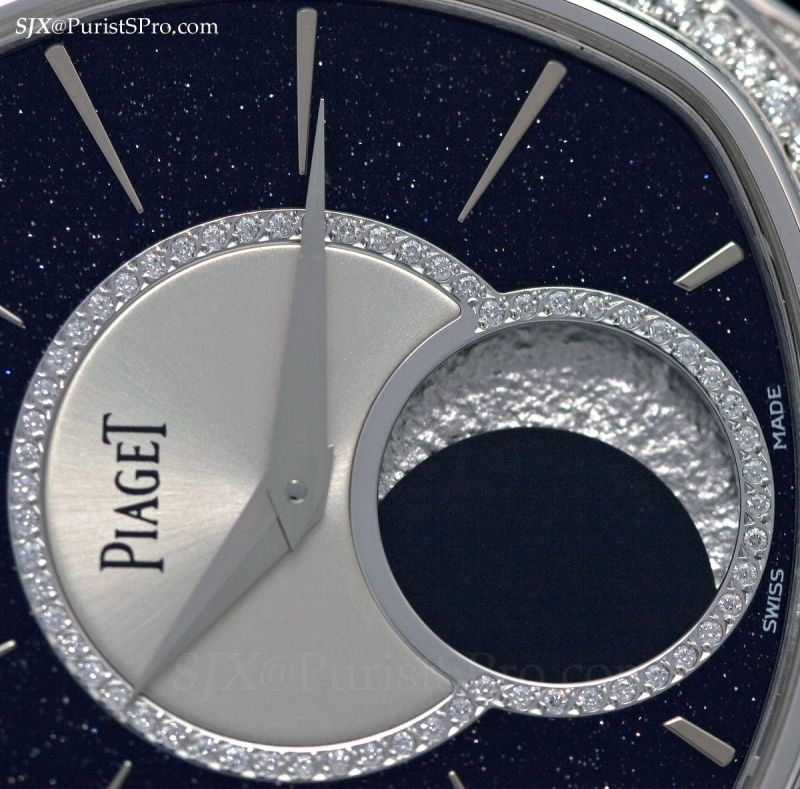
The second moon phase features a sparkling aventurine dial that complements the moon phase perfectly. Both this and the cloisonné dial moon phase possess such fine-looking dials that I didn’t initially notice the diamonds set on the case.
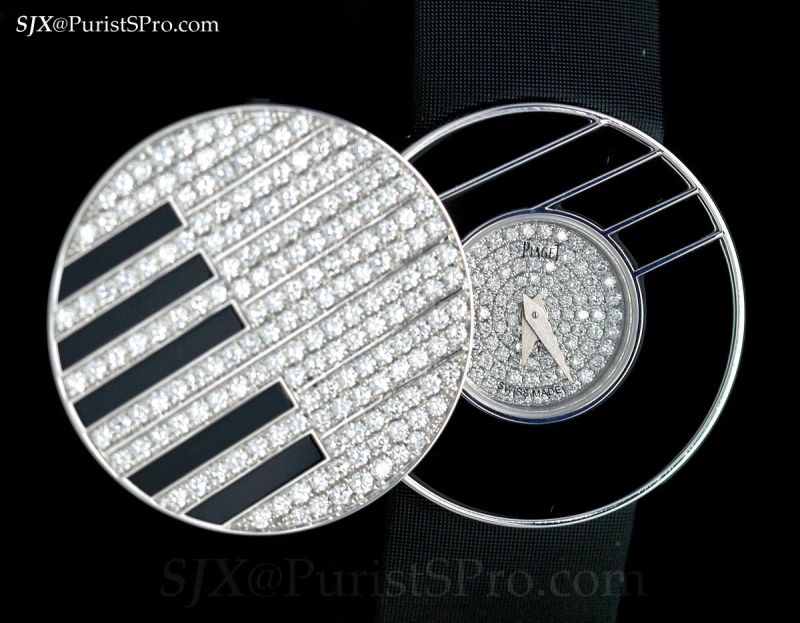
Lastly come a few ladies watches. The first pair is two from the new Limelight Jazz Party collection, a range of watches and jewellery with a musical theme. Both the watches shown are ‘secret’ watches, with dials that are revealed only by sliding away a cover. The second watch is impressively set with sizeable black and white diamonds and would look stunning on a lady’s wrist.
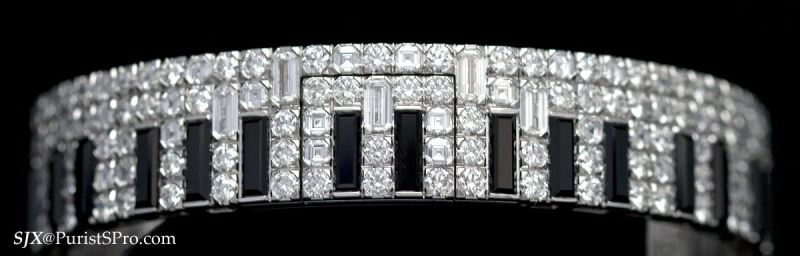
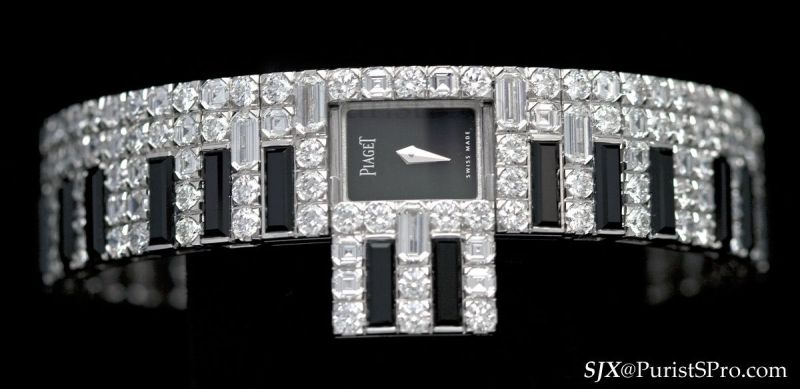
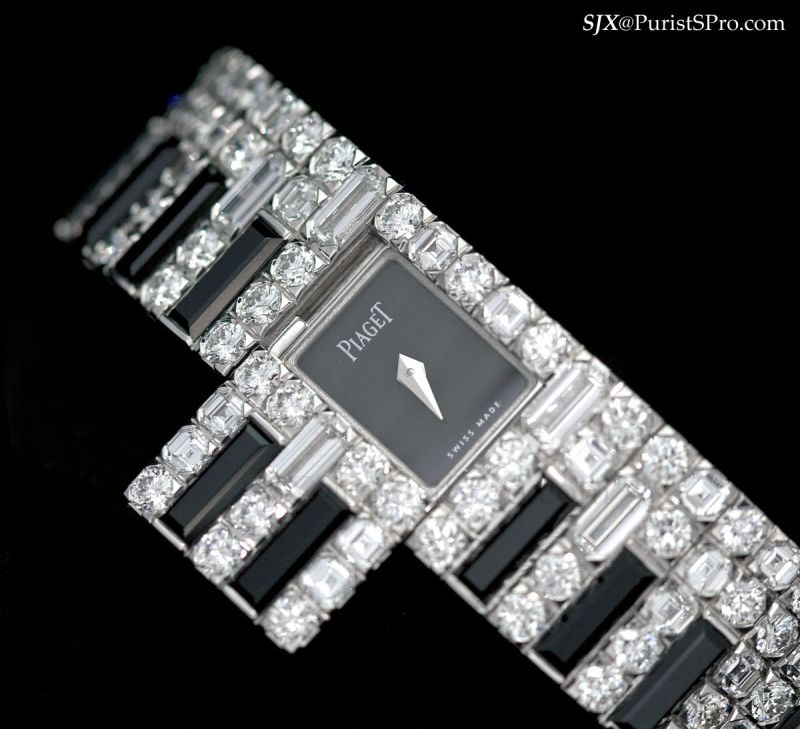
The Magic Hour, a clever watch with an oval rotating bezel that gives the watch three different look (bezel vertical, diagonal and horizontal) is now available set with more diamonds than before.
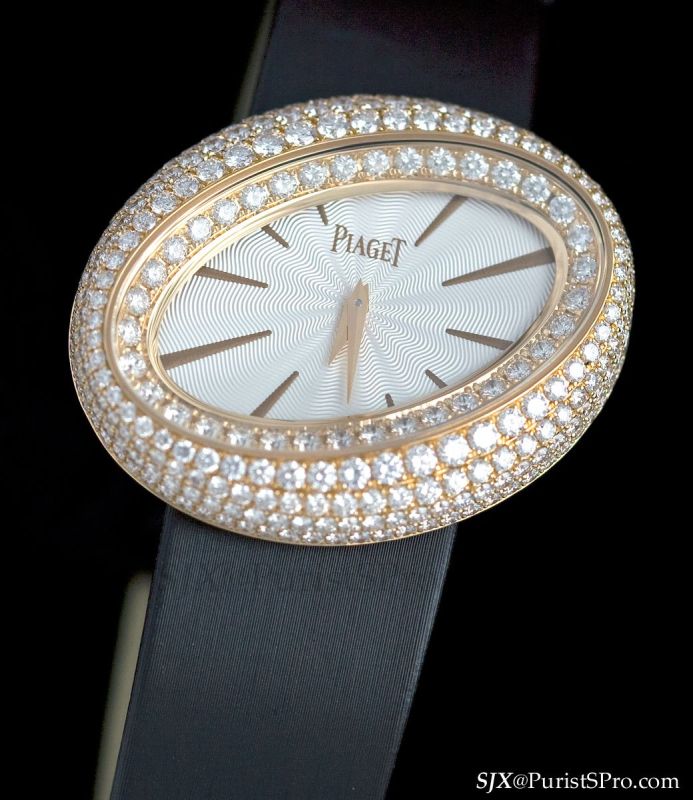
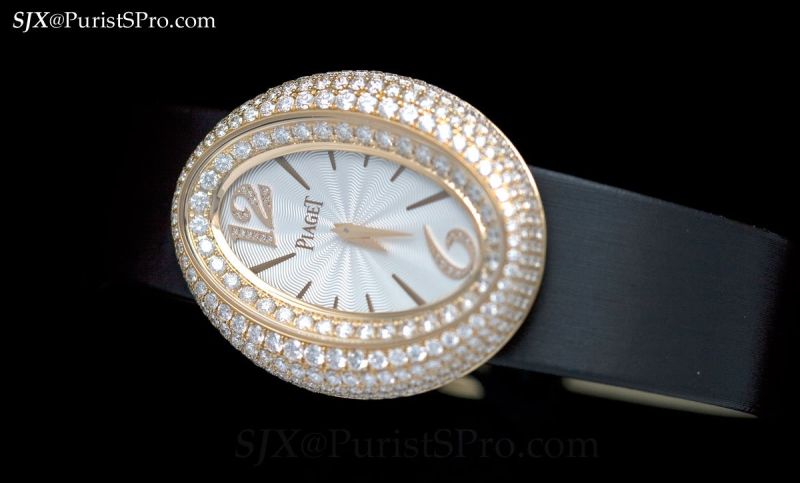

I agree with the sentiments about the new Moon
face Emperador Coussin watches with cloisonné enamel dial; the hands are incongruous with the excellent enamel work. I can see the point of having slots to minimise obstruction of the dial, but the they are not the most refined :-(
More importantly, thank you for reporting on them, in the first place, because I did not know they existed ! I was aware of all the other novelties but the enamel pieces slipped me by.
It goes to show that in our fast paced Internet-world: "You snooze -- you lose!"
MTF

Hi, SJX!
I keep meaning to write you and let you know how wonderful this Piaget report is (Honestly, all your reportage for SIHH 2010 has been amazing!). The photos really do the watches justice. Piaget had a fantastic showing this year IMO. There are so many romantic, dazzling pieces in the collection from SIHH. I particularly love the Gem-set Skeleton, 43mm regular production Altiplano, new Double Jeu, and the new FortyFive Chrono.
Cheers,
Daos
SIHH 2010: Richard Mille

Along with Greubel Forsey, Richard Mille was one of the two new exhibitors at SIHH this year. Audemars Piguet is a long time SIHH exhibitor, being there since 1999. RM is connected to AP via the latter’s minority stake in RM, as well as the fact that all of RM’s complications are made by Renaud et Papi.
As is routine, RM introduced several pricey tourbillons along with an entry level automatic, interestingly there was also a particular watch shown but not publicised, that one will be unveiled later this year. One of the watches presented, the remarkable RM018 Hommage à Boucheron, was announced a few years but only recently completed. This movement of the RM018 uses wheels made from semi-precious stone, the cutting and polishing of which have delayed the delivery of this watch for two years.
Two specimens were on hand at SIHH, one with onyx wheels and the other Tiger Eye. The depth and variegation of colour of the stones is superb. 30 of these will be made, each with a different material for the wheels, making each one a piece unique. This is an incredible looking watch; it is jewellery taken to a whole new level.
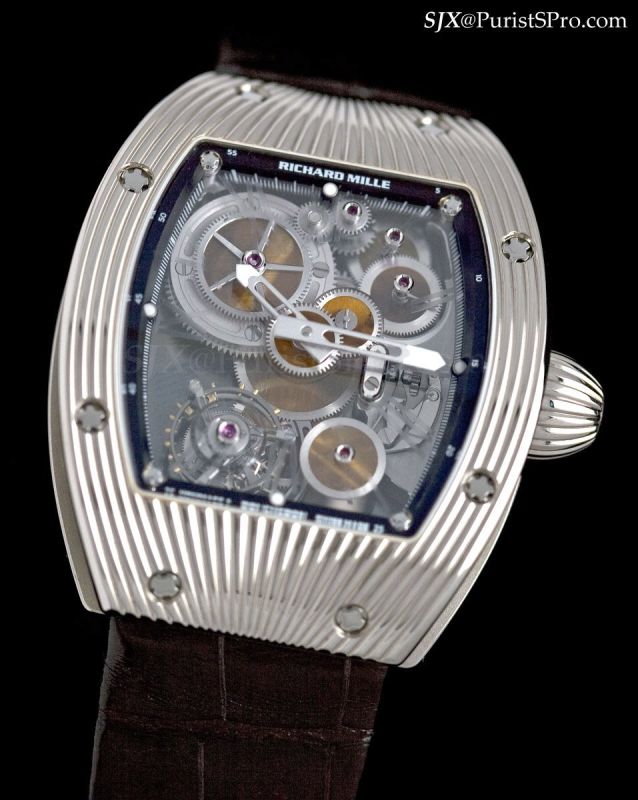
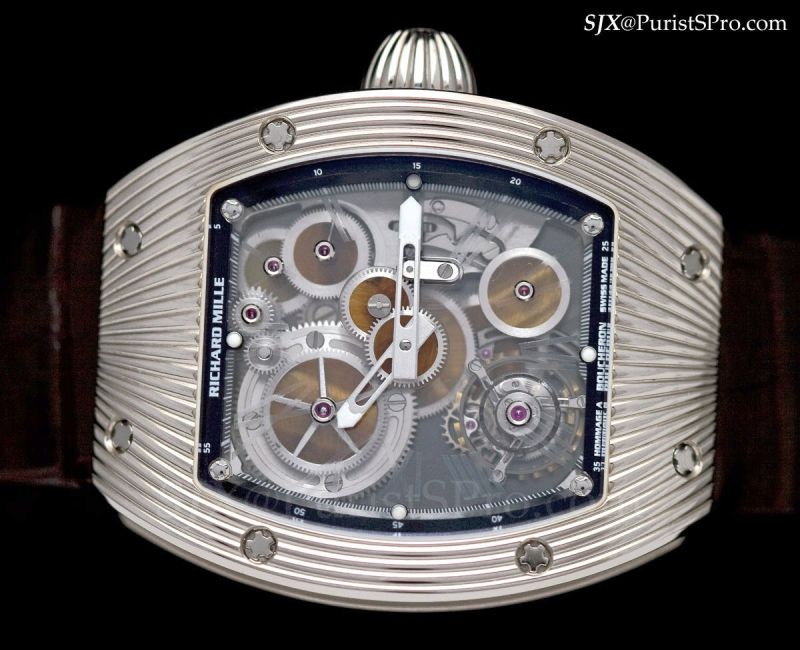
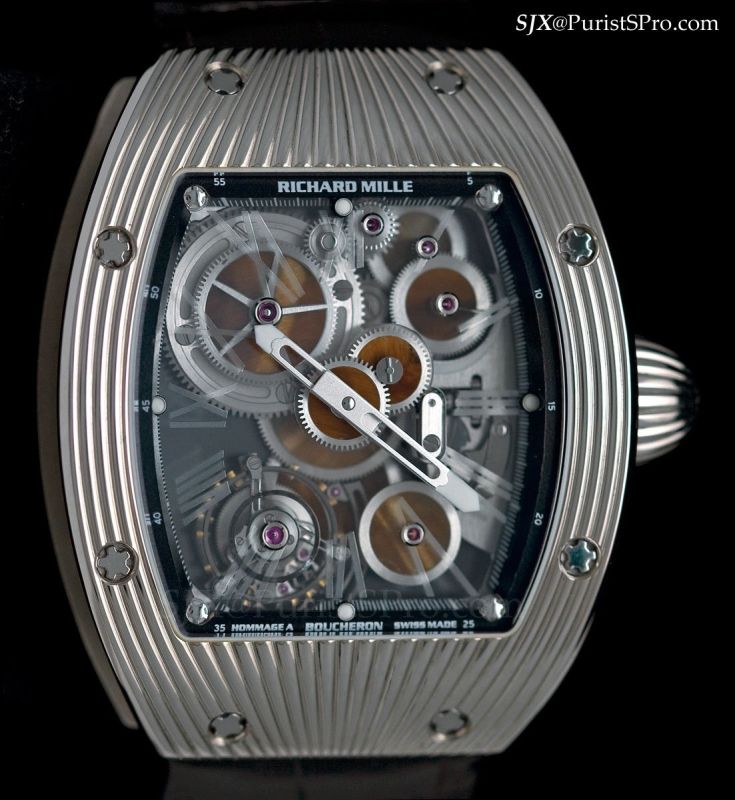
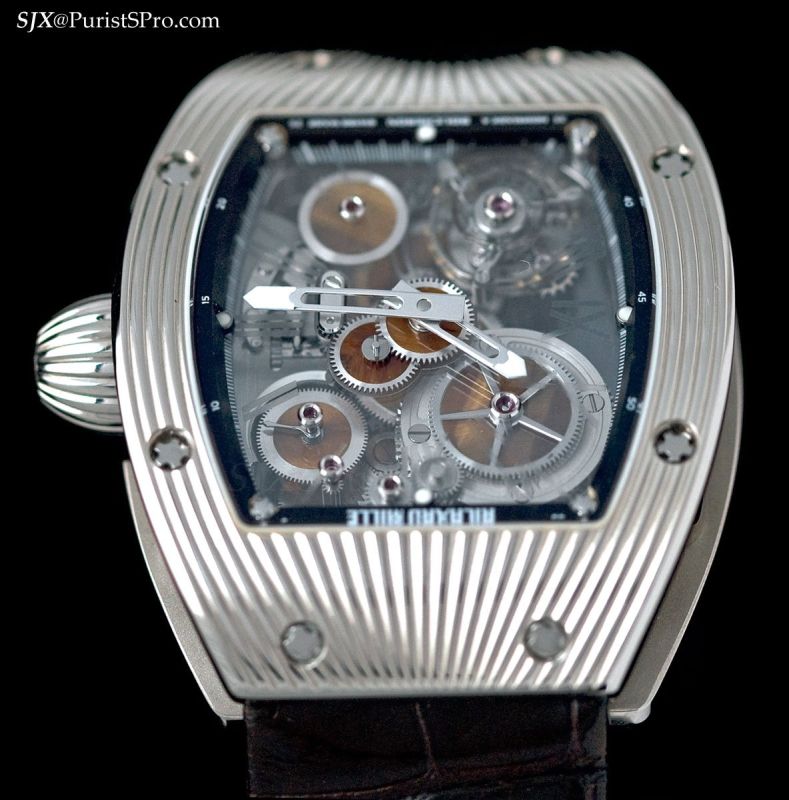
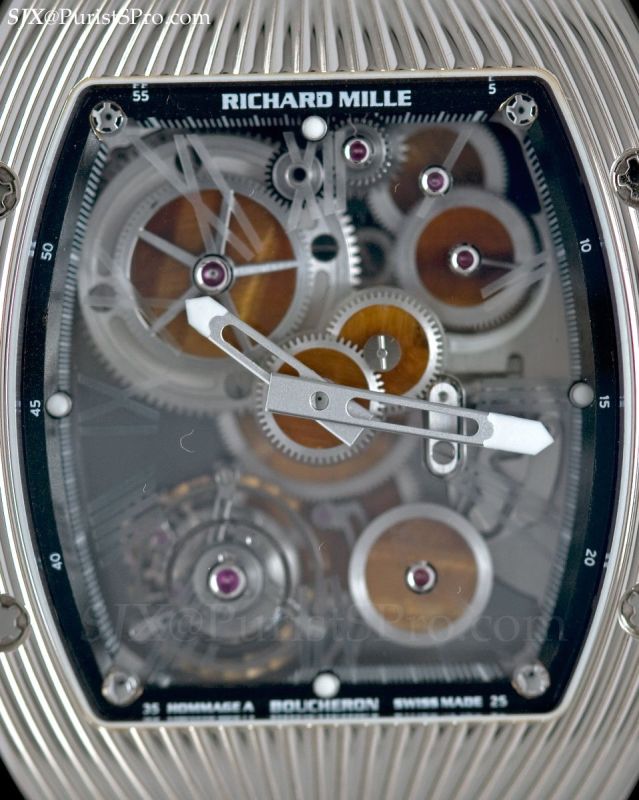
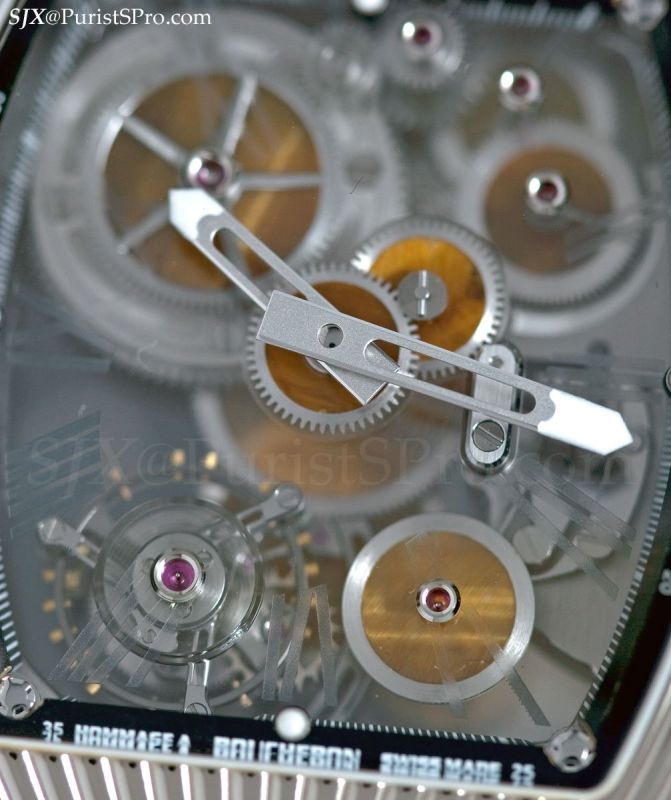
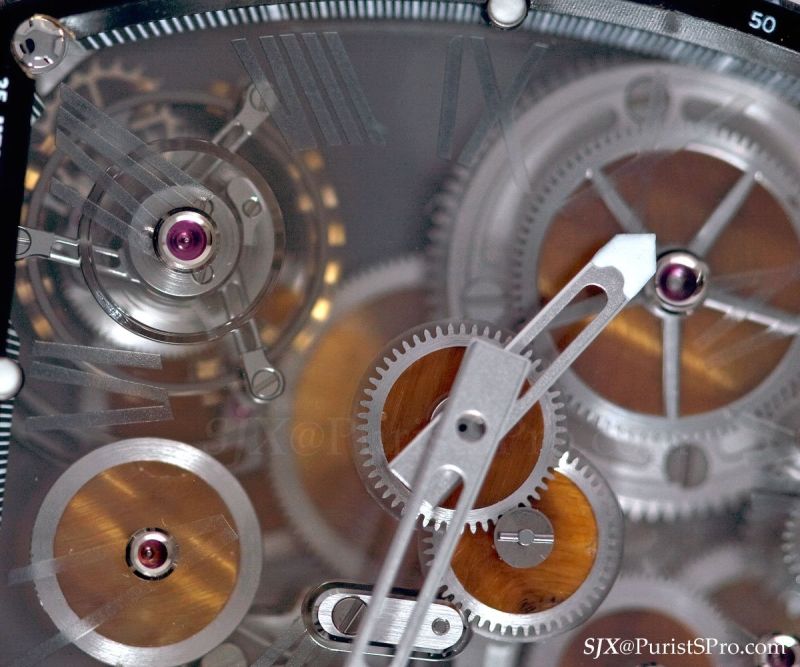
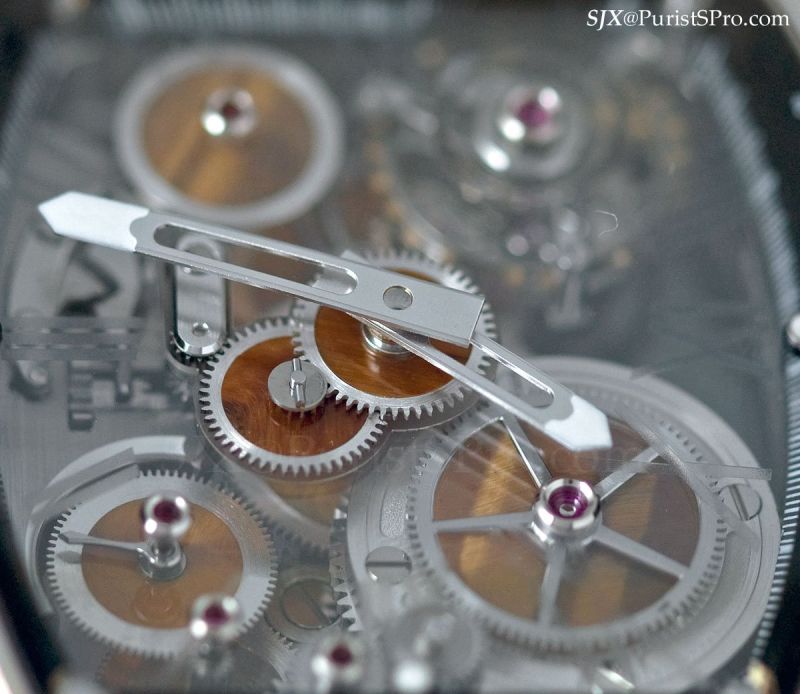
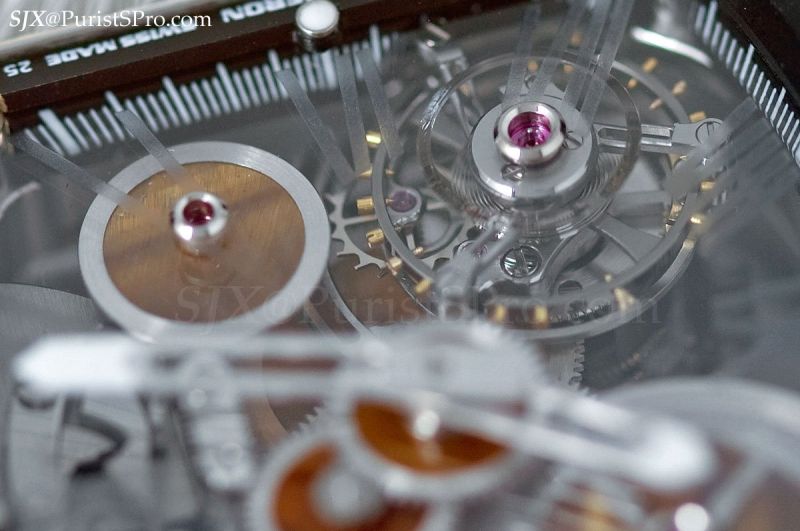
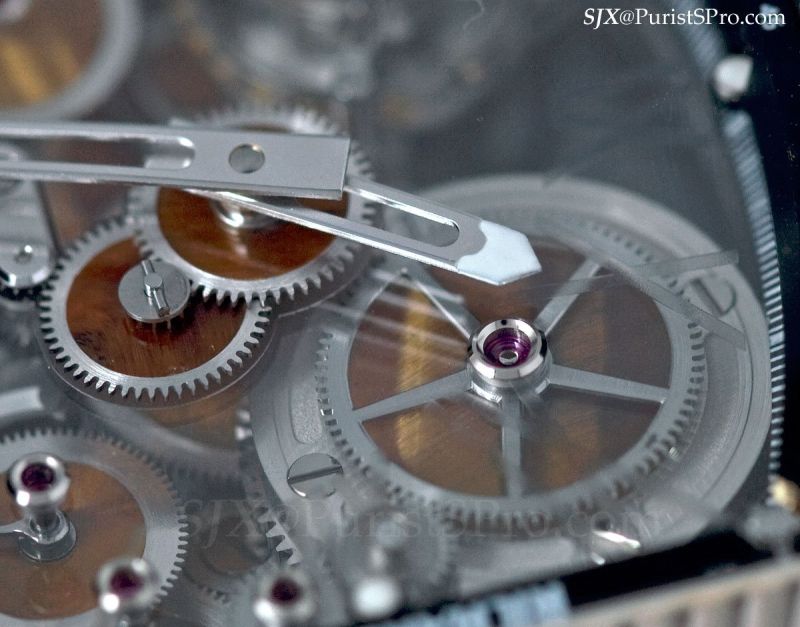
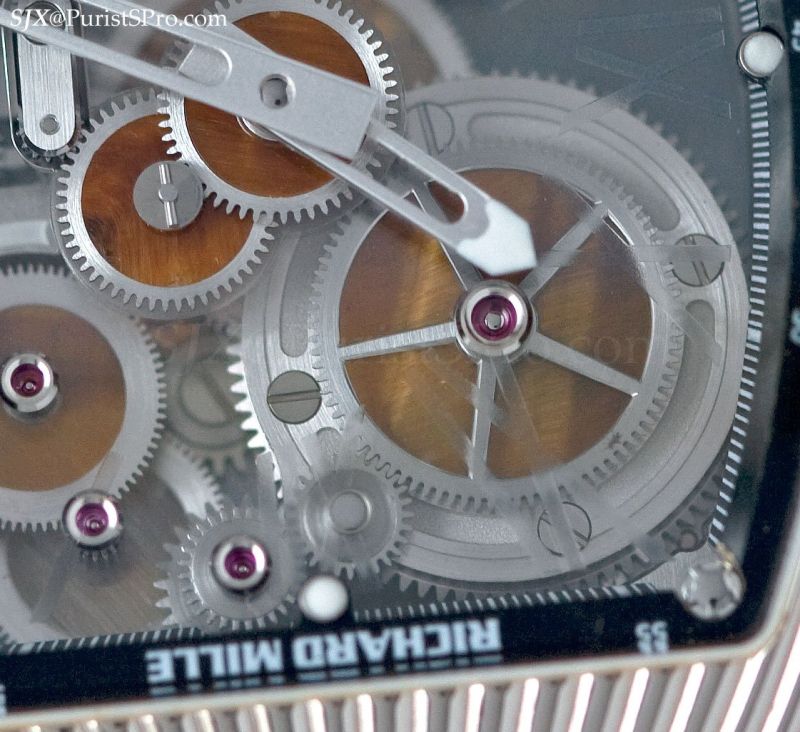
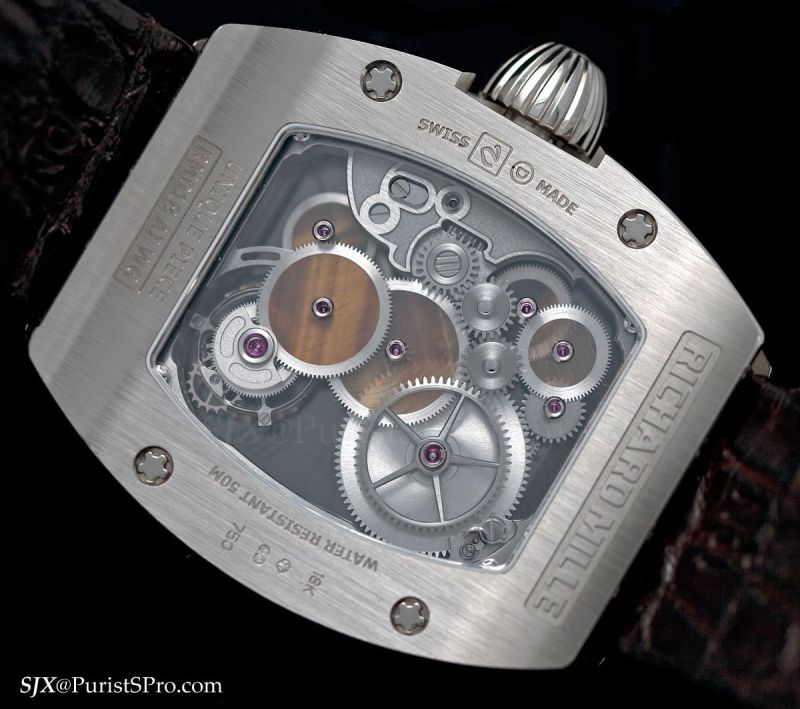
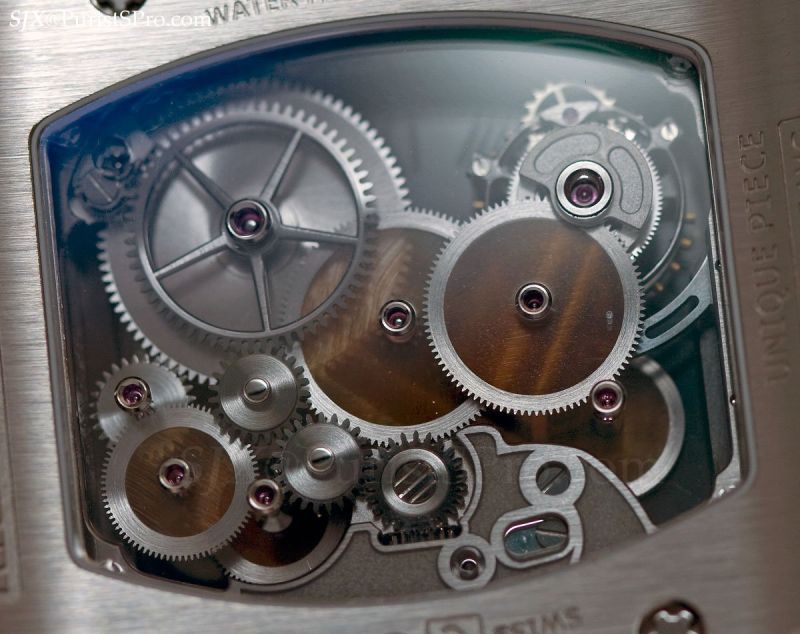
Some time ago an industry executive who had heard of the watch told me that RM would never be able to get this watch to work, but Richard Mille, along with Renaud et Papi, triumph again. This triumph comes at a cost of course, which I believe is in the region of a million francs – that kind of pricing is a triumph in itself.
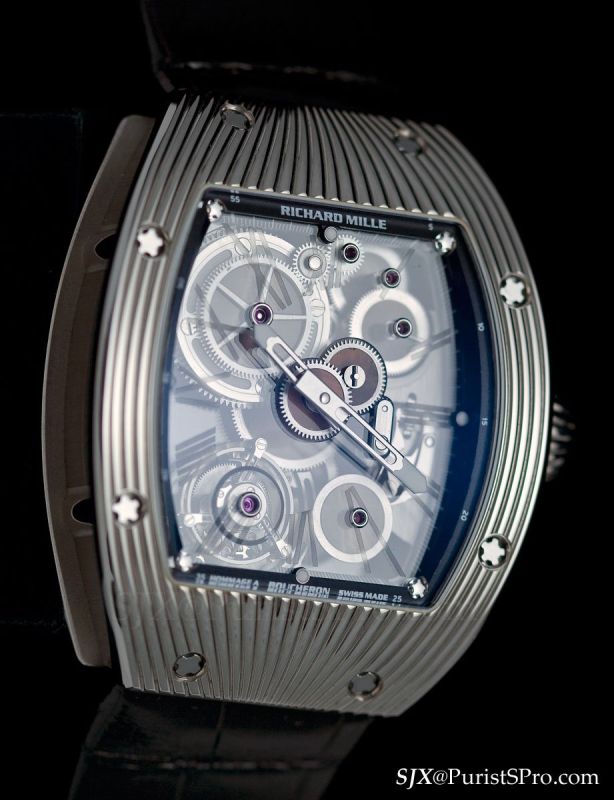
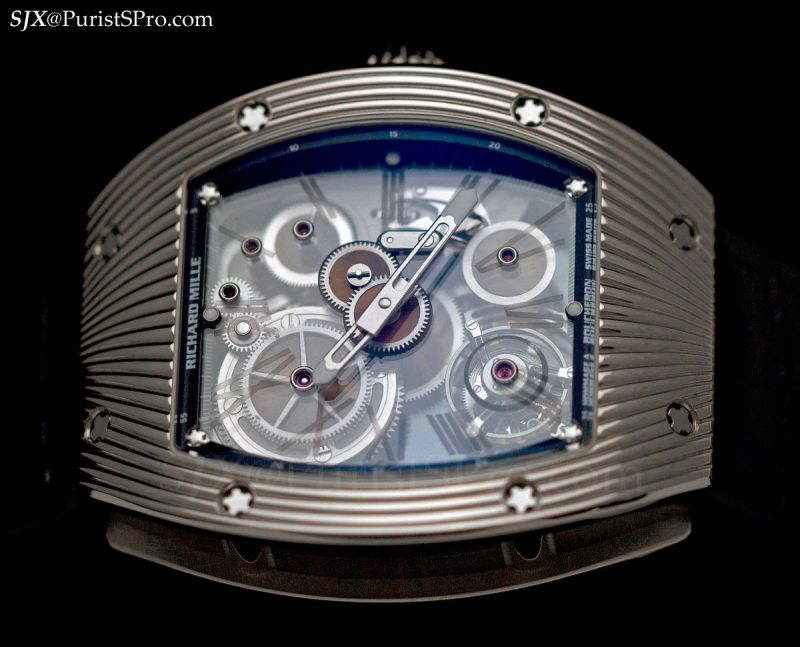
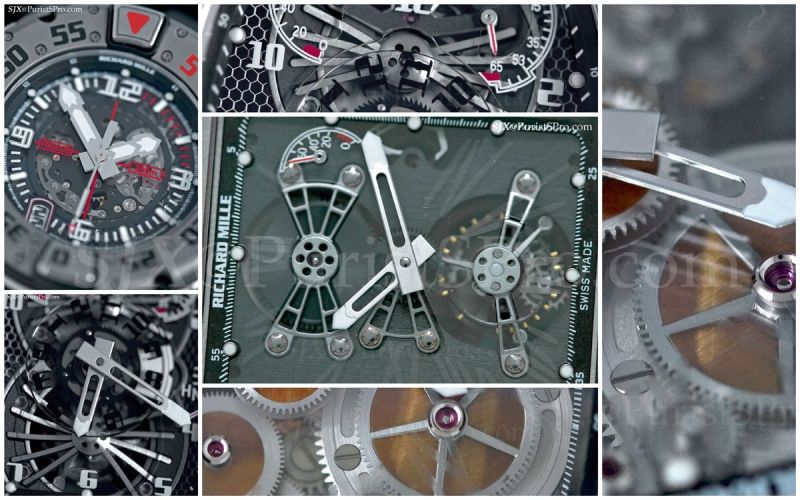
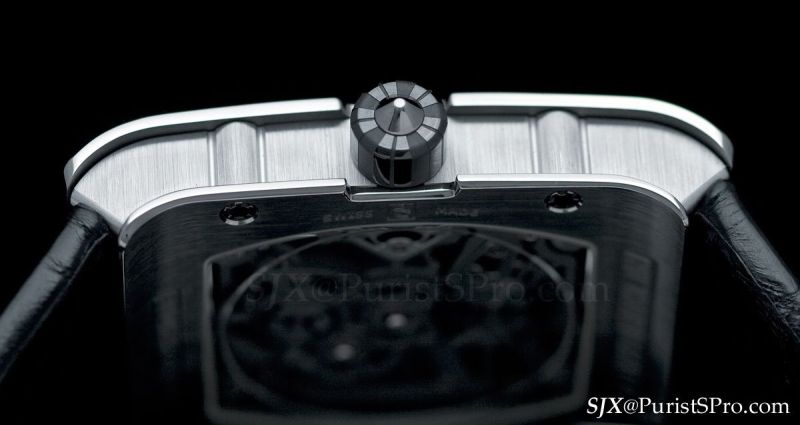
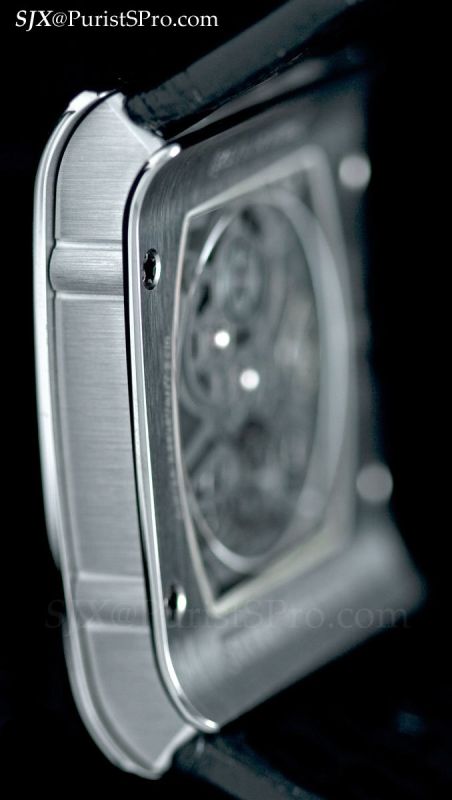
The primary new movement for 2010 is the ultra-thin tourbillon found in the RM017. Housed in a rectangular case, and ostensibly a dress watch, the watch measures a mere 8.7 mm at its thickest, with a movement only 4.65 mm high. The movement does not seem to have any unique construction details not found in other RM tourbillons, though over on the front the bridges holding the barrel and tourbillon cage are recessed into the dial, bringing it exceptionally close to the crystal.
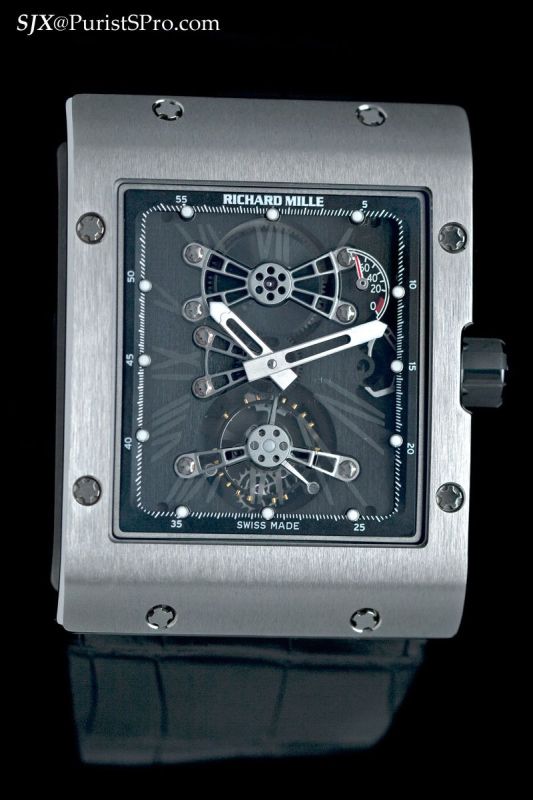
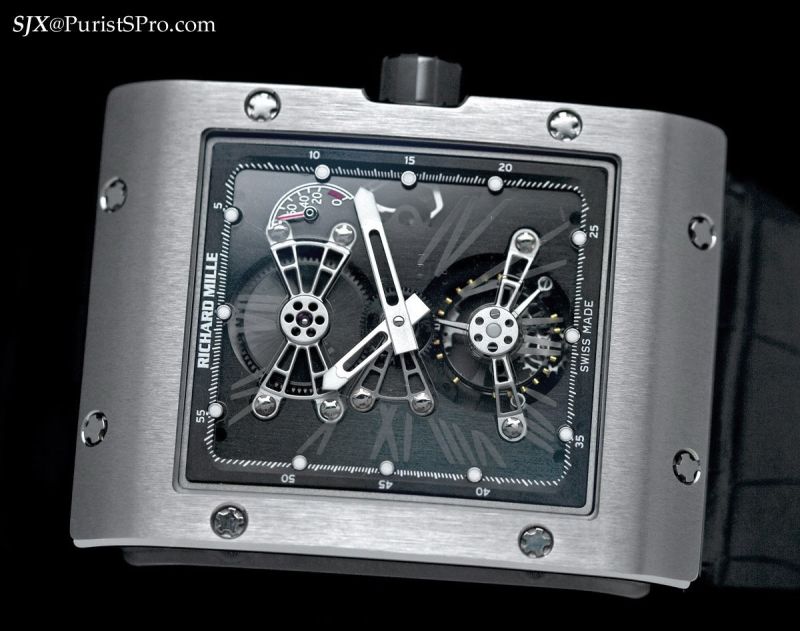
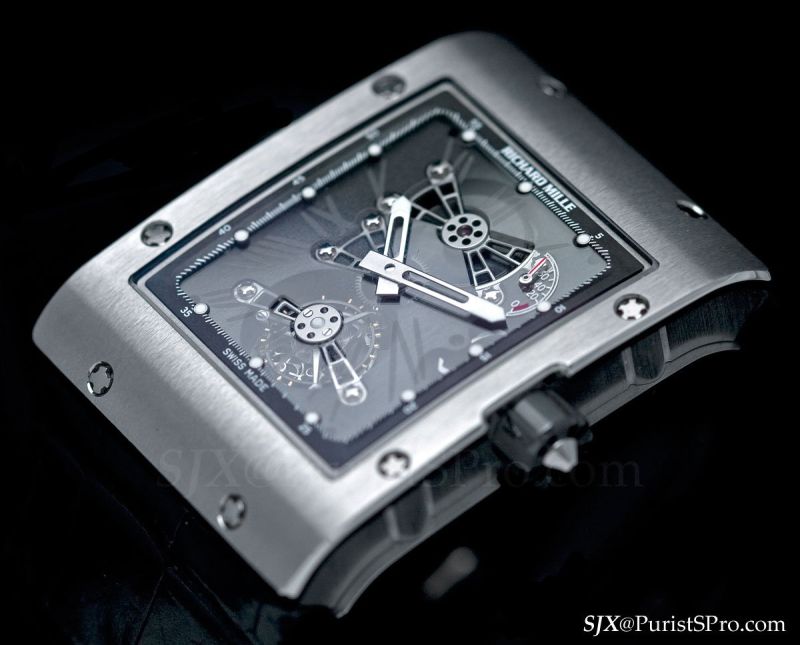
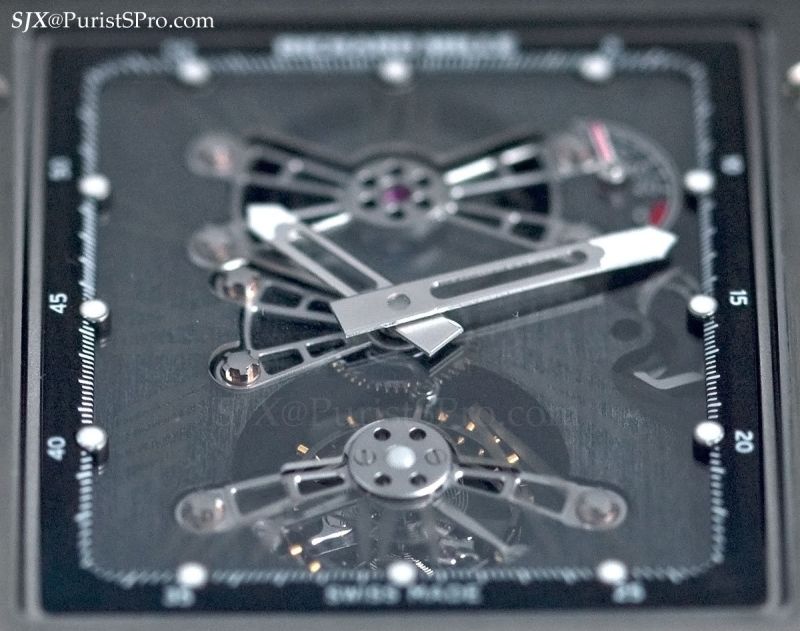
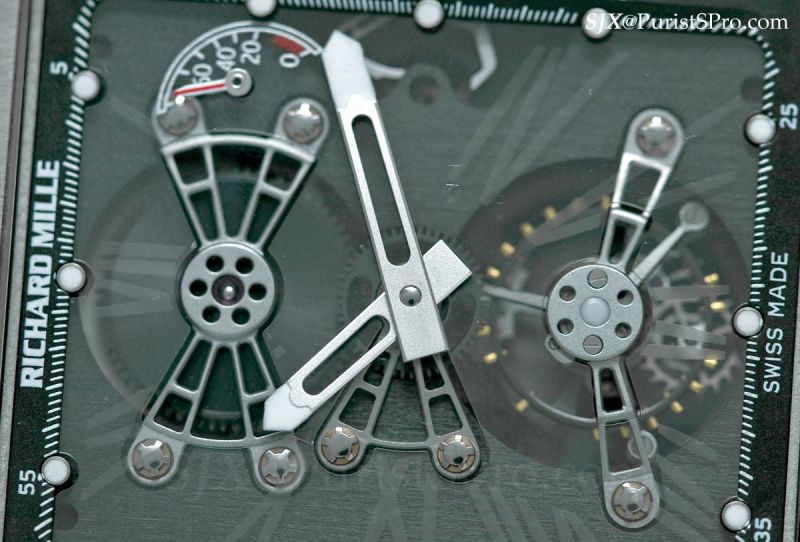
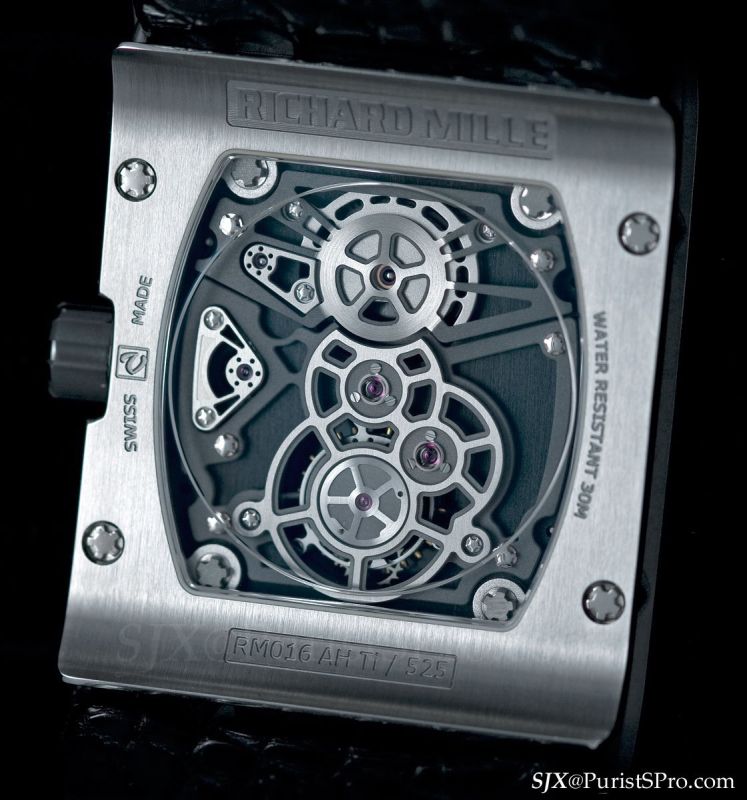
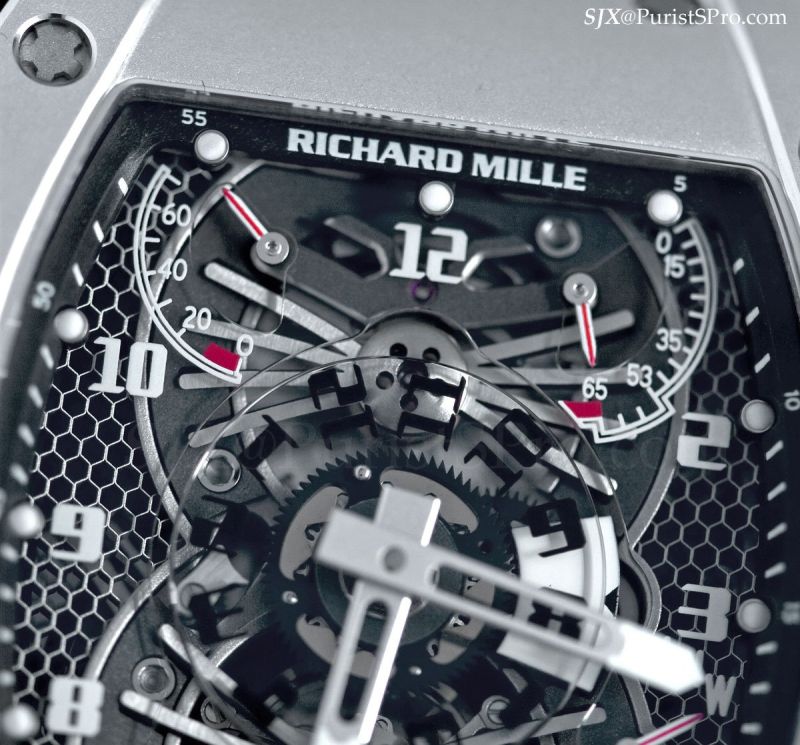
Another new tourbillon is the RM022 Aerodyne. This is the GMT version of the RM021 Aerodyne tourbillon, which as its name suggests is inspired by aviation. A sapphire disc co-axial with the hour and minute hands displays the second time zone, with the button at nine advancing it by an hour with each push.
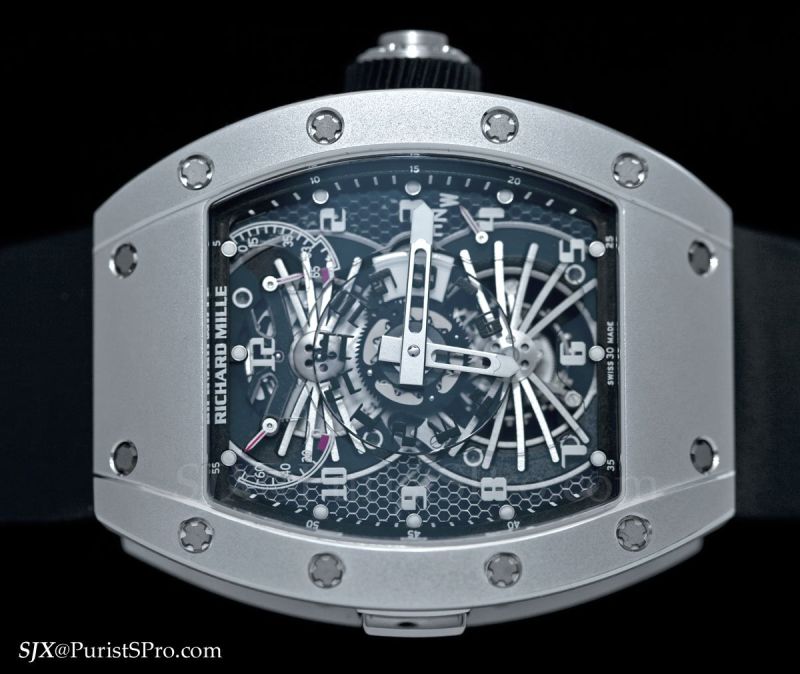
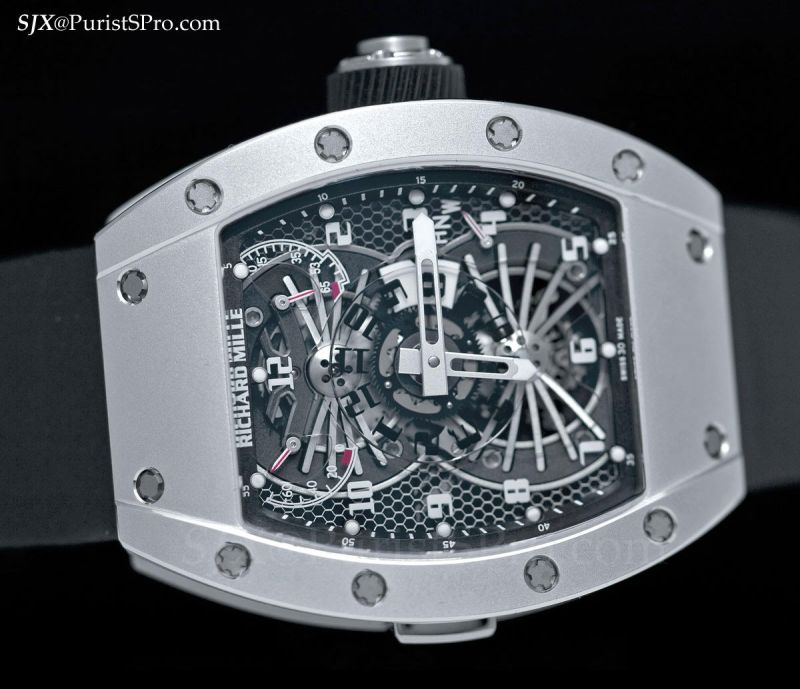
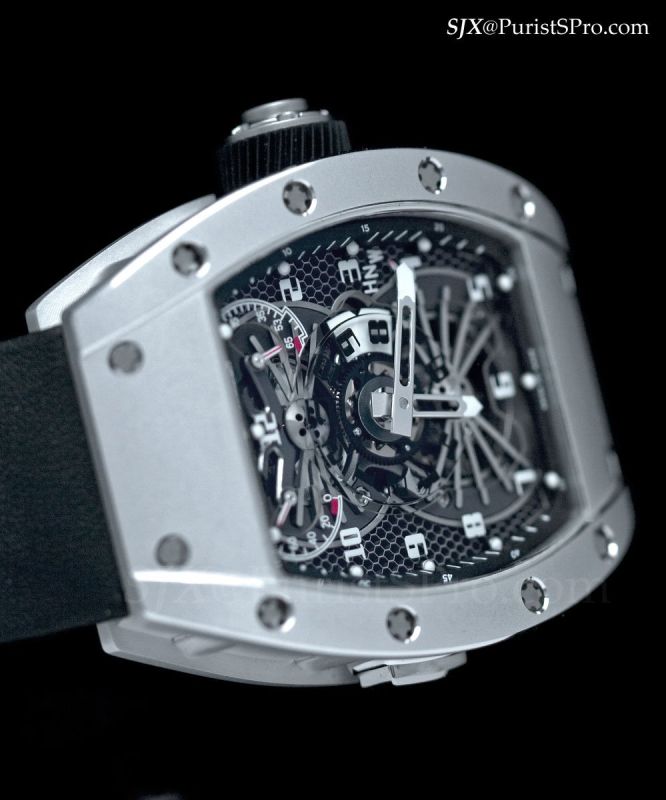
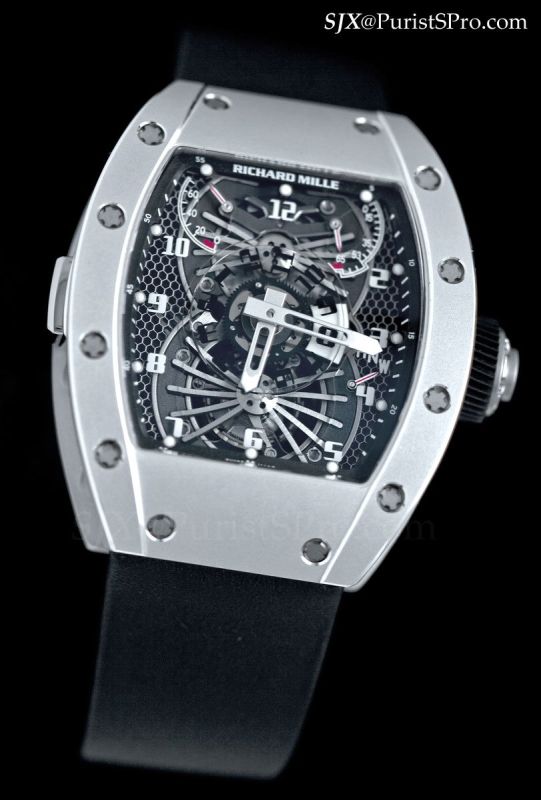
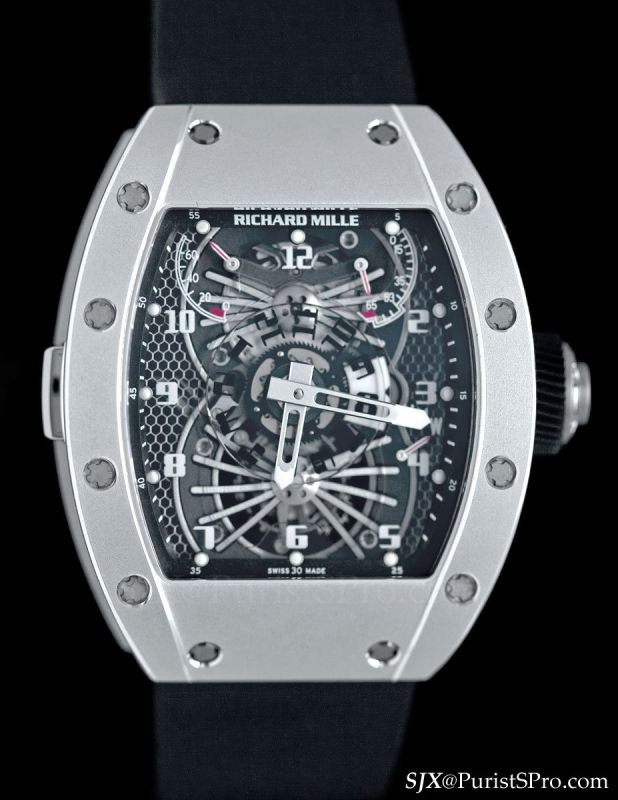
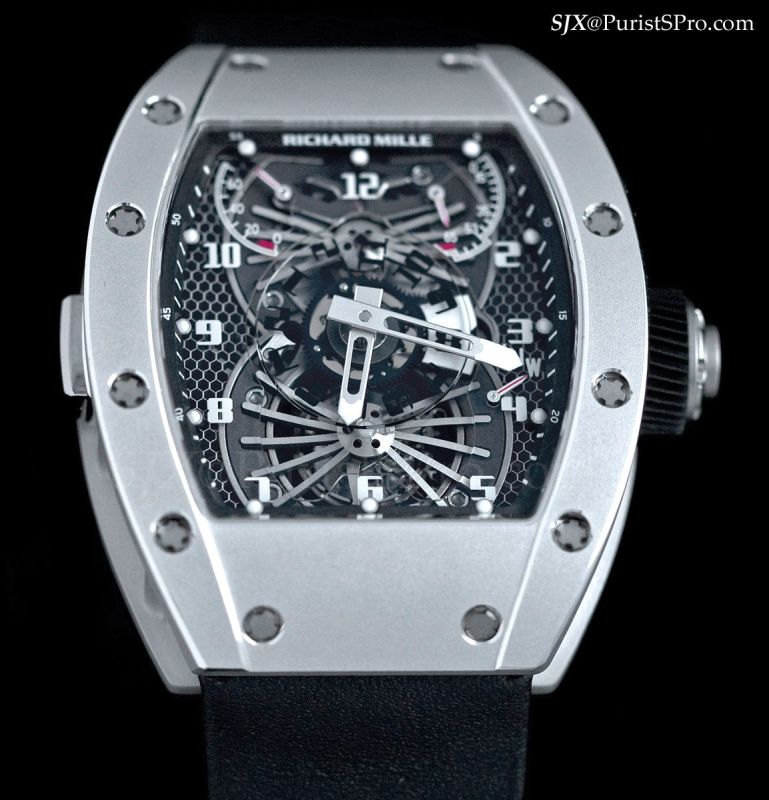
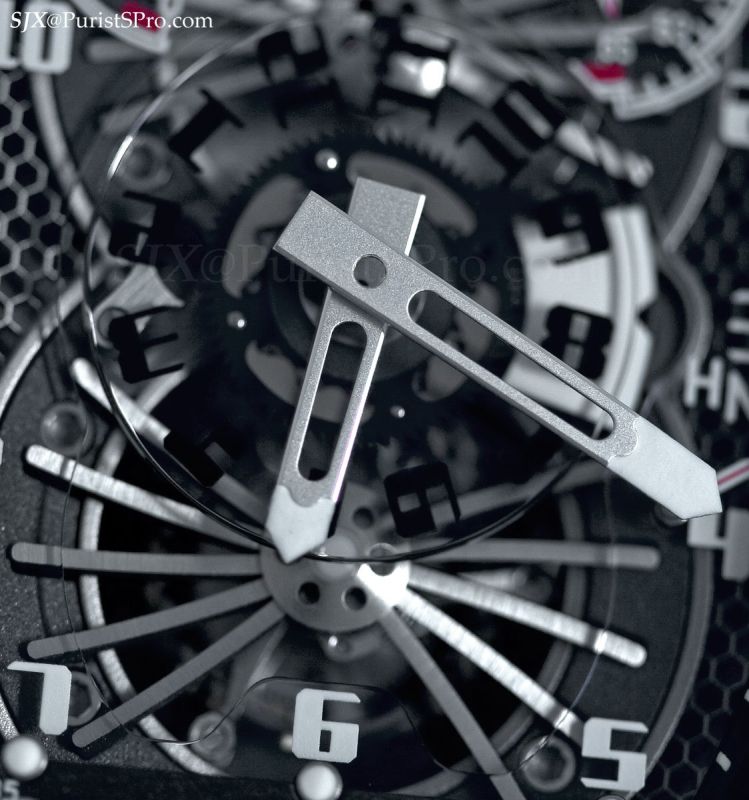
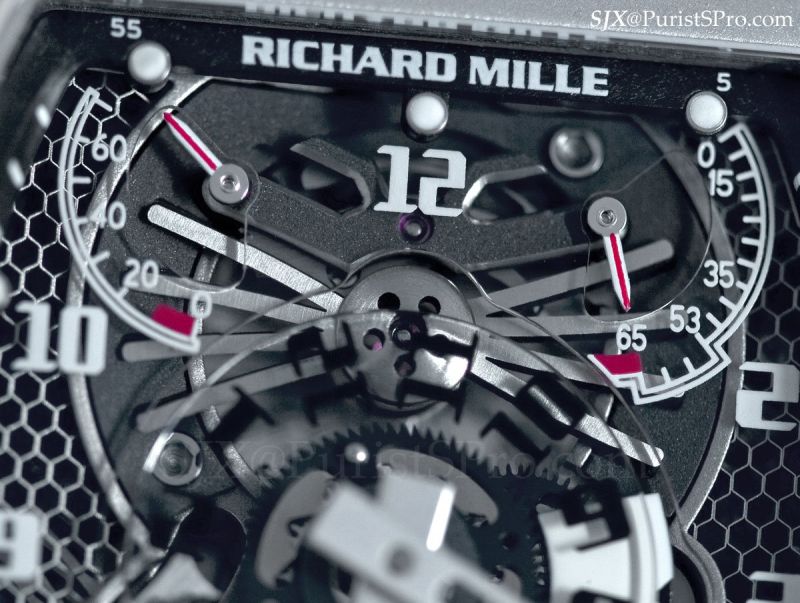
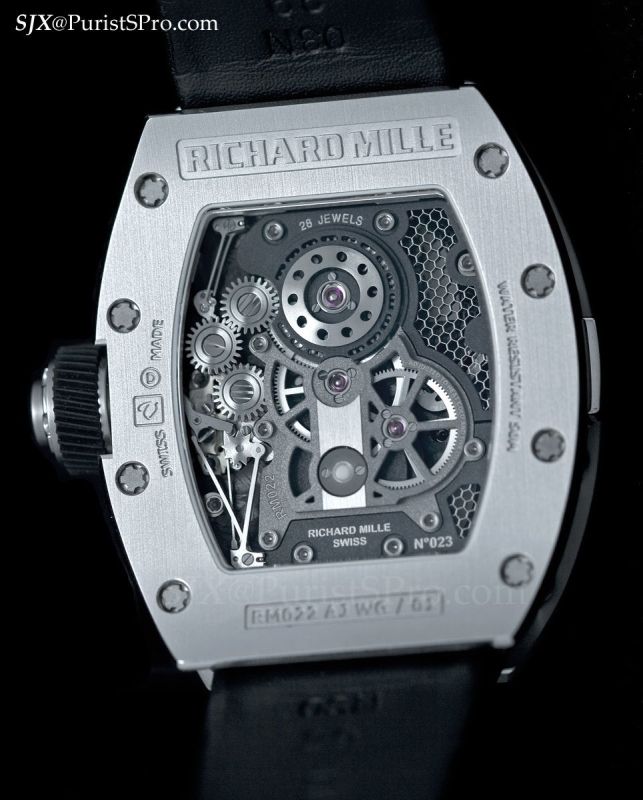
The base plate of this watch is fabricated from a honeycomb patterned titanium aluminide alloy with a carbon fibre central portion that holds the barrel and tourbillon bridges on the front. This alloy is light and very strong, and consequently has use in aviation, including as a material for turbines. Obviously this is overkill for a base plate in a watch movement but it looks improbably attractive and entirely different from the automobile-inspired RM watches.
The concluding watch is the RM028, an automatic, 300 m dive watch. This is the mass market version of the astronomically expensive and unbelievably large RM028 diver’s tourbillon chronograph. At 47 mm wide, the RM028 is a massive watch still, but smaller than its bigger brother. The proportions (wide bezel, small dial) and design elements (the sloped bezel and a giant crown) also make it look less large than it actually is.
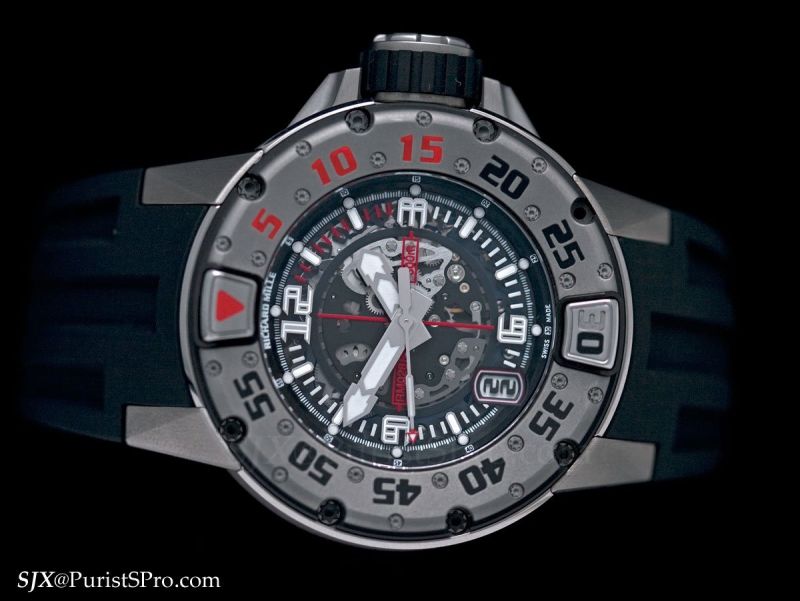
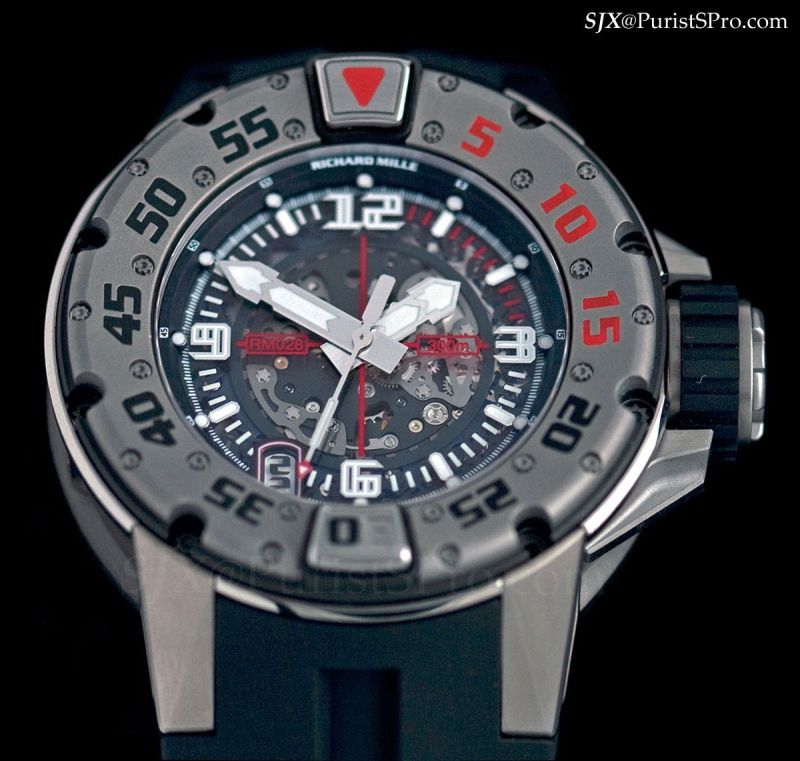
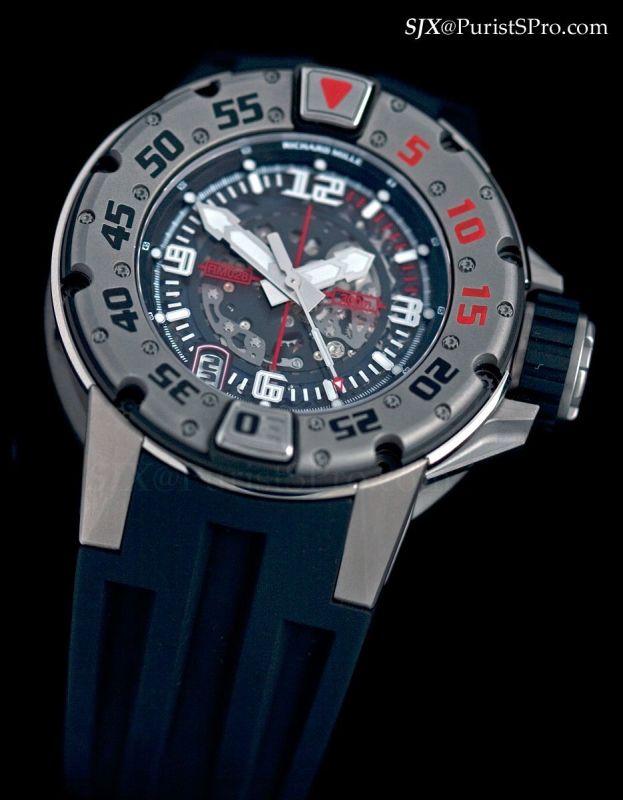
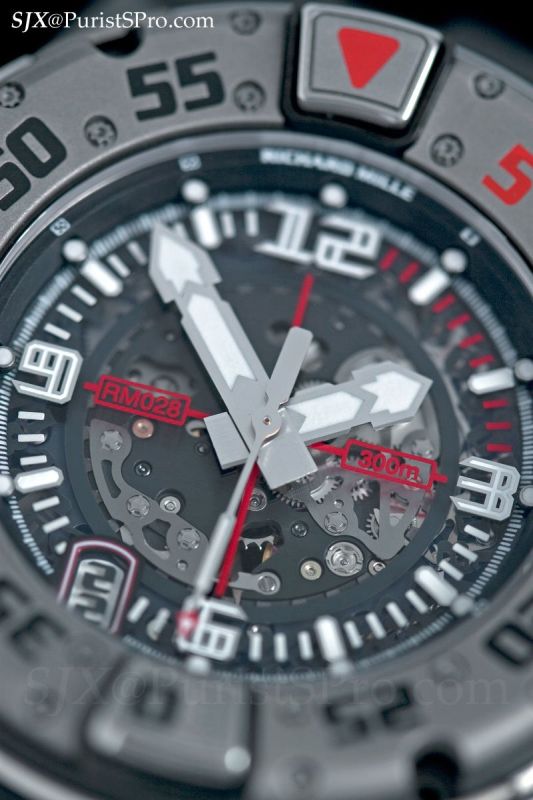
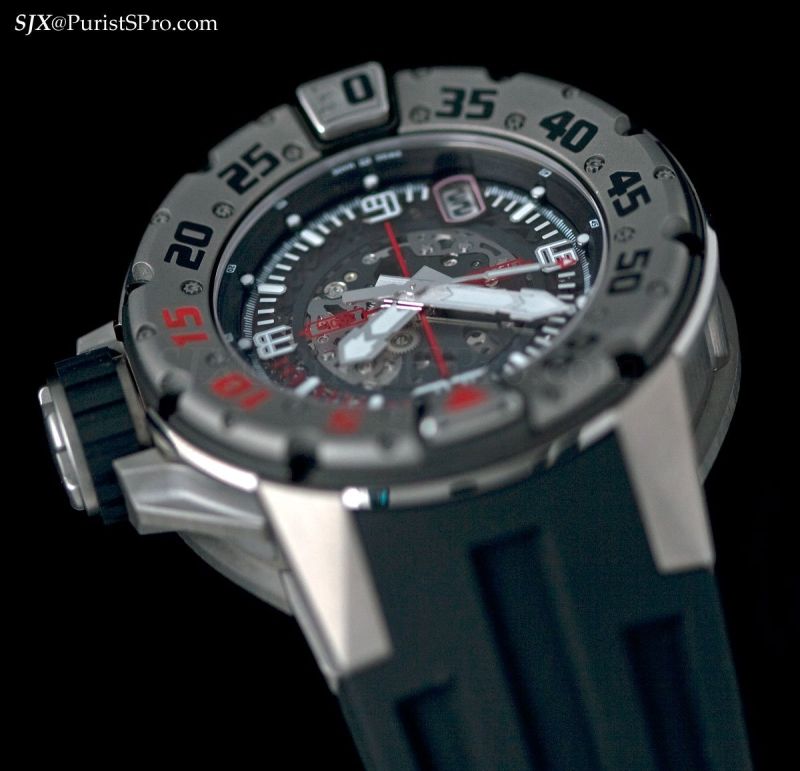
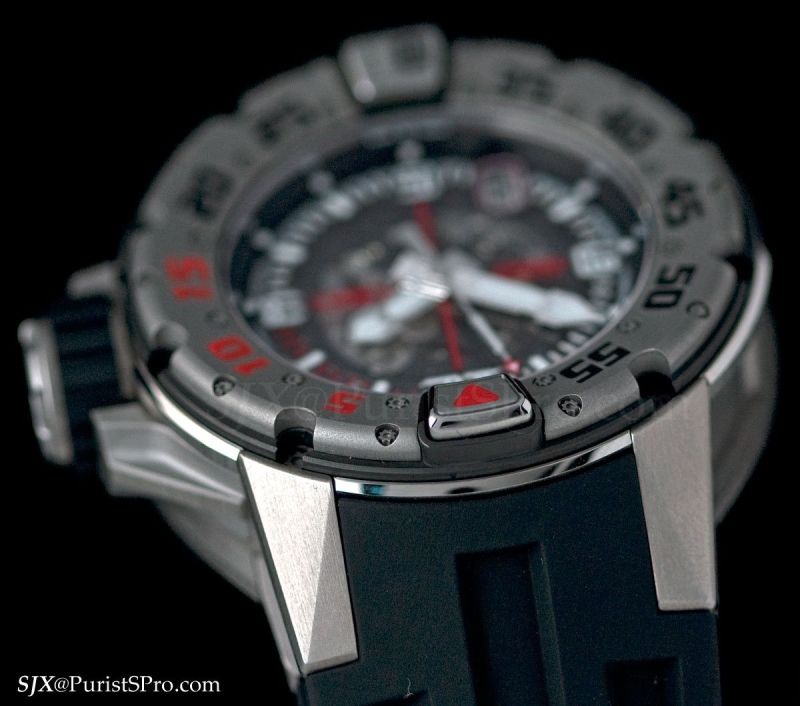
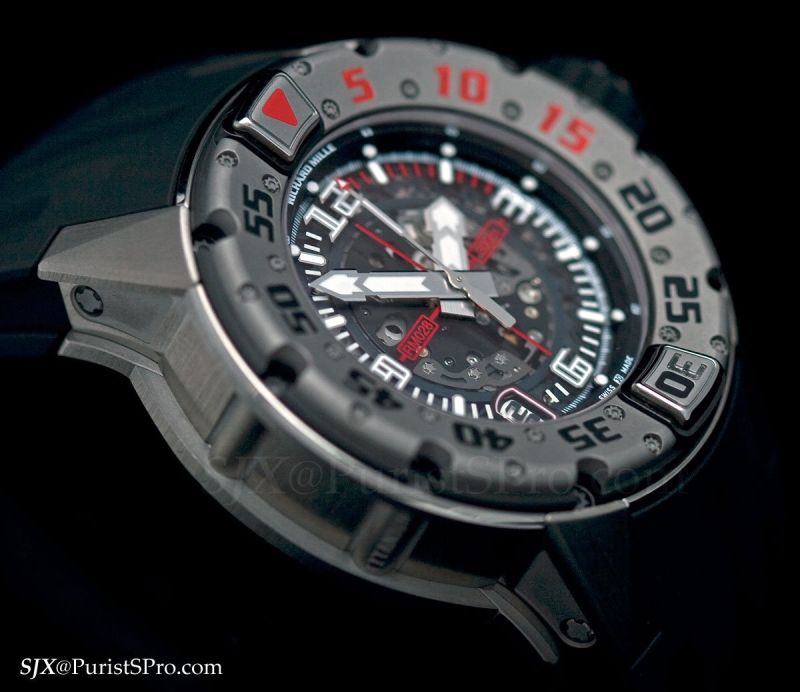
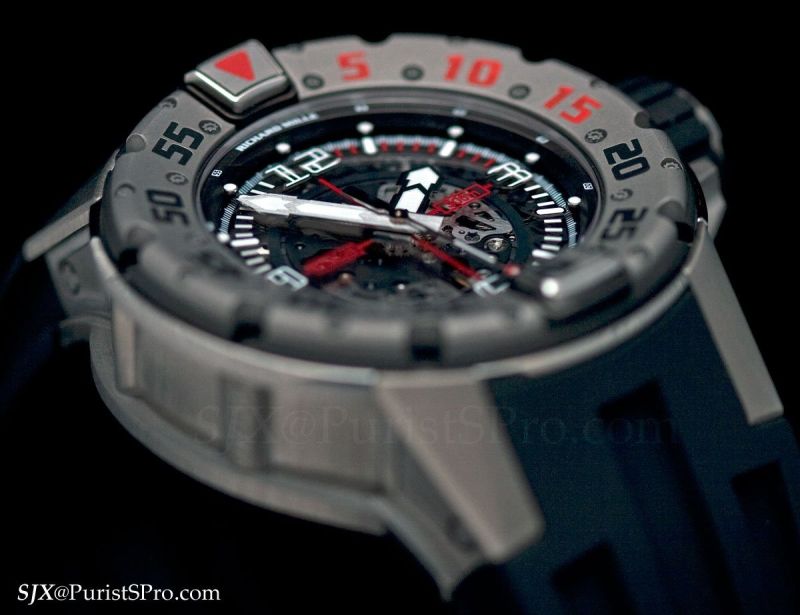
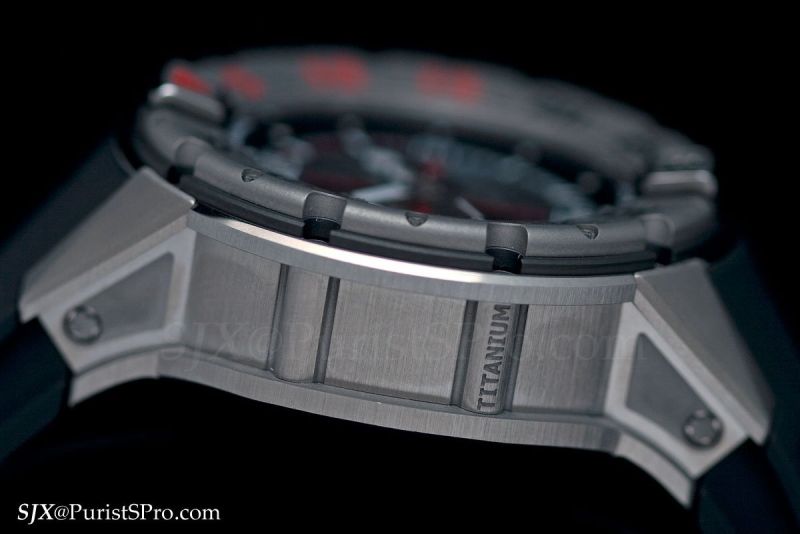
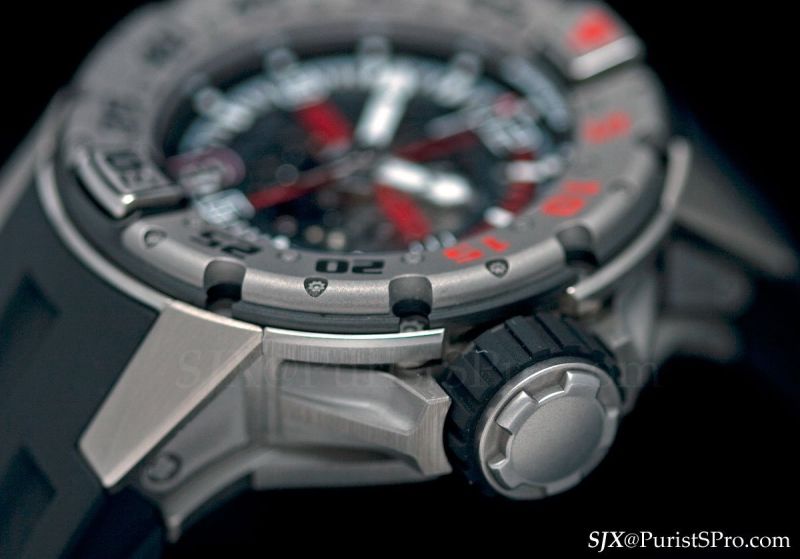
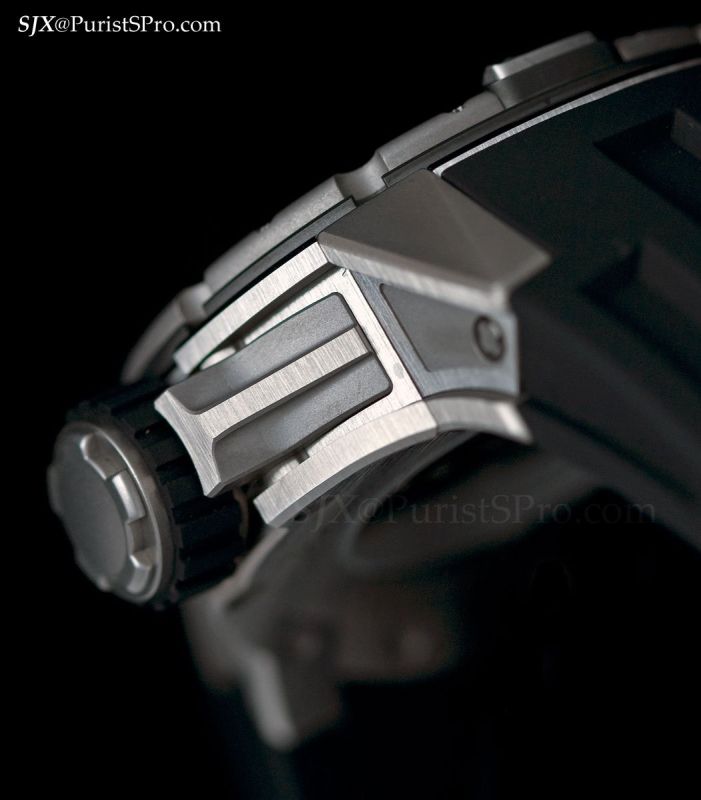
It is a good looking watch with a strong design. Despite its size the titanium case is not excessively heavy, so it sits comfortably on the wrist. The case and bezel are complex constructions; I have never seen so many screws – 28 of them – on a bezel along with buttons at six and 12 that have to be pushed in order to rotate the bezel. And at about 1/7 the price of the RM025, this will be yet another accessible, and profitable, watch like the RM005 and RM010.

Great write up on the Richard Mille watches - great photos too
You said it - Richard's genius is that despite people telling him something cannot be done, he will find a way to do it. I believe the lapis version of the RM018 is something to behold... Thanks for the photos and write up.
Andrew H
SIHH 2010: Roger Dubuis
New models were presented in three cases, the Excalibur, KingSquare and Easydiver. The Excalibur is now the flagship shape for the brand, with the bulk of the new complications and movements presented in its distinctive, tripled-lug case.
The Excalibur case is a large, distinctive design and I would like it more if it were a tad smaller; most are 45 mm. It is also entirely polished, which is a shame since the complexity of the case would allow it to display a range of finishes well.

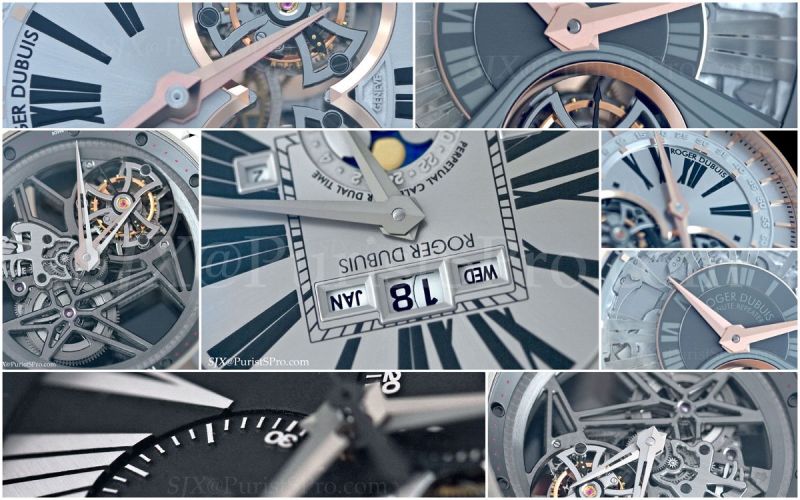
A hint of art deco is evident in the dials. Several of them have raised numerals, but these are not applied, instead the brass blank for the dial is carefully machined away leaving the raised numerals. Greubel Forsey uses a similar technique for its dials though the base is gold.
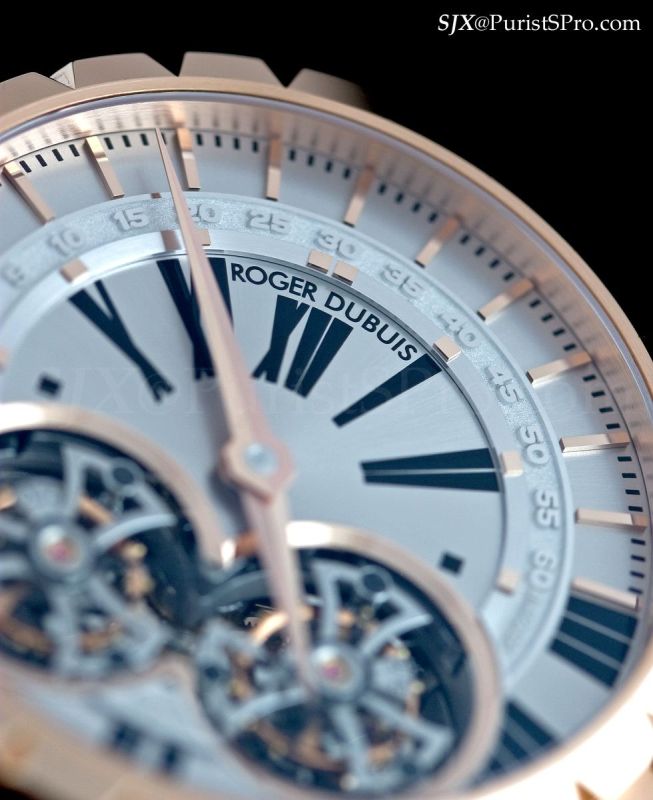
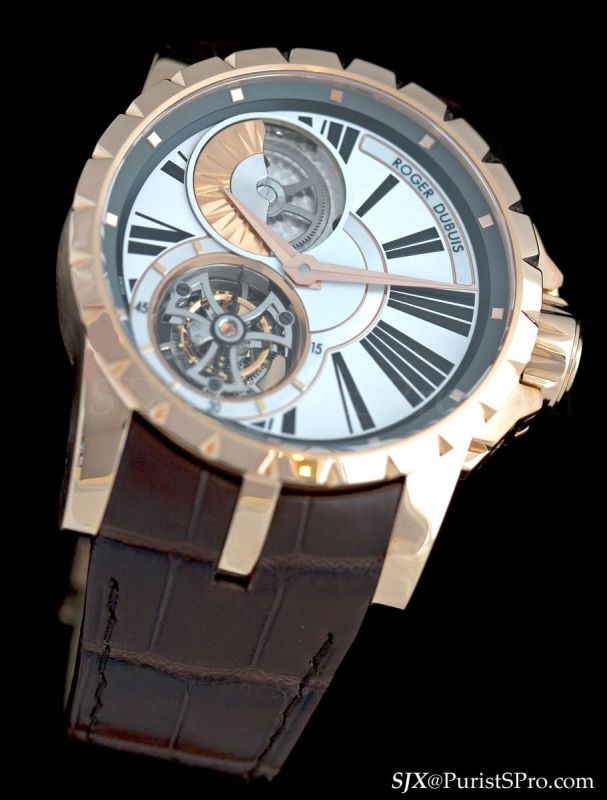
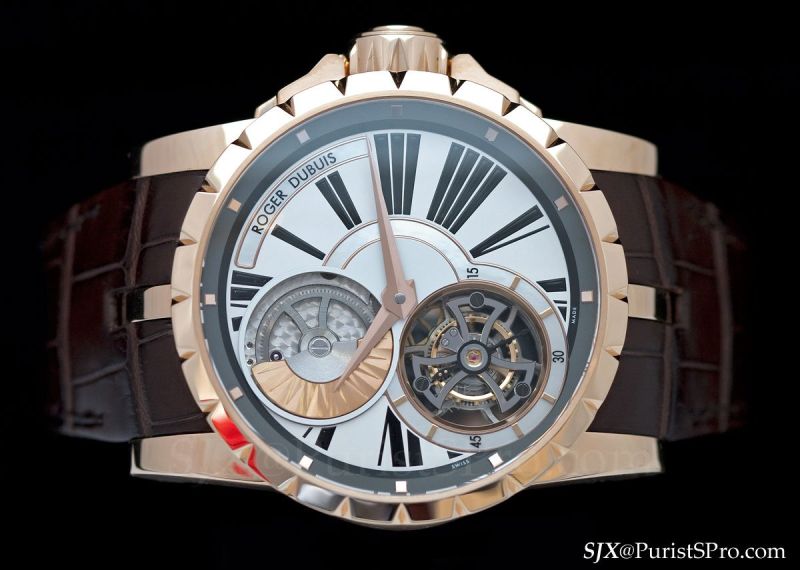
All of the new models shown contained existing calibres, except for two which have new movements. The first is a tourbillon with an exposed micro-rotor on the dial. While this is not an ugly watch, and the mother-of-pearl inlays on the dial work well, I dislike exposed rotors on the dial.
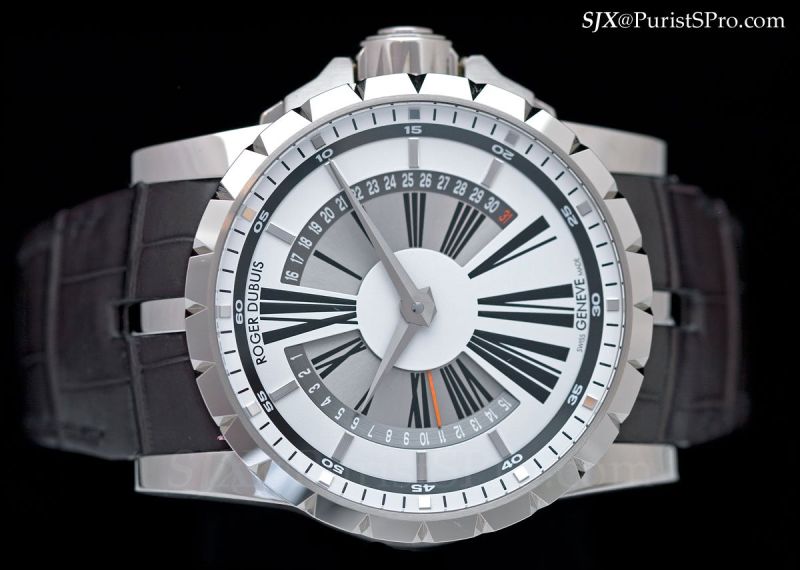
The other new movement is a bi-retrograde date, with the date indicator running from 1-15 and then 16-31.
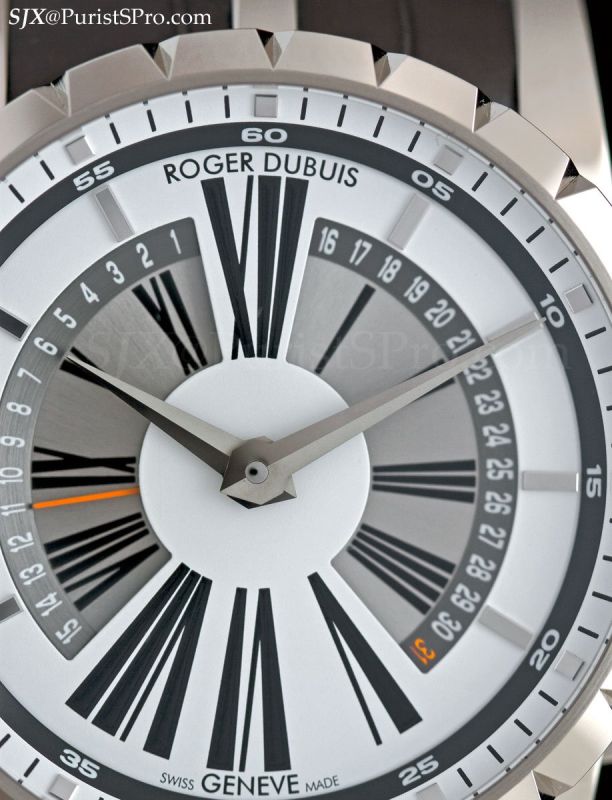
The rest of the calibres presented are from RD’s huge stable of movements. Topping off the range is the Excalibur minute repeater-tourbillon. It contains the RD 08 movement that features a flying tourbillon and double platinum micro-rotors. The dial is sapphire, exposing a good portion of the movement. Activation of the repeater is via the bezel, instead of a slide, hence the quaver on the bezel.
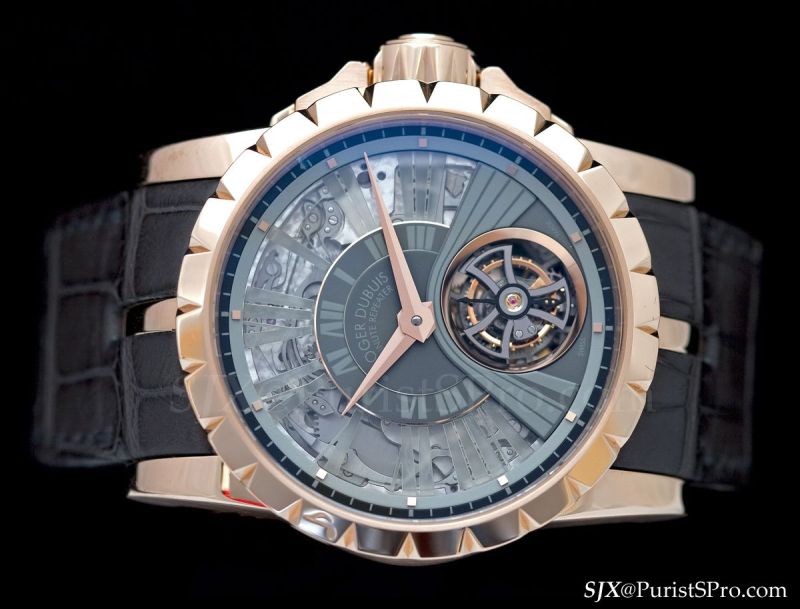
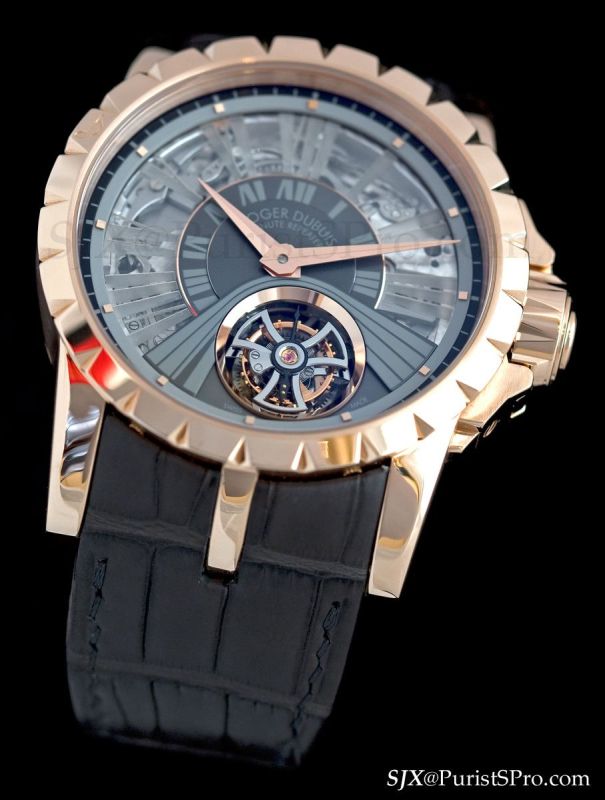
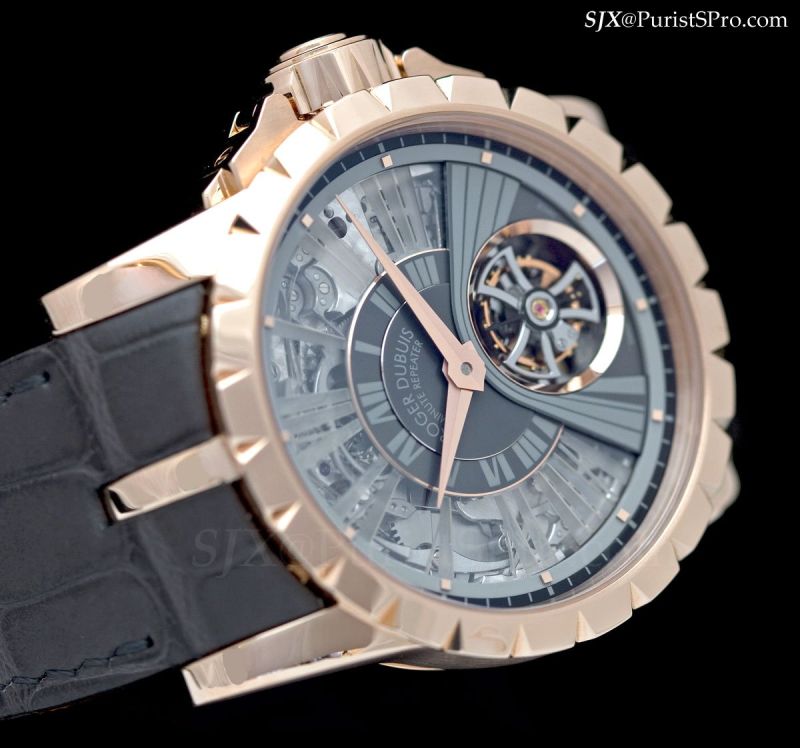
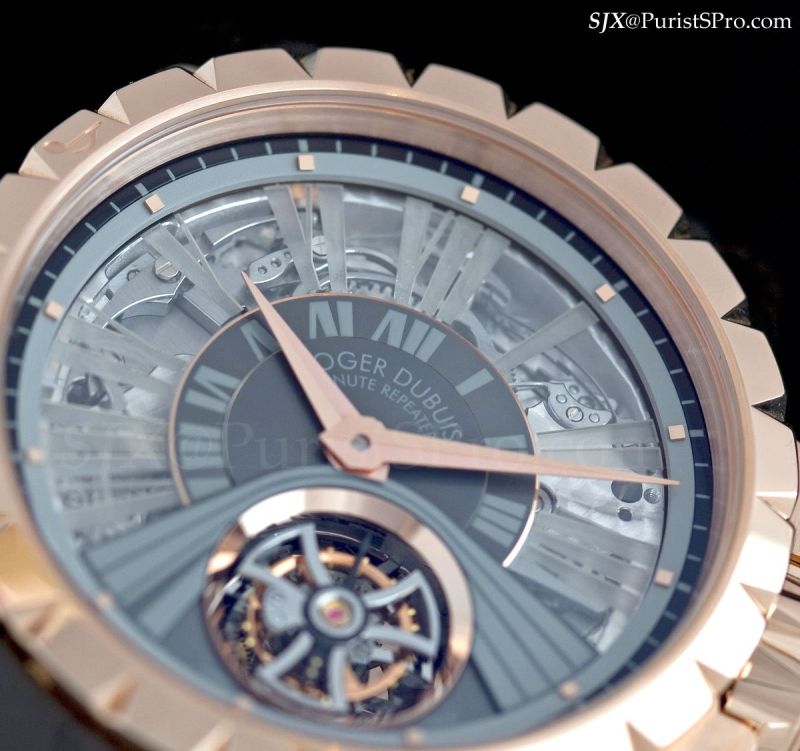
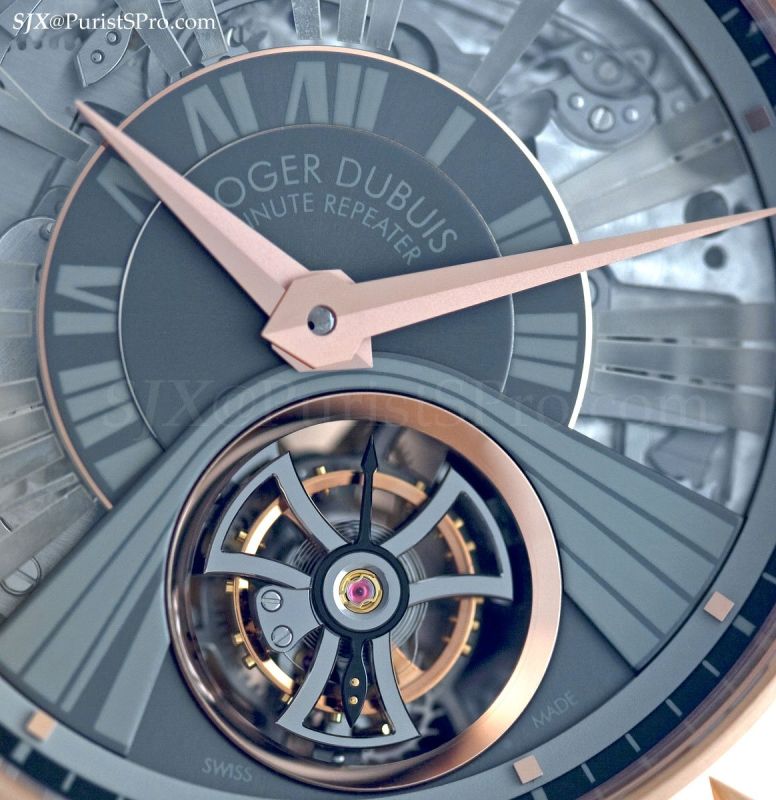
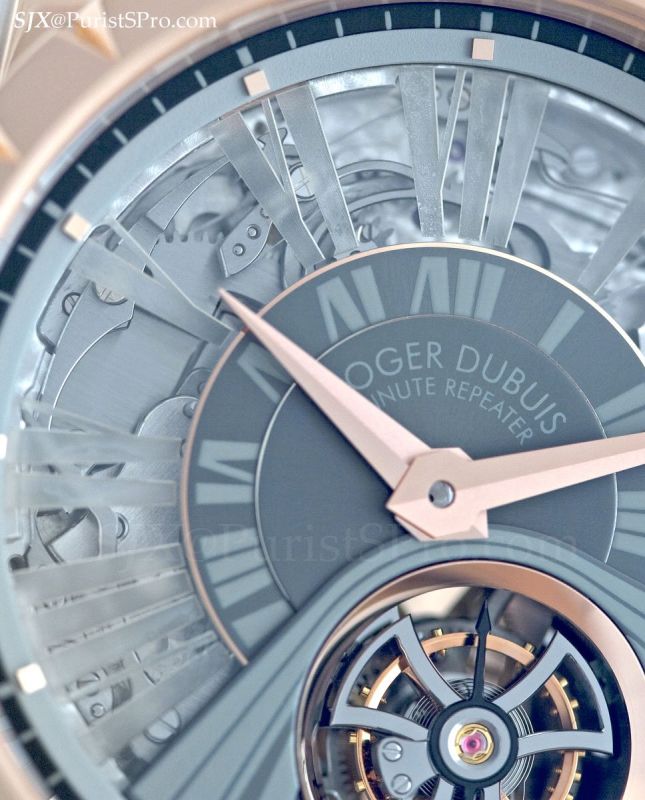
Unfortunately the prototype shown could not chime, but I do like the look of the watch. Though RD has the reputation of going over the top and far away in its designs, this one is good looking and the eccentrically positioned tourbillon gives it a slightly quirky air.
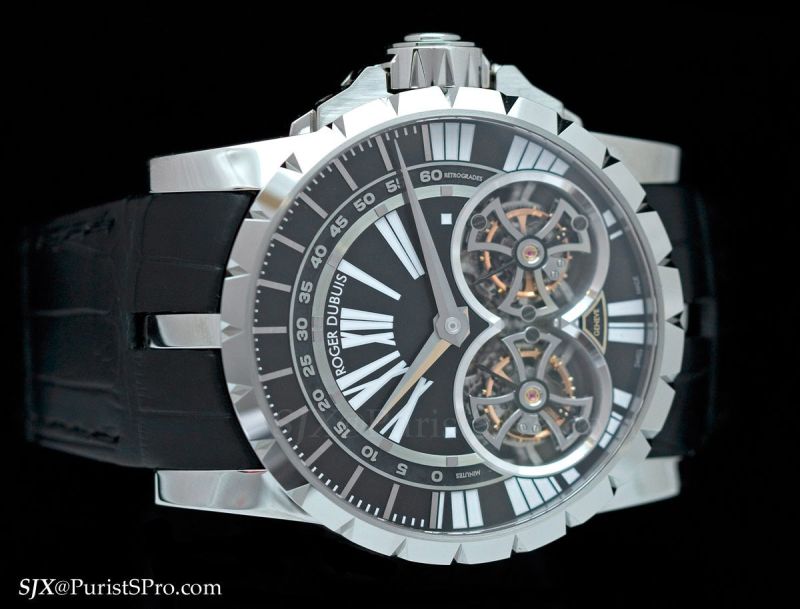
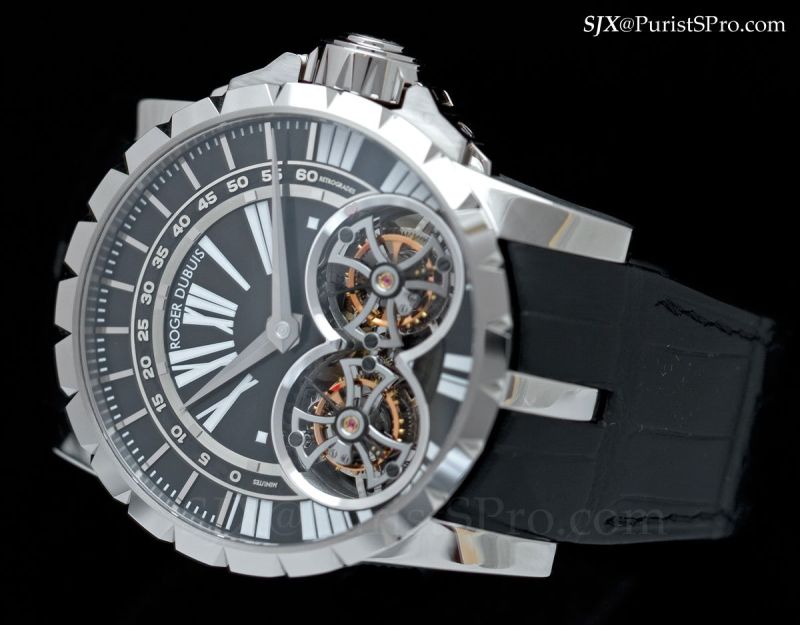
Another new complication model is the double tourbillon with retrograde minutes. Regrettably I find the double tourbillon gimmicky.
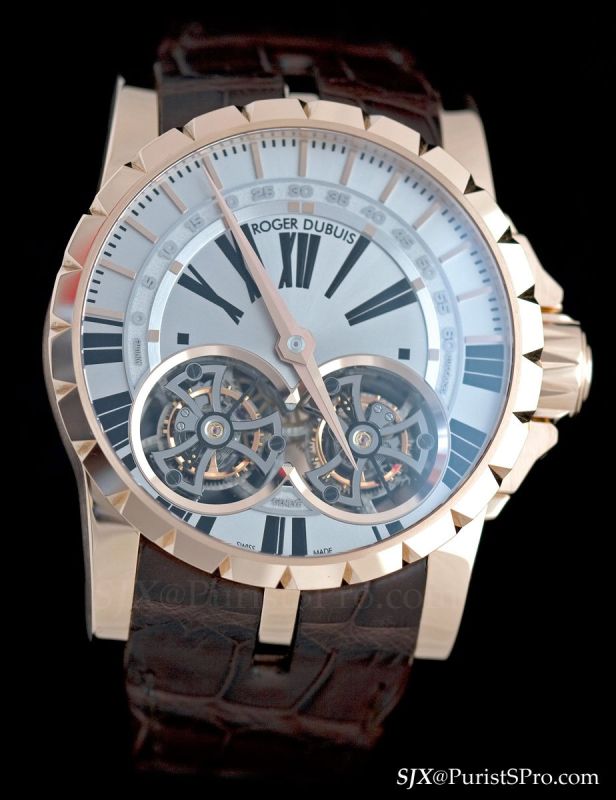
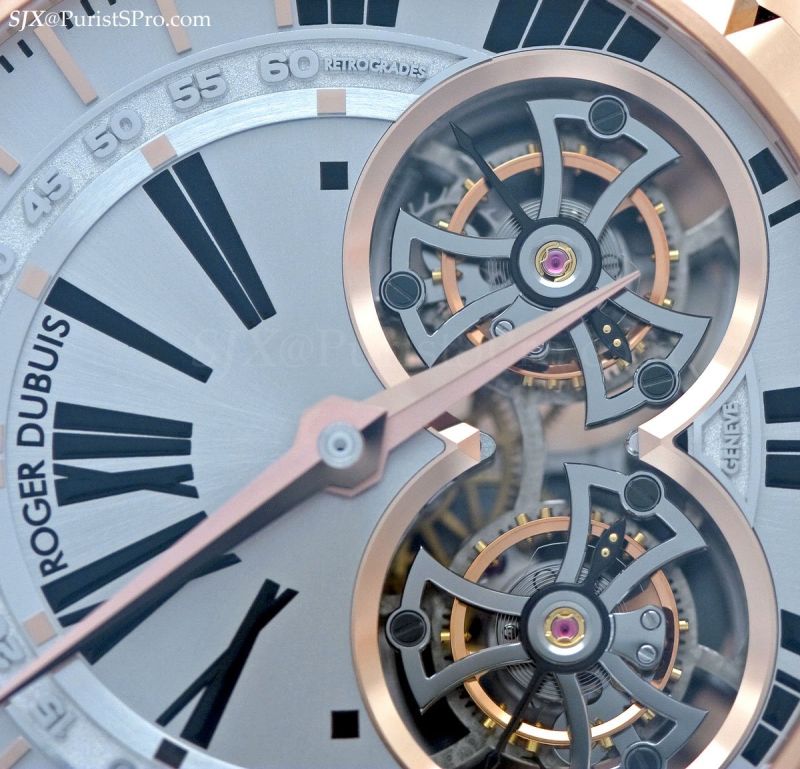
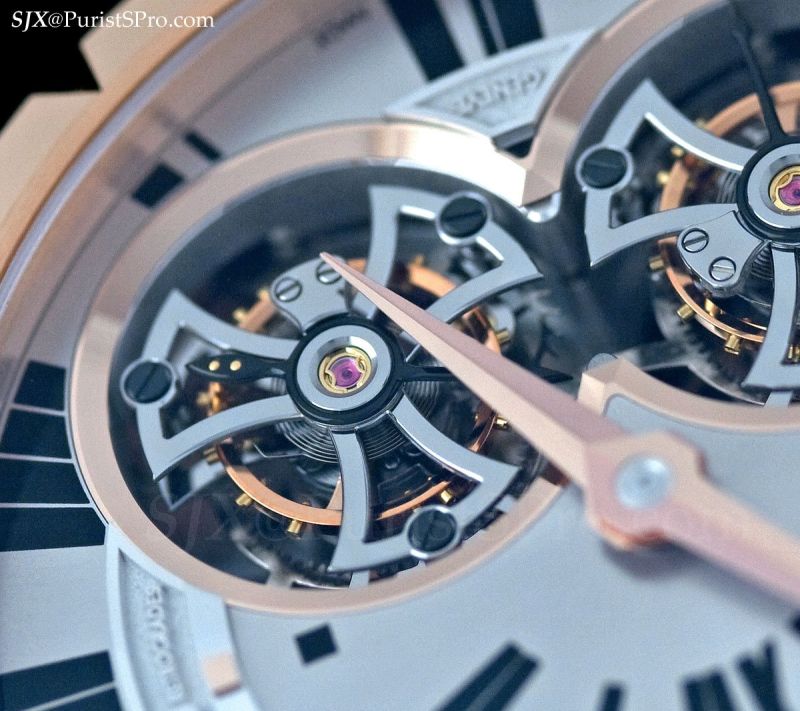
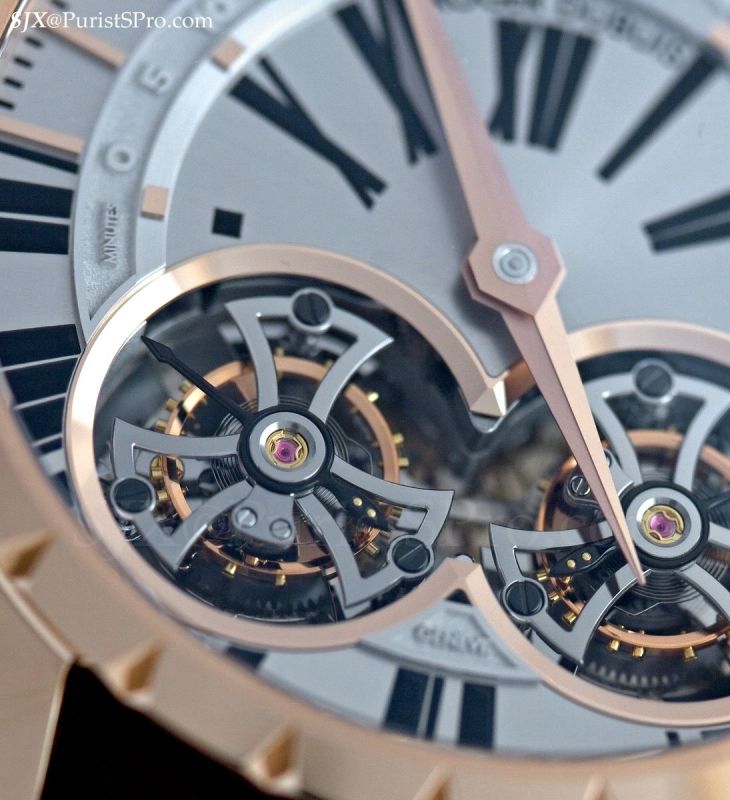
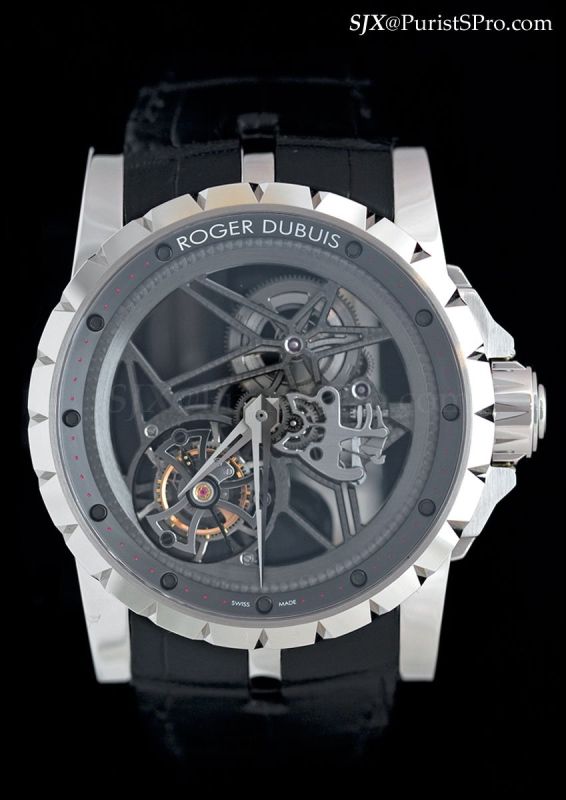
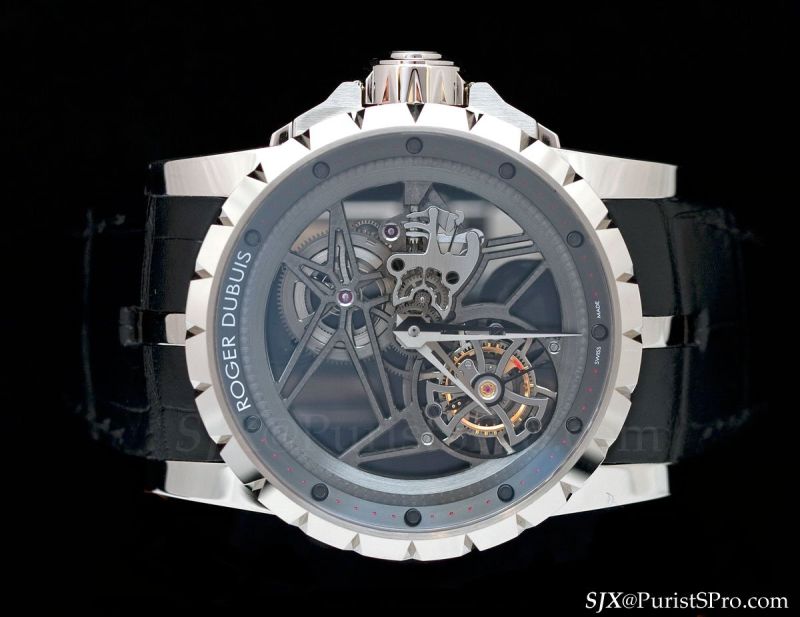
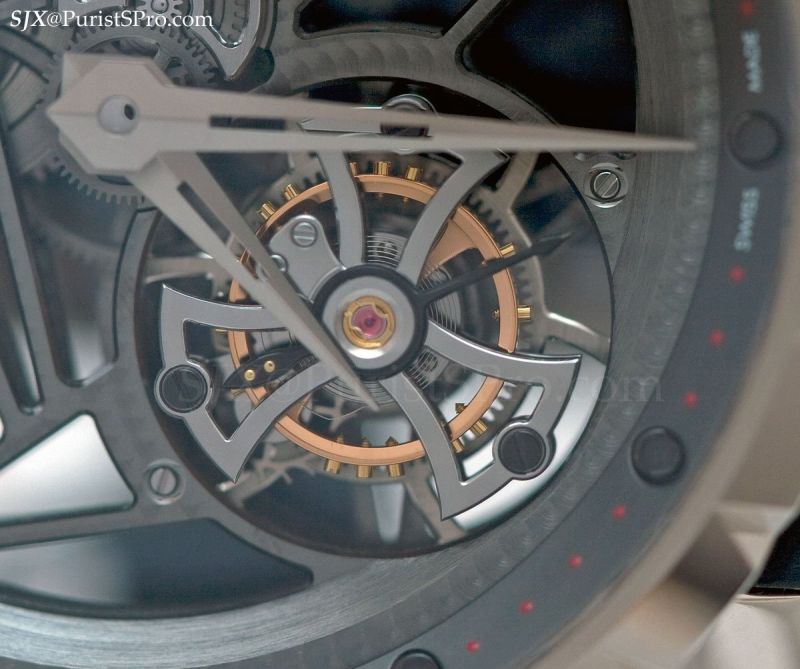
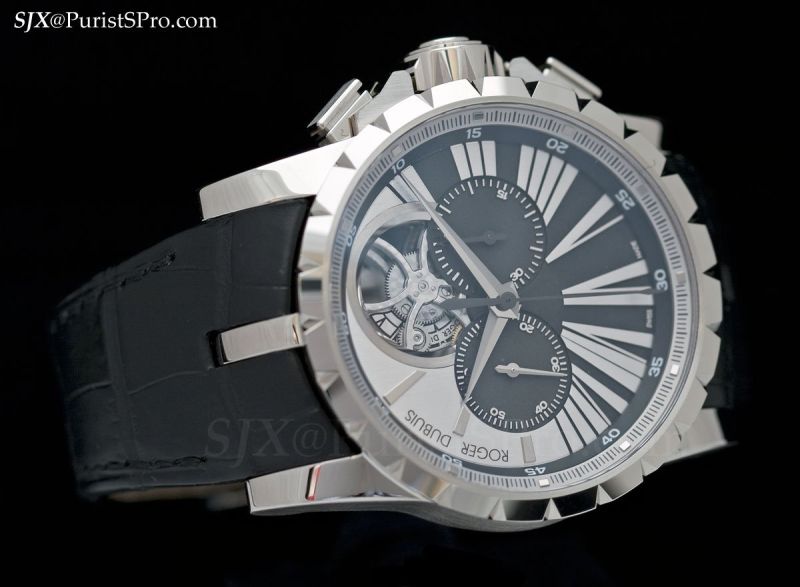
Another tourbillon, but one that’s more attractive, is the skeleton. The movement is wide open with seemingly little holding it together. It provides a good contrast with the hefty case. I examined another skeleton tourbillon from RD a few years back and this definitely has a more consistent and refined finish, in keeping with the spirit of the Geneva Seal rather than just the letter.
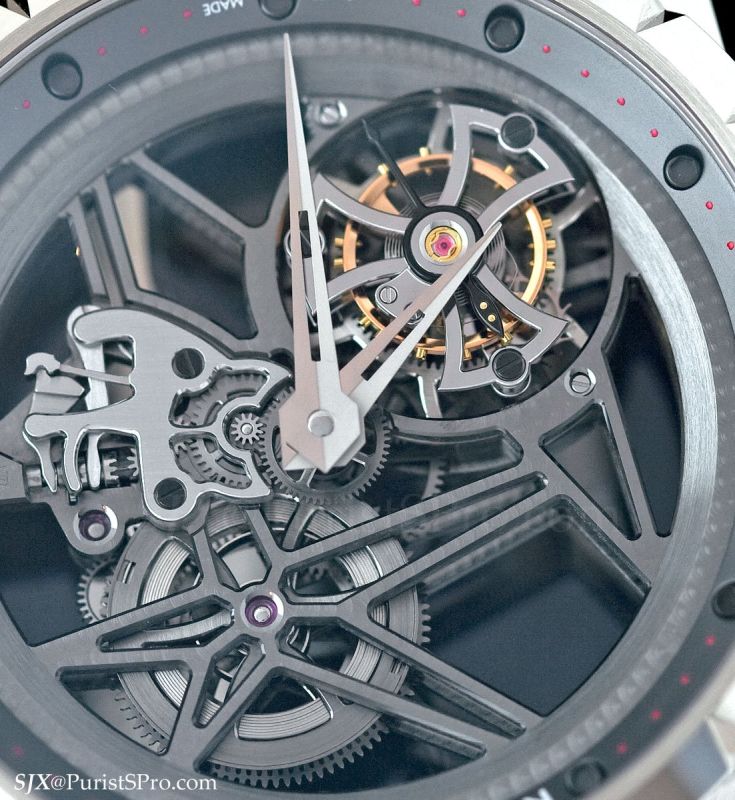
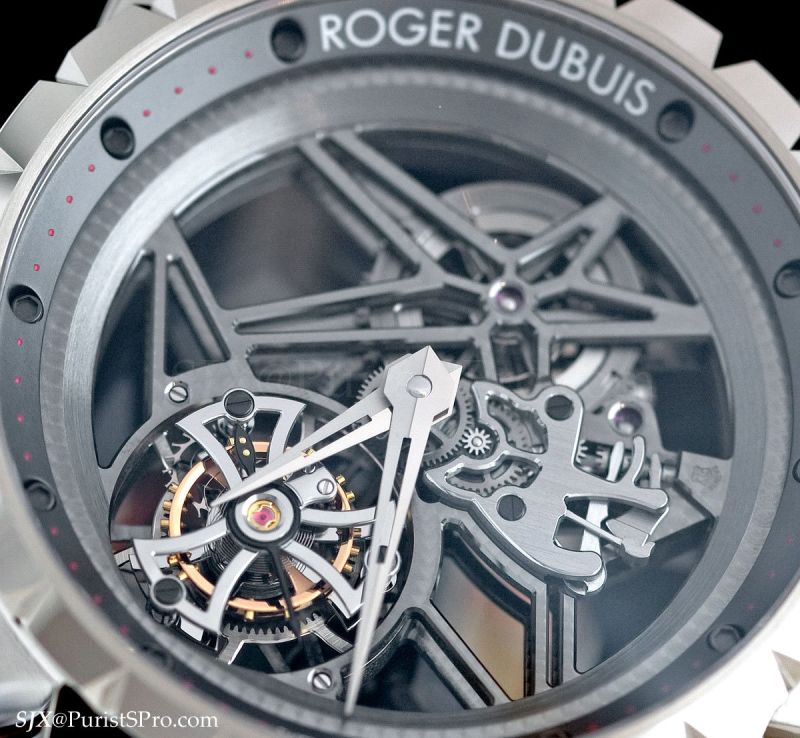
Next are a few chronographs. The first piece with the exposed balance is 45 mm while the rose gold chronograph is a mere 42 mm. Both contain the same base chronograph movement wound by a micro-rotor. Several versions of each are available with different dials and in various metals.
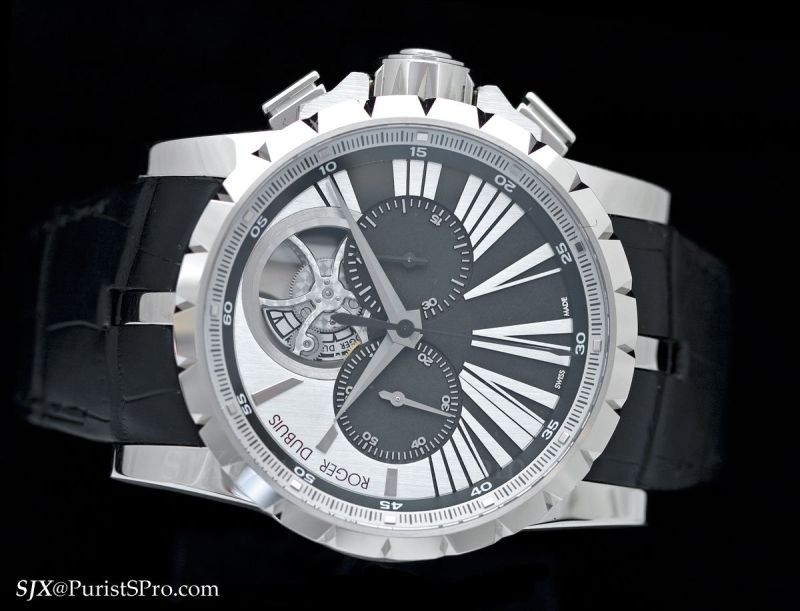
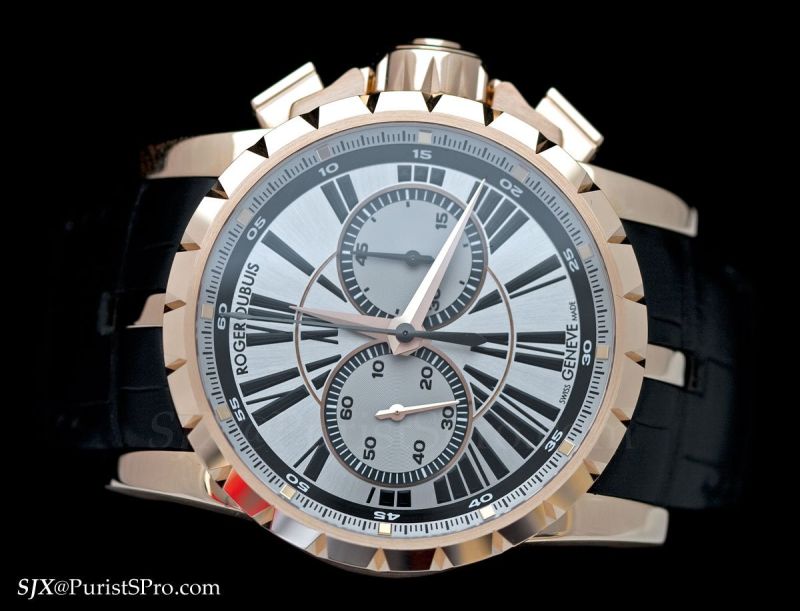
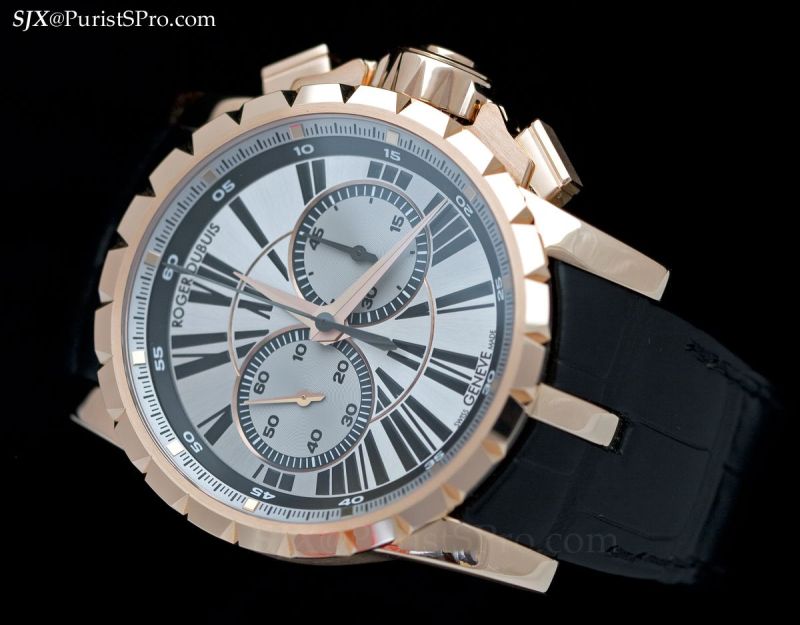
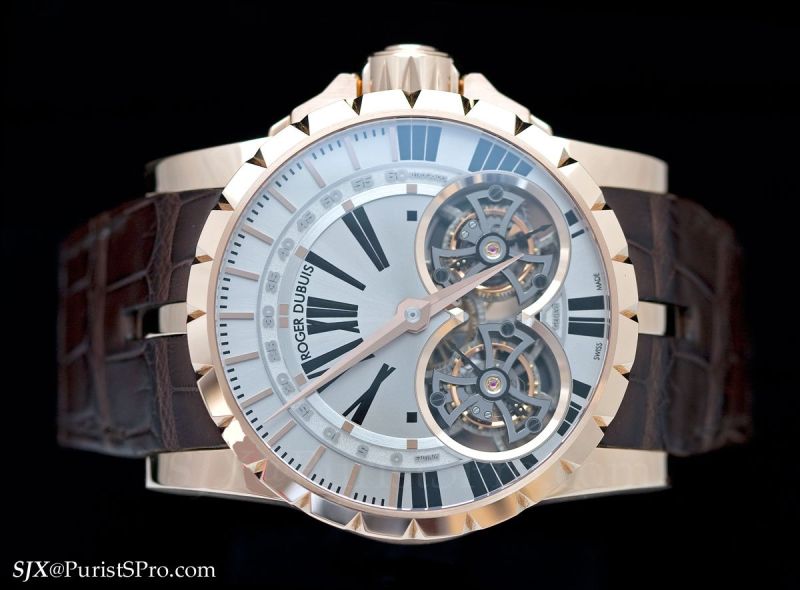
Last for the Excalibur collection is a three-piece set of platinum watches: a minute repeater-tourbillon-instantaneous perpetual calendar pictured below, as well as a minute repeater tourbillon and a double tourbillon. The latter two are identical to the model shown above except they are cased in platinum with matching silver dials like the watch below.
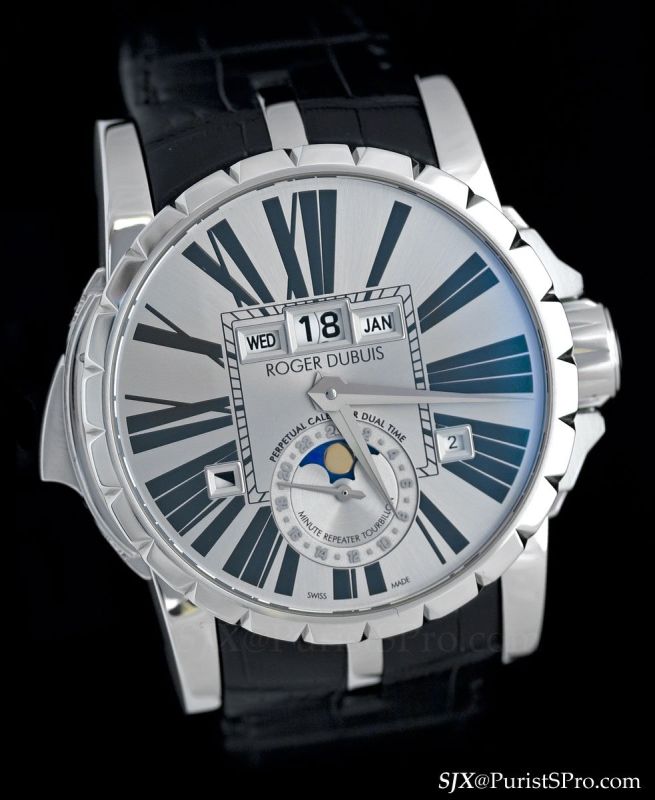
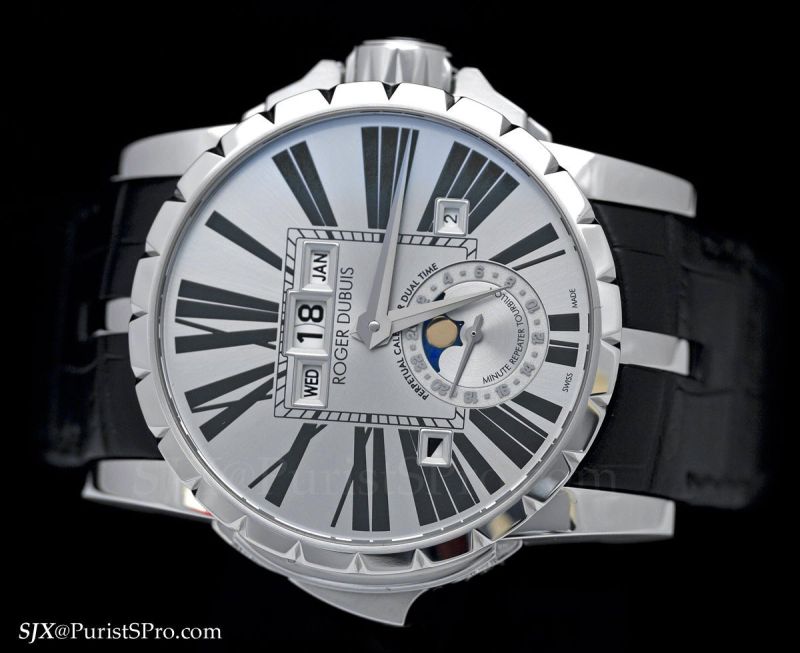
The minute repeater-tourbillon-instantaneous perpetual calendar is an illustrious looking watch. Although the movement is quite small and the windows are clustered in the centre, the dial design remains well proportioned and harmonious.
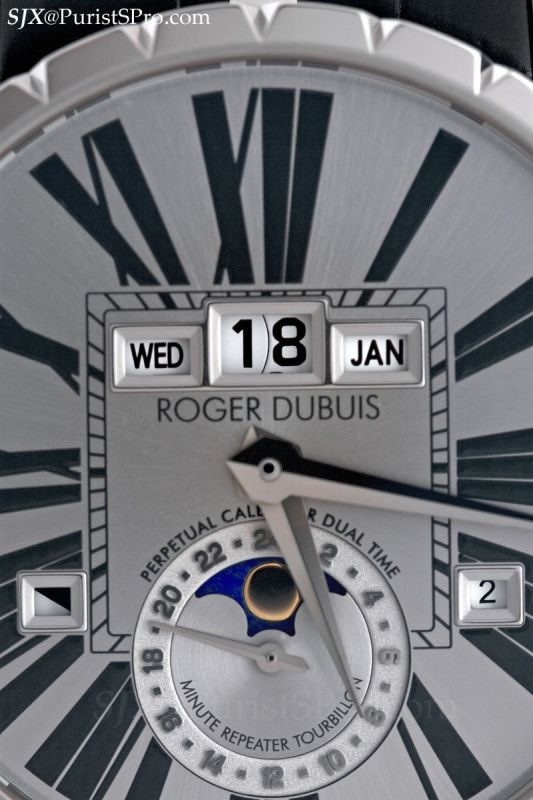
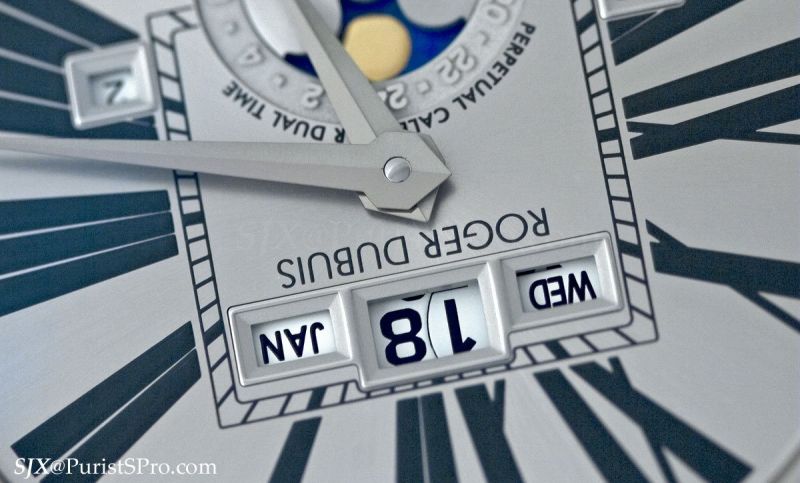
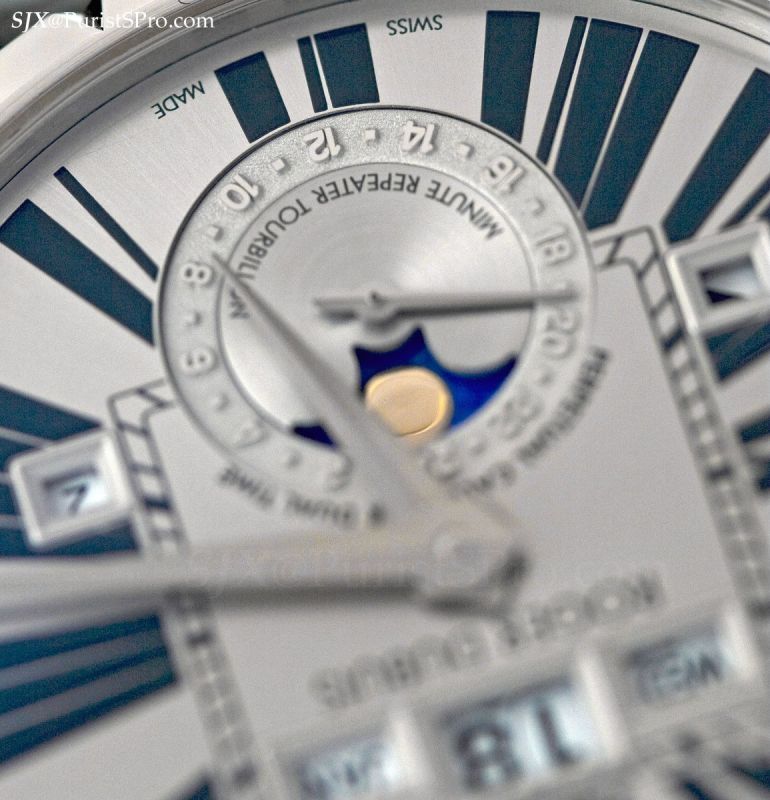
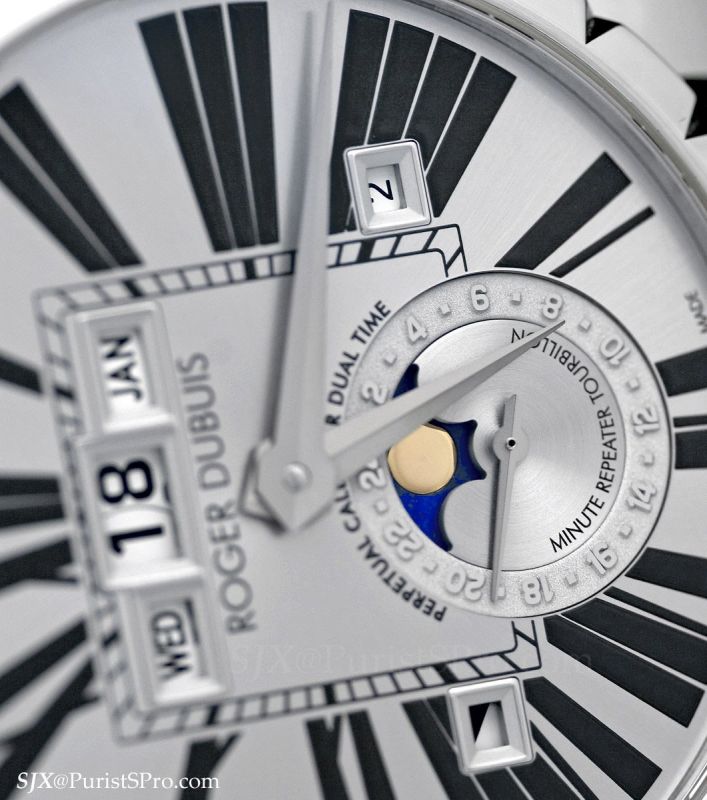
Several new KingSquare watches were launched as well. The KingSquare is fitted with a three-facet crystal that enhances the shape of the watch and is reminiscent of the crystal found on some vintage form watches.
The ladies’ KingSquare (QueenSquare perhaps?) was shown in several variations with satin straps.
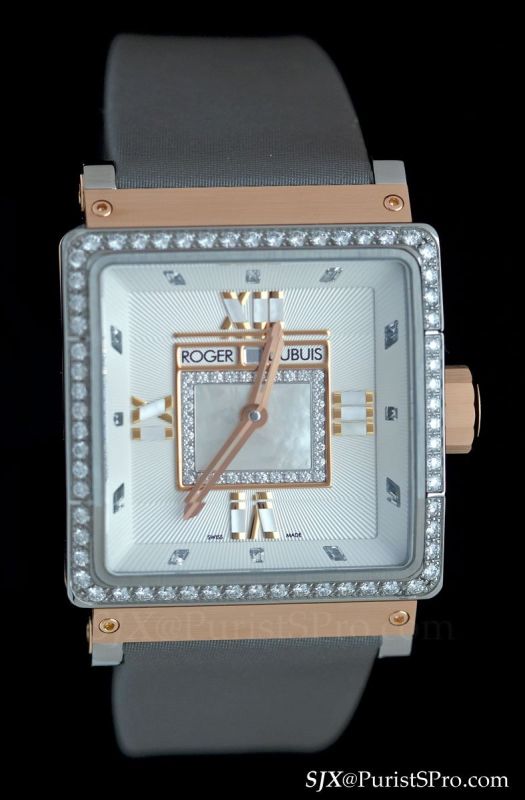
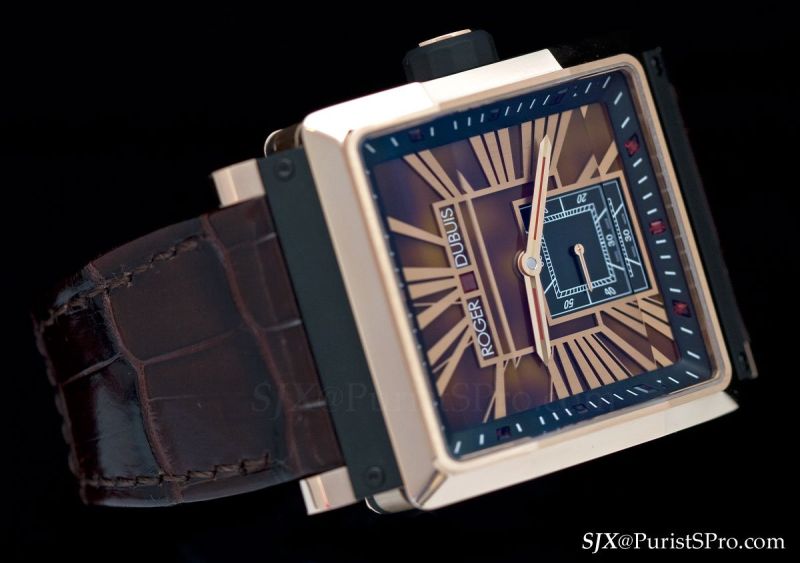
The men’s KingSquare is now available with a tortoise shell-lacquered dial that is fine-looking. However the two black horizontal panels on the case seem out of place. Both the male and female KingSquare watches use the same RD14 automatic calibre, since the female watch is 35 mm wide which is large for a rectangular watch.
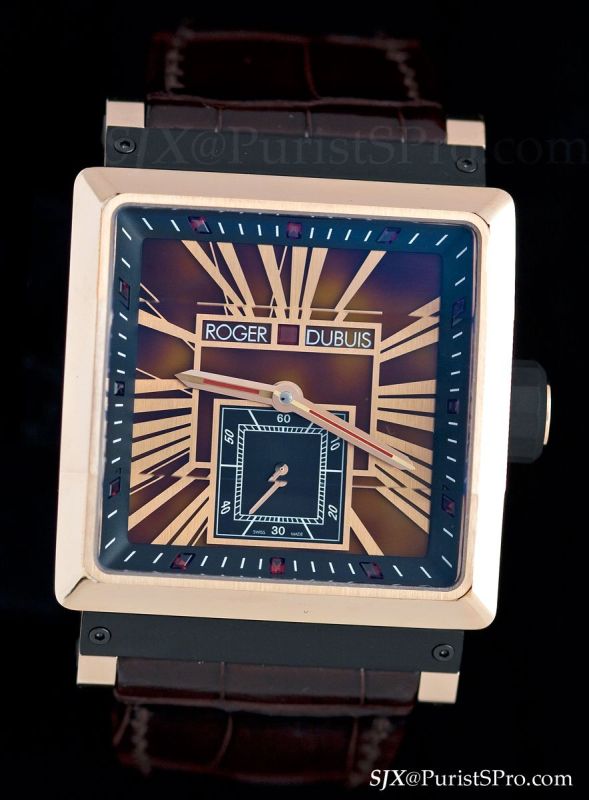
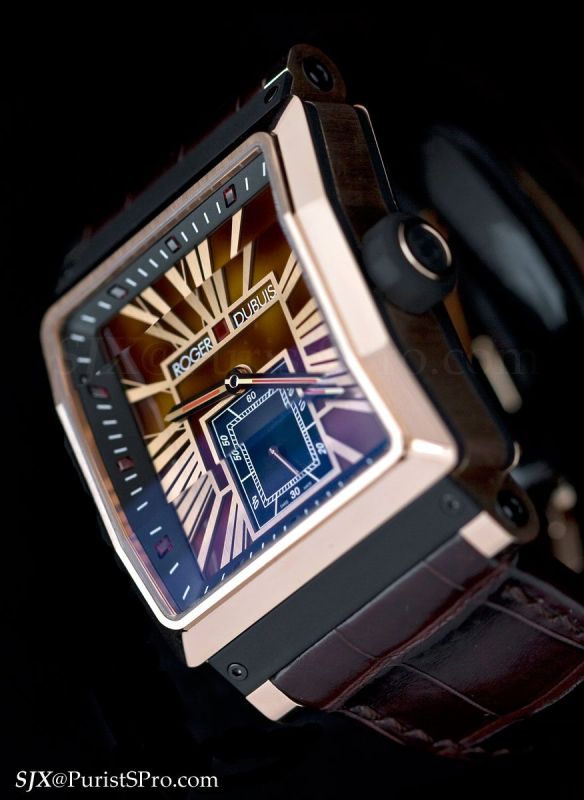
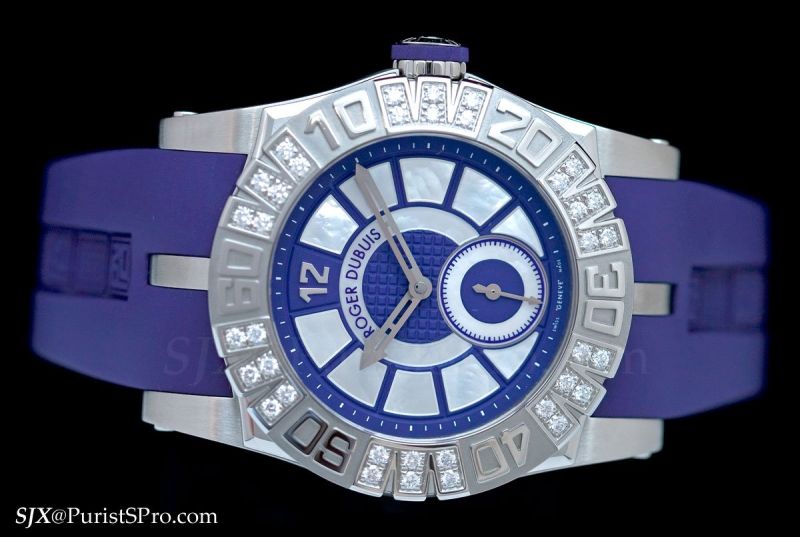
Last are a few new models from the EasyDiver collection. A couple of new chronographs and automatics were launched, including a ladies’ EasyDiver which is available in purple, amongst other fashionable colours.
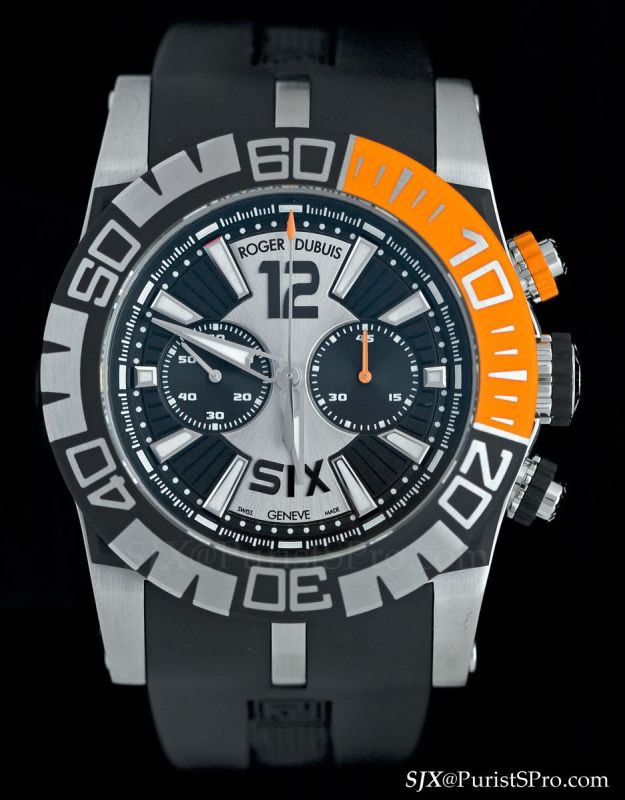
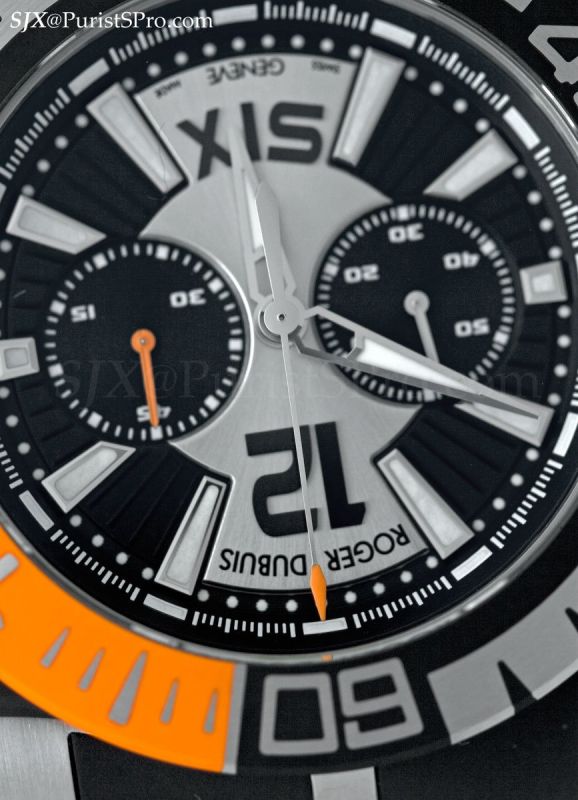
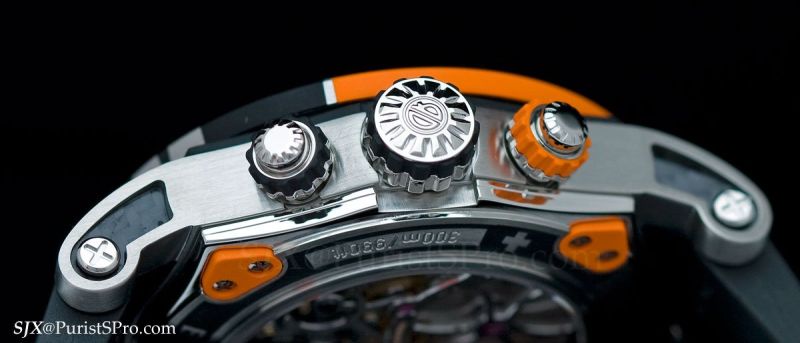
Most striking was a chronograph in black and orange; the watch has orange accents all over, from bezel to pushers to back. The dial reminds me a little of the Parmigiani Pershing but with a bit more life. This is 46 mm which is large but the size suits the design.
SIHH 2010: Vacheron Constantin

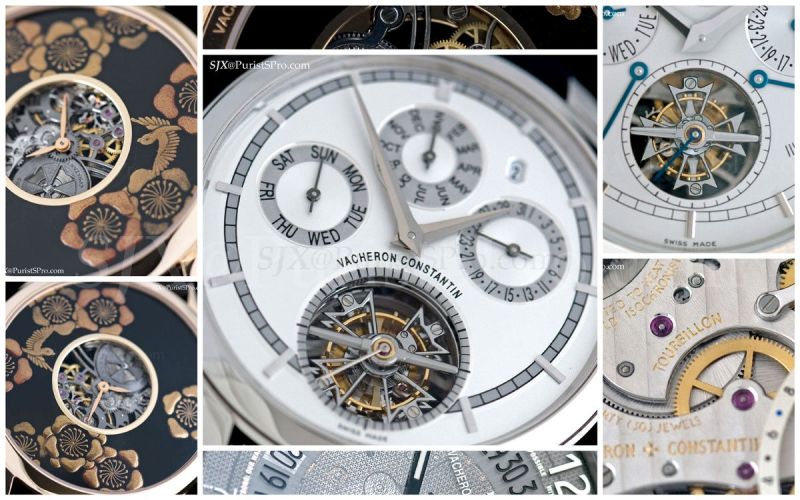
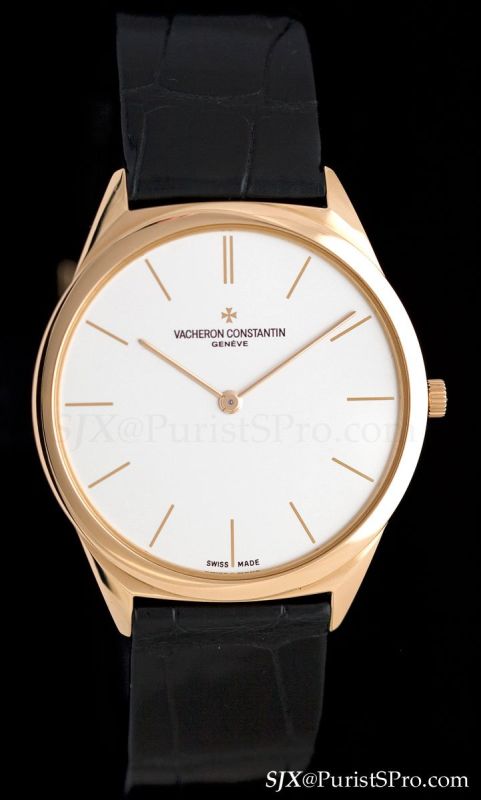
Vacheron Constantin presented a small and quietly attractive collection this year. The first of which is a pair of ultra-thin watches, the Historiques Ultra-Fine 1955 and 1968.
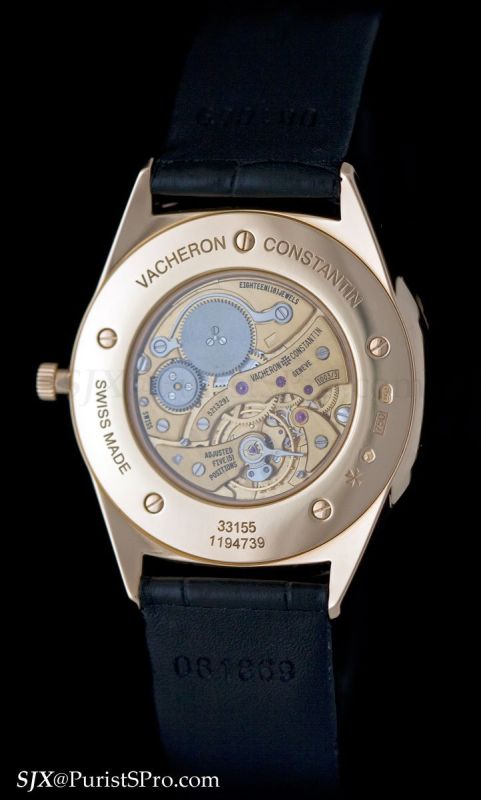
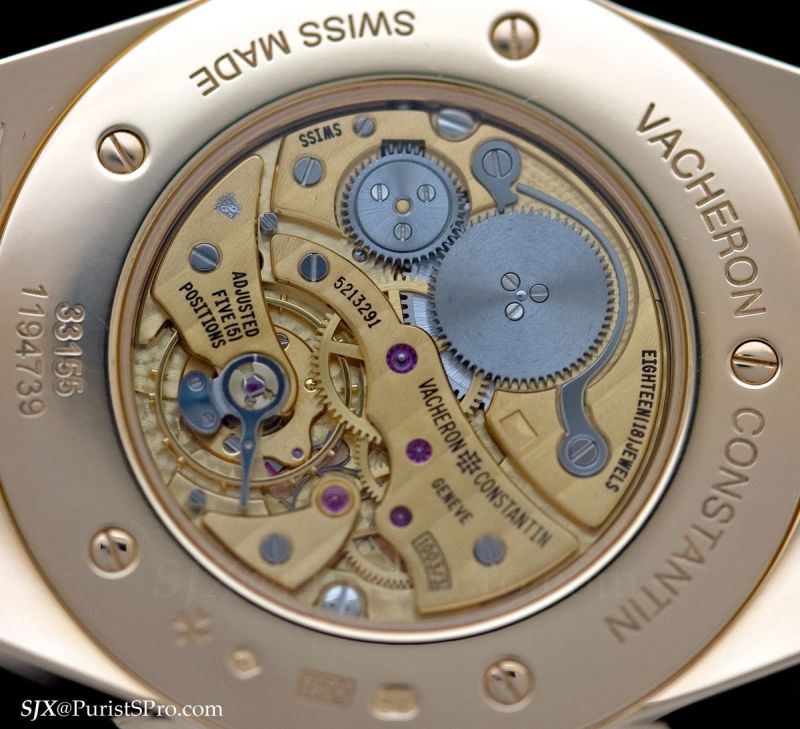
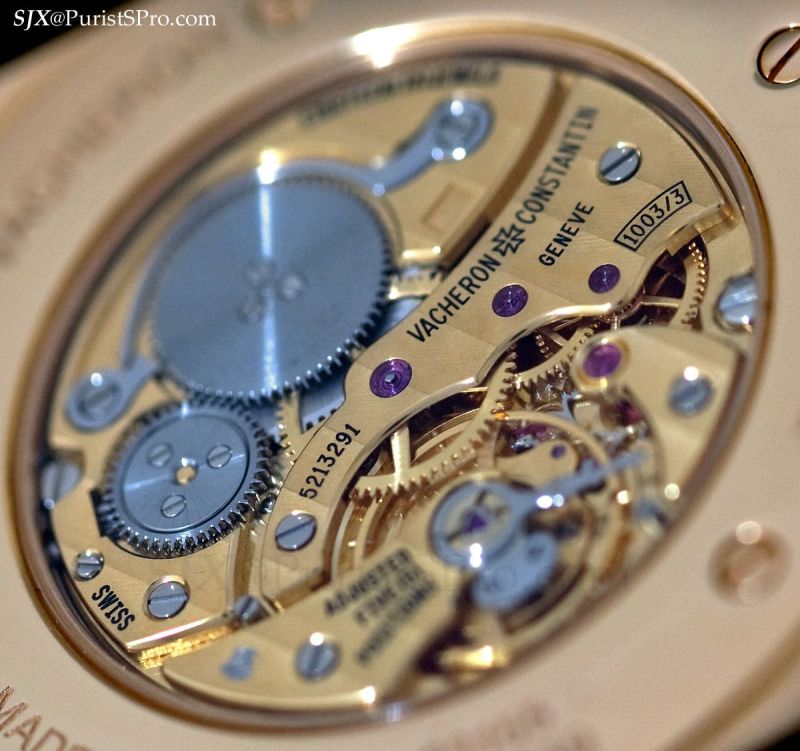
The 1955 is inspired by a VC from that year. At 36 mm it is faithful to watches of that period in size. It stands only 4.1 mm high, making it the thinnest mechanical wristwatch today. Because of its slimness, the 1955 has a display back fitted with a titanium ring for rigidity.
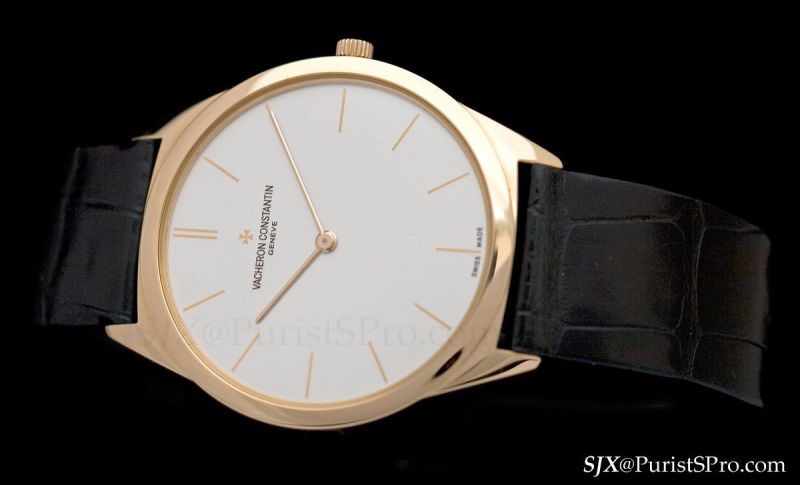
Inside beats the 1.64 mm high cal. 1003, originally developed by JLC and used by both VC and AP. VC now manufactures the movement in-house and the bridges and base plate of the cal. 1003 in the 1955 are 18k gold. The gold bridges have a rich colour but lack the sharply defined edges found on harder brass bridges.
On the other hand, the 1968 is an automatic, equipped with the 1120 automatic calibre with its distinctive round metal frame supporting the rotor. Like the 1003, the 1120 was developed by JLC, and then used by VC, AP as well as Patek Philippe. The latter two famously used the calibre in the first versions of their iconic sports watches, the Royal Oak and Nautilus respectively. This is a smallish watch at 35 mm wide and 5.5 mm high.
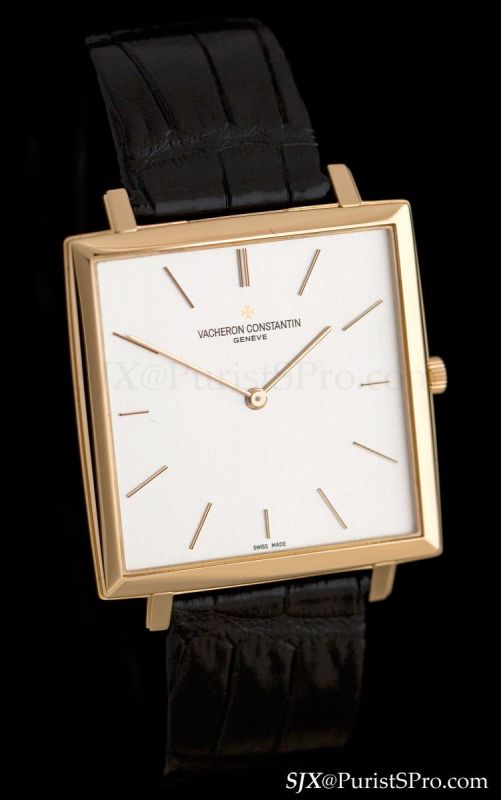
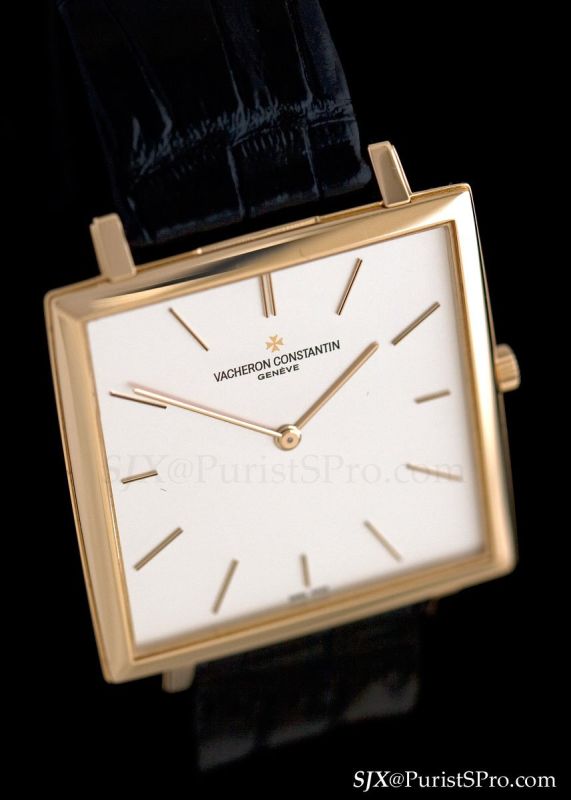
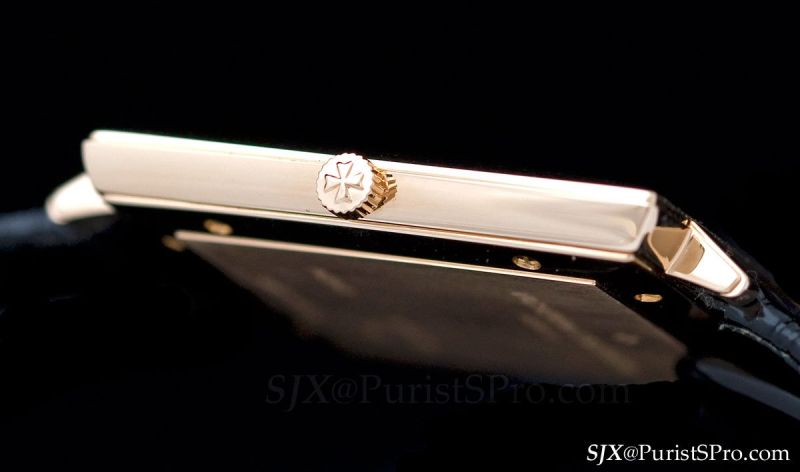
Both the 1955 and 1968 are elegant and almost delicate watches. By staying so faithful to the originals in size and design, these are in some ways alternatives, rather than replacements, for the originals which are available on the vintage market.
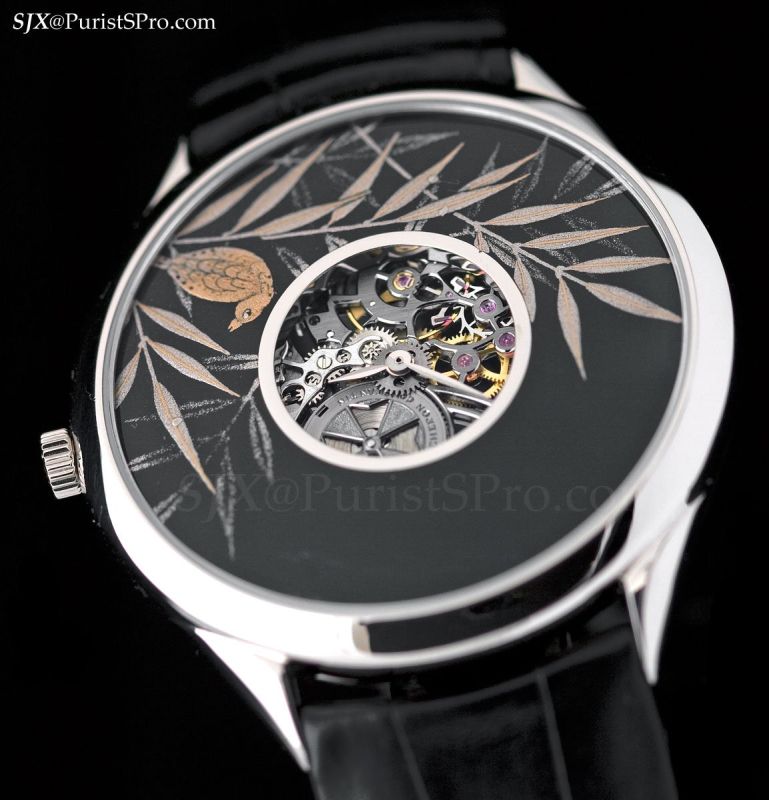
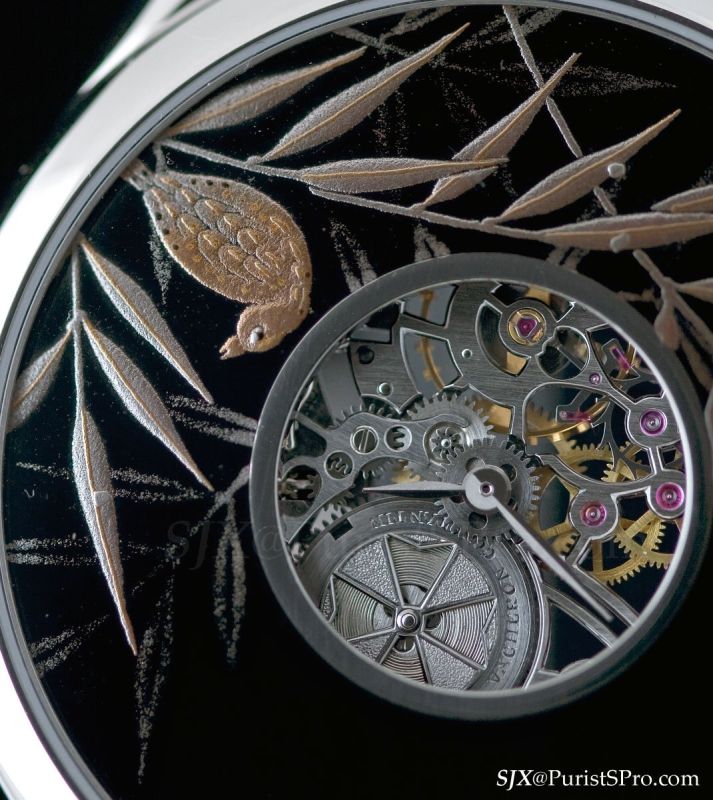
For the last three years VC introduced a four piece Les Masques set each year as part of its Metiers d’Art range that aims to showcase handcrafted artistry. 2010 sees the start of a new Metiers d’Art collection (they run for three years), the La Symbolique des Laques, which incorporates Japanese maki-e lacquer techniques.
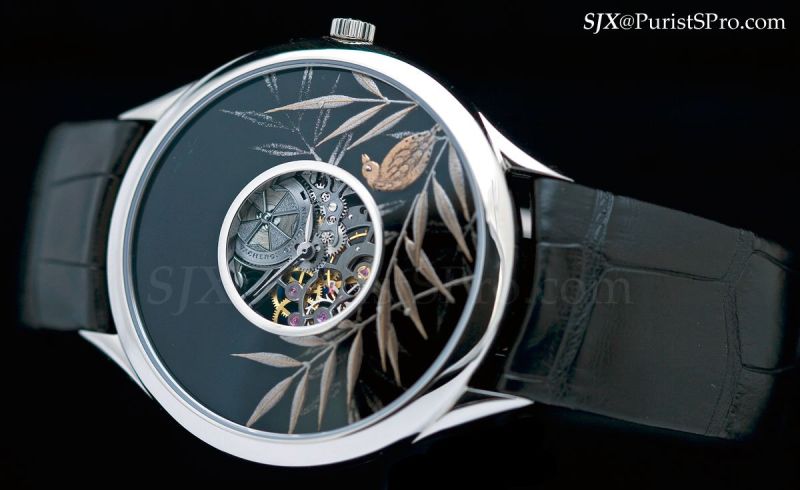
Each watch in the three piece set, two in rose and one in white gold, depict traditional Japanese motifs: crane and pine tree, sparrow and bamboo, as well as nightingale and plum. All three are fitted with a skeletonised, ruthenium-plated 1003 movement, visible in the centre, with the maki-e surrounding the movement, both front and back – the sceptic might says these are glorified movement rings. The dimensions of the case are wide but slim at 40 by 7.5 mm high. 20 sets will be made.
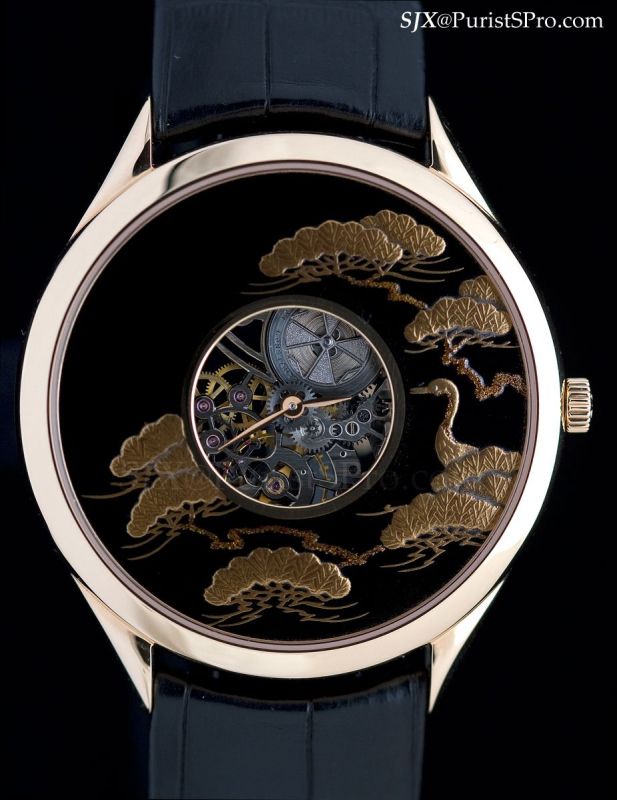
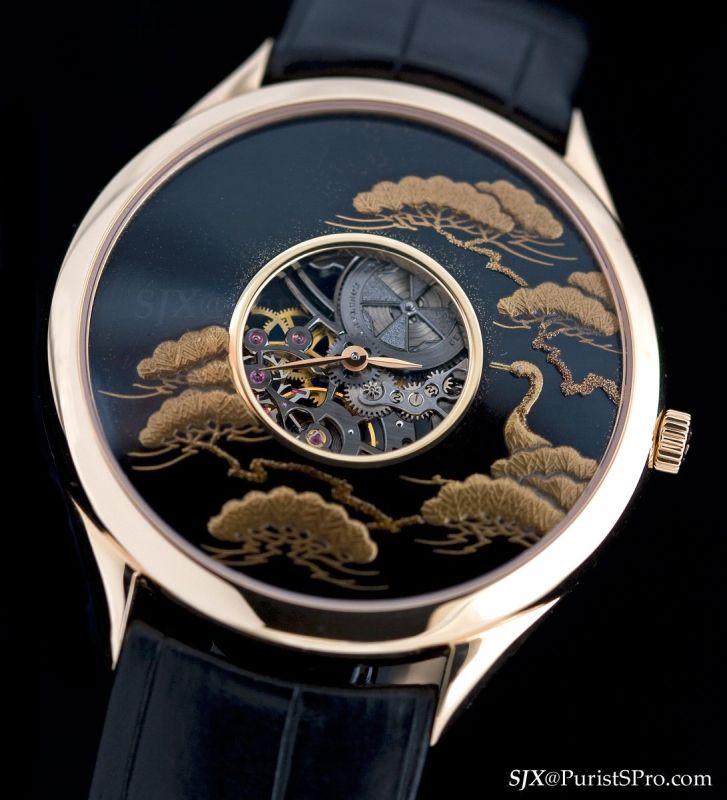
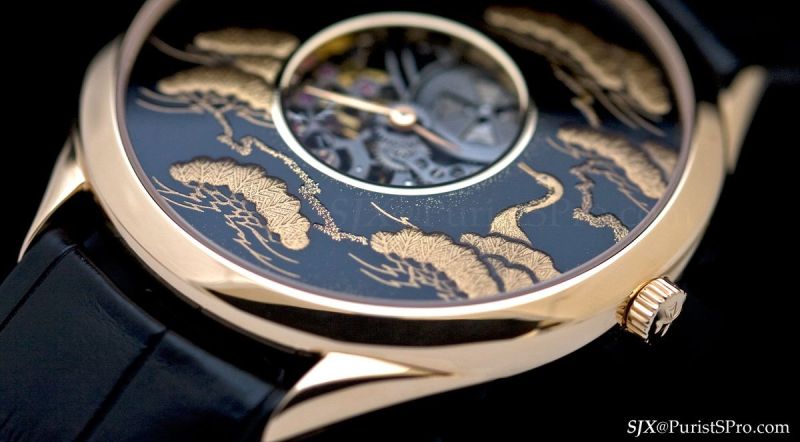
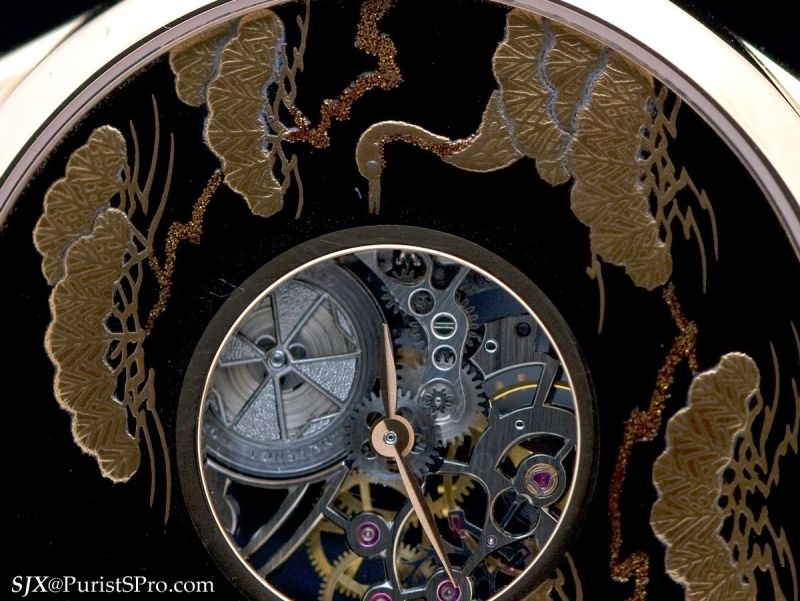
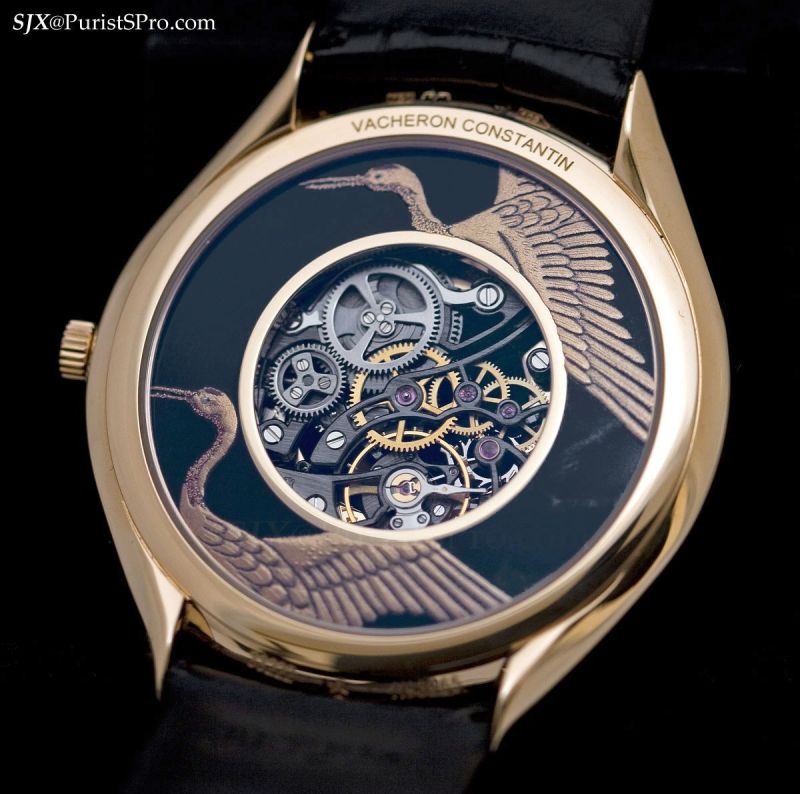
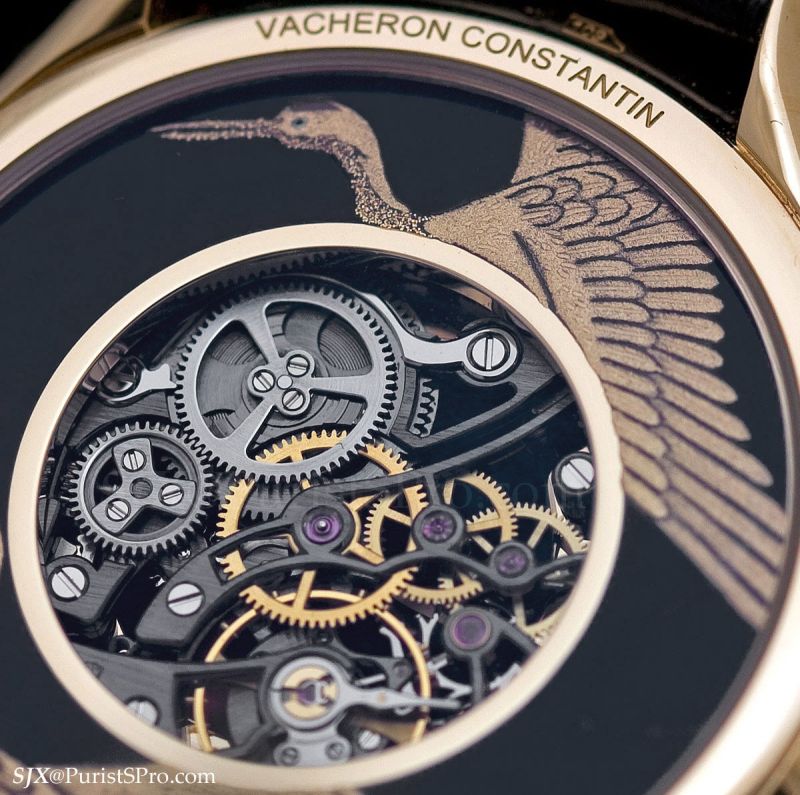
While the maki-e decoration on these watches is fine, of extremely high quality and possessing of outstanding details, they are not elaborate enough to be considered what would be called Grade A according to the straightforward classification system used by Pilot for its maki-e pens. Grade A is the highest and most expensive quality of maki-e pen, but note that the Grade refers not to quality of the maki-e, but elaborateness of the motif.
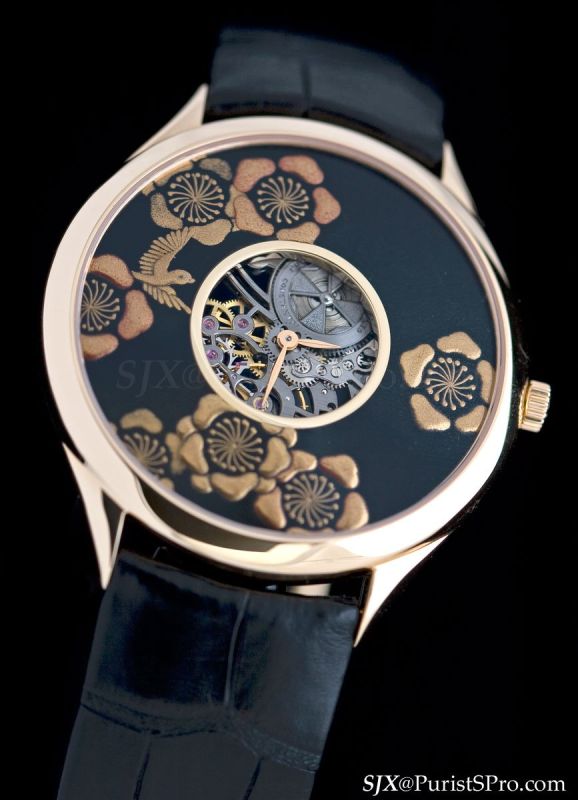
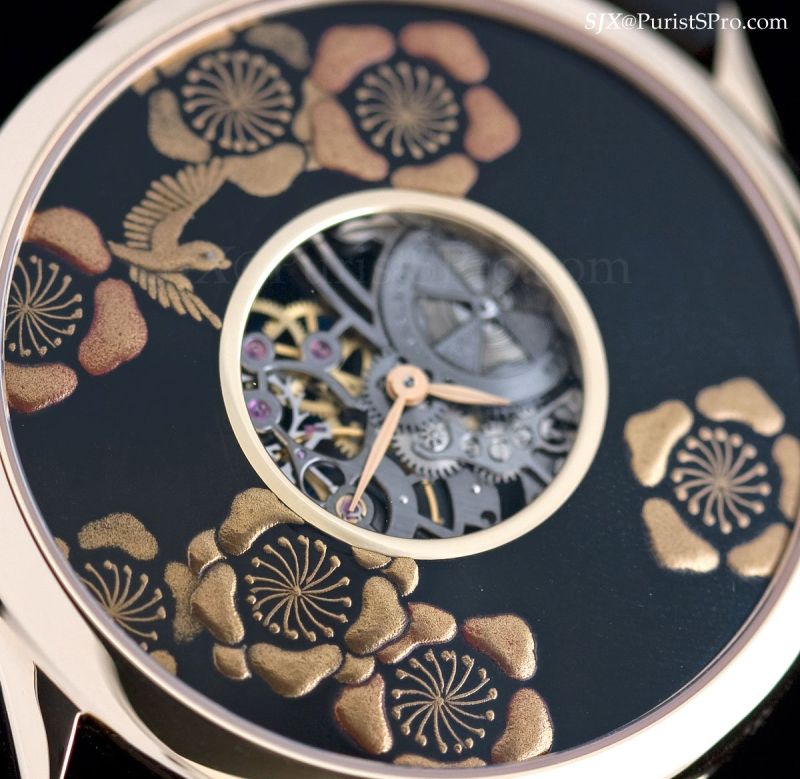
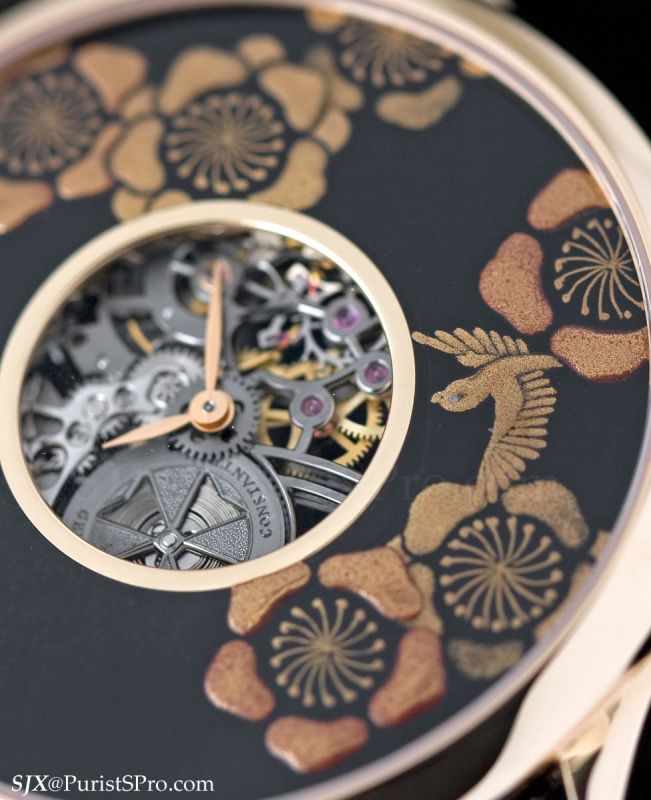
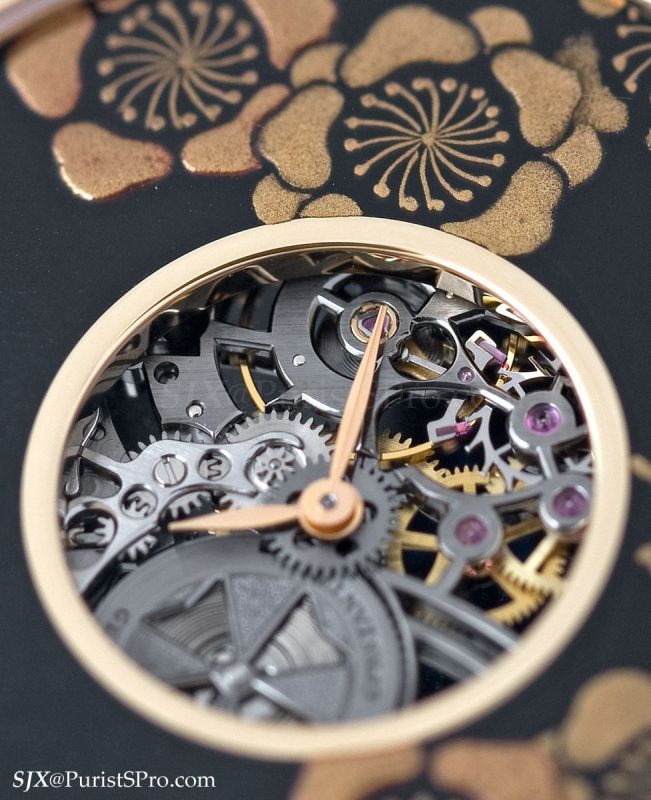
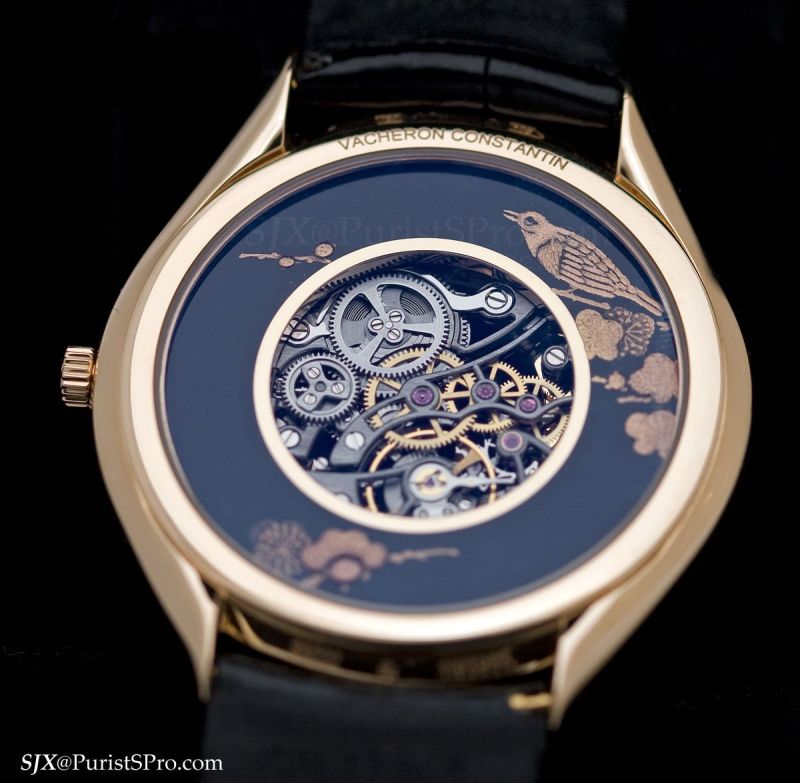
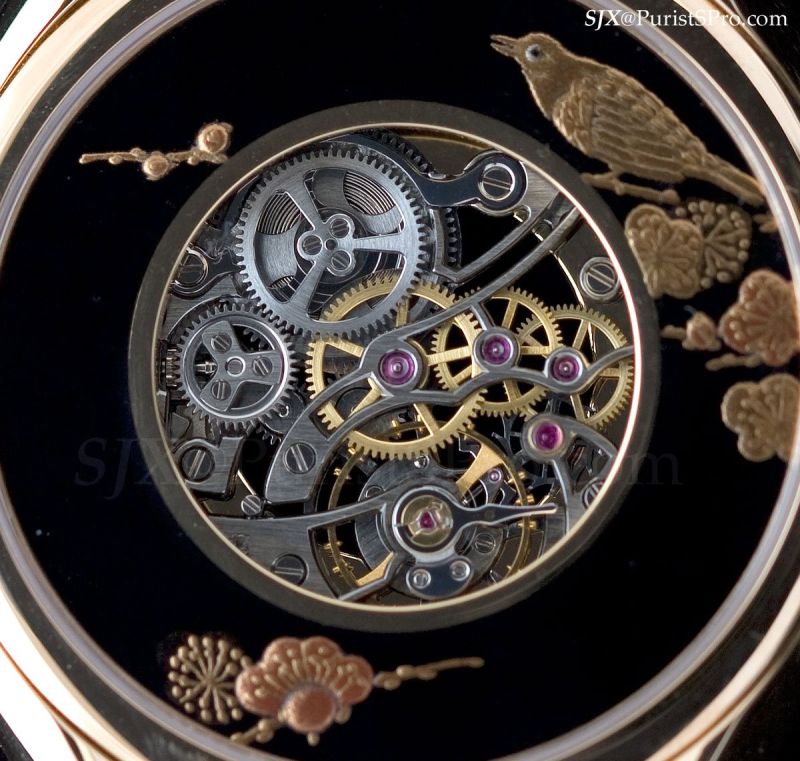
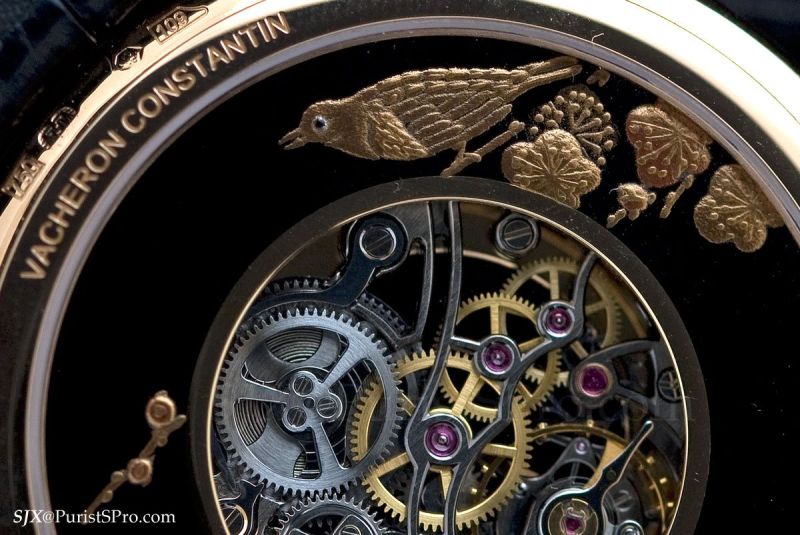
Grade A maki-e calls for liberal use of elaborate techniques like taka maki-e which raises the motif, as well as a good amount of gold dust, egg shell and other fine materials. Good examples of Grade A maki-e technique can be found on the top end Namiki or Pilot Emperor No. 50 pens. The limitations of the size of the dial as well as the height of the case probably constrained the possibilities for the lacquer work on the watch. That being said, given the steep price point of the set – these are only sold as a set – a higher grade of maki-e decoration would have been appropriate.
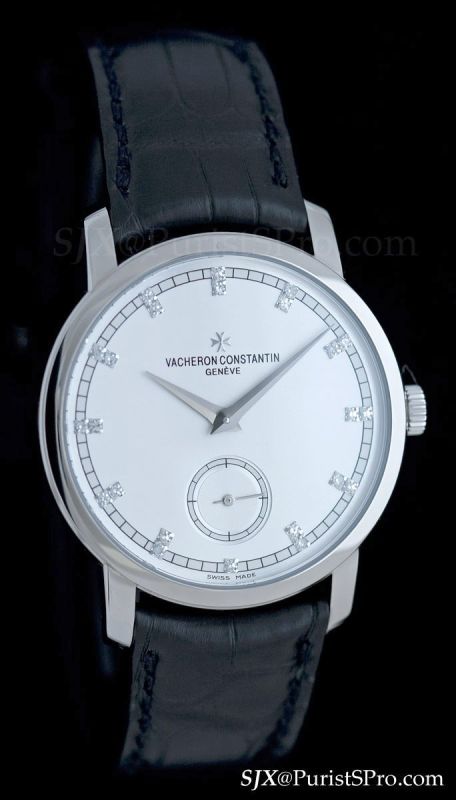
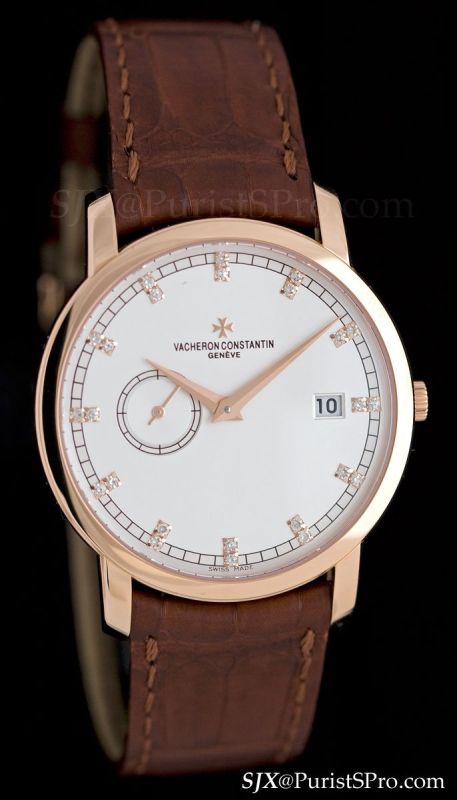
VC also showed several new models in the Patrimony collection, including new metals and dials for existing models, like the Traditionelle Perpetual Calendar Chronograph launched last year that is now available in white gold with a slate dial. Some of the simpler men’s models are now available with diamond indices; men’s watches like these or with diamond bezels sell very well in China and Taiwan. China is VC’s biggest market by far so expect to see more of such pieces.
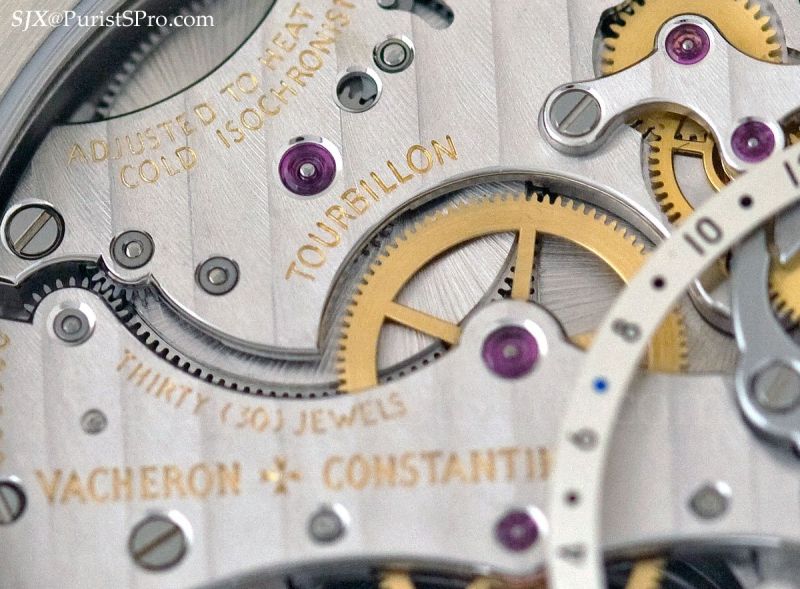
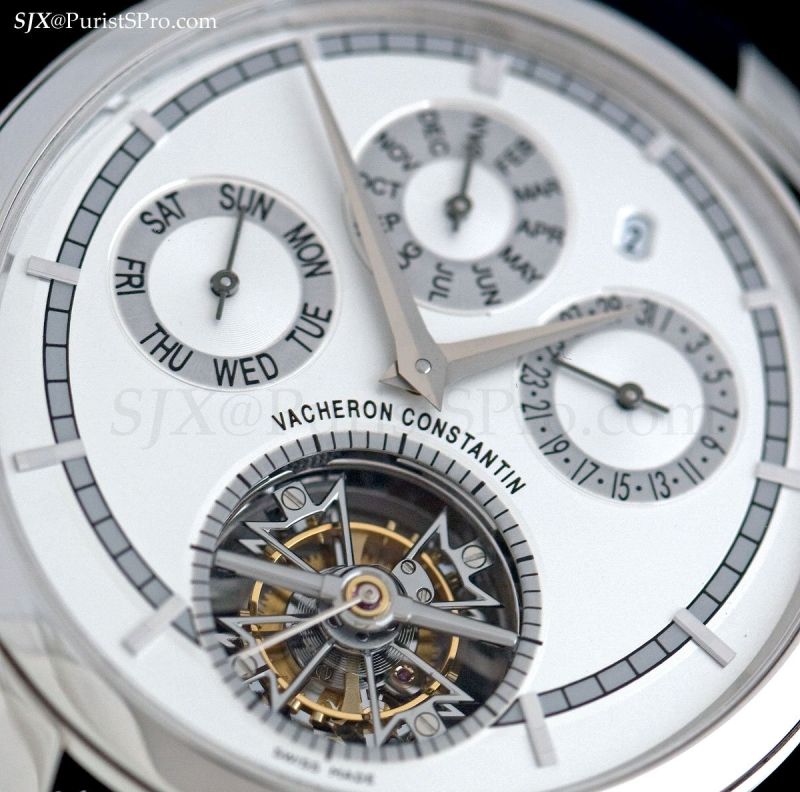
But the highlight of the Patrimony line is undoubtedly the complications. Two were unveiled. One is the Patrimony Traditionnelle Calibre 2253 Collection Excellence Platine. With a name that long it has to be impressive and it is. The watch contains a new movement that features a perpetual calendar, equation of time, sunrise and sunset indicator, as well as a tourbillon.
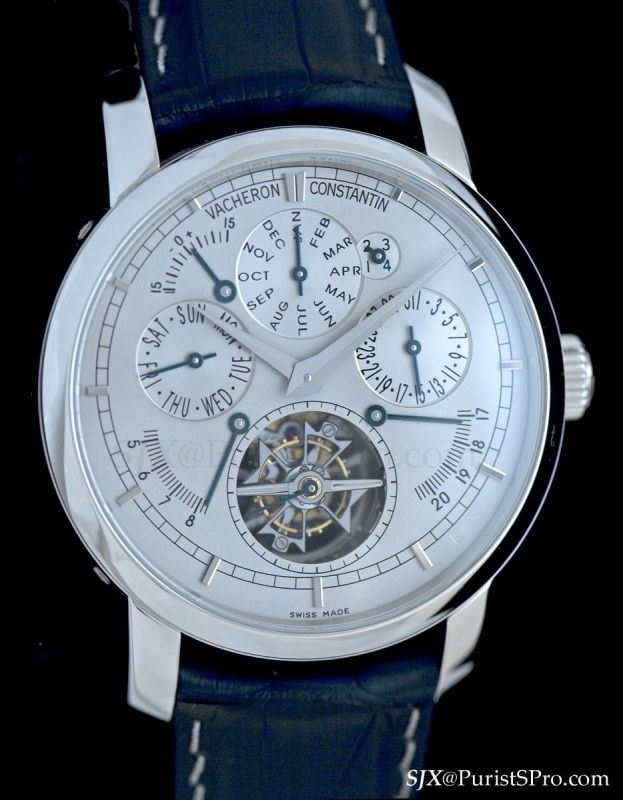
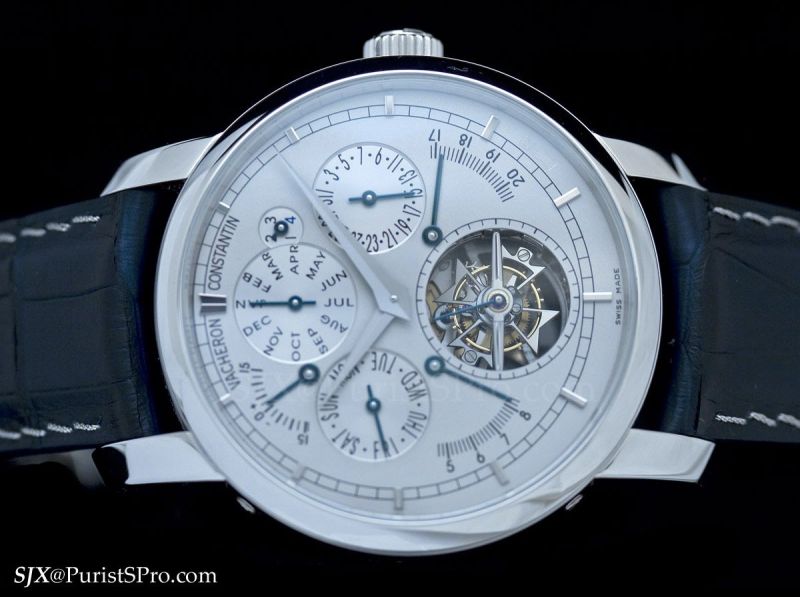
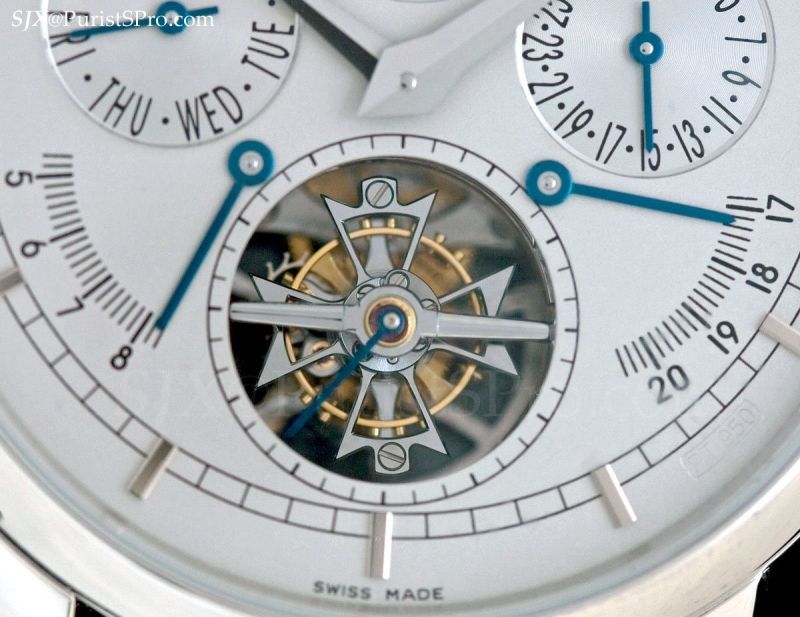
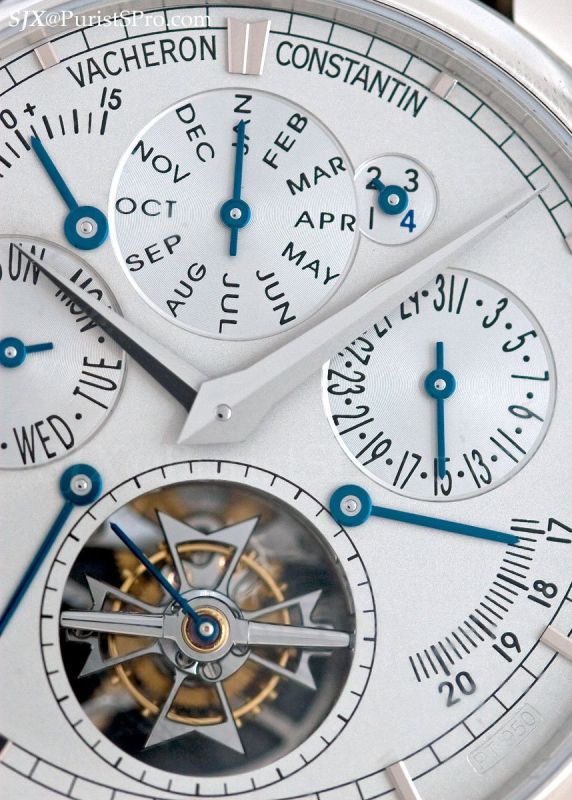
Twin barrels give this watch a 14 day power reserve, indicated by a display on the movement. As is the case with all VC complications, the finishing on this watch is consummate; the black polished tourbillon bridge and cage are stunning.
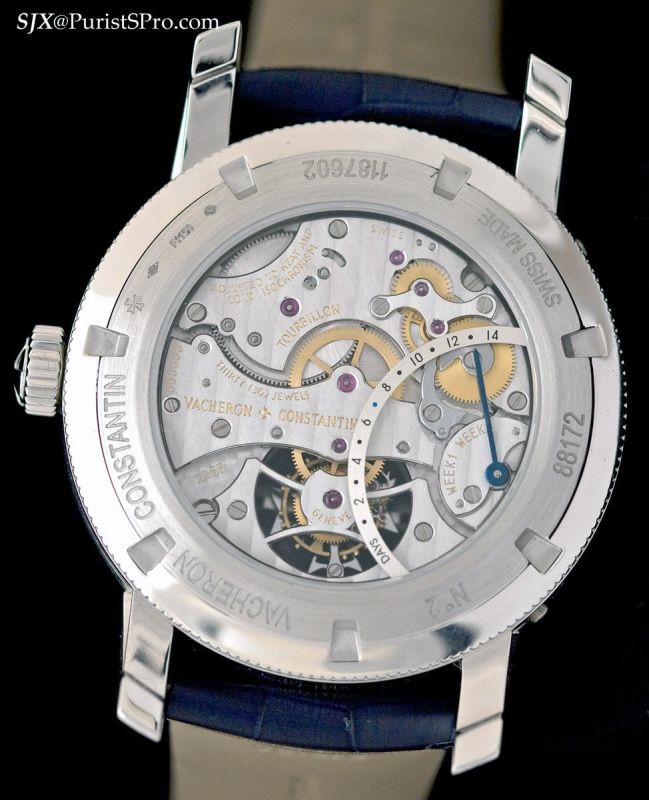
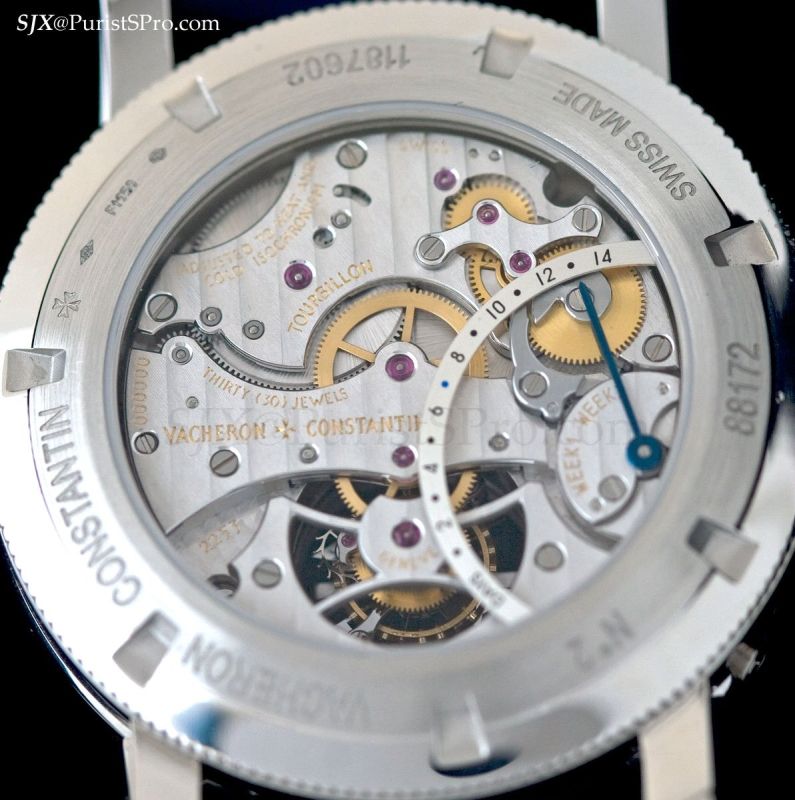
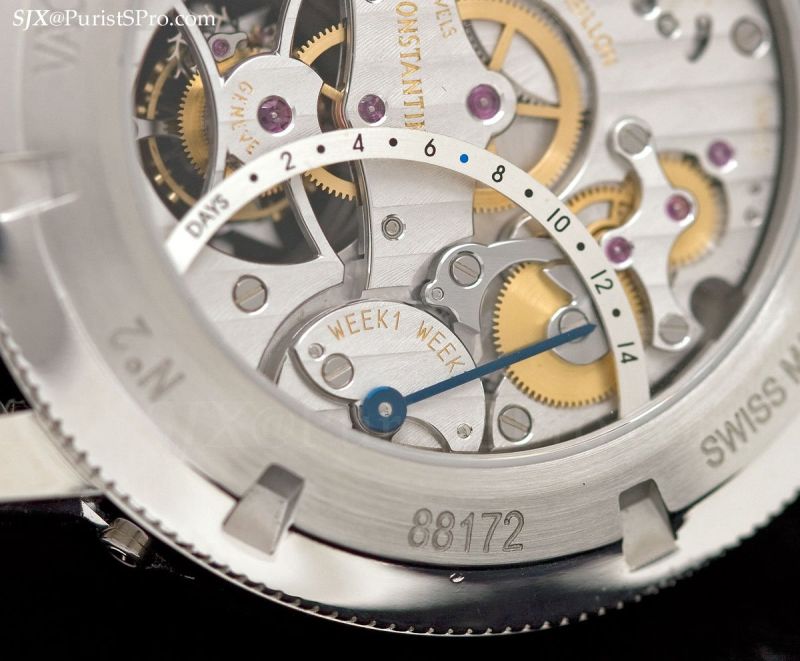
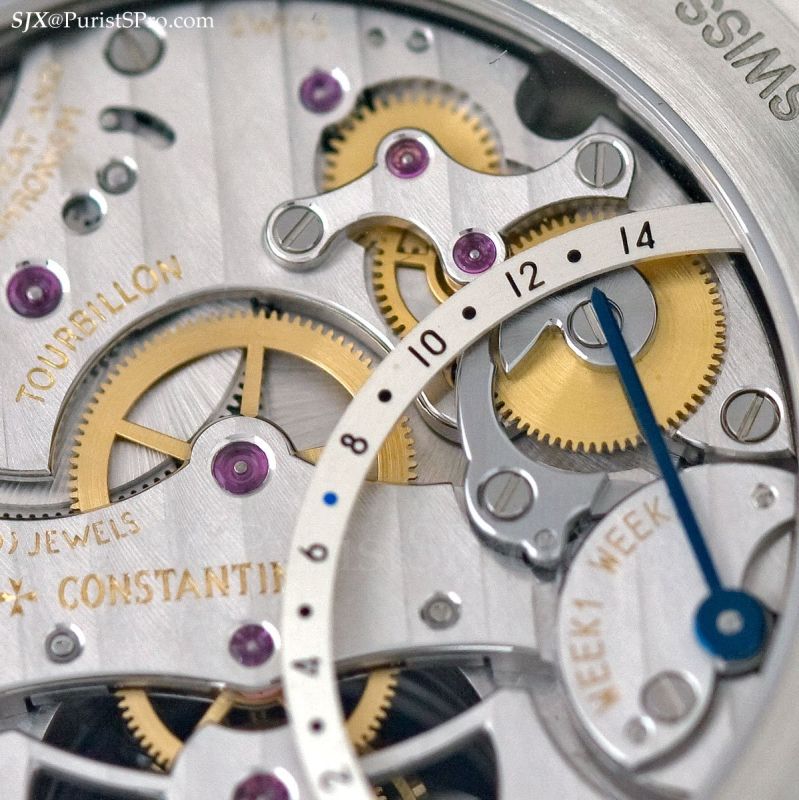
This is also part of the Excellence Platine collection, so it has a platinum case and unusually, a platinum dial. 10 pieces will be made but the movement will surely appear in other watches.
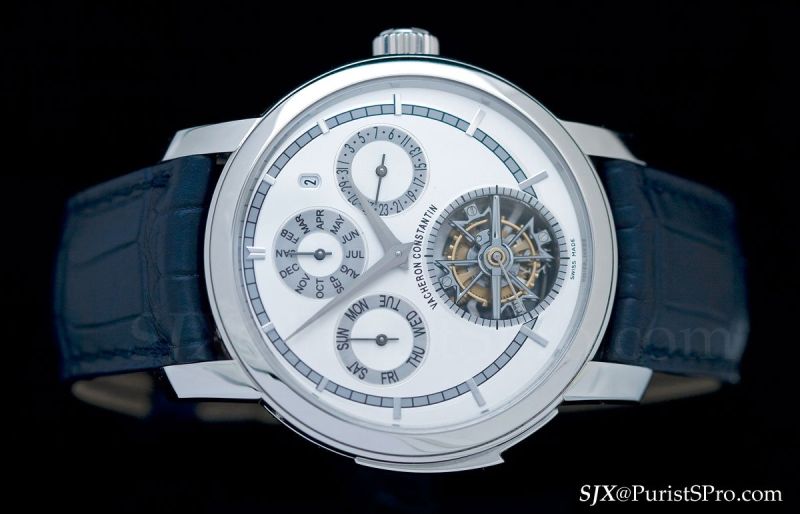
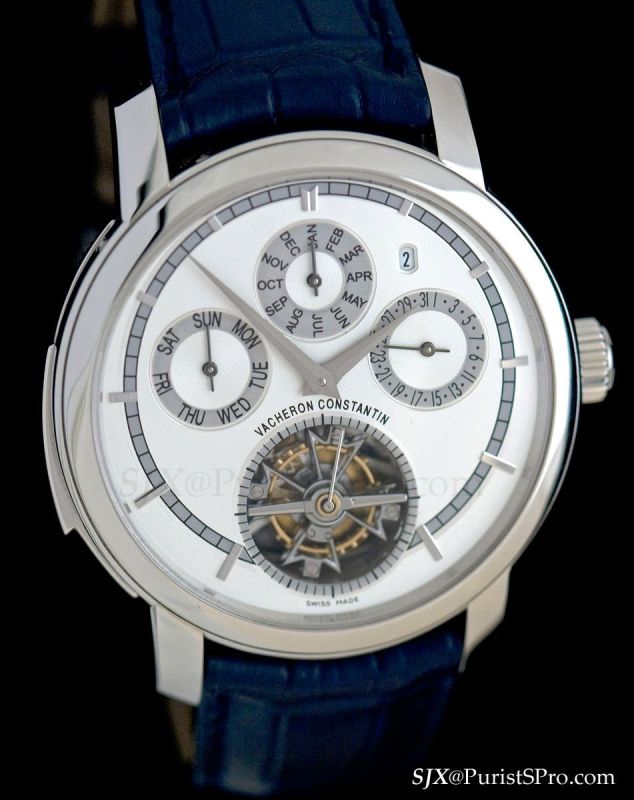
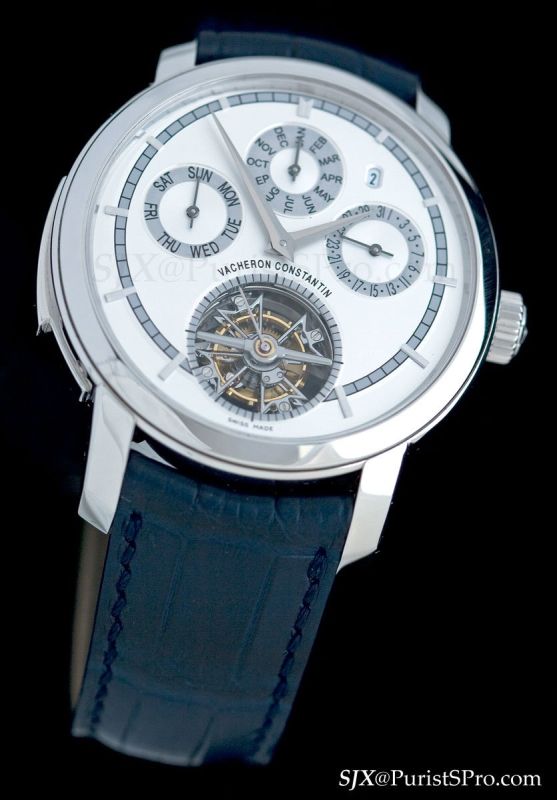
Next is the even more complicated Traditionnelle Calibre 2755. I first encountered this minute repeater-perpetual-tourbillon two years ago when it was launched in a rose gold case. At the time I was impressed by the tourbillon, which was exceptionally loud and clear, and free of the buzzing of the regulator that usually accompanies the striking of the gongs. VC silenced the regulator by redesigning its structure so that it is silent.
This year VC presents the same 2755 movement in a platinum case, with either a silver or dark grey dial. To my surprise when I activated the repeater, the watch sounded as good as the original rose gold version, despite the dense case material. If VC continues to make repeaters of this quality, with superlative movement finish and consistently good sound, it will eventually be able to take on Patek Philippe’s still unassailable position as the maker of the consistently best striking watches.
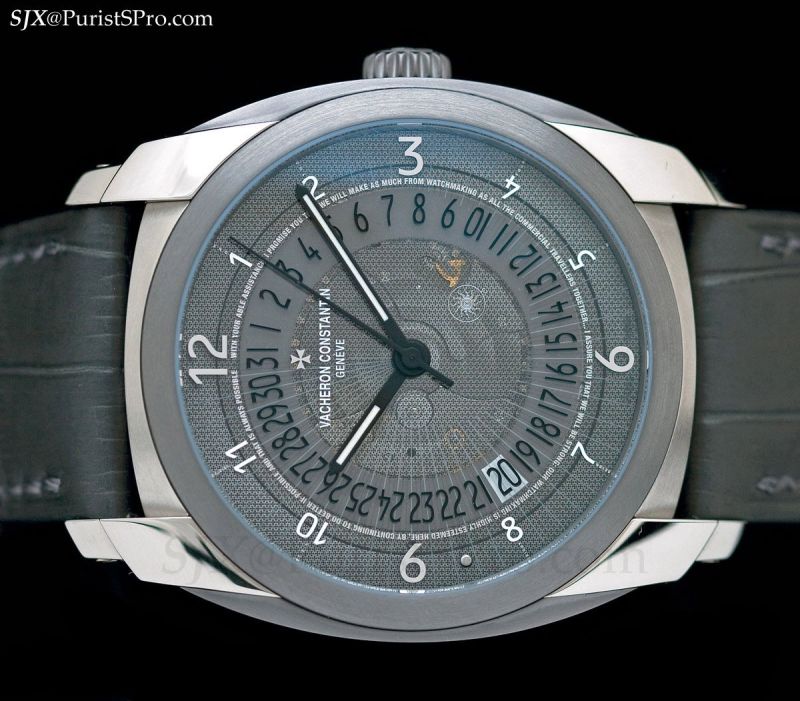
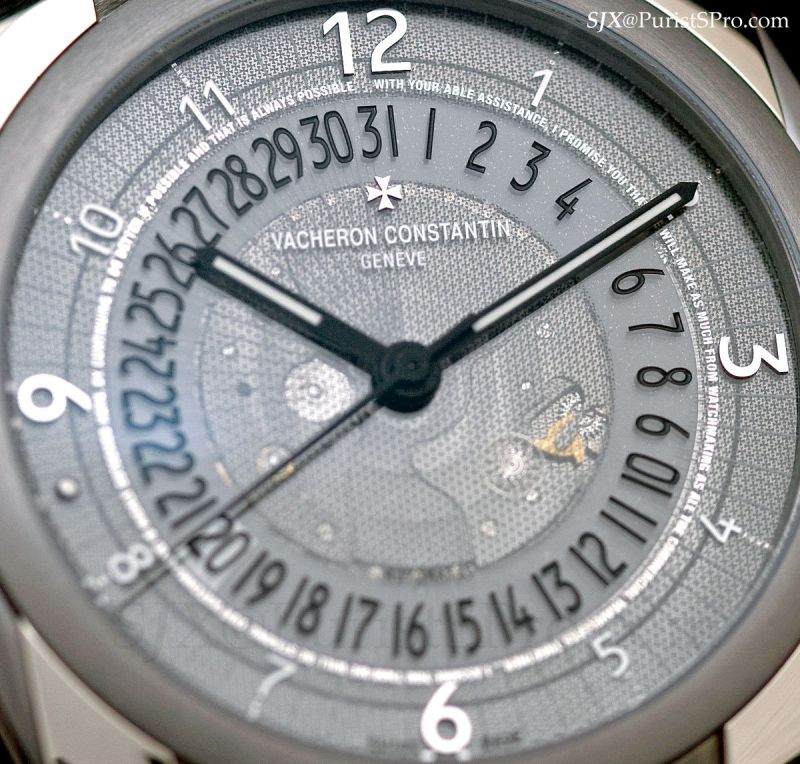
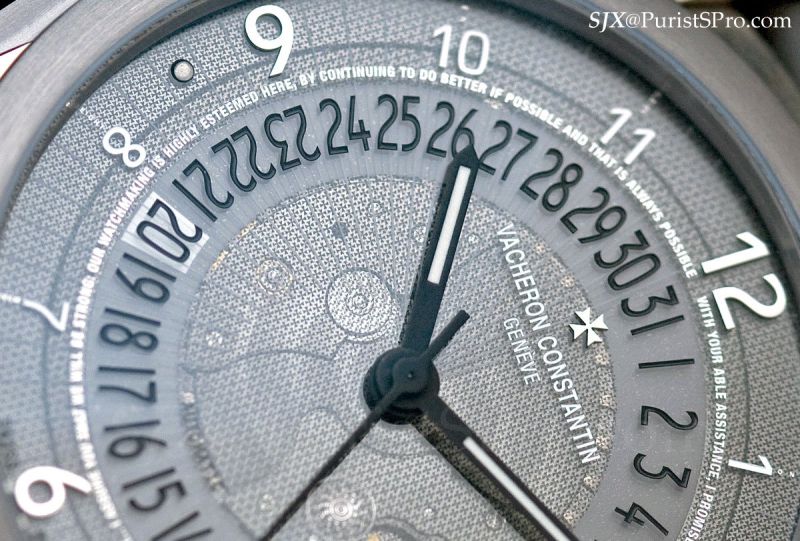
We finish with a new Quai de l’Ile in a tantalum and palladium case, to be made in a limited edition of 100 pieces. As this watch was originally made for the Only Watch auction in 2009, a portion of each sale will go the muscular dystrophy charity that Only Watch benefits. I don’t like the case design of the Quai de l’Ile, though I do appreciate its complexity, especially in these exotic metals.