Comments:


A long term review of the Carl F. Bucherer Patravi Tonneaugraph
I am very pleased to share my thoughts on the Carl F. Bucherer Patravi Tonneaugraph. I have chosen Thanksgiving as the day to post this article as every year this is the watch I select to wear on this special holiday.
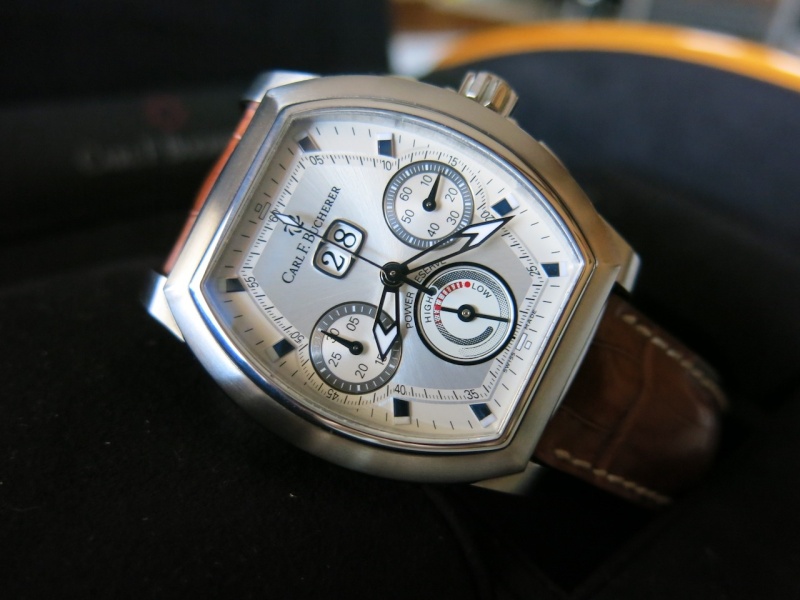
Checking my original papers, I purchased this watch in October 2005. So I have now enjoyed this fine timepiece for over 8 years.
Part I - case, dial, and movement
As I have posted over the years, my favorite design element of any watch is the case. The CFB Patravi Tonneaugraph is a fine example of a watch with a unique and interesting case, and it was what originally attracted me to this piece.
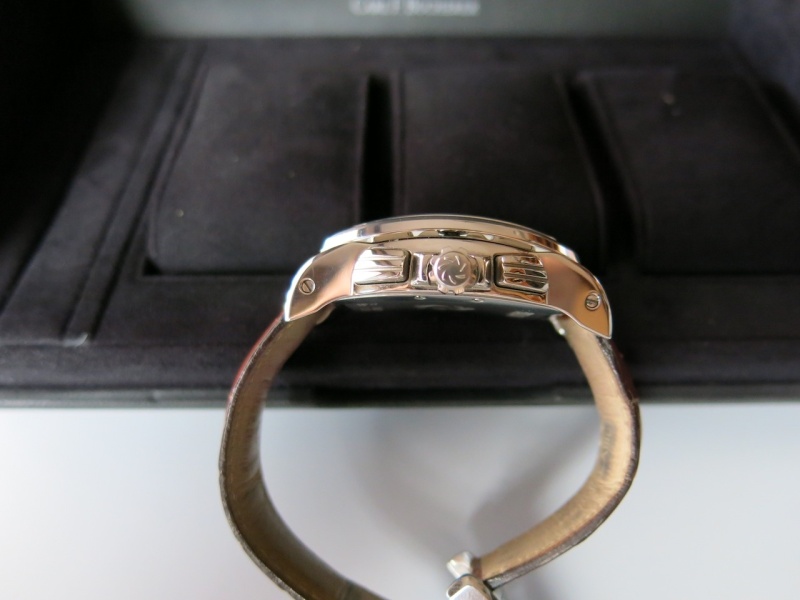
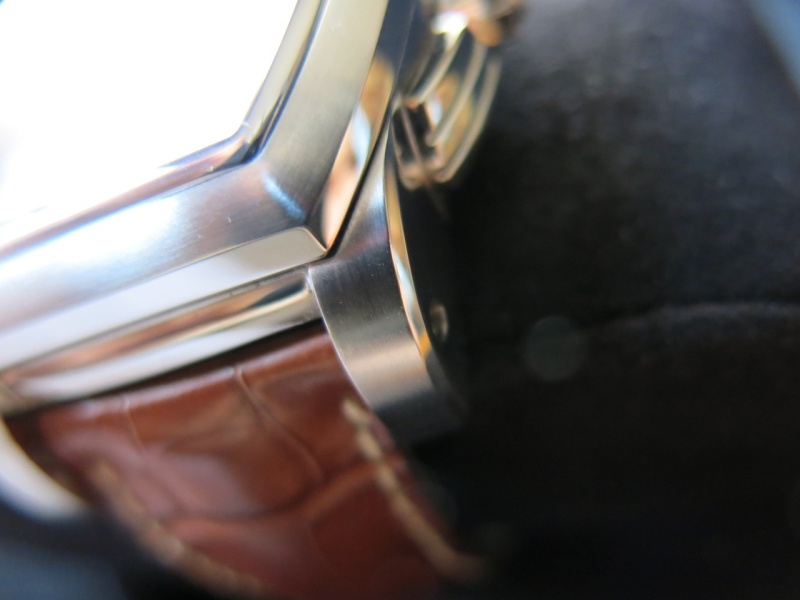
The crown and pushers also exhibit some unique detailing that are well matched with the overall design. The pushers follow the shape of the case. Both the pushers and crown have ribs in them that offer positive grip. That is not such an important factor on the pushers, but on the crown it is much appreciated and useful.
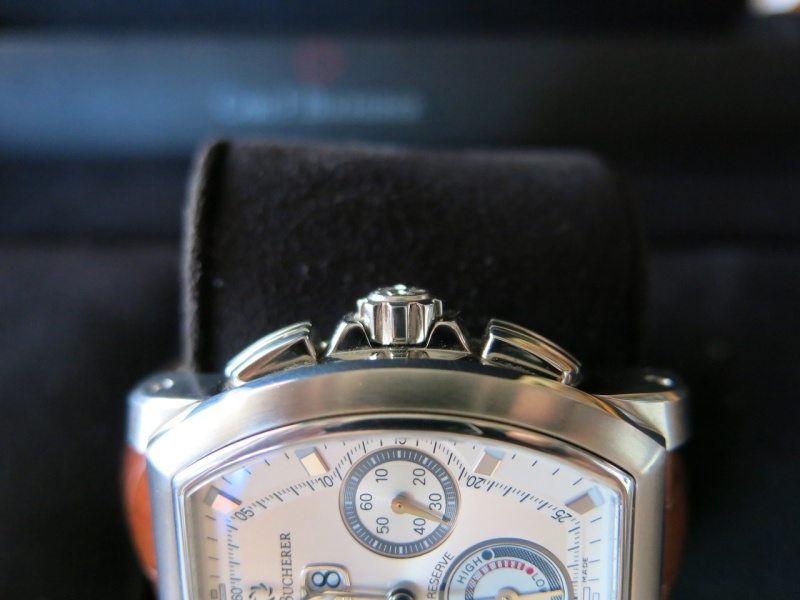
Both the case and bezel have a terrific blend of brushed and polished surfaces. Starting at the meeting of the crystal and bezel, CFB uses a polished metal ring, then transitions to a parallel brushed top bezel surface, and completes the bezel with a polished bezel side wall.
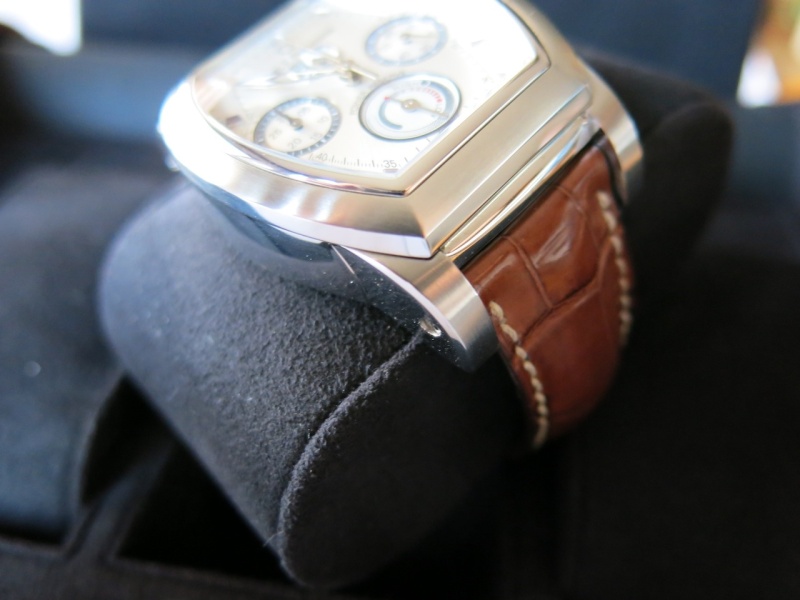
The case middle is all polished aside from the top of the lugs, which are brushed. When viewed from the top down, as when you are looking at your wrist to tell the time, it is mostly non reflective.
The dial on this watch is mostly silver with some grey rings and black markings. The functions of this timepiece include a continuously running sub seconds, a 30 minute and seconds chronograph counter, a big date, and a power reserve indicator.
This message has been edited by MichaelC on 2013-11-28 11:32:01
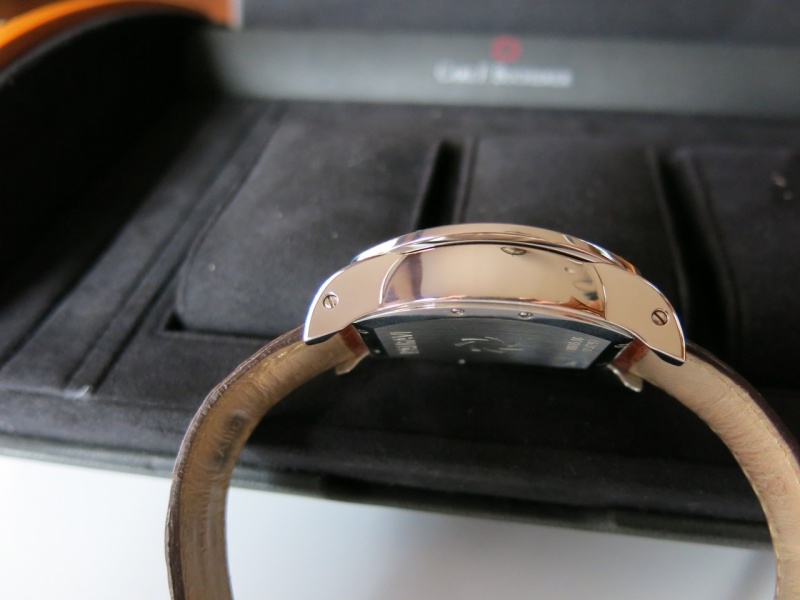
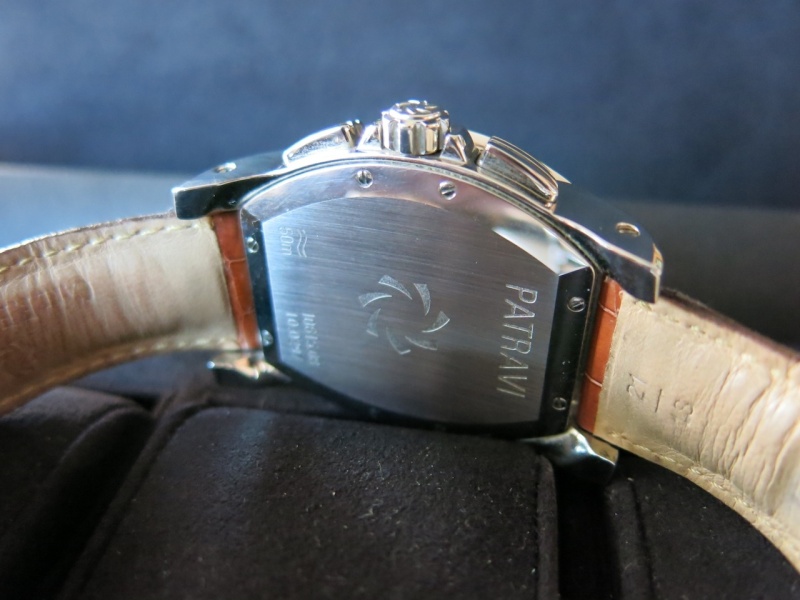
The barrel shaped tonneau dial is obvious, and other manufacturers have used it as well. Looking at the watch from the side reveals the pleasure that CFB went to the trouble of actually curving the case bottom to match the side. Another favorite watch of mine, the Ulysse Nardin Anniversary 160 goes about this detail the same way, but it is also not uncommon for a manufacture to make things a bit easier here and hide a flat caseback behind the curved sidewall. Of course, the crystal follows the curved shape as well, and Bucherer has done an excellent job in having this glass manufactured.
The crown and pushers also exhibit some unique detailing that are well matched with the overall design. The pushers follow the shape of the case. Both the pushers and crown have ribs in them that offer positive grip. That is not such an important factor on the pushers, but on the crown it is much appreciated and useful.
Both the case and bezel have a terrific blend of brushed and polished surfaces. Starting at the meeting of the crystal and bezel, CFB uses a polished metal ring, then transitions to a parallel brushed top bezel surface, and completes the bezel with a polished bezel side wall.
The case middle is all polished aside from the top of the lugs, which are brushed. When viewed from the top down, as when you are looking at your wrist to tell the time, it is mostly non reflective.
The dial on this watch is mostly silver with some grey rings and black markings. The functions of this timepiece include a continuously running sub seconds, a 30 minute and seconds chronograph counter, a big date, and a power reserve indicator.
While the former are mostly standard fare here, the power reserve indicator deserves special credit. We have two moving parts here as opposed to just a hand that goes back and forth. As the watch is wound by hand or worn on the wrist and gains power, the disc behind the hand rotates in a clockwise direction while the hand remains still. It is much easier to see this action when using the crown to wind the movement of course, and whenever the watch stops after a period of not being worn, I look forward to winding it up to get started and seeing this unique operation.
When the watch is running but then sits unworn, the hand itself turns (also clockwise) to indicate the reducing power reserve. This power reserve layout is not exclusive to CFB, but it is not entirely common, and in my opinion adds a very nice upgrade to the power reserve function, especially when used on an automatic watch (which not everyone is a fan of in the first place).
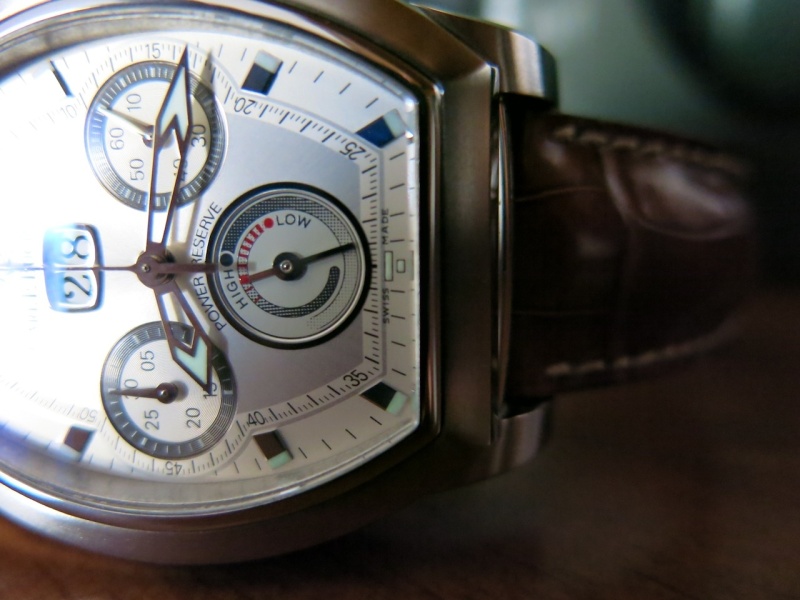
The silverized dial utilizes a very fine sunburst guilloche from the center outwards. Polished chrome rings trim the power reserve subdial and big date at 12. The outer section of the dial with the hour and minute markers has a matte finish.
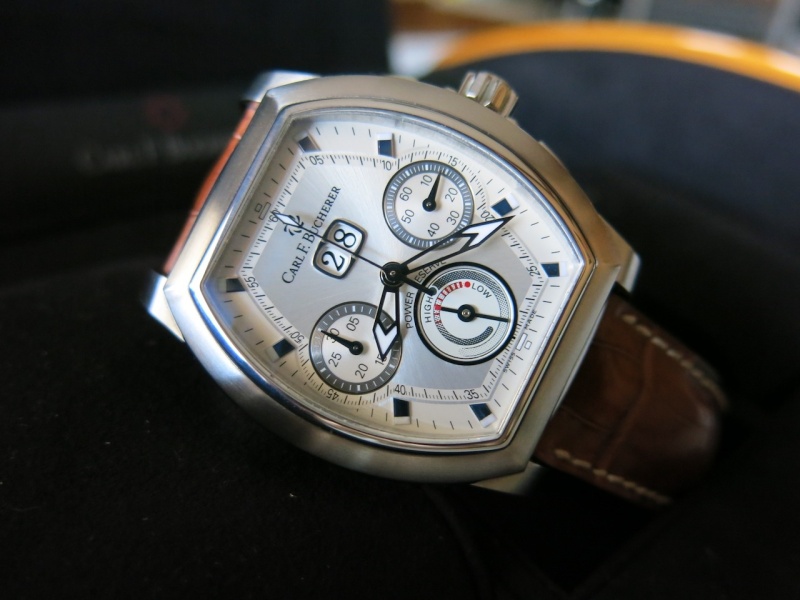
The hands and hour markers are all polished steel, and have a wonderful application of luminova. Discreetly used, yet very legible.
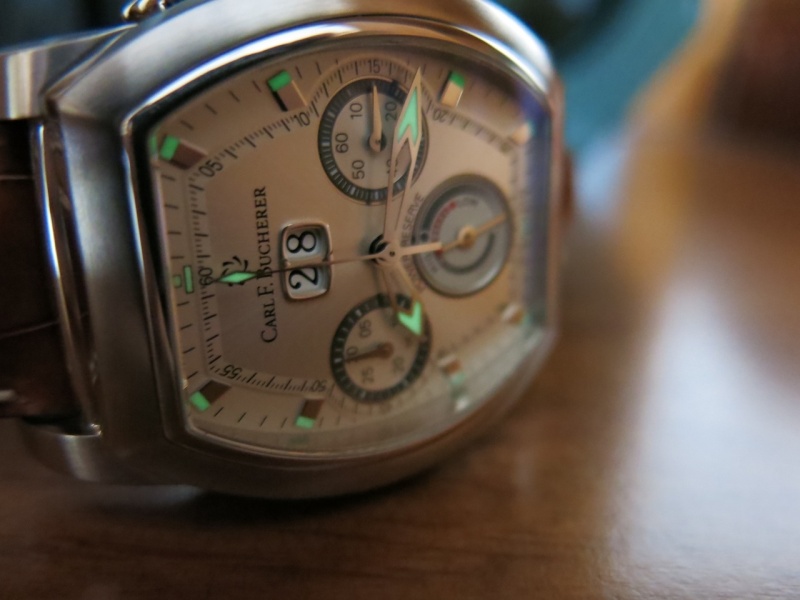
The silverized dial utilizes a very fine sunburst guilloche from the center outwards. Polished chrome rings trim the power reserve subdial and big date at 12. The outer section of the dial with the hour and minute markers has a matte finish.
The hands and hour markers are all polished steel, and have a wonderful application of luminova. Discreetly used, yet very legible.
Carl F. Bucherer modifies an ETA based movement to use on this Tonneaugraph. Nothing special to report here. The pushers require a solid amount of force to activate and are offer a very positive click. My sample has always been extremely accurate. It was serviced once since I have owned it, maybe 5 years ago, yet continues to provide spot on accuracy for an automatic watch. The case is closed with a solid caseback and simple markings. In keeping with the attention to detail utilized on the rest of the watch, CFB has not forgotten the caseback which has a polished and beveled outer ring.
This message has been edited by MichaelC on 2013-11-28 11:32:01
Excellent post
It is always nice to read a good review but quite rare to have a long term overview.
Thanks a lot for sharing the life of your beautiful watch Michael.
Cheers, mark
Thanks Mark
It really was a pleasure to share my thoughts on the watch as I have enjoyed it for so many years. You don't really need to reach for the right words to say what you think 
Part II - strap and clasp
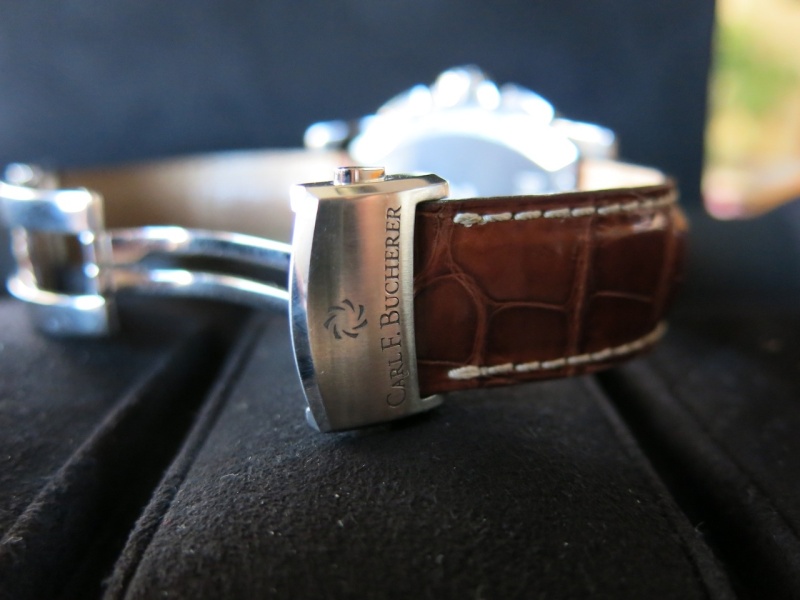
Another positive for the CFB Tonneaugraph, the strap and clasp designs are exemplary. The strap is hand stitched Louisiana alligator in a pleasing honey brown shade. It is padded towards the top where it attaches to the case. The stitching is ecru, and matches nice with the dial. I am still on my original strap here, and while there are some sweat stains and worn areas, it is still in remarkable shape. Of course, it has been worn in rotation with other pieces, but I still feel the expert craftsmanship of the strap has given it the ultra long life cycle.
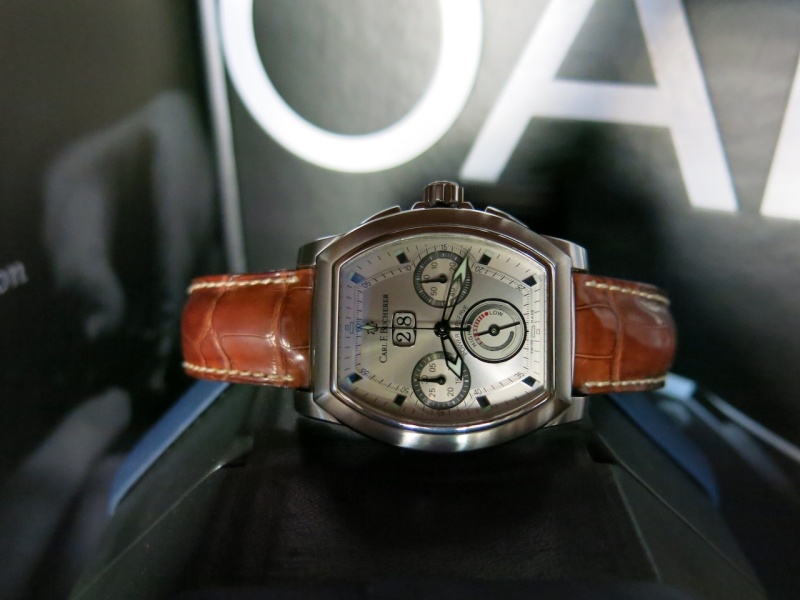
The strap is fitted to an adjustable deployant clasp. Here again, Carl F. Bucherer does things a little different than other brands.
This message has been edited by MichaelC on 2013-11-28 12:24:05
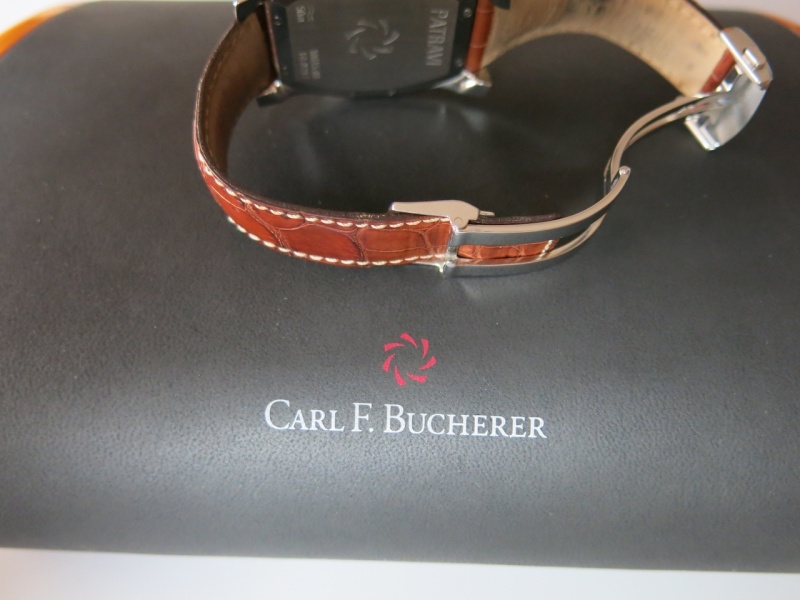
The strap is fitted to an adjustable deployant clasp. Here again, Carl F. Bucherer does things a little different than other brands.
In the photo below, the folding adjustment on the left side is shown in the open position. When rotated in this position of 90 degrees to the blade, the strap tail can be moved in either direction. Once you have it where you want it, you simply bend the part back parallel to the blade.
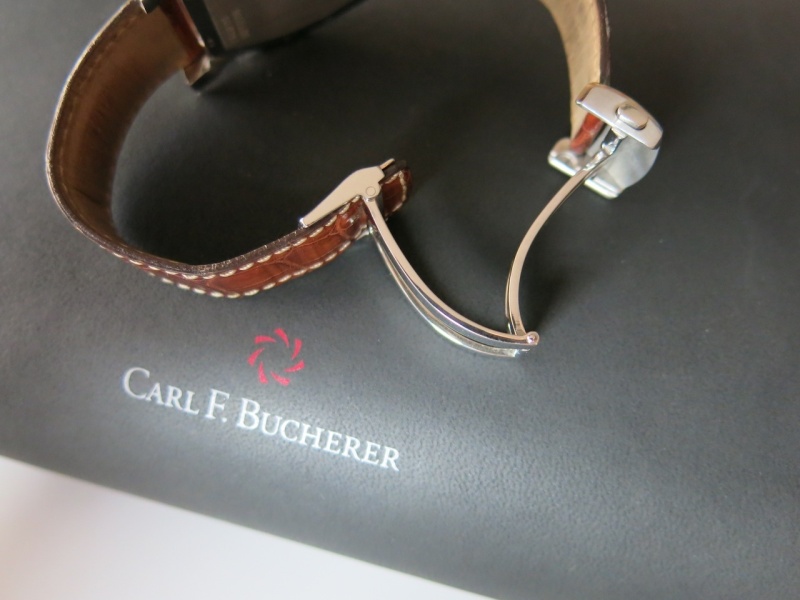
Now you see it in the locked position, ready to be closed around the wrist. It is a superbly simply system that allows the user an extremely easy manner in which to adjust the strap size. It also allows the strap tail to be kept solid and not require any holes to be punched through.
Now you see it in the locked position, ready to be closed around the wrist. It is a superbly simply system that allows the user an extremely easy manner in which to adjust the strap size. It also allows the strap tail to be kept solid and not require any holes to be punched through.
The latching portion of the buckle is finely finished. The CFB logo and name are etched into the metal. Polished bevel edges again match the rest of the watch head. The strap latches closed with a very solid click. One button on each side is pushed to release it.
This message has been edited by MichaelC on 2013-11-28 12:24:05
Part III - accessories and conclusions
When reviewing a watch I don't always discuss the box and papers. CFB includes a small leather wallet for the booklets, nothing extraordinary here. But I feel the watch box deserves special mention. It is good size, maybe 10" wide and 8" deep. The center section is leather, and the two ends are birds eye maple. Really wonderfully finished.
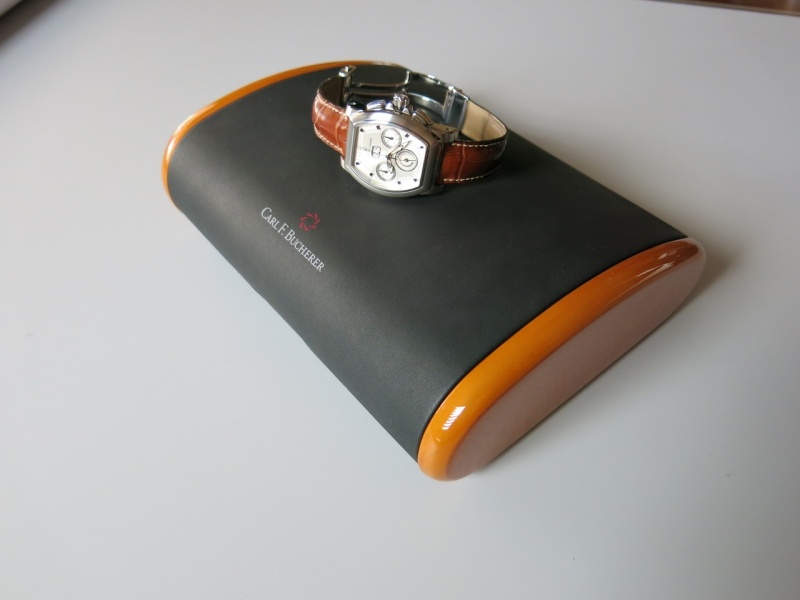
The inside has compartments for 3 watches and a ring slot on the side, and the entire inside is lined with a soft microfiber material. While most of us might not store our watches in the supplied box, I feel Bucherer goes above and beyond in supplying a very well made box of unique design that can double as a small jewelry box.
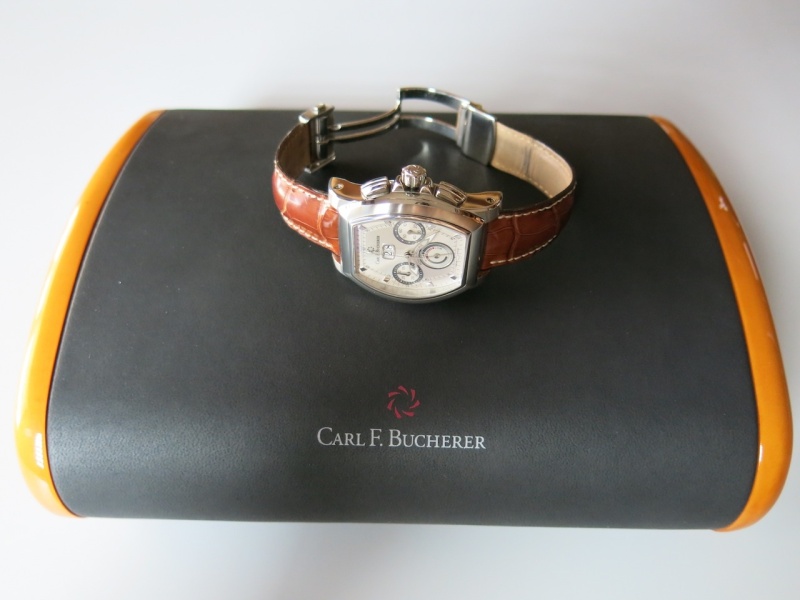
So now you have read about all the Tonneaugraph's design attributes. What about on the wrist in daily action?
The inside has compartments for 3 watches and a ring slot on the side, and the entire inside is lined with a soft microfiber material. While most of us might not store our watches in the supplied box, I feel Bucherer goes above and beyond in supplying a very well made box of unique design that can double as a small jewelry box.
So now you have read about all the Tonneaugraph's design attributes. What about on the wrist in daily action?
You likely have surmised from the review that I have not kept this watch over 8 years because it fails to please when being worn
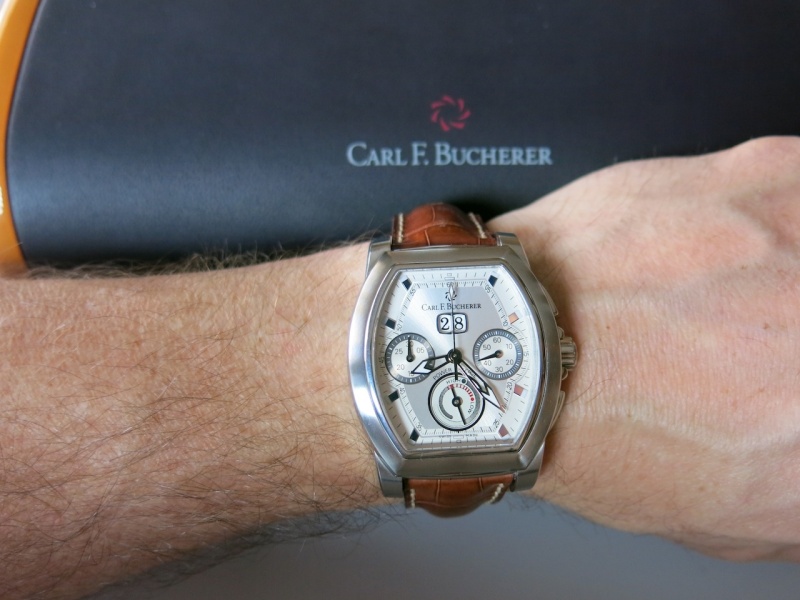
Superbly comfortable, good looking, finely finished, and a reliable performer. Attention paid to every detail on the watch. It has been a wonderful "keeper" for me. I do not recall exactly what I paid for it, but I can say it has outlasted many other watches I have tried, and is as enjoyable to wear as most any other in my collection, despite being the least expensive cost wise.
I have never owned another Carl F. Bucherer watch, but no doubt I will at some point. It is not a brand we speak so much of here, but it is well worth our recognition.
A quick visit to the CFB website shows that the watch is still made today in various dial, metal, and strap options and goes by the name "Patravi T-Graph". I also see some very subtle changes to the current models - a tweak to the shape of the big date chrome outline, I new font on the date discs (I definitely prefer mine!) and yet even more finish detail added to the top of the chrono pushers. I'm happy to see this model is still offered.
I hope you have all enjoyed the article, and for those who celebrate, I hope you are having a great Thanksgiving. I'm not sure what everyone is wearing today, but you all know what I will have on
Superb review ...
Andrew,
I wish I had your talent for reviews.
You show your love for CFB and, that's the hard part, maintained the objectivity.
Congratulations for the review and the watch,
Nilo
Thanks for reading Nilo and your kind words.
Sometimes when we really adore a piece it is hard to be objective, but it is always OK to wish a thing or two were different ;-)
BTW, I do have a few nicknames, but I had never been called Andrew before! LOL!
Sorry about the name change ...
Michael,
Sometimes, I mess with names when multitasking between a keyboard and my granddaughter.
Cheers,
Nilo
Sometimes, I mess with names when multitasking between a keyboard and my granddaughter.
Cheers,
Nilo
No problem! I think we have all done that
My kids are always in and out of my home office, and it is easy to get distracted.
Nice post, Michael!
C.F. Bucherer is an unappreciated brand that puts a significant amount of care and detail into their cases and dials. Thanks for posting this!
Thanks for reading and I am glad you enjoyed it.
Fun to write about pieces we really love.
Excellent post, thanks Michael.
Tonneau shaped watches are far from being my fav ones but I appreciated your review.
Fx
Fx
The shape did take some getting used to.
And I really came to enjoy the look on my wrist.
Thank you for reading my article on it!
I almost purchased the Tunneaugraph while on vacation three years ago...
I was pleasantly surprised because I didn't think I would like the shape of the case on my wrist.
Well priced for all the complications that it combined: A chronograph, a big date, and a PR...everything someone would need for a daily wear.
Thanks for the review, it was a nice summary and the longer term impressions are something we need more often on our forums.
Best, Mike
Appreciate your feedback Mike.
I feel I can offer better insight when I have owned a watch for a longer period. It is too easy to be influenced by the "honeymoon period" early on. But, after so many years in a collection, you really know what you have. I have learned how special it is to really find a keeper, and I'm happy this CFB is on that list for me.
Very well-written and interesting review!
Thank you very much for it, I thoroughly enjoyed reading it. Regarding the movement: I rather assume that it is supplied by Dubois-Dépraz, and not modified by Bucherer. At least the unique big date layout suggests that origin.
I, too, think that the deployant clasp layout is not only unique, but due to the possible step-less adjustement of the strap also more versatile. However, when I tested the Evotec, I felt that the clasp is very uncomfortable as soon as the strap is not long enough, due to the large part protruding towards the inner side of the wrist. I assume that the strap is well dimensioned for you, so the clasp fits good without any modifications.
Regards,
Marcus
I, too, think that the deployant clasp layout is not only unique, but due to the possible step-less adjustement of the strap also more versatile. However, when I tested the Evotec, I felt that the clasp is very uncomfortable as soon as the strap is not long enough, due to the large part protruding towards the inner side of the wrist. I assume that the strap is well dimensioned for you, so the clasp fits good without any modifications.
Regards,
Marcus
Thanks for reading, and good points Marcus
I believe you are correct on DD supplying the movement. I was highly intrigued when Bucherer came out with their in-house A1000 a few years back, but have never encountered one in person.
The strap adjustment is awesome... if, as you point out, the strap sides allow for the clasp to properly sit on your wrist. I recall the supplied "standard" strap was too long for me, and the dealer exchanged it for a shorter size, which brought me right into the sweet zone for the clasp's adjustments.