
Four watches in one: the de Grisogono OtturatOre
home.watchprosite.com
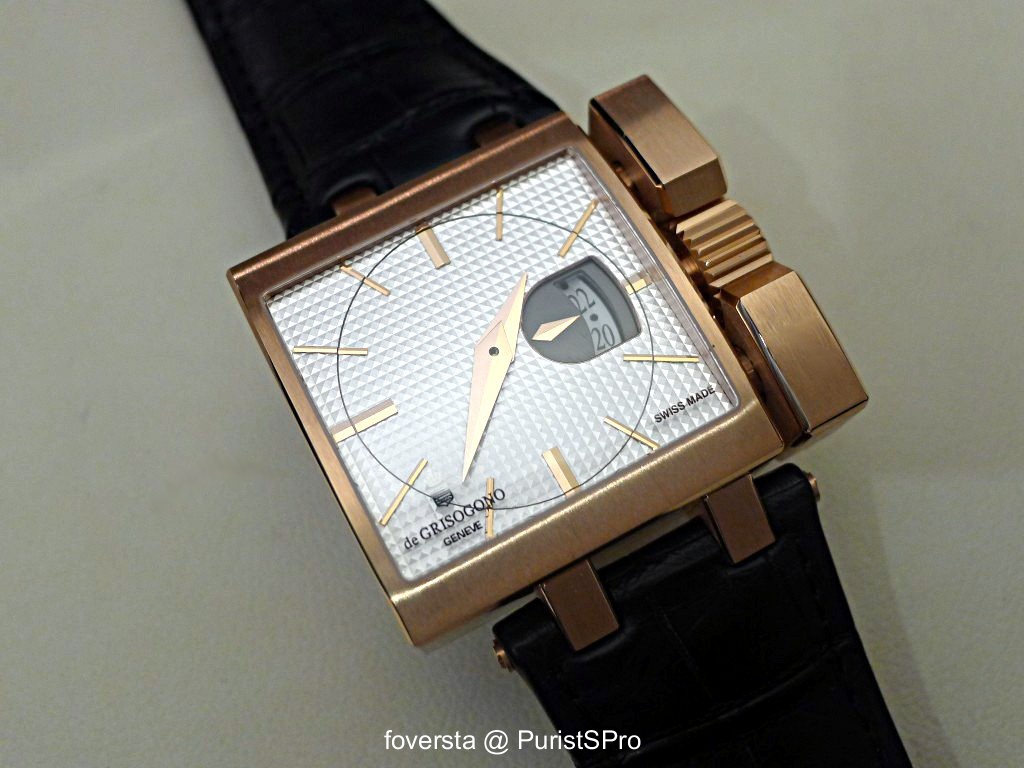
But despite this, it remains a complicated watch for three main reasons.
The first reason is that it is not two hands watch because it can display a small second, a power reserve indicator, the moonphases and the date. The second reason is inherent in the sequential display module composed of more than 300 components. The last reason is related to the architecture of the movement. The technical team of de Grisogono has spent over three years to define the sequential display module. The team faced several challenges:
* the release had to be immediate when the pusher was pressed
* the dial had to rotate fast enough to give the impression that it was the complication that revolves, not the dial itself
* the rotation of the dial had to stop instantaneously
* energy for such a mechanism had to be sufficient

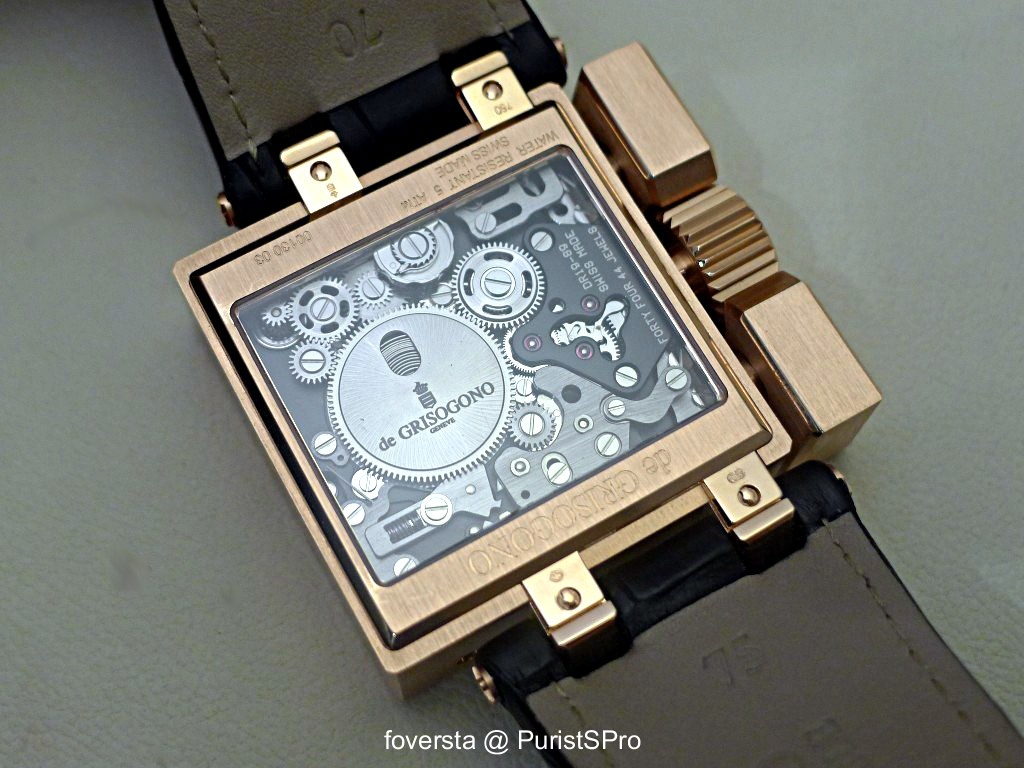
The visible part of the movement caseback side is not related to time display and other time functions. It is indeed the sequential mechanism and we can underline three important parts:
* the specific barrel which spring is wound by the successive pressure of the lower pusher. By "pumping" 20 times on this pusher (you can't press it more, there is a security system), we provide enough energy for ten 90 ° rotations of the dial (ie two and a half turns).
* the two parts located below the barrel allow the immediate release (right) and stop (piece on the left). The main difficulty was to define the system which would be able to stop the rotating dial efficiently: given the speed and the dial weight, it was necessary to imagine the system able to absorb the energy of the moving part in order to avoid a "bounce back" that would have been visually a disaster.
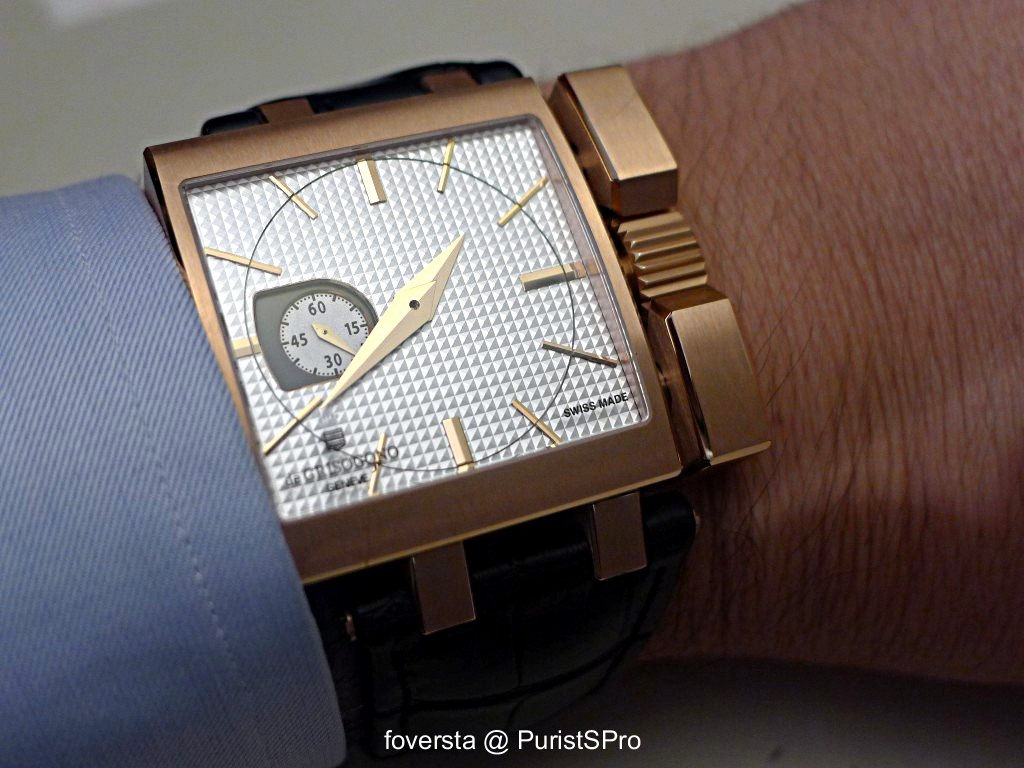
Clearly, the result is really impressive because by pressing the upper pusher, the dial turns like a flash and stops with precision. And indeed, this leads to a trompe-l'oeil effect, since we feel that it is the complication that turns revealing the small second and the date on the horizontal axis, the power reserve indicator and the moonphases on the vertical axis.
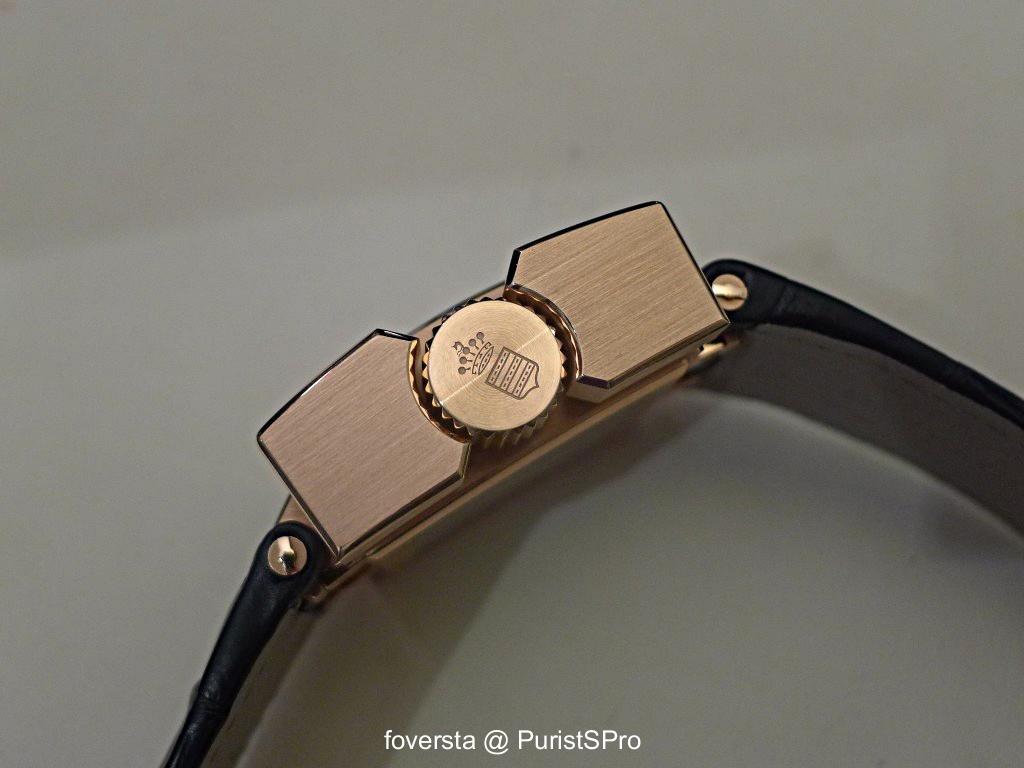
The visible part of the caseback is dedicated to the display mechanism at any time we can guess that the movement is automatic, the rotor being hidden. The DR 19-89 caliber, consisting of 574 components (including 334 for the sequential module) has a frequency of 4 Hz and a power reserve of 42 hours. Some might think that DR is a nod to Daniel Roth, the company in which Gerald Roden has worked previously but they would be wrong: DR means Dial Rotation. But sometimes there is a touch of irony lying somewhere.
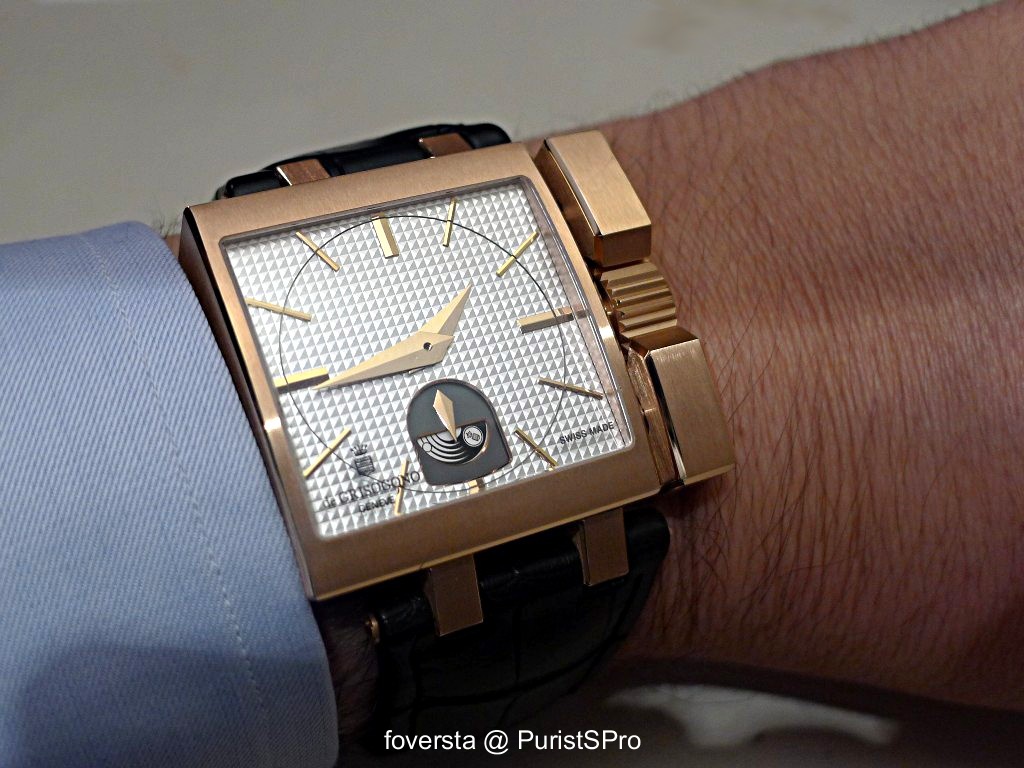
Without any doubt, the ability to change the dial lay-out of the OtturatOre by pressing a pusher is both innovative and fun. Very quickly, I enjoyed to "pump" the mechanism to arm and to press the upper pusher to animate the dial. But this very original side does not hide its roots: it's a real Grisogono watch thanks to its design.
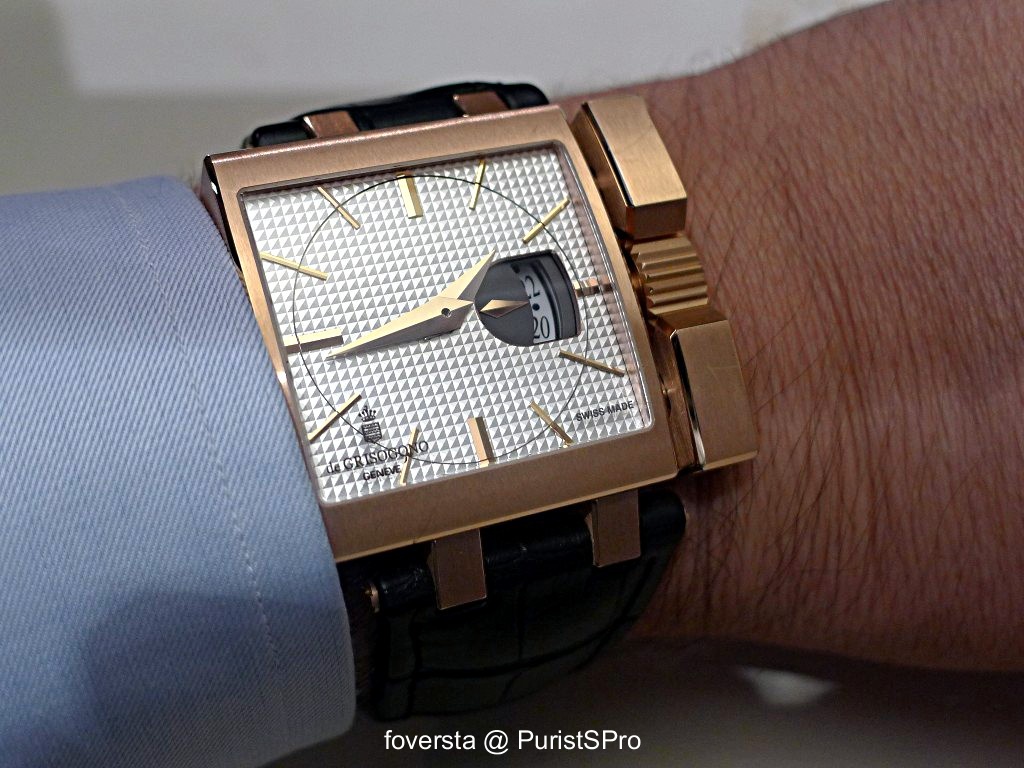
The case is bulky (50.16 mm x 44.85 mm with a thickness of 15.86 mm) and very sharp despite a slight curve. Both prominent pushers the feeling of size. The OtturatOre is not a discrete watch but at least there is a technical reason for this large size. Fortunately, the lugs are short and have a very inclined shape: the watch is ideally positioned and even if we quickly shake the arm, it does not move on the wrist. Despite its size and weight, the OtturatOre is one of the most comfortable de Grisogono watches I had the chance to wear.
1:
2:
3:
4:
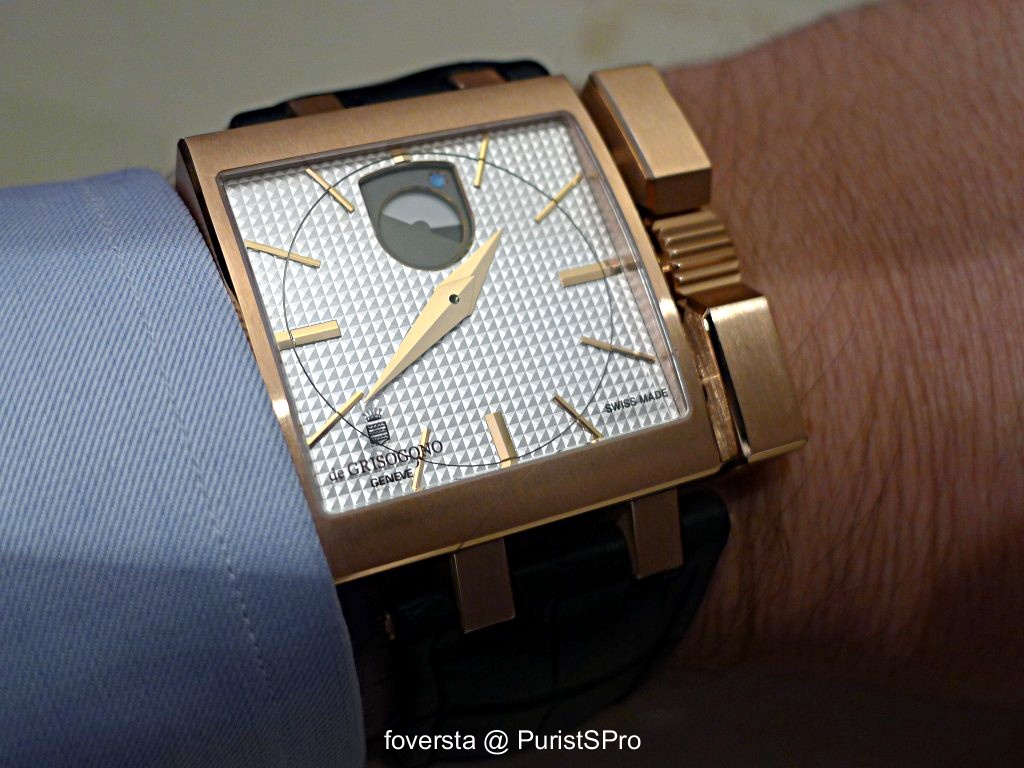
To add a welcome touch of refinement, the dial is decorated with a clous de Paris pattern which brings a small volume making it less monotonous. The applied indexes are cut in their half because they are located on both parts of the dial: the static one and the rotating one.
Another reminder of the de Grisogono style is the blackened finish of the visible part of the movement. What is visible is unusual because it is not a traditional presentation of a watch movement but it is a very pleasant mechanism for our eyes thanks to the gears, wheels and its depth.
I must admit that in a very different style of the Meccanico dG, I was seduced by this OtturatOre because it brings something new in the watch industry. Rather than fighting on the same ground against the major Manufactures, de Grisogono has chosen a clever strategy by moving into a new dimension. The watch is fun and it defines a special interaction with the person who wears it. I believe that this watchmaking approach based on interaction has a bright future: with 4 watches in one, the OtturatOre allows each of us to choose the version that suits us best ... based on our needs or moods. Obviously, the discrete watch lovers can forget it: the OtturatOre by its size and its two prominent pushers is visible like an elephant in a corridor. But I was not expecting less from Fawaz Gruosi's brand!
The OtturatOre is available in five versions combining two cases (white gold, rose gold) and four dial finishings (silver, black, brown and ruthenium), pink gold versions - white gold and brown dial - dial ruthenium being exclusive to de Grisogono shops.
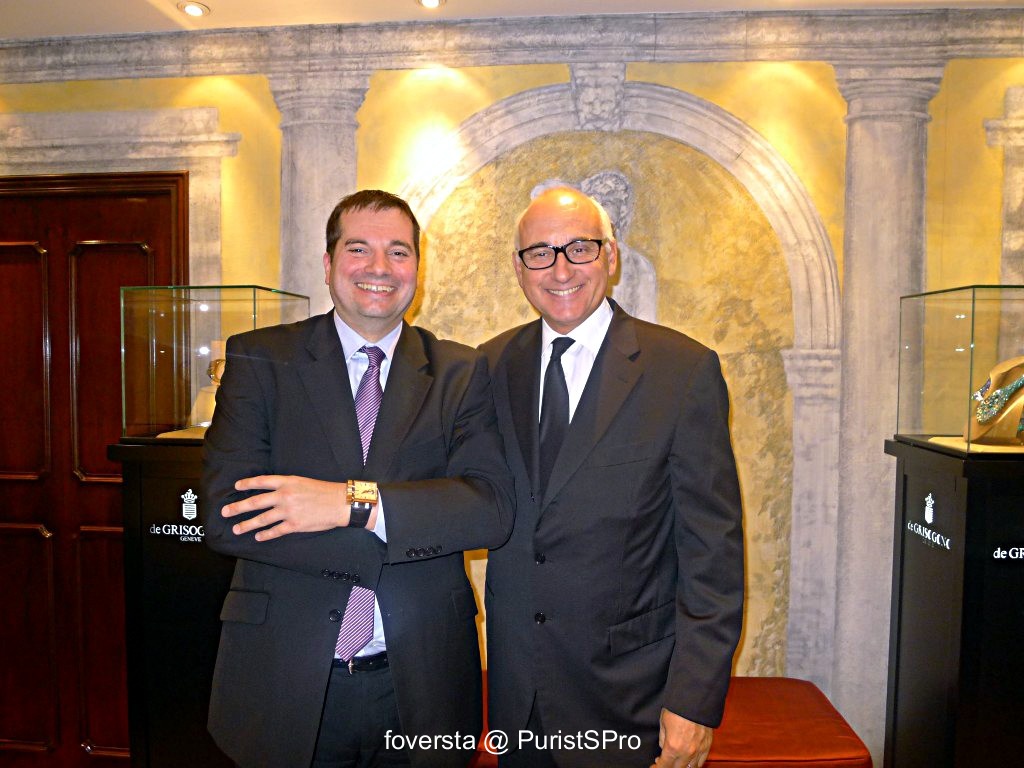
Thanks a lot to Mr Roden and to the staff of the Boutique in Paris for the presentation!
Fx
This message has been edited by foversta on 2011-10-06 13:50:33 This message has been edited by foversta on 2011-10-07 14:07:49

All that for that???
Aesthetically speaking, not my cup of tea, not at all... Thick, big, well... Not my cup of tea.
Mechanically, I have my doubts, I was much more impressed by the watch which was released 7 or 8 years ago, in black gold, which worked ly the focus of a camera.
But it is always a pleasure to see Mr Roden, who seems to be regenerated after the sad G Genta experience.
Best,
Nicolas.
"That" is really impressive.
The rotating dial is really impressive and much more complex to build than the diaphragm. That was for the pure technical side of the story.
But I also understand that for for aesthetical reasons and for the complication, you prefer the Occhio Ripetizione Minuti. It is maybe a more charming watch.
Thanks for your input.
Fx
strangely..
Thanks Alexis.
Fx

How many?
FrX,
Thank you for the report.
Putting aside the "elephant in the room" to ignore the pushers for now, I like the idea of a choice of dial display x 4.
The only watches in my.....er...'collection' that do this are the Casio ProTrek or Pathfinder 
But they are quartz watches with LCD on the dials....easy to change the look by functions needed.
I think some like JLC and Cartier have watches with 'venetian blinds' dial to change the aesthetics (background painting)..
How many other mechanical watches have this dial x 4 display facility?
Regards,
MTF

Very interesting reading...
A great article with wonderful pictures, Fr.Xavier! Kudos!
Thanks!
Daos
Thanks a lot Daos !

Fx
Simple and interesting !
Has the spec changed to 3 Hz?
Thanks for the report FX.
Kong
About the caliber frequency...
Thanks Kong !
Fx

I have to admit...
Thanks for posting, Fx.
Thanks Davo !
Fx

Interesting watch.

amazing Concept BUT...

.
Cant fault their technical expertise though but the dial...errr....boring. To me at least.