Comments:


. . . I can tell you that Heuer Bund model (first pic) hits my buttons big time! Love it.
M4


What's your favourite military chronograph?
Given that we have amongst our ranks experts in all matters horological, I thought of combining a query with a learning experience - namely asking about the members' favourite military chronograph and in turn finding out about some more interesting, if obscure models out there 
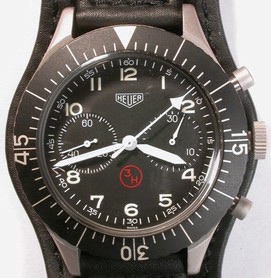
So kicking it off, I guess for me at the moment it's Heuer's 1550 SG / 1551 SGSZ - the Bundeswehr model.

From: http://www.mwrforum.net/forums/showthread.php?11521-Heuer-Bundeswehr-chronograph-question
From: https://www.google.at/url?sa=i&source=images&cd=&ved=0ahUKEwiNv7z81ObNAhUTlxQKHY4MByAQjB0IBg&url=http%3A%2F%2Fwww.onthedash.com%2FGuide%2F_Chronographs%2F67.Bundeswehr%2F&psig=AFQjCNEr7gSAEE85iThYtU13srX3jU8OZg&ust=1468163387748608&rct=j
There are many variations to this one, including the Leonidas predecessor for the EI but these have real appeal to me
Funnily the prototypes (with a Heuer 12 movement) had a date and a 12h totaliser, while the final ones were hand wind models with the Valjoux 230 movement, no date and a 30m chrono but with a flyback function.
So which one is your favourite military chrono?
So kicking it off, I guess for me at the moment it's Heuer's 1550 SG / 1551 SGSZ - the Bundeswehr model.
From: http://www.mwrforum.net/forums/showthread.php?11521-Heuer-Bundeswehr-chronograph-question
From: https://www.google.at/url?sa=i&source=images&cd=&ved=0ahUKEwiNv7z81ObNAhUTlxQKHY4MByAQjB0IBg&url=http%3A%2F%2Fwww.onthedash.com%2FGuide%2F_Chronographs%2F67.Bundeswehr%2F&psig=AFQjCNEr7gSAEE85iThYtU13srX3jU8OZg&ust=1468163387748608&rct=j
There are many variations to this one, including the Leonidas predecessor for the EI but these have real appeal to me
Funnily the prototypes (with a Heuer 12 movement) had a date and a 12h totaliser, while the final ones were hand wind models with the Valjoux 230 movement, no date and a 30m chrono but with a flyback function.
So which one is your favourite military chrono?
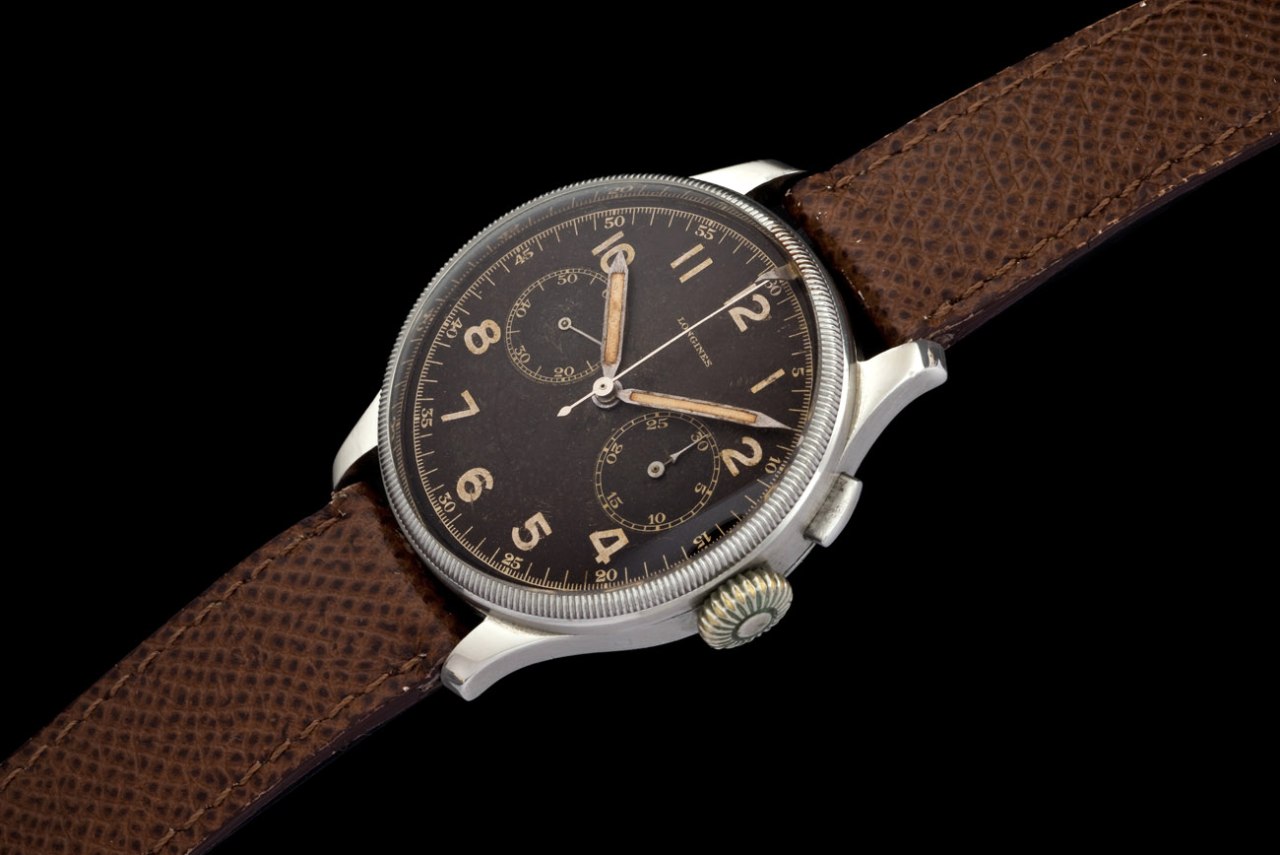
Certainly a Longines 13 ZN from the Romanian School for pilots.
Or a Lemania 15 TL from the Seventies.
The Heuer Bund is a very nice one, too.
43 mm case, certainly one of the biggest.
Best,
Nicolas

Very cool!
Just read about it in the meantime. Quite a rare beast with 161 produced (in two versions) and another 40 ordered from Omega
On your list?
On your list?
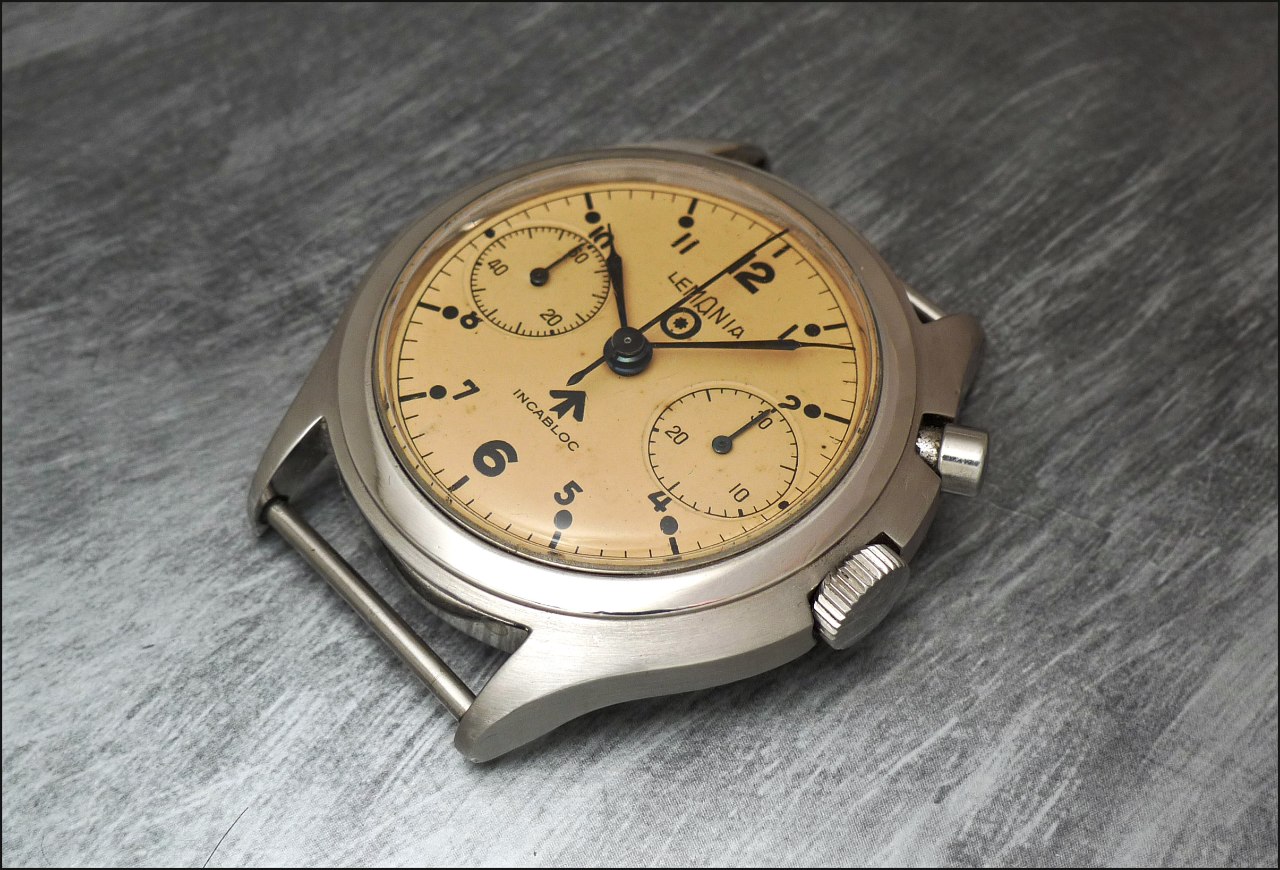
RAF?
Interesting model. Searching 15 TL gets many models but have not seen this one. Very interesting!
Royal Navy ( Submariners ). [nt]
No message body This message has been edited by amanico on 2016-07-09 22:18:37
You guys are way beyond my knowledge, but . . .
. . . I can tell you that Heuer Bund model (first pic) hits my buttons big time! Love it.
M4
It is a very appealing watch
At least in my humble opinion. Very legible, an important characteristic for a military watch, I guess
My favotite military chronograph so far is Speedmaster CK2915-2 FAP
The Heuer is certainly very nice, and so are quite a few others such as Sinn,Tutima, Hanhart, Lemania, Breguet Type XX, etc. ..and more Omega's like HA-60/HA-62 for RCAF....
Just posted :)
Hi KMII, intrigued by yours, I just posted a picture at Omega forum, and saw your kind comments there too.
Regards,
-Song
Regards,
-Song
Have seen it - thanks!
Great collection! Focuses on Omega military or is that just one of the interests?
This message has been edited by KMII on 2016-07-09 11:24:31
This message has been edited by KMII on 2016-07-09 11:24:31
Thanks. I love military watches in general.
chronograph or time only...such as Rolex MilSub, IWC Mark 11, JLC Mark 11, etc.
This one from 1918
Thanks for starting a great thread! This V&C single-button one minute pocket chronograph, here with its half-chronometer brother, represents an irresistible combination to me; tool watch under a prestigious label. These pieces have the patina of hard lives, with stories to tell.
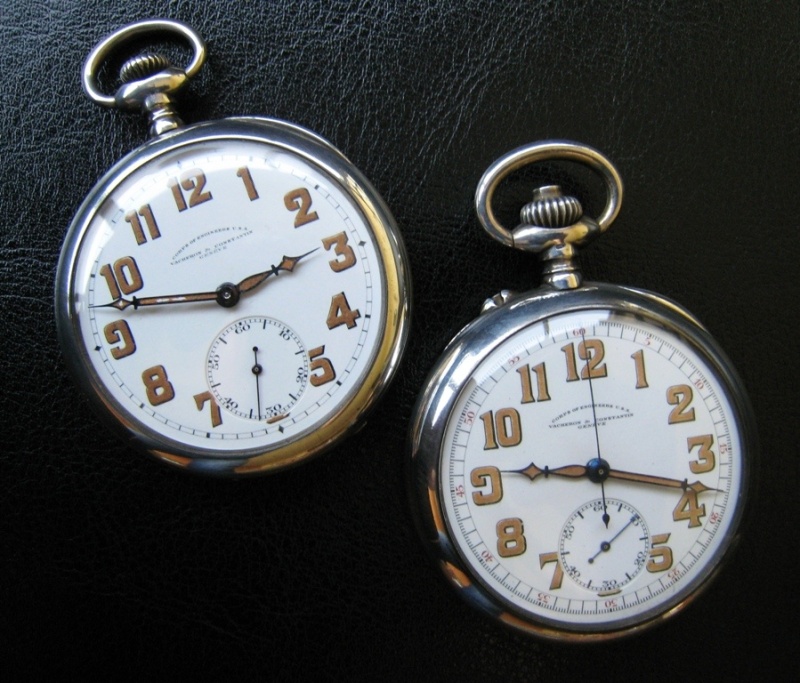
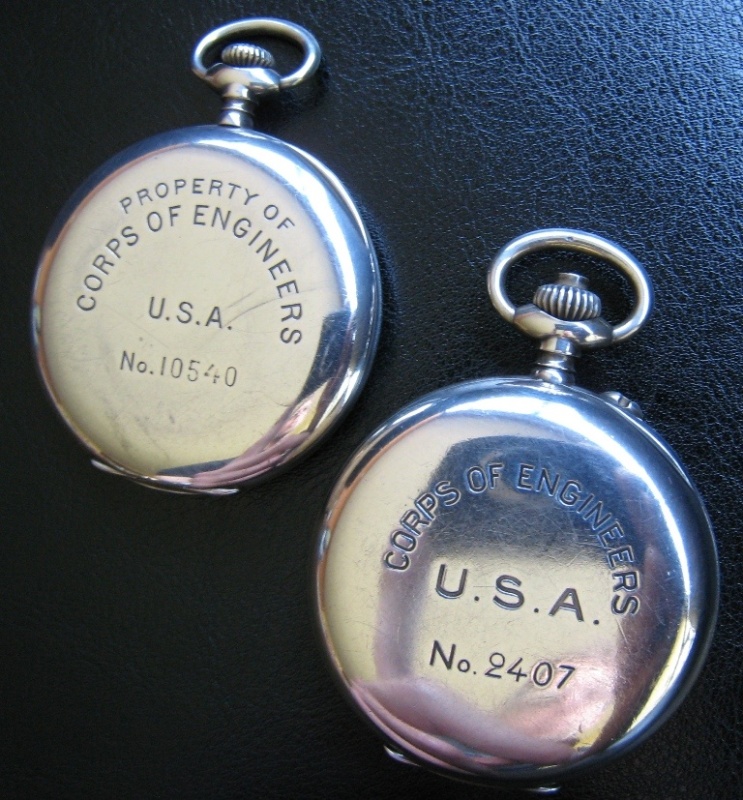
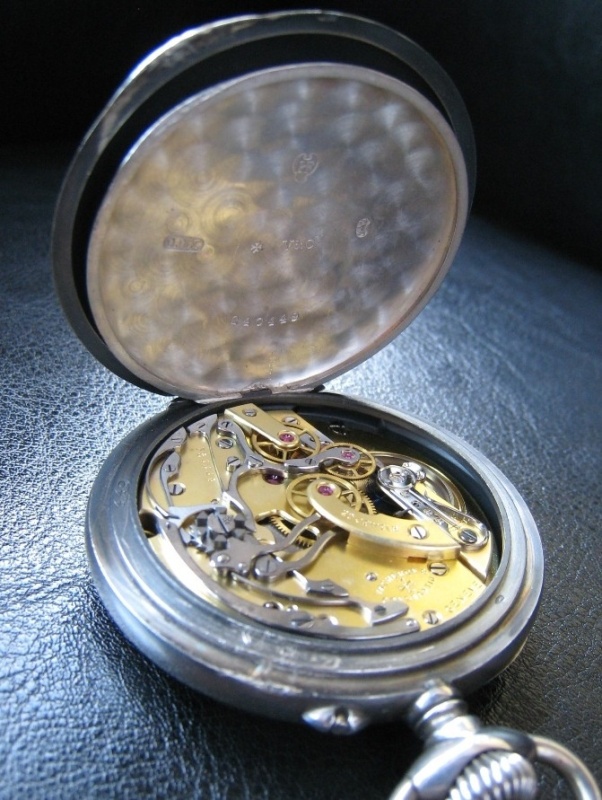
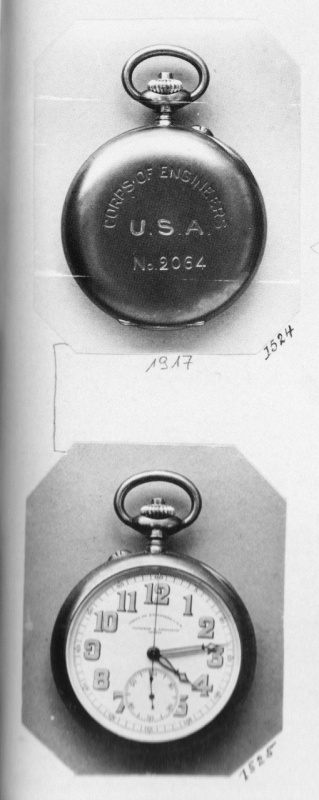
Anyone interested in the history of the V&C Corps of Engineers watches, please read on. Otherwise feel free to click or thumb-scroll away...
Following the outbreak of "the Great War" in August of 1914, the United States first declared their determination to stay neutral. Germany's attempts to blockade the British Isles led to the unfortunate sinking of the passenger liner RMS (Royal Mail Ship) Lusitania on 7 May 1915. Along with nearly 1,200 casualties were 128 American citizens. However, although little remembered today, panic didn't really set in until January of 1917 when secret negotiations between Germany and Mexico were uncovered (the infamous Zimmermann note), which led Congress to declare war on Germany in the Spring of 1917. By July of 1917, American troops were marching in Paris, and by October they were fighting on the front. These were the American Expeditionary Force (AEF) which by 1918 numbered 420,000 troops. At Armistice, 11 November 1918, the AEF had suffered 117,000 casualties.
The AEF went to Europe with a supply of Hamilton pocket watches but, under the encouragement of the Quartermaster Corps, began to look for European suppliers of precision timekeepers. Charles Constantin makes reference in his Annales Vacheron et Constantin to the Allies establishing a purchasing office in Berne for the purpose; "After I learned this office was looking for bids for pocket watches, I presented them with an interesting assortment. We were entrusted with supplying the first contract of 3,000 pocket watches". In total, some 10,000 watches were contracted by the Allies from Zenith, Ulysse Nardin and V&C. They, in turn, subcontracted with others to meet the large and sudden demand. Deliveries continued well past the war's end and a total of 3,289 V&C pocket chronographs were received by the Corps by 1920.
The V&C chronograph ebauches were supplied by four different Manufactures; Matthey-Tissot, Reymond Freres, Moser, and Nardin. My example has a Reymond ebauche. Although they all met the same basic criteria, the Nardin-based chronos were wound and set through the crown unlike the other pin-set movements. Just to straighten-out a persistent myth, V&C did not provide wrist watches under contract to the military during WWI, however, they did offer suitable wristwatches for private purchase to those officers wealthy enough. Further, it wasn't unusual for large pocket watches to be converted to "wristlets" by the troops, using a leather wrist holder.
Hope you enjoyed this brief digression into vintage pocket chronographs ;-)
Enjoyed?
The more detours from you like that, the better
Lovely piece you have there!
Lovely piece you have there!