Interview with Tim and Bart Grönefeld
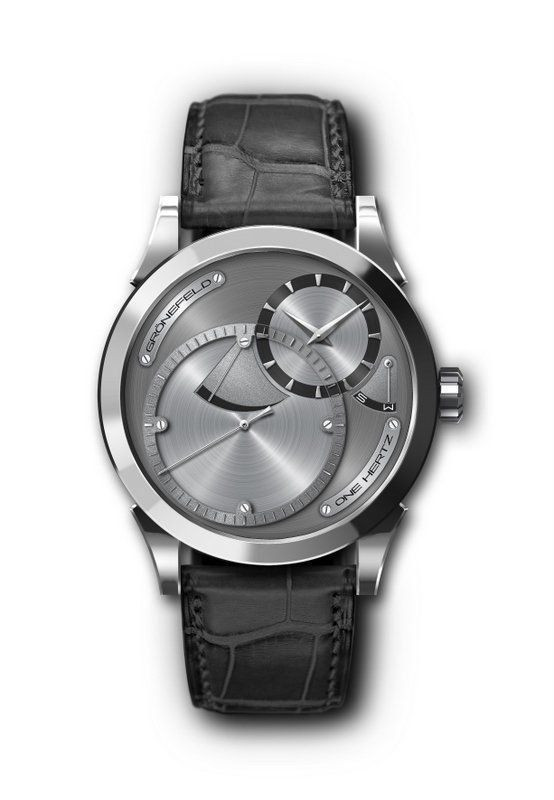
Last month Tim and Bart Grönefeld launched the Grönefeld One Hertz, a unique wristwatch with an independent deadbeat seconds, also known as seconde morte. The One Hertz is the second watch from the two brothers from the Netherlands, both highly skilled watchmakers. Their first watch, launched in 2008, was the extremely complicated GTM-06 featuring a tourbillon and a minute repeater with cathedral gongs.
Fine watchmaking is a family tradition as both Tim and Bart are 3rd generation watchmakers, following their father and grandfather. The Grönefeld watchmaker dynasty began in 1912, when grandfather Johan Grönefeld began his career as a watchmaker.
When the Grönefeld GTM-06 was released, to some it was a surprise that two relatively unknown watchmakers from the Netherlands could develop such a highly complicated wristwatch. However, Tim and Bart were well known to insiders and have been working on the most complicated watches for many years.
Tim and Bart have a very impressive resume. After extensive training in Switzerland, within a relatively short time span they proved themselves specialists in the production of the most coveted and exquisite horological complications of all: the tourbillon and the minute repeater wristwatch.
This year Tim and Bart presented their second watch, the One Hertz, which is the world's first wristwatch with independent deadbeat seconds and features a completely new in-house developed movement.
Since Tim and Bart are both Dutch, like me, i thought to myself, let’s propose an interview to find out more about these two watchmakers and their two complicated watches.
Q: Let’s talk about your new watch, the Grönefeld One Hertz. When did you start with the idea to develop your own calibre for a new Grönefeld watch?
Q: How long did it take to create the new caliber and the new watch?
Q: What did you learn from your previous watch, the Grönefeld GTM-06, that was incorporated in the One Hertz?
Q: What challenges did you encounter designing a brand new calibre from scratch?
Q: You chose a calibre with deadbeat seconds, which is a complication not seen often. Why did you choose this complication? And how did you come up with the independent force for this extremely rare complication.
A: Luxury wristwatches are mostly in demand for the emotion they offer. They are hand made with passion and patience. In the era when quartz watches came out the deadbeat seconds mechanism in a mechanical wristwatch was simply “not done” because the second hand moved like a quartz second hand. In the 1800’s quite a few independent deadbeat second pocket watches were made, indicating to their owner that they possessed a high quality accurate timekeeper. The highest quality regulator wall clocks had also deadbeat seconds. Because the second hand jumps in full one-second increments like quartz seconds, it is a very discrete watch. Unless the movement is viewed from the back, only the owner knows what beats inside the One Hertz.
Q: The One Hertz features similar design elements as the GTM-06, e.g. the lugs, crown and probably the most important, it’s looks and style. What was your role in the design of both watches?
A: All of the design of both of our watches was created by us, though with the One Hertz we also benefited from the input of a very experienced designer. Since the launch of the One Hertz we have had extremely positive feedback regarding its design.
Q: Is the One Hertz, the way it’s presented to the press, what you imagined before you started?
Q: What’s next for Tim and Bart Grönefeld?
click here to see the Grönefeld One Hertz press release.

very intersting
nice complication interesting to see in nowadays wrist watches,i personally consider it a constrain free complication , would love to see live pics of the watch , elegant , simple and pleasent looking dial . though i wonder about the term affordable in which budget range it falls .
Thanks for posting .
Faisal

When will we see working watches ?
Can you tell us more about the problems encountrered in making a dead-seconds movement?
"At first we thought that we could make the watch with fewer components; however, after making the movement function better"
What where the problems and solutions?
I am all ears,
Don
Originally the One Hertz was going to have normal deadbeat seconds

looking forward in seeing the final watch. One question though
in the interview you mention that it is the world's first independent dead seconds, what does the "independent" mean? Others for example Journe and Habring also have dead seconds watches so what differentiates the Grönefeld's to theirs?

Alex, i guess the fact the in your examples the dead-seconds mechanism...
Best,
Magnus
Indeed, the secondary gear train is...
....like Magnus says, dedicated for the deadbeat seconds mechanism. This way, the complication's effect on the entire movement's performance is reduced to the minimum, which is less than without the secondary gear train.
Cheers,
Frank
Not just a secondary gear train,
Correct....
Good looking new model
I am really looking forward to seeing this new watch in the flesh,
since I also missed their last presentation, when the sketches were presented.
Thanks for the interview Frank!
GEO